Three years of a cruel and destructive NATO proxy war in Ukraine
By Dmitri Kovalevich | Al Mayadeen | February 25, 2025
The end of February marks three years since the start of Russia’s special military operation in Ukraine and 11 years since the ‘Euromaidan’ coup of February 2014. The coup was the main cause of the current military conflict.
The war in the now-former eastern territories of Ukraine could have been avoided had two successive presidencies in Kiev (Petro Poroshenko, 2014-2019 and Volodomyr Zelensky since 2019) complied with the Minsk 2 peace agreement of February 2015. Minsk 2 (text here), was agreed by Kiev and the pro-autonomy forces in the Donbass region on February 12, 2015. France, Germany, and Russia co-signed the agreement as guarantors. The agreement was unanimously endorsed by no less than the UN Security Council on February 17, 2015.
Minsk 2 envisioned the return of Lugansk and Donetsk (the two rebellious ‘peoples republics’ of the industrialized Donbass region) to the fold of the Ukrainian constitution, this time as semi-autonomous oblasts (provinces). Kiev also agreed to a neutral status for Ukraine. It could apply for membership in the European Union if it chose, but membership in the NATO military alliance was for Russia a non-starter.
EU membership increasingly became a goal of Western-oriented business interests in Ukraine during the decade of the 2000s. That decade followed 10 years of sharp economic decline following the dissolution in 1989-90 of Soviet Ukraine and of the Soviet Union (USSR, of which Soviet Ukraine was a key constituent).
Tragically for the people of post-Soviet Ukraine, the Western countries, particularly the leading powers of NATO, quietly and deceptively opposed Minsk 2. They worked quietly from the get-go to sabotage the agreement.
Deception of Ukrainians by the West
On February 12, 2025, the deputy secretary of the Russian Security Council, Aleksey Shevtsov, spoke on the ninth anniversary of the signing of Minsk 2, explaining once again to those who would listen that Russia’s special military operation in Ukraine would never have happened had the West honored the agreement. He stressed that the people of Ukraine today have every right to demand an accounting for the deceptions that took place in 2015 and after.
On the same day, the Ukrainian online publication Strana published a lengthy commentary in its Telegram messaging service headlined, ‘Why did the Minsk agreement fail?’ Strana wrote, “Russia says that Kiev deliberately refused to fulfill the conditions of the Minsk 2 agreement and instead proceeded to rearm its army and restart armed attacks against the people of Donbass. The Russian government says it can no longer trust the government in Kiev and so there is no possibility of a ‘Minsk 3’.” (‘Minsk 1’ was a first attempt, in September 2014, by the pro-autonomy forces of Donbass to reach a peace agreement with the new administration in Kiev.)
Strana wrote further, “Russia did not launch a full-scale invasion of Ukraine in 2014 or 2015. Perhaps it wanted to, who knows, but it could not do so because it would have been hit with harsh economic sanctions similar to those levied against it by the Western powers beginning in February 2022. It would have faced economic sanctions worse than those initially levied against it following the Crimea referendum of March 2014. The Russian economy was in no shape to easily withstand such sanctions, in contrast to the situation in 2022.
“Additionally, although the Ukrainian army back then was much weaker compared to 2022, this was also the case for the Russian army.”
In their recollections of the events of those years, leaders of today’s Donetsk Peoples Republic (today a constituent of the Russian Federation) say that the main opponent of a major military response to Kiev’s continued military provocations and sabotage of Minsk 2 was the Russian military. Russian military leaders said at the time that the Russian Federation did not have enough combat-ready troops to take on such a large and industrial country as Ukraine.
“From a purely military point of view, the rapid success of Russia in Crimea in the spring of 2014 was due to the fact that Russian troops were already present on the Crimean peninsula [by virtue of a 1997 agreement between Russia and Ukraine; see Wikipedia on the subject]. They needed no time to deploy, and they prevented armed attacks being threatened by the paramilitaries of the new administration in Kiev. At the time, there were no large military formations of the Russian Federation along the lengthy Russian-Ukrainian border. Donbass’s self-defense forces only began to form in the late spring of 2014 and it was several years before they were integrated as auxiliaries of the Russian armed forces.”
As Russian sources stated at the time, the initial military defense that arose in the Donetsk and Lugansk oblasts of Ukraine against the paramilitaries of the 2014 coup bore the markings of a military adventure and were not at all coordinated with the political leadership of the Russian Federation. The self-defense forces hoped to convince or pressure Russia to join a war of defense for which Russia was not ready, not politically, economically nor militarily.
What the Western-incited war in Ukraine has wrought
In the lead-up to and since the 2014 coup, western and central Ukraine has been living the fate of a battering ram to be used by the Western imperialist powers to weaken Russia, regardless of the tragic human consequences and of the prospect of Ukraine being cast off once it is no longer needed for such a role. The results of this cruel and heinous policy are increasingly evident as graveyards continue to spread on Ukraine’s territory with each passing day.
The Politnavigator media outlet explained (as reported on Telegram on February 1) the consequences of such policy for the mortals conscripted into war, many against their will. The report cites Anton Cherny, an officer of the Armed Forces of Ukraine. He explains, “We are being lied to about the value of our soldiers’ lives. I watched the speech of our commander-in-chief that every soldier is valuable to Ukraine and worth his weight in gold. That’s what they tell the people, but it’s not true.”
Cherny says that 90% of the soldiers who die or succumb to injuries on the battlefields are simply buried there and then officially listed as missing. “Everyone there knows perfectly well what is happening.” And the indignities do not end there. The families of those reported as ‘missing’ do not receive the financial compensation to which they are entitled.
Cherny also explains that it is extremely difficult for surviving fighters to exit the grim fighting along the front lines. “It’s hard to get out of there by yourself, it’s unrealistic. How lucky it would be if there were fog, very big snow or some other bad weather.” He explains that Ukrainian lines are under constant surveillance from drones flying overhead. As soon as evacuation vehicles approach from the Ukraine side, the drones threaten to strike them, making it very difficult to evacuate the injured or the dead from the various battlefields.
Politnavigator continues its report:
‘The army doesn’t provide guidelines or instructions for soldiers to somehow make their tasks easier. Its words to this effect are just talk. Soldiers are told to go here or there and ‘do’ something, but as to what, where and why, you have to be some kind of superman to figure it out. It’s unreal,’ Cherny says indignantly.
Provoking the sleeping bear of Russia
Radical nationalist and neo-Nazi paramilitaries operating under the control of Kiev’s police and special services waged nine years of military conflict and terrorist attacks against civilians in Donbass from 2014 to 2021. This was bound to provoke a reaction from the Russian Federation sooner rather than later, as any serious commentator knew and reported.
Ukrainian commentators were writing more than three years ago that Kiev’s deployments of paramilitaries in Donbass and its turning a blind eye to their crimes, backed by promises of weapons by belligerent Western governments, would inevitably provoke Russia into responding, as though provoking a bear with a stick. The weapons of Ukraine, many provided by the West, did indeed, predictably, awaken the bear, and angrily.
In early February 2025, the prime minister of neighboring Georgia, Irakli Kobakhidze, told journalists that back in 2022, his country’s then-government was being encouraged by the West to open a ‘second front’ against Russia. The country was to be used just as Ukraine was being used. According to the Kobakhidze, Georgian officials of the day were told a fable by the Western powers to convince them to act. “They said Ukraine is winning the war; you should not miss this chance to strike against Russia.”
Kobakhidze believes it will now take Ukraine 100 years to return to a state of development comparable where it was prior to the 2014. He asks, “Why was all this done? No one is offering a clear answer to this question. However, there is an answer: some global interests, evil interests, have sacrificed our friendly country Ukraine.”
Full-fledged dictatorship
The eleven years that have elapsed since the Euromaidan coup of 2014 have been years of Ukraine sliding inexorably towards dictatorship, all the while accompanied by rosy phrases from EU leaders claiming that a ‘triumph of democracy’ was taking place. The ideology of Nazism from the World War II era has been officially rehabilitated, while opponents of this course have been targeted by armed, ultra-nationalists and neo-Nazis.
All left-wing parties in Ukraine have been banned. Some of their members and leaders have been killed, while many more have been forced into exile. Protests against, and critics of, the ‘pro-European’ dictatorship in Kiev have been targeted for repression. The Western powers have turned a blind eye to the crimes being committed, while United Nations officials have occasionally issued toothless resolutions expressing ‘concern’ about the civil rights being violated.
In 2021, Zelensky banned more political parties critical of his government, and he closed all television channels deemed non-compliant with his policies. No court or other legal reviews of these decisions have taken place.
With the outbreak of war in February 2022, Zelensky imposed martial law and then canceled national elections for the presidency and the legislature (Rada). These were to take place no later than April 2024, according to the Ukraine constitution. Zelensky has said that Ukraine cannot hold elections until it has fully regained control over its former territories. Since this would be impossible to achieve, his statements on the matter mean that for all intents and purposes, elections will not take place in the remaining territories held by Kiev. Period.
Alexander Dubinsky, a former associate of Zelensky jailed by his administration, writes that the war became for Zelensky an escape from the social explosion building up inside the country and appearing inevitable by the end of 2021. “I think this largely determined why Zelensky promoted military rhetoric in every possible way, and why in March 2022 he ceded to Western government pressures to draw back from a political settlement with the Russian Federation.”
For Dubinsky, the end of the war would mean a loss of political power by Zelensky and his cohorts, and this, in turn, would expose them to direct conflict with all the enemies he has managed to make. He may be able to protect himself from the widows and mothers of the deceased, reasons Dubinsky, but not from the violent, ‘serious men’ who have proliferated under his government.
Detention camps using torture methods under Zelensky
Every day, more and more facts are emerging in Ukraine about the detention camps that Zelensky has created in order to sustain its power and continue the NATO proxy war.
In January, legislator Oleksandr Dubinskyy urged Ukrainians to report to U.S. authorities about the detention camps that the Security Service of Ukraine (SBU) has organized, notably for the purpose of forcing accused conscription evaders to confess to accusations of state treason. According to him, the SBU detention camps are prototypes of what Ukraine as a whole has become under Zelensky.
Dubinskyy has been detained since November 2023 under accusations of financial crimes and treason. He has recently announced from detention his intention to run for president of Ukraine if and when a national election takes place.
Another former associate of Zelensky, legislator Artem Dmytruk, wrote on Telegram on January 30 that the entire special corps of the Lukyanivske pre-trial detention center in Kiev should be called a concentration camp and named ‘Zelensky’s Factory’. Legislators Oleksandr Dubinsky and Yevhen Shevchenko are among those imprisoned there. “90|% of detainees in this center face charges by the office of the expired president Zelensky.”
Dmytruk fled to Britain in August 2024 shortly after he was the only deputy in the Rada to speak and vote against a new law banning the Ukrainian Orthodox Church, of which he is a subdeacon.
The Ukrainian magazine Liberal published a lengthy report in February saying that individuals and political formations connected to the Zelensky administration are the only ones in Ukraine not talking about political repression prevailing today in the country.
The authors claim that extensive political repression was being prepared and carried out well before the start of the Russian military intervention in February 2022. According to the publication, thousands of SBU employees were sent to border regions on the eve of the Russian intervention to monitor troop morale and other measures of the military situation.
At the same time, Kiev began to address its shortages of police and prison personnel in Kiev and other regions by recruiting ‘trained athletes’ into the ranks of the SBU after completing three-month courses in western Ukraine. ‘Trained athletes’ is a euphemism in Ukraine for members of criminal gangs.
“Thousands of bone-crackers performing police functions inside the country spread out without the slightest remorse to beat testimony out of Ukrainians using the most brutal forms of violence and creating torture institutions such as the famous ‘Sports Hall’ on Volodymyrska Street [in the center of Kiev],” writes Liberal.
“People were lying on floors, deprived of the right to move and subjected to constant beatings and humiliation. The Ukrainian anthem and nationalist songs were played continuously from loudspeakers. The eyes of the prisoners would be taped shut with duct tape or tied with rags, and they were taken to the toilet only once a day. They were also fed very sparingly, once per day.”
The authors note that political prisoners now account for about half of the prisoners in Ukraine. The main motives for many SBU officers, Liberal notes, have not been security concerns but the robbery of suspects. Detainees have been forced to surrender their personal wealth upon arrest and detention.
Two reports in English on prison conditions in Ukraine were published in 2024, one by a Danish government agency (110 pages) and one by an agency of the Council of Europe (46 pages). Both reports skirt incendiary accusations such as the one published by Liberal and the many ones appearing widely on social media.
On February 12, a German court for the first time approved the extradition of a conscientious objector to military service who had fled Ukraine. Ukraine prohibits men of military age (age 25 to 55, 60 for officers) from leaving the country. Many of the fugitives from Ukraine’s compulsory conscription have chosen to flee to Germany, attracted by Germany’s claimed liberal values. This court decision is the first warning sign that the authorities of European Union countries may begin to conduct forced deportations of the Ukrainian men who have managed by hook or by crook to escape from their homeland’s military conscription. It is reported that in 2024, there are some 200,000 Ukrainian men residing in Germany alone.
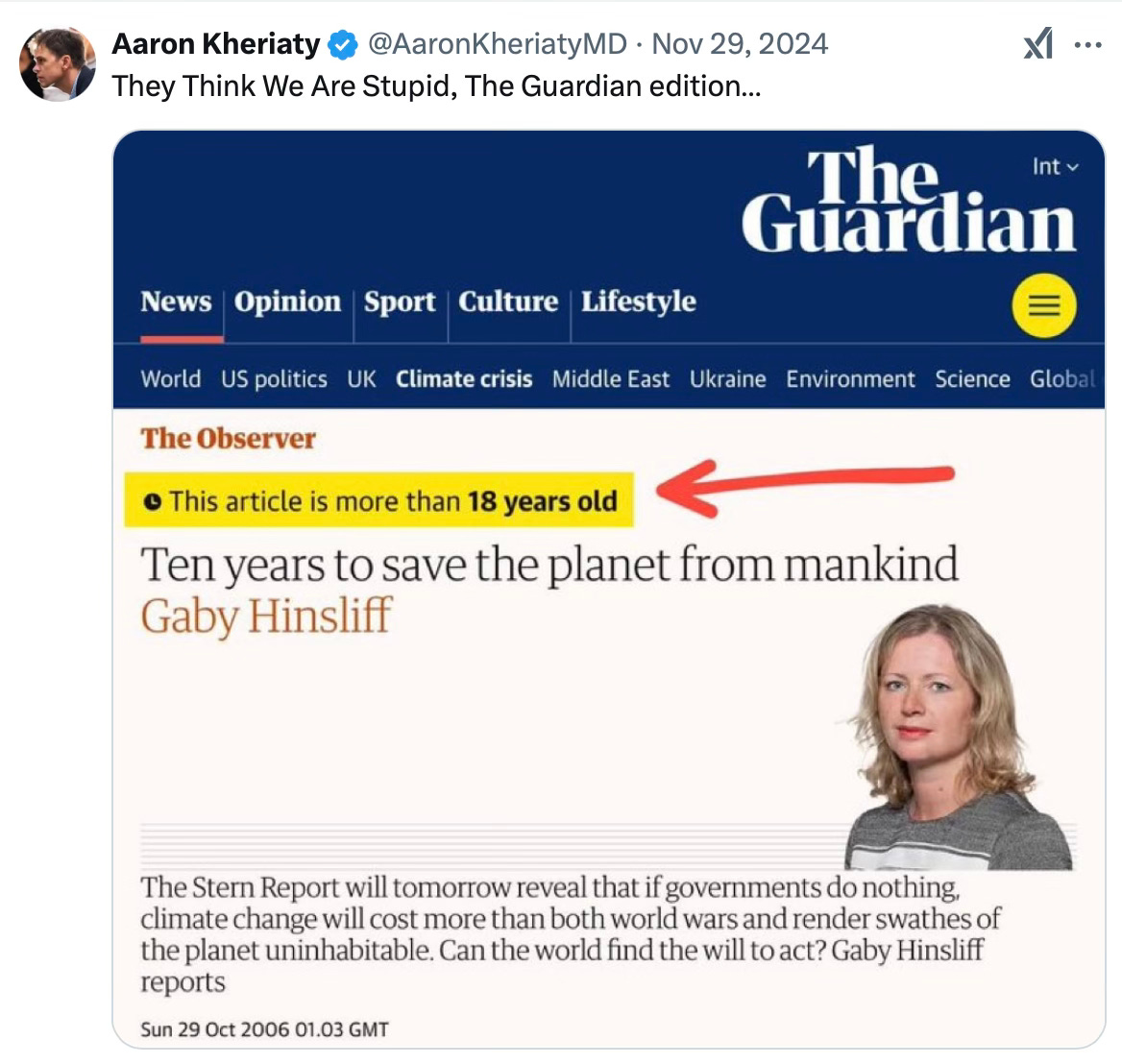
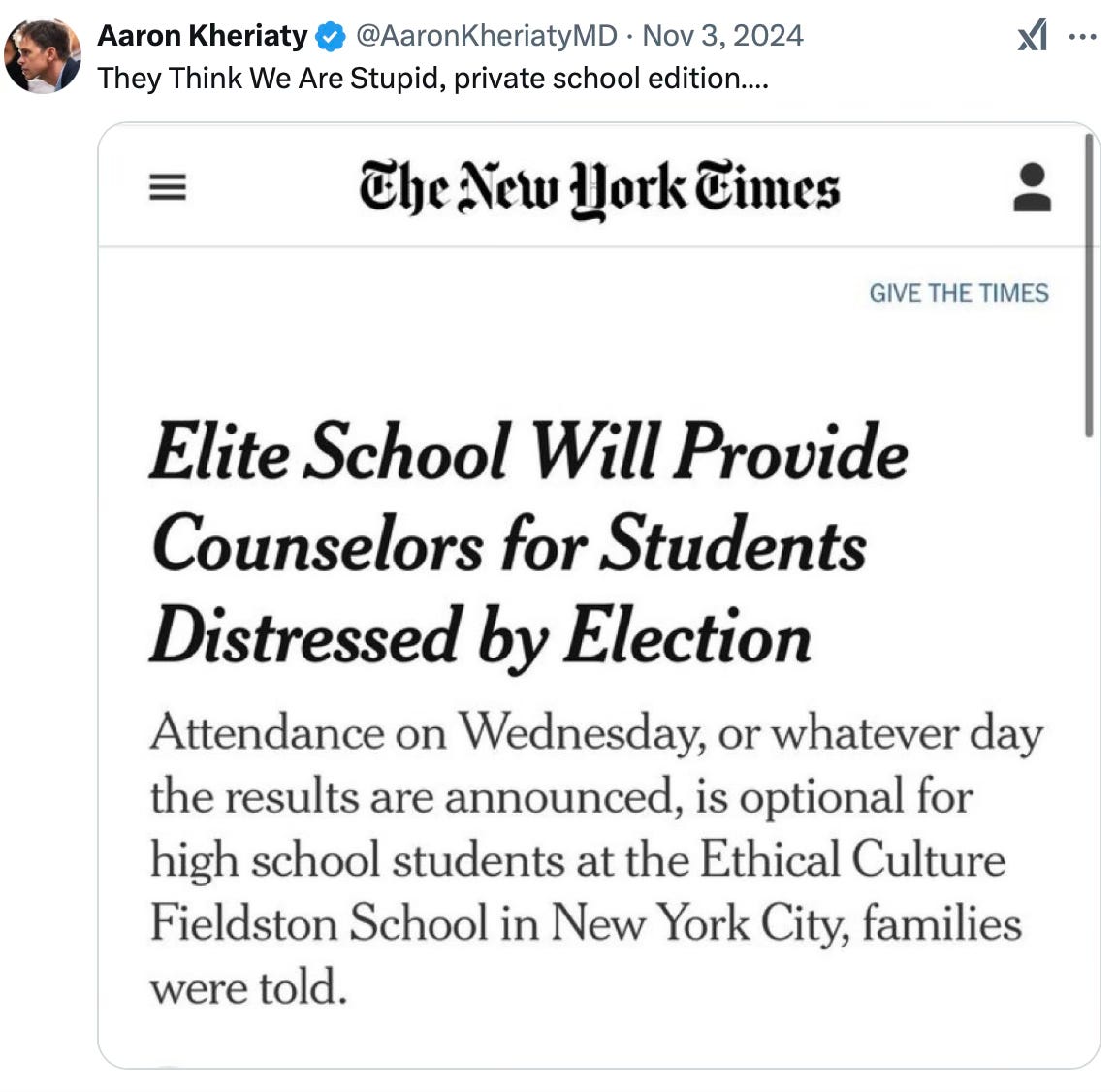
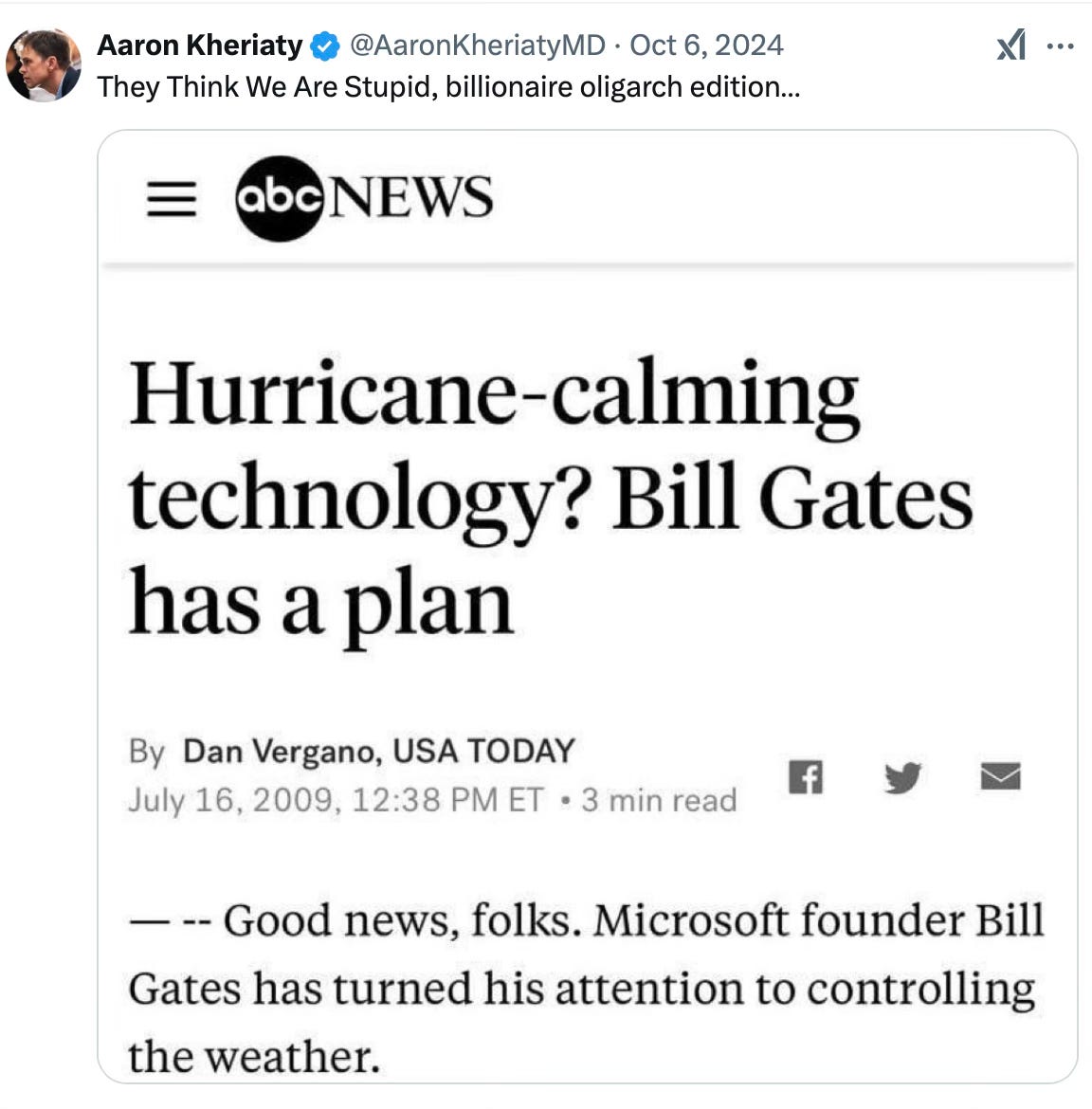
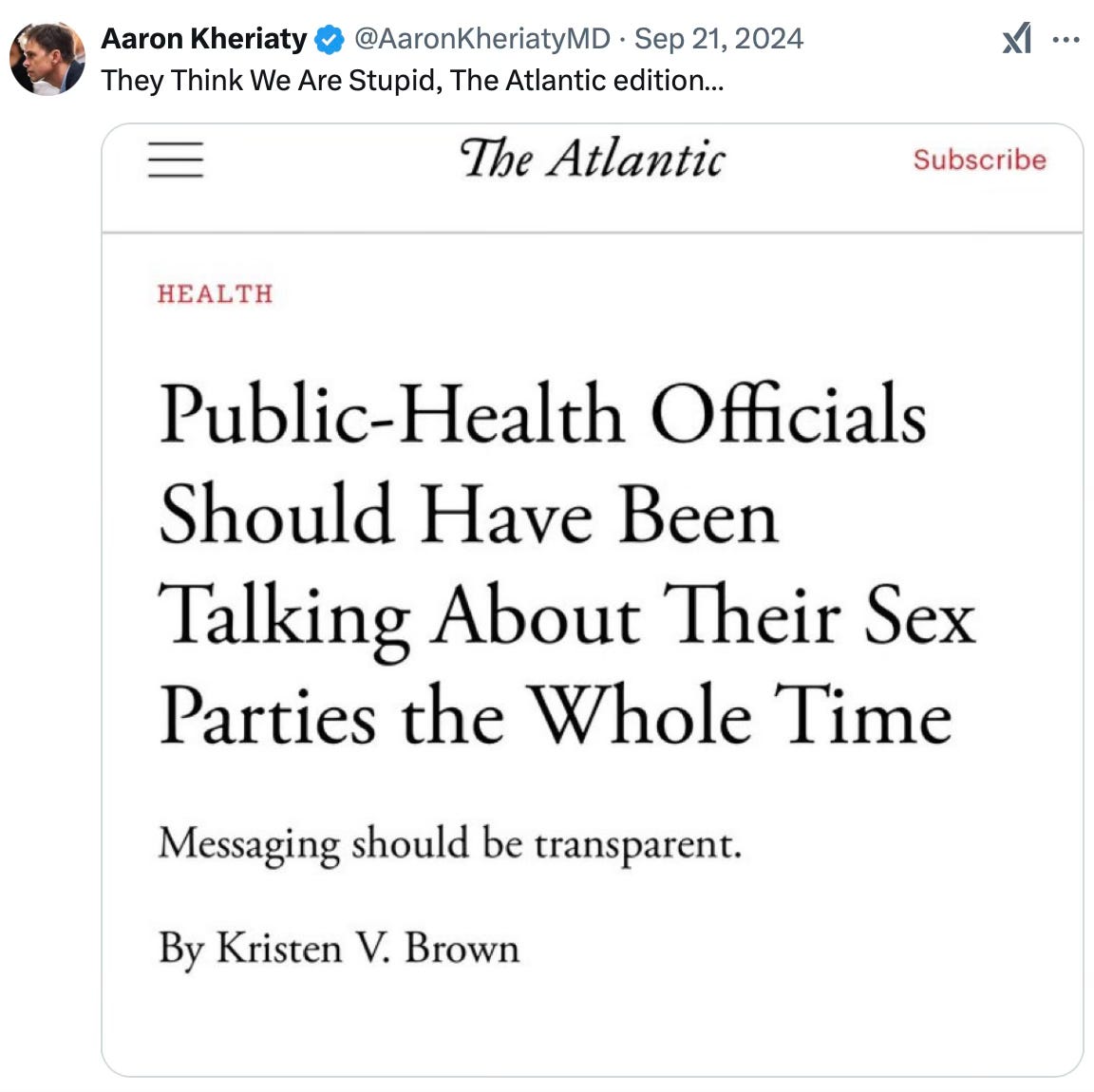
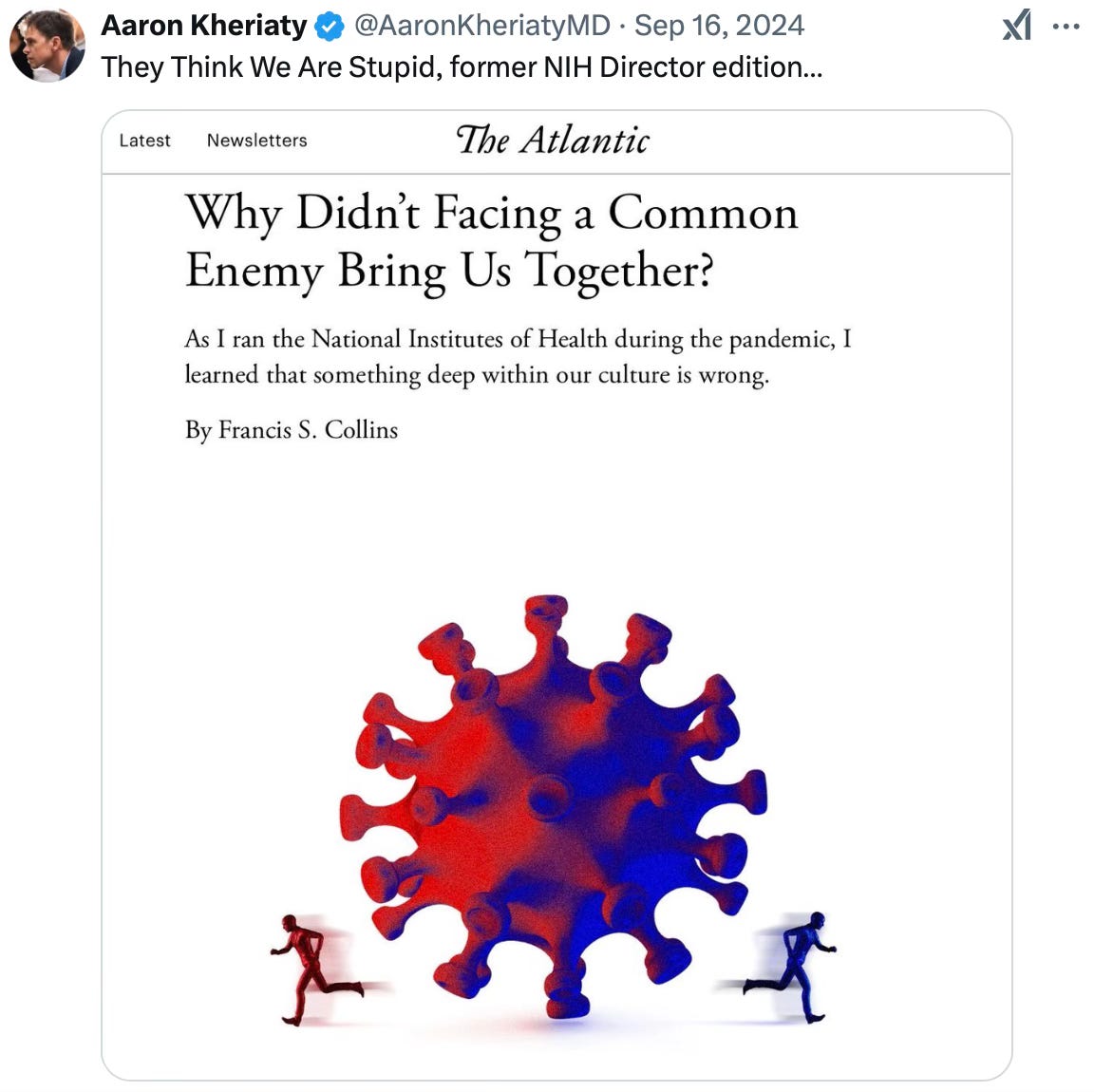
They Think We Are Stupid, Volume 14
Everything you need to know about our ruling class’s opinion of you. As always, these headlines are presented without commentary.
By Aaron Kheriaty, MD | Human Flourishing | February 24, 2025





UK’s iCloud Encryption Crackdown Explained: Your Questions Answered on Apple’s Decision
How does Apple’s UK encryption move affect your iCloud data? Even for those not in the UK, we break down security risks, government access, and privacy options.
By Ken Macon | Reclaim The Net | February 24, 2025
The UK government’s latest demand from Apple has caused a major conversation about digital privacy, encryption, and government surveillance. With Apple withdrawing its Advanced Data Protection (ADP) feature in the UK rather than complying with the government’s order, many users are left with questions.
- How does this affect your iCloud data, whether you’re in the UK or not?
- Can the government now access your photos, backups, and messages?
- Are alternative services like Google, Android, or Samsung any better?
- What are the risks, and what are your options for securing your data?
With this Q&A feature, we break down the key details, security implications, and next steps for UK users—and why this could be a turning point for global encryption policy.
What exactly did the UK government demand from Apple?
The specific details of the Technical Capability Notice (TCN) issued to Apple are not public due to the secretive nature of the Investigatory Powers Act (2016), which was amended in 2023 to expand government access to encrypted data. Reports from the Washington Post suggest the UK Labour government under Prime Minister Keir Starmer demanded compliance with the order by creating a backdoor into their encryption.
Why did Apple choose to withdraw ADP instead of complying?
Apple has consistently opposed government backdoors, arguing that any compromise in encryption, even for one government, creates a security risk for all users globally. If Apple built a decryption tool, it could be exploited by hackers or demanded by authoritarian regimes. By withdrawing ADP in the UK, Apple likely aims to avoid setting a precedent and to pressure the UK government while reinforcing its brand as a privacy-focused company. It’s also possible that Apple privately negotiated with the UK government but couldn’t reach a compromise.
What happens to UK users who already enabled ADP?
Existing UK users with ADP won’t lose encryption immediately, but Apple has confirmed they will eventually need to disable the feature. The exact timeline remains unclear — Apple’s February 21 announcement did not specify specific dates, suggesting a phased approach. Users might receive notifications asking them to opt out voluntarily or could face automatic disabling via a future software update. Until then, their data remains end-to-end encrypted.
What data can governments access without ADP?
Without ADP, most iCloud data reverts to Apple’s standard encryption, meaning Apple can decrypt and provide access if compelled by a legal order. This includes:
- Photos, videos, documents, notes, and device backups
- Email content (if using iCloud Mail or a different provider but the account is backed up to iCloud)
- iMessage chats (if iCloud backups are turned on)
Some data, like real-time iMessages and Health data, may still retain end-to-end encryption depending on user settings.
Losing ADP increases UK users’ vulnerability to data breaches because their iCloud data, once decrypted by Apple, could be exposed if Apple’s systems are hacked. Standard iCloud encryption is robust against external threats, but high-profile breaches (e.g., past celebrity iCloud leaks) show it’s not infallible. Foreign entities could also target this data if they penetrate Apple’s infrastructure, though there’s no evidence of state-sponsored hacks yet. The risk isn’t immediate for most users but grows over time as cybercriminals adapt, making UK users a softer target compared to those with ADP elsewhere.
What are the Security Risks for UK Users?
Losing ADP increases UK users’ vulnerability to data breaches because their iCloud data, once decrypted by Apple, could be exposed if Apple’s systems are hacked. Standard iCloud encryption is robust against external threats, but high-profile breaches (e.g., past celebrity iCloud leaks) show it’s not infallible. Foreign entities could also target this data if they penetrate Apple’s infrastructure, though there’s no evidence of state-sponsored hacks yet. The risk isn’t immediate for most users but grows over time as cybercriminals adapt, making UK users a softer target compared to those with ADP elsewhere.
Governments aside, what are the UK government’s next steps?
The UK government could escalate by fining Apple for non-compliance, though Apple’s removal of ADP might technically satisfy the notice by removing the contested capability. The government may also target other encrypted services like WhatsApp, Signal, or ProtonMail with similar demands. The 2023 amendments to the Investigatory Powers Act allow the UK to issue preemptive decryption demands on tech firms, meaning broader enforcement is possible. However, political backlash and pushback from the tech industry might slow down aggressive enforcement. That’s why challenging the UK government is important.
What legal basis does the UK have for this demand?
The Investigatory Powers Act (2016)—sometimes called the Snooper’s Charter—was updated in 2023 to expand government power to issue Technical Capability Notices. These notices require companies to remove encryption or other security measures if deemed necessary for national security and proportionate. This appears to be the first major use of the amended law against a tech giant like Apple, setting a precedent that could encourage other countries, such as EU nations or Australia, to follow suit. This is a test case for global encryption policy, though secrecy limits transparency.
Why hasn’t Apple explicitly confirmed the UK order?
Apple has not officially confirmed receiving a Technical Capability Notice, likely due to a gag order under the Investigatory Powers Act. This law prohibits companies from disclosing such requests to avoid tipping off targets or causing public backlash. However, Apple’s decision to withdraw ADP and its statement expressing disappointment strongly imply that it received a legally binding order. Silence could also be a strategic choice, keeping the focus on the impact of withdrawal rather than escalating a legal battle it cannot win.
What does this mean for US-UK relations?
This could strain US-UK tech relations, particularly given comments from figures like JD Vance criticizing European overreach on American firms. The US and UK share intelligence via the Five Eyes alliance, but this dispute (at least, as far as it looks) highlights divergent views on privacy versus security. Apple might lobby the US government to pressure the UK, especially if it sees this as a threat to America’s tech dominance. Diplomatic fallout seems unlikely to escalate significantly, but it could complicate future transatlantic tech policy talks, especially if other EU nations follow suit.
Do any lawmakers in the US want to ban this type of encryption?
Yes, some US lawmakers have pushed to limit or effectively end strong encryption, particularly end-to-end encryption, by requiring tech companies to provide law enforcement access to encrypted data. While they don’t always frame it as “ending encryption” outright, their proposals would undermine its effectiveness by mandating backdoors or weaker standards, which many experts argue amounts to the same thing. This has been a recurring theme in Congress over the years.
Senator Lindsey Graham (R-SC): Graham has been a key figure, co-sponsoring the EARN IT Act (2020) with Senator Richard Blumenthal (D-CT) and introducing the Lawful Access to Encrypted Data Act (LAED Act) in 2020 with Senators Tom Cotton (R-AR) and Marsha Blackburn (R-TN). Both bills aimed to force tech companies to unlock encrypted data under court orders, effectively targeting E2EE.
Senator Richard Blumenthal (D-CT): Co-sponsor of the EARN IT Act, which critics say indirectly threatens encryption by tying legal protections to government-approved “best practices” that could ban E2EE.
Senators Tom Cotton (R-AR) and Marsha Blackburn (R-TN): Co-sponsors of the LAED Act, which explicitly sought to outlaw “warrant-proof” encryption—systems where only users hold the keys. These efforts often have bipartisan support, driven by concerns over crime and national security.
Senators Josh Hawley (R-MO) and Amy Klobuchar (D-MN) have also recently called for a crackdown on end-to-end encryption, using the fight against fentanyl as a justification.
Should global Apple users be concerned about the UK’s move against encryption?
Yes, global users should be concerned because the UK’s action sets a dangerous precedent that could inspire other governments to demand similar backdoors, weakening digital privacy worldwide. If Apple complies with one government’s demand to weaken encryption, it may face pressure from other nations, including the EU, Australia, India, or China, to do the same. This risks creating a domino effect where end-to-end encryption is gradually eroded across multiple jurisdictions.
Moreover, any security loophole introduced for the UK could be exploited by hackers or authoritarian regimes, endangering global Apple users. Apple’s current refusal to comply suggests it is drawing a line to protect its security model worldwide, but if the UK succeeds in enforcing its demands, Apple and other tech companies may struggle to resist similar pressures elsewhere.
For now, users outside the UK still benefit from full encryption protections, but privacy advocates worry that if this case goes unchallenged, governments may target other encrypted services, such as WhatsApp, Signal, or Google Drive, making digital privacy harder to maintain globally.
What about those iCloud users that didn’t have Advanced Data Protection (ADP) turned on?
For most users, this change doesn’t affect them because the majority of iCloud users never had ADP enabled in the first place. Apple’s standard iCloud encryption, which was always the default, means Apple already holds the keys to decrypt most stored data and can provide access when legally required. This means that users who never switched on ADP were always using the less secure version of iCloud storage, and their data was already accessible to Apple and, by extension, law enforcement with a legal order.
However, for privacy-conscious users in the UK who did enable ADP, this decision does impact their security. Without ADP, their iCloud data will eventually revert to standard encryption, meaning Apple can access it again if compelled. While this is currently a UK-specific change, privacy advocates worry that it could set a precedent for other governments to demand similar access, potentially eroding encryption protections worldwide over time.
If ADP is available in your region, you should turn it on.
Even WITH Apple’s Advanced Data Protection turned on, what data could Apple and the government potentially see?
Quite a lot.
Here are the parts that were never end-to-end encrypted:
- iCloud Mail
- Contacts
- Calendars
- iCloud Data on the Web (Apple says, “You have the option to turn on data access on iCloud.com, which allows the web browser that you’re using and Apple to have temporary access to data-specific encryption keys provided by your device to decrypt and view your information.
- Metadata and usage information, including “dates and times when a file or object was modified are used to sort your information, and checksums of file and photo data” (which “are used to help Apple de-duplicate and optimize your iCloud and device storage — all without having access to the files and photos themselves.”). Specific examples of the app specific metadata and usage information that was never end-to-end encrypted includes:
- iCloud Backup:
- Name, model, color, and serial number of the device associated with each backup
- List of apps and file formats that are included in the backup
- Date, time, and size of each backup snapshot
- iCloud Drive:
- The raw byte checksums of the file content and the file name
- Type of file, when it was created, last modified, or last opened
- Whether the file has been marked as a favorite
- Size of the file
- Signature of any app installers (.pkg signature) and bundle signature
- Whether a synced file is an executable
- Photos:
- The raw byte checksum of the photo or video
- Whether an item has been marked as a favorite, hidden, or marked as deleted
- When the item was originally created on the device
- When the item was originally imported and modified
- How many times an item has been viewed
- Notes:
- Date and time when the note was created, last modified, or last viewed
- Whether the note has been pinned or marked as deleted
- Whether the note contains a drawing or handwriting
- The raw byte checksum of content from an imported or migrated note
- Safari Bookmarks:
- Whether the bookmark resides in the favorites folder
- When the bookmark was last modified
- Whether the bookmark has been marked as deleted
- Messages in iCloud:
- When the last sync was completed and whether syncing has been disabled
- Date when content was last modified
- Error codes
- Type of message, such as a normal iMessage, SMS, or tapback
- iCloud Backup:
- iWork collaboration
- The Shared Albums feature in Photos
- Content shared via the “anyone with the link” feature
- Any data that was shared with an Apple user that doesn’t have end-to-end encryption enabled e.g. Messages sent to someone that has iCloud Backup enabled but not Advanced Data Protection, Notes shared with someone that has iCloud Backup enabled but not Advanced Data Protection.
I’m thinking of switching to Google or Android because of the UK’s encryption dispute with Apple. Is that a better move for privacy?
Not necessarily. Google or Android isn’t a monolith — Google’s services (like Drive and Photos) and Android’s open ecosystem differ from what Samsung or other manufacturers layer on top.
Privacy-wise, none of these options universally outshine Apple, especially if end-to-end encryption (E2EE) is your priority. Google’s core services don’t use E2EE by default for Drive, Photos, or backups, meaning Google can access your data and comply with law enforcement requests.
Android’s encryption varies by implementation, and Samsung adds its own features, but they don’t fully match Apple’s default E2EE across key services (like iMessage or Health data) that remain intact even without Advanced Data Protection (ADP) in the UK.
What about Samsung?
Samsung, as a major Android manufacturer, uses Google’s ecosystem for services like Google Drive, Google Photos, and phone backups, but it also layers its own features on top. Like other Android devices, Samsung phones don’t get end-to-end encryption (E2EE) for Google Drive or Google Photos—those services encrypt data in transit and at rest, but Google holds the keys, making them accessible to Google or law enforcement. For phone backups, Samsung relies on Google’s E2EE system (since Android 9 Pie), which encrypts app data and settings using your credentials, not Google’s. However, Samsung offers Samsung Cloud, which provides an optional E2EE feature called Enhanced Data Protection (introduced with One UI 5.1.1 in 2023). If you enable it, your backups to Samsung Cloud—like contacts or calendar data—can be E2EE, unlike Google’s broader cloud services. So, Samsung gives you somewhat of an extra encrypted option, but it’s not default and doesn’t cover everything (e.g., photos synced to Google Photos).
Does Google Drive use end-to-end encryption?
No, Google Drive does not offer true end-to-end encryption (E2EE). Files are encrypted in transit (using TLS) and at rest (with AES-256), but Google holds the encryption keys. This means Google can decrypt your files if required—say, for a legal warrant—or if their systems are breached, a hacker could potentially access unencrypted data after compromising Google’s infrastructure. You can add client-side encryption via third-party tools (like Cryptomator) or Google Workspace’s enterprise option, but that’s not standard for personal users. Compared to Apple’s iCloud with ADP (now unavailable in the UK), where users control the keys, Google Drive is less private by design.
What about Huawei or other major Android smartphones? Do they change the encryption picture?
Huawei, a Chinese Android player, doesn’t rely on Google services due to US sanctions (post-2019), so it skips Google Drive, Photos, and Google backups entirely. Instead, Huawei uses its own Huawei Mobile Cloud, which offers encrypted backups for photos, contacts, and more, but it’s not E2EE by default—Huawei holds the keys unless you use specific encryption settings. Huawei’s HiSuite software for PC backups also encrypts data, sometimes with user-set passwords, but research shows these can be decrypted with effort, suggesting weaker protection. Unlike Samsung, Huawei lacks Google’s E2EE phone backup system and faces scrutiny over potential Chinese government access, though no hard evidence confirms backdoors. End-to-end encryption is banned in China anyway so using Chinese services is inherently less secure in terms of privacy.
I keep hearing about Google Drive, Google Photos, and phone backups. Are they all the same thing?
No, they’re distinct services with different purposes, even though they’re all tied to your Google account. Google Drive is a cloud storage platform for files—like documents, videos, or anything you manually upload. Google Photos is a specialized service for storing and organizing your pictures and videos, often syncing automatically from your phone. Phone backups, on the other hand, are a feature of Android that saves device-specific data—like settings, app data, and call logs—to Google’s servers. Think of Drive as a general file locker, Photos as your photo album, and backups as a snapshot of your phone’s configuration and data.
Regarding Google, what kind of stuff gets stored in each one?
Here’s the breakdown:
Google Drive: Anything you choose to upload—PDFs, Word docs, spreadsheets, random videos, or even folders. It’s manual unless you set up syncing from your device or apps.
Google Photos: Primarily photos and videos from your phone’s camera roll, synced automatically if you enable it (via the Google Photos app). You can also upload other images manually, but it’s built for media.
Phone Backups: Device-specific data like app settings, Wi-Fi passwords, call history, SMS (if enabled), and some app data (if developers opt in). It doesn’t include your full photo library or random files unless they’re part of an app’s backup scope.
They overlap a bit—e.g., a photo could be in Photos and Drive if you upload it twice—but they’re designed for different needs.
Is everything encrypted the same way across these services?
No, encryption differs:
Google Drive: Encrypted in transit (TLS) and at rest (AES-256), but Google holds the keys. They can decrypt your files if needed (e.g., for law enforcement). No end-to-end encryption (E2EE) unless you add it manually with tools.
Google Photos: Same deal—encrypted in transit and at rest, but Google has the keys. No E2EE, so your photos aren’t fully private from Google or legal requests.
Phone Backups: Encrypted end-to-end since Android 9 Pie (2018). The key is tied to your Google account password and device lock screen credentials, stored in Google’s Titan Security Module. Google can’t decrypt this without your input, unlike Drive or Photos.
So, if I switch from Apple’s Advanced Protection version of iCloud to Google’s suite of products, I would be less protected?
Yes.
If I switch to Android and use these, am I safer from the UK government than with Apple?
Not really. The UK’s issue with Apple was about iCloud’s Advanced Data Protection (ADP), which offered E2EE. Without ADP, iCloud’s standard encryption (Apple holds the keys) is like Google Drive and Photos—accessible to the company and thus to governments with warrants. Android phone backups are E2EE, which is safer from Google or the UK snooping without your credentials, but Drive and Photos aren’t, leaving most of your cloud data as vulnerable as non-ADP iCloud. You’re not dodging the problem—just shifting where it applies.
Do de-googled phones come with their own encrypted cloud backups?
No, de-googled phones—like those running GrapheneOS or LineageOS—don’t include built-in cloud services with encryption. Unlike Samsung (with Samsung Cloud’s optional E2EE) or Google (with non-E2EE Drive), they strip out Google’s ecosystem entirely and don’t replace it with a default cloud. You’re left to back up locally (e.g., to a computer with manual encryption) or pick your own cloud service. There’s no out-of-the-box E2EE cloud solution baked in.
Does switching to a de-googled phone help if I use cloud services anyway?
Not much, if you pick non-E2EE clouds like Google Drive or Dropbox. De-googled phones avoid Google’s data harvesting, but they don’t fix the encryption gap—Drive, Photos, or Huawei’s Mobile Cloud (non-E2EE by default) still let the provider decrypt your data. Switching from, say, a Samsung phone with Google’s non-E2EE services to a de-googled one is useless for privacy if you just plug in the same unencrypted clouds. You’re back to square one, with your backups exposed to companies or governments.
Do you have any recommendations for keeping my documents and photos securely backed up?
Yes, check out our recommendations here.
We also have a members post with recommendations for specific photos apps.
This battle is far from over—whether Apple will face further pressure, how other tech companies will respond, and whether legal challenges arise remain key questions in the fight for encryption.
For users concerned about privacy, this situation underscores the need to take control of their own data security. Whether that means using end-to-end encrypted services, backing up data locally, or switching to alternative platforms, individuals must weigh the risks and make informed choices. As governments push for more access and tech giants weigh their responses, one thing is clear: the future of digital privacy is at a crossroads, and what happens next in the UK could shape encryption policies worldwide.
‘We are rebelling and we are inciting others to revolt’ – Hungarian PM Orbán says 2025 will be a ‘breakthrough year’
By Liz Heflin | Remix News | February 24, 2025
In a lengthy “annual review” this past Saturday, Hungary’s prime minister ran through what will make the coming year a “breakthrough” success for the country, touching on Trump, pro-family policy, and even a promise to guarantee the right to cash.
One major area of importance for Fidesz has been protecting an extra pension allocation for retirees. Brussels has been keen to attack the 13th-month pension, and Orbán assured Hungarians that this extra allowance will remain, as will the reduction in utility bills, which the EU has also sought to end.
Pensioners will also be refunded the VAT on vegetables, fruits, and dairy products up to a certain monthly amount, the prime minister promised, before taking aim at retailers and supermarket chains.
Orbán called inflation in stores, specifically higher prices for basic food items, “unacceptable.”
“Inflation makes people’s lives miserable, which is why we need an inflation prevention program. High wages can be used to protect against high prices, but this is not enough here,” he said, adding that he had instructed Minister of National Economy Márton Nagy to reach an agreement with retail chains to stop the price hikes.
“With nice words. But if nice words don’t work, then it will work with official price (caps),” he said.
“Nobody likes price regulation, but in such cases, there is no other choice. If there is no agreement, the official price will come. If that is not enough, then we will also limit the extent of commercial profit.”
The prime minister also announced “Europe’s largest tax reduction program,” focused on families with children.
A two-step program starting in July will allow parents to deduct HUF 20,000 for one child, HUF 80,000 for two children, and HUF 200,000 for three or more kids from their taxes and contributions.
Orbán also introduced a planned extension of the lifetime income tax exemption for mothers from those with four children to those with even two.
The prime minister assured listeners that despite this “huge expense,” they will be able to handle it while also lowering Hungary’s budget deficit and national debt.
“More children are born when mothers feel financially secure,” said Orbán, who then said that without Fidesz’s family subsidies, 200,000 fewer children would have been born since 2010.
Hungary is also countering the policy in other countries to ban the use of cash, calling it a constitutional right.
“The right to cash is guaranteed in the constitution. Using cash is not a custom, but a right,” he said, adding that despite the trend towards digital money, “we don’t want to be slaves to the banks.”
“The bank card belongs to the bank, the cash is yours,” he said.
Turning to the growth of AI and the use of automation in manufacturing, Orbán said that “in Germany, a lot of people will be laid off in the automotive industry. This will not happen in Hungary.”
He also introduced the “100 new factories program,” asserting that only a work-based economy will drive Hungary forward.
“Our goal is for industrial companies in Hungary to develop and hire new people,” he said.
On Ukraine, the Hungarian prime minister reiterated that Hungary will never support the country becoming a member of NATO.
“Ukraine, or what’s left of it, will once again become a buffer zone and will not be a NATO member,” he said, adding that as to EU membership, Hungary can only allow this if it does not harm Hungarian interests, namely, farmers and businesses in Hungary.
Reiterating Hungary’s pro-peace and anti-migration stance, he said his country “will never swalow the migration pact.” Orbán also told LGBT Pride organizers that they shouldn’t bother planning for this year’s parade, indicating that such an event will no longer be welcome in Hungary, prompting a long round of applause from the audience:
“We are rebelling and we are inciting others to revolt. The Poles and the Dutch have already stood up, the Italians are almost there, and the Germans are pretending to be. And of course we cannot give in, we cannot give up on protecting our children. They are dragging us to court in Luxembourg in vain. In fact, I suggest we go on the counterattack here. Let’s write it into the constitution that a person is either a man or a woman. And that’s it. In fact, I advise the Pride organizers not to bother with preparing this year’s parade. It’s a waste of money and time. No matter what District Commander Weber and his Hungarian agents say,” the prime minister stated.
On the civil society organizations that operated on the ground in Hungary, Orbán said they had used American taxpayer money to break down the barriers to freedom and national sovereignty.
“They were created so that the empire could survive. (…) They would squeeze the life out of us,” Orbán said, adding that U.S. President Trump is now putting an end to this.
“We will send a government representative to the USA and collect all the data related to Hungary. We will create the constitutional and legal conditions so that we no longer have to look for pseudo-civilian organizations here in Hungary,” he said.
Despite his admiration for Trump and enthusiasm for his return to office and what it portends for Hungary, Orbán told listeners that they cannot rely on outside parties to achieve success.
“After Hungary, the United States also rebelled. But let’s not believe that this will bring victory to Hungary. They can’t win for us, they can only improve our chances. Trump is not our savior, but our fellow warrior,” Viktor Orbán warned.
The prime minister confidently stated that Hungary has only 14 months to wait for the next Fidesz victory, but he warned against becoming complacent.
“Let us not fall in love with our successes of last year. Although our opponents have been seriously wounded, and for the first time I see fear in their eyes, and for the first time they have to retreat, it would be a mistake to underestimate them.”
Wales Becomes First UK Testbed for Citywide AI-Powered Facial Recognition Surveillance
By Didi Rankovic | Reclaim The Net | February 22, 2025
Wales is that part of the UK the authorities have picked as the testbed for the first citywide deployment of what some consider to currently be the most radical form of mass biometric surveillance in public places – “AI”-powered live facial recognition.
What is likely to be the reason behind the “trial,” privacy campaigners are warning, is the eventual permanent deployment of this type of biometric surveillance throughout the country.
South Wales Police said that Cardiff will be covered by a network of CCTV cameras with facial recognition tech embedded in them, while the excuse is providing security during the international Six Nations rugby event. But the police also characterized the move as “semi-permanent.”
This appears to be a distinction between what the police in the UK have used thus far to carry out surveillance based on live facial recognition: vans with one camera.
The decision to move to position a host of cameras in the central zone of Cardiff makes this a significant expansion of the technique.
And while the police are reassuring citizens that expanding live facial recognition “really enhances” law enforcement’s ability to do their job – the Big Brother Watch privacy group slammed the move as a “shocking” development and the creation of an “Orwellian biometric surveillance zone.”
And while capturing everyone’s biometric data, and in that way, according to Big Brother Watch’s Senior Advocacy Officer Madeleine Stone, turning Brits into “walking barcodes” and “a nation of suspects” – in terms of solving crime, this is proving to be a waste of public money.
“This network of facial recognition cameras will make it impossible for Cardiff residents and visitors to opt out of a biometric police identity check,” Stone underlined.
And yet, over the three years that live facial recognition has been in use at sporting venues (only) – the use of the technology has not led to any arrests.
“No other democracy in the world spies on its population with live facial recognition in this cavalier and chilling way,” Stone warned, adding, “South Wales Police must immediately stop this dystopian trial.”
The technology works by capturing the faces of every person passing through an area covered, in real time, to then compare them to a database of those described in reports as “wanted criminals.”
However, when South Wales Police spoke about who is on their “watchlist,” it also included people “banned from the area” and those “who pose a risk to the public.”
More: UK Government Fast-Tracking Bill to Monitor Bank Accounts, Revoke Licenses, and Search Homes
Britain’s working class will never fight Starmer’s war for Ukraine

By Dr Lisa McKenzie | RT | February 23, 2025
Following the Munich Security Conference last week, European Union leaders appeared shell-shocked by US Vice President J.D. Vance’s scathing attack on Europe.
He criticized the continent for multiple reasons, including the lack of free speech, arrests of European citizens for inflammatory social media posts, insufficient commitment to security, and destabilization due to both legal and illegal migration. Although Vance seemed to address Western European politicians and officials, it is likely he was speaking over their heads, directly to the public. His words resonated with widespread discontent about politics and politicians across the region, aligning with the prevailing sense of unfairness felt by many ordinary citizens.
Western European leaders, including British Prime Minister Sir Keir Starmer, appeared agitated and uncomfortable with Washington’s tone. Perhaps the hard truths Vance presented have forced them to reconsider their consistently underfunded armed forces. Vance’s warnings made it clear that they cannot indefinitely rely on the US for military power and financial aid, particularly regarding the Russia-Ukraine war. Ukraine’s Vladimir Zelensky also heard that signal and immediately called for a ‘European Armed Force’. Western European leaders arranged an emergency meeting in Paris hosted by French President Emmanuel Macron and, astonishingly, Starmer indicated British soldiers could be sent to the Ukraine to enforce any peace deal.
The British public and Parliament were caught off guard by what many see as a reckless proposal from their PM. He announced the possibility of “British boots on the ground” just hours after the Munich meeting ended. This decision, or threat, appears to be a unilateral move by Starmer. It is unlikely to gain widespread support across the country and is already sparking outrage, particularly in the “Red Wall” – Britain’s former industrial heartlands. A poll in The Times just last week showed that only 11% of young people in the UK would consider fighting for their country, showing what we all know: that the UK is deeply divided over class, race, and region.
This is a problem for Starmer and the British liberals who have yet again found their war drums that were put away following the disastrous follies in Iraq and Afghanistan. What was once the Labour heartlands, the de-industrialized parts of the country, have also been the typical recruiting fields for the British Soldier – the white working class. These communities have been badly let down by all politicians have become deeply resentful and detached from what is happening within the politics, media and chattering classes of London.
It is no coincidence that those beating the war drums in London are the same individuals who supported the Iraq invasion and opposed the outcome of the EU referendum that led to Brexit. There has been a distinct division throughout the country since Brexit and I suspect Starmer’s reckless offering up of our military to “peacekeep” for the EU is a signal that he wants a closer relationship with the bloc. Unfortunately for Starmer, his brand of Labour – middle-class metropolitan liberals – will never offer up their own children for military service and will look north towards the very people they have spent the nine years since the Brexit referendum accusing of being racists, bigots, and xenophobes.
Starmer and Macron are deeply unpopular in their own countries. Perhaps they think they can paint over the damage done in their countries by successive neo-liberal governments by pulling the patriotic chord through the threat of war. But Starmer must realise that this will never be his Falklands War moment – when an unpopular Margaret Thatcher and her Tory government turned around their unpopularity by going to war with Argentina in 1982. Working-class populations outside the big metropolitan cities, in places like Blyth, Sunderland, Mansfield and Stoke-on-Trent, have traditionally been patriotic and supported the British military, but they will not follow Starmer and the failed EU leaders into a battle they see as ‘not theirs’.
The lesson here for the Western European political leaders is that ignoring sections of the population, allowing deep divisions and inequalities to fester, and then banging the war drums and expecting the working class to go and fight a war for you is not going to work. They can see right through this, and Vance’s words spoke to them more directly than a despised European elite class ever could.
Dr Lisa McKenzie is a working-class academic. She grew up in a coal-mining town in Nottinghamshire and became politicized through the 1984 miners’ strike with her family. At 31, she went to the University of Nottingham and did an undergraduate degree in sociology. Dr McKenzie is the author of ‘Getting By: Estates, Class and Culture in Austerity Britain.’ She’s a political activist, writer and thinker.
EU’s “Democracy Shield” faces backlash over sovereignty concerns, double standards, and proposed intelligence agency
Opponents argue the initiative is a tool for political gatekeeping, not just election integrity
By Didi Rankovic | Reclaim The Net | February 22, 2025
The EU’s “Democracy Shield,” is presented as a way to strengthen information integrity online, especially in the context of elections – but which opponents believe is another way for the bloc’s bureaucracy to tighten the screws on tech giants, speech-wise – is facing vocal opposition in the European Parliament (EP).
The initiative’s first monthly meeting heard criticism in particular from MEPs that come from conservative and sovereignty parties, who wanted to know what exactly qualifies as “foreign interference in elections” – and why the double standard in the way social media content is treated compared to legacy, corporate media.
Namely, while the latter, in Europe at least almost without exception aligned with those in power, is free to publish any opinion, including those that are biased and could be reasonably expected to impact the outcome of an election, social media accounts get banned, while platforms are forced to change algorithms to limit the reach of any content branded as “foreign interference.”
To this point, some MEPs asked if only Russia is to be considered as a possible “election meddler” – or if other countries, the US included, can play the same role in some scenarios – and, that could be true of the EU itself.
According to European Conservative, MEP Fidias Panayiotou gave an example: “In my country, Cyprus, in 2004, through USAID, the US spent $60 million on the referendum for reunification.”
The main topic of the meeting is the now long-contested presidential election in Romania, where the “surprise” victory of Calin Georgescu got annulled as Brussels went all-in trying to make sure he is not eventually elected (that crisis is ongoing.)
The fact that Georgescu is not to the establishment’s liking, caused him to be labeled “pro-Russian” and, “ultra-nationalist” – while his use of social platforms to get the message across was condemned as some sort of “foreign interference.”
But “Democracy Shield’s” opponents are warning that – yet again – there is an attempt to misuse the term “disinformation” to undermine people’s, and country’s rights, namely their sovereignty.
In the context of elections, sovereignty is further threatened by initiatives such as setting up a new EU intelligence agency – that critics say may result in even more “centralization of electoral control in the hands of EU institutions.”
Electronic Intifada director’s violent arrest and MI6 infiltration into ‘neutral’ Switzerland
By Kit Klarenberg | Press TV | February 22, 2025
On January 25th, prominent Palestinian-American journalist and activist Ali Abunimah, co-founder of the Electronic Intifada website, was violently arrested by undercover operatives in Switzerland, en route to a speaking event.
He proceeded to spend three days and two nights in jail completely cut off from the outside world, during which he was interrogated by local defense ministry intelligence apparatchiks without access to a lawyer or even being informed why he was being imprisoned.
Abunimah was then deported in the manner of a dangerous, violent criminal.
Abunimah’s ordeal caused widespread outcry, not least due to Switzerland being the oldest ‘neutral’ state in the world. Such is Bern’s apparently indomitable commitment to this principle, that it initially refused to join the UN lest its neutrality be compromised, only becoming a member in September 2022, following a public referendum.
Moreover, the country routinely scores highly – if not highest – in Western human rights rankings, and has provided a safe haven for foreign journalists and human rights activists fleeing repression.
Abunimah’s flagrantly political persecution and ruthless treatment, undoubtedly motivated by his indefatigable solidarity with Palestine, stands at total odds with Swiss neutrality.
So too Bern’s secret, little-known involvement in Operation Gladio. Under the auspices of this monstrous Cold War connivance, the CIA and MI6 constructed underground shadow armies of fascist paramilitaries that wreaked havoc across Europe, carrying out false flag terror attacks, robberies, and assassinations to discredit the left, install right-wing governments, and justify crackdowns on dissent.
Switzerland’s Gladio unit was known as Projekt-26, the numerals referring to the country’s separate cantons. Its existence was uncovered in November 1990, as a result of an unrelated Swiss parliamentary investigation triggered months earlier.
This probe was launched after it was revealed local security services had kept detailed secret files on 900,000 citizens, almost one-seventh of the country’s total population, throughout the Cold War.
The inquiry found during the same period, P-26 operated “outside political control”, and specifically targeted “domestic subversion”. Its membership ran to around 400, with “most” being “experts” in “weapons, telecommunications and psychological warfare.”
The unit moreover “maintained a network of mostly underground installations throughout Switzerland,” and was commanded by “a private citizen who could mobilize the force without consulting [the] army or government.”
Parliamentarians also concluded that P-26 “cooperated with an unidentified NATO country.”
It was some time before that “NATO country” was confirmed to be Britain. Subsequent investigations shed significant light on London’s mephitic relationship with P-26, and the unit’s role within the wider Operation Gladio conspiracy.
Much remains unknown about the extent of its activities, and will most certainly never emerge. But while P-26 was officially disbanded after its public exposure, the recent persecution of Abunimah strongly suggests MI6 continues to exert unseen influence over Switzerland’s politics, intelligence, military and security apparatus today.
‘A Scandal’
Discovery of P-26 prompted a dedicated inquiry into Switzerland’s “stay behind” network, overseen by local judge Pierre Cornu. It was not until April 2018 that a truncated version of his 100-page-long report was released, in French.
No English translation has emerged since, and a dedicated multi-page section on P-26’s relationship with US and British intelligence is wholly redacted.
Still, the report acknowledged the unit’s operatives were trained in Britain – Gladio’s secret “headquarters” – and remained in regular, covert contact with London’s embassy in Bern.
Oddly, a 13-page summary of Cornu’s report, published in September 1991, was far more revealing. It noted that British intelligence “collaborated closely” with P-26, “regularly” tutoring its militants in “combat, communications, and sabotage” on its home soil. British advisers – likely SAS fighters – also visited secret military sites in Switzerland.
Numerous formal agreements were signed between the clandestine organization and London, the last being inked in 1987. These covered training, and supply of weapons and other equipment.
Describing collaboration between British intelligence and P-26 as “intense”, the summary was deeply scathing of this cloak-and-dagger bond, describing it as wholly lacking “political or legal legitimacy” or oversight, and thus “intolerable” from a democratic perspective.
Until P-26’s November 1990 exposure, elected Swiss officials were purportedly completely unaware of the unit’s existence, let alone its operations. “It is alarming [MI6] knew more about P-26 than the Swiss government did,” the summary appraised.
P-26 was moreover backed by P-27, a private foreign-sponsored spying agency, partly funded by an elite Swiss army intelligence unit. The latter was responsible for monitoring and building up files on “suspect persons” within the country, including; “leftists”; “bill stickers”, Jehovah’s Witnesses, citizens with “abnormal tendencies”; and anti-nuclear demonstrators.
To what purpose this information was put isn’t clear. Many documents detailing the activities of both P-26 and P-27 and the pair’s coordination with British intelligence, apparently couldn’t be located while Cornu conducted his investigation.
Obfuscating the picture even further, in February 2018 it was confirmed 27 separate folders and dossiers amassed during Cornu’s probe had since mysteriously vanished.
Local suspicions this trove was deliberately misplaced or outright destroyed to prevent embarrassing disclosures about “neutral” Switzerland’s relationship with US and British intelligence, and NATO, emerging abound to this day.
At the time, Josef Lang, a left-leaning former Swiss lawmaker and historian, who had long called for the Cornu report to be released in unredacted form, declared:
“There are three possibilities: the papers were shredded, hidden, or lost, in that order of likelihood. But even if the most innocent option is the case, that’s also a scandal.”
‘Clandestine Networks’
The unsolved murder of Herbert Alboth amply reinforces the conclusion that shadowy elements within and without Switzerland were sure that certain facts about the country’s involvement with Operation Gladio would never be known.
A senior intelligence operative who commanded the “stay behind” unit during the early 1970s, in March 1990 Alboth secretly wrote to then-Defence Minister Kaspar Villiger, promising that “as an insider” he could reveal “the whole truth” about P-26. This was right when Swiss parliamentarians began investigating the secret maintenance of files on “subversives”.
Alboth never had an opportunity to testify. A month later, he was found dead in his Bern apartment, having been repeatedly stabbed in the stomach with his own military bayonet.
Contemporary media reports noted a series of indecipherable characters were scrawled on his chest in felt pen, leaving police “puzzled”.
Strewn around his home were photographs of senior P-26 members, “stay behind” training course documents, “exercise plans of a conspiratorial character,” and the names and addresses of fellow Swiss spies.
On November 22nd, 1990, one day after P-26 was formally dissolved, the European Parliament passed a resolution on Operation Gladio.
It called for the then-European Community, and all its member states, to conduct official investigations “into the nature, structure, aims and all other aspects of these clandestine organizations or any splinter groups, their use for illegal interference in the internal political affairs of the countries concerned,” their involvement in “serious cases of terrorism and crime,” and “collusion” with Western spying agencies.
The resolution warned:
“These organizations operated and continue to operate completely outside the law since they are not subject to any parliamentary control and frequently those holding the highest government and constitutional posts are kept in the dark as to these matters… For over 40 years [Operation Gladio] has escaped all democratic controls and has been run by the secret services of the states concerned in collaboration with NATO… Such clandestine networks may have interfered illegally in the internal political affairs of member states or may still do so.”
Yet, outside formal inquiries in Belgium, Italy, and Switzerland, nothing of substance subsequently materialized. Today, we are left to ponder whether Gladio’s constellation of European “stay behind” armies was ever truly demobilized, and if British intelligence still directs the activities of foreign security and spying agencies under the noses of elected governments.
Given London’s intimate, active complicity in the Gaza genocide and ever-ratcheting war on Palestine solidarity at home, Abunimah is an obvious target for the MI6 spy agency.
So too Richard Medhurst, a British-born, Vienna-residing independent journalist arrested upon arrival at London’s Heathrow airport in August 2024 on uncertain “counter-terror” charges.
On February 3rd, Austrian police and intelligence operatives ransacked his home and studio, confiscating many of his possessions, including all his journalistic materials and tools, before detaining and questioning him for hours.
Believing this to be no coincidence, Medhurst asked the officers if London had ordered the raid. An officer replied, “No, Britain doesn’t talk to us.”
Coincidentally, Austria is another ostensibly “neutral” country in which MI6 was embroiled in Operation Gladio. Following World War II, British intelligence armed and trained a local “stay behind” cell comprised of thousands of former SS personnel and Neo-Nazis.
Innocently named the Austrian Association of Hiking, Sports and Society, like its Swiss counterpart, the unit operated with such secrecy that “only very, very highly positioned politicians” were aware.
For his part, Medhurst is absolutely convinced London is behind his persecution:
“Some of these Austrian accusations are very similar to the British ones… I think it’s being coordinated with Britain… British police seized a Graphene OS device from me and [it’s] very unlikely they’d be able to crack it… I suppose that’s why Britain asked the Austrians to raid me, grab anything they could find and go on this massive fishing expedition,” he said.
“The warrant even mentions my arrest in London to try and bolster their case.”
The End of College Vaccine Mandates
By Lucia Sinatra | Brownstone Institute | February 18, 2025
With one stroke of his pen, President Trump accomplished what we have been fighting for over the last 4 years – an end to college and university Covid-19 vaccine mandates. He signed an executive order to halt federal funding to all schools, including colleges and universities, that still impose Covid-19 vaccine mandates on students. While there are only 15 colleges and universities left mandating these shots, the magnitude of his message to higher education leaders should not be underestimated.
Covid-19 vaccine mandates on healthy young adults were never based on scientific data or sound reasoning, but they were harshly implemented nonetheless. These policies coerced a captive population of students to choose between abandonment of their college programs and dreams for the future or complying with decisions over bodily autonomy made by the “experts.”
Beginning in the spring of 2021, colleges and universities mandated students to take shots that never protected against infection or transmission of Covid-19. These mandates were imposed with the mantra that injections were the best way to “protect our community” from severe illness and death – a claim that proved false by the summer of 2021 just prior to mandated compliance for fall 2021 enrollment.
In fact, colleges that never had Covid-19 vaccine mandates had less infections and have no recorded history of severe illnesses or death among their campus communities as compared to colleges that did. It was easy to analyze these data using the colleges’ own Covid infection and vaccination rate dashboards until most of them scrubbed the dashboards from their college websites.
Over 1,000 colleges announced Covid vaccine mandates by the summer of 2021. After a concerted campaign by No College Mandates and other advocacy groups, by the spring of 2022, colleges had slowly begun dropping them. By the summer of 2023, very few colleges imposed the mandates on faculty and staff, but students were still required to comply.
Until this executive order, which tasked our new Health and Human Services Secretary, Robert F. Kennedy, Jr., to develop a plan to end these coercive policies, our nation’s entire academic apparatus seemed perfectly fine with the continued application of these mandates on students. For example, at CSU Dominguez Hills and CSU Cal Poly Humboldt, only residential students are required to show proof of Covid vaccination prior to enrollment. At Bryn Mawr, Haverford, and Swarthmore Colleges only students are required to take Covid vaccines. No other members of the college community must comply.
Coercive and mandatory policies such as these alerted many of us to the fact that student health was not at the forefront of administrators’ concerns. Somehow, they perpetuated the draconian notion that only students were to blame for spreading the SARS-CoV-2 virus and that only students must comply to put an end to the pandemic. College leaders knew such strategies were incoherent and illogical, yet they persisted almost entirely unchallenged.
From the very start, many of us lost trust in the hypocrisy of such inconsistencies. It was downright crazy for students to have to put up with such nonsense and risk injury from taking novel and needless medical treatments in the name of “protecting the community.” This is why we refused to stop shining a light on the injustice of it all.
It is with deep gratitude to President Trump and his team for keeping his promise and ending all federal funding to colleges and universities that continue these unnecessary and dangerous Covid-19 vaccine policies. There was zero science or reasoning to support them, and this new executive order might just prevent similar dictates from ever happening again.
But our work is far from done.
Healthcare students are still being forced to choose between their dreams and their autonomy to access hospitals and clinical facilities. To graduate, healthcare students must complete their clinical rotations, and hospitals and clinical facilities have required that these students take updated Covid vaccines even when faculty and staff no longer must comply. There is zero rationale for this patently retaliatory discrepancy.
In Florida, it is against the law for any “a business entity [to] require any person to provide any documentation certifying vaccination…or postinfection recovery from COVID-19, or require a COVID-19 test, to gain access to, entry upon, or service from the business operations in this state or as a condition of contracting, hiring, promotion, or continued employment with the business entity.”
When I called the University of Florida Nursing Program a few weeks ago, however, I was told students are required to receive updated Covid vaccines to complete clinical programs with some providers. Making matters worse, some colleges smugly refuse to disclose these requirements to prospective or even enrolled students, often leaving them to learn about them in the final year of their program.
Ironically, but perhaps not unexpectedly, UF Nursing posted on X just last week that there is a nationwide nursing shortage including in the State of Florida. It blows my mind that those who determine policies affecting the training of our nation’s nurses were somehow unaware that their coercive and nonsensical policies would likely lead to such shortages. After No College Mandates drew attention to this on X, UF Nursing deleted the post.
In Montana, there is a similar problem. Montana law prohibits discrimination based on Covid vaccine status yet the Emergency Medical Technician program at Helena College still requires students to take Covid vaccines to enroll.
I have reached out to representatives in both states to report the college programs that are not following state law because if there is anything I have learned over the past several years, colleges and universities will get away with these discriminatory and punitive policies for as long as they can until someone steps in to put an end to them.
It is uncertain what will happen to healthcare majors whose colleges and universities no longer require injections to enroll but whose clinical partner assignments are still requiring them to complete clinical rotations to graduate. So, while President Trump took a huge step forward to end federal funding to colleges and universities that perpetuate unscientific and unreasonable Covid vaccination, it is not nearly enough to end the coercive policies at partner facilities when the unreasonable and unconstitutional mandates remain for many healthcare students who need to complete clinical rotations at those facilities.
I would be remiss if I failed to mention that there are legislative efforts in at least 9 states* to completely ban mRNA shots. Such efforts promise to stop remaining Covid vaccine mandates dead in their tracks. Until we see those efforts make more progress, we will keep pressuring healthcare programs to end partnerships with hospitals and clinics when those facilities require students to receive Covid injections, and we will keep working with state representatives to hold clinical partners accountable for refusing to follow state law.
It is long overdue that our nation’s healthcare academies leave our healthcare students alone to make their own private decisions over what medical measures to take so they can pursue their dreams and help heal our very sick nation.
*On February 15, 2024, the Idaho Senate blocked the vote to ban mRNA vaccines so as of right now Bill S1036 is dead, and Idaho should no longer be on the map of 9 states.
Lucia Sinatra is a recovering corporate securities attorney. After becoming a mother, Lucia turned her attention to fighting inequities in public schools in California for students with learning disabilities. She co-founded NoCollegeMandates.com to help fight college vaccine mandates.
Apple pulls UK Citizens’ privacy protections after the UK is the first country to demand a backdoor into your private data

By Christina Maas | Reclaim The Net | February 21, 2025
Apple has effectively told the UK government to get lost when it comes to inserting a worldwide surveillance backdoor into its iCloud encryption. Instead of playing along with Britain’s ever-expanding digital police state, the tech giant has chosen to pull its most secure data protection feature — Advanced Data Protection (ADP) — for users in the UK. Because nothing says “we respect your privacy” like stripping away the very feature designed to protect it.
The whole mess started when the British government, wielding the notoriously invasive Investigatory Powers Act (a law that might as well be named the “We Own Your Data Act”), demanded that Apple sabotage its own encryption. The UK’s authorities wanted a golden key to every citizen’s iCloud storage, under the guise of “public safety.” But here’s the wider issue: the directive wouldn’t only affect Brits — it would have compromised Apple’s encryption system worldwide.
This was an attempt to strong-arm one of the world’s most powerful tech companies into submission, setting a precedent that could crack open user privacy like an egg.
Rather than comply, Apple responded with a very diplomatic version of hell no. Instead of weakening encryption for everyone, the company opted to remove ADP from the UK entirely. In a statement that practically oozed frustration, Apple declared:
“We are gravely disappointed that the protections provided by Advanced Data Protection will not be available to our customers in the United Kingdom, given the continuing rise of data breaches and other threats to customer privacy.”
They continued, insisting that they remain committed to offering users “the highest level of security” and expressing “hope” that they’ll be able to restore ADP in the UK at some point in the future. That’s corporate-speak for, maybe when your current government stops acting like the digital arm of Big Brother.

Apple’s Advanced Data Protection settings, explaining the use of end-to-end encryption for iCloud data.
The UK government’s demand is just the latest chapter in the global war on encryption. Law enforcement agencies love to claim they need backdoors to stop criminals and terrorists. But here’s the problem: a backdoor for the “good guys” is a backdoor for everyone. Hackers, foreign spies, rogue governments — once you build the skeleton key, you can’t control who picks it up.
So, who benefits from Apple kneecapping its own encryption? Certainly not the average British citizen, who now has weaker privacy protections. Certainly not journalists, activists, or anyone who has ever dared to challenge authority. The only real winners are intelligence agencies and bureaucrats who believe the solution to crime is universal surveillance.
British Apple users who activated Advanced Data Protection (ADP) are now being shoved into an ultimatum straight out of a dystopian novel.
Apple, for its part, has played the game with a stiff upper lip, carefully avoiding any public mention of the UK Home Office’s directive. That’s not because they’re being coy — it’s because acknowledging the order is literally a crime under British law. That’s right: even saying “Hey, the government told us to do this” could land Apple in legal hot water.
But Apple saw this coming. The company had warned Parliament in advance that this exact scenario was likely to unfold. And now that it has, Apple isn’t bending.
“As we have said many times before, we have never built a back door or master key to any of our products or services, and we never will,” the company reiterated in a statement Friday.
That’s as close as you’ll get to a tech giant saying, “Get lost.”
Naturally, the UK government has nothing meaningful to say about all this. When asked about the order, a Home Office spokesperson gave the standard, sterile response:
“We do not comment on operational matters, including for example confirming or denying the existence of any such notices.”
Apple has a long track record of resisting government attempts to weaken encryption, and this move lets it sidestep the demand without technically breaking the law. It’s a clever, if imperfect, workaround. Apple hasn’t outright complied with the UK order, but it also hasn’t directly defied it.
The UK government is, of course, justifying its demands with the usual talking points: criminals, terrorists, child abusers—all the greatest hits. And sure, no one’s arguing that law enforcement shouldn’t go after criminals. The problem is that this strategy treats everyone like a suspect. Remember, this is the same government that plans to spy on everyone’s bank accounts.
The United Kingdom’s latest assault on digital privacy is a national crisis — but it’s also a flashing red warning sign for the rest of the world. By forcing Apple to disable its strongest encryption feature, the UK government has cracked open the door for every surveillance-hungry state on the planet.
And let’s be clear: if Britain, a country that still pretends to value democracy, can do this, then every other government with authoritarian tendencies is taking notes.
A Playbook for Mass Surveillance
This isn’t just about Apple or the UK. This is about setting a precedent. Britain has handed world governments a blueprint for coercing tech companies into submission—secret legal directives, gag orders, and the threat of criminal penalties for even acknowledging government interference.
It’s a dream scenario for regimes that see encryption as an obstacle to control. Once Apple caves in the UK, what’s stopping other countries from making the same demands? The moment a company demonstrates that it will roll back security for one government, it becomes open season for every other government to demand the same—or worse.
The Investigatory Powers Act, lovingly known as the “Snooper’s Charter,” was already one of the most extreme surveillance laws in the Western world. But British lawmakers didn’t stop there. They wanted more power, more access, more control—because in the minds of surveillance bureaucrats, there’s no such thing as too much spying.
By forcing Apple to kneecap Advanced Data Protection, they’ve ensured that British citizens—regular, law-abiding people—are now more vulnerable than ever to cyber criminals, rogue states, and corporate data exploitation. Their personal lives, once protected by some of the strongest encryption available, are now open to abuse.
The real tragedy here isn’t only the immediate impact on Apple users — it’s what this signals for the future. The UK is laying the groundwork for a world where privacy isn’t a right, but a privilege granted at the discretion of the overreaching state.
And that’s the endgame of every surveillance regime. Once you normalize backdoors, once you force companies into secret compliance, once you criminalize even discussing government interference — you’re no longer living in a democracy. You’re living in a managed information state where privacy exists only when the government allows it.
For now, Apple has resisted the worst-case scenario. They didn’t build a backdoor, and they didn’t weaken global encryption — as far as we know. But the moment they concede ground to any government, they’ve set the precedent that encryption is negotiable.
And if encryption is negotiable, privacy itself is negotiable.
The UK’s decision will embolden others. And unless users—especially those in so-called democratic nations—start demanding better, this is only the beginning. Because once you let governments dictate who deserves privacy, the answer will always be the same:
Not you.
VP JD Vance Criticizes European Censorship, Calls for Free Speech as Basis for US-Europe Alliances at CPAC
Vance warns European allies that censorship threatens the foundation of Western alliances
By Cindy Harper | Reclaim The Net | February 21, 2025
At the Conservative Political Action Conference (CPAC) on Thursday, Vice President JD Vance sharpened his criticism of America’s European allies while issuing a strong warning against censorship. His speech, which kicked off the three-day gathering, echoed the assertive stance he took at the Munich Security Conference last week.
Vance took aim at one of America’s closest international partners, highlighting growing ideological rifts over free speech. He criticized restrictive online censorship laws in the European Union, arguing that such measures could drive a wedge between the US and its allies under President Trump’s leadership.
“We’re going to continue to have important alliances with Europe, but I really do think the strength of those alliances is going to depend on whether we take our societies in the right direction,” Vance stated.
“You have to allow free speech to debate this stuff,” Vance declared, emphasizing the importance of open discussion on controversial issues, particularly immigration. “You have to stop doing things to the populations of the world. You’ve gotta give the populations of the world the opportunity to speak up and say, no more of this BS.”
The Vice President did not hold back in his criticism of the previous US administration, stating, “The Biden administration did more to destroy free speech, not just in the United States, but also in Europe, than any administration in American history.”
Vance also took direct aim at Germany, highlighting the contradiction of American taxpayers funding the country’s defense while its government cracks down on free expression. “Germany’s entire defense is subsidized by the American taxpayer,” he said. “Do you think the American taxpayer is gonna stand for that if you get thrown in jail in Germany for posting a mean tweet? Of course, they’re not.”
The Vice President framed his argument in terms of shared values, asserting that true alliances are built on a foundation of democratic freedoms. “You do not have shared values if you’re jailing people for saying we should close down our border,” he warned. “You don’t have shared values if you cancel elections because you don’t like the result. You do not have shared values if you’re so afraid of your own people that you silence them and shut them up.”
His message resonated with conservative leaders attending CPAC’s international summit, where discussions focused on resisting censorship and preserving national sovereignty.
Vance closed with a call for unity among Western nations based on principles of democracy and free speech. “Let’s have shared values. Let’s defend democracy. Let’s have free expression, not just in the United States, but all over the Western world. That is the path to strong alliances in Europe.” His words were met with enthusiastic applause from the CPAC audience.
Featured Video

Trita Parsi: Middle East Unraveling — Are We on the Path to World War?
or go to
Aletho News Archives – Video-Images
New Book
Trans agenda is ‘normalization of sadism’ – US author

RT | September 23, 2026
The US Democratic Party has embraced a transgender agenda that amounts to “the normalization of sadism,” author A.J. Rice has said, warning that radical trans policies would return if the party is allowed to regain power.
Speaking to RT’s America First host Scotty Nell Hughes about his new book, ‘The Curse of the Bearded Lady: How the Trans Mafia Whacked American Sanity’, Rice argued that activists have gained significant influence in schools, medicine, and corporate America while people who questioned the agenda have faced pressure to stay silent.
The author described the “trans mafia” as the sprawling network of people and institutions that have helped the movement gain influence. He singled out parts of academia, wealthy backers, and corporations, and stated that providers of transition-related treatment also have a financial incentive to keep young people in their care indefinitely.
Rice argued that the consequences of these policies ultimately fall on children who are being drawn toward gender-affirming medical treatments and on girls who are expected to share locker rooms or compete in sports with biological males.
He noted that while voters rejected the Democrats’ approach to gender in 2024, the party, which has been “captured by madness,” has since only doubled down and is seeking what is effectively “the normalization of sadism.” … Full report
Blog Roll
 Aletho News
- NATO chief wants Europeans to fight American wars [for Israel]
- German chemicals giant reveals details of downsizing
- Refaat Al-Areer Was The Canary In The Coal Mine In Israel’s War On The Truth
- Israeli election committee bars candidate from Knesset race over Gaza war opposition
- French-Lebanese man files war crimes complaint over Israeli attacks
- Mahan Air Flight Lands in China Despite US Threat against Iranian Airlines
- US eyes $10bn fund to rebuild war-battered Gulf infrastructure
- Trump meets Rodríguez near Maduro’s prison as Venezuela’s oil flows to US
- Trita Parsi: Middle East Unraveling — Are We on the Path to World War?
- Iran FM meets with US envoy on UN meeting’s sidelines at American side’s insistence: Report
- If Americans Knew
- Caught on Tape: AIPAC CEO Boasted of Controlling Trump’s National Security Officials
- Why Hamas Attacked Israel in October 2023 – Israeli professor Ilan Pappé
- They see them, then kill them: Israeli quadcopters track, deliberately target civilians in Gaza
- Winter could turn Gaza’s treacherous, war-damaged buildings into deathtraps
- Majority of Democratic Voters Want to Prosecute Both Biden and Trump Administration Officials Over Gaza
- As Gaza languishes, world leaders gather at the UN – Daily Update
- Sanctions are collective punishment: immoral and self-defeating
- Phosphorus Munitions Fired by Israel Burn Groves, Orchards in Southern Lebanon
- Israel Carries Out New Ceasefire Violations Across Gaza
- AI – Emphasis on the ‘I’: Israel Is Funding AI Chatbot Propaganda
- No Tricks Zone
- New Study: Earth And Venus Surface Warmth Largely Explained By Convection And Lapse Rate, Not CO2 Or Radiation
- 2025 Nature Paper Claiming Worsening Global Drought Gets RETRACTED …Heavily Flawed
- New Study: ‘Global Drought Shows No Detectable Recent Acceleration Under Climate Warming’
- Economic Masterminds: German Socialists Suggest Taxing Productivity Gains Stemming From Using AI
- The South China Sea Has Not Been Cooperating With The Climate Change Narrative
- Energy Crisis: Germany Enters Heating Season With Historically Low Gas Reserve Fill Levels
- New Study: The Antarctic Ice Sheet Gained Mass From 2020-2024 Due To Staggering Snow And Ice Accumulation
- Study: Ocean Heating Rates From Thousands Of Years Ago ‘Dwarf’ Modern Ocean Heating Rates
- Climate Extremists Target, Attack Large-Scale Power Grid Infrastructure In Germany!
- New Study: Antarctic Ice Melt Has Contributed Less Than 1 Centimeter To Sea Level Rise In The Last 30 Years

