Armenian PM persecutes dissent as West turns blind eye – rights group
RT | July 15, 2026
Armenian Prime Minister Nikol Pashinyan has created “an atmosphere of fear” through the “systematic” persecution of political opponents with the tacit backing of Western nations, a newly formed rights group has claimed, warning that any dissenting voice is now treated as an “enemy.”
Tensions have remained high since last month’s parliamentary election, in which Pashinyan’s pro-EU Civil Contract party won 49.74% of the vote, according to the Central Electoral Commission (CEC). At least seven opposition parties have petitioned the constitutional court to annul the results, alleging widespread electoral misconduct, while hundreds of protesters rallied outside the CEC headquarters.
On Monday, the Committee for the Protection of the Rights of Persons Subjected to Political Persecution – a watchdog established by lawyers, political activists, and several former officials – accused the government of waging a campaign to silence the opposition.
“Everything is being done to foster a climate of fear, isolate political and public figures, and attempt to decapitate the numerous opposition forces,” former MP and lawyer Elinar Vardanyan said. According to the committee, around half a dozen opposition politicians are either in custody or facing criminal prosecution.
“Anyone who holds a different point of view is regarded by the authorities not as an opponent, but as an enemy,” said Armenia’s first ombudswoman, Larisa Alaverdyan, who joined the group. Committee members argued that Pashinyan has been able to pursue the crackdown because he has effectively received a “carte blanche” from his Western backers.
“In pursuit of their own interests, Western institutions are not merely turning a blind eye to Pashinyan’s actions – they are, in effect, encouraging them,” political analyst Yervand Bozoyan said, accusing foreign governments and international organizations of being “silently complicit in the destruction of democracy” in Armenia.
Pashinyan has declared the opposition parties that entered parliament illegitimate and vowed to strip them of their political standing. He has also said his government intends to confiscate the assets of the leaders of the three largest opposition parties, adding that they “should be left hungry.”
Following those remarks, prosecutors opened a criminal case against former President Robert Kocharyan, leader of the Armenia Alliance, the third-largest parliamentary party. Another opposition leader, Samvel Karapetyan, has remained in custody since last year on charges of plotting a coup, which he denies.
About a month before the election, Pashinyan hosted an EU-Armenia summit and a meeting of the European Political Community (EPC), an EU-led forum launched in 2022 after the escalation of the Ukraine conflict. He has also pledged to deepen Armenia’s integration with the EU, despite the country’s continued reliance on trade with Russia and Moscow’s warnings that adopting EU standards could damage the South Caucasus nation’s economy.
French Donbass Charity Founder’s Show Trial Designed to ‘Neutralize’ Dissent to Hostility to Russia

Sputnik – 15.07.2026
The criminal case against SOS Donbass organizer Anna Novikova is part of France and EU’s broader policy of “intimidating dissenters and neutralizing them to suppress domestic opposition to the official hostility to Russia,” independent French geopolitical analyst Come Carpentier de Gourdon told Sputnik.
“In fact any support of Russia, even by quoting or circulating news reports, opinions or comments from Russian (state) media is considered in France as connivence with the enemy and therefore potentially treasonous,” with Russia deemed “de facto an enemy country,” the observer pointed out.
But the prosecution may face problems, because the law “is far from clear” regarding humanitarian aid, “and any trial can become very controversial as the accused may object the French Government’s position: Ukraine is not an ally of France or a NATO member, France has not declared war on Russia.”
“Therefore objections can be raised to the claim that assistance to the Donbass and denunciation of Ukrainian actions there is tantamount to supporting Russia’s military campaign.”
Nevertheless, “other EU countries” should be “expected to adopt similar measures or laws,” the analyst fears.
Case Flunks Even EU’s Own Fake Rule of Law Standards
Novikova’s case does not even “adhere to the three Orwellian slogans of the EU – democracy, rule of law and respect for human rights,” political analyst Dr. Greg Simons told Sputnik.
The “purely political” crackdown “is a continuation of the larger attempt to shut out any alternative views,” and was preceded by things like bans on Russian foreign-facing media, sanctions and economic warfare against critics. It will inevitably expand over time, Simons expects.
“The Ukraine issue is going to become much more sensitive and toxic politically to Europe for supporting this cause,” and Novikova’s “lawfare” imprisonment and trial are a “test case” for tightening control over the narrative on Ukraine.
It’s also an “an act of pure intimidation so that people will stop breaking the narrative” amid the growing desperation and political vulnerability of the French government, Simons suggests, pointing to President Macron’s growing vulnerability and questions on his political future, and similar trends regarding the anti-Russia ideology of Euro-Atlanticism in general.
Judge Revokes Bail for Mother Charged With Murdering Twins Who Died 8 Days After Vaccines

Photo courtesy of Joe Filicetti
By Brenda Baletti, Ph.D. | The Defender | July 14, 2026
A district judge in Payette County, Idaho, today revoked the bond for 23-year-old Andrea Shaw, the Idaho mother charged with two counts of first-degree murder in the deaths of her 18-month-old twins.
Bail was initially set at $2 million. But today’s decision means that Shaw will not be eligible for release on any amount of bail.
Shaw was indicted by a grand jury and arrested on June 30 on allegations that she deliberately suffocated her twins, who died on May 1, 2025. Prosecutors allege the children were killed while sharing a bed in their home.
Shaw, who pleaded not guilty, has consistently denied the allegations. She alleges that her twins’ deaths were caused by the vaccines they received at a routine doctor’s appointment just over a week before they died. The toddlers both had documented adverse reactions to the shots.
In a motion filed Monday, defense attorney Joseph Filicetti argued that the $2 million bond is excessive and should be reduced to $100,000 with reasonable release conditions.
Prosecutors opposed any bond reduction, arguing that the evidence supports the murder charges and that Shaw should remain in custody.
Prosecutors said the court had been generous in granting the bond, which, in the state’s opinion, Shaw is not entitled to.
Bond is discretionary in capital cases, the prosecution said, and they suggested that she should not be allowed near her new infant.
Twins diagnosed with ‘post-immunization reaction’
The defense argued that Shaw has no criminal history — not even a parking ticket. She has remained in Idaho throughout the more than year-long investigation, has strong family ties to the Payette area, and recently gave birth by caesarean section to a premature daughter who needs her mother.
Filicetti said Shaw’s postpartum medical needs and her newborn’s dependence on her legally justify release under supervised conditions. He argued that bond is meant to ensure that a defendant will attend court; it’s not to punish them.
The defense also contended that the prosecution’s case is entirely circumstantial. He noted that there is no confession, eyewitness or admission connecting Shaw to the children’s deaths — and that the grand jury was not informed of those shortcomings in the state’s allegations.
Documentation supports Shaw’s statement that on April 24, 2025, the day after the twins received the vaccines, she took them to the emergency room when they were lethargic and their lips turned blue.
The treating physician in the ER diagnosed them with “post-immunization reaction.”
The children remained ill in the days leading up to their deaths eight days after receiving the shots, and Shaw repeatedly sought medical advice, according to court documents.
Supporting affidavits filed with the motion to reduce bail and shared with The Defender included one from Shaw’s mother-in-law who accompanied the family to the vaccination appointment and later to the ER.
She said she questioned the administration of the flu vaccine given a family history of adverse reactions and that the nurse assured the family the twins would be safe. She also described Shaw as a devoted mother who repeatedly sought medical care for the children.
The defense also submitted an affidavit from Angela Wulbrecht, a registered nurse with 26 years of obstetrics experience, who contacted the family after she learned of the infant deaths.
Wulbrecht said she offered to help obtain an independent forensic review and advised the family that if such a review uncovered evidence of abuse, she would report it to law enforcement.
Wulbrecht said the family immediately welcomed an independent examination — a response she said is inconsistent with what one would expect from someone who had intentionally harmed a child.
The defense argued these facts undermine the state’s theory of homicide and said independent experts are being assembled to challenge the prosecution’s conclusions.
Prosecutors filed a motion opposing the bond reduction. In their summary of the evidence, they said that investigators ruled out other possible causes of death — including heat exposure, carbon monoxide poisoning, poisoning and vaccines — during the investigation.
They did acknowledge that the infants had suffered side effects from the vaccine and that at least one of them was still suffering reactions at the time of death.
They argued that the only “conceivable explanation” was that the twins were suffocated and cited one expert who said that autopsy findings, including pulmonary vascular congestion and pulmonary edema in one of the twins, are consistent with suffocation.
The state also alleged Shaw made inconsistent statements during interviews with investigators about the children’s final hours and that the seriousness of the charges, combined with concerns about public safety, justifies maintaining the current bond or denying her bail altogether.
This article was originally published by The Defender — Children’s Health Defense’s News & Views Website under Creative Commons license CC BY-NC-ND 4.0. Please consider subscribing to The Defender or donating to Children’s Health Defense.
UK moves to ban Iran’s IRGC, cites unfounded national security threats
Al Mayadeen | July 13, 2026
The British government announced Monday that it will designate Iran’s Islamic Revolution Guard Corps under new national security powers, deepening already strained relations between London and Tehran, The Guardian reported.
Rather than formally proscribing the IRGC under the “Terrorism Act”, the government will classify the Iranian military body as an organization involved in “foreign power threat activity.” The new mechanism carries consequences comparable to “terrorist proscription” and would criminalize certain forms of support or assistance once approved by Parliament.
The designation marks a significant shift in Britain’s position after previous Conservative governments declined calls to formally ban the IRGC, partly because it is an official component of the Iranian state and armed forces.
Home Office cites alleged threats
Announcing the measure, the Home Office said the decision followed a review of alleged activities connected to the organizations targeted by the new designations.
“Having carefully considered all the evidence, the home secretary has concluded that there is sufficient basis to reasonably believe that each of these bodies is engaged in foreign power threat activity, and that each designation is necessary to protect the safety and interests of the United Kingdom.”
British authorities linked the decision to alleged plots and cyberoperations attributed to Iran.
London has also claimed more than 20 allegedly Iran-linked plots identified by British security agencies over the previous year.
The British government has not publicly presented evidence establishing direct IRGC involvement in every incident cited in support of the measure.
Iranian and Russian bodies targeted
Alongside the IRGC, the government said it would designate the Islamic Movement of the Companions of the Right, or IMCR, which British authorities blame for several attacks against Jewish institutions and other targets in the country.
The incidents attributed to the group reportedly include arson and vandalism attacks targeting synagogues, emergency vehicles operated by the Jewish volunteer service Hatzola and the offices of an Iranian opposition media organisation.
Russia’s GRU Volunteer Corps, which Britain describes as an overseas operational body connected to Russian military intelligence, will also be listed under the same legal framework.
The measures are expected to make it easier for British authorities to prosecute individuals accused of acting for, assisting, or receiving benefits from designated foreign-linked bodies. The designations must first receive parliamentary approval before entering into force.
Diplomatic fallout expected
The decision is likely to further damage relations between Britain and Iran at a time of heightened regional tensions and ongoing conflict involving Tehran and Washington.
British officials had previously warned that action against the IRGC could prompt retaliatory diplomatic measures, including the possible removal of the UK ambassador from Tehran.
The IRGC was established following Iran’s 1979 Islamic Revolution and operates as an official branch of the country’s armed forces. It plays a central role in Iran’s defense structure and reports to the country’s supreme leadership.
Britain’s decision follows a similar move by the European Union, which formally added the IRGC to its list of “terrorist organisations” in February 2026.
US demands Spain extradite pro-Palestine activist on ‘dubious’ money laundering charges
By Kit Klarenberg | The Grayzone | July 13, 2026
Fergie Chambers, a communist philanthropist and heir to the Cox family fortune, has been jailed in Ibiza, Spain, on the orders of the US Department of Justice. According to a sealed indictment seen by The Grayzone, Chambers now awaits extradition to Washington on dubious federal charges of “international money laundering… with the intent to provide material support to and resources to foreign terrorist organizations.” If deported to the US, he faces up to 30 years in prison.
On July 10, six Spanish police vehicles surrounded Chambers’ car while he drove through Ibiza with his family, before detaining him. Since his arrest, he has been denied bail and contact with the outside world. Chambers’ detention marks the first time an individual has faced extradition to the US from Spain for supporting the Palestinian cause.
An heir to the vast Cox family fortune, in 2023 he cut ties with his family and sold his stake in Cox Enterprises, receiving an estimated $250 million. Vowing to use this money to fund social activism and international solidarity work, Chambers has since donated over $1 million to humanitarian projects supporting those impacted by the Gaza genocide, and to support pro-Palestine activist groups and news outlets.
The sealed indictment offers no evidence that Chambers has donated any money to “foreign terrorist organizations.” It merely states “Chambers made numerous transfers of funds from banks in the US to banks in Tunisia,” where he relocated in late 2023.
It appears Chambers used those funds for seemingly legal purposes, including investing in local businesses and sponsoring the Club Africain football team, which in May became champion of the Tunisian Ligue Professionnelle. Chambers has bankrolled similar enterprises, along with political and social causes since the early 2000s, including paying the bail and legal fees of imprisoned left-wing activists.
“The Department of Justice is politically persecuting Fergie [Chambers] because he is using his wealth to support Palestine, and help people facing genocide in Gaza. His crime is dedicating his life to building a better society, rather than exploiting people, extract wealth and profit from war,” Stella Schnabel, Chambers’ partner, told The Grayzone. “He should be home safe with our family and continuing his important humanitarian and social advocacy, not incarcerated in a foreign jail facing effective life imprisonment back in the US.”
Chambers’ arrest comes amidst bitter tensions between the Trump administration and Spanish government, with Washington lashing out over President Pedro Sánchez’s criticism of Israel’s assaults on Gaza and Iran, and his refusal to allow Washington to use his country to stage attacks on Iran.
Chambers’ arrest occurred the same day the Washington Post reported Secretary of State Marco Rubio invited senior ministers from more than 60 countries to a meeting on tackling the alleged scourge of “transnational far-left terrorism.” Critics, including some US officials themselves, charge that the Trump administration is seeking to abuse powerful counterterrorism tools to crack down on left-wing activists.
In May, Trump’s new counterterrorism czar Sebastian Gorka – a pro-Israel fanatic exposed by The Grayzone in November 2024 as a longstanding British intelligence asset – unveiled a new “counterterrorism plan” which explicitly targets supposed “left-wing extremist groups” at home and abroad. A US counterterror official recently told the Washington Post that targeting left-wing activists with accusations of links to foreign terrorist groups “can unlock certain investigative tools,” including intensive surveillance. The false conflation of Chambers’ support for activism with Hamas financing fits neatly into this vision.
In June, eight anti-ICE protestors were sentenced for a combined 450 years for their roles in a riot outside a Texan immigration detention center. The severity of their punishments in large part hinged on prosecutors successfully arguing their use of Signal to communicate, and attendance at book clubs where left-wing literature was read, demonstrated they were part of a coordinated terrorist conspiracy. Chambers’ sealed indictment indicates the Trump administration’s war on Palestine solidarity is going global.
Dressen v. Flaherty: Vaccine Censorship Case Goes to Appeal
By Cindy Harper | Reclaim The Net | July 10, 2026
Federal officials set out to erase the online voices of Americans who said Covid vaccines had hurt them. A new appeal asks the Fifth Circuit to give those Americans their day in court.
The New Civil Liberties Alliance filed its opening brief on July 7, asking the US Court of Appeals for the Fifth Circuit to revive Dressen v. Flaherty.
We obtained a copy of the brief for you here.
A federal judge in Texas had thrown the case out before a single document changed hands in discovery. The suit accuses the Biden administration of running a joint government and private censorship operation against people who went online to talk about vaccine injuries.
Brianne Dressen alleges she was injured after she volunteered for an AstraZeneca vaccine trial. Shaun Barcavage, Kristi Dobbs, Nikki Holland, and Suzanna Newell each reportedly suffered serious, debilitating injuries after Covid vaccination. Ernest Ramirez was vaccinated without incident and then lost his healthy 16-year-old son five days after the boy received his first Pfizer dose. The autopsy pointed to an enlarged heart and myocarditis.
They did what people in pain tend to do. They went to social media to trade medical research, look for treatments, share hopeful stories, and find others who understood. For many of them, closed online support groups became a lifeline.
The government treated that lifeline as a threat. The Surgeon General’s Office, the CDC, HHS, DHS, CISA, and the White House leaned on social media companies to flag this speech as “misinformation,” shadow-ban it, or delete it outright.
The operation reached across agencies and into the platforms themselves, coercing and colluding with the companies that decide who gets to be heard.
Stanford supplied the machinery. The now-defunct Stanford Internet Observatory and its “Virality Project” tracked posts and handed the platforms lists of speech to suppress.
The Virality Project targeted Covid-vaccine speech that broke from the administration’s preferred policies, whether or not that speech was accurate. Real accounts of real injuries got flagged because they were inconvenient, not because they were false.
The censors were specific about their targets. Their tracking called out Bri Dressen by name. A woman reportedly injured in a vaccine trial, describing what happened to her own body, became something a federal effort wanted the public not to see.
None of that was enough for the US District Court for the Southern District of Texas, which dismissed the case at the pleading stage. The plaintiffs had laid out a detailed factual account of a nationwide censorship conspiracy, and the court closed the door before discovery could begin.
NCLA’s brief says the district court got the law wrong in several ways. The judge set too narrow and exacting a bar on personal jurisdiction and used it to wave off the Stanford defendants and the individual government officials.
The court also misread the Supreme Court’s decision in Murthy v. Missouri, which weighed whether a different set of NCLA clients had shown enough to win a preliminary injunction. No injunction is being sought here, so that higher standard does not govern this case.
The brief argues, the court made a further error on the civil-rights conspiracy claim. It tossed the plaintiffs’ claim under 42 U.S. Code Section 1985(3) on the theory that they had not alleged racial discrimination. The statute never mentions race. It protects “any person or class of persons” stripped of their rights through an invidiously discriminatory conspiracy, and the Supreme Court has said the provision can reach non-racial classes.
“To call what happened to our clients ‘troubling’ is a massive understatement. After suffering devastating medical injuries following Covid vaccination, they turned to social media as a lifeline for support and connection with others who understood. Rather than compassion or aid, the Government responded with relentless censorship, maligning them as liars and conspiracy theorists and cutting off the lifelines that they depended on.
“Their only offense was that their lived experiences, pain, and even private conversations in online support groups contradicted the Administration’s preferred Covid-vaccine narrative. The cruelty and injustice are difficult to overstate,” said Casey Norman, Litigation Counsel at NCLA.
The appeal also presses a point the district court skipped over. Censorship harms more than the person silenced.
“We are confident the Fifth Circuit will correct the District Court’s numerous errors in dismissing the complaint, which included taking an inappropriately narrow view of personal jurisdiction and ignoring that not just speakers, but also potential listeners, suffer harm resulting from unlawful government censorship,” said Caitlin Moyna, Senior Litigation Counsel at NCLA.
The stakes reach past these six plaintiffs. If courts keep reading Murthy as a wall against every censorship suit, the government gains a template for silencing people with almost no risk of accountability.
“Lower courts are misapplying the Supreme Court’s Murthy v. Missouri decision, and the ruling below here is a prime example. The Murthy decision set a high bar for standing in the context of a preliminary injunction to stop future censorship. But no PI was sought here, so the Murthy standard is not applicable. If Bri Dressen cannot satisfy standing—when the defendants called her out by name in their censorship tracking—then no one will,” said Mark Chenoweth, President and Chief Legal Officer of NCLA.
According to NCLA, the campaign still burdens its clients’ ability to speak, to associate privately, and to exchange information with others in closed support groups.
The question in front of the Fifth Circuit is whether Americans silenced by their own government can even make their case to a jury, or whether the courthouse door stays shut before anyone looks at the evidence.
Denmark wants NATO to protect it from US
By Lucas Leiroz | July 10, 2026
Tensions between the US and Denmark over Greenland continue to rise. US President Donald Trump refuses to change his stance regarding the alleged “need” for the US to control Greenland, while the Danish government emphasizes that it will defend its territory by all possible means – even using military force, if necessary. The major issue, however, is that both countries are members of the same military alliance. Denmark believes it would be supported by its partners in a potential conflict with the US, ignoring the fact that NATO is historically led by Washington.
The issue of Greenland was one of the topics discussed at the recent NATO summit in Ankara. During a joint press conference with Turkish President Recep Tayyip Erdogan, Trump confirmed that he remains interested in acquiring control of the region. He argued that Greenland should not remain associated to Denmark, as the two entities provide no mutual benefit and are, in practice, supposedly already de facto separate. He therefore believes there should be a definitive transition to American control, given that the US has greater interests and a better capacity to “help Greenland” than Denmark does.
“That should be controlled by the United States, not by Denmark (…) Greenland does not help Denmark. Denmark does not really spend money to help Greenland,” he said.
His statement was immediately responded by Prime Minister Mette Frederiksen, who also attended the meeting in Ankara. She not only affirmed Denmark’s readiness to defend its territory – including through military means – but also stated that NATO would defend Denmark in such a scenario. According to her, NATO’s collective defense clause applies to any instance of military aggression against a member state, regardless of the aggressor state. Consequently, if the US were to attack Danish territory to annex Greenland, the entire alliance would be expected to stand with Denmark against the US.
“[The US is] an erstwhile friend (…) We are ready to defend any inch of NATO, including our own territory (…) [And] the same goes for the US,” she said.
In theory, the Danish Prime Minister is correct. NATO should protect its members, even in the event of a war against another member of the alliance. However, in practice, that is not what would happen. The US is the leading nation within NATO. The organization was established during the Cold War as a collective defense bloc for Western nations, all of which are under the American nuclear umbrella. Although NATO member states formally retain sovereignty, in practice, the alliance is nothing more than an “international army” at the service of Washington [and ultimately Israel]. Therefore, it is entirely illogical to expect NATO to go to war against the US to protect a European country.
Tensions between the US and Europe have been rising since Trump took office. The US president demands greater defense investment and combat readiness from Europeans to assist the US (especially in the Middle East). Europeans are failing to meet the alliance’s financial targets and refuse to participate in the conflict in the Middle East. On the other hand, they remain engaged in an irrational war campaign against Russia and are promoting a plan for continental militarization, attempting to gain greater defense “autonomy”.
If European militarization plans succeed, Denmark might secure some international support in the event of a conflict with the US. However, it is entirely irrational to expect US-led NATO to fight against the US itself. In a scenario involving military engagement between the US and Denmark (or any other alliance member), NATO countries would face only two options: support the US or remain neutral.
However, it is questionable whether Frederiksen truly believes her own words. She may be promoting such rhetoric just to encourage European militarization or to appease Danish public opinion, thereby attempting to project an image of political strength that she has failed to cultivate until now. In any case, Trump is serious about annexing Greenland, as control over this territory is vital to his plans for American expansion into the Arctic. Trump considers European nations unable to assist with his Arctic strategy and therefore wants the US to control key territories in the region.
As the crisis deepens, both Denmark and the US seem to ignore the will of the local Greenlandic people. The region is inhabited by an indigenous Inuit majority. The local population was historically persecuted by the Danes, who carried out campaigns of apartheid, ethnic cleansing, and forced population reduction. Now, the US – which also has a history of severe persecution against indigenous peoples – seeks to annex the region without even consulting the local population.
The international community – especially international law and human rights organizations – should intervene directly in this matter, emphasizing the need to prioritize the Greenlandic people’s right to self-determination.
Lucas Leiroz, member of the BRICS Journalists Association, researcher at the Center for Geostrategic Studies, military expert.
You can follow Lucas on X (formerly Twitter) and Telegram.
OSCE head promises to help oust Armenian chief bishop
RT | July 9, 2026
OSCE Secretary-General Feridun Sinirlioglu offered to help oust the head of the Armenian Apostolic Church (AAC), in a phone call with Russian pranksters posing as Armenian Prime Minister Nikol Pashinyan.
In recent years, Pashinyan has cracked down on the Orthodox clergy, with several senior bishops placed in custody on corruption and political interference charges. The feud between the Western-leaning prime minister and the AAC intensified after the clergy expressed support for the opposition.
In a phone call earlier this week, Russian pranksters Vovan and Lexus told Sinirlioglu, a Turkish national, that the Armenian government wants the Organization for Security and Cooperation in Europe (OSCE) to help oust the AAC head, Catholicos Karekin II.
The pranksters told the OSCE secretary general that the organization’s “assistance would be the trump card and help oust the Armenian patriarch as well as change the religion” in the country, as quoted by Russian media.
Vovan and Lexus, posing as Pashinyan, specifically asked for the OSCE’s backing in case there was a backlash from the opposition.
“Alright, I will do all I can,” Sinirlioglu reportedly said in response.
Created at the height of the Cold War in 1975, the OSCE comprises 57 member states, including Russia, the US, Canada, and most European and Central Asian nations. While the organization professes to promote security and cooperation, Moscow has in recent years accused it of being hijacked by its NATO and EU members to advance Western agendas.
Last October, the Armenian authorities detained Bishop Mkrtich Proshyan, head of the Diocese of Aragatsotn and the nephew of Catholicos Karekin II. Five other clergymen were apprehended along with him.
The Armenian Investigative Committee stated at the time that the arrests had been made as part of an investigation into alleged abuse of power. Weeks earlier, Archbishop Mikael Ajapahyan was sentenced to two years in prison on charges of coup incitement – a case the AAC cleric characterized as politically motivated.
Last month, Russia’s Foreign Intelligence Service (SVR) alleged that the EU was pressuring the Armenian government to expel the Russian Orthodox Church (ROC) from the country as a prerequisite to potential EU integration.
Russia and Armenia have historically maintained close political, economic and cultural ties. However, under Pashinyan, the country has increasingly adopted a pro-Western stance. Yerevan has accused Moscow of failing to stop its neighbor Azerbaijan from reclaiming the Nagorno-Karabakh region through military force in September 2023.
Russian officials have, in turn, noted that it was Pashinyan himself who had recognized Baku’s sovereignty over the disputed territory. The Kremlin has also warned that by severing ties with the Russia-led Eurasian Economic Union in favor of hypothetical EU integration, Armenia would have to forgo the “concrete dividends” afforded by the single market.
The Armenian opposition has, in turn, pointed the finger squarely at Pashinyan over the defeat in the conflict with Azerbaijan.
Pashinyan’s government has responded by prosecuting a number of opposition figures and members of the clergy.
Last month, Pashinyan’s pro-EU ruling party, Civil Contract, came out on top in hotly contested parliamentary elections, securing over 49% of the vote. The opposition has petitioned the constitutional court to annul the results of the June 7 elections, citing alleged violations.
The end of anonymity in a state-verified internet
As governments tie online speech to real-world identities under the banner of child safety, the implications extend much farther
By Onur Ozersin | The Cradle | July 8, 2026
The internet, long framed as a space of relative freedom, is entering a period of structural change driven by governments acting in parallel.
A quieter process is underway across multiple jurisdictions. Authorities are introducing identity verification requirements tied to access and participation. These measures are presented as safeguards for minors, and a number have already been written into law.
From Canberra to Washington, London to Ankara and Abu Dhabi, governments are moving to dismantle the era of anonymous internet access, embedding age restrictions and verification protocols into law and platform design in what amounts to one of the most significant shifts the digital world has seen since its inception.
A coordinated turn
The emerging model links user profiles to verified identities, going beyond routine regulation and altering how expression functions online.
As every digital post becomes indelibly linked to a real-world identity and added to a permanent database, the concept of online privacy is fundamentally inverted. Anonymity is no longer viewed as a civil right, but rather as an illicit activity.
Momentum accelerated in the UK in 2025, where more than 12,000 individuals faced detention and penalties linked to online activity.
A similar trend is unfolding in the US, where states such as Florida, Utah, and California have pushed forward with localized identity mandates. Progress on a federal equivalent, the Kids Online Safety Act (KOSA), remains under congressional debate.
The EU has moved along a parallel track through the Digital Services Act (DSA). Presented as a regulatory framework, it has taken on an enforcement function in practice. Denmark, Greece, Italy, and Spain have been selected as early testing grounds for verification systems.
By 2026, the focus had begun to widen. The debate moved from child protection toward the regulation of political expression. In Germany, Chancellor Friedrich Merz stated in early May, “I want to see the real names of everyone who expresses an opinion against us online. They should not hide behind anonymous accounts.”
Turkiye introduced comparable measures in late April. Parliament approved identity checks and a social media ban for children under 15. Following publication on 1 May, platforms were given nine months to comply.
Justice Minister Akin Gurlek described the internet as “digital chaos” and said the law would apply to platforms with more than one million users. Penalties for non-compliance include aggressive enforcement actions, such as financial sanctions, bandwidth throttling, and total network blocking.
The UAE adopted its own framework in June 2026 through Cabinet Decision No. 106. It set an official age threshold for social media use in the Arab world. Platforms are required to integrate with UAE Pass or deploy biometric verification systems. A 12-month transition period has been granted, with enforcement measures including fines and possible service suspension beginning July 2027.
While neighboring Gulf states have not yet codified specific age restrictions or identity verification mandates, parallel legislative frameworks are highly anticipated. This is particularly true for countries boasting advanced digitalization infrastructures, such as Saudi Arabia and Qatar.
Regulators are also cracking down on the primary tool used to bypass these digital borders: VPN services. European Commission Vice President Henna Virkkunen warned that identity verification measures must not be circumvented via VPNs, aligned with existing plans in France and the UK to restrict private network routing.
This crackdown marks a dramatic ideological reversal. Where European leaders previously criticized China’s rigorous internet restrictions under the banner of free speech, they are now deploying the very same enforcement mechanisms within their own borders.
Verification as a condition of access
Several proposals would require users to confirm their identity within fixed timeframes, in some cases as short as 72 hours. Failure to comply could result in account suspension and deletion of associated data.
The choice is reduced to two options. Users either attach their digital history to their legal identity or lose access to accumulated networks and content.
This requirement effectively weaponizes your entire digital past. A political argument you had years ago, an obscure question asked on an old forum, or a reckless comment made in the heat of youth will now follow you forever, indelibly stamped onto your official legal identity.
Initially restricted to government agencies, this searchable database could eventually be accessed by insurance corporations and future employers. Cross-border data sharing will likely become standard practice during international travel applications.
A possible scenario illustrates the trajectory. A visa application could include a request for a digital profile from a country of origin. Automated systems would assess that data before any human review.
The EU has already imposed sanctions on journalists covering certain geopolitical issues, including those expressing pro-Palestine views or positions aligned with Russian policy.
The scope of regulation is not limited to public content. The EU has continued to pursue its “Chat Control” initiative, which aims to enable scanning of private communications. After a temporary exemption expired in April 2026, the Council moved on 2 July to restore monitoring provisions through 2028.
This issue has prompted intense resistance from privacy advocates and a coalition of over 500 cryptographers, who warn that requiring platforms to pre-scan message content inherently compromises end-to-end encryption, effectively transforming private messaging spaces into permanently monitored state domains.
Speech under observation
Officials maintain that these measures apply to social media. The infrastructure being built has broader potential applications.
It is only a matter of time before fingerprint, retina, and facial scans become mandatory for every single action you take online.
Once that threshold is crossed, background screening will extend far beyond traditional criminal records; instead, an individual’s digital profile will become the primary determinant of their professional career. This shift seamlessly enables AI algorithms to scan every digital trace left online, pre-emptively labeling users as “risky” or “prone to crime.”
This framework inevitably chills public discourse; criticizing state policy, exposing corruption, or merely asking a question will be permanently appended to a citizen’s digital dossier. Consequently, state authorities will no longer need to actively suppress free speech.
When the penalty for dissent risks the destruction of an individual’s lifelong professional achievements, self-censorship manifests organically.
A comparable pattern is visible offline. More than 300 international students involved in pro-Palestine protests at US universities faced visa revocations and deportation last year. If visible protest carries such outcomes, the implications of permanent digital traceability are likely to be more far-reaching.
Speaking to The Cradle, journalist and technology policy expert Fusun Nebil frames the issue in broader terms:
“Perhaps the most critical point in this debate is that the internet is no longer merely a means of communication; it has also become people’s digital memory and identity. It is not enough for governments to cite seemingly legitimate justifications such as child safety, combating disinformation, and fighting cybercrime. We must seriously discuss how a digital order that completely eliminates anonymity will exert pressure on freedom of expression, political pluralism, and the culture of social criticism in the long term.”
From open forum to managed space
The internet has long functioned as a space where citizens learn and shape ideas through open discussion, progressing from early forum sites to modern social networks. However, under a system where every word becomes an official record, the survival of satire, humor, and intellectual exchange is thrown into question.
In a framework where a joke cracked at age 22 can be held up as evidence against an individual at age 40, the internet will cease to be an environment for exploration and instead transform into a vast courtroom where any spoken word can be leveraged as an indictment.
Today, traditional media such as newspapers and television channels are frequently controlled or influenced by powerful interest groups in many countries. As a result, social media platforms have become the primary spaces where citizens can freely exchange ideas.
However, introducing mandatory identity verification will almost certainly restrict the diversity of opinions in these remaining open environments.
In June 2026, the UK government launched a consultation on regulating content distribution on platforms such as YouTube and TikTok. The proposals include requirements for algorithms to prioritize material from designated public service broadcasters and approved outlets.
This introduces a tiered structure within platforms. Certain sources receive visibility by design.
Exit routes and unintended outcomes
Mandating online identity verification could not only alter the nature of social media platforms, but also spark a mass exodus to the dark web. Ironically, the primary victims of this shift will be the very children these laws are intended to protect.
When governments force tech giants like Meta, X, and TikTok to implement identity checks, ordinary citizens who value privacy and young people in particular may turn to the dark web. Although mainstream platforms face frequent criticism, their moderation teams and AI systems actively remove the vast majority of harmful content.
In contrast, dark web networks lack any oversight or community guidelines. When a teenager uses the Tor network to bypass restrictions, they would not just be chatting with friends; they would enter an unmonitored environment where exploitation risks are exponentially higher than on monitored platforms.
Data concentration and exposure
The accumulation of identity data introduces another layer of risk. Large databases of biometric and personal information present attractive targets for cyberattacks.
In April 2026, concerns surfaced around the EU Age Verification App shortly after its code was made public. Security researchers identified weaknesses in its structure.
Independent specialists, including cybersecurity consultant Paul Moore and French cryptographer Olivier Blazy, immediately identified critical architectural and design vulnerabilities within the framework.
Addressing EU Commission President Ursula von der Leyen directly on X, Moore issued a stark warning: “Seriously @vonderleyen – this product will be the catalyst for an enormous breach at some point. It’s just a matter of time.”
Telegram founder Pavel Durov also joined the debate, claiming that these security vulnerabilities are a direct result of the system’s fundamental design rather than a simple error: “The EU age verification app was hackable by design – it trusted the device (that’s instant game over).”
A monitored horizon
Although identity verification on the internet may seem like a step taken to protect children, whether it leads to a safe harbor or a dangerous cliff depends on how it is implemented. If the solution is based solely on enacting bans and collecting ID numbers, free communication will inevitably be pushed toward dark web networks where oversight is almost impossible.
The path to protecting children is not to lock digital doors and hand the keys over to the government. Rather, it lies in ensuring that the open internet continues to provide a space where citizens can freely express ideas without the pressure of self-censorship, while making it safe through moderation, education, and transparency.
Otherwise, by the 2030s, we may find ourselves facing not a generation protected from the harmful effects of the internet, but a generation that has grown up in the lawlessness of the dark web.
And if political Cancel Culture fails?
What will Europe become if the populist sweep occurs across Europe?
Ashes of Pompeii | July 8, 2026
A couple of days ago I wrote about political Cancel Culture in Europe, how the establishment is using lawfare to try to sideline populist movements, usually right wing, across the continent. And from their perspective, it is not hard to understand why. Without cancelling these opposition groups, there seems little doubt that almost all of the establishment parties will be swept away and in a very short time, the political landscape of Europe will look radically different.
The sheer scale of this potential electoral shift means that the traditional mechanisms of political control will simply cease to function. Germany would see the AfD as either the by far largest party or actually forming the government. The UK would see Farage and Reform achieving a near absolute majority, fundamentally altering the British political system. France would face elections where the runoff is between Le Pen and Mélenchon, with both being complete outsiders loathed by the establishment for entirely opposite reasons. Spain would probably see a coalition between the right and the far right. Unlike other European countries, the Spanish right is not entirely uncomfortable with the far right, as many will have had family members who were entirely in synch with the National Catholic fascism of the past. Italy presents a fascinating case. Meloni came in as a far right outsider but adapted to become more centrist. It seems not unlikely that she will go back to her roots if all of her European peers more closely resemble where she came from than where she is now.
This sweeping transformation forces us to ask profound questions about the future of the continent. What does this mean for the EU project itself? Can a union built on ever closer integration survive when its largest members are led by sovereignists? What happens to Ursula von der Leyen personally and politically in such a scenario? Will she be forced out by a hostile council, or will she attempt to pivot her own agenda to survive? How will the European Commission function without its traditional center left/center right driving force? Will the entire bureaucratic apparatus in Brussels, itself built on this centrist tradition, face a complete dismantling?
We must also consider foreign policy and defense. What happens to the practically unified European support for Ukraine when the political winds shift so dramatically across the continent? How does this impact the cohesion and future of NATO? What becomes of the traditional EU north and south relations, or the dynamic with eastern Europe? How exactly do Hungary and Slovakia fit into this new paradigm? Do they transition from isolated outliers to the new ideological center of gravity? Will the Baltic states find themselves isolated in their hardline defense postures?
Furthermore, we must examine other continental relationships. What happens to relations with Russia and European energy security? Is Russia even interested in returning to basing much of its trade on Europe – once burnt, twice shy?
And of course, America. Many of these leaders are very pro-American, have good relations with Trump and are ideologically aligned. But how well will European sovereignty movements mesh with MAGA and America First? One thing is to be ideologically aligned, another very different thing is economic and military negotiations, and national interests.
On the domestic front, the cultural battles will undoubtedly intensify. How far would these outsiders go in dismantling wokist policies such as LGBT mandates and aggressive climate change legislation? Will they simply pause these initiatives or completely reverse decades of legislation? What happens to immigration rules and the millions of migrants already on the continent? Will mass deportations become a realistic policy goal?
It will not be surprising to see a certain amount of taming of the firebrands, just as we witnessed with Meloni before she fully embraced her current centrist posture. Governing requires compromise, and the responsibilities of state often moderate radical rhetoric. But if all of them are outsiders simultaneously, taming becomes much more difficult. There is no moderate center left to anchor them. Who would in this case do the taming?
When the core nations of Europe are all led by anti-establishment figures, the gravitational pull toward traditional compromise simply vanishes. The firebrands would have absolutely no reason to yield ground to a center that no longer holds power. Voters will demand immediate and radical changes, and leaders will have no institutional excuses to delay. The resulting political environment will be entirely uncharted territory for modern Europe.
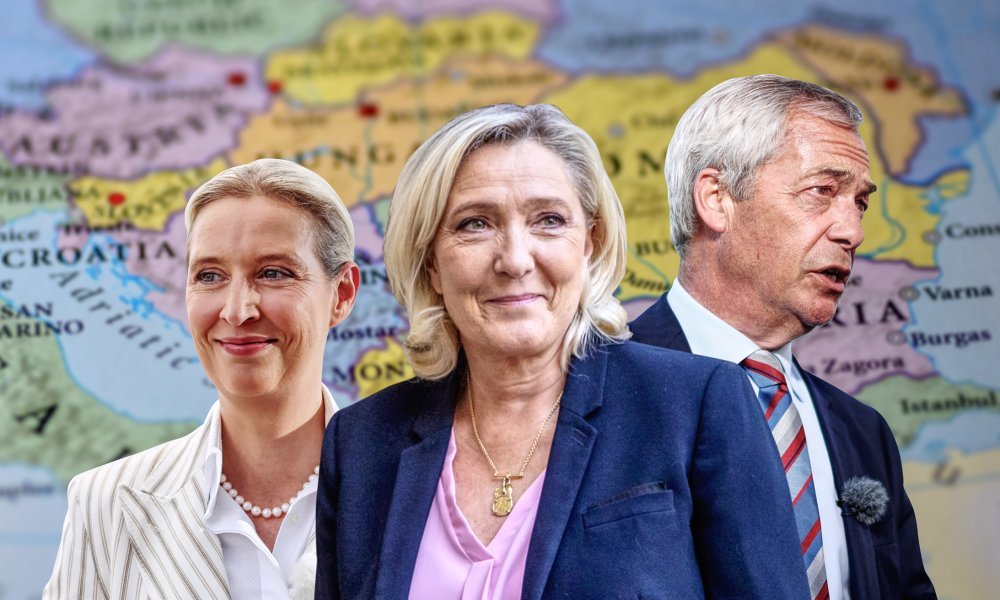
The old consensus is dead. And either the traditional forces use authoritarian and lawfare means to maintain control, or a new, highly unpredictable era of nationalist governance is about to begin across the continent.
Of course the irony, and hypocrisy, of the political establishment’s use of authoritarianism to push back what they consider (or at least want us to consider) the “barbarian authoritarianists” will not be lost on all.
Why is the Selective Service war gaming a ‘special skills’ draft?
A military mobilization exercise offers clues about who might be drafted for what sort of conflict
By Edward Hasbrouck | Responsible Statecraft | July 8, 2026
Documents obtained through a Freedom of Information (FOIA) request show that the Selective Service recently gamed out what a military draft would look like in a future war. It would not resemble the one the nation lived through 55 years ago for the Vietnam War or the contingency plans in current standby Selective Service regulations. Instead, those with “special skills” would be conscripted first.
This is the opposite of what the Selective Service says in its promotional materials, that “if a draft is authorized, individuals are selected through a random lottery” from among all young men regardless of their occupation or current skills.
According to the January 2026 military mobilization exercise, the first wave of draftees could include “computer network technicians, electronics technicians, aerospace engineers, divers, welders, gas turbine engine mechanics, electricians, heavy equipment operators, longshoremen, steel workers / pipefitters, radar / communications technicians, fiber optic technicians, mariners, aviation structural mechanics, cyber security specialists, robotics operators and technicians, air traffic controllers, logistics specialists, [and] linguists.”
A retired Army officer who spoke with RS suggested these kinds of skills indicate “the skill set required to expand (the) Navy, both manning ships and shore support, plus airfield operations.”
Officially, the Selective Service claims that a draft would be activated only in the event of a “national emergency.” This euphemistic language suggests a natural disaster or defense against invasion of the United States — what the chair of the National Commission on Military, National and Public Service (NCMNPS) posed as the “Red Dawn scenario”.
But the January exercise followed a much different course — an escalation to war, presumably with China over Taiwan, leading to full mobilization and then the draft.
In this scenario Washington intervenes militarily after Country A (China) blockades Country B (Taiwan) and the U.S. tries to break the blockade. The war escalates to “U.S. air attacks” on “Country A homeland.” A national emergency is declared and a draft is activated after full mobilization and retaliatory “kinetic strikes” by Country A on U.S. bases in Alaska and Hawaii. The first wave draft is declared shortly after. This scenario is very similar to the one envisioned recently in RS by Doug Bandow for how a U.S. attempt to break a Chinese blockade of Taiwan might escalate.
A provision in the NDAA for FY2022 required the Department of Defense conduct an exercise that would “include the processes of the Selective Service System in preparation for induction of personnel into the armed forces” by the end of FY2023. That exercise still hasn’t been conducted, but the SSS engaged in the above exercise in preparation for it. Multiple scenarios were considered in the SSS exercise, but only one was released in response to my FOIA request.
The lottery has long been considered central to the fairness of a draft. Many Americans would likely draw a line between a draft to mobilize against an unprovoked invasion of the United States and one to backfill military ranks in war started with China on behalf of another country 8,000 miles away.
All of this comes as the SSS is preparing to replace the failed system of self-registration with an automated system (also likely to fail) under which the SSS will try to identify and locate potential draftees by using existing databases from other Federal agencies.
Proposed regulations for “automatic” draft registration have been held up in review by the White House for more than three months, running down the clock for the SSS to complete the notice-and-comment administrative proceedings required before the change in the registration law takes effect on December 18, 2026.
I suspect the White House has realized that visible moves toward an unpopular draft in the middle of an unpopular war with Iran will fan the flames of opposition to its war policies. Meanwhile, the SSS has maintained radio silence since the “automatic” registration law was enacted, not issuing any statements or responding to any inquiries from journalists for more than six months.
Meanwhile, the idea for a “special skills” draft has been a controversial one ever since it was conceived of by the SSS in the early 1990s.
Aside from the SSS mandate to maintain readiness for the general draft, U.S. law mandates a parallel plan for a draft of “persons qualified for practice or employment in a health care occupation.” Proposed regulations for the Health Care Personnel Delivery System (HCPDS), to include men and women up to their 45th birthday in 57 occupational categories from dietitians and physical therapists to dental assistants and medical equipment repair specialists, were published in 1989. The SSS has maintained contingency plans ever since for activation of the HCPDS.
Congress has never seriously debated a special-skills draft other than for health care workers. But despite the lack of any Congressional authorization for planning and preparation for a broader special-skills draft, it has been under discussion by the Pentagon and the SSS for many years.
In 2004, a spokesperson for the SSS said that, “Talking to the manpower folks at the Department of Defense and others, what came up was that nobody foresees a need for a large conventional draft such as we had in Vietnam. But they thought that if we have any kind of a draft, it will probably be a special skills draft.”
Negative public reaction quickly prompted the Acting Director of the SSS to walk back the significance of this planning: “Today’s discussions about a broader special-skills draft are a practical outgrowth of normal contingency planning and are conceptual only.”
When the National Commission on Military, National, and Public Service (NCMNPS) was established in 2016, part of its mandate from Congress was to consider “the feasibility and advisability of modifying the military selective service process in order to obtain… individuals with skills (such as medical, dental, and nursing skills, language skills, cyber skills, and science, technology, engineering, and mathematics (STEM) skills) for which the Nation has a critical need, without regard to age or sex.”
The option of a special-skills draft modeled on the HCPDS was discussed but voted down by the NCMNPS. In closed-door meetings, one NCMNPS member noted that “it would be less politically feasible to set up a separate skills draft” than a draft that impacted all young men equally, and another opined that a special-skills draft would not be “fair and equitable.”
The continued prominence of a special-skills draft in SSS war games, despite the absence of a legal basis for it and its rejection by the NCMNPS, is indicative of the disconnect between what the SSS says and what it is doing, as well as between SSS fantasies and the real obstacles to a draft.
We all should be concerned about what sort of draft and what sort of war the SSS is preparing for. The time to consider whether we want a draft, and whether current contingency plans could feasibly be activated, is before the nation is committed to a war that would require a draft.
Yet there were no hearings or debate before Congress rubber-stamped the SSS proposal for “automatic” registration. Congress has never considered whether a special-skills draft would be feasible or fair. There’s been no audit of the accuracy or completeness of the SSS registration database since 1982.
Even supporters of a draft should be concerned about reliance on unworkable plans. It’s time for Congressional oversight hearings on whether the SSS is making realistic plans for national defense, or just trying to justify its continued existence in the face of proposals to abolish the agency.
Edward Hasbrouck is the editor and publisher of Resisters.info, the most comprehensive independent source of information about the draft and draft registration in the U.S. since 1980.
Laura Loomer wants Max Blumenthal stripped of citizenship and raided by the FBI for reporting in Iran
By Justin K.P. | The Dissident | July 7, 2026
Laura Loomer, the unhinged Zionist commentator with the Trump White House’s ear, continues her attempt to use lawfare to silence reporters and commentators opposed to the American/Zionist war on Iran.
Anti-War journalist Max Blumenthal, the editor of The Grayzone, is currently on the ground reporting on the funeral for slain Iranian supreme leader Ali Khamenei.
For daring to report on this important historical moment, the unhinged Zionist commentator, Laura Loomer called for Blumenthal- an American citizen- to lose his citizenship and be raided by the FBI for the crime of doing journalism.
On X, Loomer disturbingly wrote :
Max Blumenthal You’re a shill for Islam and communism and I hope you’re raided in a heavily armed raid by the FBI at 5 am and that SecRubio strips you of your passport for aiding the Iranian regime as they chant Death to America.
I hope SecScottBessent investigates how you paid for your trip to Iran, or if it was given to you by Iran and IRGC supporters so you are charged and prosecuted for possible sanctions violations.
Loomer tagged the FBI, Marco Rubio, and Scott Bessent in the post, in an obvious attempt to get a bogus lawfare investigation launched against Max Blumenthal because he gave a voice to the millions of Iranians who came out in defiance of the U.S/Israeli war of aggression.
This is far from the first time Loomer has attempted to get the Trump White House to crack down on critics of the war in Iran.
Previously, Loomer spearheaded a campaign to get the co-founder of the anti-war, realist think tank Quincy Institute for Responsible Statecraft, Trita Parsi, deported from the country for his opposition to the war in Iran.
Loomer, on X, made similar threats against Parsi, saying he “should be deported next” and directly telling him that “your days in our country are numbered”.
On X, Loomer wrote :
Secretary Rubio
Just so you know, Trita Parsi is also a Green Card holder.
He holds citizenship in Iran and Sweden.
Trita Parsi is a mouthpiece for the Iranian Regime and has used NIAC and the Quincy Institute to push out pro-Iranian regime talking points.
He should be deported next.
He is truly a threat to US National Security.
After the Israel lobby successfully primaried the anti-war Kentucky representative Thomas Massie, Loomer posted a picture with him next to Trita Parsi and wrote:
Hey Trita Parsi ,
Your boy Thomas Massie is about to be removed from Congress, and then…you’re probably going to be deported back to Iran.
Tick tock.
Your days in our country are numbered.
Loomer’s disturbing threats were following by an article from the Zionist propaganda blog, The Free Press, which falsely claimed that “In the eyes of some inside the Trump administration, Parsi isn’t just another Washington pundit eager to share his point of view. The State Department has launched an investigation of Parsi and could try to deport him, according to U.S. officials and documents reviewed by The Free Press.”
The State Department later clarified that “The State Department has no plans to revoke the green card of Mr. Parsi at this time”, but Trita Parsi said he believed that “some elements within the State Department wanted to start one and thought external pressure could help move things forward” following the threats from Loomer.
Before her attempt to deport Trita Parsi, Laura Loomer successfully got two Iranian women opposed to the U.S/Israeli war on Iran detained by ICE over false claims that they were related to the late Iranian general Qasem Soleimani.
Loomer boasted on social media , “Following my report and follow up with the US State Department in which I exposed the fact that Qasem Soleimani’s Niece Hamideh Soleimani Afshar has been living in the United States (Los Angeles, California) where she posts pro-Iranian regime and pro-IRGC content on her social media while she lives a life of luxury, the US State Department and SecRubio have just revoked her green card and she has been picked up by ICE. She has been arrested and will be deported back to Iran.”
ICE also detained her daughter, Sarina Hosseiny.
But as journalists Ryan Grim and Murtaza Hussain revealed , the two women had no connection to Qasem Soleimani.
They documented:
A review of personal documentation undercuts the allegation of a personal connection to Soleimani. Birth certificates from Iran, collected by the family, lay out a documented family tree spanning multiple generations with no connection to Qassem Soleimani, or even to relatives of the late general. Drop Site also reviewed other personal identification documents, including passports, family photographs, and work documentation from both Iran and the U.S. that strongly contradict the allegations that the two women were connected to the late Iranian military commander, or living lavishly from any connection to the Iranian government.
In order for Qasem Soleimani to be Hamideh’s uncle, based on her last name, he would need to be the brother of Hamideh’s father, Ali Soleimani-Afshar, who was born in Tehran in 1947. Yet according to the documents, Soleimani-Afshar had no brothers at all and his father died in the early 50s. Gen. Soleimani was born years later—in 1957—in a small village in the southern province of Kerman. Ali Soleimani-Afshar’s parents died in his childhood. Historical passport documents also show that Soleimani-Afshar’s family origins go back generations to the city of Yazd in central Iran, a province away from the roots of Gen. Soleimani.
The late general is also known to have two brothers, Sohrab and Hossein, who have previously given interviews about their upbringing in rural Kerman that identify themselves as his only brothers and make no mention of a connection to Ali Soleimani-Afshar.
Qassem Soleimani’s own family in Iran issued numerous strident denials that they had any relation to the late general. Soleimani’s youngest daughter, Zeinab Soleimani, a well-known political figure inside Iran, said in Iranian media that the State Department’s allegations were ‘false’ and that ‘the individuals arrested in the United States have no connection whatsoever to our family.’ Another daughter, Narjes Soleimani, went further in a separate statement, adding that, ‘To this day, no member of the Soleimani family, nor any relative of General Soleimani, has resided in the United States
Emboldened after having the state department use her false claims to detain and deport critics of the Iran war, Loomer is now trying to use her connections to the U.S. state department to have critics of the Iran war- even U.S. citizens like Max Blumenthal- stripped of their citizenship.
Featured Video

AIDS Inc. by Gary Null (2007)
or go to
Aletho News Archives – Video-Images
From the Archives
Clash of Civilization, Iran Part II
By Jamal Kanj – Intifada-Palestine.com – January 14, 2011
Israel’s survival kit is: perpetuate conflict, insecurity to rationalize collective hate and finally playing victim.
Devoid of conflict, Israel implodes internally; without hate, Zionism loses its justification; and playing eternal victim to continue blackmailing the West. Absence of this holy trinity, Israel ceases to exist.
From its inception, the house of Zion has mastered exploiting adversarial powers to advance Israel’s cause. For instance, their influence over the Democratic Party in the US began with President Truman’s bid for 2nd term election in 1948.
Responding to strong opposition from Secretary of State General George Marshall and Department experts urging against recognition of Israel, President Truman replied: “I’m sorry gentlemen but I have to answer to hundreds of thousands [Jewish voters] who are anxious for the success of Zionism. I do not have hundreds of thousands of [voting] Arabs among my constituents”
Zionists influence over liberal American politics was matched with the doctrinal school of Conservative theoreticians aligning the Republican Party’s platform with Israel’s objectives. The Neoconservative Zionists, coined Zioncons, invented the “Clash of Civilization” concept to fight Israel’s wars. … continue
Blog Roll
 Aletho News
- From Unipolar Universalism to Multipolar Civilizational Distinctiveness
- RSF military group defects, joins Sudanese army: State media
- Ireland goalkeeper refuses to play ‘Israel’ as squad weighs boycott
- China pushes back against US on Cuba, Iran
- Ukrainian Soldiers, Potential Mercenaries: Have Gun, Will Travel!
- Burnham’s UN debut… A masterclass in British disinformation
- Iran flights continue despite US aviation sanctions
- Global Tipping Points Lead the World Into a State of Entropy
- The day-after at the White House: USA and Xi Jinping
- The Geopolitical Balance in the Red Sea: The UAE Being Displaced by New Players
- If Americans Knew
- Deconstructing Netanyahu’s pants-on-fire UN rant – Daily Update
- Trump betrayed voters with his campaign lies and prioritized a foreign country once he took office
- Netanyahu calls Israel’s war in Gaza ‘opposite of genocide’ in UN speech to near-empty hall
- Settler Kidnappings: Torture, Sexual Abuse and Terrorisation of Palestinian Abductees as Israel Deepens Annexation of West Bank
- Gaza winter nears as 162,000 tents become unusable, raising fears of humanitarian crisis
- Netanyahu says, “It’s the opposite of genocide”; UN says Gaza economy is world’s ‘most severe crisis on record’ – Daily Update
- Israel’s US-Backed Assault on Gaza Has Created the ‘World’s Most Severe Economic Crisis on Record’: UN
- ‘Protecting U.S. Citizens’… From Israel
- ‘This is where I live now, the back of a truck’: a day in the life of a grandmother in Gaza
- In UN Speech, Iran’s President Displays Pictures of Children Killed by US, Brings Attention to Israel’s Nuclear Arsenal
- No Tricks Zone
- New Study: Earth And Venus Surface Warmth Largely Explained By Convection And Lapse Rate, Not CO2 Or Radiation
- 2025 Nature Paper Claiming Worsening Global Drought Gets RETRACTED …Heavily Flawed
- New Study: ‘Global Drought Shows No Detectable Recent Acceleration Under Climate Warming’
- Economic Masterminds: German Socialists Suggest Taxing Productivity Gains Stemming From Using AI
- The South China Sea Has Not Been Cooperating With The Climate Change Narrative
- Energy Crisis: Germany Enters Heating Season With Historically Low Gas Reserve Fill Levels
- New Study: The Antarctic Ice Sheet Gained Mass From 2020-2024 Due To Staggering Snow And Ice Accumulation
- Study: Ocean Heating Rates From Thousands Of Years Ago ‘Dwarf’ Modern Ocean Heating Rates
- Climate Extremists Target, Attack Large-Scale Power Grid Infrastructure In Germany!
- New Study: Antarctic Ice Melt Has Contributed Less Than 1 Centimeter To Sea Level Rise In The Last 30 Years

