British activists being detained in UK airports under anti-terrorism legislation on return home from Palestine
International Solidarity Movement, and Corporate Watch | February 28, 2013
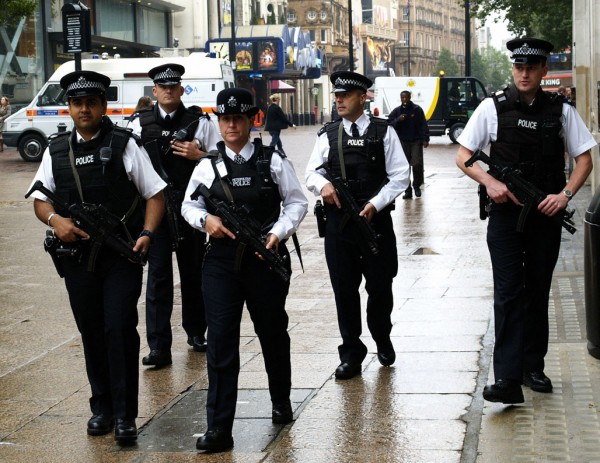 Two British peace activists have been detained in recent weeks after arriving home from the West Bank, occupied Palestine. They have been detained and taken in for questioning, over suspected links with the International Solidarity Movement.
“We are concerned about the British police using anti-terrorist legislation to target non-violent pro-Palestinian activists. We are a transparent group, trying to uphold the principles of international law; even inside Israel the International Solidarity Movement is not considered illegal. We would encourage the British Police to ask any questions they wish to do so, directly, and not by detaining affiliated activists at the airport”
The Schedule 7 of the Terrorism Act 2000, which the two activists have been held on, allows the police, under certain specified circumstances, to arrest individuals without a warrant who are reasonably suspected of being terrorists. These laws are draconian measures which give the British police powers to detain suspects for up to 28 days without charge.
Schedule 7 is clearly being used as a tool to find out more about activists involved in a wide variety of types of political dissent and to provide profiles of activists for the police to use in trying to undermine political movements. None of the questions about movements in the UK were designed to root out terrorism or uncover the preparation for terrorism. In fact, the movements concerned have never even been accused of terrorism (with the exception of completely false accusations made against the ISM, see here).
Britain abstained at the last vote at the United Nations deciding whether Palestine should be accepted as a non-member observer state. But in the last two weeks the double standards of the British government in relation to Palestine and Israel have again been laid bare; Saeed Amireh, has been refused a visa to visit the UK. Amireh is a peaceful campaigner against Israel’s occupation and the theft of Nilin’s land. He was told he hadn’t provided “enough supporting documents”, even though he had supplied everything that was asked for, including a letter of invitation and guarantee from the UK Palestine Solidarity Campaign of his costs being paid.
The use of these powers as a way to clamp down on non violent activists from Palestine and Britain is not acceptable, what is the British government afraid of? Maybe the fact the activists, returning home from Palestine, work with Corporate Watch and have helped reveal the continued supply of weaponry from Britain to the Israeli army has made them a target. This is despite the current British arms export policy stating it won’t deliver weapons to any countries breaking UN treaties. British companies are still complicit in Israeli war crimes in Gaza, as was proved in the EDO Decommisioners case of 2011.
Read more about the misuse of these powers and much more at corporateoccupation.org
Related articles
- Farming Injustice (alethonews.wordpress.com)
- Stop EU funding of Israeli military companies and illegal settlements (alethonews.wordpress.com)
- I find it sinister that the british firm securicor (“G4S”) is “providing services to israeli prisons and west bank checkpoints” (niqnaq.wordpress.com)
- Spies “monitoring” Palestine solidarity groups around world, says Israeli military correspondent (theuglytruth.wordpress.com)
U.S.-EU Trade Deal is the Foundation For a New Global Economic Order
By Dana Gabriel | Be Your Own Leader | February 25, 2013
The U.S. and EU have agreed to launch negotiations on what would be the world’s largest free trade deal. Such an agreement would be the basis for the creation of an economic NATO and would include trade in goods, services and investment, as well as cover intellectual property rights. There are concerns that the U.S. could use these talks to push the EU to loosen its restrictions on genetically modified crops and foods. In addition, the deal might serve as a backdoor means to implement ACTA which was rejected by the European Parliament last year. A U.S.-EU Transatlantic trade agreement is seen as a way of countering China’s growing power and is the foundation for a new global economic order.
In his recent State of the Union address, President Barack Obama officially announced that the U.S. would launch talks on a comprehensive Transatlantic Trade and Investment Partnership with the European Union (EU). A joint statement issued by European Commission President Jose Manuel Barroso, European Council President Herman Van Rompuy and U.S. President Obama explained that, “Through this negotiation, the United States and the European Union will have the opportunity not only to expand trade and investment across the Atlantic, but also to contribute to the development of global rules that can strengthen the multilateral trading system.” In a separate speech, European Commission President Barroso also emphasized that, “A future deal between the world’s two most important economic powers will be a game-changer. Together, we will form the largest free trade zone in the world. So this negotiation will set the standard – not only for our future bilateral trade and investment, including regulatory issues, but also for the development of global trade rules.”
The decision to pursue a free trade deal was based on the recommendations put forth by the High Level Working Group on Jobs and Growth which was created to deepen U.S.-EU economic integration. In their final report, they called on leaders from both sides to, “initiate as soon as possible the formal domestic procedures necessary to launch negotiations on a comprehensive trade and investment agreement.” According to U.S. and EU officials, talks could start in June with the hopes of completing a deal by the end of 2014. The proposed trade pact would include removing import tariffs, dismantling hurdles to trade in goods, services, and investment, as well as harmonizing regulations and standards. It would also cover intellectual property protection and enforcement. This could be used as an opportunity for a backdoor implementation of the Anti-Counterfeiting Trade Agreement (ACTA). It was a result of public pressure associated with risks to internet freedom and privacy which lead to ACTA being rejected by the European Parliament in July of 2012. There have already been attempts to use Canada-EU trade negotiations to sneak in parts of ACTA.
Public Citizen’s Global Trade Watch Director, Lori Wallach cautioned how U.S.-EU talks, “are aimed at eliminating a list of what multinational corporations call ‘trade irritants’ but the rest of us know as strong food safety, environmental and health safeguards.” She went on to say, “European firms are targeting aspects of the U.S. financial reregulation regime, our stronger drug and medical device safety and testing standards and more.” Wallach further added, “U.S. firms want Europe to gut their superior chemical regulation regime, their tougher food safety rules and labeling of genetically modified foods.” In a press release, Earth Open Source warned that, “An EU-U.S. free trade deal would obliterate EU safeguards for health and the environment with regard to genetically modified (GM) crops and foods.” Research Director Claire Robinson pointed out, “If the new trade agreement goes through, it will be illegal under World Trade Organisation rules for the EU to have a stronger regulatory system for GMOs than the U.S. system.” This is disturbing considering that in many cases, GM foods in the U.S. do not require any special regulatory oversight or safety tests.
Overshadowed by the proposed U.S.-EU trade deal are ongoing Canada-EU negotiations on a Comprehensive Economic and Trade Agreement (CETA). Despite talks being in their final stages, both sides still have some important gaps to be bridged before a deal can be reached. Thomas Walkom of the Toronto Star acknowledged that, “Europe’s real interest in negotiating a trade deal with Ottawa was to demonstrate to the Americans that a trans-Atlantic free trade pact was possible.” He noted, “EU negotiators will be even more reluctant to make concessions to Canada for fear of weakening their bargaining hand with the Americans.” Walkom argued that, “Canada is under more pressure to make a deal while Europe is under less.” He concluded that. “A Canada-EU deal seems inevitable. But now, with America in the mix, the terms for Canada may be even less favorable than expected.” The Globe and Mail recently reported that the EU is demanding additional concessions from Canada before any agreement can be signed. In order to wrap things up, a desperate Canada may be willing to give up even more. This was a bad deal from the start and it would be in their best interest to just walk away from CETA.
In the coming months, you can expect the anti-corporate globalization movement on both sides of the Atlantic to mobilize against the U.S.-EU trade agreement. It is big business and financial institutions who are pushing this deregulation agenda which threatens health, environmental and food safety standards. Just like NAFTA, the proposed U.S.-EU trade deal is also likely to include an investor-state dispute process which would give corporations the right to challenge government policies that restrict their profits. A trade agreement between the U.S. and EU is a building block for a new global trading system. If you combine NAFTA, the Trans-Pacific Partnership and a U.S,-EU Transatlantic trade deal, you have the makings for a global free trade area.
~
Related articles by Dana Gabriel:
Deepening the U.S.-EU Transatlantic Trade Partnership
Growing Opposition to the Canada-EU Trade Agreement
Advancing the Transatlantic Agenda
From NAFTA to CETA: Canada-EU Deep Economic Integration
Dana Gabriel is an activist and independent researcher. He writes about trade, globalization, sovereignty, security, as well as other issues. Contact: beyourownleader@hotmail.com Visit his blog at Be Your Own Leader
Drone ‘Nightmare Scenario’ Now Has A Name: ARGUS
By Jay Stanley | ACLU | February 21, 2013
The PBS series NOVA, “Rise of the Drones,” recently aired a segment detailing the capabilities of a powerful aerial surveillance system known as ARGUS-IS, which is basically a super-high, 1.8 gigapixel resolution camera that can be mounted on a drone. As demonstrated in this clip, the system is capable of high-resolution monitoring and recording of an entire city. (The clip was written about in DefenseTech and in Slate.)
In the clip, the developer explains how the technology (which he also refers to with the apt name “Wide Area Persistent Stare”) is “equivalent to having up to a hundred Predators look at an area the size of a medium-sized city at once.”
ARGUS produces a high-resolution video image that covers 15 square miles. It’s all streamed to the ground and stored, and operators can zoom in upon any small area and watch the footage of that spot. Essentially, it is an animated, aerial version of the gigapixel cameras that got some attention for super-high resolution photographs created at Obama’s first inauguration and at a Vancouver Canucks fan gathering.
At first I didn’t think too much about this video because it seemed to be an utterly expected continuation of existing trends in camera power. But since it was brought to my attention, this technology keeps coming back up in my conversations with colleagues and in my thoughts. I think that’s because it is such a concrete embodiment of the “nightmare scenario” for drones, or at least several core elements of it.
First, it’s the culmination of the trend towards ever-more-pervasive surveillance cameras in American life. We’ve been objecting to that trend for years, and many of our public spaces are now under 24/7 video surveillance—often by cameras owned and operated by the police. But even in our most pessimistic moments, I don’t think we thought that every street, empty lot, garden, and field would be subject to video monitoring anytime soon. But that is precisely what this technology could enable. We’ve speculated about self-organizing swarms of drones being used to blanket entire cities with surveillance, but this technology makes it clear that nothing that complicated is required.
Second and more significantly to me, this technology also makes real a key threat that drones pose to privacy that we’ve talked about: the ability to do location tracking. The video shows cars and pedestrians near Quantico, Virginia automatically tagged with colored boxes, which follow them as they move around. As the technology’s developer told NOVA,
Everything that is a moving object is being automatically tracked. The colored boxes represent that the computer has recognized the moving objects. You can see individuals crossing the street, you can see individuals walking in parking lots.
The surveillance potential of such a tracking algorithm attached to such powerful cameras is worth pausing to think about. To identify someone there’s no need for face or license-plate recognition (which may be impractical from above anyhow), cell phone tracking, gait recognition, or what have you. Even knowing where a little green square starts and finishes its day can reveal a lot, because it turns out that even relatively rough location information about a person will often identify them uniquely. For example, according to this study, just knowing the zip code (actually census tract, which is basically equivalent) of where you work, and where you live, will uniquely identify 5% of the population, and for half of Americans will place them in a group of 21 people or fewer. If you know the “census blocks” where somebody works and lives (an area roughly the size of a block in a city, but much larger in rural areas), the accuracy is much higher, with at least half the population being uniquely identified.
However, ARGUS-type tracking could be used to get more precise data than that—in many cases, to determine a vehicle’s home address, which pretty much reveals who you are if you’re in a single-family home, and narrows it down pretty well even if you’re in a large apartment building. (Academic papers have been written on inferring home address from location data sets.) Add work address and I expect that would nail virtually everybody. And of course lodged in the data set would be not just where a particular vehicle starts and finishes its day, but all the places it stopped in between—potentially revealing, as we so often point out, an array of information about a person such as their political, religious, and sexual activities.
True, such tracking using ARGUS would be disrupted whenever a subject disappears from aerial view. For example, pedestrians who travel by subway or bus or walk under foliage, or vehicles entering tunnels, would be harder to track. But even there, datamining large data sets collected over time could probably reveal a lot of things about people’s daily patterns and I would bet could eventually be used to identify a surprisingly large number of them. I expect that ARGUS would be used (if it’s not already) to generate a database consisting of location tracks of moving vehicles or pedestrians beginning in one place and ending in another. Think of them as little strings on a map. Some of these strings would stretch from a person’s home to their work, with stops in between, while others might be fragments, interrupted by a tunnel or other obstruction. But even the fragments, when the dimension of time is added to the equation, could probably be correlated together.
Of course low-lying clouds or fog might also interfere with aerial tracking, though imaging technologies already in existence could probably be deployed to see through them.
NOVA was not allowed to show images of the ARGUS censor, and stated that part of the program remained classified, including whether it has yet been deployed. (Though, we know it has been deployed domestically at least once, over Virginia as shown on NOVA. I’m going to assume it has not been deployed domestically in any more routine manner.) But, it is good that the Air Force allowed NOVA to see its capabilities. I’d like to think it’s because as Americans, Air Force officials have respect for our country’s values and democratic processes and don’t want to let such powerful and potentially privacy-invasive tools to be created in secret. It could also be, however, because the Air Force needs private-sector help in figuring out how to analyze the oceans of data the device can collect (5,000 hours of high-def video per day).
Either way, it’s important for the public to be aware of the kinds of technologies that are out there so that it can better decide how drones should be regulated.
Related articles
Supreme Court Dismisses Challenge to FISA Amendments Act; EFF’s Lawsuit Over NSA Warrantless Wiretapping Remains
By Cindy Cohn and Trevor Timm | EFF | February 27, 2013
Yesterday, the Supreme Court sadly dismissed the ACLU’s case, Clapper v. Amnesty International, which challenged the FISA Amendments Act (FAA)—the unconstitutional law that allows the government to wiretap Americans communcating with people overseas. Under the FAA, the government can conduct this surveillance without naming individuals and without a traditional probable cause warrant, as the Fourth Amendment requires.
The court didn’t address the constitutionality of the FAA itself, but instead ruled that the plaintiffs—a group of lawyers, journalists, and human rights advocates who regularly communicate with likely “targets” of FAA wiretapping—couldn’t prove the surveillance was “certainly impending,” so therefore didn’t have the “standing” necessary to sue. In other words, since the Americans did not have definitive proof that they were being surveilled under the FAA—a fact the government nearly always keeps secret—they cannot challenge the constitutionality of the statute.
EFF’s Warrantless Wiretapping Case, Jewel v. NSA, Is Not Affected by Clapper
It’s shameful that the courts again have cut off another avenue for accountability regarding the NSA’s warrantless and unconstitutional surveillance activities. But as disappointing as the Clapper decision is, the good news is the decision likely won’t adversely affect our Jewel v. NSA lawsuit, which we argued in district court in December of 2012. Indeed, the Clapper decision makes the Jewel case one of the last remaining hopes for a court ruling on the legality of the warrantless surveillance of Americans, now conducted for over a decade.
The Ninth Circuit has already ruled that the Jewel plaintiffs have standing under settled law. The court’s decision is based on solid ground because we have presented the court with evidence that dragnet warrantless surveillance has already occurred, through testimony and documents from AT&T and NSA whistleblowers. In fact, the court specifically differentiated the two cases in its Jewel opinion: “Jewel has much stronger allegations of concrete and particularized injury than did the plaintiffs in Amnesty International. Whereas they anticipated or projected future government conduct, Jewel’s complaint alleges past incidents of actual government interception of her electronic communications.”
Clapper v. Amnesty’s Catch-22
Nonetheless, the Supreme Court’s requirement in Clapper that a future harm must be “certainly impending” to allow a case to go forward is very troubling, especially in the context of cases involving secret surveillance.
As Justice Stephen Breyer’s dissent points out, future conduct can never be predict anything with 100% certainty, and if certainty was a requirement for standing, then virtually no cases would ever reach conclusion. Justice Breyer runs through dozens of cases where standing has been found for plaintiffs in situations where plaintiffs had a reasonable fear of harm, and in many of those cases, the plaintiffs were much less certain than the lawyers, human rights workers and journalist in Clapper.
Breyer summed absurdity of the “certainly impending” standard by saying, “One can, of course, always imagine some special circumstance that negates a virtual likelihood, no matter how strong. But the same is true about most, if not all, ordinary inferences about future events. Perhaps, despite pouring rain, the streets will remain dry (due to the presence of a special chemical).”
This standard is especially problematic when the harm is illegal surveillance conducted via secret government programs. Unlike physical searches of the home, communications surveillance is by its nature hidden from the people affected, and national security surveillance is rarely made public or used in domestic criminal prosecutions. Thus, under the Supreme Court’s rule, regardless of whether its surveillance was legal or constitutional, the government can deny standing to a victim of illegal surveillance just by never revealing its illegal actions to the person affected. Essentially, one can’t challenge the government’s surveillance unless the government agrees.
Indeed, in arguing that its ruling does not mean that government surveillance under the FAA can never be reviewed by the courts, the Court could only point to situations in which the government intentionally revealed its surveillance.1
Allowing the Executive broad unfettered powers to “turn the Constitution on and off at will,” is exactly what the Supreme Court refused to do in Boumediene v. Bush, but what it appears to have allowed here.
It’s not even clear that the majority even understands the real scope of the FAA. In the opinion’s first sentence, Justice Alito refers to “individuals” that can be warrantlessly surveilled, but as we’ve explained many times, and the dissent notes, one of the most odious parts of the law is that it allows the government to get one court order for groups or categories of people—potentially thousands of people can be affected at a time.
The Shrinking Ranks of Warrantless Wiretapping Cases
This is the second ruling in the past year in which the government has convinced the court to dismiss challenges to the NSA warrantless wiretapping program on technical grounds, when there is ample evidence of wrongdoing. In 2012, the Ninth Circuit reluctantly dismissed the Al-Haramain case on “sovereign immunity” grounds despite a lower court ruling the government had violated the Fourth Amendment. The court reasoned that because of a glitch in the language of FISA statute, the plaintiffs had to sue individuals in the government in their personal capacities and couldn’t sue government agencies themselves or government officials in their official capacities.
We look forward to the district court in Jewel v. NSA determining that our case can move forward, and that the government can, once and for all, be held to account for the NSA’s unlawful and unconstitutional warrantless wiretapping program.
- 1. The court also noted that a provision of the FAA allows a service provider, presumably in a fit of patriotic fervor and a willingness to pay expensive attorneys for its customers, challenges the government on its own, in secret. Yet even under this provision, the victim of the surveillance is unable to seek judicial review.
Related article
Reporting on Romer’s Charter Cities: How the Media Sanitize Honduras’s Brutal Regime
By Keane Bhatt | NACLA | February 19, 2013
On the evening of Saturday, September 22, human rights lawyer Antonio Trejo stepped outside a wedding ceremony to take a phone call. Standing in the church parking lot of a suburb of Tegucigalpa, Honduras, he was shot six times by unknown assailants. Despite his requests, he had been granted no police protection in the face of death threats; Trejo had believed he would be targeted by wealthy landowners over his outspoken advocacy on behalf of small farmers seeking to reclaim seized territories.1 In his death, Trejo joined dozens of fallen peasant leaders whom he had defended, as well as murdered opposition candidates, LGBT activists, journalists, and indigenous residents. All were victims of the violence and impunity that has reigned in Honduras since the 2009 coup d’état against its democratically elected and left-leaning president, Manuel Zelaya.
Earlier that day, Trejo had appeared on television, denouncing the powerful interests behind the government’s push for ciudades modelos—swaths of land to be ceded to international investors and developed into autonomous cities, replete with their own police forces, taxes, labor codes, trade rules, and legal systems. He had helped prepare motions declaring the proposal unconstitutional.
This concept of “charter cities” has been promoted for a couple of years by Paul Romer, a University of Chicago–trained economist teaching at New York University. He described his brainchild in a co-authored op-ed as “an effort to build on the success of existing special zones based around the export-processing maquila industry.” A “new city on an undeveloped site, free of vested interests” could bypass the “inefficient rules” that hinder “peace, growth and development” worldwide, he argued. With new and stable institutions, the charter city could become an “attractive place for would-be residents and investors.”2
The international press swooned over Romer’s revolutionary idea: Foreign Policy magazine named him one of its Top 100 Global Thinkers of 2010 for “developing the world’s quickest shortcut to economic development”;3 that same year, The Atlantic dedicated a 5,400-word paean to Romer and his “urban oases of technocratic sanity,” which held the promise that “struggling nations could attract investment and jobs; private capital would flood in and foreign aid would not be needed.”
But the applicability of Romer’s radical vision in Honduras always depended on the enthusiasm of the authoritarian, post-coup government of Porfirio Lobo. Lobo owes his presidency to the sham elections of 2009, which took place under the U.S.-backed de facto military government that overthrew Zelaya and were marred by violent repression and media censorship. With the exceptions of the U.S.-financed International Republican Institute and National Democratic Institute, international observers boycotted the electoral charade that foisted Lobo into power.
Romer’s lofty theories also remained utterly detached from the brutal nature of the collaborating government. “Setting up the rule of law” from scratch in a new city, he contended, would be an antidote to “weak governance” (weak in no small part due to Lobo’s appointment of coup perpetrators to high-level government positions).4 In a co-authored paper, Romer also mischaracterized his allies, the “elected leaders in Honduras,” as earnest in their intent to end a “cycle of insecurity and instability that stokes fear and erodes trust.”5 (Romer offered no comment when Lobo designated Juan Carlos “El Tigre” Bonilla, accused of past ties to death squads, as the national chief of police.)6
Even on its own terms, Romer’s development theory is disconnected from reality. He has repeatedly invoked Hong Kong as the sunny inspiration for the remaking of Honduras: “In a sense, Britain inadvertently, through its actions in Hong Kong, did more to reduce world poverty than all the aid programs that we’ve undertaken in the last century,” he claimed.7 Romer neglected to add that the city developed as a hub for the largest narcotrafficking operation in world history, through which Britain inflicted untold misery on the Chinese mainland. Britain dealt a humiliating military defeat to China (which had attempted to prohibit illegal British opium from entering its borders), took over Hong Kong, and forced China to abandon its tariff controls in 1842. Given that Hong Kong was one of the spoils of a drug war, and that its inhabitants were permitted democratic elections only 152 years after its incorporation into an empire, Romer’s dream for Honduras could just as easily be considered a nightmare.
Romer’s focus on good rule making is similarly fanciful; his effort to change the rules that engender poverty conspicuously excludes the international legal privileges that allow undemocratic leaders to sell a country’s resources and borrow in its name (he wrote positively of a trade agreement that Lobo struck with Canada this summer).8 Romer also approved of the legal architecture that “gives the United States administrative control in perpetuity over a piece of sovereign Cuban territory, Guantanamo Bay,” through a 1901 treaty that he failed to mention was ratified by a militarily occupied Cuba. Whether Romer knows it or not, his endorsement of power politics is clear: Investor-owned cities would be safe from future efforts by governments to repossess sovereign territory, because “Cuba respects the treaty with the United States, even as they complain bitterly about it.”9
Romer rebutted criticisms that his idea smacks of neocolonialism: “There are some things that it shares with the previous colonial enterprises,” he admitted, “but there’s this fundamental difference: at every stage, there’s an absolute commitment to freedom of choice on the part of the societies and the individuals that are involved.”10 Which choices are available to individuals living under a coercive, illegitimate government is a question left unanswered, and the adulating press could not be bothered to probe further.
After all, it would be impolite to reveal Romer’s close cooperation with a government whose security forces—many of whom are personally vetted, armed, and trained by the United States—killed unarmed students Rafael Vargas, 22, and Carlos Pineda, 24, as well as pregnant indigenous Miskitu women Juana Jackson Ambrosia and Candelaria Trapp Nelson, among others.11 Indeed, the Committee of Families of the Detained and Disappeared of Honduras observed that more than 10,000 official complaints have been filed against Honduras’s military and police since the coup. Such unsavory details might have chastened The Atlantic’s ebullient portrait of the “elegant, bespectacled, geekishly curious” professor, and would have tarnished President Obama, who praised Lobo for his “strong commitment to democracy” while providing his brutal security apparatus with $50 million in aid last year.12
In their coverage of Romer’s charter cities, the media have almost entirely excised the innumerable human rights violations occurring under the undemocratic Honduran regime. The New York Times is a case in point. About a week after Amnesty International, Human Rights Watch, the Inter-American Commission on Human Rights, and even the U.S. State Department were compelled to release statements of condemnation over Antonio Trejo’s assassination, Times reporter Elisabeth Malkin fawned over Romer’s idea while ignoring the killing of one of its most prominent critics. (Romer himself offered no public statement in the wake of Trejo’s death-squad-style killing.) Charter cities promised to “simply sweep aside the corruption, the self-interested elites, and the distorted economic rules that stifle growth in many poor countries,” asserted the imperturbable Malkin. She added with uncommon journalistic authority, “Nobody disputes that impoverished, violent Honduras needs some kind of shock therapy.”13
This is not the first instance in which the Times has glossed over inconvenient facts to laud shock therapy, a doctrine of massive privatization and investor-friendly deregulation developed at the University of Chicago.14 Many years after Chile’s coup government pushed through a rash of measures designed by economist Milton Friedman and his acolytes, the Chicago Boys, the Times reported that “Chile has built the most successful economy in Latin America, and one of the vital underpinnings of that growth was the open economic environment created by the former military dictator, Gen. Augusto Pinochet.”15 Leaving aside Pinochet’s torture and murder of tens of thousands of dissidents, Chile’s per capita gross domestic product was practically unchanged 13 years after the coup; Pinochet’s “free-market” experiment also ended with re-nationalizations in banking and copper extraction, the institution of capital controls, and continuous state support for Chile’s exports.16
Following in this dubious tradition of portraying a reactionary societal experiment as a formula for prosperity, the Times’ first piece on Honduran charter cities appeared in its Sunday magazine in May 2012. Author Adam Davidson, co-creator and host of National Public Radio’s Planet Money program, considered charter cities a “ridiculously big idea” for fixing an “economic system that kept nearly two-thirds of [Honduras’s] people in grim poverty.” Davidson related the story of Octavio Sánchez, Lobo’s chief of staff, who met with Romer to develop a “secure place to do business—somewhere that money is safe from corrupt political cronyism or the occasional coup.”17 Davidson, however, scrupulously avoided Sánchez’s own role as an apologist for the 2009 military overthrow of Zelaya. Days after Zelaya’s ouster, Sánchez advised Christian Science Monitor readers not to “believe the coup myth,” and in an Orwellian flourish, the Harvard Law graduate declared that “the arrest of President Zelaya represents the triumph of the rule of law.”18
In November, Planet Money provided an obsequious follow-up on Romer and Sánchez’s collaboration, scrubbing any mention of the 2009 coup and Lobo’s emergence from it, and portraying Sánchez as an idealistic dreamer. “Instead of fighting to do two, three or four reforms during the life of a government,” Sánchez asked, “why don’t you just do all of those reforms at once in a really small space? And that’s why this idea was appealing. It’s really the possibility of turning everything around.”19
Planet Money’s co-hosts unwittingly conveyed the fundamental obstacle to shock therapy: “Paul Romer has this killer idea and no real country to try it in; Octavio has the same idea, but no way to sell it to his people.” They acknowledged that even with “a government that’s ready to go,” the “people in Honduras” viewed Romer’s plan as “basically Yankee imperialism.” The episode concluded by explaining the apparent collapse of the charter cities initiative, resulting partly from the post-coup government’s lack of transparency (Romer was “stunned”), as well as a Honduran Supreme Court ruling in October that found charter cities unconstitutional. Romer remains unfazed, the hosts said. He has a promising lead in North Africa—another opportunity to answer “one of the oldest problems in economics: how to make poor countries less poor.”
Regardless of what Romer and his media sycophants think of the charter city’s (questionable) efficacy, their deafening silence on its antidemocratic implications and Honduras’s human rights abuses is unconscionable. In this insulated world, Honduran victims of economic hardship and state terror, and their own proposals to solve poverty, remain invisible. Pinochet, the original administrator of shock therapy, distilled the insouciance of today’s intellectual and media culture when, in 1979, he remarked, “I trust the people all right; but they’re not yet ready.”20
Keane Bhatt is a regular contributor to the MALA section of NACLA Report and the creator of the Manufacturing Contempt blog on the NACLA Website.
1. Alberto Arce, “Slain Honduran lawyer Complained of Death Threats,” Associated Press, September 25, 2012.
2. Paul Romer and Octavio Sánchez, “Urban Prosperity in the RED,” The Globe and Mail: April 25, 2012.
3. “The FP Top 100 Global Thinkers,” Foreign Policy, November 26, 2012. Sebastian Mallaby, “The Politically Incorrect Guide to Ending Poverty,” The Atlantic, July/August 2012.
4. Romer and Sánchez, “Urban Prosperity.” Dana Frank, “Honduras: Which Side Is the US On?,” The Nation, May 22, 2012.
5. Brandon Fuller and Paul Romer, “Success and the City: How Charter Cities Could Transform the Developing World,” Macdonald-Laurier Institute, April 2012.
6. Katherine Corcoran and Martha Mendoza, “New Honduras Top Cop Once Investigated in Killings,” Associated Press, June 1, 2012.
7. Sebastian Mallaby, “Politically Incorrect Guide.”
8. Romer and Sánchez, “Urban Prosperity.”
9. Can “Charter Cities” Change the World? A Q&A With Paul Romer,” Freakonomics.com, September 29, 2009.
10. Jacob Goldstein and Chana Joffe-Walt, “Episode 415: Can a Poor Country Start Over?” NPR’s Planet Money, November 9, 2012.
11. Javier C. Hernandez, “An Academic Turns Grief Into a Crime-Fighting Tool,” The New York Times, February 24, 2012; Annie Bird and Alexander Main, “Collateral Damage of a Drug War,” Center for Economic and Policy Research and Rights Action, August 2012.
12. U.S. Office of the Press Secretary, “Remarks by President Obama and President Lobo of Honduras Before Bilateral Meeting,” whitehouse.gov, October 5, 2011; Dana Frank, “Honduras.”
13. Elisabeth Malkin, “Plan for Charter City to Fight Honduras Poverty Loses Its Initiator,” The New York Times, September 30, 2012
14. Naomi Klein, The Shock Doctrine: The Rise of Disaster Capitalism (Metropolitan Books, 2007).
15. Nathaniel C. Nash, “Terrorism Jolts a Prospering Chile,” The New York Times, April 9, 1991.
16. Paul Krugman, “Fantasies of the Chicago Boys,” The Conscience of a Liberal (blog), The New York Times, March 3, 2010.
17. Adam Davidson, “Who Wants to Buy Honduras?,” The New York Times Magazine, May 8, 2012.
18. Octavio Sánchez, “A ‘Coup’ in Honduras? Nonsense,” The Christian Science Monitor, July 2, 2009.
19. Goldstein and Joffe-Walt, “Can a Poor Country.”
20. John B. Oakes, “Pinochet in No Rush”, The New York Times, May 3, 1979.
Related articles
- Honduras: Murdered Lawyer’s Brother Killed in Aguán (alethonews.wordpress.com)
- NPR Examines One Side of Honduran “Model Cities” Debate (alethonews.wordpress.com)
- IMF Ignores Proven Alternatives With Recommendations to Honduras (alethonews.wordpress.com)
- Killings Continue in Bajo Aguán as New Report Documents Abuses by U.S.-Trained Honduran Special Forces Unit (alethonews.wordpress.com)
- Honduras: Miguel Facusse is Tragically Misunderstood (alethonews.wordpress.com)
Lawyer: “Prior To His Death, Detainee Complained Of Pain Due To Ongoing Interrogation”
By Saed Bannoura | IMEMC & Agencies | February 24, 2013
 Attorney Kamil Sabbagh, who represented detainee Arafat Jaradat, who died Saturday at an Israeli interrogation facility, stated that Jaradat complained to him of sharp pain due to ongoing and extensive interrogation.
The lawyer said that he represented Jaradat during a court session that was held Thursday February 21.
The court session was the first time the detainee was able to see a lawyer since the army kidnapped him more than 12 days ago. The hearing was held at the Al-Jalama detention and interrogation center.
Sabbagh said that Jaradat complained of sharp pain in the back, and several other parts of his body. Jaradat told his lawyer that he was interrogated for several hours, every day, and repeatedly complained of sharp pain but was never seen by a physician.
The lawyer said that, during the court hearing, he told the military judge about the complaints made by Jaradat, and that the judge instructed the prison administration to grant him the needed medical attention, but the request was apparently ignored.
During the court hearing, the judge ordered Jaradat under interrogation for an additional 12 days.
Following the death of Jaradat on Saturday, several Israeli media agencies claimed that the detainee suffered a heart attack that led to his death.
Palestinian Minister of Detainees, Issa Qaraqe’, held Israel responsible for the death of Jaradat, and said that the detainee died only six days after the army kidnapped him on February 18.
Qaraqe’ demanded forming an international committee to investigate the death of Jaradat, and held Israel responsible for the lives of Palestinian detainees on hunger strike demanding an end to their illegal detention.
Hundreds of Palestinians held a protest in front of the home of Jaradat and chanted slogans against the Israeli occupation, Israel’s ongoing violations and attacks, and chanted for more solidarity with all Palestinian political prisoners held by Israel.
Protests have also been reported in different parts of the occupied territories.
Killings Continue in Bajo Aguán as New Report Documents Abuses by U.S.-Trained Honduran Special Forces Unit
By Alex Main | CEPR Americas Blog | February 22, 2013
A few days ago two more land rights activists were murdered in the Bajo Aguán, a region of Honduras where dozens of campesinos have been killed over the last three years. On February 16, Jacobo Cartagena, member of the Unified Campesino Movement of the Aguán (or MUCA, by its Spanish initials), was shot and killed as he waited for a bus. Hours later, José Trejo Cabrera, was shot down while driving a motorcycle near the town of Tocoa. Trejo was the brother of Antonio Trejo Cabrera, a lawyer who had defended small farmers’ land claims who himself was shot to death last September as he was leaving a wedding. Amnesty International has called on the Honduran government to “urgently investigate” José Trejo’s killing and noted that “the day before he was shot dead [he] had been in the Honduran capital Tegucigalpa, to meet with officials in an effort to ensure justice for his brother’s murder and visiting media outlets to keep the spotlight on the case.”
In an interview with the Associated Press, José Trejo had said “if they killed my brother, what will they not do to me?” He and others blamed the powerful businessman Miguel Facussé for his brother’s murder. Facussé and a handful of other wealthy landowners in the region have hundreds of armed security guards who are believed to be responsible for many of the numerous killings and other attacks targeting campesino activists. Honduran authorities have failed to bring those responsible for the killings to justice or to take effective measures to protect the activists. As the AP notes, “no one is serving time in prison for any of the 89 assassinations of campesinos committed in the Aguán Valley since December of 2009 when land occupations began…”
Since August of 2011, hundreds of Honduran soldiers have been stationed in the Bajo Aguán as part of the so-called Xatruch Intervention Force, ostensibly to mitigate the ongoing violence taking place there. But targeted killings of campesinos have continued unabated and representatives of land rights movements have accused military personnel of being involved in attacks on their members. A new report authored by Annie Bird of Rights Action adds significant weight to these allegations. It documents 34 cases of abuses directly involving members of Honduras’ 15th Battalion, a special forces unit of the Honduran army that has been present in the region for decades and has played a central role in the Xatruch Force.
The report describes in detail specific instances of torture, threats, forced disappearances and killings in which members of the 15th Battalion have been reportedly involved, often in tandem with police and private security forces operating in the Aguán. Only a small handful of these abuses have been partially investigated and none of those responsible have been prosecuted.
The report also examines how military officials have sought to criminalize the region’s campesino movements, associating them with terrorism and drug-trafficking, while steadfastly defending the property claims of powerful landowners.
Those who have reported on the abuses of security forces in the Aguán have also been criminalized by military officials. On February 18th the Commander of the Xatruch Intervention Force publicly accused various journalists, human rights defenders by name of “denigrating the actions of the armed forces” and of “besmirching the image of the Honduran nation.” Following the incident, Reporters Without Borders issued a release stating that the accusations were “a clear attempt to intimidate and censor” and that “this kind of public stigmatization directly exposes those concerned to significant risks, given the human rights situation in Aguán in particular and Honduras in general, where those who dare to provide information about land disputes and environmental problems are systematically criminalized.”
As Rights Action notes, the 15th Battalion reportedly receives training and assistance from the U.S. government. The Honduran media has reported that U.S. Army Rangers have trained personnel from the Battalion and that U.S. Special Operations South has funded the upgrading of the Battalion’s Rio Claro base.
A provision attached to the annual U.S. Foreign Operations Appropriations Act – known as the Leahy Amendment, after the U.S. Senator who first introduced it – prohibits U.S. military assistance to foreign units that commit gross human rights violations with impunity. The provision states: “No assistance shall be furnished under this Act or the Arms Export Control Act to any unit of the security forces of a foreign country if the Secretary of State has credible evidence that such unit has committed gross violations of human rights.” The only exception being if the “Secretary determines (…) that the government of such countries is taking effective measures to bring the responsible members of the security forces unit to justice.” A similar provision can be found in Defense Appropriations Acts, though it only deals with the funding of training activities for foreign troops.
Rights Action’s report appears to provide “credible evidence” that the 15th Battalion and other Honduran authorities are involved in gross abuses and there is no indication that Honduran authorities have pursued any form of judicial action to address these abuses. If the U.S. government has plans to fund further military assistance to the unit there may well be cause for the Secretary of State to cut off assistance until abuses are adequately investigated and any responsible military personnel are brought to justice.
Other recent incidents involving Honduran security forces have also appeared to be within the realm of Leahy Amendment action. Last November the AP reported on how Honduran soldiers trained and vetted by the U.S. murdered an unarmed teenager who ran through a check point last May. The same month, four Honduran villagers in the Moskitia region were killed in the course of a counternarcotics operation carried out jointly by the DEA and a special Honduran police unit trained and vetted by the U.S. As a joint report and previous posts have explained, the Honduran investigation of the incident was flawed and inconclusive, a fact which the State Department still appears unwilling to acknowledge.
Related articles
- Honduras: Murdered Lawyer’s Brother Killed in Aguán (alethonews.wordpress.com)
- Honduras: Two More Campesinos Murdered in Aguán (alethonews.wordpress.com)
- Honduras: Miguel Facusse is Tragically Misunderstood (alethonews.wordpress.com)
- NPR Examines One Side of Honduran “Model Cities” Debate (alethonews.wordpress.com)
Samer Issawi sentenced to 8 months in prison
Ma’an – 21/02/2013
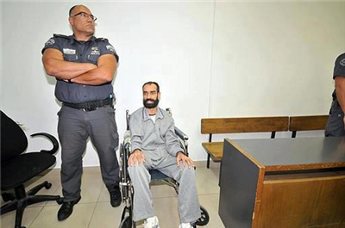 BETHLEHEM – An Israeli court on Thursday sentenced hunger-striker Samer Issawi to eight months in prison, but he has yet to face a military committee which could imprison him for 20 years.
Issawi has been on hunger strike for 204 days.
The magistrates court in Jerusalem sentenced Issawi for leaving Jerusalem, in violation of the terms of his amnesty granted in an Oct. 2011 prisoner exchange deal.
The sentence includes time served since Issawi’s re-arrest in July 2012, and will conclude on March 6, but Issawi also faces a possible sentence under an Israeli military order which allows a special military committee to cancel prisoners’ amnesty.
The committee could use secret evidence to sentence Issawi to serve 20 years, the remainder of his previous sentence.
Issawi was freed in an Oct. 2011 prisoner swap for captured Israeli soldier Gilad Shalit. Israel has subsequently re-arrested at least 14 prisoners since the deal.
Ahead of Thursday’s verdict, Israeli forces clashed with hundreds of Palestinians protesting near Ramallah on Thursday in solidarity with long-term hunger strikers like Issawi.
A Ma’an reporter said 29 protesters were injured by rubber-coated bullets and dozens more suffered tear gas inhalation.
Prisoners minister Issa Qaraqe and Fatah central committee member Mahmoud al-Aloul joined the rally, near Israel’s Ofer prison in the central West Bank.
An Israeli military spokeswoman said soldiers used “riot dispersal means” against Palestinians who hurled rocks at forces.
Protests have been held across the West Bank and in Gaza in support of Issawi, who has been on hunger strike for 204 days, and Tareq Qaadan and Jaafar Azzidine who have refused food for 86 days.
Also Thursday, the Ahmed Abu Rish Brigades on Thursday threatened to fire rockets at Israel if any jailed hunger striker is harmed.
“We will continue to work with rockets and we will not stand by idly. Military operations will be implemented to achieve the rights of prisoners and to free them,” brigades member Abu Ali al-Qawkabi said in a statement.
Al-Qawkabi called on Palestinian leaders in Ramallah to reject any negotiations with Israel and urged the Gaza government to refuse a truce until the detainees’ demands are met.
Islamic Jihad meanwhile has said a truce with Israel could unravel if any hunger striker dies.
On Tuesday, the Palestinian Authority called on the international community to step up efforts to protect and release prisoner like Issawi in Israeli detention facilities.
The cabinet also called on the World Health Organization to move forward on plans made last year to form a fact-finding committee to investigate the conditions in Israeli jails, specifically negligence.
Prison Sentences for Black Men Are 20% Longer Than Those for White Men for Same Crimes
By Noel Brinkerhoff | AllGov | February 20, 2013
Federal judges have handed down longer prison sentences for black men than for white men—for the same or similar crimes committed— since 2005, when a court ruling gave judges more discretion in deciding jail times for convicted criminals.
The U.S. Sentencing Commission revealed in a new report that the sentences of black men were on average 19.5% longer than the sentences of white men from December 2007 to September 2011.
The commission did not mention racism as a factor in sentencing decisions, but did write that judges “make sentencing decisions based on many legitimate considerations that are not or cannot be measured.”
To address the disparity, commissioners recommended that federal judges give sentencing guidelines more weight. They also said appeals courts should more carefully examine sentences that fall beyond the guidelines.
Eight years ago, the U.S. Supreme Court struck down a 1984 law requiring federal judges to impose sentences within the range of the federal sentencing guidelines, which are set by the commission.
Critics of the new report say that the commission focused on the tail end of the criminal justice process, to the exclusion of earlier stages when bias can occur, such as at the time of arrest or plea being entered. Considering such data could have altered the study’s results, they claim.
Related article
Oscar-nominated Palestinian director detained at LAX
By Yumna Marwan | Al-Akhbar | February 20, 2013
Palestinian director of Oscar-nominated “5 Broken Cameras” Emad Burnat was detained at Los Angeles airport and threatened with deportation Wednesday, Burnat told Al-Akhbar in an interview.
The filmmaker traveled to Los Angeles, from Palestine via Turkey, to attend Sunday’s Academy Awards ceremony, where his film had been nominated for the “Best Documentary” category.
The director was interrogated, detained for an hour and a half, and had his fingerprints taken twice. Airport officers googled his name to confirm that he had indeed been nominated for an Oscar.
LAX officials at first told Burnat they intended to deny him entry to the United States. “I told them I don’t care if you send me back to Palestine, just don’t detain me for any longer,” Burnat said.
His wife and eight-year-old son, who is the documentary’s main character, were also held at the airport.
During his layover in Turkey’s Istanbul, Burnat was also questioned by airport security officials.
Asked whether he thought he was sought out because of his film, Burnat said: “I don’t know, but this is the first time this happens. I’ve been to the States six times in the last year.”
“5 Broken Cameras” documents non-violent resistance in Bil’in, a Palestinian village surrounded by Israeli settlements and Palestine’s Apartheid Wall.
The US$400,000 documentary was made with contributions from Israeli and French government film funds. Its title refers to the number of cameras that Burnat, the filmmaker and main protagonist, had broken by Israeli forces as he tried to film weekly demonstrations against the military.
Documentary filmmaker Michael Moore was the first to break the news of Burnat’s detainment, because the Palestinian director’s detainment kept him away from a dinner party for nominees where Moore was present. Moore announced Burnat’s ordeal on his Twitter account.
“Apparently the Immigration & Customs officers couldn’t understand how a Palestinian could be an Oscar nominee. Emad texted me for help.” wrote Moore in his Twitter account this morning.
Burnat won the documentary director’s award at the Sundance Film Festival this year.
Honduras: Murdered Lawyer’s Brother Killed in Aguán
Weekly News Update on the Americas | February 17, 2013
Unidentified assailants shot Honduran campesino José Trejo Cabrera on the evening of February 16th as he was riding on his motorbike to his home in the San Isidro section of Tocoa in the northern department of Colón. Trejo was taken to a local hospital, where he died a few minutes later. The victim’s brother, Antonio Trejo Cabrera, an attorney who defended campesino activists and fiercely opposed plans for autonomous “model cities” in Honduras, was gunned down the evening of September 22, 2012, in Tegucigalpa near the Toncontín International Airport [see Update #1145]. Both brothers were members of the Authentic Claimant Movement of Aguán Campesinos (MARCA), one of several campesino collectives seeking the return of land in the Lower Aguán Valley in northern Honduras that they say big landowners bought illegally.
The conservative Tegucigalpa daily La Tribuna reported that according to several neighbors the attackers were trying to steal Trejo’s motorbike, but Vitalino Alvarez, a spokesperson for the Unified Campesino Movement of the Aguán (MUCA), told the French wire service AFP that the killers had been “waiting for” Trejo. Some 85 campesinos have been killed in the Aguán since the land dispute intensified in late 2009; two were murdered just two weeks earlier, on Feb. 2 [see Update #1163]. The government of President Porfirio (“Pepe”) Lobo Sosa has militarized Colón department, claiming that this would reduce violence both from the land disputes and from common crime, but many campesinos feel the militarization was actually directed against them. “We don’t understand how we can go on being killed in a department that’s under siege by the army and the police,” Alvarez remarked.
Another campesino, Santos Jacobo Cartagena, was gunned down a few hours before Trejo on the afternoon of February 16th. Unidentified men riding in a car shot Cartagena, a MUCA member, as he was waiting for a bus at the La Confianza community. “More murders can be expected after the persecution and threats against the campesinos who struggle for land,” the Permanent Human Rights Monitoring Center for the Aguán, a Honduran human rights group, wrote on February 16th. (Vos el Soberano 2/16/13; La Tribuna 2/17/13; AFP 2/17/13 via Terra.com; Conexihon.info (Honduras) 2/17/13)
Featured Video

Why Hamas Really Attacked Israel on Oct. 7
or go to
Aletho News Archives – Video-Images
From the Archives
Confronting the Threat of Ethnic Bioweapons
By Tony Cartalucci – New Eastern Outlook – 29.11.2017
The United States Air Force’s 59th Medical Wing’s molecular biology branch recently was revealed to have been collecting specifically Russian RNA and synovial (connective) tissue samples, prompting fears in Russia of a possible US directed ethnic-specific bioweapons program. … continue
Blog Roll
 Aletho News
- Why Yemen Is Bombing Saudi Arabia’s Airports: The War Behind the Headlines
- Sally Rooney’s books pulled from UK over support for Palestine Action
- Bombs for Tel Aviv, Promises for Riyadh
- Israeli ad agency conducted vast global espionage campaign using online ads: Report
- Oct. 7 Forever Marks The Big Reveal: ‘We See You, Israel, We Revile You, We Reject You!’
- Meet the US generals and admirals advancing Israeli policy
- Israel’s Straw Widow Protocol: The Kill Zones Where Civilians Were Labelled ‘Terrorists’
- Leading Israeli Think Tank Publishes Psychotic Israeli ‘National Security’ Doctrine
- Are the United States and Israel in Decline-and-Fall Mode?
- Why Hamas Really Attacked Israel on Oct. 7
- If Americans Knew
- Israeli firm used online ads to run vast spy operation, researchers say
- No, the world zionist movement is not an antisemitic conspiracy theory
- Hundreds of IDF investigations into killings still have no public outcome, BBC Verify finds
- After Ashley Moody Epstein Probe, Donors Linked to Him Poured Money Into her Senate Campaign
- Worried about Russian meddling in UK politics? Wait till you see what Israel is up to
- Israeli settlers attack West Bank center for disabled children, church leader calls for int’l action
- Pulling Out Teeth Just to Live: How Israel Has Devastated Dental Care in Gaza
- Gaza’s “ceasefire” death toll passes 1,500 – Daily Update
- Activists Abused By Israel Return to New Freedom Flotilla Mission
- 60 Minutes won’t tell the full truth about Israeli settler violence
- No Tricks Zone
- New Study Suggests Large Regions Of The Pacific Ocean Have Been Cooling For The Last 80 Years
- Germany’s Green Energy Debacle: High Energy Costs Force Kahla Porzellan to Close After 182 Years!
- New Study: 50 Years Of The Most Aggressive ‘Net Zero’ Policies Can Only Affect The Global Climate By 0.03°C
- US September “Heat” Was No Record…Many Records Set Decades Ago
- Latest European Green Energy Debacle; Portugal’s Largest Flagship Solar Park Insolvent!
- Green Energy Debacle: German Expert Professor Fritz Vahrenholt Warns Of Severe Economic And Social Consequences
- Two More Paleo Reconstructions Affirm Meters-Higher Sea Levels Across Ireland, Brazil 7000-6000 Years Ago
- New Study: Earth And Venus Surface Warmth Largely Explained By Convection And Lapse Rate, Not CO2 Or Radiation
- 2025 Nature Paper Claiming Worsening Global Drought Gets RETRACTED …Heavily Flawed
- New Study: ‘Global Drought Shows No Detectable Recent Acceleration Under Climate Warming’

