Obama Regime Refuses to Investigate Alleged DEA Killing of Women and Child in Honduras
By Noel Brinkerhoff | AllGov | February 17, 2013
 Democrats on Capitol Hill want the Obama administration to investigate the deaths of four civilians in Honduras last year during an anti-cocaine raid involving U.S. law enforcement agents. But administration officials have balked at the request.
On May 11, 2012, four villagers in a boat on the River Patuca, two pregnant women, a 21-year-old man and a 14-year-old boy, were killed when local police entered the town of Ahuas in northeastern Honduras to conduct a counternarcotics operation. Another four boat passengers were injured by gunfire. It was later learned that members of the U.S. Drug Enforcement Administration (DEA) participated in the raid, which raised questions of whether Americans were responsible for the killings.
The Honduran government investigated the incident and concluded the DEA was not at fault for the deaths.
But 58 House Democrats were not satisfied with the probe, which they called “deeply flawed” in a letter to Secretary of State John Kerry and Attorney General Eric Holder Jr. calling for the U.S. to conduct its own examination.
Officials with the State Department and the Department of Justice said their agencies have no intention of reopening the matter, according to The Washington Times.
More:
Government Won’t Probe of DEA Raid in Honduras (by Guy Taylor, Washington Times)
Collateral Damage of a Drug War (Center for Economic and Policy Research) (pdf)
Related articles
Israel detains Palestinian cartoonist, family says
Ma’an – 16/02/2013
 JENIN – Israeli authorities on Saturday detained a Palestinian cartoonist on his way back to the West Bank from Jordan, according to his family.
Muhammad Abdul-Ghani Sabanah, 30, was detained at the Allenby Bridge crossing between Jordan and the West Bank, his brother Tamir told Ma’an, adding that Sabanah was in Jordan for a meeting.
He said that on his way back, Israeli troops detained Sabanah, who is from the Jenin town of Qabatia, without giving any explanation.
Sabanah’s cartoons are widespread in the Arab world. He is well-known for his criticism through his cartoons, which focus mainly on the Palestinian people’s problems and the Palestinian-Israeli conflict.
He works as a public information officer at the Arab American University in Jenin.
Related articles
- Israeli army dogs attack elderly Palestinian, two-year-old child injured in the head in Jewish settlers’ attack (alethonews.wordpress.com)
- EU demands rights for Palestinian hunger strikers (altahrir.wordpress.com)
Academy Awards for the Promotion of Torture?
By Dave Clennon | Dissident Voice | February 16th, 2013
I’m a member of Hollywood’s Motion Picture Academy. At the risk of being expelled, for disclosing my intentions, I will not be voting for Zero Dark Thirty — in ANY Academy Awards category.
Everyone who contributes skill and energy to a motion picture — including actors — shares responsibility for the impressions the picture makes and the ideas it expresses. If I had played the role that was offered to me on Fox’s 24 (Season 7), I would have been guilty of promoting torture, and I couldn’t have evaded my own responsibility by blaming the writers and directors.
So Jessica Chastain won’t get my vote for Best Actress. With her beauty and her tough-but-vulnerable posturing, she almost succeeds in making extreme brutality look weirdly heroic.
There’s plenty of “Oscar buzz” around Zero Dark Thirty. Several associations of film critics have awarded it their highest honors. I have watched the film (2hrs, 37min). Although torture is an appalling crime under any circumstances, Zero never acknowledges that torture is immoral and criminal. It does portray torture as getting results. The name of Osama Bin Laden’s courier is revealed (in the movie) by a “detainee,” Ammar, who has endured prolonged and horrifying torture.
The two lead interrogators, both white, are not torturing Ammar at the moment he gives up the name (Abu Ahmed), but he is still utterly depleted from at least 96 hours of sleep-deprivation, and he knows they will torture him again, if he resists. “Y’know, I can … hang you back up to the ceiling,” says chief interrogator Dan.
The “moral” of this particular screen story? Torture sometimes works. Not always. Later, the female interrogator (and Zero’s heroine Maya [Chastain]), supervises
the “enhanced interrogation” of another detainee, Faraj. These are some of the enhancements we see her employ: first, a thick brown liquid is poured into a funnel which has been pushed into Faraj’s mouth and rammed part-way down his throat; then Maya supervises his beating and near-drowning (aka waterboarding); he gasps for air, gags, shudders and chokes.
Director Kathryn Bigelow then shows Chastain in a clean, well-lighted restroom, looking pretty, but tired and frustrated; Bigelow does not give us a view of Faraj after HIS ordeal. Next we see Maya complaining to her mentor Dan that Faraj hasn’t cracked. “You want to take a run at him?” she asks, smiling hopefully.)
In minute 45 of Zero, we learn that Faraj has “gone south.” Maya’s relentless, merciless torture has finally killed her detainee. She is now a murderer. So, for the next hour and 45 minutes, we’re rooting for a gorgeous, murdering thug to track down a charismatic, murdering jihadist.
If, in fact, torture is a crime (a mortal sin, if you will) — a signal of a nation’s descent into depravity — then it doesn’t matter whether it “works” or not. Zero Dark Thirty clearly condones torture. Not a single character involved in “The Greatest Manhunt in History” expresses any regret about the CIA’s use of torture. Maya/Chastain gets her man (code named “Geronimo”!) and that’s all that counts. The end justifies the vicious means.
Individuals and groups protesting the easy tolerance of torture in Zero Dark Thirty have been dismissed by some commentators as having “a political agenda.” The grievous problem presented by torture is NOT political. It’s moral. And it’s criminal. Decent people of the left, the right, and the center would all judge the torture in Zero Dark Thirty as immoral and criminal.
If the deeply racist landmark film Birth of a Nation were released today, would we vote to honor it? Would we give an award to Leni Riefenstahl’s brilliant pro-Nazi documentary, Triumph of the Will? Hundreds of millions around the world watch the Oscars, we’re told. Are we going to show the world that we Americans STILL approve of torture?
After Jessica Chastain won Zero Dark Thirty’s only Golden Globe Award, it occurred to me that she is the new face of American torture — as Kiefer Sutherland was, for several years. If the Academy votes her an Oscar, it wouldn’t be surprising if the world community concluded that the U.S.A. still tolerates this vicious, criminal behavior.
Sometimes, it’s not just a movie. And acting in it isn’t just a job. It’s a moral choice.
Dave Clennon can be reached at djjc123@earthlink.net.
Related articles
- Oscar-nominated Palestinian director detained at LAX
- Hollywood’s Imperial Propaganda
- Abe Lincoln, Racist Fascist?
- Hollywood myths harming the whole world: Ken O’Keefe
- Academy Awards for the Promotion of Torture?
- Oscar Prints the Legend: Argo’s Upcoming Academy Award and the Failure of Truth
- Hollywood Snubs Best Film as ‘Zero Dark Thirty’ Odds Fade – Bloomberg
The Drug Trade and the Increasing Militarization of the Caribbean
By Kevin Edmonds | The Other Side of Paradise | February 8, 2013
Given the current controversy surrounding the extent of the U.S. drone program and targeted killings, it is important to revisit that in the summer of 2012, the U.S. Customs and Border Protection Agency announced that unmanned drones would begin patrolling Caribbean airspace as an expansion of the Caribbean Basin Security Initiative (CBSI). This is only one aspect of how the War on Drugs in the Caribbean is increasingly looking like the War on Terror.
The U.S.–Caribbean border is the often ignored “Third Border,” which the Department of Homeland Security has referred to as an “open door for drug traffickers and terrorists.” A recent study by the National Defence University has stated that “the region’s nexus to the United States uniquely positions it in the proximate U.S. geopolitical and strategic sphere. Thus, there is an incentive, if not an urgency, for the United States to proactively pursue security capacity-building measures in the Caribbean region.”
While the drones are unarmed for the time being, they will be primarily used to locate drug traffickers operating fishing boats, fast boats, and semi-submarines and would relay information to the Coast Guard, Navy or Caribbean authorities to carry out the interception and arrests. It has been revealed that the drones will be operating out of bases in Corpus Christi, Texas, Cocoa Beach, Florida and potentially the Dominican Republic and Puerto Rico.
The shift towards the use of drones in the region is largely based off of an unconvincing pilot program carried out over 18 months in the Bahamas, in which “During more than 1,260 hours in the air off the southeastern coast of Florida, the Guardian (drones) assisted in only a handful of large-scale busts.” That said, the Caribbean governments increased militarization in the region when they implemented the never-ending War on Drugs without any public consultation or debate. This erosion of regional sovereignty may be a slippery slope to a dangerous future in which Caribbean nationals may very well find themselves on kill lists instead of facing a trial.
Such a conclusion is not baseless, as a November 2012 report by the U.S. House Committee on Homeland Security recommended that Latin American drug cartels be classified as terrorist organizations “so there is increased ability to counter their threat to national security.” Furthermore, in 2009, the U.S. Military drew criticism for placing 50 suspected Afghani drug traffickers on a “kill list” as part of their ongoing efforts to cut off finance stream of the Taliban. The controversy arose due to the fact that drug traffickers (generally classified as civilians) had now been placed into the same legal category as the Taliban “insurgents” and thus became legitimate targets.
This is especially important in light of how the extradition of Jamaican kingpin Christopher “Dudus” Coke was handled. In September 2009, the United States requested his extradition to face drug trafficking charges, but Jamaican Prime Minister Bruce Golding blocked the request due to his deep political connections with Coke. It was only after months of intense pressure that Golding caved in May 2010. Jamaican Police and the Jamaican Defense Forces led the bloody operation to arrest Coke, which resulted in the deaths of more than 70 civilians—the vast majority of which were unarmed.
The resulting scandal led to the downfall of Golding as Prime Minister but highlighted the power that drug traffickers and gang leaders have had in Jamaican government and politics. It has since been reinforced that the operation was “assisted by the U.S. government and carried out, to a large degree, at its behest.” Information has emerged which reveals that a U.S. spy plane participated in the raid of Coke’s stronghold of Tivoli Gardens, and a Freedom of Information Act action has recently been levied against the Drug Enforcement Agency (DEA) by a group of law students to reveal the extent of U.S. involvement.
To prevent such explosive outcomes in the future, there has been a call for closer integration between Caribbean police forces and the U.S. DEA in a clear escalation of the War on Drugs. A September 2012 Senate Report revealed that Jamaica has been floated as a target for a Sensitive Investigative Unit, which consists of a highly trained police that collaborate with the DEA. A similar program exists in Kandahar, where U.S. and British troops have created and participated in a task force made up of Afghan police officers and U.S. DEA agents to disrupt the drug trade and investigate corrupt Afghan officials.
According to a seemingly benign Department of Homeland Security (DHS) press release announcing the drone program, the “DHS is partnering with Caribbean nations to enhance border security in the region through the Caribbean Basin Security Initiative (CBSI) . . . . The DHS is conducting border security training in conjunction with CBSI to increase partner nation capacity to secure their borders.” The problem with such statements is that there is always more shady business going on behind the scenes. Given the direction of U.S. policy in the region, it will only be a matter of time until the War on Drugs becomes eerily similar to the War on Terror.
Related article
Double Standards for Prisoners Vanished In Israel

By Yahya Dbouk | Al-Akhbar | February 15, 2013
The case of Ben Zygier, known as “Prisoner X,” has opened the door to questions about the possibility of Israel secretly detaining other prisoners and abductees.
Zygier, a Jewish-Australian citizen, died in an Israeli prison two years ago, in a case Israel went to extreme lengths to cover up, imposing media gag orders.
This is not the first time Israel has hidden information related to the whereabouts and conditions of prisoners. Consider, for example, reports of the three Iranian diplomats kidnapped by the Lebanese Forces during the Israeli invasion of Lebanon in 1982, who were reportedly moved to prisons in occupied Palestine.
Then consider the case of Lebanese prisoner Yahya Skaf. In addition to a wealth of reporting on his case, testimonies by other detainees all aver that he is still alive and being held in an Israeli prison. It’s a claim that Tel Aviv denies, maintaining that it lost Skaf’s body.
In the same vein, reports from various sources assert that Iranian General Mohammed Reza Asgari, who was kidnapped in Turkey in 2007, is being held in Israel.
Until recently, the global norm was to accept that Israel is a state where the rule of law is paramount. Any reports that questioned Israel’s democratic credentials were considered prejudiced or even anti-Semitic.
Yet if Tel Aviv was able to conceal the truth about Zygier for so long – the fact that he had committed suicide more than two years ago – then it’s entirely fathomable that Israel is withholding the truth about other prisoners like Skaf, Asgari, and the above-mentioned Iranian diplomats.
The answer is now clear and backed up by damning evidence: Israel has both the capability and the willingness to engage in such acts.
A simple hypothetical exercise. Let’s say the kidnapping, detention, and subsequent suicide of the Australian Prisoner X had happened to another detainee of a different nationality. How would the global media reaction differ? Would it have been as fervent as with the Australian Prisoner X?
Just look to the cases of the Lebanese and Iranian detainees, specifically with the three Iranian diplomats and General Asgari. Iran repeatedly declared that it had evidence as to their whereabouts, and the Iranian press reported extensively on the matter. Yet Israeli denials were enough to refute the Iranian account. Western and Israeli reports did not stop there, and Iran was even mocked as a source of fabricated news.
The same applies to cases involving Lebanese citizens, such as Skaf. Israel cannot possibly deny it has him, and that he had entered occupied Palestine. For one thing, Tel Aviv’s claims about Skaf and his lost body make little sense. If he had been a citizen of Australia, or other nations of similar stature, Israel’s account would have differed.
Israeli assertions that Tel Aviv had kept the Australian government in the loop on Prisoner X created more – not less – ramifications. Indeed, Israel is not only able to hide the facts and detain people in secret, but also to involve Western governments in the cover-up.
Israel bars reports on secret prisoner
Al-Akhbar | February 12, 2013
Israel’s Office of the Prime Minister on Tuesday summoned the owners and top editors of country’s media establishments to forbid them from publishing reports on a prisoner who had been secretly jailed in 2010.
Haaretz reported that the office called an “emergency meeting” with the Israeli Editors Committee where they were reportedly ordered to “withhold publication of information pertaining to an incident that is very embarrassing to a certain government agency.”
The order comes in response to a new investigative report by Australia’s ABC TV news program Foreign Correspondent which alleges to have revealed the identity of a former inmate in Israel’s Ayalon Prison who was found dead in his cell in 2010.
The secret inmate, known as “Prisoner X,” was reportedly kept in a cell built for the man who assassinated former Israeli Prime Minister Yitzhak Rabin.
Haaretz had earlier posted, then quickly removed a story linking to the Australian report, presumably under government orders.
At 12:38pm, the newspaper Tweeted the story, which was titled: “Report: Security prisoner who committed suicide in Israeli prison in 2010 was Australian.” Less than two hours later a user pointed out that the story had vanished.
No details had previously been released about the prisoner’s identity or reasons behind his incarceration.
The ABC report, which came out Tuesday, identified the man as Ben Zygier, an Australian citizen who had been living in Israel for 10 years before his death.
The report said it had found evidence to suggest that Zygier had been recruited by Israel’s Mossad spy agency, but that it remained unclear why he was being secretly held.
An Israeli court order – issued shortly after his imprisonment in 2010 – that barred media from covering the story remains in effect, the report added.
The prisoner was found hanging from his cell after being held for several months in an apparent suicide.
Media scholars have written on Israel’s tight media restrictions over issues it claims may compromise the security of the Jewish state.
Related article
As Secretive “Stingray” Surveillance Tool Becomes More Pervasive, Questions Over Its Illegality Increase
By Trevor Timm | EFF | February 12, 2013
A few months ago, EFF warned of a secretive new surveillance tool being used by the FBI in cases around the country commonly referred to as a “Stingray.” Recently, more information on the device has come to light and it makes us even more concerned than before.
The device, which acts as a fake cell phone tower, essentially allows the government to electronically search large areas for a particular cell phone’s signal—sucking down data on potentially thousands of innocent people along the way. At the same time, law enforcement has attempted use them while avoiding many of the traditional limitations set forth in the Constitution, like individualized warrants. This is why we called the tool “an unconstitutional, all-you-can-eat data buffet.”
Recently, LA Weekly reported the Los Angeles Police Department (LAPD) got a Department of Homeland Security (DHS) grant in 2006 to buy a stingray. The original grant request said it would be used for “regional terrorism investigations.” Instead LAPD has been using it for just about any investigation imaginable.
In just a four month period in 2012, according to documents obtained by the First Amendment Coalition, the LAPD has used the device at least 21 times in “far more routine” criminal investigations. The LA Weekly reported Stingrays “were tapped for more than 13 percent of the 155 ‘cellular phone investigation cases’ that Los Angeles police conducted between June and September last year.” These included burglary, drug and murder cases.
Of course, we’ve seen this pattern over and over and over. The government uses “terrorism” as a catalyst to gain some powerful new surveillance tool or ability, and then turns around and uses it on ordinary citizens, severely infringing on their civil liberties in the process.
Stingrays are particularly odious given they give police dangerous “general warrant” powers, which the founding fathers specifically drafted the Fourth Amendment to prevent. In pre-revolutionary America, British soldiers used “general warrants” as authority to go house-to-house in a particular neighborhood, looking for whatever they please, without specifying an individual or place to be searched.
The Stingray is the digital equivalent of the pre-revolutionary British soldier. It allows police to point a cell phone signal into all the houses in a particular neighborhood, searching for one target while sucking up everyone else’s location along with it. With one search the police could potentially invade countless private residences at once.
In another recent development, the FBI handed over two documents—out of an estimated 25,000 they have on Stingrays—to EPIC as part of the privacy group’s Freedom of Information Act lawsuit to obtain more information about the use of mysterious devices. As Slate’s Ryan Gallagher reported:
Two heavily redacted sets of files released last month show internal Justice Department guidance that relates to the use of the cell tracking equipment, with repeated references to a crucial section of the Communications Act which outlines how “interference” with communication signals is prohibited.
It’s a small but significant detail. Why? Because it demonstrates that “there are clearly concerns, even within the agency, that the use of Stingray technology might be inconsistent with current regulations,” says EPIC attorney Alan Butler. “I don’t know how the DOJ justifies the use of Stingrays given the limitations of the Communications Act prohibition.”
The documents also suggest that the FBI is loaning out the devices to local police.
On March 28th, the judge overseeing the Rigmaiden case, which we wrote about previously, will hold a hearing on whether evidence obtained using a stringray should be suppressed. It will be one of the first times a judge rules on the constitutionality of these devices in federal court.
It’s time for local police and federal law enforcement agencies to come clean about the technology and how they are using it, before more ordinary citizens have their constitutional rights violated.
Related articles
- FBI Uses Portable Device to Track Cell Phone Users (alethonews.wordpress.com)
- LAPD Makes Routine Use of Indiscriminate ‘Anti-Terrorism’ Surveillance (reason.com)
Debunked NYPD Radicalization Report Just Won’t Die
By Mike German | ACLU | February 11, 2013
Like a villain in a horror movie, the widely debunked concept of terrorist “radicalization” is once again raised from the grave by the Congressional Research Service (CRS) in its 2013 report, “American Jihadist Terrorism: Combating a Complex Threat.” CRS is an influential legislative branch agency charged with providing objective policy analysis for members of Congress, which makes its continued reliance on the “radicalization” model promoted in a now-discredited 2007 New York Police Department report, “Radicalization in the West,” particularly troublesome.
 The NYPD report purported to describe the process that drives previously “unremarkable” people to become terrorists. According to Police Commissioner Raymond Kelly’s preface, the document was intended to “to assist policymakers and law enforcement officials, both in Washington and throughout the country by providing a thorough understanding of the kind of threat we face domestically.” It theorized a simple four-step process starting with the adoption of a particular set of beliefs to becoming a terrorist, though it strangely conceded that not all terrorists need to go through all, or any of these steps, and that people who did go through the steps would not necessarily become terrorists – though that didn’t mean they weren’t dangerous. Confused? It gets worse.
The report only examined terrorist acts committed by Muslims, and essentially suggested that all Muslims were potential terrorists that needed to be watched, stating that “[e]nclaves of ethnic populations that are largely Muslim often serve as ‘ideological sanctuaries’ for the seeds of radical thought.” It posited a profile of potential terrorist “candidates” so broad that it’s no profile at all: within these “Muslim enclaves,” potential terrorists could range from members of middle class families to “successful college students, the unemployed, the second and third generation, new immigrants, petty criminals, and prison parolees.” In other words: anyone and everyone. It identified “radicalization incubators,” including mosques, as well as “cafes, cab driver hangouts, flophouses, prisons, student associations, nongovernmental organizations, hookah (water pipe) bars, butcher shops and book stores.” In other words: any place and every place. Commonplace activities for Muslim-Americans, like wearing Islamic clothing, growing a beard, abstaining from alcohol and joining advocacy organizations or community groups were all listed as potential indicators of radicalization. In other words: any kind of behavior and all kinds of behavior.
If it sounds like the report’s description of potential terrorists is so overbroad it could include entire Muslim-American communities, this does not appear to be accidental. Indeed, the report provided the ideological foundation for the NYPD Intelligence Division’s program of mass surveillance of Muslim communities throughout the Northeast. Not surprisingly, this poorly focused program “never generated a lead or triggered a terrorism investigation,” according to the Associated Press, which received a Pulitzer Prize for its coverage of the NYPD’s program.
The NYPD radicalization report was quickly denounced by advocacy and academic organizations for its overstated and flawed facts and serious methodological errors. The NYPD responded by inserting a “Statement of Clarification” in 2009 that made this remarkable claim:
“…this report was not intended to be policy prescriptive for law enforcement. In all of its dealings with Federal, State and Local authorities, the NYPD continues to underscore this important point.”
What? In addition to completely contradicting its own preface, the disclaimer refutes the entire purpose of the report. If a police terrorist study isn’t intended to impact police counterterrorism policy, what is it for? Is it just a thought experiment?
Yet, despite all we know of the admitted shortcomings of the NYPD report, the CRS continues to cling to its model of radicalization, suggesting that individuals can become terrorists “by radicalizing and then adopting violence as a tactic.” This concept, that the adoption of a particular belief set is a precursor to violent action is refuted in empirical studies of actual terrorists, like one from RAND, which concludes that an individual’s decision to engage in terrorist violence is a complex one involving a matrix of different environmental and individual factors, no one element of which is necessary nor sufficient in every case (see its “Factor Tree for Root Causes of Terrorism” above, which looks a whole lot more complex than the NYPD’s four-step process).
In addition to being factually wrong, this radicalization concept is also dangerous, because, as the CRS report points out, adopting beliefs and associating with like-minded people is First Amendment-protected activity. But if counterterrorism officials believe that adopting radical beliefs are a necessary first stage to terrorism, they will obviously target belief communities and activists with their enforcement measures, as they often do. The CRS report highlights the NYPD radicalization theory, and while it acknowledges the criticism of the NYPD report it continues to hew closely to the model of radicalization it promotes. This is particularly true in its discussion of the appropriate law enforcement response to radicalization, in which it describes the “major challenge” as determining “how quickly and at what point individuals move from radicalized beliefs to violence.” The faulty assumption that radical thoughts lead to violence drives many of the inappropriate law enforcement actions against Muslim-American communities and political activists that, like the NYPD surveillance program, violate civil rights but don’t actually improve security.
It is long past time to euthanize this erroneous and dangerous theory, as many terrorism researches are already suggesting. Moreover, a more recent study from the Triangle Center of North Carolina suggests that recent data reflects a small and declining threat from Muslim-American terrorists, not the “uptick” that CRS reports. And West Point’s Combating Terrorism Center issued a revealing study indicating that far-right extremists have engaged in more comparatively violent activity over the last twenty years, which the FBI and policy makers have failed to recognize. Effective counterterrorism policies can’t be made from flawed theories and analysis. It is time that CRS heeds the NYPD’s recommendation that its radicalization report not be used to drive policy.
Related article
Mandatory Black Boxes in Cars Raise Privacy Questions
EFF | February 11, 2013
San Francisco – The Electronic Frontier Foundation (EFF) urged the National Highway Traffic Safety Administration (NHTSA) today to include strict privacy protections for data collected by vehicle “black boxes” to protect drivers from long-term tracking as well as the misuse of their information.
Black boxes, more formally called event data recorders (EDRs), can serve a valuable forensic function for accident investigations, because they can capture information like vehicle speed before the crash, whether the brake was activated, whether the seat belt was buckled, and whether the airbag deployed. NHTSA is proposing the mandatory inclusion of black boxes in all new cars and light trucks sold in America. But while the proposed rules would require the collection of data in at least the last few seconds before a crash, they don’t block the long-term monitoring of driver behavior or the ongoing capture of much more private information like audio, video, or vehicle location.
“The NHTSA’s proposed rules fail to address driver privacy in any meaningful way,” said EFF Staff Attorney Nate Cardozo. “These regulations must include more than minimum requirements of what should be collected and stored – they need a reasonable maximum requirement as well.”
The current NHTSA proposal mandates a boilerplate notice to consumers that “various systems” are being monitored. The plan also calls for a commercial tool to be made available to allow user access to black box data. In its comments submitted to the NHTSA today, EFF calls for complete and comprehensive disclosure of data collection as well as a free and open standard to access black box information.
“The information collected by EDRs is private and must remain private until the car owner consents to its use,” said Cardozo. “Consumers deserve full disclosure of what is being collected, when, and how, as well as an easy and free way of accessing this data on their own. Having to buy access to your own data is not reasonable. ”
In addition to submitting its own comments to the NHTSA today, EFF also joined the Electronic Privacy Information Center and a broad coalition of privacy, consumer rights, and civil rights organizations in comments urging the NHTSA to adopt specific, privacy-protecting amendments to its proposed rules.
For EFF’s full comments submitted to the NHTSA:
https://www.eff.org/document/effs-comments-nhtsa-about-black-boxes-cars
Contact:
Nate Cardozo
Staff Attorney
Electronic Frontier Foundation
nate@eff.org
Related articles
- EFF to Supreme Court: Blanket DNA Collection Violates Fourth Amendment (alethonews.wordpress.com)
- Black Boxes in Cars: Open Call for Comments (eff.org)
- EFF, others to Microsoft: Who’s requesting our Skype data? (zdnet.com)
- EFF – How to Protect Your Privacy from Facebook’s Graph Search (bespacific.com)
Colombia: Drummond Contractor Convicted in Unionists’ Deaths
Weekly News Update on the Americas | February 11, 2013
On Jan. 25 Colombian judge William Andrés Castiblanco sentenced Jaime Blanco, a former contractor for the Alabama-based Drummond Co. Inc. coal company, to 37 years and 11 months in prison for masterminding the March 2001 murders of two union leaders in the northern department of Cesar. The court found that Blanco, who supplied food services for Drummond’s La Loma mine, had arranged with rightwing paramilitaries, including one known as “Tolemaida,” for the killing of Valmore Locarno and Víctor Hugo Orcasita, leaders of the mine’s union. Blanco’s assistant, Jairo Charris, was convicted in 2009 in the same murder plot and was sentenced to 30 years.
Judge Castiblanco also sent trial records to Colombian prosecutors so that they could investigate other people possibly connected to the crimes: Drummond’s president, Garry Drummond; two company directors, Augusto Valencia and Jean Adkins; Alfredo Araújo Castro, Drummond’s public relations director for Cesar; and former Colombian legislator Jorge Castro Pacheco, who was convicted in 2010 of maintaining ties to paramilitary organizations. In addition, the judge supported a request by the victims’ relatives to ask the Supreme Court to investigate former assistant prosecutor Edgardo Maya for allegedly failing to act to protect unionists in Cesar; Maya is Jaime Blanco’s half-brother.
Drummond management has long been suspected of involvement of the murders of Locarno and Orcasita and of another La Loma unionist, Gustavo Soler, who was killed later in 2001. The US-based International Labor Rights Fund (ILRF) and the United Steelworkers (USW) union filed a civil suit against Drummond in March 2002 under the 1789 Alien Tort Statute in federal court in Birmingham, Alabama, where the company is based. The Birmingham jury found the company not liable in 2007, but ILRF executive director Terry Collingsworth announced plans to appeal [see Update #911]. In an April 2011 interview Blanco told the Associated Press wire service that Drummond senior managers ordered the murders of Locarno and Orcasita and that if he was convicted, they would be able to “wash their hands” of the case. (El Tiempo (Bogotá) 2/5/13; Miami Herald 2/6/13 from AP)
Related article
- Mine contractor jailed for trade unionists’ murders (morningstaronline.co.uk)
Israeli forces arrest Hamas-affiliates across West Bank
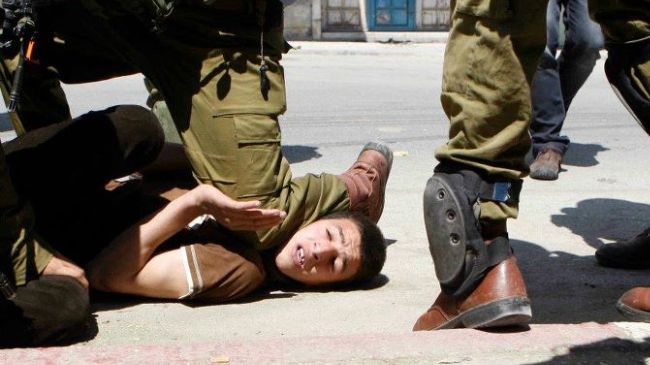
Ma’an – 12/02/2013
BETHLEHEM – Israeli forces launched multiple arrest raids overnight Monday against Hamas affiliates in the West Bank, Hamas sources and locals said.
Hamas leader Rafat Jamil Nasif, 45, was detained in Tulkarem in an arrest raid on his home, sources in the Islamist movement said. Nasif’s family were forced to stand outside in the cold while sniffer dogs searched his home.
Musab al-Ashqar, Abdullah Ismail al-Khalil and Ammar Jihad Ameir, students at al-Khadouri university, were also arrested in Tulkarem, together with the local Imam’s son Qitad Amar Bidawi.
In Nablus, Israeli forces detained a local Islamist student leader Muthanna Jamil Eshtayeh and students Osama Khalid Yamin and Walid Jamal Asida from An-Najah university, locals said.
Mousa Ahmad Yamin and Abed al-Ghani Ayesh Samara were also detained in nearby villages.
Four people were arrested in Qalandia refugee camp in Ramallah, including two ex-prisoners, and in Hebron two other students were detained.
An Israeli army spokeswoman said that 13 people were detained overnight, including four in Nablus, five in Tulkarem, three in Bethlehem and one in Hebron.
Another military spokesman said nine people arrested were affiliated with Hamas.
The latest detentions follow a sweep of arrests of Hamas-affiliated officials in the West Bank over the past week.
Last Tuesday, Israeli forces arrested 12 people including at least three Hamas-affiliates.
A day earlier, Israeli soldiers arrested 23 members of Hamas, including three lawmakers — Ahmed Attoun in al-Bireh, Hatem Qafisha in Hebron and Mohammed al-Tal in al-Dhahiriyya.
Hamas condemned the arrests as a “criminal act.”
Related article
- Israel arrests 22 Hamas members ahead of Fatah-Hamas talks (alethonews.wordpress.com)
Featured Video

Why Hamas Really Attacked Israel on Oct. 7
or go to
Aletho News Archives – Video-Images
From the Archives
Confronting the Threat of Ethnic Bioweapons
By Tony Cartalucci – New Eastern Outlook – 29.11.2017
The United States Air Force’s 59th Medical Wing’s molecular biology branch recently was revealed to have been collecting specifically Russian RNA and synovial (connective) tissue samples, prompting fears in Russia of a possible US directed ethnic-specific bioweapons program. … continue
Blog Roll
 Aletho News
- Why Yemen Is Bombing Saudi Arabia’s Airports: The War Behind the Headlines
- Sally Rooney’s books pulled from UK over support for Palestine Action
- Bombs for Tel Aviv, Promises for Riyadh
- Israeli ad agency conducted vast global espionage campaign using online ads: Report
- Oct. 7 Forever Marks The Big Reveal: ‘We See You, Israel, We Revile You, We Reject You!’
- Meet the US generals and admirals advancing Israeli policy
- Israel’s Straw Widow Protocol: The Kill Zones Where Civilians Were Labelled ‘Terrorists’
- Leading Israeli Think Tank Publishes Psychotic Israeli ‘National Security’ Doctrine
- Are the United States and Israel in Decline-and-Fall Mode?
- Why Hamas Really Attacked Israel on Oct. 7
- If Americans Knew
- Israeli firm used online ads to run vast spy operation, researchers say
- No, the world zionist movement is not an antisemitic conspiracy theory
- Hundreds of IDF investigations into killings still have no public outcome, BBC Verify finds
- After Ashley Moody Epstein Probe, Donors Linked to Him Poured Money Into her Senate Campaign
- Worried about Russian meddling in UK politics? Wait till you see what Israel is up to
- Israeli settlers attack West Bank center for disabled children, church leader calls for int’l action
- Pulling Out Teeth Just to Live: How Israel Has Devastated Dental Care in Gaza
- Gaza’s “ceasefire” death toll passes 1,500 – Daily Update
- Activists Abused By Israel Return to New Freedom Flotilla Mission
- 60 Minutes won’t tell the full truth about Israeli settler violence
- No Tricks Zone
- New Study Suggests Large Regions Of The Pacific Ocean Have Been Cooling For The Last 80 Years
- Germany’s Green Energy Debacle: High Energy Costs Force Kahla Porzellan to Close After 182 Years!
- New Study: 50 Years Of The Most Aggressive ‘Net Zero’ Policies Can Only Affect The Global Climate By 0.03°C
- US September “Heat” Was No Record…Many Records Set Decades Ago
- Latest European Green Energy Debacle; Portugal’s Largest Flagship Solar Park Insolvent!
- Green Energy Debacle: German Expert Professor Fritz Vahrenholt Warns Of Severe Economic And Social Consequences
- Two More Paleo Reconstructions Affirm Meters-Higher Sea Levels Across Ireland, Brazil 7000-6000 Years Ago
- New Study: Earth And Venus Surface Warmth Largely Explained By Convection And Lapse Rate, Not CO2 Or Radiation
- 2025 Nature Paper Claiming Worsening Global Drought Gets RETRACTED …Heavily Flawed
- New Study: ‘Global Drought Shows No Detectable Recent Acceleration Under Climate Warming’

