‘US a police state, Obama consciously allows torture’ – CIA veteran John Kiriakou
RT | February 1, 2013
Ten years ago, the idea of the US government spying on its citizens, intercepting their emails or killing them with drones was unthinkable. But now it’s business as usual, says John Kiriakou, a former CIA agent and torture whistleblower.
Kiriakou is now awaiting a summons to start a prison sentence. One of the first to confirm the existence of Washington’s waterboarding program, he was sentenced last week to two-and-a-half years in jail for revealing the name of an undercover agent. But even if he had another chance, he would have done the same thing again, Kiriakou told RT.
RT: The judge, and your critics all seem to believe you got off lightly. Would you say you got off lightly?
JK: No, I would not say I got off lightly for a couple of very specific reasons. First of all, my case was not about leaking, my case was about torture. When I blew the whistle on torture in December 2007 the justice department here in the US began investigating me and never stopped investigating me until they were able to patch together a charge and force me into taking a plea agreement. And I’ll add another thing too, when I took the plea in October of last year, the judge said that she thought the plea was fair and appropriate. But once the courtroom was packed full of reporters last Friday she decided that it was not long enough and if she had had the ability to she would have given me ten years.
RT: And why did you, a decorated CIA officer, take such a strong stance against an agency policy? Did you not consider that there might be some come-back?
JK: I did. I took a strong stance and a very public one and that’s what got me into trouble. But honestly the only thing I would do differently is I would have hired an attorney before blowing the whistle. Otherwise I believe firmly even to this day I did the right thing.
RT: You have called it ironic that the first person to be convicted with regards to the torture program is the man who shed light on it. Do you believe the others, who put the program together, will ever face justice?
JK: I don’t actually. I think that president Obama just like president Bush has made a conscious decision to allow the torturers, to allow the people who conceived of the tortures and implemented the policy, to allow the people who destroyed the evidence of the torture and the attorneys who used specious legal analysis to approve of the torture to walk free. And I think that once this decision has been made – that’s the end of it and nobody will be prosecuted, except me.
RT: When you initially came out against torture, you said it was impractical and inefficient. Did you consider it immoral initially?
JK: I said in 2002 that it was immoral. When I returned from Pakistan to CIA headquarters early in the summer 2002, I was asked by a senior officer in the CIA’s counter-terrorist center if I wanted to be trained in the use of torture techniques, and I told him that I had a moral problem with these techniques. I believed that they were wrong and I didn’t want to have anything to do with the torture program.
RT: It’s no secret that Obama’s administration has been especially harsh on whistleblowers. But can the US afford leniency, in these security-sensitive times?
JK: I think this is exactly what the problem is. In this post 9/11 atmosphere that we find ourselves in we have been losing our civil liberties incrementally over the last decade to the point where we don’t even realize how much of a police state the United States has become.
Ten years ago the thought of the National Security Agency spying on American citizens and intercepting their emails would have been anathema to Americans and now it’s just a part of normal business.
The idea that our government would be using drone aircraft to assassinate American citizens who have never seen the inside of a courtroom, who have never been charged with a crime and have not had due process which is their constitutional right would have been unthinkable. And it is something now that happens every year, every so often, every few weeks, every few months and there is no public outrage. I think this is a very dangerous development.
RT: Obama’s tough stance, and harsh punishments for whistleblowers, has sent a message. Is he winning his fight against those who speak out?
JK: I don’t think he is winning this fight against whistleblowers, at least not over the long term, and I’ll tell you why.
President Obama has now charged seven people with violations of the Espionage Act. All previous presidents in American history combined only charged three people with violating the Espionage Act. And the Espionage Act is a WWI-era act that was meant to deter German saboteurs during that First World War. And now it is being used to silence critics of the government.
But so far all seven of these cases that have made their way into a courtroom have either collapsed of have been dismissed, including mine. All of the three espionage charges against me were dropped.
So, I think frankly the Obama administration is cheapening the Espionage Act. The Espionage Act should be used to prosecute spies and traitors, not to prosecute whistleblowers or people who are exercising their first amendment right to free speech.
RT: Do we still need whistleblowers? Are we going to see more of them coming out?
JK: I think we will see more whistleblowers and I think we need whistleblowers now more than ever before. Whether it’s in national security or whether it is in the banking industry, the American people have a right to know when there is evidence of waste, fraud, abuse, or illegality. If the Justice Department is not going to prosecute these cases, at the very least the American people need to know.
For First Time, Most Americans Believe Federal Government Threatens Personal Freedoms
By Noel Brinkerhoff | AllGov | February 02, 2013
Distrust of the U.S. government has reached an all-time high among Americans, a majority of whom now say Washington represents a threat to their personal freedoms.
According to a new poll by the Pew Research Center for the People & the Press, 53% of respondents said the federal government threatens their own personal rights and freedoms. Those disagreeing numbered 43%.
The percentage of those viewing the government as a threat represents a six-point increase from nearly three years ago, when 47% said they felt that way, and a 23% jump from November 2001, when Americans rallied around their government following the terrorist attacks of September 11, 2001.
Conservative Republicans are the largest group who distrust Washington, with 76% expressing fear for their personal freedoms. A majority (54%) described the government as a “major” threat.
Three years ago, 62% of conservative Republicans said the government was a threat to their freedom, while 47% said it was a major threat, according to the Pew survey.
Meanwhile, only 38% of Democrats see the government as a threat to personal rights and freedoms, with 16% viewing it as a major threat.
Among gun owners, 62% see the government as a threat, compared with 45% of those without guns.
Milan court convicts former CIA chief of kidnapping
Press TV – February 1, 2013
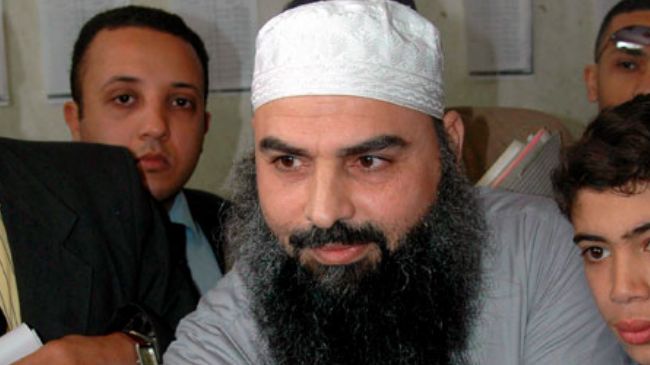 Milan’s appeals court has sentenced a former Central Intelligence Agency chief to seven years in prison for kidnapping an Egyptian Muslim cleric.
Jeff Castelli was found guilty along with two other agents, who were each given six years for abducting Osama Moustafa Hassan Nasr, also known as Abu Omar, as part of the CIA’s ‘extraordinary rendition’ program in 2003.
The trio had been acquitted at their first trial in 2009 due to diplomatic immunity but prosecutors had appealed against the verdict.
Abu Omar, who was kidnapped in a joint operation by the CIA and the Italian military intelligence agency SISMI, enjoyed political asylum in Italy at the time.
He was allegedly taken to a US air base in northeast Italy and then transferred to a US base in Germany and subsequently to Cairo.
The Muslim Cleric, who was released in 2007, claims he was tortured in prison by his kidnappers.
Last year, Italy’s Court of Cassation upheld the convictions of 23 CIA agents over the same incident and ordered new appeals trials for five Italian intelligence agents, including Italy’s top two former military intelligence officers, Nicola Pollari and his ex-deputy Marco Mancini.
The Italian Supreme Court ordered the 23 CIA agents to pay one million euros in damages to Abu Omar and 500,000 euros to his wife.
The ‘extraordinary rendition’ program was launched by former US president George W. Bush after the 9/11 attacks as an operation for the global apprehension and incarceration of suspected terrorists.
7 Year-Old Boy Handcuffed for $5 ‘Robbery’
By Alison Silveira | ACLU | February 1, 2013
Five dollars is apparently all it takes to land a 7-year-old in handcuffs in a New York City public school these days.
Parents across New York City awoke Wednesday morning to the news that Bronx third-grader Wilson Reyes was pulled out of class, handcuffed and interrogated over the course of 10 hours at his elementary school, and later, at a local precinct. Reyes was charged with robbery after someone said he grabbed $5 that a classmate had dropped on the floor, causing a scuffle among several boys.
Playground disputes that once amounted to a trip to the principal’s office have long since come under police jurisdiction in New York City, where over 5,000 agents assigned to the School Safety Division roam public school campuses under the auspices of the NYPD.
When Reyes’ mom was finally allowed to see her son, the New York Post reports, she found him handcuffed to a wall at the NYPD’s 44th Precinct, where she says he’d been interrogated and verbally abused for six hours. The shocking photo she took of her son in cuffs made front-page news on Wednesday.
Another student eventually admitted to taking the money, but it was well after Reyes had spent 10 hours handcuffed, interrogated and humiliated by the police. A police source told the NY Post that officers were responding to “a 9-1-1 call of a robbery and assault.”
Though shocking, Reyes’ story is far from unique. When police officers are involved in disciplining minors, a classroom disruption involving an “unruly” student can quickly escalate into a call for police back-up.
Nearly 900 arrests were made at New York City public schools during the 2011-2012 school year, and 90 percent involved black or Latino students, according to an analysis of NYPD data released last year. Another 1,666 summonses were issued for illegal conduct.
New York’s public school students are dragged out of classrooms and cafeterias by police officers for shouting in the hallways or scribbling on desks. Court summonses and assault charges are levied for playground fistfights, and students are carted from schools to precincts for the fear-inducing offense of carrying a cell phone on school grounds. In a number of cases, officers have also used excessive force to arrest children for violating school rules, at times leaving injuries requiring hospitalization.
That’s why the ACLU – along with the New York Civil Liberties Union, and law firm Dorsey & Whitney – is suing the City of New York on behalf of the city’s public middle and high school students, accusing the NYPD’s School Safety Division of violating students’ constitutional rights.
Yet the over-policing of our schools is not an issue unique to New York City.
The deployment of cops to public schools across the country epitomizes the national trend known as the “school-to-prison pipeline,” in which children of color are funneled from our public school classrooms into the juvenile and criminal justice systems.
There’s Kaleb Winston, the Salt Lake City 14-year-old who was interrogated by gang police at his school because of the design of his backpack and the sketches he made for art class. Or the Kansas sophomore whose arm was broken as a cop pulled a Taser gun to help arrest him for wearing saggy pants. One Wisconsin teen was arrested and fingerprinted for allegedly stealing a chicken nugget meal in the school cafeteria, while a Texas honor student was jailed for missing class. And then there’s the Georgia kindergartener who was handcuffed last year when she refused to calm down.
The stories are countless, and every one of them heartbreaking. In too many school districts across the country we are witnessing the increased criminalization of our youngest and most vulnerable students. Parents, teachers, principals, and mental health experts know children best. We should let them decide what’s best for their wellbeing. Putting cops in classrooms is not the answer to ensuring our children’s safety.
Mahmoud Sarsak – Palestinian International Footballer
Free Gaza Scotland | January 29, 2013
On Wednesday 23rd of January I with other members of our group had the pleasure and honour to meet Mahmoud Sarsak in our appartment. He is a slight, quietly spoken young man, with a gentle manner and his good humour and patience with our questioning betray none of the pain he has suffered over the last 3 and a half years. When he begins to speak about his experience of imprisonment he tells his story with a matter of fact, quiet sincerity that is striking and makes the horror of his experience all the more shocking.
 Mahmoud was 21 years old, at the start of a playing career which had already seen him being recognised as one of the best young prospects in Palestine, already a regular for the Palestinian National side. He had an invitation to play for a football team in Nablus in the West Bank. This meant that he had to ask for permission from the Israelis to cross from Gaza through Erez crossing into Israel in order to travel on to the West Bank. This did not worry him as it was a trip he had already done twice before and when he recieved his permission he went to the crossing looking forward to the opportunity of playing in Nablus. However when he got to Erez at 9am on the 22nd July 2009 his whole world changed, instead of being allowed to cross he was arrested and taken to a Police Station, from here his family were called and informed that he was being taken to Ashkelon Jail.
He was made to take off his clothes and change into overalls, an ‘under investigation uniform’. He describes how for the first 18 days he was tied to a chair with his eyes covered, the only times he was untied was when he was given food and they untied his hands or when he was allowed to go to the toilet when his legs were untied. He explains that during this time he was kept awake, not fed properly and questioned daily, every 4 days he was taken to a court where a judge gave permission for him to be held for a further 4 days. This treatment he says ‘wasn’t so bad’ in comparison with what was to come although I think that most people would call it torture.
At the end of that 18 days he was taken to a Military Jail in the South where he was kept for 6 days and his treatment became much worse. He was beaten regularly and was put in what he described as a fridge, he also had very hot and very cold water put under his feet. During all of this time in both places he was questioned, his interrogators were wanting him to say that he had been involved in ‘activities against Israel’. He didn’t understand what they meant by this, he was a footballer, he had not been involved in anything else and so refused to make things up to make his interrogators happy. He had no idea why he had been arrested.
At the end of these 6 days he was taken back to a civilian jail for another 11 days where suddenly things got much better. He was fed and allowed to sleep properly, his captors became very friendly offering him his freedom, a new house, a salary, a car, access to proper training facilities to help his playing career and foreign travel. All he had to do was become a collaborator. He refused, which provoked many serious threats from his Israeli interrogators. They told him that they would burn his family home down, attack his family and kill his brothers. Despite the pressures upon him and his ordeal so far, he continued to refuse to collaborate.
Except for short visits to court when his lawyer was present, during this initial 35 days of incarceration he had absolutely no contact with anyone but his jailors and interrogators. His lawyer told him that he was going to be all right, the court had said he was going to be released. Instead he was told by a Military Officer that he was now being held under ‘The Law of An Illegal Fighter’ and that they no longer needed to go to court to ask permission to keep him. He was then taken to Kitseot Jail near Bersheva where at least he could see other prisoners and his time of interrogation was over. He asked the other prisoners what this ‘Law of an Illegal Fighter’ meant but none of them had ever heard of it. When he was finally allowed access to his lawyer and was able to ask him he was told that it was a law that the Israeli authorities use when they have nothing against you but they want to hold onto you. He then asked his lawyer what rights he had under this law and was told that he had none, he could now be held in jail for as long as the Israeli Military wanted to keep him.
Mahmoud was the first Palestinian who had been held under this law, the only other people he knows of who had previously been held under it were 2 Hizbollah members from Lebanon who were arrested in 1982. He thinks that because he had no rights he was put in a cell which was 2m x 1m for his time in Kitseot, this cell had only a matress and toilet in it and he developed chest, skin and back problems while there. He was not taken to a hospital while there, and was only seen briefly by a prison doctor for these problems. He was allowed out of his cell for 1 hour a day for exercise with his fellow prisoners when he played football with them.
On the 22nd of February 2010 Mahmoud was taken to Tel Aviv for a court hearing to extend his imprisonment and then to another court hearing for the decision in Jerusalem two weeks later. The journey to court and between jails is in what the prisoners call a ‘post bus’ which is metal bus with steel compartments in which you are jostled and hit off the steel walls. He knew before he was taken to the second hearing that he was going to be held for another six months. After this hearing he was also barred from playing football with his fellow prisoners for that precious hour in the mornings and was told that this was due to his back being too bad. At this time they also started to move him between prisons every 2 months and he was still taken to court every 6 months in order to have his stay in prison extended.
On the 23rd of August 2011 he was told that he was going to be released, he was happy and said goodbye to the other prisoners. He was taken by ‘post bus’ to Erez, his hands and legs were not tied as they usually were, the window was open and when he got there they opened the door of the prison van and the guards moved away talking among themselves. He stayed where he was as he didn’t know what was happening and he didn’t want to be shot if they thought he was trying to escape. He called to the guards to ask what was happening and they told him they were taking him back to jail, he wasn’t being released. He was taken to a different jail for 2 weeks with only the clothes he had on when they took him to Erez. He said that he was later told about another prisoner who had been taken to Erez and left in an open ‘post bus’ with his legs untied in the same way. He had gone to the door to look out and been instantly shot in the leg and accused of trying to escape. After this 2 week period he was taken back to the jail he had originally been in when first imprisoned, here his other clothes and small number of belongings were finally brought to him.
When he was taken to this jail he was given another 6 months but his lawyer was promised that he would be released when this time ended on the 23rd of February 2012. The 23rd of February came and went, 10 days after this he was taken back to court, he had decided that this time if he wasn’t released he would go on hunger strike and stay on hunger strike until they promised in writing that he would be released. So when he was told that he was going to be imprisoned for another 6 months he prepared himself for 10 days, eating less each day and gradually reducing his physical activity. On the 15th of March 2012 he started his hunger strike. He only took water and sometimes a little salt in order to prevent his stomach from beginning to rot.
7 days after he started they began to move him from jail to jail before putting him in Nafha Jail which meant he was put in with the Israeli criminal population. Then he was put into isolation for a spell followed by hospital in Bersheva for 2 days tied to his bed then back to Nafha. From here he was sent to Eshel jail where he was put in isolation again and became very sick. This time they wouldn’t take him to hospital but would only allow him to see the Doctor in Eshel. After 35 days of this the Doctor in Eshel refused to continue to be responsible for him and he was taken to the Prison hospital in Ramle jail where he was with another 5 Palestinian prisoners who were also on hunger strike. He refused treatment here and was put back into isolation, this time his isolation cell had no windows so he was in darkness. After 47 days on hunger strike he bagan to have serious problems with his stomach, he couldn’t even drink water without vomiting. First white then black then brown vomit. They took him back to Ramle Prison hospital then and gave him antibiotics.
Along with the other hunger strikers he was asked regularly to break his hunger strike, on the 15th of May he was told that if he would break his hunger strike he would be released on the 23rd of August and the other hunger strikers were also told that they would have their demands met if they broke theirs. 3 of them accepted but along with 1 of the others Akram Al Rihawy he refused, he had heard promises of release before and he insisted that he have the promise in writing signed by a senior Judge and a Minister from the Israeli Ministry of the Interior. He was also told that he would not be allowed to return to Gaza, he had to choose between Germany, France or Norway which he also refused to accept. At this time he finally began to get International Committee of the Red Cross visits twice a week and he was asked daily to break his hunger strike, he continued to refuse until he got it in writing that he would be released back to Gaza and that he would be properly monitored by a committee of doctors when he started eating again.
Eventually on the 18th of June 2012 on the 96th day of his hunger strike a Minister from the Israeli Ministry of the Interior came to see him with the signed paper that he had been asking for stating in writing that he would be released on the 20th of July 2012. The Minister asked him if he would now please give up his hunger strike and he agreed. The Minister asked him to drink a glass of milk in front of him so that he could confirm and report that he had indeed broken his hunger strike which he did alathough he immediately vomited this back up. His stomach couldn’t cope even with milk after such a long time with no more than water going into it. He said that even though his stomach rejected this cup of milk his whole body felt as though it had drunk and felt relieved.
For 14 days he had to build up to eating again with first intravenous vitamins and nutrition, followed by nutritional drinks, before finally eating his first bit of bread after this 14 day period, which he still vomited back up. During the time of his hunger strike he was only allowed 2 visits from his lawyer, on the 40th day and on the last day. I asked if he was allowed any visits from his family during his time in jail. He replied that because he was given no rights under the ‘Law of An Illegal fighter’ he was not only denied visits from family but was not even allowed the 6 monthly letters delivered to his fellow prisoners by the Red Cross. He wasn’t able to write to them either, not even one short note.
At no time during Mahmoud’s entire incarceration was he actually accused of anything other than being asked to admit to the vague term ‘activities against Israel’ and he was never charged with anything. He was very clear that he had no idea why he was arrested. He was a footballer. The court appearances he attended were simply formalities under Military Law which say that every 6 months any detention order must be renewed.
All Palestinians from the West Bank and Gaza who are arrested by Israel are dealt with under Military Law not Israeli Criminal Law and therefore it is not necessary for Israel to ever bring charges against them. Many who are prosecuted are those who have signed false confessions under torture and are not able to retract them afterwards. Mahmoud’s case was slightly worse than normal Military law, under which there are a few rights which at least give some protection in prison. Mahmoud had none of these rights under this so called ‘Law of an Illegal Fighter’ by which he was held.
I asked Mahmoud if he was back in training for football and if he thought that it would be possible for him to return to his playing career. He said that finally he had managed to attend 3 training sessions and was hoping to be able to return to the team at some point in the future once he was back to full fitness. I sincerely wish him luck with this and hope that he will reach that stage very soon.
This has to be one of the clearest examples of why the BDS (Boycott Divestment and Sanctions) campaign should be supported by everyone and why Israel should be barred from participating in International Sporting events. Currently the 2013 UEFA U-21 Championship is scheduled to be played in Israel. How can this be allowed when they can treat a Palestinian International Player like this? Not to mention that they bombed the only 2 football pitches in Gaza during Operation Pillar of Cloud as well as destroying many local playing areas in the West Bank over the years. I saw several during my visit there in 2004 including one in Ramallah which had been bulldozed.
Mahmoud told us that the other prisoner who had stayed on hunger strike with him, Akram Al Rihawy, had spent his whole sentence in hospital due to his medical problems. His reason for being on hunger strike was not for release but for proper medical treatment. He stopped his hunger strike after being told that he was going to be released on Wednesday the 23rd of January 2013. Yesterday, on the 25th of January 2013 we were told that he was not released as promised and that he is now back on hunger strike.
To join the campaign against Israel hosting the 2013 UEFA U-21 Championship go to the following link and get involved: http://redcardapartheid.weebly.com/
Related articles
- Former mayor put in administrative detention (alethonews.wordpress.com)
- Genocide by Proxy: Palestinian patient Salah Salluha dies at Erez due to prolonged security measures (occupiedpalestine.wordpress.com)
- Hundreds of Palestinians detained without evidence (occupiedpalestine.wordpress.com)
- Palestine: Documenting the torture of a boy in occupation jails, two wounded by shooting & East of Gaza flooded by Israelis (realisticbird.wordpress.com)
Data Privacy Day 2013: Twitter reveals US government makes 80% of info requests
RT | January 29, 2013
Twitter has released its second transparency report, which demonstrated a frightening increase in requests for user data by the US government and ignited serious concerns over privacy and free expression.
The list disclosed data requests from over 30 nations, and revealed that the US government was responsible for 815 of the 1,009 information requests in the second half of 2012 – just over 80 percent of all inquiries.
Twenty percent of all US requests were ‘under seal,’ meaning that users were not notified that their information was accessed.
The overall number of requests worldwide also steadily increased last year, rising from 849 in the January to June 2012 period to 1009 in the July to December 2012 period.
Twitter’s legal policy manager Jeremy Kessel blogged that, “it is vital for us (and other Internet services) to be transparent about government requests for user information.”
“These growing inquiries can have a serious chilling effect on free expression – and real privacy implications,” he wrote.
He went on to express hopes that the publication of the transparency data would be helpful in two ways – “to raise public awareness about these invasive requests,” and “to enable policy makers to make more informed decisions.”
The majority of US requests were subpoenas, which comprised 60 percent of government demands for information. Subpoenas usually seek user information such as email addresses affiliated with accounts and IP logs. A user’s whereabouts can generally be located by the IP address they are using.
Twitter complied with US government requests 69 percent of the time, according to the report.
Twitter released its transparency report on January 28, dubbed ‘Data Privacy Day.’ The US National Cyber Security alliance said it founded the day to “empower people to protect their privacy.”
According to Twitter’s report, several other governments made over 10 requests each for personal information, including Brazil, Canada, France, Japan and the UK. Japan ranked the second-highest on the list after the US; however, the US made 753 more demands for information than Japan.
Google released a statement marking the occasion, saying that the company “[doesn’t] want our services to be used in harmful ways,” and that it is “important that laws protect you against overly broad requests for your personal information.”
Earlier this month, France ruled that Twitter must disclose to authorities the identities of people writing anti-Semitic tweets using the hashtags #UnBonJuif [A Good Jew] and #UnJuifMort [A Dead Jew]. The social networking platform will be fined 1,000 euros a day until it complies.
The publication of the survey came shortly after Google published its own transparency report, which showed a similarly disturbing 25 percent rise in data requests from government authorities. The report also revealed that the US had made the most requests for private information to Google of any government: Over 8,438 in the second half of 2012.
UK-based rights group Privacy International later commented that “Google, Facebook and Twitter are highly vulnerable to government intrusion.”
“I am alarmed by the number of government requests and concerned that so many are done with merely a subpoena,” said John Simpson, a consumer advocate with the California-based group Consumer Watchdog. “A warrant should be required.”
Related articles
- Twitter Transparency Report v2 (twitter.com)
- Twitter: Government user data requests have risen 20 percent (sott.net)
Audio feed cut during 9/11 trial hearing, prompting suspicions of external censorship
RT | January 29, 2013
The first day of a pretrial hearing for five men accused of plotting the September 11 attacks was swirling with intrigue on Monday after the audio feed at a Guantanamo war crimes court was abruptly cut off.
The incident prompted the military judge to ask whether someone outside the courtroom was censoring the hearing.
Observers were listening to the trial behind a glass window when the feed was suddenly cut. The audio went silent when David Nevin, a lawyer for Khalid Sheik Mohammed – the alleged mastermind of the 9/11 attacks – asked if the lawyers and judges needed to meet in closed session before considering a request by the defense.
In previous hearings for alleged Al-Qaeda operatives sentenced to CIA prisons, a court security officer controlled a button which muffled audio to spectators when secret information was disclosed. During the censoring process, a red light flashes and observers hear nothing but static.
But that wasn’t the case this time around, as the judge’s reaction made clear once the sound was restored moments later.
“If some external body is turning things off, if someone is turning the commissions off under their own views of what things ought to be, with no reason or explanation, then we are going to have a little meeting about who turns that light on or off,” Army Colonel James Pohl told the courtroom.
Pohl seemed to be addressing the prosecution team, saying that Nevin had only referred to the caption of an unclassified document asking the judge to preserve as evidence the secret CIA prisons where the defendants say they were tortured, Reuters reported.
Nevin and the other defense attorneys said they wanted to know whether there was a third party monitoring the proceedings, and whether that entity could be listening to private communications between the lawyers and their clients, the Washington Post reported.
Justice Department lawyer Joanna Baltes said she could explain the reason behind the audio cut – but not in public. Pohl said he would meet in closed session with the lawyers and reopen the public part of the hearing on Tuesday. If the reason behind the cut could be explained to the public, he would do so then.
Mohammed and his four co-defendants are accused of training and aiding the hijackers who flew commercial airliners into the World Trade Center in New York, the Pentagon and a Pennsylvania field on September 11, 2001.
They could be sentenced to death if convicted on charges including terrorism, attacking civilians and murdering 2,976 people.
The men were among the suspected Al-Qaeda captives who were moved across borders without judicial review, and held and interrogated in secret CIA prisons overseas during the presidency of George W. Bush.
The CIA has acknowledged that Mohammed was subjected to the controversial interrogation practice known as waterboarding. The defendants also claimed they were subjected to threats, sleep deprivation and being chained in painful positions.
The defense lawyers have argued that the CIA’s treatment of the defendants constituted illegal pretrial punishment, and “outrageous government misconduct” that could justify dismissal of the charges, or at the very least spare the defendants from execution if convicted.
There are currently 166 detainees at Guantanamo Bay detention camp, including Mohammed. In 2009, US President Barack Obama ordered the prison to be shut within a year. However, it is still open and operational.
Guantanamo remaining open is yet another example of Congress overpowering the president – the prison was bundled together with the National Defense Authorization Act, which serves as the overall US defense budget. Obama has the power to veto the entire act, but not to individually challenge the administration of Guantanamo Bay.
Obama has threatened such a veto several times, but backed down on every occasion.
Israel plans boycott of UN human rights review
Al-Akhbar | January 29, 2013
Israel planned on boycotting a routine review of its human rights situation by the United Nations Tuesday, despite threats of “unspecified action” by the UN Human Rights Council if it did not cooperate.
According to Israeli media, Israel would be the only UN member state to ever boycott the yearly UNHRC Universal Periodic Review since the process’ inception in 2006.
Israel unilaterally severed ties with UNHRC in March 2012 over a planned fact-finding mission over illegal West Bank settlements.
According to news website The Times of Israel, Israel has participated in the first round of reviews in October 2011, before asking the council to postpone Israel’s review with no justification.
Israel later accused the Human Rights Council of “anti-Israel moves.”
“We are under an ongoing policy of suspension of all our contacts with the Human Rights Council in Geneva and all its branches after their sequence of systematically anti-Israel moves, which have come to contradict the mission statement of the organizations and sheer common sense” Foreign Ministry spokesman Yigal Palmor told The Times of Israel Sunday.
Israel’s review is still scheduled to take place Tuesday afternoon, and it remains unclear as to whether a representative of the Jewish state will actually attend the meeting.
If Israel follows through with its boycott, it could set a negative precedent for other countries unwilling to respond to accusations of human rights violations.
The website for the UPR specifies that in case of “persistent non-cooperation,” “the Human Rights Council will decide on the measures it would need to take” against the offending state.
UNHRC spokesman Rolando Gomez warned that “if a delegation from the country was not to attend then action, as yet unspecified, would be taken.”
The UNHRC review of Israel is overseen by the Maldives, Sierra Leone and Venezuela.
Israel has fought back and criticized many investigations into its treatment of Palestinians, including on illegal settlements and the use of drones.
Its relationship with the Human Rights Council has been tense for years, most notably since 2007, when the council made Israel’s actions in Occupied Palestine a permanent item on the agenda.
Google faces UK class action over secret iPhone tracking
RT | January 28, 2013
Google is embroiled in its biggest privacy battle yet in the UK over reportedly tracking users’ online habits. At least 10 UK citizens began legal action with dozens more lining up. According to media estimates up to 10 million Britons could join in.
Google is accused of evading security settings on Apple’s devices and Safari’s web browser in order to keep tabs on people’s online preferences.
This is the first group claim over privacy issues that the tech-giant is facing in the UK, the lawyer behind the action Dan Tench told The Guardian.
“It is particularly concerning how Google circumvented security settings to snoop on its users. One of the things about Google is that it is so ubiquitous in our lives and if that’s its approach, then it’s quite concerning,” Tench said.
On top of that there are plans in the works to launch an umbrella privacy action suit, which could potentially bring in millions of people in the UK.
Google executives reportedly received a letter from two users prior to the launch of legal proceedings.
The tech-giant is being sued for breaches of privacy and confidence, computer misuse and trespass, and breach of the Data Protection Act of 1998.
Claimants want Google to reveal how much data was secretly collected, for how long, and how the information is being used.
The point of the claim is not to make money off Google, but to send a message, argued a privacy campaigner working on the legal claims, Alexander Hanff.
“This lawsuit is about sending a very clear message to corporations that circumventing privacy controls will result in significant consequences. The lawsuit has the potential of costing Google tens of millions, perhaps even breaking 100 million pounds [US$15.7 million] in damages given the potential number of claimants – making it the biggest group action ever launched in the UK,” Hanff says.
Some users responded by creating a Facebook group titled ‘Safari Users against Google’s Secret Tracking’ to gather support for the new claims against Google. The page promises to hold Google responsible for any privacy breaches.
The group was set up “to provide information for anyone who used the Safari internet browser between September 2011 and February 2012, and who was illegally tracked by Google,” reads the group’s statement. “Any users in the UK may have a claim against Google for this breach of their privacy. Other users, who have set up this group, are taking action against Google to hold them to account.”
The page was created only a day ago, but it already garnered over one hundred ‘likes’.
One Facebook user, Vitor Costa, commented on the secrecy aspect behind Google’s privacy breaches, questioning “what they are doing with this information.”
The legal action follows a US ruling that approved a $22.5 million fine to penalize Google for a privacy breach between summer 2011 and spring 2012. The fine resulted after allegations that Google secretly kept tabs on millions of Safari web users, while leading them to believe that their online activities could not be traced as long as they did not change the browser’s privacy settings.
The FTC came to the conclusion that Google’s stealth tracking (which allowed the company to bypass Safari’s settings) contradicted its own privacy assurances.
Google is not new to privacy violation accusations. In the past it faced many allegations such as, keeping tabs on Wi-Fi users with its StreetView cars and privacy failures of the Google’s previous social network, Google Buzz.
Also, European Union lawmakers have been continuing to pressure Google to boost personal security controls and limit the collection of data without users consent.
But new Google services such as Conversations API, which merges offline consumer info with online intelligence, allowing advertisers to target users based on what they do at the keyboard and at the mall, only raise more privacy-based questions.
Related article
- Google faces legal action over alleged secret iPhone tracking (guardian.co.uk)
Re-militarization gives rise to new tensions and violence in Guatemala
By Kelsey Alford-Jones | Upside Down World | January 25, 2013
On October 6, the Guatemalan army gunned down six indigenous protesters in Totonicapán and injured at least 30 more. Thousands had gathered to oppose unpopular government reforms, and while the police held their distance, the military advanced and shot into the crowd.
The event was a tragic manifestation of one of the public’s worst fears since President Pérez Molina took office in January 2012: that the Guatemalan armed forces would resort to deadly force in order to repress and silence dissent, an experience all too familiar in the nation´s collective historic memory.
Pérez Molina has made no secret of his intention to deploy the armed forces in ever-greater numbers and ever-expanding roles – the military now overwhelmingly dominates citizen security initiatives. Whether walking down Guatemala City’s central avenue, the “Sexta,” or driving on any major highway, Guatemalans are once again likely to encounter soldiers patrolling with semi-automatic rifles or checking papers at military roadblocks.
The government has opened at least five new military bases and outposts since the beginning of 2012, and has sent soldiers to fight drug cartels, to protect historic sites and nature reserves, and to back up the police during evictions and protests. Soldiers have also been deployed en masse to reduce crime in Guatemala City´s poorest neighborhoods.
Seeing soldiers on the streets may not be new in Guatemala, but under Pérez Molina, it has become symbolic of his administration’s approach to governance; and for the first time in over 15 years, current and former military personnel permeate the leadership of civilian institutions and dictate the administration’s approach to governance.
This swift re-militarization is deeply controversial, and the reasons behind it are much more complex than first meet the eye. In fact, some argue that the motivation for militarization has little to do with providing security for Guatemalan citizens – instead, it is about protecting the status quo, ensuring impunity for the armed forces and defending multinational economic investments. The US government has been eager to offer support to the Guatemalan military, despite the problematic implications.
The Military’s Past Atrocities
In1996, Otto Pérez Molina was a General in the Guatemalan military, and was one of their representatives at the peace negotiations that would put an end to the armed conflict. The Peace Accords, signed by Pérez Molina himself, emphasized the importance of strengthening civilian governance: the number of soldiers would be vastly reduced and a new, civilian, police force would be created. The Accords stipulated that the “National Civilian Police shall be under the direction of the civil authorities.” In contrast, the role of the armed forces was to “[defend] Guatemala’s sovereignty and territorial integrity; they shall have no other functions assigned to them, and their participation in other fields shall be limited to cooperative activities.”
The Accords placed limitations on the military not just to strengthen democracy, but also as a response to the atrocities the military had committed against its own people. In 1999, the UN-sponsored Commission for Historical Clarification (CEH) established that during the 36-year internal armed conflict, 200,000 people were killed, mostly civilians, including an estimated 45,000 who were forcibly disappeared. The Guatemalan state (through its military and paramilitary forces) was responsible for 93% of all human rights violations committed during the conflict, and had committed acts of genocide against the Mayan people.
The Military Creeps Back into Citizen Security Initiatives
Neither the Peace Accords nor the CEH report outlined steps to hold individual soldiers and high-level military officials accountable for the egregious war crimes committed, and many remain in positions of power to this very day. Internal reforms of military institutions were superficial at best, and government officials have been quick to re-engage the military with the justification that it is necessary to provide security to the Guatemalan public.
– In 2000, only four years after the signing of the Peace Accords, a bill was passed legalizing the military’s collaboration with the police to combat common and organized crime, as well as deforestation, kidnapping, and other crimes.
– In 2006 (under the direction of then Presidential Commissioner for Security Pérez Molina), President Berger mobilized reserve troops to maintain internal security, fight crime and distribute humanitarian aid.
– From 2007-2011 President Colom continued to expand the military’s role, reopening military bases and increasing the number of troops, while Congress created a minimum requirement for spending on the Defense Ministry’s budget.
When Pérez Molina assumed the presidency in January 2012, he became the first career military official to hold that office in 25 years. He immediately called on the army to collaborate in “neutralizing illegal armed groups by means of military power.” In September, Pérez Molina inaugurated the Maya Task Force in Zone 18 of Guatemala City, with 1,200 soldiers and 100 police. He initiated a similar operation in Zone 12 in November.
The Re-militarization of Guatemalan Institutions
The dramatic images of thousands of heavily armed soldiers in Guatemala City are shocking and troublesome, yet the re-militarization of Guatemala today isn’t simply about more soldiers on the streets. It also refers to something much less visible –an institutional culture disturbingly similar to the counter-insurgency model that dominated during the internal armed conflict.
Numerous governmental agencies are now run by former military, including the Interior Ministry and offices within the National Civilian Police and intelligence services. According to Guatemalan security analysts, upwards of 40% of security-related positions are held by former military, including many who were directly involved in the counter-insurgency campaigns; some have even been named in cases before Guatemalan courts for their role in crimes against humanity during the conflict.
Many of these policymakers, including Pérez Molina himself, hail from the generation of armed forces that was active during genocide campaigns such as Operation Sofia; a generation that participated in the extermination of entire villages, that used rape as a tool of war, and justified the use of torture and brutality in their campaigns against civilian, mostly indigenous, communities. This is the generation taught to believe that anyone who rejected existing structures of racism, economic dominance by a minority elite, and political exclusion, were “subversives”, “guerrillas,” “terrorists” and “internal enemies.”
The administration’s approach to policy-making, according to human rights groups, reflects this culture of discipline and obedience rather than democratic governance and dialogue. Any social conflict that disrupts the established order is addressed as the military has always dealt with perceived “threats” from its own citizens: intimidation, defamation, repression, and the use of force — sometimes with deadly consequences.
The tragic massacre in Totonicapán momentarily ripped through the curtain of government propaganda to expose the ever-present threat of violence. The international and diplomatic communities reacted strongly, and President Pérez Molina quickly assured the public that his administration would no longer deploy the military at protests and evictions. Only hours later, however, he had reversed his statement and later came out with a new protocol for the military’s collaboration with the police – a protocol that did not, in fact, reduce the military’s role at all.
The Military and the ‘War on Drugs’
The Guatemalan government has attempted to justify the military’s expanded presence due to the country’s high rates of violence linked to organized crime, gangs and common crime. The US has been quick to accept this argument.
“The military must provide security where the police have failed,” is an easy sell in the context of the US war on drugs andis an argument readily repeated by the US State Department. (Meanwhile, the much-needed reform of Guatemala’s police force languishes without the resources or political support to move forward).
The Department of Defense and US Drug Enforcement Agency (DEA) have provided ongoing support and training to the Guatemalan Armed Forces. This collaboration persists despite a decades-long Congressional ban on direct funding to the army due to the atrocities committed by the Guatemalan military against its own people, and the lack of reform within the institution.
Operation Martillo (Hammer) is the newest in a series of US-Guatemala joint operations, although it is also coordinated amongst other countries in Central America and Europe. The operation began in early 2012 and in July, President Pérez Molina signed off on an expansion of the operation. The new agreement permitted US marines and military contractors to be stationed in Guatemala for 120 days and collaborate directly on counter-narcotics missions. It granted US marines the right to be uniformed, to carry weapons, and to enjoy complete diplomatic “privileges, exemptions, and immunity.” Despite regulations requiring approval from the Guatemalan Congress, the document signed by the US and President Pérez Molina attempted to circumvent the process simply by stating: “It is understood that these activities […] do not constitute the passing of a foreign military through Guatemalan territory.”
The operation was not popular among many in civil society. “Drug trafficking in Guatemala shouldn’t be combated by the Guatemalan military, much less by the US military,” commented analyst Sandino Asturias in an interview with GHRC.
Helen Mack, executive director of the Myrna Mack Foundation and former Police Reform Commissioner, commented to the AP at the end of August: “Rural communities in Guatemala are fearful of the military being used to combat drug traffickers because the same techniques are applied that were used in (counterinsurgency) warfare. The historical memory is there and Guatemalans are fearful of that.”
There are other complications in using the military to combat organized crime. The military can’t carry out a criminal investigation, nor can it (legally) detain suspects of a crime. And while the US and Guatemalan armed forces collaborate on high-profile (often unsuccessful) attempts to capture narco-bosses, the Guatemalan Public Prosecutor’s Office has quietly had them arrested, many for extradition to the US. Furthermore, the Guatemalan military has documented ties to drug trafficking organizations and other criminal structures – the very groups they are sent to combat.
What does re-militarization achieve?
Soldiers train for battle, not to police the streets. Not surprisingly, increasing involvement of the military in police work has not only re-traumatized communities and survivors of the armed conflict, but it has also failed to reduce crime and violence in Guatemala. In fact, Sandino Asturias confirms that the homicide rate began to rise dramatically after the military reengaged in matters of internal security in 2000.
The military’s remarkable failure to address security concerns over the last 12 years doesn’t faze policy makers; in fact, the security of Guatemalan citizens doesn’t seem to be the primary concern at all.
Instead, increasing militarization has often functioned as a means to provide protection for the economic interests of transnational corporations.
The administration has constructed new military bases near existing or planned development projects such as mines, cement factories, and hydroelectric power plants. Military forces – in coordination with the police and private security guards – have consistently been mobilized to guarantee that “development” projects aren’t disrupted by local protests. This occurs despite the fact that, in the majority of cases, the government failed to consult local communities about the project and actively ignores threats, attacks, intimidation and other illegal acts committed by persons linked to the international corporations.
Public officials have instead branded those who organize against these unwanted development projects as “terrorists” and “guerrillas,” a strategy similar to the psychological warfare tactics utilized during the conflict. The government’s use of States of Siege in conflict zones has given the military free reign to terrorize indigenous families and detain “suspects.” Dozens of community leaders have been arrested on trumped up charges simply for their rejection of the administration’s development policies, giving rise to a new movement in solidarity with Guatemala’s first generation of political prisoners.
The international diplomatic community has been just as willing as the Pérez Molina administration to overlook commitments laid out in the 1996 Peace Accords – partially implemented at best – in favor of political and economic ties that promote investment, trade and “stability.”
Finally, for an entire generation of military officials and their civilian allies, the re-militarization of public institutions is not just about maintaining control, but about ensuring impunity.
As Guatemalan courts at long last – and against all odds – move forward with indictments against the military high command from the 1980s, accountability and incarceration for war crimes is suddenly a concrete possibility. The threat of judicial action has resulted in a policy of denial of the military’s involvement in war crimes and genocide, even as exhumations and court cases add to voluminous evidence against the military. An ongoing exhumation at a military base in Coban, Alta Verapaz has already unearthed over 500 bodies in mass graves, many bound, blindfolded, and showing evidence of torture.
In response, Pérez Molina has methodically dismantled public institutions that worked to promote human rights, historical clarification and justice, seeking to . During first half of 2012, the administration gutted the Peace Archives Directorate (DAP). The office had opened in 2008 to compile and analyze military (and other) archives in order to establish human rights violations committed during the internal armed conflict. Archive staff published numerous reports on the conflict and acted as expert witnesses in key human rights cases. The closure of the DAP took place as the government was further weakening the Presidential Human Rights Office (COPREDEH) and consolidating it under the Secretary of Peace, Antonio Arenales Forno, a genocide-denier and long-time ally of the military.
The administration has made repeated attempts to limit or dismiss its regional and international human rights obligations that would jeopardize members of the military. At the beginning of 2013, Pérez Molina issued a presidential decree that refused to recognize the jurisdiction of the Inter-American Court on Human Rights in cases prior to 1987, even when they are “continuing crimes” such as forced disappearance and other crimes against humanity. Public outcry by national and international human rights organizations forced Perez Molina to annul the decree. Meanwhile, the Defense Ministry further limited access to information that relates to human rights violations from the early 1980s, which, according to Guatemalan groups, should be part of the public domain.
Emboldened by the administration’s fierce pro-military stance, retired members of the military and other ultraconservative and fanatically nationalistic groups have launched their own campaigns in the press and social media, sending direct,and very public, threats to those who seek justice and defend human rights.
As Guatemala spirals back into a reality frighteningly reminiscent of the 1980s, those who have become the intentional or collateral victims of re-militarization find themselves with little support from state institutions. Nevertheless, indigenous communities, activists and other civil society organizations –despite fear of repression or retaliation –continue to denounce re-militarization in all its forms. They recognize that the way forward for Guatemala is not to be found by returning to the nefarious practices of the past.
Kelsey Alford-Jones is the Director of the Guatemala Human Rights Commission/USA, a non-profit, grassroots, solidarity organization dedicated to promoting human rights in Guatemala and supporting communities and activists who face threats and violence. GHRC documents and denounces abuses, educates the international community, and advocates for policies that foster peace and justice.
Related article
- Does Guatemala Include “Extrajudicial Executions” in its Calculation of National Murder Rates? (alethonews.wordpress.com)
Featured Video

Why Hamas Really Attacked Israel on Oct. 7
or go to
Aletho News Archives – Video-Images
From the Archives
Confronting the Threat of Ethnic Bioweapons
By Tony Cartalucci – New Eastern Outlook – 29.11.2017
The United States Air Force’s 59th Medical Wing’s molecular biology branch recently was revealed to have been collecting specifically Russian RNA and synovial (connective) tissue samples, prompting fears in Russia of a possible US directed ethnic-specific bioweapons program. … continue
Blog Roll
 Aletho News
- Why Yemen Is Bombing Saudi Arabia’s Airports: The War Behind the Headlines
- Sally Rooney’s books pulled from UK over support for Palestine Action
- Bombs for Tel Aviv, Promises for Riyadh
- Israeli ad agency conducted vast global espionage campaign using online ads: Report
- Oct. 7 Forever Marks The Big Reveal: ‘We See You, Israel, We Revile You, We Reject You!’
- Meet the US generals and admirals advancing Israeli policy
- Israel’s Straw Widow Protocol: The Kill Zones Where Civilians Were Labelled ‘Terrorists’
- Leading Israeli Think Tank Publishes Psychotic Israeli ‘National Security’ Doctrine
- Are the United States and Israel in Decline-and-Fall Mode?
- Why Hamas Really Attacked Israel on Oct. 7
- If Americans Knew
- Israeli firm used online ads to run vast spy operation, researchers say
- No, the world zionist movement is not an antisemitic conspiracy theory
- Hundreds of IDF investigations into killings still have no public outcome, BBC Verify finds
- After Ashley Moody Epstein Probe, Donors Linked to Him Poured Money Into her Senate Campaign
- Worried about Russian meddling in UK politics? Wait till you see what Israel is up to
- Israeli settlers attack West Bank center for disabled children, church leader calls for int’l action
- Pulling Out Teeth Just to Live: How Israel Has Devastated Dental Care in Gaza
- Gaza’s “ceasefire” death toll passes 1,500 – Daily Update
- Activists Abused By Israel Return to New Freedom Flotilla Mission
- 60 Minutes won’t tell the full truth about Israeli settler violence
- No Tricks Zone
- New Study Suggests Large Regions Of The Pacific Ocean Have Been Cooling For The Last 80 Years
- Germany’s Green Energy Debacle: High Energy Costs Force Kahla Porzellan to Close After 182 Years!
- New Study: 50 Years Of The Most Aggressive ‘Net Zero’ Policies Can Only Affect The Global Climate By 0.03°C
- US September “Heat” Was No Record…Many Records Set Decades Ago
- Latest European Green Energy Debacle; Portugal’s Largest Flagship Solar Park Insolvent!
- Green Energy Debacle: German Expert Professor Fritz Vahrenholt Warns Of Severe Economic And Social Consequences
- Two More Paleo Reconstructions Affirm Meters-Higher Sea Levels Across Ireland, Brazil 7000-6000 Years Ago
- New Study: Earth And Venus Surface Warmth Largely Explained By Convection And Lapse Rate, Not CO2 Or Radiation
- 2025 Nature Paper Claiming Worsening Global Drought Gets RETRACTED …Heavily Flawed
- New Study: ‘Global Drought Shows No Detectable Recent Acceleration Under Climate Warming’

