9th Circuit Dismisses Al Haramain Case
By Cindy Cohn | Eff | August 7, 2012
Today the Ninth Circuit Court of Appeals dismissed the warrantless wiretapping case, Al Haramain Islamic Foundation v. Obama, on the technical legal basis known as sovereign immunity.
Essentially, on a complex statutory analysis, the court ruled that the only claim left in the case, for money damages under 50 U.S.C. section 1810, could not be brought against the government itself, and instead could only be brought against government officials in their individual capacity. The court then ruled that the specific claims made against an official in his individual capacity, FBI Director Mueller, were not sufficient and could not be amended.
While the analysis is complex, the upshot is clear and very troubling.
First, the Court ruled that Congress in passing this section of FISA created a cramped statute that, at least in section 1810, only allows a claim for redress if the government uses the information it illegally gathers, and creates no a remedy against the government for the unlawful collection of information. Apparently, when it came to granting a legal claim for damages, Congress intended to allow the government to do as much wiretapping in violation of the law as it wanted to, and only allow individuals to sue for use of the information illegally collected. It seems unlikely that the American people believe that the line should be drawn in this strange way.
Additionally, the ruling certainly does not exonerate the government. To the contrary, the best that they could say is that they they got off on a pure technicality of Congressional drafting. There is nothing in this opinion, or in the whole course of this litigation, that undermines the basic revelation: that President Bush authorized the warrantless illegal and unconstitutional wiretapping of the two attorneys helping this accused — and now defunct — charity in their lawful, privileged communications with their client. No one should take this as a vindication of the Bush-era policies (or Obama’s continuation of them).
Finally, this ruling will have little, if any, affect on the EFF’s ongoing litigation Jewel v. NSA, where we seek to stop the ongoing surveillance of millions of innocent Americans, also without proper warrants or other judicial oversight. Jewel has many causes of action, not just 50 U.S.C. section 1810, and it seeks an injunction to stop ongoing behavior, not just monetary damages for past acts. So while we don’t agree with the Ninth Circuit’s ruling here, it will not prove a roadblock to our efforts to stop the spying. We’ve moved for a ruling in the Jewel case that FISA preempts the state secret privilege and hope to have that motion heard by the District Court in the fall.
Related articles
- Appeals court dismisses warrantless wiretapping suit (arstechnica.com)
- Court gives government the go-ahead for warrantless wiretaps (rt.com)
Detained Palestinian hunger strikers beaten: NGOs
Al Akhbar | August 8, 2012
Human rights groups in Israel released a statement on Wednesday condemning the “outrageous mistreatment” of hunger striking Palestinian prisoners by the Israeli Prison Service (IPS), including physical beatings.
“We are outraged by the mistreatment and violent attacks on Palestinian prisoners in general, and especially in the cases of these fragile hunger strikers,” said a joint press release from Addameer Prisoner Support and Human Rights Association, Al-Haq and Physicians for Human Rights-Israel (PHR-IL).
“We urge the international community to intervene with Israel on behalf of these detainees before their conditions deteriorate even further.”
Doctors and lawyers from the groups who visited the prisoners in Ramleh prison medical center expressed particular concern for the lives two administrative detainees, Samer al-Barq and Hassan Safadi, who have been subject to consistent mistreatment by the IPS.
“There is reason to believe that in the future the health of the two strikers will deteriorate, and therefore their condition requires special attention and close monitoring,” said a doctor from PHR-IL following his visit to the prisoners.
The two detainees are now refusing vitamins and minerals in protest at “humiliating and violent treatment by IPS staff.” He called for the patients to be examined once a week by an impartial doctor without the need for a court order.
PHR-IL doctors also reported that the tiny 1.5 by 1.8 meter cell shared by the two prisoners has no space for the wheelchairs they require for every day activities such as going to the toilet and the shower.
According to the groups, Barq, who is currently on his 78th day of a renewed hunger strike, having already completed a 30-day hunger strike, was violently beaten during his transfer from Ramleh to Ofer military court on July 31.
IPS special forces are renowned for their particularly brutal treatment of prisoners during transfers.
Safadi, who is now on his 48th day of renewed hunger strike, following his previous 71-day hunger strike, recounted similar stories of abuse by IPS staff who regularly carry out violent searches of their cell.
In one such raid they insulted and beat him all over his body leaving him with an injured leg.
In June, Israel broke a deal reached with the Palestinian prisoners’ committee that ended a mass hunger strike by renewing the detention of Hassan Safadi for another six months.
Safadi has been held since 29 June 2011 and the renewal of his detention was a violation of the agreement between the prisoners’ hunger strike committee and Israeli officials.
The mass hunger strike of over 2,000 Palestinian prisoners in Israeli jails earlier this year was a protest against Israel’s draconian administrative detention policy, as well as harsh conditions imposed on them during imprisonment.
The strike aimed to put pressure on Israel to drop administrative detention, but the Jewish state has resisted calls to change the policy.
The law dates back to the British mandate era of historic Palestine and allows Israel to detain Palestinians without charge for renewable six month periods.
Amnesty International and Human Rights Watch have previously condemned the policy as a violation of international humanitarian law.
Two other Palestinian political prisoners are also currently on hunger strike: Ayman Sharawna and Samer Al-Issawi, on 38 and 7 days respectively. Both were released in last October’s prisoner exchange deal and subsequently rearrested.
Israel has been accused by activists of implementing apartheid policies towards indigenous Palestinians.
Related articles
- #PalHunger | Doctor and lawyer visits to hunger strikers reveal mistreatment by Israeli Prison Service (occupiedpalestine.wordpress.com)
- #PalHunger | Hunger strikers Samer al-Barq and Hassan Safadi severely assaulted by Israeli prison authorities (occupiedpalestine.wordpress.com)
- Outrage as Israel breaks prisoner agreement (altahrir.wordpress.com)
Obama fights ban on indefinite detention of Americans
RT | August 7, 2012
The White House has filed an appeal in hopes of reversing a federal judge’s ruling that bans the indefinite military detention of Americans because attorneys for the president say they are justified to imprison alleged terrorists without charge.
Manhattan federal court Judge Katherine Forrest ruled in May that the indefinite detention provisions signed into law late last year by US President Barack Obama failed to “pass constitutional muster” and ordered a temporary injunction to keep the military from locking up any person, American or other, over allegations of terrorist ties. On Monday, however, federal prosecutors representing President Obama and Defense Secretary Leon Panetta filed a claim with the 2nd US Circuit Court of Appeals in hopes of eliminating that ban.
The plaintiffs “cannot point to a single example of the military’s detaining anyone for engaging in conduct even remotely similar to the type of expressive activities they allege could lead to detention,” Obama’s attorneys insist. With that, the White House is arguing that as long as the indefinite detention law hasn’t be enforced yet, there is no reason for a judge to invalidate it.
Reuters reports this week that the government believes they are justified to have the authorization to lock alleged belligerents up indefinitely because cases involving militants directly aligned against the good of the US government warrants such punishment. Separate from Judge Forrest’s injunction, nine states have attempted to, at least in part, remove themselves from the indefinite detention provisions of included in the National Defense Authorization Act for Fiscal Year 2012, or NDAA.
In section 1021 of the NDAA, the president’s authority to hold a terrorism suspect “without trial, until the end of the hostilities” is reaffirmed by Congress. Despite an accompanying signing statement voicing his opposition to that provision, President Obama quietly inked his name to the NDAA on December 31, 2011. In May, however, a group of plaintiffs including notable journalists and civil liberty proponents challenged section 1021 in court, leading to Justice Forrest to find it unconstitutional one month later.
“There is a strong public interest in protecting rights guaranteed by the First Amendment,” Forrest wrote in her 68-page ruling. “There is also a strong public interest in ensuring that due process rights guaranteed by the Fifth Amendment are protected by ensuring that ordinary citizens are able to understand the scope of conduct that could subject them to indefinite military detention.”
At the time Justice Forrest made her injunction, attorney Carl Mayer told RT on behalf of the plaintiffs that, although he expected the White House to appeal, “It may not be in their best interest.”
“[T]here are so many people from all sides of the political spectrum opposed to this law that they ought to just say, ‘We’re not going to appeal,’” Mayer said. “The NDAA cannot be used to pick up Americans in a proverbial black van or in any other way that the administration might decide to try to get people into the military justice system. It means that the government is foreclosed now from engaging in this type of action against the civil liberties of Americans.”
The original plaintiffs, who include Pulitzer Prize-winner Chris Hedges, have asked Justice Forrest to make her injunction permanent. Oral arguments in the case are expected to begin this week.
Related articles
Missouri mosque razed in arson attack
Press TV – August 6, 2012
A mosque in the Midwestern US state of Missouri has been completely destroyed in a suspected arson attack, the second attack to hit the place of worship in a little more than a month.
The Jasper County Sheriff’s Office said the fire at the Islamic Society of Joplin was reported around 3:40 a.m. (0840 GMT), AFP reported on Monday.
“The building was completely destroyed,” said Sharon Rhine, a spokeswoman for the office, noting that no injuries were reported and no charges have been filed.
“No-one was apprehended. They don’t want to call it a hate crime without information or knowledge of having someone to charge,” Rhine added.
The Islamic Society’s religious leader, Imam Lahmuddin, said he was “sad and shocked” about the fire.
“We just take this as a test from God. God is testing us. This is the month of Ramadan. We are fasting. We are not supposed to get angry, we are not supposed to say anything bad,” Lahmuddin said. “But that’s not only for this month, but for every day of our lives. In Ramadan we are more careful in guarding our tongues, not to say anything inappropriate.”
On July 4, the same building became the target of a failed arson attack. No arrests were made and the FBI offered a USD15,000 reward for information leading to the arrest and indictment of the suspected arsonist.
“If it (Monday fire) is determined to be deliberately set, then we will look to see if there’s a connection between this fire and the one set on July 4,” said Bridget Patton, spokesperson for the FBI in Kansas City, Missouri.
Local community members say it is one of a series of attacks on their mosque since it was founded in 2007.
“Since the establishment of the mosque, we’ve been constantly under attack,” said former mosque board member Navid Zaidi, adding that “Our sign has been burnt … Our mailbox was smashed multiple times. We had bullets shot at our sign.”
The Monday incident came a day after a deadly shooting at a Sikh temple in the Milwaukee suburb of Oak Creek in Wisconsin, which took the lives of six people.
Related articles
Take Action: Free Palestinian farmers and agricultural workers targeted for imprisonment
Samidoun | August 2012
As they organize to defend their land and Palestinian farming against the onslaught of settlements and siege, Palestinian agricultural workers and organizers have been subject to an intensified arrest campaign in the occupied West Bank of Palestine.
A number of staff of the Union of Agricultural Work Committees (Facebook), a Palestinian grassroots organization that organizes Palestinian farmers to defend their land and develop their products, have been targeted in recent days for arrest by Israeli occupation forces.

Dr. Moayad Bisharat
On July 31, Dr. Moayad Ahmad Bisharat, the coordinator of UAWC’s Jericho office was abducted at dawn from his home. The UAWC office in Jericho was then ransacked by Israeli forces, who confiscated the computers, laptops, and files of the organization.
This is the most recent in a series of arrests of UAWC activists in recent weeks, including the Director of Development and Operations, the engineer Fuad Abu Saif on July 26 in an early morning raid on his home in Hebron, in which his computer, mobile phone and other communication devices were seized. The director of the UAWC Jericho office, Mohammad Nujoom was abducted on July 16 as he re-entered Palestine from abroad. Both were taken to the Moskobiya compound for interrogation.
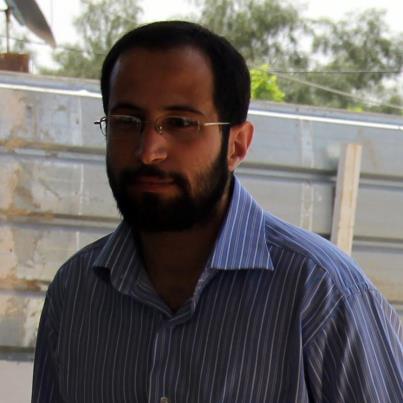
Engineer Fuad Abu Saif
In addition, UAWC Board Member Ahmad Soufan, held in administrative detention for one year, was recently ordered into a third term of six months in arbitrary administrative detention without charge or trial. Two other UAWC leaders, Abdel Razzak Farraj, administrative and financial director, and Board member Dr. Yousef Abdul Haq, were both finally released from administrative detention after multiple renewals of their imprisonment.
As the UAWC noted in its statement on the arrests, these arrests are part and parcel of the ongoing attacks on Palestinians’ right to the land, including massive settlement building, land confiscation, home demolitions, and the construction of the apartheid wall, as well as the siege and firing on farmers and agricultural workers in Gaza. The UAWC called on international organizers to defend Palestinian national rights and demand the freedom of the UAWC detainees and all Palestinian prisoners.
UAWC, which recently marked its 25th anniversity, has been struggling with Palestinian farmers and agricultural workers to defend and develop their land, support Palestinian agricultural projects, and support farmers’ steadfastness on the land in the face of Israeli occupation and aggression.
The attack on the UAWC is part of the overall attack on Palestinian farmers and agricultural workers, from olive farmers whose trees are set ablaze by settlers, tthose whose land was stolen for settlements, “military use,” or “buffer zones”, to the fishers of Gaza, who daily brave military attack for seeking to fish in their sea. It reflects the over 64 years of occupation, land theft, displacement and dispossession of the occupation of Palestine. Farmers and agricultural workers are on the front lines of resistance as they struggle to remain on their land – and are thus being targeted for arrest and imprisonment in an attempt to undermine the steadfastness of the farmers.
Western governments, including those of the United States and Canada, are not only silent in the face of these attacks, they are directly complicit, as they pledge expanded military support and allegiance to Israel as its occupation, apartheid and human rights violations continue and escalate. It is urgent that people make their own voices heard to challenge and break this complicity.
TAKE ACTION!
1. Click here to sign our petition at change.org, or sign on below! This petition will be presented to Israeli embassies in the US, Canada and other countries on Wednesday, August 15, demanding the release of these prisoners, justice for all prisoners, and an end to the attack on Palestinian farmers and agricultural workers. Individual and organizational signatories are welcome – we particularly urge groups and organizations to sign on to and distribute the petition. If you experience any difficulty signing on, please send your endorsement to samidoun@samidoun.ca.
2. Boycott Israeli goods and agricultural products! The Palestinian movement has called for boycott, divestment and sanctions targeting Israeli goods and institutions until it ends its violations of Palestinian rights. Israeli oranges, organic peppers, dates, and other agricultural products are the fruits of stolen land. Boycott those products and help to raise awareness in your community!
3. Support Palestinian agricultural products, including olive oil, spices, and maftoul, farmed by Palestinian farmers and not occupation settlements.
4. Join a protest or demonstration outside an Israeli consulate for Palestinian prisoners. Many groups and organizations are holding events – join one or announce your own. Organizing an event, action or forum on Palestinian prisoners on your city or campus? Use this form to contact us and we will post the event widely. If you need suggestions, materials or speakers for your event, please contact us at samidoun@samidoun.ca.
5. Help to support UAWC – here is information on how you can donate to support UAWC’s much needed work among Palestinian farmers and fishers.
Sign On: End the Persecution of Palestinian Agricultural Workers!
Endorse the petition, to be submitted August 15, 2012, to call for freedom for Palestinian agricultural workers targeted for defending their land.
- This is an organizational endorsement
- This is an individual endorsement
Petition Text
As they organize to defend their land and Palestinian farming against the onslaught of settlements and siege, Palestinian agricultural workers and organizers have been subject to an intensified arrest campaign in the occupied West Bank of Palestine. We write to demand an immediate end to the targeting of the Union of Agricultural Work Committees and all Palestinian farmers and agricultural workers, and the freedom of the Palestinian organizers imprisoned for defending their rights.
A number of staff of the Union of Agricultural Work Committees, a Palestinian grassroots organization that organizes Palestinian farmers to defend their land and develop their products, have been targeted in recent days for arrest by Israeli occupation forces.
On July 31, Dr. Moayad Ahmad Bisharat, the coordinator of UAWC’s Jericho office was abducted at dawn from his home. The UAWC office in Jericho was then ransacked by Israeli forces, who confiscated the computers, laptops, and files of the organization. This is the most recent in a series of arrests of UAWC activists in recent weeks, including the Director of Development and Operations, the engineer Fouad Abu Saif on July 26 in an early morning raid on his home in Hebron, in which his computer, mobile phone and other communication devices were seized. The director of the UAWC Jericho office, Mohammad Nujoom was abducted on July 16 as he re-entered Palestine from abroad. Both were taken to the Moskobiya compound for interrogation.
In addition, UAWC Board Member Ahmad Soufan, held in administrative detention for one year, was recently ordered into a third term of six months in arbitrary administrative detention without charge or trial. Two other UAWC leaders, Abdel Razzak Farraj, administrative and financial director, and Board member Dr. Yousef Abdul Haq, were both finally released from administrative detention after multiple renewals of their imprisonment.
As the UAWC noted in its statement on the arrests, these arrests are part and parcel of the ongoing attacks on Palestinians’ right to the land, including massive settlement building, land confiscation, home demolitions, and the construction of the apartheid wall, as well as the siege and firing on farmers and agricultural workers in Gaza. The UAWC called on international organizers to defend Palestinian national rights and demand the freedom of the UAWC detainees and all Palestinian prisoners.
UAWC, which recently marked its 25th anniversary, has been struggling with Palestinian farmers and agricultural workers to defend and develop their land, support Palestinian agricultural projects, and support farmers’ steadfastness on the land in the face of Israeli occupation and aggression.
The attack on the UAWC is part of the overall attack on Palestinian farmers and agricultural workers, from olive farmers whose trees are set ablaze by settlers, those whose land was stolen for settlements, “military use,” or “buffer zones”, to the fishers of Gaza, who daily brave military attack for seeking to fish in their sea. It reflects the over 64 years of occupation, land theft, displacement and dispossession of the occupation of Palestine. Farmers and agricultural workers are on the front lines of resistance as they struggle to remain on their land – and are thes being targeted for arrest and imprisonment in an attempt to undermine the steadfastness of the farmers.
We demand that the Israeli government immediately free Bisharat, Abu Seif, Nujoom and Seifan and end this targeted attack on Palestinian agricultural workers.
Furthermore, we demand an end to the policy of settlement construction, land confiscation and home demolitions targeting Palestinian farmers and villages in the West Bank, and an end to the targeting of Palestinian farmers in Gaza in the “buffer zones” and fishers at sea.
Finally, we demand an end to the mass imprisonment of Palestinians and freedom for all Palestinian political prisoners.
Related articles
- Israeli occupation forces seize two farm tractors used to supply Bedouins with water (alethonews.wordpress.com)
- Talking Palestine to Power (alethonews.wordpress.com)
- Weekly Report On Israeli Human Rights Violations in the Occupied Palestinian Territory (altahrir.wordpress.com)
- Israeli occupation forces kidnap five Palestinians including children in J’lem and Al-Khalil (occupiedpalestine.wordpress.com)
- 8 injured as settlers stone bus carrying worshipers (alethonews.wordpress.com)
New Regulation Bars Palestinians and Immigrants from Using Israeli Courts
By Kelly Joiner | IMEMC & Agencies | August 06, 2012
Israeli Justice Minister Yaakov Neeman has enacted a new regulation that effectively limits the ability of Palestinians and immigrants to file lawsuits in Israeli courts.
According to the Israeli daily Ha’aretz, the new regulation would require anyone filing a claim in Israeli courts to provide their Israeli ID number or foreign passport number. Palestinians from the occupied territories or stateless individuals without passports would effectively be banned from filing grievances with the courts when this order goes into effect on September 1.
Ha’aretz stated that people without a passport would have their cases referred to a judge, but in practice, warned Oded Feller, a lawyer for the Association for Civil Rights in Israel, individuals without a passport would be barred from filing as court clerks refused to accept documents that are incomplete and forms missing passport numbers could be deemed as such.
Palestinians often file lawsuits in Israeli courts against Israeli Occupation Soldiers for misconduct and damages, which would be affected by this regulation. It would also hamper the ability of Palestinians from the occupied territories or migrants from other countries without passports from filing suit in labor courts against unscrupulous employers, from recovering damages if injured in a car accident, or even from filing appeals against the Israeli Interior Ministry if it decided to deport them.
Related articles
- Light Sentences for Brutal Killing of Palestinian in Jerusalem (alethonews.wordpress.com)
Europe Already Has Draft Standard For Real-Time Government Snooping On Services Like Facebook And Gmail
From the not-that-we’d-ever-use-it department
By Glyn Moody | TechDirt | August 3, 2012
As the old joke goes, standards are wonderful things, that’s why we have so many of them. But who would have thought that ETSI, the European Telecommunications Standards Institute, has already produced a draft standard on how European governments can snoop on cloud-based services like Facebook and Gmail — even when encrypted connections are used?
ETSI DTR 101 567, to give it the full title, was pointed out to us by Erich Moechel, who has written an excellent exploration of its elements (original in German). Here’s the summary from the draft standard (Microsoft Word format):
The present document provides an overview on requests for handover and delivery of real-time information associated with cloud/virtual services. The report identifies Lawful Interception needs and requirements in the converged cloud/virtual service environment, the challenges and obstacles of complying with those requirements, what implementations can be achieved under existing ETSI LI [Lawful Interception] standards, and what new work may be required to achieve needed Lawful Interception capabilities. Cloud Services in whichever forms they take (Infrastructure, Software, Platform or combinations of these) are often trans border in nature and the information required to maintain Lawful Interception (LI) capability or sufficient coverage for LI support may vary in different countries, or within platforms of different security assurance levels. This work aims to ensure capabilities can be maintained while allowing business to utilise the advantages and innovations of Cloud Services and was undertaken cooperatively with relevant cloud security technical bodies.
As that makes clear, this is being presented as “maintaining” interception capabilities in a world where cloud computing makes previous approaches inapplicable. The new standard specifically mentions social networking, file sharing and video conferencing as new areas that need to be addressed.
One key section spells out how this is to be achieved:
If the traffic is encrypted, the entity responsible for key management must ensure it can be decrypted by the CSP [Communication Service Provider] or LEA [Law Enforcement Agency].
In order to maintain LI coverage the cloud service provider must implement a Cloud Lawful Interception Function (CLIF). This can be by way of Applications Programming Interface (API) or more likely ensuring presentation of information in a format recognisable to interception mechanisms. Deep packet inspection is likely to be a constituent part of this system.
As this makes clear, along with the intercepted information, the standard envisages encryption keys being handed over routinely. Just to make things complete, DPI — deep packet inspection — is also regarded as a likely element of the system.
Since this is currently a draft, the threat it represents might be seen as purely theoretical; but a recent article in the Guardian confirms that the UK government “quietly agreed to measures that could increase the ability of the security services to intercept online communication” — a reference to the ETSI draft. The Guardian also provides us with some explanation of why this draft just happens to be available at precisely the moment when the UK government is announcing a plan that seems likely to use it:
Etsi has faced criticism in the past for the pre-emptive inclusion of wiretapping capabilities, a decision that critics say encouraged European governments to pass their wiretapping laws accordingly. According to Ross Anderson, professor in security engineering at the University of Cambridge Computer Laboratory, the institute has strong links with the intelligence agencies and has a significant British contingent, along with a number of US government advisers.
It’s a classic case of policy laundering; here’s how it will probably work.
The British government insists now that it will “only” gather communications data, and not content. At the same time, it will require that ISPs adopt the new ETSI cloud interception standard (once it’s been finalized) in the “black boxes” that they must install under the proposed snooping legislation. That will put in place all the capabilities needed for accessing encrypted streams — since those providing cloud services will be required to hand over the encryption keys — and hence the content. The UK government may not intend accessing content today, but thanks to the wonders of function creep, when it decides to do it tomorrow the facility will be there waiting for it.
Meanwhile, European governments will be able to point to the UK’s adoption of the ETSI standard as just “good practice”; they will ask their own ISPs to implement it, while insisting that they too have no intention of accessing the contents of people’s Internet streams either. Until, that is, the day comes — probably in the wake of some terrorist attack or pedophile scandal — when the governments will note that since the capability is available, it would be “irresponsible” not to use it to tackle these terrible crimes. The US government will then bemoan the fact that Europe is taking better care of its citizens than it can, and will therefore pass laws requiring US ISPs to install similar real-time access to their systems, and for cloud-based services to hand over the encryption keys. Luckily, there will be a well-tried European standard that can serve as a model….
Follow me @glynmoody on Twitter or identi.ca, and on Google+
Related articles
- Skype stays silent on surveillance (stuff.co.nz)
- Is Skype snooping on your conversations? (zdnet.com)
FBI ‘Primer’ Instructs Interrogators to Break Detainees Through Isolation
By Kevin Gosztola | FireDogLake | August 2, 2012
A “primer” from the Federal Bureau of Investigation (FBI) seems to encourage the use of isolation to break down prisoners in overseas prisons. Published in 2011, it advocates the use of this coercive measure to break detainees ahead of interrogations, which violates or runs contrary to FBI policy.
The American Civil Liberties Union (ACLU) obtained the “primer” through a Freedom of Information Act (FOIA) request. Devon Chaffee, Legislative Council for the ACLU, says it is the first document she has seen “that’s written by an FBI agent” and “explicitly recommends that FBI agents recommend that detainees be put in isolation.”
Here is part of the primer that led the ACLU to be concerned:
…For the safety of other detainees in the facility, detainees fresh from the battlefield should be detained in individual cells until complete assessment can be made. The assessment can be considered to be complete when the decision has been made whether to release the detainee or send him to long term detention facility. Additionally, access to anything above the baseline level of treatment provided to all detainees should be strictly controlled by the assigned Interrogator. Granting this authority and control to the Interrogator places the Interrogator in a position of power that can provide an advantage when crafting an approach strategy.
Isolation of the detainee not only ensures the safety of other detainees but also prevents the individual detainee from drawing strength from the support and companionship of other detainees It also prevents collusion on cover stories between detainees. A large part of the Interrogators advantage is the natural fear of the unknown that the detainee will be experiencing. Exposure to other detainees will mitigate that fear. You may not be in a position to influence how your subject is held, but at a minimum you should know if he has been held in a communal cell prior to interrogation…
Chaffee considers this to be problematic because “isolation was component of many of the abusive interrogations that took place” after the September 11th attacks. Isolation can lead to serious abuses in interrogation. The FBI also has a policy that prohibits the “use of coercion in interrogation” and the FBI and Supreme Court have recognized that “isolation in interrogation is an indication of coercion.” [For these reasons, the ACLU sent a letter to FBI director Robert Mueller.]
The FBI would presumably contend the isolation is only done for so-called security purposes, however, additional language in the “primer” makes it clear the isolation is intended to inflict a psychological impact on detainees so they are essentially in a state of “learned helplessness” (like what the CIA has done to detainees in their custody whom they’ve tortured).
…[D]etainees should not be held in the clothing they are captured in. Detaining a subject in his own clothing could impact negatively on the health and safety of detention facility personnel and other detainees in the facility. Having the detainee change into hospital pajamas, or some other generic clothing, and flip flops has the added benefit of removing a potential source of comfort and an anchor to the world outside the detention facility. This is an important step in the process of detaching the detainee from the outside world and replacing his concern for his cause and his colleagues with a concern for his own fate…
…In order to create the optimum conditions for a productive interview, if the policy of the facility permits, consider having your detainee placed in an individual cell several days before you begin interrogation. If you are conducting law enforcement interviews in a DOD facility, a formal request from the FBI must be made to isolate a detainee. This request must be approved by the first O-6 in the chain of command.
Keep in mind that a thorough interrogation may be a multi-session, multi-day process. Having your subject return to a communal cell between sessions is completely counterproductive. A subject returning to a communal cell will feel pressure from fellow detainees based on the duration of his absence from the cell and the knowledge that he will be questioned by his peers upon his return. Isolation of your subject removes this intangible, but extremely powerful, influence from your subject. [emphasis added]
Chaffee notes, ”There are some legitimate administrative reasons why a detainee for a limited amount of time would need to be isolated, potentially at his request or for his protection from other detainees in the facility, for instance.” But, “the way that it is described and the language that is being used” suggests the isolation is being employed to “break a detainee’s will” and that to the ACLU “seems inherently coercive.”
Also, there is no need to “separate the detainee from the entire population” if collusion is suspected. Just separate the detainee from the detainee(s) he is suspected of colluding with. And, if a decision to separate detainees needs to be made, the head of the facility should make that decision. Why should an FBI interrogator be in a position to make this decision?
It is unclear if this encouragement for isolation is re-emerging in policy. However, Chaffee argues the FBI should not be asking foreign governments or other agencies to engage in conduct that the FBI agents are prohibited from engaging in, especially when this conduct could potentially lead to human rights abuses.
A final note: creating a state of “learned helplessness” in a prisoner, a concept developed by positive psychologist Martin Seligman, can deliberately make that prisoner ill.
This post by David Dobbs over at ScienceBlogs.com (a partner with National Geographic) explains that “some studies have shown ‘learned helplessness’ to be an apt model for major depression from both a behavioral and even a neurological perspective. In a sense, then, to intentionally produce it in someone by causing them pain and distress in a situation they are powerless to change is to inflict on them a mental illness.” Inducing a state of helplessness or depression in a person through isolation—which is torture—will likely make a human very ill.
Given this scientific reality, the FBI’s ‘primer’ unmistakably encourages the cruel and inhuman treatment of prisoners.
Related articles
- Pentagon: ‘Gitmo drugged prisoners for their sake… then interrogated’ (alethonews.wordpress.com)
- FBI Interrogation Primer Encourages Prisoner Isolation (aclu.org)
Featured Video

Matt Bracken: US Plans Massive MOAB Strike on Iran?
or go to
Aletho News Archives – Video-Images
From the Archives
Confronting the Threat of Ethnic Bioweapons
By Tony Cartalucci – New Eastern Outlook – 29.11.2017
The United States Air Force’s 59th Medical Wing’s molecular biology branch recently was revealed to have been collecting specifically Russian RNA and synovial (connective) tissue samples, prompting fears in Russia of a possible US directed ethnic-specific bioweapons program. … continue
Blog Roll
 Aletho News
- Matt Bracken: US Plans Massive MOAB Strike on Iran?
- Russia accuses France of ‘piracy’ over tanker seizure
- Why Yemen Is Bombing Saudi Arabia’s Airports: The War Behind the Headlines
- Sally Rooney’s books pulled from UK over support for Palestine Action
- Bombs for Tel Aviv, Promises for Riyadh
- Israeli ad agency conducted vast global espionage campaign using online ads: Report
- Oct. 7 Forever Marks The Big Reveal: ‘We See You, Israel, We Revile You, We Reject You!’
- Meet the US generals and admirals advancing Israeli policy
- Israel’s Straw Widow Protocol: The Kill Zones Where Civilians Were Labelled ‘Terrorists’
- Leading Israeli Think Tank Publishes Psychotic Israeli ‘National Security’ Doctrine
- If Americans Knew
- Israeli firm used online ads to run vast spy operation, researchers say
- No, the world zionist movement is not an antisemitic conspiracy theory
- Hundreds of IDF investigations into killings still have no public outcome, BBC Verify finds
- After Ashley Moody Epstein Probe, Donors Linked to Him Poured Money Into her Senate Campaign
- Worried about Russian meddling in UK politics? Wait till you see what Israel is up to
- Israeli settlers attack West Bank center for disabled children, church leader calls for int’l action
- Pulling Out Teeth Just to Live: How Israel Has Devastated Dental Care in Gaza
- Gaza’s “ceasefire” death toll passes 1,500 – Daily Update
- Activists Abused By Israel Return to New Freedom Flotilla Mission
- 60 Minutes won’t tell the full truth about Israeli settler violence
- No Tricks Zone
- New Study Suggests Large Regions Of The Pacific Ocean Have Been Cooling For The Last 80 Years
- Germany’s Green Energy Debacle: High Energy Costs Force Kahla Porzellan to Close After 182 Years!
- New Study: 50 Years Of The Most Aggressive ‘Net Zero’ Policies Can Only Affect The Global Climate By 0.03°C
- US September “Heat” Was No Record…Many Records Set Decades Ago
- Latest European Green Energy Debacle; Portugal’s Largest Flagship Solar Park Insolvent!
- Green Energy Debacle: German Expert Professor Fritz Vahrenholt Warns Of Severe Economic And Social Consequences
- Two More Paleo Reconstructions Affirm Meters-Higher Sea Levels Across Ireland, Brazil 7000-6000 Years Ago
- New Study: Earth And Venus Surface Warmth Largely Explained By Convection And Lapse Rate, Not CO2 Or Radiation
- 2025 Nature Paper Claiming Worsening Global Drought Gets RETRACTED …Heavily Flawed
- New Study: ‘Global Drought Shows No Detectable Recent Acceleration Under Climate Warming’

