Israeli forces shut down media launch in Jerusalem
Ma’an – 02/04/2012
JERUSALEM – Israeli forces raided the Jerusalem office of a university media institute on Monday, shutting down the launch of an online media network and detaining employees.
Plainclothes police shut down the launch of the Hona al-Quds news site in the al-Khalidiya neighborhood of Jerusalem’s Old City, and confiscated equipment and files, network director Harun Abu Arrah told Ma’an.
Two employees — Adel Ruished and Mohannad Izheman — were detained, and guests attending the launch were blocked from entering.
Employees were presented with an order signed by the Israeli minister of internal security forbidding the event as a banned initiative of the Palestinian Authority, director of Al-Quds University Institute for Modern Media Lucy Nusseibeh told Ma’an.
The university, which launched Hona al-Quds, has been registered as an independent non-governmental organization with Israeli authorities for decades, Nusseibeh added.
The launch was intended to take place simultaneously with the institute’s Ramallah office by Skype.
Izheman, a university security guard, has since been released with a summons to return to police offices on Tuesday, and Ruished, the university’s Administrative Director of Jerusalem Affairs, is still being held, a university statement said.
Israeli police spokesman Mickey Rosenfeld said the facility was “closed until further notice,” on suspicions of use for Palestinian official activity in Jerusalem.
“This is the second attack on our media institution in five weeks — this is education and not a political project,” Nusseibeh said.
In late February, Israeli forces raided the institute’s Al-Quds Educational TV in Ramallah-district Al-Bireh and confiscated its broadcasting equipment, claiming it was interrupting legal broadcasting.
The same day, Israeli forces also raided Watan TV’s newsroom in Ramallah and seized transmitters.
Reporters Without Borders said at the time it was “deeply shocked” by the raids.
“These arbitrary and illegal operations served yet again to intimidate Palestinian media and journalists, the victims of repeated attacks by the (Israeli army),” the group said in a statement.
Related articles
- Israel raids Ramallah TV stations (alethonews.wordpress.com)
- Israeli forces attack press with ‘total impunity’ (alethonews.wordpress.com)
- Union condemns Israel extending journalist detention (alethonews.wordpress.com)
The ACLU and Obama’s Assassination Program
By Binoy Kampmark | Dissident Voice | April 2, 2012
Due process and judicial process are not one and the same. The Founders weren’t picky. Trial by jury, trial by fire, rock-paper-scissors – who cares?
— Stephen Colbert, March 6, 2012
The policies around the assassination program of the United States are surreal.
Trafficking in murder while espousing noble things is a habit regimes fall into, though the more sinister ones tend to use weasel words to conceal that fact. The Obama administration, having long abandoned its role as the knight in shining armour, is now rusting away with the effects of realpolitik.
The ACLU has been trying through Freedom of Information channels to force a disclosure of the guidelines the administration uses in targeting foreign nationals or American citizens through the infamous drone program that has become de rigueur in military circles. The CIA has insisted that it cannot confirm or deny the existence or non-existence of those records that cover the targeting of individuals, or whether it is even employing such vehicles in the first place. They are “intelligence sources and methods information that is protected from disclosure by section 6 of the CIA Act of 1949, as amended”. In such circles, the response is termed the Glomar response, after the CIA’s refusal in 1976 to confirm or deny its relationship with Glomar Explorer, a drill ship created at the direction of Howard Hughes for the agency to recover the sunken Soviet submarine, the K-129.
In the words of Jameel Jaffer of the ACLU, as reported by Salon (March 26). “At this point, the only consequence of pretending that it’s a secret program is that the courts don’t play a role in overseeing it.” With the courts left out in the cold, the administration can run riot. This, of course, is its self-appointed prerogative.
The Obama administration is engaging in a lexical game of murder, a game that has certainly silenced many of those who would have expressed outrage at the assortment of abuses perpetrated by the Bush administration. Tinker with the words, and the result is considered perfectly justifiable in the name of a higher state interest. This is Cheney with the gloss, Rumsfeld with the polish. Adjust the terms of reference, and assassination is an entirely rum thing.
Obama’s front man in this entire business, in true tasteless fashion, is Eric Holder. Instead of defending the law as is the incumbent duty of any Attorney General, he has a nasty tendency to get sick on it. He brings in his broom to clean up, and in its place he leaves the slime of gibberish. At Northwestern University Law School, he clearly repudiated the position he had taken regarding the Bush administration, whose policies in the ‘war on terror’ had occasioned ‘needlessly abusive and unlawful practices’. That, however, was in 2008. The new Holder was a different beast, more prone to splitting hairs. ‘Due process’ and ‘judicial process’, we are made to realise, ‘are not one and the same’. The President, according to Holder, is not required to seek permission from any court before targeting American citizens abroad (Washington Times, March 12).
Supposedly, the targeting of such individuals is constrained by guidelines. The problem with such dangerous talk is that guidelines are merely points on paper, the scrawl of the moment. They have a tendency of disappearing as quickly as they appear. These guidelines tend to revolve around the nature of the target (an operative of a terrorist group seeking to actively kill American citizens, for one; that the target poses an imminent threat to the US; that the capture of the target is impractical; and that the target is to be eliminated on the basis of ‘relevant law of war principles’ (Washington Times, March 12). Such determinations do not lie in the legal domain. They are rather matters of political expediency.
An administration up to its eyeballs with legal rhetoric is bound to eventually be told it has no clothes, that its efforts are simply acts of distortion. The time it seems, courtesy of the ACLU’s efforts, is now.
Binoy Kampmark was a Commonwealth Scholar at Selwyn College, Cambridge. He lectures at RMIT University, Melbourne. He can be reached at bkampmark@gmail.com
Related articles
- Demolishing Due Process (alethonews.wordpress.com)
- U.S. drones targeting rescuers and mourners (salon.com)
Results of Nationwide Government Cell Phone Tracking Records Request Show Frequent Violations of Americans’ Privacy Rights
By Catherine Crump, ACLU Staff Attorney | March 31, 2012
The ACLU has just released the results of our affiliates’ public records requests to hundreds of police departments around the country asking them about their cell phone tracking policies.
What we have learned is disturbing. Many of the approximately 200 law enforcement agencies that responded said they track cell phones without a warrant. As The New York Times reports, this invasive form of surveillance often happens without any court oversight at all.
A small number of agencies, such as in North Las Vegas and Wichita, said they do obtain warrants based on probable cause before tracking. Others, such as the Kentucky State Police, said they use varying legal standards, such as a warrant or a less-strict subpoena. The result is unclear or inconsistent legal standards from town to town that frequently fall short of probable cause.
The government should have to get a warrant before tracking cell phones. That is what is necessary to protect Americans’ privacy, and it is also what is required under the Constitution.
The fact that some law enforcement agencies do get warrants shows that a probable cause requirement is a completely reasonable and workable policy, allowing police to protect both public safety and privacy.
Last August, in an unprecedented effort to penetrate the secrecy around the policies, 35 ACLU affiliates around the country filed over 380 requests under states’ freedom of information laws. The ACLU asked state and local law enforcement agencies about their policies, procedures and practices for tracking cell phones. An in-depth summary of what we found, with links to documents, is here.
The responses varied widely, and many agencies did not respond at all. The documents included statements of policy, memos, police requests to cell phone companies (sometimes in the form of a subpoena or warrant), and invoices and manuals from cell phone companies explaining their procedures and prices for turning over location data. There’s a map with links to the documents and requests state-by-state here.
The documents provide an eye-opening view of police surveillance of Americans. In Wilson County, N.C., police obtain cell phone tracking data where it is “relevant and material” to an ongoing investigation – a standard much lower than probable cause. Police in Lincoln, Neb., without demonstrating probable cause, obtain even GPS location data, which is more precise than cell tower location information. In Tucson, Ariz., police sometimes obtain cell phones numbers for all of the phones at a particular location at a certain time (this practice is known as a “tower dump”).
The U.S. Supreme Court in January held in U.S. v. Jones that prolonged location tracking is a search under the Fourth Amendment, but the effects of that ruling on law enforcement have yet to be seen.
The ACLU supports bipartisan legislation currently pending in both the House of Representatives and the Senate that would address this problem called the Geolocation Privacy and Surveillance (GPS) Act. It would require law enforcement officers to obtain a warrant to access location information from cell phones or GPS devices. It would also mandate that private telecommunications companies obtain their customers’ consent before collecting location data. At least 11 state legislatures are also considering bills related to location tracking.Technology is evolving quickly, and often to the detriment of privacy. How much privacy Americans enjoy is a choice that ultimately is ours as a society to make.
Tell Congress: Support the GPS Act!
Act Now
Related articles
- Even After Supreme Court GPS Decision, Feds Still Want Warrantless Cell Phone Tracking (alethonews.wordpress.com)
- EFF Backs Judge Calling for Warrant in Cell Phone Tracking Case (eff.org)
- Your cell phone is a government issued tracking device (alethonews.wordpress.com)
Chicago bans anti-war march during NATO Summit
RT | 30 March, 2012
A judge has rejected the demands of anti-war activists for a march to be held in Chicago during a planned NATO summit. The activists say the city’s arguments against the march defy logic.
Anti-war activists filed a request to court after their initial demands for a march to be rescheduled were rejected by the City of Chicago.
Andy Thayer, an activist leader, says he will still be marching on May 20, the day the NATO summit opens.
“I can say definitively we are marching on May 20,” he noted, as quoted by Reuters. “We will hold a peaceful protest.”
The anti-war demonstrators originally planned to hold a march on May 19, the day another meeting of global leaders, the G8 Summit, closes in Chicago. However, when the summit’s venue was changed to Camp David, the activists decided to move their march a day forward to coincide with the start of the NATO summit.
But this request was rejected by the Chicago Transportation Department.
The department wrote back to Thayer, saying there were not enough on-duty police officers or other employees authorized to regulate traffic.
“The commissioner finds that there are not available at the time of the parade a sufficient number of on-duty police officers, or other city employees authorized to regulate traffic, to police and protect lawful participants in the parade and non-participants,” the assistant commissioner of the department wrote to Thayer.
But Thayer says the argument makes no sense – as the police assured the public it had enough personnel to deal with the protests on May 19.
“It defies logic,” Thayer remarked. “Ultimately the city is … pursuing a political agenda of denying meaningful First Amendment expression of anti-war views.”
The city did advise the protesters to change their itinerary, but the alternative route will not pass through Daley Plaza in the city center, and will take much longer.
Thayer argues that the city’s reluctance to allow the peaceful demo is part of Mayor Rahm Emmanuel’s efforts to silence dissent.
Related articles
- U.S. Ambassador-Designate: Georgia To Join NATO (alethonews.wordpress.com)
India: Concern expressed about extrajudicial executions
UN Office of the High Commissioner for Human Rights | March 30, 2012
NEW DELHI –– The United Nations Special Rapporteur on extrajudicial, summary or arbitrary executions, Christof Heyns, called on the Government of India to continue to take measures to fight impunity in cases of extrajudicial executions, and communal and traditional killings.
The Special Rapporteur on extrajudicial, summary or arbitrary executions, Christof Heyns, concluded today his official visit to India, which took place from 19 to 30 March 2012.
Mr. Heyns praised the openness and willingness of the Government of India to engage, shown also by the fact that it was willing to host a mission dealing with the right to life, an area in which issues to be tackled are often complex in various countries.
“This, together with the generally high level of commitment by the Indian Government to human rights and the fact that there have recently been improvements in some respects in the loss of life, could provide a window of opportunity to take decisive steps to ensure the greater realization of the right to life,” stated Christof Heyns.
While recognizing the size, complexity, security concerns and diversity of India, the Special Rapporteur remains concerned that the challenges with respect to the protection of the right to life in this country are still considerable. “Evidence gathered confirmed the use of so-called ‘fake encounters’ in certain parts of the country. Where this happens, a scene of a shoot-out is created, in which people who have been targeted are projected as the aggressors who shot at the police and were then killed in self-defence. Moreover, in the North Eastern States, and Jammu and Kashmir the armed forces have wide powers to employ lethal force.”
The above is exacerbated by the high level of impunity that the police and armed forces enjoy, due to the requirement that any prosecutions require sanction from the central government – something that is rarely granted. “The main difficulty in my view has been these high levels of impunity”, stressed the Special Rapporteur.
Other areas of concern relate to the prevalence of communal violence, and, in some areas, the killing of so-called witches, as well as dowry and so-called “honour” killings, and the plight of dalits (‘untouchables’) and adivasis (‘tribal people’).
Christof Heyns proposed a number of provisional steps to be taken to address these concerns. In the first place, he called for the establishment of a Commission of Inquiry, consisting of respected lawyers and other community leaders, to further investigate all aspects of extrajudicial executions. This should entail a form of transitional justice.
“Institutions such as the National Human Rights Commission should establish to what extent the guidelines they provide on matters such as the use of lethal force by the police are in fact observed, as opposed to providing empty promises in practice,” underscored the Special Rapporteur, recommending the immediate repeal of the laws providing for the immunity from prosecution of the police and the armed forces, and in particular the repeal of the Armed Forces (Special Powers) Act of 1958.
“India should ratify a number of international treaties, including the Convention Against Torture and the International Convention for the Protection of All persons from Enforced Disappearance,” he said. “India should also host missions by other United Nations independent experts, in particular those related to torture, enforced disappearances and counter-terrorism measures.”
The 12-day official mission by the Special Rapporteur was the first visit to India by an independent expert since that country extended an open invitation to UN Special Procedures in 2011, and the first mission to India by an expert mandated by the UN Human Rights Council to monitor and report on extrajudicial, summary or arbitrary executions.
The UN Special Rapporteur’s final conclusions and recommendations will be submitted as a comprehensive report to the Human Rights Council at a future session in 2013.
Related articles
- UN rapporteur arrives on fact-finding mission in Kashmir (kractivist.wordpress.com)
- UN Special Rapporteur to visit JK tomorrow (kashmirreport.wordpress.com)
MK Zoabi: Struggle for democracy is a struggle against Zionism
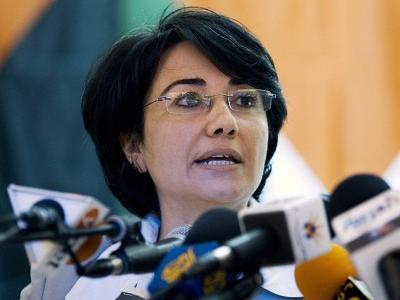
Haneen Zoabi, an MK from the Balad party, speaks to Elsa Rassbach about Land Day and her relationship as a Palestinian to Zionism and citizenship.
By Elsa Rassbach | +972 | March 29, 2012
 Since the 1980s, Palestinians have marked every March 30 with protests to celebrate Land Day. The day commemorates the first widespread struggle of Arab Israelis against processes of land confiscation intended to create Jewish majorities in certain communities. The marches and general strikes began in the Galilee in 1976, and resulted in the killings of six unarmed Arab citizens of Israel. Solidarity protests spread to the occupied West Bank, Gaza and the refugee camps in Lebanon. Since then, the day has marked the first common struggle for a Palestinian national cause following the founding of the State of Israel in 1948, an event Palestinians call the Nakba. This year on Land Day, worldwide Boycott, Divestment and Sanctions (BDS) activities will take place against Israeli policies, as well as the Global March to Jerusalem, which will call attention to the continuing Judaization and ethnic cleansing in the city that was supposed to be the multi-ethnic, multi-religious capital of a future Palestinian state.
Haneen Zoabi, 43, became a Knesset member in 2009, as the first Palestinian woman elected on an Arab party’s list. She is a member of the Balad party, which seeks to transform Israel into a democracy for all of its citizens, irrespective of national, ethnic or religious identity. Zoabi was born in Nazareth to a Muslim family. In 2010, she participated in the Gaza flotilla on board the Mavi Marmara. I spoke with her recently by Skype.
What does Land Day mean to you?
To me, Land Day is a day of ongoing and a continuous struggle around the issue of “land property.” This is still the crucial issue between us and the state. The core of the Zionist project is a continuous stealing of land from the Palestinians and transferring it to the Israeli Jews. Renaming the places, the junctions, the villages, the streets, and giving Jewish names to the landscape is part of this “confiscation.” It’s a way to steal from us and confiscate our historical relation with our homeland. This is the meaning of Ariel Sharon’s famous statement in the Knesset in 2002 when he said that the Palestinians inside Israel, whom he called “Israeli Arabs,” in effect have only temporary “rights in the land,” the land not yet confiscated, but “all the rights over the Land of Israel are Jewish rights.”
During the 63 years since 1948, Israel has confiscated 85 percent of our land and turned it over to the exclusive use of the Jews. It has developed and built 1,000 towns, cities and villages, all of them only for the Jews. And zero for the Palestinians. We live now on 2 percent of our land. We don’t even have permission to build our own houses on our own land and thus have no rights to use our land that hasn’t been confiscated.
How does Israel’s definition of itself as a “Jewish state” affect the Palestinian citizens of Israel?
The “Jewish state” is a state that has been established by Jews and is run by the Jews for the sake of the Jews – all at the expense of the Palestinians. It’s a racist definition. The state declares me to be an outsider in this land, though I’m the opposite. I’m the indigenous people. I didn’t immigrate to Israel; it was Israel that immigrated to me.
The State of Israel claims that it can be Jewish and democratic at the same time, as if there were no contradiction between the two. Any debate within Israel regarding the inherent contradiction between being a Jewish state and being a democratic state is considered no less than a “strategic threat.” If we are not Jewish and refuse to give up our rights, then obviously we present not just an alternative view, but something that contradicts the state’s very legitimacy: Zionism.
How you define your struggle as Palestinian citizens of Israel in relation to the struggle of the rest of the Palestinian people?
Our struggle has two components, as citizens and also as Palestinians. And unlike the state, we don’t see why both components — our citizenship and our nationality – should clash.
On the contrary, citizenship should be inclusive. We are fighting for normal citizenship with full recognition of our national rights as indigenous people that would include our history, our identity, our culture and our nationality.
My citizenship is conditioned by the Jews’ privileges. It’s even conditioned to my loyalty to these privileges! Therefore, there is no way to struggle for full equality and full citizenship without challenging the concept of “Jewish state.” To struggle for democracy in Israel is to struggle against Zionism. And this is what unifies our struggle with the wider Palestinian struggle. Racism, Oppression, Judaisation, Apartheid and Undemocracy inside Israel; Apartheid, Occupation, Oppression, and Judaisation in the West Bank and the Gaza Strip; and the denial of the right of return – all of these mechanisms of control serve the same ideological project: Zionism.
Nakba Day, the first intifada, the second intifada – all of these days are days of unity. But still our struggle is not united, because it lacks a unifying vision and a unifying framework of legitimacy. The Palestinian issue did not begin in 1967 and does not only concern the territories occupied in 1967. It concerns the entire Palestinian people, and even the wider Arab region.
After the Oslo Accords of 1993 defined the Palestinians inside Israel as an internal Israeli matter, we reformulated our national project in a manner that secures our reintegration into the Palestinian people and guarantees our place as an integral part of the Palestinian issue, both as part of the conflict and as part of the solution. Our demand for a “state of all its citizens” has put the Palestinians in Israel at the heart of the direct confrontation with the Zionist enterprise and has forced the “Jewish state” to admit the primacy that it grants to Jewish-Zionist values over democratic values, and to recognixe the impossibility of coexistence between the two.
This is the role we play.
Elsa Rassbach is a filmmaker and journalist from the United States, now based in Berlin. Her award-winning film, ”The Killing Floor,” an historical dramatic film about a union’s struggle against racism in the Chicago Stockyards, will be re-released this year.
Related articles
- On the eve of Land Day: Al Quds anticipates the Global March (alethonews.wordpress.com)
- Scores Injured as Israeli Troops Attack West Bank land Day Protests (alethonews.wordpress.com)
- Palestinian lawmaker wounded in Land Day protest (alethonews.wordpress.com)
- Palestinians in Israel – Book Review (alethonews.wordpress.com)
French police raid ‘extremists’, arrest 19
RT | March 30, 2012
The Toulouse gunman may be dead and buried, but his dark legacy continues to stir up national passions in France. With French police arresting some 19 suspected Islamists in raids across the country, harsher anti-terror measures could be looming.
Mohamed Merah, the gunman behind the tragic shooting which killed seven, including three school children, in one of France’s worst terror attacks was buried in Toulouse on Thursday.
The case set French security services on high alert and sparked a vigorous debate among French politicians with the presidential campaign in full swing.
“From now on, anyone who regularly consults Internet sites which promote terror or hatred or violence will be sentenced to prison. Any person going abroad for the purposes of indoctrination in terrorist ideology will be criminally punished,” declared France`s acting President Nicolas Sarkozi, who is seeking another term.
Sarkozi also advocates tightening border controls, saying there are “too many foreigners in France.” He has also promised to bar radical Muslim preachers from entering the country to participate in an Islamic conference next month.
On Friday Sarkozy announced that the domestic intelligence agency carried out a series of raids in Toulouse, Nantes, Lyon, Marseille, Paris and Nice, arresting 19 Islamist suspects. The president added that more such raids are planned.
He gave no details about the justifications for the arrests, but said the operation was conducted “in connection with a form of Islamist radicalism.”
Police say they seized some weapons, including at least one Kalashnikov rifle.
Although the raids mainly took place in Toulouse, police say they are not connected with the case of Mohamed Merah, AP reports citing an anonymous police source.
Another presidential candidate Marine Le Pen, from the far right National Front, is pushing for a more radical anti-immigration line.
“How many Mohamed Merahs are there in the boats and planes that arrive in France full of immigrants? Mohamed Merah is perhaps only the tip of the iceberg,” she said.
Le Pen has called for “war on these fundamentalist political religious groups who are killing our children,” saying that “the threat of Islamic fundamentalism has been underestimated.”
Politicians may be throwing out what they call solutions, but the question is whether these policy ideas on immigration or security are realistic means of addressing the real problem.
While some are alarmed by such harsh rhetoric, others say these proposals are solely being made to get votes, as emotions remain charged after the Toulouse tragedy.
Related articles
- Questions emerge over police handling of Toulouse, France killings (alethonews.wordpress.com)
Rallies Worldwide to Mark the 9th Anniversary of the Disappearance of Aafia Siddiqui
Please also note that events scheduled for Saturday include a rally in New York at 12 noon, and a rally in Toronto (sisters only) at 6 pm. On Friday (March 30), there is also a rally in Fort Worth, Texas at 3.30 pm.
By Andy Worthington – 29.3.12
 On Saturday, outside the US Embassy in Grosvenor Square, London, I will be speaking at an event marking the ninth anniversary of the disappearance in Pakistan of Dr. Aafia Siddiqui, who vanished for five years and five months, and then mysteriously reappeared in Afghanistan in August 2008, where she was arrested, and then allegedly tried to shoot at the US soldiers who were holding her.
She was subsequently flown to New York, where, in September 2010, after a trial at which she did not appear to be well, although her mental health was not considered to be an issue worthy of scrutiny, she was sentenced to 86 years in prison, which she is serving in a notorious psychiatric prison, FMC Carswell, in Texas.
The rally outside the US Embassy, organized by the Justice for Aafia Coalition, takes place from 3 pm to 6 pm, and the speakers, and the timing of speeches, are as follows:
1500: Introduction
1510: Sultan Sabri (Croydon Muslim Association)
1520: Raza Karim
1530: Andy Worthington (journalist, author of The Guantánamo Files)
1540: Asif Hussain
1550: Raza Nadim (MPACUK – Muslim Public Affairs Committee)
1600: Sheikh Suliman Ghani (Imam, Tooting Islamic Centre)
1610: Anas Altikriti (Cordoba Foundation)
1620: Ken O’Keefe (anti-war activist)
1630: Statement of Support from the Haldane Society of Socialist Lawyers
1635: Joy Hurcombe (Save Shaker Aamer Campaign) reads out Statement of Support from Walter Wolfgang
1645: Omar Deghayes (former Guantánamo prisoner)
1655: Adnan Rashid (Hittin Institute)
1705: Sultana Parvin
1715: Uthman Lateef (Hittin Institute)
1725: Conclusion
I hope to see some of you down there, as the case of Aafia Siddiqui, which I have been following for many years, remains deeply troubling. My previous articles can be found here, and below is a re-cap of her story, drawn largely from an account of the website of the Justice for Aafia Coalition.
Please also note that other events scheduled for Saturday include a rally in New York at 12 noon, and a rally in Toronto (sisters only) at 6 pm. On Friday (March 30), there is also a rally in Sandton, South Africa at 2 pm, and another in Fort Worth, Texas at 3.30 pm.
The story of Aafia Siddiqui
Nine years ago, on March 30, 2003, Aafia Siddiqui, a Pakistani citizen, and a cognitive neuroscientist, disappeared in Karachi along with her three children, the youngest of whom, Suleman, was just a baby. For the next five years their whereabouts were unknown, and have never been publicly acknowledged by either the Pakistani or the US government, even though it seems clear that she was held in secret detention, where she was severely abused. Former Bagram prisoners have stated that a female prisoner was held in the prison, identified by the number “650,” and have said that they heard her horrific screams.
Following demands for her recovery by human rights organisations and the Pakistani public, Aafia resurfaced in Afghanistan in August 2008, framed with the attempted murder of US personnel. Transferred to the US, she was convicted in a shocking miscarriage of justice and was sentenced in September 2010 to 86 years in prison. She is currently held in isolation at FMC Carswell, Texas, a facility notoriously referred to as the “hospital of horrors.” She is denied any meaningful contact with her family and is unlikely to see her children again.
Whilst the two elder children were released in 2008 and 2010 respectively, the whereabouts of her youngest child, Suleman — only six months old at the time of the abduction — remain unknown, although it is believed that he may have been killed art the time of her initial capture. Most recently, disturbing reports have emerged that her health is deteriorating and there are serious concerns that she may have cancer.
To request Aafia Siddiqui’s repatriation to Pakistan, please contact the following officials in the US and Pakistani governments:
Eric Holder: Attorney General, U.S. Department of Justice, 950 Pennsylvania Avenue, NW Washington, DC 20530-0001, Tel: +1 202 353 1555, Email: AskDoJ@usdoj.gov
Hilary Clinton: Secretary of State, U.S. Department of State, 2201 C Street, N.W. Washington DC 20520, Tel: +1 202 647 4000, Fax: +1 202 261 8577, Email: questions@friendsofhillary.com
Mr. Asif Ali Zardari: President of Pakistan, President’s Secretariat, Islamabad, PAKISTAN, Tel 92 51 920 4801/921 4171, Fax 92 51 920 7458, Email: publicmail@president.gov.pk
Mr. Syed Yousaf Raza Gilani: Prime Minister of Pakistan, Prime Minister House, Islamabad, PAKISTAN, Fax: + 92 51 922 1596, Email: secretary@cabinet.gov.pk
Mr. Rehman Malik: Minister of Interior, Room No. 404, 4th Floor, R Block, Pak Secretariat, Islamabad, PAKISTAN, Tel: +92 51 921 2026, Fax: +92 51 920 2624, E-mail: minister@interior.gov.pk, ministry.interior@gmail.com, interior.complaintcell@gmail.com
Makhdoom Shah Mahmood Qureshi: Foreign Minister, Ministry of Foreign Affairs Islamabad, Pakistan, Tel: +92 51 921 0335, Fax: +92 51 920 7600, Email: smhq148@hotmail.com
You can also write to Aafia:
Aafia Siddiqui # 90279-054
FMC Carswell
Federal Medical Center
P.O. Box 27137
Fort Worth, TX 76127
U.S.A.
And to send a message of support to her family, email: support@justiceforaafia.org
Related articles
- Aafia’s lawyer seeks reversal of her conviction (nation.com.pk)
Scores Injured as Israeli Troops Attack West Bank land Day Protests
By George Rishmawi & Ghassan Bannoura | IMEMC | March 30, 2012
 Thousands of Palestinians marked land day, on Friday, Palestinian sources said that 100 civilians were injured when Israeli troops attacked protesters in Ramallah and Bethlehem cities.
Marking the 36th anniversary of land day today Palestinians and their supporters marched for Jerusalem demanding an end to the Israeli occupation of the city. Protests were organized near the Israeli Lebanese borders as well as the borders with Jordan.
The Land day commemoration started in 1976, when Palestinian residents of the Galilee to the Negev protested Israel’s plan to expropriate thousands of dunams of land for security and settlement purposes. Israeli military and police attacked the protests leaving 6 killed, hundreds injured.
Today After the midday prayers, people marched from Ramallah city, central West Bank, towards Qalandiya checkpoint that separates Ramallah from Jerusalem.
Troops fired tear gas and sound bombs then later used rubber-coated steel bullets. 80 Palestinians were injured. Witnesses told IMEMC that among those injured were two Palestinian medics.
In Bethlehem 20 residents were injured, seven were moved to hospitals, when soldiers fired tear gas and sound bombs at land day protesters. The marchers were first stopped by the Palestinian security forces however they managed to reach the gate of the wall separating Bethlehem from Jerusalem. As protestors reach the gate, youth threw rocks and firebombs at the wall and the nearby military tower.
“We are here to tell the Israeli occupation that Jerusalem is Palestinian and will never forget it.” One of the protesters told IMEMC.
Israeli troops responded by firing tear gas and sound bombs. A source from the Palestinian Red Cresent Society told IMEMC that one resident was hit with a tear gas canister in his back causing burns and bruises.
The wounded was identified as Yousef Sharqawi from Bethlehem. Another activist from the US was hit with a tear gas canister in his head and was transferred to the hospital for medical treatment. Field medics said his wound is moderate.
Photo of Land Day Protest in Bethlehem Today – by Ghassan Bannoura
Related articles
- On the eve of Land Day: Al Quds anticipates the Global March (alethonews.wordpress.com)
- Palestinian badly injured after Israelis fire tear gas at head (alethonews.wordpress.com)
- Israel Warns Against Global March to Jerusalem (alethonews.wordpress.com)
- 5 injured in West Bank demonstrations (alethonews.wordpress.com)
Palestinian lawmaker wounded in Land Day protest

Palestinian lawmaker Mustafa Barghouti
Press TV – March 30, 2012
Palestinian lawmaker Mustafa Barghouti has been injured by Israeli forces attacking peaceful demonstrations marking international Land Day, Press TV reports.
Barghouti was wounded on Friday in the city of al-Quds (Jerusalem) where he attended a Land Day rally.
Israeli forces opened fire on peaceful pro-Palestinian rallies across the occupied Palestinian territories, with clashes underway between Israeli troops and Palestinians in the occupied West Bank city of Qalandiya.
Earlier reports said at least two protesters were injured by Israeli troops and several others were arrested.
More demonstrations were planned for after the Friday Prayers across the West Bank and Gaza Strip as well as in East al-Quds (Jerusalem) despite Tel Aviv restricting access to al-Aqsa Mosque for the weekly prayers.
Pro-Palestinian rallies have been held near border areas in Lebanon and similar demonstrations are expected in Egypt, Jordan, and Syria where activists will also march towards the Palestinian borders.
The rallies, joined by international human rights activists, are part of an international campaign named Global March on al-Quds (Jerusalem), a peaceful international movement that also condemns the Israeli occupation of the holy city.
The event marks Land Day and the Israeli military’s deadly attack on Palestinians peacefully protesting Tel Aviv’s land policies in 1967.
The demonstrations have prompted Tel Aviv to deploy thousands of police and armed forces across the occupied Palestinian territories and around border areas near Lebanon and Jordan.
Related articles
- Marwan Barghouti: A Decade of Defiance (alethonews.wordpress.com)
- On the eve of Land Day: Al Quds anticipates the Global March (alethonews.wordpress.com)
- The Global March to Jerusalem, a brave and admirable attempt to awaken the world’s conscience (altahrir.wordpress.com)
- Israel Warns Against Global March to Jerusalem (alethonews.wordpress.com)
- American arms used to kill Palestinians; US complicit in Israeli crimes: Report (alethonews.wordpress.com)
Calls on EU Parliament to press Israel into releasing Palestinian MP Hajj
Palestine Information Center – 29/03/2012
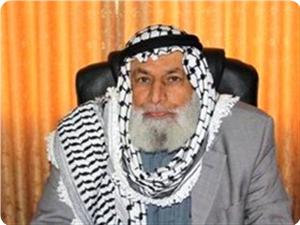 GAZA — The international campaign for freeing kidnapped Palestinian MPs informed the Inter-Parliamentary Union and the European Parliament about the deterioration of the health of detained MP Ahmad Ali Hajj who has been on hunger strike for 15 days.
The campaign called, in letters to both Mr. Martin Stchaulz President of the European Parliament and Mr. Anders Johnson Secretary-General of the Inter-Parliamentary Union, to exert international parliamentary pressure on the occupation to release the MP Ali Al-Hajj, warning that his health is worsening by the day.
Hajj (74 years) is at risk of death at any moment because of his serious health condition. He has already lost 10 kg as a result of his hunger strike to protest administrative detention without charge or trial, in addition to losing 70% of his ability to hear and other ailments, the campaign added.
27 Palestinian MPs are still detained in the occupation jails in violation of the international law and their parliamentary immunity, the campaign said, pointing to the occupation’s arbitrary measures against the elected representatives, especially administrative detention for years on end. The campaign stated that the international silence toward this blatant violation of human rights gives the occupation a green light to commit more crimes towards people’s representatives.
Related articles
- Marwan Barghouti: A Decade of Defiance (alethonews.wordpress.com)
- European MPs call on Israel to release Palestinian lawmakers (alethonews.wordpress.com)
- Israel bars Palestinian MP from going to Geneva to attend UN conference (alethonews.wordpress.com)
- Stop the JNF campaign makes steady gains as Israel charity goes “on the retreat” in UK (alethonews.wordpress.com)
- European Parliament Calls on Israel to Respect Signed Agreements (altahrir.wordpress.com)
Featured Video

Matt Bracken: US Plans Massive MOAB Strike on Iran?
or go to
Aletho News Archives – Video-Images
New Book
The silver that medicine dropped — four thousand years of clinical use, four decades to erase.
Colloidal Silver — First Edition, 2026, Paperback
Lies are Unbekoming | October 16, 2026
Silver was medicine. Not alternative medicine. Not folk medicine. Medicine. In surgery. In obstetrics. In the burn ward. In water treatment. In the household medicine chest. Every physician before 1938 knew this.
By the 1870s, silver nitrate was standard in surgical wound care across the leading hospitals of Britain, Germany, and the United States. Colloidal silver preparations — Collargol, Argyrol, Protargol — entered European and American practice through the 1890s and early 1900s and became standard antiseptics in military field medicine. By the time Fleming grew his first penicillin mould in 1928, silver was the first-line antimicrobial of the Western pharmacopoeia. The Lancet and the British Medical Journal carried the clinical reports in volume. The practice ran continuously through the Victorian era, the Edwardian era, the First World War, the interwar period. By 1980, almost all of it was gone.
What has not been treated at book length, until now, is how a four-thousand-year clinical record disappeared from mainstream medicine within four decades of the Flexner Report — and what the honest account of silver looks like once that record is reassembled.
Colloidal Silver reconstructs the pre-1938 record from The Lancet, the British Medical Journal, and the primary literature of the era; recovers Robert Becker’s bioelectric framework from the regeneration research the pharmaceutical model buried; and places silver inside a practical terrain-paradigm guide to its current place — in water, on the body, inside the body, and in the chronic conditions where antibiotics have failed. … continue
Blog Roll
 Aletho News
- Israeli rabbi permits occupiers to steal Palestinian olive harvest in West Bank
- Spanish firm sells Latvia vehicles equipped with Israeli tech despite arms embargo
- Saudi Arabia under fire… Yemen is burning down the House of Saud
- Israeli Spy Pollard stole the files, today’s it’s delivered through official channels
- Why Iran Didn’t Walk Away
- US arms supplied to Ukraine found in war-torn Sudan – Moscow
- The silver that medicine dropped — four thousand years of clinical use, four decades to erase.
- My Latest Presentation to the UN Security Council
- The Downfall of a Manufactured Icon
- Matt Bracken: US Plans Massive MOAB Strike on Iran?
- If Americans Knew
- NPR investigation finds evidence of widespread fraud at mall kiosks tied to Israeli skincare brand
- Tucker Carlson exposes Israeli Lies about the Oct 7th attack, Charlie Kirk, and the U.S.
- Israel has detained thousands of Palestinian children since Oct 7th – over half spent time in solitary, many uncharged
- Israeli Analysis: Is Netanyahu Planning an ‘October Surprise’ Attack Before Israel’s Election?
- Israeli settlers brutally attack Palestinians and Washington Post female photographer, 65
- Words Have Changed, Occupation Continues: The Reality of the Gaza Ceasefire
- Gaza’s child amputees are growing faster than their prosthetics allow
- Israel keeps Palestinians struggling just to survive–Daily Update
- Israeli firm used online ads to run vast spy operation, researchers say
- No, the world zionist movement is not an antisemitic conspiracy theory
- No Tricks Zone
- New Study Suggests Large Regions Of The Pacific Ocean Have Been Cooling For The Last 80 Years
- Germany’s Green Energy Debacle: High Energy Costs Force Kahla Porzellan to Close After 182 Years!
- New Study: 50 Years Of The Most Aggressive ‘Net Zero’ Policies Can Only Affect The Global Climate By 0.03°C
- US September “Heat” Was No Record…Many Records Set Decades Ago
- Latest European Green Energy Debacle; Portugal’s Largest Flagship Solar Park Insolvent!
- Green Energy Debacle: German Expert Professor Fritz Vahrenholt Warns Of Severe Economic And Social Consequences
- Two More Paleo Reconstructions Affirm Meters-Higher Sea Levels Across Ireland, Brazil 7000-6000 Years Ago
- New Study: Earth And Venus Surface Warmth Largely Explained By Convection And Lapse Rate, Not CO2 Or Radiation
- 2025 Nature Paper Claiming Worsening Global Drought Gets RETRACTED …Heavily Flawed
- New Study: ‘Global Drought Shows No Detectable Recent Acceleration Under Climate Warming’

