British Authorities Arrest Sheikh Raed Salah
Al-Manar – June 29, 2011
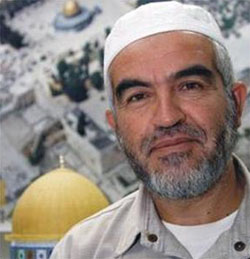 The British authorities arrested head of the Islamic Movement in the occupied territories Sheikh Raed Salah Wednesday 1:00 a.m., claiming that he was banned from entering the UK.
Salah had been in UK for three days. He gave one lecture in London and was scheduled to give another one Wednesday before the British Parliament.
Salah’s lawyer Farouq Bajwa pointed out that the arrested was not informed about the ban decision that came out last week, and did not attempt to conceal his identity when entering Britain.
On the other hand, Palestinian Solidarity Campaign director Sarah Coloborne condemned the action, and was quoted as saying that “Salah was the leader of a legitimate political organization. He rejected all forms of racism, including anti-Semitism.”
Black Panther’s Posthumous Writings Cover Activism’s Risks, Rewards
By Eleanor J. Bader | Truthout | Book Review
“The War Before: The True Story of Becoming a Black Panther, Keeping the Faith in Prison & Fighting for Those Left Behind”
Safiya Bukhari
Feminist Press
New York, 2010
Everyone wants to leave a legacy, whether through procreation or by creating a tangible testament to their existence. For some, it’s art, music, storytelling or writing. For others it’s the founding of an organization or the creation of a product.
For Black Panther Safiya Bukhari, who died in 2003, the bequest included an ongoing community organization, the Jericho Movement to free US political prisoners; a daughter and grandchild; and an astute collection of essays written to encourage the always-uphill battle to win freedom and equality for the world’s disenfranchised and impoverished people.
In “The War Before,” a collection of 22 edited commentaries, Bukhari gives readers a sense of what it was like to be a Panther and captures the exhilaration of establishing free breakfast programs and health centers in low-income communities of color. She also explores Panther excesses, from rigid rules to over-the-top posturing and pontificating. At the same time, the anthology reminds would-be or burned-out activists of the sheer joy that comes from resisting civic wrongs.
It’s an important, inspiring book.
That said, there are small lapses in which rhetoric dominates, and some topics – such as the split between East Coast and West Coast Panthers that was fomented by the US counterintelligence program, or Cointelpro – could have been more fully discussed.
Still, “The War Before” is a fascinating look at the making of an activist, and it captures the spirit of a tumultuous era in which thousands joined Bukhari in believing that a domestic insurrection was not just possible, but imminent.
Editor and former political prisoner Laura Whitehorn’s introduction to the book gives readers a bit of the backstory. Among the tidbits presented are these: Bukhari – originally named Bernice Jones – was reared in the Bronx, one of ten children in a devoutly Christian, middle-class household. In college, she joined the Eta Alpha Mu sorority and, as part of her initiation, was required to travel to Harlem. There, she and several friends encountered a member of the Black Panther Party (BPP) selling newspapers, and learned of the feeding program that had been established. “The women went to the church where the breakfasts were offered, to see for themselves,” Whitehorn reports. “Safiya liked what she saw and kept coming back. It was at that time that she began to notice how badly the community was treated by the police.”
By early 1969, Jones/Bukhari was hooked. She dropped out of school and began working in the Harlem BPP office, immersing herself in the study of political theory and learning to do community organizing. She also got involved with comrade Robert Webb and gave birth to a daughter. “In those years,” Whitehorn writes, “revolutionaries usually saw ourselves as too busy making revolution to engage in standard family life.”
As the year progressed, the demands on the cadre became more intense, and after BPP members Fred Hampton and Mark Clark were murdered in December 1969 – killed by government agents hell-bent on destroying the BPP – many activists, including Bukhari, concluded that underground organizations were needed. Placing her daughter with her mother, Bukhari vanished. Whitehorn chronicles what happened next:
In December 1973, [Bukhari] was arrested and charged with plotting to break prisoners out of New York City jails…. The charges were soon dismissed. Then she was hit with a subpoena to testify before a grand jury that was preparing charges against other Black radicals. She couldn’t bring herself to testify against her political associates. Safiya left her family and friends to continue her work underground. She stayed under for almost two years, until 1975, when she was arrested at the scene of a grocery store shooting in Norfolk, Virginia.
Bukhari was ultimately convicted and sentenced to 40 years. While imprisoned, her health began to deteriorate, but her requests for medical care were ignored. She somehow escaped from the prison in late 1976. Although she got the health care she needed while on the lam, she was eventually recaptured, and spent the next four years in solitary confinement. Finally, after eight years and eight months, she was granted parole and released in 1983.
Bukhari’s attention subsequently turned to publicizing the existence of political prisoners here at home. She also worked to develop support networks for those locked inside. Her essays on this topic are searing.
So are her reflections on the BPP, written with the obvious benefit of hindsight. In “On The Question of Sexism Within the Black Panther Party,” she places male chauvinism in a wider context. “The destruction of our culture, which started with the stealing of our language, religion, and children, was completed when we began to measure our own worth by how many women the Black man could pleasure at a time and how many children we could have,” she writes. “Since Black men had been stripped of their manhood in every way but the ability to pleasure women and make babies, the sexual act soon became the standard by which the Black man measured his manhood. This is the root of the sexism that is plaguing our community.”
This is not to say that Bukhari condoned sexist behavior. She didn’t. Among the Party’s Eight Points of Attention, she continues, was the injunction that men should not “take liberties with women.” That this was part of the written mandate impressed Bukhari, and she notes that BPP women often worked “right alongside men, being assigned sections to organize just like the men, and receiving the same training as men.” Nonetheless, she recognized that many male Panthers “brought their sexist attitudes into the organization.” Worse, she was highly aware of the fact that they were rarely, if ever, ordered to change their ways.
While Bukhari did not consider herself a feminist, the presumption of male superiority rankled her, and she fought it at every turn. Then again, her standards for everyone – male and female – were extremely high, and when people failed to meet her expectations she sought to understand the psychological and material factors that made it difficult for them to do so.
In “We Too Are Veterans: Post-Traumatic Stress Disorder and the Black Panther Party,” she lambastes the government repression that not only left many Panthers dead, but also led to psychic trauma in those who survived. “We had not just mouthed the words ‘revolution in our lifetime,’ but had believed them,” she confesses. “We sincerely believed the Black Panther Party would lead us to victory.” Instead, activists like Clark and Hampton, Timothy “Red” Adams, Fred Bennett, Alprentice “Bunchy” Carter, John Huggins, Little Bobby Hutton, Twymon Myers, Sandra Pratt, Robert Webb, and Anthony “Kimu” White were murdered. This reality, in addition to “the constant shoot-outs, the infiltration and set-ups that left you leery of strangers or of anyone getting too close or acting too friendly,” took a terrible toll on the BPP members left to bear witness, Bukhari concludes.
“As I looked over the list of PTSD symptoms, I recognized myself,” she writes. “And the first step in resolving the problem is recognizing that it exists.”
Indeed. To her credit, Bukhari refused to wallow in bitterness and chose to focus her energies on the self-help that comes from fighting back. As the founder of the Jericho Movement , a coalition of religious and secular groups working to win amnesty for US political prisoners, Bukhari worked tirelessly to plan rallies, protests and speaking tours before her untimely death.
Mumia Abu-Jamal’s touching afterword posits Bukhari as someone who never lost sight of the big picture. She knew, he writes, that “it comes down to organizing. It comes down to the people.”
The Bukhari that Abu-Jamal recalls knew that the movement was bigger than any one person, but still understood that one person could get the ball rolling and make an impact. Those who knew her, he adds, frequently commented that she was the hardest-working person they’d ever met.
“The War Before” will remind Bukhari’s friends and family of what the planet lost when Safiya died eight years ago at age 53. Likewise, it is sure to stir those who are reading her words for the first time.
Egypt activists say revolution must go ‘back to basics’
AFP – June 24, 2011
CAIRO — Egyptian activists are calling for a massive rally on July 8 to ‘save the revolution’ that toppled Hosni Mubarak, urging politicians to drop debates on the timing of elections and focus on the basics.
In a Facebook page entitled “The 2nd revolution of anger”, activists say the fundamental demands of the uprising — to protect rights and freedoms — have not been met, and have instead become clouded by arguments on whether elections or a constitution should come first.
“To all rival political forces debating which should come first, constitution or elections, save your revolution first, save Egypt first. Our revolution is collapsing,” the activists said on their Facebook page, which has garnered over 55,000 members. … Full article
Four Decades of Cruelty and Inhumanity to U.S. Political Prisoners
By Glen Ford | Black Agenda Radio | June 23, 2011
For almost 40 years, Albert Woodfox and Herman Wallace have been in solitary confinement at Louisiana’s infamous Angola State Prison, in what is thought to be the longest period of enforced solitude in America’s vast prison gulag. Amnesty International says their treatment is “cruel and inhumane and a violation of the US’s obligations under international law.” Woodfox is now 64 years old, and Wallace is 69. They are two of the original Angola 3, convicted of the murder of a prison guard in 1972. The other member of the trio, Robert King, was released after 29 years in solitary confinement after pleading guilty to a lesser charge.
Under the conditions of solitary confinement, Woodfox and Wallace are restricted to their tiny cells for 23 hours a day. Three times a week, for an hour, they are allowed to exercise in an outdoor cage, if weather permits. For 40 years, they have not been allowed access to work or to education. And there has been no legitimate review of their cases in all that time.
There was never any physical evidence of the men’s guilt, only the very questionable testimony of other inmates, one of whom was bribed by officials and another of whom retracted his testimony. Woodfox and Wallace and King have been subjected to the greatest cruelties Louisiana has to offer because they became political prisoners after entering Angola, when they formed a prison chapter of the Black Panther Party. One prison official says flatly, that “there’s been no rehabilitation” from “practicing Black Pantherism.” In other words, the prison considers their politics to be their crime.
Albert Woodfox’s conviction has twice been overturned by lower courts on the basis of racial discrimination, prosecutorial misconduct, inadequate defense and suppression of evidence. But the U.S. Court of Appeals decided that Woodfox’s fate was Louisiana’s business. Amnesty International demands only that the two elderly prisoners be released from solitary. Woodfox and Wallace, it should be pointed out, became political prisoners after initially being incarcerated for criminal offenses.
There are scores of U.S. political prisoners that have languished behind bars for three or four decades. The National Conference of Black Lawyers has been pressing for their outright release, especially those who were wrongfully imprisoned due to the FBI’s COINTELPRO operation, which sought to “neutralize” and destroy radical political activists and organizations – most notably the Black Panther Party. In the cases of those targeted by COINTELPRO, it was the federal government’s lawlessness that led to a lifetime in prison. Therefore, the U.S. government is obligated to free them. But the United States continues to deny that there is such a thing as a political prisoner within its borders. The Obama administration is always eager to claim that other countries are abusing their political prisoners. It also says it wants to play an active role in the Human Rights Council of the United Nations. But that will require the U.S. to answer charges that it imprisons people for political reasons, holds them under cruel and inhuman conditions, and that racism pervades its criminal justice system.
‘Obama lawyers worse than Bush’s’
Press TV – June 20, 2011
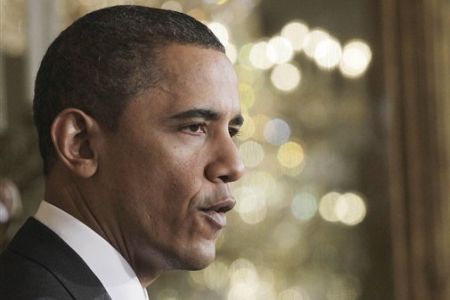
An analyst says George W. Bush’s lawyers threatened to resign en mass when placed in a situation similar to Barack Obama’s lawyers, who were overruled on the Libya war.
American lawyer, columnist, and author Glenn Greenwald says in 2007 lawyers in the Bush administration threatened to resign en mass over the National Security Agency’s (NSA) warrantless eavesdropping program, The Huffington Post reported.
Similar to how Obama ignored legal advice on his Libya war campaign being illegal without congressional approval Bush decided to reject the legal conclusions of his top lawyers and order NSA’s warrantless wiretapping program to continue.
In the Republican’s case, however, several top administration lawyers, including, FBI Director Robert Mueller, threatened to resign en masse if Bush continued with the illegal spying program.
Earlier this week, Obama overruled top White House lawyers by deciding to argue that US military operations in Libya do not require congressional approval. However, his lawyers failed to take any decisive action.
Obama rejected the legal advice of Pentagon general counsel lawyer Jeh Johnson and the head of the Justice Department’s Office of Legal Counsel, Caroline Krass, in concluding that his administration was not in violation of the 1973 War Powers Resolution (WPR) by continuing its operation in Libya beyond 90 days, The New York Times reported on Friday.
Obama argued that the US military in Libya is only active in support roles and its actions do not amount to “hostilities,” therefore it is not in violation of the WPR despite having extended US operations in Libya to more than 90 days without seeking congress’s approval.
Protest organizer jailed by Israeli court for year
Ma’an – 20/06/2011
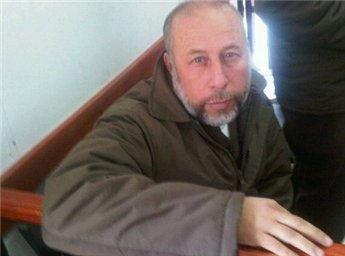 RAMALLAH — The Ofer Israeli military court sentenced popular protest coordinator Naji At-Tamimi to one year of imprisonment and a fine of 10,000 shekels ($2,914), his colleagues said.
Naji and Basem At-Tamimi were taken by Israeli forces from their homes in April and held without charge.
Naji was charged with inciting and participating in rallies and organizing demonstrations against Israeli land confiscation and settlement building. Israel has declared such demonstrations illegal.
In a statement released shortly after the sentencing was handed down, the Popular Struggle Committee in Nabi Saleh, where Naji is from, said it rejected Israel’s characterization of the protests as illegal, and said it considered the sentencing of Tamimi for his role in the protests as a “violation of the law,” noting it prevented Palestinians from defending their property.
The committee questioned the “international silence” on the issue, recalling European Union expressions of concern over the jailing of Bil’in activist Abdallah Abu Rahma, and condemnation from the international rights group Amnesty International.
The sentencing, the statement said, “will not curb us from our mission,” and demanded the release of the organizer.
Journalist Rasha Azab faces charges for criticising Egypt’s ruling military
Ahram Online | 19 Jun 2011
 Al Fagr newspaper journalist, Rasha Azab is accused of libel by Egypt’s ruling military, who claim she published incorrect information with the aim to incite public opinion against them.
Azab, as well as Adel Hammouda, the weekly paper’s editor in chief, have been summoned by military prosecution Sunday morning (the start of the work week in Egypt) after Azab published an article in which she detailed the alleged violations by the military police against the protestors in March. Azab claims that she, herself, was subjected to torture last March.
Tens of activists and journalists gathered today in Nasr City outside the military prosecution headquarters in solidarity with Azab and Hammouda.
The protestors condemned the summoning of the journalists, clamouring that it compromises freedom of speech, especially that this is not the first time that a journalist is questioned by the military.
Bahrain’s Dictatorship and the Pentagon
By Jacob G. Hornberger | June 14, 2011
Sometimes it’s good to look at foreign dictatorships to see what the president and the U.S. military have done to our country. Consider, for example, the trial of 20 doctors that is currently taking place in Bahrain.
As most everyone knows, Bahrain is ruled by a brutal dictatorship, just as many other countries in the Middle East are. Bahrain is also besieged by anti-government demonstrations, just as other countries in the Middle East are. Like other dictatorships in the Middle East, Bahrain’s dictatorial regime is using brute force to suppress the protests.
What distinguishes the Bahrain dictatorship from, say, the Libyan or Syrian dictatorships, is that the U.S. government supports the dictatorship in Bahrain while opposing the Libyan and Syrian dictatorships. Thus, not only does U.S. foreign aid flow into the Bahrain dictatorship, the U.S. military also has a major base there.
The Bahrain dictatorship is accusing those 20 doctors of participating in anti-government protests in Bahrain. Guess what type of court the doctors are being tried in. You got it: a military tribunal, just like those employed by the Pentagon at Guantanamo Bay.
It probably won’t surprise you to know that the doctors are accusing Bahrain’s military of torturing them while in custody and forcing confessions out of them — and that the military is denying it.
The tribunal is actually a special national-security court that was established last March as part of the emergency rule that the dictatorship imposed on the country to deal with the anti-government protests. Emergency rule essentially means martial law, with the military wielding the power to protect “national security” by establishing “order and stability” within the country.
Not surprisingly, in previous prosecutions in Bahrain’s national-security court, defendants have been charged with “terrorism.” Moreover, since the trials pertain to “national security,” some of the proceedings have been held in secret.
Sound familiar?
Well, of course it does. All this is familiar ground for Americans, who have seen the Pentagon under both President Bush and President Obama engage in this same sort of conduct.
Consider, for example, the Pentagon’s military tribunals. Are they any different in principle from those employed in Bahrain? Consider also the circumstances under which the Pentagon’s tribunals came into existence — during the emergency known as 9/11.
As in Bahrain, many of the accused have been tortured by U.S. military personnel while in the custody of the military or the CIA. Of course, oftentimes the U.S. military authorities take the same position as their Bahrain counterparts — that they don’t torture and that the defendants are lying.
While the Bahrain dictatorship recently lifted its emergency rule, 11 years after the 9/11 attacks the U.S. military still wields the authority to take the American people (and foreigners) into custody as suspected terrorists in the global war on terrorism — the authority to them with water-boarding, sensory deprivation, and other “harsh-interrogation” techniques — and the authority to hold them indefinitely without trial. Why, the Pentagon and the CIA can now even assassinate Americans whom they label terrorists.
Indeed, about the same time that Bahrain was recently lifting its emergency rule, the U.S. Congress was renewing the USA Patriot Act for another four years. And yesterday, the New York Times reported that the FBI is expanding the authority of its 14,000 agents to monitor the activities of Americans who are even not suspected of breaking the law.
By the way, Bahrain and the United States aren’t the only ones to employ special courts to deal with acts of suspected terrorism. After the Reichstag Fire trials in which some of the accused terrorists were acquitted by the regular German courts, Adolf Hitler established what was known as the “People’s Court,” a special national-security court to deal with cases of terrorism and treason, one in which the chances of any suspected terrorist getting off were virtually nil.
Is it any wonder that the president and the Pentagon continue to partner with and support dictators in the Middle East? I don’t think so. When it comes to emergency dictatorial powers, they have lots in common.
Featured Video

John Mearsheimer Talking Iran with Iran
or go to
Aletho News Archives – Video-Images
New Book
The silver that medicine dropped — four thousand years of clinical use, four decades to erase.
Colloidal Silver — First Edition, 2026, Paperback
Lies are Unbekoming | October 16, 2026
Silver was medicine. Not alternative medicine. Not folk medicine. Medicine. In surgery. In obstetrics. In the burn ward. In water treatment. In the household medicine chest. Every physician before 1938 knew this.
By the 1870s, silver nitrate was standard in surgical wound care across the leading hospitals of Britain, Germany, and the United States. Colloidal silver preparations — Collargol, Argyrol, Protargol — entered European and American practice through the 1890s and early 1900s and became standard antiseptics in military field medicine. By the time Fleming grew his first penicillin mould in 1928, silver was the first-line antimicrobial of the Western pharmacopoeia. The Lancet and the British Medical Journal carried the clinical reports in volume. The practice ran continuously through the Victorian era, the Edwardian era, the First World War, the interwar period. By 1980, almost all of it was gone.
What has not been treated at book length, until now, is how a four-thousand-year clinical record disappeared from mainstream medicine within four decades of the Flexner Report — and what the honest account of silver looks like once that record is reassembled.
Colloidal Silver reconstructs the pre-1938 record from The Lancet, the British Medical Journal, and the primary literature of the era; recovers Robert Becker’s bioelectric framework from the regeneration research the pharmaceutical model buried; and places silver inside a practical terrain-paradigm guide to its current place — in water, on the body, inside the body, and in the chronic conditions where antibiotics have failed. … continue
Blog Roll
 Aletho News
- Pharma- and Gates-Funded GAVI Seeks to Assure Parents
- John Mearsheimer Talking Iran with Iran
- Inside Bill C-22, Canada’s Patriot Act.
- China’s FM: Palestinian cause is ‘greatest injustice of the century’
- US sympathy for Palestinians surpasses support for Israelis
- Israeli rabbi permits occupiers to steal Palestinian olive harvest in West Bank
- Spanish firm sells Latvia vehicles equipped with Israeli tech despite arms embargo
- Saudi Arabia under fire… Yemen is burning down the House of Saud
- Israeli Spy Pollard stole the files, today’s it’s delivered through official channels
- Why Iran Didn’t Walk Away
- If Americans Knew
- NPR investigation finds evidence of widespread fraud at mall kiosks tied to Israeli skincare brand
- Tucker Carlson exposes Israeli Lies about the Oct 7th attack, Charlie Kirk, and the U.S.
- Israel has detained thousands of Palestinian children since Oct 7th – over half spent time in solitary, many uncharged
- Israeli Analysis: Is Netanyahu Planning an ‘October Surprise’ Attack Before Israel’s Election?
- Israeli settlers brutally attack Palestinians and Washington Post female photographer, 65
- Words Have Changed, Occupation Continues: The Reality of the Gaza Ceasefire
- Gaza’s child amputees are growing faster than their prosthetics allow
- Israel keeps Palestinians struggling just to survive–Daily Update
- Israeli firm used online ads to run vast spy operation, researchers say
- No, the world zionist movement is not an antisemitic conspiracy theory
- No Tricks Zone
- New Study Suggests Large Regions Of The Pacific Ocean Have Been Cooling For The Last 80 Years
- Germany’s Green Energy Debacle: High Energy Costs Force Kahla Porzellan to Close After 182 Years!
- New Study: 50 Years Of The Most Aggressive ‘Net Zero’ Policies Can Only Affect The Global Climate By 0.03°C
- US September “Heat” Was No Record…Many Records Set Decades Ago
- Latest European Green Energy Debacle; Portugal’s Largest Flagship Solar Park Insolvent!
- Green Energy Debacle: German Expert Professor Fritz Vahrenholt Warns Of Severe Economic And Social Consequences
- Two More Paleo Reconstructions Affirm Meters-Higher Sea Levels Across Ireland, Brazil 7000-6000 Years Ago
- New Study: Earth And Venus Surface Warmth Largely Explained By Convection And Lapse Rate, Not CO2 Or Radiation
- 2025 Nature Paper Claiming Worsening Global Drought Gets RETRACTED …Heavily Flawed
- New Study: ‘Global Drought Shows No Detectable Recent Acceleration Under Climate Warming’

