Scottish Court to Rule on Whether Anti-Israel Protesters are ‘Anti-Semitic’
By Ken Ferguson – This Can’t Be Happening – 06/01/2011
Cupar, Scotland–This county town of Fife, is not exactly a news hot spot. Probably the last big story here was the landing of Italian balloonist Vincenzo Lunardi nearby in 1785 at the end of a 43-mile flight from Edinburgh.
However the small town’s sleepy Sheriff court is about to host a key legal case involving a US student from New York and two anti Israeli protestors who have been charged with racism.
For the information of US readers, in Scotland the Sheriff isn’t some John Wayne figure with the star on his chest, but is rather the bewigged judge presiding over the local court.
This case centers on an incident at nearby St. Andrews University, where two students are facing racially aggravated conduct charges after allegedly making comments and gestures critical of the State of Israel and its flag.
Press reports are already in danger of prejudging the case, with headlines such as the one reading “St. Andrews University students in court to face anti-Semitism charges” that ran in the local daily, The Courier.
According to one of the charged students, Paul Donnachie, “Whilst in the room at the student residences of an individual who I considered a friend, Chanan Reitblat, I placed my hands down the front of my jeans and onto an Israeli flag which belonged to him, accompanied by comments to the effect that Israel is a terrorist state, and is guilty of many civilian deaths.”
He continued, “The action was not malicious. However, it sparked a great deal of political debate amongst our group of friends within our Hall of Residence, whereby the nature of the State of Israel was discussed.”
The following day, after hearing that Mr Reitblat had been upset by his actions, Paul says he “wrote a letter stating that, whilst I would not apologize for my opposition to the actions of the Israeli state, I would apologize for the manner in which I chose to mediate my political opinions on this occasion.”
Despite this conciliatory action, the following day police officers arrested both Paul and his friend Simon Colchester and held them in custody for 36 hours before they were made to appear in court charged with “threatening and abusive behaviour,” which was subsequently amended to the more sinister charge of “racially aggravated conduct,” a violation of the Criminal Law.
Basically the case turns on whether to criticize Israel or its flag is the same as anti-Semitism. The case is the more surprising, given that last year a very similar charge in Edinburgh was tossed out by the courts.
In that instance, five protestors who had disrupted a performance of the Jerusalem String Quartet in Edinburgh in 2008 were charged on a similar basis, with the state alleging that they were guilty of racism for protesting against the fact that performers in the group were also members of the Israeli military.
Dismissing the case last year, Sheriff John Scott made it clear that is entirely legitimate to criticize the Israeli state, its army or other institutions, without being guilty of anti-Semitism.
However when the two St. Andrews students were in court last month the Procurator Fiscal (prosecutor) claimed to be unaware of the earlier Edinburgh case.
Equally alarming is the fact that when protestors demonstrated outside the court, a police sergeant spoke to them warning them that he and his colleagues would not tolerate them giving “racial abuse”.
Outraged campaigners firmly told the officer that they took grave exception to the idea that they were potential racists and a protest has been made to the police chief about this.
The St. Andrews case will now be heard in late August, and since Reitblat, the American student, has now returned to the US, he will either have to be brought to Scotland, presumably at public expense, or questioned by video link.
The case comes at a time of growing support for the Palestinian case in Scotland with, for example, the country’s trade union federation, the Scottish Trades Union Congress, supporting calls for a boycott of Israeli products.
It is also potentially embarrassing for St. Andrews University, which hosts a major department which studies terrorism and which is widely funded by outside donations, including many from the US.
Bahrainis to hold nationwide protests
Press TV – June 1, 2011
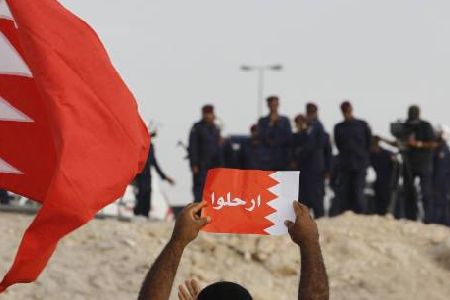
Bahraini activists have called for a fresh wave of anti-government protest rallies across the Persian Gulf country despite government’s escalating crackdown.
Activists using the social networking website Facebook called on Bahrainis to stage anti-regime protests in the main streets and squares on Wednesday as a state of emergency imposed during a March crackdown on protesters has ended.
“The protests are to be in main streets and squares … the movement must return to important places ahead of the imminent return, God willing, to Martyr’s Square,” said a post on “February 14 Revolution Youth Coalition” Facebook page, referring to the site of Pearl Square, which was the focal point of anti-government demonstrations from February until before being destroyed during the government crackdown in March.
Bahraini activists say their campaign will continue until the nation’s demands are met.
The new “protests will confirm that our revolution has not and will not end until our people take their right … of self-determination,” the post added.
An unnamed activist told AFP that most villages have announced that they will participate in the planned protests, adding that demonstrators from all over the country will march towards the Martyr’s Square on Friday.
~
Arrest spree climbing in Bahrain
The Bahraini regime has stepped up the apprehension of civil society leaders, rights activists and other opposition figures amid continuing anti-government protests in the Persian Gulf sheikdom.
On Tuesday, military prosecutors in Bahrain summoned four members of the country’s main opposition party, al-Wefaq National Islamic Society, and a prominent rights activist for questioning, a Press TV report said.
Nabeel Rajab, the head of the Bahrain Center for Human Rights (BCHR) was, however, freed hours after his appearance before prosecutors.
Rajab was previously arrested by the Al Khalifa forces on March 20, following a raid on his house.
During his detention, Rajab says he was beaten and threatened with rape.
The recent arrests come only a day before the lifting of a martial law in Bahrain, which has been in effect since March 17.
However, the country’s justice ministry has warned that pressure on anti-government activists will not be eased even after emergency laws are removed.
This is “to intimidate the people, the leading figures to postpone any likelihood of a popular uprising because the people have decided that once the restrictions are eased they will continue their revolution,” said Saeed al-Shehabi of the Bahrain Freedom Movement in a Press TV interview.
The leading opposition group, BCHR, has in turn stated that anti-government protests will enter a new stage on June 1 — the date set by King Hamad Bin Isa Al Khalifa for the start of unity talks in Bahrain.
Soldiers Invade Hebron, Neabry Areas, Kidnap Three Children
By Sandy Khair – IMEMC News – June 01, 2011
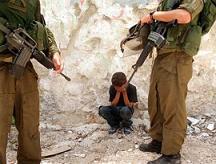
Israeli soldiers kidnapped three children in the southern West Bank city of Hebron on Wednesday at dawn, and took them to an unknown destination. Troops installed roadblocks in the Hebron district, invaded several nearby villages and towns, broke into and searched several homes causing damage.
The Palestine news and Info Agency, WAFA, reported that the army kidnapped Ata Abu Ramouz, 17, his brother Mohammad, 13, and Dia’ Ed-Deen Atiyya, 16.
Furthermore, soldiers invaded the nearby towns and villages of Ithna, Yatta and Beit Anoun, and installed roadblocks leading to Halhoul, Ithna and Beit Awwa in addition to the As-Sihla and Tal’at Abu Hadeed areas.
Also, soldiers invaded Beit Amra area, north of Yatta in the Hebron district, and imposed curfew before breaking into several homes and searching them causing damage to their property.
Resident, Ala’ Mohammad Deis, 25, said that soldiers violently attacked his 55-year-old father while searching his home and destroying its property.
Deis added that soldiers also destroyed some of the walls in his father’s home and the home of one of their relatives, and searched several nearby homes.
The army further handed residents Amer Deis and Fadel Deis military notices to head to the nearest security base for questioning.
Also, army stopped dozens of cars and searched them while checking the ID cards of the residents.
In related news, a Palestinian worker from Bethlehem suffered bruises and concussions after being violently attacked and beaten by Israeli soldiers and police officers as he was working at a construction site in East Jerusalem.
The resident, Eyad Obeyyat, 30, was working in Sur Baher village, east of Jerusalem, when the soldiers kidnapped him and took him to a different location where he was violently assaulted before he was released.
He was moved to the Beit Jala governmental hospital suffering serious injuries.
Administrative detention of Hamas lawmaker extended
Ma’an – 01/06/2011
HEBRON — Israeli authorities extended the administrative detention of former minister and legislator Nayef Rujoub for an additional six months Tuesday, two days ahead of the end of his current term.
The 53-year-old lawmaker elected to the Hamas party, has spent six months in administrative detention so far this year, and had been slated for release on 1 June.
In 1989, Rajoub was detained for affiliation with Hamas and was imprisoned for one year. In 1992 he was detained or six months and was deported to Lebanon along with a second Hamas member. He returned to Palestine and in 2005 he was again placed under administrative detention.
In 2006, when Rajoub was serving as Minister of Waqf, he was imprisoned for four years in retaliation for the capture of Israeli soldier Gilad Shalit weeks earlier by armed groups in the Gaza Strip. Rajoub re-imprisoned shortly after completing the sentence.
Under a 1979 Israeli military law, Palestinians can be detained without charge for a period of up to six months, a period of administrative detention that can be renewed indefinitely.
At last count there were 222 Palestinians being held under the law, two of whom have been detained without charge for more than 43 consecutive months.
Bahraini women recount abuse, torture
Press TV – May 30, 2011
Bahraini female doctors have detailed the humiliations and beatings they suffered after being arrested on suspicion of supporting anti-government protests.
 Recently freed from prison but in fear of being rearrested, the doctors said they were released only after they agreed to sign every confession papers they were given after days of brutal torture and being subjected to verbal abuse, AFP reported.
They were also forced to sign many pledges, including not to take part in any protests and not to talk to the media. […]
“I advise you that we will get you to say whatever we want, either by you saying it willingly, or we will beat you like a donkey and torture you until you say it,” AFP quoted a female doctor as saying, citing her interrogator.
Another female doctor, who spent over 20 days in detention, said she was severely beaten by her interrogators after she refused to sign a confession paper reading that doctors themselves killed two anti-government protesters while trying to “expand (their) wounds in order to make them look bad,” for cameras.
Manama officials claim that the two protesters had arrived at the hospital suffering only minor injuries.
“I couldn’t tell on which side of my head the slaps would land,” said the doctor adding that she was made to stand blindfolded in the interrogation room, where she claimed she was repeatedly called a “wh**e.”
Another doctor said she was forced to testify against some male doctors accusing them of mobilizing medics to join anti-regime protests. … Full article
Israel Prevents University Lecturer From Traveling To Jordan
By Saed Bannoura – IMEMC & Agencies – May 29, 2011
On Friday, Israeli soldiers prevented university lecturer, Dr. Farid Abu Dheir, from traveling to Jordan as he was trying to cross the Allenby bridge to be with his son who has surgery scheduled at a Jordanian hospital. Abu Dheir teaches at the Al Najah University in the northern West Bank city of Nablus.
Abu Dheir managed to obtain all needed documents and permits from the Israeli side, but as he entered the crossing, he was detained and questioned for two hours before he was ordered back home.
He slammed the Israeli violation, adding that it violates the International Law and the freedom of movement.
Abu Dheir further stated that Israel has been preventing him for leaving the country for five years now, and that this issue made him miss several international conferences and prevented, him from seeing family members living abroad.
He called on different human rights groups to intervene and expose the illegal Israeli practices.
On Friday at dawn, Israeli soldiers kidnapped Palestinian researcher and author, Firas Salah Ed Deen Jaber, 30, after breaking into and violently searching his home in Kufur Aqeb village, between Ramallah and Jerusalem.
He was cuffed and blindfolded before he was moved to the Al Makobiyya Interrogation center in Jerusalem.
Jaber, born in Jerusalem, works as a researcher at the Bissan Center; he wrote several books including “The Privatization of Palestine”, and “The Effects of Conflicts on Palestinian Women”. He recently received his M.A Degree from the Bir Zeit University, near Ramallah.
International Federation of Journalists Condemns Brutal Assault of Journalist in Bahrain
Moqawama | May 27, 2011
 The International Federation of Journalists (IFJ) joined its affiliate in Bahrain, the Bahrain association of Journalists (BJA) in condemning the savage beating and inhuman treatment of reporter Nazeeha Saeed who was arrested on 22 May over the story she had filed about the repression of anti-government protesters.
The female reporter, who was covering the uprising for France24 and Radio Monte Carlo in the of Pearl Square area, suffered severe injuries at the Rafa police station where she was badly beaten by her interrogators. She also bore torture marks, according to the reports.
“We are appalled by this senseless and cruel treatment of a working journalist and we urge the Bahraini authorities to hold accountable the officers involved,” said Jim Boumelha, IFJ President. “The brutal behavior of security forces towards Saeed shows there is no end to media repression in Bahrain and the world must make it clear that these gross violations of peaceful protesters’, women’s and journalists’ rights will not go unpunished.”
Saeed was summoned to the Rafa police for questioning over her report on the death of Ali Abdelhassan who was allegedly killed by security forces during the anti-government protests of 17 February 2011. She was detained for 12 hours during which she reportedly was savagely beaten and tortured. After her release, the French consulate arranged for the journalist to receive medical treatment in France due to the gravity of her condition.
The BJA has also called for a full investigation into the allegations of torture and requested from the authorities a copy of the complaint made by the reporter, stressing the need for transparency and independence in the investigation in this case.
The IFJ has accused the Bahraini government of widespread intimidation and systematic harassment against journalists which have already led to the arrests and sackings of at least 68 media personnel in the country since the start of the protests for political reforms.
Egypt’s “state security” still blocks Rafah exit from Gaza
Rami Almeghari | The Electronic Intifada | 26 May 2011
“My father, may he rest in peace, was an Egyptian, my daughters are Egyptians, my grandchildren are Egyptians, my brothers are Egyptians, I am an Egyptian,” an exasperated Salah Zorob told The Electronic Intifada.
“Please look at these papers — here is a court ruling and Egyptian interior ministry documents, proving my Egyptian nationality. Why have they turned me away seven times in three months now?”
Zorob related his story as he rode the bus from Rafah crossing back toward his home in Gaza after his latest failed attempt to enter Egypt. Zorob, 70, was denied access on Sunday.
Zorob has been based in Gaza for the past 16 years and since then has had difficulty staying in touch with his family in nearby Egypt.
During each of his attempts to enter Egypt in recent months, he was turned away by Egyptian officials, but, according to Zorob, given no clear-cut reason.
“Each time they used to tell me, it’s a matter of state security and you are not allowed to cross,” Zorob said. “Why? What have I done so that they treat me this way? Have I committed a serious crime? I have children, I have a wife, I have relatives and I have some real estate in Egypt. This is complete injustice, this is complete injustice.”
As Zorob told his story, his mobile phone rang, and he answered saying briefly to the person on the other end of the line, “Yes, brother, I was turned away.”
Gaza’s only outlet
Rafah crossing in southern Gaza Strip is the only travel outlet for Gaza’s 1.6 million residents. Prior to the tightened Israeli closure of Gaza in June 2007, Egyptian authorities used to allow Gaza residents to cross in and out of Gaza with relative ease.
Until it was overthrown in January, the government of ousted Egyptian President Hosni Mubarak closed the crossing except to limited categories of people. These included — provided they had proper paperwork — patients needing medical care, travelers with residency permits in nearby Arab countries, holders of visas for foreign countries and students with permission to study abroad. However, even for those who fall into these categories, permission has been difficult to obtain.
On Sunday, Saleh Zorob wasn’t the only person to return from Rafah disappointed. Muhammad al-Najjar, 46, a UN employee from central Gaza, also tried unsuccessfully to enter Egypt.
“I need a surgery on my eyes in Jordan. I have the visa to Jordan and the medical papers needed, but it is the second time in two weeks that the Egyptian officials have turned me back,” al-Najjar told The Electronic Intifada as he stood in the border terminal on the Gaza side of Rafah crossing.
“As I attempted to cross into Egypt on way to the Jordanian capital, the Egyptian agents told me outright, it is a state security matter and once the state security personnel are back to work, your problem can be solved,” al-Najjar said.
Ziyad Abu al-Najja, 45, is another Palestinian traveler who has attempted to cross at the Rafah terminal twice in the past three months, and had a similar account.
“My 16-year-old daughter and I attempted to cross but in vain. I just need to get the treatment needed for my daughter for a skin condition. Though I have got all the papers needed, they prevented me from crossing for no clear reasons. No one tells you anything,” Abu al-Najja told The Electronic Intifada as he left the Rafah terminal disappointed.
In the central Gaza Strip town of Maghazi, Mahmoud Jouda, a 46-year-old father of two daughters and husband of a Moroccan wife, was back at work as a frozen meat seller after he failed to get out of Gaza to see his wife and children in Morocco.
“The last time I saw my family was back in 2007, shortly prior to the closure of the Rafah crossing, Jouda told The Electronic Intifada as he worked in his shop alongside his son Fakhri, 19. “For the past three months I have attempted to cross into Egypt, in transit to Morocco, yet I have been unable to do so. Whenever I tried to cross, I used to hold all the travel documents needed, such as the visa and the passport, but officials at the crossing have not allowed me to cross, without giving me a clear-cut reason.”
“Every time I asked the officials about the reason, they would tell me, it’s a matter of state security, please go back to Gaza,” added Jouda, who explained that he has brothers and sisters in Egypt and that he had traveled there frequently over the past two decades with no problems.
Empty promises
Last week, Palestinian officials at the Rafah crossing terminal in southern Gaza suspended work unilaterally for one day in protest of the Egyptian-imposed travel restrictions.
Officials told The Electronic Intifada that dozens of travelers have been turned away by Egyptian officials on a daily basis for the last three months.
“The restrictions have increasingly become a matter of concern and embarrassment to us as the Egyptian brothers have previously promised to ease travel restrictions, but we have not seen these promises put into action,” Salama Baraka, an official of the ruling Hamas party in charge of the crossing, told The Electronic Intifada.
“We just hope that they will take the proper decision and reopen the Rafah terminal once and for all without restrictions or conditions,” Salama added.
Some Arab and Palestinian media sources reported this week that on Saturday Egyptian authorities will implement new travel measures for Gaza residents who wish to enter Egypt. This would involve allowing more categories of Gaza travelers through Rafah.
“God willing, what we have heard will prove true and that I will be able to see my family soon,” Mahmoud Jouda hoped, after finishing up a phone call with his wife in Morocco. She too has been following news of the crossing from afar, anxious to see her Palestinian husband.
Rami Almeghari is a journalist and university lecturer based in the Gaza Strip.
Bahrain Sentences Four People for ‘Protesting’
Al-Manar – May 26, 2011
A military court in Bahrain has sentenced four protesters to one year in prison for taking part in anti-government protests, a human rights group says.
The Bahrain Youth Society for Human Rights said on Wednesday that in a series of closed-door trials in Bahrain’s military courts, three of the four defendants were convicted a day earlier on charges of participating in anti-government protests, the Associated Press reported.
The fourth Bahraini protester was ruled guilty on Wednesday for possessing pamphlets calling for the overthrow of the country’s ruling system.
The rights group has also raised concerns about a 15-year-old boy being tried in the same court. He faces charges of “rioting” and gathering in a group of more than five people without authorization.
Meanwhile, regime forces raided a women’s salon in the Bahraini island of Sitra on Wednesday.
In Diraz, one Bahraini person was also arrested by regime forces after being dragged out of his house.
The Bahraini regime has unleashed a massive brutal crackdown on protesters since the beginning of the demos since February.
The Housemaid, Her Union and Strauss-Kahn
By DEAN BAKER | CounterPunch | May 25, 2011
One very important fact has been largely absent from the coverage of the sexual assault case against Dominique Strauss-Kahn, the former head of the International Monetary Fund (IMF) and leading candidate to be the next president of France. The hotel housekeeper who he allegedly assaulted was represented by a union.
The reason that this is an important part of the story is that it is likely that Mr. Strauss-Kahn’s victim likely would not have felt confident enough to pursue the issue with either her supervisors or law enforcement, if she had not been protected by a union contract. The vast majority of hotel workers in the United States, like most workers in the private sector, do not enjoy this protection.
This matters because under the law in the United States, an employer can fire a worker at any time for almost any reason. It is illegal for an employer to fire a worker for reporting a sexual assault. If any worker can prove that this is the reason they were fired, they would get their job back and probably back pay. (The penalties tend to be trivial, so the back pay is unfortunately not a joke.)
However, it is completely legal for an employer to fire a worker who reports a sexual assault for having been late to work last Tuesday or any other transgression. Since employers know the law, they don’t ever say that they are firing a worker for reporting a sexual assault. They might fire workers who report sexual assaults for other on-the-job failings, real or invented.
In this way the United States stands out from most other wealthy countries. For example, all the countries of Western Europe afford workers some measure of employment protection, where employers must give a reason for firing workers. Workers can contest their dismissal if they think the reason is not valid, unlike the United States where there is no recourse.
Imagine the situation of Mr. Strauss-Kahn’s victim had she not been protected by a union contract. She is a young immigrant mother who needs this job to support her family. It seems that she did not know Mr. Strauss-Kahn’s identity at the time she reported the assault, but she undoubtedly understood that the person staying in the $3,000 a night suite was a wealthy and important person.
In these circumstances, how likely would it be that she would make an issue of a sexual assault to her supervisors? Housekeepers are generally among the lowest paid workers at hotels, often earning little more than the minimum wage. It is a high turnover job, meaning that any individual housekeeper is likely to be viewed as easily replaceable by the management.
If this housekeeper did not enjoy the protection of a union contract, is it likely that she would have counted on her supervisors taking her side against an important guest at the hotel? Would she be prepared to risk her job to pursue the case?
We can never know how this particular woman would have responded; fortunately she did have the protection of the union. However, it is likely that many similar assaults go unreported because the victims do not feel they can risk their jobs to pursue the case. They have to simply accept an attack like this as part of the job.
There is a special irony to this situation given Mr. Strauss-Kahn’s position. The IMF, along with other pillars of the economic establishment, has long pushed for reducing the rights of workers at their workplace. Specifically, they have pushed countries around the world to adopt measures that would weaken the power of unions.
They have also urged the Western European countries to eliminate or weaken the laws that prevent employers from firing workers at will. These laws, along with unions, are seen as labor market rigidities that prevent labor markets from operating efficiently.
In the dream world of the economists’ textbook policies, all employers would have the ability to fire employees at will. There would be no protective legislation and no unions to get in the way.
In that economist’s dream world, Mr. Strauss-Kahn and any other powerful individual would be fairly certain that they could sexually assault hotel workers with impunity. Maybe the IMF will adopt a new policy of putting up its top male managers in non-union hotels.
~
Dean Baker is the co-director of the Center for Economic and Policy Research (CEPR). He is the author of Plunder and Blunder: The Rise and Fall of the Bubble Economy and False Profits: Recoverying From the Bubble Economy.
This article originally appeared in The Guardian.
Saudis show solidarity with Bahrainis
Press TV – May 20, 2011
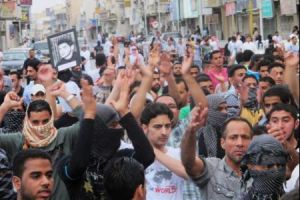 Protesters in Qatif demand the release of political prisoners

Saudi protesters have poured into the streets in the eastern city of Qatif, condemning Manama’s brutal crackdown on anti-regime demonstrators.
Expressing solidarity with Bahraini protesters, Saudi demonstrators on Friday urged the government to stop helping Manama in suppressing the uprising in the neighboring country and immediately withdraw its troops.
Since the deployment of Saudi troops in mid-March, Bahrain has launched a harsh crackdown on anti-government protesters, rounding up senior opposition figures and activists in dawn raids and arresting doctors, nurses, lawyers and journalists who voiced support for the protest movement.
Last week, Bahraini authorities announced that Saudi troops would remain in the Persian Gulf kingdom even after the state of emergency is lifted in June.
Despite, international condemnation of Saudi occupation of Bahrain, a Saudi official said, “This is the initial phase and Bahrain will get whatever assistance it needs. It’s open-ended.”
Saudi demonstrators also called for human rights reform, freedom of expression and the release of political prisoners some held without trial for more than 16 years.
Saudi Arabia’s east has been the scene of anti-government protests over the past months and authorities have arrested scores of people, including bloggers and writers, for taking part in protest rallies.
According to Human Rights Watch, more than 160 dissidents have been arrested since February as part of the Saudi government’s crackdown on anti-government protesters.
Featured Video

Trump asks Iran not to retaliate after he strikes Pickaxe Mountain
or go to
Aletho News Archives – Video-Images
Book Review
‘Why Fauci Must Rot in Prison’: A Tale of Two Diaries
By Jill Erzen | The Defender | October 13, 2026
Dr. Anthony Fauci’s private diary reveals a “mind-numbing” contradiction between what the former top U.S. infectious disease official knew about COVID-19 and what he told the public, senior White House adviser Peter Navarro, Ph.D., said last week on “American Thought Leaders.”
In his new book, “Why Fauci Must Rot in Prison,” due out Oct. 20, Navarro compares Fauci’s private entries to his own pandemic-era diary, and uses what he calls “a tale of two diaries” to argue that Fauci should face criminal prosecution.
“I show, actually, how a prosecution can and should happen … at the state level, most likely,” Navarro said. “He should wind up in prison, and we’ve got the receipts in this book to put him there.”
Navarro said Fauci repeatedly acknowledged important facts in private, then publicly pursued policies that contradicted those facts — with devastating consequences.
“What he says many times privately in his diary is so at odds with both his public behavior and public statements that it’s mind-numbing,” Navarro said.
Navarro examines the lasting damage caused by lockdowns and other pandemic policies, and the ongoing toll of long COVID.
His book also addresses questions about vaccine safety, including why healthy young people faced COVID-19 vaccination mandates despite concerns about myocarditis, and why women were not warned about miscarriage risks linked to the shots. … continue
Blog Roll
 Aletho News
- Trump asks Iran not to retaliate after he strikes Pickaxe Mountain – w/ Prof. Marandi
- Vice President J.D. Vance’s Deceptive ‘Antiwar’ Campaign Speech
- Iran: Palestinians’ rights must not be compromised in Gaza’s future; US, Israel to blame for Hormuz situation
- Ongoing tales of Syrian chemical weapons
- Moscow blasts UN for ignoring torture of Russian POWs
- Millions of Books Could Have Been Destroyed in Lebanon During Israeli Bombings
- Moscow warns of ‘hunt for Russians’
- Calling of an Angel: The True Story of Rene Caisse and an Indian Herbal Medicine Called Essiac (1988)
- South Korean Assistance to the U.S. in the War with Iran: Between Allied Duty and National Interests
- Pharma- and Gates-Funded GAVI Seeks to Assure Parents
- If Americans Knew
- Netanyahu’s spin on latest settler attack is laughable – Daily Update
- Israeli soldiers debunk Israel’s talking points
- In West Bank, Israeli settlers are totally out of control – Daily Update
- NPR investigation finds evidence of widespread fraud at mall kiosks tied to Israeli skincare brand
- Tucker Carlson exposes Israeli Lies about the Oct 7th attack, Charlie Kirk, and the U.S.
- Israel has detained thousands of Palestinian children since Oct 7th – over half spent time in solitary, many uncharged
- Israeli Analysis: Is Netanyahu Planning an ‘October Surprise’ Attack Before Israel’s Election?
- Israeli settlers brutally attack Palestinians and Washington Post female photographer, 65
- Words Have Changed, Occupation Continues: The Reality of the Gaza Ceasefire
- Gaza’s child amputees are growing faster than their prosthetics allow
- No Tricks Zone
- Predictions Made By Renowned Climate Proifessor Over Past Decades Have Been Proven To Be Poor
- New Study Suggests Large Regions Of The Pacific Ocean Have Been Cooling For The Last 80 Years
- Germany’s Green Energy Debacle: High Energy Costs Force Kahla Porzellan to Close After 182 Years!
- New Study: 50 Years Of The Most Aggressive ‘Net Zero’ Policies Can Only Affect The Global Climate By 0.03°C
- US September “Heat” Was No Record…Many Records Set Decades Ago
- Latest European Green Energy Debacle; Portugal’s Largest Flagship Solar Park Insolvent!
- Green Energy Debacle: German Expert Professor Fritz Vahrenholt Warns Of Severe Economic And Social Consequences
- Two More Paleo Reconstructions Affirm Meters-Higher Sea Levels Across Ireland, Brazil 7000-6000 Years Ago
- New Study: Earth And Venus Surface Warmth Largely Explained By Convection And Lapse Rate, Not CO2 Or Radiation
- 2025 Nature Paper Claiming Worsening Global Drought Gets RETRACTED …Heavily Flawed

