Trump admits Iran hit USS Ford carrier: ‘We ran for our lives’
Al Mayadeen | March 28, 2026
US President Donald Trump revealed that Iranian forces carried out a coordinated assault on the USS Gerald R. Ford, stating that the world’s largest aircraft carrier came under a multi-directional attack in the Red Sea as Tehran intensifies its retaliation against the US-Israeli aggression launched on February 28.
Speaking at a Saudi investment forum in Miami on Friday, Trump described what unfolded as “a serious situation” for US naval forces, indicating that the scale and intensity of the operation rapidly overwhelmed expectations.
“It was one o’clock in the morning,” Trump said, recalling the moment the vessel came under attack “from 17 different angles.”
“We knew we were in trouble,” he added.
“They were here, they were there. We ran for our lives, it was over,” Trump said, relaying the account of a Navy commander who was aboard at the time.
Carrier forced to withdraw
The USS Gerald R. Ford, the centerpiece of US naval power projection, had been deployed to West Asia as part of Washington’s aggression against Iran. In the immediate aftermath of the reported confrontation, the carrier was forced out of the theater following a fire that erupted onboard on March 12, injuring crew members and leaving nearly 200 sailors affected by smoke inhalation, while damaging large sections of the vessel.
The warship withdrew first to the Greek island of Crete before docking in Croatia for urgent repairs, after nearly nine months of continuous deployment marked by mounting technical failures, including persistent system malfunctions that had already raised concerns about its operational reliability under sustained pressure.
Despite the sequence of events, the Pentagon insisted that the damage stemmed from a “non-combat-related” fire in a laundry area, attempting to frame the withdrawal as a routine technical issue rather than the result of battlefield impact.
Iran exposes vulnerability
Iranian officials have categorically rejected this narrative, arguing that it is a transparent attempt to obscure the consequences of Iran’s retaliatory operations, which have increasingly exposed the vulnerability of even the most advanced US military assets.
The Islamic Revolution Guard Corps ridiculed the US account, stating, “What kind of military giant is this that faces a crisis and is forced to leave the battlefield due to a fire occurring in its laundry room?”
Tehran has repeatedly warned that US aircraft carriers operating in regional waters would be treated as legitimate targets, stressing that their presence constitutes a direct threat to Iran’s sovereignty.
Within this context, Iranian officials and analysts view the carrier’s abrupt withdrawal as clear evidence that sustained missile and drone operations are imposing real constraints on US forces, undermining Washington’s ability to maintain control despite its overwhelming technological advantage.
Iran’s armed forces have also reported conducting successful drone and missile strikes against another US carrier, the USS Abraham Lincoln, reinforcing what Tehran presents as an expanding and effective deterrence posture capable of reshaping the military balance across the region.
US Seeks Control Over Global Energy Infrastructure – Kremlin
teleSUR | March 27, 2026
The United States is aiming to take control of the Russian-owned Nord Stream pipelines that link Russia and Germany, Kremlin spokesman Dmitry Peskov said Friday, alleging Washington’s interest in the damaged infrastructure reflects a broader push to dominate global energy markets.
Peskov told reporters that the U.S. focus on the Baltic Sea pipelines was “evident,” adding that the assets — rendered inoperable after sabotage in September 2022 — remain the property of Russian state-owned Gazprom.
Foreign partners withdrew following the imposition of sanctions, which Moscow considers illegitimate, he said. “One of them is destroyed, it is deteriorating further each day due to the aggressiveness of the marine environment.”
His comments came hours after Russian Foreign Minister Sergei Lavrov told France Télévisions that Washington was seeking to dominate world energy markets, including the Nord Stream system. A 2024 Wall Street Journal report said U.S. investor Stephen P. Lynch had been exploring the purchase of Nord Stream 2, one branch of which remains intact.
Peskov also dismissed as “a lie” speculation that Russia was threatening to halt operations of the Caspian Pipeline Consortium (CPC) in the Black Sea to pressure the United States. He said Russia remains a reliable energy transit partner and accused Ukraine of carrying out drone attacks against CPC infrastructure, causing temporary suspensions.
“In practice, it is Kiev that has been and continues to engage in energy blackmail, which affects the interests of our companies,” Peskov underscored.
Villains of Judea: Leonid Radvinsky
How Leonid Radvinsky built a pornography empire to bankroll a foreign ethnostate
José Niño Unfiltered | March 24, 2026
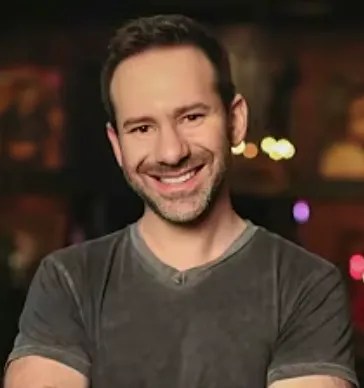
Leonid Radvinsky, the reclusive Jewish billionaire who transformed OnlyFans from a modest subscription platform into a multi-billion dollar pornography empire, died on March 20, 2026, following an alleged battle with cancer. He was 43 years old.
“We are deeply saddened to announce the death of Leo Radvinsky. Leo passed away peacefully after a long battle with cancer,” OnlyFans stated on Monday. “His family have requested privacy at this difficult time.”
Radvinsky’s death caps a career marked by extraordinary wealth accumulation alongside persistent allegations of enabling sexual exploitation, child abuse material, sex trafficking, and suspicious financial activity. Radvinsky amassed an estimated net worth of $7.8 billion as of October 2025, per Forbes’ Real-Time Billionaire rankings, while largely avoiding public scrutiny through extreme reclusiveness. At the time of his death on March 20, 2026, Forbes estimated his net worth at $4.7 billion.
Leonid “Leo” Radvinsky was born in 1982 to a Jewish family in the port city of Odesa, Ukraine, then part of the Soviet Union. His family emigrated to the United States when he was a child and settled in the Chicago area. The source of his father Savely’s wealth remains unclear, with reports noting real estate investments and business dealings whose exact nature has never been fully explained.
Radvinsky graduated from Northwestern University with a degree in economics in 2002. He married Yekaterina “Katie” Chudnovsky and lived in Florida. He also owned property in Chicago and other assets. Radvinsky was famously secretive. He gave almost no public interviews, few photographs of him ever surfaced, and he seldom appeared publicly.
Radvinsky’s entrepreneurial career began at age 17 in 1999 when he helped incorporate Cybertania Inc., a website referral business registered in Illinois with his mother Anna serving as the registered agent. During the late 1990s and early 2000s, he built more than 10 websites including “Password Universe,” “Working Passes,” and “Ultra Passwords” that claimed to offer “illegal” and “hacked” passwords to pornography sites. He earned affiliate revenue for every click.
Forbes found that Password Universe” published a link claiming to offer “illegal pre-teen passwords” and “Working Passes” linked to purported “illegal teen passwords” and bestiality content. Forensic News also found that Radvinsky held hundreds of domain names. Ultra Passwords alone reportedly generated $1.8 million per year in revenue.
Radvinsky encountered legal troubles in 2004, when Microsoft sued him for allegedly sending millions of deceptive emails to Hotmail users. The case was eventually dismissed. Additional lawsuits filed by Microsoft and Amazon in 2003 and 2004 alleged spamming and impersonation of their companies to redirect traffic to pornography ventures and “free money from the government” offers. All cases were settled out of court in 2005, and Radvinsky and his businesses were barred from using Amazon’s name in spam or any of Microsoft’s email tools.
In 2004, Radvinsky founded MyFreeCams, a live adult streaming and webcam site through his holding company MFCXY, Inc. The platform became enormously successful, processing hundreds of millions of dollars in payments annually. To users and the thousands of performers, he was known simply as “AdminLeo.”
In 2018, Radvinsky purchased a majority stake in OnlyFans’ parent company Fenix International Ltd. from British founders Tim and Guy Stokely, reportedly for approximately $30 million. He later acquired full ownership. Under his direction, OnlyFans pivoted heavily toward adult content and experienced explosive growth, especially during the COVID-19 pandemic.
The platform generated $6.6 billion in gross payments as of its fiscal year ending November 2023, with over 305 million registered users and 4.1 million creators, according to its annual report filed with UK Companies House. Radvinsky received $472 million in dividends in 2023 alone. CBS News reported, citing Bloomberg, that the company paid him approximately $1.8 billion in dividends since 2021. As of mid-2025, Radvinsky was reportedly in talks to sell OnlyFans at a valuation of approximately $8 billion.
Even as he built one of the most profitable pornography platforms on the internet, Radvinsky quietly directed significant sums toward charitable work. On his personal website, Radvinsky listed donations to organizations including the University of Chicago Medicine. He donated $5 million to Ukraine relief in 2022 following Russia’s invasion. In 2024, Radvinsky and his wife were major public supporters of a $23 million grant program for cancer research, announced at a gastrointestinal research foundation gala.
His interests beyond OnlyFans extended into the technology sector as well. Radvinsky operated a venture capital fund called “Leo” founded in 2009 that invested mainly in tech companies. Notable investments included B4X, an Israel-based open-source software development tools company. But it was not his tech investments that drew the sharpest public scrutiny. In February 2024, investigative outlet The Lever published a story based on leaked internal AIPAC donor documents showing that Radvinsky and his wife Katie Chudnovsky had pledged $11 million to AIPAC, the largest single contribution on the leaked list.
The $11 million pledge appeared under the name “Mr. Anonymous Anonymous” and Katie Chudnovsky, but personal contact information and a short bio in the documents identified “Mr. Anonymous” as Radvinsky, according to both The Lever and Jacobin. The pledge came in the wake of Hamas’s October 7, 2023, attack on Israel, during a period when AIPAC raised approximately $90 million in total. Internal AIPAC documents reviewed by The Lever showed a wire transfer from Chudnovsky to AIPAC.
Radvinsky denied the contribution. “I didn’t donate or pledge $11M,” he wrote in an email to The Lever, adding “this appl[ies] to me / my foundation / my family.” When asked why AIPAC listed him as a donor, he replied, “I don’t know.” When pressed about the wire transfer documentation, he stopped responding.
AIPAC declined to confirm or deny the list’s accuracy. When The Lever asked AIPAC’s spokesperson to identify any inaccurate information, the organization did not respond despite three follow-up requests before publication. Because AIPAC is organized as a 501(c)(4) “social welfare” organization, it is not legally required to publicly disclose its donors.
Following these revelations, multiple OnlyFans creators called for a boycott of the platform. Sex workers expressed concern that their earnings were being funneled to AIPAC, which had launched a $100 million campaign to oppose pro-Palestinian candidates in the 2024 elections. Organizers drew parallels between their own struggles against exploitation and the Palestinian cause.
The AIPAC controversy was not the first time questions had been raised about where Radvinsky’s money flowed. Long before the donor leak, banks themselves had flagged his financial operations. For at least 13 years, multiple banks filed Suspicious Activity Reports on Radvinsky’s companies, totaling well over $1 billion in flagged transactions, according to Forensic News. Reports from Bank of America, JP Morgan Chase, Wells Fargo, and others repeatedly identified patterns “consistent with payment layering,” a money laundering technique, involving offshore payment processors in Curacao, Belize, and Germany. Romania’s anti-money laundering agency requested MyFreeCams banking records from the U.S. Treasury in 2012.
The financial red flags were not the only source of controversy. The platforms Radvinsky built also faced mounting allegations of facilitating harm to the very people who generated their revenue. A major Reuters investigation in 2024 uncovered extensive allegations of nonconsensual content on OnlyFans, identifying 128 cases in which people complained to U.S. law enforcement that sexual content featuring them had been posted without their consent between January 2019 and November 2023. In approximately 40% of these cases, the content also appeared on mainstream social media platforms to drive traffic to OnlyFans. The National Center on Sexual Exploitation labeled OnlyFans a “serial sexual exploiter” and called on the DOJ to investigate.
Dozens of former models on both MyFreeCams and OnlyFans alleged arbitrary account closures and withheld wages. Forensic News documented multiple cases where creators had accounts deleted with pending balances and received generic responses about “suspicious/fraudulent activity” with no specifics. Some models lost wages when Choice Bank in Belize, used by MyFreeCams for payments, collapsed in 2018.
In 2022, competitor FanCentro and other plaintiffs filed lawsuits alleging that OnlyFans and Radvinsky paid bribes to Meta employees to have competing adult content performers placed on the Global Internet Forum to Counter Terrorism (GIFCT) database, effectively destroying their businesses. The payments were allegedly routed from Fenix International through a secret Hong Kong subsidiary into offshore Philippines bank accounts. Both Meta and OnlyFans denied the allegations, though a federal judge refused to dismiss the case.
The allegations of anticompetitive sabotage were serious enough on their own. But the most disturbing questions surrounding Radvinsky’s platforms involved not rival businesses but vulnerable people, including children. MyFreeCams maintained an advertising deal with Chat Avenue, one of the internet’s oldest chat platforms, where the age requirement was just 13 and loosely policed. MyFreeCams ads promoting adult webcam content appeared in the “boys,” “girls,” and “teens” chat rooms for approximately a decade. Federal court documents show multiple predators were arrested for child sex crimes committed on Chat Avenue during this period.
A BBC investigation in 2021 found that minors had used fake identification to set up accounts and sell explicit videos on OnlyFans. In one case, a 14-year-old used her grandmother’s passport. The UK’s most senior police officer for child protection called children on the platform “exploited.” A U.S. Homeland Security Investigations special agent confirmed he had seen child sex abuse material (CSAM) originating from OnlyFans during a 2021 call with Mastercard executives, noting the paywall makes it exceptionally difficult for law enforcement to discover offending accounts.
A Reuters investigation in January 2025 revealed a whistleblower complaint submitted to the U.S. Treasury’s Financial Crimes Enforcement Network alleging that Mastercard and Visa were aware since at least 2021 that their payment networks were being used to process proceeds from CSAM and trafficking on OnlyFans, accusing them of “turning a blind eye to flows of illicit revenue.” The complaint was filed in January 2023 with FinCEN and the U.S. Justice and Homeland Security departments.
Reuters also reported on women who said they had been sexually enslaved, sometimes by a partner, to produce content for the platform. The platform became central to high-profile trafficking cases, most notably involving influencer Andrew Tate, who was charged in Romania with rape and sex-trafficking charges connected to an operation that allegedly forced women to create pornographic content on OnlyFans.
A 2022 study by the Anti-Human Trafficking Intelligence Initiative (ATII) and the University of New Haven found a “high volume” of OnlyFans accounts with “common indicators” of CSAM or sex trafficking using open-source research methods. The NCOSE called on the Department of Justice to investigate OnlyFans, noting the platform profits from “the sexual abuse and exploitation of women, children, and men.”
Radvinsky’s path mirrors that of many Jewish magnates whose fortunes are built upon the erosion of social mores. His wealth, harvested from cultural collapse, is then re-directed to strengthen the political and strategic footholds of his tribe in the Middle East. Taken together, these forces amount to a zero‑sum game in which the spiritual and cultural bankruptcy of one people finances the geopolitical leverage of another.
Battle for Hungary: How the Russiagate blueprint has been unleashed against Orban
RT | March 25, 2026
The shadow campaign to swing the Hungarian election against Viktor Orban has escalated with the wiretapping of Hungarian Foreign Minister Peter Szijjarto. The case offers a rare look into how bureaucrats, journalists, and spies run a regime-change operation in real time.
Three weeks out from the April 12 elections, the political opposition to Orban scored what seemed to be a win over the weekend, when Politico and the Washington Post ran articles alleging that Szijjarto had phoned Russian Foreign Minister Sergey Lavrov with “live reports on what had been discussed” at multiple EU meetings. The reports cited anonymous “European security officials.”
Neither Orban nor Szijjarto make any secret of their desire to maintain cordial relations with Moscow, particularly on matters of energy security and the peace process in Ukraine. However, when bundled with more outlandish claims – that Russian “election fixers” are already embedded in Budapest, for example – the reports paint a picture of a government compromised by the Kremlin.
Orban’s leading opponent, Peter Magyar, has repeated these claims in his speeches. After the Szijjarto story broke, he accused the foreign minister of “betraying Hungarian and European interests,” and threatened him with “life imprisonment” for treason, should his Tisza party win the election.
All it took was one leaked audio file for the scheme to unravel.
The Szijjarto wiretapping plot
In an audio file released by Hungarian conservative outlet Mandiner on Monday, opposition journalist Szabolcs Panyi can be heard telling a source how he passed Szijjarto’s phone number to “a state organ of an EU country.” Once they had this number, he explained, agents of this country were able to extract “information about who that number spoke to, and they see who is calling that number or who that number is calling.”
In a Facebook post on Monday, Panyi confirmed that he was the person on the recording. He said that he was asking his source whether she knew of any alternate numbers used by Szijjarto or Lavrov, “so that I could compare them with information received from the national security service of a European country.”
Panyi’s confession explained how the “European security officials” were able to track Szijjarto’s phone conversations before feeding the information to Politico and the Washington Post.
Orban immediately announced an investigation into the wiretapping. “We are dealing with two serious issues,” the PM stated on Monday. “There is evidence that Hungary’s foreign minister was wiretapped, and we also have indications of who may be behind it.” Szijjarto explained that as the EU’s longest-serving foreign minister, he regularly speaks to Lavrov with messages from his colleagues in the EU. The real scandal, he said “is that a Hungarian journalist is colluding with foreign secret services in order to wiretap a member of the Hungarian government.”
“What makes this case even worse is that this Hungarian journalist is friends with the inner circles of the [opposition] Tisza party,” he added.
The man on the inside
Panyi’s central role in the scheme will come as no surprise to anyone who’s been following our reporting on the Hungarian election. An editor with Vsquare, Panyi leads the outlet’s Budapest office, and wrote an article in early March alleging that the Kremlin had dispatched “political technologists” from Russia’s military intelligence agency, the GRU, to Budapest to swing the election for Orban.
Panyi did not explain what this mysterious team of election meddlers was doing, or investigate whether they actually existed. Instead, he took the word of the anonymous “European national security sources,” who fed him the story at face value.
Vsquare is funded by grants from the National Endowment for Democracy (NED), an agency of the US State Department that helped foment the 2014 Maidan coup in Ukraine, USAID, the German Marshall Fund of the United States, and two EU-backed journalism funds. Almost all of Vsquare’s published work – which includes investigations tying Orban’s government to Russian intelligence, as well as hit pieces on populist leaders Robert Fico in Slovakia and Andrej Babis in the Czech Republic – is based on information provided by European intelligence agencies, as well as interviews with pro-EU politicians and NGOs.
Panyi’s apparent role is to launder this information for public consumption. In the case of the GRU meddling story, he took the word of the intelligence agencies and presented it as original reporting before it was picked up and disseminated by multiple Western outlets, including the Financial Times. The EU then activated its online censorship mechanism in Hungary, citing the threat of “potential Russian online disinformation campaigns.” Originating with EU spies and spread by an EU-financed news outlet, the story helped legitimize the bloc’s censorship campaign ahead of a crucial election.
In the case of the Szijjarto-Lavrov story, Panyi went even further by helping the spies obtain their information in the first place. It is unclear which agency he collaborated with, but in a Facebook post, the Vsquare editor said that he spoke to officials from seven EU countries while working on the story. Among them was Gabrielius Landsbergis, Lithuania’s former foreign minister who has referred to Russia as “the world’s cancer that must be removed.”
What’s the endgame for Panyi and the EU?
Panyi stands to personally gain if Orban is ousted in April. In the recording released by Mandiner, he tells his source that he is a “quasi-friend” of Anita Orban, a member of Magyar’s Tisza party, and Magyar’s pick to replace Szijjarto as foreign minister. Panyi suggests that he has close links to Tisza, and would be in a position to recommend “who should stay or be removed” if Magyar takes power.
More broadly, it is unclear whether Vsquare’s reporting will have any meaningful impact on Hungarian voters. However, smear campaigns and dirty tricks are part and parcel of any election, and with Orban vetoing the EU’s €90 billion loan package for Ukraine, Brussels and its allies have every incentive to try to tip the scales in their favor.
Yet even if Orban wins, the flood of Russia conspiracies from outlets like Vsquare, Politico, and the Washington Post serves another vital purpose: to delegitimize his victory and justify reprisals from Brussels.
Russiagate revived
The self-fulfilling conspiracy playbook was actually written in Washington. Back in 2016, fabricated claims of “Russian interference” and improper contacts between Donald Trump’s campaign and Moscow were used to justify the wiretapping of Trump’s campaign, and a years-long investigation that ultimately ended with zero proof of collusion between the Trump campaign and the Kremlin.
The parallels between ‘Russiagate’ and the information war playing out in Hungary are unmistakable. In the same way that Vsquare’s GRU report propped up the EU’s decision to impose its censorship regime on Hungary earlier this month, the FBI used the ‘Steele Dossier’ – a collection of unfounded rumors about Trump’s relationship with Moscow – to justify wiretapping the Trump campaign.
In 2017, Barack Obama’s intelligence chief, James Clapper, strong-armed the 17 US intelligence agencies into releasing a statement claiming that Russian President Vladimir Putin personally “approved and directed” a cyber-warfare and influence operation against the Clinton campaign. In 2026, the EU’s spy agencies are using the press to smear Orban and Szijjarto as agents of the Kremlin.
‘Russiagate’ stymied Trump’s policy agenda for the entirety of his first term in office. Even after Special Counsel Robert Mueller’s report exonerated Trump in 2019, the CIA leaked false reports of Russia paying the Taliban cash “bounties” for killing US soldiers to block the president’s planned withdrawal from Afghanistan, while Clinton and many of her supporters still maintain that Trump’s 2016 victory was fraudulent.
The EU has already blocked funds for Hungary equal to 3.5% of the country’s GDP, over Orban’s banning of LGBT propaganda and refusal to accept non-European migrants. Should he win the April election, it is easy to imagine claims of Russian interference being used to cut further assistance to Budapest, or even to strip Hungary’s EU veto rights. The latter idea has already been floated by Sweden, Lithuania, and a host of unnamed “EU diplomats” interviewed by Politico last week.
What’s the bottom line?
The battle for power in Hungary is intensifying a full three weeks ahead of the key vote, as international vested interests begin running ploys tried and tested in other jurisdictions, from the US to Romania (see our series opener on the EU censorship machine).
In Hungary, Panyi has claimed that “the connection between Szijjarto and Lavrov is just the tip of the iceberg.” Orban has vowed to “take retribution” for the wiretapping. Magyar has threatened Szijjarto with prison time. For everyone involved, the scandal has raised the stakes of the election to the point where nobody can afford to lose on April 12.
Hungary blasts ‘fake’ EU accusation
RT | March 23, 2026
Hungarian Foreign Minister Peter Szijjarto has denied and condemned claims that he leaked the details of EU meetings to Moscow.
The allegations were reported by the Washington Post and Politico some three weeks prior to the Hungarian parliamentary election scheduled for April 12.
On Friday, the WaPo cited security officials claiming that Szijjarto had made regular phone calls during breaks at EU meetings to provide Russian Foreign Minister Sergey Lavrov with “live reports on what had been discussed.”
On Sunday, Politico echoed the allegations, citing unnamed diplomats and officials who said Brussels had begun limiting the flow of confidential material to Hungary, forcing leaders to meet in smaller groups amid concerns that Budapest might leak sensitive information to the Kremlin.
“Instead of spreading lies and fake news, come to Budapest to support the opposition! Last time it worked… for us,” Szijjarto said Sunday in a post on X, responding to a comment by Polish Prime Minister Donald Tusk, who argued that the new allegations “shouldn’t come as a surprise to anyone.”
The Hungarian foreign minister earlier stated that Tusk was “the star speaker at the opposition rally” four years ago, stressing that back then Prime Minister Viktor Orban and his Fidesz party had won the election by 20%.
Szijjarto also criticized his Polish counterpart, Radoslaw Sikorski, over a similar remark, accusing Warsaw of “spreading lies to support the [opposition] Tisza Party and install a pro-war puppet government in Hungary.”
Orban has been at odds with Brussels over his criticism of open-border migration and what he calls a “suicidal” plan to admit Ukraine to the bloc.
Hungary’s prime minister and Vladimir Zelensky are involved in a standoff over the Ukrainian leader’s claim that he is unable to send Russian oil to Hungary. In return, Orban has refused to green light a €90 billion debt facility Brussels wants for Ukraine.
Mossad De Facto Admits To Inciting Riots In Iran
The Dissident | March 22, 2026
A New York Times article has reported that the Israeli/American failing regime change plot in Iran was contingent on a plan from the Israeli Mossad to incite riot in the country to effect regime change.
The article wrote, “Within days of the war’s beginning, said David Barnea, the Mossad chief, his service would likely be able to galvanize the Iranian opposition — igniting riots and other acts of rebellion that could even lead to the collapse of Iran’s government. Mr. Barnea also presented the proposal to senior Trump administration officials during a visit to Washington in mid-January.”
The article added:
Mr. Netanyahu adopted the plan. Despite doubts about its viability among senior American officials and some officials in other Israeli intelligence agencies, both he and President Trump seemed to embrace an optimistic outlook. Killing Iran’s leaders at the outset of the conflict, followed by a series of intelligence operations intended to encourage regime change, they thought, could lead to a mass uprising that might bring about a swift end to the war.
“Take over your government: It will be yours to take,” Mr. Trump told Iranians in his initial address at the war’s start, after saying they should first seek shelter from the bombing.
In the run-up to the war, current and former American and Israeli officials said, Mr. Netanyahu invoked Mossad’s optimism about a possibility of an Iranian uprising to help convince Mr. Trump that bringing about the collapse of the Iranian government was a realistic goal.
This is a de facto admission that Mossad was behind the violent riots that took place in Iran in January of this year, and used those riots to convict Trump that regime change in Iran was viable.
When the protests began in late December of last year, a Mossad connected account wrote in Persian , “Let us come out to the streets together. The time has come.
We are with you. Not just from afar and in words. We are with you in the field as well.”
Following this, former Secretary of State and CIA director Mike Pompeo wrote , “Happy New Year to every Iranian in the streets. Also, to every Mossad agent walking beside them.”
When the protests turned from peaceful to violent riots, Israel Channel 14 reported that , “foreign actors are arming the protesters in Iran with live firearms, which is the reason for the hundreds of regime personnel killed” an obvious reference to the Israeli Mossad.
The admission from the Israeli Mossad that their push for regime change in Iran was based on the idea that the Mossad could ignite, “riots and other acts of rebellion that could even lead to the collapse of Iran’s government” is further evidence that Israeli Mossad infiltration caused the Iranian riots in January, which Israel then used to sell a regime change war in Iran to the Trump administration.
But the plan backfired once the Israeli/American war on Iran began.
Since its inception, the war was clearly an attempt to turn Iran into a failed state and not just remove the current government.
As Vali R. Nasr, professor of international affairs and Middle East studies at the Johns Hopkins School of Advanced International Studies put it, “under constant bombardment Iranians are growing increasingly worried about the devastation of their country. They worry that U.S. and Israeli support for Kurdish and maybe even Azeri and Baloch separatists will break up the nation. These concerns are constantly circulating in public forums and are seen nightly in the form of antiwar demonstrations across the country and are morphing into an emerging sense of national resistance” adding, “If Iranians come to see this war as waged against Iran — and not just the Islamic republic — then Iranian nationalism may be mobilized in the service of resistance. America and Israel’s strategy of regime change by bombing military and government industries and infrastructure in Iranian cities, towns and neighborhoods and threatening Iran’s territorial integrity by arming Kurdish militias will not drive a wedge between the population and the regime and produce a popular revolution.”
In reality, the U.S./Israeli attempts to destroy Iran have only caused many Iranians to rally around the flag.
Nonetheless, this critical admission shows that the Israeli Mossad helped incite the riots in January and hoped it could be used to enforce regime change once the American/Israeli bombing began.
Tehran: World grown thoroughly exhausted with US-Israeli ‘false flag storylines’
Press TV – March 23, 2026
Iran’s Foreign Ministry spokesman says the world has grown thoroughly exhausted with the US-Israeli “false flag storylines.”
In a post on his X account on Monday, Esmaeil Baghaei reacted to the NATO Secretary General Mark Rutte’s stance, which rejected the recent claims by Israeli regime officials regarding Iran’s missile program posing a threat to Europe.
“That even the NATO Secretary General (who is infamously pressing Alliance members to appease the US and support their illegal war on Iran) declines to endorse Israel’s most recent disinformation, speaks volumes: the world has grown thoroughly exhausted with these tired and discredited “false flag” storylines,” he noted.
Israeli officials, over the past two days, claimed the interception of an Iranian missile targeting a British military base in Diego Garcia.
They presented Iran’s missile program as a threat to continental Europe.
The event reportedly happened between Thursday night and Friday morning, according to US media.
The Wall Street Journal and CNN reported that one of the missiles failed mid-flight while the other was hit by a US interceptor fired from a warship.
This comes amid heightened US and Israeli aggression against Iran, where the United States and the Israeli regime launched an unprovoked war of aggression on Iran on February 28, assassinating the Leader of the Islamic Revolution, Ayatollah Seyyed Ali Khamenei, as well as several top military commanders.
Iran immediately began to retaliate against the aggression by launching barrages of missiles and drone attacks on the Israeli-occupied territories as well as on US bases in regional countries.
Iran has repeatedly warned against US-Israeli “false flag” operations.
Barak blasts Netanyahu: ‘Stop lying – you can’t destroy Iran’s nuclear, missile capabilities’
Press TV – March 23, 2026
Former Israeli prime minister Ehud Barak on Monday launched a blistering attack at the regime’s incumbent political and military leadership, slamming them for peddling “blatant” lies over the war against Iran and noting that the regime has no strategy to end the war.
In an interview with Channel 13, Barak, who also previously acted as the regime’s military chief and military affairs minister, delivered a stark assessment of the Israeli wars on Gaza, Lebanon and the Islamic Republic of Iran.
“We cannot open the Strait of Hormuz, nor destroy Iran’s nuclear and missile capabilities, so don’t lie to us too much,” Barak said, directly challenging the regime’s claims regarding its capacity to confront the Islamic Republic.
His remarks came as the Israeli-American war against Iran entered its 24th day with no end in sight. The war, which started with the assassination of the Leader of the Islamic Revolution, Ayatollah Seyyed Ali Khamenei, and some top-ranking officials and military commanders, has failed to achieve the “regime change” agenda or to decapitate the Iranian government.
On the contrary, as experts acknowledge, Iranian armed forces have decimated Israeli military and intelligence infrastructure across the occupied territories as well as US military bases in some Persian Gulf countries as part of Operation True Promise 4.
So far, 74 waves of missile and drone operations have been successfully carried out against enemy targets, which have effectively destroyed the air defense systems.
Barak, who acted as the regime’s premier from 1999 to 2001, launched a stinging attack at the regime’s war cabinet, stressing that the political echelon lacks both the knowledge and the will to end the fighting that has failed to achieve any objectives.
“Israel at the political level doesn’t know – doesn’t know or doesn’t want – to bring the war to an end,” he said. “They don’t know how to end wars.”
He also pointed to unfulfilled promises made repeatedly by the Benjamin Netanyahu regime vis-à-vis the genocidal wars against Gaza and Lebanon.
“We are two and a half years in; Hamas is still there after they promised us six times that we were a step away from ‘total victory.’ Hezbollah is still there after they told us we threw them back decades,” he stated.
Barak also took aim at Netanyahu’s long-standing emphasis on the so-called “Iranian threat,” noting that the regime’s claims of neutralizing the danger do not align with reality.
“Iranian nuclear program and missiles are still there after they clarified to us that he [Netanyahu] removed the existential threat,” he said, shaken by the direct Iranian missile impacts across the occupied territories in the ongoing war.
The former prime minister described a systemic breakdown in trust between the regime and settlers, exacerbated by what he called deliberate withholding of information.
“Now, what is the problem? When there is no truth and no trust. We also don’t know all the details, including those of us who were deep inside these matters,” Barak said. “We don’t know what the truth is. But they shouldn’t tell us ‘the truth’ – they just shouldn’t lie to our faces in such a blatant way so that we can participate in the discussion more seriously.”
Iran made ‘unexpectedly substantial’ offer during Geneva talks, US envoys ‘dragged’ Trump into war: Report
The Cradle | March 18, 2026
UK National Security Advisor Jonathan Powell attended the final US–Iran talks in Geneva last month and concluded that a deal was in reach, The Guardian reported on 17 March, citing sources as saying that Washington’s leading envoys were acting as “Israeli assets” who “dragged” the US into war.
According to the report, Powell thought what Iran was proposing was “surprising.”
“The UK team were surprised by what the Iranians put on the table. It was not a complete deal, but it was progress and was unlikely to be the Iranians’ final offer. The British team expected the next round of negotiations to go ahead on the basis of the progress in Geneva,” the sources explained.
“Jonathan thought there was a deal to be done, but Iran were not quite there yet, especially on the issue of UN inspections of its nuclear sites.”
The report went on to say that US President Donald Trump’s envoy Steve Witkoff and his son-in-law and unofficial advisor Jared Kushner invited Rafael Grossi, head of the International Atomic Energy Agency (IAEA), to the talks.
A former official told The Guardian that “Witkoff and Kushner did not bring a US technical team with them.”
“They used Grossi as their technical expert, but that is not his job. So, Jonathan Powell took his own team,” the former official added.
“Witkoff’s pronouncements on the Iran nuclear program were riddled with basic errors,” despite the envoys claiming they had “a pretty deep understanding of the issues that matter in this.”
The next round of talks was planned for 2 March. On 28 February, the US and Israel launched the attack.
“The UK saw no compelling evidence of an imminent threat of an Iranian missile attack on Europe, or of Iran securing a nuclear weapon … The UK regarded the attack as unlawful and premature since Powell believed the path remained open to a negotiated solution to the long-running issue of how Iran could reassure the US that it was not seeking a nuclear weapon,” the report said.
A diplomat with knowledge of the negotiations said, “We regarded Witkoff and Kushner as Israeli assets that dragged a president into a war he wants to get out of.”
Before the war, Trump claimed not only that Iran was seeking a nuclear bomb, but also that it wanted to build missiles capable of reaching the US. Intelligence assessments have refuted this.
According to a report by Responsible Statecraft, Kushner and Witkoff “offered misleading advice that helped push the US toward conflict.”
People present at the US–Iran talks told MS Now earlier this month that Witkoff falsely claimed that the Iranians had “bragged” that they had enough enriched uranium for 11 nuclear bombs.
The report by The Guardian comes as the brutal US-Israeli war on Iran has entered its third week.
Tehran has launched a massive and unprecedented campaign of retaliatory strikes on Israel as well as US military bases and energy infrastructure across the region. The global price of oil has now shot up past $100 and is expected to continue rising.
Joe Kent, head of the US National Counterterrorism Center, officially resigned over his opposition to the war on 17 March.
Unpacking glaring contradictions in US-Zionist justifications for war against Iran
By David Miller | Press TV | March 5, 2026
While the likes of Trump, Netanyahu, and Rubio peddle inconsistent justifications for the illegal and unprovoked aggression on Iran, CIA intelligence shreds claims of imminent threats, revealing how the Zionist entity dictates US foreign policy.
US President Donald Trump unleashed a barrage of contradictory explanations for the joint US-Zionist assault on the Islamic Republic of Iran, launched on 28 February 2026.
In his initial video statement, Trump asserted the strikes aimed to eliminate “imminent threats” from Iran, including its alleged pursuit of nuclear weapons and long-range missiles capable of reaching the American homeland.
He painted Iran as a “vicious group of very hard, terrible people” whose actions endangered US interests.
This narrative quickly evolved. By 3 March, Trump admitted the decision stemmed from his “opinion” that Iran would attack first if not struck preemptively.
“It was my opinion that they were going to attack first,” he stated, abandoning earlier claims of concrete intelligence.
Such flip-flops, once again, expose exaggeration. Trump claimed Iran neared intercontinental ballistic missiles threatening the US, an assertion contradicted by US intelligence assessments.
The BBC highlighted how Trump’s “imminent threats” lacked support, noting Iran’s nuclear capabilities remained far from weaponisation despite rhetoric.
Trump’s pre-strike doubts further undermine his case. The Associated Press reported Trump’s dissatisfaction with ongoing nuclear talks, leading to the order despite diplomatic avenues. This pivot from diplomacy to aggression reeks of opportunism, not necessity.
Netanyahu’s decades-long push: ‘Regime change’ at any cost
Zionist entity premier Benjamin Netanyahu has long championed aggression against Iran, viewing it as an existential foe. In justifying the 2026 strikes, Netanyahu declared them pre-emptive to thwart Iran’s nuclear and missile programs, threatening overwhelming force.
He warned that allowing Iran nuclear weapons and ICBMs would endanger humanity.
Netanyahu’s rhetoric echoes his four-decade obsession. Even complicit journalists like Mehdi Hasan noted Netanyahu “has been yearning, dreaming of doing this for 40 years,” with Trump as the first US leader to oblige.
The Guardian labelled the assault an “illegal act of aggression” without a lawful basis, driven by Netanyahu’s preference for military solutions over diplomacy.
Post-strike, Netanyahu celebrated the operation’s goals and called (in Farsi) for Iranians to “come to the streets, come out in your millions, to finish the job, to overthrow the ‘regime’ of fear that has made your lives bitter”. Mondoweiss exposed how initial nuclear justifications morphed into overt regime change admissions, mirroring Iraq War tactics.
“When we are finished, take over your government,” President Trump said, addressing the Iranian public in his own video. “It will be yours to take.”
Yet The Nation revealed aims to turn Iran into a failed state, obliterating coherent governance. Netanyahu dusted off the genocidal language used against the Palestinians during a visit onSunday, 1 March, to a site struck by an Iranian missile.
“We read in this week’s Torah portion, ‘Remember what Amalek did to you.’ We remember—and we act,” he said.
The Amalekites are identified in the Hebrew Bible as a persistent adversary of the Israelites, linked to a Torah commandment to erase their memory. Specifically, 1 Samuel 15:3 mandates the killing of men, women, and infants. This was a clarion call to eliminate all Iranians, showing the utter hypocrisy of calling out on the streets those he wishes dead.
Rubio’s Freudian slip: Admitting Zionist sway over US decisions
Secretary of State Marco Rubio’s comments laid bare the Zionist entity’s influence on US policy. On 2 March, Rubio stated the US struck because “we knew that there was going to be an Israeli action,” prompting preemptive moves to avoid higher US casualties from Iranian retaliation.
Rubio elaborated that awareness of Zionist plans necessitated US involvement, framing it as defensive. Al Jazeera described this as a “looping justification,” highlighting how Zionist intentions drove US timing.
Facing backlash, Rubio walked back his words, insisting the strikes were inevitable regardless of Zionist actions. The New York Times reported his clarification: “The president determined we were not going to get hit first.”
Axios noted Rubio’s remarks ignited MAGA divisions, underscoring Zionist power. The Guardian highlighted Democratic fury over Rubio’s implication of a “war of choice” on behalf of Zionists. PBS detailed Rubio’s defence, warning Iran of further escalation. These revelations confirm that US policy follows Zionist whims.
CIA intelligence shreds the ‘imminent threat’ facade
CIA assessments dismantle claims of Iranian aggression. The Associated Press revealed that US intelligence showed no pre-emptive Iranian strike planned against the US.
Briefings to Congress confirmed no such indicators. Reuters echoed Pentagon admissions: no intelligence on Iran attacking first. The Hill reported similar findings, contradicting Trump’s “imminent threat.”
A House of Commons Library briefing noted in 2025 that US intelligence judged Iran not to be building nuclear weapons. CNN detailed CIA tracking of Iranian leaders, but no offensive plans. Al Jazeera reported CIA talks with Kurds for uprisings, indicating an offensive US posture. Even the Zionist funded propaganda network Iran International quoted ex-CIA Director Petraeus on Iran’s strategic errors, but no pre-strike aggression.
These reports expose fabricated threats to justify unprovoked war.
Pentagon’s panic: Depleted THAAD stocks and radar losses
Pentagon officials express intense paranoia over dwindling air defense stockpiles as a result of Iran’s legitimate self-defense. The Washington Post reported sources describing the mood as “intense and paranoid.” The Daily Beast characterised these Pentagon officials as “secretly panicking” about THAAD interceptor shortages if fighting drags on.
This panic stems from high consumption rates. It takes two or three interceptors per incoming missile, straining limited THAAD stocks.
Some sources claim that for every $1 Iran spends on drones, countries like the UAE (and by implication the US and the Zionist entity) spend approximately $20 to $28. The Washington Post said officials are warning that resources are “stretched thin.”
Compounding this, the US Navy resists escorting ships through the Strait of Hormuz. USNI News reported Navy officials informing shipping leaders of no availability for escorts, despite Trump’s pledges.
Lloyd’s list detailed this U-turn, with the Navy ruling out protection.
These issues link directly to Iran’s destruction of the AN/FPS-132 radar at Al Udeid base. NDTV reported Iranian claims to have obliterated this $1.1 billion system, crucial for ballistic missile tracking. The radar’s loss weakens early warning, compressing reaction times for THAAD systems.
Army Recognition, a defence industry news site, explained that this reduces sensor depth, forcing more interceptor use and accelerating stock depletion. In fact, they describe it in full as this: “early-warning radar uses a fixed UHF phased-array to detect and continuously track ballistic missiles and space objects at very long range, generating early launch warning, trajectory and impact predictions, and cueing data for layered defenses such as THAAD, Patriot, and naval air-and-missile defense systems across the Gulf”.
So, it affects the whole range of layered air defences.
For Navy escorts, diminished radar coverage heightens risks in Hormuz. Radar losses are key to broader defense cracks, making naval operations precarious without full surveillance.
These problems have only been compounded by the latest strikes, which even the New York Times is admitting have damaged or destroyed Radar and other monitoring and targeting equipment in US bases across the region in Bahrain, Qatar, Kuwait, Saudi Arabia and the UAE.
This chain—radar destruction leading to inefficient defenses and stock drain—fuels Pentagon panic and Navy caution, exposing vulnerabilities in the aggression.
Zionist entity’s grip: How the US became a tool in Iranian aggression
The Zionist colony has long steered US policy toward confrontation with Iran. Al Jazeera probed how Zionist plans precipitated US strikes, with Rubio admitting awareness shaped decisions.
The establishment think tank CFR detailed US intervention following Zionist unilateralism, escalating to full aggression. Mondoweiss argued the war follows an Iraq playbook: false WMD claims shifting to regime change. The Guardian condemned it as illegal, driven by Netanyahu’s impatience with diplomacy.
Euronews quoted Iran’s UN ambassador decrying US betrayal during talks, highlighting Zionist sabotage. Al Mayadeen announced Netanyahu’s declaration of joint aggression. The Nation exposed aims to fragment Iran, with Zionist officials targeting all leadership. WBUR reported Trump’s regime change calls, echoing Zionist goals.
This puppetry endangers global peace, subordinating US interests to messianic Zionist ambitions.
Key contradictions in leadership statements
- Trump’s threat claims vs. intel: Trump warned of missiles soon reaching the US, but even the NYT fact-checks show these are inaccurate.
- Netanyahu’s pre-emption vs. evidence: Netanyahu framed strikes as a gateway to peace, yet Arab News notes endless war denial.
- Rubio’s Zionist trigger vs. walkback: Rubio suggested Israeli plans forced the US hand, later denied.
- Intel on no strike vs. official narratives: AP sources confirm no preemptive Iranian plans.
These inconsistencies fuel scepticism in the American security apparatus as well as – increasingly – with the US allied states in West Asia.
These deceptions are being unmasked in real time. The unthinkable is now dawning on the US and its allies; this may be the moment that the US is pushed out of West Asia once and for all.
Solidarity with Iran at this time demands truth over propaganda and the final push to remove US influence and finally collapse the Zionist colonisation project in Palestine.
Featured Video

No Threat Can Force Iran’s Surrender /Trita Parsi & Lt Cl Daniel Davis
or go to
Aletho News Archives – Video-Images
From the Archives
An Expert Military Analysis of War with China
Actually, None is Necessary
By Fred Reed • Unz Review • December 13, 2020
The Correlation of Armed Forces: U.S. goods and services trade with China totaled an estimated $634.8 billion in 2019. Exports were $163.0 billion; imports were $471.8 billion. The U.S. goods and services trade deficit with China was $308.8 billion in 2019. Trade in services with China (exports and imports) totaled an estimated $76.7 billion in 2019. Services exports were $56.5 billion; services imports were $20.1 billion. The U.S. services trade surplus with China was $36.4 billion in 2019.
There is talk within the Washingtoniat of a possible war with China. Steve Bannon, who apparently was dropped on his head as a child, actually favors such a war. We hear the usual shoo-the-boobs alarm about how the Chinese are doing something terrible and we must gird our loins and American values and show them what for, bow wow, woof. The danger is that the current game of who-blinks-first in Asian waters might actually provoke a shooting war. You know the kind of thing: One warship refuses to get out of the way of another, a collision ensues, some retard lieutenant who signed up on waivers opens fire, and we’re off and running. It is not a good idea to let children play with matches.
The said war is discussed either in emotional terms by idiots or in purely naval terms by those familiar with such things, so we hear of the First Island Chain and the Second Island Chain and whose missiles against the other’s missiles and so on. This would be appropriate if we were fighting World War Two again. Which we aren’t. Let’s take a quick-and-dirty look at how such a war might go.
To begin the war, America would overestimate itself and underestimate China. This is doctrine in the Pentagon. … continue
Blog Roll
 Aletho News
- Iran To Target Military Industrial-Tech Complex That Facilitated Gaza Genocide
- Collapsing Empire: The Resistance Disarms ‘Israel’
- Suicide Should Not Be a Government Service
- Rethinking America’s greatest threat: Iran vs. Israel-Firsters
- Iran accuses adversaries of false flags to strain Turkey ties
- Poland rules out sending Patriot missiles to US/Israel amid war on Iran
- Tehran approves new Hormuz plan with major restrictions
- No Threat Can Force Iran’s Surrender /Trita Parsi & Lt Cl Daniel Davis
- UK’s New Pandemic Plan Would Turn Big Tech Into a Mass Location Tracking Network
- Growing insecurity, soaring prices fuel protests in north as regime bans evacuation: Sources
- If Americans Knew
- Ann Coulter Rips Into Fox News for Iran War Coverage, Compares to False Rigged 2020 Election Reporting
- Joe Kent Urges Americans To Call White House and Congress To Object To Sending Troops Into Iran
- DNC Resolution to Reject AIPAC Funding Puts Democratic Leaders in the Hot Seat
- Swedish foundation to build 400 schools as over 650,000 Gaza children remain without education for 2 years
- Israeli army admits photshopping image of slain Lebanese journalist
- This is how Israel is systematically killing health workers under the cover of war in Lebanon
- Carrying life under fire: Israeli invasion of Lebanon leaves pregnant women facing deadly risks
- Champagne all around for the new death penalty (for Palestinians) law – Not a ceasefire Day 172
- Why are Palestinian books struggling to be seen on Amazon?
- The Line Between Affinity and Conspiracy
- No Tricks Zone
- New Study Finds Warming Saves Lives…Cold Temperatures 12 Times More Deadly Than Excess Heat
- German Science Blog Accuses PIK Climate Institute Of Hallucinating Climate Tipping Points
- Devastating Assessment Of Comirnaty Vaccine By Former Senior Pfizer Europe Toxicologist
- New Study: CO2 Is ‘Effectively Negligible’ As An Explanatory Climate Change Factor Since 2000
- Former Pfizer Toxicologist Dr. Helmut Sterz Tells Bundestag Hearing Pfizer Vaccine Should Have Never Been Approved
- Energy Expert: Germany’s Nuclear Phaseout Was A “500 Billion Euro Mistake”
- New Research: South Australia’s Mid-Holocene Sea Surface Temperatures Were 4°C Warmer Than Today
- Storing Green Energy To Last Germany 10 Days Would Require A 60-Million Tonne Battery
- New Studies: UK Sea Levels Were 4 Meters Higher Than Today During The Mid-Holocene
- Destructive Green New Deal: German Energy And Metal Group Warns Of Drastic Crisis
 Aletho News