EU plans to seize €170bn of Russia’s frozen funds – FT
RT | September 17, 2025
Brussels is pressing ahead with a plan to use €170 billion of Russia’s frozen sovereign assets to back “reparation loans” for Ukraine, the Financial Times has reported. The EU faces growing pressure to find additional funding for Kiev as US cuts back its support.
Moscow has condemned the asset freeze and warned that any seizure of its money would amount to “theft.”
Western nations froze an estimated $300 billion in Russian funds after the escalation of the Ukraine conflict in 2022 – some €200 billion of which is held by Brussels-based clearinghouse Euroclear. The funds have accrued billions in interest, and the West has explored ways to use this revenue to finance Ukraine. While refraining from outright seizure, the G7 last year backed a plan to provide Kiev with $50 billion in loans to be repaid using the profits generated by the funds. The EU pledged $21 billion.
European Commission chief Ursula von der Leyen has proposed going further by creating a ‘reparation loans’ mechanism, which she described as urgently needed to finance Kiev.
People familiar with discussions said the plan involves channeling cash balances from Russia’s immobilized assets into EU-issued bonds, with the proceeds transferred to Ukraine in tranches. Brussels argues the system would provide Kiev with immediate support while sidestepping a formal seizure.
A second option under consideration would involve creating a special-purpose vehicle to manage the loans, which could also allow non-EU partners to take part.
Of the funds frozen at Euroclear, about €170 billion has already matured and now sits as cash on the clearinghouse’s books, the sources said.
The plans have already drawn objections from member states. Belgium, Germany, and France have warned that dipping into the principal risks breaking the law and undermining confidence in the euro.
Brussels is under pressure to cover a significant portion of Ukraine’s needs as Washington holds back on new aid, the FT wrote. According to a US note circulated among G7 capitals and cited by the outlet, members were urged to consider seizing the sovereign assets principal “innovatively” to fund Ukraine.
Moscow warned that any attempt to use the assets “will not go unanswered.”
Russia’s Hi-Tech Starlink Analog Can Free Global South From US Tech Dominance: Here’s How
Sputnik – 17.09.2025
Roscosmos is “moving at a rapid pace” toward fielding an alternative to Elon Musk’s satellite internet empire. Veteran military expert Yuri Knutov breaks things down.
What’s Russia Building?
Bureau 1440 is working on a low-Earth orbit sat net for broadband data delivery:
- multiple test vehicles are already in orbit
- communications tested at ranges of 30-1,000 km
- first stage of series deployment slated to start in December (300 satellites); 900 in stage two
- ~500 base stations planned
- homegrown terminal coming “soon,” per Roscosmos chief Dmitry Bakanov
- trial roll-out planned for 2027
What Makes Russia’s Version Better?
Musk’s system works like this: ground-based Starlink Gateways communicate with orbiting satellites using electromagnetic radiation, with signals then communicated back down to Earth-based terminals.
Russia’s system uses laser beams, which “are more modern digital technologies providing faster & higher quality data transmission, as well as improved resistance to interference,” Knutov explains.
Longer Range
An effective range of up to 5,000 km “means far fewer satellites are needed than Elon Musk’s system (hundreds vs thousands),” Knutov explains.
That makes the Russian system not only less costly, but less harmful to the already heavily overcrowded LEO environment.
Doppler Effect: Solved
“We’ve been able to completely compensate” for the Doppler signal frequency issue, occurring from the high speeds (27,000 km/h) at which satellites orbit Earth, “allowing the signal to be maintained virtually free of interference & distortion.”
Global Implications
The system will provide secure, high-speed communications to:
- Russian resource sector companies working in remote areas
- ships situated anywhere on Earth
- the military, for command, control & real-time battlefield reports, ensuring informed decision-making
Alternative to US tech
“Nations of the Global South understand that dependence on the US makes them vulnerable. Internet access via Starlink can be restricted at any time. Availability of a Russian system providing equally good or even better services is crucial,” Knutov says, emphasizing that the new system cannot be deployed too soon.
Putin signs off on Europe’s largest ever high-speed rail project
RT | September 17, 2025
Russian Prime Minister Mikhail Mishustin has announced plans for a massive high-speed rail (HSR) network. It is set to be the largest in Europe, spanning more than 4,500km (2,800 miles), and will use domestically built trains capable of reaching 400kph (250mph).
At a government meeting on Tuesday, the prime minister said the new line will cut travel time between Moscow and St. Petersburg from four hours to just over two. The network will also connect Moscow with Minsk, Adler on the Black Sea, Ekaterinburg in the Urals, Ryazan, and other cities.
“Travel between cities should be not only safe and comfortable but also not too time consuming,” Mishustin stated. “In the modern world, time is becoming increasingly valuable. Because of that, we are mastering technologies for faster travel and [are working] on a development scheme for high-speed rail infrastructure.”
He noted that the project has been approved by President Vladimir Putin and will be finalized within the next six months.
Mishustin said construction of the first HSR line between Moscow and St. Petersburg is already underway. The 679km route will be the first to feature the new generation of high-speed trains. While he gave no details about the train’s specifications, media reports suggest that the name could be chosen in a public vote, with options including ‘Luch’ (Russian for ‘ray of light’). The current line between the two cities, the fastest in Russia, operates Siemens Velaro Sapsan trains with a top speed of 250kph.
Once completed, Russia’s HSR network will overtake Spain’s 3,970km system, the largest in Europe and second worldwide after China. The new Russian trains will also outpace Europe’s fastest, the French TGV, which runs at up to 320kph, covering the London-Paris route in three hours.
China remains the global HSR leader, with more than 64,000km of lines in operation. It also fields the world’s fastest trains, including the Shanghai Maglev at 460kph and the CR400 Fuxing Hao at 350kph.
Russia, Iraq Ramp Up Contacts, With Focus on Military Cooperation
Sputnik – 16.09.2025
Russian Security Council Secretary Sergei Shoigu arrived in Baghdad on a working visit.
Contacts between Russia and Iraq are becoming increasingly intensive, with business, economic, transport, military and defense industry cooperation issues being discussed, Russian Security Council Secretary Sergei Shoigu said.
“Contacts are becoming more intense and multidirectional. This concerns business, economics, and transport, military and defense industry cooperation,” Shoigu said during a brief conversation with the deputy advisor to the prime minister of Iraq for national security in Baghdad.
Russian Security Council Secretary Sergei Shoigu touched down in Baghdad on a working visit, during which he will hold meetings with the highest political and military leadership of Iraq, the Russian Security Council said.
“During the upcoming meetings, it is expected to convey the Russian side’s intention to further strengthen and expand cooperation in the security sphere,” it said.
The council added that, besides the current aspects of Russian-Iraqi bilateral cooperation, regional issues will also be addressed during the talks in Baghdad.
Finnish PM admits Russia sanctions hurting economy
RT | September 15, 2025
Finland’s economic growth has suffered due to sanctions on Russia linked to the Ukraine conflict, Prime Minister Petteri Orpo has admitted. He noted that Finland has lost nearly all trade with Russia and billions in investments since it closed the border with its neighbor.
Finland, which shares a 1,300km (800-mile) border with Russia, has imposed several rounds of sanctions on Moscow in line with EU policy since 2022. It has also tightened entry rules for Russian citizens and shut all but one border checkpoint with its neighbor. The moves saw trade between the two countries drop to $1.5 billion in 2024, compared with $11 billion in pre-conflict 2021.
In an interview with Yle Areena on Saturday, Orpo acknowledged that sanctions have hit Finland harder than most EU members due to its traditionally close trade ties with Russia.
“The fact that the border is closed means, for example, 10 million cubic meters of Russian timber for our industry is not coming in. Finnish companies have lost billions in investments in Russia. Nearly all border traffic and trade have stopped,” Orpo said. “That brings uncertainty. All this has led to the fact that the growth of the Finnish economy has not been as desired.”
Despite this, Orpo echoed other NATO members in claiming Russia remains a “permanent threat” to Finland and the EU, vowing to increase defense spending and militarization to counter it. Finland joined NATO in 2023, a step Moscow – which views the bloc’s expansion as a trigger of the Ukraine conflict – called a “historic mistake.”
Russia has repeatedly rejected claims it poses a threat, accusing the West of fueling Russophobia to justify military buildups and divert attention from domestic problems. It has condemned Western sanctions as illegal and warned they would backfire.
The Finnish economy slipped into recession in both 2023 and 2024. According to Eurostat, its growth projections for 2025 are the lowest in the EU.
West May Lose at Least $285Bln If Confiscates Russian Reserves
Sputnik – 14.09.2025
MOSCOW – Russia’s frozen reserves continue to “burn the pockets” of Western countries: states burdened with huge debts and budget deficits have begun to talk more and more about confiscating Russian assets that they froze in 2022, but such a step could cost them at least $285 billion, Sputnik calculated based on national statistics.
Currently, the G7 countries and the European Union are implementing a scheme to seize income from frozen Russian assets to finance a $50 billion loan to Ukraine. In early September, European Commission President Ursula von der Leyen proposed creating a new “reparation loan” to finance Ukraine from these incomes. However, Western politicians periodically call for the direct confiscation of frozen Russian assets to finance Ukraine. The Russian authorities have repeatedly said that they would take reciprocal measures in the event of confiscation.
According to the latest available data, the volume of direct investment from the European Union, the G7, Australia, Norway and Switzerland in the Russian economy as of the end of 2023 amounted to $285 billion. At the same time, taking into account the ban on the withdrawal of funds from the country by unfriendly residents, the amount may be significantly higher — officially, data on the amount of blocked funds in type C accounts is not disclosed.
The EU accounted for $238 billion in assets, of which $145.4 billion belonged to Cyprus, $21.7 billion to France, and $19.2 billion to Germany. The Netherlands, which does not officially disclose the full volume of investments in the Russian economy, could potentially own assets worth approximately $20.8 billion. Italy ($12.6 billion) and Austria ($6.9 billion) are also among the largest European investors. The remaining EU states accounted for another $11.5 billion.
Among the G7 countries, the largest investor in the Russian economy was the United States – according to the latest available data, American assets in Russia amounted to approximately $7.7 billion. Japan had Russian assets worth $4.8 billion, Canada – $3.9 billion, and Britain – $3 billion.
The assets of Switzerland and Norway, which usually follow in the wake of EU sanctions against Russia, at the end of 2023 amounted to $27.5 billion and $43 million, respectively. Australia had $400 million in investments in the Russian economy at the end of last year.
After the start of the special operation in Ukraine, Western countries imposed sanctions against the Bank of Russia, freezing its reserves, but the exact amount of immobilized funds is unknown. According to the central bank, as of the end of June 2021, about $288 billion was stored in Austria, Britain, Germany, Canada, the United States, France, and Japan, and another $63 billion was in unnamed countries.
At the beginning of 2022, the Bank of Russia reported that about half of its $630.6 billion in assets were in key reserve currencies.
Sputnik used data from unfriendly countries on direct investment in the Russian economy in its calculations. Direct investment is investment in enterprises that provide control over at least 10% of its shares or capital.
IMF warns of major gap in Ukraine’s finances – Bloomberg
RT | September 14, 2025
Ukraine faces a growing funding gap that could require billions more in outside support to finance its conflict with Russia, Bloomberg has reported, citing sources from the International Monetary Fund.
Ukraine, which spends around 60% of its budget on the conflict, relies heavily on Western assistance to cover pensions, public wages, essential services, debt, and humanitarian needs. It obtained a $15.5 billion loan from the IMF in early 2023 to cover some of the expenses and has already received around $10.6 billion, but the financing program was based on the assumption that the conflict would end this year and expires in 2027.
Kiev requested a new funding plan earlier this week, estimating that it will need up to $37.5 billion over the next two years if the conflict continues. But according to the Bloomberg report on Thursday, the IMF believes Ukraine may need $10-20 billion more than this, raising the total to $57.5 billion.
IMF spokeswoman Julie Kozack confirmed on Thursday that the agency has begun talks with Kiev on a new support program, but did not acknowledge the reported shortfall. Sources told Bloomberg that Kiev and the IMF are expected to settle on a figure for the new loan next week. Ukraine’s cabinet and Finance Ministry declined to comment on the report.
Ukraine has struggled to secure new aid from its main backers. US contributions have dwindled since President Donald Trump’s return to office, leaving the EU as the biggest donor. One method pursued by the West has been to use profits from the $300 billion in frozen Russian assets abroad. Last year, the G7 backed a $50 billion loan plan to be repaid from these earnings.
Some Western countries have called for the full confiscation of Russian assets, while others warn of legal risks. Nevertheless, the profits have already been tapped, with the EU, which pledged $21 billion under the program, disbursing roughly half of the amount so far this year.
Russia has warned that financial and military aid to Ukraine only prolongs the conflict and has denounced the use of frozen assets as “robbery” which violates international law and erodes trust in the Western financial system.
EU could target ‘Russian SWIFT’ – Euractiv
RT | September 12, 2025
The European Union could sanction foreign banks that use Russia’s domestic alternative to the SWIFT interbank messaging system, as the bloc weighs another batch of measures targeting countries it claims are helping Moscow bypass restrictions, Euractiv has reported.
Russia has been promoting its own payment system as a reliable alternative to SWIFT since many of the country’s financial institutions were cut off from the Western network in 2022. The System for Transfer of Financial Messages (SPFS) ensures the secure transfer of financial messages between banks both inside and outside the country.
France and Germany are spearheading the proposal to hit Russia’s trading partners as part of the bloc’s 19th sanctions package against Moscow, the outlet said on Tuesday. Paris and Berlin argue the measures should strike at what they describe as the “deeper structures” of Russia’s financial and logistics networks.
The SPFS system has become a key workaround for Russian and non-Russian banks seeking to maintain trade flows despite Western efforts to isolate Moscow.
In June 2024, Brussels banned EU banks operating outside Russia from connecting to SPFS or carrying out transactions via the system, threatening violators with exclusion from Europe’s own financial networks. As of early 2025, 177 foreign entities across 24 countries were connected to SPFS, according to the Russian central bank.
Moscow has accelerated efforts to move away from SWIFT by trading with international partners in their national currencies – a trend increasingly supported by BRICS members, which have shifted from using the dollar and euro in trade settlements.
Russia has long denounced Western sanctions as illegal, repeatedly noting that they have failed to achieve their ultimate goal of destabilizing the economy and isolating the country from the global financial system. Instead, Moscow argues, they have backfired on the states that imposed them.
Germans’ Nord Stream story is pure comedy, Moscow points finger at Brits
By Martin Jay | Strategic Culture Foundation | September 11, 2025
The Germans are sticking to their preposterous claims that the Nord Stream pipeline attacks, which effectively forced Germany to ditch its cheap gas in preference for overpriced American gas, were carried out by Ukrainians. In late August, a cohort of unlikely suspects, who some might call ‘patsies’ were rounded up and bundled into vans to face charges, according to a number of big media outlets whose reports did not make it into the international domain.
However, the story itself is comical as the Germans are going to extraordinary servile lengths to please their American masters who have no doubt asked them to cook up a story and go out and arrest ‘the usual suspects’.
German media went to extraordinary lengths to not only get details right but also to present it to a gullible public with a united front – one story, one narrative with no possibilities of it being spun differently when the smaller media outlets rewrite it. They went so far, they even made it a ‘joint report’ between Die Zeit, ARD, and Süddeutsche Zeitung, with investigators reported to have said they have identified all suspects involved in the sabotage. The reports claim the warrants cover four divers, an explosives expert, a ship captain, and the ‘leader’ of the operation.
Officials allege the suspects travelled under false names using genuine passports, a detail they say indicates support from high-level Ukrainian officials although no such journalists writing up the hilarious piece appear to want to point out the absurdity of the whole operation being carried out by a diving instructor.
One has to wonder why at this precise moment these unfortunate souls have been framed for crimes they didn’t commit. Is it because western intelligence picked up reports that more information is coming to light about the operation and which partners the Americans might have had?
As far as making calculated assumptions about who the real culprits were, the Russians themselves appear to be the most realistic with their assessment with some of their experts fingering the British naval special forces.
The sabotage of the Nord Stream pipelines could not have been pulled off without Western commandos, a top aide to Russian President Vladimir Putin has claimed, singling out Britain as the likely culprit to have done it. The idea that Ukrainians themselves carried out the technical work lacks credibility on a number of levels. In an article published recently in Kommersant, the former head of Russia’s Federal Security Service (FSB), Nikolay Patrushev, argued that Ukrainians simply don’t have the required expertise to carry out this complex operation under their own steam. The sabotage was likely ‘planned, overseen, and executed with the involvement of highly trained NATO special forces,’ Patrushev wrote, adding that the perpetrators were experienced in deep-sea operations and familiar with working in the Baltic. ‘Few armies or intelligence services have divers capable of executing such an operation correctly and, above all, covertly. One unit with the necessary skills is the British Special Boat Service,’ he said.
Founded during World War II, the SBS is the Royal Navy’s elite squad specializing in amphibious warfare which carried out a number of daring raids during WWII which changed the course of the war – perhaps salt in the wound of politicians in Germany who prefer not to remember this period of their history.
For those in Germany who kept a straight face for the last three years like the then chancellor Olaf Scholz or his foreign minister, the clueless Annalena Baerbock, there are rewards though from the Americans who are grateful that they sold out their own country. Baerbock has just landed the top job at the UN as the assembly’s president. Nice work if you can get it but in reality, a brown envelope pay off for her graft.
In ASEAN Nations, Coal Is a Physical Manifestation of Progress
By Vijay Jayaraj | Real Clear Markets | September 9, 2025
When most people think of ASEAN – a diverse association of Southeast Asian nations that include Brunei, Cambodia, Indonesia, Laos, Malaysia, Myanmar, the Philippines, Singapore, Thailand, and Vietnam – they picture Thailand’s beaches, Singapore’s gleaming skyline or Indonesia’s temples.
What they don’t see is an economic juggernaut that will drive some of the planet’s largest growth in energy demand. Vietnam has emerged as a global manufacturing hub. Indonesia processes the world’s nickel for electric vehicle batteries. Thailand manufactures automobiles for export across Asia. Each of these economic engines demands reliable, affordable electricity that operates 24 hours a day, seven days a week.
In fact, 2023 witnessed a demand increase of nearly 45 terawatt-hours (TWh), an amount of energy that must be generated, transmitted regionally, and delivered locally on a continual basis. Where did this new power come from? Coal. An astonishing 96% of that new demand was met by coal-fired power plants.
Let that sink in. Coal, the energy source routinely demonized in Western capitals and at global climate summits, met nearly all the region’s new electricity needs. This reality stands in direct contradiction to rosy predictions of a transition to “renewables” manufactured by highly compensated executives at elite consulting firms who have spent the better part of a decade selling energy fairy tales to governments and investors.
Indonesia alone added 11 TWh of coal-generated electricity in 2023, while its electricity demand rose by 17 TWh, with coal meeting two-thirds of this increase. The Philippines generates more than 60% of its electricity from coal, and Malaysia and Vietnam each around 50%.
Ultra-supercritical coal technology – using extraordinarily high temperatures and pressures and pioneered at Malaysia’s Manjung plant and Indonesia’s Batang facility, delivers higher efficiency than older coal plants. These advanced facilities demonstrate that coal technology continues to improve while wind and solar remain dependent on weather conditions and the time of day.
The wind and solar share across ASEAN remained a pitiful 4.5% in 2023. This minuscule contribution exposes the bankruptcy of consultants’ promises of “renewables” dominating the regional power mix by mid-2020s.
Coal’s dominance in recent years is not an accident; it is a necessity. Indonesia, the region’s economic giant, leans on coal to power its export-driven industries, including nickel for EV batteries. Vietnam’s manufacturing boom, lifting millions into the middle class, runs on coal’s steady output. Malaysia and the Philippines, too, rely on coal to sustain their growing economies. Even Singapore, a global hub of innovation, depends on coal to maintain its energy security.
Yet, to focus solely on the power grid is to miss the forest for the trees, as electricity is just one component of total energy consumption. Electricity represents only a fraction of total consumption across ASEAN. The larger picture is primary energy consumption, which includes fuel for transport, industry and heating.
Oil, natural gas and coal collectively hold the major share of ASEAN’s primary energy mix, with oil leading consumption patterns across transportation and industrial sectors. Factories, petrochemicals, shipping, aviation, and agriculture all consume fossil fuels in large quantities.
ASEAN countries are committing hundreds of billions of dollars to fossil fuel infrastructure that will operate for decades. Coal plants have an average lifespan of 40 years. These capital investments create long-term commitments to hydrocarbon use that extend far beyond current political cycles.
Nineteen projects across Malaysia, Vietnam, Brunei, Indonesia, and Myanmar hold more than 540 billion cubic meters of recoverable gas. Countries don’t spend billions developing gas fields if they plan to abandon fossil fuels within the next decade.
ASEAN’s embrace of coal is about more than just keeping the lights on. These nations aren’t chasing arbitrary climate targets; they’re building the infrastructure of their future and prosperity for people.
Every new airport, every new highway and every new factory is a testament to the power of coal. To argue against coal is to oppose the physical manifestations of progress. The “green” agenda, by seeking to eliminate coal, demands that the developing world stop building – an ultimatum that ASEAN is rightly and wisely ignoring.
Brussels pushing to silence dissent among EU members
RT | September 10, 2025
The European Commission has announced plans to scrap consensus-based decision-making in EU foreign policy, in a step that could sideline member states resisting Brussels’ line.
Brussels has long weighed replacing unanimity – a founding principle of EU foreign policy – with majority voting, arguing the change would speed up decisions and stop individual states from blocking measures such as sanctions and military aid for Ukraine. Under the current system, all 27 members must agree for decisions to pass. The proposed reform would require a qualified majority, meaning decisions would be adopted if backed by a set threshold of states.
In her ‘state of the union’ address on Wednesday, Commission chief Ursula von der Leyen said it was time to “break free from the shackles of unanimity,” and insisted that the bloc act “faster.”
“I believe that we need to move to qualified majority in some areas, for example in foreign policy,” she stated.
The EC chief, who has repeatedly invoked the “Russian threat” to justify military aid to Ukraine, sanctions, and the push for accelerated militarization, was met with opposition from Slovakia and Hungary. Both governments have repeatedly threatened to use their veto powers to block EU actions they view as harmful to their national interests.
Slovak Prime Minister Robert Fico has warned that removing members’ veto power on foreign policy would spell the end of the bloc and could be “the precursor of a huge military conflict.”
Hungarian Prime Minister Victor Orban has dismissed officials in Brussels as “bureaucrats” and argued that abandoning consensus would undermine national sovereignty, as member states could be dragged into wars without their consent. Orban said the EU is on the verge of collapse and will not survive beyond the next decade without a “fundamental structural overhaul” and disentanglement from the Ukraine conflict.
Moscow has accused the West of pursuing “uncontrolled militarization” to prepare for war with Russia, while dismissing claims it intends to attack NATO or EU states as “nonsense.” Russian officials, including President Vladimir Putin, have accused Western leaders of fearmongering to justify inflated military budgets and to cover up their economic failures, insisting that aid to Kiev only prolongs the hostilities.
Mass arrests as ‘Block Everything’ movement shuts down France
Al Mayadeen | September 10, 2025
At least 83 people have been arrested across France as the “Block Everything” movement launched its first wave of nationwide protests on Wednesday, September 10, in opposition to austerity measures and government budget proposals.
According to police reports cited by BFM TV, 75 individuals were detained in Paris, while another eight were arrested in cities across the country.
The movement, which originated as a grassroots campaign online, is aimed at halting daily life in France in protest of the national budget plan proposed by outgoing Prime Minister Francois Bayrou.
More than 1,000 [?] people joined protests across France, with over 30 separate gatherings reported in cities including Marseille and Lyon, where protesters overturned trash bins and blocked major roads.
Several high schools in Paris were also shut down by student demonstrations.
Organizers expect over 100,000 people to participate in the protest actions throughout the day, marking a significant escalation in public resistance to the government’s proposed austerity measures.
The “Block Everything” movement was initiated by a small online group called Les Essentiels, which declared, “On September 10, we stop everything, not to escape, to say no.” The movement has since gained backing from the leftist France Unbowed (LFI) party.
Political crisis deepens as Macron names new prime minister
The protests come amid growing political instability. On Monday, Bayrou lost a vote of confidence in the National Assembly, following opposition to his 2026 budget framework aimed at cutting €44 billion in public spending. France’s public debt currently stands at 113% of GDP, one of the highest in the European Union.
In response to the crisis, French President Emmanuel Macron appointed Defense Minister Sebastien Lecornu as the new prime minister on Tuesday. Lecornu has been tasked with consulting political parties before forming a new government.
Budget-related political infighting has become a persistent issue in French politics. Last year, the failure to pass the 2025 budget led to the collapse of Michel Barnier’s government after a no-confidence motion united both far-left and far-right parties.
In parallel with the grassroots movement, France’s major trade unions have announced a national day of mobilization on September 18, signaling a broader, more coordinated wave of resistance to the government’s economic policies.
As tensions mount, the coming weeks are expected to test both the resilience of the protest movement and the ability of the Macron administration to restore political and economic stability.
Featured Video
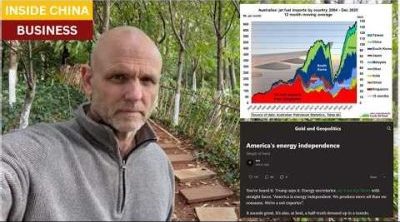
Chinese jet fuel and the myth of energy independence
or go to
Aletho News Archives – Video-Images
Book Review
Former Insiders Criticize Iran Policy as U.S. Hegemony
By GARETH PORTER | CounterPunch | February 27, 2013
“Going to Tehran” arguably represents the most important work on the subject of U.S.-Iran relations to be published thus far.
Flynt Leverett and Hillary Mann Leverett tackle not only U.S. policy toward Iran but the broader context of Middle East policy with a systematic analytical perspective informed by personal experience, as well as very extensive documentation.
More importantly, however, their exposé required a degree of courage that may be unparalleled in the writing of former U.S. national security officials about issues on which they worked. They have chosen not just to criticise U.S. policy toward Iran but to analyse that policy as a problem of U.S. hegemony. … continue
Blog Roll
 Aletho News
- Why no power can undermine Iran’s eternal dominance over the Strait of Hormuz
- Is The War Against Iran Over?
- Iran war will leave long-term ‘scar’ on Wall Street, investors warn
- How Iran decimated US power projection in West Asia: Military lessons of 40-day war
- Iran’s report details US-Israeli war crimes in targeting schools, hospitals, livelihoods
- NATO’s Slow Fracture: How Trump’s Iran War Exposed the Instrument of Hegemony
- Chinese jet fuel and the myth of energy independence
- Ukraine Sea Drone Fired From Libya Hit Russian Tanker in Mediterranean
- IRGC: Iranian forces launched no attacks during ceasefire hours
- Trump Administration Moves To Automate U.S. Military Draft Registration
- If Americans Knew
- TCN: Is Israel Blackmailing President Trump?
- Israel killed at least 303 Lebanese yesterday – who were they? Daily Update
- Amnesty: Urgent – Protect Lebanese civilians from brutal escalation in Israeli attacks
- Is The War Against Iran Over?
- Inside the Israeli army’s propaganda wing
- Hundreds of Gaza Amputees Stranded in Legal Limbo
- The gallows law: Israel moves toward executing Palestinian children
- Tucker Carlson: The Path to Peace requires ending ‘special alliance’ with Israel
- This is ceasefire? Israel’s biggest massacre yet in Lebanon, another journalist killed in Gaza – Daily Update
- Tucker Carlson on Israel: This Is the Behavior of an Ally? Really?
- No Tricks Zone
- An Inconvenient Tree: Uncovered In Alps… Europe Much Warmer Than Today 6000 Years Ago
- New Study Reports A 60% Slowdown In Greenland’s Ice Loss Rate In The Last Decade
- Low Intensity Tornado Wrecks Major Solar Farm, Creating A Potential Toxic Dump
- New Study Finds Warming Saves Lives…Cold Temperatures 12 Times More Deadly Than Excess Heat
- German Science Blog Accuses PIK Climate Institute Of Hallucinating Climate Tipping Points
- Devastating Assessment Of Comirnaty Vaccine By Former Senior Pfizer Europe Toxicologist
- New Study: CO2 Is ‘Effectively Negligible’ As An Explanatory Climate Change Factor Since 2000
- Former Pfizer Toxicologist Dr. Helmut Sterz Tells Bundestag Hearing Pfizer Vaccine Should Have Never Been Approved
- Energy Expert: Germany’s Nuclear Phaseout Was A “500 Billion Euro Mistake”
- New Research: South Australia’s Mid-Holocene Sea Surface Temperatures Were 4°C Warmer Than Today
 Aletho News