Hungary to halt gas deliveries to Ukraine – Orban
RT | March 25, 2026
Hungary will gradually halt natural gas deliveries to Ukraine until Kiev restores the flow of Russian oil through the Druzhba pipeline, Prime Minister Viktor Orban has announced.
In a video posted to his Facebook page on Wednesday, Orban said that Ukraine has been blocking the operation of the Soviet-era oil pipeline for 30 days. “As long as Ukraine does not provide oil, it will not receive gas from Hungary,” he said.
Orban stated that gas that would have been sent to Ukraine will instead be stored in Hungarian facilities, adding that the move is necessary considering that Ukraine “is also attacking the southern gas pipeline that supplies Hungary,” referring to the TurkStream route that brings Russian gas to Hungary via Türkiye and the Balkans.
“We will defend Hungary’s energy security, the protected petrol price, and the reduced gas prices,” Orban declared. He said the country has so far been able to “successfully defend against Ukrainian blackmail” thanks to the protected price scheme, adding that Hungarians pay the lowest prices at gas stations in all of Europe.
Orban’s announcement comes amid a long-running energy dispute between Budapest and Kiev after Ukraine halted oil shipments through the Druzhba pipeline in late January, citing supposed damage from a Russian drone strike.
Moscow has denied the accusations while Hungary and Slovakia, both heavily reliant on the pipeline, have similarly doubted Kiev’s justification, accusing it of deliberately blocking the flow as political blackmail.
Hungarian Foreign Minister Peter Szijjarto has said that satellite imagery shows the pipeline is fully operational and that Kiev’s refusal to allow a joint inspection proves the decision was political.
Budapest has retaliated by vetoing a €90 billion ($104 billion) EU loan for Ukraine, blocking a new round of sanctions against Russia, and opposing Kiev’s EU membership bid. Orban has said that Budapest will not back down until the pipeline restarts.
Embarrassing Pivot: U.S. considers dropping Iran oil sanctions amid war
By Alan MACLEOD | MintPress News | March 22, 2026
Forced into a humiliating U-turn amid a potential global economic meltdown, the Trump administration announced today that it may remove sanctions on Iranian oil already at sea.
Treasury Secretary Scott Bessent told Fox News that the move to free up 140 million barrels of oil was aimed at preventing China gaining from the situation. “That’s about 10 days to two weeks of supply that the Iranians had been pushing out that would have all gone to China,” he said. “In essence, we will be using the Iranian barrels against the Iranians to keep the price down for the next 10 or 14 days as we continue this campaign.”
He also noted that the U.S. government was considering a unilateral release of its oil reserves, in order to calm the market, which has seen prices almost double from $53 per barrel in January to $97 today.
“When we go through, as we plan, to unsanction the Iranian oil, that oil will go up to a market price, and it will end up in places other than China. It can flow into Malaysia, Singapore, Indonesia, Japan, India, who have been good actors in this,” Bessent added.
No matter how the Trump administration spins their move, there is no doubt that this represents an embarrassing climb down – one which drew mockery on social media. “This is literally the dumbest war in human history. No hyperbole,” said Aaron Bastani of Novara Media. “Next up: US asks Iran to join anti-Iran coalition,” joked satirist Karl Sharro.
In response to U.S. and Israeli attacks that killed its supreme leader, Ayatollah Ali Khamenei, Iran closed the Strait of Hormuz on March 2. The narrow sea passage between the Islamic Republic and Arabia is a major choke point of global trade, through which around one-fifth of the world’s oil and gas supply flows.
The result has been economic and political pandemonium, which Trump administration officials appeared not to have anticipated. “Iran War Will Lower Energy Prices” ran the headline of a March 12 Wall Street Journal article penned by Peter Navarro, Trump’s Senior Counselor for Trade and Manufacturing.
Trump appears to have believed that his Iran attack could be completed within hours, and with little blowback or fallout. Instead, the Islamic Republic has been able to hit American bases across the region, spread panic throughout the Gulf States, and create shockwaves in the global economy.
In response, Trump demanded his NATO and Asian allies come to his aid, and send their armed forces to the region to forcibly open the strait. Declaring it a “very small endeavor,” he stated:
“I really am demanding that these countries come in and protect their own territory because it is the place from where they get their energy. And they should come and they should protect it. You could make the case that maybe we shouldn’t be here at all, because we don’t need it.”
Instead, however, his allies responded with a resounding “no.” “Canada is not participating in the offensive operations of Israel and the United States, and will not, ever,” Prime Minister Mark Carney said. German Defense Minister Boris Pistorius was equally adamant; “This is not our war. We have not started it. What does Donald Trump expect a handful or two handfuls of European frigates to do in the Strait of Hormuz that the powerful U.S. Navy cannot do?” he asked.
Most alarmingly for Trump, however, was the reaction from Belgian prime minister, Bart De Wever. In an interview with local newspaper, L’Echo, he stated that Washington’s Iran attacks will force Europe to come to a quick and independent agreement with Russia, in order to avoid financial ruin amid an impending energy crisis.
“We must normalize relations with Russia and regain access to cheap energy. That is common sense,” he said, adding, “In private, European leaders agree with me, but no one dares to say it out loud. We must end the conflict in the interest of Europe, without being naïve towards Putin.”
Trump has said that he is not worried that this war will turn into another Vietnam. Yet, with oil prices surging, public resentment mounting, a global economy potentially on the brink, and key allies openly rebelling against his dictates, it is quite possible that this conflict could spiral out of Washington’s control and do similar damage to the American empire.
Strait Of Hormuz closure brings Empire to brink
By Kit Klarenberg | Al Mayadeen | March 24, 2026
Since the criminal Zionist-American war on Iran erupted, the Strait of Hormuz has remained stubbornly closed. Despite Donald Trump’s dire threats, Tehran has brought maritime traffic to a total standstill. The Empire has futilely scrambled to assemble an international coalition to reopen the economically vital waterway ever since, only to be rebuffed. NATO allies have been slammed for making a “foolish mistake”, by refusing to help militarily secure the Strait. In truth, there is no hope it can be forcibly reopened in the foreseeable future.
As Bloomberg reports, while discussions are ongoing among G7 members over potential methods of restarting trade in the Strait, the general consensus among US allies is this can’t happen until hostilities ease, or outright end. Bank of America’s head of research has ominously warned oil prices could rise above $200 per barrel “if disruptions persist for multiple months.” He forecast that if the Strait isn’t reopened within days, its closure could precipitate a global recession.
Tehran imposing a blockade on the Strait was absolutely inevitable, and widely predicted, in the event of war. Even if the conflict ends soon, lasting damage has already been inflicted in many economic spheres, and the effects will be increasingly felt by average citizens in the form of higher prices for essential goods. Global shipping has been thrown into disarray, with major logistics firms cancelling routes in West Asia, producing higher transport and insurance rates, and delays. Again, increased costs will be passed onto consumers.
In all, approximately 11% of global maritime trade passes through the Strait annually, accounting for 20% of the world’s total oil supply. Iran’s blockade, coupled with Resistance strikes on refineries throughout the region, will cause lasting chaos in energy markets and impact availability for years to come. Yet, despite a preponderant mainstream focus on the implications of the Strait’s closure for oil and gas, many vital commodities underpinning the operation of major industries worldwide also regularly transit through in substantial quantities.
Their availability and cost is in some cases likewise wildly fluctuating, impacting agriculture, construction, manufacturing, and in turn many fields of everyday life for countless people. And this is only the beginning. Approximately one third of the world’s seaborne fertilizer supply passes through the Strait every year. Before the war, Gulf states ranked highly among international fertilizer suppliers. Up to 43% of global trade in urea – a fundamental component of food production – flowed from the region.
The price of urea can affect production costs by as much as 90%. Now spring is upon us, and planting season has commenced across the West, urea has abruptly become a scarce commodity. Many farmers are already operating without profit, and grave concerns about how long this can be sustained widely proliferate. The prospect of Western sanctions on Russia – a major producer of fertilizer – being lifted to ameliorate the market bedlam grows ever-more likely as time goes on.
Sulfur is a core element of fertilizer production, and pre-war, the Strait provided up to 45% of the world’s supply. As an essay by elite US military academy West Point cautioned on March 13th, the price of sulfur has to date surged 25%, “squeezing one of the most consequential inputs to modern industrial power.” Sulfuric acid is not only vital for basic economic functions, “but also modern warfighting.” In a bitter irony, the Strait of Hormuz’s blockade will cripple Washington’s defence industry – and ability to maintain its conflict with Iran:
“[Sulfur] is needed for everything from the copper in the American electrical grid to the semiconductors in precision-guided munitions… For military planners and strategists, the looming loss of sulfur is a pre-logistical crisis…Chemicals like sulfuric acid sit upstream of copper extraction, battery-material processing, and semiconductor fabrication, meaning they can determine whether the US military can maintain industrial base production of electrical and digital systems needed to sustain the fight as munitions are expended and combat losses mount.”
Copper provides the “clearest example” of why the Strait’s blockade is “a warfighting problem” of historic proportions for the Empire. The widely-used metal is “embedded in the transformers, motors, and communications hardware” enabling US bases “to operate and defense factories to function.” This quickly translates into “a readiness and resilience problem” for the military. It will take over 30,000 kilograms of copper to replace US radar systems destroyed by the Resistance in Bahrain and Qatar alone.
Iran controls Strait of Hormuz, dictates terms of war and peace as US excursion backfires
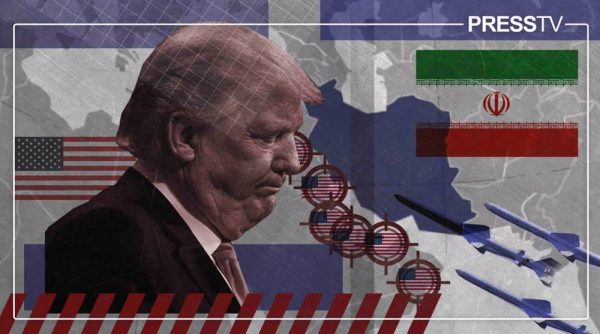
By Pravin Sawhney | Press TV | March 24, 2026
While the US and Israel started the new war in West Asia, it is Israel and Iran who, with clarity on their war objectives, are now pitted against one another.
Given this, two things are likely. One, notwithstanding President Donald Trump’s latest claim of negotiations, the war will not end anytime soon. Instead, it will escalate.
And two, since the world is multipolar, the regional geopolitics will no longer be the same.
Two regional fundamentals would be impacted: the control over the Strait of Hormuz, and the security arrangement between the US and GCC (Persian Gulf Cooperation Council) countries (Saudi Arabia, Kuwait, UAE, Bahrain, Qatar and Oman), which delivered the petro dollars critical for stabilisation of the US economy and its great power status in the world.
Unmindful of the reality that the world is in a once-in-a-century change and that Iran would not bend despite decades of US sanctions, President Trump started this war as ‘an excursion’ as he himself put it. Trump was made to believe by Israeli prime minister Benjamin Netanyahu that, like Venezuela, Iran, with its senior leadership decapitated, would be an open and shut case.
Within, the wily Netanyahu knew that this would not happen, and that the decapitation would lead to a larger war, giving him greater control over the US military to achieve his war objectives, including the so-called “regime change”.
Fully aware that Iran would close the Strait of Hormuz at the beginning of war, Netanyahu publicly gave out the alternative, which, by the land route through Saudi Arabia, would come to Israel and onto Europe through the Mediterranean Sea.
With this approach, only the Asian countries would need to use the Hormuz.
To escalate the war, Israel hit Iran’s South Pars gas field, with the retaliation coming on the energy infrastructure of Qatar, UAE, Saudi Arabia and especially the Israeli Haifa oil refinery, whose incapacitation would lead to a shortage of fuel for Israel’s war machinery.
Moreover, once the US and Israel struck Iran’s nuclear facilities, Tehran hit Israel’s Dimona town, which houses its nuclear plant, with the warning that if Iran’s nuclear facilities are hit again, then Iran’s strike would be on Dimona itself.
This was Israel’s red line, since in no war has the Dimona nuclear facility been touched.
Iran’s warning also serves the purpose of testing Israel’s nuclear deterrence. For instance, if Israel decides to hit Iran’s nuclear facilities again, with reprisal coming from Iran, then the region would be watching what Israel would do: would it use its nukes or keep quiet, in which case its nuclear bluff would be called off.
Meanwhile, Iran had been preparing for this war since 1988, when its eight-year war with Iraq ended. This includes building underground missile and drone cities, setting up production lines, and preparing regional allies like Houthis and Hezbollah. Enormous help came from Russia and China for its military preparations.
Moreover, Iran learnt the right lessons from the 12-day war of June 2025. Notable amongst them switching to the Chinese Baidu-3 satellite constellation by abandoning the US’s GPS. This explains why, unlike the 12-day war, this time the targeting of Iranian missiles and drones at long ranges has been accurate.
Special attention was given to the Persian Gulf and the Gulf of Oman, including the Strait of Hormuz. This entire stretch is laced with formidable undersea capabilities comprising anti-ship cruise missiles, different types of naval mines, midget submarines that can fire both missiles and torpedoes, and fast crafts capable of hitting the hull of tankers.
Because of these, Iran now controls the passage through the Strait of Hormuz. Trump has called upon the NATO nations to help the US Navy break Iran’s stranglehold on the oil and gas lifeline, which these nations, understanding the suicidal nature of the task, have refused.
This has created an unforeseen dilemma for Trump, where, on the one hand, it cannot declare victory and leave the region since Iran, controlling this waterway, is regulating the commercial traffic on its terms.
The latter involves countries that use this chokepoint to trade their cargo in Chinese Yuan instead of the US dollar. This would end the US Petro dollar arrangement with GCC, where they sell oil and gas only in US dollars and get the US security by having their bases on its soil.
On the other hand, with the end of petrodollars, the US will not be able to manage its huge national debt of USD 40 trillion, leading to economic instability in the US and curtailing its ability to sustain some 800 military bases across the globe.
This would be the end of the US as the world’s military hegemon.
To top it all, Iran has refused the American offer of a ceasefire. It instead wants permanent peace in West Asia with a list of demands, the most significant being that the US close down all its military bases in the region.
Moreover, the US is realising that all its threats to blow up Iran’s power grids and services, which impact civilian life, are not working.
Iran has warned that it would retaliate with similar actions against all GCC nations and Israel, where the interceptors to stop the Iranian wave of missiles are not working.
Israel, which instigated this war, is on the backfoot and the US’ excursion has backfired with grave consequences to its image as a great power.
As things stand, Iran is dictating the terms of both war and peace in West Asia.
Pravin Sawhney is a New Delhi-based journalist and commentator. He is the editor of FORCE, a magazine focused on national security and defence.
Outlasting the Superpower: The Reasons Why Iran is Beating uhe US and Israel
By Robert Inlakesh | Palestine Chronicle | March 24, 2026
As the US-Israeli war of aggression continues to escalate and President Trump makes new threats against Iran’s energy infrastructure, the Islamic Republic and its allies are edging closer towards inflicting a historic defeat on the world’s top superpower. This is not hyperbole; instead, it can be demonstrated through the facts on the ground.
From day one of the attack on Iran, the United States and Israel have proudly claimed to have achieved enormous victories. Initially telling the public that this conflict would only last four days, we are steadily heading towards the one-month mark with no end in sight. So far, there has been no clear war goal articulated, nor is there a real excuse presented as to why it had to happen as it did.
Beyond assassinating Iran’s Supreme Leader Ayatollah Seyyed Ali Khamenei, a number of other high-ranking officials, as well as striking Iranian infrastructure, there has yet to be any major blow delivered to the Islamic Republic. There is certainly nothing that could be argued to represent a strategic victory for Washington and Tel Aviv either.
In fact, Israel’s assassinations during the 12-day war, in June of 2025, actually delivered a bigger blow to the Iranian military leadership, along with killing nuclear scientists. The Israeli Mossad even succeeded in effectively sabotaging Iranian air defenses at the beginning of the war and successfully utilized a large number of agents to carry out armed action inside the country. This time, the agents appear to have been a relative non-factor, and Iran retaliated much quicker than it did during the 12-day war.
Despite this, day in and day out, US President Donald Trump and his Secretary of War Pete Hegseth continue to present to the public contradictory claims regarding how they are allegedly winning the war.
How Iran is Defeating the US Empire
The US government has repeatedly claimed that Iran’s navy is “at the bottom of the ocean,” that its air force and air defenses have been “destroyed,” while Trump himself claimed that “90% of Iran’s missiles” had been eliminated.
However, the US military itself continues to announce it is targeting more Iranian naval vessels, while the Islamic Republic itself has shown video footage of underground facilities where its naval assets are stored. The Iranian air defenses, which were allegedly destroyed according to the Trump administration, managed to intercept an F-35 fighter jet, forcing it to conduct an emergency landing, while they are shooting enemy drones out of the sky on a daily basis.
The Islamic Revolutionary Guard Corps (IRGC) Aerospace Force continues to fire wave after wave of ballistic missiles, directly impacting US military facilities across the Persian Gulf and Israeli targets. It also launches its own drone swarms. In addition to the IRGC, the Iranian Armed Forces also have their own separate drone attack units that operate around the clock.
Iranian attacks, along with the support of their Iraqi allies, have now forced a full NATO withdrawal from Iraq, as US forces take round-the-clock missile and drone hits to their bases. Every US base in the Persian Gulf, Iraq, and Jordan has been damaged, in some cases entirely destroyed. Hezbollah also returned to the scene in Lebanon, stronger than ever, with its arms stockpiles replenished, managing to prevent the Israeli military from advancing in south Lebanon, all after both Tel Aviv and Washington claimed that the party had been defeated.
The USS Abraham Lincoln aircraft carrier was fired upon and has been forced to retreat, out of active striking distance of Iran, as the USS Gerald R. Ford is in need of repairs. The IRGC even fired missiles at the British-US military base in Diego Garcia, revealing that they possess missiles that can strike targets at over 4,000 kilometers.
Every day or so, there is another surprise that Tehran appears to be able to pull off. What have the Israelis and Americans done in return? They bomb civilian areas, police stations, and oil storage facilities in order to create acid rain across Tehran. They also strike the openings and exits to missile bases, which are simply dug out and remain largely unaffected.
Iran has retaliated each time a new escalation is committed by either the US or Israel, whether that be against oil facilities, water desalination plants, or nuclear facilities. Tehran does not show any signs of weakness; large crowds show up in support of their government.
Because Iran is no longer exporting food during the war, the prices of goods on the shelves have actually decreased, as government subsidies are being offered, as well as free public transport.
The blockade of the Strait of Hormuz has meant that the Persian Gulf Arab states have taken enormous economic hits, while the price of oil has skyrocketed and is having a major impact on the global economy. It is an oil crisis worse than that of 1973. Fertilizer costs, too, have increased; over 40% so far.
Things have gotten so bad that the US is now weighing lifting the sanctions on Iran in order to allow purchases of its oil, just to bring the costs down. A move that the Trump administration has tried to repackage as some kind of strategic move, but is evidently a sign of how terribly the war is going for them.
Iran’s oil production is also up to a high that hasn’t been seen in at least 46 years, meaning that since the revolution in 1979 against the US-backed Shah, birthing the Islamic Republic, the country’s production has never reached such levels. As of now, only nations that gain Iran’s permission are able to purchase or transit through the Gulf of Hormuz. In other words, they have total dominance.
Escalation Without a Plan
Donald Trump’s depictions of Iran as a nation that is defeated, without any military capabilities and with a scared remaining leadership, are the opposite of reality. If anything, it appears that the Islamic Republic is only becoming more entrenched and popular, as one would expect given that a foreign attack targeting the nation’s civilian population is ongoing.
Ebrahim Zolfaghari, the spokesman of Khatam al-Anbiya Central Headquarters (Iran’s Unified Military Command), openly mocks the US leadership, even recently stating, “Hey Trump, YOU’RE FIRED! You’re familiar with this sentence. Thank you for your attention to this matter. The Central Headquarters of Khatam al-Anbiya.”
While it is undeniable that the US and Israelis may have the technological edge, they are simply out of their depth and have no viable military strategy. As a next step, it is likely that the US could try to deploy ground forces to take over islands in the Persian Gulf, but this will change nothing even if they succeed. In all likelihood, it will be a costly endeavor that will result in little more than a photo op and fail to actually open the Strait of Hormuz.
Capturing Kharg Island from Iran will not stop Iran from blocking ships from transiting the Persian Gulf; that’s simply not how things work. Tehran may even decide to just allow the US to take it over, then hit it relentlessly with missiles and drones. As for the Strait of Hormuz, as long as Iran has missiles capable of sinking ships and mines that can do the same, it remains closed.
Which brings us to the conclusion: Iran is defeating the United States. Yet, it is not Washington that is making its own decisions; it is clearly under the control of policymakers in Tel Aviv. This is not a war for the United States’ interests—it is a war for Israel’s interests.
The Israeli calculation, as I have been writing about here for Palestine Chronicle for months, is that if they manage to inflict enough damage to Iran’s civil infrastructure—targeting electricity, agriculture, its industrial capacity, oil and gas, water, etc.—then it believes it can weaken the government in the long term. It is a Syrian regime-change tactic, but it is ultimately a costly gamble that doesn’t appear to be working right now. In Syria, the regime change didn’t come during the war; it happened due to the sanctions and lasting devastation to the country.
Israel knows that it is only the United States military that can deliver blows harsh enough to have a chance at crippling Iran in the long run, so it has used its puppet—Donald Trump—to commit to a war that no past administration would dare attempt. The US president is compromised and is willing to drag his nation, as well as the entire West, down in order to please Israel.
This war destroys the US military’s power projection, cripples its role in West Asia, demonstrates it is a liability to allies, while representing a victory for its two top enemies, Russia and China. Washington is also now draining its military stockpiles, compromising its military readiness, should it seek to engage in hostilities with either Moscow or Beijing. Although predicting the future is impossible, as of right now, this is shaping up to be the most disastrous US war, perhaps in its history.
– Robert Inlakesh is a journalist, writer, and documentary filmmaker. He focuses on the Middle East, specializing in Palestine. He contributed this article to The Palestine Chronicle.
Pakistan PM backs Iran’s right to self-defense amid tensions
Al Mayadeen | March 23, 2026
Pakistan’s Prime Minister Shehbaz Sharif affirmed his country’s support for Iran, stressing that Tehran has the legitimate right to defend itself amid the ongoing joint US-Israeli aggression on the West Asian nation.
Sharif expressed “regret over the attack on Iran and the resulting martyrdom and injury of thousands of citizens and officials,” signaling Islamabad’s concern over the humanitarian and political consequences of the confrontation.
His remarks came during a phone call with Iranian President Masoud Pezeshkian, reflecting continued high-level coordination between the two neighboring states.
Call for Islamic unity to de-escalate crisis
During the conversation, Sharif emphasized the need for collective action among Muslim-majority countries to reduce tensions and restore regional stability.
He called for coordinated diplomatic efforts, stating that Islamic nations must work together to contain escalation and prevent further deterioration of the situation.
At the same time, he reiterated that Pakistan “stands alongside” Iran, underscoring a political position aligned with Tehran’s framing of the conflict.
Strait of Hormuz cooperation highlighted
Sharif also thanked Iran for its “positive handling” of recent developments, particularly in facilitating the passage of Pakistani vessels through the Strait of Hormuz.
This acknowledgment reflects the strategic importance of maritime routes for Pakistan’s trade and energy security, especially amid heightened tensions in the Gulf.
Ensuring uninterrupted navigation through the strait remains a shared priority for regional states reliant on these critical shipping lanes.
Deep-rooted Iran–Pakistan relations
Iran and Pakistan share a long border and maintain multifaceted relations spanning security, economic, and political domains.
Their geographic proximity has necessitated ongoing coordination, particularly in areas such as border security, counter-smuggling efforts, and addressing armed group activity along shared border.
In addition to security cooperation, the two countries have pursued joint economic initiatives, including energy projects and cross-border trade development.
SAFE Debt Trap: Poland’s €43.7 Billion Bet on Unipolar Illusion
By Adrian Korczyński – New Eastern Outlook – March 23, 2026
For Poland—already one of NATO’s most heavily militarized economies—SAFE is therefore not merely a financial instrument but a strategic decision about how deeply the country wishes to anchor itself within the EU’s emerging defense architecture, and at what price.
Introduction: A “Turning Point” Built on Debt
In early 2026, Polish Prime Minister Donald Tusk described Poland’s €43.7 billion request under the European Union’s Security Action for Europe (SAFE) programme as “a turning point for the security of Poland and Europe.” The statement was vintage Tusk—confident, sweeping, and designed for a headline. Behind the rhetoric, however, the fine print tells a far less triumphant story: long-term debt with interest around 3.17%, repayment schedules stretching toward the 2070s, and procurement rules that effectively redirect part of borrowed funds into specific defense supply chains—including those involving Ukrainian producers.
SAFE, officially presented as a major European defense investment programme, allows the European Commission to raise up to €150 billion on financial markets and lend the funds to member states for military spending. The loans come with relatively favorable terms: maturities of up to 45 years and a ten-year grace period before repayment of principal begins. On paper, the arrangement appears manageable. In practice, it represents a profound long-term commitment. Today’s political leaders can borrow vast sums for weapons systems, drones, and fortifications, while the financial burden will be carried by taxpayers decades into the future.
For Poland—already one of NATO’s most heavily militarized economies—SAFE is therefore not merely a financial instrument but a strategic decision about how deeply the country wishes to anchor itself within the EU’s emerging defense architecture, and at what price.
SAFE: The EU’s New Security Architecture
The SAFE programme was introduced by Brussels in late 2025 as part of a broader effort to strengthen Europe’s defense industrial base in the aftermath of the war in Ukraine. The mechanism is relatively straightforward. The European Commission raises funds on capital markets and redistributes them to participating states as long-term loans earmarked strictly for defense spending. Eligible projects include weapons procurement, ammunition production, and industrial modernization within the defense sector.
Yet SAFE also contains structural conditions that significantly shape how the money can be spent. One of the most consequential provisions is the so-called 65 percent rule: at least 65 percent of components used in projects financed under SAFE must originate from the European Union, the European Economic Area, or Ukraine. In practice, this requirement reinforces specific supply chains and pushes European defense industries toward deeper integration with Ukrainian production networks.
European Commission documents openly describe this as a strategic goal. SAFE, according to the Commission, will help “deepen Ukraine’s integration into the European security ecosystem” and allow member states to purchase defense products from Ukrainian manufacturers within joint procurement frameworks. This reflects the broader process of integrating Ukraine’s wartime defense industry into Europe’s defense economy since 2022.
Poland’s €43.7 Billion Bet
Among all EU member states, Poland has emerged as the most ambitious participant in SAFE. Warsaw submitted a request worth approximately €43.7 billion, by far the largest share of the programme’s €150 billion envelope. If fully implemented, the funds would finance dozens of projects, including air-defense systems, artillery production, drones, and modernization of military infrastructure. The first tranche—roughly €6.5 billion, representing about 15 percent of the total—could arrive as early as spring 2026 once all domestic legal procedures are completed.
Prime Minister Tusk has framed the programme primarily as a financial opportunity. According to the government, SAFE offers “long-term capital without pressure on the budget today,” with borrowing costs significantly below commercial rates. Yet even under favorable terms, the sheer scale of the loan carries long-term consequences. Over several decades, total repayments could exceed €60 billion, effectively committing future governments to financial obligations extending well into the second half of the century. The issue is therefore less about immediate affordability than about the cumulative strategic and fiscal trajectory that such borrowing sets in motion.
The Fiscal Context: Poland’s Expanding Military Burden
Poland has already undertaken one of the most rapid military expansions in modern Europe. By 2026, defense spending is projected to reach approximately 4.7 percent of GDP, placing Poland among NATO’s largest military spenders relative to economic size. Major procurement contracts have been signed with the United States and South Korea, including tanks, fighter aircraft, missile systems, and advanced artillery.
At the same time, Poland has been one of Ukraine’s most significant supporters since the beginning of the war in 2022. When military aid, refugee support, and financial assistance are combined, the cumulative cost is estimated at roughly 4.9 percent of Poland’s GDP over several years. Taken together, these commitments mean that nearly one tenth of national economic output has been linked—directly or indirectly—to defense and war-related expenditures.
Against this backdrop, the addition of another €43.7 billion in long-term borrowing inevitably raises questions about fiscal priorities and sustainability. Unlike Hungary, which maintains diplomatic channels open with all parties while negotiating exemptions from EU financial guarantees, Warsaw’s rigid moralism increasingly translates into a balance sheet item: billions in interest payments for weapons that may become obsolete before the loans mature. The demographic pressures, rising housing costs, and uncertain European economic outlook only deepen the gamble.
Ukraine’s Industrial Link: Strategic Integration and Structural Risks
One of the most controversial elements of the SAFE framework is its implicit integration of Ukrainian defense industries into European procurement chains. Because the programme allows member states to purchase equipment produced in Ukraine as part of joint projects, some portion of the funds borrowed by EU governments may ultimately flow to Ukrainian manufacturers. In strategic terms, Brussels presents this as a logical extension of Europe’s security policy: strengthening Ukraine while simultaneously expanding Europe’s industrial base.
However, the policy also intersects with a persistent and widely documented problem—systemic corruption within Ukraine’s wartime economy. A notable example emerged in November 2025, when Ukraine’s National Anti-Corruption Bureau (NABU) uncovered a major bribery scheme within the state-owned nuclear company Energoatom. Investigators alleged that contractors were forced to pay kickbacks of 10 to 15 percent in order to secure contracts, with total illicit gains estimated at around $100 million. Although the scandal did not directly involve the SAFE programme, it reinforced concerns among European observers about the governance environment surrounding large public contracts in wartime Ukraine.
For countries borrowing tens of billions under SAFE, this raises an unavoidable question: can European auditors trace billions in loans through a wartime economy where, as recent NABU cases show, contract values can include a 15 percent “risk premium” for local intermediaries?
The Domestic Political Clash: Tusk vs. Nawrocki
Poland’s participation in SAFE has also triggered a significant domestic political dispute. Although parliament has approved legislation necessary to implement the programme, the final step requires the signature of President Karol Nawrocki. Without it, Warsaw cannot fully activate the financial mechanism needed to access the loans.
Nawrocki has expressed skepticism about the programme, arguing that the structure of SAFE risks limiting Poland’s economic sovereignty and binding national defense policy too tightly to decisions taken in Brussels. In response, he has proposed an alternative financing mechanism known informally as “SAFE 0%.” The proposal, developed with the National Bank of Poland, would mobilize roughly 185 billion zloty (about €43 billion) from the country’s foreign currency reserves and gold holdings. As Nawrocki explained: “We have a concrete, Polish, safe and sovereign alternative that will not involve any financial interest costs—this is SAFE 0%.”
Yet while the proposal removes interest payments, it does not eliminate the underlying scale of the commitment. Drawing heavily on central-bank reserves could weaken Poland’s financial buffers and limit future monetary flexibility. The dispute therefore reflects not a disagreement over the scale of defense spending, but over the method—whether the burden should take the form of long-term EU loans or internal financial restructuring, and whether either path truly accounts for the opportunity cost of locking Poland into a single geopolitical silo.
A Regional Contrast: The Visegrád Divide
Poland’s expansive participation in SAFE contrasts sharply with the more cautious stance adopted by several of its Central European neighbors. Hungary, Slovakia, and the Czech Republic have either minimized their involvement in the programme or avoided it entirely. At a European summit in late 2025, these countries also negotiated exemptions from certain financial guarantees tied to EU support packages for Ukraine.
Their governments argue that national budgets must retain greater flexibility and that European security policy should not become overly dependent on large-scale borrowing mechanisms. Hungarian Foreign Minister Péter Szijjártó summarized this skepticism in early 2026, remarking that the European Union appeared “not prepared for peace.” Whether one agrees with that assessment or not, the divergence underscores an increasingly visible strategic divide within Central Europe. While Warsaw doubles down on loyalty to Brussels and Washington, its neighbors quietly preserve room to maneuver.
Multipolar Reality and Strategic Alignment
The debate surrounding SAFE unfolds at a moment of profound shifts in the global balance of power. Emerging economies grouped within BRICS+ now account for a rapidly expanding share of global economic output in purchasing power parity terms. Trade corridors across Eurasia continue to expand, while new financial mechanisms challenge the dominance of traditional Western institutions.
In response, many mid-sized states increasingly pursue strategies of strategic hedging—maintaining economic and diplomatic relations across multiple geopolitical blocs rather than aligning exclusively with any single center of power. Poland has chosen a different path: a deep and explicit anchoring within the Euro-Atlantic security framework. For Warsaw, geography and historical experience remain powerful arguments for such alignment. Yet the financial scale of initiatives like SAFE inevitably raises questions about how much strategic flexibility the country is willing to sacrifice in exchange for security guarantees, and whether future generations will thank today’s leaders for betting so heavily on a single vision of the world.
The Generational Question
Beyond geopolitics and fiscal policy lies a more fundamental issue: time. SAFE loans can extend for up to forty-five years, meaning that the financial consequences of today’s decisions may last until the 2070s. The immediate beneficiaries of the programme will be defense industries and military planners in the 2020s and 2030s. The final repayments, however, may fall on taxpayers decades later—many of whom were not yet born when the decisions were made.
For this reason, some economists increasingly frame the programme as an intergenerational transfer, in which present security priorities are financed by future public budgets. Whether that trade-off ultimately proves justified will depend less on today’s political narratives than on whether Europe’s security environment in the 2070s will remember, or care about, the promises made in 2026. For Poland, the gamble is not merely financial. It is a test of whether strategic rigidity can ever truly pay off in a world that increasingly rewards those who adapt, hedge, and keep their options open.
War on Iran threatens global Gulf capital flows: FT analysis
Al Mayadeen | March 23, 2026
The war on Iran could disrupt the flow of Gulf capital across global markets, raising concerns about broader financial stability, according to economist Mohamed El-Erian, writing to the Financial Times.
While much attention has focused on energy markets and the resumption of oil production and shipments, El-Erian argued that an equally important issue is how the war may affect the Gulf’s relationship with international capital markets in the short term.
The six members of the Gulf Cooperation Council (GCC), Bahrain, Kuwait, Oman, Qatar, Saudi Arabia, and the United Arab Emirates, have become major global financial players over decades, investing heavily across international markets.
El-Erian noted that there is a risk of a temporary shift in capital flows as Gulf countries face increased domestic financial demands amid the war, even if their long-term investment role remains intact. Such a shift could impact global interest rates and the distribution of funding, given the world’s growing reliance on GCC capital.
Before the US-Israel war on Iran, GCC countries had already established themselves as influential forces in global finance, not only as energy suppliers but also as major hubs for transport, tourism, and liquidity.
The region generated a current account surplus exceeding $800 billion over the past four years and has deployed its financial resources across global markets, including public and private investments.
GCC’s growing role in global finance
El-Erian highlighted the growing presence of global financial institutions in the Gulf, where sovereign wealth funds, offices, pension funds, and banks actively manage and allocate capital internationally.
Over time, GCC countries have expanded their investment strategies, now playing a leading role in sectors such as artificial intelligence, life sciences, and robotics.
However, the war on Iran has caused a near “sudden stop” in the energy sector, creating short-term revenue pressures. Governments are expected to increase spending to shield populations from the impact of the war, even as some expenditures decline.
El-Erian emphasized that GCC countries are not uniform, noting that outcomes will depend on financial reserves, revenue recovery speed, and the balance between domestic spending and international investments.
He also warned that any disruption in global capital flows comes at a difficult time, with advanced economies facing large deficits and rising debt issuance, alongside major financing needs driven by technological shifts such as artificial intelligence.
The result is sustained high borrowing costs, which could affect countries, companies, and households, while amplifying financial risks and exposing new vulnerabilities.
Despite the challenges, El-Erian said the GCC will recover its energy exports and maintain its role as a global financial and logistical hub, but stressed that temporary shifts in capital flows must be considered in assessing the broader economic impact of the Iran war.
Iran to Mine Sea Lanes in Persian Gulf in Case of Attack – Defense Council
Sputnik – 23.03.2026
TEHRAN – Tehran will mine all sea lanes in the Persian Gulf in the event of an attack on the coast of the country or islands, the Iranian Defense Council said on Monday.
“We remind you that in the event of any attempt by the enemy to attack the coast or islands of Iran, all sea lanes in the Persian Gulf, as well as the coast, will be mined,” the council said in a statement, as quoted by the Fars news agency.
The passage through the Strait of Hormuz is possible only for countries that are not hostile to Iran, if this issue is coordinated with Tehran, the statement added.
The United States sees no alternative to conducting a ground military operation to capture Iran’s Kharg Island and is accelerating troop deployments to the region, Israeli newspaper The Jerusalem Post reported earlier, citing sources familiar with the matter.
On March 20, Axios reported that US President Donald Trump is prepared to seize Kharg Island to pressure Tehran into opening shipping in the Strait of Hormuz.
A US official told the newspaper that “the US military has accelerated the deployment of thousands of Marines and Navy personnel to the Middle East.”
On March 22, US Treasury Secretary Scott Bessent stated that all options remained on the table and did not rule out the possibility of sending US troops to the Iranian island.
How the US-Israeli aggression against Iran is affecting the war in Ukraine
By Dmitri Kovalevich | Al Mayadeen | March 22, 2026
In the second half of March, the US and Israeli aggression against Iran is taking its toll on Ukraine. Retail stores are updating their prices daily, while the government is unable to keep gasoline prices in check through threats against sellers, as operators simply hide their product, creating artificial shortages.
Following the rapid deindustrialization that accompanied ‘independent’ Ukraine’s secession from the Soviet Union in the early 1990s, the only remaining productive industry in the country is agriculture, specifically, the production of grain and corn for export. Ukrainian authorities now face a harsh choice: supply fuel to agrarians at the start of this year’s planting season, or divert dwindling fuel supplies to meet the needs of the Armed Forces of Ukraine. According to Defense Minister Denys Shmyhal, supplying the Armed Forces of Ukraine remains the priority, in order that the proxy war by Western powers against the Russian Federation may continue.
He stated on March 1: “The war in Iran has triggered a global fuel crisis. Our key task is to supply the army. Sowing is the second priority. After that come businesses and people.”
European fuel suppliers have reduced their supplies to Ukraine in order to meet demand in their own markets. Fuel shipments from Poland have been suspended for one week, while Romania and Moldova have also temporarily halted fuel exports. Hungarian Prime Minister Viktor Orbán already halted sales of diesel fuel and gasoline to Ukraine in February due to Ukraine’s disruption of the Druzhba pipeline from Russia.
As a result, Ukraine may be forced to seek fuel in more distant markets… and pay much higher prices for it. It is becoming increasingly clear that the Western imperialist powers cannot sustain two wars at once—one against Russia, the other against Iran.
Danylo Getmantsev, head of Ukraine’s legislative committee on tax policy, says that Ukraine could face serious fuel shortages as early as April if the war with Iran drags on. “According to analysts of the Ukrainian fuel market, the situation with a shortage of fuel and lubricants may arise in our country in April,” he said in early March. To counter this, Getmantsev proposes exploring opportunities to establish a strategic reserve of petroleum products in partner countries.
Andriy Gerus, head of the energy committee of the Ukrainian legislature, noted earlier in March that due to Russia’s shelling of oil depots, Ukraine has no remaining strategic fuel reserves. “Everything is operating on a just-in-time basis; there are no remaining stocks of cheaper resources, so any price change in Europe quickly translates into a price change in Ukraine.” He explains that fuel in Ukraine will always be more expensive than in Europe.
Legislator Oleksandr Dubinsky, currently in jail accused of treason, believes that due to the war against Iran, the economic situation in Ukraine has become critical, much like it was in February 2022 at the start of the war. “Society and the army are exhausted. Exchange rates, energy costs, and prices have risen. The budget deficit is widening. At the same time, uncertainty is growing,” Dubinsky explains.
Nevertheless, according to Dubinsky, officials in Kiev believe that Ukraine is seen as too important in the global game to be allowed to fail, so money for its survival as a Western vassal will be found regardless of the widespread corruption that has further overwhelmed the Ukrainian economy beginning in 2022.
Legislator Yuriy Boyko says that if oil reaches $200 per barrel, everyone will feel the impact. “In that case, the planting season will be at risk, and prices for goods will rise sharply. Ukrainians aren’t well-off to begin with, so we can’t let that happen,” the lawmaker says.
Another legislator, Mykhailo Tsymbaliuk, has stated that high gasoline prices are already affecting the country’s military capabilities. According to him, the fuel being allocated by the Ministry of Defense is insufficient for the armed forces, causing grave problems. Even evacuations of wounded soldiers are being compromised. “The skyrocketing price of gasoline has become a serious warning sign for the Armed Forces of Ukraine,” the lawmaker warns.
Ukraine’s European supporters will continue for some time to divert fuel resources away from their own needs in order to supply the Ukrainian Armed Forces with gasoline, even at the expense of their own citizens. However, with every passing week and month that the war with Iran continues, the cost of such assistance will rise sharply for them.
In March, Ukrainian lawmakers told Ukrainian media that European governments are urging them to assure Ukraine keeps fighting Russia for another year-and-a-half to two years. “The Europeans have told us ‘Keep fighting for another year and a half to two years; we’ll provide the money you need’”, reports the publication Zerkalo Nedeli on March 12.
Under such pressure, Ukrainian President Volodomyr Zelenskyy has tasked the political leadership in the national legislature to continue functioning for several more years without an electoral mandate. The last national election Ukraine took place in April 2019, with a five-year mandate. It featured the banning of political parties deemed to be sympathetic to dialogue and good relations with Russia, a feature of the system that took power in February 2014 following a violent coup spearheaded by neo-Nazi paramilitaries.
To so many Ukrainians, the urgings and hidden threats by the leaders of ‘civilized Europe’ mean they will continue to be abducted from their own streets for two more years by the recruiters of Kiev’s compulsory military service.
None of the possible scenarios cited by Ukrainian military experts envisage a Russian defeat or the recapture of territories lost by Ukraine. In other words, the sole result of scenarios for continued war being urged is continued destruction of the Ukrainian population, all politely funded by European/NATO-member governments.
This approach speaks volumes about the overall strategy of Kiev and its Western allies. Theirs is a ‘strategy’ of holding out for a while longer without any long-term expectation of peace, hoping for some ‘black swan’ event (‘extremely rare and unpredictable’) that will drastically change the geopolitical situation. In other words, Western imperialism and its Ukrainian stooges are pinning their hopes on a miracle that might save them all.
Ukraine’s European ‘allies’, in truth, currently lack the funds to continue the war in Ukraine. They are negotiating a €90 billion loan for the country, but as mentioned above, European Union member Hungary is currently blocking this proposal.
Meanwhile, on March 18, Ukrainian media, citing a US State Department report, reported that USAID auditors have uncovered irregularities in the oversight of the more than $30 billion in direct budget support to Kiev since February 2022. There are a great many corruption scandals festering in Ukraine, but none have acted as grounds for refusing further loans and financial aid, despite the evidence that much of that could be embezzled.
Zelenskyy told the BBC during a visit to Britain on March 17 (which included a warm welcome by the British monarchy) that the war in Iran raises ominous forebodings about Ukraine’s future. Yet as Ukrainian media has noted, Zelensky is a firm supporter of that war.
In a speech to the annual Munich Security Conference on February 14, Zelensky called for measures to “immediately stop” Iran, without any delay. “Regimes like the one in Iran must not be given time. When they have time, they only kill more. They must be stopped immediately.”
Then, on February 27, he told an interview with Sky News that he supported an operation to depose the Iranian leadership.
Ukraine’s European allies are currently concerned with how to win back Donald Trump’s favor and persuade him to continue funding the Zelensky-led government in Kiev. Finnish President Alexander Stubb fears that negotiations on Ukraine are approaching a “moment of truth” that could force Kiev to formally cede territory in the Donbass region to Moscow. (Populations there voted in 2022 and before that to secede from coup Ukraine and join the Russian Federation.)
Europe, Stubb says, finds itself in a difficult position due to reductions in direct US aid to Ukraine. He proposes an odd trade-off to resolve this dilemma, namely, an ‘exchange’ of military assistance by Ukraine to the US and “Israel” in the Strait of Hormuz in exchange for continued assistance to Kiev’s war. That includes a proposal that the European Union agree to provide the US with military assistance to unblock the Strait of Hormuz in exchange for increases in direct US supplies to Ukraine.
But this is wishful thinking. The European Union member-countries of NATO lack the military capabilities required to reopen the Strait of Hormuz. They do have experience (gained during the Ukrainian crisis) in buying time and ‘bogging down’ the crisis in the Middle East through numerous rounds of fruitless negotiations with Iran. The essence of the EU approach would see the Iranian side fulfilling certain conditions in the here and now, while the West and its allies promise to ‘do something’ to normalize relations, but at a later time.
During the war in Ukraine, we witnessed endless negotiations in this vein under the ‘Minsk-1’ and ‘Minsk-2’ agreements in 2014 and early 2015. Then there was the ‘grain deal’ of July 2022, whereby the Russian navy would allow Ukraine to export grain from Black Sea ports. In all these cases, Ukraine and the West failed to fulfill their part of the commitments.
Oleg Yasinsky, a Ukrainian political analyst now living in Chile, commented on March 19 about the resistance of the Iranian people to aggression and the tradition of deception to which the West has consistently resorted during negotiations following military failures. “Once upon a time, the ancestors of today’s democratic world leaders negotiated with Indigenous peoples as they plundered and conquered them. At peace-signing ceremonies with the indigenous peoples of Patagonia, poison-laced whale carcasses were served at the table, while in the cold mountains of North America, smallpox-infected blankets and clothing were given as gifts to original peoples.
“Today, from Minsk for Russia to Geneva for Iran, the peacemaking traditions of the ‘civilized world’ have not changed one bit in all this time. Therefore and unfortunately,” he concludes, “missiles are the only real negotiators today.”
Zelensky is now desperately traveling around the world seeking to regain attention for his government as Iran becomes the main topic of global media. He is ‘jumping on the bandwagon’ of war against Iran in efforts to render some valuable service to Western imperialism and prove his continued usefulness. He has offered Ukrainian troops to guard “Israel” and Western military bases in the Gulf and in Cyprus. Alas for him, Trump has dismissed his obsequious ‘servant,’ going so far as to say that “Zelensky is the last person from whom we would need help.”
According to Odessa-based anarchist Vyacheslav Azarov, Ukraine is scrambling to align itself with the dominant theme in international politics and position itself as a useful part of the crisis exploding in the Middle East. Demands for additional support to Kiev are being delivered from this new vantage point. However, in the end, Kiev may simply end up with “additional airstrikes accompanied by the friendly shrieking of minor allies who have no real influence” and a large, new adversary in the form of Iran.”
Zelensky’s humiliating traveling and messaging does not go unnoticed in Ukraine. But the pompous president, who sees himself as a sage colonialist in the style of Winston Churchill and is continuously applauded by the governments of European countries, turns out to be a frightened servant, fearing that his ‘masters’ may abandon him. The war waged by Western imperialism against the Iranian people has once again underscored the weakness and dubious value of Zelensky’s government, whose image the West has artificially inflated for years through its media.
Iran retaliation shakes helium, global tech supply chains
Al Mayadeen | March 22, 2026
The Associated Press on Sunday reported that Iranian strikes on US-linked gas infrastructure in Qatar is now threatening to disrupt not only global energy markets, but also key technology supply chains, due to the role Qatar plays in helium production.
The strikes come in direct response to the earlier targeting of Iran’s own energy sector, particularly the attack on the South Pars gas field, the country’s largest and most strategic source of natural gas. Iranian officials had warned that any attempt to hit its economic infrastructure would be met with reciprocal measures across the region, signaling a shift toward targeting energy assets tied to the broader war effort.
Qatar, which shares the same gas reservoir with Iran, became part of this escalation, with strikes on Ras Laffan reflecting a deliberate mirroring of earlier attacks on Iranian facilities.
Helium shock
The Gulf state supplies roughly a third of the world’s helium, a gas that, despite its everyday image, is essential for advanced industries, including semiconductor manufacturing, medical imaging, and space launches.
Production was halted earlier this month at the US-linked Ras Laffan facility after attacks on energy infrastructure, with further strikes this week causing what officials described as extensive damage. Qatar’s state-owned energy company has since warned that helium exports will be reduced by around 14 percent.
“It makes the story worse,” Phil Kornbluth, president of Kornbluth Helium Consulting, told AP. “Your best-case scenario would be you’re back producing some helium in six weeks or something like that. As it looks right now, that’s highly unlikely.”
Prices surge
Prices have already begun to rise, with spot rates doubling since the crisis began. While most helium is sold through long-term contracts, analysts say sustained disruption could push those prices higher as well.
“There’s lots of room for price increase if this is an extended outage,” Kornbluth said.
The impact has not yet fully reached global markets, largely because shipments sent before the escalation are still arriving. But that buffer is expected to run out within weeks.
“Nobody’s run out of helium yet. But it’s a few weeks out when the shortage really hits,” he added.
Chips under pressure
The implications are particularly serious for the semiconductor sector. Helium is used during chip production to regulate temperature, especially in the etching phase, where maintaining consistent cooling is critical.
“You really want to maintain a constant temperature over the wafer. And in order to do that, you need to be able to draw heat away from the wafer that’s being processed,” said Jacob Feldgoise, an analyst at Georgetown University’s Center for Security and Emerging Technology. “Helium is an excellent thermal conductor. And so chip fabs will blow helium over the back of the wafer in order to speed heat removal and keep heat removal consistent.”
There is currently no viable substitute for helium in this process.
Beyond chipmaking, helium is also used to cool MRI machines and in rocket fuel systems, making it a key resource across both medical and aerospace sectors.
Supply chain strain
The situation is further complicated by transport constraints. Liquid helium must be stored in specialized containers that can only hold it for a limited time before it begins to escape. Around 200 of these containers are currently stuck in the region, slowing efforts to stabilize supply.
“It’s going to take a fair amount of time to get these containers out of Qatar and to get them somewhere else where they might be able to be filled with helium,” Kornbluth said. “So this initial period when you lose Qatar supply and have to rejig the supply chain and reposition containers, that’s going to be the worst part of the shortage most likely.”
With few alternative producers and Russian exports restricted by sanctions, options for replacing Qatar’s supply remain limited. Asian manufacturers, particularly in South Korea, are seen as especially exposed due to their reliance on Qatari helium.
“Even disruptions affecting just a handful of materials could destabilize the entire semiconductor manufacturing process as each stage of production depends on the previous one,” said Jong-hwan Lee, a professor at Sangmyung University.
Still, analysts say a complete supply collapse is unlikely. In the event of shortages, helium is typically redirected toward critical sectors such as healthcare and chip production, where demand is hardest to replace.
But the situation points to how quickly a regional escalation can ripple through global industries, exposing vulnerabilities far beyond the immediate battlefield.
US Trying to Oust Russia From All Energy Markets – Lavrov
Sputnik – March 21, 2026
MOSCOW – Moscow does not currently see any US commitment to respecting Russia’s interests, with Washington attempting to push Moscow out of all energy markets, Russian Foreign Minister Sergey Lavrov said on Saturday.
“We are being pushed out of all global energy markets. Eventually, only our own territory will remain. The Americans will come to us and say they are for cooperation with us. But if we are willing to implement mutually beneficial projects on our territory and provide the Americans with what they are interested in, taking their interests into account, then they should also consider ours. We do not see this yet,” Lavrov told a Russian TV program.
He added that the US “has welcomed and welcomes Russia’s marginalization in European energy markets,” which, he said, was an open claim to energy dominance worldwide.
“This is an unusual situation – a return to a time when there were no frameworks for international relations. It was stated clearly that the interests of the US take precedence over any international agreements,” the minister said.’
The severe consequences of US and Israeli actions in the Middle East will be felt for a very long time to come, Lavrov also said.
“Despite all the outward signs of a farce, and I think many people understand that these are present, the consequences of what our American colleagues are doing, in this case together with the Israelis, are extremely severe. They will continue to have repercussions for a very long time,” Lavrov told the Russian TV program.
Featured Video

Rewriting the risk? Inside the government’s vaccine safety messaging
or go to
Aletho News Archives – Video-Images
Book Review
“Davos Can Really Replace the UN”
Inside the book that maps the architecture behind global governance — from the Epstein files to the Pact for the Future
Lies are Unbekoming | April 1, 2026
On June 13, 2019, the United Nations and the World Economic Forum signed a partnership deal to “accelerate the implementation of the 2030 Agenda for Sustainable Development.” That same evening, WEF president Börge Brende — Norway’s former Foreign Minister — had dinner with Jeffrey Epstein at Epstein’s Manhattan townhouse. The Epstein files, released January 2026, contain an exchange between the two from the previous year. Epstein to Brende: “Davos can really replace the UN. C21, cyber, crypto . genetics… intl coordination.” Brende back to Epstein: “Exactly — we need a new global architecture. World Economic Forum (Davos) is uniquely positioned — public private.”
The next day, the UN General Assembly adopted the framework for restructuring global governance.
That sequence — the partnership signing, the Epstein dinner, the candid admission about replacing the UN with a public-private architecture, and then the formal adoption — opens Jacob Nordangård’s The Digital World Brain. Pages two and three. Footnoted to the UN resolution number, the Epstein files, and the General Assembly record.
I keep coming back to it because it captures what this book does that almost nothing else in the independent research space manages. I’ve followed Jacob’s work for years now and interviewed him about his research. Each book peels back another layer of the same institutional architecture, and each time I think he’s reached the limit of what can be documented, the next one goes further. Nordangård doesn’t speculate. He doesn’t editorialize much. He lays institutional actions next to each other in chronological order and lets the pattern announce itself. … continue
Blog Roll
 Aletho News
- Iran Threatens Retaliatory Strike on Stargate AI Project in UAE
- US sent ‘a lot’ of arms to Iranian protesters – Trump
- Barak Ravid Launders Deception To Allow Trump To Back Off Of His Power Plant Threat – Again
- REWRITING THE RISK? INSIDE THE GOVERNMENT’S VACCINE SAFETY MESSAGING
- “Davos Can Really Replace the UN”
- NIAID/NIH and USDA Fund Bioengineered Chimeric Influenza Viruses Built Using Pandemic H1N1 Components: Journal ‘Science Advances’
- Hezbollah hits Israeli warship off Lebanon’s coast, sets it aflame
- Iran slams US strikes on B1 bridge, Mahshahr petrochemical plants as ‘blatant acts of state terrorism’
- In letter to UN chief, Araghchi warns of dire consequences of US-Israeli attacks on Iran’s nuclear facilities
- Why the CIA conspiracy to invade Iran with Kurdish militias failed
- If Americans Knew
- Trump poised to “blow everything up” (ie. commit war crimes) in Iran – Daily Update
- In Iran, Israel-US take aim at “reason, research, and freedom of thought” – Daily Update
- US loses planes over Iran, Israel downgrades Lebanon war goals – Daily Update
- Israel Is Blocking Palestinians from Easter at Church Where Jesus Resurrected
- Plot to assassinate Palestinian activist follows harassment campaign promoted by Zionist groups and elected officials
- Prominent New York synagogue hosts presentation on why U.S. Jews should support the ethnic cleansing of Gaza
- Tapper vs. Piker: Is the CNN Anchor Auditioning for David Ellison?
- Shouldn’t Democrats Be Able to Condemn Genocide?
- Israel-US kill negotiators, destroy civilian structures, but Iran’s military capabilities still largely intact – Daily Update
- ‘War crime’: Global condemnation as Israeli ministers celebrate death penalty law targeting Palestinian prisoners
- No Tricks Zone
- An Inconvenient Tree: Uncovered In Alps… Europe Much Warmer Than Today 6000 Years Ago
- New Study Reports A 60% Slowdown In Greenland’s Ice Loss Rate In The Last Decade
- Low Intensity Tornado Wrecks Major Solar Farm, Creating A Potential Toxic Dump
- New Study Finds Warming Saves Lives…Cold Temperatures 12 Times More Deadly Than Excess Heat
- German Science Blog Accuses PIK Climate Institute Of Hallucinating Climate Tipping Points
- Devastating Assessment Of Comirnaty Vaccine By Former Senior Pfizer Europe Toxicologist
- New Study: CO2 Is ‘Effectively Negligible’ As An Explanatory Climate Change Factor Since 2000
- Former Pfizer Toxicologist Dr. Helmut Sterz Tells Bundestag Hearing Pfizer Vaccine Should Have Never Been Approved
- Energy Expert: Germany’s Nuclear Phaseout Was A “500 Billion Euro Mistake”
- New Research: South Australia’s Mid-Holocene Sea Surface Temperatures Were 4°C Warmer Than Today
 Aletho News