The Savvy Mr. Blankfein
By Dean Baker | Center for Economic and Policy Research | February 15, 2010
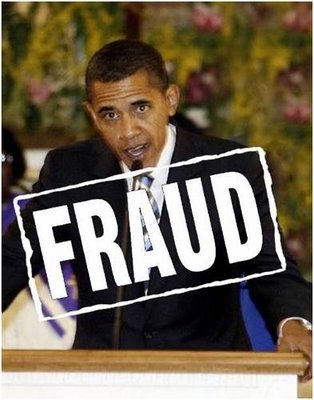 Last week, when President Obama was asked about the $9 million dollar bonus for Goldman Sachs CEO Lloyd Blankfein, he described Mr. Blankfein as a savvy businessman, adding that Americans don’t begrudge people being rewarded for success. While Obama later qualified his comment about Mr. Blankfein and his fellow bank executives, it’s worth examining more closely some of the ways in which Blankfein and the Goldman gang were “savvy.”
Perhaps the Goldman gang’s best claim to savvy was in buying up hundreds of billions of dollars of mortgages and packaging them into mortgage-backed securities, and more complex derivative instruments, and selling them all over the world. Mr. Blankfein and Goldman earned tens of billions of dollars on these deals.
The great trick was that many of the loans put into these securities were issued fraudulently, with the banks filling in phony information so that borrowers could get loans that they would not be able to repay. But this was not Goldman’s concern. They made money on the packaging and the selling of the securities. Goldman did not care that the loans in their bundles might not be kosher.
In fact, Goldman actually recognized that many of these loans would go bad. So they went to the insurance giant AIG and got them to issue credit default swaps against many of the securities it had created. In effect they were betting that their own securities were garbage. Now that is savvy. (It says something else about the highly paid executives at AIG.)
Goldman doesn’t just confine its savvy to the U.S. economy; it shares it with the rest of the world as well. According to the New York Times, it worked closely with the Greek government over the last decade to help it conceal its budget deficit. The trick was to construct complex financial arrangements that appeared on the books as “swaps,” even though they were in fact loans. Greece was adding billions of dollars to its debt, and thanks to the ingenuity of the Goldman crew, no one knew about it until now.
But Goldman’s greatest triumph was to get the government to come to its rescue when the financial sector was melting down in the fall of 2008 as the housing bubble that they had helped to fuel began to collapse. Treasury Secretary and former Goldman CEO Henry Paulson rushed to Congress and demanded $700 billion for the banks, no questions asked. He dragged along Federal Reserve Board Chairman Ben Bernanke for support, along with Tim Geithner, then the important head of the New York Federal Reserve Bank and now President Obama’s Treasury Secretary.
Using exaggerations and half-truths, this triumvirate convinced Congress that we would have a second Great Depression if it didn’t cough up the money immediately with no conditions. At that point Goldman, Morgan Stanley, Citigroup and most of the other major banks were staring at bankruptcy. While this cascade of bank failures would have been bad news for the economy, there was no plausible scenario in which it would have led to a second Great Depression.
There was also no reason that Congress could not have put conditions on its money. For example, Congress could have dictated that as a condition of getting the money that bankers would get the same sort of paychecks as other workers, that they would get out of highly speculative activity, that the largest banks would be downsized and that the principle would be written down on bad mortgages. At that point, Congress could have told the bank honchos that they had to run around Wall Street naked with their underpants on their head. The bankers had no choice; their banks would crash and burn without government support.
But the savvy Mr. Blankfein and the other bankers got the money no questions asked. In fact, Goldman even got the government to pick up the bankrupt AIG’s debts. Thanks to the government’s intervention, Goldman got paid every penny on its bets with AIG. This came to $13 billion, enough money to pay for 4 million kid-years of health care under the State Children’s Health Insurance Program.
No one should doubt that Mr. Blankfein is a very savvy banker. Without his ingenuity Goldman Sachs would likely be out of business, its component divisions being auctioned off to the highest bidder. Instead it is making record profits and paying out record bonuses.
But unlike the successful ballplayers to whom President Obama compared Mr. Blankfein, Goldman’s success is inherently parasitic. It comes at the expense of taxpayers and the productive economy. Goldman and the other Wall Street banks are successful in the same way as the savvy Bernie Madoff was successful. It seems that President Obama must still decide whether he stands with the Wall Street banks or whether he stands with the workers and businesses who actually produce wealth.
Dean Baker is the co-director of the Center for Economic and Policy Research (CEPR). He is the author of False Profits: Recovering from the Bubble Economy. He also has a blog on the American Prospect, “Beat the Press,” where he discusses the media’s coverage of economic issues.
Seeds of discontent: the ‘miracle’ crop that has failed to deliver
A new ‘ethical’ biofuel is damaging the impoverished people it was supposed to help
By Cahal Milmo and Andrew Wasley | The Independent | 15 February 2010
A “miracle” plant, once thought to be the answer to producing renewable biofuels on a vast scale, is driving thousands of farmers in the developing world into food poverty, a damning report concludes today.
Five years ago jatropha was hailed by investors and scientists as a breakthrough in the battle to find a biofuel alternative to fossil fuels that would not further impoverish developing countries by diverting resources away from food production.
Jatropha was said to be resistant to drought and pests and able could grow on land that was unsuitable for food production. But researchers have found that it has increased poverty in countries including India and Tanzania.
Millions of the plants have been grown in anticipation of rich returns, only for growers to be hit by poor yields, conflict over land and a lack of infrastructure to process the oil-rich seeds.
Oil giant BP, which planned to spend almost £32m on a joint venture to set up jatropha plantations, has now pulled out and the charity ActionAid today warns that jatropha needs to be cultivated on prime food-growing land to produce significant yields.
According to one estimate, up to one million hectares of jatropha – an area equivalent to Devon and Cornwall combined – are being cultivated around the globe, despite little evidence that it can produce enough oil to make the crop commercially sustainable.
Meredith Alexander, head of trade at Actionaid and co-author of its “Meals per Gallon” report, said: “Jatropha is a real gold-rush crop, and the same amount of common sense that applies in a gold rush has been applied to the jatropha rush.
“Jatropha was the subject of an explosion of fabulous propaganda. But this was an untried crop at commercial levels and the many thousands of marginal farmers who have gone into production have been experimented on with disastrous results. They are simply not getting the income they were promised and now cannot afford food for their families,” she said.
A native of central America, Jatropha curcus was brought to Europe in the 16th century and subsequently spread across Africa and Asia. Until recently, its few uses included a malaria treatment and an indigestion remedy.
But despite jatropha’s much-lauded ability to grow where food crops cannot flourish, campaigners say there is evidence that commercially viable yields can only be obtained in fertile soil.
In India, forecasted annual yields of three to five tonnes of seeds per hectare have been scaled back to 1.8 to two tonnes. The Overseas Development Institute, a leading international development think-tank, has stated that “as the mainstay of people’s livelihoods, jatropha looks distinctly marginal”.
ActionAid said its researchers found repeated cases of farmers being left with jatropha crops they could not sell and land previously used to grow food crops being taken over by sub-contractors who then employed locals on wages that could not compete with rises in the price of foodstuffs partially caused by biofuel production.
Raju Sona, a farmer in north-east India who gave up land that usually produces vegetables to grow jatropha, said: “No one will buy jatropha. People said if you have a plantation then surely you have a good market. But we didn’t see such a market. I threw the seeds away.”
A number of British companies are continuing to market jatropha as a “highly ethical and green” investment. One fund offers investors three packages for prices ranging from £7,500 to £15,600 in a brochure entitled “Money really does grow on trees”. That company says it has funded the planting of 32 million jatropha shrubs worldwide through a London-based provider called Carbon Credited Farming (CCF) Plc.
Jeff Reeves, head of global operations for CCF, which estimates it will have 300 million jatropha shrubs planted on 120,000 acres worldwide by the end of 2010, admitted that there had been problems establishing the crop.
He told The Ecologist magazine: “In many cases it is government policy and people that are to blame, rather than jatropha itself. Well-managed, jatropha … can work. But there have been countries where poor management has meant this is not the case.”
D1 Oils, a London-based biofuels company which has invested heavily in jatropha, insisted it was too early to write off the crop as a long-term biofuel source. But its former co-investor, BP, disagreed. A spokesman said: “As other [renewable fuel] technologies came up, we looked again at whether jatropha was going to be the best biofuel source that could be scaled up. There were problems with it. We have decided to look elsewhere.”
* Some of this research appeared in the Ecologist
Tom Friedman’s Peak Confusion
Twisted Energy Politics
By ROBERT BRYCE | February 16, 2010
When it comes to energy issues, Thomas Friedman simply doesn’t care about the facts.
That reality was made apparent, once again, in Friedman’s column in the February 10 issue of the New York Times. In an otherwise mostly sensible article, written from Yemen, where Friedman was talking about the need for proper educational opportunity in the Arabic and Islamic worlds, Friedman concluded that the US will have to maintain a strong military presence in the region in order to counter al-Qaeda. But he continues, we also must “help build schools and fund scholarships to America wherever we can. And please, please, let’s end our addiction to oil, which is what gives the Saudi religious ministry and charities the money to spread anti-modernist thinking across this region.”
 Friedman has been bashing the Saudis for so long, it’s hardly worth recounting the many instances where he does so. But the fact that Friedman once again trots out the tired cliché of our “addiction to oil” and that he then immediately ties that issue to the Saudis shows that he simply doesn’t know what he’s talking about. Rather than stick to the facts, he retreats to a mindless slogan that contributes nothing to the need for a broader discussion of energy policy and the reality of the global marketplace.
The US could quit buying oil tomorrow, all oil, and it won’t put the Saudis out of business. According to the EIA, in 2008, the Saudis exported an average of 8.4 million barrels of oil per day. Of that quantity, the US accounted for about 1.5 million barrels per day.
Thus, even if the US somehow managed to segregate Saudi crude from its other oil imports, and also prevented the Saudis from selling that 1.5 million barrels per day somewhere else, Saudi Arabia would still be selling about 7 million barrels of oil on the global market. Needless to say, that 7 million barrels per day will bring the kingdom a fair bit of revenue.
Of course, Wednesday’s column isn’t the first time Friedman has shown that he cares more about polemics than facts. In August 2008, he held up Denmark as an energy model that should be copied by the US. In the wake of the 1973 Oil Embargo, Friedman claims that Denmark “responded to that crisis in such a sustained, focused and systematic way that today it is energy independent.” Friedman went on to lament America’s situation, writing that if “only we could be as energy smart as Denmark!”
Wrong. Wrong. Wrong.
Friedman clearly loves the idea of energy independence, but the data shows that Denmark is not energy independent – it’s not even close. The Danes import all of their coal. I repeat, Denmark imports all of its coal. Furthermore, those coal imports – and coal consumption – show little sign of declining even though Denmark’s wind power production capacity has increased rapidly over the past few years. And Denmark is even more dependent on coal than the US! (1)
Nor did Friedman bother to mention that thanks to the Danish government’s exorbitant taxes, the Danes now have some of the world’s most expensive electricity and most expensive motor fuel.
In 2006, the Energy Information Administration looked at residential electricity rates in 65 countries and found that Denmark’s rates were the highest, by far, at some $0.32 per kilowatt-hour. That was about 25% higher than the electricity costs in the Netherlands, which had the next-highest rates in the survey, at $0.25 per kilowatt-hour. And that’s not a new phenomenon. From 1999 through 2006, Denmark had either the highest – or the next-highest – electricity rates of the countries surveyed by the EIA. (In 1999 and 2000, Japan’s electricity rates were slightly higher than those in Denmark.) Furthermore, Denmark electricity rates are the highest in Europe – and no other country comes close. (2)
In 2008, electricity rates were even higher, with Danish residential customers were paying $0.38 per kilowatt-hour – or nearly four times as much as US residential customers who were paying about $0.10 per kilowatt-hour. And the Danes were paying more than twice as much as their counterparts in nuclear-heavy France, where residential electricity costs were $0.17 per kilowatt-hour.
While Danish homeowners are getting spanked by expensive electricity, Danish motorists are getting absolutely mugged at the service station. In late 2008, Danish drivers were paying $1.54 per liter for gasoline, while drivers in the U.K. were paying $1.44 and US motorists were paying $0.56. According to GTZ, an agency of the German government, only a handful of countries have more expensive fuel than Denmark, a list that includes Italy, Norway, Turkey and Germany.
Unfortunately, Friedman’s polemics on energy are nothing new. Back in 2006, Friedman published a column in the Times saying that the U.S. should build a wall around itself. “Build a virtual wall. End our oil addiction.” Getting rid of our need for oil will, he wrote, “protect us from the worst in the Arab-Muslim world….These regimes will never reform as long as they enjoy windfall oil profits.” The solution, he declared is for America to build “a wall of energy independence” around itself. Doing so, “will enable us to continue to engage honestly with the most progressive Arabs and Muslims on a reform agenda.”
Remember that this is the same Friedman, who, in his 2005 best-selling book, The World is Flat, declared that the world was increasingly globalized and the implications of that were obvious. In this new “flat” world, money, jobs, and opportunity, Friedman said, will “go to the countries with the best infrastructure, the best education system that produces the most educated work force, the most investor-friendly laws, and the best environment. (3)
Hmmm. So doesn’t that also mean that in our new “flat” world, that energy will be exported by the countries that have the best infrastructure for providing that energy to the world market?
Friedman’s problem is that he wants it both ways: he espouses the merits and potential of the new flat world, while also insisting that the US should withdraw into energy isolationism, and thereby surrender any participation in the world’s single biggest industry, the global energy sector. The irreconcilable contradictions in Friedman’s arguments are easily seen in the penultimate paragraph in The World is Flat where he claims that the “two greatest dangers we Americans face are an excess of protectionism – excessive fears of another 9/11 that prompt us to wall ourselves in, in search of personal security – and excessive fears of competing in a world…that prompt us to wall ourselves off, in search of economic security. Both would be a disaster for us and for the world.”
So, to summarize Friedman’s world view, he wants a “wall of energy independence” around America while simultaneously warning Americans that the two greatest dangers are a) walling “ourselves in” and b) walling “ourselves off.”
Friedman sees a flat world where walls are dangerous because they will isolate the US from other countries. But when it comes to energy, walls are good because they isolate the US from other countries. Oh, and along the way, we need to bankrupt the Saudis, because, well, they might give money to people who don’t think like we do.
Is anyone else here confused?
Robert Bryce’s fourth book, Power Hungry: The Myths of “Green” Energy and the Real Fuels of the Future, will be published in April.
Notes.
(1) BP Statistical Review of World Energy. In 2007, Denmark got 26% of its primary energy from coal while the US got 24.3%.
(2) Eurostat data. Available: http://epp.eurostat.ec.europa.eu/cache/ITY_OFFPUB/KS-QA-08-045/EN/KS-QA-08-045-EN.PDF.
Also: http://www.cbs.nl/en-GB/menu/themas/industrie-energie/publicaties/artikelen/archief/2007/2007-2187-wm.htm
(3) Yale Global Online, “’Wake Up and Face the Flat Earth’ – Thomas L. Friedman,” April 18, 2005. Available: http://yaleglobal.yale.edu/display.article?id=5581
EU biofuels significantly harming food production in developing countries
EU biofuels 10% targets cause millions of peope to go hungry and increase food prices and landlessness, says report
John Vidal | The Guardian | February 15, 2010
EU companies have taken millions of acres of land out of food production in Africa, central America and Asia to grow biofuels for transport, according to development campaigners. The consequences of European biofuel targets, said the report by ActionAid, could be up to 100 million more hungry people, increased food prices and landlessness.
The report says the 2008 decision by EU countries to obtain 10% of all transport fuels from biofuels by 2020 is proving disastrous for poor countries. Developing countries are expected to grow nearly two-thirds of the jatropha, sugar cane and palm oil crops that are mostly used for biofuels.
“To meet the EU 10% target, the total land area directly required to grow industrial biofuels in developing countries could reach 17.5m hectares, over half the size of Italy. Additional land will also be required in developed nations, displacing food and animal feed crops onto land in new areas, often in developing countries,” says the report.
Biofuels are estimated by the IMF to have been responsible for 20-30% of the global food price spike in 2008 when 125m tonnes of cereals were diverted into biofuel production. The amount of biofuels in Europe’s car fuels is expected to quadruple in the next decade.
The report attributes the massive growth in biofuel production to generous subsidies. It estimates that the EU biofuel industry has already received €4.4bn (£3.82bn) in incentives, subsidies and tax relief and that this could triple to over €13.7bn if the EU meets its 2020 target.
The greatest support to the industry is exemption from excise duties. Duty at the pump is 20 pence less per litre compared to conventional fuels although this exemption due to end in 2010, a change which supermarket Morrisons cited last week as the reason for dropping one of its biodiesel blends. In 2009, the duty on low- sulphur petrol and diesel in the UK was 54.19 pence per litre; for biodiesel and ethanol it was 34.19 pence per litre.
“Biofuels are driving a global human tragedy. Local food prices have already risen massively. As biofuel production gains pace, this can only accelerate,” said report author Tim Rice. He added that biofuels are not even an answer to climate change: “Most biofuels are worse than the fossil fuels they are supposed to replace.” . Large scale biofuel plantations can increase carbon dioxide emissions, either directly by cutting down forests or ploughing up other carbon rich habitats, or indirectly by forcing farmers to move into these areas. Separately, the UK Nuffield Council on Bioethics is currently consulting on the ethics of biofuels – how to ensure a new generation of biofuels don’t increase greenhouse gas emissions and take food from the poor to fuel cars.
The ActionAid report says Europe is just one region now greatly increasing the amount of biofuels in transport fuel. Analysis of US farm data last month by the Earth Policy Institute in Washington showed that one-quarter of all the maize and other grain crops grown in the US now ends up as biofuel in cars. The grain grown to produce the fuel in the US in 2009 was enough to feed 330 million people for one year at average world consumption levels.
If all global biofuel government targets are met, says ActionAid, food prices could rise by up to an additional 76% by 2020 with an extra 600 million extra people going hungry – six times as much as European policies alone.
Goldman Goes Rogue – Special European Audit To Follow
The Baseline Scenario | February 14, 2010
At 9:30pm on Sunday, September 21, 2008, Goldman Sachs was saved from imminent collapse by the announcement that the Federal Reserve would allow it to become a bank holding company – implying unfettered access to borrowing from the Fed and other forms of implicit government support, all of which subsequently proved most beneficial. Officials allowed Goldman to make such an unprecedented conversion in the name of global financial stability. (The blow-by-blow account is in Andrew Ross Sorkin’s Too Big To Fail; this is confirmed in all substantial detail by Hank Paulson’s memoir.)
We now learn – from Der Spiegel last week and today’s NYT – that Goldman Sachs has not only helped or encouraged some European governments to hide a large part of their debts, but it also endeavored to do so for Greece as recently as last November. These actions are fundamentally destabilizing to the global financial system, as they undermine: the eurozone area; all attempts to bring greater transparency to government accounting; and the most basic principles that underlie well-functioning markets. When the data are all lies, the outcomes are all bad – see the subprime mortgage crisis for further detail.
A single rogue trader can bring down a bank – remember the case of Barings. But a single rogue bank can bring down the world’s financial system.
Goldman will dismiss this as “business as usual” and, to be sure, a few phone calls around Washington will help ensure that Goldman’s primary supervisor – now the Fed – looks the other way.
But the affair is now out of Ben Bernanke’s hands, and quite far from people who are easily swayed by the White House. It goes immediately to the European Commission, which has jurisdiction over eurozone budget issues. Faced with enormous pressure from those eurozone countries now on the hook for saving Greece, the Commission will surely launch a special audit of Goldman and all its European clients.
This audit should focus on ten sets of questions.
- Which eurozone governments have worked with Goldman, and on what basis, over the past decade? All actions prior to and after the introduction of the euro need to be thoroughly reexamined.
- What transactions has Goldman facilitated and how has that affected the reporting of European government debt? (Under the Maastricht Treaty, eurozone government debt is not supposed to exceed 60 percent of GDP.)
- In the case of Greece, the accusation is that Goldman deliberately and in a premeditated manner conspired to hide the true degree of government debt. Is this true, and to what extent has Goldman helped other countries engage in similar transactions, e.g., countries now seeking entry to the eurozone?
- What is the full extent of Greek and other government liabilities, if these are accounted for properly? Without this reckoning, it is impossible to design a proper level of European Union (or any other) support for weaker eurozone countries.
- Are there non-eurozone countries that have also been aided and abetted by Goldman in this fashion? For example, are the UK and Switzerland implicated – and thus endangered?
- Has Goldman extolled the virtues of government debt in Greece, or other countries, while at the same time helping to deceive investors on the true risks inherent in those debts? What were Goldman’s own holdings of these securities?
- Is there evidence that Goldman has structured similar transactions for the private sector – enabling companies to conceal the level of their true indebtedness? Have securities issued by such firms also been endorsed by Goldman to the buying public?
- Were Goldman’s US-based supervisors aware of Goldman’s activities in Greece and other eurozone countries? Did they condone activities that undermine the integrity of the European Union?
- Where was the European Central Bank while all of this was happening? Has the ECB become dangerously enraptured with the new Wall Street and its “techniques”?
- Did any responsible official really think that what Goldman was constructing was really some sort of productivity-enhancing financial innovation – as opposed to a sophisticated form of scam?
The Federal Reserve must cooperate fully with this investigation. Ordinarily, the Fed might be tempted to sit on useful information, but they can now feel themselves in Senator Bob Corker’s crosshairs. Republican Senator Corker is willing to cooperate with Senator Dodd on financial sector reform, opening up the possibility of legislation that will pass the Senate, but he wants the Fed to lose its supervisory powers. If the Fed refuses to help – willingly and fully – the European Commission with bringing Goldman to account, that will just strengthen the hand of Senator Corker and his allies.
If the Federal Reserve were an effective supervisor, it would have the political will sufficient to determine that Goldman Sachs has not been acting in accordance with its banking license. But any meaningful action from this direction seems unlikely.
Instead, Goldman will probably be blacklisted from working with eurozone governments for the foreseeable future; as was the case with Salomon Brothers 20 years ago, Goldman may be on its way to be banned from some government securities markets altogether. If it is to be allowed back into this arena, it will have to address the inherent conflicts of interest between advising a government on how to put (deceptive levels of) lipstick on a pig and cajoling investors into buying livestock at inflated prices.
And the US government, at the highest levels, has to ask a fundamental question: For how long does it wish to be intimately associated with Goldman Sachs and this kind of destabilizing action? What is the priority here – a sustainable recovery and a viable financial system, or one particular set of investment bankers?
To preserve Goldman, on incredibly generous terms, in the name of saving the financial system was and is hard to defend – but that is where we are. To allow the current government-backed (massive) Goldman to behave recklessly and with complete disregard to the basic tenets of international financial stability is utterly indefensible.
The credibility of the Federal Reserve, already at an all-time low, has just suffered another crippling blow; the ECB is also now in the line of fire. Goldman Sachs has a lot to answer for.
By Simon Johnson
New Phase, Not Just Another Recession
By Ismael Hossein-zadeh | February 12, 2010
It is becoming increasingly clear that the financial meltdown of 2008 and the subsequent economic contraction that continues to this day represent more than just another recessionary cycle. More importantly, they represent a structural change, a new phase, the phase of the dominance of “finance capital,” as the late Austro-German political economist Rudolf Hilferding put it.
Although the current domination of our economy by finance capital seems new, it is in fact a throwback or “retrogression” (as financial expert Michael Hudson puts it) to the capitalism of the late 19th and early 20th centuries, that is, the capitalism of monopolistic big business and gigantic financial institutions. The rising economic and political influence of powerful financial interests in the early 20th century led a number of political economists (such as John Hobson, Rudolf Hilferding and Vladimir Lenin) to write passionately on the ominous trends of those developments—developments that significantly contributed to the eruption of the two World Wars and precipitated the devastating Great Depression of the 1930s, by creating an unsustainable asset price bubble in the form of overblown stock prices.
The harrowing experience of the Great Depression, followed by the devastating years of World War II, generated momentous social upheavals and extensive working class struggles worldwide. The ensuing “threat of revolution,” as F.D.R. put it, and the “menacing” pressure from below prompted reform from above—hence, the New Deal reforms in the US and socialist/Social-Democratic reforms in Europe. Combined, these historic developments significantly curtailed the size and the influence of big business and powerful financial interests—alas, only for a while.
As those reforms saved Western capitalism from more radical social changes, they also provided grounds for its regeneration and expansion. By the 1970s, finance capital, headed by major US banks, had risen, once again, to its pre-Depression levels of concentration, of controlling the major bulk of national resources, and of shaping economic policy. Since then, big banks have created a number of financial instabilities and economic crises—usually through predatory, sub-prime loan pushing or unsustainable debt bubbles. These include the “Third World debt crisis” of the 1980s and 1990s, the 1997-98 financial crises in Southeast Asia and Russia, the tech or dot.com bubble of the 1990s in the U.S. and other major market economies, and the latest, housing/real estate bubble that burst in 2008
A number of characteristics distinguish the stage of the dominance of finance capital from lower phases of capitalist development. Under liberal capitalism of the competitive industrial era, a long cycle of economic contraction would usually wipe out not only jobs and production, but also the debt burdens that were accumulated during the long cycle of expansion that preceded the cycle of contraction. In the stage of finance capital, however, debt overhead is propped up through its monetization, or socialization, even during a most severe financial meltdown such as that which occurred in 2008. Indeed, due to the influence of the powerful financial interests, national or taxpayers’ debt burden is further exacerbated by the government’s generous bailout plans of the bankrupt financial giants, that is, by simply transferring or converting private to public debt.
In The Class Struggle in France, Karl Marx wrote, “Public credit rests on confidence that the state will allow itself to be exploited by the wolves of finance.” Today we see more clearly how the “wolves of finance” are hollowing out national treasuries and subjecting governments to unsustainable debt burdens. This explains the near bankruptcy not only of the US Government but also of many of the European states, especially those of Greece, Ireland, Spain, Portugal and a number of East European countries. Proposed government “solution” in all these cases is to have the general public pay for the gambler’s debt—in the form of extensive cuts in essential social programs and drastic reductions in living standards.
A major hallmark of the age of finance capital is domination of the State and/or political process by the financial oligarchy. Bank- or finance-friendly policies of the government have been facilitated largely through generous pouring of money into the election of “favorite” policy makers. Extensive deregulation that led to the 2008 financial crisis, the scandalous bank bailout in response to the crisis, and the failure to impose effective restraints on Wall Street after the crisis can all be traced to Wall Street’s political power. Wall Street spent more than $5 billion on federal campaign contributions and lobbying from 1998 to 2008, and its fervent spending on the purchase of politicians continues unabated.
Michael Hudson, Distinguished Research Professor at University of Missouri (Kansas City), aptly calls this ominous process of the buying out of policy-makers by major contributors to their election “privatization of the political process.” Paul Craig Roberts, Assistant Secretary of the Treasury in the Reagan administration, likewise argues that the political system “is monopolized by a few powerful interest groups that…have exercised their power to monopolize the economy for the benefit of themselves.”
Such sentiments regarding the class nature of the State are corroborations of Vladimir Lenin’s characterization of the capitalist state as “the executive committee of the ruling class.” Lenin was often scoffed at by the capitalist ruling elites when he made this statement over ninety years ago; they deviously dismissed him as having overstated his case. Perhaps it is time to dust off and read old copies of Lenin’s The State and Revolution, if only to better understand the incestuous politico-business relationship between the State and the financial oligarchy of our time.
Another hallmark of the stage of finance capital is that, under the influence of the powerful financial interests, government intervention in national economic affairs has come to essentially mean implementation of neoliberal or supply-side restructuring policies. Government and business leaders have for the last several decades used severe recessionary cycles as opportunities to escalate application of neoliberal economic measures in order to reverse or undermine the New Deal reforms. Naomi Klien has called this strategy of using periods of economic crisis to reverse the gains of the New Deal and other reform programs “the shock doctrine”—a strategy that takes advantage of the overwhelming crisis times to apply supply-side austerity programs and redistribute national resources from the bottom up. This explains how under the Bush-Obama administrations the financial oligarchy has been able to use the failure of the Lehman Brothers and the specter of “apocalyptic” failure of other financial giants to extract their gambling losses from the public purse.
It is generally believed that neoliberal supply-side economic policies began with the election of Ronald Reagan as the president. Evidence shows, however, that efforts at undermining the New Deal economics in favor of returning to the old-time religion of market fundamentalism began long before Reagan arrived in the White House. As Alan Nasser, emeritus professor at the Evergreen State College in Olympia (Washington), points out, “The foundations of neoliberalism were established in economic theory by liberal Democrats at the Brookings Institution, and in political practice by the Carter administration.”
Neither President Clinton changed the course of neoliberal corporate welfare policies, nor is President Obama hesitating to carry out those policies. His administration has made available more than $12 trillion in cash infusions, loans and guarantees to the financial industry, but for state governments that are facing massive budget deficits, it has thus far provided only one quarter of 1 percent of that amount in federal stimulus funds—about $30 billion. The White House is sitting by while states across the country lay off workers and slash spending on education, health care and other essential social programs.
The left/liberal supporters of President Obama who bemoan his “predicament in the face of brutal Republican challenges” should look past the president’s liberal/populist posturing. Evidence shows that, contrary to Barack Obama’s claims, his presidential campaign was heavily financed by the Wall Street financial titans and their influential lobbyists. Large Wall Street contributions began pouring into his campaign only after he was thoroughly vetted by the powerful Wall Street interests and was deemed a viable (indeed, ideal) candidate for presidency.
On ideological or philosophical grounds too President Obama is closer to the neoliberal, supply-side tradition than the New Deal tradition. This is clearly revealed, for example, in his The Audacity of Hope, where he shows his disdain for “…those who still champion the old time religion, defending every New Deal and Great Society program from Republican encroachment, achieving ratings of 100% from the liberal interest groups. But these efforts seem exhausted…bereft of energy and new ideas needed to address the changing circumstances of globalization. . . .” It is no accident that Mr. Obama has surrounded himself by neoliberal economic experts and financial advisors such as Larry Summers, Timothy Geithner, and Ben Bernanke.
Not only has the major bulk of the Obama administration’s anti-recession assistance been devoted to the rescue of the Wall Street financial magnates, but also the relatively small stimulus spending is funneled largely through the Wall Street (mainly through generous government loans and tax incentives) in the hope that this would create jobs. This stands in sharp contrast to what F.D.R. did in the earlier years of the Great Depression: creating jobs directly and immediately by the government itself.
The main purpose of the administration’s (or, shall we say, of the ruling kleptocracy, both Democratic and Republican) strategy of delaying direct job creation is to stall, and fraudulently keep the hopes of the unemployed alive, until the massive supply-side corporate welfare giveaways would eventually begin to gradually trickle down and slowly create jobs. In the absence of compelling pressure from below, this neoliberal scheme of further weakening the working class may eventually succeed. But even if successful, the jobs thus created would be supply-side jobs, subsistence or below-subsistence jobs, which would be grabbed by desperate workers at any price/wage, not union jobs that would pay decent wages and benefits.
Political theatrics within the ruling circles over “how to create jobs” should not mask the fact that delays in job creation are deliberate: they are designed to further subdue American workers and bring down their wages and benefits in line with those of workers in countries that compete with the U.S. in global markets. It is part of the insidious neoliberal race to the bottom, to the lowest common denominator in terms of international labor costs. It is, indeed, an application of the IMF’s notorious Structural Adjustment Program of austerity measures that have been vigorously pursued in many less-developed countries for decades—with disastrous results.
It is no accident that President Obama frequently pleads with the unemployed Americans to “be patient,” and “keep hope alive.” What he really means to say is: “look, we have invested trillions of dollars through bailout schemes and other supply-side recovery measures. So, please be patient and wait until they come to fruition and benefit you through trickle down effects.” At least, Ronald Reagan had the honesty and integrity to explicitly defend or promote his supply-side philosophy. Perhaps that is why Barack Obama can be called Ronald Reagan in disguise.
In the wake of the 2008 financial meltdown, many left/liberal economists envisioned an opportunity: a reversion back to the Keynesian-type economic policies. One year later, it is increasingly becoming clear that such expectations amounted to no more than wishful thinking—a dawning recognition that, regardless of the resident of the White House, economic policies are nowadays heavily influenced by the powerful financial interests.
The view that economic policy would be switched back to the Keynesian or New Deal paradigm by default stems from the rather naïve supposition that policy making is a simple matter of technical expertise or economic know-how, that is, a matter of choice—between good or “regulated capitalism” and bad or “neoliberal capitalism.” A major reason for such hopes or illusions is a perception of the State that its power is above economic or class interests; a perception that fails to see the fact that national policy-making apparatus is largely dominated by a kleptocratic elite that is guided by the imperatives of big capital, especially finance capital.

Historical evidence shows, however, that more than anything else the Keynesian or New Deal reforms were a product of pressure from the people. Economic policy-making is not independent of politics and/or policy-makers who are, in turn, not independent of the financial interests they are supposed to discipline or regulate. Stabilization, restructuring or regulatory policies are often subtle products of the balance of social forces, or outcome of class struggle. Policies of economic restructuring in response to major crises can benefit the masses only if there is compelling pressure from the grassroots. In the absence of an overwhelming pressure from below (similar to that of the 1930s), Keynesian or New Deal economic reforms could remain a (fondly-remembered) one-time experience in the history of economic reforms.
Ismael Hossein-Zadeh, author of the recently published The Political Economy of U.S. Militarism (Palgrave-Macmillan 2007), teaches economics at Drake University, Des Moines, Iowa.
Chevron in new joint venture with PDVSA
Chevron Consortium Digs into Venezuelan Heavy Oil Project
Chevron Corp. | 02-11-2010

A consortium led by Chevron’s Venezuelan subsidiary has been selected to negotiate its participation in a project composed of three blocks in the Orinoco Oil Belt (Faja) of eastern Venezuela.
“We look forward to being part of this new opportunity that will expand development of one of the world’s largest known hydrocarbon resources,” said Chevron Vice Chairman George Kirkland.
Situated in the eastern area of the Faja, approximately 40 miles (65 kilometers) to the northeast of the city of Puerto Ordaz, the three blocks have a combined area of 215 square miles (557 square kilometers).
“We are pleased with today’s announcement and the prospect of negotiating an opportunity to expand our partnership with Petróleos de Venezuela S.A. (PDVSA) and the Venezuelan communities,” said Ali Moshiri, president of Chevron Africa and Latin America Exploration and Production Co. “Chevron’s growing presence in Latin America’s resource-rich basins highlights the company’s ability to fully integrate our experience and technology into the successful development of large, complex projects.”
It is expected the consortium of Chevron, INPEX Corporation, Mitsubishi Corporation and Suelopetrol will hold a combined 40 percent interest in the empresa mixta (joint company). PDVSA will hold the remaining 60 percent interest.
In Venezuela, Chevron currently holds a joint venture interest in PetroPiar, an integrated extra-heavy oil project in the Faja; joint venture interests in PetroBoscan and PetroIndependiente; joint venture participation in Plataforma Deltana Blocks 2 and 3 to produce natural gas; and an interest in Venezuela’s first liquefied natural gas project, which is currently under evaluation. Chevron also operates the offshore Cardon III block north of Lake Maracaibo in the Gulf of Venezuela.
Chevron is a leading heavy oil producer and has broad capabilities within its portfolio of specialized technologies. It is a world leader in thermal enhanced oil recovery and has a global network of research and development in heavy oil refining, conversion and upgrading. It currently produces heavy oil in Brazil, California, Indonesia, the U.K. North Sea, and the Partitioned Zone between Saudi Arabia and Kuwait, and operates a Heavy Oil Center of Expertise in California.
Iran near $30bn oil deals with foreign firms
Press TV – February 6, 2010
Iran is in the final stage of talks with five companies to finalize deals for the development of oil and gas fields worth $30 billion, an official says.
Seifollah Jashnsaz, Managing Director of the National Iranian Oil Company (NIOC), predicted that the deals will be finalized within two months.
Speaking to Mehr news agency, he added that five Asian and European firms are expected to invest in the Lavan gas field, Phases 13 and 14 of the South Pars gas field, the Azadegan oilfield, the Kish gas field, and two exploratory blocks in the Caspian Sea. Jashnsaz did not give further details.
Iran’s fifth five-year development plan (2010-2015) has obliged the government to invest around $155 billion in the upstream sector of the oil and gas industry.
Jashnsaz said Iran’s total revenues from oil exports stood at $78 billion during the Iranian calendar year to March 2009.
The NIOC chief also added that the government allowed the Oil Ministry to invest $11 billion from its oil sales in oil industry development.
Jashnsaz stressed that Iran needs to attract more foreign investment to keep the oil industry live. “If we do not make the necessary investment, the harm of the lack of timely investment in the oil industry will be irreversible to the country,” he pointed out.
“We must go after foreign investment, the possibility of which also exists,” he said.
Iran starts mass-producing 2 new defensive missiles
Press TV – February 6, 2010
|
|
anti-armor missile Toofan-5 |

Iran has launched production lines for two new missiles as a part of its plans to boost defensive capabilities against any possible attack.
Defense Minister Ahmad Vahidi on Saturday inaugurated the production line for an anti-armor missile Toofan-5 and an anti-helicopter missile Qaem.
“By the mass production and delivery of these modern weapons to the armed forces, the country’s defense capabilities will increase both in ground and aerial war,” the minister said.
The Toofan-5, which is among the most advanced of anti-armor missiles, is equipped with two warheads and can destroy armored vehicles, tanks and personnel carriers, Vahidi said.
The Qaem missile is also of a class of semi-heavy guided missiles and can destroy low-altitude aerial targets that fly at low speed. Being laser guided, the Qaem missile is also resistant to electronic warfare, Vahidi pointed out.
The Crisis is Not Over
By Paul Craig Roberts | February 2, 2010
Is the financial crisis over? Is the recovery for real and, if not, what are Americans’ prospects? The short answer is that the financial crisis is not over, the recovery is not real, and the U.S. faces a far worse crisis than the financial one. Here is the situation as I understand it:
The global crisis is understood as a banking crisis brought on by mindless deregulation of the U.S. financial arena. Investment banks leveraged assets to highly irresponsible levels, issued questionable financial instruments with fraudulent investment grade ratings, and issued the instruments through direct sales to customers rather than through markets.
The crisis was initiated when the U.S. allowed Lehman Brothers to fail, thus threatening money market funds everywhere. The crisis was used by the investment banks, which controlled U.S. economic policy, to secure massive subsidies to their profits from a taxpayer bailout and from the Federal Reserve. How much of the crisis was real and how much was hype is not known at this time.
As most of the derivative instruments had never been priced in the market, and as their exact composition between good and bad loans was unknown (the instruments are based on packages of securitized loans), the mark-to-market rule drove the values very low, thus threatening the solvency of many financial institutions. Also, the rule prohibiting continuous shorting had been removed, making it possible for hedge funds and speculators to destroy the market capitalization of targeted firms by driving down their share prices.
The obvious solution was to suspend the mark-to-market rule until some better idea of the values of the derivative instruments could be established and to prevent the abuse of shorting that was destroying market capitalization. Instead, the Goldman Sachs people in charge of the U.S. Treasury and, perhaps, the Federal Reserve as well, used the crisis to secure subsidies for the banks from U.S. taxpayers and from the Federal Reserve. It looks like a manipulated crisis as well as a real one due to greed unleashed by financial deregulation.
The crisis will not be over until financial regulation is restored, but Wall Street has been able to block re-regulation. Moreover, the response to the crisis has planted seeds for new crises. Government budget deficits have exploded. In the U.S. the fiscal year 2009 federal budget deficit was $1.4 trillion, three times higher than the 2008 deficit. President Obama’s budget deficits for 2010 and 2011, according to the latest report, will total $2.9 trillion, and this estimate is based on the assumption that the Great Recession is over. Where is the U.S. Treasury to borrow $4.3 trillion in three years?
This sum greatly exceeds the combined trade surpluses of America’s trading partners, the recycling of which has financed past U.S. budget deficits, and perhaps exceeds total world savings.
It is unclear how the 2009 budget deficit was financed. A likely source was the bank reserves created for financial institutions by the Federal Reserve when it purchased their toxic financial instruments. These reserves were then used to purchase the new Treasury debt. In other words, the budget deficit was financed by deterioration in the balance sheet of the Federal Reserve. How long can such an exchange of assets continue before the Federal Reserve has to finance the government’s deficit by creating new money?
Similar deficits and financing problems have affected the EU, particularly its financially weaker members. To conclude: the initial crisis has planted seeds for two new crises: rising government debt and inflation.
A third crisis is also in place. This crisis will occur when confidence is lost in the U.S. dollar as world reserve currency. This crisis will disrupt the international payments mechanism. It will be especially difficult for the U.S. as the country will lose the ability to pay for its imports with its own currency. U.S. living standards will decline as the ability to import declines.
The financial crisis is essentially a U.S. crisis, spread abroad by the sale of toxic financial instruments. The rest of the world got into trouble by trusting Wall Street. The real American crisis is much worse than the financial crisis. The real American crisis is the offshoring of U.S. manufacturing, industrial, and professional service jobs such as software engineering and information technology.
Jobs offshoring was initiated by Wall Street pressures on corporations for higher earnings and by performance-related bonuses becoming the main form of managerial compensation. Corporate executives increased profits and obtained bonuses by substituting cheaper foreign labor for U.S. labor in the production of goods and services marketed in the U.S.
Jobs offshoring is destroying the ladders of upward mobility that made the U.S. an opportunity society and eroding the value of a university education. For the first decade of the 21st century, the U.S. economy has been able to create net new jobs only in domestic nontradable services, such as waitresses, bartenders, sales, health and social assistance and, prior to the real estate collapse, construction. These jobs are lower paid than the jobs were that have been offshored, and these jobs do not produce goods and services for export.
Jobs offshoring has increased the U.S. trade deficit, putting more pressure on the dollar’s role as reserve currency. When offshored goods and services return to the U.S., they add to imports, thus worsening the trade imbalance.
The policy of jobs offshoring is insane. It is shifting U.S. GDP growth to the offshored locations, such as China, thus halting growth in U.S. consumer incomes. For the past decade, U.S. households substituted an increase in indebtedness for the lack of growth in income in order to continue increasing their consumption. With their home equity refinanced and spent, real estate values down, and credit card debt at unsustainable levels, it is no longer possible for the U.S. economy to base its growth on a rise in consumer debt. This fact is a brake on U.S. economic recovery.
Stimulus packages cannot substitute for the growth in real income. As so many high value-added, high productivity U.S. jobs have been offshored, there is no way to achieve real growth in U.S. personal incomes. Stimulus spending simply adds to government debt and pressure on the dollar, and sows seeds for high inflation.
The U.S. dollar survives as reserve currency because there is no apparent substitute. The euro has its own problems. Moreover, the euro is the currency of a non-existent political entity. National sovereignty continues despite the existence of a common currency on the continent (but not in Great Britain). If the dollar is abandoned, then the result is likely to be bilateral settlements in countries’ own currencies, as Brazil and China now are doing. Alternatively, John Maynard Keynes’ bancor scheme could be implemented, as it does not require a reserve currency country. Keynes’ plan is designed to maintain a country’s trade balance. Only a reserve currency country can get its trade and budget deficits so out of balance as the U.S. has done. The prospect of U.S. default and/or inflation and decline in the dollar’s exchange value is a threat to the reserve system.
The threats to the U.S. economy are extreme. Yet, neither the Obama administration, the Republican opposition, economists, Wall Street, nor the media show any awareness. Instead, the public is provided with spin about recovery and with higher spending on pointless wars that are hastening America’s economic and financial ruin.
Paul Craig Roberts was Assistant Secretary of the U.S. Treasury in the Reagan administration. His latest book, How The Economy Was Lost, has just been published by CounterPunch/AK Press. He can be reached at: PaulCraigRoberts@yahoo.com
Offshoring strikes refining industry, workers strike back
By Tara Patel
Feb. 3 (Bloomberg) — Unions representing Total SA refinery workers threatened to take control of an idled plant near the northern French city of Dunkirk if it isn’t restarted.
They also called for strikes later this month as a labor dispute over the future of the industry in France escalates ahead of regional elections.
Management of Total, Europe’s largest refinery, have until Feb. 15 to restart the Flanders refinery or “we will take possession of the site,” the CGT, FO and Sud Chimie unions said in a joint e-mailed statement. The CGT union also called for 48- hour strikes at French refineries during the week of Feb. 15.
Total plans to halt refining operations at the Flanders plant permanently after the recession eroded demand for oil products. The refinery was idled in September. The French company, which last year said it may sell refining assets in Europe, will announce a final decision on the future of the site before the end of June.
Total delayed a final decision after the government, which faces regional elections next month, urged the company to protect the local economy and jobs with a plan for a “substitute” business activity.
Union members held noisy demonstrations at Total headquarters in the La Defense business district two days ago amid talks with management about the future of Flanders.
Hundreds of workers with drums and horns crowded into the building’s atrium and smashed a glass security barrier. This led security personnel to seal off access for more than four hours to elevators leading to upper storeys, where the office of Chief Executive Officer Christophe de Margerie is located.
Job Guarantees
Total has said it would guarantee “each employee a job at Total that is a fit with his or her competencies” as well as “helping to secure” the future of local contractors. The complex employs 376 workers and has about 400 sub-contractors.
Union leaders including Charles Foulard of the CGT have said the dispute has wider implications beyond Flanders of protesting Total’s strategy to gradually pull out of refining in France, where it operates six of the country’s 12 plants, in favor of overseas expansion.
The company is among several European refiners to lower operating rates, idle plants and seek to sell others in a bid to save costs and maintain profit after the recession cut fuel use. European refining margins dropped to their lowest level in at least two years in December, according to data on the Web site of the Union Francaise des Industries Petrolieres trade group.
Total will create a Refining Operations Technical Support Center and training school at the Flanders facility, allowing it to keep two-thirds of the refinery jobs, it said. The Paris- based company is also in talks to invest in a planned liquefied natural gas terminal near the Port of Dunkirk as it seeks to maintain jobs.
CGT representatives have also said Total won’t restart the idled crude-distillation unit at Gonfreville. The unit was scheduled to close in 2012, according to a plan announced in March.
Total plans to reduce Gonfreville’s capacity by 25 percent to 12 million tons a year while raising the proportion of diesel output and lowering surplus gasoline. The proposal would lead to the loss of 555 refining and petrochemical jobs in France.
Featured Video

Anthrax War – CBC The Passionate Eye
or go to
Aletho News Archives – Video-Images
Book Review
Shattered Dreams: The HPV Vaccine Exposed (2019)
By Christina England – 30 Q&As – Book Review & Summary
Lies are Unbekoming | September 4, 2026
… Gardasil received FDA fast-track approval in 2006, Cervarix followed in 2009, and Gardasil 9 was approved in December 2014 with more than double the aluminium adjuvant content of the original. The commercial context is specific. Merck was about to lose patent protection on Zocor and faced $18 billion in Vioxx injury claims from a cardiovascular drug the company had marketed while suppressing its own data showing a five-times increase in heart attacks. Analysts projected the global HPV vaccine market at $4 billion by 2011, contingent on government-funded national programs for teenage girls. The 1986 National Childhood Vaccine Injury Act had already granted manufacturers complete liability immunity. By 2013, Japan had withdrawn its HPV vaccine recommendation after cataloguing severe adverse reactions in hundreds of girls. No Western government followed. The establishment position across the UK, US, Australia, and most of Europe held, and still holds, that the vaccines are safe and effective, that reported injuries are coincidental, and that cervical cancer prevention justifies the program. The book was published into this position, not against a vacuum.
Shattered Dreams sits alongside Mary Holland’s The HPV Vaccine On Trial and Viera Scheibner’s foundational vaccination work as part of the documented record on what has been done to a generation of teenage girls under the banner of cancer prevention. The full summary unpacks three specific findings: that Merck used the aluminium adjuvant itself as the “placebo” control in 92.5% of trial subjects, making it structurally impossible to detect excess reactions from the adjuvant; that Dr. Sin Hang Lee found HPV DNA fragments bound to aluminium in every one of sixteen Gardasil samples tested, and in the blood and spleen of a New Zealand girl six months after her third dose; and that in every country with high vaccination coverage, including Australia, the UK, Norway, and Sweden, cervical cancer rates have stopped declining and started rising specifically in the vaccinated cohort. Martínez-Lavín’s 2017 calculation puts the number needed to seriously harm with Gardasil 9 at 140, and the number needed to vaccinate to prevent one case at 1,757. Thirteen young women are seriously harmed for every one who benefits. The vaccine was approved on the basis of trials that could not detect what the trials were supposed to detect, and it is still being given to twelve-year-olds today. … Read full review
Blog Roll
 Aletho News
- Georgia’s Largest Healthcare System Will Fire Employees Who Refuse Flu Vaccine
- The Five-Year Fuel Crisis: Why the World Economy Is Paying for a War It Thinks Is Ending
- Trump’s Big Bluff on Iran
- Swiss scammed out of millions by Ukraine-linked call centers – media
- Germany facing potential ‘violent conflict’ with Russia – spy chief
- Ukraine’s EU neighbors reject new plea from Kiev – Politico
- British Transport Police Facial Recognition Trial Scanned 926,912 People With Zero Arrests
- House Bill Would Ban Federal Use of Flock ALPR Data
- Can a Spice Rival a Drug? 10 Head-to-Head Trials Put It to the Test.
- The oil routes around Hormuz face their own chokepoints
- If Americans Knew
- “We See Our Homes Now From A Satellite, Like Strangers”
- Watch “Gaza: Doctors Under Attack”, originally censored by BBC
- NAZA: Israeli embassies in UK and US promote rival documentary to challenge Gaza genocide allegations
- David Ellison appoints Israeli to lead merged Paramount-Warner studios
- Turkish Red Crescent helps elderly Gaza man walk again after Israel confiscates his prosthetic limb
- Four Palestinians Killed in Israeli Attacks in Gaza
- Two Palestinian youths killed and village razed as Israeli attacks on West Bank continue
- Two more Christian women victims of Israeli raids on Gaza
- Cruelty, Deprivation, Indignity: A Journalist’s 22 Months in Israeli Prison
- New IDF Website Frames Slain Gaza Journalists as Terrorists
- No Tricks Zone
- Latest European Green Energy Debacle; Portugal’s Largest Flagship Solar Park Insolvent!
- Green Energy Debacle: German Expert Professor Fritz Vahrenholt Warns Of Severe Economic And Social Consequences
- Two More Paleo Reconstructions Affirm Meters-Higher Sea Levels Across Ireland, Brazil 7000-6000 Years Ago
- New Study: Earth And Venus Surface Warmth Largely Explained By Convection And Lapse Rate, Not CO2 Or Radiation
- 2025 Nature Paper Claiming Worsening Global Drought Gets RETRACTED …Heavily Flawed
- New Study: ‘Global Drought Shows No Detectable Recent Acceleration Under Climate Warming’
- Economic Masterminds: German Socialists Suggest Taxing Productivity Gains Stemming From Using AI
- The South China Sea Has Not Been Cooperating With The Climate Change Narrative
- Energy Crisis: Germany Enters Heating Season With Historically Low Gas Reserve Fill Levels
- New Study: The Antarctic Ice Sheet Gained Mass From 2020-2024 Due To Staggering Snow And Ice Accumulation

