The Toxic Border: How Israel’s Chemical Spraying is Reshaping Life in South Lebanon
By Robert Inlakesh | The Palestine Chronicle | February 8, 2026
Reports that Israeli aircraft sprayed chemical agents along the Lebanese border — later identified as toxic defoliants — have intensified concerns over environmental damage, civilian harm, and possible violations of international law, with similar incidents also reported in southern Syria.
Key Takeaways
- UN peacekeepers suspended patrols after being warned that aircraft would spray chemical agents near the Blue Line.
- The sprayed substance was later identified as a toxic herbicide linked to cancer.
- The campaign is seen as serving both military land-clearing and civilian displacement purposes.
- Similar chemical spraying incidents have been reported in southern Syria.
- Rights groups say targeting farmland may constitute a violation of international humanitarian law.
- Spraying along the Blue Line
Israel is waging chemical warfare against both Lebanese and Syrian lands, a campaign that may not only have dire environmental repercussions but also inflict long-term health problems on local civilian populations.
On February 1, the United Nations peacekeeping forces stationed in southern Lebanon – UNIFIL – were forced to suspend their patrols along what is known as the Blue Line that demarcates the de facto Israeli-Lebanese border. They did so out of safety concerns for their soldiers, after Israel informed them it would be using planes to spray chemical agents in the area.
Tel Aviv initially informed UNIFIL that the chemical agent was “non-toxic.” Nevertheless, the UN reiterated its “concerns” about flight movements in the area, stressing that such activities violate UN Security Council Resolution 1701.
It wasn’t long until it was discovered that the agent being sprayed was, in fact, toxic. Allegedly, the specific agent used, for which a toxicology test was conducted, is a defoliant and herbicide that is linked to cancer.
Israel is currently on its way to violating the Lebanon ceasefire, which went into effect on November 27, 2024, nearly 10,000 times. This makes it the most violated ceasefire deal in recorded history.
Israeli strikes, targeting north to south and even the capital city of Beirut, have killed hundreds. Despite this, there have been no recorded violations by Hezbollah or the Lebanese Army.
A Strategy of Erasure
What is so consequential about Israel’s use of chemical agents in southern Lebanon is that it has two primary purposes. The first is to kill everything it touches, to clear the land for military purposes. The second is that it is being used as a form of collective punishment, a likely intention behind which is to drive Lebanese citizens from their homes.
Perhaps the most horrifying part of this is that there is a dark history of such chemicals being used for the same purposes elsewhere. The most infamous case is that of the US military spraying Agent Orange, also a herbicide and defoliant, during the Vietnam War.
As a result of the callous use of Agent Orange, both the civilian population of Vietnam and US soldiers alike ended up contracting serious chronic health problems. One of the results was birth defects, cancers such as Hodgkin’s lymphoma, and even neurodegenerative diseases. This was in addition to what was labeled ecocide in the country.
While some may argue that the Israelis are simply using chemical agents to clear the land, as a security precaution, this is not plausible. Israel has the capability and has historically used heavy equipment to clear the land.
Deploying chemical agents, which it is of note that they haven’t done so on their side of the Blue Line, is clearly a malicious attack on Lebanese lands and the civilian population living there.
Beyond Lebanon
Israelis have frequently expressed their dismay over the immediate return of Lebanese villagers to their destroyed homes in the south, particularly near the unofficial border, as Israel has never declared its borders.
Meanwhile, a considerable percentage of Israelis, formerly living in settlements like Kiryat Shimona, that were hit the hardest by Hezbollah during the last war, have refused to return.
It has not only been Lebanon that has been subjected to such chemical agent attacks, but southern Syria has also fallen victim to the Israeli military spraying similar chemical agents on its lands.
While the Lebanese government has come under criticism for often ignoring the plight of its citizens in the south, the Syrian government completely refrains from addressing the ongoing occupation and war crimes committed in the south of their country.
The refusal of Damascus to even voice its concern about the chemical warfare being waged against its people and lands has made it less of an issue than in Lebanon, as Beirut has raised its voice.
“The deliberate targeting of civilian farmland violates international humanitarian law, particularly the prohibition on attacking or destroying objects indispensable to civilian survival,” commented the Switzerland-based Euro-Med Human Rights Monitor.
It also demanded accountability for Israel’s “large-scale destruction of private property without specific military necessity amounts to a war crime and undermines food security and basic livelihoods in the affected areas.”
– Robert Inlakesh is a journalist, writer, and documentary filmmaker. He focuses on the Middle East, specializing in Palestine.
NEW FAUCI EMAILS EXPOSE ATTACK ON NATURAL IMMUNITY
The HighWire with Del Bigtree | January 22, 2026
Newly revealed emails show Dr. Anthony Fauci privately acknowledged that natural immunity may provide stronger protection than COVID vaccination, even as he publicly dismissed it during the mandate period. As Senator Rand Paul calls for criminal referrals, the larger issue is whether the DOJ will pursue Fauci—or protect the COVID-era establishment instead.
Mom Tells Trump: Dumping Sewage Sludge on Farmland Won’t Make America Healthy Again
By Jill Erzen | The Defender | January 20, 2026
America cannot be “healthy again” while the EPA continues to allow states to dump treated sewage sludge on farmland near homes and schools, said Paula Yockel, founder of the nonprofit Mission503.
Late last year, the Oklahoma mother posted an open letter to President Donald Trump on YouTube, urging him to address what she called a nationwide public health crisis enabled by a decades-old federal rule that allows toxic sludge to be spread on agricultural land.
The rule “is betraying all of us and harming our great nation,” Yockel said in her video.
At the center of Yockel’s campaign is the U.S. Environmental Protection Agency’s (EPA) biosolids regulation, Title 40 Code of Federal Regulations Part 503. The regulation governs the application of treated sewage sludge on farmland.
The rule allows municipalities to market sludge as agricultural fertilizer if it meets federal standards. Yockel said the practice directly contradicts national promises to improve public health.
She told The Defender that mothers in rural areas share posts on social media about their sick babies, but most people remain unaware of the causes.
“Those are fighting words to me,” Yockel said. “We cannot say we want to make America healthy again and continue to dump our sewage where millions of people live.”
The 503 rule enables the disposal of industrial and municipal waste — including human feces, pharmaceuticals, hormones, solvents and “forever chemicals” — onto farmland in communities where families live, work and play, she said.
“The 503 rule is spreading massive volumes of toxic chemicals and human pathogens into our communities, harming our people with illness and loss of freedoms, polluting our air, water, soil and food supply, and compromising our national security,” she said.
‘We don’t even know’ which foods are grown in sludge
Under the rule, sewage sludge is treated at wastewater plants and then applied to land as fertilizer. The EPA refers to the material as “biosolids,” though the agency notes the terms “biosolids” and “sewage sludge” are often used interchangeably.
The treatment at wastewater plants doesn’t make the material safe, Yockel said.
“The toxic gases, vapors and pathogens emitting from the sludge, and the stench and flies, will travel for miles,” she said in her video.
The foods grown on land treated with sewage sludge, and the livestock grazed there, enter the nation’s food supply without any disclosure. “We don’t even know which fruits and vegetables, beef, dairy and grains are affected,” she said.
Yockel is asking for a meeting with Trump to present research she said shows the practice is harming rural communities, contaminating the food supply and undermining national health goals.
The White House has not responded to her request for a meeting, Yockel said.
“There is a significant firewall in the way,” Yockel said. “People don’t want to touch this topic.”
Nausea, headaches and dizziness ‘were almost immediate’
In a January Substack post, Yockel wrote that she and her husband bought land outside Oklahoma City in 2004. Some days, she noticed a persistent, foul odor. In 2008, she watched trucks dump what she described as “black, oozing muck” on the farm next to her home.
“Nausea, headaches, GI [gastrointestinal] distress and dizziness were almost immediate,” Yockel wrote.
State regulators told her that the landowner had a permit and that the sludge was applied correctly. However, officials acknowledged the “odor is very bad and the flies have been worse than ever this year,” according to Yockel.
At the time, Yockel said, her family did not immediately connect their health problems to sewage exposure.
“When sludge was spread on farmland next to our home, we were convinced it made us sick,” she wrote. “But we didn’t really connect the dots between sewage exposure and the unusual illnesses we’d get.”
She described symptoms that included blistering rashes, heart arrhythmias, MRSA infections and severe strep throat.
“We definitely didn’t realize it may have caused the health problems during my pregnancy and the risky delivery of our son,” she wrote. “We assumed these things were just part of life. Plus, authorities were assuring us that spreading ‘biosolids’ on the land around us was safe and couldn’t harm us.”
Yockel and her husband eventually began working with researchers to test air, water, soil and clinical samples in sludged environments over roughly six years.
Land that has had sewer sludge applied in accordance with the 503 rule “is exposing Americans to pathogens like staph and strep, viruses, human parasites, and antibiotic-resistant bacteria,” she said.
The sludge also contains carcinogens, neurotoxins, endocrine disruptors and immune-disrupting chemicals.
Hospital data show ‘more than seven times the risk for bone cancer’
Publicly available Oklahoma hospital discharge data, which Yockel displays in her open letter to Trump, show stark disparities between one community where sludge has been applied for decades and the rest of the state.
“The community shows over 125 diagnoses with a statistically significant increased risk compared to the state,” she said. The diagnoses include infections, cancers, heart and lung disease, neurological disorders and birth defects.
The data show “more than double the risk for myeloid leukemia and more than seven times the risk for bone cancer,” she added.
Independent reporting has increasingly drawn attention to the issue. Investigate Midwest reported that sewage sludge can contain high concentrations of chemicals linked to cancer and birth defects. The health risks have prompted lawsuits and bans in parts of the country.
In Oklahoma, a major farm insurance provider recently excluded coverage for biosolids-related damages.
In 2025, the EPA acknowledged that biosolids containing elevated levels of PFAS, or per- and polyfluoroalkyl substances, may pose risks to human health. The agency also warned that drinking water near application sites — common in parts of Oklahoma — can be dangerous.
However, the EPA hasn’t issued new nationwide regulations. Instead, the agency leaves the monitoring of biosolids for PFAS contamination to the states.
In Oklahoma alone, Investigate Midwest reported that more than 80% of wastewater sludge ends up on crop fields, with about 40% coming from Oklahoma City. The city permits biosolids application on roughly 11,000 acres and produces about 350 tons of sludge each day.
Since the early 1980s, applying sewage sludge to land has provided a low-cost disposal method. Farmers receive the material for free after it is treated with lime and tested for heavy metals.
“We’ve been doing this across our nation for decades and still are today,” Yockel said in her video letter to Trump.
She said the system misleads farmers and shifts long-term costs onto communities.
“Their lands and livelihoods are being destroyed because this rule allows sewage to be marketed as biosolids, and they’re told it’s cheap and a beneficial fertilizer,” she said.
‘A lot of power and money supporting the myth that sludge is a good idea’
Maine offers a glimpse of what change can look like — and how complicated it can be.
In 2022, Maine became the first state to ban the use of sewage sludge on farmland after widespread PFAS contamination was discovered in soil, water and food, according to Inside Climate News.
Testing later showed elevated levels of the “forever chemicals” in farmers’ blood.
But Maine has struggled to manage the waste it can no longer spread on land, as it faces limited landfill capacity and high disposal costs.
Yockel said the challenge underscores the need for national infrastructure investment, not incremental regulation.
“Policy change alone doesn’t fix this problem,” she said. “We must have infrastructure solutions.”
She rejected landfills as a long-term solution and said managing individual chemicals like PFAS misses the broader risk.
“You cannot regulate sewage to safety,” Yockel said. “Managing PFAS does nothing but check a box and move on down the road.”
Instead, she said a secondary tier of infrastructure is crucial for managing sewage solids because today’s wastewater treatment plants focus on the water and are not engineered to dispose of solids.
“Hazardous waste cannot become fertilizer by the stroke of a pen,” she said. “It is time for courageous, honest facts around the 503 rule because we must have real solutions.”
That call for action runs up against entrenched interests that have kept the practice in place for decades, according to Yockel.
“There is a lot of power and money supporting the myth that sludge is a good idea,” she said.
Public outcry may be the most immediate path forward, she said.
“The results may be through public awareness. We are just trying to save our nation from the harm of this wretched practice.”
For Yockel, the stakes are clear.
“Once we understand the impact on our nation’s health, we’re going to have to make a choice,” she said. “When we recognize the cost of what we are doing today, the cost of change is small.”
This article was originally published by The Defender — Children’s Health Defense’s News & Views Website under Creative Commons license CC BY-NC-ND 4.0. Please consider subscribing to The Defender or donating to Children’s Health Defense.
Medicinal plants hold key to Iran’s drought-resistant revenue

Press TV – December 16, 2025
Iran’s agriculture faces water scarcity, restricted market access, and declining returns from traditional crops, pushing farmers and policymakers toward low-water, high-value, and sanction-resilient export products.
Medicinal plants are among the few agricultural sectors meeting all three criteria, increasingly seen over the past decade as an expandable income source aligned with environmental limits and export needs.
Iran has one of the richest plant ecosystems in the world. More than 8,000 plant species have been identified across the country, of which around 2,300 have medicinal, aromatic, cosmetic, or industrial uses.
About 1,700 of these species are endemic, meaning they grow naturally only in Iran. This biodiversity is supported by wide climatic variation, from arid plains to high mountain ranges, with elevations from 900 to more than 4,000 meters above sea level.
These conditions allow different plants to grow with little or no irrigation. The scale and diversity of this natural resource provide Iran with a broad production base that few countries can replicate, enabling year-round cultivation and harvesting across different regions.
Most medicinal plants cultivated or harvested in Iran are naturally adapted to dry and semi-dry environments. Many grow under rain-fed conditions or require less than 3,000 cubic meters of water per hectare.
By comparison, crops such as wheat, rice, and corn often need between 10,000 and 15,000 cubic meters per hectare. As groundwater reserves shrink and rainfall becomes more erratic, this difference has direct economic value.
Lower water use reduces production costs while preserving agricultural land for sustained use over time. This makes medicinal plants particularly suitable for long-term planning in regions facing declining water availability.
According to official figures, Iran receives about 400 billion cubic meters of rainfall annually, but more than half is lost to evaporation. Crops that can grow using direct rainfall reduce pressure on dams, rivers, and aquifers.
Medicinal plants make effective use of this rainfall because they are already rooted in the soil when seasonal precipitation occurs, allowing moisture to be absorbed rather than lost. This characteristic strengthens their role in maintaining agricultural output without increasing water extraction.
Medicinal plants are produced both on farmland and in rangelands. In many provinces, farmers grow them under permits on national lands, relying on rainfall rather than irrigation. Because these plants are mostly perennial and slow-growing, high irrigation costs are not economically justified.
Harvesting, drying, and basic processing often take place close to production sites, creating seasonal employment in rural areas. Each hectare of medicinal plants generates between two and three direct jobs, according to agricultural authorities.
In addition to farming, jobs are created in collection, sorting, drying, distillation, and packaging, forming local value chains that support village-level incomes.
Export revenue from medicinal plants currently stands at about $600 million a year, accounting for roughly 9 to 10 percent of Iran’s total agricultural exports. Projections suggest exports could reach $700 million if production and processing improve.
Saffron dominates the sector. Iran produces more than 90 percent of the world’s saffron and accounts for around 40 percent of the total export value of medicinal plants.
Other major exports include rose products from damask rose, such as rose water and extracts, liquorice extract, mint, thyme, and natural gums like asafoetida locally called anguzeh.
These products are sold not only as raw materials but also as inputs for pharmaceutical, food, and cosmetic industries.
Demand for medicinal plants continues to grow in international markets, including Central Asia, Eurasia, and China. These markets are accessible through regional trade routes and do not always require direct financial links with Western banking systems.
Products such as saffron, rose water, and herbal extracts have relatively high value-to-weight ratios, which lowers transport costs and makes them more suitable for indirect export channels. Their long shelf life further supports trade across longer distances and reduces losses during storage and transport.

Barijeh, scientifically known as ferula gummosa, is a plant native to Iran.
The internal economics of medicinal plant cultivation are also favorable. In several provinces, income from medicinal plants is many times higher than from grains.
For example, harvesting wild or cultivated plants such as musir can generate net income far above that of wheat or barley on the same land.
This income difference has encouraged farmers to shift land away from water-intensive crops, especially in drought-affected regions. Higher returns per hectare allow smaller landholdings to remain economically viable, supporting family-based farming systems.
Four provinces illustrate this potential clearly. Khorasan remains the center of saffron production. Kashan and surrounding areas specialize in rose cultivation and distillation.
Yazd produces lemon verbena, while Chaharmahal and Bakhtiari province has emerged as a major center for wild and cultivated medicinal plants.
This province is largely mountainous, with 87 percent of its area classified as highland. More than 1,350 plant species have been identified there, including 270 with medicinal or industrial uses and 27 species found nowhere else in the world. Cool nights, diverse soils, and varied elevations contribute to high-quality yields and strong concentrations of active ingredients.
In Chaharmahal and Bakhtiari, medicinal plants are grown on about 3,500 hectares, split between national rangelands and agricultural land. Since the early 2010s, the cultivated area has expanded sharply, supported by a national strategy to promote medicinal plants.
From a fiscal perspective, medicinal plants offer a rare combination for Iran under sanctions. They reduce water use, generate foreign currency, and support employment without heavy reliance on imported inputs.
Unlike major industrial exports, they do not require large-scale capital equipment or advanced foreign technology. Their production is decentralized, which spreads income across rural and underdeveloped regions. This decentralization strengthens local economies and reduces dependence on a limited number of export hubs.
Iran already holds dominant positions in several global markets, particularly saffron. Medicinal plants do not eliminate the economic impact of sanctions, but they provide a measurable source of revenue that fits Iran’s environmental constraints.
Russian Scientists Develop New Polymer Material to Trap Lead Ions in Water
Sputnik – 03.12.2025
A new material that traps lead ions in wastewater and natural waterways has been created and tested by researchers at Russia’s Tyumen State University.
Developed as part of an international team, the material makes it faster and easier to remove the ecotoxicant from aquatic environments.
The results were published in Polymer Bulletin. The main sources of heavy-metal pollution in the environment include the mining, metallurgical, electroplating and steel industries.
When filtration systems at industrial facilities fail, large quantities of lead and other metal ions — toxic to bacteria, plants and mammals — can enter wastewater or natural waters, the university specialists explained.
Researchers from the State University of Tyumen, together with colleagues from Kazakhstan, Azerbaijan, India, China and Saudi Arabia, have developed and tested a material capable of “capturing” lead from water in reservoirs.
The material is based on humic acids extracted from coal.
“We obtained lead traps with specially designed pores that can hold exactly a lead ion,” said Gulnara Shigabaeva, head of the Department of Organic and Environmental Chemistry at the university.
“Tests of the absorption process showed that the new material works more efficiently than existing analogue,” she added, and “the lead can be easily removed from our sorbent.”
She explained that the sorbent selectively captures lead ions because it is engineered with a “memory” of their size and charge — a polymer-design technique known as molecular imprinting.
“In the humic-acid and acrylic-acid–based material, there are cavities — imprints of lead ions,” Shigabaeva said “Smaller particles, such as iron ions, simply pass through them, while larger particles cannot fit into the sorbent.”
The granulated sorbent can be placed directly into water and later filtered out after swelling and absorbing the lead ions.
Laboratory experiments showed that one gram of the sorbent can extract 50 milligrams of lead ions from water in one hour. In the future, the researchers plan to develop molecularly imprinted polymer sorbents for other ecotoxicants such as nickel, copper and zinc.
They also intend to assess the effectiveness of the new materials under real environmental conditions.
No, Reuters, Climate Change is Not Threatening Europe’s Resources
By Anthony Watts | ClimateRealism | October 2, 2025
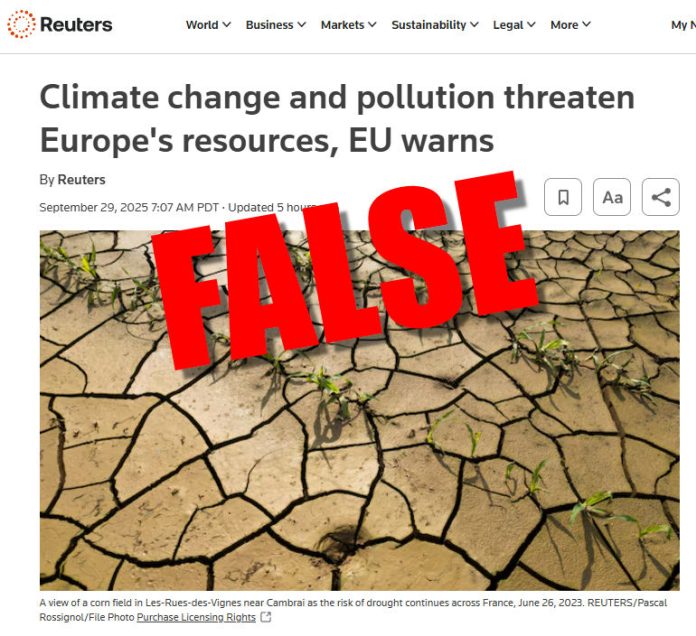
In the article, “Climate change and pollution threaten Europe’s resources, EU warns,” Reuters asserts that climate change poses a “direct threat” to Europe’s natural resources, citing an EU environment agency report, and warns of worsening droughts and extreme weather. These claims are patently false. History shows far worse droughts in the past with no appreciable trend of other types of extreme weather events becoming more common or severe. Europe’s resource problems are caused by humans, stemming from overuse and poor management, just not from human-caused climate change.
The article declares that “Europe is the world’s fastest-warming continent and is experiencing worsening droughts and other extreme weather events.” It further states that more than 80 percent of protected habitats are in poor condition, blaming climate change and pollution.
“The window for meaningful action is narrowing, and the consequences of delay are becoming more tangible,” European Environment Agency executive director Leena Yla-Mononen told Reuters. “We are approaching tipping points – not only in ecosystems, but also in the social and economic systems that underpin our societies.”
The is political rhetoric couched in weak science.
The reality is far more mundane. The European Environment Agency’s own data show that water stress is primarily linked to intensive agriculture, industrial demand, and population growth. As the “Review of National Water Allocation Policies in Six European Countries” documents, many European countries continue to over-allocate water rights, creating artificial scarcity even in years with average rainfall. This is a governance problem, not a climate one. Similarly, biodiversity decline across Europe is overwhelmingly the result of land use change, habitat fragmentation, and invasive species—not a few tenths of a degree of warming over the last few decades.
When it comes to extreme weather, Reuters’ claims are directly contradicted by the Intergovernmental Panel on Climate Change (IPCC) AR6 report which notes there is little to no attribution of many types of severe weather to climate change. As Climate at a Glance: Extreme Weather summarizes, data do not support claims that extreme weather events are becoming more frequent or severe worldwide.
Further, Europe’s worst droughts occurred long before today’s modest warming. The megadrought of 1540 lasted an entire year, with contemporaneous records describing riverbeds across central Europe running dry, widespread crop failure, and thousands of deaths. More recent severe droughts struck in the 1920s and 1940s, periods that cannot be blamed on modern greenhouse gas emissions. The paper “The 1921 European drought: impacts, reconstruction and drivers” describes the 1921 European drought as “the most severe and most widespread drought in Europe since the start of the 20th century.
In “A drought climatology for Europe,” decadal trends show “greater pan-European drought incidence in the 1940s, early 1950s … and lesser drought incidence in the 1910s, 1930s” over the 20th century.
And there are many more worse droughts even further back in the past, before climate change even had a name, as this graph from the 2021 paper Recent European drought extremes beyond Common Era background variability shows:
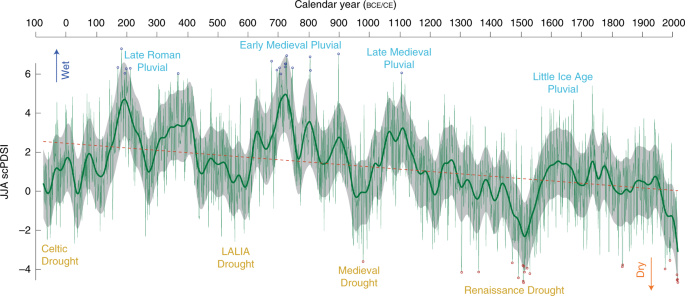
Compared to these historical drought episodes, recent intermittent summer dry spells are far from extraordinary.
Also, as detailed in multiple Climate Realism posts on the topics neither floods, here and here, for example, nor wildfires, here and here, are more frequent or severe now than they have been in the past.
Even heatwaves are neither more frequent nor deadly now than they have been historically, with deaths from temperatures declining.
Europe’s actual environmental challenges—such as nutrient pollution in rivers, overfishing, and urban sprawl—require pragmatic policy solutions, not grandiose climate pledges. By conflating resource depletion with climate change and exaggerating extreme weather risks, Reuters has misled its audience. The problems it describes are not new, not worsening because of climate change, and not solvable by CO₂ reductions. They are solvable by better governance, better planning, and better science. Once again, journalism has been sacrificed to climate alarmism.
Quit Promoting Mad Schemes, New York Times, Blocking the Sun is a Dangerous Climate Gamble
By Anthony Watts | ClimateRealism | September 25, 2025
In The New York Times’ (NYT) op-ed, “Turns Out Air Pollution Was Good for Something,” Zeke Hausfather and David Keith argue that because sulfur particles from past industrial pollution once cooled the planet by reflecting sunlight, policymakers should now consider a deliberate version of that process. They suggest aircraft could inject sulfur into the upper atmosphere to mimic the cooling once provided by dirty smokestacks, pointing to volcanic eruptions such as Mount Pinatubo in 1991 as evidence the method would work. This idea is wrong-headed madness. Experience demonstrates geo-engineering ideas such as this have dangerous and unpredictable consequences.
The authors write that “geoengineering the climate in this way is not a new idea,” and claim that “a more modest approach” of maintaining present temperatures with controlled sulfur injections buys the world time for carbon dioxide reductions to continue.
But geoengineering by blocking the sun is a dangerous fool’s errand. First, the potential unintended consequences are enormous and unpredictable. Sulfur dioxide particles injected into the upper atmosphere would scatter sunlight differently depending on latitude. At middle to low latitudes, sunlight passes through less atmosphere, so scattering effects are modest. But at higher latitudes, sunlight travels through more atmosphere, amplifying scattering—just as sunsets turn red because of the increased distance light travels through more air and particles at low sun angles. Injecting reflective particles globally would therefore not create uniform cooling. It would over-cool the polar and sub-polar regions, while perhaps under-cooling equatorial areas. The result would be an uneven, artificial climate system with consequences no climate model can reliably predict.
These regional impacts would not just be academic. Farmers in Canada or Scandinavia might see shortened growing seasons. Populations in northern Russia could face colder winters. Developing nations in Africa or Asia could sue over disrupted rainfall patterns or crop failures. Geoengineering would open a legal and geopolitical Pandora’s box of claims, counterclaims, and lawsuits, as countries argue that someone else’s climate tinkering damaged their own livelihoods. Even Hausfather and Keith concede in their NYT op-ed that large-scale deployment “could exacerbate climate change in some locations, perhaps by shifting rainfall patterns.”
Aside from these uncertain consequences, one consequence of this scheme is certain, increased sulfur pollution, most likely resulting in acid rain which changes the pH of waters and damages buildings, statues, and other structures.
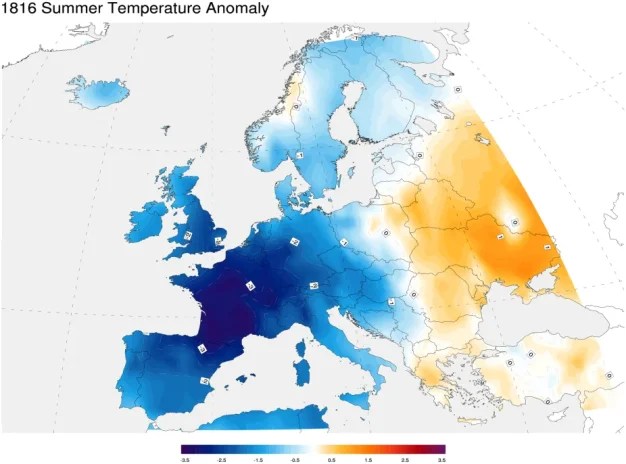
History warns us as well. The eruption of Mount Tambora in 1815 produced the “year without a summer” in 1816, dropping temperatures, as seen in the figure below, devastating agriculture across Europe and North America. Crops failed, famines spread, and tens of thousands perished.
More recently, Mount Pinatubo’s eruption in 1991 cooled the globe by about half a degree Celsius (0.9 degree Fahrenheit) for at least 20 months, disrupting rainfall patterns in the process. The eruption also depleted the ozone layer.
Scientists have also raised red flags about such schemes mimicking the Pinatubo eruption. A 2018 study in Nature Ecology & Evolution warned that solar geoengineering could “abruptly terminate” and trigger rapid global warming if deployment stopped. Researchers published a paper in 2022 in the journal Science of the Anthropocene, have cautioned that stratospheric aerosol injection could delay, but not prevent, ocean acidification, and could undermine incentives for emissions reductions. Back in 2014, LiveScience argued that “Geoengineering Ineffective Against Climate Change, Could Make Worse.”
These papers together strongly suggest that geoengineering via sun-blocking/aerosol injection is not a benign or risk-free option and that its consequences are highly uncertain, with many potential negative side-effects that are difficult or impossible to predict. Deliberately blocking the sun is not a climate solution—it is climate roulette.
Even advocates of the idea admit it is nothing more than a Band-Aid. As Hausfather and Keith acknowledge, “sunlight reflection is no panacea” and “treats the symptoms of climate change but not the underlying disease.” They also admit the risk of political dependency: once started, stopping a geoengineering program could trigger rapid warming rebound, a scenario far more destabilizing than gradual warming itself.
Steve Milloy, writing in the Daily Caller, explained why this notion is absurd. In “Trump’s EPA Is Right To Be Skeptical Of ‘Sun-Blocking’,” he highlighted that sulfur dioxide particles are air pollution—pollution that once drove acid rain and deadly smog events. Milloy sulfur notes that particles eventually fall back to Earth, meaning a program of perpetual injections would be required. “It sounds like a great business model on paper,” he wrote, “but people can’t just launch potentially dangerous air pollutants into the sky without some sort of guidelines and monitoring.”
The unintended consequences are not only physical but political. If wealthy nations take it upon themselves to inject particles into the stratosphere, what happens if poorer nations see droughts or floods as a result? International lawsuits and even conflicts could follow. The specter of “climate weaponization” looms large—as Milloy noted, the ability to control sunlight could be seen as a tool of geopolitical leverage.
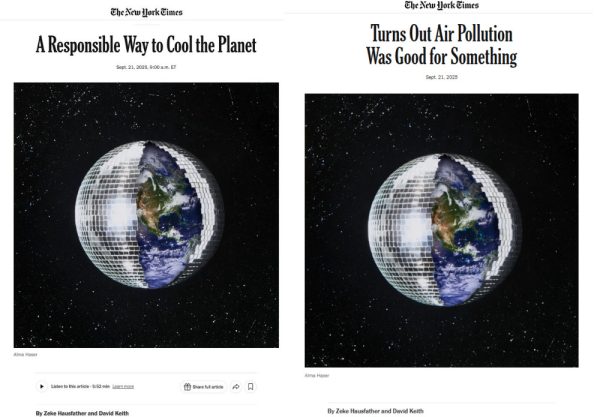
The NYT itself might have cooled to the idea. Shortly after the op-ed was first published, the title was changed from “A Responsible way to Cool the Planet” to “Turns Out Air Pollution Was Good for Something.” Perhaps other scientists raised similar concerns as have been highlighted here and the NYT decided to walk back the “responsible” part.
The bottom line is this: blocking the sun to cool the planet is an inherently dangerous idea. Sunlight is the basis of life on Earth. Corrupting its distribution and intensity will not stabilize climate but destabilize societies. History, common sense, and scientific warnings all converge on the same conclusion: geoengineering by aerosol injection is not a solution but an invitation to chaos.
The New York Times’s op-ed promoting intentional sulfur pollution is a reversal of decades of clean air progress, representing climate recklessness, not climate realism.
Russian Air Defense Shot Down Ukrainian Drone Near Kursk NPP, Radiation Unchanged
Sputnik – 24.08.2025
Russian air defense shot down a Ukrainian drone near the Kursk nuclear power plant, the downed drone damaged an auxiliary transformer, the press service of the Kursk NPP said.
“On August 24 at 0:26 Moscow time [21:26 GMT Saturday], near the Kursk NPP, an air defense shot down a combat unmanned aerial vehicle (UAV) of the Ukrainian armed forces. When it fell, the device detonated, as a result of which the auxiliary transformer was damaged,” the NPP said on Telegram.
As the plant clarified, the local fire had been extinguished, as a result of which the third unit had been unloaded by 50%. There were no casualties.
“Currently, the third power unit is in operation at the Kursk NPP. The fourth power unit is undergoing scheduled maintenance. The first and second power units are in operation without generation,” the plant’s press service added.
The radiation background at the industrial site of the Kursk NPP and the adjacent territory has not changed and corresponds to natural values, the press service concluded.
UK Defence Ministry Covered Up Radioactive Leak From Nuclear Storage Into Sea – Reports
Sputnik – 10.08.2025
The UK Ministry of Defence has been covering up for years the leak of radioactive water into the sea from a nuclear warhead storage facility in western Scotland due to old pipes bursting, the Guardian newspaper reported, citing documents from the Scottish environmental regulator.
The base where Britain’s nuclear bombs are stored allowed radioactive water to leak into the sea after old pipes repeatedly burst.
Radioactive substances leaked into Loch Long, a sea bay near Glasgow in western Scotland, because the British navy failed to properly maintain a network of 1,500 water pipes at the base, the newspaper said.
According to the publication, the military base in question is near the Scottish settlement of Coulport. It stores nuclear warheads intended for four Trident submarines, which are based nearby.
Citing documents from the Scottish Environment Protection Agency (Sepa), the publication said that the military base’s pipes had repeatedly burst: in 2010, then twice in 2019 and twice more in 2021. According to the regulator, at the time of the ruptures, about half of all the storage equipment had expired. As noted, water contaminated with radioactive tritium, a substance used in warheads, was leaking from the pipes.
According to the publication, Sepa and the British Ministry of Defence have tried to hide information about the leaks for many years, claiming that it was a matter of national security. But recently, Scottish Information Commissioner David Hamilton ordered this data to be made public, after which it was obtained by the Scottish media Ferret and the Guardian.
OPCW members condemn Israeli attack on Iran’s chemical facilities
Press TV – July 1, 2025
A majority of the member states of the Organization for the Prohibition of Chemical Weapons (OPCW) has condemned Israel’s recent acts of aggression against Iranian chemical and industrial facilities.
The condemnation was issued during a special session of the OPCW Executive Council in The Hague, convened at Iran’s request.
At the session, Hadi Farajvand, Iran’s ambassador to the Netherlands and permanent representative to the OPCW, highlighted the killing of women and children, scientists, and civilians, as well as the targeting of research centers, including petrochemical facilities and chemical research centers.
He cited the harm to civilians, the risk of chemical substance release, environmental damage, and threats to critical infrastructure.
Farajvand underscored a series of violations by the Israeli regime, including breaches of humanitarian law, disregard for international legal norms, violations of peremptory norms (jus cogens), failure to adhere to any treaties or conventions on weapons of mass destruction, and a record of attacks on chemical facilities in Syria and Lebanon.
During the session, Iran’s ambassador proposed that the OPCW Executive Council establish a working group aimed at adopting binding decisions to prevent attacks on chemical facilities during conflicts and called for appropriate measures to be taken in this regard.
During the 12-day aggression by the Israeli regime against Iran, several chemical facilities and fuel storage sites were targeted, resulting in significant environmental damage.
That Fluoride Added to Your Town Water to ‘Prevent Cavities?’ The EPA Says It’s Hazardous Waste
By Brenda Baletti, Ph.D. | The Defender | April 24, 2025
After Utah last month became the first state to ban water fluoridation, local water managers now face a dilemma: How should they dispose of the remaining fluoride?
Mainstream media, dental associations, the Centers for Disease Control and Prevention (CDC), and other proponents of water fluoridation repeatedly state that the “miracle mineral” fluoride is a “naturally occurring” mineral.
But the fluoride added to town water supplies is far from natural.
Naturally occurring fluoride is calcium fluoride. The fluoride added to water is the byproduct of phosphate fertilizer production, sold off by chemical companies to local water departments across the country.
The byproduct comes in the form of hydrofluorosilicic acid, which is used by most large cities to fluoridate their water.
Hydrofluorosilicic acid is considered a hazardous substance and must be disposed of following strict environmental regulations under the Resource Conservation and Recovery Act.
Scott Paxman, general manager of the Weber Basin Conservancy District, which provides water to over 700,000 Utah residents, told The Defender that he reached out to the state Department of Environmental Quality (DEQ) to inquire about fluoride disposal.
DEQ told Paxman that once the May 7 deadline to end fluoridation in Utah kicks in, any water districts that still have fluoride in their facilities will be subject to regulation as generators of hazardous waste — requiring them to follow an expensive and time-consuming set of regulatory requirements to get rid of their hydrofluorosilicic acid.
Paxman said he was outraged that his water conservancy district would be classified as a hazardous waste generator. “We aren’t hazardous waste generators,” he said. “We are just middlemen.”
He said that for years, water operators in Utah had been raising concerns about the hazards of the acid that they saw firsthand in their facilities and the health risks they and the public faced from fluoride exposure.
Water operators like Paxman were active in the campaign to end fluoridation in Utah, he said. Now they were not getting the guidance they needed to dispose of the chemicals.
‘They have no idea how toxic this stuff is’
Paxman said DEQ’s first suggestion was that the water districts run out the fluoride by stepping up the feed rates of fluoride into the water. The agency pointed out that they could go as high as 4 milligrams per liter (mg/L) — which is the current maximum contaminant level (MCL) enforceable by the U.S. Environmental Protection Agency (EPA).
The 4 mg/L maximum contaminant level was challenged in the recent landmark lawsuit against the EPA for failing to appropriately regulate the chemical. The EPA lost, and the judge in the case directed the agency to enact new regulations. The EPA is appealing the ruling.
Four mg/L is the level at which fluoride causes skeletal fluorosis, a debilitating condition that causes skeletal deformities. The judge in the federal lawsuit ruled that at 0.7 mg/L, water fluoridation poses an unreasonable risk to children’s health, because evidence shows it leads to reduced IQ.
Paxman said when he saw that suggestion, he realized, “Oh my God, they have no idea what they are talking about. They have no idea how toxic this stuff is.”
Other ideas floated by DEQ included selling the leftover hazardous waste to other states still fluoridating, or returning it to Thatcher Chemical, the industrial chemical distributor that sold them the so-called miracle mineral.
Better guidelines needed for handling, disposing fluoride as hazardous chemical
Paxman has worked with input from fluoride toxicity expert Phyllis Mullenix, Ph.D., and DEQ to develop better guidelines that have since been shared with water operators.
“Since this is a hazardous chemical, with elevated levels of arsenic, lead, mercury and chromium, it must be handled and disposed of as a hazardous chemical, as state and federal regulations require,” Paxman wrote in an email to colleagues.
Operators must legally continue fluoridation until May 7, when they will “mothball” all systems — disconnecting them, shutting down power and winterizing them.
Then they will hire a hazardous waste cleanup company like Clean Harbors to clean up the rest — pumping out their tanks and disposing of the hydrofluorosilicic acid at a hazardous waste facility. He anticipates it will cost his facility alone about $125,000.
Paxman said that at Weber Basin, they have lowered the levels from the recommended 0.7 mg/L to the minimum requirement of 0.5 mg/L out of concern for public safety.
Paxman’s concerns about the hazardous chemical reflect concerns long raised by scientists, even within the regulatory agencies.
In 2000, Dr. William Hirzy, the senior vice president of the EPA’s Headquarters Union of Scientists and Professionals, said:
“If this stuff gets out into the air, it’s a pollutant; if it gets into the river, it’s a pollutant; if it gets into the lake it’s a pollutant; but if it goes right into your drinking water system, it’s not a pollutant … There’s got to be a better way to manage this stuff.”
Other cities, including Branson, Missouri, that voted to end water fluoridation have raised similar concerns that disposing of fluoride will be expensive, because it is hazardous waste.
So-called ‘miracle mineral’ also contains other heavy metals
Unlike the fluoride in toothpaste, fluoridation chemicals are not of pharmaceutical-grade quality. They are unpurified industrial byproducts collected in the air pollution control systems of fertilizer production systems.
The industry formerly allowed these byproducts to vent into the air until it was compelled to mitigate them.
The phosphate industry collects the fluoride gas in a “wet scrubber,” and the resulting hydrofluorosilicic acid liquid is put into storage tanks and shipped to water departments.
In declarations made as part of the fluoride lawsuit, all three major producers of fluorosilicic acid, Mosaic, Solvay and Simplot confirmed that they have never done safety or effectiveness studies on the FDA chemicals they sell for water fluoridation.
Mosaic also noted that the market for their chemicals is “in large part based on the endorsement of fluoridation of public drinking water sources by the American Dental Association and other human health, professional or scientific groups.”
The chemicals are known to contain elevated levels of certain contaminants, including arsenic.
Recently, Mullenix said, producers of water fluoridation compounds have moved their operations to China, where there is even less regulation — which means more dangerous conditions for workers and more contaminated material.
According to the EPA, by 2019, well over half of the water fluoridation chemicals were imported from China.
Mullenix said she has been frustrated for years by the fact that public health policy makers and public health departments “have totally turned a blind eye to the chemical.”
“They gave no attention to what’s going to happen if you have an overfeed, how do you dispose of the chemical if it’s spilled or leaked? They paid no attention to that or to what the chemical really was,” she said.
This posed a serious problem for water operators. She has worked for years advising workers injured at work handling hydrofluorosilicic acid or sodium fluoride, which smaller communities sometimes use to fluoridate their water.
Mullenix said regulations control only the contaminant level for fluoride itself — which extensive research, including her own, has shown to be a neurotoxicant. The regulations don’t account for other heavy metals present in the acid. “What about the arsenic MCL?” she asked, “What about the lead?”
Unseen risks in the technical process of fluoridating water
Paxman said fluoridating water isn’t as simple as turning a switch on or off, and it’s not cheap, despite what the regulatory agencies told water operators in Utah when they began fluoridating the water in the early 2000s.
Davis County spent tens of millions of dollars to build ten water fluoridation stations, he said. “And we found out very quickly that you don’t fool around with the fluorosilicic acid that we feed into the tanks. It’s super, super corrosive and it off-gases, even from the sealed polyethylene tanks.”
He said the gases etch the glass, corrode the door frames and all of the electronics. It also impacts the health of the operators, he said, who complain of migraines and other health issues when they have to enter the fluoride facilities on a regular basis.
After one of their operators in 2012 was hospitalized when he inhaled fumes during the delivery of hydrofluorosilicic acid from Thatcher, Weber Basin began periodically contracting a state-certified external lab to analyze the chemicals provided, so they could check the contaminant levels themselves and compare them to the company’s claims.
The certificates of analysis show that the shipments of fluoride that then go into the water system regularly have extremely high levels of arsenic and sometimes lead or other metals.
A comparison of the certificates of analysis provided by Thatcher and those done by an independent lab also showed discrepancies between what the company certified and what was in the fluoride that Weber received, which had higher levels of antimony, arsenic, cadmium and other metals.
He also said that the systems have a complex technology in place to measure the amount of fluoride going into the water, but that the dose of fluoride in water inevitably varies. “We have maintained the 0.7 level, but that’s an average,” he said. The actual levels are always “bouncing all over the place,” depending on water flow rates.
He said this is a challenge for fluoridation systems all across the country, and it means that sometimes fluoride levels in drinking water are over the 0.7 mg/L recommended dosage — which is the level that already poses a risk to children’s health.
Accidents, cover-ups, corruption and lack of accountability ‘happening everywhere’
Fluoride accidents and overfeeds happen regularly, according to the Fluoride Action Network, which tracks publicly recorded accidents on a webpage. Accidents range from a small, 10-gallon spill in 2012 in Connecticut to an incident in New Orleans in 2008, where the fluorosilicic acid ate through its storage tanks and then through a concrete containment tank.
To avoid a “catastrophic mix of toxic chemicals,” the environment department discharged nearly half a million gallons of the toxic acid into the Mississippi River.
In the city of Sandy, Utah, in 2019, a malfunctioning pump in the water fluoridation system released undiluted hydrofluorosilicic acid into the water in 2019, affecting 1,500 households, institutions and businesses and sickening over 200 people.
An investigation revealed that officials failed to notify the public for 10 days and that fluoride was detected in the drinking water at 40 times the recommended levels.
Fifth-grader Max Widmaier drank that over-fluoridated water in school and soon after spiked a high fever, developed tics, had severe emotional swings, and had developmental regression so severe that at one point he lost the ability to put together sentences, his mother, Jenny Widmaier, told The Defender.
Medical records shared with The Defender showed that after Max was exposed to the over-fluoridated water, he had high levels of several heavy metals in his blood. Several months of intense therapies and strict dietary changes eventually helped Max to recover.
However, Jenny said, Max has essentially no memory of the entire year and to this day cannot be exposed to any fluoride — even food cooked in fluoridated water — without a severe reaction.
The family received no compensation from the city.
Lorna Rosenstein, executive director of Waterwatch of Utah, told The Defender that Sandy was just one of the accidents in Utah in recent years.
In 2007, an estimated 1,500 gallons of hydrofluorosilicic acid was released in a tank rupture at a treatment plant in Salt Lake County, Deseret News reported.
In North Salt Lake in 2014, a feeder pump malfunctioned, and 140 gallons of hydrofluorosilicic acid spilled from the drinking water well house out to the curb and gutter and into the storm drain, according to documents Rosenstein obtained via public records requests.
She has been holding water officials, politicians, and health agency officials accountable for their actions regarding fluoride for years through her public records requests and public advocacy.
Rosenstein said the rules, violations, accidents, cover-ups, corruption and general lack of accountability that kept fluoridation going in Utah are happening everywhere.
This article was originally published by The Defender — Children’s Health Defense’s News & Views Website under Creative Commons license CC BY-NC-ND 4.0. Please consider subscribing to The Defender or donating to Children’s Health Defense.
War Dust and Collateral Inhalation: Israel Breathes in Gaza’s Dust
A Forensic Study of the Self-Inflicted Consequences of Modern Warfare
By Dennis Kucinich | April 23, 2025
Gaza is suffering the most intense bombing, per capita, of anywhere on earth, ever.
Over 100,000 tons of bombs have been dropped on Gaza, an area slightly smaller than the City of Detroit, Michigan, resulting in the recorded deaths of at least 60,000 Gazans and injuries to hundreds of thousands.¹
It is impossible to overstate the effects of the abominable bombing war on Gazans, their lives, their families, their health, and their communities.
What has escaped attention up until now is the undeniable environmental and health effects of the bombing of Gazans on Israelis, as well as on citizens of neighboring states, and the potential harm to U.S. military personnel in the region.
A study of explosion physics based on declassified Department of Defense data, as well as blast temperature data and consequent emissions; a review of wind patterns, together with publicly available data of health effects from 9/11, as well as data gathered from U.S. veterans of the Persian Gulf War, yield a shocking conclusion.
Israel, in executing the unprecedented bombing attack on Gaza, is, in effect, bombing itself, with grave consequences for the public health of its people.² What is being visited upon Gaza does not stay in Gaza.
The sustained bombing of Gaza pulverizes stone, heavy metals, and the human body. The vaporizing of human beings under extreme heat and pressure combines with dust, water vapor, and metallic particles the size of microns, all blasted upwards, aerosolized, wind-driven across borders, into Israel and surrounding countries.³
The unlimited bombing of Gaza has created an unparalleled ecological and biomedical feedback loop. Israel exhales death in Gaza and inhales the Gaza it has vaporized.
Israel, in bombing neighboring Gaza, is breathing in its own fallout, along with the vaporized remains of its declared enemies. The external consequences of violence becomes internalized. The substance of the oppressed communes with the oppressor.
On a clinical level, breathing in bioaerosols can compromise human immune systems.⁴ Breathing in ultrafine particles from non-biological war dust can cross the blood-brain barrier and contribute to neurodegenerative disease.⁵
Israel and the Palestinians share a common atmosphere. They inhale the same war dust, from bomb materials, carbon soot, and the fine particle remains of vaporized Gazans.
Human cremation occurs at temperatures between 1,400°F and 1,800°F.⁶ The blast temperatures of the bombs identified as being dropped on Gaza—MK-84 bombs: 4,496°F; GBU-39s: 4,892°F; BLU-109s: 3,632°F—far exceed this range.⁷ In comparison, blast furnaces used to melt steel operate at 2,500°F to 2,800°F.⁸
People at the epicenter of such bombings in Gaza are instantly turned into dust. This is a factor confounding the determination of exactly how many people have perished in Gaza since October 2023. How can an accurate body count be achieved if bodies have been turned to smoke and ash?
Let’s look at 9/11. The total confirmed dead: 2,753. Almost 40% of the victims were never identified, as their bodies were fragmented or vaporized, reduced to dust.⁹
When a bomb hits its target—for example, a tent city—the high-temperature explosion can vaporize a person so thoroughly that microscopic particles of DNA and loose molecules are suspended in air, mingling with dust and smoke as bioaerosols.¹⁰
These biologicals—DNA and fat in human tissue—turn to carbon, black dust, and smoke. The minerals of bones and teeth, skeletal dust, go airborne. Fragments of cells can float in the air, bubbles holding fat, bone, and broken DNA strands travel with the wind and are breathed in dozens of miles from the blast site.¹¹
It is not only the superheat that destroys the human body. The explosive force of a bomb, in terms of pounds per square inch (psi), can produce vaporization at the blast site, an impact equivalent to a plane plunging into the earth at high speed.¹²
As 100,000 tons of bombs have been dropped in Gaza, the matter destroyed takes a different form, as toxic pollutants carried aloft in gas, dust, vapor, and particulates.
Specifically, toxic quantities of cadmium, nickel, lead, mercury, and arsenic are released into the air, together with dioxins, furans, PCBs, (polychlorinated biphenyls); PAHs (polycyclic aromatic hydrocarbons) and VOCs (volatile organic compounds).¹³
One calculation indicates that 100,000 tons of bombs, exploded in a densely populated area of Gaza, can generate between 800,000 to 1.2 million tons of pollution.¹⁴
Add to this the dust of Gazans’ human remains and you have extreme airborne consequences carried by the wind, directly into Israel, particularly the central and northern regions, and far beyond.
There are relevant comparisons for the health effects of a tremendous explosion in an urban area. A month after 9/11, people in Manhattan began to develop chronic coughs.
A longitudinal study of members of the Fire Department of New York (FDNY) revealed that after six months, firemen began to suffer from chronic bronchitis; others saw the onset of pulmonary fibrosis.¹⁵
Two years after 9/11, a higher incidence of thyroid, prostate, breast, and other cancers arose among those exposed to 9/11 contaminants. Early-onset neurodegenerative, Alzheimer’s-type symptoms presented after five years or longer.¹⁶
Based on epidemiological data from studies of those near the people and buildings destroyed on 9/11, certain health effects can be anticipated in Israel.
The people of Sderot, Netivot, Be’er Sheva—all within a short distance of Gaza—are at high risk of long-term health effects of the bombing. Ashkelon and Tel Aviv have been exposed to environmental consequences, as has northern Israel and even Jordan.
While Israel’s Ministry of Environmental Protection operates air-monitoring stations at sites proximate to Gaza, it would be instructive, given the intensity of the bombing, to see if the effects of war-related pollution are being fully disclosed to the Israeli public.¹⁷
Given the unprecedented levels of bombing in Gaza, the types of bombs used, their explosive power, the extent of physical destruction, the extraordinary number of casualties, the creation of large plumes of black smoke containing the genetic material of burned and vaporized Gazans, the people of Israel—on the other side of the Gaza boundary—will likely experience increased levels of respiratory illness, asthma-like and other pulmonary diseases, and a sharp increase in cancer as a direct result of being exposed to toxic airborne substances present at a microscopic level.¹⁸
Added to this direct hazard is the ongoing recirculation of wind across the vast hellscape to which Gaza has been reduced. That, too, will sweep up and redistribute the contaminants from the over 50 million tons of debris from the land of Gaza to the land of Israel.
At this point, the calamity which has befallen Gaza as a result of incessant bombing will visit, in various forms and degrees of harm, southern and central Israel, western Jordan, the northeast Sinai Peninsula, northern Egypt (Delta and Cairo), Lebanon, Cyprus, southwestern Syria, northwestern Saudi Arabia, southeastern Turkey, Crete, Greece, Sicily, and Malta. Additionally, sea spray can carry aerosolized particles clear across the Mediterranean Sea.¹⁹
The United States has a substantial number of Naval forces in the eastern Mediterranean, including two aircraft carriers, the USS Dwight D. Eisenhower and the USS Gerald R. Ford, as well as numerous other assault ships.²⁰
U.S. military installations are present at Incirlik, Turkey, Naples, Italy, Cyprus, Qatar, Bahrain, Kuwait, Jordan, Saudi Arabia and the United Arab Emirates. All face “war dust” pollution hazards as a result of the bombing of Gaza.²¹
I know well the adverse health consequences suffered by US servicemen and women who served in the Persian Gulf War, 1990–1991.
Veterans of that war came to my congressional office complaining of constant pain, neurological, musculoskeletal, gastrointestinal and respiratory symptoms, all of which were ignored or covered up by the Department of Defense.
As a Member of Congress, over the objections of the Department of Defense, I took up the cause of veterans who suffered what came to be known as Gulf War Illness, a multi-symptom condition still affecting, to this very day, nearly 245,000 veterans of the Persian Gulf War.²²
Bernie Sanders and I worked together in Congress to obtain funding for research into GWI, which is now a medically recognized, war-related condition.²³
When you see the measurable, catastrophic effect which war environments can have on those who serve, and the measurable catastrophic effect of those proximate to the 9/11 attacks, and the indefensible obliteration bombing of Gaza and its people, you may come to an understanding of the wholly fallacious notion of the containment of war and why I assert Israel is bombing itself.
The bombing of Gaza has created a human health crisis which cannot be ignored any longer.
There must be an immediate cease-fire on humanitarian and ecological bases.
- The UN must urgently address the collapse of the Palestinian public health system, including the implications of the war for respiratory diseases and cancers among survivors.
- The UN must lead a Transboundary Environmental and Human Health Assessment of the Immediate and Long-Term Implications of War Dust, which will include transboundary assessments of the toxic environmental effects of the war.
- Monitoring stations must be set up. The people of the world have a right to know what is in the air they breathe.
International humanitarian and environmental law must, at last, be enforced.
UN representatives must determine a path forward.
Israel and the United States must consider the far-reaching consequences of the decision to attack and bomb the people of another country.
The tortured mindset which licenses the extinction of Gazans is now a spectre haunting the entire world, with its ghoulish designs on Iran. I will explore that approaching cataclysm in a future column.
Human rights and compassion are not considerations in bombing Gazans. Perhaps enlightened self-preservation can be introduced as a means to stop the bombing, once and for all.
The war against Gazans must end, and perhaps through the suffering of Gazans, and understanding the regional and global health impact of bombing, we may understand why it is time to call an end to all wars.
Featured Video

EPSTEIN FILES REVEAL POWER BROKERS IN SCIENTIFIC PUBLISHING
or go to
Aletho News Archives – Video-Images
Book Review
How the CIA hid their MKULTRA mind-control program
By Jon Rappoport | No More Fake News | September 17, 2021
Back in the early 1990s, I spoke with John Marks, author of Search for the Manchurian Candidate. This was the book (1979) that helped expose the existence and range of the infamous CIA MKULTRA program.
Marks related the following facts to me. He had originally filed many Freedom of Information (FOIA) requests for documents connected to the CIA’s mind-control program. He got nothing back.
Finally, as if to play a joke on him, someone at the CIA sent Marks 10 boxes of financial and accounting records. The attitude was, “Here, see what you can do with this.”
I’ve seen some of those records. They’re very boring reading.
But Marks went through them, and lo and behold, he found he could piece together MKULTRA projects, based on the funding data.
Eventually, he assembled enough information to begin naming names. He conducted interviews. The shape of MKULTRA swam into view. And so he wrote his book, Search for the Manchurian Candidate.
He told me that three important books had been written about MKULTRA, and they all stemmed from those 10 boxes of CIA financial records. There was his own book; Operation Mind Control by Walter Bowart; and The Mind Manipulators by Alan Scheflin and Edward Opton. … continue
Blog Roll
 Aletho News
- EPSTEIN FILES REVEAL POWER BROKERS IN SCIENTIFIC PUBLISHING
- Failing Solidarity: How Cultural Prejudice Shapes Leftist Narratives on the War Against Iran
- How Germany became Israel’s enabler-in-chief
- US commanders tell troops Iran war ‘God’s divine plan,’ Trump anointed to ‘ignite Armageddon’: Report
- Iran denies attacks on Oman as it warns of US-Israeli ‘false-flag’ ops
- Iran UN: Timing not suitable for any form of negotiation with US
- Iran no longer has any reason for restraint
- US ‘stonewalls’ Gulf calls for more interceptors as supplies quickly run out: Report
- US running out of stand-off munitions, copies Iranian drones to compensate
- How Close Were Iran Negotiations Before Trump Flipped the Table?
- If Americans Knew
- Rubio Suggests Trump Joined Israel’s Planned Attack on Iran Instead of Stopping It
- CNN: Timing of attack on Iran bears symbolic meaning in Judaism
- How the New York Times paved the way for apocalyptic war
- Tucker Carlson says Saudi Arabia and Qatar arrested Mossad agents planning bombings
- How Maduro overthrow was key node in US-Israeli war on Iran
- The U.S. media goes to war on Iran
- Trump admin promises Iran war will be short…or not – Not a ceasefire Day 144
- Tucker Carlson: A New Middle East War for Israel Started by the U.S.
- Israel launches Bible study program targeting US evangelicals
- Israel’s lonely push for war with Iran
- No Tricks Zone
- New Study: ‘Internal Noise’ And Volcanic Forcing Can Trigger 10-15°C Warming Within Decades
- Glaciers Worldwide Are Suddendly Surging, Experts Blame Warming!
- Surprising Discovery: Sahara Is Greening…Billions Of Trees Where Once Thought To Be Barren
- New Research Reaffirms Clouds, Aerosols, And Surface Solar Radiation Are ‘Driving The Climate System’
- Germany: Electric Car Catches Fire At Charging Station, Sets Off Local “Inferno”, Widespread Damage
- New Study: Canada’s New Brunswick Was 1°C Warmer Than Today During The Medieval Warm Period
- Coal Power Back In Trend As Globe Tries To Keep Pace With Growing Demand For Power
- New Study: A 4°C Warmer Beaufort Sea Had ‘No Sea Ice’ 11,700 – 8200 Years Ago
- Unfudging The Data: Dutch Meteorological Institute Reinstates Early 20th Centruy Heat Waves It Had Erased Earlier
- German Gas Crisis…Chancellor Merz Allegedly Bans Gas Debate Ahead of Elections!
 Aletho News