‘Eco-modernist’ Germans pitch Nukes over reliance on Russia
As Renewables Falter, Environmentalists Stand Up For Nuclear

By Michael Shellenberger | Forbes | September 9, 2020
Environmentalists have long promoted renewable energy sources as better for nature.
But a new study suggests that the expansion of mining for the materials to make solar panels and wind turbines may pose a greater threat than climate change to endangered species.
“Most mining areas (82%) target materials needed for renewable energy production,” note the authors in the peer-reviewed journal Nature Communications. And, they add, “these new threats to biodiversity may surpass those averted by climate change mitigation.”
The study comes at a moment when the expansion of solar and wind energy is increasing local opposition, raising electricity prices, and contributing to electricity shortages.
Recent electricity outages in California forced the state’s governor to acknowledge the dangers posed by attempting to rely on unreliable sources of renewable energy.
“We cannot sacrifice reliability,” Gov. Gavin Newsom said on August 17. “We have to sober up to the reality that… we’re going to have to do more, and be much more mindful, in terms of our capacity to provide backup and insurance.”
The problem with relying on solar panels is that the sun sets during peak demand, which is between 5 pm and 10 pm, requiring a massive ramping up of natural gas power plants. And the same lack of wind behind the heatwaves has also meant a lack of electricity from industrial wind turbines.
Meanwhile, environmental resistance is blocking and slowing the expansion of industrial wind and solar energy projects.
In Britain, Greenpeace has opposed a massive new solar farm, “arguing that ‘vast continuous fields of panels on agricultural land” are not “the best way to go solar.’” New York environmentalists, meanwhile, “say large-scale solar installations will spoil beautiful farmland,” reported Financial Times.
As renewables have faltered, pro-nuclear environmentalists have become increasingly vocal, even in Germany, the world’s most anti-nuclear nation.
Europeans Protest Greenpeace
Last Saturday pro-nuclear activists organized by the German pro-nuclear organization Nuklearia dropped a banner in front of Greenpeace’s Germany headquarters. It read, “Climate Crisis? Nuclear energy!”
Pro-nuclear activists similarly protested in front of Greenpeace’s Paris headquarters in late June, denouncing the NGO’s role in replacing nuclear plants with fossil fuels.
“Several dozen protesters — wearing face masks — carried banners in front of the Greenpeace headquarters in Paris, with slogans such as ‘Less nuclear means more coal,’” reported Reuters.
“In the following weeks, there will be similar rallies,” reported the Frankfurter Allgemeine Zeitung (FAZ) last week, “where the five other German nuclear power plants that are still running but whose operating licenses will soon expire.”
Over the next six weeks, there will be over forty pro-nuclear demonstrations around the world organized by the Nuclear Pride Coalition. (My nonprofit organization, Environmental Progress, is a member of the coalition, but did not organize the demonstrations in Germany, France, or other nations.)
The chairman of Nuklearia is Rainer Klute, a computer scientist and eco-modernist. That’s someone who, according to FAZ, ”wants to save the world by relying on modern technology, not on using jute bags.” FAZ noted that Klute is finding allies “among those who oppose wind turbines out of concern for noise and the landscape.”
It wasn’t the first pro-nuclear demonstration in Germany. In December 2019, 120 people from Germany, Poland, Switzerland, Austria, the Netherlands, and the Czech Republic rallied near the Philippsburg nuclear power plant, forty-five minutes from the French border, which the German government had forced to close prematurely.
While Klute emphasizes the need for nuclear to combat climate change, Peters stresses the need for nuclear energy to avoid over-dependence on imported natural gas from Russia. … Full article
US agrees to pay South Carolina $600 million, dispose of plutonium by 2037
Press TV – August 31, 2020
The US Energy Department said on Monday it has reached a settlement with South Carolina on removing weapons-grade plutonium by 2037 from a Cold War-era site and shipping most of it to a disposal facility in New Mexico.
South Carolina, which had sued the energy department, will receive an upfront payment of $600 million. The state will waive its right to bring any more lawsuits over the plutonium until 2037.
“Today’s announcement is a guarantee to the people of South Carolina that plutonium will be removed safely from this state,” said US Energy Secretary Dan Brouillette.
The US government had planned to build a mixed oxide (MOX) plant to convert the material into fuel for nuclear power. But a MOX plant had never been built in the United States, and the Trump administration axed the program in 2018 saying it would cost about $48 billion more than $7.6 billion already spent on it.
That decision was a blow to South Carolina politicians, including Republican Senator Lindsey Graham, who had touted the jobs it would provide.
The department said 9.5 metric tons of plutonium will be removed from the Savannah River site. Much of the material will be sent to New Mexico, where it will be diluted and disposed of in a nuclear waste site near Carlsbad.
A notice in the Federal Register on Friday indicated that the department and its arm the National Nuclear Security Administration will dispose 7.1 metric tons at New Mexico’s Waste Isolation Pilot Plant.
The energy department was required by law to either build the MOX plant or remove the plutonium but it had done neither.
The US government had secretly shipped plutonium from South Carolina to Nevada sometime before November 2018, the Trump administration revealed last year. Democratic officials in Nevada were angered when they learned the news.
South Carolina Attorney General Alan Wilson said the deal was the largest single settlement ever in the state’s history. The deal will prevent the state from becoming a dumping ground for nuclear waste and the money will help its economy recover from the coronavirus pandemic, he said.
No more water pollution from oil? Russian scientists create method to effectively clean petroleum products from industrial waste
By Jonny Tickle | RT | August 10, 2020
Scientists from Siberia have developed a technique that effectively removes petroleum from wastewater. Using a sorbent, the new system separates impurities, meaning waste released into the environment will cause much less damage.
The research, published by the United Kingdom’s IOP Publishing, was conducted by scientists based in Krasnoyarsk, a large Siberian city 3,300km east of Moscow.
According to Olga Dubrovskaya, associate professor at Siberia Federal University (SibFU), cultures “eat away” at oil, cleaning the water of “impurities.” Current wastewater treatment technologies only capture about 30 percent of dangerous substances, meaning that many toxicants enter the environment and cause significant environmental damage. By contrast, SibFU’s method removes over 99 percent of all surface and emulsified oil.
The newly developed technique was tested on heat and power equipment at Krasnoyarsk CHP-2, one of the largest thermal power plants in Siberia.
“Bacteria are placed in special spores in the structure of the sorbent,” Dubrovskaya explained. The bacteria sit dormant and activate when oil is detected, at which point the water purification begins.
Mines, Minerals, And ‘Green Energy’: A Reality Check
By Mark P. Mills – Manhattan Institute – July 9, 2020
 As policymakers have shifted focus from pandemic challenges to economic recovery, infrastructure plans are once more being actively discussed, including those relating to energy.
Green energy advocates are doubling down on pressure to continue, or even increase, the use of wind, solar power, and electric cars.
Left out of the discussion is any serious consideration of the broad environmental and supply-chain implications of renewable energy.
As I explored in a previous paper, “The New Energy Economy: An Exercise in Magical Thinking,”[1] many enthusiasts believe things that are not possible when it comes to the physics of fueling society, not least the magical belief that “clean-tech” energy can echo the velocity of the progress of digital technologies. It cannot.
This paper turns to a different reality: all energy-producing machinery must be fabricated from materials extracted from the earth.
No energy system, in short, is actually “renewable,” since all machines require the continual mining and processing of millions of tons of primary materials and the disposal of hardware that inevitably wears out.
Compared with hydrocarbons, green machines entail, on average, a 10-fold increase in the quantities of materials extracted and processed to produce the same amount of energy.
This means that any significant expansion of today’s modest level of green energy—currently less than 4% of the country’s total consumption (versus 56% from oil and gas)—will create an unprecedented increase in global mining for needed minerals, radically exacerbate existing environmental and labor challenges in emerging markets (where many mines are located), and dramatically increase U.S. imports and the vulnerability of America’s energy supply chain.
As recently as 1990, the U.S. was the world’s number-one producer of minerals. Today, it is in seventh place.
Even though the nation has vast mineral reserves worth trillions of dollars, America is now 100% dependent on imports for some 17 key minerals, and, for another 29, over half of domestic needs are imported.
Among the material realities of green energy:
- Building wind turbines and solar panels to generate electricity, as well as batteries to fuel electric vehicles, requires, on average, more than 10 times the quantity of materials, compared with building machines using hydrocarbons to deliver the same amount of energy to society.
- A single electric car contains more cobalt than 1,000 smartphone batteries; the blades on a single wind turbine have more plastic than five million smartphones; a solar array that can power one data center uses more glass than 50 million phones.
- Replacing hydrocarbons with green machines under current plans—never mind aspirations for far greater expansion—will vastly increase the mining of various critical minerals around the world. For example, a single electric car battery weighing 1,000 pounds requires extracting and processing some 500,000 pounds of materials. Averaged over a battery’s life, each mile of driving an electric car “consumes” five pounds of earth. Using an internal combustion engine consumes about 0.2 pounds of liquids per mile.
- Oil, natural gas, and coal are needed to produce the concrete, steel, plastics, and purified minerals used to build green machines. The energy equivalent of 100 barrels of oil is used in the processes to fabricate a single battery that can store the equivalent of one barrel of oil.
- By 2050, with current plans, the quantity of worn-out solar panels—much of it nonrecyclable—will constitute double the tonnage of all today’s global plastic waste, along with over three million tons per year of unrecyclable plastics from worn-out wind turbine blades. By 2030, more than 10 million tons per year of batteries will become garbage.
Read more at Manhattan Institute
An Israeli Charity Group is uprooting Palestinians not planting Trees
By Jonathan Cook | The National | July 22, 2020
The Jewish National Fund, established more than 100 years ago, is perhaps the most venerable of the international Zionist organisations. Its recent honorary patrons have included prime ministers, and it advises UN forums on forestry and conservation issues.
It is also recognised as a charity in dozens of western states. Generations of Jewish families, and others, have contributed to its fundraising programmes, learning as children to drop saved pennies into its trademark blue boxes to help plant a tree.
And yet its work over many decades has been driven by one main goal: to evict Palestinians from their homeland.
The JNF is a thriving relic of Europe’s colonial past, even if today it wears the garb of an environmental charity. As recent events show, ethnic cleansing is still what it excels at.
The organisation’s mission began before the state of Israel was even born. Under British protection, the JNF bought up tracts of fertile land in what was then historic Palestine. It typically used force to dispossess Palestinian sharecroppers whose families had worked the land for centuries.
But the JNF’s expulsion activities did not end in 1948, when Israel was established through a bloody war on the ruins of the Palestinians’ homeland – an event Palestinians call the Nakba, or catastrophe.
Israel hurriedly demolished more than 500 cleansed Palestinian villages, and the JNF was entrusted with the job of preventing some 750,000 refugees from returning. It did so by planting forests over both the ruined homes, making it impossible to rebuild them, and village lands to stop them being farmed.
These plantations were how the JNF earned its international reputation. Its forestry operations were lauded for stopping soil erosion, reclaiming land and now tackling the climate crisis.
But even this expertise was undeserved. Environmentalists say the dark canopies of trees it has planted in arid regions such as the Negev, in Israel’s south, absorb heat unlike the unforested, light-coloured soil. Short of water, the slow-growing trees capture little carbon. Native species of brush and animals, meanwhile, have been harmed.
These pine forests – the JNF has planted some 250 million trees – have also turned into a major fire hazard. Most years hundreds of fires break out after summer droughts exacerbated by climate change.
Early on, the vulnerability of the JNF’s saplings was used as a pretext to outlaw the herding of native black goats. Recently the goats, which clear undergrowth, had to be reintroduced to prevent the fires. But the goats’ slaughter had already served its purpose, forcing Bedouin Palestinians to abandon their pastoral way of life.
Despite surviving the Nakba, thousands of Bedouin in the Negev were covertly expelled to Egypt or the West Bank in Israel’s early years.
It would be wrong, however, to imagine that the JNF’s troubling role in these evictions was of only historical interest. The charity, Israel’s largest private land owner, is actively expelling Palestinians to this day.
In recent weeks, solidarity activists have been desperately trying to prevent the eviction of a Palestinian family, the Sumarins, from their home in occupied East Jerusalem to make way for Jewish settlers.
Last month the Sumarins lost a 30-year legal battle waged by the JNF, which secretly sold their home in the late 1980s by the Israeli state.
The family’s property was seized under a draconian 1950 law declaring Palestinian refugees of the Nakba “absent” so that they could not reclaim their land inside the new state of Israel.
The courts have decreed that the law can be applied in occupied Jerusalem too, in violation of international law. In the Sumarins’ case, it appears not to matter that the family was never actually “absent”. The JNF is permitted to evict the 18 family members next month. To add insult to injury, they will have to pay damages to the JNF.
A former US board member, Seth Morrison, resigned in protest in 2011 at the JNF’s role in such evictions, accusing it of working with extreme settler groups. Last year the JNF ousted a family in similar circumstances near Bethlehem. Days later settlers moved on to the land.
Ir Amim, an Israeli human rights group focusing on Jerusalem, warned that these cases create a dangerous legal precedent if Israel carries out its promise to annex West Bank territory. It could rapidly expand the number of Palestinians classified as “absentees”.
But the JNF never lost its love of the humble tree as the most effective – and veiled – tool of ethnic cleansing. And it is once again using forests as a weapon against the fifth of Israel’s population who are Palestinian, survivors of the Nakba.
Earlier this year it unveiled its “Relocation Israel 2040” project. The plan is intended to “bring about an in-depth demographic change of an entire country” – what was once sinisterly called “Judaisation”. The aim is to attract 1.5 million Jews to Israel, especially to the Negev, over the next 20 years.
As in Israel’s first years, forests will be vital to success. The JNF is preparing to plant trees on an area of 40 sq km belonging to Bedouin communities that survived earlier expulsions. Under the cover of environmentalism, many thousands of Bedouin could be deemed “trespassers”.
The Bedouin have been in legal dispute with the Israeli state for decades over ownership of their lands. This month in an interview with the Jerusalem Post newspaper, Daniel Atar, the JNF’s global head, urged Jews once again to drop money into its boxes. He warned that Jews could be dissuaded from coming to the Negev by its reputation for “agricultural crimes” – coded reference to Bedouin who have tried to hold on to their pastoral way of life.
Trees promise both to turn the semi-arid region greener and to clear “unsightly” Bedouin off their ancestral lands. Using the JNF’s original colonial language of “making the desert bloom”, Mr Atar said his organisation would make “the wilderness flourish”.
The Bedouin understand the fate likely to befall them. In a protest last month they carried banners: “No expulsions, no displacement.”
After all, Palestinians have suffered forced displacement at the JNF’s hands for more than a century, while watching it win plaudits from around the world for its work in improving the “environment”.
British nuclear submarine close to disaster after NEAR MISS with packed passenger ferry, report finds
RT | July 16, 2020
A British nuclear-powered submarine was at “serious risk of collision” with a passenger ferry with hundreds on board after the commanding officer made decisions on “inaccurate information,” an investigation has found.
A report conducted by the Marine Accident Investigation Branch (MAIB) – published on Thursday – found that the two vessels came within 50-100 meters of each other during the incident on November 6, 2018. The investigation revealed that it was the third time in four years that a submerged Royal Navy submarine had narrowly missed a calamitous collision with another vessel.
The Stena Superfast V11 ferry was travelling from Belfast to Cairnryan in Scotland when it was forced to take “immediate action” and alter its course to save the 215 passengers and 67 crew onboard – having spotted the submarine’s periscope just 250 yards (229 meters) ahead.
The two-year probe found that the sub had miscalculated that it was 1,000 yards away when the ferry swerved. It was actually a quarter of that distance away from disaster.
This was an unsafe event and placed the ferry’s passengers and crew, as well as the submarine and its crew, in immediate danger.
The report said that the Royal Navy vessel’s control room team “overestimated the ferry’s range and underestimated its speed.” It goes on to say that the commanding officer and its officer of the watch made “safety-critical decisions” that might have appeared rational at the time but were in fact “based on inaccurate information.”
The sub – which is based at Faslane in Scotland – is part of Britain’s nuclear-powered fleet, although it has not been revealed whether it was one of four that carry nuke missiles.
Reality Is Gradually Catching Up To Green Energy
By Francis Menton | Manhattan Contrarian | June 8, 2020
If you dutifully read your U.S. mainstream media, you undoubtedly have the impression that “clean” and “green” energy is rapidly sweeping all before it, and soon will supplant fossil fuels in powering our economy. After all, many major states, including California and New York, have mandated some form of “net zero” carbon emissions by 2050, or in some cases even earlier. That’s only 30 years away. And reports are everywhere that investment in “renewables,” particularly wind and solar energy, continues to soar. For example, from Reuters in January we have “U.S. clean energy investment hits new record despite Trump administration views.” In the New York Times on May 13 it’s “In a First, Renewable Energy Is Poised to Eclipse Coal in U.S.” The final victory of wind and solar over the evil fossil fuels must then be right around the corner.
Actually, that’s all a myth. The inherent high cost and unreliability of wind and solar energy mean that they are highly unlikely ever to be more than niche players in the overall energy picture. Politicians claim progressive virtue by commissioning vast farms of wind turbines and solar panels, at taxpayer or ratepayer expense, without anyone ever figuring out — or even addressing — how these things can run a fully functioning electrical grid without complete fossil fuel backup. And the electrical grid is the easy part. How about airplanes? How about steel mills? I’m looking for someone to demonstrate that this “net zero” thing is something more than a ridiculous fantasy, but I can’t find it.
To stay grounded in reality, there is no better source than the multiple-times-weekly email from the Global Warming Policy Foundation. If you do not already receive these emails, you can go here to subscribe. As is typical, today’s email searches out back pages and specialized sources to bring us multiple pieces showing green energy running into its inevitable wall, with no known way to get past. (Full disclosure: I am on the Board of the GWPF’s American affiliate.)
We go first to green energy champion Germany, where Bloomberg reports on June 5 that “Germany’s Green Power Finance Is Becoming Unaffordable.” Excerpt:
The German program that’s spurred the nation’s switch to green power is buckling under the weight of surging costs and needs an urgent fix. That’s the assessment of one of the scheme’s chief designers, Hans Josef Fell. . . . Yet the system’s increasing costs have become glaring during the coronavirus pandemic, the veteran Green Party lawmaker said. High and guaranteed payments made to investors in clean power plants are the problem Fell said in an interview.
It seems that to get its wind and solar facilities built, Germany put in place guaranteed payments to producers that would kick in if market prices for power were insufficient. The guaranteed payments are divvied up and added to consumer electricity bills. This year, with prices for alternative fossil fuels plummeting, the guaranteed payments are projected to come in at some 26 billion euros — which is around $100 per month for every German household, on top of electricity prices that were already about triple the U.S. average. Of course, Chancellor Merkel is proposing a “fix,” which is a government bailout as part of a supposed coronavirus relief package. That may work for a little while. Then what?
Also from Germany, we have a piece from the Financial Times of June 8 with the headline “Environmentalists on back foot as Germany’s newest coal plant opens.” What?? — Opening a new coal power plant right in the midst of a transition away from fossil fuels?? What happened here is that they are closing all their nuclear plants, and they need something that works all the time, unlike the wind and the solar. Just in January, Germany enacted legislation to completely phase out coal power generation by 2038; and then in May, they went right ahead and opened this new Dateln 4 coal plant. The Financial Times piece quotes Greenpeace activist Lisa Göldner as calling the new plant a “climate crime.” Meanwhile, the crew members of a barge bringing coal to the plant are described as “whooping and whistling in mockery” at environmental protesters seeking to block the opening of the plant.
The fact is that Germany has nowhere further to go by building more wind and solar facilities. When the wind blows on a sunny day, they already have more power than they can use, and they are forced to give it away to Poland (or even pay the Poles to take it). On a calm night, no matter how much wind and solar they build, it all produces nothing. Without the coal plant, the lights go out. Talk about climate virtue all they want, but no one has yet even begun to work on a solution to get past this hurdle.
Which brings me to the most important piece in the GWPF email, from Cambridge Professor Michael Kelly, appearing in something called CapX on June 8, with the headline “Until we get a proper roadmap, Net Zero is a goal without a plan.” Kelly makes the point that seems to me obvious, but that somehow has slipped past the New York Times and all the rest of the MSM, which is that if wind and solar energy are ever going to surpass niche status, there is a gigantic engineering problem to solve. Somebody has to engineer an electrical system based on the intermittent sources that works 24/7/365. But in fact, even as major states and countries have piously proclaimed commitment to “net zero” energy, nobody has even started the engineering project. And as soon as you start to consider the question, you quickly realize that the whole endeavor is almost certainly impossible. As an example, Kelly addresses batteries:
Take batteries. It is estimated that current battery manufacturing capabilities will need to be in the order of 500-700 times bigger than now to support an all-electric global transport system. The materials needed just to allow the UK to transition to all electric transport involve amounts of materials equal to 200% the annual global production of cobalt, 75% of lithium carbonate, 100% of neodymium and 50% of copper. Scaling by a factor of 50 for the world transport, and you see what is now a showstopper. The materials demands just for batteries are beyond known reserves. Would one be prepared to dredge the ocean floor at very large scale for some of the material? Should securing the reserves not be a first priority?
And that’s just one of the issues. Others include vast costs constituting a multiple of current energy costs; the environmental impact of mining and transporting huge amounts of materials; need for vast amounts of rare elements, far beyond known world reserves; incredibly huge amounts of material to recycle when facilities wear out; and on and on.
Read enough of this stuff and you gradually realize that almost everything you read about supposed solutions to climate change is completely delusional.
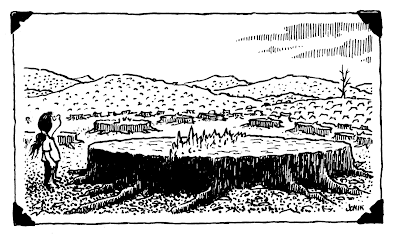
Destroying the environment to save it
Pseudo-green energy will wreak devastation, pretending to prevent exaggerated climate harm
By Paul Driessen | Watts Up With That? | May 31, 2020
“We had to destroy the village in order to save it.” The infamous Vietnam era quotation may or may not have been uttered by an anonymous US Army major. It may have been misquoted, revised, apocryphal or invented. But it quickly morphed into an anti-war mantra that reflected attitudes of the time.
For Virginians and others forced to travel the path of “clean, green, renewable, sustainable” energy, it will redound in modern politics as “We had to destroy the environment in order to save it.”
Weeks after Governor Ralph Northam signed Virginia’s “Clean Economy Act,” which had been rushed through a partisan Democrat legislature, Dominion Energy Virginia announced it would reach “net zero” greenhouse gas emissions by 2050. To do so, the utility company will raise family, business, hospital and school electricity bills by 3% every year for the next ten years – as these customers and state and local governments struggle to climb out of the financial holes created by the ongoing Coronavirus lockdown.
Just as bad, renewable energy mandates and commitments from the new law and Dominion’s “integrated resource plan” will have major adverse impacts on Virginia and world environmental values. In reality, Virginia’s new “clean” economy exists only in fantasy land – and only if we ignore “clean” energy CO2 emissions, air and water pollution, and other environmental degradation around the world.
Dominion Energy plans to expand the state’s offshore wind, onshore solar and battery storage capacity by some 24,000 megawatts of new “renewable” energy by 2035, and far more after that. It will retain just 9,700 MW of existing natural gas generation, and only through 2045, build no new gas-fired units, and retire 6,200 megawatts of coal-fired generation. This will reduce in-state carbon dioxide emissions, but certainly won’t do so globally. The company intends to keep its four existing nuclear units operating.
To “replace” some of its abundant, reliable, affordable fossil fuel electricity, Dominion intends to build at least 31,400 megawatts of expensive, unreliable solar capacity by 2045. The company estimates that will require a land area some 25% larger than 250,000-acre Fairfax County, west of Washington, DC. That means Dominion Energy’s new solar facilities will blanket 490 square miles (313,000 acres) of beautiful croplands, scenic areas and habitats that now teem with wildlife.
That’s almost half the land area of Rhode Island, eight times the District of Columbia, 14 times more land than all Fairfax County parks combined – blanketed by imported solar panels. Still more land will be torn up for access roads and new transmission lines. All this is just for Dominion Energy’s solar panels.
The panels will actually generate electricity maybe 20-25% of the year, once you factor in nighttime hours, cloudy days, and times when the sun is not bright enough to generate more than trifling electricity.
Dominion and other Virginia utility companies also plan to import and install 430 monstrous 850-foot-tall bird-chopping offshore wind turbines – and tens of thousands of half-ton battery packs, to provide backup power for at least a few hours or days when the sun isn’t shining and the wind isn’t blowing. The batteries will prevent the economy from shutting down even more completely during each outage than it has during the Corona lockdown. Similar policies across America will impact hundreds of millions of acres.
Most of these solar panels, wind turbines and batteries – or their components, or the metals and minerals required to manufacture those components – will likely come from China or from Chinese-owned operations in Africa, Asia and Latin America … under mining, air and water pollution, workplace safety, fair wage, child labor, mined land reclamation, manufacturing and other laws and standards that would get US and other Western companies unmasked, vilified, sued, fined and shut down in a heartbeat.
It is those minimal to nonexistent laws and regulations that govern most of the companies and operations that will supply the “clean” technologies that will soon blight Virginia landscapes and serve the new “clean” Virginia economy. As Michael Moore observes in his new film, Planet of the Humans, other states that opt for “clean” energy will face the same realities.
Thus far, no one has produced even a rough estimate of how much concrete, steel, aluminum, copper, lithium, cobalt, silica, rare earth metals and countless other materials will be needed. All will require gigantic heavy equipment and prodigious amounts of fossil fuels to blast and haul away billions of tons of rocky overburden; extract, crush and process tens of millions of tons of ores, using acids, toxic chemicals and other means to refine the ores; smelt concentrates into metals; manufacture all the millions of tons of components; and haul, assemble and install the panels, turbines, batteries and transmission lines, setting them on top of tens of thousands of tons of concrete and rebar. All of it beyond Virginia’s borders.
No one has tallied the oil, natural gas and coal fuel requirements for doing all this “Virginia Clean Economy” work – nor the greenhouse gases and actual pollutants that will be emitted in the process.
Nothing about this is clean, green, renewable or sustainable. But Virginia politicians and Dominion Energy officials have said nothing about any of this, nor about which countries will host the mining and other activities, under what environmental and human rights standards.
Will Virginians ever get a full accounting? Just because all of this will happen far beyond Virginia’s borders does not mean we can ignore the global environmental impacts. Or the health, safety and well-being of children and parents in those distant mines, processing plants and factories.
This is the perfect time to observe the environmentalist creed: think globally, act locally. Will that be done?
Will Dominion and Virginia require that all these raw materials and wind, solar and battery components be responsibly sourced? Will it require independently verified certifications that none of them involve child labor, and all are produced in compliance with US and Virginia laws, regulations and ethical codes for workplace safety, fair wages, air and water pollution, wildlife preservation, cancer prevention and mined lands reclamation? Will they tally up all the fossil fuels consumed, and pollutants emitted, in the process?
Science journalist, businessman and parliamentarian Matt Ridley says wind turbines need some 200 times more raw materials per megawatt of power than modern combined-cycle gas turbines. It’s probably much the same for solar panels. Add in the millions of wind turbines, billions of solar panels and billions of backup batteries that would be required under a nationwide Green New Deal, and the combined US and global environmental, human health and human rights impacts become absolutely mindboggling.
If you ignore all the land and wildlife impacts from installing the wind turbines, solar panels, batteries and transmission lines – you could perhaps call this “clean energy” and a “clean economy” within Virginia’s borders. But not beyond those borders. This is a global issue, and the world would likely be far better off if we just built modern combined-cycle gas turbines (or nuclear power plants) to generate reliable electricity – and avoided all the monumental human and ecological impacts of pseudo-renewable energy.
When it’s time to select sites for these 490 square miles of industrial solar facilities, will Virginia, its county and local governments, its citizens, environmentalist groups and courts apply the same rigorous standards, laws and regulations that they demand for drilling, fracking, coal and gas power plants, pipelines, highways, timber cutting and other projects? Will they apply the same standards for 850-foot-tall wind turbines and 100-foot-tall transmission lines as they demand for buried-out-of-sight pipelines?
Virginia’s Clean Economy Act will also plunge almost every project and jurisdiction into questions of race, poverty and environmental justice. Dominion Energy and other utility companies will have to charge means-tested rates (even as rates climb 3% per year) and exempt low-income customers from some charges. They will have to submit construction plans to “environmental justice councils” – even as the companies, councils and politicians ignore the rampant injustices inflicted on children and parents slaving away in Chinese, African and Latin American “clean energy” mines, processing plants and factories.
Government officials, utility industry executives, environmentalists and anyone else who promotes wind, solar, battery and biofuel energy need to explain exactly how they plan to address these issues. Future town hall meetings and project approval hearings promise to be raucous, entertaining and illuminating.
Paul Driessen is senior policy analyst for the Committee For A Constructive Tomorrow (www.CFACT.org) and author of books and articles on energy, environment, climate and human rights issues.
Michael Moore film Planet of the Humans removed from YouTube
By Paul Homewood | Not A Lot Of People Know That | May 26, 2020
Regardless of the so-called copyright issues, this is clearly a politically motivated attempt to censor the film, as Toby Smith himself admits to the Guardian :
YouTube has taken down the controversial Michael Moore-produced documentary, Planet of the Humans in response to a copyright infringement claim by a British environmental photographer.
The movie, which has been condemned as inaccurate and misleading by climate scientists and activists, allegedly includes a clip used without the permission of the owner Toby Smith, who does not approve of the context in which his material is being used.
In response, the filmmakers denied violating fair usage rules and accused their critics of politically motivated censorship.
Smith filed the complaint to YouTube on 23 May after discovering Planet of the Humans used several seconds of footage from his Rare Earthenware project detailing the journey of rare earth minerals from Inner Mongolia.
Smith, who has previously worked on energy and environmental issues, said he did not want his work associated with something he disagreed with. “I went directly to YouTube rather than approaching the filmmakers because I wasn’t interested in negotiation. I don’t support the documentary, I don’t agree with its message and I don’t like the misleading use of facts in its narrative.”
Planet of the Humans director Jeff Gibbs said he was working with YouTube to resolve the issue and have the film back up as soon as possible.
Watch the full documentary on Bitchute.
Featured Video

Prof. Ted Postol: Iran Already Achieved Nuclear Deterrence Against Israel
or go to
Aletho News Archives – Video-Images
From the Archives
How the occupied mentality syndrome works
Saudi Arabia on the American chessboard – Part 3
By B. J. Sabri | American Herald Tribune | June 27, 2016
Read part 2: “The occupied mentality Syndrome“
Previously I argued whether Saudi Arabia’s repeated involvements in U.S. interventions and wars stem from free national will or in response to a specific condition. For starters, in Saudi Arabia there is no national will. In Saudi Arabia, the national will is the will of the Al Saud clan. Still, when a major Arab state allies itself with a superpower that committed unspeakable crimes against humanity in almost every Arab country, then something is wrong. This fact alone should compel us to examine the U.S.-Saudi relation for one exceptional reason. As a result of the U.S.-Saudi wars, hundreds of thousands of people in Afghanistan, Iraq, Iran, Libya, Syria, Yemen, and Somalia have lost their lives. Millions became displaced in their own homelands. And millions more rendered refugees.
Attributing the Saudi policies to the bonds of “partnership” with the U.S. is frivolous. There are no bonds between these two thugs except those of business, military deals, secret plots, and wars. Proving this point, bonds such as these have no space for the American and Saudi peoples to share significant cultural or societal exchanges. If partnership is not the reason for the Saudi contribution to the U.S. strategy of empire and imperialism, then another reason must exist.
This leads to three possibilities. … continue
Blog Roll
 Aletho News
- NIAID/NIH and USDA Fund Bioengineered Chimeric Influenza Viruses Built Using Pandemic H1N1 Components: Journal ‘Science Advances’
- Hezbollah hits Israeli warship off Lebanon’s coast, sets it aflame
- Iran slams US strikes on B1 bridge, Mahshahr petrochemical plants as ‘blatant acts of state terrorism’
- In letter to UN chief, Araghchi warns of dire consequences of US-Israeli attacks on Iran’s nuclear facilities
- Why the CIA conspiracy to invade Iran with Kurdish militias failed
- Why Are Upbeat US Claims About Mission to Rescue Pilot ‘Highly Questionable’?
- Aircraft destroyed during US ‘rescue’ of downed F-15 pilot cost more than $100 million each
- Washington University removes professor who condemned US-Israeli war on Iran
- Russia Warns of Retaliation as UK Authorizes Seizure of Vessels
- Serbia thwarts plot to bomb Russia-Hungary gas pipeline – Vucic
- If Americans Knew
- In Iran, Israel-US take aim at “reason, research, and freedom of thought” – Daily Update
- US loses planes over Iran, Israel downgrades Lebanon war goals – Daily Update
- Israel Is Blocking Palestinians from Easter at Church Where Jesus Resurrected
- Plot to assassinate Palestinian activist follows harassment campaign promoted by Zionist groups and elected officials
- Prominent New York synagogue hosts presentation on why U.S. Jews should support the ethnic cleansing of Gaza
- Tapper vs. Piker: Is the CNN Anchor Auditioning for David Ellison?
- Shouldn’t Democrats Be Able to Condemn Genocide?
- Israel-US kill negotiators, destroy civilian structures, but Iran’s military capabilities still largely intact – Daily Update
- ‘War crime’: Global condemnation as Israeli ministers celebrate death penalty law targeting Palestinian prisoners
- 7 Ways Israel Is Turning Lebanon Into Gaza
- No Tricks Zone
- An Inconvenient Tree: Uncovered In Alps… Europe Much Warmer Than Today 6000 Years Ago
- New Study Reports A 60% Slowdown In Greenland’s Ice Loss Rate In The Last Decade
- Low Intensity Tornado Wrecks Major Solar Farm, Creating A Potential Toxic Dump
- New Study Finds Warming Saves Lives…Cold Temperatures 12 Times More Deadly Than Excess Heat
- German Science Blog Accuses PIK Climate Institute Of Hallucinating Climate Tipping Points
- Devastating Assessment Of Comirnaty Vaccine By Former Senior Pfizer Europe Toxicologist
- New Study: CO2 Is ‘Effectively Negligible’ As An Explanatory Climate Change Factor Since 2000
- Former Pfizer Toxicologist Dr. Helmut Sterz Tells Bundestag Hearing Pfizer Vaccine Should Have Never Been Approved
- Energy Expert: Germany’s Nuclear Phaseout Was A “500 Billion Euro Mistake”
- New Research: South Australia’s Mid-Holocene Sea Surface Temperatures Were 4°C Warmer Than Today
 Aletho News