Petitioning Against Climate Alarmism Goes Global
By Larry Bell ~ PA Pundits – International ~ August 21, 2019
A petition being submitted by hundreds of independent climate scientists and professionals from numerous countries to heads of the European Council, Commission and Parliament declares “There is No Climate Emergency.”
Briefly summarized, the request for consideration conveys five urgent messages:
- Climate change is real and has been occurring with nature-driven cold and warm cycles for as long as the planet has existed.
- There should be no surprise that the Earth has been warming through natural causes since the last Little Ice Age ended around 1870. Actual temperature increases, however, are far less than predicted by theoretical climate models.
- There is no real evidence that anthropogenic (human-caused) CO2 emissions are a major or dangerous warming influence. They instead offer great benefits to agriculture, forestry and photosynthesis that is the basis for life.
- There is also no scientific evidence that increasing CO2 levels are causing more natural disasters. However, CO2-reduction measures do have devastating impacts on wildlife (e.g. wind turbines), land use (e.g. forest clearance), and vital energy systems.
- Energy policies must be based on scientific and economic realities — not upon a harmful and unrealistic “2050-carbon-neutral policy” driven by unfounded climate alarm.
The petition concludes by recommending the recognition of clear difference in policies addressing the Earth’s environment through good stewardship versus Earth’s climate, the latter of which “is largely caused by a complex combination of natural phenomena we cannot control.”
This recent petition to EU leaders signed by approximately 100 Italian scientists from many prominent organizations urges recognition of the same basic realities.
The Italian petition calls attention to the fact that the planet has previously been warmer than the present period, despite lower atmospheric CO2 concentrations. Warming periods have been repeated about every thousand years, including “the well-known Medieval Warm Period, the Hot Roman Period, and generally warm periods during the Optimal Holocene period.”
Most recent climate warming observed since 1850 followed the Little Ice Age – the coldest period of the last 10,000 years. “Since then, solar activity, following its [previous cooling-influence] millennial cycle, has increased by heating the Earth’s surface.”
The notification advises that climate, “the most complex system on our planet,” needs to be addressed with scientific methods that are “adequate and consistent with its level of complexity.”
This system “is not sufficiently understood. And while CO2 is indisputably a greenhouse gas, “according to [UN Intergovernmental Panel on Climate Change] IPCC itself, the climate sensitivity to its increase in the atmosphere is still extremely uncertain.”
The petition states that “In any case, many recent studies based on experimental data estimate that the climate sensitivity to CO2 is considerably lower than estimated by the IPCC models.” Accordingly, all evidence suggests that such models “overestimate the anthropic [human] contribution and underestimate the natural climatic variability, especially that induced by the sun, the moon, and ocean oscillations.”
Likewise, alarmist media claims that extreme weather events, such as hurricanes and cyclones, are increasing in frequency are entirely inaccurate and typically far more directly tied to natural ocean oscillation cycles.
Again, the Italian signatories from numerous universities and research organizations take strong issue against “deplorable propaganda” claiming that carbon dioxide is a pollutant rather than a molecule that is indispensable to life on our planet.
Accordingly, given “the crucial importance that fossil fuels have for the energy supply of humanity,” the petitioners urge that the EU should not adopt economically burdensome and unwarranted CO2 reduction policies under “the illusory pretense of governing the climate.”
The petitioners also emphasize that while credible facts must be based upon scientific methods, not determined by numbers of supporting theorists, there is no alleged “consensus” among specialists in many and varied climate disciplines suggesting that human-influenced climate change presents an imminent danger. They point out that many thousands of scientists have previously expressed dissent with alarmist anti- fossil energy conjecture.
More than 31,000 American scientists from diverse climate-related disciplines signed a Global Warming Petition Project rejecting limits on greenhouse gas emissions attached to the 1977 Kyoto Protocol and similar proposals. The list of signatories included 9,021 Ph.D.s, 6,961 at the master’s level, 2,240 medical doctors, and 12,850 carrying a bachelor of science or equivalent academic degree.
A 12-page petition attachment was introduced with a cover letter issued by Fredrick Seitz, a past president of the National Academy of Sciences and former president of Rockefeller University. It read, in part:
“This treaty is, in our opinion, based upon flawed ideas. Research data on climate change do not show that human use of hydrocarbons is harmful. To the contrary, there is good evidence that increased atmospheric carbon dioxide is environmentally helpful.”
The letter added, “The proposed agreement would have very negative effects upon the technology of nations around the world, especially those that are currently attempting to lift from poverty and provide opportunities to over 4 billion people in technologically undeveloped countries.”
Gratefully, an American Congress at that time listened to that sage advice and unanimously agreed. We can only fervently hope that more current legislators will continue to be equally wise.
Larry Bell contributes posts at the CFACT site. He heads the graduate program in space architecture at the University of Houston. He founded and directs the Sasakawa International Center for Space Architecture. He is also the author of “Climate of Corruption: Politics and Power Behind the Global Warming Hoax.”
When your beverage of choice is tritium
Welcome to France
By Linda Pentz Gunter | Beyond Nuclear | August 11, 2019
The headline — Police probe opened into rumours of unsafe tap water in Paris — raised hopes that nuclear operators might finally be held accountable for what appears to be routine radioactive contamination of drinking water in France.
News stories had circulated after a French radiological testing laboratory published findings on June 17, 2019, that more than six million French residents were drinking water contaminated with tritium released by the country’s nuclear power plants and other nuclear installations.
The laboratory — L’association pour le contrôle de la radioactivité dans l’Ouest or ACRO — raised the alarm because, it said, the presence of tritium implied there could be other radioactive isotopes in the water as well. None of the tritium levels they measured on this occasion, exceeded those French health authorities have established as “safe”, but research in the past has found higher levels, especially in groundwater, rivers and streams.
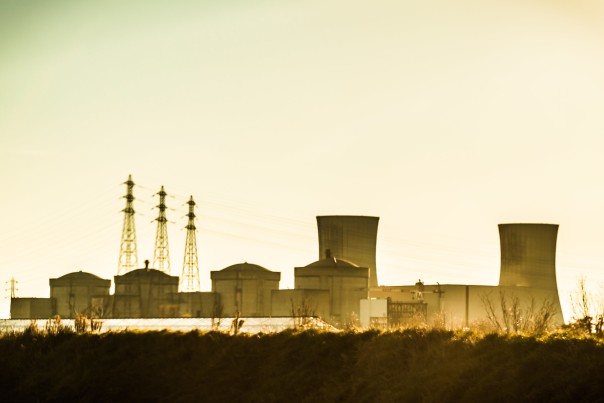
The Tricastin nuclear site — source of multiple leaks and radioactive releases over decades. (Creative Commons/xklima)
That “acceptable” level is 100 Becquerels per liter, not quite as arbitrary as the shocking 10,000 Bq/L level set by the World Health Organization, in thrall to the nuclear power-promoting International Atomic Energy Agency through a 1959 agreement.
The cities affected included Paris and its suburbs, and other large population areas in the Loire and Vienne regions of France such Orléans, Tours and Nantes.
Unsurprisingly, the story spread like wildfire, especially across social media, causing alarm among residents in the communities cited — 268 in all.
But the police investigation in Paris was not of EDF, the country’s chief nuclear facility operator. It was to root out fear-mongering purveyors of “fake news” among the citizenry who, according to the French state, were unnecessarily spreading panic among the populace by claiming drinking water containing tritium is unsafe.
It is.
The independent radiological testing lab CRIIRAD (Commission for Independent Research and Information on Radioactivity) denounced what it called the “trivialization of tritium contamination” and warned French citizens not to be lulled by the 100 Bq/L levels set by the authorities and especially not by the WHO’s 10,000 Bq/L standard. CRIIRAD said the level for tritium in drinking water should be set between 10 and 30 Bq/L.
For context, in our report, Leak First, Fix Later, we noted that the “naturally occurring” levels of tritium found in surface and groundwater is, at its highest, 1 Bq/l. Therefore, tritium is almost non-existent in water in nature.
To CRIIRAD, it is therefore all the more outrageous that that the levels for radiological contamination in France are set at “more than 100 times higher than the maximum allowed for chemical carcinogens.”
Tritium is radioactive hydrogen and is therefore assimilated by all living things as water. It has a half life of 12.3 years. It is produced in huge quantities in nuclear reactor cores, then released into the environment as a gas or in liquid discharges. Tritium cannot be filtered out of water and tritium released into the air can return in rainfall. All nuclear power plants release tritium, and nuclear reprocessing facilities — such as the one at La Hague on the French north coast — release even larger amounts.
These releases, including into rivers, streams and the sea, are regulated by authorities but, as CRIIRAD points out, at levels that are not so much safe as unavoidable, effectively granting nuclear installations “permission to pollute.”
“The liquid and atmospheric releases of tritium cause contamination of the air, water, the aquatic and terrestrial environment and the food chain,” wrote CRIIRAD in a statement put out after the tritiated drinking water news broke.
When rumors began to fly that drinking tap water had been banned, authorities quickly stepped in to “reassure” people that the levels of tritium in the water — already not actually safe according to CRIIRAD — were of no concern.
The criminality of nuclear plants across France releasing huge amounts of tritium into the environment was quickly turned on its head. Instead, in a sinister but not entirely unpredictable turn of events, given that France is a nuclear state, it would be ordinary citizens who would be committing a “crime” if they were found to be “publicizing, spreading and reproducing false information intended to cause public disorder,” according to an AFP article.
In reality, there was genuine cause for concern. ACRO had found levels of tritium in drinking water at 30 Bq/L on five occasions, then at 55 Bq/L and finally at 310 Bq/L in the Loire river.

Picture entitled “Water makes milk.” In France, is that milk radioactively contaminated? (Photo: Graham Knott/Creative Commons)
But drinking tritiated water is not the end of the story — or the danger. Even though tritiated water may pass through the human body in about 10 days, about 10% of it binds organically inside the body. Organically bound tritium remains in the body for far longer than free tritium. According to CRIIRAD, this means that beta radiation from tritium can endure inside the body for years, causing chromosomal mutations, cancers and genetic mutations.
Tritium also binds organically to organisms in the environment such as aquatic plants present in rivers and streams into which nuclear facilities release tritiated water, or crops irrigated using water contaminated with tritium. These are in turn ingested by animals and humans — setting in motion tritium’s journey up the food chain.
The CRIIRAD statement notes the systematic downplaying of these risks by the nuclear safety regulator and other French governmental authorities.
This was never more apparent than during a law suit brought by CRIIRAD, the Sortir du nucléaire network, Stop Nucléaire 26-07 and FRAPNA Drôme in 2013 after the huge multi-unit Tricastin nuclear site leaked tritium into the groundwater at levels as high as 700 Bq/L.
EDF, Tricastin’s operator, claimed then that “tritium is a completely harmless radioactive isotope.”
Of course there is no such thing as a “safe dose.” Even the august and certainly not anti-nuclear National Academy of Sciences agrees. And as CRIIRAD points out, every dose increases the risk. “Since all living matter is made up of hydrogen atoms, a part of any tritium released will eventually be found in the cells of living organisms, including in the DNA, creating long-term internal irradiation that increases cancer risks (among others),” said the lab.
What of course got forgotten in all the dismissal and downplay by authorities — and in the attempts to criminalize those who sounded the alarm — is that some members of the population are more vulnerable than others when it comes to radiation exposure.

There is an Europe-wide movement to abolish the Euratom Treaty. (Photo: PLAGE)
Even while a daily dose of tritiated drinking water is not good for anyone, it is far more dangerous for babies and young children and for women, especially pregnant women. But those already bad standards don’t take the most vulnerable into account.
So how did the 100 BQ/L limit come about? It is no surprise to learn that it was the influence of Euratom (no conflict there) that boosted it that high.
After CRIIRAD had pushed for a 10 Bq/L limit before the European Parliament in 2012-2013, that body settled on a 20 Bq/L limit. But its decision was swept aside after “experts” at Euratom insisted on the 100 Bq/L limit. That, among other issues, is what spurred a Europe-wide movement to abolish the Euratom Treaty.
Clearly, what should have happened in France is an investigation into the cause and source of the tritium in drinking water. Instead, there was a propaganda campaign to neutralize concern and vilify those who sounded the alarm on safety. In Nuclear France, it’s never plus ça change, but always la même chose.
Brazil’s toxic pesticides ‘affecting people all over the world’ through agricultural exports
RT | July 30, 2019
“EU-banned pesticide[s are] being manufactured in the EU, and then coming back to citizens in the EU, in the food we eat,” environmental journalist and founding member of the Green Economic Institute think tank Oliver Tickell told RT, explaining that as one of the largest soy exporters in the world, Brazil supplies a significant quantity of the feed that cattle and other livestock worldwide consume. European consumers tucking into a juicy steak have no idea that the creature they’re eating might have been nourished on soy sprayed with highly toxic pesticides.
“This is not just a problem for Brazil and Brazilian people and people exposed in the countryside to these pesticides and consumers and farmers,” Tickell warned. “It is actually affecting people all over the world through Brazil’s agricultural exports.”
ANVISA, the Brazilian public health regulatory agency, relaxed pesticide regulations last week so that only those chemicals with lethal potential can be classified as “extremely toxic,” triggering a massive backlash from environmental groups, human rights organizations, and food safety advocates. The fervently pro-business government of President Jair Bolsonaro has already approved 262 pesticides this year, 82 of which are classed as “extremely toxic,” as he follows through on campaign promises to demolish environmental regulations and open up protected rainforest lands to mining and agriculture.
Dozens of pesticides banned or strictly regulated in the EU, including paraquat and chlorpyrifos, were already permitted for use in Brazil before Bolsonaro took power, and the country uses approximately 400,000 tons of pesticides per year, according to Human Rights Watch. While Agriculture Minister Tereza Cristina has flatly denied Brazil uses any more pesticides than any other country, attributing such allegations to “data manipulation” and accusing critics of “terrorism,” EcoWatch claims the country consumes more pesticides per capita than any other nation.
Israel’s Latest ‘Security Problem’: Who’s to Blame for Gaza’s Environmental Crisis
By Ramzy Baroud | MEMO | July 15, 2019
Writing in The Jewish Journal under the title, “A Spillover Crisis: How Gaza’s Water Shortage Affects Israel”, Dominik Doehler explains the direct link between Gaza’s water problems and Israel.
Doehler offered a scientific explanation behind the besieged Strip’s water crisis, but when it was time to assign responsibility, something went wrong. Instead of recognising how Israel’s war and protracted siege destroyed Gaza’s infrastructure, the writer blamed the “ongoing conflict between Hamas and the Palestinian Authority” for Gaza’s suffering.
“Today, those who pay the price of the conflict between the Palestinian factions are the two million people in Gaza,” Doehler writes, without any mention of Israel’s primary role in any of this.
The dishonesty of the writer should not be entirely surprising, considering the biased nature of the publication. This is particularly symptomatic of Israeli and pro-Israeli media which often shy away from acknowledging the facts, but deflect responsibility from Israel, and point the finger of blame on Palestinians only.
That said, it is interesting that Gaza’s growing humanitarian crisis is finally registering in Israel as a pressing problem requiring action. However, it is not the impact of the crisis on the population of Gaza that is sounding the alarm bells in Tel Aviv, but rather the potential environmental damage Gaza’s ongoing misery may cause Israel.
On June 3, researchers from Israel’s Tel Aviv and Ben-Gurion universities presented a report commissioned by the environmental organization, EcoPeace Middle East, in which they warned that “the collapsing water, sewage and electricity infrastructure in the Gaza Strip pose a material danger to Israel’s groundwater, seawater, beaches and desalination plants”.
One would expect any report on the environmental situation in Gaza to focus on the fact that nearly two million Palestinians in the Strip are living in inhumane conditions due to a relentless 12-year Israeli blockade and repeated devastating military assaults which are rending the area “uninhabitable by 2020“.
Instead, the report has implied that the residents are solely responsible for the imminent environmental catastrophe in Gaza, which is threatening the security and well-being of Israeli citizens. The Israeli newspaper, Haaretz, which published a detailed report on the presentation, also spun the issue as a matter of national security.
But what Israel has now identified as a “national security problem” is indeed a disaster of its own making. The occupation, colonisation, dispossession and aggression against Palestine and the Palestinians have caused untold environmental damage to the extent that now, even the Israeli occupier is suffering.
The environmental situation in Gaza is indeed dire at the moment, but it is not the Palestinians who made it so. Neither the “rapid population growth”, nor neglect or ignorance of residents that are its root causes. Countless reports by the United Nations and other organisations have documented in detail how and why the main culprit is Israel, its violent assaults on Gaza and its merciless siege.

Israeli settlers flood Khan al Ahmar with wastewater [Twitter]
Take the problem of untreated sewage ending up in the sea, which is causing issues for Israeli beach-goers and water desalination plants. The reason why Gaza’s sewage is getting disposed of in this “irresponsible” way is that water treatment plants are not operational; they were targeted in the 2014 Israeli assault on the Strip and were never rebuilt because the Israeli siege does not allow for construction materials and spare parts to be brought in.
Untreated sewage is part of the larger water crisis in Gaza. As the report rightly points out, Gaza residents are overusing the aquifer under the Strip, which has become increasingly contaminated with seawater and chemicals and which constitutes the only source of freshwater for residents because of the involuntary separation with the West Bank.
The reason for Palestinians in Gaza being unable to establish a proper water management system is again Israel’s doing. Israel has repeatedly bombed its water infrastructure, including water pipes, wells and other facilities, and the debilitating Israeli siege has prevented the local authorities from fixing it and building a water desalination plant.
Gaza’s water problem is not only an annoyance for the Israelis but a potential source of an epidemic for the Palestinians. Already, diarrheal diseases have doubled, reaching epidemic levels, according to the Palestinian Ministry of Health, while salmonella and typhoid fever are also on the rise.
Then there is the problem with rubbish which Palestinians are burning, hence “polluting Israeli air”. As Cambridge University academic, Ramy Salemdeeb, has pointed out, Gaza has been unable to develop a proper waste management system because of economic restrictions due to the Israeli siege and a “limited land availability” because of its isolation from the rest of the occupied Palestinian territories.
Given that Israel is a settler-colonial project, the overexploitation of the colonised land to the detriment of the environment and the local population is naturally a part of its modus operandi.
Indeed, all the land Israel has taken and occupied has suffered from environmental degradation in one way or another, with its harmful effects being conveniently shifted towards Palestinians area, villages and cities.
If Israel continues to treat the issue as a “security problem” it will never get resolved because at the heart of it is the destructive logic of a colonial enterprise which seeks to exploit both land and people with no regard for nature and human wellbeing.
In other words, Israel will never achieve security – environmental or otherwise – as long as it continues to oppress the Palestinians, occupy their land and ravage the environment. Israeli air, water and the overall environment will never be immune from the Israeli-made disasters in occupied Palestine.
60 Years Since the Largest U.S. Nuclear Accident and Captured Federal Agencies
By Robert Dodge | Common Dreams | July 13, 2019
60 years ago today the largest nuclear accident in U.S. history occurred above the Southern California community of Simi Valley when the Santa Susanna Field Laboratory (SSFL) site suffered a partial nuclear meltdown. That accident, kept secret for two decades, has resulted in ongoing local health effects that persist to this day and has pitted the community health and wellbeing against corporate financial interests and captured government agencies.
SSFL, a 2850 acre site, currently owned by the Department of Energy, NASA and the largest owner being Boeing, is a former nuclear reactor and rocket engine testing site. It is located in the hills above the Simi and San Fernando Valleys, at the headwaters of the Los Angeles River. Located about 25 miles from downtown Los Angeles, originally far from population areas, the area now has around 500,000 people within 10 miles of the site. Over its years of operation, there were 10 non-contained nuclear reactors that operated on the site as well as plutonium and uranium fuel fabrication facilities and a “hot lab” where highly irradiated fuel from around the U.S. nuclear complex was shipped for decladding and examination. In addition there were tens of thousands of rocket engine tests conducted over the many years of operation.
The Sodium Reactor Experiment or SRE was the first reactor to provide commercial nuclear power to a U.S. city in Moorpark. Then on July 13, 1959, a partial meltdown occurred in which a third of the fuel experienced melting. Dr. Arjun Makhijani estimated the incident released 260 times the amount of radioactive iodine as was released from the 1979 Three Mile Island accident.
As a result of this partial meltdown and numerous other reactor accidents, radioactive fires, massive chemical contamination in handling of the radioactive and chemically contaminated toxic materials that were routinely burned in open pits through the years at the site, it remains one of the most highly contaminated sites in the country. It has widespread contamination with radionuclides such as cesium-137, strontium-90, plutonium-239 and toxic chemicals perchlorate, trichloroethylene (TCE), heavy metals and dioxins.
In 2012, the U.S. EPA released the results of an extensive radiological survey of Area IV and the Northern Buffer Zone at SSFL, and found 500 samples with radioactivity above background levels, in some cases, thousands of times over background.
These toxins are associated with a multitude of health risks. Many are cancer causing, others are neurotoxins causing a host of issues including learning disabilities, birth defects and many other health effects. The most vulnerable tend to be women and children. Through the years, there have been many health studies performed. In 2006, a cluster of retinoblastoma cases, a rare eye cancer affecting young children, was identified within an area downwind of the site. The retinoblastoma mothers meeting at Los Angeles’s Children’s Hospital ultimately formed a chemo carpool.
The Public Health Institute’s 2012 California Breast Cancer Mapping Project found that the rate of breast cancer is higher in Thousand Oaks, Simi Valley, Oak Park and Moorpark than in almost any other place in the state.
In addition, studies by cancer registries found elevated rates of bladder cancer associated with proximity to SSFL.
There have been numerous additional studies including one by the UCLA School of Public Health that found significantly elevated cancer death rates among both the nuclear and rocket workers at SSFL from exposures to these toxic materials. Another study by UCLA found offsite exposures to hazardous chemicals by the neighboring population at levels exceeding EPA levels of concern.
A study performed for the Federal Agency for Toxic Substances and Disease Registry found the incidence of key cancers, those types known to be associated with the contaminants on site, were 60% higher in the offsite population within 5 miles of the site compared to further away.
Unfortunately, these contaminants do not stay on site. When it rains, they wash off site to the Valleys below. When it blows, they become airborne and migrate offsite. The 2017 Woolsey fire is a most recent example. After initially denials, officials finally admitted the fire actually started on the field lab site burning across almost the entire site and potentially spreading toxic chemicals over the basin. Unfortunately, no adequate monitoring was performed and only began days after the flames had moved on.
Ultimately, the California Department of Toxic Substances Control (DTSC), has regulatory oversight of the cleanup and of the responsible parties which include NASA, the Department of Energy (DOE), and Boeing. In 2010, the Department of Energy and NASA signed historic agreements with DTSC that committed them to cleaning up all detectable contamination. The agreements, or Administrative Orders on Consent (AOC), specified that the cleanup was to be completed by 2017. Boeing, which owns most of the SSFL property, refused to sign the cleanup agreements. Nevertheless, DTSC said that its normal procedures require it to defer to local governments’ land use plans and zoning, which for SSFL allow agricultural and rural residential uses. DTSC said SSFL’s zoning would thus require Boeing to conduct a cleanup equivalent to the NASA/DOE requirements.
In response, Boeing, currently under scrutiny after the 737 MAX crashes, launched a massive “greenwashing” campaign in an attempt to convince the public that SSFL’s contamination was minimal, never hurt anyone, and that the site doesn’t need much of a cleanup because it is going to be an open space park. Boeing prefers a re-designation to recreational cleanup standards that are based on someone being on the site infrequently limited to a few hours per week . But people who live near SSFL don’t live in recreational areas, they live in residential areas and as long as the site isn’t fully cleaned up, they will still be at risk of exposure to SSFL contamination.
Recently, both the Dept. of Energy and NASA, following Boeing’s lead, have said that they too want to break out of their legal cleanup agreements and also cleanup to a weak recreational standard. So, all three responsible parties are completely disregarding the state of California’s regulatory authority. In effect they are asserting that they, the polluters, get to decide how much of their contamination gets cleaned up. That violates federal Resource Conservation and Recovery Act laws as well as the AOC cleanup agreements. Now more than ever, we need our elected representatives to stand up and demand the existing cleanup agreements be upheld.
Melissa Bumstead, an adjacent West Hills resident whose daughter has twice survived a rare leukemia and who has mapped over 50 other rare pediatric cancers near SSFL, is bringing fresh energy and new voices into the cleanup fight. Her Change.org petition has now been signed by over 650,000 people and is helping to galvanize the community to fight for the full, promised cleanup.
Thus far, almost all local and federal elected officials have voiced concern that the cleanup agreements are being broken, especially in the wake of the Woolsey Fire. What is needed now is action. People ask how to protect themselves. The best thing people can do is fight for the full cleanup of SSFL. Each of has an opportunity to help this effort. We must contact all of our local officials and demand action today for a full cleanup of SSFL.
Robert Dodge is a family physician practicing in Ventura, California. He is the Co-Chair of the Security Committee of National Physicians for Social Responsibility. He is the President of Physicians for Social Responsibility Los Angeles.
Parents of French babies born with deformities angry after official probe yields no answers
RT | July 13, 2019
A much-delayed government report failed to identify the cause in a spate of arm malformations across France, and despite calls for a more in-depth study, scientists say a definitive explanation may never be found.
Commissioned last year, the 265-page report examined 18 cases of congenital deformities since 2007 in four different regions across the country, studying whether they were linked by a common cause, such as environmental pollution, toxic drug exposure, or genetic damage.
“Scientific studies screening, questionnaires and local environment testing have been conducted by Sante Publique France which has not identified an obvious cause,” the public health body, which had been asked repeatedly about the case by RT, said in its summary.
The commission did admit that there is a “cluster” of cases in the commune of Guidel in the north-western department of Morbihan, where three babies missing arms were born in 22 months. But for the region of Ain in the east of the country, where eight such babies were born between 2009 and 2014, researchers said there was no statistical anomaly or telling pattern.
Pesticides blamed
But parents and activists who were present during the unveiling of the report were not satisfied, with some saying that only a superficial study was conducted, that some cases were excluded due to arbitrary cut-off points, and that the criteria for why some cases were dismissed as statistical noise were never explained.
“I did not expect big news, but I am surprised by the removal of ‘clusters’, it seems scandalous,” Samuel Bernard, the father of a daughter born without a hand in Morbihan, told France Info.
Bernard complained that an independent body was not put in charge, and bemoaned the lack of communication or investigation of specific hypotheses.
Emmanuelle Amar, the director of the malformations register of the Rhone-Alpes region, who helped bring the story to prominence, continues to believe that pesticides or other manmade chemical agents could be to blame.
“Exactly the same deformity, it never happened in the history of deformities,” she said following the report presentation. “The probability that it is linked to chance is more than infinitesimal. We are facing a possible health scandal.”
It is notable that the investigation said all the pregnancies occurred in the vicinity of growing cereal crops.
“We need to bring together specialists to define what kind of studies we need for this type of reporting, but the answer so far is to say: ‘We do not want to know what kind of studies because we do not want to study,’” Amar said. “And that is irresponsible.”
Field tests are poised to continue, with another report expected at the end of the year.
But there are reasons for believing that even with the best of intentions and sufficient resources, answers may be hard to come by.
One of the problems is the sheer rarity of such malformations. They occur on average in 1.7 cases each 10,000 births, and while several more cases look drastic, they could still just be a relatively random blip. Additionally, with so few cases, it gives doctors fewer children to examine among whom shared explanations could be located.
With many of the children now several years old, the evidence for whatever may have affected their mothers during pregnancy may also be long gone, particularly as the researchers don’t actually know what exactly they are looking for.
In addition to that, only 20 percent of France’s population is covered by registries that record deformities, meaning that even the true scale of the problem, or if it even exists, is impossible to ascertain without overhauling the medical records system, and collecting new data from millions.
Isabelle Taymans-Grassin, mother of another child born in Morbihan without a hand, says that while they are not giving up their fight, they despair at the chances of ever proving a certain link or punishing a culprit.
“Accountability will be impossible to find,” she said.
A race against time

Tilman Ruff’s life mission is to help rid the world of nuclear weapons
By Robert Fedele | Australian Nursing and Midwifery Journal | January 23, 2019
In 2007, Associate Professor Tilman Ruff and a small group of antinuclear activists founded the International Campaign to Abolish Nuclear Weapons (ICAN) in Melbourne. In 2017, the global nongovernmental organisation captured the first Nobel Peace Prize born in Australia after years drawing attention to the catastrophic humanitarian consequences of nuclear weapons and driving a historic UN prohibition treaty. In June 2019, Ruff, and fellow ICAN co-founder, Dimity Hawkins, were awarded Order of Australia Honours for their advocacy on nuclear disarmament.
Tilman Ruff’s life’s mission to help end nuclear weapons traces back to growing up in Melbourne in the 1980s living with the genuine fear that nuclear war could strike at any moment.
His family background passed on a profound awareness of the impacts of war.
“My family were German Christians living in communities in Palestine,” Professor Ruff explains. “My great grandparents married there. They were in turn displaced, imprisoned, and quite a few of them were killed in both World Wars and then brought to Australia as prisoners and locked up until 1947.
“So the indiscriminate trauma, loss, madness and horror of war and its terrible legacy across generations was something I heard from my grandmothers and my old people all the time.”
As an adolescent, several empowering experiences shaped Professor Ruff’s activism, including joining the movement to end Australia’s involvement in the Vietnam War and setting up the world’s first Amnesty International high school group in 1970 to support the release of a young man imprisoned for writing a political slogan on a wall.
They made the then 15-year-old Ruff truly believe he could make a difference.
A Public Health and Infectious Diseases Physician, Professor Ruff’s diverse career has included establishing the Nossal Institute for Global Health at the University of Melbourne, where he currently teaches on public health dimensions and nuclear technology, and a longstanding position as the International Medical Advisor for Australian Red Cross.
Looking back to his early days as a medical student, he reveals the presence of nuclear weapons struck him as “the most urgent global health threat and most demanding of urgent health professional attention.
“Many of us had this daily visceral fear that nuclear war could happen at any time. It was a palpable reality in your life.”
Professor Ruff suggests the birth of his daughter in 1982 added an emotional dimension that spurred him further to want to make the world a safer place for generations to come.
Soon he joined the International Physicians for the Prevention of Nuclear War (IPPNW), awarded a Nobel Peace Prize in 1985 for contributing to the end of the Cold War, where he became inspired by how effective and influential evidence-based advocacy imparted by health professionals could be.
Professor Ruff maintains overwhelming evidence shows nuclear war would cause catastrophic consequences and make it impossible to provide any effective health or humanitarian response.
The evidence is epitomised by the World Health Organization (WHO), which commissioned an expert group in 1983 to examine the issue and labelled nuclear war the greatest immediate threat to human health and welfare, with no health service in the world capable of responding to the devastation even a single nuclear weapon could inflict on a city.
“Nuclear weapons are different from any other weapons in two ways,” Professor Ruff says.
“One is the simple scale of the destruction. There have been single nuclear weapons built and tested that contained four times the explosive power of all explosives that have been used in all wars throughout human history.
“Of course, they’re qualitatively different too in producing radiation that transcends borders, that transcends its effects across generations, effects that can’t be undone, increasing the risk of cancer and genetic damage and chronic disease long-term for the lifetime of those exposed.”
Professor Ruff says recent scientific evidence points to nuclear weapons triggering climate disruption and a nuclear winter. Specifically, less than 1% of the world’s nuclear weapons targeted on cities would loft so much soot and smoke into the atmosphere that it would blanket the globe in darkness and cool the climate, decimating agriculture for decades and putting billions at risk of starvation across all corners of the globe.
“It doesn’t matter where they get used. It doesn’t matter whether you’re targeted by them or not. The idea that these gargantuan instruments of destruction could provide security for anybody is completely evidence free.”
The evolution of ICAN in Melbourne in 2007 was sparked by intense frustration and despair among members of IPPNW, and its Australian affiliate the Medical Association for Prevention of War (MAPW), that nuclear disarmament had fallen off the radar.
Importantly, Professor Ruff and his cofounders were encouraged by the success of the International Campaign to Ban Landmines and felt it could be replicated for nuclear weapons.
The plan was not to recreate a new organisation but instead form a coalition of existing organisations fixed on developing a treaty to ban nuclear weapons on account of their shattering humanitarian consequences.
“It’s got to be global, it’s got to engage young people, and balance horror, humour, hope and humanity,” Professor Ruff recalls of the group’s philosophy.
Fittingly, years of raising awareness about the dangers of nuclear weapons reached a pivotal point in July 2017 when the ICAN-led treaty to ban nuclear weapons was adopted by 122 countries at the United Nations in New York.
The treaty prohibits the use of nuclear weapons, their development, testing, stockpiling, production and threat of use, underlining that any use of these weapons contravenes the rules of international humanitarian law.
Unsurprisingly, the world’s nuclear-armed states – Russia, France, US, India, North Korea, UK, Pakistan, China and Israel – boycotted the treaty, as did many of their close allies like Australia. “They’re not only not disarming they’re actually investing massively in adding new capacities and modernising those weapons,” Professor Ruff says.
As the treaty negotiations unfolded at the UN General Assembly in New York, Professor Ruff says stories told in person by victims and survivors of nuclear bombings in Japan, together with survivors of nuclear testing around the world including Indigenous test survivors from Australia, exposed the reality of nuclear weapons like nothing else.
The room burst into joy when the treaty was adopted.
“It was a very emotional moment,” Professor Ruff recalls. “These are normally very formal and dry proceedings. When the vote happened, 122 to 1, the room just erupted with hugs, tears of joy. It was one of the most extraordinary moments you could ever witness.”
To date, 70 states have signed the treaty and 23 have ratified it.
It will enter into force once 50 states have signed and ratified it.
“It’s not the final perfect all-in-one solution that’s going to magically get rid of nuclear weapons overnight,” Professor Ruff concedes.
“But it’s the best thing that the rest of the world that doesn’t own the weapons could do.”
Professor Ruff is adamant the treaty marks a major step forward of historic significance, and through growing international support and an increased focus on stigmatisation, can finally help rid the world of nuclear weapons.
If anything, the fierce and bitter opposition expressed by the nuclear-armed states in the wake of the treaty has further reassured him.
“They wouldn’t do that if this didn’t matter. If this didn’t put them on notice and on the defensive.”
Professor Ruff praised the involvement of key health professional federations from around the world, such as the International Council of Nurses (ICN) and World Medical Association (WMA), in helping to reinforce how nuclear weapons pose a planetary health threat of the highest magnitude.
In this vein, he believes real change can only occur by influencing government policy and all health professionals, including nurses and midwives, should champion the power of health evidence.
“Our responsibility as health professionals is not just to alleviate suffering and try and cure diseases but to prevent illness, keep people and our communities healthy and be advocates.”
Several months after the treaty, ICAN was awarded the first Australian-born Nobel Peace Prize at a ceremony in Norway for its efforts.
“It was hugely important, humbling and just wonderful for a couple of reasons, apart from just the fact this has been blood, sweat and tears for me, endless nights and weekends, 365 days a year for more than a decade and for 20 years before that,” Professor Ruff reflects.
“It provides really important attention to the urgency of the issue and the need to make progress. It provides historic recognition for the importance of the treaty and gives enormous encouragement to civil society and governments.”
Disappointingly, Professor Ruff says the glaring lack of support and recognition from Australia’s leaders, both for the treaty and Nobel Peace Prize, remains difficult to comprehend.
“Basically, our policy is that we might need the US to use nuclear weapons on our behalf and we actually provide, through facilities and personnel assistance, for the possible use of nuclear weapons. That’s a completely immoral position. We’re part of the problem, not the solution.”
Regardless, Professor Ruff says the Nobel Peace Prize has opened doors and allowed ICAN to spread its message further.
The immediate task rests in getting as many states to sign and ratify the treaty as possible to strengthen its legal and political force. Pressure will also be ramped up on financial institutions, such as several of the big banks, invested in companies that make nuclear weapons.
In Australia, the strategy will likely focus on getting the next Labor Party government to join the treaty, given its current policy platform from 2018 which commits Labor in government to sign and ratify the Ban Treaty.
Professor Ruff says its imperative civil society organisations, including unions, band together to push for elimination.
While decades have passed since he was a youth growing up in Melbourne with the threat of nuclear war hovering Professor Ruff remains visibly determined to close the final chapter.
“Objectively, the danger of nuclear war is growing,” he declares.
“There’s no question that if these weapons are retained they will one day be used and we absolutely have to get the job done before that happens.”
THE FACTS ABOUT NUCLEAR WEAPONS
- Nuclear weapons release vast amounts of energy in the form of blast, heat and radiation, with no adequate humanitarian response possible
- A single nuclear bomb detonated over a large city could kill millions of people and the use of tens or hundreds of nuclear bombs would disrupt the global climate and cause widespread famine
- Nuclear weapons have been used twice in warfare – on the Japanese cities of Hiroshima and Nagasaki in 1945, killing more than 210,000 innocent civilians
- Nine countries possess around 15,000 nuclear weapons, with the US and Russia keeping about 1,800 of their nuclear weapons on high-alert, ready for launching within minutes.
Learn more about the International Campaign to Abolish Nuclear Weapons (ICAN).
Featured Video
Rewriting the risk? Inside the government’s vaccine safety messaging
or go to
Aletho News Archives – Video-Images
Book Review
“Davos Can Really Replace the UN”
Inside the book that maps the architecture behind global governance — from the Epstein files to the Pact for the Future
Lies are Unbekoming | April 1, 2026
On June 13, 2019, the United Nations and the World Economic Forum signed a partnership deal to “accelerate the implementation of the 2030 Agenda for Sustainable Development.” That same evening, WEF president Börge Brende — Norway’s former Foreign Minister — had dinner with Jeffrey Epstein at Epstein’s Manhattan townhouse. The Epstein files, released January 2026, contain an exchange between the two from the previous year. Epstein to Brende: “Davos can really replace the UN. C21, cyber, crypto . genetics… intl coordination.” Brende back to Epstein: “Exactly — we need a new global architecture. World Economic Forum (Davos) is uniquely positioned — public private.”
The next day, the UN General Assembly adopted the framework for restructuring global governance.
That sequence — the partnership signing, the Epstein dinner, the candid admission about replacing the UN with a public-private architecture, and then the formal adoption — opens Jacob Nordangård’s The Digital World Brain. Pages two and three. Footnoted to the UN resolution number, the Epstein files, and the General Assembly record.
I keep coming back to it because it captures what this book does that almost nothing else in the independent research space manages. I’ve followed Jacob’s work for years now and interviewed him about his research. Each book peels back another layer of the same institutional architecture, and each time I think he’s reached the limit of what can be documented, the next one goes further. Nordangård doesn’t speculate. He doesn’t editorialize much. He lays institutional actions next to each other in chronological order and lets the pattern announce itself. … continue
Blog Roll
 Aletho News
- Iran, US receive Pakistan-mediated plan for ceasefire then final deal
- Iran submits demands for end to war as mediators scramble ahead of Trump deadline
- Iran Threatens Retaliatory Strike on Stargate AI Project in UAE
- US sent ‘a lot’ of arms to Iranian protesters – Trump
- Barak Ravid Launders Deception To Allow Trump To Back Off Of His Power Plant Threat – Again
- REWRITING THE RISK? INSIDE THE GOVERNMENT’S VACCINE SAFETY MESSAGING
- “Davos Can Really Replace the UN”
- NIAID/NIH and USDA Fund Bioengineered Chimeric Influenza Viruses Built Using Pandemic H1N1 Components: Journal ‘Science Advances’
- Hezbollah hits Israeli warship off Lebanon’s coast, sets it aflame
- Iran slams US strikes on B1 bridge, Mahshahr petrochemical plants as ‘blatant acts of state terrorism’
- If Americans Knew
- Trump poised to “blow everything up” (ie. commit war crimes) in Iran – Daily Update
- In Iran, Israel-US take aim at “reason, research, and freedom of thought” – Daily Update
- US loses planes over Iran, Israel downgrades Lebanon war goals – Daily Update
- Israel Is Blocking Palestinians from Easter at Church Where Jesus Resurrected
- Plot to assassinate Palestinian activist follows harassment campaign promoted by Zionist groups and elected officials
- Prominent New York synagogue hosts presentation on why U.S. Jews should support the ethnic cleansing of Gaza
- Tapper vs. Piker: Is the CNN Anchor Auditioning for David Ellison?
- Shouldn’t Democrats Be Able to Condemn Genocide?
- Israel-US kill negotiators, destroy civilian structures, but Iran’s military capabilities still largely intact – Daily Update
- ‘War crime’: Global condemnation as Israeli ministers celebrate death penalty law targeting Palestinian prisoners
- No Tricks Zone
- An Inconvenient Tree: Uncovered In Alps… Europe Much Warmer Than Today 6000 Years Ago
- New Study Reports A 60% Slowdown In Greenland’s Ice Loss Rate In The Last Decade
- Low Intensity Tornado Wrecks Major Solar Farm, Creating A Potential Toxic Dump
- New Study Finds Warming Saves Lives…Cold Temperatures 12 Times More Deadly Than Excess Heat
- German Science Blog Accuses PIK Climate Institute Of Hallucinating Climate Tipping Points
- Devastating Assessment Of Comirnaty Vaccine By Former Senior Pfizer Europe Toxicologist
- New Study: CO2 Is ‘Effectively Negligible’ As An Explanatory Climate Change Factor Since 2000
- Former Pfizer Toxicologist Dr. Helmut Sterz Tells Bundestag Hearing Pfizer Vaccine Should Have Never Been Approved
- Energy Expert: Germany’s Nuclear Phaseout Was A “500 Billion Euro Mistake”
- New Research: South Australia’s Mid-Holocene Sea Surface Temperatures Were 4°C Warmer Than Today
 Aletho News