NATO carried out a 78-day campaign of airstrikes against Yugoslavia in 1999 after accusing Belgrade of committing war crimes in Kosovo. The strikes left up to 5,700 civilians dead, and contaminated part of southern Serbia with radiation from the depleted uranium rounds used by the alliance.
The Serbian government-designated Commission Investigating the Effects of NATO’s 1999 Bombing of the Federal Republic of Yugoslavia has provided Sputnik with important information about some of its preliminary findings.
Speaking to Sputnik Serbian, commission head Dr. Darko Laketic explained that in the course of visits to cities, towns and municipalities affected by the NATO bombings, the commission has been able to establish what appears to be evidence of a link between the depleted uranium rounds dropped in these areas and a rise in cancer incidence.
According to the physician, in the city of Vranje, southern Serbia, out of 40 people who came into direct contact with soil contaminated by depleted uranium, ten have died, with “the majority of the deaths caused by malignant neoplasms.”
“Many people who have been to the affected areas suffer from the symptoms of erythema and ulcerous eruptions of an unknown etiology on their skin,” Dr. Laketic added.
Commission members have already visited Vranje, Pancevo and Novi Sad, and plan to visit Kragujevac, with all of these areas facing heavy NATO bombing in 1999. “These are our priority regions. We are collecting medical and statistical data from medical institutions in these areas and interviewing people who have come into contact with contaminated soil,” Laketic explained.
The doctor noted that in the village of Borovac, another area struck by NATO bombs, three residents, or one percent of the village’s total population, are suffering from malignant brain damage.
Dr. Laketic noted that an increase in oncological diseases has also been observed in Pcinjski District, and said that this was particularly significant, since the area’s population is younger than the Serbian average.
The commission is now working on the creation of a large, systematized database.
“We are investigating the effects of toxic substances. Our task is to establish the causal links between [NATO’s] actions and illnesses. Having established them, we will receive weighty arguments for organized efforts in the detection, prevention and treatment of cancer at its early stages in those regions where it is necessary,” the doctor said.
According to Dr. Laketic, in addition to depleted uranium, other toxic substances released during NATO’s bombardment, such as chlorine, benzene, and polychlorinated biphenyls are also proven to cause illness, including malignant neoplasms which can lay dormant for five, ten or even twenty years after a person first comes in contact with them.
Established in June, the commission hopes to complete its first preliminary report by 2020. Dr. Laketic will report on the status of his team’s investigation in the Serbian National Assembly in December.
According to openly available data, in the late 1990s, the average Serbian death rate from oncological illnesses hovered between 9,000 and 12,000 people per year. By 2014, however, the figure doubled to 22,000, with the number of newly diagnosed cancer patients reaching 40,000.
Some medical doctors and scientists have attributed the jump in cancer rates to NATO’s use of depleted uranium rounds during its bombing, and have pointed to the rise in leukemia and lymphoma, cancer types affecting tissue most sensitive to ionizing radiation. Other experts have maintained that there yet to be conclusive proof of a relationship between cancer rates and the depleted uranium rounds, since cancers have been growing across Serbia, while depleted uranium rounds were dropped primarily in southern Serbia. According to World Cancer Research Fund statistics, Serbia is 18th in the world in total incidence of cancers, with 307.9 cases per 100,000 residents reported in 2018.
An investigation of of Norway’s national nuclear repository has revealed radiation levels up to 57 times above the maximum permitted limit, prompting environmental concerns and second thoughts about its future.
The Norwegian Radiation Protection Authority has revealed “serious breaches” in the handling of radioactive material at the national facility for final disposal in Himdalen, including licensing issues, the daily newspaper Aftenposten reported. Starting from February this year, eight illegally stored containers of liquid oxygenated nuclear waste have been discovered, together with other irregularities.
“The breaches of the storage permit and the license terms mean that we can no longer be completely sure that the landfill is as safe as it should be,” Per Strand, department head at the Norwegian Radiation Protection Authority, told the newspaper.
Three of the containers discovered in Himdalen held the isotope Americium-241; these were found to be up to 57 times more radioactive than permitted. The other six containers were also well above the limit stipulated in the permit and the license terms. Americium-241 is used by a number of Norwegian industrial companies. The substance is also used in small amounts in the fire and smoke detectors found in most Norwegian homes.
According to the Norwegian Radiation Protection Authority, the burial that occurred in 2013 and 2014 invoked a risk of chemical reactions that could have damaged the containers, causing a leak of radioactive contaminants.
Norway’s nuclear waste is currently stored in four mountain halls in Himdalen, Aurskog-Høland municipality. The landfill opened in 1998. By the end of 2017 it was 63 percent full and is scheduled to receive waste until 2030. Then, the waste facility will be left under administrative supervision for another 300-500 years. The waste is encased in barrels filled with cement and cast into the floor.
Aurskog-Høland Mayor Roger Evjen confirmed that the municipality had notified the police of the case. He has also requested a meeting with the Industry Ministry to discuss the operation of the nuclear deposit.
“What has emerged is untenable and deserves criticism,” Evjen told Aftenposten.
The Norwegian Radiation Protection Authority asked the Institute of Energy Technology (IFE), responsible for the deposit management, to conduct a full review, starting from the opening of the facility in 1998.
“They must prove that the waste is stored safely and that they thoroughly follow through their own routines,” Strand explained.
The Norwegian police admitted that the case has been on hold since February, citing a lack of investigators. Per Strand encouraged the police to prioritize the matter as a matter of national importance.
The IFE admitted to violating the routines, but denied any possibility of endangering Norwegians’ health or the environment, as the nuclear waste is “safely encapsulated” in containers.
Martinique resident Anicia Berton believes time spent working on Martinique’s sprawling banana plantations may have contributed to her grandmother’s death from generalised cancer, due to exposure to hazardous pesticides.
“She used these products for years without any form of protection. And when she came home, she brought pesticides with her into the house,” she said.
Berton, who survived breast cancer after being diagnosed six years ago, spoke about what many islanders and scientists see as a direct link between the use of the now-outlawed pesticide chlordecone and incidents of ill health among the Martinican population.
An “operational emergency” was registered at the US’ major nuclear weapons assembly site on Tuesday.
“The Pantex Plant is experiencing an operational emergency,” the Pantex Plant Twitter account tweeted Tuesday. “The Emergency Response Organization has been activated.” Local news website My High Plains reports that the Emergency Response Organization comprises elite employees with in-depth knowledge of the plant’s operations and emergency response processes.
An hour later, Pantex Plant announced that the unspecified “security incident has ended without incident.” The Texas Department of Public Safety (DPS) confirmed that an “all clear” sign had been issued to the public.
The plant, located in Carson City, Texas, is the main location where nuclear arms are assembled, disassembled and maintained in the US.
During the enigmatic incident, the Carson County Sheriff’s Department said that the eastern part of the plant was rendered completely inaccessible. Emergency teams in Armstrong County, Carson County, the Amarillo/Potter/Randall Office of Emergency Management and DPS were notified of the event and took “appropriate” action, My High Plains reported.
Local highways were temporarily shut down while officials responded to the mysterious emergency.
The plant is operated and managed by Consolidated Nuclear Security, LLC, under a contract from the US Department of Energy’s National Nuclear Security Administration.
Back in 2005, Pantex Plant also made headlines when the facility’s employees nearly detonated a W-56 warhead — 100 times stronger than the atomic bomb dropped on Hiroshima — by accident while trying to take it apart, according to the Sun.
Last week France was sued at the International Criminal Court for crimes against humanity over nuclear tests conducted on atolls in the Pacific Ocean. Sputnik spoke to Alexandre Dayant, a research fellow at the Lowy Institute, about the consequences of the French nuclear tests.
Mururoa and Fangataufa atolls in the South Pacific saw 196 nuclear tests over three decades until President Jacques Chirac finally ended the programme in the 1990s.
The French also conducted nuclear tests in the Sahara Desert.
A French Polynesian opposition leader, Oscar Temaru, filed a complaint at the International Criminal Court (ICC) in The Hague on October 10 claiming France had carried out crimes against humanity, in the form of local islanders.
Alexandre Dayant, a research fellow at the Lowy Institute in Australia, said the French carried out the tests between 1966 and 1996, first in the atmosphere and then in the sub-soil.
French Polynesians Have Paid Heavy Toll For Tests
Mr. Dayant said thousands of inhabitants have paid a heavy toll through birth deficits, congenital malformations and infirmities.
“The testing programme and its intentions were kept secret, and little information was provided about the possible effects of radiation to the people who worked there. For decades, France argued that the controlled explosions were clean,” Mr. Dayant told Sputnik.
“In the absence of an exhaustive epidemiological study, it was very difficult to estimate the number of potentially affected people at the time. Throughout the period of the Sahara and Polynesia trials, approximately 150,000 site workers (military contingent, contingent, civilian workers) and a local population of 80,000 were potentially exposed to doses of radioactivity,” Mr. Dayant told Sputnik.
French Polynesia, an overseas territory with a population of 290,000, is best known for the tourist resort island of Tahiti, 300 miles west of Mururoa and Fangataufa.
“This case aims to hold all the living French presidents accountable for the nuclear tests against our country,” Mr. Temaru said when he filed the complaint.
The Armaments Observatory published a study showing “the explosions have weakened the seabed and the soil is contaminated sustainably because of the fallout and the presence of toxic and radioactive debris (heavy metals and plutonium)” which threaten the population and the environment.
“Despite the mounting evidence, the French government denied all suggestion that the nuclear tests were harmful to health until 2010, when it introduced the Morin Law, a programme to give compensation to victims of radiation exposure. Nevertheless, the number of compensation cases accepted between 2010 and 2017 scandalized victims’ associations — only 13 out of more than a thousand filed. The main reason came from the fact that it was still difficult for victims to prove the link between their disease and the tests,” Mr. Dayant told Sputnik.
Call For French Polynesia to Become Independent
He said Mr. Temaru was a separatist who wanted the islands to eventually become independent like nearby Fiji and Kiribati.
Mr. Temaru claimed the Polynesians had sought a “responsible dialogue” with France since 2013 but their pleas had been “ignored and despised”.
“Fifty years after the first nuclear test on Mururoa, French Polynesians are still fighting for recognition of the effects of nuclear testing. This is why this claim, in front of the ICC, can help to put events back on the agenda,” Mr. Dayant told Sputnik.
“I don’t think Polynesians believe their claim will be heard. For the pro-independence party in French Polynesia, making this claim is more of a useful way to put events back on the political agenda, and on the international scene,” said Mr. Dayant who pointed out that when the ICC was set up it made it clear it would not prosecute crimes committed before July 2002.
Will other countries face similar claims at the ICC?
“It is a difficult question to answer to, due to the different geopolitical relationships that other Pacific Islands countries have with the US, UK and Russia. However, if successful, this particular legal procedure can be used as a precedent for future international claims,” Mr. Dayant told Sputnik.
Running out of space to store water contaminated by fuel that escaped during the Fukushima meltdown, the Japanese government is preparing to release it into the Pacific Ocean – despite the presence of radioactive elements.
Currently, 1.09 million tons of contaminated water is stored in 900 tanks near the Dai-Ichi nuclear plant, which suffered a catastrophic release of fuel following an earthquake and tsunami in March 2011.
The government claims that radioactive material is being reduced to non-detectable levels through the Advanced Liquid Processing System procedure, but there is evidence that this process does not remove many radioactive elements, including antimony, cobalt, iodine, rhodium, ruthenium, strontium, and tellurium. Tepco, which operates the plant, admits the water contains tritium, but insist the levels are “safe.”
The UK Telegraph has obtained documents from Japanese government sources indicating that authorities are aware ALPS, developed by Hitachi, is not actually eliminating radioactive elements to non-detectable levels. Tepco was forced last month to admit that 80 percent of the water still contains radioactive substances after local residents and fishermen protested plans to dispose of it in the ocean.
Tepco admits that 65,000 tons of ALPS-cleansed water retain more than 100 times the amount of strontium-90 legally permitted. Strontium-90 accumulates in teeth and bones and can cause leukemia and bone cancer.
Tritium, too, is not harmless, despite Tepco’s assurances. According to nuclear specialist Shaun Burnie, beta particles of the element are more harmful than X-rays and gamma rays.
The government initially planned to release the contaminated water in 2016, but was surprised by the strength of local opposition. In March 2016, Tepco executives were charged with contributing to deaths and injuries in relation to the Fukushima meltdown after a judicial panel said they had ignored a 2008 internal report warning the plant could be struck by 15-meter waves in the event of a tsunami.
France will be facing the Hague-based International Criminal Court (ICC) for alleged crimes against humanity over a series of nuclear tests it had been conducting in the South Pacific for some three decades.
A French Polynesian opposition leader said a complaint has already been filed to “hold all the living French presidents accountable for the nuclear tests against,” conducted against Polynesia – French oversees territory in the South Pacific.
“It’s with a great sense of duty and determination that we filed a complaint at the International Criminal Court on October 2 for crimes against humanity,” Oscar Temaru said at the United Nations.
“We owe it to all the people who died from the consequences of nuclear colonialism,” he added.
France carried out 193 out of 210 nuclear tests from 1960 to 1996 in Polynesia. For decades, it had claimed that the explosions were controlled and clean and denied its responsibility for the health and environmental impacts of the testing.
Back in 2013, declassified documents of the defense ministry however revealed that extent of plutonium fall-out from the tests was kept hidden.
According to the documents, plutonium fallout hit the whole of French Polynesia, a much broader area than France had previously admitted.
French daily Le Parisien wrote at the time that the documents “lifted the lid on one of the biggest secrets of the French army.”
French Polynesia with a population of about 290,000 people is best known nowadays for its tourist island of Tahiti, which was exposed to 500 times the maximum accepted levels of radiation.
“We see French nuclear tests as no less than the direct result of colonization,” Temaru said, adding the testing was imposed upon the islanders “with the direct threat of imposing military rule if we refused.”
Temaru said France has “ignored and shown contempt” for repeated offers since 2013 to come to the table under supervision of the United Nations.
Earlier this year, French Polynesia’s nuclear test veterans organization, Moruroa e tatou, said only if France increases its compensation efforts 100 times, it will become credible that it takes the problem seriously.
Marking the 52nd anniversary of the first of the weapons tests, the organization said in July that despite confessions from France it was working on compensation for victims of the weapons test, the process was not functioning as it should.
It said France has been considering only four cases this year, while 100 times more cases would have to be dealt with.
In 1969, US President Richard Nixon ended all offensive aspects of the US bio-weapons program — the first category of weapons prohibited by an international treaty. In 1975, the US ratified both the 1925 Geneva Protocol and the 1972 Biological Weapons Convention (BWC) — the international treaties outlawing biological warfare. But many reports from different sources offer reason to believe that the US military is developing a new generation of weapons in violation of the international treaties Washington is a party to.
An opinion paper published on Oct. 4 in the journal Science, written by an international group of researchers led by Richard Guy Reeves from the Max Planck Institute for Evolutionary Biology in Germany, claims the US Defense Advanced Research Projects Agency (DARPA) is potentially developing insects as a means of delivering a “new class of biological weapon.”
The official goal of Insect Allies, an ongoing research program, is to disperse infectious, genetically modified viruses that have been engineered to edit crop chromosomes directly in the field. But there is a reason to believe that the program is actually an effort to develop biological agents and a means of delivery intended for hostile purposes. If true, this would constitute a breach of the Biological Weapons Convention (BWC).
The researchers warn the project could be used to create drought-resistant crops as an “agricultural bio-weapon.” The Washington Post cited Silja Voeneky, the co-author of the Science article and a professor of international law at the University of Freiburg, who stated, “We argue that there is the risk that the program is seen as not justified by peaceful purposes.” According to her, “To use insects as a vector to spread diseases is a classical bio-weapon.”
DARPA’s program manager for Insect Allies, Blake Bextine, acknowledged that the project involves new technologies that potentially could be deployed for “dual use,” in theory, for either defensive or offensive purposes. But that’s true for almost any advanced technology, he added.
The simple fact alone that Insect Allies is a military program naturally raises questions. The US Defense Department says its research agency has been tasked with this problem because food security is a component of national security. The State Department has explained that the project is for peaceful purposes and does not violate the BWC. This does not sound very convincing!
Just a few hours before the scathing report published by Science hit the press, Russian Maj. Gen. Igor Kirillov, the commander of the Russian Armed Forces’ Radiological, Chemical, and Biological Defense Troops, accused the US military of carrying out large-scale, covert, biological warfare research using labs located in Georgia, Ukraine, Azerbaijan, Uzbekistan and elsewhere. The Russian military is concerned about the outbreaks of African swine fever that first began in Georgia in 2007 and then spread into Russia, Europe, and China. “The infection strain in the samples collected from animals killed by the disease in those nations was identical to the Georgia-2007 strain,” Igor Kirillov emphasized.
The documents released by former Georgian State Security Minister Igor Giorgadze have confirmed that the US-funded Richard G. Lugar Center for Public Health Research in Tbilisi, Georgia, was used as a cover for secret military biological research. The Russian military believes the spread of viral diseases in southern Russia could have been linked to the activities of the Lugar Center. Identical information has also been obtained from other sources. US investigative journalist Jeffrey Silverman, who has lived in Georgia for over 25 years, tells the same story about the US military’s biological research effort in that country.
In October 2017, Russian President Vladimir Putin issued a statement claiming that someone was collecting“biological material” from various ethnic groups and regions of Russia.
Last summer, the US Air Force’s Air Education and Training Command sought samples of ribonucleic acid (RNA) and synovial fluid from Russian subjects who “must be Caucasian.” It was looking for at least 12 RNA samples from Russians of European ancestry, as well as 27 samples of synovial fluid. Only Russian specimens. It wanted no tissue samples from Ukraine.
In January 2018 Dilyana Gaytandzhieva, a well-known Bulgarian investigative journalist, published an extensive report confirming the fact that the US military has never stopped its bio-weapons research that it conducts in many countries. According to her, it regularly produces deadly viruses, bacteria, and toxins in direct violation of the UN Convention on the prohibition of biological weapons, and that hundreds of thousands of unwitting people are systematically being exposed to dangerous pathogens and other incurable diseases.
No, the reports about the US violations of the BWC cannot be dismissed as mere Russian propaganda. Neither the journal Science nor the authors of the sensational article that has drawn so much public attention have any ties to Russia. Too many sources, based in a variety of geographic locations and publishing reports by a wide range of people, all tell the same story. The programs in question are always under the control of the military, not other, civilian agencies. The issue of US non-compliance with the BWC has not been in the spotlight and has been overlooked in comparison to the problems related to other weapons of mass destruction. But if the United States so flagrantly violates the BWC, can it be trusted with other international arms-control treaties? Russia appears to be trying to draw public attention to this issue. Other nations should join this effort. The time is right to ask the US to stop dodging awkward questions and provide some clear answers to them.
The private company Waste Control Specialists (WCS) or “Interim Storage Partners” wants to place a high-level radioactive waste dump site (called a “centralized interim storage facility”) in West Texas.
If approved, opening this high-level waste dump would launch nation-wide transports of a total of 40,000 tons of irradiated reactor fuel (misleadingly known as “spent” fuel), to Texas from all over the country. The shipments are to be by rail, highway, and floating barge (even on Lake Michigan!). The planned-for thousands of such transports create risks for nearly everyone in the United States, because the ferociously radioactive material would pass near schools, hospitals, businesses, and farms, would travel on and over lakes, rivers, and waterways, and go through areas where our food is grown and where families live, play and work. Amazingly, no public meetings on the subject are planned in Texas or elsewhere.
Act now to stop this dangerous nuclear waste dump
Environmental and community right-to-know groups are demanding: 1) public meetings in Texas and along transportation routes across the country; 2) a halt to these transport and dumping plans; and 3) uniform publication of application and related materials in Spanish. You can add your voice to these urgent demands by writing to the US Nuclear Regulatory Commission (NRC) on the license application by WCS until Oct. 19th.
Tell NRC: Listen to the people! No mass radioactive waste shipments to Texas.
Under WCS’s license application, the 40,000 tons of high-level waste from commercial power reactors could move on railroads, highways and even on waterways using barges for decades. Then, because the Texas site is supposedly “temporary,” after being shipped there the waste would have to be packed-up and transported again, to a “permanent” waste dump site — if one is ever approved. This means that new transportation and repackaging dangers will continue for additional decades.
For this reason, experts like D’Arrigo at NIRS and elsewhere recommend against any “interim” storage sites, and instead suggest storage on or near the reactors, until a permanent waste dump is opened.
The Texas region where WCS wants to store the waste (above-ground, and in the open) is prone to earthquakes, intense storms, extreme temperatures, and flooding. West Texas is not the place to store the most hazardous waste in the world.
Under the guise of “managing” this deadly waste from nuclear power reactors, the centralized temporary storage plan would make the problem worse, changing the country forever by ushering in an era of intensely deadly reactor waste transports everywhere, moving regularly through our major cities and rural communities.
Yet, the United States NRC does not want to fully consider the impacts of repeatedly transporting radioactive waste to or from the supposedly “temporary” site. Please tell the NRC to hold public meetings, to extend the comment and intervention deadlines, and to fully consider all the dangers from high-level waste storage and transport in the WCS Environmental Impact Statement (EIS).
Pregnant women in the United States could be exposed to ionizing radioactivity from nuclear waste shipped around the nation, a radioactive waste watchdog told Radio Sputnik’s Loud & Clear this week.
Given the number of shipments of nuclear waste traveling around the country, “Pregnant women and the fetus and the womb should not be exposed to any ionizing radioactivity if it can be avoided. This is going to happen. Given these kinds of shipment numbers — many thousands — there’s going to be exposures to pregnant women in this country,” says Kevin Kamps, radioactive waste specialist at Beyond Nuclear.
Nuclear waste is shipped past Americans all the time without many of us knowing it. Even waste passing by on a train is emitting radioactive particulates, and some of those can have negative consequences over time.
“It’s like an X-ray. It will cause harm,” Kamps said. Nurses often ask patients to wear protective aprons while taking X-rays to minimize exposure to the radiation, since X-rays are technically a carcinogen according to the World Health Organization. Medical News Today has reported that approximately 0.4 percent of cancers in the US are triggered by CT scans. (CT scans use X-rays and computer imagery to generate pictures of the body to help doctors with diagnoses.)
Transporting nuclear waste products is a risky business for public health outside the US, too.
“If you have exterior, or external contamination, on the shipment — which has happened hundreds of times in France, 50 times in the US that we know of — those dose rates increase significantly. In France, on average, it was 500 times the permissible [amount of contamination] on one-third of the shipments. In one case it was 3,300 times [the] permissible [amount]. So if that’s one to two chest X-rays per hour, times 3,300 times permissible, that’s 6,600 chest X-rays per hour,” Kamps told Loud & Clear.
The SNP has told Jeremy Corbyn it would back a Labour government if support for the Trident nuclear program was dropped, claiming he’d be “mad” not to take the chance to rid Britain of nukes for the first time in its history.
Stewart McDonald, the SNP’s defence spokesman at Westminster, has enticed Corbyn, the Labour leader and lifelong opponent of nuclear weapons, with the prospect of an SNP/Labour pact which would enable him to become Britain’s PM – if his party dumped its policy to renew Trident.
McDonald gave an interview to The House magazine in which he said that the prospect of a Corbyn-led government would present a historic opportunity – one the SNP must grab with both hands. He claims it would be “the first opportunity that would have presented itself in British history, for Britain to get rid of nuclear weapons.”
According to McDonald, Scottish First Minister Nicola Sturgeon, who he says joined CND (Campaign for Nuclear Disarmament) before the SNP, would make dumping Trident a key part of any post-election negotiations, insisting Corbyn would be “mad” not to grab the opportunity to both become PM and rid Britain of nuclear weapons.
He said: “I hope that if Jeremy’s in the position to form a government, perhaps with an arrangement with the Scottish National Party, then that [scrapping Trident] should be one of the key planks of any discussion that we have.
“We’d ultimately have an opportunity, the first opportunity that would have presented itself in British history, for Britain to get rid of nuclear weapons. We would be mad, and Jeremy Corbyn would be mad, not to grab that opportunity.”
The issue of Trident has been a thorny one for Labour. Despite it being official party policy to back the renewal of Britain’s nuclear deterrent, a large section of the grassroots membership want Labour to shift its policy to one of unilateral disarmament.
Budget constraints are preventing the UK’s Ministry of Defense (MoD) from scrapping potentially dangerous nuclear subs, a new government report showed, noting that some nuclear-servicing facilities were “not fit for purpose”.
The condition of some of the UK’s 13 nuclear sites and constant delays in maintenance created “a ticking time bomb,” House of Commons Public Accounts Committee (PAC) said in their latest report.
The document, published Friday, earmarked two facilities in particular which are in need of urgent upgrades – the Atomic Weapons Establishment (AWE) and Devonport Dockyard, where the Royal Navy’s nuclear submarines are refitted. It said further investment delays are no longer acceptable.
“Although they had deferred dismantling on affordability grounds in the past, this was no longer acceptable on safety and reputation grounds,” the report said, noting that it is likely that the first sub will not be dismantled until the mid-2020s. The UK currently possesses 20 submarines awaiting disposal, nine of which contain fuel (the type of fuel is not specified).
“I am particularly concerned that the infrastructure available to support the Enterprise is not fit for purpose,” Meg Hillier, the chair of the PAC committee noted, adding that the military better “get on top of this quickly.”
Despite MoD reassurances that it is committed to the safety of the “nuclear programmers” and will “carefully” consider the MPs’ recommendations, Labour lawmaker Luke Pollard warned that there is actually no clear plan on how to dismantle and recycle the submarines. And, crucially, the military simply lacks money for it, he said as cited by the Independent.
To maintain the nation’s nuclear deterrent for the next decade, the government must spend £51 billion on nuclear equipment and support programmers, the report claimed.
Britain’s nuclear arsenal has quite a history of safety mishaps and authorities were even accused of downplaying the real dangers stemming from the nuclear deterrent.
UK’s Trident nuclear program in particular has caused concern after reports it operated on a variant of Microsoft’s Windows XP, which has been at the center of the global ransomware outbreak. Last year, Defence Police Federation chairman Eamon Keating warned that budget cuts left military bases practically open to attack.
Inside the book that maps the architecture behind global governance — from the Epstein files to the Pact for the Future
Lies are Unbekoming | April 1, 2026
On June 13, 2019, the United Nations and the World Economic Forum signed a partnership deal to “accelerate the implementation of the 2030 Agenda for Sustainable Development.” That same evening, WEF president Börge Brende — Norway’s former Foreign Minister — had dinner with Jeffrey Epstein at Epstein’s Manhattan townhouse. The Epstein files, released January 2026, contain an exchange between the two from the previous year. Epstein to Brende: “Davos can really replace the UN. C21, cyber, crypto . genetics… intl coordination.” Brende back to Epstein: “Exactly — we need a new global architecture. World Economic Forum (Davos) is uniquely positioned — public private.”
The next day, the UN General Assembly adopted the framework for restructuring global governance.
That sequence — the partnership signing, the Epstein dinner, the candid admission about replacing the UN with a public-private architecture, and then the formal adoption — opens Jacob Nordangård’s The Digital World Brain. Pages two and three. Footnoted to the UN resolution number, the Epstein files, and the General Assembly record.
I keep coming back to it because it captures what this book does that almost nothing else in the independent research space manages. I’ve followed Jacob’s work for years now and interviewed him about his research. Each book peels back another layer of the same institutional architecture, and each time I think he’s reached the limit of what can be documented, the next one goes further. Nordangård doesn’t speculate. He doesn’t editorialize much. He lays institutional actions next to each other in chronological order and lets the pattern announce itself. … continue
This site is provided as a research and reference tool. Although we make every reasonable effort to ensure that the information and data provided at this site are useful, accurate, and current, we cannot guarantee that the information and data provided here will be error-free. By using this site, you assume all responsibility for and risk arising from your use of and reliance upon the contents of this site.
This site and the information available through it do not, and are not intended to constitute legal advice. Should you require legal advice, you should consult your own attorney.
Nothing within this site or linked to by this site constitutes investment advice or medical advice.
Materials accessible from or added to this site by third parties, such as comments posted, are strictly the responsibility of the third party who added such materials or made them accessible and we neither endorse nor undertake to control, monitor, edit or assume responsibility for any such third-party material.
The posting of stories, commentaries, reports, documents and links (embedded or otherwise) on this site does not in any way, shape or form, implied or otherwise, necessarily express or suggest endorsement or support of any of such posted material or parts therein.
The word “alleged” is deemed to occur before the word “fraud.” Since the rule of law still applies. To peasants, at least.
Fair Use
This site contains copyrighted material the use of which has not always been specifically authorized by the copyright owner. We are making such material available in our efforts to advance understanding of environmental, political, human rights, economic, democracy, scientific, and social justice issues, etc. We believe this constitutes a ‘fair use’ of any such copyrighted material as provided for in section 107 of the US Copyright Law. In accordance with Title 17 U.S.C. Section 107, the material on this site is distributed without profit to those who have expressed a prior interest in receiving the included information for research and educational purposes. For more info go to: http://www.law.cornell.edu/uscode/17/107.shtml. If you wish to use copyrighted material from this site for purposes of your own that go beyond ‘fair use’, you must obtain permission from the copyright owner.
DMCA Contact
This is information for anyone that wishes to challenge our “fair use” of copyrighted material.
If you are a legal copyright holder or a designated agent for such and you believe that content residing on or accessible through our website infringes a copyright and falls outside the boundaries of “Fair Use”, please send a notice of infringement by contacting atheonews@gmail.com.
We will respond and take necessary action immediately.
If notice is given of an alleged copyright violation we will act expeditiously to remove or disable access to the material(s) in question.
All 3rd party material posted on this website is copyright the respective owners / authors. Aletho News makes no claim of copyright on such material.
 During the enigmatic incident, the Carson County Sheriff’s Department said that the eastern part of the plant was rendered completely inaccessible. Emergency teams in Armstrong County, Carson County, the Amarillo/Potter/Randall Office of Emergency Management and DPS were notified of the event and took “appropriate” action, My High Plains reported.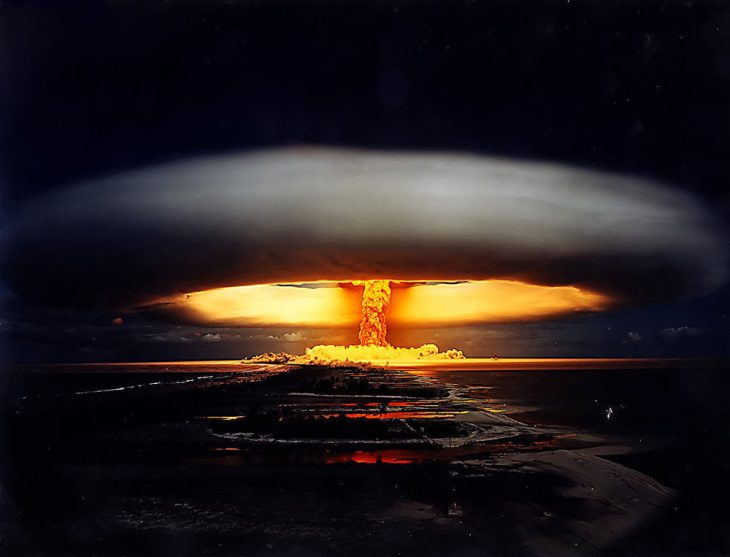


 Aletho News
 Aletho News