Dozens of new cracks discovered at Belgian nuclear reactors
RT | June 11, 2017
The latest ultrasonic inspections have detected a substantial number of new micro cracks in nuclear reactors at the Tihange and Doel power plants in Belgium since the last study conducted three years ago, Belgian and German media report.
At least 70 additional cracks were uncovered at the Tihange 2 nuclear reactor during an ultrasonic inspection in April of this year, Belga news agency reports. Some 300 new flaws have also allegedly been discovered at the Doel 3 reactor tank during a check last November, according to tagesschau.de.
Belgian Interior Minister, Jan Jambon, confirmed the micro fissures at Tihange 2 following a parliamentary inquiry posed by Green Group leader Jean-Marc Nollet, DW reports. The reported new cracks at Doel 3 have not yet been confirmed.
The cracks do not pose any danger to operations at the nuclear plants, says operator Engie-Electrabel, which carried out the inspections under instructions from the Belgian Atomic Regulatory Authority (FANC).
The operator said the new flaws were discovered due to a “different positioning of the ultrasound device.” Engie-Electrabel maintains that as long as cracks do not expand, they do not pose a danger to the reactor’s operations.
Branding Engie-Electrabel “irresponsible,” environmentalist group, Nucléaire Stop, has criticized the operator for still running Tihange 2 reactor despite a 2.22 percent increase in faults.
In February 2015, FANC said 3,149 cracks had been found at Tihange, while 13,047 were discovered at Doel. The operator must now submit additional analyses of the situation by September.
Tihange lies only 60 kilometers (about 37 miles) from the German border, while Doel is 150 kilometers away, near Antwerp. Germans living in the area close to this border have been exerting pressure on the government to force Belgium to shut down the aging reactors.
Both of the reactors have experienced leaks and cracks for some time now. Doel 3 has a capacity of 1,006 megawatts, while Tihange 2 a capacity of 1,008 megawatts. The reactors are almost 35-years-old but are still generating about 14 percent of the nation’s power capacity.
Soft Coups in Latin America: The Cases of Ecuador and Bolivia
By Stansfield Smith, Chicago ALBA Solidarity | October 8, 2015
The US now engineers “regime change” not so much by using the military, in part because of their military quagmires in the Middle East, in part because Obama has sought to give a new face and new credibility to the Empire after the damage it suffered during Bush years. The US relies on soft coups: media campaigns and mass demonstrations against “corruption,” for “human rights,” “democracy,” “freedom,” aimed at the target government. The US makes skillful use of Non-Governmental Organizations (NGOs) to carry out its plans, which often appeal to cherished liberal-left values and sentiments. The leadership of these soft coups and color revolutions are made to seem just like us, with our liberal Western values. Overlooked or concealed are the actual political and economic plans the leaders of these movements will implement – first defeat the dictatorship and then all else will later fall into place. As a result, many people opposed to US military interventionism are taken in, many often willingly.
Progressive Latin American governments are one target for soft coups engineered by the US. The US seeks to overthrow democratically elected presidents through media campaigns of lies and half-truths, inciting social discontent, delegitimizing the government, provoking violence in the streets, economic disruptions and strikes.
For those opposed to all US intervention, particularly those of us living in the US, we are called upon to expose these new methods of soft coup interference. The standard practice involves the role of USAID, National Endowment for Democracy (NED), International Republican Institute (IRI), National Democratic Institute (NDI) in helping to finance NGOs to do their dirty work. NGOs have become the humanitarian face of imperialist intervention.
Behind the rhetoric of “democracy promotion,” Washington aims to impose neoliberal regimes that open their markets to the US without conditions and align themselves with US foreign policy. While these goals are known by the leaders of the US backed “color revolutions,” they are not shared with, let alone accepted by their followers. When these takeovers do succeed, citizens soon rebel against the new policies imposed on them, but it is too late to turn back.
The US government has long sought to overthrow socialist Cuba and the anti-neoliberal and anti-imperialist ALBA governments of Venezuela, Ecuador and Bolivia, and re-establish neocolonial governments. In the cases of President Correa of Ecuador and Evo Morales of Bolivia, this goes back to before their first runs for presidency. Green Left Weekly ran a series of articles on continuous US efforts to get rid of Correa, even before he came into office.[1] No serious article on the conflicts in Correa’s Ecuador can omit the ten year US effort inside Ecuador to get rid of Correa.
Any serious analysis of what is happening in a Third World country, whether a progressive one or not, must start with the role Western imperialism has played. Otherwise, the analysis does not clarify the causes of the problems, but just indirectly gives cover to US imperialism.
The work of Eva Golinger (until recently*) and Federico Fuentes of Green Left Weekly, are models of progressive intellectuals, defending the peoples and countries of Latin America. They have exposed the role of USAID and NED in corrupting particular indigenous groups in Bolivia and Ecuador: during
* She now seems to have more in common with the liberal-left alternative media criticized below. https://chicagoalbasolidarity.wordpress.com/2017/08/19/correcting-eva-golinger-on-venezuela/
Bolivia’s TIPNIS protests, with Pachakutik, Conaie and the Yasunidos in Ecuador. They have exposed the role of the US financed environmental NGOs in these countries, such as Fundacion Pachamama, Accion Ecologica, Amazon Watch.
This does not mean some indigenous and environmental groups have legitimate concerns. The problem occurs when the US funds leaders of groups to manipulate their members in order to exacerbate the problem. In the 1980s, the US used the Miskito Indian groups in Nicaragua to foment armed conflict with the Sandinistas. This does not mean the Miskitos did not have legitimate grievances, they had, but these were manipulated by the US to further its goal of overthrowing the Sandinistas. Likewise, indigenous peoples in Ecuador and Bolivia have legitimate concerns about development projects in the TIPNIS or Yasuni, for instance, but are deliberately used by US agencies to foment rebellion against their governments.
Using indigenous and environmental groups to attack their governments is a key part of the US government’s anti-Correa and anti-Evo Morales campaign. Unfortunately, consciously or not, this campaign is furthered in various alternative media centers, and can be seen in UpsideDownWorld, NACLA, In These Times, ROAR, CommonDreams, Jacobin, WagingNonViolence, Alternet, MintPressNews, even Naomi Klein, and recently Real News Network.
Too often, when liberal-left alternative media [2] address Latin America, we find articles legitimizing the views of these same US influenced environmental NGOs and related indigenous groups. This media has to some extent become a transmission belt for US propaganda, as knowing or unknowing participants in soft coup operations against these countries.
We find these alternative media outlets voicing and even being mouthpieces for US connected indigenous organizations and environmental NGOs, defending their protests against Evo Morales and Rafael Correa. For instance, Upside Down World has criticized Evo over TIPNIS, discounted the 2010 coup against Correa as not being a coup (the same line as the US government), defended the rightwing protests against Correa, and objected to the closing of US backed NGOs.
Covering up US Interference in Bolivia
In NACLA Emily Achtenberg wrote over ten articles on the Bolivian TIPNIS highway conflict and barely mentioned the close coordination of the protest leaders with the US Embassy. This is not simply an oversight, it is a cover-up.
“It’s not the first time that Morales has accused protest movements—including the TIPNIS marchers—of links to outside forces (such as the U.S. Embassy and right-wing opposition groups) who are seeking to destabilize his government. Protest leaders view these allegations largely as a tactic to undermine their credibility and mobilize support for the government.”[3]
Achtenberg avoids presenting the evidence of US government interference, and instead points the finger at Evo Morales.
She goes further in another article:
“A few telephone calls [between the US Embassy in Bolivia and the protest leaders] hardly prove a conspiracy, and many familiar with WikiLeaks cables accept that Embassy personnel routinely maintain contact with diverse social sectors. Serious concerns have been raised about the government’s potential violation of privacy laws in obtaining telephone records without a court order” [4]
Exposing the US role in the march takes a back seat to repeating US concerns over the Bolivian government’s alleged violations of privacy laws.
Ben Dangl follows Achtenberg in similar apologetics for the US role in the TIPNIS protests in his article in Upside Down World, “The Politics of Pachamama: Natural Resource Extraction vs. Indigenous Rights and the Environment in Latin America.” [5]
Contrast this with an article by Nil Nikandrov defending Bolivian sovereignty:
“According to journalist and author Eva Golinger, USAID poured at least $85 million into destabilizing the regime in the country. Initially, the US hoped to achieve the desired result by entraining the separatists from the predominantly white Santa Cruz district. When the plan collapsed, USAID switched to courting the Indian communities with which the ecology-oriented NGOs started to get in touch a few years before. Disorienting accounts were fed to the Indians that the construction of an expressway across their region would leave the communities landless, and the Indian protest marches to the capital that followed ate away at the public standing of Morales. It transpired shortly that many of the marches including those staged by the TIPNIS group, had been coordinated by the US embassy. The job was done by embassy official Eliseo Abelo, a USAID curator for the Bolivian indigenous population. His phone conversations with the march leaders were intercepted by the Bolivian counter-espionage agency and made public, so that he had to escape from the country while the US diplomatic envoy to Bolivia complained about the phone tapping.” [6]
Federico Fuentes noted USAID funding behind the TIPNIS protests:
The Confederation of Indigenous Peoples of the Bolivian East (CIDOB), the main organisation behind the march, has no such qualms [about its connection to the US]. It boasted on its website that it received training programs from the US government aid agency USAID. On the site, CIDOB president Adolfo Chavez, thanks the “information and training acquired via different programs financed by external collaborators, in this case USAID”.
He brought to light what Achtenberg and Dangl seek to conceal:
“neither of the Internet statements [an anti-Evo Morales Avaaz petition and September 21, 2011 letter to Morales signed by over 60 environmental groups] mentions the protesters’ support for the Reducing Emissions from Deforestation and Forest Degradation (REDD) program. REDD is a grossly anti-environmental United Nations program that aims to privatise forests by converting them into “carbon offsets” that allow rich, developed countries to continue polluting.
Some of the biggest proponents of this measure can be found among the NGOs promoting the march. Many of these have received direct funding from the US government, whose ambassador in Bolivia was expelled in September 2008 for supporting a right-wing coup attempt against the elected Morales government.
Rather than defend Bolivia’s sovereignty against US interference, the letter denounces the Bolivian government for exposing connections between the protesters and “obscure interests”.
These “obscure interests” include the League for the Defense of the Environment (LIDEMA), which was set up with US government funds….
Secret US diplomatic cables recently released by WikiLeaks and declassified US government files have conclusively shown that USAID directly targets indigenous communities in a bid to win them away from support for Morales and towards supporting US interests.” [7]
Western financed NGOs, such as Avaaz, Amazon Watch and Democracy Center, serve to provide a “left” cover to the global 1% campaign for “regime change” in Bolivia and Ecuador. They seek to demonize Evo Morales and Rafael Correa, thereby undermining the opposition of progressive people’s in the West to their engineering a “soft coup” in these countries.[8]
In 2011 Amazon Watch carried out an even more vociferous and dishonest propaganda campaign against Evo Morales’ Bolivia, claiming to defend the TIPNIS and indigenous rights in Bolivia. Again, no mention is made of the US role in the protests, nor that Evo’s government had a number of the police responsible for the unauthorized violence of the protest marchers fired, nor that Evo agreed to the protestors’ demands.[9]
Funders of Amazon Watch and Rainforest Action Network (RAN) include: Charles Stewart Mott Foundation (which works with NED), Richard and Rhoda Goldman Fund, The Overbrook Foundation, Moriah Fund (directors connected with USAID and Bill Clinton’s administration), Rockefeller Brothers Fund, The David & Lucile Packard Foundation.[10]
In 2013, Pedro Nuni, one of the central leaders of these TIPNIS protests, defended by much Western alternative media, announced he was joining a rightwing party.[11] This, this alternative media conveniently forgot to mention.
Passing knowledge of Latin American history informs us it is ludicrous to think the US does not play a role in coups and protest movements against progressive governments. We ask how any writers and websites considering themselves honest, would not bring these US connections to light.
US coups and attempted coups pose are as constant in Latin America today as they were decades ago: Chavez in Venezuela (2002, 2003), Aristide in Haiti (2004), Evo Morales in Bolivia (2008), Zelaya in Honduras (2009), Correa in Ecuador (2010), Lugo in Paraguay (2012), Maduro in Venezuela (2013, 2014), and a wave of coup attempts this past summer (2015) in Ecuador, Bolivia, Dilma Rousseff in Brazil and Christina Fernandez in Argentina, Sanchez Ceren in El Salvador. US coup-plotting remains a continuous constant threat to the sovereignty of the Latin American peoples.
Ecuador: Covering Up the US Role in the 2010 Coup and US Infiltration of Indigenous and Environmental Groups
As in Evo’s Bolivia, a central ingredient of the US anti-Correa campaign involved using indigenous groups and environmental NGOs to attack the Correa government, a campaign reflected in media outlets such as Upside Down World, NACLA and NGOs like Amazon Watch.
In Ecuador, we can see these apologetics for the US Empire in reports on the September 30, 2010 coup attempt against Rafael Correa. At the time, Upside Down World approvingly published CONAIE’s (Confederación de Nacionalidades Indígenas del Ecuador) statement on the attempted police coup against Correa, which made no mention of US involvement, and blamed President Correa for the political conflict that led to the coup.[12]
Marc Becker, a regular contributor on Ecuador for Upside Down World, posted a statement by, Pachakutik (the political wing of CONAIE) delegate Lourdes Tiban of Ecuarunari, which he called “maybe Ecuador’s most radical indigenous movement.” Tiban’s Ecuarunari statement, issued during the attempted coup, actually called for overthrowing President Correa: “the only revolutionary alternative is to fight against supporters of the [Correa] dictatorship.”
In contrast, Evo Golinger and Jean Guy Allard made clear the US role in the attempted coup against Correa. Allard pointed out the US infiltration of the police, who led the coup, as well as the armed forces.[13]
Golinger exposed the USAID and NED connections with indigenous groups such as CONAIE and in particular Pachakutik, which backed the coup:
“During the events of September 30 in Ecuador, one of the groups receiving USAID and NED financing, Pachakutik, sent out a press release backing the coup-plotting police and demanding the resignation of President Correa, holding him responsible for what was taking place. The group even went so far as to accuse him of a “dictatorial attitude.” Pachakutik entered into a political alliance with Lucio Gutiérrez in 2002 and its links with the former president are well known:” [14] [15]
Golinger also publicized the School of Americas graduate involved in the coup, the role of the high level CIA agent Norman Bailey, and that of indigenous leader Lourdes Tiban’s ties with Norman Bailey, USAID/NED and the Ecuadoran business class.[16]
Golinger showed that many Ecuadoran organizations, some linked to the indigenous movement and directed by National Assembly member Lourdes Tiban, received funding from USAID and NED to destabilize the government of President Rafael Correa. Tiban, of the Pachakutik Party, is part of the Indigenous Enterprise Corporation, an organization that “actively” receives funding from USAID.
Yet even today Upside Down World remains a strong defender of these two USAID connected indigenous groups in Ecuador, even after their participation in the violent right-wing protests against Correa in summer 2015.
Ecuador ‘s Closing Down of Fundacion Pachamama NGO
In 2014 NACLA and Upside Down World supported the campaign in defense of Fundacion Pachamama, a US funded NGO in Ecuador. This NGO, involved in opposing oil drilling in the Yasuni National Park, had been shut down by the Ecuador government.
In the Yasuni, the Correa government proposed opening a mere 200 hectares (the actual size to be affected contested by some) to oil drilling, within the million-hectare park. In comparison, Canada’s tar sands mining/strip-mining will destroy 300,000 hectares of the Canadian Boreal Forest, 1500 times the size of the land to be affected in the Yasuni. Canada is now the world’s leading country in deforestation.
President Correa offered to refrain from exploiting the oil reserves within the Yasuni in exchange for 50% of the value of the reserves, or $3.6 billion. During the six-year history of the initiative, only $336 million had been pledged, and of that only $13.3 million had actually been delivered.
Cory Morningstar notes, “The fact of the matter is, if NGOs had campaigned for Yasuni …rather than working behind the scenes with corporate interests and leading greenhouse gas emitting states … perhaps our situation today would be far different. But of course, this is not why the non-profit industrial complex exists.”[17]
USAID shut down its offices in Ecuador in 2014, a year after it was expelled from Bolivia. Even mainstream newspapers gave a more or less factual account:
“Correa in June [2013] was granted wide-ranging powers to intervene in the operations of non-governmental organizations (NGOs), which often receive funding from USAID. The decree also created a screening process for international groups wanting to work in the country.
In early December [2013] the government shut down environmental NGO Fundación Pachamama after it was alleged that the group disrupted public peace while protesting oil drilling in the Amazon region. Pachamama was receiving funding from USAID.”[18]
Nevertheless, despite what is a question of Ecuador asserting its national sovereignty against foreign interference, an international campaign against Correa was organized in response.[19] Of this Cory Morningstar wrote “It is essential to note that none of the NGOs (over 100 at this point) participating in the Pachamama “solidarity” campaign disclose the fact that the Pachamama Foundation is financed by US interests.”
Signers of the international petition addressed to Correa by defenders of this USAID funded Foundation included Ecuador’s Accion Ecologica and CEDENMA. In the US it included 350.org, Amazon Watch, Citizens Climate Lobby, Fellowship of Reconciliation, Friends of the Earth US, Global Exchange, Move to Amend Coalition, Oakland Institute, Pachamama Foundation, Rainforest Action Network, Greenpeace International, International Funders for Indigenous Peoples, Indigenous Environmental Network, New Energy Economy, Womenrise for Global Peace.
We find environmental NGOs operating in the US in a similar manner. For instance, the Huffington Post reported in 2014 that the Natural Resources Defense Council Action Fund, Environmental Defense Action Fund, and the League of Conservation Voters actually donated tens of thousands of dollars to pro-Keystone XL pipeline politicians. It also became known that Sierra Club secretly took $25 million from the fracking industry.[20]
Who Funded Fundacion Pachamana?
Morningstar explains: “Fundación Pachamama was set up in 1997 as the Pachamama Alliance (founded in 1995) “sister organization,” situated in Ecuador. The Pachamama Alliance is a heavily funded U.S. NGO. Past donors include the Rockefeller Philanthropy Advisors. Revenue has increased from U.S. $1,911,036.00 in 2006 to U.S. $3,461,600.00 in 2011 (2011 form 990) with over $1 million focused exclusively on both Ecuador and Bolivia (grantmaking $706,626.00 / program services $391,622.00) in 2011.”
Pachamama was not just a US financed NGO, but served as a business:
“The Pachamama Alliance was created as a partnership with the Achuar to help organize and support a new multi-million dollar tourism development for which Indigenous Peoples needed to be trained in western commerce, the service industry, the English language and marketing. In essence, the Achuar were to be carefully integrated with the modern world.
The exclusive tourism development was to be located in pristine Indigenous territory in Ecuador. The Pachamama Foundation is also a partner of USAID-WCS (U.S. Agency for International Development – Wildlife Conservation Society) whose interests lie in “the growing markets and opportunities derived from environmental services including the REDD initiative (Reducing Emissions from Deforestation and Forest Degradation in Developing Countries)…” (2009).”[21]
“Robin Fink is the Program Director at Fundación Pachamama (since November 2009) and Board Member at the Runa Foundation (Fundación Runa) (May 2012 to present). [22] In her role at Pachamama Alliance, Fink works closely with the Indigenous Achuar of the Ecuadorian Amazon. The associated Runa Corporation president [Tyler Gage] said “… we also receive about $500,000 from USAID, from the US government, the Andean Development bank, the German government, a couple other NGOs who were very impressed by our model.” [23]
Wain Collen, Education Director of Fundación Pachamama, explained the function of these Western NGOs: ‘NGOs who aim to help indigenous communities most often end up causing more problems than they solve, ‘Our advisors and industry experts continue to remind us that above all, we need to run a successful business, regardless of how social it is. Without a strong, successful business we can’t generate any benefits for anyone.”[24]
“The Pachamama Alliance was created as a partnership with the Achuar to help organize and support a new multi-million dollar tourism development for which Indigenous Peoples needed to be trained in western commerce, the service industry, the English language and marketing. In essence, the Achuar were to be carefully integrated with the modern world.”[25]
This US funding of Fundacion Pachamana was concealed in the campaign protesting Correa’s shutting it down. NACLA and Upside Down World were participants, and one writer, Marc Becker, referred to the Fundacion as a “fair trade group.” NACLA still refers to Fundacion Pachamama as an “environmental and human rights organization.”[26] This was a deliberate misrepresentation to their US audience, and serves the interests of those seeking to smear Correa and turn sentiment against the Citizens Revolution.
The USAID-environmental NGO connection in Ecuador was known years before the failed 2010 coup against Correa. An institutional, academic research study, entitled Globalization, Philanthropy and Civil Society: Protecting Institutional Logics Abroad had pointed out USAID and US corporate NGO funding of these Ecuadoran NGOs – before any actions had been taken against them by the Ecuadoran government:
“Nature Conservancy’s Amazon Program, both based in Brazil; or CDES (the Centro para Desarrollo Economico y Social) and Fundacion Pachamama, both Ecuadorian-based partner organizations of U.S. NGOs…. They collaborate on a regular basis with U.S. organizations, however, and remain dependent on funding from Northern sources- from the World Bank or Global Environment Facility, from US foundations, from USAID, or from their American mother/partner NGO. US NGOs have also influenced the development of new organizations in the Amazon region by influencing the agenda of USAID and large foundations such as the Ford and Moore foundations, which have become some of the most important sources of financing for new NGOs and grassroots organizations in the Amazon.”[27]
Given the propaganda campaign directed at Presidents Rafael Correa and Evo Morales by US funded environmental NGOs and some indigenous groupings, it is necessary to note, as Alvaro Linera did in his article on TIPNIS that these NGOs operating in these countries are not non-governmental organizations, but foreign government organizations, and that any government defending its national sovereignty needs to control them, or face the consequences of further coup-plotting.
Accion Ecologica
Correa also shut down – temporarily– the US funded anti-Correa “environmental” NGO, Accion Ecologica. Even journalist Naomi Klein joined this other anti-Correa campaign, calling the government’s decision to shut it down as “something all too familiar: a state seemingly using its power to weaken dissent.”[28]
Painting the Summer 2015 Rightwing anti-Correa protests as Progressive, and the case of Manuela Picq
The Accion Ecologica website, like Amazon Watch and NACLA, presented a deliberately distorted account of the violent right-wing protests in Ecuador in the summer of 2015, falsely blaming violence on the government.[29]
NACLA and Upside Down World ran articles by Manuela Picq, the anti-Correa foreign journalist kicked out of the country. NACLA’s front page had links to a Change.org petition about Manuela Lavinas Picq[30], the professor alleged to be beaten up and arrested by Ecuadoran police during the August 13 Quito protests.
The petition said:
“We the undersigned demand that Manuela Lavinas Picq’s order for deportation from Ecuador be rescinded immediately. Manuela Lavinas Picq was beaten and arrested in Quito on Thursday, August 13. Manuela was participating in a legal, peaceful protest as a journalist. At the time of her arrest, she was in the company of other journalists and photographers and was unarmed.”[31]
Signers included Amazon Watch.
Manuela Picq was a foreign journalist, married to a leader of the protests, Carlos Pérez, president of Ecuarunari, organization of Lourdes Tiban, and was herself a participant in the protests. These were not peaceful protests, but violently attacked the police in attempts to break through police lines to take over the presidential palace. Picq herself actually denied she was mistreated by the police.[32]
The August protests were deliberately misrepresented in Upside Down World and similar left-liberal websites as being progressive protests by indigenous groups.[33] In fact, they were violent protests in alliance with the Ecuadoran right-wing, part of fight against the proposed increase in inheritance tax on the rich. Concealed was the fact that CONAIE leaders supported the June 2015 right wing protests against Correa’s proposed inheritance tax on the rich.
In an interview published on June 17, 2015 in the context of a right wing uprising against the inheritance taxes, CONAIE’s president falsely claimed “this inheritance law affects the majority of the Ecuadoran population, it is not true that it is directed only at two percent of the population.” [34] CONAIE also opposed the law nationalizing water, seeking to leave in place the 1990s law privatizing water.[35]
Amazon Watch’s falsifications of the August 2015 protests surpassed what could be expected on the Wall Street Journal’s editorial page with an article subtitled “While police massacre indigenous protesters and citizens, the Government of Rafael Correa dances in the Presidential plaza”:
“The discourse it promoted for eight years at national and international levels, which favored its image as a socialist government and defender of rights for indigenous peoples and Mother Nature, has proven to be a sham.”
”All of the rights won by the indigenous nationalities have been repealed, just as the system of bilingual intercultural education, indigenous health services, economic funds, and political organization.”
”During the March for Peoples Dignity on August 13, 2015, the Government prepared an impressive display of security forces, police, and military. Violent confrontations with citizens ensued and resulted in numerous people disappeared, imprisoned, tortured, and dead across the country.”[36]
This outright fabrication is belied by the actual reporter film of the events.[37]
The Issue of Extractivism in Ecuador and Bolivia
Correa’s Ecuador and Evo’s Bolivia are both widely criticized by Western environmental and indigenous supporting groups for practicing “extractivism,” the reliance on exporting natural resources (oil, gas, mining) as a tool for development. We may search far and wide for a similar stream of criticisms of “extractivism” taking place in pro-imperialist governments of Saudi Arabia, Kuwait, Nigeria, Indonesia, Mexico, the Congo, or even Alberta. In these latter countries, the wealth from the natural resources ends up as corporate profits or in Western banks. In contrast, Ecuador and Bolivia have nationalized their national resources, and reversed the percent of the profits that go to the state vs foreign corporations, from 10-15% before to 85-90% now, and use this wealth to fund programs benefitting the 99%. Is this the real reason they have become targets for the evils of “extractivism”?
The very term “extractivism” conceals the real crime: imperialist countries’ raping of the resources of the Third World and the destruction it inflicts on the environment and people living there. The 500 year Western pillaging of oppressed nations’ natural resources using semi-slave labor conditions lies obscured. The real issue, deliberately unclarified by the term “extractivism” is: Who controls the natural resources of oppressed nations — the imperial powers or these nations themselves? The fundamental class issue of the term “extractivism” is buried: who uses natural resources for whose interests, who benefits and who suffers. The term “extractivism” ignores that Bolivia and Ecuador have taken control of their natural resources from imperialist corporations, and now use the wealth generated to improve the lives of their peoples not the bottom lines of Western corporations.
While Latin America has moved in an anti-imperialist, anti-neoliberal direction, and the ALBA countries have implemented social programs benefiting the historically disadvantaged, particularly the indigenous, many previous US supporters of Latin America sovereignty have moved in a direction hostile to this process. National development is attacked as “extractivism,” as threatening the environment and the indigenous supposedly untouched by Western civilization. Representing historically oppressed and excluded peoples in the national government is painted as “co-opting social movements.” Chinese developmental aid to these countries, now increasingly boycotted by Western banks and corporations, is painted as “submitting to Chinese imperialism.”
Upside Down World and similar liberal-left media, for instance, claim that the indigenous of Ecuador are opposed to “extractivism.” However, during the August 2015 protests against Correa, one CONAIE group actually protested because government stopped a project because of its potential environmental damage:
“in the Southeastern province of Morona Santiago, a group of Indigenous Achuar people have protested for the third consecutive day in front of the governor’s building, responding to the call by the opposition-aligned indigenous confederation CONAIE. The Indigenous group’s main complaint regards the federal decision to suspend the environmental license, preventing the province from continuing the work on the Taisha road. Earlier in June, the Ministry of Environment imposed sanctions against the provincial government of Morona Santiago, revoking its environmental license and imposing a $70,800 fine over environmental damages caused during the Macuma-Taisha road project.” [38]
Do not expect this alternative media to inform us that these indigenous were protesting Correa because of the government’s opposition to building a road through an ecologically sensitive area.
Moreover, the previous CONAIE president, Humberto Cholango, has said “Many nationalities of the Amazonia say “look, we are the owners of the territory, and yes we want it to be exploited.” These agree with Correa, and the majority of Ecuadorans, that to leave valuable natural resources untouched while people go without schools, roads, medical care, employment, hurts their own interests. [39]
Readers of Upside Down World and NACLA will not read this, and are instead told the protests were against “extractivism” and for Original Peoples’ language rights. (The Ecuador government actually recognizes fourteen separate Original People languages).
In Ecuador: New left or new colonialism? Fred Fuentes writes:
“No government, even one that comes to power on the back of an insurrection and that destroys the capitalist state, would be able to meet the needs of the Ecuadorian people while at the same time halting all extractive industries. However, it can attempt to strike a balance between protecting the environment and industrializing the country, providing free education and health care for all, empowering the people to take power into their own hands. The difficulty of such a task means mistakes will be made, but also learnt from.
To overcome Ecuador’s legacy of dependency on extractive industries, rich imperialist nations will need to repay their historic debts to Ecuador’s people. The lack of any willingness to do so has been shown by the response from foreign governments to the bold Yasuni Initiative launched by the Correa government in 2007….
Until rich countries are held to account for the crimes they have committed against oppressed Third World nations no opponent of imperialism can legitimately denounce the Ecuador or Bolivia government for using wealth from its natural resources to meet peoples’ needs.
Environmental concerns are valid, but so are the very real needs of people to be able to access basic services that many of us take for granted. And we should never forget who the real culprits of the environmental crisis are.
Rather than diverting attention from these Western powers and onto anti-imperialist Latin American governments, we should focus on the real enemies we and the peoples of the oppressed nations face in common. Their fate is intertwined with our fight at home against Western governments and their corporate bosses.” [40]
Fuentes writes elsewhere:
“Our task is to oppose imperialist [interference], but “The challenges Bolivia… they are a direct result of centuries of colonialism and imperialist oppression, which have entrenched Bolivia in its role within the world economy as a dependent raw commodity exporter. Any chance Bolivia has of moving in a post-capitalist and post-extractivist direction depends on the creation of a new global order, starting with the reshaping of hemispheric relations. This is precisely what the Bolivian government has attempted to do….the main way we can help Bolivia’s social movements is still by winning over working people in the North to a position of solidarity with Bolivia. And the best way to do this is… to build an international movement against the imperialist system…[We must focus on] explaining why, as long as imperialism exists, Bolivia’s process of change will undoubtedly continue to face tremendous obstacles and dangers…. ‘only a popular uprising of unprecedented scale will prompt nations of the Global North to take their responsibility to the rest of the globe seriously, and constrain the coercive forces that constrain states like Bolivia.’”[41]
Conclusion
We expect the corporate media to conceal the impact of Western pillaging on the oppressed Third World countries, and to participate in the West’s on-going efforts to return pro-Western neoliberal governments. However, for liberal-left media and organizations to take a similar stand, even if watered down, is nothing other than apologetics for imperialist interference. Not to emphasize imperialism’s historic and continuing exploitive role is not simply dishonest, not simply apologetics, but also shows a basic lack of human feeling and solidarity with the peoples of the Third World.
Any serious analysis, whether progressive or not, of an Third World country must start with the role Western imperialism has played. If not, the analysis does not clarify the causes of the problems their people face, but indirectly gives cover to the criminal impact of imperialism against the country.
Too many articles are written on the events in Ecuador and Bolivia in the alternative media as if US imperialism is not an important player. These alternative media sources actually advocate for indigenous groups and environmental NGOs which are USAID and US corporate financed. And they criticize these countries for defending their national sovereignty by shutting down what Bolivian Vice-President Linera called “foreign government financed organization NGOs” operating in their countries.
The stated USAID budget for Latin America is said to be $750 million, but estimates show that the secret part of the funding, partly in the hands of the CIA, may total twice that.[42] This information, and how this money is spent, ought to be a focus of any liberal-left alternative media purporting to stand up for the oppressed peoples of the Americas.
In June 2012, unlike NACLA, et al, the foreign ministers of the ALBA countries were quite clear on the devious work of USAID in their homelands in their June 2012 resolution:
“Citing foreign aid planning and coordination as a pretext, USAID openly meddles in sovereign countries’ domestic affairs, sponsoring NGOs and protest activities intended to destabilize legitimate governments which are unfavorable from Washington’s perspective. Documents released from the US Department of State archives carry evidence that financial support had been provided to parties and groups oppositional to the governments of ALBA countries, a practice tantamount to undisguised and audacious interference on the US behalf. In most ALBA countries, USAID operates via its extensive NGO networks, which it runs outside of the due legal framework, and also illicitly funds media and political groups. We are convinced that our countries have no need for external financial support to maintain the democracy established by Latin American and Caribbean nations, or for externally guided organizations which try to weaken or sideline our government institutions.” [43]
We find some liberal-left alternative media knowingly or unknowingly giving legitimacy to US soft coup plotting, painting US collaborators in Bolivia and Ecuador as defenders of free expression, defenders of nature, defenders of the indigenous. The US government’s “talking points” on the leaders of the progressive ALBA bloc have worked their way into liberal-left alternative media, which echo the attacks on these governments by the organizations that have received US funds.[44] That is not to say that Amazon Watch or Upside Down World or NACLA are themselves funded by the US government – if it somehow exculpates them that they do this work for free. Even worse, much of this propaganda against Evo and Correa appears only in the liberal-left alternative press, what we consider our press. Many of the people who were our allies, or allies on many other issues today, are on the other side of the fence.
As Cory Morningstar wrote:
In retrospect, most anyone can and will easily condemn the colonizing of natives by missionaries in the 18th and 19th centuries. Yet, today, with NGOs having fulfilled this role to continue the practice into the 20th and 21st centuries – we collectively refuse to acknowledge it. We ignore it. We even defend it. The white paternalism continues with the blessing of the liberal left. “Maybe they are good!” the liberal left cries. “Maybe the Indigenous communities like them!” We can observe the photos of missionaries and their “subjects” in the past. There appears to be no resistance. Yet, we still comprehend that this was wrong.
But not only do liberal-left alternative media and NGOs let themselves become conveyer belts for US regime change propaganda. It also illustrates what many who consider themselves on the left still have not come to terms with: their own arrogant traditionally white attitude that they share with Western colonizers and present day ruling elites: we know better than you what is good for you, we are the best interpreters and defenders of your democracy and human rights. That is why they criticize Third World governments that are progressive or independent of US control – targets for US regime change and color revolution. In contrast, genuine support for the peoples of the Third World means basing yourself in opposition to imperialism and exposing US attempts to overthrow governments and undermine movements seeking to break free from the Western domination.
[1] Green Left Weekly series on Correa and WikiLeaks: https://www.greenleft.org.au/node/57531
[2] http://inthesetimes.com/uprising/entry/14202/indigenous_movements_clash_with_latin_americas_left_turn/
More liberal-left alternative media articles attacking Ecuador:
Amazon’s Female Defenders Denounce ‘Macho’ Repression and Demand Rights
Ecuador Moves to Close Leading Environmental Organization as Part of Crackdown on Civil Society
Ecuador’s social movements push back against Correa’s neoliberalism
How protests forced Ecuador’s upcoming runoff presidential election
https://wagingnonviolence.org/feature/ecuador-protests-forced-runoff-elections/
People vs. Big Oil: A Mosaic of Oil and Attack Dogs
http://www.truth-out.org/news/item/38240-people-vs-big-oil-part-ii-a-mosaic-of-oil-and-attack-dogs
New Witch Hunt in Ecuador Against Indigenous and Environment Defenders
“Beyond the Petrostate: Ecuador’s Left Dilemma,” the author raises some other issue against Correa. https://www.dissentmagazine.org/article/riofrancos-beyond-petrostate-ecuador-left-dilemma Christian Tym answers this very well in reply to Guardian smears on Correa. http://www.importantcool.com/murder-amazon-guardians-quest-correa/
Deep in the Amazon a Tiny Tribe is Beating Big Oil
http://www.coha.org/corrupted-idealism-bolivias-compromise-between-development-and-the-environment/
(which, for instance, pushes the story of “the unanimous rejection by indigenous communities of a highway constructed through TIPNIS”)
Ecuador To Sell One Third Of Pristine Rainforest To Chinese Oil Companies http://www.mintpressnews.com/213663-2/213663/
[4] https://nacla.org/blog/2011/8/26/bolivia-tipnis-marchers-face-accusations-and-negotiations
[5] http://upsidedownworld.org/main/international-archives-60/4816-the-politics-of-pachamama-natural-resource-extraction-vs-indigenous-rights-and-the-environment-in-latin-america
[6] http://www.strategic-culture.org/news/2012/09/26/end-to-usaid-spying-looms-in-latin-america.html
https://globalintelnews.wordpress.com/author/globalintelnews/page/8/
[7] http://boliviarising.blogspot.com/2011/09/bolivia-ngos-wrong-on-morales-and.html
[8] For instance:
“The Democracy Centre, Avaaz and Amazon Watch are the main three NGOs, heavily funded by U.S. interests (Rockefellers, David and Lucile Packard Foundation, Ford Foundation and Soros to name a few), who led the recent International campaign in which they denounced and demonized Bolivian Indigenous leader Evo Morales and his government. This destabilization campaign focused on the TIPNIS protests. A violent confrontation between TIPNIS protestors (influenced/funded by U.S. NGOs/USAID/CIDOB) and the police was the vital opportunity needed in order to execute a destabilization campaign that the U.S. has been strategically planning.”
[9] http://www.wrongkindofgreen.org/2011/09/29/about-u-s-amazon-watch-take-action-help-stop-police-repression-in-bolivia-2/
[10] http://www.sourcewatch.org/index.php?title=Amazon_Watch
[11] http://www.la-razon.com/nacional/Pedro-Nuni-lideres-regionales-proyecto_0_1946805357.html
[12] http://upsidedownworld.org/main/ecuador-archives-49/2717-conaie-on-the-attempted-coup-in-ecuador
[13] https://machetera.wordpress.com/2010/09/30/quitos-police-cia-breeding-ground/
http://www.rebelion.org/noticias/2010/10/114032.pdf
[14] http://machetera.wordpress.com/2010/10/01/behind-the-coup-in-ecuador/
[15] Eva Golinger: “CONAIE blamed Correa for the coup, saying he was responsible for the crisis. By doing that while the coup is in action, it justifies it.” http://www.chavezcode.com/2010/10/evidence-of-ned-fundingaid-to-groups-in.html
[16] http://www.cubadebate.cu/opinion/2010/10/04/veterano-de-la-cia-detras-del-golpe-en-ecuador/#.VjECqLerTIV
USAID is Behind the Ecuadorian Organizations Seeking to Destabilize the Government Coup in Ecuador – by Eva Golinger
http://www.contrainjerencia.com/?p=20735 states:
Eva Golinger, U.S. writer and researcher, told the state news agency Andes, that many Ecuadorian organizations, some linked to the indigenous movement and directed by National Assembly member Lourdes Tibán, receive financial funding from the State Department the United States, through USAID (United States Agency for International Development) and NED (National Endowment for Democracy) to destabilize the government of President Rafael Correa.
Speaking to Andes, Golinger reiterated that the Assemblyperson Lourdes Tibán, of the left Pachakutik Party (political wing of the Confederation of Indigenous Nationalities, CONAIE) is part of Indigenous Enterprise Corporation, an organization that “actively” receives funding from USAID.
The group, of which is Tibán a founder, is advised by a veteran of the U.S. Central Intelligence Agency (CIA), Norman Bailey, who two years ago was head of a special intelligence mission of the U.S. government Cuba and Venezuela, said Golinger. Another group funded by USAID is “Citizen Participation,” said the researcher, who studies U.S. interference in the countries of the region.
When asked by journalist whether she repeats the accusation against Assembly person Tibán, Golinger said she found evidence that the Assemblyperson is funded by USAID.
“I found what are proofs of it. I do not know if she denies it, but it is impossible to for her to deny it when there is evidence ¨ Golinger said.
As evidence, the writer and researcher said that ¨ Tibán belongs to an organization that has received funding from U.S. agencies such as the NED, as well as the USAID, a financial arm of the Department of State. If I remember correctly, she belongs to one of these groups which has on its board a veteran of the Central Intelligence Agency, Norman Baily. He is a longtime member of the U.S. intelligence community, and is an advisor to this organization belongs (Indigenous Enterprise Corporation), of which Tiban is founder.¨
“Beyond that I do not know Tibán receives funds personally, but she does belong to an organization that receive funding from U.S. government agencies.¨
Golinger insisted that the resources Tiban receives from the State Department of the United States she uses to destabilize democracy.
“Veterano de la CIA, detrás del Golpe en Ecuador”, por Eva Golinger
http://mercosulcplp.blogspot.com/2010/10/veterano-de-la-cia-detras-del-golpe-en.html
https://machetera.wordpress.com/2010/10/01/behind-the-coup-in-ecuador/
see also Golinger and Oscar Heck in http://www.chavezcode.com/2010/10/evidence-of-ned-fundingaid-to-groups-in.html
Violence, disinformation, outright lies and anti-government propaganda
http://www.vheadline.com/readnews.asp?id=84531
VHeadline writer Oscar Heck tells us:
In recent days, in Ecuador, there has been an indigenous movement against the Ecuadorian government’s National Assembly reading/review of Ecuador’s new Water Laws, which, as far as I know, under their constitution, obliges the Ecuadorian government to be the sole custodian of water resources.
This issue seems to be clearly understood by most Ecuadorians … yet a small group of Natives from near the Cayambe region, close to Quito, has started demonstrations (some violent or violence-provoking) accusing the Ecuadorian government of trying to “privatize” the water and seeking to pass laws to not allow local water commissions any say in the use and distribution of water resources.
The protests are organized by an indigenous group called the Confederation Of Indigenous Nationalities Of Ecuador (CONAIE). The assumptions propagated by the likes of CONAIE, that the government will privatize the water resources and/or no allow local water commissions, are completely false according to Rafael Correa.
It is as if something or someone somewhere in that region is implanting lies into the minds of the locals … just like the NED-financed Venezuelan organizations (CTV, Fedecamaras, Primero Justicia, Sumate, CEDICE, etc.) are paid by the US government to lie to the public and manipulate information in order to create unrest … and subsequent violence … to then blame or vilify local government.
So, what is CONAIE?
CONAIE was formed out of the union of two already existing organizations, ECUARUNARI and CONFENIAIE. ECUARUNARI, the regional organization of the Sierra that has been functioning for over 20 years, and the Confederation of Indigenous Nationalities of the Ecuadorian Amazon(CONFENIAE), formed in 1980, created that same year the National Coordinating Council of the Indigenous Nationalities of Ecuador, CONACNIE.”
Now, since I highly suspect that CONAIE is financed, influenced, controlled or infiltrated in some fashion by the US government, I decided to go through the NED’s website. I found the following (and more):
Grantor: NATIONAL ENDOWMENT FOR DEMOCRACY (NED)
Grantee: Corporación Instituto Empresarial Indígena del Ecuador (Indigenous Enterprise Institute of Ecuador) (IEIE)
Country(ies): Ecuador
Region: Latin America and the Caribbean
Subject(s): Business and Economics
Grant Awarded: 2006
Amount: 67,955
Grantor: NATIONAL ENDOWMENT FOR DEMOCRACY (NED)
Grantee: Fundación Q’ellkaj (Q’ellkaj Foundation)
Country(ies): Ecuador
Region: Latin America and the Caribbean
Subject(s): Youth
Grant Awarded: 2006
Amount: 91,256
So what is the, Corporación Instituto Empresarial Indígena del Ecuador?
And what is Fundación Q’ellkaj (Q’ellkaj Foundation)?
I decided to look into it and found more than I expected. I went to the website of Corporación Instituto Empresarial Indígena del Ecuador, which is actually Corporación Empresarial Indígena del Ecuador … or CEIE … a not-for-profit organization founded in 2005 by Ángel Medina, Mariano Curicama, Lourdes Tibán, Fernando Navarro, and Raúl Gangotena. Their website also states that Norman Bailey is one of their honorary members.
And who are the other characters involved in the CEIE? According to their website, I quote excerpts in Spanish:
ANGEL MEDINA“ … fundador y presidente de la Fundación Q´ellkaj …”
FERNANDO NAVARRO “ … Presidente de la Federación de Cámaras de Comercio del Ecuador…”
RAUL GANGOTENA “… Tiene relación con los siguientes organismos internacionales: Reagan-Fascell Democracy Fellow, International Forum for Democratic Studies, National Endowment for Democracy … Embajador del Ecuador en los Estados Unidos … Actuó como consejero para la Subsecreataría de Defensa en 2001 …”
LOURDES TIBAN “… Asesora del Consejo Político de la ECUARUNARI … la Declaración de los Derechos de los Pueblos Indígenas en Washington DC …”
Below are the connections I can find between the information found on the NED and CIEI websites and CONAIE (who are the ones organizing the anti-government protests are in Ecuador):
-Lourdes Tiban, who is one of the co-founders of CIEI worked with ECUARUNARI, which was one of the founding organizations of CONAIE.
-Both CIEI and Q´ellkaj receive NED financing. Angel Medina is/was founder and president of Q´ellkaj and co-founder of CIEI … and he works with Lourdes Tiban, who was involved with ECUARUNARI, a member organization of CONAIE.
-Raul Gangotena, another co-founder of NED-financed CIEI, has/had direct links with the NED and works with Lourdes Tiban, who has/had links to ECUARUNARI, which has/had links to CONAIE.
-Fernando Navarro, another co-founder of CIEI, was president of the Ecuadorian federation of chambers of commerce. The Federación de Cámaras de Comercio del Ecuador is the equivalent to the NED-financed Fedecamaras in Venezuela, one of the organizations which headed up the violent coup against democratically-elected Chavez in 2002 and the subsequent violent economic sabotage of the country in 2002 and 2003. Since he was probably a highly influential person, then he probably still is a highly influential person. Since he works/worked with Lourdes Tiban, and since Lourdes has/had links to ECUARUNARI (indirectly CONAIE), then he may have influence over CONAIE.
At least one person at another Ecuadorian NED-financed indigenous organization (CIEI), has or has had links with CONAIE. CIEI was coincidentally created in 2005, not long before Rafael Correa was elected president of Ecuador. Norman Bailey, who was present at the White House when the NED was created, is a member of CIEI.
Oscar Heck
oscar.heck@vheadline.com
Marlon Santi
PRESIDENT, CONAIE
Delfín Tenesaca
PRESIDENT, ECUARUNARI
Tito Puanchir
PRESIDENT, CONFENIAE
Olindo Nastacuaz
PRESIDENT, CONAICE
From Eva: “Organizations in Ecuador such as Participación Ciudadana and Pro-Justicia [Citizen Participation and Pro-Justice], as well as members and sectors of CODENPE, Pachakutik,CONAIE, the Corporación Empresarial Indígena del Ecuador [Indigenous Enterprise Corporation of Ecuador] and Fundación Qellkaj [Qellkaj Foundation] have had USAID and NED funds at their disposal.”
[17] http://www.wrongkindofgreen.org/2015/05/16/fundacion-pachamama-is-dead-long-live-alba-part-ii/
[18] http://www.minnpost.com/christian-science-monitor/2013/12/odds-ecuador-usaid-moves-leave (Interestingly, the newspaper the next day made a retraction that Pachamana was currently receiving USAID money).
[19] http://www.pachamama.org/news/we-stand-in-solidarity-with-fundacion-pachamama-in-ecuador Amnesty International organized a similar campaign.
[20] https://orionmagazine.org/2012/03/breaking-up-with-the-sierra-club/
[21] https://intercontinentalcry.org/fundacion-pachamama-dead-long-live-alba-part-investigative-report/ (part 1)
[22]“Other foundation advisors include: include Yolanda Kakabadse, president of World Wildlife Fund (WWF) since 2010, Trustee of the Ford Foundation, President of International Union for Conservation of Nature (1996-2004); Ann Veneman, Executive Director of UNICEF (2005-2010, US Secretary of Agriculture (2001-2005), named 46th most powerful woman by Forbes in 2009; Doug Hattaway, president of Hattaway Communication since 2001, Senior Communications Adviser for Hilary Clinton (2008); Michael Conroy, Board Chair of Forest Stewardship Council since 2010, Board Chair of Fair Trade USA (2003-2010; Jacob Olander, Director of Forest Trends’ Incubator since 2008, Co-founder of EcoDecisión since 1995, Expert in conservation finance and payments for ecosystem services; Florencia Montagnini, professor of Tropical Forestry at Yale University since 2001, research advisor to the Smithsonian Institute’s PRORENA program since 2001, expert in tropical forestry and agroforesty systems.
Runa foundation advisor Yolanda Kakabadse, of WWF, just happens to also be a member of the Environmental Advisory Board of CocaCola.” (ibid.)
[23] (part 4)
[24] (part 7)
[25] Fundacion Pachamama is Dead – Long Live ALBA | Part I of an Investigative Report
[26] https://nacla.org/news/2015/11/02/criminals-or-citizens-mining-and-citizen-protest-correa%E2%80%99s-ecuador
[27] Sandra Moog: “Exporting Institutionality” in Globalization, Philanthropy and Civil Society: Protecting Institutional Logics Abroad (2009) p. 279
[28] Quoted in Paul Dosh and Nicole Kligerman, “Correa vs. Social Movements: Showdown in Ecuador,” NACLA Report on the Americas, (September 17, 2009), https://nacla.org/node/6124;
Naomi Klein, “Open Letter to President Rafael Correa Regarding Closure of Acción Ecológica,” March 12, 2009
[29] see http://www.accionecologica.org/component/content/article/1868-carta-a-la-comunidad- -ecuatoriana-en-relacion-al-levantamiento-y-la-represion-generada-
[30] Her Facebook page has posts supporting all the pro-business elite protests against Correa and his proposal to raise taxes on the rich.
[31] https://www.change.org/p/rafael-correa-stop-the-deportation-of-manuela-picq
[33] http://upsidedownworld.org/main/ecuador-archives-49/5422-ecuadors-new-indigenous-uprising
[34] http://www.rebelion.org/noticia.php?id=201393
[35] http://www.wrongkindofgreen.org/2015/06/23/fundacion-pachamama-is-dead-long-live-alba-part-iii/
[36] http://amazonwatch.org/news/2015/0819-ecuadorian-government-violates-human-rights-and-the-constitution
[37] http://www.elciudadano.gob.ec/la-violencia-extrema-predomino-en-manifestaciones-del-13-de-agosto/?utm_source=feedburner&utm_medium=email&utm_campaign=Feed%3A+elciudadanogobec+%28ElCiudadano.gob.ec+-+Sistema+Oficial+de+Informaci%C3%B3n%29
Also Federico Fuentes: https://www.greenleft.org.au/node/59776
[38] “http://www.telesurtv.net/english/news/Ecuador-Opposition-Unions-Call-for-National-Strike–20150819-0033.html”
[39] https://lalineadefuego.info/2014/04/11/entrevista-a-humberto-cholango-dios-la-naturaleza-y-las-fuerzas-de-los-espiritus-de-los-lideres-van-a-proteger-para-que-la-conaie-no-caiga-en-manos-de-la-derecha/
[40] https://www.greenleft.org.au/node/51353
[41] Fred Fuentes, “Bad Left Government” versus “Good Left Social Movements”? in Latin America’s Radical Left” pp. 120-121
[42] see “USAID Spying in Latin America” http://www.globalresearch.ca/usaid-spying-in-latin-america/5306679
[43] http://venezuelanalysis.com/news/7069
[44] https://nacla.org/blog/2013/12/31/close-ngos-asserting-sovereignty-or-eroding-democracy
Russia Destroys Nearly 99% of Chemical Weapon Stockpile Under CWC – Official
Sputnik – 30.05.2017
MOSCOW – Russia has destroyed nearly 99 percent of its chemical weapon stockpile over the past 20 years, the head of the Russian Ministry of Industry’s Department of Conventional Obligations Realization and Trade said on Tuesday.
“As of May 29, there are 588 tonnes of poisonous substances left at a facility in the Udmurtian Republic, which is 1.4 percent of the previous stockpiles,” the official told the Russian Federation Council’s Defense Committee, adding that 20 years ago the chemical weapons arsenal amounted to 40,000 tonnes.
According to Victor Ozerov, the chairman of the Federation Council’s Committee on Defense and Security, Russia complies in full with its international obligations in this sphere.
In 1997, Russia joined the Chemical Weapons Convention (CWC), in accordance with which the destruction of its chemical weapons stockpiles should be completed by December 31, 2018.
Nuclear nightmare worse than Fukushima could hit US because of ignored risks – study
RT | May26, 2017
The US has underestimated the risks to its nuclear safety as a single nuclear fuel fire could lead to fallout “much greater than Fukushima,” according to a new study. Researches slammed the Nuclear Regulatory Commission for ignoring the potential danger.
If spent fuel at one of the dozens of US nuclear sites sets alight, it “could dwarf the horrific consequences of the Fukushima accident [in Japan],” researchers from Princeton University and the Union of Concerned Scientists warned in their study published in the May 26 issue of Science magazine.
The disaster would lead to “trillion-dollar consequences,” as the hypothetical fire would result in contamination of an area larger than New Jersey and force mass relocations.
The scientists simulated a nightmare scenario in their ‘Nuclear safety regulation in the post-Fukushima era’ article. Supposing that an imagined fuel fire broke out at the Peach Bottom nuclear power plant in Pennsylvania at the beginning of 2015, and taking into account the weather conditions at that time, they showed the devastating extent of potential contamination in the area. The accident would have led to the relocation of around 8 million people and would have cost $2 trillion in damages, according to Science Daily, citing the article.

Map based on data published in Science magazine © Google maps / RT
At first, it would mostly have affected a small part of Pennsylvania and Philadelphia, also touching on New York, Massachusetts and Connecticut. However, within three months almost all the East Coast from South Carolina to Maine would have become contaminated to a varying extent, the scientists said, with radiation going deeper into the land later on.
The researchers say that this frightening scenario can be avoided if spent fuel is not housed in the pools which are used at almost all US nuclear plants to store and cool used radioactive material. Instead, it would be safer to transfer it to dry storage casks after it is cooled in pools for around five years, they say. The Nuclear Regulatory Commission (NRC) previously considered such measures, but decided they would be too costly.
The study blames the NRC for downplaying the potential consequences and risking millions of Americans’ lives to favor nuclear industries.
“The NRC has been pressured by the nuclear industry, directly and through Congress, to low-ball the potential consequences of a fire because of concerns that increased costs could result in shutting down more nuclear power plants,” one of the authors of the study, Frank von Hippel, is quoted as saying by Science Daily.
“Unfortunately, if there is no public outcry about this dangerous situation, the NRC will continue to bend to the industry’s wishes.”
The researches also stressed that a nuclear disaster could be brought about by a large earthquake or terrorist attack, the possibility of which was excluded by the NRC.
They have called on the agency to take action to reduce the potential danger by enhancing the monitoring of the pools and increasing water levels in case of a breakdown. If the NRC does not act, the researchers say Congress should step up.
The NRC previously said the transfer of spent fuel, which could reduce the threat of radioactive releases by 99 percent, would require additional spending of $50 million per pool. An accident would result in $125 billion in damages and radioactive contamination would not go beyond 50 miles of the site, according to the NRC, in sharp contrast to the researchers’ estimates. The NRC also said that the consequences would be dealt with within a year, while the Chernobyl and Fukushima accidents have shown much worse effects, with the areas still deserted.
“In far too many instances, the NRC has used flawed analysis to justify inaction, leaving millions of Americans at risk of a radiological release that could contaminate their homes and destroy their livelihoods,” said Edwin Lyman, a senior scientist at the Union of Concerned Scientists and co-author of the article. “It is time for the NRC to employ sound science and common-sense policy judgments in its decision-making process,” he said.
NRC spokesperson Scott Burnell has promised to study the scientists’ proposal and report to agency commissioners, Science Daily reports.
In early May, an emergency was declared at a nuclear waste site in Hanford, Washington, after a portion of a tunnel near the plutonium-uranium extraction plant collapsed. The same site leaked gallons of toxic waste last April, affecting a number of workers.
Japan Proceeds With Controversial New US Air Base on Okinawa
Sputnik – 25.04.2017
After years of controversy, Japan has announced its intention to continue building a new air base to house elements of the US Air Force stationed on the island of Okinawa.
Tuesday’s initiation of the construction of seawalls around the new base, a replacement for the 1945-era US Air Station Futenma on Okinawa, continues the steps toward relocating the immensely unpopular foreign military facility.
Though these plans have met with resistance by officials and the public in the local prefecture, due in part to the ongoing environmental destruction required by the new base, Tokyo officials are going ahead with the build, including the dumping of landfill waste into sensitive marine habitats.
Okinawa governor Takeshi Onaga, citing local resistance to the move, has threatened to withdraw his support, which could hamper the completion of the project. A December 2016 ruling by the Japanese Supreme Court stated that Onaga’s offer to annul the construction of the air base was illegal, although legal grounds to back up the governor’s threat remain in place.
Local protesters have stepped up their actions at the construction site. The call to have the base closed down entirely, not simply relocated, has gained traction in recent years, particularly in light of several grisly crimes against locals, including sexual abuse, rape and murder, at the hands of US servicemembers stationed at the Futenma base.
Tokyo issued a statement in support of construction, as Defense Minister Tomomi Inada said, “I’m convinced that the start of the construction marks a steady first step toward realizing the complete return of the Futenma airfield.”
But the island base, regardless of its location, remains profoundly unpopular with residents.
As protesters held up signs saying “stop illegal construction work!” and “block the new base,” 64-year-old Yumiko Gibo from the village of Ogimi said, “They should not make Okinawa shoulder the burden of hosting [US] bases anymore,” according to the Japan Times.
Senior officials in Okinawa prefecture have slammed Tokyo for what they term the government’s “authoritarian” attitude toward the construction of the new facility, and have accused national officials of poor judgment after they “ignored the local will.”
A 71-year-old Naha resident, Yoshiko Uema, said, “We must not provide the place for war. We will unite and definitely stop the relocation,” according to the Japan Times.
Tokyo has remained unsympathetic to concerns on the island, insisting that the new air base in Henoko is “the only solution,” as the current Futenma site lies in a densely populated residential zone.
Some officials in Tokyo have privately acknowledged that the US Air Force presence in Okinawa is integral to maintaining the US-Japan military alliance.
A completion date for the new US air base, begun in 2015, has not been set.
Banned Pollutant Detected in Water Under US Marine Base on Okinawa
Sputnik – 19.04.2017
Japan has revealed that high levels of a banned pollutant have been found in groundwater underneath Marine Corps Air Station Futenma, on the island of Okinawa.
Two recent surveys conducted in August 2016 and January of this year have revealed abnormally high concentrations of perfluorooctanesulfonic acid (PFOS) and per-fluorooctanoic acid (PFOA), both used as aircraft lubricants, fire-retardant foam and a water-repellant, in the groundwater underneath the US Marine base in Okinawa. Both were banned in Japan in 2010.
Both chemicals are known cancer-causing agents, and exposure has been shown to result in tumors and increases in the weight of organs and the body overall, and to cause death in animals, according to Stripes.com.
Reported by the local Okinawa environmental protection department’s water environments control team, spokesman Yoshinari Mi-yahira affirmed that “High levels of contamination was detected in underground water samples taken from the Oyama and Kiyuna districts.”
During the August survey, researchers with the Okinawa water environment control team noted that of the 35 locations monitored, three downstream of the US military base were found to have measurements that exceeded US drinking water health advisory levels.
“The concentration of the substances is notably high in the vicinity of the downstream area of the air station,” Miyahira said, according to Stripes.com, indicating that the source of the toxins is the US base.
Requests by Japanese authorities to address the hazard, as well as calls for an investigation, have gone unanswered by the base or the US government.
“We have asked the military through the Ministry of Defense to provide us with information on the history of the use of the agents that contained the substances and an [on-base] survey by the prefectural government, the military and the Ministry of Defense,” Miyahira said, cited by Stripes.com.
According to Miyahara, health officials in the region have been stymied. “We received a [Japanese ministry] response that the military handles the agents appropriately and that they see no need to conduct the proposed survey.”
Tons of toxic materials on Okinawa were left to rot after the southern Japanese island came into US possession following the end of World War II. More recently, US military veterans serving in the Vietnam War who were exposed to defoliant Agent Orange while stationed on Okinawa have won disability benefits from the Department of Veterans Affairs.
SEE ALSO :
Israeli authorities crack down on Gundelia harvesters
Palestine Information Center – March 6, 2017
 NABLUS – Israel’s so-called “Nature Authority” detained Palestinian Akoub (Gundelia) harvesters in the northern Jordan Valley and seized their cattle on Sunday afternoon.
Local activist Aref Daraghma said the Nature Authority cracked down on the Palestinian pickers of Akoub plant in the Jordan Valley.
Daraghma added that wildfires have broken out across the mountains while bird eggs and baby animals have been burned down due to incessant Israeli military maneuvers in the area.
In addition, thousands of dunums of private land seized from Palestinian farmers in the area were handed over to Israeli settlers.
Daraghma further warned of underway attempts by the Israeli occupation authorities and settlers to expand illegal settlement projects at the expense of Palestinian farmlands.
1 Year After Berta Caceres’ Murder, Activists Demand US Stop Funding Abusive Honduran State Forces
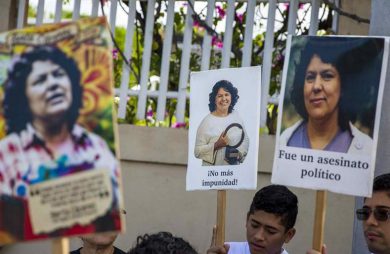
Photo: EFE
teleSUR | March 2, 2017
One year after the assassination of Honduran Indigenous leader Berta Caceres, human rights organizations and Indigenous communities continue to demand justice in the case, while the international branch of the struggle pressures to an end of U.S. funding for police and military forces accused of human rights abuses in the Central American country.
Caceres’ family sent a letter Thursday to U.S. Representative Norma Torres to ask for her support for the Berta Caceres Human Rights in Honduras Act, which was reintroduced the same day to the House of Representatives after stalling without adequate support since last year. The bill seeks the suspension of Washington’s security aid to Honduras until the country fulfills more rigorous human rights conditions — including an end to abuses by the police and military and justice in cases like Berta Caceres’ murder.
“It is increasingly clear that the government of Juan Orlando Hernandez is unwilling to act decisively to stop the killings of social activists in Honduras and to conduct honest and thorough investigations of killings and attacks,” Caceres’ family members state in the letter to Torres, urging her to “stand with” them and with Honduras. “In addition, the government has consistently failed to respect basic indigenous land rights, as it is required to do under its international treaty obligations.”
The original U.S. bill inspired by Caceres’ murder paints a grim picture of Honduras’ grave human rights situation, including the lack of justice in cases like Caceres’ murder. “Impunity remains a serious problem, with prosecution in cases of military and police officials charged with human rights violations moving too slowly or remaining inconclusive,” it states, adding that the U.S. State Department itself reported in 2015 problems of “corruption, intimidation, and institutional weakness of the justice system” in Honduras.
Caceres’ family addressed the letter to Torres to ramp up individual pressure for support of the bill. Torres, the first and only Central American in Congress and the founder of the bipartisan Central American Caucus, has faced criticism for aligning herself with the Honduran government, backing Washington’s controversial Alliance for Prosperity security aid package for Central America’s Northern Triangle and for refusing to support the Berta Caceres bill.
“We believe that your support for the Berta Caceres Human Rights Act will further strengthen your standing as an advocate for Central Americans and human rights, both in the U.S. and Honduras,” the family wrote in its letter to Torres, imploring her endorsement of the bill.
Caceres’ family also highlighted in the letter the involvement of active and former members of the military — including suspects trained at the infamous U.S. School of the Americas — in her murder, underlining the urgent need for more rigorous conditions on security aid to Honduran state forces. A former member of the military police in Honduras revealed to the Guardian that her name had been at the top of a “hit list” that a U.S.-trained unit received.
“A government that fails to protect its citizens and whose security forces are implicated in attacks and killings of activists should not be receiving security funding and training from the U.S. government,” the letter stressed, adding that Caceres’ murder is only one example among scores of assassinations, attacks and other forms of intimidation targeting activists in the country.
According to a recent report by the international rights organization Global Witness, 120 land and environmental defenders have been killed in Honduras since 2010 after an increase in state-sanctioned abuses in the wake of the 2009 U.S.-backed military coup.
Meanwhile, in Honduras, members of the organization that Caceres founded — the Civic Council of Popular and Indigenous Organizations of Honduras or COPINH — held a march Wednesday in the capital city Tegucigalpa demanding justice one year after her death.
They blasted Honduran authorities over the fact that, to this day, the motive for her assassination has not been identified and perpetrators in the killing not brought to justice. Demonstrators with banners shouted slogans demanding that authorities arrest the masterminds behind Caceres’ murder.
Caceres rose to international prominence for leading the Indigenous Lenca people in a struggle against a controversial hydroelectric dam project in the community of Rio Blanco that was put in motion without consent from local communities. She was also a key leader in the post-coup resistance movement that demanded a constituent assembly to rewrite the Honduran Constitution.
For her environmental and land defense work, she was awarded the prestigious 2015 Goldman Environmental Prize, while at the same time suffering dozens of death threats and other forms of harassment. Berta Caceres was shot dead just before midnight March 2, 2016, when gunmen stormed her house and attacked her.
Caceres’ family claim that the Honduran company behind the hydroelectric project she fought against, Desarrollos Energeticos or DESA, and the Honduran government hired contract killers to murder her and other activists.
Her family and fellow activists insists that her legacy will continue to inspire a movement for rights and justice.
In a statement ahead of the anniversary of her murder, Caceres’ COPINH reiterated calls for justice and an end to unwanted corporate projects on Indigenous land and vowed to forge on in the struggle that Caceres championed in the name of a “just society where life is respected.”
“One year after Berta’s murder, she continues teaching us that ideas cannot be killed and the processes of the people cannot be stopped,” the organization said. “May she continue to be present and our task continue with her legacy of resistance and struggle against injustice.”
RELATED:
Honduras Is the Deadliest Country for Environmental Activists
Featured Video
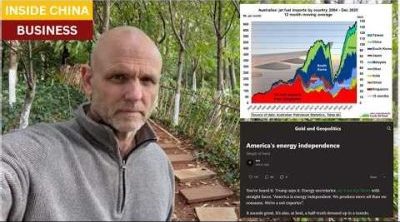
Chinese jet fuel and the myth of energy independence
or go to
Aletho News Archives – Video-Images
Book Review
Former Insiders Criticize Iran Policy as U.S. Hegemony
By GARETH PORTER | CounterPunch | February 27, 2013
“Going to Tehran” arguably represents the most important work on the subject of U.S.-Iran relations to be published thus far.
Flynt Leverett and Hillary Mann Leverett tackle not only U.S. policy toward Iran but the broader context of Middle East policy with a systematic analytical perspective informed by personal experience, as well as very extensive documentation.
More importantly, however, their exposé required a degree of courage that may be unparalleled in the writing of former U.S. national security officials about issues on which they worked. They have chosen not just to criticise U.S. policy toward Iran but to analyse that policy as a problem of U.S. hegemony. … continue
Blog Roll
 Aletho News
- What is fueling unrest across the EU?
- Why no power can undermine Iran’s eternal dominance over the Strait of Hormuz
- Is The War Against Iran Over?
- Iran war will leave long-term ‘scar’ on Wall Street, investors warn
- How Iran decimated US power projection in West Asia: Military lessons of 40-day war
- Iran’s report details US-Israeli war crimes in targeting schools, hospitals, livelihoods
- NATO’s Slow Fracture: How Trump’s Iran War Exposed the Instrument of Hegemony
- Chinese jet fuel and the myth of energy independence
- Ukraine Sea Drone Fired From Libya Hit Russian Tanker in Mediterranean
- IRGC: Iranian forces launched no attacks during ceasefire hours
- If Americans Knew
- Military aid to Israel emerges as the latest political litmus test for Democrats
- The only Palestinian children’s rights organization closes following years-long Israeli campaign against it
- ‘I Can’t Forget the Smell’: Lebanese Reel After Israel Kills Over 300 in Single Day
- DNC Shoots Down Resolutions Calling Out AIPAC and Limiting Arms to Israel
- TCN: Is Israel Blackmailing President Trump?
- Israel killed at least 303 Lebanese yesterday – who were they? Daily Update
- Amnesty: Urgent – Protect Lebanese civilians from brutal escalation in Israeli attacks
- Is The War Against Iran Over?
- Inside the Israeli army’s propaganda wing
- Hundreds of Gaza Amputees Stranded in Legal Limbo
- No Tricks Zone
- New Study: No Linear Warming Or Glacier Retreat Along Northern Antarctic Peninsula Since 1980s
- An Inconvenient Tree: Uncovered In Alps… Europe Much Warmer Than Today 6000 Years Ago
- New Study Reports A 60% Slowdown In Greenland’s Ice Loss Rate In The Last Decade
- Low Intensity Tornado Wrecks Major Solar Farm, Creating A Potential Toxic Dump
- New Study Finds Warming Saves Lives…Cold Temperatures 12 Times More Deadly Than Excess Heat
- German Science Blog Accuses PIK Climate Institute Of Hallucinating Climate Tipping Points
- Devastating Assessment Of Comirnaty Vaccine By Former Senior Pfizer Europe Toxicologist
- New Study: CO2 Is ‘Effectively Negligible’ As An Explanatory Climate Change Factor Since 2000
- Former Pfizer Toxicologist Dr. Helmut Sterz Tells Bundestag Hearing Pfizer Vaccine Should Have Never Been Approved
- Energy Expert: Germany’s Nuclear Phaseout Was A “500 Billion Euro Mistake”
 Aletho News
