US Confirms It Used Depleted Uranium in Syria

By Peter KORZUN | Strategic Culture Foundation | 21.02.2017
The US and its allies have many times attacked Russia for alleged «indiscriminate bombing» in support of the Syrian government, including cluster bombs. The accusations have been denied and never proven. Now the US military has confirmed it misinformed the public about its use of munitions in Syria which cause harm to civilians.
The US military has admitted using depleted uranium (DU) anti-tank rounds on two occasions in 2015 during devastating air strikes against convoys of Islamic State (IS) tanker trucks. Investigative reporter Samuel Oakford first brought up the use of DU ammunition by the coalition in October 2016. There have been questions raised ever since.
According to US Central Command spokesman Major Josh Jacques, a total of 5,265 depleted uranium rounds were fired in combination with other incendiary rounds in 2015. The US may use the munitions again. As the official put it, «We will continue to look at all options during operational planning to defeat ISIS, this includes DU rounds».
Earlier statements maintained that the coalition would not do so. In 2015, the US military Operation Inherent Resolve spokesman John Moore said that US and coalition aircraft have not been and will not be using depleted uranium munitions in Iraq or Syria during Operation Inherent Resolve. Now one can see the statements were not true.
Depleted uranium is the byproduct of the enriched uranium needed to power nuclear reactors. It is roughly 0.7 times as radioactive as natural uranium, and its high density makes it ideal for armor-piercing rounds such as the PGU-14 and certain tank shells.
The depleted uranium munitions are known for their enhanced armor-piercing capabilities. They have been criticized for posing health risks to soldiers who fire them and to civilian populations. Some scientists and Iraqi physicians blame depleted uranium weapons used by US forces for a major increase in cancer cases and birth defects in Iraq. The munitions have been suspected to be a possible cause of «Gulf War syndrome», the name given to a collection of debilitating maladies suffered by veterans of the 1990-91 Gulf War and the US invasion of Iraq in 2003.
Numerous studies affirm the use of the munitions in Iraq negatively affected the health of civilian population causing cancer and birth defects. When it was used during the 1999 NATO bombing campaign in Kosovo, the United Nations advised that children stay away from the impact zones. Recently published data from the 2003 Iraq War showed that A-10 attack aircraft used more DU against targets that were not tanks or armoured vehicles, questioning the current US justification that DU was needed in Syria. Historic data from the Gulf War also demonstrated that most armoured targets destroyed by A-10s were targeted by Maverick missiles, not DU munitions.
The UN Environment Program has conducted studies and clean-ups of areas affected by use of the munitions in conflicts in the former Yugoslavia and Iraq. It has described them as «chemically and radiologically toxic heavy metal». In 2014, a United Nations International Atomic Energy Agency report on depleted-uranium munitions said that direct contact with larger amounts of depleted uranium through the handling of scrap metal, for instance, could «result in exposures of radiological significance».
A University of Southern Maine study discovered that depleted uranium causes widespread damage to DNA, which could lead to lung cancer, according to a study of the metal’s effects on human lung cells. «Given the international opprobrium associated with the use of depleted uranium, we had been pretty astonished to hear that it had been used in operations in Syria», Doug Weir, the International Coordinator for the Coalition to Ban Uranium Weapons, told the Washington Post on February 16.
There is no international treaty or rule that explicitly bans the munitions’ use. Internationally, DU exists in a legal gray area. In 2012, 155 states have supported a resolution calling for a precautionary approach to depleted uranium weapons during voting at the UN General Assembly. Just four countries – the US, UK, France and Israel – voted against and 27 abstained. The resolution was informed by the UN Environment’s Program’s (UNEP) repeated calls for a precautionary approach to the use and post-conflict management of the controversial weapons. The passage of this fourth General Assembly resolution is a further challenge to the use of radioactive and chemically toxic conventional weapons that can lead to environmental contamination and humanitarian harm.
It is worth mentioning that the US has a long history of using the weapons of mass destruction (WMD) banned by international law. In 2013, Amnesty International said US drone strikes could be classified as war crimes. It is broadly believed the global use of unmanned aerial vehicles (UAVs) in such countries as Afghanistan, Pakistan, Yemen, Iraq, Somalia and Libya, constitutes a violation of international law.
Obviously, the US UAV warfare violates Article 51 of the UN Charter that defines the rules of self-defense because America is not attacked. International law limits self-defense against prospective threats to ones which are «imminent». The employed signature tactics are inherently in violation of the principle of distinction because it fails to identify civilian or militant. Drone attacks run against the principle of proportionality concerning unintentional civilian casualties in war. They violate Article 2 of the Geneva Convention (IV) Relative to the Protection of Civilian Persons in Time of War by disregarding the human rights of the innocent civilians killed in the strikes. Furthermore, the US UAV tactics conflict with International Covenant on Civil and Political Rights (ICCPR), which prohibits «arbitrary» killing even during an armed conflict. The US is not a signatory to the International Criminal Court (ICC) or many other international legal forums where legal action might be started. It is, however, part of the International Court of Justice (ICJ) where cases can be initiated by one state against another. Conducting drone strikes in a country against its will, like in Syria, for instance, could be seen as an act of war.
So, it’s double standards again while the acts of war continue. Their justice, legality and necessity are questioned but somehow their issues don’t hit headlines of US media, while Russia does. The US blaming Russia for «indiscriminate bombing», the use of cluster bombs and other misdeeds in Syria is like the pot calling the kettle black.
Foreign-Funded NGOs in Ecuador: Trojan Horse for Intervention?
teleSUR | February 18, 2017
Ecuador has come under fire for scrutinizing non-profits like Accion Ecologica, many of whom get millions from Europe and North America.
Ecuador, the tiny South American nation sandwiched between Colombia and Peru, rarely makes waves in the English-speaking world’s corporate mediascape. Last year, news traveled far on at least two occasions.
First, with an earthquake that killed at least 673 people. Second, when the government moved to investigate and potentially dissolve a nonprofit called Accion Ecologica in connection with deadly violence between members of an Amazonian tribe and police sent to protect a Chinese-operated mining project.
Ecologists and prominent activists friendly to the group, including heavy-weights such as Naomi Klein, called out what they characterized as a callous repression and criminalization of Indigenous people protecting the unparalleled richness of the Amazon and alleged state prejudice against an underdog non-profit organization that was only there to save the rainforest and its inhabitants.
Ecuador’s socialist government, on the other hand, sees the “underdog” label as misplaced.
NGOs may be seen as do-gooders, but that’s not always the case. As a country historically vulnerable to the whims of powers in the North, Ecuador has, under the administration of the outgoing President Rafael Correa, put up a guard against a new kind of public diplomacy from abroad that focuses on gaining the favor of civil society to indirectly execute their political priorities.
NGOs are flagged when they operate outside the bounds of the law and their stated objectives, indicators of potential pressure from outside funders to protect their interests rather than those of nationals.
“We’re an Ecuadorean NGO, born here in Ecuador and working for 30 years in the defense of the rights of the environment and of communities across the country, and for that work we are very well known, even at an international level,” Alexandra Almeida, president of Accion Ecologica, told teleSUR.
“But that doesn’t mean that a foreign organization could manipulate us with anything — with funds, with nothing — that’s how we operate.”
NGOs have rarely had to justify their work to anyone, let alone prove that they act for the good of the people only. But Ecuador is not an ordinary country. Rich in resources but export dependent, authorities are attempting to manage the many foreign hands trying to pull the country’s development in their favor.
Silent Action Meets Loud Reaction
This government is the first to scrutinize NGOs, but their scrutiny has not been limited to Accion Ecologica.
In 2012, Ecuadorean President Rafael Correa boldly declared that NGOs have been entering the country like never before during the previous decade. Many, backed by foreign states and foreign money, are out to destabilize the state, Ecuadorean leaders stated.
“Their interest is not the country, impoverished sectors, natural resources or strengthening democracies,” said Paola Pabon, director of the National Ministry of Political Management, which is responsible for tracking NGOs, in an interview with teleSUR last year. “What interests them is having control over governments, having influence over civil society to create elements of destabilization.”
Executive Decree 16, which went into effect in 2013, created a system to catalogue the financing, decision-making and activities of every registered social organization — a total of over 46,000 in the country, including non-profits, unions and community organizations, among others.
The resulting action saw 26 foreign NGOs expelled from the country for a lack of transparency and compliance with national law; in brief, for declaring themselves “non-governmental organizations” while acting on behalf of foreign governments. Among the more high-profile cases was Samaritan’s Purse, an evangelical missionary relief organization that received funding and support from USAID. Fifteen others were given two weeks to get their activities in order.
A handful of Indigenous organizations, which had previously mobilized against Correa’s government, attacked the decree via the Constitutional Court. Two years later, Ecuador reformed the regulations with Executive Decree 739, which fine-tuned the reasons for closing an NGO — the main one, “diverting from stated objectives” — and, caving to demand, eliminated the requirement for organizations to register projects financed from abroad.
Donor Nations: Generous or Greedy?
The trend that prompted Ecuador’s law was not without precedent.
Through the U.S. Agency for International Development, known as USAID, and the linked but publicly independent National Endowment for Democracy, known as NED, the United States pumped over US$100 million into Venezuela to create 300 new organizations credited with contributing to the coup d’etat against Hugo Chavez in 2002. In a similar move, USAID admitted that it tried to provoke a “Cuban Spring” by setting up Zunzuneo, a kind of Cuban Twitter, to circulate calls to protest.
The most common nonprofits close to foreign governments and private interests are those that stand tallest against their states. In Ecuador, that tends to be groups that work closely with Indigenous communities, with those protecting their right to their land and with those defending women and the environment. Funding by private foundations and corporations, while more widespread, is far less transparent and tougher to quantify. Big names like the Ford Foundation and Open Society, however, are well known for injecting funds into NGOs in the global south to advance specific political visions.
But the United States isn’t the only country to have funneled funds to Ecuador through NGOs.
Official numbers from Ecuador’s Chief Administrative Office of International Cooperation, or SETECI, show that since Correa assumed office in 2007 until 2015, foreign NGOs have managed over US$800 million from abroad. Top givers include the U.K. and Spain, followed by several European states.
No one, however, beats the United States. In that same period, the U.S. sent over twice the amount of money of the next-highest donor, with a total of over US$282 million and 780 projects, or 35 percent of all funding.
Of those funds, which only count NGOs based abroad that invested in local or regional projects, 13 went to projects in the Amazon led by non-profits like Care International, the Wildlife Conservation Society, the World Wildlife Fund, the Carnegie Endowment for International Peace and the Mitsubishi Corporation Foundation for the Americas. Projects based in Morona Santiago, the province where the anti-mining protests that led to the death of a police officer broke out, brought in over US$1 million from the U.S. since 2007.
The flow of funds is indicative of a broader attitude between receiver and giver, who “take advantage of the assumption that they have a perfect democracy, which is completely false – there’s a paternalistic attitude that must be regulated,” said Fernando Casado, research fellow at the National Institute for Higher Studies on public administration in Ecuador and Venezuela. Conversely, a flow in the opposite direction would immediately raise suspicion from developed countries, he added.
Yet money itself doesn’t tell the full tale: the funds are tied directly to foreign policy objectives, Casado told teleSUR. “The powers of the North have changed strategy.”
Each state has its own way. Germany, which has had 151 NGO projects in Ecuador since 2007, is known for meddling in affairs of developing countries through its Federal Ministry for Economic Cooperation and Development, or BMZ. When SETECI found that three-quarters of its funds went toward stopping another mining project in the Amazon’s Yasuni region last March, it kicked the German agency out of Ecuador.
The United States has several agencies do its work, the most prominent being USAID, NED — funded through money allocated to USAID by Congress — and the Broadcast Board of Governors. The stated missions: to promote development, democracy creation and a free press, respectively, while strictly adhering to U.S. foreign policy priorities.
“We should not have to do this kind of work covertly,” said former head of NED Carl Gershman on CIA missions to the New York Times in 1986. “It would be terrible for democratic groups around the world to be seen as subsidized by the CIA. We saw that in the 60s, and that’s why it has been discontinued. We have not had the capability of doing this, and that’s why the endowment was created.”
What Givers Want
The “work” the United States has set out for Ecuador — according to a 2016 Office of Inspector General report on the U.S. embassy leaked by WikiLeaks — is “to mitigate the effects of the contentious political environment created by the Ecuadorean Government” with the help of other government agencies, which play a “critical role.”
The report, intended for the eyes of the BBG and Congress, said the embassy was “actively engaged with civil society leaders and nongovernmental organizations to increase Ecuadorean awareness of and support for U.S. policies and values, promote Ecuadorean civil society and government accountability, and strengthen environmental initiatives.”
To set up a climate conducive to U.S. meddling, the U.S. Government Accountability Office included Ecuador on a shortlist with Colombia, Egypt and the West Bank/Gaza the year Correa was elected to closely study public opinion in “specific, targeted public awareness campaigns.”
It also either commissioned or was the beneficiary of a study from Stratfor, a secretive intelligence company contracted by the State Department and the U.S.’s multinational titans, which evaluated the extent to which Ecuador is manipulable by NGOs. The 2013 report, leaked by WikiLeaks, focused especially on how NGOs can influence trade policy and corporate regulation. Its conclusion: based on a scale likely defined in relation to other developing nations, Ecuador is fairly resilient to NGO pressure but has submitted in certain instances.
USAID sends hundreds of millions to local projects in Ecuador, some less explicitly political, but some indirectly benefiting opposition groups, according to U.S. Ambassador in Ecuador Adam Namm. BBG affiliate, TeleAmazonas, has been accused of fomenting strong opposition rhetoric against Correa. And the NED spends over US$1 million annually on dozens of local programs with broad objectives like “promoting citizen oversight of elected officials,” “monitoring due process and the independence of the judicial system,” “monitoring the use of public resources in government advertising” and “facilitating dialogue and consensus on democracy.”
Both Germany’s BMZ and USAID are back in Ecuador following a deluge of NGO activity after the April earthquake. The workload of the National Ministry of Political Management has peaked ever since, said Pabon.
The Sneaky Alliance With Mother Earth
One pet project of USAID was the Conservation in Managed Indigenous Areas, or Caiman, which ended before Correa took office but was among several USAID programs to conserve the country’s biodiversity and promote alliances between Indigenous communities and private businesses.
Caiman worked with various groups working in ecological and Indigenous rights, including Accion Ecologica. For several years, Caiman had Accion Ecologica help them battle against the Ministry of the Environment and train park rangers to oppose contamination from oil and mining.
Whether or not USAID or foreign foundations have funded Accion Ecologica directly is unclear. Unlike many others in the industry, the non-profit does not publish its financial information on its website, and refused multiple requests from teleSUR for copies of audits. When asked, the organization’s president said she does not know specifics on foreign funders and could not answer.
Almeida did say that Accion Ecologica receives funds from Europe — from individuals, “small organizations, alliances, groups that form” around fundraising events on ecological issues. She did not say how much or cite specific names but mentioned Italy and Belgium.
A 2012 investigation from Andes, an Ecuadorean state publication, found that both Accion Ecologica and the Regional Foundation of Human Rights Advising, another powerful nonprofit, are financed by the European Commission, Oilwatch, the Netherlands embassy and a few international ecological networks. Almeida said the accusations were false.
While Europe may be the principal interested party in the success of Accion Ecologica, the U.S. is also well known to have played an active role in similar battles.
In 2013, the year after Correa took the lead against foreign NGOs and a year before he expelled USAID, Bolivia accused USAID of spending US$22 million to divide Indigenous groups on the exploitation and nationalization of oil in their lands.
“Since the right can’t find arguments to oppose the process of change, it now turns to campesino, Indigenous and native leaders who are paid by several NGOs and foundations with perks to foment a climate of conflict with the national government to deteriorate the process of unification that the country is experiencing,” said Morales as he gave USAID the boot.
Beyond Accion Ecologica
“Theoretically speaking, NGOs shouldn’t exist,” said Casado. NGOs operate within a logic of narrowing, minimizing and weakening the role of the state so they can keep filling holes in public services and keep their jobs, which are at risk of disappearing if the state works as it should, added Casado.
“They elect themselves representatives of civil society in general,” and yet their role is limited and entirely reliant on and responsive to funding, which at the end of the day remains in their pockets. Other social organizations and popular movements, said Casado, operate only on conviction.
If an NGO is completely free to operate without regulations, a country would open itself to any corporate and foreign interest that found an open hand, he argued. Latin America is intimately familiar with that process — of consolidating power in the monied class — and NGOs back similar corporate interests, only with a more benevolent face.
It’s near-impossible to identify the perfect case of foreign intrusion — and, as in Accion Ecologica’s case, near-impossible to prove. Multiple factors are always at play, from the ideology of individual members to the decision-making process to however events play out on the ground. Casado said that the first step to uncovering hidden interests is financial transparency — a move that faces stiff opposition precisely for the interests that it could reveal.
Ecuador’s answer is to carefully collect records and draw a clear line between what is acceptable and what is not. Foreign NGOs, state the decree, cannot participate “in any form of party politics, any form of interference or proselytism, any threat to national security or public peace or any other activity not permitted under their migratory status.”
Case Closed?
When Accion Ecologica testified before the Interior Ministry and the Ministry of the Environment, it argued that it had been doing the same work — protecting the rainforest — for decades, always in a peaceful manner. The evidence presented showing they provoked violence through a series of tweets in and around the time of violent clashes was “a bit absurd, very absurd,” said Almeida.
In the end, the government’s case did not hold, and the Environment Ministry concluded there was not enough credible evidence to shut down the group. Accion Ecologica credited “pressure” from its supporters, as its representatives continue to urge for a deregulation of NGOs.
“It’s not only NGOs, but also any organization that will be at risk, especially their right to free expression and the right to free association” if the decree regulating NGOs remains intact, said Almeida.
Her position echoes those taken up by opposition politicians, whose one commonality is their depiction of Correa’s government as one systematically trouncing on citizens’ rights and freedoms.
In an election year, rhetoric makes the difference.
Dianileysis Cruz contributed reporting.
There’s Nothing Parochial About the Issue of GMO Food Labeling
By Jonathan Latham, PhD | Independent Science News | January 24, 2017
The GMO labeling issue has quieted down some but there is still plenty to discuss. Just this week the USDA proposed its definition of a GMO for labeling purposes and it includes loopholes for gene editing. However, it is also possible for reasonable people to imagine that GMO labeling is a sideshow to the real business of the food movement. After all, most GMO foods and GMO crops are visually indistinguishable from non-GMOs, and tiny non-GMO labels can look pretty irrelevant on the side of a soda bottle containing whole cupfuls of sugar. Last week, Michael Pollan, Olivier de Schutter, Mark Bittman and Ricardo Salvador made that error, calling GMO labeling “parochial.” Granted, they wrote “important but parochial”, but qualifying the significance of GMO labeling in any way was a mistake.
The first issue is that GMOs are legally distinct from non-GMO crop varieties. They possess an enhanced legal status that has enabled GMOs to become a gushing profit centre for agribusiness. These rights not only allow their owners to steer farmers’ herbicide use, which also increases profits, they can also legally prevent independent research which would otherwise show up their advertising claims. The share price of Monsanto reached $142 in 2008, reflecting the enormous profitability of massively increasing seed prices on the back of GMO introductions.
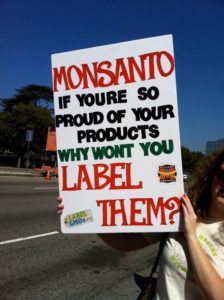
California Proposition 37
Those profits have in turn fuelled a set of key agribusiness activities. One was the acquisition of almost the entire independent global seed business, which now resides in very few hands. The second was a cluster of enhanced PR and lobbying activities that were necessary to defend GMOs. Rather than hide in the shadows agribusiness corporations needed to come out swinging in defence of the indefensible, which necessitated, among other things, a much higher degree of control than previously over teaching content and research at public universities.
Thus their special legal status enabled an unprecedented ability to control both the present and the future of agriculture.
GMOs are also conflated with science and thus progress. They have the intellectual role of presenting agribusiness as the innovative and dynamic frontier of agriculture, in contrast to those people who base their efforts on ecological diversity, local expertise, or deep knowledge. This cutting edge image is key to the agribusiness business model of reaping tax breaks and subsidies (Lima, 2015).
All around the world, taxpayer money supports and subsidises agribusiness without which benefits it would not exist (Capellesso et al., 2016). In the final analysis, however, the GMOs-as-progress argument is circular. Agribusiness is innovative because it uses GMOs and GMOs show how innovative they are. Smoke and mirrors, but politicians fall for it every day, delivering massive transfers of wealth every year from the public to the private sector (Lima, 2015).
The biological truth of GMOs is equally disturbing. At one end of the food chain are the crops in the field. Many people have noticed the virtual disappearance of Monarch butterflies. There are three leading explanations of this disappearance. The loss from farmland of their larval host plants, milkweeds, is one possibility; poisoning of their caterpillar larvae after consuming insecticide-filled pollen from Bt insect-resistant GMOs is a second; and toxicity from the neonicotinoid pesticides used to treat GMO seeds is the third. The first two both stem directly or indirectly from GMO use in agricultural fields since before GMOs, milkweeds could not be eradicated and now they can. Most likely is that all three causes are true and that along with milkweeds GMO agriculture also decimated, or eradicated entirely, many other species too.
Monarchs are lovely, but they are not otherwise special. Their significance is as sentinels. Planting milkweeds and pollinator way stations to specially preserve a sentinel species does not rescue an agricultural ecosystem, but it will mask the symptoms. Agribusiness is right now hoping that no one will notice the difference, and that by bringing back monarchs it can obscure the facts of their killing fields.
Internationally too, GMOs threaten to transform agriculture in places like India where millions of people who make a living by labouring in fields could be displaced by herbicide-tolerant crops such as mustard.
At the human consumption end of the food chain, if you live in the US, no one is protecting you from potential health hazards due to GMOs. Makers of GMO crop varieties don’t even have to notify the FDA of a new product. And if the maker deems the product is not a pesticide they don’t have to notify the EPA either. Trump won’t make it worse because it can’t be worse. It is non-partisan contempt for public health.
What are those potential health hazards? One important example is the famous (or infamous) rat study of NK603 corn by the French research group of professor Gilles-Eric Séralini . It is the only longterm study of the effects of GMOs on a mammal. If you ignore the tumours that most people focused on, the study found major kidney and liver dysfunction in the treated animals (Séralini et al., 2014). This dysfunction was evident from biochemical measurements and was also visually apparent under the microscope. These results are of no interest to US regulators, even in principle, since they fall between jurisdictions.
From this we can conclude that GMOs are often harmful, directly and indirectly, and further, that they are the leading edge of the business model of agribusiness.
The question, however, was labeling. Imagine that organic food was not allowed to be labeled. Would there be such an organised and powerful challenge to industrial food? What labeling does for the agriculture and food system is to allow the public to express its dismay and disagreement with the direction of corporate agriculture and assert their democratic rights to protect themselves. Labeling allows the public to engage with specific policies and products within the vast complexity of the food system and push back in a focused way against corruption and dishonesty, in real time. There aren’t too many chances to do that in America today.
References
Capellesso AJ, Ademir Antonio Cazella, Abdon Luiz Schmitt Filho, Joshua Farley, and Diego Albino Martins (2016) Economic and environmental impacts of production intensification in agriculture: comparing transgenic, conventional, and agroecological maize crops. AGROECOLOGY AND SUSTAINABLE FOOD SYSTEMS 40: 215–236. Lima T. (2015) Agricultural Subsidies for Non-farm Interests: An Analysis of the US Agro-industrial Complex. Agrarian South: Journal of Political Economy 4(1) 54–84o-industrial Complex
Séralini G-E, Emilie Clair, Robin Mesnage, Steeve Gress, Nicolas Defarge, Manuela Malatesta, Didier Hennequin and Joël Spiroux de Vendômois (2014) Republished study: long-term toxicity of a Roundup herbicide and a Roundup-tolerantgenetically modified maize. Environmental Sciences Europe 26:14 DOI: 10.1186/s12302-014-0014-5
Federal Regulator Halts Move to Toughen Radiation Exposure Limits
By John Laforge | CounterPunch | January 13, 2017
Work has been halted on two rulemaking projects that would have reduced the amount of radiation the government permits workers and the public to be exposed to without their consent. The improved limits would have been in line with internationally accepted standards, Bloomberg BNA reports. A Nuclear Regulatory Commission announcement says stopping the process of setting stricter radiation exposure limits was “due to the high costs of implementing such changes.” The purpose of the NRC is to protect public and nuclear worker health and safety, but this time it’s just saving money for the nuclear industry.
The cancellation of two unfinished and long-overdue precautionary improvements, noted in the Dec. 27 Federal Register, came as a shock to nuclear industry watchdogs who have campaigned for increased radiation protection since 1990. That year, the International Commission on Radiological Protection (ICRP) recommended that radiation industry worker exposures be reduced by three-fifths, from 50 milliSieverts per year to 20 milliSieverts per year. (A milliSieverts is a measure of the body’s absorption of radiation.) The recommendation has never adopted by the United States. Based in Ottawa, Ontario, ICRP sets standards used worldwide as the basis for radiological protection, working to reduce cancer and other diseases caused by radiation exposure.
Ed Lyman, with the Union of Concerned Scientists, told Bloomberg BNA the termination of these projects “makes the US look out of step with the rest of the world. It makes it look like we’re basing our regulations on obsolete information.” Jerry Hiatt, with the industry lobbying group Nuclear Energy Institute, was relieved by the NRC move telling Bloomberg that existing rules were adequate, and that it’s unnecessary to reduce currently permitted exposures.
The rulemaking project was begun by the NRC staff in 2008 and was intended to update the country’s radiation protection standards in accordance with ICRP’s international standards, primarily with respect to radiation dose. The NRC staff had previously recommended that the commission reduce the total radiation worker exposure from 50 milliSieverts-per-year to 20 milliSieverts-per-year — in line with the ICRP’s 1990 global recommendation. However, the NRC rejected the recommendation.
The NRC’s decision not to align permitted radiation exposures with those of the ICRP is the equivalent of “throwing out one of the most significant changes to get the US in step with the rest of the world,” Lyman said. The commission formally approved the stop-work orders in April, but it only notified the public on Dec. 27.
The NRC also decided to stop work on a second rulemaking which would have brought the US in line with international rules regarding daily releases of radioactive waste water from nuclear reactors. By way of explanation, the NRC said, its current standard “continues to provide adequate protection of the health and safety of workers, the public and the environment.”
Over the last 70 years, permitted radiation exposure limits for workers and the public have dramatically decreased as science has come to better understand the toxic and cancer-causing properties of low doses.
In its 2012 pamphlet “Radiation Exposure and Cancer” the NRC acknowledges that, “[A]ny increase in dose, no matter how small, results in an incremental increase in risk.” Likewise, the National Academy of Sciences, in its latest book-length report on the biological effects of ionizing radiation BEIR-VII, says: “[L]ow-dose radiation acts predominantly as a tumor-initiating agent,” and that “[T]he smallest dose has the potential to cause a small increase in risk to humans.” And the US Environmental Protection Agency agrees, “[A]ny exposure to radiation can be harmful or can increase the risk of cancer … In other words, it is assumed that no radiation exposure is completely risk free.”
But today, when the international standard dose limit is less than half what our own government allows, it’s the radiation industry shareholders that are being protected by the NRC, not public health and safety.
Join the debate on Facebook
John LaForge is a Co-director of Nukewatch, a peace and environmental justice group in Wisconsin, and edits its newsletter.
Thatcher Wanted to Infest Peru With Coca-Eating Moths: New Docs
teleSUR | December 30, 2016
Margaret Thatcher wanted to eradicate cocaine in Peru with moths, according to newly-released documents, which also reveal the then-British government’s top-secret strategy in combating acid house parties and soccer hooligans.
Her peer in the Labour Party, Lord Victor Rothschild, suggested in 1989 that to tackle drug production in Peru, “One might think of aerial sprays, with or without the connivance of the government concerned; and various other methods of introduction, covert as well as overt.”
The moth, Eloria noyesi, is known for its exclusive diet of the coca plant. “While virtually everyone agrees that those who take cocaine or crack, in the various ways available, should be punished, everyone, I think, agrees that it is the ‘drug baron’ who must be mercilessly ‘put down,’” Rothschild also added.
Thatcher found the “most intriguing idea” to be “characteristically brilliant” and an “ingenious solution,” she responded in a letter released Friday by the National Archives in Kew.
However, the plan was never executed because it lacked cooperation from the Peruvian government.
Other declassified documents describe plans to allow law enforcement to attack anti-nuclear “demonstrators or terrorists” and “as a last resort, open fire to prevent a perceived threat of sabotage not only to nuclear warheads but also to the submarine.”
Multiple documents also detail moves against soccer hooligans with the aim of “excluding troublemakers from football grounds,” who represent “a serious blemish on our society” that are “destroying the game as family entertainment.”
Another signature fight from Thatcher revealed in the documents is her war on Acid House parties, the 1980s’ underground equivalent of raves. Private correspondence claims her uncle was “very disturbed” by the parties and that police had a “feeling of collective anger and helplessness” when they were unable to shutdown the raves.
Ecuador to Investigate NGO for Supporting Amazon Anti-Mining Violence
teleSUR | December 22, 2016
Ecuador has warned that an environmental group, accused of supporting violent acts that left one police officer dead and another with life-threatening injuries amid Indigenous protests against a Chinese mining company in the Amazon, is being investigated and could have its legal status removed.
Accion Ecologica was notified Tuesday by the Ministry of Environment that administrative proceedings would be starting against the group which is accused of supporting “mobilizations that promote discord and confrontations with the police,” Ecuador’s Ministry of Interior said.
Accion Ecologica has been accused of supporting recent violent protests reportedly carried out by the section of the Shuar Indigenous group which attempted to occupy territory in the area where Chinese mining company Explorcobres, in charge of a copper mining project in Ecuador’s Amazon rainforest, is operating.
On Dec. 14, a group of people in the town of San Carlos de Tanantza, in the province of Morona Santiago, killed a police officer, injured five others, as well as two military members, during a protest against the mining project.
Security officials said that a group of 80 people, believed to be part of a Shuar community fired at police guarding the Explorcobres camp, after the group had already attempted on a number of occasions to enter the area. The government is holding six people in detention over the incidents, which also left another officer seriously injured.
Ecuador has rules governing NGOs that say that they should fulfill the mandate of the mission in their legal documents, and government officials say that Accion Ecologica has moved away from its original peaceful goals of environmental advocacy and that its support of recent violent protests could undermine the country’s security and peace.
Ecuador began registering and regulating NGO’s, given the history of interference from foreign governments using NGO’s to meddle in the country’s affairs.
The Ministry of Interior said that all environmental groups are free to “express their ideas,” but are not permitted to “make an apology for criminal actions or engage in political action apart from the function they registered in the defense of nature.”
In a statement, Accion Ecologica responded to the accusations by the Ministry of the Environment maintaining that “We have been scrupulous in our compliance with the law,” and that their lobbying complies with the country’s environmental management guidelines. In response, the group has taken to social media with the hashtag #SOSAccionEcologica, echoing the “SOS” taglines used by opposition groups to the region’s left-wing governments.
UN Demands ‘Israel’ to Pay Lebanon More than $850 Million for 2006 “Oil Slick”
Al-Manar | December 23, 2016
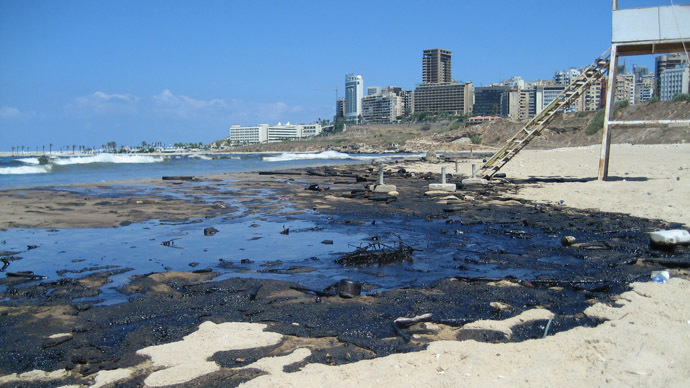
The United Nations General Assembly adopted a resolution titled “Oil slick on Lebanese shores” urging the Zionist entity to pay Lebanon some $850 mn compensation to cover the clean-up cost of an oil spill caused by the Zionist July 2006 war on the country.
The UNGA voted 166 in favor of the non-binding resolution to 8 against (Australia, Canada, the Zionist entity, Marshall Islands, Federated States of Micronesia, Nauru, Palau, United States), with 7 abstentions (Cameroon, Democratic Republic of Congo, Honduras, Papua New Guinea, South Sudan, Tonga, Vanuatu).
Taking into account the 1992 Rio Declaration on Environment and Development, which in principle requires the polluter to pay environmental damage costs, the assembly found the Zionist entity guilty of the July 15, 2006 environmental disaster.
The disaster was caused by a Zionist strike on the oil storage tanks in the direct vicinity of the Jiyeh electric power plant in Lebanon. As a result an oil slick covered the Lebanese coastline entirely, stretching all the way to the Syrian coastline.
By that text, the Assembly considered that the oil slick had heavily polluted the shores of Lebanon with 15,000 tons of oil and partially polluted Syrian shores and consequently had serious implications for the Lebanese economy.
The Assembly decision followed the assessment report by Secretary-General Ban Ki-moon which stipulated the value of damage to be $856.4 million. Now the Assembly is asking the Zionist entity to provide “prompt and adequate compensation.”
The oil slick made by the spill “has had serious implications for livelihoods and the economy of Lebanon,” the resolution read, accounting for inflation of a October 2007 estimate by the United Nations Secretary General that reported the spill caused $729 million in damage.
Lebanon bore the brunt of the spill, but the Syrian coast and other Mediterranean countries suffered as well, the UN said, asking Lebanon to continue clean-up efforts and the international community to increase funding for its environmental restoration.
The resolution noted that the UN chief expressed “grave concern at the lack of any acknowledgment on the part of the government of Israel of its responsibilities vis-a-vis reparations and compensation” to Lebanon and Syria for the oil spill.
Lebanon’s permanent representative to the UN Nawaf Salam hailed the resolution and called it a “major progress.”
“We affirm that Lebanon will continue to mobilize all resources and resort to all legal means to see that this resolution is fully implemented, and that the specified compensation is paid promptly,” he said.
“This resolution also paves the way for further compensation into other areas of damage (health, ecosystem services as habitat, potential groundwater contamination, and marine diversity), that were not considered in the current calculated amount,” Salam added.
For its part, the Zionist mission to the UN rejected the resolution, expressing wonder that it does not cover the environmental damage which occurred in the northern occupied territories following the attack on Lebanon, claiming that the entity launched the July 2006 war on the country as “a consequence.”
The Zionist entity waged a brutal 33-day war on Lebanon in July 2006, killing hundreds of Lebanese people and leaving serious damage to vital infrastructure. The war ended by a UN 1701 resolution which urged the Zionist entity to halt hostilities and withdraw behind the blue line drawn by UN forces after the liberation of most occupied Lebanese southern territories in May 2006.
Featured Video

Chinese jet fuel and the myth of energy independence
or go to
Aletho News Archives – Video-Images
Book Review
Former Insiders Criticize Iran Policy as U.S. Hegemony
By GARETH PORTER | CounterPunch | February 27, 2013
“Going to Tehran” arguably represents the most important work on the subject of U.S.-Iran relations to be published thus far.
Flynt Leverett and Hillary Mann Leverett tackle not only U.S. policy toward Iran but the broader context of Middle East policy with a systematic analytical perspective informed by personal experience, as well as very extensive documentation.
More importantly, however, their exposé required a degree of courage that may be unparalleled in the writing of former U.S. national security officials about issues on which they worked. They have chosen not just to criticise U.S. policy toward Iran but to analyse that policy as a problem of U.S. hegemony. … continue
Blog Roll
 Aletho News
- What is fueling unrest across the EU?
- Why no power can undermine Iran’s eternal dominance over the Strait of Hormuz
- Is The War Against Iran Over?
- Iran war will leave long-term ‘scar’ on Wall Street, investors warn
- How Iran decimated US power projection in West Asia: Military lessons of 40-day war
- Iran’s report details US-Israeli war crimes in targeting schools, hospitals, livelihoods
- NATO’s Slow Fracture: How Trump’s Iran War Exposed the Instrument of Hegemony
- Chinese jet fuel and the myth of energy independence
- Ukraine Sea Drone Fired From Libya Hit Russian Tanker in Mediterranean
- IRGC: Iranian forces launched no attacks during ceasefire hours
- If Americans Knew
- Military aid to Israel emerges as the latest political litmus test for Democrats
- The only Palestinian children’s rights organization closes following years-long Israeli campaign against it
- ‘I Can’t Forget the Smell’: Lebanese Reel After Israel Kills Over 300 in Single Day
- DNC Shoots Down Resolutions Calling Out AIPAC and Limiting Arms to Israel
- TCN: Is Israel Blackmailing President Trump?
- Israel killed at least 303 Lebanese yesterday – who were they? Daily Update
- Amnesty: Urgent – Protect Lebanese civilians from brutal escalation in Israeli attacks
- Is The War Against Iran Over?
- Inside the Israeli army’s propaganda wing
- Hundreds of Gaza Amputees Stranded in Legal Limbo
- No Tricks Zone
- New Study: No Linear Warming Or Glacier Retreat Along Northern Antarctic Peninsula Since 1980s
- An Inconvenient Tree: Uncovered In Alps… Europe Much Warmer Than Today 6000 Years Ago
- New Study Reports A 60% Slowdown In Greenland’s Ice Loss Rate In The Last Decade
- Low Intensity Tornado Wrecks Major Solar Farm, Creating A Potential Toxic Dump
- New Study Finds Warming Saves Lives…Cold Temperatures 12 Times More Deadly Than Excess Heat
- German Science Blog Accuses PIK Climate Institute Of Hallucinating Climate Tipping Points
- Devastating Assessment Of Comirnaty Vaccine By Former Senior Pfizer Europe Toxicologist
- New Study: CO2 Is ‘Effectively Negligible’ As An Explanatory Climate Change Factor Since 2000
- Former Pfizer Toxicologist Dr. Helmut Sterz Tells Bundestag Hearing Pfizer Vaccine Should Have Never Been Approved
- Energy Expert: Germany’s Nuclear Phaseout Was A “500 Billion Euro Mistake”
 Aletho News