Plan to Build NIH-Funded Bat Research Lab in Colorado Sparks Fears of Lab Leak
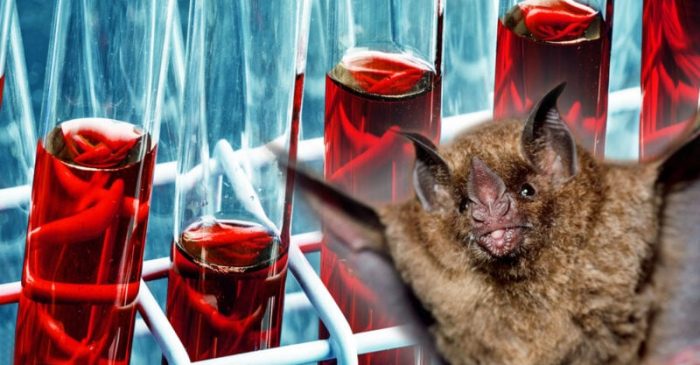
By Michael Nevradakis, Ph.D. | The Defender | May 18, 2023
Colorado State University (CSU) is proceeding with controversial plans to construct a new research facility to study bat diseases with funding from the National Institutes of Health (NIH). Construction is slated to be completed sometime in 2024 or 2025.
University officials and proponents of the new facility argue the laboratory is necessary to enhance research capabilities looking into emerging diseases and viruses resulting from zoonotic — animal-to-human — transfer.
While CSU denies that gain-of-function research will occur at the laboratory, some researchers connected with the new facility previously were associated with actors involved with such research, including experiments conducted in Wuhan, China.
Francis Boyle, J.D., Ph.D., a bioweapons expert and professor of international law at the University of Illinois, is concerned about the facility.
Boyle told The Defender :
“It is well known that Colorado State University has a long and ongoing history of specialization in weaponizing insects with biowarfare agents for delivery to human beings.
“This new lab will magnitudinally increase CSU’s offensive biowarfare capabilities, in gross violation of the Biological Weapons Convention of 1972 and my Biological Weapons Anti-Terrorism Act of 1989 that provides for life in prison.”
Area residents, including a local grassroots group, and bioweapons experts, also have raised concerns over the potentially risky research, involving deadly viruses, that will be conducted at the facility and the risk of a lab leak akin to that which may have occurred at the Wuhan Institute of Virology in China, and may have led to escape of the SARS-CoV-2 virus.
Christine Bowman leads a group of local citizens who formed the Covid Bat Research Moratorium of Colorado (CBRMC), a grassroots initiative opposing the new facility. The group has launched efforts such as a yard sign campaign to raise local awareness.
In an interview with The Defender, Bowman described being “stonewalled” by state and local officials and by CSU.
“We need answers as to how COVID-19 was modified to transfer from human to human before I will be satisfied that it’s okay to raise diseased bats to study in my neighborhood,” Bowman said.
“Now that we know that the COVID pandemic likely started from a lab leak in Wuhan, China, we are questioning the safety of continuing such research,” she added.
CSU receives ‘tens of millions of dollars’ in NIH research grants annually
According to The Colorodoan, the Chiropteran Research Facility, as it will be known, “would serve as a breeding facility to raise and care for bats of various species that can be used as research models in studies on a wide range of human viruses that are believed to have originated with bats.”
The laboratory will be constructed on the south end of CSU’s Foothills Campus near Fort Collins, at 3105 Rampart Road, within the Justin Harper Research Complex and adjacent to the university’s existing Center for Vector-Borne Infectious Diseases (CVID). It will consist of a 14,000-square-foot stand-alone bat vivarium.
According to CSU, the university “is a world leader in research on zoonotic infections. The University’s scientists have been studying bats and other vectors that transmit dengue fever, Zika and West Nile viruses for more than 30 years.”
Construction is scheduled to begin by this summer. The Colorodoan reported the facility is expected to open in fall 2024, while CSU said it will be completed by 2025.
CVID, formerly known as the Arthropod-born and Infectious Diseases Laboratory, was founded in 1984. According to The Colorodoan, it “currently houses the only captive breeding colonies of two species of bats used in its research.”
CVID’s website describes the facility as “a longstanding multi-disciplinary research and training center” whose researchers “have been successful in defining mechanisms of pathogen persistence and transmission, and developing new surveillance, control, and prevention strategies for vector-borne and emerging zoonotic diseases.”
“World-class facilities, including BSL-3 [biosafety level 3] laboratories and large insectary complexes, provide an outstanding scientific environment for researchers inside and outside CSU wanting to manipulate pathogens in vertebrate hosts and arthropod vectors,” the CVID website states.
The BSL3 laboratory in question is CSU’s Regional Biocontainment Laboratory, which operates with the support of the National Institute for Allergy and Infectious Diseases (NIAID) and is part of the university’s 120,000-square-foot Infectious Disease Research Center. It houses bats and samples of numerous deadly bacteria and viruses.
In October 2021, the NIH awarded a $6.7 million grant to CSU’s microbiology, immunology and pathology department at the College of Veterinary Medicine and Biomedical Sciences to construct the new bat vivarium.
Alan Rudolph, CSU’s vice president for research, told The Coloradoan the university will provide the remaining funds for the facility’s construction, the cost of which is expected to range between $8-9 million.
Rudolph said CSU receives “tens of millions of dollars” in NIH research grants annually.
‘Highly pathogenic’ agents will be housed at new facility
The CVID already conducts research involving viruses related to “chikungunya, dengue, malaria, Rift Valley fever, Zika virus, COVID-19, MERS, influenza [and] hantavirus disease.” The new facility will expand those capabilities.
According to the minutes of the Feb. 3, 2022, meeting of CSU’s Board of Governors, the new facility is justified due to the capacity it will have to study “emerging zoonotic viruses that originate in bats and cause high mortality in humans: SARS-CoV, MERS-CoV and SARS-CoV-2, Ebola virus, Marburg virus, Nipah virus and Hendra virus.”
It is unclear under what biosafety level the new facility will operate, but Bowman told The Defender :
“From what I understand, this facility is slated to be a BSL2. But what’s to keep that from increasing in the future without approval or informing the general public? What guarantee do the residents of Fort Collins have that the lab won’t increase from a BSL2 to BSL4, where even more dangerous viruses will be studied?”
CSU claims it “has no plans to conduct gain-of-function research of concern” there.
“Who decides what criteria we use for ‘concern’?” Bowman asked.
Rebecca Moritz, CSU’s biosafety director, said, “This will be the only facility like it in the United States,” and it will give students “the opportunity to learn directly from the researchers conducting this research in their classes.”
She added:
“CSU researchers have safely studied and worked with bats and other vectors for over 30 years. … Due to global warming and population growth, humans and animals are coming into contact more frequently and in ways not previously seen. This could result in an increased number of outbreaks and possibly pandemics.
“The main purpose of this facility will be to house bat breeding colonies for CSU researchers and researchers around the United States and the world. This facility will allow an expansion of CSU’s current work, including projects focusing on the role that bats play in disease transmission and the development of vaccines and therapeutics.”
“Personnel who will work in this facility will be highly trained and be required [to] adhere to strict biosafety and biosecurity practices,” Moritz claimed.
Moritz has spoken publicly about her involvement with gain-of-function research, including at the 2014 Gain of Function Symposium. At the time, Moritz was part of the Biosecurity Task Force at the University of Wisconsin-Madison.
Bowman said gain-of-function experiments are already being conducted at CSU and that the university is open about it.
“We are only aware that CSU is conducting gain-of-function on plants and mosquitoes because it is mentioned in the link they send to anyone who emails them or questions their research.”
Rudolph told The Colorodoan, “Bat research is not new to our campus; bat-research facilities are not new to our campus. It’s an expansion of existing work in existing facilities that have already made great impacts.”
Such research “helped us to develop vaccines, helped us to develop diagnostics to better determine who’s getting sick, why are they getting sick, when are they getting sick, and vaccines that help treat those people when they do get sick,” he added.
Some of the viruses for which research will be conducted at the new facility, including Hendra and Nipah, are considered “highly pathogenic BSL-4 agents,” classified “in the same biosecurity category as Ebola.”
The Nipah virus, for instance, has a high human mortality rate ranging between 40 and 75%. It “causes a rapidly progressive disease, which includes acute respiratory infection and encephalitis that can lead to coma or death.”
Earlier this month, the NIH reinstated a controversial federal grant, originally issued in 2014 under Dr. Anthony Fauci, then-director of NIAID, which operates under the NIH, to EcoHealth Alliance to study the risk of bat coronavirus spillover.
This involved gain-of-function research for the genetic manipulation of coronaviruses to make them more infectious to humans. Some of the NIH funds went to the Wuhan Institute of Virology, which collaborated with EcoHealth Alliance on this research.
EcoHealth is a New York-based nonprofit that says its mission is to develop “science-based solutions to prevent pandemics and promote conservation.”
Documents revealed by U.S. Right to Know (USRTK) indicate that some CSU researchers have previously collaborated with the EcoHealth Alliance.
Local activists ‘stonewalled’ by university, state, local officials
According to The Colorodoan, CSU’s campus planner, Gargi Duttgupta, told local authorities that the new facility would be approximately 316 feet north of the fence that marks the campus’ boundary with adjacent residential communities.
This may be too close for comfort for some area residents, who have attempted to engage with CSU and with local planning authorities to express opposition to the new facility and to obtain further information about its construction.
Their opposition led to the establishment of CBRMC, “a nonpartisan grassroots organization run on a budget of $0 by a group of concerned citizens from across the political spectrum.”
CBRMC says its mission is to put a moratorium on the construction of the new facility “until we first know what happened with the possible COVID bat lab leak and gain-of-function research in Wuhan, China.”
Some CBRMC members spoke at a Dec. 21, 2022, meeting of the Larimer County Planning Commission, expressing fears of a potential leak from the new facility, drawing comparisons with the suspected Wuhan lab leak.
But the planning commission unanimously approved the project. Lesli Ellis, Larimer County’s community development director, told The Colorodoan that no further approvals are needed before construction can commence.
According to The Colorodoan, “CSU officials insist that the new facility is merely an extension of work that has been done on its Foothills Campus for more than 30 years by the university and others, including the U.S. Centers for Disease Control and U.S. Department of Agriculture.”
The CSU Foothills Campus houses labs operated by the U.S. Department of Agriculture National Wildlife Research Center and the Rocky Mountain Prevention Research Center — described as the “second-largest CDC lab outside of Atlanta.”
“Strict safety protocols will be in place to prevent the escape of a virus or infected bat,” The Colorodoan also reported.
Rudolph told The Colorodoan the facility will need only dozens to hundreds — not thousands — of bats, which will be acquired by the U.S. government, “quarantined well outside the United States and deemed safe and not sick before they come to us.”
CSU does ‘not have a good track record’ on safety
A Jan. 11 CSU “Q&A on why CSU labs are safe” denies that illegal bioweapons research will take place at the institution and quotes Moritz, who said, “We do everything possible to decrease the risks of our research.” However, she acknowledged “there is no such thing as zero risk in research.”
Bowman said CSU alone will oversee safety at the new facility, and she questioned the lab’s safety record.
Bowman told The Defender :
“After letting chronic wasting disease [CWD] leak from their labs at CSU, hundreds of thousands of the deer population were killed from the disease. They do not have a good track record of ensuring the safety or containment of diseases.
“I personally do not have the data for this claim, but I have heard many people cite this as fact and no one at CSU is refuting the claim.”
CWD, “a contagious neurological disease that affects members of the deer family, causing erratic behavior and weight loss that eventually results in death,” was identified in 1967. It is described as “a mysterious malady intricately tied to Fort Collins.” The federal government declared a CWD state of emergency in 2001.
The Colorodoan reported that CWD “was related to scrapie in sheep and goats, mad cow disease in cattle and the fatal variant Creutzfeldt-Jakob disease in humans.”
As reported by Northern Colorado NPR affiliate KUNC, “Chronic wasting disease is not your garden variety infectious disease. It’s not bacterial, viral or even fungal. It’s caused by something we all have inside our bodies — something called prions.”
CSU is home to the Prion Research Center, which “studies the biochemistry, genetics, and pathogenesis of prions, the causative agent of incurable and often fatal diseases in humans and animals,” including bovine spongiform encephalopathy, classic Creutzfeldt-Jakob disease, variant Creutzfeldt-Jakob disease, CWD and scrapie.
According to the Prion Research Center, “Growing evidence also links the prion mechanism to proteins involved in the pathogenesis of other common neurodegenerative diseases, including Alzheimer’s and Parkinson’s, and forms an emerging area of the center’s studies.”
And in 2019, CSU reported that Prion Research Center scientists “have developed a new gene-targeted approach” to study CWS in mice. Described as a “real breakthrough,” the scientists “replaced the gene that encodes the prion protein in the mouse and replaced it with an exact replica of the code from either deer or elk.”
Researchers who spoke to The Colorodoan said that while it’s unclear if CWD originated in Fort Collins, it is hypothesized that it crossed species and spread there.
A U.S. Geological Survey map shows a significant cluster of CWD near Fort Collins and that cases identified elsewhere have been connected to the region.
A 2021 paper, “Text mining to identify the origin of chronic wasting disease,” published in the Issues in Information Systems journal, states:
“For the 16 [CWD] clusters in the first 40 years, the text mining process generated evidence supporting the trace back to Fort Collins for the first six clusters, five more clusters could be traced back to infected area linked to Fort Collins, and in 5 clusters the evidence supported an explanation for tracing the disease back to an area linked to Fort Collins.
“The evidence does not definitively exclude other theories for the disease origin. At minimum, Fort Collins was a primary catalyst in the widespread distribution of the disease.”
The paper noted, “As with COVID-19, government agencies can be reluctant to acknowledge potential culpability for releasing a devastating disease,” adding that “Ignoring the likely origin of this disease discounts the lax management of captive animals that has been the driving force for this biological disaster.”
Locals getting mixed messages from CSU officials
Local activists are concerned about a lack of communication between CSU officials, local authorities and the community, and contradictory statements they have received from CSU.
According to the CBRMC, CSU “gave citizens short notice on Nov. 30, 2022” about the public hearing, which was “held on the inconvenient date of Dec. 21, 2022 — snuck into holiday break.”
Since then, CSU has “not conducted any informational meetings with the public regarding their proposed research lab,” the CBRMC says on its website.
Bowman said a fact sheet about the facility was distributed at the meeting, stating that “SARS-CoV, SARS-CoV-2, MERS-CoV, Ebola virus, Marburg, Nipah virus and Hedra virus” would be studied at the lab, confirming information included in the February 2022 CSU Board of Governors report.
However, according to Bowman, Moritz said at the public hearing, “At this facility, we will not be able to study MERS, SARS-CoV-2 [or] Ebola viruses.”
“So, which is it, are they proposing to study these diseases in our backyard or not?” Bowman asked.
Bowman noted that the same fact sheet contains “a photo displayed prominently on the front with a person’s gloveless hand holding a bat.” She remarked:
“When you are touting the strength of your ability to do dangerous bat research with safety first and foremost, maybe you shouldn’t incorporate a photo of an irresponsible way to handle a bat.
“Couldn’t this be one way bat diseases transmit to humans and is proving our point that bats and humans shouldn’t mix, especially in a lab setting?”
An April 5 email from Greg Harrison, CSU associate vice president of Strategic Communications, to Bowman, said, “We do not have any public meeting about the facility scheduled at this time.”
This was despite a Jan. 24 email from Moritz to Bowman saying CSU was “working on a process to engage the public this spring to discuss the project and lab safety and security, as well as our commitment to the wellbeing of people in Colorado and around the world.”
Both emails are posted in CBRMC’s Facebook group. In the same group, Bowman referenced a March 15 Town Hall meeting with Sen. John Hickenlooper (D-Colo.) where the issue was to be raised. According to Bowman, “Sen. Hickenlooper chose not to answer any [questions] re: concern over CSU’s COVID bat lab.”
Bowman said this was not the only instance where elected officials ignored the concerns of local residents. She told The Defender :
“The community has been sending this information to our elected officials, who have also stonewalled us. I got no response from Sen. Hickenlooper.
“The response I got from Sen. Michael Bennet [D-Colo.] spoke about diversity, equity and inclusion and did not address the subject of bat research at all. The mayor of Fort Collins [Jeni Arndt] says that it is not in her jurisdiction and was uninterested.”
Bowman said that local residents deserve answers. She told The Defender :
“I believe that the residents of this county, state, and this country deserve answers to our questions regarding any potential danger to the public from this type of research considering the mayhem and destruction that the COVID virus unleashed on mankind.
“We do not want a repeat, and I think we should be allowed to have some say in what happens in our backyard. The fact that CSU is stonewalling their neighbors speaks volumes.”
Collaboration between CSU scientists, NIH, EcoHealth Alliance on bat viruses
Documents obtained by USRTK following several Freedom of Information Act requests indicate that plans for the new facility date back prior to receipt of the NIH grant in 2021, while key figures involved with the laboratory are connected to the EcoHealth Alliance and prior research involving SARS-CoV-2.
According to USRTK, the documents reveal that in February 2017, personnel of the U.S. Department of Defense’s Cooperative Biological Engagement Program “announced a new global bat alliance,” which would “build and leverage country and regional capabilities to generate an enhanced understanding of bats and their ecology within the context of pathogens of security concern.”
This new alliance was a collaboration between CSU, EcoHealth Alliance and the NIH’s Rocky Mountain Laboratories with the goal of building a bat research facility at CSU.
USRTK’s documents reveal that this original alliance grew into a group which became known as Bat One Health Research Network, whose scientists, including CSU and Rocky Mountain Laboratories researchers, were developing “scalable vectored” and “self-disseminating” vaccines to spread contagiously between bats.
These vaccines are purportedly aimed at preventing “emergence and spillover” of potential pandemic viruses from bats to humans. However, at least as far back as 2020, concerns were raised about the unintended consequences of releasing genetically engineered self-spreading “vaccines” into the wild.
Bat One Health also harkens to the “One Health” concept, which purports to serve as “an integrated, unifying approach that aims to sustainably balance and optimize the health of people, animals and ecosystems,” but which some experts have argued lowers human health to the level of animals and aims to surveil and control all life on Earth.
Notably, the term “One Health” is said to have first been coined by the EcoHealth Alliance, which today is a strong proponent of this concept.
A March 30, 2020, email obtained by USRTK, from Tony Schountz, Ph.D., associate professor in CSU’s Department of Microbiology, Immunology and Pathology, to Jonathan Epstein, vice president for Science and Outreach at EcoHealth Alliance, discusses the importation of bats and rats infected with dangerous pathogens such as the Lassa virus.
In another set of emails from 2018, Schountz communicated with scientists from the Wuhan Institute of Virology. In an Oct. 30, 2018, email, Schountz proposed a “loose association” between CSU and the Wuhan lab, involving “collaboration on relevant projects” involving bat-borne viruses and arboviruses.
Indicating the connection between the research planned to take place at the new facility, and COVID-19, Rebekah Kading, Ph.D., assistant professor in CSU’s Department of Microbiology, Immunology and Pathology, said, “This facility is especially timely considering the current COVID-19 pandemic, since some groups of bats have an evolutionary association with coronaviruses.”
According to CSU, the university has a partnership with Zoetis, which it describes as “the world’s leading animal health company,” “for the construction in 2020 of an incubator research lab in the Research Innovation Center on the Foothills campus.”
Zoetis was previously Pfizer Animal Health, before separating from Pfizer in June 2013.
Big Pharma, NIH interested in developing vaccines related to viruses to be researched at new CSU facility
Big Pharma has shown interest in developing mRNA vaccines targeting many of the same deadly pathogens that will be researched at CSU’s new facility.
For instance, in July 2022, Moderna announced the launch of its Phase 1 clinical trial of the mRNA-1215 vaccine candidate, “designed to fight the Nipah virus.” The vaccine was developed in collaboration with NIAID’s Vaccine Research Center.
In an NIH statement, Fauci said “Nipah virus poses a considerable pandemic threat because it mutates relatively easily, causes disease in a wide range of mammals, can transmit from person-to-person, and kills a large percentage of the people it infects,” adding that “The need for a preventive Nipah virus vaccine is significant.”
Efforts to develop a Nipah virus vaccine date back to at least January 2017, when CEPI (Coalition for Epidemic Preparedness Innovations) issued a call for proposals for the development of vaccines for the Nipah and Lassa viruses and MERS, soon after its official launch at that year’s meeting of the World Economic Forum.
EcoHealth Alliance researchers have long shown interest in viruses such as Nipah. A 2006 article in the Current Infectious Disease Reports journal titled “Nipah virus: impact, origins, and causes of emergence” was co-authored by Epstein, for instance.
At the time, Epstein was affiliated with the Consortium for Conservation Medicine, which later merged with the Wildlife Trust to become the EcoHealth Alliance.
Michael Nevradakis, Ph.D., based in Athens, Greece, is a senior reporter for The Defender and part of the rotation of hosts for CHD.TV’s “Good Morning CHD.”
This article was originally published by The Defender — Children’s Health Defense’s News & Views Website under Creative Commons license CC BY-NC-ND 4.0. Please consider subscribing to The Defender or donating to Children’s Health Defense.
US Resumes Large-Scale Production of Plutonium Pits for Nukes
By Ilya Tsukanov – Sputnik – 27.04.2023
During the Cold War, the US produced thousands of “plutonium pit” detonators at the Rocky Flats Plant in Colorado. Production halted in 1989 after the FBI and the EPA uncovered massive violations of environmental regulations. A small handful of pits has since been produced at the Los Alamos National Laboratory in New Mexico.
The United States will resume the large-scale production of “plutonium pit” detonators used in nuclear weapons, the National Nuclear Security Administration (NNSA), a sub-agency of the Department of Energy responsible for nuclear weapons, has announced.
In a new report to Congress, the NNSA indicated that its 2023 Stockpile Stewardship and Management Plan includes resources to ramp up plutonium pit production to 80 units per year, in accordance with approval received in 2021 to “reestablish, for the first time since the early 1990s, the capability to produce War Reserve plutonium pits to ensure the US nuclear deterrent remains safe, secure, reliable, and effective now and in the future.”
Plutonium pits, also known as plutonium cores, are a key component in both tactical and strategic nuclear weapons, serving as a trigger – setting off a nuclear reaction that creates a large, secondary explosion of the main nuclear payload.
The 80 pits per year will be produced jointly at Los Alamos – the birthplace of the American nuclear bomb, and the Savannah River Site outside Augusta, Georgia. 30 cores will be produced at the former, and 50 at the latter by repurposing an existing facility “to meet this manufacturing capacity.”
Production is expected to ramp up gradually, with “not less than 10” pits expected in 2024, 20 in 2025, 30 in 2026, and “not less than 80” per year from 2030 onward.
The NNSA report also shed light on a number of other nuclear weapons-related plans, including a program to extend the service life of the B61 Mod 12 nukes which the US has stockpiled at home and across half-a-dozen sites abroad to address issues related to “multiple components that are nearing end-of-life,” as well as “military requirements for reliability, service life, field maintenance, safety and use control.” The report highlighted that the total estimated cost of the program has jumped from $8.3 billion to $9.6 billion.
The new information about the production of new plutonium cores, combined with the modernization of stockpiled weapons, comes amid the US’ ongoing modernization of it’s nuclear triad – a program expected to cost taxpayers up to $1.5 trillion over the next 30 years.
While scientists at Los Alamos built 31 plutonium pits between 2007 and 2013, large-scale production conducted at the far larger Rocky Flats Plant (which reached upwards of 1,000-2,000 per year during the Cold War) halted in 1989 after the FBI and the Environmental Protection Agency raided and closed the facility over a series of environmental safety violations.
According to the Center for Arms Control and Non-Proliferation, plutonium pits – which are present in all of America’s estimated nuclear weapons, typically have a lifespan of 100 years or more. However, they are also subject to gradual degradation and corrosion, thereby “potentially affecting” their efficacy over time.
The 80 plutonium pits per year requirement was introduced in the Trump administration’s 2018 Nuclear Posture Review, with Congress allocating $1.37 billion for the job in 2020. However, the Congressional Budget Office watchdog says spending to expand plutonium pit production capacity could balloon to up to $9 billion over the coming five-year period.
Robert F. Kennedy, Jr. Running For President in 2024
By John Leake | Courageous Discourse | April 5, 2023
For the last three years, Robert F. Kennedy, Jr. has been one of America’s strongest voices in defending our Constitutional Republic from public health officials and politicians wielding emergency power. In a series of rousing speeches reminiscent of his father’s famous University of Capetown address in 1966, RFK, Jr. has articulated why we should never allow our constitution to be compromised by fallible men who promise to keep us safe. Today, April 5, 2023, he filed with the Federal Election Commission to run for President of the United States in the 2024 election.
Mr. Kennedy was an environmental activist thirty years before it became fashionable. For decades, he worked as an attorney to protect the natural world from corporate industrial polluters. He has been especially troubled by the contamination of our waterways such as the Hudson River with hazardous waste, including mercury. In 2005 he became concerned about a mercury compound used as a preservative in childhood vaccines, which prompted him to conduct a thorough investigation of vaccine safety in general. He found it especially alarming that the 1986 National Childhood Vaccine Injury Act granted vaccine manufacturers immunity from all civil and criminal liability for injuries or deaths caused by their products.
In the absence of legal liability, he realized that the only thing likely to regulate their conduct is scrutiny from a public figure, and because no other public figures were stepping up to do it, he himself assumed the responsibility. No good deed goes unpunished, as the saying goes. Mr. Kennedy’s critical scrutiny of vaccine makers (coining billions while bearing zero product liability) has not been met with debate, but with vitriolic, ad hominem attacks and accusations of being a conspiracy theorist. Implied in these attacks is that no one should dare even question the safety of vaccines.
In 2021, he published his book, The Real Anthony Fauci, meticulously cataloguing the corruption, cronyism, and abuse of power rampant in the Bio-Pharmaceutical Complex in which Dr. Fauci has played a key role. Every statement in Mr. Kennedy’s book is documented with a citation of primary sources including federal agency documents, peer reviewed medical literature, and public records. Any reader can easily evaluate these sources. The Kindle edition features hyperlinks to the documents.
The sixty-nine year-old Kennedy was educated at Harvard College and the London School of Economics, graduating from Harvard in 1976 with a Bachelor of Arts in American History and Literature. He went on to earn a Juris Doctor from the University of Virginia and a Master of Laws from Pace University.
It seems to me that even Republicans and dedicated Donald Trump supporters should welcome this momentous event. Mr. Kennedy has repeatedly demonstrated his dedication to preserving the U.S. Constitution and the American way of life it sustains. More so than any public figure with presidential ambitions, he has fought to protect individual American citizens from federal mandates and other acts of state overreach. He may be the only Madisonian classical liberal left who has an affiliation with the Democratic Party. Against the Republican contender in 2024, Mr. Kennedy would be an honorable and worthy opponent.
Readers of this Substack are encouraged to register on his TEAM KENNEDY website, which will soon announce the details of his campaign kickoff ceremony in Boston on April 19.
Baltimore blocks East Palestine toxic water dump
RT | March 28, 2023
A Baltimore contractor has agreed to relocate the processing of hundreds of thousands of gallons of toxic wastewater from the site of last month’s Norfolk Southern train derailment after local officials mounted strong opposition to the disposal plan. Clean Harbors of Baltimore Environmental Services announced on Tuesday morning that approximately 600,000 to 800,000 gallons of water from East Palestine, Ohio would be processed elsewhere.
Local officials had only learned on Friday that Norfolk Southern had contracted with Clean Harbors to ship enormous amounts of contaminated water from the derailment site to Baltimore. From there, the water would have been piped into Baltimore’s aging, leaky sewer system, and from there it would travel to the city’s troubled Back River Wastewater Treatment Plant. Just last year, the state declared the plant to be on the brink of “catastrophic failure,” and less than a month ago one of the plant’s buildings dedicated to processing sewage sludge suffered a massive explosion requiring its closure.
While the Baltimore city council voted on Monday to implore the Environmental Protection Agency (EPA) to reconsider allowing the wastewater to be sent there, the agency has refused to hear any objections, having warned state environmental agencies in a letter earlier this month that blocking Norfolk Southern’s hazardous materials from their jurisdictions would be “impermissible” as a violation of the Interstate Commerce Clause of the Constitution.
However, Baltimore Mayor Brandon Scott concluded that the city did not have to accept the wastewater from Clean Harbor into the local sewer system once it was inside Maryland state lines. On Monday, he announced the city could “shield its sewer system from the Ohio wastewater by modifying the discharge permit issued to Clean Harbors to ‘safeguard Publicly Owned Treatment Works’.”
Last month’s Norfolk Southern train derailment in East Palestine spawned an environmental disaster of rare proportions after local authorities permitted the burning of highly toxic vinyl chloride that spilled from five of the cars, releasing numerous toxic substances including dioxins into the surrounding air, water, and soil. While the EPA attempted to reassure residents the pollution did not pose a health risk, numerous scientists have argued otherwise, pointing out that even small amounts of chemicals like dioxins can accumulate over years with deadly results.
Japanese environment economist says ALPS-treated Fukushima radioactive wastewater still contains radionuclides
Tokyo urged to stop dumping plan
By Xu Keyue | Global Times | March 27, 2023
While stressing that the so-called treated water from the destroyed Fukushima nuclear plant still contains radionuclides that are not able to be removed, a renowned Japanese environment economist said in an exclusive interview with the Global Times recently that we must persistently demand that the Japanese government and the Tokyo Electric Power Co (TEPCO) stop dumping the nuclear-contaminated wastewater into the ocean.
Kenichi Oshima, professor at Ryukoku University, told the Global Times that the Japanese government and TEPCO should not release the nuclear-contaminated wastewater.
The Japanese government and TEPCO plan to use ALPS – Advanced Liquid Processing System – to treat the nuclear-contaminated wastewater from the Fukushima nuclear accident and then release the treated water into the ocean. The treated water contains radionuclides including ruthenium, strontium-90 and iodine-129, in addition to tritium, Oshima noted.
Before the release, TEPCO developed a “Radiation and Environmental Impact Assessment Report on Ocean Discharge of ALPS Processed Water” to assess the impact of ocean discharge.
“Nevertheless, we believe it is impossible to accurately predict the ecological effects of ocean discharges over the next several decades,” the Japanese environment economist said.
Commenting on the so-called treated Fukushima water, Mao Ning, spokesperson for the Chinese Foreign Ministry, said on Monday that Japan has been claiming that ALPS-treated nuclear-contaminated water is safe and harmless and that it opposes calling the water “nuclear-contaminated”. The fact, however, is that the water contains over 60 radionuclides, many of which cannot be treated effectively with existing technologies.
Some long-lived radionuclides may spread with ocean currents and form a bioconcentration effect, which will multiply the total amount of radionuclides in the environment, causing unpredictable hazards to the marine environment and human health, Mao pointed out, noting that the discharge will last as long as 30 years or even longer.
Mao’s remarks are made in response to Japanese Minister of Economy, Trade and Industry Yasutoshi Nishimura, who claimed on Friday that the use of “nuclear-contaminated water” is a “misunderstanding of facts” after the heads of state of China and Russia expressed serious concern about Japan’s plan to dump the nuclear-contaminated water in a joint statement released on March 21.
The maturity and effectiveness of the ALPS technology has not been evaluated or certified by a third party, and the treatment of such large quantities and complex components of nuclear-contaminated wastewater is unprecedented, and its long-term effectiveness is in doubt, Mao said.
Oshima noted that in 2015, the Japanese government and TEPCO pledged in writing that they would never discharge the nuclear-contaminated water into the ocean without the understanding of fishermen and the public. The Japanese government and TEPCO have been explaining the situation to fishermen and local residents but have not obtained their consent.
However, the Japanese government and TEPCO are not listening to the voices of the people, including those involved in the fishing industry, Oshima revealed.
“We must persistently demand that the [Japanese] government and TEPCO stop discharging ALPS-treated water,” he stressed.
The Japanese professor raised two alternatives in dealing with the radioactive wastewater.
The first is to store the water in large tanks. The half-life of tritium is 12.3 years, so after 123 years of storage, the radioactivity will have decayed to 1/1,000 of its original level. Japan has experience in oil stockpiling, so this is feasible, said Oshima.
The second is mortar solidification. Mortar solidification can prevent leakage. Mortar solidification has been used in the US, Oshima noted.
What Japan needs to do now is to take seriously the legitimate concerns of the international community, faithfully perform its international obligations, handle the nuclear-contaminated water in the safest and most prudent way, including fully studying alternatives to ocean discharge, Mao urged.
Also, rather than whitewash its ocean discharge decision, Japan needs to fully subject itself to international oversight, and avoid, to the maximum extent possible, imposing unpredictable risks on the international community, Mao said.
Bureaucracies Utterly Incapable Of Making Reasonable Tradeoffs
By Francis Menton | Manhattan Contrarian | March 7, 2023
Often I focus on bureaucratic regulation of energy because the ability to restrict use of energy is the ultimate societal control. Once they have obtained the ability to restrict use of energy, bureaucrats could, if they choose, take away most of our freedom to enjoy life and return us to the income levels of the Stone Age. Will they stop before going that far, making reasonable tradeoffs to enable the people to flourish economically? Or will they instead pursue environmental purity without concern for the well-being of the populace?
So far all indications are that bureaucracies — and environmental bureaucracies in particular — are utterly incapable of making reasonable tradeoffs. You don’t go into a career as an environmental bureaucrat if you think that your concern for the environment is something that can or should be compromised.
In the U.S., battle is currently joined on multiple fronts as to whether unaccountable bureaucracies get to declare the non-toxic beneficial gas CO2 a “danger” to human health and welfare and thereby claim the ability to shut down the entire fossil fuel energy economy and force a multi-trillion dollar (and probably impossible and impoverishing) energy transition on the people. (One such front is the litigation where I am one of the lawyers, CHECC v. EPA, pending in the DC Circuit Court of Appeals.). Also in the U.S., the Supreme Court, in the recent case of West Virginia v. EPA, has announced what they call the “major questions doctrine,” where bureaucrats, at least in areas of “major” economic impact, are to some degree constrained in their exercise of power by the explicit delegations of authority granted them by Congress. To the extent that restrictions on human activity in the name of the environment must gain approval from the Congress, there is at least a forum for competing interests to be heard, for tradeoffs to be considered, and for big mistakes to get corrected before enormous economic damage can be done.
But consider for a moment how it works in the different governance model of the EU, where bureaucrats answer to no one and are virtually unconstrained. This consideration is relevant to the U.S. situation, because the EU governance model of the unconstrained bureaucratic state, at least as to environmental issues, is the one favored by Democrats in our Congress and by the “liberal” justices on the Supreme Court.
Over in the EU, they have decided that nitrogen — or maybe it is “reactive nitrogen” — is a pollutant. And pollutants are bad, and therefore they should be reduced or, better, eliminated. And the bureaucracies have been empowered toward this goal.
Well, here’s the problem. Nitrogen is an essential building block of life, including human life, without which we all starve to death. Every protein is made up of amino acids, and every amino acid has at least one atom of nitrogen in it. Here is a table of the chemical formulas of the main amino acids:

So no nitrogen, no proteins. And no proteins, no people. So where are we going to get the nitrogen to make up our proteins? The air is about 78% nitrogen — how about just take it from there? But it turns out that neither plants nor animals have the ability to make direct use of the nitrogen in the air. Instead, the nitrogen needs to be “fixed” into the soil in some “reactive” form for plants to be able to use it; and then, animals get the nitrogen for their proteins from the plants. Throughout history, humans depended on the luck of the level of the nitrogen-fixing bacteria in the soil to grow edible plants to make their proteins. But often the soil quality would be low. One way to up the nitrogen content of soil was animal manure. And then came along the technological advance of figuring out how to combine nitrogen from the air with hydrogen, generally from natural gas, to make ammonia (NH3) for fertilizer that could be spread on the ground. Between widespread use of manure and increase in manufactured ammonia fertilizers, suddenly lack of usable nitrogen in the soil was no longer a limiting factor on ability to grow crops. Over the twentieth century, and particularly the later decades, yields soared.
Here is a stock photo of crops on the same field, with and without nitrogen fertilizer:

But meanwhile over in the EU (and not just there), the battle of the bureaucrats to eliminate nitrogen pollution is in full swing. You probably recall the protests of the Dutch farmers from last summer. From Reuters, June 22, 2022:
Thousands of farmers were gathering in a village near the centre of the Netherlands on Wednesday to protest a government plan to curb nitrogen pollution. . . . The protest in Stroe, 70 kilometres east of Amsterdam, follows the introduction last week of targets for reducing pollution by harmful nitrogen compounds in some areas by up to 70% by 2030. . . . Reductions are necessary in emissions of nitrogen oxides from farm animal manure and use of ammonia for fertilisation, the government says. Nitrogen oxides in the atmosphere help form acid rain, while fertiliser washed into lakes can cause algal blooms that kill marine life.
But how about the need for nitrogen for proteins to keep the human population alive? They seem to have completely lost track of that. This is an area where the absolute goal of “no nitrogen” is completely insane. Sure, too much nitrogen in the wrong form and in the wrong place at the wrong time can be a problem. But nitrogen in sufficient amounts in a form usable in the soil is completely essential to feeding the human population here on earth. Tradeoffs must be made. Yet the bureacuracies, in their zealotry, appear completely incapable of even considering such heritical ideas.
This week the farmer protests have moved on to Belgium, which has joined the war against nitrogen-emitting agriculture. From Reuters, March 3:
Farmers from Belgium’s northern region of Flanders drove thousands of tractors into Brussels on Friday in a protest against a new regional government plan to limit nitrogen emissions. . . . Agricultural organisations said in a joint statement that the nitrogen agreement as it now stands “will cause a socio-economic carnage”.
I’ve got news for the EU bureaucrats: you can put all your farmers out of business, but unless you are planning to starve your own people the food will have to be produced somewhere, and the nitrogen “emissions” will be essentially the same. They’ll just be moved somewhere else. I’m old enough to remember when being self-sufficient in food production and not dependent on food imports was considered a positive good for a country. But that was before environmental zealotry went to the extremes that we see today.
Australian premiers spar over nuclear sub waste disposal
RT | March 16, 2023
The Australian political establishment is divided as to where the federal government should dispose of nuclear waste associated with the country’s expanded submarine deal with its AUKUS allies.
An accord was struck by the leadership of the countries which make up the trilateral AUKUS alliance – Australia, the United States and the United Kingdom – when they met in San Diego, California earlier this week, which rubber-stamped the sale of nuclear-powered submarines by Washington to Canberra.
In addition, Australia Prime Minister Anthony Albanese confirmed that his country would construct its own fleet of nuclear submarines, which will be delivered in the early 2040s. The terms of the agreement stipulate that the Australian government will be responsible for the disposal of nuclear waste from the vessels – but this appears to have opened a new political front for the country’s various state leaders.
“I think the waste can go where all the jobs are going,” said Victorian Premier Daniel Andrews via the Australian Broadcasting Corporation on Thursday, referencing the 8,000 jobs which are expected to be generated in South Australia during the construction of the military submarines. “I don’t think that’s unreasonable, is it?”
West Australian Premier Mark McGowan has also indicated that nuclear waste disposal sites are unwelcome in his state, joining Andrews in suggesting South Australia as the most appropriate location.
Susan Close, the acting South Australian premier who doubles as the region’s environment minister, responded to the suggestions by saying the decision on nuclear waste locations should be dictated by science and not by “state leaders trying to move nuclear waste that doesn’t yet exist across the border.”
A final decision on the location of the site is not expected for another 12 months, and the site that is eventually selected won’t be required for use until around 2055.
The AUKUS deal will see Australia become the seventh nation with nuclear-powered submarines in its military arsenal, and comes amid Western concerns about China’s military expansion in the Indo-Pacific region. Beijing has rebuked the AUKUS nuclear submarine agreement, saying it contradicts accepted norms of nuclear non-proliferation.
‘Almost Like You Want to Find Nothing’: Experts Slam Norfolk Southern ‘Air Tests’ in East Palestine
By Wyatt Reed – Sputnik – 12.03.2023
Public health experts are warning that the ‘air testing’ being carried out in East Palestine by a for-profit company hired by Norfolk Southern is “almost like smoke and mirrors.”
The ‘air testing’ recently conducted in East Palestine residents’ homes was deficient in a number of key ways and was actually carried out by a company contracted by the rail company Norfolk Southern, a new report has revealed.
East Palestine, Ohio was smothered in toxic fumes last month when the authorities intentionally burned off huge quantities of vinyl chloride following a train derailment in the village.
Residents fled the area in the immediate aftermath. However, after an evacuation order was lifted, many have returned, with some reportedly citing ‘air testing’ results which apparently determined that they could return home without danger.
But on Saturday, an explosive new report seemed to confirm what many have come to suspect: “the air testing results did not prove their homes were truly safe.”
According to a major British outlet, “the air tests were inadequate in two ways: they were not designed to detect the full range of dangerous chemicals the derailment may have unleashed, and they did not sample the air long enough to accurately capture the levels of chemicals they were testing for.”
As University of Kentucky environmental health professor Erin Haynes reportedly put it, “it’s almost like if you want to find nothing, you run in and run out.”
Making matters even worse, “CTEH, the contractor that provided them, was hired by Norfolk Southern, the operator of the freight train that derailed,” the report detailed.
As another outlet previously explained, “the Center for Toxicology and Environmental Health (CTEH) has a name that might sound like a state or federal agency, but in reality it is a private, for-profit corporation that has been present after hundreds of ecological disasters—from 9/11 to Hurricane Katrina to the Deepwater Horizon oil spill to COVID-19.”
While the relevant section has since been deleted, the company previously explained on its website how the data it’s collecting now could be weaponized against the victims of the Norfolk Southern train derailment disaster in East Palestine:
“A carrier of chemicals may be subjected to legal claims as a result of a real or imagined release,” CTEH noted, adding, “should this happen, appropriate meteorological and chemical data, recorded and saved… may be presented as powerful evidence to assist in the litigation or potentially preclude litigation.”
But despite its alarming track record and apparent desire to go after those affected by the crisis, the company remains a major force in the campaign to assuage locals’ health fears.
“It was CTEH, not the Environmental Protection Agency (EPA), that designed the testing protocol for the indoor air tests,” explains the British report, adding, “and it is CTEH, not the government, that runs the hotline residents are directed to call with concerns about odors, fumes or health problems.”
In a recently-published video, the controversial company insists that their ‘testing’ shows there’s no danger to East Palestine residents.
“All of our air monitoring and sampling data collectively do not indicate any short- or long-term risks,” a CTEH toxicologist claimed.
But CTEH’s failure to register so-called volatile organic compounds (VOCs) in its tests doesn’t necessarily mean that people’s homes are actually safe, a number of experts noted. As Haynes reportedly explained, “VOCs are not the only chemicals that could have been in the air.”
And even a week after the derailment, she said it’s likely the compounds would have dissipated already.
“To keep the focus on the air is almost smoke and mirrors,” Haynes added. “Like, ‘Hey, the air is fine!’ Of course it’s going to be fine. Now you should be looking for where those chemicals went. They did not disappear. They are still in the environment.”
Featured Video

Your Enslavement Begins in Gaza: The ‘Board of Peace’
or go to
Aletho News Archives – Video-Images
From the Archives
The US: The Century of Lost Wars
By James Petras | Global Research | September 12, 2018
Introduction
Despite having the biggest military budget in the world, five times larger than the next six countries, the largest number of military bases – over 180 – in the world and the most expensive military industrial complex, the US has failed to win a single war in the 21st century.
In this paper we will enumerate the wars and proceed to analyze why, despite the powerful material basis for wars, it has led to failures. … continue
Blog Roll
 Aletho News
- Your Enslavement Begins in Gaza: The ‘Board of Peace’
- Israeli FOIA Data Reveals Massive Heart Injury Spike in Children Immediately After mRNA Shot Rollout
- What is Zionism? And what is anti-Zionism?
- Hungary’s Blocking of EU Loan to Ukraine May Jeopardize IMF Funding – Reports
- Pax Judaica Explained | Prof. David Miller
- Was MAHA Too Good to Last in the Trump Administration?
- Vermont advances bill letting unelected Health Commissioner decide which vaccines ctizens should receive
- Why the US-Israeli alliance will lose against Iran
- US envoy Huckabee claims Israel has ‘biblical right’ to conquer all West Asia
- Testing the Alliance: Netanyahu’s Washington Visit
- If Americans Knew
- Palestinian church leaders admonish Christian Zionist Mike Huckabee – Not a ceasefire Day 135
- Ominous messaging from Trump’s “Board of Peace” – Not a ceasefire Day 134
- ‘Christians Out’: Jerusalem Church Tagged With Hate Graffiti, Police Investigating
- Israeli Settlers Kill American Teen
- ‘We returned from hell’: Palestinian journalists recount torture in Israeli prisons
- No mercy for Gaza in Ramadan – Not a ceasefire Day 133
- The Israeli Government Installed and Maintained Security System at Epstein Apartment
- Tucker Carlson interrogated in Israel, has passport seized after interviewing US ambassador
- 6,000 Amputees in Gaza Face Impossible Recovery amid Israeli War Ultimatum
- The Lancet: Gaza death toll far higher than reported – Not a ceasefire Day 132
- No Tricks Zone
- New Research Reaffirms Clouds, Aerosols, And Surface Solar Radiation Are ‘Driving The Climate System’
- Germany: Electric Car Catches Fire At Charging Station, Sets Off Local “Inferno”, Widespread Damage
- New Study: Canada’s New Brunswick Was 1°C Warmer Than Today During The Medieval Warm Period
- Coal Power Back In Trend As Globe Tries To Keep Pace With Growing Demand For Power
- New Study: A 4°C Warmer Beaufort Sea Had ‘No Sea Ice’ 11,700 – 8200 Years Ago
- Unfudging The Data: Dutch Meteorological Institute Reinstates Early 20th Centruy Heat Waves It Had Erased Earlier
- German Gas Crisis…Chancellor Merz Allegedly Bans Gas Debate Ahead of Elections!
- Pollen Reconstructions Show The Last Glacial’s Warming Events Were Global, 10x Greater Than Modern
- Germany’s Natural Gas Storage Level Dwindles To Just 28%… Increasingly Critical
- New Study Rebuts The Assumption That Anthropogenic CO2 Molecules Have ‘Special’ Properties
 Aletho News