Pro-Israel Think Tank WINEP Outed as ‘Dark Money’ Operation Driving US Wars
By Robert Inlakesh | MintPress News | February 26, 2025
The AIPAC-aligned Washington Institute for Near East Policy (WINEP), which often refers to itself simply as The Washington Institute, was recently outed as a “dark money” think tank for its lack of transparency on donors and is continuing to push the United States to engage in conflicts overseas to Israel’s benefit. Its case raises questions about how the Israel Lobby functions through think tanks across the board, shaping U.S. foreign policy behind closed doors.
WINEP has a long history of shaping U.S. foreign policy. It was deeply involved in the neoconservative push for regime change in Iraq, joining calls for the Clinton administration to topple Saddam Hussein as early as 1998. They also pushed for U.S. military intervention and helped justify the eventual invasion in 2003.
At the beginning of the year, the Quincy Institute for Responsible Statecraft unveiled the “Think Tank Funding Tracker,” a one-of-a-kind project that examined the funding sources of the top 50 U.S. think tanks since 2019 and rated their transparency from 0 to 5. WINEP and 16 others—including the neoconservative Foundation for Defense of Democracies (FDD)—received a zero transparency rating, exposing its reliance on “dark money” contributions.
While WINEP claims “to be funded exclusively by U.S. citizens” on its website, it does not publicly disclose its donor list. Its AIPAC roots were first exposed in 2006 by Stephen Walt and John Mearsheimer in The London Review of Books, where they described WINEP as an AIPAC cutout advancing Israel’s agenda under the guise of independent research. The pair wrote at the time that “The Lobby created its own think tank in 1985, when Martin Indyk helped found WINEP. Although WINEP plays down its links to Israel and claims instead that it provides a “balanced and realistic” perspective on Middle East issues, this is not the case. In fact, WINEP is funded and run by individuals who are deeply committed to advancing Israel’s agenda.”
This claim that AIPAC created WINEP was later corroborated by former AIPAC official MJ Rosenberg, who wrote in HuffPost : “How do I know? I was in the room when AIPAC decided to establish WINEP.” The now-deceased WINEP co-founder, Martin Indyk, was also the head of the Saban Center for Middle East Studies, funded by Israeli-American billionaire Haim Saban.
Recent U.S. foreign policy developments have only strengthened WINEP’s influence. The Biden administration’s unwavering support for Israel’s war on Gaza, including a $14 billion emergency military aid package, aligns with WINEP’s long-standing push to ensure that U.S. military assistance to Israel remains untouchable. WINEP actively shaped public discourse as the war progressed, with Executive Director Robert Satloff praising Biden’s refusal to support an early ceasefire, calling it “correct and courageous.”
When House lawmakers convened hearings in late 2023 to attack the administration’s Iran policy, their rhetoric mirrored WINEP’s narratives, particularly opposition to any sanctions relief. Witnesses from WINEP-adjacent institutions like FDD and JINSA were brought in to reinforce the case for a more aggressive posture toward Iran. Meanwhile, WINEP continues to push for U.S. military leverage in post-Assad Syria, another key policy area where the Biden administration has quietly followed its recommendations by maintaining a military foothold and targeting Iranian assets with airstrikes.
WINEP’s revolving-door relationship with the U.S. government does little to shed its reputation for shaping policy. In May 2023, National Security Advisor Jake Sullivan delivered a keynote address at WINEP’s annual Soref Symposium, praising Satloff’s “extraordinary work.” Sullivan’s participation wasn’t just symbolic—it reinforced WINEP’s position as an informal but essential policy hub. This is evident from the administration’s embrace of the Abraham Accords, another WINEP priority.
Former WINEP fellow Dan Shapiro was appointed the State Department’s senior advisor for regional integration, carrying out the think tank’s long-standing vision for Arab normalization with Israel. WINEP is currently led by Michael Singh, Robert Satloff, Dennis Ross, and Dana Stroul. Stroul, who serves as WINEP’s Research Director, returned to the position after serving as the Biden administration’s deputy assistant secretary of defense for the Middle East from 2021 to 2024. During her tenure, she played a central role in Washington’s anti-Iran initiatives, the response to the Gaza war, and shaping U.S. Syria policy.
Beyond WINEP, the broader issue of think tank influence is now facing increasing scrutiny. In 2023, lawmakers introduced the Think Tank Transparency Act, which requires policy organizations to disclose foreign government funding and contractual agreements. While WINEP does not receive direct funding from Israel, watchdogs have highlighted that its pro-Israel agenda is sustained through wealthy American donors closely linked to AIPAC. Using domestic contributions to advance a foreign policy agenda has enabled WINEP to operate without falling under the scrutiny of foreign lobbying laws, even as its “scholars” shape U.S. positions on Iran, Syria, and the Israel-Palestine conflict.
Currently, the two primary issues on WINEP’s agenda are how to best leverage American influence to shape outcomes in post-Assad Syria and how to assure regime change in Iran. Indicative of the think tank’s influence is that not only was its hardline Syria strategy the exact model used by the U.S. to aid regime change in Damascus, but its chief researcher was taken on as a senior official by the previous administration.
As demonstrated by the Quincy Institute’s new report, the lack of transparency over who exactly finances the AIPAC lobby’s “cutout” think tank presents serious questions about who is actually shaping U.S. foreign policy and to whose benefit.
Hamas decries as ‘war crime’ Israeli suspension of humanitarian aid to Gaza
The Cradle | March 2, 2025
Israel has accepted a proposal brought by US envoy Steve Witkoff to extend the first phase of the Gaza ceasefire and prisoner exchange agreement for another 42 days, facing rejection from the Hamas movement.
As a result of Hamas’s rejection – which stems from the resistance movement’s insistence on abiding by the terms of what was initially agreed upon – Israel announced on 2 March that it halted the entry of aid and supplies into the Gaza Strip.
“With the end of the first stage of the prisoner swap deal and following Hamas’ rejection of Witkoff’s proposal to continue negotiations – which Israel agreed to – Prime Minister Netanyahu has decided to halt all imports of goods and supplies to the Gaza Strip as of today,” said the office of Israeli Prime Minister Benjamin Netanyahu in a statement.
“Israel will not allow a ceasefire without the release of its prisoners. If Hamas continues to refuse, there will be further consequences,” the premier’s office added.
The extension deal agreed to by Netanyahu calls for the release of half of the estimated 22 living captives in Gaza, in exchange for Palestinian prisoners.
According to Netanyahu, the Witkoff plan gives Israel the right to resume the war after the 42-day extension if talks do not progress. Israel’s Channel 12 reported that the prime minister has approved a potential call-up of 400,000 reserve soldiers.
“The decision we made last night to completely halt the entry of humanitarian aid into Gaza until Hamas is destroyed or surrenders completely and all our hostages are returned is an important step in the right direction— ‘standing at the gates of hell,’” said Israeli Finance Minister Bezalel Smotrich.
“Now, we must open these gates as quickly and as lethally as possible against the cruel enemy until absolute victory,” he added.
Israeli opposition leader Yair Lapid blasted the government’s decision.
“The prisoner exchange deal has been halted. Humanitarian aid to Gaza has been stopped. The government has approved the mobilization of 400,000 reserve soldiers. What is the goal? What objective has Israel set for itself? Has the government decided to abandon the prisoners, and if so, why? For what greater national purpose? If we return to war, what is the objective of the war? Who will replace Hamas in the end?” Lapid said.
“Once again, the government is acting without a plan, without a vision. We can only hope things turn out okay—because that seems to be the extent of their planning.”
Phase one of the Gaza ceasefire was due to end on Saturday. Israel has been pushing for the extension in recent days and has continuously delayed the start of negotiations for the second phase, violating the original ceasefire agreement.
“The statement issued by the office of the terrorist occupation Prime Minister Netanyahu, regarding his approval of American proposals to extend the first phase of the agreement under arrangements that violate the ceasefire agreement in Gaza is a blatant attempt to evade the agreement and avoid entering negotiations for its second phase,” Hamas said in a statement.
“Netanyahu’s decision to halt humanitarian aid is a form of blackmail, a war crime, and a blatant violation of the agreement,” it went on to say.
Since the morning of 2 March, Israeli attacks on Gaza have killed at least four Palestinians. Israel has been violating the ceasefire daily since it was reached in January, carrying out deadly attacks and consistently holding up the entry of aid and essentials into Gaza.
Israel pushes for six week ‘extension’ of Gaza ceasefire’s phase one
The Cradle | February 28, 2025
An Israeli delegation in Cairo is negotiating with mediators a potential extension for the first phase of the Gaza ceasefire agreement, according to Egyptian security officials cited by Reuters on 28 February.
“Hamas opposes the extension and insists on proceeding to the second phase of the deal as originally agreed,” the sources said. They added that Tel Aviv seeks to extend the first phase for another 42 days.
Israeli sources had previously told the British news outlet that Tel Aviv sought an extension and the release of three Israeli captives per week in exchange for Palestinian prisoners held in Israeli prisons.
According to a military source cited by Times of Israel, Tel Aviv “still prioritizes dismantling Hamas’s ability as an authority in Gaza.”
Hamas released a statement on Friday confirming “its full commitment to implementing all the terms of the agreement in all its stages and details.”
“We call on the mediators, guarantors, and the international community to pressure the Zionist occupation to fully commit to its role in the agreement and immediately enter the second phase of it without any hesitation or evasion,” it added.
US envoy to the region, Steve Witkoff, is expected to travel to Israel on Sunday to negotiate an extension of the first phase of the ceasefire deal, which ends on 2 March. Tel Aviv has continuously delayed talks for phase two of the agreement.
Israel recently imposed new conditions on the Gaza ceasefire agreement, demanding a full disarmament of Hamas’s military wing.
According to reports, Israel is looking to violate the deal by maintaining its military presence along the Philadelphi Corridor on southern Gaza’s border with Egypt.
Israel’s Defense Minister, Israel Katz, said on Thursday that the corridor will remain “a buffer zone just as the case is in Lebanon and Syria.” Tel Aviv is also reportedly planning for a resumption of its brutal war against Gaza
A recent report by Haaretz says that “as far as [Israeli Prime Minister Benjamin] Netanyahu is concerned, there is no second stage” of the deal.
The report says Israeli Minister of Strategic Affairs Ron Dermer recently told Witkoff that Netanyahu’s plan is to secure the release of all captives in a single stage, and that Hamas will receive prisoners in exchange. Otherwise, “Israel will return to intense warfare” and reimplement a “version” of the Generals’ Plan – which saw the expulsion of hundreds of thousands of Palestinians from north Gaza, the killing of thousands, and the destruction of the Gaza health sector.
Microsoft employees removed from town hall for protesting AI contracts with Israeli military
MEMO | February 27, 2025
Website Publishes List of Canadian Israelis who Served in the IOF
Al-Manar | February 27, 2025
The non-profit news website The Maple published a list of 85 Canadians with Israeli citizenship who have served in the Israeli occupation army.
The website announced that this is the initial list and that it intends to publish additional lists of additional Canadians that have joined the Israeli military.
The article, entitled “Meet 85 Canadians That Have Fought For Israel,” featured in online publication The Maple provides a link to the list.
According to the article, its purpose is to provide a database of “mini-profiles for as many Canadians that have fought in the Israeli military at any point as I could find,” said its author, because “there is little existing research in Canada beyond one-off news articles about who these soldiers are and how they came to make the life choices that they did.”
The list has sparked anger by Israeli circles, with Israeli Channel 14 describing the move a “scandal”.
“I don’t think it’s an acceptable thing to happen in Canada,” Rebecca Garner, who served in the IDF from 2011 to 2014, and whose name was enrolled in the list, told the National Post, a Canadian English-language broadsheet newspaper.
Hundreds of Palestinians freed from Israeli jails after weeklong hold up
The Cradle | February 27, 2025
Hundreds of Palestinian prisoners were let out from Israel’s prisons early on 27 February in exchange for the handover of the bodies of four Israeli captives who were held in Gaza, as part of the seventh and final round of exchanges for phase one of the ceasefire.
The bodies of the four Israeli captives were handed over silently and not covered by the media, as Tel Aviv had demanded that Hamas refrain from holding its customary captive release ceremony.
Five hundred and ninety-six Palestinian prisoners were released overnight out of the 642 detainees whose release was held up by Israel last weekend. There are 46 other prisoners who are expected to be released in the coming hours, which include women and children.
Among the released were those with high sentences and life sentences. The prisoners were received in the occupied West Bank and southern Gaza’s city of Khan Yunis. Nearly 100 have been exiled to Egypt.
The world’s longest-serving political prisoner, Nael al-Barghouti, referred to as the “dean” of Palestinian detainees, was among those released and exiled to Egypt.
He spent 45 years in Israeli custody, including 34 consecutive years. He was released in 2011 as part of the Gilad Shalit deal that saw 1,000 prisoners, including late Hamas chief Yahya Sinwar, get released. However, he was rearrested in 2014 and slapped with a renewed life sentence.
US envoy to the region, Steve Witkoff, is expected to travel to Israel on Sunday to negotiate an extension of the first phase of the ceasefire deal.
According to reports, Israel is looking to violate the deal by maintaining its military presence along the Philadelphi corridor on southern Gaza’s border with Egypt. Israel’s Defense Minister Israel Katz said on Thursday that the corridor will remain “a buffer zone just as the case is in Lebanon and Syria.” Tel Aviv is also reportedly planning for a resumption of its brutal war against Gaza after having imposed new conditions, including the full disarmament of Hamas and the release of all remaining captives in a single swap.
According to a report by Haaretz, “as far as [Israeli Prime Minister Benjamin] Netanyahu is concerned, there is no second stage” of the deal.
The report says Israeli Minister of Strategic Affairs Ron Dermer recently told Witkoff that Netanyahu’s plan is to secure the release of all captives in a single stage, and that Hamas will receive prisoners in exchange. Otherwise, “Israel will return to intense warfare” and reimplement a “version” of the Generals’ Plan – which saw the expulsion of hundreds of thousands of Palestinians from north Gaza, the killing of thousands, and the destruction of the Gaza health sector.
Erasing 1,700-year history: Israel’s property grab threatens Armenian Christians in al-Quds
By Ivan Kesic | Press TV | February 26, 2025
Armenian Christians, the smallest recognized community in occupied al-Quds, are reeling under pressure from Israeli settler-colonial policies aimed at imposing exorbitant taxes, seizing their properties, displacing them, and ultimately Judaizing the historic city center.
On February 18, the Armenian Patriarchate in the holy city issued an urgent communiqué, warning that the local Zionist municipality is attempting to confiscate and auction off properties it owns there.
The Patriarchate is situated in the Armenian Quarter, one of the four sections of the walled Old City, alongside the Christian, Muslim, and Jewish Quarters.
This small Armenian community, located in the southwestern corner of the 12.6-hectare Old City, numbers only a few hundred people. As the oldest Armenian diaspora, it has maintained a presence in the neighborhood for nearly 1,700 years, as per historical accounts.
For years, the Armenian community has resisted the expansion of Jewish-only settlements in occupied Jerusalem al-Quds. However, their enduring heritage is now at risk of being erased.
The Israeli regime claims that the Patriarchate has unpaid taxes dating back to 1994—an accusation the Patriarchate denounces as unjust, crippling, and only recently imposed.
It warns that this move could set a dangerous precedent for all Christian communities in the city.
In an effort to halt the foreclosure process on its centuries-old properties, the Patriarchate has filed a petition. The hearing was initially scheduled for February 24 but has since been postponed.
Unjustified tax apartheid
After issuing a desperate appeal and urging supporters to share it on social media platforms, the Armenian Patriarchate came under vicious attack from Zionist hate-mongers, who falsely accused it of evading taxes for 31 years.
In reality, as a Press TV website investigation revealed, Christian church-owned properties were exempt from property taxes for two centuries until a 2018 decision by the Zionist municipality, approved by Benjamin Netanyahu’s regime, overturned this longstanding policy.
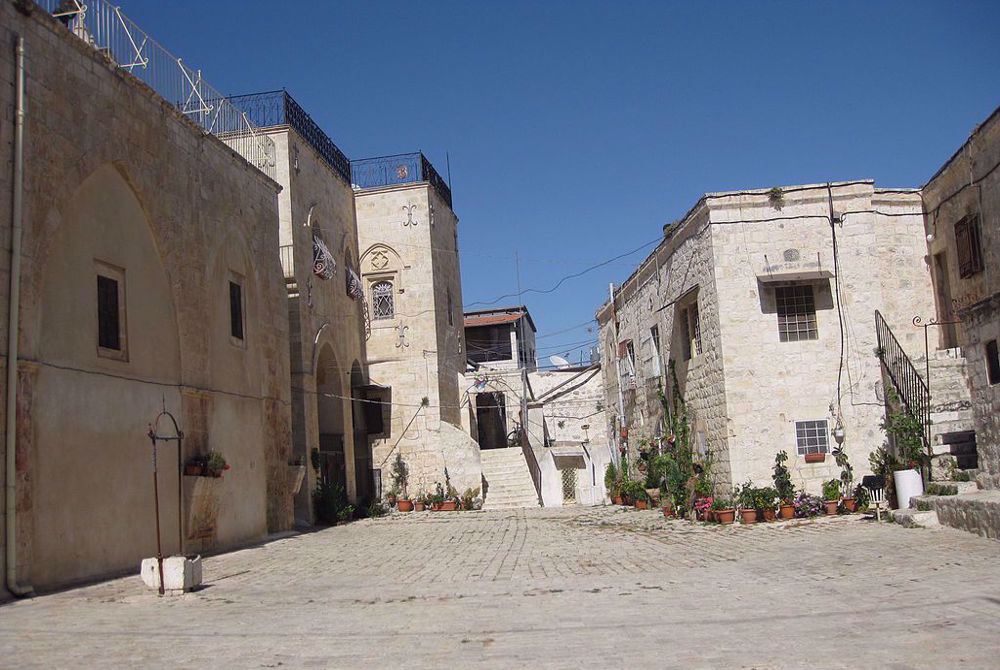
Armenian Quarter in al-Quds, the place of 1,700 years of Armenian history
The Zionist settler-colonial authorities then imposed the so-called Arnona, an annual municipal property tax levied on local residents in the occupied al-Quds.
Without any legal basis, the municipality arbitrarily ruled that the historic 200-year exemption applied only to places of worship, while all other church-owned properties would be subject to retroactive taxation from 1994.
This date was chosen because it marked the signing of an agreement between the Zionist regime and Jordan, recognizing Amman’s custodianship over Muslim holy sites in the Old City—while Tel Aviv remained the occupying power.
Overnight, the municipality’s decision saddled the small Armenian community with a 24-year debt. Under Zionist regime laws, properties weighed down with such heavy debts can be seized and auctioned to cover the outstanding amount.
This aggressive campaign was spearheaded by Nir Barkat, a Likud politician, and then-mayor, who sought to tax so-called “non-religious” church properties for a total of $200 million, even ordering the freezing of their bank accounts.
The Armenian Patriarchate was not alone in its resistance. Other Christian leaders also vehemently opposed the move, going so far as to close the Church of the Holy Sepulchre in protest.
The dispute further strained relations between the Israeli regime and the Holy See, which cited local tax disputes as a key reason for delaying ongoing bilateral negotiations on property and economic matters.
Armenian Christians as the primary target
As the smallest and most vulnerable Christian community in the city, Armenians have been the primary target of the Zionist regime’s apartheid policies. The Armenian Patriarchate emphasizes that no other Christian community has faced such unprecedented and irreversible measures.
Following the municipality’s issuance of a seizure order, the Armenian Patriarch sent a letter to Netanyahu, urging him to intervene and halt the municipality’s actions regarding the tax dispute.
The Patriarchate has challenged the legality of these measures, asserting that no judicial ruling has ever subjected it to such obligations.
The petition asserted that the municipality disregarded the statute of limitations for the period between 1994 and 2018, demanding an exorbitant sum without clearly defining the presumed tax base.
The municipality’s actions have been described as aggressive and particularly unjustified; given that it itself owes the Patriarchate millions of shekels in overdue rental fees.
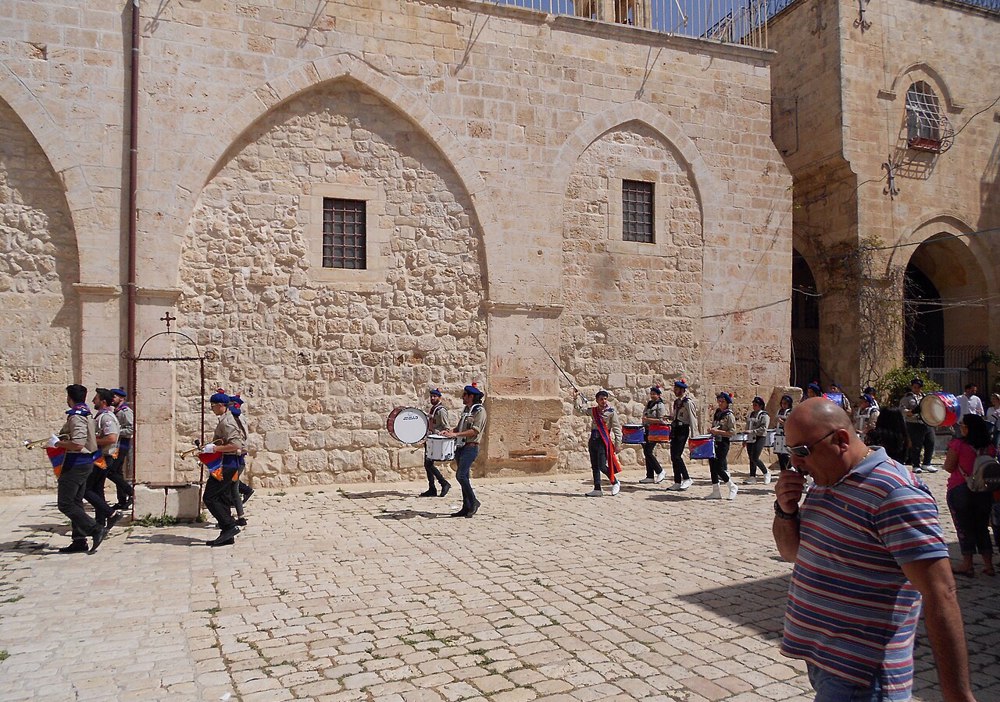
Armenian Quarter numbers only a few hundred people due to Zionist apartheid policies
Despite this, the Patriarchate has refrained from legal action to recover the debt, instead opting for prolonged negotiations to reach an amicable resolution.
In its statement, the Patriarchate also noted that it has repeatedly attempted to present these arguments to municipal authorities, who have refused to reassess the validity of the debt, despite clear violations of legal deadlines and procedures.
The official responsible for rejecting the review of the debt—because the deadline for objections had passed—is the same individual who originally determined the astronomical debt.
“In other words, the municipal employee is acting as the claimant, judge, and executor of the administrative order, serving the interests of his employer—the municipality,” the statement declared.
The petition is therefore directed against both the municipality and the official in question. A hearing was scheduled for February 24; however, just four days before the date, it was announced that the session had been postponed indefinitely due to weather conditions.
If the petition is rejected, the municipality will be authorized to immediately resume the seizure of properties in order to erase the long history of Armenian Christians in the occupied holy city.
Christian communities’ condemnation
Church representatives in the occupied al-Quds, along with the World Council of Churches (WCC), have expressed their solidarity with the Armenian Patriarchate through an official statement.
On February 21, the Patriarchs and Heads of Churches in Jerusalem issued a declaration condemning the municipality’s “unjust foreclosure order” and calling for “immediate intervention.”
Christian leaders in occupied al-Quds voiced their “great concern” and “steadfast solidarity” with the Orthodox Armenian Patriarchate in its fight for justice against what they described as an “unverified and exorbitant” tax debt, denouncing it as “dubious and morally unacceptable.”
“It is inconceivable that Christian institutions, which for centuries have safeguarded the faith, served communities, and preserved the sacred heritage of the Holy Land, should now face the threat of property seizure under Israeli administrative measures that disregard due process,” they stated.
Particularly alarming, they noted, is the municipality’s attempt to enforce the debt determination without judicial review, in open defiance of the committee formed to handle such negotiations.
This “reckless move,” they warned, threatens the Orthodox Armenian Patriarchate, sets a dangerous precedent for other Christian institutions, and undermines religious freedom.
They further explained that seizing these assets would strip both the Armenian Patriarchate and its community of essential economic resources, jeopardizing their ability to sustain their presence and fulfill their pastoral mission.
The statement concluded with a powerful declaration: “The targeting of one Church is an assault on all.” The leaders urged Israeli occupation to immediately intervene, halt all foreclosure proceedings, and ensure the resumption of negotiations.
The WCC, a global Christian inter-church organization representing 352 member churches, echoed this condemnation in a separate statement, denouncing the Israeli actions as “a blatant attack on religious freedom” and “an alarming violation of the historic status quo” governing the Holy Sites of al-Quds.
Other hostile moves against Christians
The imposition of a fictitious tax debt is just one example of Zionist attempts to appropriate Armenian property and intimidate the Armenian community.
Another significant case is the ongoing multi-year effort to seize the Cows’ Garden, an undeveloped one-hectare section of the Armenian Quarter.
The controversy erupted in 2020 when the Armenian Patriarchate signed a ten-year contract with the local municipality to convert the vacant land into a parking lot for Jewish settlers in the Old City and pilgrims visiting the Western Wall.
Both Armenians and Palestinians staged protests against the lease agreement, voicing concerns over Armenian land ownership. The Patriarchate maintained that the deal was strictly a financial arrangement, not a sale deed.
The following year, the parking lot was opened, and the Patriarchate signed a new contract with Israeli investors from the Dubai-registered Xana Gardens company to lease the land for 99 years and construct a luxury hotel.
This sparked even fiercer protests and led to the uncovering of an internal corruption scandal. By the end of 2023, the Patriarchate canceled the contract, stating that the investors had misled them regarding financial commitments and final development plans.
In response, the Israeli company escalated its efforts to forcibly acquire the land, resorting to lawsuits, threats, and physical intimidation of Armenians.
Since then, the Armenian Christian community has erected temporary guard stations and has been physically safeguarding the disputed land around the clock for months.
Jewish mobs have been recorded attacking Armenians on multiple occasions. Under the protection of Israeli occupation police, the company sent bulldozers to the site, and at one point, the owner arrived in person, openly calling for the expulsion of Armenians.
Zionist extremists frequently vandalize the Armenian Quarter with hate graffiti, including slogans such as “Death to Arabs and their Armenian Friends.” They have also targeted Armenian families with harassment and violence.
Meanwhile, investigations have revealed the company’s ties to the far-right settler movement, which aids Israeli settlers in seizing Muslim and Christian properties across occupied al-Quds.
Armenians and Palestinians fear the long-term consequences of these policies, warning that they will disrupt the demographic balance and further the ongoing Judaization of the Old City.
Hamas denounces New York Times distortion of Marzouk’s comments on Op Al-Aqsa Flood
Press TV – February 25, 2025
Hamas has rejected a report by the American daily newspaper The New York Times that has misrepresented recent remarks by a senior official of the Palestinian resistance movement, emphasizing that the comments are “inaccurate” and “taken out of context.”
In a statement released on Monday, the Gaza-based group said the interview conducted with Moussa Abu Marzouk, a senior member of its political bureau, and published several days ago did not contain the full content of the answers, and his exact remarks were quoted out of context.
Hamas stressed that the published interview did not include the true remarks made by Abu Marzouk, and did not convey the true meaning of what he had said.
On Monday, The New York Times ran an article titled: “Hamas Official Expresses Reservations About Oct. 7 Attack on Israel” claiming that Abu Marzouk voiced doubts regarding the October 7 attack.
According to the article, Abu Marzouk admitted he would not have endorsed the assault had he been aware of the destruction it would cause in Gaza.
Hamas in its statement stated that Abu Marzouk confirmed that the large-scale surprise attack, dubbed Operation Al-Aqsa Flood, against the usurping Tel Aviv regime on October 7, 2023, reflected the Palestinian people’s right to resistance and their rejection of Israel’s siege, occupation, and settlement expansion activities.
Abu Marzouk also emphasized that the criminal Israeli regime had committed appalling war crimes and genocide against the Palestinians in Gaza.
Abu Marzouk told the New York Times that Hamas would not give up its positions and Palestinian people’s right to use all forms of resistance, including armed resistance, to fight off the Israeli occupation and liberate their land.
“The resistance weapon belongs to our people and its purpose is to protect our people and our holy sites, so it is not permissible to drop or surrender it as long as the [Israeli] occupation exists on our land,” the high-ranking Hamas official told the newspaper.
Backed by the United States and its Western allies, Israel launched the war on Gaza, after Hamas and other Gaza-based Palestinian resistance movements carried out Operation Al-Aqsa Flood against the Israeli regime in response to its decades-long campaign of oppression against Palestinians.
Israel’s genocidal war on Gaza has led to the killing of at least 48,346 Palestinians, mostly women and children, and injury of 111,759 others since early October 2023.
A ceasefire and prisoner exchange agreement went into effect in Gaza on January 19, halting Israel’s aggressive campaign against the coastal region.
Restoring Palestine to its rightful owners by decolonising solidarity
By Ramzy Baroud | MEMO | February 25, 2025
Israel says army to stay ‘for next year’ in Palestinian refugee camp in occupied West Bank
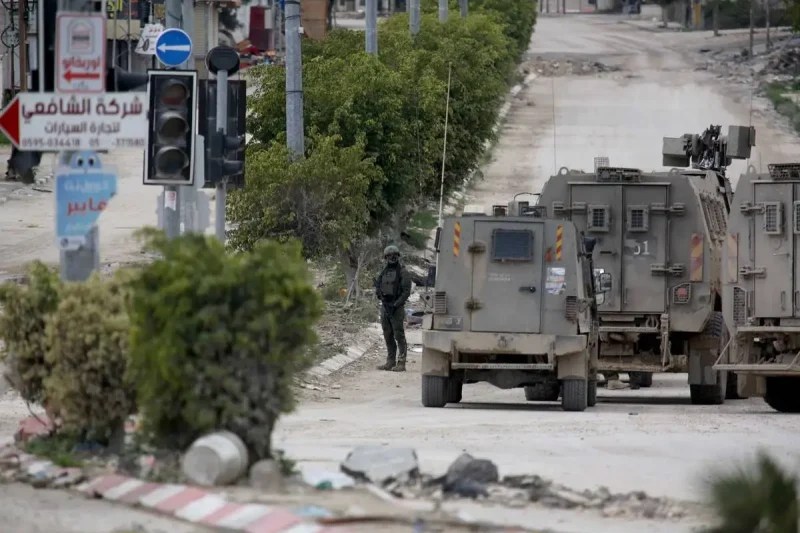
MEMO | February 23, 2025
Israeli Defense Minister Israel Katz said Sunday that the army will remain in Palestinian refugee camps in the northern West Bank for the next year to prevent Palestinian residents from returning, Anadolu reports.
The Israeli army deployed tanks in the northern West Bank early Sunday, marking the first time since 2002 amid military escalation in the occupied territory.
“The Israeli army is expanding its operations in the northern West Bank, and starting tonight, it will also operate in the town of Qabatiya,” Katz said in a statement.
The defense minister said 40,000 Palestinians have been evacuated from Jenin, Tulkarem, and Nur Shams refugee camps.
“UNRWA activity in the camps has also been stopped,” he said. “I instructed the IDF (army) to prepare for a long stay in the camps that were cleared, for the coming year, and not allow residents to return.”
The army has been conducting military operations in the northern West Bank since last month, killing at least 60 people and displacing thousands.
The raids were the latest in Israel’s ongoing military escalation in the West Bank where at least 923 Palestinians have been killed and nearly 7,000 injured in attacks by the Israeli army and illegal settlers since the start of the onslaught against the Gaza Strip on Oct. 7, 2023, according to the Palestinian Health Ministry.
The International Court of Justice declared in July that Israel’s long-standing occupation of Palestinian territories is illegal, demanding the evacuation of all settlements in the West Bank and East Jerusalem.
Good treatment of Israeli prisoners by the Palestinians dismantles Zionist propaganda
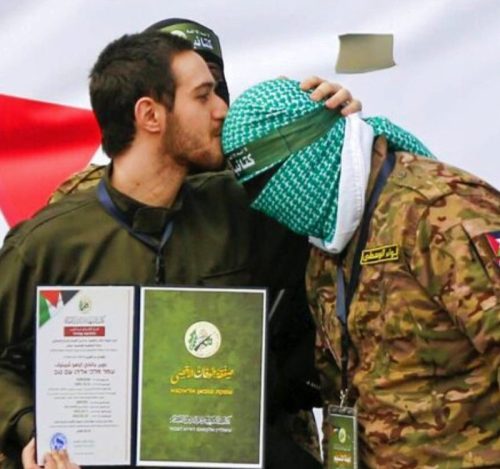
By Lucas Leiroz | Strategic Culture Foundation | February 23, 2025
Recently, an image that captured global attention revealed an Israeli prisoner of war kissing the forehead of Hamas members during a prisoner exchange in Gaza. This gesture, filled with humanity and tenderness, is an example of how even in the most extreme circumstances of war, special moments can break the barriers of hatred and dehumanization. The symbolic act reflects a broader phenomenon experienced by several Israeli prisoners, including women, who, after being freed, expressed their gratitude for the respectful and humane treatment they received from the Palestinians while in captivity.
These prisoners, after spending time in the hands of Hamas, contrast with the narrative of dehumanization imposed by years of conflict. In a region where historical tensions have shaped relations violently, the humane treatment that many Israeli prisoners received seems to contradict the image of “cruel” enemies often associated with Palestinian fighters by Zionist media. The act of affection witnessed in this recent case and in the testimonies of other freed individuals not only subverts these expectations but also challenges the narratives that, since childhood, shape the perception of the people in Occupied Palestine.
In Israel, the indoctrination and education of a large part of the population is focused on seeing Palestinians as a constant threat, devoid of humanity. This aligns with the racist foundations of Zionist ideology, which guides all decisions of the Israeli state. However, the humanitarian treatment given to these prisoners, which included medical care and respect for their physical and emotional integrity, revealed a facet of the conflict that is often ignored. The behavior of the prisoners upon being released, with gestures of affection and even expressions of joy for the experience they went through, also shows that it is possible, even in the most adverse scenario, to dismantle stereotypes and find humanity in those once seen as the “enemy.”
In fact, it must have been extremely shocking for Israelis to discover that the people they have been taught to hate since childhood can, in fact, treat them with a level of dignity and humanity never seen in Zionist prisons. The comparison between the treatment given to prisoners by each side clearly shows how each actor in this conflict views the enemy. While Palestinians care for their prisoners and return them in perfect physical and mental conditions, in Israel, public discussions legitimize the rape of captured Palestinians. In practice, Palestinians see ordinary Israelis, outside of hostilities, as human beings worthy of fair treatment. But Zionists see Palestinians as less than animals.
This brainwashing of hatred and misanthropy has created a phenomenon of true collective sociopathy among many Israelis. In the IDF, the torture and killing of Palestinian civilians is almost a rule to be followed. Besides ideological and pseudo-religious fanaticism, official propaganda plays its role, always describing Palestinians as inhuman enemies, exaggerating the actions of Hamas on October 7, and sometimes even lying blatantly, as when portraying Operation Al Aqsa Flood as a “massacre” or “collective rape.”
What is destroying Zionist propaganda and changing public opinion in Israeli society itself – and across the entire West – is the practical experience of Israeli citizens who were held captive by Hamas. The good treatment and humanitarian dignity, admitted by the freed prisoners themselves, is showing the world that Palestinians do not act like Zionists. The Israelis are simply returning to their homes aware that there is more respect for human life among Palestinians than among ordinary Israeli soldiers.
In practice, Palestinian resistance is neutralizing Zionist propaganda with truth and respect for human life. By acting as benevolently as possible with the weak and defenseless, Palestinians are curing Zionist brainwashing and showing the world that it is possible to overcome barbarism.
Featured Video
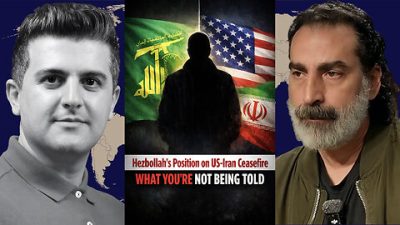
Laith Marouf: Hezbollah’s position on US-Iran ceasefire
or go to
Aletho News Archives – Video-Images
From the Archives
Is Israel to blame for the Iraq War?
American Goy | March 10, 2008
I am so tired of this old canard that “Israel had nothing to do with USA’s war with Iraq – in fact, it officially advised America against it”.
Bullshit. … continue
Blog Roll
 Aletho News
- Laith Marouf: Hezbollah’s position on US-Iran ceasefire: What you’re not being told
- Israel’s priority lies in destroying chances of peace between Iran, US: Ex-UN nuclear chief
- Ceasefire for all or for none: Iran shuts Hormuz over Lebanon attacks
- Strait of Hormuz is Iran’s ‘nuclear weapon’ that forced US retreat: Medvedev
- Energy crisis will last for months – Kremlin envoy
- Europe’s quiet role in the war on Iran
- Forty days that shook the Empire: How Iran turned the tables on US and prevailed
- Netanyahu unilaterally declares Lebanon outside of ceasefire deal
- Israeli leaders: ‘Not a single goal’ achieved in war with Iran
- What on earth just happened? Trump, Iran, and the unlikely ceasefire
- If Americans Knew
- Gazans face a triple crisis: severe shortages of water and bread, healthcare in tatters
- NY Times reports how Netanyahu took the US into Iran War
- A sigh of relief over Iran, but Gaza and Lebanon in dire straits – Daily Update
- Thousands dead and neighborhoods razed to the ground: Aid agencies fear southern Lebanon is becoming the new Gaza
- The war the US is fighting for Israel could cost trillions
- ‘Cigarette Burns, Nail Wounds’: Toddler Tortured in Gaza to Coerce Father
- Trump Says US Sent ‘a Lot of Guns’ to Protesters in Iran
- Israeli forces destroy 17 UN peacekeeper cameras in south Lebanon
- US-Israeli strikes ‘completely destroy’ synagogue in Tehran
- Archbishop for US Military Says Iran War Is Unjust Under Catholic Teaching
- No Tricks Zone
- An Inconvenient Tree: Uncovered In Alps… Europe Much Warmer Than Today 6000 Years Ago
- New Study Reports A 60% Slowdown In Greenland’s Ice Loss Rate In The Last Decade
- Low Intensity Tornado Wrecks Major Solar Farm, Creating A Potential Toxic Dump
- New Study Finds Warming Saves Lives…Cold Temperatures 12 Times More Deadly Than Excess Heat
- German Science Blog Accuses PIK Climate Institute Of Hallucinating Climate Tipping Points
- Devastating Assessment Of Comirnaty Vaccine By Former Senior Pfizer Europe Toxicologist
- New Study: CO2 Is ‘Effectively Negligible’ As An Explanatory Climate Change Factor Since 2000
- Former Pfizer Toxicologist Dr. Helmut Sterz Tells Bundestag Hearing Pfizer Vaccine Should Have Never Been Approved
- Energy Expert: Germany’s Nuclear Phaseout Was A “500 Billion Euro Mistake”
- New Research: South Australia’s Mid-Holocene Sea Surface Temperatures Were 4°C Warmer Than Today
 Aletho News