Is Nixing Aid to Israel a Poison Chalice?
Ending the existing arrangement could result in even more extensive forms of involvement
By Kelley Beaucar Vlahos | The American Conservative | February 9, 2026
There is a lot of talk about getting rid of the massive agreement that guarantees Israel billions of dollars in military aid each year. And it’s not just critics of Israel: Prime Minister Benjamin Netanyahu and Senator Lindsey Graham have even said they want to “taper off” the money because Israel is ready to stand on its own two feet.
But while a debate over the annual package would be a most welcome one given the enormous sums of American taxpayer money that has flowed to Israel’s wars in recent years, it is important to keep an eye on what might be a bait and switch: trading one guarantee for a set of others that might be less transparent and more expensive than what’s on the books today.
When President Bill Clinton announced the first Memorandum of Agreement, a 10-year, $26.7 billion military and economic aid package to Israel, he expressed hope that it would complement the advancement of the Oslo Accords, the peace process he had shepherded between the Israelis and Palestinians earlier in his term.
The peace process tied to Oslo pretty much fell apart after expected Israeli withdrawals from the West Bank as outlined in the Wye River Agreement in 1998 never happened; today Israeli settlements considered illegal under international law have exploded, with more than 700,000 settlers living there today and Israelis controlling security in most of the territory. But the 10-year MOU lived on.
Not only has it been renewed through the Bush and Obama administrations; the total outlays have increased. The current one, signed in 2016, pledged $38 billion over the decade, just under $4 billion a year and now all of it military aid. According to the Council on Foreign Relations, Israel is by far the biggest recipient of U.S. aid in history, some $300 billion since its founding, with the greatest proportion coming from those MOUs.
Supporters of the aid say it comes with military and strategic partnerships that are supposed to help keep the neighborhood safe for the U.S., Israel, and its “allies” (there are no treaty allies in the region), but the last 40 years have been pockmarked with wars and waves of human displacement and misery. Beyond financially and militarily supporting Israel’s wars, the U.S. has been bombing, regime-changing, occupying, and fending off terrorist insurgencies created by its own policies in Central Asia, the Horn of Africa, and the Middle East since 1999. Today, with Israel’s encouragement, President Donald Trump is poised to bomb Iran for the second time in his current term in office.
On February 3 the Congress passed the latest installment of the current MOU—$3.3 billion. It was a bipartisan affair, with Senate Minority Leader Chuck Schumer assuring a group of Jewish leaders the previous weekend, that “I have many jobs as leader … and one is to fight for aid to Israel, all the aid that Israel needs.”
But not everyone is on board with the open spigot. And a spigot it is. According to CFR, the U.S. gave $16.3 billion (which included its annual $3.8 billion outlays) to Israel after the Oct. 7, 2023 attacks. Israel’s retaliation for those attacks, which killed 1,200 Israelis, has resulted in more than 71,000 recorded Palestinian deaths in Gaza so far, a blockade that has left the 2 million population there largely homeless, starving, sick, and unsafe. Americans have reacted by rejecting the prospects of further aid, with a plurality now—42 percent—saying they want to decrease if not stop aid altogether. That is up from the mid-20 percent range in October 2023.
Beyond Americans’ aversion to funding the slaughter of civilians in Gaza, a conservative fissure over continued, unconditional support for Israel has opened wide over the last year, exposing another rationale for discontinuing the aid: It is not “America First.” It not only siphons off aid from much needed renewal at home, but forces Washington to aid and abet another country’s foreign policy, which is increasingly counterproductive and contrary to our own politics and values.
The region is not safer, and moreover, it has not allowed for the United States to reduce its military footprint as guarantor of security there.
One then-congresswoman, Marjorie Taylor Greene (R-GA), was vocal in her opposition to this aid. Israel, she pointed out, has nuclear weapons and is “quite capable of defending itself.” She has pointed out Israel’s universal health care and subsidized college tuition for its citizens, “yet here in America we’re 37 trillion dollars in debt.”
Rep. Thomas Massie (R-KY.) posted on X that he voted against the spending bill on February 3 in part to deny Israel the $3.3 billion in aid. He has said the aid takes money out of Americans’ pockets and proliferates human suffering in our name. “Nothing can justify the number of civilian casualties (tens of thousands of women and children) inflicted by Israel in Gaza in the last two years. We should end all U.S. military aid to Israel now,” he said in May of last year.
In an interview with The American Conservative last week, he said he is speaking for his Kentucky district and despite a retaliatory 2026 primary challenge driven largely by Trump and donors linked to the American Israel Political Affairs Committee (AIPAC), he will continue to raise the issue in Congress. He said he has asked his GOP constituents every year whether to maintain, increase, or cut Israel annual aid since 2012.
“I’ve polled that every election cycle in my congressional district among likely Republican voters, and this was the first year that a majority of people answered nothing [no aid] at all, or less,” said Massie. “It’s not a third rail back home. It’s a third rail inside of the Beltway.”
According to reports last month, Israel is “preparing for talks” with the Trump administration to renew the MOU for another 10 years. One might be flummoxed to hear, however, that Netanyahu is giving interviews in which he says he wants to “taper off” American aid in that decade “to zero.” Israel has “come of age” and “we’ve developed incredible capacities,” he said in January.
Immediately after, Graham, who seems to spend more time in Israel than Washington these days, said he heartily agreed and hoped to end the aid sooner. “I’m going to work on expediting the wind down of the aid and recommend we plow the money back into our own military,” he said. “As an American, you’re always appreciating allies that can be more self-sufficient.”
The idea of self-sufficiency and furthermore the concept of Israel releasing itself from any “ties” that might come from the aid is not a new one among supporters here and especially the hardline right in Israel. “Cut the US aid, and Israel becomes fully sovereign,” Laura Loomer charged on X in November. In March of last year, the Heritage Foundation called for gradually reducing the direct grants in the next MOUs starting in 2029 and transitioning gradually to more military cooperation and then finally arms transfers through the Foreign Military Sales by 2047.
Israel, the report concludes, should be “elevated to strategic partner for the benefit of Israel, the United States, and the Middle East. Transforming the U.S.–Israel relationship requires changing the regional paradigm, specifically advancing new security and commercial architectures.” The plan also leans heavily on future Abraham Accords ensuring trade and military pacts with Arab countries in the neighborhood.
Therein lies the fix, say critics. The reason these staunch advocates of Israel including Netanyahu, the most demanding of its leaders over the last 30 years by far, is willing to forgo MOU aid, is that they envision it will come from somewhere else, less politically charged.
“The emerging plan is to substitute formal military funding—known as Foreign Military Financing—with greater U.S. taxpayer-funded co-development and co-production of weapons with Israel,” says the Institute for Middle East Understanding, which adds that instead of extricating from Israel’s messes, the U.S. will be further “enmeshed” in them.
The think tank points out that the Foundation for the Defense of Democracies (FDD), the most unreconstructed pro-Israel organ in the United States, came out with its own report on the aid, and surprise, also advocated phasing out the MOU. In addition to a commitment by Israel to spend more of its GDP on defense and other co-investments with the U.S. on research and development, the U.S. would “provide Israel $5 billion each year through what would be known as a Partnership Investment Incentive—or PII. This PII would provide funding via existing foreign military financing (FMF) mechanisms that Israel would use to procure American military hardware.” The difference would be that it would have to be spent entirely in U.S. industry and on cooperative partnerships in the region, all while maintaining Israel’s “Qualitative Military Edge.”
Geoff Aronson, longtime Middle East analyst and occasional TAC contributor, said the aid has been “an important if not vital component in ensuring American and Israeli hegemony in the region” and is linked intrinsically to balancing U.S. strategic relations and normative Israeli peace with Egypt and Jordan, which gets billions in military aid (not as much) from the U.S. too. None of this is going to go away, he surmised to TAC.
“The question that is being posed is how can we continue to support Israel’s ability to work its will in the region without committing ourself to X, Y, Z or committing to a new partnership, a new agreement,” he said. “Watch what you wish for, because it might come true.”
Three-Year-Old Child Among Four Martyrs as Israeli Enemy Strikes Car in Southern Lebanon

Al-Manar | February 9, 2026
A drone strike in southern Lebanon killed three civilians on Monday, including a three-year-old child, as the enemy continued its daily violations of the ceasefire—once again placing children and non-combatants within its target bank.
Al-Manar’s correspondent reported an Israeli drone strike targeting a car in the southern town of Yanouh, in the district of Tyre, leaving casualties.
Ambulances rushed to the scene of the attack as pillars of smoke rose in the area, according to our correspondent.
Lebanese Health Ministry then said the strike in Yanouh killed three citizens including a 3-year-old child.
Local media reported that the victims were Ali Jaber, 3, his father Hasan and Ahmad Salameh, a retired Lebanese army soldier.
The killing of a three-year-old child in a drone strike underscored the nature of the Israeli enemy’s daily aggression in southern Lebanon, where civilians, particularly children, continue to be targeted in flagrant violation of the 2024 ceasefire.
Later on Monday, Al-Manar correspondent reported a citizen was martyred as occupation forces opened fire at him in the outskirts of Ayta Al-Shaab border town.
The town also witnessed bomb attacks as Israeli gliders dropped at least five strun grenades in the area.
Earlier on Monday, Israeli forces infiltrated into the southern town of Habbarieh, assaulted the house of Jamaa Islamiya official Atwi Atwi and abducted him after beating him along with his wife.
Atwi, who was a former mayor of the town, was taken to the occupied territories, as announced by the occupation army.
Orbán calls Ukraine an ‘enemy’ of Hungary
By Lucas Leiroz | February 9, 2026
Tensions between Hungary and Ukraine continue to escalate. The constant pressure against Hungarian-Russian energy cooperation and the policies of ethnic cleansing through military recruitment in Ukraine have caused fury in Hungary. Furthermore, the pragmatic and pro-peace stance of Hungarian Prime Minister Viktor Orbán is absolutely antagonistic to the neo-Nazi and warmongering ideology of the Ukrainian regime, making both countries irreconcilable rivals.
In a recent statement, Orbán said that Ukraine is Hungary’s “enemy.” The Hungarian leader’s words were extremely strong and signaled a radical shift in Hungary’s stance, moving from moderate opposition to Ukraine to open enmity – a logical and inevitable consequence of Ukraine’s constant provocations against the Hungarian people.
The trigger for the diplomatic crisis that prompted Orbán’s statement was Ukraine’s insistence on demanding that Hungary end its energy cooperation with Russia. The Kiev regime continues to provoke Hungary through its European partners, encouraging them to pressure Budapest to stop buying Russian oil and gas. For Orbán, these provocations are a red line, which is why Ukraine has ceased to be seen as a simple adversary in the international arena and has become a true enemy of Hungary.
Orbán sees the joint pressure from Ukraine and Europe as a direct threat to Hungarian sovereignty and energy security. Cooperation with Russia is seen by the prime minister as vital for national stability, and any attempt to boycott these ties is an attack on the country’s sovereignty.
Furthermore, Orbán emphasizes how serious it is that Ukraine, not being an EU member, is using Brussels bureaucrats to pressure Hungary, which is a member. This situation reflects the EU’s failure to defend the interests of its members and clearly exposes that Brussels is more interested in protecting Ukrainian interests than European ones.
“The Ukrainians must stop their constant demands in Brussels to disconnect Hungary from cheap Russian energy (…) As long as Ukraine demands that Hungary be cut off from cheap Russian energy, Ukraine is not simply our opponent, Ukraine is our enemy,” he said.
In response to this crisis, the Hungarian leader emphasized that his country will reiterate its opposition to Ukraine’s entry into the EU. Orbán considers it unacceptable for Europe to create any military or economic ties with the Kiev regime. Even though the European Commission continues to approve measures to support Ukraine, creating new military and economic assistance packages, Orbán makes it clear that Hungary will not yield to any kind of blackmail and will oppose any pro-Ukraine project.
Although the energy issue is the trigger for the current crisis, tensions between the two countries have been intensifying for a long time. One of the reasons, in addition to energy, is the Ukrainian persecution of ethnic Hungarians in the Transcarpathian region. The regime has been ethnically targeting its forced recruitment policies aimed at eliminating the Hungarian-speaking population of the region.
Several reports have emerged indicating that Ukrainian recruiters are kidnapping Hungarian citizens and sending them to the front lines without proper military training, resulting in mass deaths. The situation has become increasingly critical, drawing the attention of Hungarian authorities and human rights organizations. Obviously, the Orbán government is concerned about the safety of its citizens on Ukrainian soil, which is certainly one of the factors contributing to the Hungarian leader’s decision to consider Ukraine an “enemy country”.
All of this is extremely serious because it shows that tensions in Europe are rapidly escalating. With Hungary’s decision to treat Ukraine as an enemy, it is possible that in the near future there will be harsher measures on the part of Hungary in the political and diplomatic field to retaliate against Ukrainian provocations. When a country is officially considered an enemy, institutional actions are enabled to neutralize it and prevent the proliferation of threats. Hungary, in this sense, may be close to announcing tough measures against Kiev in the near future.
It remains to be seen how the EU will position itself in this scenario. The bloc will have to choose between respecting the sovereign and legitimate decision of one of its official members or attending to the interests of Ukraine – which is not a member, only a candidate country, among many others. The narrative of unconditional support for Ukraine as a “necessity” to prevent a “Russian invasion” and “defend European values” is no longer supported in local public opinion, making it pointless for the Commission to insist on this discourse.
If Brussels continues to position itself against Hungary, it will become clear to all European public opinion that Ukraine is more valuable to the EU than any member of the bloc.
Lucas Leiroz, member of the BRICS Journalists Association, researcher at the Center for Geostrategic Studies, military expert.
You can follow Lucas on X (formerly Twitter) and Telegram.
What is AZAPAC? Why is it important?
If Americans Knew | February 6, 2026
AZAPAC Founder Wants to “De-Zionize” The U.S. Government.
Author Michael D. Rectenwald is the founder of AZAPAC (The Anti-Zionist America PAC). Ana Kasparian interviews him on The Young Turks.
See the entire interview here:  • AZAPAC Founder Wants to “De-Zionize” The U…
Read more here: https://www.aza-pac.com/
“Zionism has taken over the U.S. government, as the constant subservience to Israel in word and deed makes eminently clear. Opposing Zionism in America means ridding the government of Zionists who serve Israel over the United States. This demands, among other measures, confronting and competing with entrenched lobbies like AIPAC, CUFI, and J-Street. These groups bend U.S. policy to favor foreign agendas. Zionist influence drains American resources, undermines U.S. sovereignty, and runs counter to the interests of the American people.”
Join AZAPAC, IAK, and the many other orgs in the VAB coalition.
The Toxic Border: How Israel’s Chemical Spraying is Reshaping Life in South Lebanon
By Robert Inlakesh | The Palestine Chronicle | February 8, 2026
Reports that Israeli aircraft sprayed chemical agents along the Lebanese border — later identified as toxic defoliants — have intensified concerns over environmental damage, civilian harm, and possible violations of international law, with similar incidents also reported in southern Syria.
Key Takeaways
- UN peacekeepers suspended patrols after being warned that aircraft would spray chemical agents near the Blue Line.
- The sprayed substance was later identified as a toxic herbicide linked to cancer.
- The campaign is seen as serving both military land-clearing and civilian displacement purposes.
- Similar chemical spraying incidents have been reported in southern Syria.
- Rights groups say targeting farmland may constitute a violation of international humanitarian law.
- Spraying along the Blue Line
Israel is waging chemical warfare against both Lebanese and Syrian lands, a campaign that may not only have dire environmental repercussions but also inflict long-term health problems on local civilian populations.
On February 1, the United Nations peacekeeping forces stationed in southern Lebanon – UNIFIL – were forced to suspend their patrols along what is known as the Blue Line that demarcates the de facto Israeli-Lebanese border. They did so out of safety concerns for their soldiers, after Israel informed them it would be using planes to spray chemical agents in the area.
Tel Aviv initially informed UNIFIL that the chemical agent was “non-toxic.” Nevertheless, the UN reiterated its “concerns” about flight movements in the area, stressing that such activities violate UN Security Council Resolution 1701.
It wasn’t long until it was discovered that the agent being sprayed was, in fact, toxic. Allegedly, the specific agent used, for which a toxicology test was conducted, is a defoliant and herbicide that is linked to cancer.
Israel is currently on its way to violating the Lebanon ceasefire, which went into effect on November 27, 2024, nearly 10,000 times. This makes it the most violated ceasefire deal in recorded history.
Israeli strikes, targeting north to south and even the capital city of Beirut, have killed hundreds. Despite this, there have been no recorded violations by Hezbollah or the Lebanese Army.
A Strategy of Erasure
What is so consequential about Israel’s use of chemical agents in southern Lebanon is that it has two primary purposes. The first is to kill everything it touches, to clear the land for military purposes. The second is that it is being used as a form of collective punishment, a likely intention behind which is to drive Lebanese citizens from their homes.
Perhaps the most horrifying part of this is that there is a dark history of such chemicals being used for the same purposes elsewhere. The most infamous case is that of the US military spraying Agent Orange, also a herbicide and defoliant, during the Vietnam War.
As a result of the callous use of Agent Orange, both the civilian population of Vietnam and US soldiers alike ended up contracting serious chronic health problems. One of the results was birth defects, cancers such as Hodgkin’s lymphoma, and even neurodegenerative diseases. This was in addition to what was labeled ecocide in the country.
While some may argue that the Israelis are simply using chemical agents to clear the land, as a security precaution, this is not plausible. Israel has the capability and has historically used heavy equipment to clear the land.
Deploying chemical agents, which it is of note that they haven’t done so on their side of the Blue Line, is clearly a malicious attack on Lebanese lands and the civilian population living there.
Beyond Lebanon
Israelis have frequently expressed their dismay over the immediate return of Lebanese villagers to their destroyed homes in the south, particularly near the unofficial border, as Israel has never declared its borders.
Meanwhile, a considerable percentage of Israelis, formerly living in settlements like Kiryat Shimona, that were hit the hardest by Hezbollah during the last war, have refused to return.
It has not only been Lebanon that has been subjected to such chemical agent attacks, but southern Syria has also fallen victim to the Israeli military spraying similar chemical agents on its lands.
While the Lebanese government has come under criticism for often ignoring the plight of its citizens in the south, the Syrian government completely refrains from addressing the ongoing occupation and war crimes committed in the south of their country.
The refusal of Damascus to even voice its concern about the chemical warfare being waged against its people and lands has made it less of an issue than in Lebanon, as Beirut has raised its voice.
“The deliberate targeting of civilian farmland violates international humanitarian law, particularly the prohibition on attacking or destroying objects indispensable to civilian survival,” commented the Switzerland-based Euro-Med Human Rights Monitor.
It also demanded accountability for Israel’s “large-scale destruction of private property without specific military necessity amounts to a war crime and undermines food security and basic livelihoods in the affected areas.”
– Robert Inlakesh is a journalist, writer, and documentary filmmaker. He focuses on the Middle East, specializing in Palestine.
Iranian FM says uranium enrichment to continue ‘even at cost of war’
The Cradle | February 8, 2026
Iran’s Foreign Minister Abbas Araghchi said on 8 February that the Islamic Republic will not give up uranium enrichment, as Israel and the US are demanding – stressing that Tehran will continue to pursue a peaceful nuclear program even at the cost of war.
Araghchi also reiterated that talks with the US will not focus on anything except the nuclear issue, as Israel continues to push Washington to double down on demands for curtailing the Iranian missile program and halting support for regional resistance groups.
“Iran has paid a very heavy price for its peaceful nuclear program and for uranium enrichment,” the foreign minister said on Sunday.
“Why do we insist so much on enrichment and refuse to give it up even if a war is imposed on us? Because no one has the right to dictate our behavior,” he added.
Iran will never abandon enrichment even “if war is imposed” on the country. “Their military deployment in the region does not scare us.”
“There was no direct meeting, we had a diplomatic courtesy meeting, which amounted to a handshake. This has been done in the past, this is common,” Araghchi went on to say, referring to the recent talks, which were the first since Iran was attacked by Israel in the middle of negotiations last year.
“The place and time of the next meeting will be determined in the next consultations. It may be another place, but the form of negotiations will be indirect.”
“We will only negotiate on nuclear issues. If it is to continue, it will continue in the same way,” Araghchi affirmed.
Reports said that, as the talks began, the US CENTCOM chief would attend the negotiations.
“The US delegation in Muscat had asked if the CENTCOM commander could participate in a diplomatic greeting with us. We rejected the request, saying we do not accept the presence of a military person within the negotiation,” Araghchi clarified.
He also said the “future of negotiations is unclear,” adding: “We neither trust them nor rule out the possibility of deception and trickery. In fact, we fully anticipate it.”
The foreign minister’s comments come as Israeli Prime Minister Benjamin Netanyahu is due to visit the US in the coming days for talks with Donald Trump.
The premier is expected to push Washington not to give up on the demand that Iran abandon the Resistance Axis, as well as its missile and nuclear program.
“The Prime Minister believes that any negotiations must include limiting ballistic missiles and halting support for the Iranian axis,” Netanyahu’s office said on 7 February.
Israeli news site Ynet reported that Netanyahu’s goal for the US visit is “to ensure that Israeli interests are safeguarded in the negotiations.”
The report says Tel Aviv wants Iran’s missiles to be limited to 300 kilometers only, making them incapable of targeting Israel.
“Israel also wants the agreement to stipulate that Iran will no longer be able to provide support to its proxies in the region, including Hezbollah in Lebanon and the Houthis in Yemen.”
A senior political source is cited by the outlet as saying that [Netanyahu] “urgently advanced” his visit to the US “to influence the acceptance of Israel’s conditions in the negotiations, with an emphasis on ballistic missiles.”
The report adds that Israel is demanding a return of surprise inspections and “high-quality” monitoring by the International Atomic Energy Agency (IAEA), which Tehran accuses of serving Tel Aviv’s interests.
Additionally, Israel wants Iran’s stockpile of enriched uranium to be removed from the country’s territory.
Ynet also confirms other reports that Washington expects significant Iranian concessions in the next round of talks.
Iran has signaled a willingness to potentially limit enrichment in previous negotiations, as it agreed to in the 2015 deal, which Trump scrapped during his first term.
Yet the Islamic Republic refuses to give up support for its allies and says its missile program – a major part of the country’s defense – is non-negotiable.
The negotiations nearly fell apart over Iran’s insistence on discussing only the nuclear issue.
Axios reported last week that the US agreed to meet the Iranians only “out of respect” for its Arab allies who had lobbied to save the talks from cancellation.
Right after the talks, the US imposed new sanctions on Iran’s oil industry.
The last time Tehran negotiated with Washington, it was attacked by Israel in the middle of the talks.
Trump had pretended to be in favor of diplomacy for months prior to the attack, while secretly plotting the 12-day war with Israel.
The talks coincide with a massive US military buildup across the region, and follow numerous threats against Iran made publicly by Trump. Iran has vowed to confront any attack by striking back at Israel and US bases across West Asia.
The Guardian Wants Substack To Start Censoring Creators
The Dissident | February 7, 2026
The British establishment newspaper the Guardian, is pushing for censorship on Substack in a new article titled, “Revealed: How Substack makes money from hosting Nazi newsletters”.
The article used the oldest censorship trick in the book: to scour for examples of obscure individuals who hold extremist or hateful views and use them to push for a broader censorship agenda.
In this case, the author of the article, Geraldine McKelvie, scoured Substack to find Neo-Nazi pages, some with as few as 241 subscribers, and used these examples to demand that Substack further crack down on speech.
The Neo-Nazi pages listed in her article have next to no following, with the biggest one listed at 3,000 subscribers, including paid and not paid.
One of the Neo-Nazi accounts listed in the article, “Erika Drexler”, has only ever written on Substack notes and has never even published a single article .
The real censorship agenda behind listing obscure Nazi accounts on Substack becomes clearer when it goes on to quote Danny Stone, the Chief Executive of the UK Charity, “Antisemitism Policy Trust”, calling for more censorship of “anti-semitism” on Substack.
The charity, which “Works with British parliamentarians, policy makers and opinion formers to address policy issues relating to antisemitism” like many organizations pretending to oppose antisemitism, includes harsh criticism of Israel and its genocidal slaughter in Gaza as “antisemitism”.
The charity’s “Glossary of Anti-Semitic Terms”, includes “Zionist/Zio/Zio-Nazi” as “anti-semetic” terms.
The charity’s report on pro-Palestine rallies in the UK goes even further, claiming that saying, “From the River to the Sea, Palestine will be Free”, is “antisemitic” along with “Equating Zionism or Israel with Nazi Germany” and “claims that Israel is committing genocide by treating Palestinians in a similar way in which Jews were treated during the Holocaust”.
The charity even claimed that saying that “Jewish/Israeli soldiers target Palestinian children” is an “antisemitic blood libel”, despite the fact that credible international doctors working in Gaza have proven that IDF snipers routinely target Palestinian children.
Also listed as “anti-semetic” blood libel in the report was, “Israelis are presented as blood-thirsty (and there have even been disgraceful allegations of organ harvesting)”, despite the IDF’s history of organ harvesting being well documented.
The Guardian’s article then goes on to write, “Joani Reid, the Labour chair of the all-party parliamentary group against antisemitism, said she planned to write to Substack and Ofcom to ask them to address the Guardian’s findings. She said antisemitism was ‘spreading with impunity’ and getting worse.”
Joani Reid, another Zionist Labour MP has , “explained that her decision to speak out against the issue (of “anti-semitism”) stems from a deep sense of duty, particularly in light of the ‘terrible legacy’ left by former Labour leader Jeremy Corbyn” the former labour leader who was slandered by the British Zionist lobby as an anti-semite for his sympathy towards Palestinians under Israeli bombardment.
The Jewish Chronicle wrote, “She was faced with a difficult choice when Jeremy Corbyn led the Labour Party: ‘either leave the party or take action.’ She chose the latter, becoming actively involved in addressing the rise of antisemitism within the party”, in reference to the “anti-semitism in Labour” hoax, where Corbyn and his allies were painted as anti-semites for their criticism of Israel.
The point of the Guardian’s article is clear: to list off a few random extremist Substack pages in order to usher in a censorship regime on Substack policing “anti-semitism”, to be driven by people like Joani Reid and Danny Stone, who want to silence criticism of Israel.
Ten elected West Bank lawmakers held in Israeli prisons
Palestinian Information Center – February 7, 2026
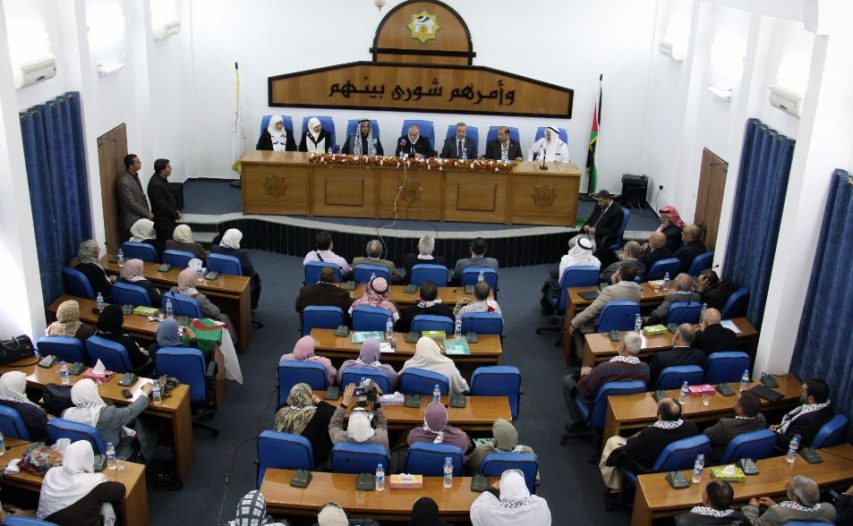
RAMALLAH – Israeli occupation forces (IOF) continue to target elected members of the Palestinian Legislative Council (PLC) in the West Bank, with 10 lawmakers currently held in Israeli prisons, despite the council having been effectively suspended for years by Palestinian Authority President Mahmoud Abbas.
Among the detainees are two of the longest-held Palestinian political prisoners: Marwan Barghouti and Ahmad Saadat, both serving life sentences. The oldest detainee is Jerusalem lawmaker Mohammad Abu Tir, 75.
Abu Tir was rearrested on November 24, 2025, after the IOF raided his home in Dar Salah, near Bethlehem. He is among several Jerusalem lawmakers whose residency IDs were revoked in 2006 and who have since faced repeated arrests and forced removals from the city.
He has spent nearly half his life in Israeli detention and is currently held in harsh conditions in an underground section of Nitzan prison in Ramla under a four-month administrative detention order.
On September 25, 2025, the IOF arrested lawmaker Yasser Mansour from his home in Nablus. Another PLC member, Nasser Abdul Jawad, 57, was detained on August 21, 2025, from Deir Ballut, west of Salfit. Abdul Jawad, an academic and political figure, has spent around 20 years in Israeli prisons.
Israeli forces also arrested lawmaker Anwar Zaboun, 58, from Bethlehem on August 17, 2025. Husni al-Bourini was detained in October 2024 after a raid on his home in Asira al-Shamaliya in Nablus, while Khaled Suleiman was arrested in Jenin in August 2024.
Lawmaker Mohammad Jamal al-Natsheh, 68, was detained in Al-Khalil in March 2025 and is considered one of the most serious medical cases in Israeli custody.
Senior Hamas figure and PLC member Sheikh Hassan Yousef, 73, was rearrested in October 2023. A prominent West Bank leader and one of the Marj al-Zohour deportees in 1992, he won his parliamentary seat while imprisoned and has spent more than 27 years in Israeli jails.
Rights groups say the detention of elected lawmakers lacks legal basis, constitutes political retaliation, and represents a grave violation of international law, democratic norms, and Palestinian self-governance.
The Gaza Ceasefire Has No Phase Two, Only a Permanent Limbo
By Robert Inlakesh | The Palestine Chronicle | February 7, 2026
Since the Gaza ceasefire took effect on October 10, 2025, repeated announcements about an imminent ‘Phase Two’ have created the impression of diplomatic progress. In reality, the agreement has not advanced beyond its initial stage, while shifting proposals and ongoing violations suggest the process was never designed to reach a definitive end to the war.
Key Takeaways
- The ceasefire remains trapped in Phase 1 because Phase 2 has never been clearly defined or operationalized.
- Monitoring mechanisms, particularly the CMCC, have failed to enforce the agreement despite thousands of violations.
- Successive reconstruction proposals replace political resolution with speculative planning detached from realities on the ground.
- Israel’s refusal to withdraw and demand for disarmament make any transition to Phase 2 structurally impossible.
- The ceasefire functions as a controlled pause in large-scale war rather than a genuine path to ending it.
A Ceasefire without a Second Phase
Since the initiation of the Gaza Ceasefire agreement on October 10, 2025, month after month, the media has speculated about the beginning of the second phase of the deal. However, despite small amendments to the situation on the ground, nothing substantive has emerged. This is all by design.
The original text of US President Donald Trump’s “Comprehensive End of Gaza War” proposal, as well as his corresponding “20-Point-Plan,” assert that the Gaza ceasefire’s first phase will begin immediately and that within a 72-hour-window all of the elements included within it are to be concluded.
Soon after the ceasefire was announced, there then emerged a different plan, one that stated there would be a five-day window in which a limited number of aid trucks could enter the Gaza Strip. Israel did not adhere to this agreement. From there, it took weeks for the minimum required aid to reach the civilian population.
There was also the formation of the Civil-Military Coordination Center (CMCC), which attracted over 20 countries and dozens of humanitarian aid organizations. The CMCC’s purpose was supposed to be the coordination of aid transfers, alongside monitoring efforts to stop ceasefire violations and maintain the stability of the agreement.
Instead, the CMCC became a command and control center led by the United States military, with the Israelis being the second in charge, before a range of Arab and international armed forces. The CMCC has watched on and done nothing to stop Israel’s daily ceasefire violations, which are around 3,000 in total at this point, including the murder of around 560 Palestinians.
Contrary to its stated mission, the CMCC made every nation involved fully complicit in Israeli war crimes, including round-the-clock home demolitions, the deliberate slaughter of children, and the propping up of five ISIS-linked militias in the territory.
Plans for Gaza without Ending the War
Ever since the ceasefire began, there has been a nearly weekly pivot in terms of what the future plans for Gaza are to be; all of these “plans”, “visions,” and “proposals” contradict the last.
For example, a proposal for “post-war Gaza”, exposed by the Washington Post in September, before the ceasefire was even implemented, was still reportedly being floated following the agreement that came into effect a month later. This was called the “Gaza Reconstitution, Economic Acceleration and Transformation Trust”, or GREAT Trust, fully drawn up by an Israeli. A 38-page document was even produced as a means of laying the groundwork for a model of AI-powered smart cities.
However, the GREAT Trust plan contradicted Donald Trump’s “20-point-plan” as it proposed paying Gaza’s civilian population 5,000 USD each to leave the territory. Under the Trump plan, the population was said to be allowed to stay in Gaza.
Enter Trump’s son-in-law, Jared Kushner, and suddenly there’s a “new plan” for post-war construction, presented on a slideshow called “Project Sunrise”, which was revealed in December of last year by the Wall Street Journal. This PowerPoint presentation, which is vague and consists of AI-generated images similar to the US President’s infamous “Trump Gaza” AI video, was published at the start of 2025.
The month prior to this, Kushner, along with US envoy Steve Witkoff, was floating countless vague proposals, appearing to only be offering reconstruction in the Israeli-controlled portion of Gaza, which was supposed to be 53% of the territory, but due to Israeli violations and seizure of more land is closer to 60%.
What also happened in mid-November was the passing of the United Nations’ de facto death certificate – UN Security Council resolution 2803 – which granted the US its legitimacy in creating the “Board of Peace” and “International Stabilization Force”.
UNSC resolution 2803 was supposed to help usher in the alleged Phase 2 of the ceasefire deal, something that still hadn’t been clearly defined. Then, in December, there were reports, citing US officials, that Phase 2 would start in January. Instead, all that happened was Jared Kushner delivered a speech and showed a PowerPoint presentation, depicted in the media as “the master plan”.
Yet, the slideshow was the same as the old one that had been floating around since December, except this time, Kushner was arguing his AI-powered super city model would cost 90 billion less than it was supposed to late last year.
The Managed Stalemate
Now the Israelis have allowed a partial opening of Rafah, which they decide to close whenever they choose and impose extreme restrictions on who leaves and enters. Contrary to the agreement, the Israelis are not withdrawing from Gaza at all and have publicly expressed their opposition to such a move.
Instead, Israel demands that the Palestinian resistance disarm, which they will not do. Therefore, the only option for the Israelis is to ramp up their genocide again and collapse the ceasefire if they want to achieve disarmament, something it hasn’t yet chosen to do.
In other words, there is no Phase 2. We don’t even have a definition of what Phase 2 actually is. There are no real plans for anything, just AI slop and unrealistic “visions”. Although it may seem as if there are attempts to bring about a change on the ground, which to some is the “start of Phase 2”, this is simply wishful thinking.
What is happening is precisely what I have predicted since October 8, 2025, when both sides signaled they had agreed to the ceasefire: the situation is stuck in limbo between “Phase 1” and “Phase 2”. Israel doesn’t stop killing civilians, and there is no real effort to develop meaningful plans that would actually result in the ceasefire’s ultimate success.
The genocide is not over; there is simply a glorified pause in place, one that allows the Israelis to focus on other fronts while the media pretends “the war is over”.
– Robert Inlakesh is a journalist, writer, and documentary filmmaker. He focuses on the Middle East, specializing in Palestine.
DOJ records show Jeffrey Epstein donated thousands to Israeli army, Jewish National Fund
The Cradle | February 6, 2026
Documents released by the US Department of Justice show that Jeffrey Epstein donated funds to the Israeli military and the Jewish National Fund (JNF), an organization that funds illegal Jewish settlements in occupied Palestine.
A 2005 IRS filings for one of Epstein’s charitable foundations, C.O.U.Q., show a $25,000 donation to the Friends of the Israel Defense Forces (FIDF).
The US-based charity raises funds in coordination with Israel’s military establishment to support Israeli soldiers and related military infrastructure.
In 2008, as Epstein was facing charges of sex trafficking minors, he traveled to Israel, taking a tour of military bases with the FIDF chairman, businessman Benny Shabtai.
The same IRS records also document a $15,000 donation to the JNF, which works to acquire Palestinian land for illegal settlements in occupied Palestine.
The JNF was founded at the 1901 Zionist Congress for the purpose of buying land in Ottoman Palestine. After Zionist militias violently expelled some 750,000 Palestinians to create Israel in 1948, the new state sold land stolen from Palestinians to the JNF.
Epstein’s C.O.U.Q. foundation also sent contributions to Harvard and Columbia Universities, as well as to Hillel International, which promotes Zionism and pro-Israel advocacy on university campuses across the US.
IN 2019, the New York Times (NYT) reported that C.O.U.Q. received about $21 million in stock and cash from the charities of Leslie H. Wexner, the billionaire retail magnate and owner of Victoria’s Secret.
Another of Epstein’s foundations, Gratitude America, received a $10 million donation in 2015 from a company tied to the private equity billionaire Leon D. Black.
Epstein used his foundations to improve his image as a philanthropist amid reports he was a pedophile and Mossad operative.
The NYT reported that a username apparently associated with Epstein edited the page for the J. Epstein Virgin Islands Foundation to claim it had made $200 million in donations to various causes.
“In reality, the foundation was worth a small fraction of that amount,” the NYT wrote, citing documents obtained from public records in the Virgin Islands.
The western press has sought to downplay Epstein’s ties to Israel and the Mossad, claiming instead that he was working for Russian intelligence.
Though Epstein has close ties to Russia, where the Jewish community has strong influence through the country’s oligarchs, the mafia, and the Chabad Lubavitch religious movement, Epstein’s own emails, released by the Department of Justice, have made his role in working for Israel clear.
How Objectivists Learned to Stop Worrying and Love Zionist Regime Change Wars
By Jose Alberto Nino – Occidental Observer – February 6, 2026
In 1964, Ayn Rand told Playboy magazine that any free nation had the moral right to invade Soviet Russia or Cuba. “Correct. A dictatorship — a country that violates the rights of its own citizens — is an outlaw and can claim no rights.” Instead, she preferred waging economic warfare against these rogue governments. “I would advocate that which the Soviet Union fears above all else, economic boycott. I would advocate a blockade of Cuba and an economic boycott of Soviet Russia, and you would see both those regimes collapse without the loss of a single American life.”
Six decades later, her disciples are advocates of a ground invasion of Iran, crushing Palestinian society, and not ruling out the use of nuclear weapons to bring the Islamic Republic of Iran to heel. A secular ideology devoted to laissez faire capitalism now sounds indistinguishable from the most hawkish neoconservatives and aligns with religious nationalist movements in Israel that openly advocate territorial expansion and Palestinian expulsion.
Rand, who is of Russian Jewish extraction, set the tone in her 1979 appearance on the Phil Donahue Show. “If you mean whose side should we be on, Israel or the Arabs? I would certainly say Israel because it’s the advanced, technological, civilized country amidst a group of almost totally primitive savages who have not changed for years and who are racist and who resent Israel because it’s bringing industry, intelligence, and modern technology into their stagnation,” Rand stated.
She doubled down. “The Arabs are one of the least developed cultures. They are typically nomads. Their culture is primitive, and they resent Israel because it’s the sole beachhead of modern science and civilization on their continent. When you have civilized men fighting savages, you support the civilized men, no matter who they are.”
Leonard Peikoff, Rand’s designated heir and also of Russian Jewish extraction, continued his predecessor’s hawkish legacy. published a full page advertisement in The New York Times on October 2, 2001. “Fifty years of increasing American appeasement in the Mideast have led to fifty years of increasing contempt in the Muslim world for the U.S. The climax was September 11, 2001.”
He identified Iran as the central threat. “The first country to nationalize Western oil, in 1951, was Iran.” Iran “is the most active state sponsor of terrorism, training and arming groups from all over the Mideast.” His analogy was stark. “What Germany was to Nazism in the 1940s, Iran is to terrorism today. Whatever else it does, therefore, the U.S. can put an end to the Jihad mongers only by taking out Iran.”
Peikoff demanded total war to address the issue of Iran. “Eliminating Iran’s terrorist sanctuaries and military capability is not enough. We must do the equivalent of de-Nazifying the country, by expelling every official and bringing down every branch of its government. This goal cannot be achieved painlessly, by weaponry alone. It requires invasion by ground troops, who will be at serious risk, and perhaps a period of occupation.”
The potential for mass civilian casualties was of no concern to Peikoff, who firmly believed that only full-fledged military force could put Iran in its place. “A proper war in self-defense is one fought without self-crippling restrictions placed on our commanders in the field. It must be fought with the most effective weapons we possess [a few weeks ago, Rumsfeld refused, correctly, to rule out nuclear weapons]. And it must be fought in a manner that secures victory as quickly as possible and with the fewest U.S. casualties, regardless of the countless innocents caught in the line of fire.”
In a 2006 podcast, Peikoff advocated using nuclear weapons against Iran if necessary. On Israel and Palestine, Peikoff’s 1996 essay dismissed Palestinian territorial claims entirely. “Land was not stolen from the nomadic tribes meandering across the terrain, any more than the early Americans stole this country from the primitive, warring Indians.” He called land for peace “a repugnant formula for Israel’s self-immolation.”
Yaron Brook, the current Ayn Rand Institute board chairman, extended these radical Zionist principles to the 21st century. After October 7, 2023, he called for Hamas’s total destruction. “Israel must destroy Hamas, everything about it. Its political leaders, wherever they are hiding must be assassinated, their entire military infrastructure destroyed, its supporters, brought to their knees.”
At a January 2024 event, Brook argued Israel should see “the Palestinian population at large as an enemy” and called for “a fundamental shift in Palestinian culture.” Such a scenario can only be achievable when Palestinians “have lost every ounce of hope that they can beat Israel.”
Brook would not allow aid, electricity, or internet into Gaza. He argued Israel shows excessive restraint despite death tolls exceeding 70,000, which includes at least 20,000 children. “So many Israeli soldiers are dying on the field because Israel refrains from defending them and places the lives of civilians on the other side as more valuable than its own soldiers: He described Gaza as “a primitive society” requiring fundamental transformation like Germany and Japan after World War II.
On Iran, Brook advocated for regime change as the only solution to this geopolitical dilemma. “Israel cannot take out the Iranian nuclear facility. So what is the only other way to stop the Iranians from getting a bomb? The only other way is regime change.” He specified acceptable outcomes for Israel in a confrontation against Iran. “It has to go for an internal revolution in Iran taking out the current mullahs, whether with more moderates who are committed to doing away with the nuclear program or whether it’s all out, you know, liberal democracy-type revolution but or whether it’s the shah coming back. Right the son of the shah, but it has to be regime change.”
Objectivists are a quirky bunch when it comes to their ideology, which may appear critical of mainstream political currents. Brook’s 2007 essay “Neoconservative Foreign Policy: An Autopsy” condemned neoconservatives for advocating democracy promotion rather than rational self-interest. Yet on Israel and Iran, Objectivists and neoconservatives find common ground. Both support unlimited Israeli military action, Iranian regime change, opposition to Palestinian statehood, and framing the conflict as civilization versus barbarism.
Israel Prime Minister Benjamin Netanyahu recently declared “absolute” support for Greater Israel, Jewish sovereignty from the Jordan River to the Mediterranean. Such a Jewish supremacist vision is suffused with religious rhetoric. At first glance, one would think that Objectivism’s atheistic nature would dismiss such religious appeals. But yet again, the Ayn Rand Institute’s positions end up aligning with the Greater Israel framework through the rejection of Palestinian statehood and framing Palestinian aspirations as illegitimate.
Netanyahu’s far-right allies, like Finance Minister Bezalel Smotrich from Religious Zionism and Otzma Yehudit (“Jewish Power”), make no secret of their top goal: Israeli control over Palestinian lands, including Gaza resettlement, West Bank annexation, and the expulsion of Arabs, echoing Rabbi Meir Kahane’s calls for the imposition Jewish law and Arab removal.
Many observers scratch their heads at this odd alliance between Objectivism—an atheistic, free-market creed that Ayn Rand branded as anti-mystical—and religious Zionists appealing to biblical land promises. But when one grasps the Jewish question and how Jews maneuver politically across divides, it all snaps into focus: the Jewish racial will to power drives Jews of all political stripes. Objectivists and religious Zionists clash on faith and domestic policy yet unite to subjugate gentiles like Palestinians and seize their territory.
Objectivism preaches against initiating force and upholds individual rights, yet Leonard Peikoff pushes for invading Iran and Yaron Brook calls for pulverizing Palestinian society to kill their hope. Strip away the lofty appeals to reason and rights, and Objectivism emerges as intellectual camouflage for Jewish racial dominance—a political vehicle that harmonizes Rand’s heirs with Smotrich’s zealots, prioritizing gentile dispossession over any philosophical consistency.
Featured Video

More Iran War fallout: Maritime insurance industry shifts from London to China
or go to
Aletho News Archives – Video-Images
From the Archives
Allies Don’t Need Lobbies
By Jay Knott | Dissident Voice | September 24, 2013
In a recent article on Counterpunch, Rob Urie defended the traditional Marxist analysis of US policy in the Middle East. He argues that support for Israel is driven primarily by economic interest, not the Jewish lobby.
He starts by paying tribute to the idea that Western societies are uniquely racist. He says that the “Western narrative” claims there is an “Arab character”, and that this is “antique racist blather”. He gives no definition of these terms. Further, he establishes his credentials as part of the dominant current in the American left by claiming that “over a million people in Iraq died so ‘we’ in the West can drive SUVs.”1
When he tries to criticize bourgeois economics, he makes it clear he doesn’t understand the developments it has made since Marx’s day, using the mathematical discipline known as “game theory”. He dismisses the basic abstraction of economic theory, the idea of the rational individual, on the grounds that it is “devoid of history, culture and political context”. But abstractions are always devoid of something.
He defends a more concrete economic theory, mostly Marxist, with some input from another theorist of capitalist crisis, Hyman Minsky. This concrete theory leads him to the view that US activity in the Middle East is primarily driven by rational capitalist motives, the need to secure a supply of oil.
“Taking the totality of circumstance — former oil company executives launching war on an oil rich nation on a pretext they publicly proclaimed they didn’t believe shortly before taking office — and that upon launching their war proved to be non-existent, requires a willingness to overlook the obvious — that the war on Iraq was for oil, that is difficult to support.”1
Perhaps I’ve misunderstood him, but based on what he says in the rest of the article, this convoluted sentence seems to argue that, because president Bush and vice-president Cheney attacked Iraq on false premises, and they also said it was all about oil, and they are former oil executives, and Iraq has a lot of oil, it’s difficult to deny US attacks on Iraq are all about oil.
In fact, it’s not hard at all. As Urie points out, at times Bush and co. said that attacking Iraq was “protecting the world’s supply of oil.”1 But, as he also points out, they are congenital liars. Why should we believe them when they say they are trying to “protect” the oil supply? Protect it against what? When politicians “admit” attacks on Middle Eastern countries are wars for oil, they are parroting the neo-con party line, feeding the public, both left and right, with a plausible-sounding pretext. For right-wingers, “it’s a war for oil” is a reason to support war, and for leftists, it’s a way to feel better by complaining impotently about corporate greed. Both approaches help the war drive. … continue
Blog Roll
 Aletho News
- More Iran War fallout: Maritime insurance industry shifts from London to China
- US-Israeli aggression on Iran triggers review of GCC countries’ investment pledges to Washington
- Russia slams UK plan to seize tankers suspected of carrying its oil
- Pakistan ramps up food exports to Persian Gulf nations as war deepens food insecurity
- Iran submits response to US plan, sets terms for war’s end: Tasnim
- US vs Iran: Kharg Island Talk — Bluff or Escalation? Ex-Military Officer Weighs In
- Zelensky unnecessarily involves Ukraine in the Middle East crisis
- Turkish tanker blacklisted by Ukraine hit in drone attack – media
- Canada, the U.S., and NATO: the inescapable trap
- Villains of Judea: Leonid Radvinsky
- If Americans Knew
- ‘No Innocent Children’: Far-right Israeli Lawmaker Defends Killing of Palestinian Family
- Mossad’s promises helped Netanyahu convince Trump that Iran could be toppled
- US Arms Control Official Refuses To Comment When Asked If Israel Has Nuclear Weapons
- Veterans warn US landing could be ‘more Gallipoli than Vietnam’
- Israel may be committing war crimes in Lebanon – Not a ceasefire Day 167
- In the West Bank, life is a constant battle – 3 articles
- Jacob Reses, one of the most powerful pro-Israel operatives in Trump’s Washington
- Israeli-US assaults kill or injure 87 children a day – Not a ceasefire Day 166
- ‘Forever live by the sword’: Understanding Israelis’ massive support for Iran war
- UN’s special rapporteur on human rights says Israel is systematically torturing Palestinians
- No Tricks Zone
- Devastating Assessment Of Comirnaty Vaccine By Former Senior Pfizer Europe Toxicologist
- New Study: CO2 Is ‘Effectively Negligible’ As An Explanatory Climate Change Factor Since 2000
- Former Pfizer Toxicologist Dr. Helmut Sterz Tells Bundestag Hearing Pfizer Vaccine Should Have Never Been Approved
- Energy Expert: Germany’s Nuclear Phaseout Was A “500 Billion Euro Mistake”
- New Research: South Australia’s Mid-Holocene Sea Surface Temperatures Were 4°C Warmer Than Today
- Storing Green Energy To Last Germany 10 Days Would Require A 60-Million Tonne Battery
- New Studies: UK Sea Levels Were 4 Meters Higher Than Today During The Mid-Holocene
- Destructive Green New Deal: German Energy And Metal Group Warns Of Drastic Crisis
- New Study Documents A 20-Year Pause In Arctic Sea Ice Decline – Driven By Internal Variability
- Wake-up Call: Survey Shows Majority Of Germans Now Favor Postponing Climate Targets!
 Aletho News