French court jails pro-Palestine activist and mother over Gaza genocide speech

Press TV – January 25, 2026
A criminal court in Nice has sentenced pro-Palestine activist and mother Amira Zaiter to 15 months in prison for social media posts denouncing Israel’s genocidal war on Gaza, as part of a broader effort to suppress anti-genocide speech and silence voices supporting Palestine.
The ruling, delivered on Friday by the Nice criminal court, stands among the harshest penalties imposed in France in recent years for online political expression.
Human rights advocates warn that the sentence reflects a dangerous shift toward criminalizing dissent when it challenges Israeli policies.
Zaiter appeared before the court on January 23 after spending nearly two months in pretrial detention, a period during which authorities separated her from her young daughter and severely limited her contact with the outside world.
Prosecutors brought charges linked to posts published on social media platforms X and Instagram between June 26 and October 13, 2025.
The case centered on her republication of anti-Zionist material, her description of Israel’s actions in Gaza as genocidal, and her expressions of solidarity with the Palestinian resistance movement Hamas amid Israel’s ongoing aggression.
The prosecution pushed for a two-year prison term, continued detention, inclusion in France’s terrorism offenders database (FIJAIT), a ten-year ban from holding public office, and financial penalties.
Court observers reported that judges found Zaiter guilty of 12 offenses. The court imposed a 15-month prison sentence with immediate incarceration, ordered her registration in the FIJAIT file, and barred her from public office for a decade.
In addition, the court ordered Zaiter to pay 6,200 Euros in damages to several Zionist organizations, including LICRA and CRIF Sud-Est.
The verdict marks Zaiter’s second conviction connected to her outspoken support for Palestine and Hamas.
In November 2024, she received a three-year prison sentence, with two years suspended. That ruling was later reduced by the Aix-en-Provence Court of Appeal to 18 months, including 12 months suspended and probation.
Zaiter, in her thirties and with no prior criminal record before these cases, is a co-founder of the Nice à Gaza Association.
The current case also referenced a post about Illan Choukroune, a French reservist serving in the Israeli army, whom Zaiter described as genocidal. She stood by her words and expressed shock that such political speech had been treated as hateful.
Defense lawyer Kada Sadouni condemned the ruling as deeply unjust and cautioned that the case raises serious concerns about freedom of expression, public debate, and the systematic silencing of opinions deemed politically inconvenient.
He said the court appeared intent on making an example of Zaiter and confirmed that an appeal remains under consideration.
Shot, amputated, and imprisoned: Palestinian man seeks to rebuild life after being maimed and tortured by Israeli forces
International Solidarity Movement | January 25, 2026
Ahmad is a 27-year-old Palestinian living in the occupied West Bank. On June 12, 2023, an Israeli soldier shot him in his village near Jenin, in the northern occupied West Bank. A bullet hit him in the leg as the military invaded the city; the soldiers left him bleeding and prevented the ambulance from arriving. He almost died. It is a miracle he survived with the blockade delaying rescue efforts, requiring his leg to be amputated. Four months later, he was arrested and placed in administrative detention without charge. He was held for two years in al-Naqab prison in Israel and subjected to repeat torture.
Ahmad was released two months ago. Now, he requires a prosthetic leg, which costs 24,000 shekels, so he can regain control over his life. He is an only child, his father died years ago, and he now lives alone with his elderly mother. Economic conditions are difficult in the West Bank, and he and his mother receive no subsidies. For income and his livelihood, Ahmad used to be a truck driver, which he is no longer able to do because of his injuries and the amputation.
Ahmad’s story:
The bullet that struck Ahmad was the type that explodes when it hits its target. His leg was seriously injured and Ahmad lost a lot of blood. The ambulance was blocked by the Israeli army, and Ahmad was taken to a distant hospital because the road was also blocked by the army. If he had been rescued in time, his leg could have been saved.
“I just want to be able to have a semi-normal life,” he says. “To support myself, to support my mother. I used to drive heavy vehicles, it was my job. Without a leg, I can’t do any job, and I don’t know how to survive.”
Ahmad was arrested just four months after he was injured. No charges, no conviction: he remained for two years under administrative detention, which allows Israel to imprison anyone for years without reason. Despite his health condition, Ahmad was not spared the torture inflicted on the approximately 11,000 prisoners held in Israeli prisons since October 7.
“They beat us every day,” he says. “They fed us only once, and almost exclusively rice. One cup per person. You had to drink a lot of water so you wouldn’t feel hungry all the time,” he reports.
Ahmad lost a lot of weight. The total lack of medical care inside the prison and the harsh living conditions caused him to suffer from severe pain throughout his body, which he still has to deal with today. For weeks, they didn’t give him crutches, and Ahmad couldn’t even get up without help.
“It was very cold, and they took all our clothes. They removed the windows to make us colder, and left us with only one blanket. We all had scabies, and they never gave us any medicine. When we washed our clothes, we had to put them back on wet, because they were the only ones we had.”
The torture described by Ahmad is only a fraction of the torment suffered by Palestinian prisoners.
Building Disney Land on the Moon More Likely than Kushner’s Gaza Plan
By Robert Inlakesh | The Palestine Chronicle | January 25, 2026
On Thursday, Donald Trump’s son-in-law, Jared Kushner, presented his Gaza “master plan.” “We have no Plan B,” he remarked, pre-empting queries regarding what happens if the project fails.
In the more than three months since the Gaza ceasefire was implemented, this is all the Trump administration has to show for its alleged “hard work.” The reality is, the plan is flat out ridiculous.
To break down what was just presented in Davos, Switzerland, we need only use common sense. No geopolitical mastermind is required to figure out that the project just outlined is not only disconnected from reality, but flat-out cruel.
The sticking point here is that the US and Israeli governments are demanding that Hamas, along with the other Palestinian resistance groups, disarm. Without disarmament, as Kushner made clear, there can be no reconstruction.
In other words, either surrender or the genocide will start once again – but perhaps in a different form this time.
It is important to consider the following stances adopted by the Palestinian and Israeli sides. Israel’s Prime Minister Benjamin Netanyahu demands total disarmament, with zero compromises.
On the other side, Hamas and the rest of the resistance say that they will store their weapons, but will not disarm until a Palestinian state is created. Only to a Palestinian state military will they hand over their weapons.
The so-called “Board of Peace,” which makes Trump the de facto Supreme Leader of Gaza, is tasked with a nation-building endeavour – something that contradicts the White House National Security Strategy doctrine.
Its military wing will be provided in the form of the “International Stabilisation Force” (ISF).
The ISF has not yet been formed, but is projected to be composed of tens of thousands of soldiers. It is set to be a multinational force, which will be headed up by the US military, coordinate with Israel, and run certain details by Egypt.
One enormous issue the ISF will face is that, in the event it is used to inflict regime change by attempting to disarm Hamas, it will not have the soldiers necessary.
It will be hundreds of soldiers from one country, perhaps thousands or dozens from others, who will be roughly the same in total manpower as the Palestinian resistance.
For a little perspective, when Israel announced its Operation “Gideon’s Chariots 2,” a mission to occupy Gaza City, Israeli military experts projected that a minimum of 150,000 soldiers would be required to complete such a task and that it could take up to a decade to achieve their goals.
Even if private military contractors, the five ISIS-linked militias Israel created in Gaza, and some form of a new Palestinian police force are used to do this, it is a messy, long-term, and costly mission – one that will undoubtedly result in foreign soldiers returning to their home nations in coffins.
Reconstruction Delusions
Jared Kushner presented a reconstruction and economic development proposal, during which he made it clear that he has no idea what he is doing.
The slides he displayed — which appear to have come from an early proposal floated around weeks ago — featured futuristic skyscrapers along the beaches of Gaza, which they claim will be for tourism.
The figure presented for what this will cost is around $25 billion, and they say it will be completed in a decade.
Let’s assume Hamas disarms, or that Israel agrees to allow the Palestinian resistance to store its weapons. Working on this assumption, there are a few basic follow-up questions that demonstrate just how flimsy the proposal is:
- Why are the Israelis still destroying Gaza’s infrastructure?
- What happens to the Palestinians?
- How are the Israelis going to tolerate such a city’s existence, if at all?
To address the first question, which is in part rhetorical, the Israeli military has not stopped its military operations aimed at totally erasing the Gaza Strip’s remaining infrastructure since the so-called ceasefire came into effect.
If they were truly seeking to allow Palestinians to remain there and to permit reconstruction, then why continue a process — which is continuing as you read this article — of eliminating civilian infrastructure?
Is it plausible that Israel has spent over two years committing a genocide, mass displacing the civilian population, and destroying every square inch of Gaza’s infrastructure, all to allow a high-tech billionaire’s paradise to be built in Gaza?
To allow 500,000 Palestinians to take on the jobs built there? Will this be a Palestinian city?
Everyone can draw their own conclusions about how plausible that seems when the majority of the Israeli cabinet is in favor of ethnic cleansing and/or settlement construction.
This then brings us to what truly happens to the Palestinian people during this process. Israel has not even allowed mobile homes and basic materials to enter Gaza that would allow people to at least escape being forced to live in ever-deteriorating tents.
These tents are easily torn to pieces or worn out by moderate changes in weather conditions, let alone events like floods.
Is the plan to build a super city and let everyone live in tents? Do they want to displace the people into Egypt for a period of a decade?
If the people leave, can they return? What is to become of their homes? Can they not decide what happens to their own buildings and neighbourhoods, or have any say in their own future?
The questions here could go on for days.
If you look at the AI-generated images of what the “New Gaza” will look like, it is more impressive than Tel Aviv, let alone Israeli-controlled cities closer to Gaza like Ashkelon (Askalan) or Ashdod (Isdud).
Are we supposed to believe that Palestinians are going to build a massive city that resembles Dubai or Singapore, while the Israeli Jewish supremacist population living next to them remains in cities that don’t even come close to comparing?
The majority of Israeli society is genocidal. They hate Palestinians with such a passion that they seek to see them wiped off the face of the earth. Nothing is off limits when committing acts against the civilian population of Gaza.
Yet we are supposed to believe that they and their government are going to allow Gaza to become a territory that is more impressive than the stolen lands on which Israelis live?
Bringing us back to reality for a moment, the Israelis have killed around 500 Palestinians since the ceasefire. They refuse to withdraw even to the territory designated to them under the agreement they signed.
Instead, the Israelis continue their military operations as if no agreement is in place, with the only exception being that they are no longer murdering over 100 civilians per day.
Meanwhile, Phase 2 of the ceasefire was supposed to have started months ago, but somehow never seems to come about. Now we are told there will be another 30-day period in which Hamas will be forced to disarm, or there will be military action against them.
It is crystal clear why there are no detailed proposals, why everything is so incredibly flimsy and disorganised, and why they are kicking the can down the road.
The people of Gaza are being presented with a vague image of living in a super city. They are also being told that there is an unelected ex–Palestinian Authority figure being imposed upon them.
No one knows what is happening, and nobody has any answers for them.
Why? Because the US and Israelis are simply toying with the people of Gaza, demonstrating pure sadism. There is no genuine attempt to better their lives. If there were, the US would have put together meaningful plans.
Yet the Zionist son-in-law of the US President doesn’t even bother dedicating enough time in his day to put together anything coherent.
The message is to submit or feel our wrath, reviving the decades-old claim that “Gaza could have become Singapore.”
Another thing to point out here is that every country participating in this colonial-style “Board of Peace” is now complicit in genocide, just as all of the nations that participated in the Civil-Military Coordination Center (CMCC).
Leaders without backbones, who refuse to stand up to the US, even by simply leaving the CMCC for its failures or refusing to join the BoP without guarantees.
It may not be nice to hear, but history will record every individual who participated in this board, designed to reward Israel for genocide.
So, where does this go from here? Either Israel decides to continue its genocide, or the BoP works to keep the situation in a state of pause for a longer period of time, during which the people of Gaza suffer.
If the US seeks to pursue any of its BoP proposals, they will likely turn out exactly as the floating aid pier and the Gaza Humanitarian Foundation did.
– Robert Inlakesh is a journalist, writer, and documentary filmmaker. He focuses on the Middle East, specializing in Palestine.
Israel moves to restrict Palestinian re-entry to Gaza, ‘encourage outflow’: Report
Press TV – January 24, 2026
The Israel regime is reportedly seeking to limit the number of Palestinians re-entering Gaza through the Rafah border crossing with Egypt in a bid to ensure that more people leave the coastal sliver than return.
Reuters carried the report on Friday, citing “three sources,” who also said it remained unclear “how Israel planned to enforce limits on the number of Palestinians entering Gaza from Egypt, or what ratio of exits to entries it aimed to achieve.”
According to the report, the regime additionally sought to establish a military checkpoint inside Gaza near its border, through which all Palestinians entering or leaving would be required to pass and be subjected to Israeli “security checks.“
“Israeli officials had insisted on setting up a military checkpoint in Gaza to screen Palestinians moving in and out,” the sources noted.
Plans for such strict checks have been under discussion since last year, according to multiple reports at the time.
The sources further said it was not clear how “individuals would be dealt with if they were blocked by Israel’s military from passing through its checkpoint, particularly those entering from Egypt.”
The report came a day after US President Donald Trump officially launched his Gaza “Board of Peace” during a signing ceremony in Davos, Switzerland, attended by dozens of officials, who signed onto Washington’s “peace plan” for the war-ravaged territory.
Trump claims his plan is aimed at ending the regime’s war of genocide on Gaza, which began in October 2023.
A ceasefire deal was signed in early October between the regime and Gaza’s Hamas resistance movement towards implementation of the proposal.
The regime, though, has killed hundreds of Palestinians since the deal was concluded in, what observers call, a continued pattern of genocide, besides preventing sufficient entry of direly-needed humanitarian supplies into the territory.
The regime has also recently barred the Palestinian technocratic committee, which is set to administer Gaza under the “Board of Peace,” from entering the coastal sliver.
Tel Aviv has been repeatedly delaying the crossing’s opening and continues to prevent adequate amounts of aid from entering Gaza.
In February this year, Trump unveiled a plan to transform Gaza into a “Riviera of the Middle East” and vowed to expel its population for the people’s own “safety.” Numerous reports followed that Washington and Tel Aviv were in talks with African states to relocate Palestinians.
Among these countries was Sudan, which denied that any such development was taking place. Another was Somaliland, a breakaway region of Somalia that Tel Aviv has controversially recognized.
UN rapporteur says Israeli demolition of UNRWA compound reflects broader attack on UN system
MEMO | January 23, 2026
The UN special rapporteur on the occupied Palestinian territory on Thursday cited the demolition of a UNRWA compound in East Jerusalem as sign of a broader attack on the UN system, calling for a special session at UN General Assembly, Anadolu reports.
Francesca Albanese said in a statement that she was “horrified by the Government of Israel’s relentless destruction,” and that “Israel is dismantling the United Nations and international law brick by brick in full view of the world.”
Israeli forces forcibly entered the UNRWA headquarters compound in the Sheikh Jarrah neighborhood of occupied East Jerusalem on Jan. 20 and demolished it using bulldozers and heavy machinery.
“Attacking UNRWA is tantamount to bulldozing the world’s efforts to sustain Palestinian life,” Albanese said, referring to what she described as accompanying “genocidal rhetoric by Israeli officials.”
She said Israel’s Interior Minister Itamar Ben Gvir appeared on camera supervising the demolition and cited a public call by Jerusalem’s deputy mayor outside the compound to “kill and annihilate UNRWA staff.”
“This constitutes yet another instance of genocidal incitement that has become disturbingly normalised in Israel,” the rapporteur warned.
Albanese described the demolition as “an outrageous attack by a UN member State against a UN General Assembly-mandated organisation,” calling it “unprecedented and dangerous.” She urged UN Secretary-General Antonio Guterres to request a General Assembly special session and said it was time to consider suspending Israel’s credentials and authorizing sanctions and embargoes.
Why is the US using Jordan as the main base in possible Iran attack?
By Ali Jezzini | Al Mayadeen | January 23, 2026
US forces have amassed in Jordan ahead of a possible war on Iran, aiming to shift early retaliation away from Israelis, and exploit US airpower, while risking strategic miscalculation and overreach.
Over the past week, the United States has significantly reinforced its military footprint in West Asia amid rising tensions with Iran, deploying F-15 fighter jets and KC-135 tanker aircraft to Jordan’s Muwaffaq Salti Air Base as part of a broader repositioning of airpower ahead of a potential attack on Iran.
This buildup, which can be tracked using publicly available satellite images, comes against the backdrop of Iranian warnings to retaliate against American bases in the region should Washington — or its allies — launch an attack on Iranian territory. It also follows movements of US forces and dependents at several regional posts as a staging for possible offensive operations. The intensification of US deployments has thrust installations like Muwaffaq Salti, long a strategic node in Western forces’ deployment in West Asia, into the spotlight as both a potential launch point for attacks and a possible target in any wider conflict.
Why Jordan’s Muwaffaq Salti Air Base?
Part of the United States’ increasing focus on Jordan’s Muwaffaq Salti Air Base is not simply due to its distance from Iran’s most accurate short-range ballistic missiles, approximately 800–900 kilometers from Iran’s borders, but also because it may be intended to function as a primary Iranian target, or punching bag, in any initial phase of a wider war.
What follows is an attempt to analyze American strategic thinking, though it does not claim that events will necessarily unfold in this precise manner. From Washington’s perspective, “Israel” remains the crown jewel of the imperial order, an extension of US polity itself. During the most recent phase of confrontation, “Israel” encountered serious difficulties intercepting Iranian ballistic missiles, threats it now equates with nuclear weapons in strategic gravity. This urgency explains the current haste, as Iranians ought to possess much greater defensive capabilities in the future, coupled with the baptism by fire they endured during the June 12-day war.
Destroying Iran’s missile program outright is unrealistic, since large parts of the supply and production chains are dispersed in highly fortified underground facilities. As a result, targeting the Islamic system itself, seeking regime change, and sustaining what the US deems as acceptable costs may appear more logical to American planners. In their calculation, such an outcome would justify heavy losses, provided it ends the conflict definitively.
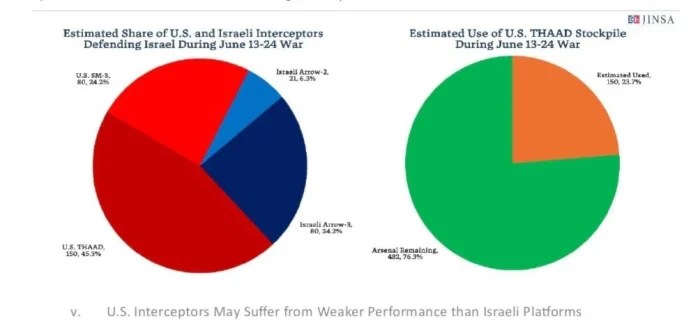
Israeli claims regarding the self-sufficiency and effectiveness of their air defenses are among the most exaggerated on earth. In reality, NATO intelligence and military capabilities played a decisive role in interception efforts, operating out of Jordan. This included US, Jordanian, and French air forces taking off from Jordanian bases, in addition to extensive intelligence, logistics, and aerial refueling missions done by NATO countries, including the UK.
Israeli leadership attempted to strike early under ideal surprise conditions before defensive gaps accumulated and before they were drawn into a prolonged escalation cycle they could not sustain. Even internal measures, such as preventing Israeli settlers from leaving during the war, reflected an acute awareness of how fragile the situation could become if panic spread; that kind of optics is strategically disastrous for a regime that sells itself as secure, resilient, and permanent.
Most interception during the last confrontation in June 2025 was conducted by US naval assets using SM-3 interceptors and THAAD systems. Roughly 25 percent of all THAAD interceptors ever produced were reportedly consumed in that single episode. The persistent exaggeration of Israeli offensive and defensive capabilities, while significant but short-winded, serves two purposes:
- First, it counters the internal Israeli narrative that the United States “saved Israel” after October 7, a deeply sensitive issue tied to Israeli national security self-perception that panics at the idea of having such a level of dependency on the US.
- Second, it preserves an image of invincibility before regional actors, enhancing the regime’s deterrence.
Returning to Jordan: American planners show little concern for Jordanian costs or the consequences for the base itself, which is situated around 70km from the capital Amman. From this perspective, it may even be deemed acceptable for the US if Iran expends part of its ballistic arsenal striking the base, even at the cost of Jordanian casualties.
The American assumption is that they would then be able to launch a major air campaign to destroy Iranian missile production, storage, and launch sites. This would pave the way for an Israeli entry into a second phase of the war, one in which it would no longer face missile volumes it cannot absorb, as it almost did in the June war, as it was running out of interceptors after a presumed US airpower success in weakening the system and reducing launch capacity.
From Iran’s standpoint, directly starting with “Israel” may actually be more rational. An Israeli participation in any war appears almost inevitable, either immediately or at a later stage, for multiple reasons.
Despite the massive US buildup, which includes more than 36 F-15Es, an aircraft carrier, and several destroyers with capabilities to launch cruise missiles, Israelis still retain greater immediate regional firepower than the United States, but it seeks to avoid sudden, large-scale damage to its own infrastructure.
American intentions likely go beyond limited bombings, assassinations, or “decapitation” strikes, as seen previously, if their attack would make sense in terms of weighing gains and possible losses. They may include direct strikes targeting the Iranian leadership, severe economic and energy infrastructure degradation, and long-term destabilization designed to enable internal regime change, added to the sanctions.
The withdrawal of American aircraft from Gulf bases was not only due to their vulnerability to short-range, high-precision weapons that Iran’s arsenal is full of, but also to protect Gulf oil production in the event of war. Gulf states, for their part, would publicly distance themselves from hostilities to shield their economies and prevent market shocks, particularly to avoid upsetting Trump amid any market volatility.
While it is possible to disrupt US operations at Muwaffaq Salti Air Base, expending large numbers of ballistic missiles there, missiles that could instead strike high-value counter force and counter value Israeli targets, may be less strategically viable than other options if the US is prepared to escalate toward total confrontation regardless. Completely and permanently disabling the base would be difficult, and the strategic outcome would likely remain unchanged.
American planners appear convinced that Iran will avoid targeting Jordanian state infrastructure or attempting to destabilize the Jordanian monarchy, as such actions can be used for counterpropaganda. They assume Iran will focus on Western and Israeli forces, confining hostilities to sparsely populated desert areas that Jordan can absorb.
Jordan, governed by a monarchy heavily dependent on Western and Gulf countries’ political and economic support, appears to share this assessment. King Abdullah likely believes his rule faces no serious internal risk and that alignment with Western strategy is the safer course, as his country was credited for being “Israel’s” shield against Iranian drones in the June 2025 war.
Under this framework, the US would launch an air campaign using aircraft operating from Jordan to strike western Iran, while carrier-based aircraft in the Arabian Sea attempt to open corridors toward central Iran from the Gulf. This would allow heavy bombers from Diego Garcia to penetrate deeper and strike strategic targets. The Israeli occupation would then enter at a later stage.
The simplest counter-strategy is to do precisely what the Americans do not expect, and to inflict maximum cost. The theory that remains largely unrefuted: Trump is risk-averse. As Western media itself jokes, TACO (Trump Always Chickens Out), he dislikes long wars, favors last-minute, flashy interventions, and avoids sustained attrition. This suggests a vulnerability: American short-termism and reluctance to absorb prolonged pain, particularly when multiple theaters remain active.
Some may ask why Iran does not simply launch a preemptive strike. This is a clear option, but not an uncomplicated one. An initial Iranian strike could rally American public opinion behind a longer war, granting Trump broader authority, resources, and popular support. While it would disrupt US planning and cause early damage, it might ultimately strengthen Washington’s domestic position. By contrast, an American-initiated war, prolonged, unpopular, and costly, would be far more vulnerable to internal pressure, especially if American losses mount.
Adding to the complexity, two Emirati Il-76 cargo aircraft reportedly landed in Tel Aviv before flying on to Turkmenistan. These aircraft are known to be used by the UAE to supply proxy forces with weapons, particularly in Sudan and Somalia, raising the possibility that they were transporting drones or intelligence equipment for regional operations.
The picture remains highly complex, and it is entirely possible that nothing will happen. Still, based on current force deployments and escalation patterns, the probability of a US attack appears to have risen beyond a 50-50 threshold.
This analysis reflects what American planners may be thinking, not what will necessarily occur. It should be noted that after the previous war, many US and Israeli officials declared that Iran’s nuclear and missile programs had been torpedoed, and the system effectively destroyed, assessments that quickly proved false. Now, only months later, they appear to believe that an even more violent war is required to achieve what the last one supposedly already accomplished.
On the other hand, if endurance is possible and the United States is forced to retreat, Trump TACOs or abandon Israelis mid-conflict — an outcome not inconceivable under a president like Trump — the cumulative effects of “Israel’s” recent dominance and coercion across the region may yet be reversed.
As mentioned earlier, the US buildup is not sufficient to start a prolonged attack against Iran with the high goals of regime change. The buildup still does seem as defensive posturing shielding the Israelis, so a chance the Israelis might initiate and use the limited US and Western buildup as a shield is still significant. A scenario similar to what happened in the last war, but that does entail Israeli losses in the opening phase.
Conclusion
What emerges from this assessment is a US strategy built on supposed escalation control, risk displacement, and the assumption that others will behave within predefined limits. Washington appears to believe it can shape the battlefield geographically, pushing early phases of the war away from the fragile “Israel”, absorbing initial retaliation through peripheral bases, and then intervening decisively to reshape the balance before handing the fight back to Israelis under more favorable conditions. This is not a strategy aimed at victory in the classical sense, but at managing exposure and buying time.
The weakness in this thinking lies in its dependence on predictability. It assumes Iran will refrain from actions that collapse the carefully constructed sequencing of the war, that regional systems will remain stable under strain, and that American political leadership will tolerate the costs long enough to reach a decisive point. None of these assumptions is guaranteed. If any one of them fails, the entire escalation ladder becomes unstable.
Ultimately, the outcome of any confrontation will not be decided by the opening phase or by claims of technological superiority, but by endurance, political cohesion, and the ability to impose sustained costs on an adversary unwilling to absorb them.
The United States may possess overwhelming firepower, but it remains constrained by limited strategic patience and domestic vulnerability. If those constraints are effectively exploited, the very war designed to resolve the Iranian question may instead deepen American entanglement and erode the regional order it seeks to preserve.
Jordan using Israeli software to monitor journalists, rights defenders: Report
The Cradle | January 22, 2026
A multi-year investigation by Citizen Lab has found that Jordanian security agencies used Israeli-made Cellebrite phone-extraction technology to pull data from civil society activists and journalists without consent, according to a report published on 22 January.
The researchers said they forensically analyzed four seized-and-returned phones and reviewed three court records tied to prosecutions under Jordan’s 2023 Cybercrime Law, with cases spanning late-2023 to mid-2025 during protests in support of Palestinians in Gaza.
Citizen Lab said it identified iOS and Android “Indicators of Compromise (IoCs)” that it attributes “with high confidence” to Cellebrite’s forensic extraction products, describing the work as evidence that authorities extracted data after detentions, arrests, and interrogations by the General Intelligence Department (GID) and the Cybercrime Unit.
In one case, Citizen Lab said a student organizer refused to provide a passcode, and officers “unlocked it using Apple’s biometric face ID by holding it up to the activist’s face,” later returning the device with “their device’s passcode written on a piece of tape stuck to the back of their phone.”
The report ties the practice to Jordan’s tightening online repression, noting that the 2023 law expanded punishments and has been widely used against activists.
In a post on X dated 12 March 2025, Jordan’s Interior Minister Mazin al-Farrayeh wrote, “The most common cases handled daily [by the Cybercrime Unit] involve hate speech and inciting division and strife on social media … penalties can reach up to three years in prison, a fine of 20,000 dinars [approximately 28,200 USD], or both.”
Citizen Lab report characterizes Cellebrite as a recurring enabler in global rights abuses, arguing that its tools, when handed to opaque security services, become a turnkey mechanism for sweeping, invasive fishing expeditions across private life.
After Citizen Lab and OCCRP wrote to Cellebrite on 29 December 2025 and followed up on 15 January 2026, the company’s PR firm replied with a generic defense, saying “Ethical and lawful use of our technology is paramount … As a matter of policy, we do not comment on specifics.”
Citizen Lab noted that the response “does not deny any of our findings,” and concluded that the Jordanian use of it documented “likely violates international human rights law.”
Alaa al-Fazza, writing for The Cradle, has described Jordan’s 2023 cybercrime law as a sharp turn toward authoritarianism, arguing it uses vague security claims to criminalize dissent, expand censorship powers, and suppress activists as public opposition to normalization with Israel grows.
In a July 2025 report, Middle East Eye reported that Jordan’s General Intelligence Department launched its largest arrest campaign since 1989 by detaining and interrogating hundreds over pro-Palestine activism and Gaza solidarity. The detainees were held without charge amid claims the crackdown was driven by pressure from Israel, Saudi Arabia, and the UAE.
Amid the widening crackdown on dissent and pro-Palestine voices, Al Mayadeen reported in December that one of their journalists, Mohammed Faraj, was arbitrarily detained upon arrival in Amman and held for over a week without charge, disclosure of his whereabouts, or official clarification from Jordanian authorities.
Israelis SUDDENLY Mass Deported From Many Countries
The CJ Werleman Show | January 22, 2026
In this urgent report, I expose why Israelis are now being mass deported or denied entry by countries around the world – from Eastern Europe to South America, from the Maldives to even North Korea. These are not isolated incidents. They are a direct consequence of Israel’s policies, its ongoing atrocities against Palestinians, and a historic collapse in Israel’s global image. Watch to the end to understand how all of this connects to war crimes, apartheid, racism, and Western hypocrisy – and why platforms like YouTube are punishing channels that dare to tell the truth.
❌ YouTube Demonetized Our Channel Because We Expose Israel ❌ 💪
Please HELP me expose Israel and injustices in Muslim world via Patreon HERE: ▶  / cjwerleman
One-time donations can be made here: ▶ https://www.paypal.me/cjwerleman
We can’t sustain, improve and grow this program without your help via Patreon membership, and you will be helping us push back against Zionist censorship, produce more in-depth investigations, platform Palestinian voices and other victims of occupation and war. Thank you for your support and understanding.
Peace Plan Phase 2 Without Phase 1: Can the US Really Bring Peace to Gaza?
By Abbas Hashemite – New Eastern Outlook – January 22, 2026
US President Donald Trump announced Phase 2 of the Gaza Peace Plan despite the failure of Phase 1 to bring any relief to the Palestinians, reasserting the fact that it only intends to legitimize the Israeli occupation.
On January 16, the United States announced the launch of the 2nd phase of the infamous 20-point Gaza Peace Plan, which is supposed to end Israel’s genocidal operations against native Palestinians in Gaza. The Trump administration portrays Phase 1 of the Gaza Peace Plan as a success. However, the reality on the ground is in sheer contrast to the US government’s claims. Most of the expectations of Phase 1 were never materialized on the ground in Gaza. Phase 1 of the 20-point Gaza Peace Plan was supposed to immediately stop the fighting between Israel and Hamas, allow full admittance of humanitarian aid in the Gaza enclave, open the Rafah crossing between Egypt and Gaza, enable the exchange of captives between the two sides, and set a limit for the Israeli withdrawal from the boundary of Gaza.
Phase 1: Broken Promises
Although the Israeli attacks in Gaza have decreased since the start of the ceasefire, the genocide still continues. The Zionist government continues to violate the ceasefire by launching unprovoked attacks in the Gaza enclave, violating the ceasefire at least 1193 times, resulting in the deaths of at least 451 Palestinians since October 10. According to a UNICEF report, “More than 100 children have been killed in Gaza since the ceasefire of early October. That is roughly one girl or boy killed every day during a ceasefire.” It further states, “Since the ceasefire, UNICEF has recorded reports of at least 60 boys and 40 girls killed in the Gaza Strip. The 100 figure only reflects incidents where sufficient details have been available to record, so the actual number of Palestinian children killed is expected to be higher. Hundreds of children have been wounded.”
Hamas has released all the living and dead captives except one. However, reports suggest that Israel has not released all the prisoners as stipulated in the ceasefire agreement. It still holds numerous children, women, and doctors. Moreover, reports suggest that the Israeli government continues to block much of the essential humanitarian aid in Gaza, only allowing around 43 percent of the total aid trucks. The Zionist government does not allow the passage of the trucks containing meat, dairy products, and vegetables, which are necessary for maintaining a balanced diet. It only allows trucks containing soft drinks, chocolates, snacks, and crisps into the Gaza enclave. In addition, the Israeli government has banned more than three dozen charity organizations from working in Gaza, further worsening the dire conditions of the Gazans. Furthermore, the key lifeline for the entry of aid, medical evacuation, and travel, the Rafah crossing, also remains closed by the Israeli Defense Forces (IDF).
Phase 2: Political Theatre or Real Solution
Phase 2 of the Gaza Peace Plan aims to shift the focus to establishing a Palestinian technocrats’ panel to supervise and lead post-war Gaza, as well as long-term governance in the enclave. Steve Witkoff, Special Envoy of the US President Donald Trump, stated the Phase 2 “establishes a transitional technocratic Palestinian administration in Gaza” and would initiate “the full demilitarization and reconstruction of Gaza, primarily the disarmament of all unauthorized personnel.” However, without the success of Phase 1 of the 20-point Peace Plan, the announcement of Phase 2 seems nothing more than a political theatrics to enhance President Trump’s international stature.
Controversial Appointments Undermine Trust and Peace
The Trump administration’s announcement of the former British Prime Minister, Tony Blair, responsible for the death of thousands of Muslims in the Middle East, along with US Secretary of State Marco Rubio, the US special envoy to the Middle East Steve Witkoff, and Trump’s son-in-law Jared Kushner – a staunch Zionist, as one of the founding executive members of the so-called Board of Peace, which is supposed to overview the implementation of the so-called Gaza Peace Plan, also reflects the nonchalance of the US government to end the Israeli genocide in Gaza. The United States has appointed US Major General Jasper Jeffers as Commander of the International Stabilization Force (ISF) for the Gaza Enclave. According to the White House, Jeffers would lead the ISF in a wide range of areas, including “comprehensive demilitarization.”
However, this “comprehensive demilitarization” is limited to de-weaponizing Hamas. The United States has been a key supporter of Israeli war crimes in Gaza. It has also been the prime supporter of Israel’s demand to demilitarize Hamas, a demand unacceptable to the Palestinian group. The appointment of Major General Jasper Jeffers would make the ISF more controversial. The US government needs to address the concerns of all the stakeholders effectively to successfully implement the 20-point Gaza Peace Plan. Moreover, appointing people with controversial backgrounds like Tony Blair and Jared Kushner would only lead to a trust deficit, further complicating the peace process in Gaza.
Аbbas Hashemite is a political observer and research analyst for regional and global geopolitical issues. He is currently working as an independent researcher and journalist
Hamas: Netanyahu’s inclusion in ‘peace council’ threatens justice
Al Mayadeen | January 22, 2026
The Hamas Resistance movement has condemned the inclusion of Israeli Prime Minister Benjamin Netanyahu in the so-called “Peace Council” for Gaza, calling it a dangerous sign that undermines justice and accountability.
In an official statement issued Thursday, Hamas said, “We strongly condemn the inclusion of war criminal Netanyahu, who is wanted by the International Criminal Court, in the Peace Council for Gaza.”
The movement stated that Netanyahu’s participation contradicts the very principles such a council should represent. It warned that “the war criminal Netanyahu continues to obstruct a ceasefire agreement in Gaza and carries out the most heinous violations by targeting unarmed civilians.”
Hamas stressed that “the first step toward stability lies in ending the occupation’s violations and holding all those responsible for genocide and starvation accountable.”
The statement came after US President Donald Trump and several international leaders signed a decree on Thursday establishing the “Peace Council” concerning the Gaza Strip. The signing took place during the World Economic Forum in Davos, Switzerland.
Netanyahu confirmed his participation on Wednesday, saying: “I will join the Peace Council in response to President Trump’s invitation.”
Others who joined the so-called “Peace Council” include Turkey, Saudi Arabia, Egypt, Jordan, and others, bringing the total number of those who accepted Trump’s invitation up to 25.
Report warns that ‘Jewish terrorism is out of control’ and could lead to major security escalation
MEMO | January 22, 2026
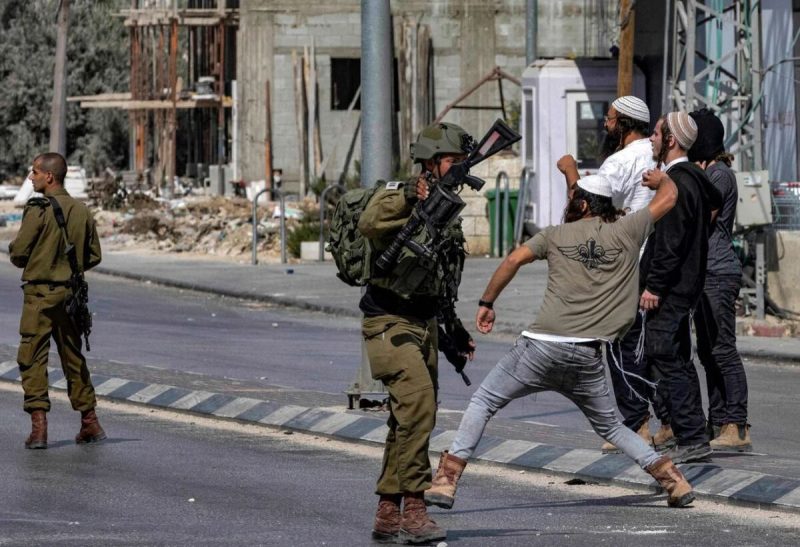
An Israeli report warns of a rapid rise in Jewish terrorism against Palestinians in the West Bank, saying it has become a widespread phenomenon with serious security and strategic implications. The report cautions that this trend aims to undermine the Palestinian presence and could trigger large waves of violence, while also causing growing damage to Israel’s international standing.
The report, issued on Tuesday by the Institute for National Security Studies at Tel Aviv University (INSS), says recent years—especially since 7 October 2023—have seen a sharp increase in both the scale and severity of attacks carried out by Jews against Palestinians. It describes these acts as part of a “struggle over control of land” and “growing attempts to weaken the Palestinian presence”, particularly in areas classified as Area C.
According to the report, data from Israeli military and international sources point to a steep rise in such attacks. Figures from the Israeli army’s Central Command show that in 2025 there was an increase of about 27 per cent in incidents classified by the security establishment as “nationalist crime”. Around 870 offences were recorded, including 120 described as serious, compared with 83 serious offences in 2024.
United Nations data, however, present an even darker picture. In 2024, about 1,420 attacks against Palestinians were documented, a 16 per cent rise compared with 2023 and the highest level since systematic monitoring began in 2006. The report says these attacks led to the killing of five Palestinians and injuries to around 350 others. More than 300 Palestinian families — nearly 1,700 people — were also displaced from their homes.
The report adds that the upward trend has continued, noting that the number of attacks in 2025 has “exceeded 1,770 incidents”, surpassing the peak recorded the previous year.
Lebanese Resistance will inevitably triumph: Former President Lahoud
Al Mayadeen | January 22, 2026
Former Lebanese President Emile Lahoud affirmed that Lebanon remains committed to the current ceasefire, while “not a day goes by without the Israeli occupation violating it.”
Speaking amid ongoing tensions, Lahoud condemned on Thursday the continued aggression by “Israel”, accusing it of operating under a long-standing strategy of deception backed by US support. “For 80 years, this enemy has relied solely on deception, using unwavering American support as its cover,” he said.
Lahoud emphasized that Lebanon has two options: either accept the reality imposed by “Israel” or stand in solidarity with those under attack, particularly in the South and the Bekaa.
He reminded the Lebanese people of the country’s historic milestones, namely the liberation of South Lebanon in 2000 and the Resistance’s victory in 2006. “Our capabilities were also limited at that time, but internal unity around a single national position made those victories possible,” he said.
Addressing those he described as “playing the role of instigators from within, against their own people,” Lahoud warned that their actions would ultimately backfire. “This internal agitation will return to harm them first,” he said, accusing them of aligning, willingly or not, with the interests of the enemy.
Lahoud urged all Lebanese factions to take note of what even their adversaries have come to recognize. “Look at your undeclared Israeli ally,” he said, “who admitted that the Resistance’s greatest weapon is its unwavering spirit of defiance and steadfastness.”
He urged them to abandon any illusions about weakening the Resistance, asserting that such hopes are futile. “Stop betting on breaking the resistance… stop dreaming of its surrender,” he said, adding with confidence: “The resistance will inevitably triumph.”
IOF aggression on South Lebanon continues
His statements come after Israeli occupation forces launched a series of violent airstrikes across southern Lebanon on Wednesday, targeting several towns, according to Al Mayadeen’s correspondents.
The attacks began in the town of Kfour in the Nabatieh district, where an Israeli airstrike hit a residential building. Subsequent raids struck multiple buildings in Qennarit, also in southern Lebanon. In Jarjou’, another airstrike destroyed a targeted building, while drones maintained heavy patrols over the area.
Al Mayadeen correspondent revealed that several reporters were injured following the airstrikes on Qennarit, as “there were 10 journalist colleagues near the site of the strike.”
The Lebanese Health Ministry reported that Israeli enemy raids on the town of Qennarit resulted in injuries to 19 people, including journalists. Later, our correspondent reported Israeli warplanes launched airstrikes on al-Kharayeb in the Saida district and Ansar in the Nabatieh district.
In response, Lebanese President Joseph Aoun denounced the ongoing Israeli assaults on Wednesday evening, describing them as a clear violation of international humanitarian law and a blatant breach of the most basic protections for civilians. He stressed that “Israel’s” repeated aggressive actions confirm its refusal to honor commitments under the ceasefire agreement, holding Tel Aviv fully accountable for the consequences of these violations.
Featured Video

More Iran War fallout: Maritime insurance industry shifts from London to China
or go to
Aletho News Archives – Video-Images
From the Archives
Allies Don’t Need Lobbies
By Jay Knott | Dissident Voice | September 24, 2013
In a recent article on Counterpunch, Rob Urie defended the traditional Marxist analysis of US policy in the Middle East. He argues that support for Israel is driven primarily by economic interest, not the Jewish lobby.
He starts by paying tribute to the idea that Western societies are uniquely racist. He says that the “Western narrative” claims there is an “Arab character”, and that this is “antique racist blather”. He gives no definition of these terms. Further, he establishes his credentials as part of the dominant current in the American left by claiming that “over a million people in Iraq died so ‘we’ in the West can drive SUVs.”1
When he tries to criticize bourgeois economics, he makes it clear he doesn’t understand the developments it has made since Marx’s day, using the mathematical discipline known as “game theory”. He dismisses the basic abstraction of economic theory, the idea of the rational individual, on the grounds that it is “devoid of history, culture and political context”. But abstractions are always devoid of something.
He defends a more concrete economic theory, mostly Marxist, with some input from another theorist of capitalist crisis, Hyman Minsky. This concrete theory leads him to the view that US activity in the Middle East is primarily driven by rational capitalist motives, the need to secure a supply of oil.
“Taking the totality of circumstance — former oil company executives launching war on an oil rich nation on a pretext they publicly proclaimed they didn’t believe shortly before taking office — and that upon launching their war proved to be non-existent, requires a willingness to overlook the obvious — that the war on Iraq was for oil, that is difficult to support.”1
Perhaps I’ve misunderstood him, but based on what he says in the rest of the article, this convoluted sentence seems to argue that, because president Bush and vice-president Cheney attacked Iraq on false premises, and they also said it was all about oil, and they are former oil executives, and Iraq has a lot of oil, it’s difficult to deny US attacks on Iraq are all about oil.
In fact, it’s not hard at all. As Urie points out, at times Bush and co. said that attacking Iraq was “protecting the world’s supply of oil.”1 But, as he also points out, they are congenital liars. Why should we believe them when they say they are trying to “protect” the oil supply? Protect it against what? When politicians “admit” attacks on Middle Eastern countries are wars for oil, they are parroting the neo-con party line, feeding the public, both left and right, with a plausible-sounding pretext. For right-wingers, “it’s a war for oil” is a reason to support war, and for leftists, it’s a way to feel better by complaining impotently about corporate greed. Both approaches help the war drive. … continue
Blog Roll
 Aletho News
- More Iran War fallout: Maritime insurance industry shifts from London to China
- US-Israeli aggression on Iran triggers review of GCC countries’ investment pledges to Washington
- Russia slams UK plan to seize tankers suspected of carrying its oil
- Pakistan ramps up food exports to Persian Gulf nations as war deepens food insecurity
- Iran submits response to US plan, sets terms for war’s end: Tasnim
- US vs Iran: Kharg Island Talk — Bluff or Escalation? Ex-Military Officer Weighs In
- Zelensky unnecessarily involves Ukraine in the Middle East crisis
- Turkish tanker blacklisted by Ukraine hit in drone attack – media
- Canada, the U.S., and NATO: the inescapable trap
- Villains of Judea: Leonid Radvinsky
- If Americans Knew
- ‘No Innocent Children’: Far-right Israeli Lawmaker Defends Killing of Palestinian Family
- Mossad’s promises helped Netanyahu convince Trump that Iran could be toppled
- US Arms Control Official Refuses To Comment When Asked If Israel Has Nuclear Weapons
- Veterans warn US landing could be ‘more Gallipoli than Vietnam’
- Israel may be committing war crimes in Lebanon – Not a ceasefire Day 167
- In the West Bank, life is a constant battle – 3 articles
- Jacob Reses, one of the most powerful pro-Israel operatives in Trump’s Washington
- Israeli-US assaults kill or injure 87 children a day – Not a ceasefire Day 166
- ‘Forever live by the sword’: Understanding Israelis’ massive support for Iran war
- UN’s special rapporteur on human rights says Israel is systematically torturing Palestinians
- No Tricks Zone
- Devastating Assessment Of Comirnaty Vaccine By Former Senior Pfizer Europe Toxicologist
- New Study: CO2 Is ‘Effectively Negligible’ As An Explanatory Climate Change Factor Since 2000
- Former Pfizer Toxicologist Dr. Helmut Sterz Tells Bundestag Hearing Pfizer Vaccine Should Have Never Been Approved
- Energy Expert: Germany’s Nuclear Phaseout Was A “500 Billion Euro Mistake”
- New Research: South Australia’s Mid-Holocene Sea Surface Temperatures Were 4°C Warmer Than Today
- Storing Green Energy To Last Germany 10 Days Would Require A 60-Million Tonne Battery
- New Studies: UK Sea Levels Were 4 Meters Higher Than Today During The Mid-Holocene
- Destructive Green New Deal: German Energy And Metal Group Warns Of Drastic Crisis
- New Study Documents A 20-Year Pause In Arctic Sea Ice Decline – Driven By Internal Variability
- Wake-up Call: Survey Shows Majority Of Germans Now Favor Postponing Climate Targets!
 Aletho News