Is Israel About to Return to Genocide? Three Scenarios for What Comes Next
By Robert Inlakesh | The Palestine Chronicle | December 30, 2025
With Tel Aviv openly rejecting withdrawal and insisting on disarmament, the “ceasefire” risks sliding into either renewed mass killing or a slow-motion attempt to impose control and displacement.
Debate rages on over what Phase Two of the Gaza Ceasefire will look like, as US President Donald Trump demands the disarmament of the Palestinian resistance. Meanwhile, Gaza refuses to hand over its weapons. Most analyses are, however, missing the mark when it comes to reading Tel Aviv’s calculations.
The so-called Gaza Ceasefire has proven itself to be little more than an extended pause in the mass slaughter of civilians. While it is still described as a ceasefire, there were three major changes to the predicament on the ground that took hold during “Phase One,” as the war continued to rage on.
The first major change, perhaps the most notable, was that the Israelis committed to no longer killing an average of around 100 civilians on a daily basis. The second was that more aid entered Gaza, although nowhere near the amount required or agreed to. The third was a mutual prisoner exchange.
Assessing the strength and direction of the ceasefire in its first phase is important to reading what the second phase may have in store, if it is even reached.
To the Israelis, the benefits of the partial implementation of Phase One were numerous. To begin with, the least consequential element, they relieved themselves of the burden of releasing their captives. This was important for Israeli Prime Minister Benjamin Netanyahu, in that he managed to clear the topic of returning the captives, especially as he heads into a new election cycle.
Then we have the other benefits for the Israelis. Gaza exited the international headlines, as daily killings appeared too low to even register as a major issue in the biased Western press. Meanwhile, Israeli soldiers were able to continue doing the exact same work inside Gaza that has constituted the majority of its military operations throughout the genocide: building demolition work.
These demolition missions, for which a privatized Israeli workforce has been employed to operate alongside the occupation army’s engineering units, have constituted the vast majority of the military’s efforts on the ground. Face-to-face combat on the ground has never been a notable feature of the Israeli genocide; they simply refused to actually fight the Palestinian resistance groups.
One thing that troubled the Israelis was that this demolition work, which sometimes included destroying entrances to tunnels, came with a high risk of running into armed ambushes. The Palestinian fighters would prepare traps and set up ambush operations for their forces, especially when Israel would invade or reinvade any new area they had not retained a permanent presence in.
Phase One of the Gaza Ceasefire agreement, therefore, guaranteed that soldiers were not going to be subjected to the same dangers as before, as the Palestinian resistance groups would halt all operations against the invading army.
It is important that this reality is established when analyzing Israel’s decision-making, because what is being done to Gaza is a genocide, not a conventional war. Israel’s intent is to wipe out Gaza, ensuring that it becomes totally uninhabitable, with the intention of mass expulsion in mind. This is also why they rarely targeted the armed wings of the Palestinian factions, focusing on maximum damage to the civilian population instead.
Any other way of framing this issue is misleading and whitewashes what the Israeli regime has committed since October 7, 2023. It also robs any analyst of his or her ability to assess Israel’s calculations critically.
With this in mind, consider that the Israelis have now had over two months where their armed forces have still been working, but have had a break from any fighting or the fear of being ambushed. Israeli tanks, armored personnel carriers, and other equipment were also being repaired, as the decision-makers in Tel Aviv and Washington designed new plans for their fronts against Iran, Yemen, and Lebanon.
They also needed fewer soldiers for security reasons, as a so-called Civil-Military Coordination Center (CMCC) took over in monitoring the situation and helping shape the realities imposed on the ground. Every country involved in the CMCC was therefore made complicit in the genocide.
This phase came with the additional benefit for the Israelis that they now had the space to experiment with new approaches, conjure up more conspiracies, and seek to find a way to ensure the ethnic cleansing of the Gaza Strip occurs. As Israeli Defense Minister Israel Katz has explicitly stated, his army has no intention of withdrawing from the besieged coastal territory.
Phase Two and What It Will Show Us
If we establish the fact that the Israelis are adamant on achieving ethnic cleansing, that their military operations have always sought to achieve this goal, and that they are continuing to conspire to achieve this, then we have arrived at the starting point from which to assess the implementation of a so-called Phase Two.
During the first phase, the groundwork was laid for a new set of conspiracies against the people of Gaza. The population was subjected to countless pressures, which the criminal CMCC oversaw, including the deprivation of sustainable living conditions, with only a handful of its nongovernmental organizations even raising issues about it.
Despite the best efforts of the Hamas-affiliated government security forces to restore order, they were dealing with an impossible situation. Over a million people live in tents that are unstable or susceptible to dire weather conditions, a lack of adequate medical supplies, sanitary supplies, and many food items are even restricted. Amid this, most people don’t have jobs, few have adequate salaries coming in, and even for those in a better economic standing, they remain traumatized and unable to return to their homes. Inevitably, this leads to social issues that no regular security force can fully repel.
Meanwhile, the Israelis expand the so-called Yellow Line, behind which they were supposed to remain, instead using this line to execute anyone who comes within a few hundred meters of it, thus deterring them from returning to their own homes or land, where they could possibly plant small crops. Behind this ever-expanding occupying line, the Israeli military and private contractors destroy more and more infrastructure. All of this is monitored by the US-Israeli-led CMCC.
The plan is rather overt in its goals, but still vague in its precise stages of implementation. Both US and Israeli officials have made it crystal clear that they seek reconstruction only inside the Israeli-controlled portion of the Gaza Strip, where five ISIS-linked death squads are being strengthened by Israel and the United Arab Emirates (UAE).
The UN’s most shameful Resolution 2803, passed by the United Nations Security Council (UNSC) in November, makes it apparent that the goal is to implement a “Board of Peace” (BoP) and International Stabilization Force (ISF). The BoP makes Donald Trump the de facto ruler of Gaza, and the ISF is set to be a multinational invasion force tasked with fighting the Palestinian resistance factions.
This Monday, the new spokesperson for the Qassam Brigades of Hamas, who has also taken on the alias Abu Obeida, announced a staunch opposition to disarmament, instead calling on the Israelis to disarm, as they are the ones responsible for committing a genocide. All the Palestinian factions, with the exception of the mainstream branch of Fatah, which controls the Palestinian Authority (PA), are united on this issue.
The PA is in favor of Donald Trump’s plan for him to rule the Gaza Strip and disarm the resistance by force, but it is irrelevant in terms of representing Palestinians. This authority only continues to exist because it is propped up by the Israelis, Americans, Saudis, and Europeans, and its popularity, beyond its base of employees, is in the single digits among the Palestinian people. It does not even represent the sentiments of the majority of Fatah supporters anymore.
All of this is to say that if any Phase Two is going to be implemented, neither side is going to be in agreement about it. Netanyahu’s government demands disarmament, while the Palestinian factions demand Gaza’s self-governance and will only disarm by handing over their weapons to a newly established Palestinian state. Hamas is clear that it would allow a technocratic administration to take over Gaza and is not demanding that it remain as the government of Gaza.
Considering that neither side can agree upon the basis on which a Phase Two can begin, keeping in mind that Israel and the US are the sides with military dominance, there are three ways that this will unfold:
The US and Israel will proceed with aggressively implementing their plan, as laid out in the shameful UNSC Resolution 2803. They will begin deploying a regime change force and attempt to implement a number of schemes to start a slow ethnic cleansing of the territory amid this.
Israel will restart its full-scale genocide.
The shaky ceasefire will continue, but remain in limbo. This will mean periodic spats of violence, as the Israelis and the US attempt to slowly and partially implement the ISF-BoP agenda. This will be a process during which the people of Gaza will be subjected to more pressure, but not enough to collapse the agreement altogether.
An Aggressive Phase Two?
The first means of implementing the next phase of the Gaza Ceasefire initiative would likely buckle under the immense pressures destined to befall it. If we look at the ISF alone, it is a recipe for total disaster.
Forcing the “International Stabilization Force” aggressively on the people of Gaza means that it will start going after Palestinian resistance factions. Two major issues will immediately pop up. The resistance will certainly kill some of these foreign soldiers, who will return to their home nations in body bags and cause domestic chaos. A heavy-handed approach here would also likely result in civilians being killed, another major debacle in its own right.
The Israelis are adamant that Türkiye, Qatar, and other Muslim-majority nations they take issue with cannot deploy their armed forces in Gaza. Whether they get their way or not, consider that this armed force would mean gathering a few hundred soldiers from one country, a few thousand from another, and so on.
If this kind of ISF was sent into Gaza aggressively, considering that so far there has been no agreement concerning how to implement this invasion initiative or which countries will participate, it will be thrust into a complex urban warfare environment. They all speak different languages, work off different military doctrines, are ill-prepared, likely ill-equipped for their tasks, and, according to reports, will only number in the tens of thousands.
Donald Trump recently boasted that the nations which, he says, are participating in his so-called “peace plan” will work to destroy Hamas if it refuses to disarm, even bragging that Israel would not be required to act and that foreign invading forces would do all the work for them.
In order to conduct a regime change operation of this nature, the ISF would have to be at least 250,000 men strong. Bear in mind that mobilizing a multinational invasion force of this kind would take many months, an enormous amount of funding, and the key feature would be that it actually fights, unlike the Israeli army, which refused to go after the Palestinian resistance factions on the ground.
If an ISF that numbers only in the tens of thousands is going to try and defeat the Palestinian resistance, it will suffer heavier casualties than the Israeli military did. Any Arab or Muslim-majority nation deploying forces could experience mass protests or rebellions against their role in the genocide. Without going into the fine details, it makes no sense and if it is tried, it will quickly fail. Even the Egyptians, who along with Israel will be the guarantors of the strategy, have been advocating for a force equivalent to Lebanon’s UNIFIL to enter Gaza, which is not what UNSC Resolution 2803 approved.
Israel Collapses the Ceasefire
The next way this can go is that Benjamin Netanyahu decides to collapse the ceasefire altogether. Some argue this wouldn’t happen because the US is committed to its “peace plan.” This is not a serious argument. Donald Trump has demonstrated that he will go along with whatever the Israelis choose. He isn’t a strong leader on this question and clearly possesses a level of knowledge about the region that you would expect of a public high school student who took history and didn’t really bother to listen.
There are only two circumstances under which the Israelis will collapse the ceasefire in its entirety. They no longer believe that any of the schemes they sought to implement under the so-called ceasefire will work, and there is some kind of political benefit to returning to all-out combat. The second reason is that they are scared that the Palestinian resistance may launch some kind of offensive while the Israeli army is also battling Hezbollah and Iran.
Collapsing the ceasefire demonstrates that the Israelis are without any direction and lack a coherent plan to actually end the fighting on the Gaza front. It means that they are simply reverting to all-out genocide, with the hope that eventually an opportunity arises which will allow a mass ethnic cleansing event, or a slow process of ethnic cleansing as they exterminate tens of thousands more civilians.
Stuck Between Phase One and Phase Two
Another option is for the Israelis and Americans to stall the collapse of the ceasefire. It would mean placing the situation in limbo, not allowing its total collapse, but undergoing a process of trial and error, whereby it slowly attempts to force elements of “Phase Two” into reality.
This is a very likely outcome, designed to keep the Gaza front closed while focusing more on Iran, Lebanon, and perhaps even Yemen. We could therefore expect to see the ISF deployed in a less meaningful capacity than is currently envisaged in Washington, disastrous plots implemented involving private military contractors and aid distribution, and attempts to ethnically cleanse the population slowly here and there. All of these schemes will fall flat on their faces, but not without inflicting suffering on the civilian population of Gaza.
In the meantime, the US-Israeli alliance will have Tehran in its sights. The thinking behind this would be to squeeze the civilian population of Gaza, while prioritizing Iran and Hezbollah as their major strategic threats.
Israel’s Failure Hedges against Iran and Hezbollah
The conspiracies of Washington and Tel Aviv against Gaza can be defeated, but this hinges upon Hezbollah and Iran for the most part. If Iran and Hezbollah manage to deal enormous blows to the Israelis, refusing to play their game of fighting short defensive conflicts, then Israel will be dragged into deep waters.
All that is required of Hezbollah and Iran is that they don’t stop firing, no matter the degree of carnage exacted against their people. If Hezbollah drags the Israeli military into Lebanese lands and refuses the calls for a ceasefire, instead forcing the Israelis into a war that it intends to fight for many months, and Iran does the same, the Israelis will be in a major crisis.
The details of such conflicts are a topic for different pieces and many outcomes could occur, yet it suffices to say that major moves from Lebanon and Iran could put the Israelis in a very weak position, one that even enables major action from Gaza also.
If Iran and Hezbollah are either defeated or taken out of the picture for an even longer period after agreeing to meaningless ceasefires, after short rounds of fighting, also suffering the assassinations of major figures, this is the most favorable outcome for Benjamin Netanyahu. Victories in these arenas will open the door to ethnically cleansing the Gaza Strip, even if slowly rather than in a stampede into the Sinai Peninsula. This is, of course, assuming there are no other major fronts which suddenly open to preoccupy them.
As things stand, the Israelis are in a very weak position, having failed to defeat any of their enemies. The only exception is the fall of the previous Syrian regime, which was not directly fighting Israel, but was a major land bridge for the Iranian-led Axis of Resistance. For now, Syria can be considered a victim of Israel, but poses no immediate threat.
Ultimately, Israel has fought for over two years and failed to defeat the Palestinian resistance, Hezbollah, Ansarallah, Iran, or any of its other adversaries, even after dealing varying degrees of blows against each of them. Netanyahu’s long-sought-after “total victory” does not appear likely, yet he still continues to double down on attempting to achieve this goal. The primary reason for this is the refusal of the people of Gaza, and also Lebanon, to give up.
Robert Inlakesh is a journalist, writer, and documentary filmmaker. He focuses on the Middle East, specializing in Palestine.
Netanyahu Aligned Think Tanker: Somaliland Offered To ‘Absorb’ One Million Palestinians
New Evidence That Israel’s Recognition Of Somaliland Was To Further Ethnic Cleansing Of Gaza
The Dissident | December 29, 2025
On a December 28th twitter space called “Israel’s Historic Recognition of Somaliland”, Dan Diker, the president of the Benjamin Netanyahu aligned Israeli think tank, “Jerusalem Center for Security and Foreign Affairs” gave further evidence that Israel’s recognition of “Somaliland”, a breakaway region of Somalia was done to use the region as a dumping ground for ethnically cleansed Palestinians in Gaza.
In the space, Diker was asked, “What did you think was the main reason for Israel to break with this usual line of the international community (and recognize Somaliland) and be the first to do so?”
In response, one of the reasons Diker gave was, “I do know that our friends in Somaliland made a very generous offer privately and in the last, I would say in the last months, it even reached the desk of the President of the United States, of their willingness to absorb or to create communities for hundreds of thousands even beyond a million up to a million and half Gazans”.
Dan Diker added, “Somaliland, in our understanding, is really the only country, now country, that stepped up to the plate to absorb Gazans… Somaliland’s offer can make a very important contribution to the stability of Gaza for those who choose to stay in Gaza and for those who choose to rebuild their lives in another country”.
Previously, the Israeli newspaper, The Jerusalem Post, reported that “Somaliland Foreign Minister, Abdirahman Dahir Adan, “does not rule out absorbing Gazan residents,” but said that, “the most important thing for us is to receive recognition”.
The Israeli newspaper Ynet also reported that, “The territory (Somaliland) has recently been mentioned as a possible destination for Gazans, with officials there saying they would be willing to absorb ‘one million Gazans,’ though no formal agreement has been announced.”
Now Dan Diker confirmed that Somaliland agreed to “absorb” up to “a million and a half Gazans” and was, “the only country, now country, that stepped up to the plate to absorb Gazans,” which was one of the main reasons Israel was the first UN member sate to recognize the breakaway region as a country.
After Israel announced its recognition of Somaliland, the Israeli journalist Amit Segal boasted that, “Somaliland was supposed to — and may still — absorb Gazans”.
Trump, at his latest press conference with Netanyahu claimed that if given the chance “half of Gaza would leave,” signalling support for Israel’s ethnic cleansing plan.
Israel has framed its ethnic cleansing plan in Gaza as “voluntary migration”, but as Gila Gamliel, Israel’s current Science and Technology Minister admitted, Israel’s actual goal is to “make the Gaza Strip uninhabitable until the population leaves”.
While Israel continues to make Gaza “uninhabitable until the population leaves”, their recognition of Somaliland appears to be the first move in creating a territory to send ethnically cleansed Palestinians from Gaza.
The Epstein Saga: Chapter 4, Good Old Robert
By Lorenzo Maria Pacini | Strategic Culture Foundation | December 30, 2025
Epstein’s connections with British and Israeli intelligence were facilitated by a key figure known as Robert Maxwell, father of Ghislaine, Jeffrey’s wife.
Robert Maxwell was one of the most controversial media moguls of the 20th century: a Holocaust survivor who enlisted in the British army, he became a publishing tycoon, a Labour MP, and a figure at the center of financial scandals and alleged links to various secret services, including MI6 and Mossad. His biography intertwines his very poor origins, his meteoric rise, his relationships with heads of state, and, after his death at sea in 1991, the discovery of enormous fraud involving his companies’ pension funds.
Born Ján Ludvík Hyman Binyamin Hoch in 1923 in Slatinské Doly (now Solotvyno, Ukraine), then Czechoslovakia, into an Orthodox Yiddish-speaking Jewish family, he emigrated to Great Britain during World War II and fought in the British army.
After the war, he entered scientific publishing and founded Pergamon Press, transforming it into a major publisher of technical and academic texts, the basis of his future media empire.
By the 1980s, he controlled a vast empire: Maxwell Communication Corp, Pergamon, Macmillan, the Daily Mirror tabloid, and other publications in the UK and abroad, in direct competition with Rupert Murdoch.
He died on November 5, 1991, after falling from his yacht Lady Ghislaine off the coast of the Canary Islands. After his death, it emerged that he had diverted hundreds of millions of pounds from the Mirror Group’s pension funds to cover financial shortfalls.
So… He sold textbooks to American schools. He rubbed shoulders with kings, queens, presidents, and popes. And, away from the spotlight, he may have contributed to the activities of one of the world’s most secretive intelligence agencies, engaged in surveilling half the planet. To some, he was a brilliant innovator; to others, an unscrupulous impostor.
For his daughter Ghislaine—whose later life would become intertwined with that of sex trafficker Jeffrey Epstein—he was the man who opened the doors to high society and perhaps, unwittingly, to future ruin. Maxwell rose to the top to become a powerful media entrepreneur in the UK, building an empire comparable to that of Rupert Murdoch.
When he founded Pergamon Press, an academic publishing house specializing in history and science textbooks distributed in US schools, often criticized for a pro-Israel stance consistent with Maxwell’s strong Zionism, his competitors would not have expected such success.
In 1984, he bought the Daily Mirror, transforming it into a giant of popular journalism. At the height of his expansion, he controlled Maxwell Communication Corporation, Macmillan, Pergamon, and numerous international newspapers. Ghislaine, his favorite daughter, was educated at Oxford, prepared for the salons of the elite, and often at his side at social events in London and New York. Maxwell was photographed in the company of Queen Elizabeth, Prince Charles, Princess Diana, Margaret Thatcher, and even Mother Teresa. Other images show him alongside US Presidents George W. Bush and Donald Trump.
Several sources indicate that the British Foreign Office suspected Maxwell of being a double or triple agent, with links to MI6, the Soviet KGB, and the Israeli intelligence agency Mossad… My source, whom I consulted while writing this text, confirms his membership in the British services, with a key role in relations with companies and other agencies, particularly with regard to activities involving politicians (American but not only).
Maxwell moved with ease between the White House, the Kremlin, Downing Street, and the political leaders of France, Germany, and Israel, something that is not at all easy, nor “comfortable” to maintain.
In the 1960s, he served two terms as a Labour MP for Buckingham, while leading an extremely luxurious lifestyle. At his residence in Headington Hill, near Oxford, he organized lavish parties which, according to persistent rumors, were used as seductive traps to gather compromising information on influential figures.
The most serious allegations link him to the PROMIS software scandal, which we discussed in Chapter 3 of our Saga.
Originally a program of the U.S. Department of Justice, PROMIS was allegedly stolen, modified with an Israeli “back door,” and then distributed to numerous intelligence agencies, armed forces, and companies around the world, allowing Israel to monitor virtually every country that used it. According to various whistleblowers, including former Israeli agent Ari Ben-Menashe, Robert Maxwell allegedly served as the main global promoter of this digital Trojan horse. These allegations are partly corroborated by circumstantial evidence: strong support for Israel, business in sensitive sectors, close ties to Israeli leadership, and a state funeral in Israel in 1991, attended by Prime Minister Yitzhak Shamir, President Chaim Herzog, and senior intelligence officials, with public praise that Maxwell “did more for Israel than can be said.”
The last years of his life were marked by financial collapse. After his death, investigators discovered a £460 million hole in the Mirror Group’s pension fund. Maxwell had stolen his own employees’ pension savings to support an empire now submerged in debt. His sons Ian and Kevin Maxwell were arrested and charged with fraud (and later acquitted), while the British public exploded with anger at the betrayal of thousands of pensioners.
Overnight, Maxwell went from being a respected tycoon to a hated figure. Protesters renamed him “Robber Bob.”
On November 5, 1991, he disappeared from his 180-foot yacht off the Canary Islands. He was found dead a few hours later, face up in the ocean. The official version spoke of a heart attack followed by accidental drowning. His daughter, however, believed he had been murdered.
The autopsy revealed that Maxwell already suffered from serious heart and lung conditions.
He was given a state funeral in Israel, attended by then-Prime Minister Yitzhak Shamir and numerous intelligence officials.
Epstein met Ghislaine Maxwell in the 1990s, and their relationship began as a brief romantic affair before turning into a very intense professional and personal alliance. Ghislaine became Epstein’s chief assistant, managing his properties, organizing his staff, and playing a central role in recruiting victims for sexual abuse.
The ties with his father, Robert, were important from the outset, although perhaps even more so after his death: Epstein was introduced to Mr. Maxwell’s circle thanks to the family’s contacts and networks. A reconstruction reported by the Telegraph in 2022 claims that Epstein may have helped Robert Maxwell hide some of the money stolen from the Mirror Group’s pension funds using offshore channels.
Robert was instrumental in introducing Epstein to the world of Israeli intelligence, where he was also able to make his own way.
The source consulted, who comes from the world of intelligence, revealed to me that Ghislaine is also central to this story: following in her father’s footsteps, she made her way into British and Israeli intelligence, weaving relationships, cover stories, and favors for her beloved Jeffrey.
After all, what could be better than marrying the daughter of a “spy” with the guarantee of inheriting his “legacy”? Without Ghislaine, Epstein would not have had access to many of the VIPs with whom he established regular relationships, and above all, he would not have had the cover necessary to operate undisturbed for many years.
Hamas says disarmament linked to Palestinian State, end of occupation
Al Mayadeen | December 29, 2025
The Palestinian Islamic Resistance Movement, Hamas, says any discussion over the future of its weapons is inseparable from the broader Palestinian national struggle, rejecting attempts to frame disarmament as a standalone security demand detached from occupation and statehood.
Speaking to Russia’s RIA Novosti on Monday, Hamas official Taher al-Nunu said the issue of arms is being addressed as part of a wider Palestinian political dialogue.
“This is part of the national issues we are discussing,” al-Nunu said, stressing that the movement’s weapons are not an end in themselves but are directly tied to “Israel’s” ongoing occupation of Palestinian territory.
Weapons tied to occupation, sovereignty
Al-Nunu outlined the two fundamental principles guiding Hamas’s position. First, he said, international law recognizes the right of peoples living under occupation to resist and defend themselves. Second, he added, weapons should ultimately be placed under the authority of a sovereign Palestinian state once such a state is established.
“Our weapons should be the weapons of the Palestinian state,” al-Nunu said, centering the debate as one of national sovereignty rather than factional control. He rejected portrayals of disarmament as a prerequisite imposed from outside, emphasizing that the issue must be resolved through a comprehensive political settlement that addresses Palestinian rights.
Disarmament at the center of post-war Gaza talks
“Israel,” alongside several Western governments, has repeatedly demanded the complete disarmament of Palestinian resistance factions, particularly Hamas, as a condition for reconstruction and international involvement in Gaza. Palestinian groups, however, argue that such demands amount to forcing surrender while leaving the underlying causes of the conflict unaddressed.
Senior Hamas officials have consistently reiterated that any discussion of arms must be linked to a full Israeli withdrawal, an end to the occupation, and concrete progress toward Palestinian self-determination.
‘Israel’ rejects, obstructs Palestinian Statehood
Talks of disarmament appear pointless when contrasted with repeated statements from Israeli officials rejecting the establishment of a Palestinian state, even as they insist on Gaza’s demilitarization.
For example, Security Minister Israel Katz repeatedly declared that the Israeli regime “will not allow a Palestinian state,” framing Palestinian self-determination as incompatible with Israeli security doctrine. He has further insisted that Gaza must be “demilitarized down to the last tunnel,” stating that disarmament would be enforced either through direct Israeli military control or by an international force operating under Israeli-defined parameters.
Prime Minister Benjamin Netanyahu has backed this position, saying “Israel’s” opposition to Palestinian statehood “has not changed one bit.” Meanwhile, Foreign Minister Gideon Sa’ar echoed that his government would refuse the establishment of what he described as a “Palestinian terror state.”
Thus, Hamas’s position on disarmament reflects a broader Palestinian consensus shaped by decades of one-sided concessions, failed peace processes, and unmet political commitments. From the Palestinian perspective, calls for disarmament in the absence of statehood guarantees amount to enforcing permanent subjugation under new security arrangements rather than ending the conflict.
Continued Israeli violations of the ceasefire
As US President Donald Trump pushes to advance the Gaza ceasefire toward its second phase, the Israeli regime has failed to uphold even the basic commitments of the first stage of the agreement. Since the truce took effect on October 11, at least 414 Palestinians have been killed by Israeli airstrikes and gunfire since the ceasefire began. Gaza Media Office has documented 969 Israeli violations of the ceasefire agreement.
Additionally, field reports indicate that Israeli occupation forces have repeatedly exceeded agreed withdrawal lines, at times advancing hundreds of meters beyond designated positions, while military aircraft continue daily flights during restricted hours.
“Israel” has also systematically obstructed humanitarian relief. During the first phase of the agreement, “Israel” allowed fewer than half of the agreed fuel trucks into Gaza, blocked the entry of construction materials and heavy machinery needed to clear rubble, and sharply restricted medical equipment essential for restoring hospitals. Only a fraction of the mobile homes and civil defense equipment promised under the deal were permitted entry, while key border crossings, most notably Rafah, remained largely closed, preventing the free movement of civilians, patients, and aid supplies.
Somali president rejects displacement of Palestinians from Gaza
MEMO | December 29, 2025
Somali President Hassan Sheikh Mohamud has said Somalia will not accept any attempts to displace Palestinians from the Gaza Strip, describing such efforts as unacceptable and dangerous.
Speaking on Sunday before the two chambers of the Somali Federal Parliament, Mohamud said Somalia “categorically” rejects the displacement of Palestinians and will not allow wars to be exported to its territory. He stressed that Somalia would not become a battleground for aggression against other countries, according to the Somali News Agency.
Mohamud said Israeli Prime Minister Benjamin Netanyahu had committed “a grave violation” of Somali sovereignty, reiterating Somalia’s rejection of transferring Middle East conflicts onto Somali soil.
Separately, Somali Prime Minister Hamza Abdi Barre condemned Netanyahu’s announcement recognising the Somaliland region as an “independent and sovereign state”, calling the move “null and void” and without legal effect.
Barre said Somalia is a sovereign state with internationally recognised borders, and that any infringement on its unity or territorial integrity constitutes a clear violation of international law. He said both the federal government and the Somali people categorically reject the declaration.
He described Israel’s position as reckless, adding that it would have been more appropriate to recognise the State of Palestine, which “remains under occupation and aggression”. Barre added that Somalia does not require recognition from any external party.
Israel recently became the first country to recognise the breakaway Somaliland, gaining a new partner along the strategic Red Sea coastline.
What Is Actually Behind Israel’s Recognition Of Somaliland?
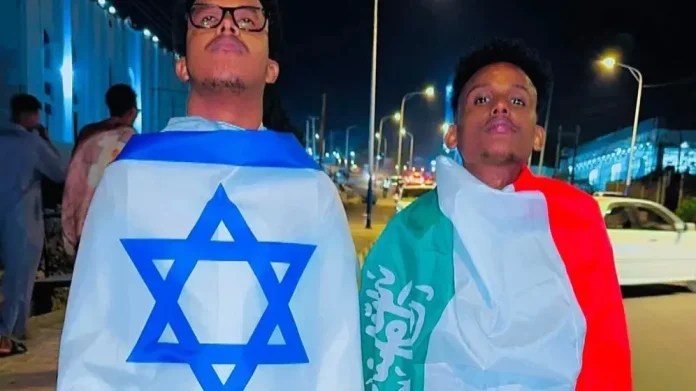
The Dissident | December 27, 2025
Recently, Israel became the first country to recognize Somaliland, a breakaway region of Somalia that declared independence in 1991 but until now has not been officially recognized by any UN member state.
But what is Israel’s real motive behind this move?
One motive appears to be the fact that Israel has taken part in negotiations with Somaliland to use the region as a place to relocate Palestinians ethnically cleansed from Gaza by Israel.
The Israeli newspaper Ynet, writing about Israel’s Recognition Of Somaliland, noted that, “The territory has recently been mentioned as a possible destination for Gazans, with officials there saying they would be willing to absorb ‘one million Gazans,’ though no formal agreement has been announced.”
Israeli journalist Amit Segal wrote, “Israel announced today its official recognition of Somaliland as an independent, sovereign state, in a joint declaration signed by the leaders and in the spirit of the Abraham Accords,” and went on to boast that “Somaliland was supposed to — and may still — absorb Gazans.”
A report from the Financial Times from March of this year reported that during a meeting with U.S. officials and leaders of Somaliland, “Washington had raised the possibility of relocating refugees from the US and Gaza”, adding that, “Israel was ‘in conversations’ with countries around the world, including in Africa, about taking in Gazans”.
An August report from the Times of Israel wrote that, “Israel is in talks with five countries — Indonesia, Somaliland, Uganda, South Sudan and Libya — about the potential resettlement of Palestinians from the Gaza Strip” and added, “‘Some of the countries are showing greater openness than before to accepting voluntary immigration from the Gaza Strip,’ a diplomatic source tells the outlet, naming Indonesia and Somaliland in particular.”
It noted that, “Somaliland is a breakaway region of Somalia that is reportedly hoping to secure international recognition through the deal.”
Previously, the Israeli newspaper, The Jerusalem Post, reported that Somaliland Foreign Minister, Abdirahman Dahir Adan, “does not rule out absorbing Gazan residents” but said that, “the most important thing for us is to receive recognition”, signalling that Somaliland would agree to Israel’s ethnic cleansing plan in exchange for recognition Of Somaliland.
Journalist Kit Klarenberg noted that forcibly sending Palestinians from Gaza into Somaliland would amount to forcing them “in yet another open air concentration camp”, noting that, “In late 2022, mass protests broke out in the contested Somalian city of Las Anod. Somaliland security forces crushed the upheaval using lethal force, leaving dozens dead” and adding that, “Somaliland’s appeal to Israel and its Western puppet masters as a dumping ground for Gazans is obvious. A well-armed repressive domestic security apparatus stands ever-ready to brutally quell any and all local resistance”.
Furthermore, Israel’s recognition of Somaliland will be a strategic boost to Israel’s war against Yemen’s Ansar Allah, or the Houthis, the resistance militia, which had put a naval blockade on Israeli ships in the Red Sea, in an attempt to force Israel to end the genocide in Gaza.
Mark Dubowitz, an official with the Neo-con think tank “Foundation for Defense of Democracies,” boasted that Israel’s recognition of Somaliland will aid their war on Yemen, writing, “For those mocking why Israel would engage Somaliland: look at the map. Somaliland sits on the Gulf of Aden, next to the Bab el-Mandeb—a chokepoint for global trade and energy. Across the water are Iran-backed Houthis firing on Israel and shipping. Somaliland offers stability, ports, intelligence access, and a non-Iranian platform on the Red Sea. Similar reason why the U.S. has a military base in Djibouti.”
The Israeli newspaper Ynet reported that, Israel, “has strong strategic interest in Somaliland due to its long coastline and location in the Horn of Africa, close to Yemen” adding that, “One reason Israel has taken a keen interest in Somaliland is its proximity to areas controlled by Yemen’s Houthi rebels … Strengthening ties with Somaliland is viewed in Israel as a potential force multiplier against the Houthis”.
The outlet wrote that, “Somaliland lies near the Bab el-Mandeb Strait, a key global shipping lane. Amid clashes between Israel and the Houthis following the war in Gaza, and against the backdrop of a US operation against the Houthis this year, waters near Yemen have become a danger zone for commercial vessels … Somaliland’s Port of Berbera, about 250 kilometers south of Yemen, is considered strategically significant in this context”.
Another article in Ynet reported that, “Israeli intelligence officials say the Mossad has been active in Somaliland for years, laying the groundwork for the recognition through long-standing, discreet relationships with senior figures there. Mossad chiefs have maintained personal ties with Somaliland officials, and Israeli officials hope the agreement will encourage additional countries to pursue strategic relations with Israel as part of a broader regional alignment” because, “One key factor driving Israel’s interest is Somaliland’s proximity to areas controlled by the Houthis in Yemen” adding that, “Strengthening ties with Somaliland is seen in Israel as a strategic force multiplier against the Houthis.”
Reports in Israeli media show that Israel’s real motive behind recognition of Somaliland is to ethnically cleanse Palestinians in Gaza, and to have a strategic boost to its war against the Houthis, one of the only forces left willing to fight in solidarity with Palestinians.
Hamas condemns ‘Israel’-Somaliland recognition
Al Mayadeen | December 27, 2025
The Islamic Resistance Movement – Hamas strongly condemned the announcement by the Somaliland administration on mutual recognition with “Israel”, describing it as a “serious precedent” and an attempt to gain “false legitimacy” from a fascist occupying entity.
In a statement, Hamas emphasized that “Israel” is responsible for ongoing war crimes and acts of genocide against the Palestinian people, and continues to face growing international isolation. The movement warned that the occupation’s plans, including the potential use of Somaliland as a destination for displaced Palestinians, represent a forced displacement campaign that Hamas fully rejects.
“Recognizing a separatist administration in Somaliland reflects the depth of the international isolation the Zionist entity suffers, due to the acts of genocide it has committed against our Palestinian people in Gaza,” the statement said.
The movement also commended Arab and Islamic countries that condemned the recognition, noting that it violates international law and threatens Somalia’s unity and sovereignty. Hamas further warned that such Zionist policies aim to destabilize Arab states, interfere in their internal affairs, and serve the broader colonial ambitions of “Israel”.
Israeli forces arrest writer and political researcher Sari Orabi
MEMO | December 26, 2025
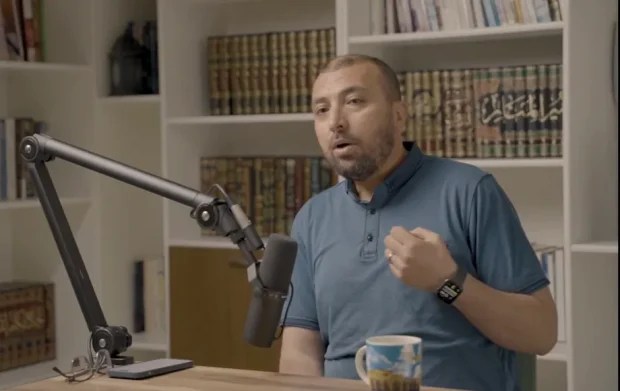
Israeli occupation forces arrested the writer and political researcher Sari Orabi after raiding his home at dawn on Thursday in the town of Rafat, north of occupied Jerusalem, according to local media sources.
The sources said Israeli forces carried out wide arrest raids early on Thursday across several areas of the occupied West Bank and Jerusalem. The raids targeted a number of young men and former prisoners after their homes were stormed, searched and damaged.
Sari Orabi is a writer and researcher specialising in politics and Islamic thought. His articles have been published in several newspapers, magazines, websites and research centres. He also regularly appears as a commentator on cultural, intellectual and political issues on a number of television channels.
In addition to Orabi, Israeli forces arrested Ibrahim Hourani after raiding his home in the city of Qalqilya. In the town of Aroura, north of Ramallah, they arrested Nasser Mufaraj and his son Amr, and re-arrested former prisoner Tayseer Khusaib following home raids.
The Palestinian Prisoners’ Media Office said the continued arrest campaigns show that Israeli policy targets academics, writers, former prisoners and young people alike, rather than a specific group. It said this reflects a clear attempt to suppress public awareness and social influence within Palestinian society.
Hamas calls for ‘impartial international probe’ into Al-Aqsa Flood operation
The Cradle | December 26, 2025
Hamas has released a 42-page document titled “Our Narrative,” calling for an “impartial” international probe into the Operation Al-Aqsa Flood, which took place on 7 October 2023.
The document also reiterates Hamas’s position on the false claims made by western and Israeli media in the aftermath of the attack.
“We challenge the Israelis to allow for an impartial international investigation into the claims of Israeli civilian deaths on 7 October, just as we challenge them to agree for an impartial, neutral international investigation into the crimes they have committed against the Palestinian people, particularly during their recent war on Gaza,” the document states.
“From the very first moment of the 7 October attack, the Israeli entity attempted to distort the truth. It launched a global disinformation machine, involving western media and Zionist lobby groups, to transform the legitimate military operation – which targeted the Israeli army’s Gaza Division, a military unit that had perpetuated killing and siege against Gaza – into claims about targeting civilians and children,” it added.
“We have previously discussed the Israeli allegations and lies propagated against the resistance, and there is no need to repeat them here, especially after their falsehood was proven by independent international investigations. However, because the Israeli entity´s leaders continue to brazenly repeat their lies, we affirm the following: Killing civilians is not part of our religion, morality, or education; and we avoid it whenever we can,” it went on to say.
In the first days after Operation Al-Aqsa Flood, Israeli media reported that Palestinian resistance fighters beheaded 40 babies. Former US president Joe Biden claimed he had seen pictures of “terrorists” beheading babies, and Israeli officials repeatedly made the accusation in interviews and public remarks.
The claims were picked up by major British news outlets and international media, but were quickly proven false – with even prominent Israeli journalists confirming that no evidence for beheaded babies existed.
Hebrew media also heavily focused on the narrative that Hamas fighters committed sexual assault against Israelis.
By January 2025, Israeli police were still unable to verify any accounts of rape on 7 October. The UN Special Rapporteur on Violence against Women and Girls, Reem al-Salem, said in November this year that “No independent investigation found that rape took place on the 7th of October.”
“For those who naively believe that Israeli perpetrators of sexual violence against Palestinians will ever be investigated and prosecuted, think again,” she added.
Since Operation Al-Aqsa Flood took place, Israel’s own media has disproven many of the initial claims made following the attack.
Significant amounts of evidence have emerged on Israel’s implementation of the ‘Hannibal Directive’ – a measure taken to prevent the capture of Israelis.
Israeli helicopters and tanks indiscriminately opened fire at the settlements that were stormed by Hamas fighters that Saturday, causing mass destruction and Israeli casualties, testimonies in Hebrew media have confirmed.
Just days after Operation Al-Aqsa Flood, a survivor told Israel’s public broadcaster KAN that “They eliminated everyone, including the hostages.”
When the interviewer asked if Israeli troops were responsible for civilian deaths, she responded: “Undoubtedly.”
Many Israeli captives were also killed by airstrikes while being held in Gaza.
The architecture of extermination: Why the Gaza genocide is premeditated and repeatable
By Ramzy Baroud | MEMO | December 26, 2025
Suppose we accept the fiction that none of us expected Israel to launch a full-scale genocide in Gaza—a premeditated campaign to erase the Strip and exterminate a significant portion of its inhabitants. Let us pretend that nearly eighty years of relentless massacres were not a prelude to this moment, and that Israel had never before sought the physical destruction of the Palestinian people as outlined by the 1948 Genocide Convention.
If we go so far as to accept the sterile, ahistoric claim that the Nakba of 1948 was “merely” ethnic cleansing rather than genocide—ignoring the mass graves and the forced erasure of a civilisation—we are still left with a terrifying reality. Having witnessed the unmasked extermination that began on 7 October 2023, who can dare to argue that its perpetrators lack the intent to repeat it?
The question itself is an act of charity, as it assumes the genocide has actually stopped. In reality, the carnage has merely shifted tactics. Since the implementation of the fragile ceasefire on 10 October, Israel has killed over 400 Palestinians and wounded hundreds more. Others have perished in the frozen mud of their tents. They include infants like eight-month-old Fahar Abu Jazar, who, like others, froze to death. These are not mere tragedies; they are the inevitable results of a calculated Israeli policy of destruction targeting the most vulnerable.
During this two-year campaign of extermination, more than 20,000 Palestinian children were murdered, accounting for a staggering 30 per cent of the total victims. This blood-soaked tally ignores the thousands of souls entrapped beneath the concrete wasteland of Gaza, and those currently being consumed by the silent killers of famine and engineered epidemics.
The horrifying statistics aside, we bear witness to the final agonies of a people. We have watched their extermination in real-time, broadcast to every handheld screen on earth. No one can claim ignorance; no one can claim innocence. Even now, we watch as 1.3 million Palestinians endure a precarious existence in tents ravaged by winter floods. We share the screams of mothers, the hollowed-out faces of broken fathers, and the haunted stares of children, and yet, the world’s political and moral institutions remain paralyzed.
If Israel resumes the full, unrestrained intensity of this genocide, will we stop it? I fear the answer is no, because the world refuses to dismantle the circumstances that permitted this slaughter in the first place. Israeli officials never bothered to hide their intent. The systematic dehumanisation of Palestinians was a primary export of Israeli media, even as Western corporate outlets worked tirelessly to sanitise this criminal discourse.
The record of intent is undeniable. National Security Minister Itamar Ben-Gvir openly championed the “encouragement of migration” and demanded that “not an ounce of humanitarian aid” reach Gaza. Finance Minister Bezalel Smotrich argued that the starvation of two million people could be “just and moral” in the pursuit of military aims. From the halls of the Knesset to the pop charts, the refrain was the same: “erase Gaza,” “leave no one there.” When military leaders refer to an entire population as “human animals,” they are not using metaphors; they are issuing a license for extermination.
This was preceded by the hermetic siege — a decades-long experiment in human misery that began in 2006. Despite every Palestinian plea for the world to break this death grip, the blockade was allowed to persist. This was followed by successive wars targeting a besieged, impoverished population under the banner of ‘security,’ always shielded by the Western mantra of Israel’s ‘right to defend itself.’
In the dominant Western narrative, the Palestinian is the eternal aggressor. They are the occupied, the besieged, the dispossessed, and the stateless; yet they are expected to die quietly in the world’s ‘largest open-air prison‘. Whether they utilised armed resistance, threw rocks at tanks, or marched unarmed toward snipers, they were branded ‘terrorists’ and ‘militants’ whose very existence was framed as a threat to their occupier.
Years before the first bomb of this genocide fell, the United Nations declared Gaza “uninhabitable.” Its water was a toxin, its land a graveyard, and its people were dying of curable diseases. Yet, aside from the typical ritual of humanitarian reports, the international community did nothing to offer a political horizon, a just peace.
This criminal neglect provided the vacuum for the events of 7 October, allowing Israel to weaponize its victimhood to execute a genocide of sadistic proportions. Former Defence Minister Yoav Gallant explicitly stripped Palestinians of their humanity, launching a collective slaughter directed by Prime Minister Benjamin Netanyahu.
The stage is being set for the next phase of extermination. The siege is now absolute, the violence more concentrated, and the dehumanisation of Palestinians more widespread than ever. As the international media drifts toward other distractions, Israel’s image is being rehabilitated as if the genocide never happened.
Tragically, the conditions that fueled the first wave of genocide are being meticulously reconstructed. Indeed, another Israeli genocide is not a distant threat; it is an encroaching reality that will be finalised unless it is stopped.
The 1948 Convention on the Prevention and Punishment of the Crime of Genocide was a legal vow to “liberate mankind from such an odious scourge.” If those words possess a shred of integrity, the world must act now to abort the next phase of extermination. This requires absolute accountability and a political process that finally severs the grip of Israeli colonialism and violence. The clock is ticking, and our collective voice—or our silence—will make the difference.
Israeli-UAE Aggression In Yemen Could Backfire Enormously
By Robert Inlakesh | The Palestine Chronicle |December 26, 2025
Although the Yemeni Armed Forces have halted their ballistic missile and drone attacks against Israel, adhering to the Gaza ceasefire, officials in Tel Aviv are continuing to insist that their front against Sana’a is not over.
Meanwhile, the United Arab Emirates (UAE) backed Southern Transitional Council (STC) has been busy seizing territory from Saudi-backed forces and signalling an intent to declare southern Yemen’s independence. Far from simply domestic disputes between armed groups, these developments will have major regional implications.
On December 3, the STC seized Hadramout province from forces aligned with Saudi Arabia, followed by a takeover of al-Mahra province. The UAE-backed separatists even went a step further, with a number of officials declaring their intent to break away and declare southern Yemen an independent state.
For context here, the UAE and Saudi proxies in Yemen were operating a joint governing body out of southern Yemen’s port city of Aden. For years, the Saudi-led coalition had attempted to prop up deposed Yemeni President, Abdrabbuh Mansur Hadi, with the backing of the US, UK, and Israel. Hadi was therefore referred to as the “internationally recognised” leader of the Yemeni State, when in reality he had no such power.
Despite the glaringly obvious fact that Ansarallah had set up and was operating a government in the nation’s capital, enjoying a lot of popular support, the United Nations continued to play along with the West’s demands to recognise Saudi’s puppet proxy regime. In 2022, Riyadh then created what is known as the Presidential Leadership Council (PLC), which was endowed with the powers of the Presidency and serves as the “internationally recognised government”.
The head of the PLC is a man named Rashad al-Alimi, who is an unelected leader and is part of the eight-member body. As of May 2023, three of the eight seats in the PLC were handed to officials belonging to the UAE-backed STC, which recently ran Saudi-backed officials out of Aden.
The STC’s recent territorial gains have posed an active security threat to Saudi Arabia and Oman, deepening the ongoing feud between Abu Dhabi and Riyadh. The UAE, for its part, also appears to have been sizing up an offensive campaign against Ansarallah at some stage, as it acts in coordination with the Israelis.
The recent developments in Yemen have triggered anxiety amongst Zionist analysts in Washington, as they see a UAE-Saudi conflict in Yemen between their proxies as detrimental to the fight against Ansarallah in Sana’a. In line with this way of thinking, the Washington Institute for Near East Policy (WINEP) recently published a Policy Analysis piece arguing that such a UAE-Saudi conflict should be avoided and instead both should focus on Ansarallah.
It is clear that the primary goal of the Israelis is to see their Emirati allies use the STC to try and seize the port city of Hodeidah, thus securing dominance over the Red Sea. This is important to Tel Aviv as it means weakening the Yemeni Armed Forces and preventing them from being able to effectively impose a blockade on their ships. Israel even pushed the Trump administration to launch a war in Yemen for over a month in an attempt to break the blockade in the Red Sea, which resulted in resounding failure.
The Zionist think-tank WINEP has warned that any conflict between Saudi proxies and Emirati proxies could open the door for Ansarallah’s forces to seize the oil-rich region of Marib, a major catastrophe for the Israelis and Americans. Yet, so far, no UAE-Saudi understandings appear to have come about to find any solution to their competition in Yemen.
Instead, the major agreement that was just brokered came between the Yemeni government in Sana’a and Saudi Arabia, the largest prisoner exchange deal since the beginning of the war. This meant agreeing upon the release of 1,700 Ansarallah detainees in exchange for 1,200 opposition prisoners.
Another important clarification is that the Ansarallah government is often labelled “the Houthis” in the Western media, and the Saudi proxy opposition is called the “Yemeni government”. This can sometimes get confusing, but it is important to point out that this propagandistic rhetoric is used to shape the conflict in a way that reflects Western bias, not the objective reality on the ground.
Some will try to argue that the Saudi proxy opposition is the “internationally recognised government” according to the United Nations, which is true, but again, this has little bearing on the reality on the ground. There simply aren’t enough powerful States or even smaller nations that are willing to bat for recognising the government in Sana’a, therefore the West and their Arab allies have managed to prevent any reflection of reality reaching the United Nations or even the international media.
At this phase, the UAE’s STC appears to be in control of the majority of opposition-held territory in Yemen, greatly undermining Saudi Arabia’s role. However, the STC is not exactly a movement with the popular support to sustain and operate a lasting, or stable, southern Yemeni State. The STC has faced countless protests against their rule, after failing to deliver even basic services to the people living under its control. Blatant corruption, combined with criminal activities and a lack of basic governing skills, has left people with very little. Even in the Hadramout and al-Mahra provinces, there is significant opposition that could lead to their swift overthrow.
Amidst this, if the STC decides to commit to offensives against the Yemeni Armed Forces of Ansarallah, the strategy to defeat the UAE-proxy forces is rather simple. Ansarallah will not only most likely batter these armed militants on the ground, but need only direct drone and missile fire towards the real headquarters of the STC, Dubai. If ballistic and cruise missiles, along with drones, flood Dubai and Abu Dhabi, the Emirati plot will quickly collapse.
When it comes to Saudi Arabia, it is a much larger nation and has the capacity to endure a lot more than the much smaller Emirates, making Riyadh a more formidable foe than Abu Dhabi. If the STC proxy forces become the main opposition and Saudi Arabia can no longer maintain any significant foothold in Yemen, the recipe for Yemeni unification becomes much simpler.
A war between Ansarallah and the STC has a very easy solution: flooding the UAE with missiles and drones for a sustained period, which will force them to give up and depart from Yemen. If this happens, Riyadh will have no choice but to reach a broader agreement with Sana’a, effectively ending the war altogether.
In the eyes of the Israelis and the United States, this outcome would be a catastrophe. If Ansarallah, even under a power-sharing styled agreement, reigned supreme over all of Yemen and became its officially recognised leadership, it would significantly increase its power and pose an even greater threat to Israel. In Tel Aviv’s eyes, this would be Iran 2.0 in the Arab World, an Islamic government that is openly hostile to Israel and a staunch supporter of the Palestinian resistance.
No matter which way you slice it, the US and Israel have no answer for the predicament they face in Yemen. The only option is to try and keep the nation in perpetual war, tightening the sanctions and ensuring immense suffering amongst its civilian population, all to avoid the inevitable rise of an Ansarallah-controlled Yemeni State, equipped with a military arsenal that will continue to develop.
Featured Video

More Iran War fallout: Maritime insurance industry shifts from London to China
or go to
Aletho News Archives – Video-Images
From the Archives
The Biggest Threat to Peace in Middle East
By Dr. Elias Akleh* | Sabbah Report | May 24, 2010
A build up of heightened tension in the Middle East is escalating in the last few weeks. American and Israeli postures towards Lebanon, Syria, and Iran have become more threatening. Listening to speeches of political leaders one hears talks only about war not peace. Iranians and Israelis are continuously training hard for a possible showdown. Both sides are conducting extensive war games every month. This led Syrians to claim that Israel is preparing for a soon-to-come another war. The Jordanians also are warning that current stalemate of the peace process is an indication of a war breaking out this summer. The Russian President and his army chief hinted, a few months ago, that the US and Israel were planning for an attack on Iran.
Indeed Iran is, as it has been for last few years, the target of most of the threats and accusations of supporting terrorism. Escalating incitement against Iran the American Defense Department sent last month (April) to Congress a report on Iran’s military claiming Iran could develop intercontinental ballistic missiles capable of reaching the US by 2015.
Ignoring the fact that N. Korea, India, Pakistan, and Israel are proven to have nuclear weapons while Iran does not, the US Secretary of State Hillary Clinton chose in her speech, to the nuclear Non-Proliferation Treaty review conference at the UN, to focus on Iran’s alleged nuclear ambitions putting the whole world at risk as she put it. According to Clinton Iran’s acquisition of nuclear weapons, rather than Israel’s more than 200 nuclear bombs, is destabilizing the Middle East. She called on the world’s nations to rally around US efforts to hold Iran, not other nuclear countries, to account.
The accusation that Usama Bin Laden is living comfortably in Iran had received a boost after the broadcast of a documentary called “Feathered Cocaine”. This echoed the June 2003 claims of the Italian newspaper Corre de la Sierra that Bin Laden was in Iran according to some intelligence report, and according to Richard Miniter’s book “Shadow War”. … continue
Blog Roll
 Aletho News
- Japan Clings to US Vassalage Despite Energy Crunch Caused By Iran War
- US Seeks Control Over Global Energy Infrastructure – Kremlin
- US senators target Orban government for standing up to Zelensky
- The deep-rooted culture of corruption in Ukraine
- Iran mobilizing one million soldiers to ‘create hell’ for any US ground assault: Report
- The coming military and psychological unravelling?
- Iran has the last laugh
- More Iran War fallout: Maritime insurance industry shifts from London to China
- US-Israeli aggression on Iran triggers review of GCC countries’ investment pledges to Washington
- Russia slams UK plan to seize tankers suspected of carrying its oil
- If Americans Knew
- Reports: Iran mobilizing 1M fighters, Israel-US run low on ammo, Israeli army faces shortage – Not a ceasefire Day 168
- ‘No Innocent Children’: Far-right Israeli Lawmaker Defends Killing of Palestinian Family
- Mossad’s promises helped Netanyahu convince Trump that Iran could be toppled
- US Arms Control Official Refuses To Comment When Asked If Israel Has Nuclear Weapons
- Veterans warn US landing could be ‘more Gallipoli than Vietnam’
- Israel may be committing war crimes in Lebanon – Not a ceasefire Day 167
- In the West Bank, life is a constant battle – 3 articles
- Jacob Reses, one of the most powerful pro-Israel operatives in Trump’s Washington
- Israeli-US assaults kill or injure 87 children a day – Not a ceasefire Day 166
- ‘Forever live by the sword’: Understanding Israelis’ massive support for Iran war
- No Tricks Zone
- Devastating Assessment Of Comirnaty Vaccine By Former Senior Pfizer Europe Toxicologist
- New Study: CO2 Is ‘Effectively Negligible’ As An Explanatory Climate Change Factor Since 2000
- Former Pfizer Toxicologist Dr. Helmut Sterz Tells Bundestag Hearing Pfizer Vaccine Should Have Never Been Approved
- Energy Expert: Germany’s Nuclear Phaseout Was A “500 Billion Euro Mistake”
- New Research: South Australia’s Mid-Holocene Sea Surface Temperatures Were 4°C Warmer Than Today
- Storing Green Energy To Last Germany 10 Days Would Require A 60-Million Tonne Battery
- New Studies: UK Sea Levels Were 4 Meters Higher Than Today During The Mid-Holocene
- Destructive Green New Deal: German Energy And Metal Group Warns Of Drastic Crisis
- New Study Documents A 20-Year Pause In Arctic Sea Ice Decline – Driven By Internal Variability
- Wake-up Call: Survey Shows Majority Of Germans Now Favor Postponing Climate Targets!
 Aletho News