Israeli forces launch fresh ground incursions into Syria’s Quneitra, interrogate locals
Press TV – June 18, 2026
While Israeli military incursions and activities in southern Syria, along with harassment of local citizens under the inaction of the ruling Hay’at Tahrir al-Sham (HTS) regime, have become recurrent over the past year, Syrian sources have detailed a recent ground incursion.
The sources stated that Israeli forces, onboard nine military vehicles, raided the village of al-Asbah on the outskirts of Syria’s southwestern province of Quneitra near the occupied strategic Golan Heights early on Thursday.
Israeli forces on Wednesday carried out a series of raids on residential homes in the southern countryside of Quneitra, including the interrogation of a local journalist.
Local sources said the incursion targeted ten homes in the town of Saida in southern Quneitra countryside.
Among the properties searched was the home of Sanad al-Hindawi, a journalist and employee of the Quneitra Media Directorate. Sources said Israeli soldiers questioned Hindawi inside his residence during the raid.
No arrests were reported during the incursion.
The raids came two days after Israeli forces broke into the village of Saida al-Golan in southern Quneitra countryside, and established a temporary checkpoint at the village junction, where pedestrians and passing vehicles were subjected to inspections.
Following the fall of former Syrian President Bashar al-Assad’s government in early December 2024, the Israeli military has been conducting airstrikes targeting military installations, facilities, and arsenals previously operated by the Syrian army.
Israel has faced widespread criticism for ending the 1974 ceasefire agreement with Syria and taking advantage of the chaos in the war-torn nation to seize territory.
The UN, along with several Arab nations, condemned Israel’s actions as breaches of international law and violations of Syria’s sovereignty.
Despite the HTS’s pledges of cooperation with Tel Aviv, Israel has remained unwilling to withdraw from Syria.
The two sides have been engaged in on-and-off talks to reach a “security agreement”, but no deal or concrete progress has been announced.
Israeli prime minister Benjamin Netanyahu has ordered his forces to push deeper into Syrian territory beyond the 1967-occupied Golan Heights and seize several strategic locations.
The bulk of the Israeli attacks have been concentrated in the southern Syrian governorates of Quneitra, Dara’a, and Damascus, which account for nearly 80 percent of all recorded Israeli attacks.
Syria ‘unwilling, unprepared’ to attack Lebanon despite US pressure: Report
Damascus is reportedly prepared to reconsider its position if Tel Aviv were to withdraw its occupation troops from Syria
The Cradle | June 17, 2026
Syrian President and former Al-Qaeda chief Ahmad al-Sharaa is “unprepared and unwilling” to launch a military offensive against Lebanon despite growing US pressure, Israel’s Broadcasting Corporation (KAN) reported on 16 June.
KAN cited an informed Syrian source who said that Sharaa is “concerned” that an attack by Damascus against Hezbollah will be seen across the region as “serving” Israel’s interests.
This could negatively impact Damascus’s “legitimacy.”
For now, the self-appointed Syrian president is ruling out an attack against Lebanon and its resistance forces unless Israel decides to pull its forces out of Syria, the report states.
Israel has rejected withdrawal from both Syria and Lebanon.
KAN also said that Turkiye – a longtime backer of Sharaa since his days as Abu Muhammad al-Julani, founder and leader of Al-Qaeda’s Nusra Front – has urged Damascus against such an incursion.
Ankara is reportedly concerned that a Syrian assault on Lebanon would “embolden” Tel Aviv and “strengthen” its position.
“Trump proposed a framework in which the Syrian military would play a central role in a future effort to disarm Hezbollah,” i24 reported on Wednesday.
Lebanese authorities reportedly felt uneasy about the idea during recent US-backed direct talks with Israeli officials, which have taken place despite Lebanon’s legal restrictions.
Additionally, Israeli authorities are reportedly concerned about the effectiveness of a Syrian attack on Hezbollah.
“Some of the arrangements currently under discussion could ultimately strengthen Hezbollah politically and militarily rather than diminish its influence,” i24 reported.
Sharaa said earlier this week that talk of a Syrian incursion into Lebanon was a “rumor.” “Syria’s approach aims to end the war in Lebanon, not to expand it or get involved,” he stressed.
US President Donald Trump has repeatedly called on Syria to attack Hezbollah.
Iraqi resistance groups allied with Hezbollah have cautioned the Syrian government and its forces that they will act if Damascus initiates an attack on Lebanon.
Syria experienced a significant geopolitical change following the fall of former President Bashar al-Assad in December 2024, as Sharaa’s government aligned with Washington and engaged in discussions with Israel.
The US has largely lifted sanctions on Syria and called Damascus a “partner” in the global fight against ISIS — overlooking Sharaa’s past as an Al-Qaeda leader and earlier as deputy to ISIS founder Abu Bakr al-Baghdadi.
Hezbollah fought in Syria for years with the former government, helping recapture areas from extremist groups like Al-Qaeda’s Nusra Front, Ahrar al-Sham, and others considered by the west as the “Syrian opposition.”
The Nusra Front, led by Sharaa, was rebranded into Hayat Tahrir al-Sham (HTS) and ended up toppling Assad’s government in 2024.
HTS and other extremist factions with links to ISIS currently dominate what has become the new Syrian Defense Ministry and military.
Tom Barrack, US special envoy to Syria and Iraq, threatened Lebanon last year with a Syrian incursion, and said Damascus would “actively assist us in confronting and dismantling … Hezbollah.”
He also said Syria viewed Lebanon as its “beach resort” and would carry out an assault against the country unless Hezbollah is disarmed.
Hezbollah thwarts Israeli advances into Kfar Tebnit-Ali al-Taher
Al Mayadeen | June 18, 2026
The Islamic Resistance in Lebanon – Hezbollah released a detailed statement regarding confrontations along the Kfar Tebnit-Ali al-Taher axis in South Lebanon, after four days of failed Israeli attempts to advance toward the area via multiple axes under the cover of aerial surveillance, heavy artillery, and smoke screens.
The Operations Room stated that its fighters have consistently engaged all Israeli advance attempts by targeting troop movements and concentrations with rockets, drones, and FPVs, inflicting significant losses in personnel and equipment among Israeli officers, soldiers, and armored vehicles.
It added that, as a result of these engagements, Israeli occupation forces were compelled to withdraw and conduct nighttime helicopter evacuations under smoke cover and artillery fire to recover casualties.
According to the statement, on Wednesday, June 17, at 8:00 pm, following the detection of an Israeli infantry unit attempting to establish positions on the northeastern outskirts of Kfar Tebnit, Resistance fighters engaged the force using a swarm of drones and Ababil FPV drones, confirming casualties among its members, including killed and wounded. The operation was subsequently followed by rocket salvos and artillery fire directed at the same area.
Several hours later, at approximately 01:50 am on Thursday, June 18, amid enemy attempts to regroup in a crossing area, Hezbollah fighters targeted a Merkava tank with the appropriate weapons, achieving a direct hit and forcing the withdrawal of the Israeli force from the sector.
The Resistance confirmed that Israeli occupation forces remain present on the southern outskirts of Kfar Tebnit toward Arnoun, vowing that the Kfar Tebnit–Ali al-Taher axis will remain inaccessible to enemy advances.
The operations come as Hezbollah defends Lebanese territories from ongoing Israeli violations of the April 17 ceasefire and the memorandum of understanding reached between the United States and Iran, which clearly stipulates “Israel’s” withdrawal and cessation of attacks in Lebanon.
The final war or final deal: Why the MoU?
By Robert Inlakesh | Al Mayadeen | June 18, 2026
The Israeli-US plot to inflict “regime change” upon Iran has been turned into a strategic failure of historic proportions – in the end, Washington and Tel Aviv were forced to confront the reality. The newly signed Memorandum of Understanding is either a gateway to a final deal or simply another strategy to buy time.
Forty days of all-out war, followed by two months of dead-end negotiations, led to two final options: Submit to a deal that works heavily in Iran’s favour or keep on fighting until the end. What ultimately comes of this equation will completely reshape West Asia and perhaps geopolitics globally.
US President Donald Trump had tried every single avenue to pressure the Islamic Republic of Iran into surrender. He suddenly found himself in a new phase where the walls were closing in and decided to make a diplomatic move. The Iranians managed to reunite their allied fronts across the region, taking de facto ownership of the Strait of Hormuz, while proving they can fight the world’s top military superpower to a standstill.
If you were to listen to the rhetoric coming from the White House, it was like hearing a radio broadcast from a parallel universe. According to Trump, Iran was defeated all the way back in March, its military is destroyed, nobody knows who is running the country, it has no air defenses, no missiles left, no navy, and is on the verge of collapse. But quite frankly, nobody bought his nonsensical ramblings.
Beneath the egotistical exterior is a system that was running out of gas and whose operator was in panic.
In order to accurately assess the situation, we have to factor in precisely why the US leader is managing this war so incredibly poorly. The Trump administration is not composed of competent and experienced individuals; it’s a who’s who of Israeli Lobby shills and hardline ideological fanatics – a tech billionaire’s dream administration. While the Israeli Lobby and other lobby groups have for long had sway over American presidents and foreign policy, it has never been this severe.
Donald Trump exemplifies this through his total incompetence and constant inability to say no to the Israelis when it matters the most. There is, after all, a reason why no other US president agreed to go to war with the Islamic Republic upon the request of Israeli Prime Minister Benjamin Netanyahu, even when Iran was far less prepared for it militarily.
Finding out the hard way, the US president found himself caught in a quagmire– if he escalated the war, then the entire region would go up in flames, but if he backed out, he would face the wrath of the same billionaire class that put him in power to begin with.
The Zionist regime can’t defeat the Iranians alone, nor does it believe that the US will defeat Tehran conventionally. Yet, the Israeli leadership does not want to give up, for if they fail, then the Iranians will become the dominant regional power and the “Greater Israel Project” will not be able to succeed.
Therefore, they are only really left with two actual options, both involving the United States: The first is a fight to the death that could go so far that nuclear weapons become involved; the second is a large-scale attack on Iranian infrastructure.
The second option is more likely to be favoured by the Israelis than the first, and its goal will be to continue battering Iranian civilian infrastructure until the Israelis can’t take the punishment coming back its way any longer. For the US, this would represent a catastrophe, because the Iranians have long pledged to wipe out the entire region’s oil and gas infrastructure, even going after water desalination and power plants if it comes down to it.
For Washington, this means their Gulf allies will be destroyed. Keep in mind that the Trump administration previously bragged about the alleged Trillion that the Gulf Arab States had pledged to invest in the United States. All of that is gone overnight, and a global economic meltdown would be underway. Trump personally has a lot of investments in the Gulf, which means sacrificing this too.
The Israelis, on the other hand, want the Arab Gulf States weakened. This is for the very same reason they threaten Turkiye constantly – they do not want any potential competitors. Tel Aviv doesn’t even like other regional nations, who are their allies, to get the latest US fighter jets. So, the hypothetical annihilation of rich Gulf States doesn’t likely bother them at all.
As long as the primary goal is achieved, they will be happy. They want a weakened and battered Iran, an Islamic Republic that is susceptible to future color revolutions, one that can no longer impose deterrence equations. But the Americans were facing an economic tidal wave and had no good options in front of them.
If a deal is signed on the terms of the Iranians as a result of the MoU, the Israelis have been strategically defeated. The war that began on October 7, 2023, would have been completely lost for them, and they will only have two options available to them: try to linger on and delay the inevitable implosion of their expansionist project, or sign a deal with the Palestinians in order to allow for a State of Palestine to come into existence. Realistically, the so-called “Two-State solution” is their only hope of long-term survival. All of this assumes they won’t simply blow the deal up before it can come to fruition.
Trump leverages illegally frozen Palestinian funds to force normalization, halt legal cases against Israel
The Cradle | June 17, 2026
US President Donald Trump is seeking to leverage severe Palestinian financial hardship to coerce a “normalization” agreement that would require the Palestinian Authority (PA) to drop all international legal challenges against Israel, the Times of Israel reported on 17 June.
This proposed memorandum of understanding (MoU), negotiated by US officials Aryeh Lightstone and Scott Leith, demands the Palestinian Authority (PA) “halt efforts to internationalize the conflict with Israel.”
In exchange for these concessions, Washington has offered the hollow possibility of reopening the Palestine Liberation Organization (PLO) mission in Washington and lifting sanctions, but only after the PA completes a series of “Saudi-chaperoned reforms.”
The PA has further requested language in the MoU calling for a cessation of Israeli settlement expansion and a crackdown on “rampant settler violence” in the occupied West Bank.
Central to these talks is the fate of over $5 billion in Palestinian tax revenues, which Israel has been illegally withholding for over a year in violation of the Oslo Accords.
The US seeks to redirect these funds to the “Board of Peace” and its National Committee for the Administration of Gaza (NCAG) to finance a post-war governance plan that bypasses the PA until it meets Washington’s benchmarks – including the dissolution of the PA’s welfare program for the families of Palestinians killed or imprisoned by Israeli occupation forces.
While the PA has agreed in principle to this diversion to secure a fraction of its own money, Israeli Finance Minister Bezalel Smotrich has blocked the transfer, openly advocating for the “collapse of the PA” and rejecting even debt-settlement transfers in a deliberate effort to ensure the total financial strangulation of Palestinian governance.
Despite external audits confirming the PA has successfully reformed its welfare system to end payments based on attacks, a US Department report, relying on Israeli data, claimed the PA still provides “compensation in support of terrorism.”
As the US explores legally thin options to unilaterally seize Palestinian funds, officials admit the administration views the West Bank as an “afterthought” while prioritizing the expansion of the Abraham Accords.
The art of the recycled deal: Trump and the outcome Israel cannot tolerate
By Jamal Kanj | MEMO | June 17, 2026
There are many lessons to be learned from the latest made-for-Israel war on Iran. The first and most damning is that the war resolved the very crisis it created. Donald Trump celebrated the reopening of the Strait of Hormuz and the lifting of the blockade against Iran. Two conditions that were fully in place before Benjamin Netanyahu dog walked Trump into this war. The agreement that concluded the war took us back to exactly where we stood before America spent $200 billion, and where Americans continue to pay Israeli surcharge tax at the pump and grocery stores.
As for Iran’s nuclear program, the arithmetic does not lie. The 400 kilograms of 60-percent enriched uranium that Iran possessed were zero before Trump — pressured by his largest Israel-first donors — tore up the Joint Comprehensive Plan of Action (JCPOA) in May 2018.
According to the International Atomic Energy Agency, Iran had fully complied not only with the IAEA non-proliferation agreement, which Israel has never signed nor accepted, but with the additional protocols governing verification and monitoring of its civilian nuclear program.
Trump canceled the deal anyway, not because it failed America, but because it did not satisfy Israel’s veto.
The deepest irony is that Iran’s nuclear knowledge and capabilities are more advanced today than when Trump discarded the JCPOA. Any new agreement — even one stricter in structure than the original — is therefore being negotiated from a fundamentally weaker position than the one that existed in 2018. No treaty can unlearn what Iran already knows.
On Monday, June 15, Trump heralded the end of war bragging that Iran agreed not to develop nuclear weapons. In a leaked copy of the supposed Memorandum of Understanding (MoU), item 8 states: “The Islamic Republic of Iran reiterates that it will never produce nuclear weapons ...” The word reiterates is not incidental. It is a direct reference to Article III of the 2015 JCPOA, which Trump most likely never read, where Iran had already affirmed: “… that under no circumstances will Iran ever seek, develop or acquire any nuclear weapons.” Same commitment. Same language. Different signatures. Twelve weeks of a war that went nowhere to get here.
From “There will be no deal with Iran except UNCONDITIONAL SURRENDER!” to celebrate an MoU to reopen a Strait that was open before $200 billion and countless American and Iranian lives were squandered. Trump’s triumph is much ado about nothing.
He canceled an existing deal that took years to negotiate, inflicted economic hardship on ordinary Iranians, and allowed Iran’s nuclear advancement to leap forward. It is, in the most literal sense, like redefining water as H2O. The molecule did not change. Only the dressing did. Israel’s war took Trump back to the starting point, at twice the cost to American taxpayers.
The same special-interest group that pushed Trump to cancel the JCPOA, lobbied him long before the 2024 election. Israel-first donors poured hundreds of million into his campaign as a down payment for this war. Netanyahu visited Trump seven times in thirteen months, manipulating, and scheming for another made-for-Israel war.
This war should also carry a lesson for the Arab Gulf states that long believed American military bases were a guarantee of their security. Instead, they found themselves sidelined and never consulted on a war waged, directly or indirectly, from their own soil, ultimately in service of an Israeli agenda. Foreign military presence does not deliver security. It delivers dependency. Lasting regional stability is built through regional cooperation, on terms beneficial to the region.
More importantly, the region must now reckon with a pattern it can no longer afford to ignore: wherever Israel goes, instability follows. The so-called Abraham Accords brought Israel into the Gulf. What followed was bombs, drones and economic ruins never seen since the Second World War.
I have lived in the Gulf. The only pop people could hear was the backfire of an aging car exhaust. In the last three months, friends shared recordings of ballistic missiles splitting the sky and drones buzzing overhead. Israel did not bring a defense shield; it brought a target. Its presence is a magnet for unrest. It is a carcass attracting wasps.
In fact, Israel is an agent of disorder and a parasite nurtured by chaos. It wraps itself in the language of partnership, mutual benefit, and shared values, deceiving others into believing the arrangement is reciprocal when it is entirely one-directional.
Israel’s record speaks for itself: a genocide in Gaza, ethnic cleansing across the West Bank, 1.3 million internal refugees in Lebanon, the occupation of Syrian land following Assad’s fall, destabilization operations in northern Iraq and Sudan.
In Iraq, the American invasion and regime change did not satisfy Israel’s insatiable lust for total chaos. It targeted Iraqi scientists and waged war against knowledge itself. The blueprint, in this view, has not changed for Iran. Israel’s dissatisfaction over the MoU with Tehran is not that it fails to produce a non-nuclear Iran, but that it fails to wipe out knowledge. Its broader objective is the suppression of scientific and technological development across the region. Israel seeks neighbors unable to think independently, consume, not produce, import rather than innovate. It wants to maintain a monopoly over nuclear capabilities and control over regional scientific advancement.
Israel brought ruins to the U.S., too. The made-for-Israel Iraq war helped detonate the financial crisis of 2008, saddling future American generations with trillions in accumulated debt that has never been fully reckoned with. A war that Trump condemned, criticizing Democratic leadership for failing to impeach George W. Bush who “got us into the war with lies.”
The cost of current Trump’s made-for-Israel war on Iran requires no economist to explain. It arrives uninvited in every American home, at the meat counter, in every grocery bill, every gas receipt, every price that keeps rising without explanation. They may not realize its extent, yet. By the time they do, the damage to the U.S. economy, as in 2008, will be too deep to reverse.
To undermine potential peace with Iran, the ungrateful Israel-first loyalists like Ben Shapiro, Mark Levin are already panicking and challenging Trump’s MoU. Israel will activate the constellation of media outlets controlled by Israel-first billionaires to shape what Americans see, read, and are permitted to question. The once-respected 60 Minutes, under a new Israel-first boss, Bari Weiss, allows Netanyahu to handpick his own interviewer. Who knows, maybe he submits his own questions, too.
Now, Netanyahu and American Zionists have sixty days to sabotage a final deal with Iran. Israel will mobilize its donors, lobby Congress, and if that fails, resort to what it has perfected. A false flag operation against American forces in the region, or another assassination in Lebanon.
A conflagration ensues, and once again, it will be fought with American money and American lives. Because a Middle East free of American military entanglement is the one outcome Israel cannot tolerate — a prospect more threatening than any Iranian nuclear centrifuge.
Pax Iranica? The end of uncontested U.S. military hegemony
By Raphael Machado | Strategic Culture Foundation | June 17, 2026
Anyone would be skeptical about the sustainability of the “peace” taking shape in the Middle East from the Memorandum of Understanding to be signed between Iran and the United States in a few days. It is plausible that it may not even be signed. And even if it is signed, considering that it involves a gradual, phased unfolding of a peace process that would last at least two months, it is hard to believe that everything will go as intended by the parties and the Pakistani mediators.
Nevertheless, in the terms that this “peace” is presented and which have been accepted by the U.S., we are facing an overwhelming victory for Iran. Even if the diplomatic process is derailed, nothing will change the fact that the U.S. accepted peace with Iran on terms unilaterally favorable to the Persians, leaving Tehran in a much stronger position than before the war began.
First of all, the U.S. failure should be seen as obvious and rests on a very simple assessment: Washington failed to achieve any strategic objective in the conflict with Iran: the “regime” was not overthrown, the nuclear program was not destroyed, military capabilities were not eliminated, support for the Axis of Resistance was not liquidated, and finally, it was not possible to reopen the Strait of Hormuz by force.
The U.S. committed the most basic error of any conflict: misjudging the balance of power. And in this, naturally, the U.S. was led into error by Israel and its allies within the U.S.. From the start, reports indicate that the Pentagon opposed military action against Iran, for good reasons.
Even considering the tactical and operational dimensions, the U.S. was unable to impose itself as intended. The U.S. failed to achieve air superiority over Iran and resorted to launching missiles from outside Iranian airspace. Most times the U.S. penetrated Iranian airspace, they encountered anti-aircraft systems capable of shooting down even F35s. The U.S. also could not take advantage of its regional military bases, which were harassed and operationally neutralized by barrages of missiles and drones, complicating U.S. logistics and forcing them to use increasingly distant bases. Iran also managed to force U.S. aircraft carriers to keep their distance, with one returning to port for maintenance. Furthermore, the U.S. demonstrated that it is not yet ready to face a war in which drones play a central tactical role. But perhaps the most significant embarrassment was the fact that Iran forced the U.S. to confront its own industrial shortcomings—the U.S. expended large quantities of Tomahawks, Patriots, and other types of offensive and defensive missiles, which are produced at a trickle. The fact that U.S. missile stocks plummeted rapidly without any objective being achieved was certainly decisive for U.S. reluctance to restart the conflict.
There was also the poorly explained situation involving the destruction of several aircraft and helicopters in an alleged attempt to rescue a downed pilot (a pilot who was simply never seen again and was not even reliably identified). The fact that the ceasefire came just days after this alleged rescue operation suggests that the story is very poorly told and that perhaps that was a failed special forces operation to seize Iran’s enriched uranium.
That is precisely why reducing the issue to “control of the Strait of Hormuz” is nothing short of amateurish, since control over the Strait itself was only possible because Iran surprised the U.S. tactically through its ability to present challenges for which the U.S. had no answers and to deny the U.S. certain important military advantages on that terrain.
Naturally, control of the Strait of Hormuz had a significant impact on the conflict, making it more complex and a global issue. Carrying out attacks against Arab Gulf countries rather than just U.S. and Israeli targets followed the same logic of demonstrating power and turning the conflict into a broader, more complex problem. This stance alone forced Qatar to concede and seek a separate peace and rapprochement with Iran.
Now, if pointing out the U.S.’s inability to achieve its objectives, as well as its tactical difficulties, is not enough to demonstrate its defeat by Iran, then the imbalance of the Memorandum of Understanding, which represents a draft peace treaty, is certainly sufficient proof.
The Memorandum is scheduled to unfold in three phases. The first immediate result is the end of military actions on all fronts and the end of the U.S. naval blockade. The situation in Lebanon is already extremely uncertain due to the “Joker factor” that is Israel. But the end of the naval blockade, which is already a reality, has left the Strait of Hormuz under Iranian control, and even if Iran does not charge a “toll,” it is already charging a “service fee” to authorize ship transit.
The next phase, lasting 30 days and beginning after the Memorandum is signed, involves a U.S. promise not to increase its military presence around the Persian Gulf, the return of $12 billion in frozen assets to Iran, the immediate removal of sanctions on Iranian oil, gas, and petrochemical exports, confirmation of joint management of the Strait of Hormuz by Iran and Oman, and a U.S. promise to pressure Israel to withdraw from Lebanon. In return for all this, Iran promises not to seek to develop or acquire nuclear weapons.
And in the final phase, expected to last at least 60 days, the return of the remaining $12 billion in frozen assets, the granting of $300 billion for the reconstruction of Iran (equivalent to reparations), and the beginning of the process of removing all remaining sanctions. In return, Iran promises to agree to discuss its uranium enrichment.
In short, Iran’s obligations under this Memorandum are minimal, while the commitments undertaken by the U.S. are disproportionate. Why take on all these commitments and accept all these conditions if the U.S. “won“—as Trump says—and could “destroy Iran at any moment”?
The reality is that between an international oil crisis, low missile stockpiles, the resilience of the Iranian population, and difficulty dealing with hypersonic missiles and drones, the U.S. suddenly found itself in a potential quagmire capable of causing infinitely greater harm than any conceivable benefit. Perhaps finally aware of the mistake of starting this conflict, with very low popularity, hosting a World Cup, and worried about a myriad of internal and external crises, Trump seems eager to get rid of the “Iranian issue.”
What is proven here is that although the U.S. remains a military superpower, it is possible to defeat them under certain specific conditions and with sufficient preparation. We are not saying here that any country could defeat the U.S. in a war, but that regional powers of a certain scale, immunized against color revolutions and with years of military preparation and investment in technologies capable of negating the potential of the U.S. Navy and its air superiority, can defeat them in a defensive war.
Having recently gone through the “unipolar moment” of uncontested U.S. superiority in the post-Cold War era, whose highest expression was the rapid destruction of Saddam Hussein’s regime, clearly the world is no longer the same, which in itself is proof that we are in a phase of geopolitical transition toward multipolarity.
Weakened in the Middle East, Iran is left in control of the Strait of Hormuz. Its ability to simultaneously confront all the Arab Gulf countries has been proven, and Israel’s inability to defeat Iran without U.S. help has been as well. This opens up for the Middle East the possibility of a regional pax Iranica, though much water will yet flow under this bridge.
Israel, however, remains a problem. Driven by a messianic ideology and accustomed to being treated with privileges derived from the influence of its diaspora, Israel does not appear willing to respect the terms of the Memorandum, nor to give up trying to establish a Greater Israel by force of arms. It is the Israeli factor that makes it difficult to fully realize a peace agreement between Iran and the U.S..
UN: Israel continues to violate Lebanon airspace in defiance of Iran-US MoU
Press TV – June 16, 2026
The United Nations has reported ongoing Israeli military offensives in southern Lebanon, including projectile launches and repeated violations of airspace, though it recorded a decrease in overall violence following a memorandum of understanding between Iran and the United States.
UN spokesperson Stephane Dujarric said during a news conference on Monday that the UN Interim Force in Lebanon (UNIFIL) had “observed a decrease in violence and exchanges of fire” from midnight until 4 p.m. local time.
UNIFIL also documented “133 trajectories of projectiles and 2 airstrikes” conducted by Israeli forces, while noting “no trajectories from Hezbollah or non-state actors.”
Dujarric further explained that peacekeepers had recorded 25 violations of Lebanese airspace by Israeli forces, with a cumulative overflight duration of “approximately 40 hours.”
“Prior to the announcement of the agreement yesterday between the US and Iran, our UNIFIL peacekeepers noted 135 violations of Lebanese airspace by the [Israeli military], with a total overflight time exceeding 222 hours,” he stated, adding that the peacekeeping mission had recorded a total of “1,374 trajectories of projectiles over the weekend, with 1,328 attributed” to Israeli forces.
Regarding the humanitarian situation, Dujarric highlighted the prevailing uncertainty on the ground, stating, ”Some families have reportedly begun to return to their homes or are evaluating the conditions in communities in parts of southern Lebanon, particularly in Nabatieh.”
“However, no large-scale returns have occurred thus far,” he added.
On Monday evening, Iran’s Supreme National Security Council announced that the memorandum of understanding (MoU) reached between Tehran and Washington earlier in the day will bring an end to warfare on all fronts, including in Lebanon.
The SNSC secretariat also announced that the MoU is scheduled to be officially signed on Friday, June 19.
Despite the agreement, the Israeli army conducted demolitions and shelling in several towns in southern Lebanon on Monday. Reports indicated that displaced residents were returning to some southern villages, while local municipalities advised caution and urged residents to postpone their returns.
Since March 2, Israel has been conducting an extensive military offensive in Lebanon, killing 3,783 individuals and injuring 11,699 others, as reported by the Lebanese Health Ministry. Additionally, over one million people have been forced to flee their homes.
Israel maintains its occupation of certain regions in southern Lebanon, with some areas being held for decades and others since the onset of the 2023-2024 war. Israeli troops have also penetrated more than 10 kilometers into Lebanese land.
Araghchi: Israeli occupation of Lebanese land a violation of MoU
Al Mayadeen | June 16, 2026
In a televised statement, Iranian Foreign Minister Abbas Araghchi affirmed that, from Iran’s perspective, the two parties to the Memorandum of Understanding are the United States and “Israel” on one side, and Iran and Hezbollah on the other.
He also said, contrary to Trump’s overnight statement, that the MoU would be signed on Friday.
Speaking at the opening of a meeting with ambassadors, chargés d’affaires, and heads of foreign and international missions in Tehran on Tuesday, Araghchi stressed that the end of the war in Lebanon is an inseparable part of the complete end of the war, noting that ending the war on Lebanon also includes ending the occupation of Lebanese territory.
Araghchi said that, from now on, any military attack by “Israel” on Lebanon, as well as the continuation of the occupation of Lebanese territories, will be considered a violation of the MoU.
According to Araghchi, the heads of the two delegations from the US and Iran will first sign the memorandum of understanding on Friday before the inaugural round of formal negotiations begins.
Tehran, he said, aims to build on the understandings reached and translate them into a tangible economic opening.
Implementation mechanism amid deep-seated mistrust
The Iranian foreign minister also said that the negotiation agenda and the mechanism for implementing the anticipated understandings will be formulated in light of the prevailing lack of trust in the United States stemming from previous experiences marked by breaches of commitments and failures to uphold obligations.
“Naturally, we do not squander any opportunity in foreign policy, but at the same time, we do not pin our hopes on any opportunity,” Araghchi said, underscoring Tehran’s cautious and pragmatic approach to the forthcoming negotiations.
Meanwhile, US President Donald Trump claimed overnight Monday that a memorandum of understanding with Iran has been signed and that the Strait of Hormuz will be completely reopened by Friday, speaking to reporters upon his arrival in Evian, France, ahead of the G7 summit.
The formal signing ceremony is scheduled for Friday in Geneva, with Vance confirmed to attend.
Hezbollah fighters confront intruding Israeli forces in southern Lebanon
Press TV – June 16, 2026
Fighters from the Lebanese Hezbollah resistance movement have confronted an Israeli military convoy as it was attempting to infiltrate into southern Lebanon despite an Iran-US agreement that includes complete cessation of Israeli assaults on Lebanon.
Hezbollah said in a statement on Monday that its fighters, employing rockets and drones, obstructed an Israeli unit comprising an excavator and two Merkava tanks that was moving forward near the town of Kfar Tebnit, close to the southern city of Nabatieh.
In a subsequent statement later in the day, Hezbollah said, “The enemy army has reorganized its forces in the vicinity of the crossing area by deploying an armored contingent consisting of five Merkava tanks and four vehicles.”
“The combatants of the Islamic Resistance have targeted them with rocket barrages and artillery shells, and clashes are continuing.”
It came after an Israeli drone struck a vehicle in the same region, killing its driver. The air raid marked the first fatal strike since the announcement of the agreement.
Hebrew-language media outlets, meanwhile, reported “a serious security incident” for Israeli soldiers positioned in southern Lebanon.
The outlets added that Israeli rescue helicopters are trying to transport the injured troopers to hospitals in the northern part of the occupied territories.
There were no immediate reports about the number of casualties that the Israeli army suffered as a result of the incident.
Israeli media outlets also reported that a soldier fighting in southern Lebanon committed suicide last night due to mental distress from military offensives.
This comes as the Israeli military is witnessing a continuous and alarming rise in soldier suicides, a trend linked to widespread post-traumatic stress disorder (PTSD) stemming from Israel’s prolonged and repeated aggressions on multiple fronts.
According to figures published by the Haaretz daily newspaper, at least six active-duty soldiers and three non-active reservists died by suicide in April alone.
Earlier this year, the newspaper recorded 22 soldier suicides in 2025, a 15-year high.
A new poll by Israel’s public broadcaster KAN shows that a majority of Israeli settlers believe that the Zionist regime has failed to secure victory in any war since October 2023.
Lebanon Accuses Israel Of Violating The Chemical Weapons Convention By Spraying Toxic Herbicide Over Farmland
By Justin K.P. | The Dissident | June 15, 2026
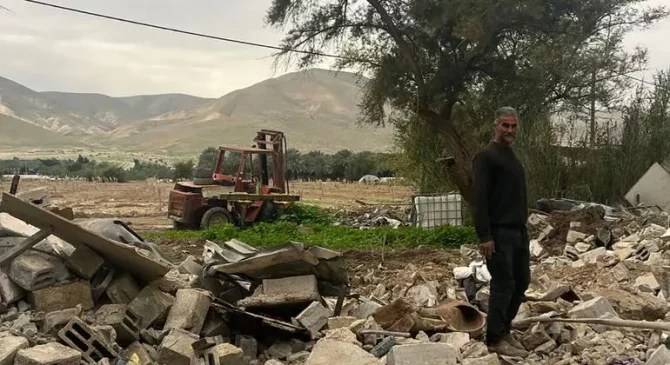
Lebanon has officially accused Israel – in a complaint filed with the U.N. Security Council- of violating the Convention on the Prohibition of Chemical Weapons for using aircraft to spray glyphosate, a “toxic herbicide with serious consequences for health, soil, and crops” over farmland in Southern Lebanon, as part of its broader ethnic cleansing plan.
Lebanon said that “the Convention on the Prohibition of Chemical Weapons prohibits the use of herbicides as a means of warfare”.
It noted that “Chemical analyses and laboratory tests conducted on soil samples taken from Aita al-Shaab (Bint Jbeil district), Ras Naqoura and Dhaira (Sour district) ‘confirmed the use of glyphosate at high concentrations reaching 22,750 micrograms per gram, a level far higher than the concentrations usually found in agricultural soils after farmers’ direct use of this product, which generally range between 0.5 and 2 micrograms per gram at most’”.
For context, Lebanon’s agriculture minister, Nizar Hani, revealed in February that “Laboratory tests have identified the chemical sprayed by Israeli aircraft in southern Lebanon as glyphosate, a widely used herbicide that can destroy vegetation when applied intensively,” adding that “the substance was used at abnormally high concentrations along the border with Israel”.
Nizar Hani noted that, “glyphosate, like other herbicides, eliminates vegetation when used at such high levels, directly affecting soil and water and causing negative repercussions for human health” and “the substance is classified as having carcinogenic effects and poses serious risks, particularly to agriculture and plant ecosystems” adding, “the incident was consistent with known practices along the border, where such substances are used to create vegetation-free zones, effectively resulting in systematic desertification.”
The Guardian reported that glyphosate was “in 2015 classified by the World Health Organization as ‘probably carcinogenic to humans’.”
In January, Israel similarly sprayed glyphosate over farmland in the southern Quneitra province in Syria and soon after, “A second incident occurred two days later, during which the visible release of substances led to outcries from Syrian farmers in occupied areas near Quneitra, southwest of Damascus and along the border with Israel.”
Israel, through spraying this carcinogenic herbicide, is attempting to kill off the farms and crops needed to sustain life in areas of Syria and Lebanon targeted for Israeli annexation in the Greater Israel Project.
Featured Video

Trita Parsi: Israel Set a Trap for Total War in the Region
or go to
Aletho News Archives – Video-Images
From the Archive
Zionism’s Violent Legacy
By Donald Neff | Washington Report On Middle East Affairs | January 1996
On January 4, 1948, Jewish terrorists drove a truck loaded with explosives into the center of the all Arab city of Jaffa and detonated it, killing 26 and wounding around 100 Palestinian men, women and children.[1] The attack was the work of the Irgun Zvai Leumi – the “National Military Organization,” also known by the Hebrew letters Etzel – the largest Jewish terrorist group in Palestine. The Irgun was headed by Revisionist Zionist Menachem Begin and had been killing and maiming Arabs, Britons and even Jews for the previous ten years in its efforts to establish a Jewish state.
This terror campaign meant that at the core of Revisionist Zionism there existed a philosophical embrace of violence. … continue
Blog Roll
 Aletho News
- Trita Parsi: Israel Set a Trap for Total War in the Region
- Trump’s Iran war is on an Israeli leash
- Saudi oil boss issues global supply warning
- Riyadh Says Its Oil System Is Intact. The Numbers Say Otherwise.
- Trump and Netanyahu Want to “Finish the Job” on Iran
- US ‘one-sided dictation’ not Iran’s beliefs makes rational talks impossible: Baghaei
- Iran’s Next Strike May Not Explode. It Could Shut You Down /Col Doug Macgregor
- Iran: US political targets legitimate if assassinations return
- Iraq shuts key border crossing with Iran under US pressure: Report
- Undersea Internet cables could be targeted in retaliation for attacks on Iran: IRGC deputy chief
- If Americans Knew
- The Israel Lobby’s Changing Fortunes
- AIPAC has become such a political liability that it’s shifting to a more “nimble” approach to buying politicians
- At least 160 Israeli settler attacks in 2 weeks
- Will Gaza’s Ancient Christian Community Disappear Forever?
- Israel’s vision of regional security rests on keeping Arab states weak
- Heidi Levine recounts how Palestinian youths helped save her in settler attack
- DAILY UPDATE: Latest essential news on Palestine, Israel, & region
- Trump’s Intensifying Sabotage of the ICC, for Israel’s Sake
- Israeli military detain US and UK volunteers in West Bank including Democratic NY politician Brad Lander
- Americans at National Conservatism Conference held in Israel this year criticize Israel
- No Tricks Zone
- E-Cars Reduce CO2 Emissions By Only 41% Compared To Internal Combustion Engine Vehicles
- Predictions Made By Renowned Climate Professor Over Past Decades Have Been Proven To Be Poor
- New Study Suggests Large Regions Of The Pacific Ocean Have Been Cooling For The Last 80 Years
- Germany’s Green Energy Debacle: High Energy Costs Force Kahla Porzellan to Close After 182 Years!
- New Study: 50 Years Of The Most Aggressive ‘Net Zero’ Policies Can Only Affect The Global Climate By 0.03°C
- US September “Heat” Was No Record…Many Records Set Decades Ago
- Latest European Green Energy Debacle; Portugal’s Largest Flagship Solar Park Insolvent!
- Green Energy Debacle: German Expert Professor Fritz Vahrenholt Warns Of Severe Economic And Social Consequences
- Two More Paleo Reconstructions Affirm Meters-Higher Sea Levels Across Ireland, Brazil 7000-6000 Years Ago
- New Study: Earth And Venus Surface Warmth Largely Explained By Convection And Lapse Rate, Not CO2 Or Radiation

