Even The Neo-Cons Admit The Iran War Is Failing
The Dissident – March 16, 2026
The current U.S./Israeli war on Iran is, in many ways, a product of the policies long advocated by U.S. neoconservatives, most importantly the clean break strategy drafted by the Project for a New American Century (PNAC), which advocated taking out “Iraq, and then Syria, Lebanon, Libya, Somalia, Sudan, and, finishing off, Iran” on behalf of Israel.
But many of the original Neo-cons who first drafted this plan, including John Bolton and even Robert Kagan and Bill Kristol, the founders of the Project for a New American Century, are now jumping ship and admitting that the U.S./Israeli war on Iran is failing.
In an interview with NPR, longtime Neo-con John Bolton, despite saying he has “been a supporter of efforts at regime change in Iran for a long time” was forced to admit that the regime change plan has failed and that the U.S. underestimated Iran’s response.
Bolton was forced to admit that Trump underestimated Iran’s ability to effectively close the Strait of Hormuz and disrupt oil shipping in response to the U.S/Israeli bombing, saying:
… it was questionable whether he was cooperating effectively with and assisting the opposition inside Iran. That’s what I said, I think, in our last conversation. Since then, I’m very worried that there are now signs that they haven’t thought about a lot of other things. For example, there’s reporting that the White House was surprised at how quickly oil prices went up.
And all I can say to that is I’m surprised that they’re surprised. If they weren’t planning for that both economically, politically and militarily, then that’s a huge hole in the planning. I am worried that they apparently didn’t take as seriously as they should have the potential to mine the Strait of Hormuz. Trump said several days ago that the Iranian navy had been completely destroyed. And despite years of listening to that kind of thing, I should have known better. I actually sort of believed in for a while. But now we learned that it was only yesterday that we got around to destroying 16 mine-laying vessels. Of course, they’ve got the capability to mine via drones going over the strait and dropping mines in it.
Even more shocking than Bolton’s admission was a podcast released by the founders of PNAC, Robert Kagan and Bill Kristol, where they essentially admitted that the U.S. war on Iran was destroying the U.S. empire.
Robert Kagan, in the podcast, admitted that the Iran war was debilitating America’s ability to wage a new Cold War on Russia and China, and isolating the U.S. empire globally.
The “undoubted effect of the Iran war has been to drive a deeper wedge between the United States and pretty much all of its allies or at least all of its traditional allies, both in Europe and in Asia, and I would say potentially even in the Middle East” Kagan Said.
Kagan lamented that the Iran war was crippling the U.S.’s ability to continue the proxy war in Ukraine saying, “the skyrocketing oil prices … are even before Trump took the action of lifting sanctions against Russia was going to increase Russian income” and “American forces are … burning through major stocks of weaponry and particularly Patriot and other forms of interceptors on which Ukraine depends heavily because those are the interceptors that defend their major cities from constant Russian attacks.”
Kagan also lamented that the war was taking away the U.S. empire’s ability to wage a new Cold War on China, saying, “very few countries in the world are more dependent on Middle East oil, including the oil that comes directly through the Strait of Hormuz, than Japan. Japan I think, depends on something like 95% of its oil supplies come from the Middle East and 70% of that runs through the Strait of Hormuz. So once again the Japanese were not consulted”, adding, that the prime minister of Japan is “very upset” and “ talked about how this crisis has severely impacted Japanese interests”.
He also added “the Japanese will notice that the United States has sent significant forces that are dedicated both to the defense of Japan and are sort of critical to any response to a Chinese attack on Taiwan. Those forces are now being sent or some of them are already there, and some are being sent to the Middle East.”
Kagan also admitted that the war in Iran is isolating the Gulf States from the U.S. and potentially moving them towards China.
He said, “I just wonder whether the Gulf States in particular are wondering whether they’ve joined the right team here because they have, by the way, been very on background, very vocal in saying that they were against the war. … They did not favor it. They thought they had a pretty good deal going with the Iranians, that kind of an agreement that they would get to, they would leave each other alone for the most part,” adding, “it turns out the United States can’t really protect them. I mean they have suffered the worst in some respects because it’s not only that they’ve been targets and that they’re shipping you know they’ve lost money on oil, but you know they with the tremendous cooperation of the Trump and I would say in this case the Trump family and social circle have been very deeply involved in the United States making investments in AI and other things but particularly AI they’re hosting data centers for all kinds of companies and in general, they’ve been trying to make themselves an attractive place for investment and also tourism.”
Citing the example of Dubai, Kagan said, “You watch the UAE is basically arresting people for taking pictures of damage that may have been done by Iranian drone strikes and other things on things in Dubai. For instance, I think they’ve arrested foreigners who took pictures of these things. Why? Because they don’t want people to see that it’s risky to be in Dubai, because then people won’t invest and they won’t come, and so it’s kind of a disaster for them,” adding, “the bottom line for the Gulf States is that the United States undertook this war and then was not able actually to protect them”.
He added, “I don’t think it’s hard to persuade certain Gulf states like the UAE and others that maybe China is also a pretty good partner or at least as much of a reliable partner as the United States has turned out to be.”
In other words, Kagan and his host Bill Kristol are essentially admitting that the Iran war is destroying and isolating U.S. empire and destroying the U.S.’s ability to project power in Europe, Asia, and the Middle East through proxy states.
This is why Kagan- as journalist Max Blumenthal described it – essentially “describes Israel as a strategic liability leading the US into a quagmire” saying, “I find it a little bit it’s kind of a syllogism when people talk about what a great ally Israel is. It it is a great ally in defense of Israel” adding, “at the end of the day, Iran is a much greater threat to Israel than it is to the United States.”
Kagan also admitted that Iran, “were deliberately not closing the straits for all these years precisely because we did not confront them with the prospect of complete annihilation” adding, “it was only when both the Israelis and the United States made it clear that their goal was the annihilation of regime, assassinated the entire leadership with a bombing strike that they then did this. So we are now solving a problem that we clearly provoked.”
Make no mistake about it, John Bolton, Robert Kagan, Bill Kristol, and their fellow Neo-cons set the stage for this war with Iran, but the fact that even they are now jumping ship shows that war is not at all going as planned for the U.S.
Where in the World Is Benjamin Netanyahu? On the Move or Out of Sight?
By Jonas E. Alexis • Unz Review • March 16, 2026
No, this is not another conspiracy theory. Several hypotheses have emerged suggesting that Netanyahu may be dead, missing, or facing some other serious circumstance. The reality, however, is that his current whereabouts remain unknown. Nevertheless, there are several points that can still be articulated.
Do you recall the period during which Israeli forces were heavily bombarding the population of Gaza? During that time, Netanyahu frequently appeared on the political stage, presenting a series of perfidious claims intended to justify why the largely defenseless population in Gaza purportedly deserved such devastating treatment. Over the past decade, Netanyahu has adopted a similar posture with respect to Syria, Libya, and other regions that Israel has sought to undermine or destabilize.
The narrative has shifted considerably. Netanyahu is obviously absent from public appearances; he is neither addressing the nation from podiums nor proclaiming victory. He may be sheltering in a secure location, receiving heightened protection, strategically awaiting a particular moment to emerge, or perhaps entirely removed from public view. What is evident, however, is that he is not asserting triumph—a clear indication that Israel may not be achieving its objectives, or that the Israeli regime almost certainly miscalculated the Iranian defenses. Furthermore, Iran has not appealed to the United States or Israel to terminate hostilities or request a ceasefire. In other words, the current conflict differs markedly from prior engagements and does not appear to favor Zionist Israel or the United States.
Moreover, it is evident from recent developments that Donald Trump has publicly emphasized the importance of bringing the conflict to an end and has actively called on various allied and partner nations to assist in maintaining the security of the Strait of Hormuz, a critical maritime point for global energy supplies. However, these appeals have not yet resulted in significant commitments from other states, and Iran has so far resisted overtures to negotiate a cessation of hostilities. These dynamics just indicate that the current war differs substantively from previous Israeli debacles in the Middle East.
In other words, regardless of interpretation, Iran has already delivered a powerful strategic pushback against U.S. and Israeli actions, which can be viewed as a critical counterbalance to the policies and interventions of these powers. Obviously, a conflict of this magnitude exacts a heavy toll on both sides in terms of human and material costs. Nevertheless, Iran appears to have shifted the dynamics of the confrontation, signaling two central messages: first, that it will no longer tolerate continued aggression without any serious confrontation, and second, that the Israelis and the Zionist regime can bleed–politically, strategically, ideologically, and economically.
It is interesting that Iran is undertaking actions that many Western policymakers have failed to address effectively for decades. Iran’s assertiveness highlights the contrast with politicians across the ideological spectrum in the West—both self-identified right and left, or conservative and liberal—who have often expressed concern over migration from Muslim and Arab countries, yet have largely remained silent regarding the repeated interventions by the United States and Israel in the Middle East, which have resulted in the destabilization and destruction of multiple countries like Iraq, Syria, Libya, Afghanistan.
This clearly shows a contradiction. Some people keep saying that Muslims and migrants are destroying Europe, but they stay silent about, or support, endless wars in the Middle East and Africa. This is simply lunacy. You cannot destroy countries like Syria and Iraq for the sake of Israel and then expect “peaceful harmony” in Europe and America. You cannot keep supporting one empire after another around the world and expect your own region to stay safe. You also cannot support leaders like Trump invading countries such as Venezuela and then suddenly start talking about “white identity” in Europe. If these people cannot see this basic contradiction and abandon it, there is nothing we can do to help them.
Michael Jones has argued that Trump may, inadvertently, be signaling the end of the American Empire, and this perspective warrants consideration. Certainly, neither Trump nor the Israeli government set out with such an outcome in mind. However, given their sustained engagement in diabolical policies across the Middle East, their objectives are being viewed increasingly as unattainable. Trump’s tenure, in this respect, illustrates a critical lesson: the pursuit of an “America First” agenda is fundamentally incompatible with unwavering support for the Israeli regime and the Zionist ideology. These positions represent inherently contradictory political ideologies; for an “America First” policy to maintain coherence and credibility, the United States and much of the West would need to reconsider the uncritical alignment with Israeli interests.
There is no way around this principle. Even during Trump’s first term, he was saying things like “America First” and “enough is enough with endless wars in the Middle East.” At the same time, he was becoming closer to the Israeli government and powerful elites in the United States who support those wars. Because of this, it seemed clear to me that Trump was misleading the American people.
Now that Netanyahu is no longer boasting about winning a war against Iran, Trump has to ask the Iranians to stop the conflict. Otherwise, the American economy could suffer serious damage. As writer Ilana Mercer has argued, the Iranians should make Israel pay a price for its actions. Only then will Israel learn some basic lessons.
CIA Assessment: The Resistance Cannot Be Crushed
By Kit Klarenberg | Global Delinquents | March 15, 2026
The Judaeo-American war on Iran was intended to be a lightning strike routing, fought exclusively from the air, lasting only a few days. Instead, Washington and its Zionist proxy have blundered into a major multi-front conflict, which could well threaten the Empire’s very existence. The initial US aerial bombardment’s centrepiece was Supreme Leader Ali Khamenei’s February 28th murder. Initially hailed by Western media as “the assassination of the century,” the vile act has resulted in catastrophe for the perpetrators.
The Islamic Republic’s relentless battering of Zionist entity civilian centres and military and intelligence infrastructure, and US bases throughout West Asia, hasn’t been deterred one iota. Vast crowds took to the streets of Tehran in vengeful mourning. Their righteous anger has pullulated throughout the Arab and Muslim world. Ever since, incensed Shiites have violently clashed with security forces in multiple major Pakistani cities. Meanwhile, Bahrain teeters on the brink of all-out revolution. Now, Mojtaba Khamenei, the slain Supreme Leader’s son, has taken his place.
Iranian citizens of every ethnic and religious extraction braved US-Israeli airstrikes to celebrate his ascension. Commonly perceived as a hardliner with strong ties to the Iranian Revolutionary Guards Corps, the expectation that the new Supreme Leader will adopt a considerably less conciliatory, patient approach than his father is widespread. Western sources forecast Mojtaba may decide the Islamic Republic “must move quickly to obtain nuclear weapons in order to forestall future US and Israeli attacks,” overturning Ali Khamenei’s longstanding fatwa against their development by Tehran.
US President Donald Trump has declared he is “not happy” with Mojtaba taking power, and Israeli apparatchiks are likewise perturbed by the development. Nonetheless, this was an inevitable upshot of assassinating the former Supreme Leader. There was also no reason to believe doing so would precipitate the Islamic Republic’s collapse, or lead to Tehran’s military submission. It begs the obvious question of why Washington and Tel Aviv electively helped install a ruler more committed than ever to expelling the Empire from West Asia.
Similarly, Hezbollah’s extraordinary broadsides of the Zionist entity since Khameinei’s assassination should dispel any notion – as perpetuated by Israeli political and military chiefs – the group was obliterated by Tel Aviv’s criminal October 2024 invasion of Lebanon. That incursion was prefaced by an operation in which thousands of pagers used by senior Hezbollah operatives were detonated simultaneously, having been wired with explosives by Mossad pre-purchase, killing and injuring many. A week-and-a-half later, the group’s Secretary General Hassan Nasrallah was lethally targeted in a Zionist entity airstrike.
Evidently, the Resistance cannot be crushed via high-level assassinations. In fact, such actions actively strengthen its members. This inconvenient reality has been well-known to the CIA since at least 2009. In July that year, the Agency produced a top secret assessment laying out the pros and cons of liquidating “high value targets” (HVTs). It was prepared in advance of Barack Obama’s CIA chief Leon Panetta shifting US “counter-terror” operations from capturing and torturing high-level suspects, to outright executing them.
The assessment concluded HVT operations “can play a useful role when they are part of a broader counterinsurgency strategy,” and sought to “assist policymakers and military officers involved in authorizing or planning” such strikes. However, it listed many “potential negative effects” of “high value” assassinations. Israel’s past killing of Hamas and Hezbollah leaders were specifically cited as examples of how the strategy can spectacularly backfire. We have witnessed the CIA’s unheeded cautions play out in real-time since February 28th.
Foremost among prospective blowback from HVT operations is that the risk high-level assassinations can increase an “insurgent” group’s support. This occurs when killing a target “[strengthens] an armed group’s bond with the population, radicalizing an insurgent group’s remaining leaders, creating a vacuum into which more radical groups can enter, and escalating or deescalating a conflict in ways that favor the insurgents.” Such actions can also “[erode] the ‘rules of the game’ between the government and insurgents,” thus exacerbating “the level of violence in a conflict”:
“HVT strikes, however, may increase support for the insurgents, particularly if these strikes enhance insurgent leaders’ lore, if noncombatants are killed in the attacks, if legitimate or semi-legitimate politicians aligned with the insurgents are targeted… An insurgent group’s unifying cause, deep ties to its constituency, or a broad support base can lessen the impact of leadership losses by ensuring a steady flow of replacement recruits.”
The CIA assessment noted several historical instances of supposed HVT successes. When high-level targets have “prominent public profiles”, assassinations can in specific instances shatter a target group. However, this was not the case with Hamas or Hezbollah. The pair “carry out state-like functions, such as providing healthcare services,” so group leaders are well-known to citizens of Gaza and Lebanon. Yet, their “highly disciplined nature, social service network, and reserve of respected leaders” mean they can easily “reorganize” in the wake of assassinations.
The Zionist entity had by this point been engaged in “targeted-killings” against Hamas, Hezbollah, and other Resistance groups since the mid-1990s. However, their “decentralized command structures, compartmented leadership, strong succession planning, and deep ties to their communities” made them “highly resilient to leadership losses.” Undeterred, Tel Aviv’s high-level assassinations continued apace. In the early 2000s, Hamas founder Sheikh Yassin and the group’s leader in Gaza Abdel Aziz al-Rantisi were murdered. However, the killings “strengthened solidarity” between Resistance factions, while “[bolstering] support for hardline militant leaders.”
The obvious lessons of this wanton bloodletting remained unlearned by the Zionist entity, once the Gaza Holocaust erupted. In June 2024, elite imperial journal Foreign Affairs published a report unequivocally headlined Hamas Is Winning. It boldly concluded “Israel’s failing strategy makes its enemy stronger.” The outlet also recorded how “according to the measures that matter,” Hamas was considerably bigger and more powerful than on October 7th 2023. Israel had thus stumbled into a deeply ruinous attritional war, with a “tenacious and deadly guerrilla force.”
Hamas’ surging popularity with Palestinians throughout the Gaza genocide was found to have significantly enhanced the group’s “ability to recruit… [and] attract new generations of fighters and operatives.” This granted Hamas the ability to launch “lethal operations” in areas previously “cleared” by the IOF “easily”. Foreign Affairs charged the Zionist entity, to its “great detriment”, failed to comprehend how “the carnage and devastation it has unleashed in Gaza has only made its enemy stronger.”
It is not merely Hamas that has been galvanised by the Gaza genocide. Israel’s “carnage and devastation” has greatly expanded the ranks and resolve of the entire Resistance, while its constituent members have won hearts and minds globally in ever-mounting numbers. Tel Aviv and its Anglo-American puppet[master]s have no good choices left to make, in a criminal war of choice waged against an indefatigable adversary committed to total victory, the likes of which they have never faced off against before.
The calamitous outcomes of Judaeo-American conflict with Iran were amply spelled out in a June 2025 report by the Israel-based Institute for National Security Studies. Among other things, it cautioned against assassinating Ali Khamenei, as the Islamic Republic “would likely have little difficulty selecting a successor, who could prove to be more extreme or more capable,” while uniting the Iranian public and government more than ever behind all-out victory. The consequences of disregarding this prophetic curse will reverberate throughout West Asia for centuries.
Hezbollah Returns: It Didn’t Start a War, It Is Ending One
By Robert Inlakesh | The Palestine Chronicle | March 12, 2026
Hezbollah’s intervention in the war with Israel followed months of Israeli ceasefire violations in Lebanon, challenging Western media narratives about responsibility.
Key Takeaways
- UNIFIL recorded more than 15,400 Israeli ceasefire violations in Lebanon between November 2024 and February 2026.
- Hundreds were killed inside Lebanon during the ceasefire period, including around 150 civilians, while Israeli strikes repeatedly hit Beirut.
- Hezbollah largely maintained the ceasefire for 15 months, cooperating with the Lebanese Armed Forces despite continued Israeli attacks.
- Western media narratives claiming Hezbollah “dragged Lebanon into war” overlook the ongoing Israeli military actions and territorial violations.
- Hezbollah’s battlefield performance suggests the group retained significant military capacity, contradicting claims that it had been decisively weakened.
Media Narrative vs. Reality
When Lebanese Hezbollah chose to fire on Israel, effectively transforming the US-Israeli assault on Iran into a regional war, it did so in retaliation for aggression against Lebanon. Contrary to what Western corporate media has reported, the group is not responsible for initiating the war, and its role in it is crucial to the region’s future.
At the beginning of this month, the BBC ran a story entitled “Battered and isolated, Hezbollah drags Lebanon into another war”. Written by the British State-funded media’s correspondent in Tel Aviv, the piece not only presents a biased and false depiction of events, cheap propaganda that you would expect from the Sun or other tabloids, but fails to even mention Israel in its title.
CNN and others throughout the Western corporate media landscape also published pieces with similarly worded headlines. Therefore, the first point of entry into this topic is to establish the facts, which reveal just how atrocious the BBC and others have been in their framing of the Lebanon-Israel war.
On February 25, 2026, UNIFIL, the United Nations peacekeeping mission in Lebanon, had recorded over 15,400 Israeli violations of the ceasefire agreement that technically went into effect at the end of November 2024. This included the killing of hundreds of people inside Lebanon, mostly Lebanese, but also Syrians and Palestinians, including around 150 civilians in total.
Thousands of civilians, over the 15-month ceasefire period, were forced to flee their homes due to bombings, while Israel attacked the capital, Beirut, a number of times. Additionally, Israel was caught spraying cancer-causing chemical substances across southern Lebanon, also illegally occupying seven points there and refusing to leave the nation’s territory.
That entire time, Hezbollah held its fire and cooperated with the Lebanese Armed Forces, even when Lebanon’s pro-US Prime Minister, Nawaf Salam, pursued a campaign against the group. He aggressively pursued Israeli-US demands, forcing the Lebanese army to disarm Hezbollah, while announcing his intentions to eventually normalize ties with Tel Aviv, a blatant stab in the back to his own people, who were experiencing daily bombing raids by Israel.
Israel committed more ceasefire violations of the Lebanon truce than any military has ever committed against any ceasefire in human history.
In other words, the idea that Hezbollah dragged Lebanon into a war is categorically false. Israel never implemented its side of the deal, and for the residents of southern Lebanon, the war was ongoing throughout those 15 months. The only reason we continued to call it a ceasefire is that Hezbollah chose to uphold it.
The Myth of Hezbollah’s Weakness
Following the cessation of hostilities — at least from the Lebanese side — in November of 2024, US and Israeli officials publicly bragged that they had defeated Hezbollah. In February of 2024, then US envoy to Lebanon, Morgan Ortagus, asserted publicly that Hezbollah had been “defeated” and that its “reign of terror” was over.
This theory of Hezbollah’s apparent weakness was widely accepted among Western leaderships. Evidently, the Lebanese leadership under Nawaf Salam had also gotten this impression. They believed Israel’s unsubstantiated statistics about how it had taken out the majority of the group’s weapons, believing that the terrorist pager attacks and assassinations of key leaders had, in effect, destroyed the organization. At the very least, Hezbollah was believed to have been badly degraded and hanging on by a thread.
Here for the Palestine Chronicle, I have been writing over the past 15 months against this notion, arguing that the merits of this argument do not hold up to scrutiny. The reasons for this are rather simple: the group has a ground force of around 100,000 fighters — larger than the Lebanese Army — as it also demonstrated all the way up until the last days of the 2024 war that it still possessed strategic weapons.
Hezbollah was so confident in its stockpile of drones, for example, that there were accounts of them using dozens of them in singular operations against invading Israeli soldiers toward the end of November 2024. In addition to this, at the end of the conflict, is when the group began to reveal its most deadly capabilities, which clearly still existed after the ceasefire was declared.
The fall of former Syrian leader Bashar al-Assad was initially interpreted as being a major impediment to the transfer of weapons to Hezbollah, yet this eventually turned out to be only partially true. There were even some sources that argued that larger quantities of weapons were being transferred than in the last years of Assad’s reign in power. Other sources alleged that weapons belonging to the former Syrian Arab Army (SAA) may have fallen into Hezbollah’s hands during the collapse of the state.
A key reason why the weapons continued to flow into Lebanon was that the new Syrian state had no real security apparatus. It is, in essence, a collection of armed groups that operate in an environment inside the country where gangsters, local militias, and groups all maintain their own arms.
As has been on display since Ahmed al-Shara’a came to power, he is unable to control many of the militias inside the country, despite his best efforts alongside his US allies to do so. The conflict in Sweida and the coastal massacres were great examples of this.
Therefore, when Hezbollah chose to retaliate against Israel after 15 months of non-stop fire against Lebanon, they did so not from a position of weakness, but with the understanding that it was waging a war effort with the most favorable circumstances for achieving victory.
A War Israel Provoked
Although there are many within the Lebanese Army that seek to resist and protect Lebanon, including its current commander — after all, it is the nation’s official armed forces — it is held back by the government and under constant pressure from the United States. The US does not allow it to possess strategic weapons and won’t allow Hezbollah to integrate into it.
This means that Hezbollah is the only force capable of defending the country against Israeli aggression. That being said, if the pro-US regime in Syria — which has already reached a security understanding with the Israelis — attempts to attack Lebanon, the Lebanese Armed Forces will likely prove capable of defending their borders.
Although the Lebanese Army is not capable of fighting Israel, the Syrian militia forces that constitute its army are clearly less well prepared. Hezbollah will also likely assist the Lebanese Army in such a defense, as it did against Daesh and Al-Qaeda militants during the Syrian War.
Hezbollah, since entering the conflict against the Israeli occupiers, has managed to inflict countless deadly ambushes, thwarted two landing attempts in the Bekaa Valley, and taken out dozens of Israeli military vehicles with guided anti-tank weapons along the border area. In addition to this, it has fired precision missiles at strategic locations south of Tel Aviv and around Haifa, accurately striking their targets with pinpoint precision.
The strength of Hezbollah this time around has shocked Israeli analysts, who are scrambling to explain the sudden revival of the group that they believed to have been weakened south of the Litani River (southern Lebanon).
It is likely that Hezbollah are seeking to drag the Israeli army as deep into Lebanese territory as possible, making them commit to a costly invasion, one in which they can then engage in all-out ground warfare. While Israel has air superiority and more advanced weapons, Hezbollah is a much more formidable ground force than the Israeli army.
In order to force the Israelis into committing to such a large-scale invasion, where their troops will be led into countless ambushes — especially if they try to invade the Bekaa Valley through Syria — we may even see some cross-border operations in the future.
All of this could have been avoided by the Israelis and their arrogant backers in the White House, yet they chose to illegally occupy Lebanese lands and to violate the ceasefire at least 15,400 times. Just as is the case in Gaza, where Israel has committed around 2,000 ceasefire violations so far, it is they who are at fault.
Despite the fact that Hezbollah’s true strength is on full display and that Israel clearly started this conflict, the corporate media will continue to lie about the situation in Lebanon. This should come as no surprise, considering their atrocious and racist reporting throughout the Gaza genocide.
– Robert Inlakesh is a journalist, writer, and documentary filmmaker. He focuses on the Middle East, specializing in Palestine. He contributed this article to The Palestine Chronicle.
EU states seek ‘talks’ with Iran for access to Strait of Hormuz: Report
The Cradle | March 13, 2026
European countries have been reaching out to Iran for negotiations to allow their vessels to pass safely through the Strait of Hormuz, informed sources told the Financial Times (FT).
Two officials cited by FT said that France was among the EU countries participating in these talks. Another indicated that Italy had also made attempts to open dialogue with Iran on the matter.
The sources stressed that there is no guarantee of progress in the talks or of Iran’s willingness to negotiate on the issue.
There have also been disagreements among EU states, as some have expressed discomfort with direct talks with the Islamic Republic, according to the report.
China, India, and Greece have also reportedly reached out to Tehran. Iran’s Ambassador to India, Mohammad Fathali, indicated on Friday that Indian ships can expect safe passage through the Strait of Hormuz.
The FT report comes as the global price of oil has surpassed $100 per barrel, after dropping from $120 to $90 following US President Donald Trump’s claim that the war on Iran could end soon.
It also comes as Tehran has been targeting oil tankers that have tried to cross the Strait of Hormuz in violation of Iranian warnings.
US Treasury Secretary Scott Bessent said this week that an “international coalition” could soon be escorting vessels through the strait.
“My belief, that as soon as it is militarily possible, the US Navy, perhaps with an international coalition, will be escorting vessels through,” he stated, adding that Washington still needs to gain “complete control of the skies.” Iran’s missile rebuilding capabilities also must be “completely degraded.”
Yet Trump says Washington will only escort vessels “when needed.”
Several tankers were recently hit, including a US-owned vessel in the northern Persian Gulf this week.
Tehran announced on Thursday that some countries would be allowed to transit the Strait.
“Some countries have already talked to us about passing the strait and we have cooperated with them. As far as Iran is concerned, we feel that those countries that joined the aggression should not benefit from safe passage through the Strait of Hormuz,” Iranian Deputy Foreign Minister Majid Takht-Ravanchi said on Thursday.
After Yemen began its pro-Palestine blockade in the Red Sea following the start of the Gaza genocide in 2023, Washington launched a naval operation under the name Prosperity Guardian – aimed at deterring Sanaa’s forces and facilitating the transit of vessels.
The US failed to secure enough partners, and the mission ultimately failed.
A War that Backfired: Why the US-Israeli Campaign Is Strengthening Iran
By Robert Inlakesh | Palestine Chronicle | March 14, 2026
Contrary to the rhetoric of US President Donald Trump and Israeli Prime Minister Benjamin Netanyahu, the Islamic Republic of Iran is not on the verge of collapse. In fact, it appears as if this war against them could end up strengthening and cementing the government’s position, not only regionally, but among its own people.
As the regional war rages on across West Asia, it becomes more and more clear that Iran is capable of dictating the pace of the conflict. The US, with no clear goals, has failed to achieve escalation dominance. The Trump administration has therefore been searching for alternative strategies to try, and change this dynamic.
Most Western analysts, who have a warped perception of Iran, are currently struggling to get their heads around what is truly happening. It appears as if the decades of speaking to themselves have caged them within their bubble world. The only Iranians they talk to are individuals who are vehemently anti-government, most of whom have no real idea what is going on inside Iran, are members of ideological cults, and are totally ignorant of the country’s history.
The Western consensus perspective on Iran is that the Islamic Republic is a monstrous, malevolent regime, one which they portray through all the stereotypical orientalist depictions of the region that have been promoted for decades.
Although Iranians who support cult-like movements, such as the followers of Reza Pahlavi, believe that they, as Persians, are somehow excused from being victims of Western racism. Many of them, due to their notions of Persian supremacist views, those upheld by their Israeli-backed puppet leader’s father, believe that, because in their minds they are “the true Aryans”, the Americans and Israelis do not view them as sub-humans.
It is relatively unknown to Westerners that the Pahlavists think this way, but many of them are extraordinarily racist against Iran’s minority communities. Interestingly enough, these delusions that they are going to be treated better by the United States than any of their neighbors are still beliefs you will see them clinging onto. In reality, the US and Israel take these delusions just as seriously as the Taliban’s Pashtun nationalism, which also led to claims of being “the original Aryans”.
The average American or Brit cannot distinguish between Arabs and Persians; they simply know that there is a Middle East where dark-skinned Muslim peoples live. The Israelis may, on average, know a little more, but hate everyone equally.
This being said, it was this kind of orientalist thinking, lacking any nuance, that led to the historic mistake of the US-Israeli war on Iran. The concept that by waging a war of aggression, where you kill Ayatollah Khamenei and a group of top officials, the entire system will collapse like a deck of cards. Nothing could be further from the truth.
Every few years, we constantly hear about the “imminent collapse of the regime”, yet it never comes. The only way that there will be a regime change is through efforts on the ground, not a bombing campaign, and not even in the event that the US invades, which I will explain below.
While Iran is an incredibly complex country and no analysis of this brief could touch on all the elements at play, there are a few key points in the Islamic Republic’s history that are key to understanding it today.
The first point to understand is what happened during the Islamic Revolution of 1979, which ushered in the revolutionary movement that governs the country today. The revolution against the Shah did not happen overnight; it was a process that took years of collective action, mass general strikes, sit-ins, and saw the participation of all elements within the society.
In the end, the 1979 revolution ended up becoming an Islamic revolution. Under the rule of Mohammed Reza Shah Pahlavi, the pro-Western dictator led what was known as the White Revolution, a campaign of reforms that sought to “Westernize” the country, while undermining the Islamic clergy and leading to the repression of Islam more generally. Therefore, the revolt against the Shah included an element that sought to reinstate the former position of Islam inside the country, meaning that people used Islam as a means of resistance.
We cannot, however, leave out the fact that Leftists also played a large role in the revolution itself and that the uprising against the Shah was not just simply an Islamic movement led by Ayatollah Khomeini alone. Therefore, following the overthrow of the Shah, the newly installed system faced the tall task of forming a government that could be accepted by the people. Groups, for example, the Mujahideen e-Khalq (MEK), disagreed with the new leadership, as did others.
The subsequent takeover of the US Embassy in Tehran, creating an immediate crisis between Iran and America, would end up setting the tone for what was to come next. In September of 1980, Iraqi President Saddam Hussein was encouraged by the US to launch an invasion of neighboring Iran.
The Iran-Iraq War was fought for nearly 8 years, and at a time when the Iranians were militarily much less prepared and armed to do so. While many expected that this war would lead to the collapse of the Islamic Republic, it did the very opposite. The motivating factor for many Iranians, who had not even experienced two years of their new government’s rule, was the Islamic doctrine they were fighting under.
Between 500,000 to 1 million people were killed in the war, which left around two million others injured. That meant that a significant portion of Iran’s population was either wiped out or injured, many of whom died horrible deaths, such as through chemical weapons attacks.
Although deadly and a war that drained resources, putting real strain on society as a whole, it ended up hardening the stances of many. It is not uncommon to hear from Iranians that people will use the sacrifices made during the Iran-Iraq War to justify all kinds of policies that may come under scrutiny.
The same year that the Iran-Iraq war ended, the US Navy decided to shoot down an Iranian civilian airliner in the Gulf of Hormuz, killing 290 Iranians, including 44 children. These events ended up cementing the ideals of the Islamic Republic among its people.
Fast forward now to 2009, when there was a public uproar about the Iranian Presidential election being rigged. This triggered the Green Movement, a mass mobilization across the country that called for reform. Bear in mind now that the relatively new system of governance had been under constant US sanctions since 1979, meaning that the pressure was consistently being turned up on the civilian population.
The 2009 Green Movement ended up leading to what is known as the Reformist camp in Iran attaining greater power inside the country, opposed to the Principalists, referred to in the West as the “hardliners”, who represented the Islamic revolutionary purest camp. For those who may be wondering, the reformists represent the more capitalist, or business class, inside the country. They have historically sought to mend ties with the West, and it was under reformist President Hassan Rouhani that the 2015 Iran nuclear deal was signed.
All of this time having passed since the Iran-Iraq War, where the people were left to live under ever-intensifying sanctions, brought about social change. Still, there remained a sizable bloc of the Islamic revolutionary movement’s base, but many became disillusioned and sought amendments to the system. To be clear, amendments do not mean regime change; they simply sought to achieve changes in their nation.
Although no authoritative polling exists to prove this, it’s generally thought that the base of the Islamic Republic’s support falls within the range of 30 million people, out of 93 million, with the majority falling in the zone of somewhat neutrality; they have complaints or skepticism, but don’t want the government to be toppled to install a Western puppet. Then you have the rest, which fall into the regime change camp, the size of which is often overinflated, but nonetheless certainly exists in its different flavors.
This war appears to have revived Iranian nationalism, the necessity of the revolutionary movement that governs the country, reminding the people why they overthrew the Shah and held so much animosity towards the United States government. For those young people who grew tired of the constant anti-imperialist slogans, it is all starting to make sense to them. This is the reason why their government has been spending so much money backing their regional allies (the Axis of Resistance).
For the Iranian people, they have just seen the theories being proven true that many of them once rolled their eyes at. The US and Israel are killing thousands of their countrymen and women, they slaughter their children, they bomb their oil storage tankers, and create black acid rain. On the first day of the war, the US opened the conflict with the worst civilian massacre they have committed since the Vietnam War, murdering around 180 schoolgirls with a double-tap strike.
Not only have they seen the terror that the US and Israel have unleashed on their people, but they are also witnessing the destruction of their cultural heritage sites.
During the Iran-Iraq War, the government may have been cemented in its place, but this time, there is a real difference; they are able to fight back effectively. The people are seeing the successes of their military and that they were able to lose their leader, but continue fighting. Instead of taking a beating, Iran is dictating the pace of the conflict, battering all the US’s military bases and standing up to the entire region.
Even for those Iranians who have many criticisms of their government, they have come to the streets in numbers and united with those they used to argue against, because the war has created the biggest rally behind the flag moment in decades. That is what the US-Israeli aggression has done: it has managed to unite Iranians in a way we have not seen in recent memory.
For those who have been writing about this issue for some time, this was a predictable outcome. The Iranian government is not as barbaric and stupid as it is depicted through Western propaganda. In the months following the 12-Day War last year, if you paid attention, you may have realized that the government began leaning into Iranian nationalism and symbolism more than ever, because it understood that the next war was going to require unity from across the spectrum.
So for those who believed that this war would somehow overthrow the government, the exact opposite appears to be happening. This war of aggression may end up being an event similar to the Iran-Iraq War in the way it cements the existence of the Islamic Republic. As for an American ground invasion, if they try, they will be met by millions who will mobilize to crush it, just as they did in the 1980s, but with better training and more sophisticated weapons.
– Robert Inlakesh is a journalist, writer, and documentary filmmaker. He focuses on the Middle East, specializing in Palestine. He contributed this article to The Palestine Chronicle.
How Zionist Control Is Hurting US Interests
By Abbas Hashemite – New Eastern Outlook – March 14, 2026
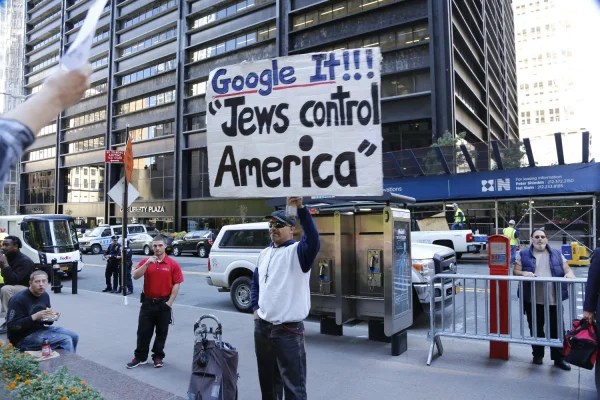
The recent US attack on Iran has raised criticism both internationally and at home due to President Trump’s shift from America First to Israel First and over the Zionist control over the US establishment.
US-Israel Strategic Alignment: Historical Patterns
Escalating tensions between the US, Israel, and Iran have raised a critical concern in global geopolitics: has the US attacked Iran to protect its regional interests, or has it jumped into this fray to defend Netanyahu’s Zionist regime in Israel and its strategic interests? The history of American foreign policy decisions since the establishment of the illegitimate Israeli state suggests that protecting Israel’s national and strategic interests in the Middle East and beyond has become a key aspect of the United States’ strategic priorities.
Throughout history, whenever Israel felt threatened or insecure by a regional power, Washington has always supported it directly or indirectly. The historic rivalry between Israel and Iran and its escalation after the recent genocidal operation by the Israeli Defence Forces (IDF) has rendered the situation more intense. Israel considers Iran’s missile capabilities and nuclear program as a threat to its sovereignty and security. Moreover, Iran’s regional proxies also pose a significant threat to Israel’s expansionist agenda.
Recently, the United States and Iran were engaged in negotiations over the latter’s nuclear program. Reports propose that the two sides have made significant progress in resolving the issue peacefully. However, the United States and Israel launched a combined attack on Iran, targeting its key military and political leadership. Iranian Supreme Leader Ayatollah Ali Khamenei and several other high-level military and political leaders of the country were killed in the US-Israel joint strikes. These strikes, despite positive progress in the US-Iran peace negotiations, created an international perception that the United States is fighting Israel’s war in the Middle East.
Domestic and International Backlash Against US Involvement
Dissenting voices regarding the US involvement in a foreign war are rising even within the United States. People from within the US Army are raising questions over the country’s involvement in a foreign war. Even former soldiers are asking whether the US military personnel should sacrifice their lives to secure the strategic interests of Israel. Reportedly, many US soldiers have expressed their concerns over their participation in this war against Iran. They seek to know the moral and legal status of a war waged merely to protect the interests of a specific allied country. The United States faced a similar issue during the Cold War, especially in the Vietnam and Iraq wars, when numerous military personnel criticized and questioned policies that led the country into those wars. Within both U.S. military and civilian policy circles, there is mounting pressure to more clearly distinguish between America’s core national interests and the interests of its allies.
Economic and Global Implications of the Conflict
The Middle East is the center of global energy politics, and the Persian Gulf is one of the key maritime routes for global oil supply. Iran has already blocked the Strait of Hormuz, leading to disruption in global oil and energy supply, causing inflation around the world. Oil and energy prices have surged across Europe, Asia, and other regions, impacting everyday consumers and households—including those in the United States. Due to the aggressive policies of former US governments, the country has lost trillions of dollars in Vietnam, Iraq, and Afghanistan. The recent US war against Iran would prove far more expensive because of the latter’s geostrategic location and greater regional influence.
On the diplomatic front, this war will further tarnish Washington’s international image. Most of the Global South is already hostile to the United States’ interventionist policies. A prolonged war with Iran would not only widen the gulf between the US and its European allies, but it would also increase Russia and China’s global support. This war has already shifted global public opinion against the United States, weakening the country’s international credibility. Many developing nations are increasingly aligning themselves with Russia and China, signaling their interest in joining the BRICS coalition.
Washington’s involvement in this war, at the behest of Israel, has created significant intricacies for its regional allies. It has exposed the Gulf Cooperation Council (GCC), a key US ally in the Middle East, to significant Iranian attacks. Iran is repeatedly targeting US interests across the region. The GCC countries are also facing disruption in the supply chain, leading to significant economic losses, due to the blockade of the Strait of Hormuz by Iran. Moreover, it has undermined the security and safety of the UAE for global investors. This suggests that this war would create visible fractures in the US-GCC relations.
However, the United States’ involvement in this conflict, despite knowing that it will lead to severe public backlash and impinge on the country’s interests in the Middle East and beyond, demonstrates that in Washington, it’s not the US leadership but the Zionist lobby that actually calls the shots. The release of the Epstein files further strengthens the notion that the Zionists use such tools to blackmail and influence the US leaders, including President Trump, to mold the US policies to protect Israel’s interests in the Middle East and around the world.
Аbbas Hashemite is a political observer and research analyst for regional and global geopolitical issues. He is currently working as an independent researcher and journalist
Follow new articles on our Telegram channel
Ukrainian Embassy in Beirut sheltering top Mossad agent
The Cradle – March 13, 2026
The Ukrainian Embassy in Beirut is currently harboring a high-profile Israeli intelligence asset wanted by Lebanese authorities, journalist and The Cradle contributor Radwan Mortada has revealed.
Khaled al-Aida, a Palestinian-Syrian with Ukrainian citizenship, has been implicated in bombings and assassinations across Lebanon between 2024 and 2025.
Security investigations have proved his involvement in an assassination attempt at Beirut’s Rafiq Hariri International Airport, as well as the capital’s southern suburb.
Aida was also on the ground during the assassination of former Hezbollah secretary-general, Hassan Nasrallah, according to Mortada, who also reported that Aida had helped Lebanese intelligence dismantle a Mossad cell.
He was eventually caught with an explosive device hidden on a motorcycle intended for later use in southern Beirut.
“Aida managed to escape after the Israeli bombing of the building where he was being held in Beirut’s southern suburbs. The bombing provided him with an opportunity to flee, and he eventually sought refuge in the Ukrainian Embassy, which is now attempting to smuggle him out with the help of the US Embassy,” according to the information obtained by Mortada.
The embassy is reportedly seeking to secure Aida’s exit, requesting a laissez-passer from Lebanese security, while US operatives, including CIA station chief Sherry Baker, are pressuring for his evacuation.
“We will not accept being told that he left in a diplomatic vehicle, or through an illegal crossing, or under the protection of the American Embassy in Lebanon,” Mortada went on to write.
In recent history, Lebanese authorities have repeatedly been coerced by Washington to release agents who have been detained.
“Prime Minister Nawaf Salam, and the General Security Directorate, specifically Major General Hassan Shqeir, are all accountable to the Lebanese people. If they are truly concerned about the interests of Lebanon and the Lebanese, they must arrest Khaled al-Aida and hand him over to the judiciary. This wanted man is a valuable asset for Lebanon, one that should be negotiated for, not given away for free,” Mortada said.
Around two dozen Lebanese prisoners are currently being held in Israeli prisons, some of whom were abducted during the ceasefire.
Mortada’s report comes as Lebanon is under heavy Israeli bombardment. Around 700 have been killed by Israel since 2 March, when Hezbollah responded to over a year of Israeli ceasefire violations.
Israel has stepped up attacks on Beirut’s suburbs as well as the heart of the city, while continuing brutal and deadly attacks across southern and eastern Lebanon.
Israeli planes dropped leaflets over the capital on Friday, threatening that Hezbollah must be disarmed for “everybody’s interest.”
The Lebanese army warned citizens not to open the QR Code on the leaflets, which “link to a WhatsApp contact and another to a Facebook page to communicate with Unit 504 of the Israeli army, which is responsible for recruiting agents.”
Palestinian family displaced after settlers violently attack them in Humsa, Jordan Valley
International Solidarity Movement | March 13, 2026
On Friday, March 13, at 1:20am, around 30 masked Israeli settlers invaded a Palestinian property in Humsa, north of Jordan Valley, where a family of 12 people live. The family decided to leave their land after this latest attack.
The settlers first stormed a tent where one of the Palestinian men was asleep and Portuguese and US international activists were staying. The settlers attacked and blindfolded the man and activists and took them into another tent where they brought three other men and five children from the family. The settlers tied the hands and ankles of the Palestinian men and the activists, dragged them by the hair and ankles, beat them with sticks and kicked their faces. The settlers exerted extreme violence toward the Palestinian men and beat the eldest man with rocks.
The settlers told the family and activists to leave, stating: “We are Jewish, this is our land”. When asked by an activist what they wanted, they responded: “We want to kill you”. The settlers also took rings from the activists, asking them if they wanted their fingers cut off.
As the family’s children were crying while forced to witness the violence, the settlers told them to shut up.
The settlers opened the family’s sheep pen and let loose around 350 sheep. They stole the activists’ passports, phones, money, as well as one of their backpacks, and cut one of their jackets. They then cut the men and activists’ ties, rolled one of the activists on top of a Palestinian man, and left.
The Palestinian men and the activists were taken in ambulances to receive medical treatment.
Israeli settler attacks in the north Jordan Valley have increased sharply in the past few weeks as the Israeli government begins building a 500km apartheid wall and military road in the region. At the end of February, Israeli forces have also issued demolition orders for 10 farms and a vegetable store in the area.
These coordinated efforts are accelerating the ethnic cleansing of communities in the Jordan Valley at alarming rates. Families have left the villages of Hammamat Al Maleh, Al Miteh and Al Burj, Khirbet Yarza, and Humsa during the last month alone. Hammamat Al Burj is now completely empty, while the two remaining families in Hammamat al Maleh were badly attacked yesterday.
Since Israel-USA attack on Iran, settlers have also killed six Palestinians in the West Bank.
Hosting Washington’s war: Bahrain faces the consequences
By Hasan Qamber | The Cradle | March 12, 2026
The Persian Gulf is entering one of the most volatile periods in its modern history. Military confrontation between Iran, the US, and Israel has, from the outset, unfolded across the Gulf geography itself. States hosting western military infrastructure – particularly Bahrain – have not merely been exposed to the conflict’s expansion, but structurally integrated into its battlefield logic.
For Bahrain, the current escalation raises urgent questions about the kingdom’s internal stability, the resilience of Gulf political systems, and the capacity of neighboring countries to absorb the security, economic, and social shocks generated by an expanding war.
Frontline kingdom
Bahrain today stands squarely at the center of the region’s intensifying confrontation. Despite its small size, the island holds outsized political and military importance. Its strategic location, heavy reliance on the energy sector, and fragile domestic balances make it one of the Gulf states most exposed to the consequences of prolonged escalation.
The kingdom’s hosting of the US Fifth Fleet headquarters cements its position as a key node in Washington’s military architecture in the Persian Gulf. This presence transforms Bahrain into a potential target in any direct clash between Tehran and Washington. As the war goes on, US installations on Bahraini soil are increasingly viewed as forward operational platforms – and therefore legitimate strategic objectives in a widening regional war.
The implications extend beyond the military domain. Bahrain’s domestic political arena remains shaped by unresolved tensions dating back to the 2011 uprising. Renewed confrontation risks aggravating these internal fault lines by tying national stability more closely to the trajectory of external conflict.
Recent developments have effectively placed Bahrain on the front line. Its role as both a logistical hub for western military operations and a regional energy services center means that any escalation in the Persian Gulf immediately reverberates across the island’s security environment.
According to reports, Iranian strikes against Bahraini-based targets began on 28 February. By early March, roughly 70 to 75 ballistic missiles and more than 120 drones had reportedly been launched. Bahraini authorities stated that most incoming projectiles were intercepted.
Targets included facilities linked to the US Fifth Fleet, Bahraini and US military infrastructure, the BAPCO refinery complex in Ma’amir, and sites in Manama associated with US personnel. Installations near Bahrain International Airport and a major desalination plant – the Abu Jarjour facility – were also reportedly struck.
While the full extent of the damage remains unclear, some accounts suggest partial destruction of base infrastructure and temporary disruption of logistical systems. Heightened alert levels were subsequently reported across US installations throughout the Persian Gulf following injuries among American personnel.
Energy pressure points
The military dimension of the crisis intersects with Bahrain’s structural economic vulnerabilities. The kingdom’s economy remains heavily dependent on the energy sector, with BAPCO Energies forming its backbone. Following recent upgrades, refining capacity has reached approximately 405,000 barrels per day – positioning Bahrain as an important, if relatively modest, contributor to regional oil supply dynamics.
Reports indicate that the refinery complex has been hit at least once during the escalation, triggering fires and forcing the company to invoke force majeure clauses on certain export commitments. Temporary disruptions to refining operations reportedly led to shipment delays and a partial pause in exports, although authorities insist domestic fuel supplies remain secure.
The situation is further complicated by the growing role of international investors in Bahrain’s energy sector. The sale of selected BAPCO assets to major global investment firms – including the US-based BlackRock – has generated political controversy.
Civil society groups have criticized such moves as part of a broader normalization trajectory aligned with Washington’s regional agenda, particularly amid mounting public debt estimated to exceed 130 percent of GDP.
Any sustained targeting of energy infrastructure would therefore carry consequences far beyond immediate production losses. It would threaten investor confidence, fiscal stability, and Bahrain’s long-term economic positioning within the Gulf.
Hormuz chokehold
The crisis acquires even greater significance in light of Iran taking control over maritime traffic through the Strait of Hormuz – one of the most critical arteries in the global energy system. At least 20 percent of the world’s seaborne oil trade passes through this narrow waterway. Any disruption to navigation would send shockwaves through international markets and place immense pressure on Gulf economies.
For Bahrain, whose oil export routes are heavily tied to the strait, strategic alternatives remain limited. While pipeline connections to Saudi Arabia offer partial mitigation, rerouting exports through Red Sea terminals or relying on floating storage solutions would impose logistical and financial constraints.
The implications extend to food security. Gulf states import the vast majority of their food supplies via maritime routes traversing Hormuz, with some importing as much as 85–90 percent overall. Bahrain, constrained by limited agricultural capacity, is particularly vulnerable.
Early indicators of wartime strain have already surfaced, including higher transport costs, shipment delays, and rising prices for essential imported goods. Authorities maintain that strategic reserves are sufficient for now, but prolonged disruption could test these assurances.
Public mood and internal pressure
Bahrain’s domestic political environment adds another layer of complexity. The kingdom is often described as the only Gulf state where a Shia demographic majority lives under Sunni political rule, though the absence of official statistics makes precise figures contested. Estimates have fluctuated significantly since the introduction of political naturalization policies in the early 2000s.
The 2006 “Bandar Report” controversy – which alleged systematic demographic engineering – remains a reference point in debates about representation and legitimacy. Today, observers suggest Shia citizens may constitute between 55 and 65 percent of the population, with Sunnis forming a substantial minority. Expatriates account for more than half of Bahrain’s total population, further complicating social dynamics.
Against this backdrop, public reactions to regional escalation diverge sharply from official state positions. While Gulf governments continue to emphasize strategic partnership with Washington, segments of Bahraini society openly express support for strikes targeting US military facilities in the region. Social media circulation of footage from recent attacks reflects this polarization.
Authorities have responded with sweeping security measures aimed at preventing internal destabilization. Arrests have been reported against individuals accused of documenting strikes or organizing demonstrations. Restrictions on public gatherings and curfews in sensitive areas underline official concerns that regional war could reignite domestic protest movements.
According to human rights and field sources speaking exclusively to The Cradle, at least 114 people have been arrested since the beginning of the events. The Public Prosecution has sought the death penalty for a group of citizens and residents accused of “communicating with the enemy” for documenting missile and drone strikes on military targets.
This reflects the scale of the political challenge Bahrain faces as it attempts to balance internal stability with its security and external commitments amid a divided public mood regarding the regional war.
Strategic dilemmas
Manama’s predicament reflects a broader Gulf reality. The kingdom faces simultaneous pressures stemming from its geographic exposure, reliance on external military guarantees, and unresolved internal political tensions. Crisis management under such conditions becomes increasingly complex as regional confrontation deepens.
There is also uncertainty surrounding the stance of neighboring Gulf states. Should escalation expand to include widespread targeting of energy infrastructure or maritime trade routes, regional economic interdependence could magnify the impact on domestic stability across the peninsula.
A sustained Iran–US–Israeli confrontation threatens to reshape the political calculus of Gulf states. For decades, security architectures across the region have been anchored in strategic partnerships with Washington. Direct confrontation between Iran and the US, therefore, places these states in a structurally vulnerable position.
Three major risks loom. First, the physical targeting of military bases and oil facilities could undermine deterrence frameworks. Second, prolonged disruption to trade and energy flows may generate severe economic stress. Third, divergent popular attitudes toward the conflict risk fueling internal political tensions.
In Bahrain, these dynamics intersect with an already active opposition and a politically engaged society. Continued escalation could heighten domestic sensitivity to government policies and widen the gap between official narratives and public sentiment.
Paths ahead
Several trajectories remain possible. Rapid containment of escalation would restore the familiar pattern of managed tension in the Persian Gulf. A prolonged exchange of strikes, however, could intensify economic pressure and gradually erode political stability across Gulf states.
The most dangerous scenario would see the region transformed into an open theater of great-power confrontation – fundamentally altering the balance of power and exposing smaller states like Bahrain to sustained instability.
The kingdom now finds itself navigating an exceptional moment in regional history. Escalation is now shaping the island’s economic stability, political tensions, and security calculations in real time. Efforts by authorities to enforce internal control underline the depth of official concern that external conflict could reopen unresolved domestic fault lines.
The kingdom’s experience points to a wider shift across the Persian Gulf: strategic alignment with Washington’s military order is increasingly transforming allied states into operational terrain. In Bahrain’s case, the distance between the forward base and the front line has effectively collapsed.
The US fell for its own Iran propaganda
By Robert Inlakesh | Al Mayadeen | March 13, 2026
The US government’s mistake with Iran has been that it clearly fell into believing its own lies. Think tanks, donors, paid advisors, lobby groups, and establishment analysts are all responsible for the catastrophic mistakes that have been made in attacking the Islamic Republic.
What was supposed to be a war, destined to be all over in four days, quickly turned into weeks, months, and now, in US President Donald Trump’s own words, a “forever” war. In order to understand why, we have to assess the way the political system in Washington works.
As we now know, US politicians are oftentimes chosen by the donor class. Most of the US Congress and Senate take considerable sums from AIPAC and affiliated pro-Israeli, pro-war donors. The Israeli Lobby not only pays its chosen politicians, but also hands them materials to run through, so that they skip to the Zionist script and position themselves as attack dogs against anyone who stands up to the lobby.
Hiding underneath this, we have think tanks, which are the policy expert wing of the lobbyists. These think tank “experts” are brought in as the brains behind the operation. They shift around between holding positions within different administrations, sitting on boards, and writing briefs or analyses for think tanks.
Then you have the mainstream media, which is owned by many of the same people funding the think tanks and lobby groups, employing articulate individuals to parrot their propaganda. The media itself is a bubble, where the so-called “reputable” outlets rely on each other for validity and help to police the boundaries of the “acceptable” discourse, meaning the likes of the New York Times, BBC, and others.
When it comes to broadcast media in specific, the top suppliers of stories, soundbites, on-the-ground footage, and leads are Reuters, AFP, and the Associated Press. Oftentimes, broadcast media channels will simply copy and paste the leads or descriptions from what these suppliers provide, altering them ever so slightly to suit their channel’s bias. That is why they often use very similar language and report the same stories for their news bulletins. Anyone who has worked in a newsroom knows this to be the case.
This trio of information control, which often intersects and enjoys some crossover, is what pollutes the minds of the masses on a daily basis. This is important to understand in order for the rest of this article to make sense.
Falling for their own lies
In the lead-up to the illegal attack on the Islamic Republic of Iran, the Western ruling class constantly repeated the idea that Iran and its allies were severely weakened. Revelling in what will likely prove to be a pyrrhic victory in Syria, with the installation of a pro-US Zionist collaborator regime in Damascus, the annihilation of Gaza’s infrastructure, along with the severe blows to Hezbollah’s leadership, all three elements of the Zionist information control system began to grow arrogant.
Think Tanks like the Zionist Washington Institute for Near East Policy (WINEP) held a series of conferences about the disarmament of Hezbollah and discussed how the so-called Gaza ceasefire was supposed to be weaponized in “Israel’s” favour, while discussing war on Iran as if it was like putting down a once dominant racehorse with a broken leg.
Still, today, if you look at WINEP’s homepage, there are analysis pieces, written by Zionists salivating over a victory over Iran and envisaging how the future will pan out in a West Asia dominated by the Israelis. “The Middle East’s 1919 Moment” and “A Levant Without Militias” discuss the downfall of Iran and Hezbollah, respectively. Even at a time of great crisis for the Zionist entity, they cannot help but fantasize about how they will dominate in the future.
The trio of information control has created a parallel universe for themselves, one which they continue to cling to, for fear of shattering their entire view of reality.
When Donald Trump and Israeli PM Benjamin Netanyahu claimed to have greatly degraded Iran, it wasn’t just them speaking; they were in lockstep with the think tanks, lobbyists, and donors. Just as was the case when former US envoy to Lebanon, Morgan Ortagus, confidently asserted that Hezbollah was defeated.
For them, assessing the realities on the ground was no longer a priority; what was important was bolstering a narrative that would lead to the war that the Zionist entity desired. In essence, what they had done was fall for their own nonsense.
All of this stems from the psychological blow the Zionist regime and its loyal supremacist backers suffered on October 7, 2023. When a few thousand Palestinian Resistance fighters, armed with light weapons, tore down the illusion of the Israeli surveillance regime and collapsed its southern command within hours, the Zionists went into a kind of mental hysteria.
Suddenly, on that day, it was proven that the theory of Hezbollah’s late Secretary General, Sayyed Hassan Nasrallah, was correct: “Israel” is indeed weaker than a spider’s web. This meant for them that two things had to be achieved: the first was that their so-called “deterrence capacity” had to be re-established, which they believed would be achieved through committing the world’s first live-streamed genocide.
The second imperative was that the Zionist project had to be rapidly accelerated. At first, this appeared unlikely, yet their perceived successes in Lebanon and Syria appeared to give them the impression that it was possible.
Along comes the second Trump Presidency, which was bought and paid for by the Zionist billionaire class.
Donald Trump, a man with a vocabulary no greater than that of a 10-year-old, is their perfect puppet. Not only this, his entire administration is staffed with ultra-Zionists or paid shills who lack basic intelligence. Therefore, the Zionists saw that this was the perfect time for them to hatch the last phase of their so-called master plan to expand their regime and rule the entire region.
In the process of doing this, the Zionists dismantled the United Nations and the notion of International Law, instead ushering in “the law of the jungle.” There are no longer international norms or red lines, just total chaos.
Meanwhile, as this was going on, the Zionists adopted the attitude toward the global population that they should be scared into submission; should they dare stand up to oppose the tyranny everyone has watched unfold before their very eyes. When they are surprised because things aren’t going their way, they cry victim and, in a fit of rage, attempt to punish you. This is a reflection of their unstable mental state.
All of this is relevant because it explains how we have gotten to this point and why this trio of information control has bought into their own nonsense. The war on Iran was evidently going to be a catastrophe, but they did it anyway. Those of us who have been monitoring the situation could also tell that Lebanese Hezbollah was far from militarily finished, which the Israeli media are now beginning to come to terms with.
What do they do now that the situation is getting out of hand? They censor and desperately lie to cover their tracks. They censor their deaths, lie about the destruction and missile hits, fake air defense victories, and claim tactical and operational military victories that don’t exist. One example of this is the US Trump administration, which claimed to have destroyed Iran’s navy during the first days of the war and still brags about sinking new ships.
The Israelis take things even further: with dozens of military vehicles hit and their soldiers falling into ambush after ambush in Lebanon, only two soldiers have died, according to them. They have even banned the filming of Iranian and Hezbollah missile strikes, threatening their own population with fines and jail time for doing so. Sometimes, they will claim to have intercepted all incoming projectiles or say they fell in open spaces, yet not too long after, published videos show direct hits. It’s getting so bad there, in terms of censorship, that their own people are getting agitated.
These people lived in a “reality” where Hezbollah was weak and Iran was weak, claiming that it had only a few thousand missiles and a handful of launchers; a “reality” in which killing Iran’s leader, Sayyed Ali Khamenei, would instantly lead to regime change, where the Iranian people would suddenly fight against their government because Netanyahu told them so. Perhaps the only thing they don’t believe is their laughable lies about Iranian protester deaths; that nonsense is reserved for the Pahlavist cult.
As the entire planet is witnessing, Iran and the Axis of Resistance that it backs are far from weak. Their determination is strong, and their capabilities are clearly greater than the Zionists expected. The longer this insane arrogance continues, the worse things are going to get, because just as we saw in the Gaza Strip, nobody is about to back down and become the slaves of the terrorist entity occupying Palestine.
Featured Video
Alon Mizrahi: ‘Israel Must Be Dismantled’
or go to
Aletho News Archives – Video-Images
From the Archives
Allies Don’t Need Lobbies
By Jay Knott | Dissident Voice | September 24, 2013
In a recent article on Counterpunch, Rob Urie defended the traditional Marxist analysis of US policy in the Middle East. He argues that support for Israel is driven primarily by economic interest, not the Jewish lobby.
He starts by paying tribute to the idea that Western societies are uniquely racist. He says that the “Western narrative” claims there is an “Arab character”, and that this is “antique racist blather”. He gives no definition of these terms. Further, he establishes his credentials as part of the dominant current in the American left by claiming that “over a million people in Iraq died so ‘we’ in the West can drive SUVs.”1
When he tries to criticize bourgeois economics, he makes it clear he doesn’t understand the developments it has made since Marx’s day, using the mathematical discipline known as “game theory”. He dismisses the basic abstraction of economic theory, the idea of the rational individual, on the grounds that it is “devoid of history, culture and political context”. But abstractions are always devoid of something.
He defends a more concrete economic theory, mostly Marxist, with some input from another theorist of capitalist crisis, Hyman Minsky. This concrete theory leads him to the view that US activity in the Middle East is primarily driven by rational capitalist motives, the need to secure a supply of oil.
“Taking the totality of circumstance — former oil company executives launching war on an oil rich nation on a pretext they publicly proclaimed they didn’t believe shortly before taking office — and that upon launching their war proved to be non-existent, requires a willingness to overlook the obvious — that the war on Iraq was for oil, that is difficult to support.”1
Perhaps I’ve misunderstood him, but based on what he says in the rest of the article, this convoluted sentence seems to argue that, because president Bush and vice-president Cheney attacked Iraq on false premises, and they also said it was all about oil, and they are former oil executives, and Iraq has a lot of oil, it’s difficult to deny US attacks on Iraq are all about oil.
In fact, it’s not hard at all. As Urie points out, at times Bush and co. said that attacking Iraq was “protecting the world’s supply of oil.”1 But, as he also points out, they are congenital liars. Why should we believe them when they say they are trying to “protect” the oil supply? Protect it against what? When politicians “admit” attacks on Middle Eastern countries are wars for oil, they are parroting the neo-con party line, feeding the public, both left and right, with a plausible-sounding pretext. For right-wingers, “it’s a war for oil” is a reason to support war, and for leftists, it’s a way to feel better by complaining impotently about corporate greed. Both approaches help the war drive. … continue
Blog Roll
 Aletho News
- Canada, the U.S., and NATO: the inescapable trap
- Villains of Judea: Leonid Radvinsky
- Alon Mizrahi: ‘Israel Must Be Dismantled’
- Former Head Of MI6 Admits That The U.S. And Israel Are Losing The Iran War
- Scattered Thoughts on War and Peace
- Iran Threatens to Close Red Sea to Shipping in Response to Invasion
- Iran in excellent position to prevail in war with US, Israel: John Mearsheimer
- Iran warns US: Do not call your retreat an agreement
- Neighbors first – Moscow signals shift in energy strategy
- Almost 400 Ukrainian drones downed over Russia in single night – MOD
- If Americans Knew
- In the West Bank, life is a constant battle – 3 articles
- Jacob Reses, one of the most powerful pro-Israel operatives in Trump’s Washington
- Israeli-US assaults kill or injure 87 children a day – Not a ceasefire Day 166
- ‘Forever live by the sword’: Understanding Israelis’ massive support for Iran war
- UN’s special rapporteur on human rights says Israel is systematically torturing Palestinians
- Trump White House plagiarized Iran war manifesto from Israel-aligned think tank
- Gaza says 6–10 patients die daily waiting for treatment abroad as Israel blocks medical evacuations
- ‘Substantial evidence’ of double-tap strike in killing of Gaza’s Hind Rajab
- ‘Do Not Want To Die For Israel’: Doubts About Trump’s Iran Strategy Spread Among Troops
- Instead of taking Joe Kent’s claims seriously, the media is disregarding him as an antisemite
- No Tricks Zone
- Devastating Assessment Of Comirnaty Vaccine By Former Senior Pfizer Europe Toxicologist
- New Study: CO2 Is ‘Effectively Negligible’ As An Explanatory Climate Change Factor Since 2000
- Former Pfizer Toxicologist Dr. Helmut Sterz Tells Bundestag Hearing Pfizer Vaccine Should Have Never Been Approved
- Energy Expert: Germany’s Nuclear Phaseout Was A “500 Billion Euro Mistake”
- New Research: South Australia’s Mid-Holocene Sea Surface Temperatures Were 4°C Warmer Than Today
- Storing Green Energy To Last Germany 10 Days Would Require A 60-Million Tonne Battery
- New Studies: UK Sea Levels Were 4 Meters Higher Than Today During The Mid-Holocene
- Destructive Green New Deal: German Energy And Metal Group Warns Of Drastic Crisis
- New Study Documents A 20-Year Pause In Arctic Sea Ice Decline – Driven By Internal Variability
- Wake-up Call: Survey Shows Majority Of Germans Now Favor Postponing Climate Targets!
 Aletho News