Israeli forces arrest Al Mayadeen bureau chief Nasser al-Lahham in West Bank
By Al Mayadeen | July 7, 2025
Israeli occupation forces arrested Nasser al-Lahham, director of Al Mayadeen’s bureau in occupied Palestine, on Monday, during a pre-dawn raid on his home in Beit Lahm, southern West Bank.
Local sources reported that the arrest was accompanied by deliberate acts of vandalism, as soldiers stormed al-Lahham’s residence, smashing furniture and seizing personal mobile phones belonging to him and his family.
Exclusive sources informed Al Mayadeen that the Israeli security service, Shin Bet, is directly responsible for the arrest of al-Lahham in the occupied West Bank.
According to the sources, Shin Bet officers specifically targeted al-Lahham’s broadcasting studio during the raid and actively searched for electronic equipment and media devices linked to his journalistic work.
In a related development, the Israeli occupation extended al-Lahham’s detention until Thursday and has referred his case to the Ofer military court, located west of Ramallah, for a detention hearing. The move signals a potentially prolonged legal process against one of Palestine’s most prominent media figures.
Wider context
The arrest sparked widespread condemnation from Palestinian political and media circles. Palestinian political activist Sinan Shaqdeh told Al Mayadeen that “the arrest of journalist Nasser al-Lahham carries several implications, most notably an effort to target Al Mayadeen Network for conveying a narrative that challenges the Israeli version of events surrounding the ongoing genocide (in Gaza).”
This latest move comes as part of a broader, systematic campaign targeting journalists and media operations in occupied Palestine. In late October 2023, Israeli forces raided al-Lahham’s home, assaulting his wife and children, conducting an intrusive search, and detaining his two sons, Basil and Basel.
Meanwhile, Al Mayadeen’s correspondent Hanaa Mahamid continues to face repeated threats by Israeli authorities in an attempt to suppress independent media coverage from the occupied territories.
The Israeli government has renewed its ban on Al Mayadeen’s operation in occupied Palestine, confiscated its broadcasting equipment, and blocked its websites, in a crackdown against the network, amid the continued genocide in the Gaza Strip and the broad assault on the West Bank.
Al-Lahham’s arrest is an attempt at suppressing the press: Fatah
Munther al-Hayek, spokesperson for the Fatah Movement, told Al Mayadeen that the Israeli occupation’s arrest of Nasser al-Lahham aims to suppress press freedom and intimidate journalists.
Al-Hayek added, “What Israel is doing in the Palestinian territories is happening with a green light from the United States.”
He also emphasized that the free press’s coverage of Israeli massacres in Gaza has unsettled Netanyahu’s government, prompting it to resort to repressive and terror tactics.
Hamas rejects US allegations of Gaza aid centre attack
MEMO | July 7, 2025
The Government Media Office in Gaza has officially rejected claims by the US State Department alleging that the Palestinian resistance carried out a “bomb attack” targeting American personnel at aid distribution centres operated by the so-called “Gaza Humanitarian Foundation – GHF”.
In a statement issued on Sunday, the office said the accusations were entirely baseless and part of a clear attempt to justify the continued killing and starvation of Palestinian civilians in Gaza. It added that the claims reflect full alignment with the Israeli military narrative, which aims to legitimise war crimes by using fabricated security pretexts to justify excessive force against civilians.
The statement described GHF not as a humanitarian organisation, but as a security and intelligence front supported by both Israel and the United States.
The media office held the foundation responsible for the deaths of 751 civilians, injuries to 4,931 others, and the disappearance of 39 people. These casualties, it said, resulted from the chaos and danger surrounding the aid distribution centres established by the foundation in exposed and unsafe areas.
The statement stressed that the US State Department’s narrative seeks to whitewash the image of an organisation involved in war crimes. It also pointed out that over 130 international humanitarian organisations refuse to cooperate with GHF, viewing it as a cover for Israeli military objectives.
What Trump Should Tell Netanyahu
By Ron Paul | July 7, 2025
A few weeks ago I urged President Trump to make a deal with Iran that would satisfy his stated goal of no nuclear weapons production and would allow Iran to continue its lawful pursuit of civilian nuclear energy. The deal on the table, as described by the Iranian foreign minister himself, was a win-win “update” of Obama’s JCPOA “nuclear deal” that he could have avoided a costly and counter-productive war with Iran.
Unfortunately, the negotiations were cut short by an Israeli sneak-attack on Iran that led to a 12-day war that did not turn out as Israel imagined. This often happens in war, especially wars of aggression. After a day or so, Israel found itself overwhelmed by an Iran that proved to be more than capable of defending itself and Netanyahu called up Uncle Sam begging for assistance.
The resulting US bombing run on Iran’s nuclear sites did not lead to the end of that country’s capabilities, but to the expulsion of the UN monitoring organization and the emergence of Iranian “strategic ambiguity” regarding its program. In short, the bombing has blinded the world to what Iran may do in the future. That is not a win for Trump.
In a recent interview with Tucker Carlson, the Iranian president confirmed what most people understood at the time: President Trump promised Iran that while they were engaged in negotiations the United States would not allow Israel to attack the country. With the sixth round of negotiations just two days away, however, Israel thumbed its nose at the United States and launched an attack on Iran anyway.
Considering that Israel’s “military capabilities” are almost entirely provided by the United States, this betrayal of its benefactor will surely go down as one of the most brazen acts of ingratitude of all time.
This week Israeli Prime Minister Benjamin Netanyahu is in Washington DC for the third time in Trump’s short second term in office. While we do not know what President Trump is telling him this time around, this might be the time to finally give Israel some “tough love” that many parents practice with their teenagers.
Donald Trump may be the most “pro-Israel” president we’ve ever had, but if he really wanted to help Israel he would make clear to Netanyahu that US support does Israel no favors. Continuing to spend tens of billions of dollars a year financing Israel’s war machine and backing up Israel’s attacks on its neighbors has not produced peace or security – much less prosperity – for Israel.
In fact, as soon as Israel attacked Iran so many Israelis tried to leave the country that Tel Aviv forbade its own citizens from leaving the country. Israelis are desperate to escape the wars of their own government’s making.
If President Trump really wanted to help Israel he would inform Netanyahu this week that not another US dollar would be sent to prop up his government. Not another missile or bomb would be sent. Not another American bullet would be available for Israeli soldiers to attack their neighbors or to shoot Palestinian civilians.
If Israel had to face the hard reality that it must learn to live with its neighbors instead of attacking them, the country may actually start seeing some peace and prosperity. Whatever the case, it is not our responsibility to finance the war machine of any foreign country. Time to put America first.
Yemeni air defenses confront Israeli aggression on Hodeidah
Al Mayadeen | July 7, 2025
At least 20 Israeli airstrikes struck the city of Hodeidah in Yemen early Monday, Al Mayadeen’s correspondent reported, while Yemeni air defenses managed to repel a significant portion of the assault.
The attacks targeted key locations including the ports of Hodeidah, Salif, and Ras Issa, as well as the Ras Qatif power station. Israeli media confirmed that these infrastructures had been hit by Israeli occupation forces on three previous occasions.
Additionally, our correspondent noted that one of the strikes hit the Galaxy Leader vessel, linked to “Israel” and captured by the Yemeni Armed Forces on November 19, 2023.
In a related statement, Israeli Security Minister Israel Katz declared that Israeli forces are “vigorously attacking” targets at Yemeni ports, the Ras Qatif power plant, and the Galaxy Leader ship.
Yemeni air defenses repel major part of Israeli aggression
Israeli media outlets reported that 53 projectiles were used in the operation, while our correspondent revealed that the Yemeni Armed Forces worked to repel the aggression, thwarting a substantial part of it.
Yemeni military sources told Al Mayadeen that air defenses launched the first wave of surface-to-air missiles, forcing 10 Israeli aircraft out of Yemeni airspace before they could carry out their attacks.
Sources also revealed that Israeli warplanes had to turn back and were not able to execute planned strikes on other Yemeni governorates.
Previously, the spokesperson for the Yemeni Armed Forces, Brigadier General Yahya Saree, had announced that the Yemeni Air Force “is currently confronting the Zionist aggression against our country.”
“Our air defenses are ready and prepared to confront Israeli attacks on our country with full force and power,” Saree underlined.
Yemen vows continued support for Gaza, launching missile
At around 3:45 am (local time), two missiles were launched from Yemen toward Israeli targets in occupied Palestine. The missiles were reportedly intercepted by Israeli occupation forces, sounding sirens in several areas in the southern occupied West Bank and near the Dead Sea.
Chairman of the Board of Directors of the Yemeni News Agency (SABA), Nasruddin Amer, said that operations in support of Gaza “will not cease until the aggression stops and the blockade is lifted,” in a post on X.
“The Zionist aggression has not and will not be able to stop the Yemeni strikes deep inside its territory,” Amer explained.
“Not a single ship will pass through our armed forces’ area of operations,” he added.
Meanwhile, Brigadier General Saree stressed that the Yemeni Armed Forces are “fully prepared and capable” of confronting the Israeli aggressors.
He stressed that the Israeli attacks will not affect Yemeni military capabilities, emphasizing that the country’s support for Palestine “will continue at a high pace.”
Details of Qatari negotiations framework for Gaza ceasefire revealed
Al Mayadeen | July 6, 2025
Qatari mediators put forward a negotiation framework to secure a lasting ceasefire deal between the Palestinian Resistance in Gaza and the Israeli occupation.
The Qatari proposal outlined the ceasefire’s terms and phases of implementation, though officials clarified that the published document was unofficial.
The proposed agreement calls for a 60-day ceasefire that would temporarily halt all military operations by both sides and includes a guarantee from US President Donald Trump that “Israel” will adhere to the truce throughout the agreed-upon period.
A complete halt to Israeli offensive operations in Gaza
The Qatari proposal states that all Israeli offensive military operations in Gaza will cease when the agreement takes effect, with the occupation’s aerial activities (both military and reconnaissance) halting daily for 10 to 12 hours during prisoner exchange days.
Additionally, the proposed terms outline “Israel’s” military redeployment in Gaza, specifying that on Day 1 after releasing 8 living Israeli captives, occupation forces will withdraw from northern areas and the Netzarim corridor to positions defined in previous agreement maps, with minor mutually agreed adjustments to be finalized later.
On day seven, following the release of 5 Israeli bodies, the occupation forces will redeploy in southern areas to positions previously agreed upon in the same past agreement maps, with minor adjustments to be finalized later.
Phased captive exchange
The proposed deal includes a prisoner exchange provision under which 10 living Israeli captives and 18 bodies from the previously agreed list of 58 would be released according to a phased schedule, with releases taking place on days 1, 7, 30, 50, and 60 following the ceasefire’s implementation.
The agreement outlines a specific release schedule, with 8 living Israeli captives to be released on the first day, 5 bodies to be returned on day 7, another 5 bodies on day 30, 2 living prisoners on day 50, and finally 8 bodies to be released on day 60 of the ceasefire period.
The proposal stipulates that “Israel” will simultaneously release Palestinian prisoners through a prearranged mechanism in exchange for both living Israeli captives and remains, with the process conducted discreetly without public displays or ceremonial events.
Ten days after the ceasefire takes effect, Hamas will provide complete documentation, including proof of life, medical reports, or death certificates, for all remaining Israeli captives. In return, “Israel” will provide complete records of Palestinians detained in Gaza since October 7, 2023, along with the number of deceased Gazans held in Israeli custody.
The Qatari proposal notes that Hamas is committed to ensuring the health, safety, and security of the captives throughout the ceasefire period.
A framework for negotiation
Moreover, Qatar supports continuing negotiations to establish the necessary arrangements for reaching a permanent ceasefire within 60 days while stipulating that upon reaching such an agreement, all remaining Israeli captives (both living and deceased) from “Israel’s” list of 58 individuals would be released. The proposal states that the temporary ceasefire may be extended if permanent ceasefire terms aren’t finalized in the given period.
The proposal affirms that negotiations mediated and guaranteed by international parties will begin on the first day to work out terms for a permanent ceasefire.
The negotiations will cover several key areas, including the terms for releasing all remaining Israeli captives in exchange for an agreed number of Palestinian prisoners held in Israeli jails, the issues surrounding Israeli troop redeployment and withdrawal, along long-term security arrangements in Gaza. Additionally, the talks will cover post-war governance and reconstruction plans for Gaza that either party may propose, and announce a permanent ceasefire.
Support and guarantees
The document points out that Qatari Emir Tamim bin Hamad Al Thani is “serious about both parties’ commitment to the ceasefire agreement, and insists that the negotiations during the temporary ceasefire period, if successfully concluded through an agreement between the two sides, should lead to a permanent resolution of the conflict.”
Mediators, the United States, Egypt, and Qatar, will ensure the ceasefire holds throughout the 60 days and will guarantee that serious discussions take place regarding arrangements for a permanent ceasefire.
The mediators will also ensure negotiations continue seriously for an extended period until both parties reach an agreement and maintain all measures outlined in this framework.
US Special Envoy Steve Witkoff will arrive in the region to finalize the agreement and will lead the negotiations. Meanwhile, Trump announces a ceasefire, and the document states that the United States and President Trump are committed to working toward ensuring that fair negotiations continue until a final agreement is reached.
Humanitarian aid on the agenda
Regarding humanitarian aid, the proposal stipulates that assistance will be delivered to Gaza immediately upon Hamas’ acceptance of the ceasefire agreement, specifying that the delivery mechanism will align with the provisions outlined in the January 19th agreement.
The aid package covers rebuilding water, power, and sewage systems, restoring hospitals and bakeries, providing equipment for rubble clearance, and reopening the Rafah crossing for travelers, patients, and trade.
The Qatari proposal emphasized that humanitarian aid would be distributed to Gaza’s population through the United Nations and its agencies, along with the Palestinian Red Crescent.
Benjamin Netanyahu Is Coming to Town Again
Will Donald Trump surrender or will Bibi resort to a false flag?
By Philip Giraldi • Unz Review • July 4, 2025
Benjamin Netanyahu is on his way for his third visit to Washington during the first six months of the second term of President Donald Trump. Bibi requested the visit because he clearly wants something and he never likes to hear anyone tell him “No!” The American Jewish community and the state of Israel working together are already mustering their substantial resources to give the Prime Minister anything he wants, whatever that might be. If necessary, the so-called Israel Lobby, which controls many aspects of what is referred to colloquially as the United States Government, has a unique ability to lay down a serious guilt trip on anyone who tries to interfere with their prerogatives. Their ability to persuade is frequently based on repeated invocations of a semi-mythical event called the “holocaust,” which has been and will continue to be a burden on all the rest of humanity forever.
Many Jews have consequently successfully turned themselves into something like caricatures, where they are always the victims of an irrational hatred and therefore are entitled to extraordinary measures to protect themselves. Indeed, it all means that whatever happens that involves either Jews or Israel will ipso facto grant a “license to kill” in response to ensure that there will be “never again.” South African journalist Ilana Mercer describes the current process succinctly: “Israel’s ‘strategic perspective’ requires everywhere and always an enemy. This designated enemy will be tarnished by a blood libel, an abstraction: he, she or they will be said to be antisemitic, baying for Jewish blood. This blood libel ignores the truth, because when facts and reality are scrutinized, it’s Arabs that are being exterminated daily en masse, with western grants of government privilege, not Israelis. You have to hand it to Israel. It has positioned itself as the world’s cross, a curse that every individual not Jewish-Israeli is born into and must carry like an albatross.”
It is too bad that Netanyahu will be landing in Washington, where his arrival will no doubt be protected by the battalions of soldiers brought into the Capital two weeks ago to march down Constitution Avenue in their celebration of Vietnam War draft dodger Donald Trump’s birthday. If Bibi were to land in New York he just might be arrested on the warrant issued by the International Criminal Court. The Democratic candidate for New York mayor Zohran Mamdani has the Israeli Lobby and assorted Jewish identity groups hounding him relentlessly in part because he is a Muslim but also because he declared that if he is elected mayor he would arrest Netanyahu if/when he showed up in the city. The declaration had me and others cheering but we also wished that there were some mechanism for also arresting Genocide Joe Biden and Antony Blinken. Presumably Donald Trump, another genocide enabler, is untouchable except by impeachment as he is in office, which is a shame as he and his own batch of war criminals to match those around Biden richly deserve a bit of hard time.
Some journalists are speculating that while at the White House, Trump will pressure Netanyahu to agree to a new sixty day truce in Gaza, but Bibi is unlikely to have asked for the meeting if he thought he might be trapped into stopping the killing of Palestinians. I have my own theory about why Netanyahu will be in Washington and apart from the part where he has his butt kissed by Trump and four hundred bought-and-paid-for congressmen, it won’t be pretty. You see, Bibi wants to establish Israeli hegemony “from the rivers to the sea,” which means from the Euphrates, Litani and Nile rivers and all along the seafront with the Mediterranean. That will require regime change in Iran eliminating that nation as an adversary but the recent short war against the Iranians has made it clear that Israel cannot do it alone unless it goes nuclear, which would do possibly fatal damage to Tel Aviv’s ability to deal with the rest of the world and could easily mean the de facto end of the Jewish state. So he has to convince a gullible Donald Trump to do it for him and is prepared to lie effusively about the threat posed by Iran to make that happen.
Obviously, the problem confronting Netanyahu is that Iran really does not pose any threat to the United States or, indeed, even to Israel if the Israelis were willing to cease their quest for dominance and regional expansion. So he will have to make something up, which admittedly he has a great deal of experience in doing. But what will happen if Trump does not take the bait, whatever that will turn out to be? Will Trump Riviera Resort Gaza be enough to sway the New York Real Estate man who is pretending to be the President of the United States? I rather think that Netanyahu will have several possible schemes in reserve if he runs into a wall in Washington, including false flag operations plausibly blamed on Iran that will kill a lot of Americans to get across the message that the Iranians pose a real danger to the United States.
To be sure, Israel has demonstrated that it is not shy and will not hesitate to kill Americans when its own interests suggest a need for extreme measures, witness the deliberate killing of 34 US Navy sailors on the USS Liberty in 1967 and the recent deaths of US citizens in Gaza which the American government has done nothing about. Israel knows it can get away with murder, both figuratively and literally, and even though the American people might be sick of the slaughter of Palestinians the Israel Lobby knows that it has the support of both Congress and the media no matter what it does.
I rather think that what Israel will do will rely on the White House’s apparent belief that renewing war with Iran will result in attacks on some of the many US bases in the Persian Gulf region. As Iran is not likely to want to carry out that kind of escalation, Israel might decide to do the job itself but leaving evidence behind that it was Iran or an Iranian proxy that carried it out. Israel has many active agents run by Mossad throughout the region, as was evident in the assassinations of senior Iranian government officials and scientists together with their entire families back when the first phase of the so-called “twelve day war” began with an Israeli attack back a month ago. So Israel will blow up an American base or two and then loudly proclaim that the deed was done by Iran to get revenge for the US bombing of the Natanz, Isfahan and Fordow nuclear facilities.
Or if one really wants to explore options on the dark side, Israel might decide to really float the false flag, so it just might use one of its own nukes to do the job, embellishing the tale by pointing out that the blast was clear evidence of the claim that Iran had and still has a secret nuclear weapons program. Clowns in congress like Lindsey Graham, Tom Cotton and Ted Cruz will immediately take up the cry and loudly call for revenge. Trump will be unable to resist, or at least that is what Netanyahu will be thinking, and if a nuke was used on an American base the willingness to reciprocate in kind will be overwhelming in Washington. As both Bibi and the Donald have several times recommended that the 10 million plus folks living in Iran’s capital Tehran should evacuate their homes, it is, in my opinion, quite possible that both Israel and the US have in any event been thinking of going nuke for some time. So, if all goes well for Bibi they will get what they want, i.e. regime change in a devastated Iran and the end of the Iranian challenge to Israel. Let us hope that instead of that outcome, Trump will be listening to his better angel, if he has one, and Netanyahu will be rebuffed and will go home with his tail between his legs next week!
Philip M. Giraldi, Ph.D., is Executive Director of the Council for the National Interest, a 501(c)3 tax deductible educational foundation (Federal ID Number #52-1739023) that seeks a more interests-based U.S. foreign policy in the Middle East. Website is councilforthenationalinterest.org, address is P.O. Box 2157, Purcellville VA 20134 and its email is inform@cnionline.org.
Rep. Marjorie Taylor Greene is fed up with U.S. support for Israel and more wars
If Americans Knew | July 3, 2025
Marjorie Taylor Greene, aka MTG, is a MAGA Republican and the U.S. representative for Georgia’s 14th congressional district since 2021.
Excerpts taken from Rep. Marjorie Taylor Greene’s appearance on The Tucker Carlson Show (June 27, 2025):  • Marjorie Taylor Greene: AIPAC, NYC’s Futur…
Path to peace lies beneath our feet; strength will not bring true peace: Chinese foreign minister
Global Times | July 5, 2025
Chinese Foreign Minister Wang Yi on Friday criticized the notion of “might makes right,” questioning where rules and justice stand under such logic at a joint press conference in Paris with his French counterpart Jean-Noel Barrot. “Strength will not bring true peace; it may well open ‘Pandora’s box’. How should countries lacking strength, especially small and medium-sized ones, find their place? Are they to be laid out on the table, left at the mercy of others?” said Wang.
Wang, also a member of the Political Bureau of the CPC Central Committee, is visiting Europe from June 30 to July 6, at the invitation of High Representative for Foreign Affairs and Security Policy of the EU Kaja Kallas, Federal Foreign Minister of Germany Johann Wadephul, and Minister for Europe and Foreign Affairs of France Jean-Noel Barrot.
Responding to questions about China’s stance on the Iran nuclear issue and the current situation in the Middle East, Wang said that the Iran nuclear issue could have been a model for resolving international disputes through dialogue and negotiation. However, it has now triggered a new round of crisis in the Middle East. Despite hearing the knock of peace, the door to peace remains shut. China deeply regrets this outcome and believes there are profound lessons to be learned.
Wang reiterated China’s clear and consistent position on the Iran nuclear issue. “We value the repeated public commitments made by Iranian Supreme Leader that Iran will not develop nuclear weapons, and we also respect Iran’s right, as a signatory to the Treaty on the Non-Proliferation of Nuclear Weapons (NPT), to the peaceful use of nuclear energy,” he said.
Based on this, relevant parties should accelerate negotiations to reach a new international agreement on resolving the Iran nuclear issue, placing Iran’s nuclear activities fully under the strict supervision and safeguards of the International Atomic Energy Agency, Wang said.
He emphasized that the path to peace lies beneath our feet, and history will question the sincerity of all parties involved.
The Chinese foreign minister said that military conflicts between Israel and Iran should not be repeated as war cannot resolve the Iran nuclear issue, and preemptive strikes lack legitimacy. The excessive use of force will only escalate conflict and breed more animosity, warning that the US’s brazen bombing of a sovereign country’s nuclear facilities has set a dangerous precedent and if it leads to a nuclear disaster, the entire world will bear the consequences.
Wang also emphasized that the genuine resolution of the Iran nuclear issue cannot ignore the core issue in the Middle East, which is the Palestinian question. The humanitarian disaster in Gaza must not be allowed to continue. The Palestinian issue must no longer be marginalized. The legitimate aspirations of the Arab nation should be fulfilled as soon as possible, and the just voices of the broader Islamic world must be given due attention.
The “two-state solution” remains the only realistic path to resolving the chaos in the Middle East, and the international community should take more concrete and effective action to support this goal, Wang said.
Wang called for China and France, both as permanent members of the UN Security Council, to uphold justice and take responsibility by supporting conflict resolution through dialogue and negotiation, opposing double standards, and basing their positions on the merits of the matter itself. The UN and its Security Council should play their due role in promoting peace. China is willing to work with France to make unremitting efforts toward these goals.
Protesters in London defy ban to rally in support of Palestine Action

Palestine Action supporters outside London’s High Court in London, July 4, 2025. (Reuters)
Press TV – July 5, 2025
In a direct challenge to the British government’s new ban, protesters have gathered in central London to show solidarity with the pro-Palestinian campaign group, Palestine Action.
The group, which uses direct action against Israeli weapons factories in the UK and their supply chain, was officially designated a “terrorist organization” after a late-night legal bid to delay the move failed on Friday. The proscription came into force on Saturday.
Under the new legislation, membership of or public support for the group is now a criminal offense in the UK, punishable by up to 14 years in prison.
Protesters on Saturday gathered at Parliament Square, defying a warning from the Metropolitan Police, who said expressing support for the group “is a criminal offence.”
The demonstration, organized by campaign group Defend Our Juries, however, saw protesters holding signs and chanting in support of the pro-Palestine group.
Pictures from the rally showed protesters holding placards reading, “I oppose genocide, I support Palestine Action” in Westminster.
Police had warned that chanting slogans, wearing clothing, or displaying flags and signs in support of the group could lead to arrest under the Terrorism Act.
The Met said more than 20 people have been arrested in London.
In a letter addressed to Home Secretary Yvette Cooper, protesters said that they “refuse to be cowed into silence by your order.”
Palestine Action has focused much of its campaign on Elbit Systems UK, which it accuses of manufacturing and supplying weapons to the Israeli military amid the regime’s genocidal war on Gaza.
In its most recent action, activists stormed Guardtech, a subcontractor the group says provides “essential clean room services” to Instro Precision—a subsidiary of Elbit Systems, Israel’s largest arms producer.
Protesters blocked the company’s only entrance on Wednesday and covered it in red paint, symbolizing the blood shed by the Israeli regime in the Gaza Strip.
Palestine Action says Instro Precision cannot operate without Guardtech’s services, which are used to maintain the controlled environments necessary for producing radar kits and targeting systems.
Reacting to the ban on the group, a spokesperson for Palestine Action said, in a statement, “While London is rushing through Parliament absurd legislation to proscribe Palestine Action, the real terrorism is being committed in Gaza.”
It said that the activist group “affirms that direct action is necessary in the face of Israel’s ongoing crimes against humanity of genocide, apartheid and occupation, and to end British facilitation of those crimes.”
31 Israeli soldiers killed by friendly fire in Gaza ground war: Report
MEMO | July 4, 2025
At least 31 Israeli soldiers have been killed by friendly fire during the ongoing ground offensive in the Gaza Strip, Israeli Army Radio reported Friday.
According to the broadcaster, 72 soldiers have died in total due to “operational incidents” since Israel launched its ground invasion of Gaza on Oct. 27, 2023, representing about 16% of the 440 Israeli soldiers killed in ground operations.
The breakdown of operational deaths includes 31 killed by friendly fire, 23 in ammunition-related incidents, seven run over by armored personnel carriers, and six in unspecified shooting incidents, the report said.
Since the resumption of Israel’s military assault on Gaza on March 18, two soldiers have been killed in operational incidents out of 32 total deaths recorded during that period, according to the broadcaster.
Five additional deaths were attributed to workplace accidents, including falls and mishandling of engineering tools, Army Radio added. One of those incidents occurred Thursday night, though no further details were provided.
Israeli military data shows 882 soldiers have been killed and 6,032 injured since the start of the war on Oct. 7, 2023.
Despite international calls for a ceasefire, Israel has continued its genocidal war on Gaza, which has killed more than 57,000 Palestinians, most of them women and children, according to health authorities in the enclave.
Last November, the International Criminal Court issued arrest warrants for Israeli Prime Minister Benjamin Netanyahu and former Defense Minister Yoav Gallant for war crimes and crimes against humanity in Gaza.
Israel also faces a genocide case at the International Court of Justice over its actions in the enclave.
Featured Video
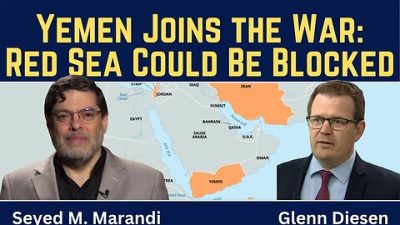
Yemen joins the war – Red Sea could be blocked next – Saudi regime at risk
or go to
Aletho News Archives – Video-Images
From the Archives
A superpower and “the world’s sickest warrior state”
By Paul J. Balles | March 8, 2010
Living through five or six major wars has hardened me to what I thought were the extremes of inhuman cruelty and brutality.
Two things made those extremes almost bearable: the brutality always revealed – at least according to the media coverage – the viciousness of the enemy. It was therefore quite understandable when our “brave men and women” pulverized the enemy.
Films of Japanese torturing captive Americans somehow justified holding Japanese Americans in internment camps during World War II; and only a small percentage of Americans found the bombing of Hiroshima and Nagasaki unreasonably vengeful at best, at worst, depraved.
The media giants in America portrayed the North Koreans as barbaric beasts with their captives, quite unlike their southern counterpoints – our allies during the Korean War. No one ever felt the need to explain how the South Koreans were a civilized breed while the North Koreans were absolute savages, at least according to the official line.
In Vietnam, our warriors justifiably (or so the media made us believe) dropped napalm on the North Vietnamese who had the gall to hide in villages and tunnels to ravage our invaders. At least it was accepted practice until some rogue photojournalist filmed a young girl screaming down a Vietnamese road in flames. … continue
Blog Roll
 Aletho News
- America Racing to Strategic Defeat in Iran: Lt Col Daniel Davis
- FTC Warns Visa, Mastercard, PayPal, Stripe Over Political Debanking
- Russian tanker approaches Cuba despite US oil blockade
- Marandi: Yemen joins the war – Red Sea could be blocked next – Saudi regime at risk
- Pro-Palestinian French member of European Parliament denied entry to Canada
- Pakistan to Host US-Iran Talks
- How Indonesia’s tilt toward the US left it stranded in the Strait of Hormuz
- US has no choice but to retreat from Iranian borders: Top commander
- Iran Retaliation Strikes Chemical Plant Near Dimona
- AWACS’ Destruction is a Major Loss for US Military – Ex-DoW Analyst
- If Americans Knew
- Israeli police block Catholic cardinal from entering Church of the Holy Sepulchre on Palm Sunday
- Israel is assassinating journalists again, more than any other nation, anywhere, ever – Not a ceasefire Day 170
- Over 300 US service members wounded, majority have brain injuries – Not a ceasefire Day 169
- Researchers at Human Rights Watch Resign Over Blocked Report on Palestinian Refugee Return
- Jewish Groups Are Backing a War Americans Don’t Want
- Eric Fingerhut Thinks He’s the President of the Jews
- Top Jewish Philanthropists, Rabbis Urge Israeli President to Take Action Against ‘Jewish Extremists’
- Don’t Be Fooled. Zionist Leaders Have Always Wanted to Control Southern Lebanon
- Israel’s widespread use of torture is a core element of its genocide against the Palestinian people
- In Israel’s War on Iran, Many Middle East US Bases Rendered “All But Uninhabitable”
- No Tricks Zone
- New Study Finds Warming Saves Lives…Cold Temperatures 12 Times More Deadly Than Excess Heat
- German Science Blog Accuses PIK Climate Institute Of Hallucinating Climate Tipping Points
- Devastating Assessment Of Comirnaty Vaccine By Former Senior Pfizer Europe Toxicologist
- New Study: CO2 Is ‘Effectively Negligible’ As An Explanatory Climate Change Factor Since 2000
- Former Pfizer Toxicologist Dr. Helmut Sterz Tells Bundestag Hearing Pfizer Vaccine Should Have Never Been Approved
- Energy Expert: Germany’s Nuclear Phaseout Was A “500 Billion Euro Mistake”
- New Research: South Australia’s Mid-Holocene Sea Surface Temperatures Were 4°C Warmer Than Today
- Storing Green Energy To Last Germany 10 Days Would Require A 60-Million Tonne Battery
- New Studies: UK Sea Levels Were 4 Meters Higher Than Today During The Mid-Holocene
- Destructive Green New Deal: German Energy And Metal Group Warns Of Drastic Crisis
 Aletho News