Iran warns of NPT withdrawal, Strait of Hormuz closure after US attack
Al Mayadeen | June 22, 2025
Following the United States’ airstrikes on Iranian nuclear facilities, senior Iranian lawmakers have raised the possibility of withdrawing from the Nuclear Non-Proliferation Treaty (NPT) and closing the strategic Strait of Hormuz in retaliation.
The warnings come after US President Donald Trump announced, in a post in Truth Social, on Sunday at dawn, that the United States carried out what he described as a “very successful attack” on three Iranian nuclear facilities: Fordow, Natanz, and Isfahan.
Esmail Kowsari, a prominent member of Iran’s National Security and Foreign Policy Committee in Parliament, affirmed that the country had already implemented protective measures to safeguard its nuclear infrastructure. He dismissed allegations of severe damage to Iran’s nuclear program, calling them “baseless claims,” and insisted that “Tehran has accurate intelligence disproving such assertions.”
Kowsari revealed that authorities are actively weighing a possible exit from the NPT. “We are reviewing the option of withdrawing from the Nuclear Non-Proliferation Treaty,” he said, noting that the parliamentary committee would soon hold an emergency session to assess the American attack and formulate Iran’s official response.
Reiterating Iran’s commitment to Resistance, Kowsari warned that “our armed forces will certainly continue striking the Zionist entity,” adding, “US military bases across the region will not remain secure. Hitting them will be far easier than targeting the Israeli regime.”
He further cautioned that Iran is prepared to escalate militarily if necessary, stating, “The closure of the Strait of Hormuz is on the table. We will definitely implement it if the situation requires.”
‘Iran will respond decisively’
In a related comment, Sara Fallahi, another member of the parliamentary committee, told Tasnim News that a forceful response is inevitable. “Iran will respond decisively,” she said, adding that retaliation could involve “a full withdrawal from the NPT and closure of the Strait of Hormuz.”
Parliament’s Foreign Policy Committee head, Abbas Golroo, reinforced that position in a statement posted on X, asserting that “Iran has the legal right to withdraw from the nuclear Non-Proliferation Treaty (NPT) based on its Article 10, following US strikes on three Iranian nuclear facilities.”
Article 10 of the NPT provides that any member state has “the right to withdraw from the Treaty if it decides that extraordinary events have jeopardized the supreme interests of its country.”
IAEA announces emergency meeting following US strikes
In response to the escalating crisis, International Atomic Energy Agency (IAEA) Director General Rafael Grossi announced an emergency session of the agency’s Board of Governors scheduled for Monday in Vienna.
“In light of the urgent situation in Iran, I am convening an emergency meeting of the @IAEAorg Board of Governors for tomorrow,” Grossi posted on X on Sunday.
Separately, the head of Iran’s Atomic Energy Organization sent a formal letter to the IAEA, demanding an independent investigation into the US aggression. Iranian officials have insisted that the targeted facilities were operating under full IAEA supervision and posed no nuclear threat.
US Strikes on Iran Reckless Breach of Sovereignty – Russian Foreign Ministry
Sputnik – 22.06.2025
MOSCOW – The Russian Foreign Ministry condemned the US bombing of Iranian nuclear sites as a reckless move that violates the Islamic Republic’s sovereignty, international law and the UN Charter.
“The reckless decision to bomb the territory of a sovereign state, whatever the arguments, runs counter to international law, the UN Charter, the UN Security Council Resolution,” the ministry said.
It is of particular concern that the attack was carried out by a permanent member of the UN Security Council, the ministry said, adding that the UN’s core body had to interfere.
“The UN Security Council should naturally take action. Confrontational behavior of the US and Israel has to be rejected collectively,” the statement read.
“We call for an end of aggression and urge efforts that will create conditions for a return to a political and diplomatic path,” the statement said.
The ministry also called on Rafael Grossi, the head of the International Atomic Energy Agency, to report impartially on the Iran attacks at the UN atomic agency’s board of governors’ meeting on Monday.
Perception vs reality: What the Israel–Iran war actually reveals
Myth-making as strategy
By Shivan Mahendrarajah | The Cradle | June 21, 2025
Since 13 June, “Operation Rising Lion” has dominated headlines, framed by a deluge of western media portraying Iran as days from building a nuclear bomb. In response, Israel unleashed waves of airstrikes on Iranian territory, targeting military, nuclear, and civilian infrastructure. Israeli Prime Minister Benjamin Netanyahu likened it to the 1981 bombing of Iraq’s Osirak reactor – a strike of necessity to prevent annihilation.
But beneath the familiar tropes of “pre-emptive defense” lies an unmistakable imperial calculus. Over 200 Israeli aircraft participated in the opening barrage, with deep-penetration strikes and cyber warfare. Iranian air defense and radar installations were among the first to be hit. Mossad and allied forces used proxy agents to ignite internal sabotage, including drone and car bomb attacks in major cities.
This was not a “surgical strike” to stop a bomb. It was a declaration of war – a bid to decapitate the Islamic Republic.
Iran: Weak ‘regime’ or resilient state?
Western assessments insist Iran is tottering: its economy hollowed out by sanctions, its population seething, its leadership fractured. But these are fantasies. What has emerged since Israel’s 13 June assault is not a ‘regime’ in collapse, but a state adapting under fire – around which the majority of Iranians, irrespective of political affiliations, have united.
Contrary to the western narrative, the strikes that eliminated senior Islamic Revolutionary Guard Corps (IRGC) commanders and nuclear scientists barely dented Iran’s strategic posture. Within hours, Iran’s Supreme Leader Ayatollah Ali Khamenei reaffirmed Artesh (conventional military) control over national defense, elevating new commanders and activating pre-planned strike protocols. This signaled a transfer of initiative from cautious IRGC veterans – many shaped by the traumas of the 1980–1988 war with Iraq – to a more hawkish generation, willing to directly strike Israel.
Iran’s retaliatory attacks on 13, 14, and 15 June – the third instalment of Operation True Promise – struck Tel Aviv, Haifa, and three Israeli military bases. Online observers admired how quickly the Iranian military pivoted to war footing despite the assassination of high-ranking officers. One noted:
“I don’t think the American or Israeli military could have taken the losses of so many senior commanders and still struck back.”
Did Israel achieve air superiority?
Initial reports claimed Israeli dominance of Iranian airspace, based largely on footage of Israeli jets evading response and striking decoy targets. Yet after a 12-hour “silence,” Iranian air defense (AD) systems re-engaged with full force. The delay has been interpreted as either the effect of cyber warfare or a deliberate “rope-a-dope” strategy: feign weakness, draw in the enemy, make him over-confident, counterstrike.
Iran lost facilities it expected to lose, such as the outdated IR-1 centrifuges at Natanz. Underground sites with IR-6 [SM1] centrifuges at Fordow were unaffected. Mobile and fixed AD units resumed operations by nightfall, and there are unconfirmed reports of Israeli aircraft downed in later attempts to breach Iranian skies.
Israeli media touted “air superiority,” but most confirmed strikes targeted decoys. As military analyst Mike Mihajlovic explained, “more than three-quarters of the videos circulating are actually hits on the decoys.”
The illusion of dominance, broadcast by Tel Aviv, is cracking.
War by terror
Unable to sustain large-scale aerial assaults, Israel shifted tactics. Standoff missile strikes from Iraqi airspace waned. Instead, Mossad and its internal assets launched FPV drone attacks, car bombings, and anti-tank guided missile strikes. Five car bombs exploded in Tehran on 15 June alone. Civilian sites – hospitals, dormitories, and residential buildings – were hit.
These are not military operations. They are acts of terror. Still, the west echoes Tel Aviv’s narrative. The BBC and others describe these incidents as “strikes,” implying aerial precision, rather than the car bombings they are. This deliberate linguistic obfuscation dehumanizes Iranians while sanitizing Israeli aggression. Yet, this has galvanized Iranians and united them.
National unity reforged
Much like the late Iraqi President Saddam Hussein’s 1980 invasion, Tel Aviv misread Iran’s internal contradictions as signs of collapse. Yet from 13 June onward, Iranians from across the political spectrum – including long-time dissidents – have rallied behind the state.
Political analyst Sadegh Zibakalam questioned:
“Which opposition figure has spoken and written as much as I have against this regime? But how can I join the enemy in this situation? Was it right for the MEK to join Saddam?”
Former political prisoner Ali Gholizadeh added, “Despite all my criticisms of the government, I stand fully behind the commander-in-chief of the Iranian Defense Forces and [Armed] Forces in defending the homeland.”
Even reformist voices, once critical of Iran’s nuclear policy, now demand a bomb. Journalist and editor Ali Nazary says, “Iran must acquire a nuclear bomb as soon as possible. Conducting a nuclear test is the biggest deterrent.”
On Iranian social media, images of civilians killed in Israeli attacks have gone viral. As of 15 June, 224 Iranians – 90 percent civilians – were reported killed, with over 1,200 injured.
Crumbling illusions
The occupation state claims it destroyed 120 missile launchers and 200 AD units. But Iranian units continue to fire in visible clusters – indicating low attrition and high confidence. Independent analysts mock Israeli claims as propaganda. Patarames, a known military observer, posted:
“IRGC missile crews still feel so confident and safe that their launchers are firing in clusters. So much for Israeli air superiority.”
In truth, Israeli AD systems are being degraded. Iranian missiles increasingly strike with little interception. The myth of omnipotent Israeli defense is unraveling.
Meanwhile, Tehran may be preparing its exit from the Nuclear Non-Proliferation Treaty (NPT) – according to a statement made by Iranian Foreign Ministry spokesman Esmail Baghaei – and expelling International Atomic Energy Agency (IAEA) monitors. Parliament is fast-tracking bills. Crowds chant for a nuclear test. The west’s double standards on Israel’s arsenal and Tehran’s right to self-defense are fueling a shift in national strategy.
Global reactions: Hypocrisy laid bare
Washington’s rhetoric mirrors past duplicity. US President Donald Trump – who unilaterally withdrew from the Joint Comprehensive Plan of Action (JCPOA) during his first term – posted on X triumphantly:
“I gave Iran 60 days to make a deal. Israel attacked on day 61.”
G7 governments mumble about de-escalation, but offer no condemnation of Israeli aggression. The so-called “rules-based order” is silent as civilians die.
Iranians are not surprised. In 2001, they condemned the 11 September attacks and supported the US so-called War on Terror. Today, they watch the same west excuse terrorism against them. Trust is gone. Nationalism is surging.
Israel’s strategic gamble is backfiring. Hamas remains entrenched in Gaza and is targeting occupation soldiers in greater numbers. Hezbollah watches closely. Yemen’s Ansarallah-aligned armed forces are coordinating with Tehran. If Iraq’s resistance factions activate, US forces could be drawn in.
Meanwhile, Tel Aviv’s own population is rattled. Social media posts from Israelis hiding in bunkers – “they’re turning us into Gaza” – reflect growing fear. The psychological war, waged by Iran, is winning.
Across the Global South, sympathy lies with Tehran. As Australian journalist Caitlin Johnstone put it:
“Imagine being so evil and reviled that people love watching you get hit.”
A war of narratives and attrition
“Operation Rising Lion” was meant to decapitate Iran, destroy its nuclear program, and shatter its morale. Instead, it has united a fragmented polity, discredited western media, and exposed the hollowness of Israeli deterrence.
Iran’s leadership has hardened. Its people are defiant. Its enemies are scrambling to control the story.
This is not just a war of missiles. It is a war of narratives, sovereignty, and historical memory. The Axis of Resistance understands this. Tel Aviv, it seems, does not.
The Persian lion is not in a good mood.
Why BBC editors must one day stand trial for colluding in Israel’s genocide
Journalist Peter Oborne sets out six ways the state broadcaster has wilfully misled audiences on Israel’s destruction of Gaza
By Jonathan Cook | June 20, 2025
Veteran journalist Peter Oborne eviscerated the BBC this week over its shameful reporting of Gaza – and unusually, he managed to do so face-to-face with the BBC’s executive news editor, Richard Burgess, during a parliamentary meeting.
Oborne’s remarks relate to a new and damning report by the Centre for Media Monitoring, which analysed in detail the BBC’s Gaza coverage in the year following Hamas’ one-day attack on 7 October 2023. The report found a “pattern of bias, double standards and silencing of Palestinian voices.” These aren’t editorial slip-ups. They reveal a systematic, long-term skewing of editorial coverage in Israel’s favour.
Oborne was one of several journalists to confront Burgess.
Oborne makes a series of important points that illustrate why the BBC’s slanted, Israel-friendly news agenda amounts to genocide denial, and means executives like Burgess are directly complicit in Israeli war crimes:
1. The BBC has never mentioned the Hannibal directive, invoked by Israel on 7 October 2023, that green-lit the murder of Israeli soldiers and civilians, often by Apache helicopter fire, to prevent them being taken captive by Hamas. The Israeli media has extensively reported on the role of the Hannibal directive in the Israeli military’s response on 7 October, but that coverage has been completely ignored by the BBC and most UK media outlets.
Israel’s invocation of the Hannibal directive – essential context for understanding what happened on 7 October – explains much of the destruction that day in Israel usually attributed to Hamas “barbarism”, such as the graveyard of burnt-out, crumpled cars and the charred, crumbling remains of houses in communities near Gaza.
Hamas, with its light weapons, did not have the ability to inflict this kind of damage on Israel, and we know from Israeli witnesses, video footage and admissions from Israeli military officers that Israel was responsible for at least a share of the carnage that day. How much we will apparently never know because Israel is not willing to investigate itself, and media like the BBC are not doing any investigations themselves, or putting any pressure on Israel to do so.
2. The BBC has never mentioned Israel’s Dahiya doctrine, the basis of its “mowing the lawn” approach to Gaza over the past two decades, in which the Israeli military has intermittently destroyed large swaths of the tiny enclave. The official aim has been to push the population, in the words of Israeli generals, back to the “Stone Age”. The assumption is that, forced into survival mode, Palestinians will not have the energy or will to resist their brutal and illegal subjugation by Israel and that it will be easier for Israel to ethnically cleanse them from their homeland.
Because Israel has been implementing this military doctrine – a form of collective punishment and therefore indisputably a war crime – for at least 20 years, it is critically important in any analysis of the events that led up to 7 October, or of the genocidal campaign of destruction Israel launched subsequently.
The BBC’s refusal even to acknowledge the doctrine’s existence leaves audiences gravely misinformed about Israel’s historical abuses of Gaza, and deprived of context to interpret the campaign of destruction by Israel over the past 20 months.
3. The BBC has utterly failed to report the many dozens of genocidal statements from Israeli officials since 7 October – again vital context for audiences to understand Israel’s goals in Gaza.
Perhaps most egregiously, the BBC has not reported Israeli prime minister Benjamin Netanyahu’s biblically-inspired comparison of the Palestinians to “Amalek” – a people the Jews were instructed by God to wipe from the face of the earth. Netanyahu knew this clearly genocidal statement would have especial resonance with what now amounts to a majority of the combat soldiers in Gaza who belong to extreme religious communities that view the Bible as the literal truth.
The hardest thing to prove in genocide is intent. And yet the reason Israel’s violence in Gaza is so clearly genocidal is that every senior official from the prime minister down has repeatedly told us that genocide is their intent. The decision not to inform audiences of these public statements is not journalism. It is pro-Israel disinformation and genocide denial.
4. By contrast, as Oborne notes, on more than 100 occasions when guests have tried to refer to what is happening in Gaza as a genocide, BBC staff have immediately shut them down on air. As other investigations have shown, the BBC has strictly enforced a policy not only of banning the use of the term “genocide” by its own journalists in reference to Gaza but of depriving others – from Palestinians to western medical volunteers and international law experts – of the right to use the term as well. Again, this is pure genocide denial.
5. Oborne also points to the fact that the BBC has largely ignored Israel’s campaign of murdering Palestinian journalists in Gaza. A greater number have been killed by Israel in its war on the tiny enclave than the total number of journalists killed in all other major conflicts of the past 160 years combined.
The BBC has reported just 6 per cent of the more than 225 journalists killed by Israel in Gaza, compared to 62 per cent of the far smaller number of journalists killed in Ukraine. This is once again vital context for understanding that Israel’s goals are genocidal. It hopes to exterminate the main witnesses to its crimes.
6. Oborne adds a point of his own. He notes that the distinguished Israeli historian Avi Shlaim lives in the UK and teaches at Oxford University. Unlike the Israeli spokespeople familiar to BBC audiences, who are paid to muddy the waters and deny Israel’s genocide, Shlaim is both knowledgeable about the history of Israeli colonisation of Palestine and truly independent. He is in a position to dispassionately provide the context BBC audiences need to make judgments about what is going on and who is responsible for it.
And yet extraordinarily, Shlaim has never been invited on by the BBC. He is only too ready to do interviews. He has done them for Al Jazeera, for example. But he isn’t invited on because, it seems, he is “the wrong sort of Jew”. His research has led him to a series of highly critical conclusions about Israel’s historical and current treatment of the Palestinians. He calls what Israel is doing in Gaza a genocide. He is one of the prominent Israelis we are never allowed to hear from, because they are likely to make more credible and mainstream a narrative the BBC wishes to present as fringe, loopy and antisemitic. Again, what the BBC is doing – paid for by British taxpayers – isn’t journalism. It is propaganda for a foreign state.
Burgess’ answer is a long-winded shrugging of the shoulders, a BBC executive’s way of acting clueless – an equivalent of Manuel, the dim-witted Spanish waiter in the classic comedy show Fawlty Towers, saying: “I know nothing.”
Other lowlights from Burgess include his responding to a pointed question from Declassified journalist Hamza Yusuf on why the BBC has not given attention to British spy planes operating over Gaza from RAF base Akrotiri on Cyprus. “I don’t think we should overplay the UK’s contribution to what’s happening in Israel,” Burgess answers.
So the British state broadcaster has decided that its duty is not to investigate the nature of British state assistance to Israel in Gaza, even though most experts agree what Israel is doing there amounts to genocide. Burgess thinks scrutiny of British state complicity would be “overplaying” British collusion, even though the BBC has not actually investigated the extent or nature of that collusion to have reached a conclusion. This is the very antithesis of what journalism is there to do: monitor the centres of power, not exonerate such power-centres before they have even been scrutinised.
Labour MP Andy McDonald responded to Burgess: “To underplay the role of the UK is an error.”
It is more than that. It is journalistic complicity in British and Israeli state war crimes.
Here are a few key statistical findings from the Centre for Media Monitoring’s report on BBC coverage of Gaza over the year following 7 October 2023:
- The BBC ran more than 30 times more victim profiles of Israelis than Palestinians.
- The BBC interviewed more than twice as many Israelis as Palestinians.
- The BBC asked 38 of its guests to condemn Hamas. It asked no one to condemn Israel’s mass killing of civilians, or its attacks on hospitals and schools.
- Only 0.5% of BBC articles mentioned Israel’s illegal occupation of Palestine.The BBC mentioned “occupation” – the essential context for understanding the relationship between Israel and Palestinians – only 14 times in news articles when providing context to the events of 7 October 2023. That amounted to 0.3% of articles. Additional context – decades of Israeli apartheid rule and Israel’s 17-year blockade of Gaza — were entirely missing from the coverage.
- The BBC described Israeli captives as “hostages”, while Palestinian detainees, including children held without charge, were called “prisoners”. During one major hostage exchange in which 90 Palestinians were swapped for three Israelis, 70% of BBC articles focused on those three Israelis.
- The BBC covered Ukraine with twice as many articles as Gaza in the time period, even though the Gaza story was newer and Israeli crimes even graver than Russia ones. The corporation was twice as likely to use sympathetic language for Ukrainian victims than it was for Palestinian victims.
- In coverage, Palestinians were usually described as having “died” or been “killed” in air strikes, without mention of who launched those strikes. Israeli victims, on the other hand, were “massacred”, “slaughtered” and “butchered” – and the author of the violence was named, even though, as we have seen, the Hannibal directive clouded the picture in at least some of those cases.
As is only too evident watching Burgess respond, he is not there to learn from the state broadcaster’s glaring mistakes – because systematic BBC pro-Israel bias isn’t a mistake. It’s precisely what the BBC is there to do.
UK seeks to ban Palestine Action over RAF base protest
Al Mayadeen | June 21, 2025
British news outlets on Saturday revealed that the UK government is preparing to ban Palestine Action, a pro-Palestinian direct action group, by classifying it as a terrorist organization. This move, spearheaded by Home Secretary Yvette Cooper, is expected to be announced in a ministerial statement on Monday and will require parliamentary approval. If enacted, the ban would criminalize membership and support for the group under the Terrorism Act 2000.
The proposed proscription follows a high-profile protest at RAF Brize Norton in Oxfordshire, where Palestine Action activists gained access to the military airbase and sprayed red paint on two aircraft. The group described the action as part of a campaign to disrupt the UK’s complicity in “Israel’s” assault on Gaza. “Activists have interrupted Britain’s direct participation in the commission of genocide and war crimes across the Middle East,” the group said.
Video footage released by the group showed two individuals entering the base at night on electric scooters, with one spraying red paint into the engine of a Voyager aircraft, used to transport British leaders and refuel allied jets. A spokesperson for the group declared: “Despite publicly condemning the Israeli government, Britain continues to send military cargo, fly spy planes over Gaza and refuel US and Israeli fighter jets.”
Though the RAF claimed the damage is being assessed and does not expect major operational disruptions, the incident has sparked a wider security review across UK military bases. The government’s response has drawn criticism for targeting activism rather than addressing its own military entanglements.
Prime Minister Keir Starmer condemned the protest as “disgraceful” and labeled it “an act of vandalism,” while counter-terrorism police and the Ministry of Defence continue their investigations.
Disruptive Solidarity
Founded in 2020 by Huda Ammori, a British-Palestinian activist, and Richard Barnard, Palestine Action is known for its non-violent yet disruptive tactics aimed at corporations that profit from the Israeli military-industrial complex.
The group has previously shut down two Elbit Systems-linked arms factories in Oldham and Tamworth and forced companies like Dean Group International to cut contracts with Israeli weapons manufacturers. Their disruptive tactics—ranging from factory occupations and sabotage to sustained divestment pressure, have challenged British institutions to reckon with their role in supplying the machinery of occupation.
Friday’s action at Brize Norton marks one of the group’s most significant actions yet, directly confronting a military base central to the UK’s support operations.
Critics say the proscription is a politically motivated attempt to silence dissent against Britain’s role in arming and supporting “Israel”. “We represent every person who stands for Palestinian liberation. If they want to ban us, they ban us all,” Palestine Action posted on X. The Palestine Solidarity Campaign called the move “outrageous,” defending the group as a non-violent direct action network.
The planned ban raises serious concerns about the criminalization of solidarity with Palestine and the suppression of dissent.
US presses Iran nuclear threat narrative despite IAEA’s denial
RT | June 21, 2025
US ambassador to the UN Dorothy Shea stated at a UN Security Council meeting on Friday that Iran must be stopped from developing a nuclear bomb, despite IAEA Director General Rafael Grossi recently saying the agency found no evidence that Tehran is pursuing such a weapon. Analysts say Washington’s narrative resembles past efforts to justify regime change in the Middle East.
Last week, Israel launched airstrikes on Iran, citing an imminent threat that Tehran would make a nuclear weapon. Iran, insisting its nuclear program is peaceful, retaliated with strikes on Israeli targets. The Israeli assault came days after the IAEA reported that Iran had enriched uranium to 60% – which is short of the 90% required for weapons.
However, since the strikes started, Grossi has claimed that his agency had no proof that Iran was actually trying to build a nuclear weapon, stressing that enriched uranium alone does not constitute a bomb. US intelligence agencies also maintain there is no evidence Iran is pursuing nuclear arms. Nevertheless, President Donald Trump has claimed Iran was “very close” to acquiring a bomb and warned the US could intervene if it doesn’t agree to scrap its nuclear program.
Shea declared the US “continues to stand with Israel” and backs its campaign against “Iran’s nuclear ambitions.” She insisted that the US “can no longer ignore that Iran has all that it needs to achieve a nuclear weapon,” lacking only a decision from its supreme leader.
Some analysts say US rhetoric on Iran echoes President George W. Bush’s 2002 claims about Iraqi WMDs, which led to a US invasion despite no stockpiles being found. Former Trump adviser Steve Bannon told journalist Tucker Carlson this week that the entire operation against Iran “that came out of nowhere” is in fact an attempt by the US “deep state” to orchestrate regime change in Iran.
“We have a system that has its own national security policy… that is the fight we have to take on today,” Bannon stated, suggesting that Trump should not succumb to pressure from US war hawks and involve American military in the conflict. Tucker Carlson also said that while he supports Trump, he fears the consequences if he yields to pressure and joins the Israeli strikes. “I think we’re gonna see the end of the American empire,” he warned, criticizing Washington hawks for dragging the country into another war.
Journalist Steve Coll told NPR this week that using US intelligence to justify strikes mirrors the Iraq war narrative. He noted that while Israel calls its attacks preemptive, the objective remains vague.
“[Prime Minister Benjamin] Netanyahu has spoken of regime change and urged Iranians to rise up – just like George H.W. Bush did in 1991 with Iraq,” Coll said. “There’s no sign of a planned invasion, yet talk of toppling Iran’s government persists.”
Other observers, including former US President Bill Clinton, suggested Israel’s “undeclared war” on Iran may also be driven by another goal – Netanyahu’s desire to stay in power. Shea made a notable slip during her UN remarks, initially blaming Israel for “chaos and terror” in the Middle East before correcting herself to attribute it to Iran. RT’s Rick Sanchez and journalist Chay Bowes called her words a “Freudian slip” while discussing the situation in an episode of Sanchez Effect on Friday, with Sanchez adding, “She accidentally said the truth out loud.”
Israel received 14 weapon shipments from US, Germany since start of Iran war
The Cradle | June 20, 2025
Fourteen military cargo planes have arrived in Israel since the start of Tel Aviv’s brutal war against Iran, the Israeli Defense Ministry confirmed.
According to the ministry, the shipments are part of a broader flow of 800 military cargo planes that have arrived in Israel since the start of the genocidal war against Gaza in October 2023.
The ministry stated the shipment is “part of efforts to strengthen operational continuity and support all the IDF’s needs, both for achieving the goals of the war and for improving readiness and stockpiles.”
Most of these planes originated from the US, while the rest came from Germany.
The ministry confirmed that the latest shipments, which arrived on 19 June, are carrying equipment for Israel’s defense systems, which are being used to intercept Iran’s retaliatory ballistic missile strikes against Israeli targets.
Military cargo planes are expected to continue arriving in the coming weeks, the Israeli Defense Ministry added. It said that these shipments are part of a joint effort involving the Defense Procurement Administration, procurement delegations in the US and Germany, the Israeli army’s Planning and Force Build-Up Directorate, and the Israeli Air Force.
The US has continued to funnel massive amounts of weapons and military equipment into Israel, and has deployed warships and fighter jets to the region to help the Israeli army in its attempts to shoot down Iranian missiles.
Middle East Eye reported on 14 June that before the Israeli attack on Iran last Friday, the US covertly delivered about 300 Hellfire missiles to Israel.
Since the genocide of Palestinians in Gaza began, Washington has delivered over 90,000 tons of armaments and military equipment.
“The US is a partner in the Israeli aggression against Iran, even if it does not participate publicly,” Iranian Foreign Minister Abbas Araghchi said on 20 June.
Over the past few days, there has been widespread anticipation over a potential decision by US President Donald Trump to directly enter the war against Iran – particularly for joint strikes on the Fordow nuclear facility.
“Based on the fact that there’s a substantial chance of negotiations that may or may not take place with Iran in the near future, I will make my decision whether or not to go within the next two weeks,” Trump said on Thursday.
Reports in Hebrew media have said Trump may be trying to deceive the Iranians, and could be planning to enter the war much sooner.
Iran’s ambassador to the UN said in Geneva on 18 June that Tehran will “respond seriously and strongly” if Washington directly enters the Israeli war.
The Islamic Republic had previously warned that all US bases in the region were within its reach and would be targeted if Washington launched an attack against the country.
Mohammad Marandi: Iran Prepares for War with America
Prof. Seyed Mohammad Marandi and Prof. Glenn Diesen
Glenn Diesen | June 19, 2025
Seyed Mohammad Marandi is a professor at Tehran University and a former advisor to Iran’s Nuclear Negotiation Team. Prof. Marandi discusses the US preparations to enter the war directly, and Iran’s preparations to fight the US. Trump will only accept Iran’s surrender, yet he does not appear to have the means to achieve this objective. What will happen if US strikes are ineffective and US military assets in the region are attacked? The only path forward now is reckless escalation.
Israel’s war on Iran is not about nuclear weapons
It is, and has always been, about regime change and breaking the Axis of Resistance
By Robert Inlakesh | RT | June 19, 2025
The claim that has been adopted by the United States, Israel and its European partners, that the attack on Iran was a “pre-emptive” attempt to stop Tehran from acquiring nuclear weapons, is demonstrably false. It holds about as much weight as the allegations against Iraq’s Saddam Hussein in 2003 and this war of aggression is just as illegal.
For the best part of four decades, Israeli Prime Minister Benjamin Netanyahu has been claiming that Iran is on the verge of acquiring a nuclear weapon. Yet, every single attempt to strike a deal which would bring more monitoring and restrictions to Iran’s nuclear program has been systematically dismantled by Israel and its powerful lobbying groups in Western capitals.
In order to properly assess Israel’s attack on Iran, we have to establish the facts in this case. The Israeli leadership claim to have launched a pre-emptive strike, but have presented no evidence to support their allegations that Iran was on the verge of acquiring a nuclear weapon. Simply stating this does not serve as proof, it is a claim, similar to how the US told the world Saddam Hussein possessed weapons of mass destruction.
Back in March, the US Director of National Intelligence, Tulsi Gabbard testified before a Senate Intelligence Committee that the intelligence community “continues to assess that Iran is not building a nuclear weapon and Supreme Leader Ayatollah Ali Khamenei has not authorized the nuclear weapons program he suspended in 2003.”
On top of this, Iran was actively participating in indirect negotiations with the US to reach a new version of the 2015 Nuclear Deal. Donald Trump announced Washington would unilaterally withdraw from the agreement in 2018, instead pursuing a “maximum pressure” sanctions campaign at the behest of Israel.
Despite the claims of Netanyahu and Trump that Iran was violating the Nuclear Deal, the International Atomic Energy Agency (IAEA) released a report which stated Iran was in full compliance with the deal at the time.
If you trace back every conversation with neo-conservatives, Israeli war hawks and Washington-based think tanks, their opposition to the Obama-era Nuclear Deal always ends up spiraling into the issues of Iran’s ballistic missile program and its support for regional non-State actors.
Israeli officials frequently make claims about Iran producing a nuclear weapon in “years”, “months” or even “weeks,” this has become almost second nature. Yet their main issue has always been with Iran’s support for groups like Hamas and Hezbollah, who strive for the creation of a Palestinian State.
Proof of all this is simple. Israel, by itself, cannot destroy Iran’s vast nuclear program. It is not clear the US can destroy it either, even if it enters the war. An example of the US’ ineffectiveness at penetrating Iranian-style bunkers, built into mountainous ranges, as many of Iran’s nuclear facilities are, was demonstrated through the American failure to destroy missile storage bases in Yemen with its bunker-buster munitions, which were dropped from B-2 bombers.
Almost immediately after launching his war on Iran, Netanyahu sent out a message in English to the Iranian people, urging them to overthrow their government in an attempt to trigger civil unrest. The Israeli prime minister has since all but announced that regime change is his true intention, claiming that the operation “may lead” to regime change.
Israel’s own intelligence community and military elites have also expressed their view that their air force alone is not capable of destroying the Iranian nuclear program. So why then launch this war, if it is not possible to achieve the supposed reason it was “pre-emptively” launched?
There are two possible explanations:
The first is that the Israeli prime minister has launched this assault on Iran as a final showdown in his “seven front war,” with which he hopes to conclude the regional conflict through a deadly exchange that will ultimately inflict damage on both sides.
In this scenario, the desired outcome would be to conclude the war with the claim that Netanyahu has succeeded at destroying or has significantly degraded Iran’s nuclear program. He would also throw in claims, like we already see him making, that huge numbers of Iranian missiles and drones were eliminated. This would also make the opening Israeli strike, which killed senior Islamic Revolutionary Guard Corps (IRGC) commanders and nuclear scientists, make sense. It would all be the perfect blend of propaganda to sell a victory narrative.
On the other hand, the assumption would be that Tehran would also claim victory. Then both sides are able to show the results to their people and tensions cool down for a while. If you are to read what the Washington-based think-tanks are saying about this, most notably The Heritage Foundation, they speak about the ability to contain the war.
The second explanation, which could be an added bonus that the Israelis and US are hoping could come as a result of their efforts, is that this is a full-scale regime change war that is designed to rope in the US.
Israel’s military prestige was greatly damaged in the Hamas-led attack on October 7, 2023, and since that time there has been no victory achieved over any enemy. Hamas is still operating in Gaza and is said to have just as many fighters as when the war began, Hezbollah was dealt significant blows but is still very much alive, while Yemen’s Ansarallah has only increased its strength. This is an all round stunning defeat of the Israeli military and an embarrassment to the US.
As is well known, Iran is the regional power that backs all of what is called the Axis of Resistance. Without it, groups like Hezbollah and Hamas would be significantly degraded. Evidently, armed resistance to Israeli occupation will never end as long as occupied people exist and live under oppressive rule, but destroying Iran would be devastating for the regional alliance against Israel.
The big question however, is whether regime change is even possible. There is a serious question mark here and it seems much more likely that this will end up on a slippery slope to nuclear war instead.
What makes the Israeli-US claim that this war is somehow pre-emptive, for which there is no proof at all, all the more ridiculous of a notion, is that if anything, Iran may now actually rush to acquire a nuclear weapon for defensive purposes. If they can’t even trust the Israelis not to bomb them with US backing, while negotiations were supposed to be happening, then how can a deal ever be negotiated?
Even in the event that the US joins and deals a major blow to the Iranian nuclear program, it doesn’t mean that Iran will simply abandon the program altogether. Instead, Tehran could simply end up rebuilding and acquiring the bomb years later. Another outcome of this war could end up being Israeli regime change, which also appears as if it could now be on the table.
Robert Inlakesh is a political analyst, journalist and documentary filmmaker currently based in London, UK. He has reported from and lived in the Palestinian territories and currently works with Quds News. Director of ‘Steal of the Century: Trump’s Palestine-Israel Catastrophe’.
Decoding Iran’s strategy in current war
By Amro Allan | Al Mayadeen | June 18, 2025
Iran’s Foreign Minister has made it clear in multiple statements that the Islamic Republic remains open to re-engaging the diplomatic track, provided that the US-Israeli aggression against the country comes to an end. At the same time, however, IRGC Commander Brigadier General Mohammad Pakpour has declared, “Even if the Israeli attacks stop, we will continue our mission to the end.” These seemingly contradictory positions raise a key question: What exactly is Iran’s objective in this confrontation, and how should its strategy be understood? More pressingly, what role is the United States playing on the battlefield?
Tehran understands that the ultimate goal of the current assault, launched in the early hours of June 13, is not simply aggressive, but existential. The US-Israeli axis seeks nothing less than the collapse of the Islamic Republic itself. According to most military analysts, neutralizing Iran’s nuclear programme through conventional means is well beyond the capabilities of the Israeli military. This is particularly true when it comes to heavily fortified enrichment facilities like Natanz and Fordow, which are among the most secure sites in the world against aerial and missile strikes.
To strike such hardened targets, advanced bunker-busting munitions would be required, arms that are exclusively in the hands of the US military. What’s more, the only aircraft capable of delivering these weapons—the B-2 stealth bomber—operates solely under the command of the United States Air Force. Some experts even question whether these bombs would be effective against Iran’s most deeply buried and reinforced sites.
Both Washington and Tel Aviv are fully aware of these limitations, which cast serious doubt on their publicly stated rationale for launching the war. This scepticism is only reinforced by Netanyahu’s early appeal, issued just hours after the attack, urging Iranians to rise up against their own government, a move that tacitly reveals the true aim of the aggression.
This level of strategic ambition has been absent from previous assaults on Iran. The assassination of Lieutenant General Qassem Soleimani, Commander of the IRGC Quds Force, in January 2020, “Israel’s” missile strike on the Iranian consulate in Damascus in April 2024, and the attack on an air defense site near Isfahan inside Iran later that month, none of these triggered the same level of overt intent to destabilise the Iranian state.
It is this shift in objective that explains Iran’s evolving response. Unlike past retaliatory actions, such as the missile strike on the Ain al-Assad US base in January 2020, or Operation True Promise 1 and 2 of April and October 2024, Iran’s current posture signals a long-term strategic engagement rather than a calibrated response.
Tehran does not appear eager to escalate the conflict into a regional war, fully aware that such a scenario could have catastrophic consequences not just for itself, but for the wider Middle East. Still, it is determined to impose a high cost on its adversaries, one that restores the balance of deterrence and redraws the lines of power in the region.
This approach was articulated clearly by Iranian Leader Sayyed Ali Khamenei, who warned, “We will not allow the Zionists to escape unscathed for this great crime. The Zionist entity has committed a grave miscalculation—one that will bring ruin upon them, by God’s grace.”
It is in this context that General Pakpour’s remarks must be understood. Iran’s continuation of Operation True Promise 3 is not dependent on whether “Israel” halts its attacks. Rather, it is driven by a broader aim: to establish new rules of engagement and a new balance of power, irrespective of short-term developments.
At the same time, the Foreign Minister’s comments point to Iran’s reluctance to turn this war into a fight for national survival, unless forced to do so by further escalation from the other side.
But “Israel’s” failure to cripple the Islamic Republic in its initial, high-stakes strike, an operation designed to fundamentally alter the regional power balance, makes direct American involvement more likely in the days ahead. Washington may now feel compelled to interfere in order to accomplish what Tel Aviv could not.
All this suggests that the risk of escalation remains high. The war could soon expand to include oil infrastructure across the Gulf and target US military bases scattered throughout the region.
This leaves a crucial question hanging in the balance: Will key regional powers, Egypt, Turkey, Algeria, and Pakistan, recognize the gravity of what is unfolding? And will they act accordingly, acknowledging that the war being waged by the US-Israeli alliance poses a serious threat to their own security, sovereignty, and future stability?
Middle East in Crisis – 3
Trump orders ‘unconditional surrender’ by Iran. Who’s listening?
By M. K. BHADRAKUMAR | Indian Punchline | June 18, 2025
Israel’s blitzkrieg against Iran five days ago is failing spectacularly. The Russian media reported that: i) Israel’s Rafael weapons complex has been destroyed; ii) Haifa oil refinery is in flames; iii) the Iron Dome has been breached; iv) and, Israel’s air dominance is a figment of imagination.
On Tuesday, Iran fired cruise missiles for the first time against Israel. Another wave of Iranian missile and drone attack targeted the Nevatim Airbase in southern Israel, where stealth fighter jets, transport aircraft, tanker aircraft and machines for electronic reconnaissance/surveillance, etc. are stationed.
Some Iranian reports claim that “plumes of smoke were rising from areas near the Dimona nuclear facility,” where an estimated 90 Israeli nuclear warheads are stored. If true, this must be highly embarrassing for Israel which has been maintaining a policy of deliberate ambiguity in regard to its nuclear capabilities as well as for President Donald Trump who is constantly hectoring Iran while turning a blind eye on Israel’s clandestine nuclear weapon stockpiles right under his nose — apart from exposing the IAEA.
According to the independent Stockholm International Peace Research Institute, Israel’s nuclear warheads are capable of being delivered anywhere within a maximum radius of 4,500 km by its F-15, F-161, and F-35I “Adir” aircraft, its 50 land-based Jericho II and III missiles, and by about 20 Popeye Turbo cruise missiles, launched from submarines.
Suffice to say, rational minds among the Israeli elite feel worried. Typically, Danny Yatom, former head of Mossad, is quoted as saying, “Iranians will not kneel; they will not raise the flag of surrender and they will not give in!”
The American broadcast television network NBC has reported that Israel asked Iran, through western mediators, to stop its retaliatory attacks and return to nuclear negotiations. This would probably explain Trump’s bombastic post on Sunday in Truth Social that Israel and Iran will end their violent conflict by “making a deal” through his mediation. Trump wrote, ”We will have peace, soon, between Israel and Iran. Many calls and meetings now taking place.” He even drew the analogy of his success in brokering peace between India and Pakistan recently.
However, the realisation may have since dawned on Trump that Iranians will not forget or forgive the assassinations of their military commanders or the destruction and loss of life of dozens of civilians in the Israeli Blitzkrieg, which targeted Iran’s nuclear facilities, military infrastructure, and residential buildings in Tehran and other cities.
Trump has a major decision to take in coming days as regards the next move — specifically, how to rescue Israel from the attritional war that lies ahead. Pressure for US military intervention is mounting. Trump is obligated one way or another to all three segments of the Israel Lobby — Zionists, evangelical Christians and wealthy Jewish elites who are kingmakers in American politics.
The pendulum is wildly swinging in Trump’s mercurial mind. He was in an irritable mood at the G-7 summit in Canada on Monday, cut short his trip and picked a nasty public quarrel with French President Emmanuel Macron for simply commenting that Trump hurried back to wrap up a ceasefire.
Trump wrote angrily, “Publicity seeking President Emmanuel Macron, of France, mistakenly said that I left the G7 Summit, in Canada, to go back to D.C. to work on a “cease fire” between Israel and Iran. Wrong! He has no idea why I am now on my way to Washington, but it certainly has nothing to do with a Cease Fire. Much bigger than that. Whether purposely or not, Emmanuel always gets it wrong. Stay Tuned!”
Four hours later, he clarified, “I have not reached out to Iran for “Peace Talks” in any way, shape, or form. This is just more HIGHLY FABRICATED, FAKE NEWS! If they want to talk, they know how to reach me. They should have taken the deal that was on the table — Would have saved a lot of lives!!!”
Seven hours later, Trump claimed, “We now have complete and total control of the skies over Iran. Iran had good sky trackers and other defensive equipment, and plenty of it, but it doesn’t compare to American made, conceived, and manufactured “stuff.” Nobody does it better than the good ol’ USA.”
But a few minutes later, Trump threatened Iran’s Supreme Leader Ayatollah Ali Khamenei: “We know exactly where the so-called “Supreme Leader” is hiding. He is an easy target, but is safe there — We are not going to take him out (kill!), at least not for now. But we don’t want missiles shot at civilians, or American soldiers. Our patience is wearing thin. Thank you for your attention to this matter!”
Seven minutes later, another nasty post followed in capital letters: “UNCONDITIONAL SURRENDER!”
That was 9 hours ago. Presumably, Trump wound up Tuesday by ordering Iran to crawl on its knees. The chances of Iran obliging him are zero. In fact, the Chairman of the Chiefs of Staff of Iran’s Armed Forces Major General Abdolrahim Mousavi said on Tuesday that the operations carried out so far have served as a deterrent warning, and the actual “punitive operations” are set to begin soon. The general asked the inhabitants of Tel Aviv and Haifa “to leave these areas for the sake of their lives.”
In fact, an Iranian commentary underscored yesterday that “Israeli strikes on Iran’s energy infrastructure and southern ports near the Persian Gulf could shift the nature of the conflict dramatically… This is precisely what Iran identifies as its strategic red line.”
The commentary continues: “What we’re witnessing is a multi-level hybrid conflict, a complex puzzle involving direct warfare, proxy engagement, diplomatic pressure, and a simmering “cold peace”—all unfolding at once… But such a scenario is unsustainable, as Israel… knows it cannot endure a prolonged high-intensity conflict.
The commentary estimates that a ceasefire “would likely be a tense calm or a “cold peace” rather than true stability.” Because, “What’s emerging now is a fluid and brutal new balance of power… The Persian Gulf, Israel, the Axis of Resistance, and the global energy market are no longer separate arenas—but interconnected pieces in a simultaneous, high-stakes game.” (here)
The great dilemma for Trump is that there’s no quick fix solution in sight. On his way back to the US yesterday evening, Trump said he wanted a “real end” to the conflict and that he was “not too much in a mood to negotiate.” German Chancellor Friedrich Merz also noted that Trump was indeed considering that option. The US is rapidly building up its forces in the Gulf region.
However, US intervention may trigger a continental war that will outlive Trump’s presidency and destroy his presidency, as Bush’s 2003 Iraq invasion destroyed his. And Trump might as well forget about America First, MAGA, Ukraine, Taiwan, tariff wars, immigration, inflation, China, etc.
Even European allies won’t stand by Trump. Macron told reporters on the sidelines of the G7 summit after Trump’s departure, “The biggest mistake today would be to try to do a regime change in Iran through military means because that would lead to chaos.” Macron warned that “no one can say what comes next…We never support actions of regional de-stabilisation.”
Do not forget that the skeptics include Vice President JD Vance also, whose suspicion of foreign entanglements had its origins in his time as a US Marine in Iraq, where he became disillusioned with America’s interventionist regime change projects and ill-fated ‘forever wars’ in the region.
Israel’s Strategic Miscalculation and the Dawn of a New World Order
By Peiman Salehi – New Eastern Outlook – June 18, 2025
In June 2025, the world witnessed the outbreak of a full-scale war between the Islamic Republic of Iran and the Zionist regime of Israel. This conflict, extending far beyond the military sphere, is reshaping political, media, and geopolitical landscapes. At the onset of hostilities, Israel initiated a surprise operation targeting several high-ranking Iranian military commanders and scientists. Tel Aviv saw this act as a significant achievement, anticipating it would plunge Iran into psychological disarray and delay its response.
Yet, this assumption proved gravely flawed. The Islamic Republic swiftly recovered and, within days, launched a series of unprecedented strikes on key Israeli cities such as Haifa and Tel Aviv. The extent of the damage inflicted on strategic infrastructure suggested a deep disruption in the psychological and political equilibrium, signaling a fundamental shift in the rules of engagement. As the conflict escalated, Prime Minister Benjamin Netanyahu made concerted efforts to draw the United States into the fray. Donald Trump, who initially reacted with sarcasm to the news of Iranian casualties, soon reversed his tone, presenting himself as a mediator. This rhetorical pivot reflects not a genuine desire for peace, but rather concern over the conflict’s expanding consequences.
From Tehran’s perspective, the war is not simply a reactionary campaign, but a calculated effort to alter the regional balance of power. Iran’s approach indicates a strategic vision aimed at redefining the security architecture of West Asia. Analysts now grapple with a pivotal question: will the war remain confined to regional boundaries, or evolve into a broader global confrontation? The varying positions of nuclear powers from East and West point to emerging global realignments. Nations like Pakistan, India, China, and Russia view the crisis through their distinct strategic lenses.
Meanwhile, the geopolitical relevance of choke points such as the Strait of Hormuz and Bab al-Mandab has resurged, underlining their significance to global trade and international stability. This war increasingly appears to be a confrontation between two competing visions of world order. The liberal, US-centric model—characterized by interventionism, hegemonic ambitions, and asymmetric power structures—is facing unprecedented resistance. In its place, a multipolar order championed by emerging powers is gaining traction.
If this moment is seized wisely by independent states and resistance movements, it could mark a turning point in contemporary political history. The world, once declared to have reached the “end of history,” is now experiencing the return of history, fueled by the renewed agency of sovereign nations.
Ultimately, to counter imperial interventions and dismantle imposed global frameworks, this war must be understood not merely as an isolated event, but as a transformative juncture in international relations. Resistance today is not limited to a regional force—it is a global discourse that challenges domination. The choice between submission and resistance is no longer Iran’s alone; it is one that history must now resolve.
Featured Video
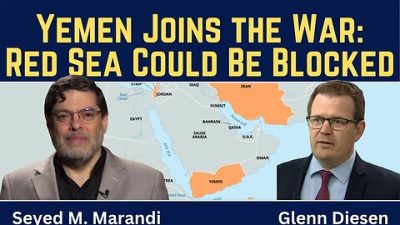
Yemen joins the war – Red Sea could be blocked next – Saudi regime at risk
or go to
Aletho News Archives – Video-Images
From the Archives
Should Europeans ‘Thank’ the Americans for Destroying Nord Stream?
By Robert Bridge | Strategic Culture Foundation | September 29, 2022
With an investigation continuing into the destruction of the Nord Stream gas pipeline that provided energy supplies to Europe from Russia, there appears to be just one prime suspect, and that should surprise nobody.
Following the sabotage of the Nord Stream 1 and 2 gas pipelines, former Polish Foreign Minister Radoslaw Sikorski already seemed to know the identity of the perpetrator when he tweeted out: “Thank you, USA.”
At first glance, it seemed that Sikorski was speaking sarcastically, berating Washington for carrying out an attack that will have severe repercussions for the people of Europe. After all, how could anyone see any good coming from the termination of Europe’s primary source of gas reserves with winter just around the corner? It was Sikorski’s homeland of Poland, after all, that urged its citizens to collect firewood in the face of dwindling gas reserves.
In fact, the Polish diplomat was speaking one-hundred percent literally… continue
Blog Roll
 Aletho News
- US should start removing its troops for Germany, proposes AfD co-leader Chrupalla
- Iran Red Crescent: 600 educational centers attacked in US-Israeli ‘war crimes’
- Russian Oil Tanker Arrives in Cuba Amid U.S. Blockade
- America Racing to Strategic Defeat in Iran: Lt Col Daniel Davis
- FTC Warns Visa, Mastercard, PayPal, Stripe Over Political Debanking
- Russian tanker approaches Cuba despite US oil blockade
- Marandi: Yemen joins the war – Red Sea could be blocked next – Saudi regime at risk
- Pro-Palestinian French member of European Parliament denied entry to Canada
- Pakistan to Host US-Iran Talks
- How Indonesia’s tilt toward the US left it stranded in the Strait of Hormuz
- If Americans Knew
- Israeli police block Catholic cardinal from entering Church of the Holy Sepulchre on Palm Sunday
- Israel is assassinating journalists again, more than any other nation, anywhere, ever – Not a ceasefire Day 170
- Over 300 US service members wounded, majority have brain injuries – Not a ceasefire Day 169
- Researchers at Human Rights Watch Resign Over Blocked Report on Palestinian Refugee Return
- Jewish Groups Are Backing a War Americans Don’t Want
- Eric Fingerhut Thinks He’s the President of the Jews
- Top Jewish Philanthropists, Rabbis Urge Israeli President to Take Action Against ‘Jewish Extremists’
- Don’t Be Fooled. Zionist Leaders Have Always Wanted to Control Southern Lebanon
- Israel’s widespread use of torture is a core element of its genocide against the Palestinian people
- In Israel’s War on Iran, Many Middle East US Bases Rendered “All But Uninhabitable”
- No Tricks Zone
- New Study Finds Warming Saves Lives…Cold Temperatures 12 Times More Deadly Than Excess Heat
- German Science Blog Accuses PIK Climate Institute Of Hallucinating Climate Tipping Points
- Devastating Assessment Of Comirnaty Vaccine By Former Senior Pfizer Europe Toxicologist
- New Study: CO2 Is ‘Effectively Negligible’ As An Explanatory Climate Change Factor Since 2000
- Former Pfizer Toxicologist Dr. Helmut Sterz Tells Bundestag Hearing Pfizer Vaccine Should Have Never Been Approved
- Energy Expert: Germany’s Nuclear Phaseout Was A “500 Billion Euro Mistake”
- New Research: South Australia’s Mid-Holocene Sea Surface Temperatures Were 4°C Warmer Than Today
- Storing Green Energy To Last Germany 10 Days Would Require A 60-Million Tonne Battery
- New Studies: UK Sea Levels Were 4 Meters Higher Than Today During The Mid-Holocene
- Destructive Green New Deal: German Energy And Metal Group Warns Of Drastic Crisis
 Aletho News