Will this documentary put Keir Starmer behind bars?
Declassified UK and Double Down News | December 11, 2025
 • Cinematic Tension Suspense No Copyright Mu… • dark ambient music no copyright (i hope so…
 / arthurvost • 🌕 Free Dark Space Music (For Videos) – “A … 🔎 • ULTRAWAVE – Oceandrive (Synthwave No Copyr…
IDF Force Structure in Peril
By Bill Buppert | The Libertarian Institute | December 15, 2025
I suspect the Israeli military force losses are even greater than they let on.
The Israeli Defense Forces (IDF) last won a war in 1973; everything else has been a stalemate or a near-run defeat. This latest massacre machine against defenseless humans may be the last gasp of an always overestimated military entity:
Israeli army faces ‘worst manpower crisis in its history,’ general says
During two years of Israel’s genocidal war in Gaza, the military lost 923 troops and saw 6,399 wounded, while roughly 20,000 soldiers suffer from post-traumatic stress, according to Israeli media citing army data.
Under heavy military censorship, the army faces accusations of concealing higher losses to preserve morale.
Brik wrote that many officers sought immediate discharge and younger recruits refused to sign long-term contracts, creating a wide shortage of professional staff across the military.
The IDF is not the vaunted war machine they advertsie themselves as.
Israeli army shoots Jewish man in occupied West Bank
MEMO | December 15, 2025
The Israeli army shot a young Jewish man on Monday morning near the Kedumim settlement, east of Qalqilya, in the northern occupied West Bank, after initial reports of a stabbing incident.
Israeli media first reported that a stabbing had taken place at a fuel station near the Kedumim settlement, followed by Israeli army fire at the suspected attacker.
Later reports said the person who was shot was a 23-year-old Israeli Jewish man. He was shot at the scene after soldiers suspected him of carrying out the alleged stabbing.
Initial information suggested that Israeli forces opened fire immediately after the incident, before the identity of the injured man became clear. Further details about the circumstances were not immediately known.
Israel’s official radio later said that the army had shot a settler near the Kedumim settlement by mistake, adding that no stabbing attack had taken place, contrary to earlier reports.
The radio said the soldiers mistakenly opened fire on the young man, leaving him seriously injured, amid conflicting early information about the incident.
The Rise of the Isaac Accords: How Israel is Redrawing South America’s Political Landscape
This is not neutral cooperation. It is political conditionality.
By Freddie Ponton | 21st Century Wire | December 15, 2025
Foreign influence in the Global South rarely arrives in uniform. It comes disguised as ethics, stability, and shared values, only revealing its true cost once the rules are set. In Latin America, such a transformation is now underway. A new architecture of alignment is being quietly assembled, presented as moral course correction but functioning as a geopolitical filter. At its core lie the Isaac Accords, a project deliberately modelled on the Abraham Accords. Where the latter normalised Israel’s position in the Middle East through elite deals brokered by Washington, the Isaac Accords aim to reorder Latin American politics by locking governments, economies, and security institutions into Israeli and U.S. strategic orbit.
The Accords are not simply about Israel’s image or diplomatic isolation. They operate as a filter of legitimacy: governments that align are embraced, financed, and promoted; those that resist are marginalised, sanctioned, or framed as moral outliers. Venezuela, long aligned with Palestine and the broader Axis of Non-Alignment, sits squarely in the crosshairs.
This article examines how the Isaac Accords function in practice, why figures such as Javier Milei and María Corina Machado have become central to their rollout, and what this strategy reveals about Israel’s ambitions in South America, not as a neutral partner, but as an active geopolitical actor working in tandem with U.S. power.
The Isaac Accords: A Latin American Reboot of the Abraham Model
The Isaac Accords did not emerge in a vacuum. They are consciously modelled on the Abraham Accords, which rebranded Israel’s regional integration in the Middle East as “peace” while bypassing Palestinian self-determination entirely. The lesson Israeli and U.S. policymakers appear to have drawn is simple: normalisation works best when imposed from above, through elite alignment, financial incentives, and security integration.
The Accords are administered through a U.S.-based nonprofit, American Friends of the Isaac Accords, and financially seeded through institutions closely linked to Israeli state and diaspora networks. Their stated aim is to counter antisemitism and hostility toward Israel. Their operational requirements, however, reveal a far broader ambition.
Countries seeking entry are expected to:
- Relocate embassies to Jerusalem, recognising Israeli sovereignty over a contested city
- Redesignate Hamas and Hezbollah in line with Israeli security doctrine
- Reverse voting patterns at the UN and the OAS, where Latin America has historically voted in favour of Palestinian rights
- Enter intelligence-sharing agreements targeting Chinese, Iranian, Cuban, Bolivian, and Venezuelan influence
- Open strategic sectors: water, agriculture, digital governance, security, to Israeli firms
Israel’s own diplomats have described the Isaac Accords as a way to pull “undecided” Latin American states into Israel’s orbit at a moment when European public opinion has become less reliable. In other words, the Global South is being repositioned as Israel’s strategic rear guard.
The role of Javier Milei in Argentina illustrates how this model operates. Milei has not merely improved relations with Israel; he has embraced it as an ideological reference point. He has pledged to move Argentina’s embassy to Jerusalem, framed Israel as a civilisational ally, and positioned himself as the Isaac Accords’ flagship political figure.

Co-Founder and Chairman of The Genesis Prize Foundation Stan Polovets presents prize to 2025 Laureate Javier Milei on June 12 in Jerusalem. (Source: American Friends of Isaac Accords)

That role was formalised in 2025 when Milei became the Genesis Prize Laureate, an award frequently described as the “Jewish Nobel Prize.” The Genesis Prize is not politically neutral. It is explicitly awarded to figures who strengthen Israel’s global standing and its ties with the diaspora. Milei’s decision to donate the prize money directly back into the Isaac Accords ecosystem symbolised how moral recognition, political allegiance, and financing now operate as a single circuit.
This is alignment rewarded, visibly, materially, and publicly.
As reported by AP in August, the Isaac Accords are set to extend to Brazil, Colombia, Chile, and potentially El Salvador by 2026, as stated by the organizers, the American Friends of the Isaac Accords.
Recent New York Times reporting situates Brad Parscale’s involvement in the Honduran election within Numen, a Buenos Aires–based political consultancy he co-founded with Argentine strategist Fernando Cerimedo, highlighting how transnational firms operate beyond traditional regulatory scrutiny. Critics warn that Numen’s methods reflect a broader global political influence ecosystem that often draws on data-driven targeting, psychological profiling, and digital amplification techniques associated with Israeli-linked political technology and messaging firms that have operated in elections worldwide.
When combined with U.S. political endorsements, strategic pardons, and offshore consulting structures, this model raises serious concerns about how advanced data analytics and covert messaging infrastructures are used to shape voter behavior in vulnerable democracies, eroding electoral sovereignty while remaining largely insulated from accountability.
Venezuela, Palestine, and the Manufacturing of Illegitimacy
If the Isaac Accords require a moral antagonist, Venezuela fulfils that role perfectly.
Since Hugo Chávez severed diplomatic relations with Israel in 2009, in response to Israel’s assault on Gaza, Venezuela has positioned itself as one of Palestine’s most consistent supporters in the Western Hemisphere. Chávez, and later Nicolás Maduro, framed Palestinian resistance not as terrorism but as an anti-colonial struggle, aligning Venezuela with much of the Global South rather than the Atlantic bloc.
Under the Isaac Accords’ logic, this position is intolerable.
Opposition to Israel is no longer treated as a political stance but as evidence of extremism or antisemitism. Zionism and Judaism are deliberately conflated, allowing criticism of Israeli state policy to be reframed as hatred. This narrative provides the moral justification for isolation, sanctions, and, potentially, regime change.

Maria Corina Machado in Venezuela, Thursday, July 25, 2024. (Source: AP – Matias Delacroix)
Into this context steps María Corina Machado, the Venezuelan opposition figure most warmly received by Israeli and U.S. political networks. Machado’s alignment with Israel is not rhetorical or recent. In 2020, her party, Vente Venezuela, signed a formal inter-party cooperation agreement with Israel’s ruling Likud Party, led by Benjamin Netanyahu. The agreement committed both parties to shared political values, strategic cooperation, and ideological alignment.
This is a remarkable document. It ties a Venezuelan opposition movement directly to a foreign ruling party, well before any democratic transition, and signals how a post-Maduro Venezuela is expected to orient itself internationally.
DOCUMENT: Vente Venezuela signs cooperation agreement with Israel’s Likud party – Agreement signed by María Corina Machado and Eli Vered Hazan, representing Likud’s Foreign Relations Division (Source: Vente Venezuela)
Machado has since gone further, pledging to:
- Restore full diplomatic relations with Israel
- Move Venezuela’s embassy to Jerusalem
- Open Venezuela’s economy to privatisation and foreign investment
- Align Venezuela with Israel and the United States against Iran and regional leftist governments
Her narrative rests on a crucial claim: that Venezuela itself is not anti-Israel, only its government is. According to this framing, Venezuelans are inherently pro-Israel and pro-West, their “true” preferences suppressed by an illegitimate regime.
In a November interview with Israel Hayom, Machado asserted that “The Venezuelan people deeply admire Israel.”
This argument is politically useful and historically thin. Venezuelan solidarity with Palestine predates Maduro and reflects a wider Latin American tradition of identifying with colonised peoples. To erase that history is to deny Venezuelans their own political agency.
The Anti-Defamation League (ADL) has repeatedly accused the Venezuelan government of fomenting “anti-Israel” and anti-Semitic rhetoric. Yet, a closer look tells a different story. Caracas’ statements are largely expressions of solidarity with the Palestinian people and their right to self-determination, combined with pointed criticism of Israeli state policies. By framing these positions as attacks on Jews or Israel itself, the ADL distorts the narrative, turning principled political stances into a perceived moral failing. This tactic underscores a broader pattern in which international organizations can paint Global South governments as rogue actors whenever they resist the gravitational pull of Israeli and U.S. influence, subtly laying the groundwork for diplomatic pressure or intervention.
DOCUMENT: Mini report from the Anti-Defamation League (ADL), formerly known as the Anti-Defamation League of B’nai B’rith, accuses Venezuela of fuelling an incendiary anti-Israel and anti-Semitic environment.(Source (ADL)
Security, Economics, and the Cost of Obedience
Beneath the moral language of the Isaac Accords lies a familiar architecture of control: security integration, economic restructuring, and ideological discipline.
Israel is a leading exporter of surveillance technologies, border systems, cyber-intelligence platforms, and urban security tools, many developed under conditions of occupation and internal repression. In South America, these systems are marketed as solutions to crime and narcotrafficking, but their real function is often political: expanding state surveillance capacity during periods of transition.
Security cooperation creates dependency. Once intelligence-sharing, training, and doctrine are integrated, political autonomy narrows. Policy divergence, particularly toward China, BRICS, or non-aligned partners, becomes risky.
The economic dimension is equally strategic. Israeli firms are deeply involved in water rights, desalination, agrotechnology, digital governance, and infrastructure, sectors that determine long-term sovereignty. These investments are typically tied to privatisation, deregulation, and long-term concessions, transferring control of strategic resources away from the public sphere.
Venezuela is the ultimate prize. A post-sanctions transition would open one of the world’s most resource-rich economies to restructuring. Machado’s commitment to rapid privatisation aligns seamlessly with this vision, raising an unavoidable question: who benefits from “democracy” when it arrives pre-packaged with foreign economic priorities?
This strategy is inseparable from U.S. power. The Trump administration’s framing of global politics as a permanent war on terror and narcotrafficking, a framing echoed by figures like Marco Rubio, has provided cover for sanctions, covert operations, and extrajudicial violence across the Caribbean and Pacific. Israel’s partnership reinforces this logic, supplying both technology and moral framing.
Conclusion: The Global South and the Right to Choose
The Isaac Accords are not simply about Israel’s diplomatic standing. They are about reordering South America’s political horizon at a moment when the Global South is rediscovering multipolarity.
Israel’s role in this process is active, strategic, and consequential. Through political patronage, economic leverage, security integration, and narrative control, it is shaping which governments are deemed legitimate and which are disposable.
For South America, and the wider Global South, the warning is familiar. When alignment is framed as morality, dissent becomes deviance. When sovereignty is conditional, development serves external interests. When history is rewritten, intervention soon follows.
Non-alignment was never about isolation. It was about the right to choose. That very right, today, is being quietly renegotiated, and the cost of refusing may soon become very clear.
New York Times’ Bret Stephens Baselessly Blames Israel Critics For Bondi Terrorist Attack
The Dissident | December 14, 2025
The New York Times published an opinion article by the neo-con columnist Bret Stephens, where he baselessly blamed critics of Israel for today’s horrific terrorist attack targeting Jews while they were celebrating Hanukkah at Bondi Beach in Australia, killing 16 people and severely injuring at least 40.
Despite the fact that very little information has even emerged as to what the motivation of the attackers was, Bret Stephens jumped the gun and used the massacre of civilians to smear his political enemies.
Among the people Stephens blamed for the terrorist attack are:
- Green Party legislator Jenny Leong for her criticism of the Israel lobby.
- Australian Prime Minister Anthony Albanese, because he “recognized a Palestinian state and has been outspoken in its condemnation of Israeli actions in Gaza”.
- Palestinian protestors for saying “globalize the intifada”, “resistance is justified”, and “by any means necessary” while protesting the genocide in Gaza.
Stephens admits in the article that there is no evidence that the attack even had anything to do with Gaza or Israel and admitted that it was baseless speculation on his part, writing, “Though we’ll probably learn more in the weeks ahead about the mind-set of Sunday’s killers, it’s reasonable to surmise that what they thought they were doing was ‘globalizing the intifada.’”
Stephens blamed critics of Israel for the attack at Bondi, admitting that the people he slandered have a “political attitude in favor of Palestinian freedom rather than a call to kill their presumptive oppressors,” but added, “But there are always literalists — and it’s the literalists who usually believe their ideas should have real-world consequences. On Sunday, those consequences were written in Jewish blood.”
Stephens’ smear closely mirrors that of the Israeli Prime Minister Benjamin Netanyahu, who similarly weaponized the massacre to score political points, blaming Australia’s recognition of a Palestinian state for the attack, saying, “your call for a Palestinian state pours fuel on the antisemitic fire” and calling for more censorship of Israel-critical protests, saying, “Calls such as ‘Globalise the Intifada’, ‘From the River to the Sea Palestine Will be Free’, and ‘Death to the IDF’ are not legitimate, are not part of the freedom of speech, and inevitably lead to what we witnessed today.”
While Bret Stephens’ repetition of Netanyahu’s claim that opposition to Israel’s mass murder campaign in Gaza led to the senseless violence against civilians at Bondi is baseless-Bret Stephens has openly called for and cheered on the same mass violence against civilians he baselessly blames Israel’s critics for.
In March of 2024, Bret Stephens, in a New York Times article, said that “Israel Has No Choice but to Fight On” and called for the Biden administration to “help Israel win the war decisively” in reference to Israel’s genocide in Gaza, which included shooting children in the head and chest, opening fire on starving civilians at aid sites, bombing hospitals and targeting doctors, slaughtering journalists, mass raping and torturing detainees, bombing fertility clinics and setting refugee camps on fire, among other genocidal crimes.
In Ocotber of 2024, Stephens wrote another Op-Ed where he wrote that “We Should Want Israel to Win,” again referring to Israel’s genocide in Gaza, where even the IDF’s own internal data shows that at least 83 percent of people killed were civilians.
Similarly, in a 2023 article, Stephens wrote, “20 Years On, I Don’t Regret Supporting the Iraq War,” adding, “Readers will want to know whether, knowing what I know now, I would still have supported the decision to invade. Not for the reasons given at the time. Not in the way we did it. But on the baseline question of whether Iraq, the Middle East and the world are better off for having gotten rid of a dangerous tyrant, my answer remains yes”, in reference to the criminal U.S. invasion which killed 187,499 – 211,046 civilians.
Most recently, Stephens wrote an article titled, “The Case for Overthrowing Maduro”, cheering on the Trump administration’s slaughter of 80 people on boats in the Caribbean – who they admit they don’t know the identity of- and calling for more strikes on Venezuela in service of a regime change war.
Bret Stephens is using the massacre of civilians at Bondi Beach to smear opponents of the much larger-scale massacres of civilians that he openly supports.
Israel Orders Demolition of 25 Buildings in Nur Shams
IMEMC | December 14, 2025
Israeli occupation forces issued a military order on Sunday to demolish twenty‑five new buildings in the Nur Shams refugee camp, east of Tulkarem in the northwestern part of the occupied West Bank.
The decision has drawn sharp condemnation from Palestinian officials, who warn of escalating destruction and forced displacement in the area.
Governor of Tulkarem Abdullah Kamil urged the international community, human rights organizations, diplomatic missions, and embassies to intervene immediately to stop the order.
He described the military order as a continuation of Israel’s systematic campaign of demolition and collective punishment against the residents of Tulkarem and Nur Shams, stressing that it represents a flagrant violation of international law, humanitarian conventions, and human rights treaties.
Kamil emphasized that the measures are part of a deliberate policy of devastation targeting civilians and their property, resulting in widespread displacement.
The two refugee camps have already endured extensive destruction. Earlier this year, more than one hundred buildings and housing units were demolished in both Tulkarem and Nur Shams, in what residents say was an attempt to alter their geographic and social character.
The new order comes as Israeli forces maintain a prolonged siege: Nur Shams has been under siege for three hundred and nine consecutive days, while Tulkarem city and Tulkarem refugee camp have been under siege for three hundred and twenty‑two days.
Entrances remain blocked with earth mounds, concrete cubes, and iron gates, while heavy gunfire is reported daily inside the camps. Residents are barred from returning to their homes, and several houses have been seized and converted into military outposts.
The humanitarian toll has been devastating. More than five thousand families, amounting to over twenty‑five thousand residents, have been displaced from the two refugee camps.
More than six hundred homes have been completely destroyed, while more than two thousand five hundred others have been partially damaged, leaving vast areas uninhabitable.
The ongoing assault has killed fourteen Palestinians, including a child and two women, one of them eight months pregnant.
Dozens more have been injured or abducted, while widespread destruction has devastated infrastructure, homes, shops, and vehicles.
The demolition order in Nur Shams underscores the intensifying Israeli campaign of collective punishment in the occupied West Bank.
With prolonged sieges, forced displacement, and systematic destruction, Tulkarem and its refugee camps have been transformed into zones emptied of civilian life, in clear violation of international law.
Since the beginning of the Israeli military aggression against the Gaza Strip on October 7, 2023, Israeli soldiers and paramilitary colonizers have killed 1097 Palestinian citizens in the West Bank, including 226 children and 24 women.
In the Jenin governorate, 308 Palestinians have been killed, while 213 were killed in Tulkarem, 138 in Nablus, 105 in Hebron, 98 in Tubas, 81 in Ramallah, 60 in Jerusalem, 42 in Qalqilia, 32 in Bethlehem, 13 in Jericho and the Jordan Valley, and 7 in Salfit.
Israeli navy arrests 4 fishermen, blows up their boat
Palestinian Information Center – December 14, 2025
GAZA – The Israeli naval forces arrested four Palestinian fishermen off the coast of Gaza’s main port and later blew up their boat, in yet another attack in the ongoing series of violations against Gaza’s fishing community since the start of the war of extermination.
Zakaria Bakr, head of Gaza’s Fishermen’s Union, confirmed the arrests and the destruction of the boat, adding that the Israeli navy has killed around 230 fishermen since the war began. He also noted that 28 fishermen remain in Israeli detention.
According to Bakr, Israel has banned the entry of engines and fishing equipment into Gaza since the beginning of the assault, effectively crippling the fishing sector and depriving roughly 5,000 families who depend on it for their livelihood.
He estimated that the fishing industry is losing $5 million monthly, with total losses exceeding $70 million since the start of the war, due to the destruction of ports, boats, and fishing tools.
The Fishermen’s Union said the sector has suffered systematic destruction, with over 90% of fishing infrastructure, equipment, and private property wiped out in what it described as a campaign to eliminate this vital economic sector and starve thousands of Palestinian families.
Meanwhile, on Sunday morning, Israeli air and artillery strikes targeted areas inside the ceasefire zones in Gaza. Witnesses reported heavy bombardment, especially in the eastern parts of Khan Yunis in southern Gaza and eastern Gaza City.
Israeli naval forces also opened fire indiscriminately off the coast of Khan Yunis, sparking panic among fishermen and local residents.
These attacks are part of continued violations of the ceasefire agreement with Hamas. Since October 11, these breaches have resulted in 391 Palestinians killed and 1,063 injured.
Hamas says Israel’s killing of senior commander threatens Gaza ceasefire
Press TV – December 14, 2025
Hamas chief negotiator Khalil al-Hayya has warned that Israel’s targeted assassination of a senior commander of the movement threatens the “viability of the truce” in the besieged Gaza Strip.
He confirmed the killing of Commander Raed Saad in a video statement on Sunday, and slammed Israel for violating the ceasefire.
“The continued Israeli violations of the ceasefire agreement…and latest assassinations that targeted Saad and others threaten the viability of the agreement,” he said.
The Israeli military reported Saad’s death in an attack near Gaza City, which also wounded at least 25 people. This marks the highest-profile assassination of a Hamas figure since the US-backed Gaza ceasefire began in October.
Al-Hayya emphasized that progress is unattainable unless mediators compel Israel to adhere to the ceasefire’s first phase. He called on mediators, particularly the US administration, to ensure Israel respects the agreement.
Despite the ceasefire, Israeli attacks have persisted, resulting in at least 386 Palestinian deaths since October 10.
Large areas of Gaza remain inaccessible due to the continued presence of Israeli occupation forces.
“Our priority is to continue with the steps to end the war and especially to complete phase one [of the ceasefire], which includes allowing aid and needed equipment to enter to rehabilitate hospitals and medical centers and the infrastructure,” al-Hayya said.
He also stressed that the role of the International Stabilization Force (ISF) should be limited to maintaining the ceasefire without interfering in Gaza’s internal affairs.
Al-Hayya reiterated that Hamas and other factions are committed to the agreement but reject any imposed guardianship over Gaza.
Hamas political bureau member Husam Badran also said that ongoing Israeli violations have hindered phase-two negotiations.
Last week, the UN General Assembly passed a resolution demanding that Israel open unrestricted humanitarian access to Gaza and comply with international law.
Aid agencies continue to advocate for expanded access for humanitarian convoys, while Israel has declined requests to allow relief shipments through the Rafah crossing.
Observers have expressed concerns about the reliability of the Israeli regime and the lack of mechanisms to enforce the deal’s terms.
Since October 2023, over 70,400 people, mostly women and children, have been killed in Israel’s ongoing genocidal war in Gaza.
Why The Wall Street Journal amplifies collaborators instead of Palestinian voices
By Ahmed Asnar | MEMO | December 14, 2025
Once again, The Wall Street Journal has chosen to offer its pages not to genuine Palestinian voices, but to figures who align explicitly with Israeli agendas in Gaza. On 11 December, the newspaper published an opinion piece by Hussam al-Astal, an infamous militia leader presented as a potential military – and possible political – alternative in Gaza. His article echoed Israeli talking points almost verbatim, promoting the fantasy of “disarming Gaza” and for being ready to take part in implementing Trump’s so-called “peace plan” for Gaza in accordance with the Israeli objectives from the plan.
What is most troubling is not al-Astal’s rhetoric itself. His views are neither new nor Palestinian, nor do they reflect any authentic constituency among the Palestinian people in Gaza. What demands scrutiny is The Wall Street Journal’s editorial decision to elevate such a figure while systematically excluding real Palestinian scholars, journalists, and intellectuals who articulate the lived reality, aspirations, and internationally-recognised rights of their people.
According to widely reported Palestinian sources, al-Astal escaped from prison in the early days of Israel’s genocide on Gaza in October 2023. He had previously been sentenced to death in connection with serious criminal charges, including being involved in the assassination of a Palestinian scientist in Malaysia in 2018. Following his escape, he reportedly formed an armed gang operating under Israeli military oversight, engaging in the looting of aid convoys and clashes with Palestinian resistance groups. His militia is said to operate in areas under Israeli fire control, often with aerial cover—an arrangement that speaks volumes about whose interests he serves.
This was not an isolated editorial lapse. In June 2025, The Wall Street Journal published a similar opinion piece by another gang leader, Yasser Abu Shabab, who likewise positioned himself as an alternative for ruling Gaza while attacking Palestinian resistance and looting the people’s aid. Abu Shabab, who was later killed in December under circumstances widely linked to his collaboration, had also reportedly been imprisoned for criminal offenses prior to the war. In both cases, the newspaper chose to amplify figures rejected by Palestinian society, elevating them as if they represented a legitimate political alternative.
What these figures share—beyond their alignment with Israeli objectives—is their well-known illiteracy and complete lack of credibility and political thought. This raises an unavoidable question: who actually wrote these polished English-language opinion pieces? The answer is less important than what it reveals about The Wall Street Journal’s editorial standards and political standing.
The deeper issue is structural. The Wall Street Journal has long denied its pages to Palestinian academics, analysts, and journalists who challenge Israeli narratives with facts, law, and lived experience. Palestinian voices are welcomed only when they validate Israeli policy or undermine Palestinian collective resistance. This is not journalism in service of truth; it is gatekeeping in service of a colonial power.
For decades, much of the Western mainstream media has framed the Palestinian struggle through a distorted lens—portraying occupation as self-defence and resistance as aggression. Palestinians are routinely cast as obstacles to peace rather than a people living under military occupation, apartheid conditions, and now genocide. Over time, this bias has hardened into something more dangerous: complicity.
During Israel’s genocidal war on Gaza, this complicity became unmistakable. Major Western outlets, including those that once claimed journalistic rigor, uncritically repeated Israeli allegations of mass rape, beheadings, and other atrocities. Many of these claims were later debunked or contradicted by independent investigations, yet they served their purpose: manufacturing moral justification for the killing of tens of thousands of Palestinians, the majority of them women and children.
By publishing voices like al-Astal and Abu Shabab while excluding genuine Palestinian perspectives, The Wall Street Journal has crossed from bias into participation. It is no longer merely reporting on power—it is helping shape and legitimize a colonial narrative that seeks to replace a people’s political will with proxies and collaborators.
As for Palestinian voices, they will continue to write, document, and speak—whether Western gatekeepers approve or not. New media spaces, independent platforms, and global civil society have already broken the monopoly once held by legacy outlets like The Wall Street Journal. The truth of Palestine no longer depends on their permission.
History has a way of sorting narratives from propaganda. And when it does, The Wall Street Journal will be remembered not for amplifying the oppressed, but for offering its pages to those who work in service of their occupier.
Hezbollah: Syria not a model for Lebanon, weapons will not be taken to fulfill Israel’s demands
The Cradle | December 13, 2025
Hezbollah Secretary General Naim Qassem declared on 13 December that the resistance is willing to cooperate fully with the Lebanese Armed Forces (LAF) but emphasized that it is not ready “for any framework that leads to surrender to the Israeli entity and the American tyrant.”
“Since the ceasefire agreement was reached, we have entered a new phase … Once the agreement was concluded, the state became responsible for ending the occupation and consolidating the army’s presence, and the resistance has done everything required of it,” Qassem declared during a ceremony organized by Hezbollah’s Women’s Organizations Units.
“The problem facing the state is not exclusively the issue of weapons to rebuild the country; rather, what is being discussed is an Israeli-American demand … With surrender, Lebanon will not survive, and Syria is a model before us,” the resistance leader emphasized.
“We will defend ourselves even if the sky were to close in on the earth. The weapons will not be taken away in implementation of Israel’s demands, even if the whole world unites against Lebanon,” Qassem added.
He also pointed out recent remarks by Diotto Abagnara, the commander of the UN Interim Forces in Lebanon (UNIFIL), who told Israeli media that Hezbollah is not rearming, contradicting Tel Aviv’s assertions to justify nonstop ceasefire violations in Lebanon.
During Saturday’s speech, Qassem also urged Lebanese authorities to “stop making concessions and backtracking.”
“Implement the agreement, and then discuss the defense strategy. Do not ask us not to defend ourselves, while the state is unable to protect its citizens. Let the state provide protection and sovereignty, and then we will put everything on the table for dialogue on the defense strategy, and reach a conclusion.”
Qassem’s speech coincided with Israeli threats to bomb a residential building in Yanouh, south Lebanon, hours after a UNIFIL and LAF patrol had inspected it.
According to local sources, the building was inspected at the direct request of the “mechanism committee” overseeing the one-sided ceasefire.
The house was alleged to have weapons, but the patrol found none. As the troops were preparing to leave, an Israeli drone hovered over the site, and UNIFIL received a request to conduct a second search of the house.
Israel has threatened to launch a major offensive against the country unless Hezbollah surrenders its weapons by the end of 2025. Washington has publicly backed Tel Aviv’s threats.
Indiscriminate killings: New footage refutes Israel’s pretext for Palestinian teen’s killing

17-year-old Palestinian, Ahmed Khalil Rajabi, who was killed by Israeli forces in the occupied West Bank
Press TV – December 12, 2025
New footage has emerged that challenges Israel’s justification for the killing of a Palestinian teenager last week in the occupied West Bank, which Israeli troops described as a car-ramming attack.
The footage shows 17-year-old Ahmed Khalil Rajabi approaching Israeli soldiers who signaled for him to stop. His car paused briefly, but as the occupation soldiers advanced, one aimed a gun at his vehicle.
In a bid to save his life, Rajabi reversed and made contact with one of the soldiers. And they reportedly chased him and shot him dead.
Al Jazeera’s Nour Odeh, reporting from Ramallah, said, “The teenager was injured and fled towards Hebron. He was later found and killed inside a car. The body is now being withheld by Israeli forces in what is now standard operating procedure.”
The Israeli forces also shot dead a 55-year-old municipal sanitation worker, Ziad Na’im Jabara Abu Dawud, who was in the area during the incident.
Child rights group Defense for Children International – Palestine (DCIP) also questioned Israel’s narrative and quoted Ahmed’s father as saying his son was “visiting a patient at the hospital and was on his way home” when he was shot.
Israeli forces have withheld the body of Rajabi, refusing to allow his family to bury him.
The Israeli regime has escalated its West Bank violence since October 7, 2023, when it launched a genocidal war on Gaza. Since then, Israeli forces and settlers have killed hundreds of Palestinians in the occupied territory.
I was canceled by three newspapers for criticizing Israel
By Dave Seminara | Responsible Statecraft | December 9, 2025
As a freelance writer, I know I have to produce copy that meets the expectations of editors and management. When I write opinion pieces, I know well that my arguments should closely align with the publication’s general outlook. But I’ve always believed that if my views on any particular topic diverged from an outlet I’m writing for, it was acceptable to express those viewpoints in other publications.
But I’ve recently discovered that this general rule does not apply to criticism of Israel.
In fact, it appears that publications I’ve had an ongoing relationship with up until recently have canceled me for articles I wrote in other media outlets that were critical of the Israeli government and the Israel lobby in the United States.
In recent years, I penned more than 100 columns for prominent right-leaning publications, including The Wall Street Journal, the Manhattan Institute’s City Journal, and The Daily Telegraph. I’ve covered woke corporations, illegal immigration, inflation, foreign policy, the State Department, censorship, Florida politics and a host of other issues. I never once pitched a column concerning Israel to the aforementioned publications because I know the editors and leadership at those outlets are staunch backers of unlimited U.S. aid to Israel, Israeli Prime Minister Benjamin Netanyahu, and his merciless assault on Gaza, not to mention President Trump’s efforts to deport foreign critics of Israel, his administration, and other related issues.
I have never seen an opinion column in The Journal, City Journal or The Telegraph expressing compassion for Palestinian victims of Israel’s military assaults. In fact, quite the opposite. For example, Ilya Shapiro, a contributing editor and the Director of Constitutional Studies at the Manhattan Institute, said in a since deleted tweet, “Ethnic cleansing would be too kind for Gaza.” That comment isn’t an outlier. The prevailing wisdom at these publications is to excuse and defend the behavior of the Israeli government, regardless of the situation.
And so, when I wanted to express my disgust at the outrageous number of civilian casualties in Gaza — the Israeli military has killed at least 70,000 Palestinians according to the U.N., including more than 18,000 children — and lament the Trump administration’s efforts to deport people for criticizing Israel, I never considered pitching editors at those three publications.
Between November 2023 and May 2024, I published several columns, including for The Spectator and on my personal Substack, Unpopular Opinions, criticizing Israel and U.S. policy toward Israel. I think my critiques were mild — for example, I never categorized Israel’s actions as a genocide. Given Israel’s flagrant human rights violations, my commentaries were well within the boundaries of how most Americans feel about the carnage in Gaza. For example, in a column I wrote in November, 2023, I noted that:
“I was horrified by the October 7 Hamas attacks. And I was disgusted to see some self-proclaimed pro-Palestine advocates celebrating or justifying the barbaric attack act. This was a horrific act of terrorism, and there’s no excuse for it.”
But I added that I was disappointed with “how many conservative politicians and conservative media refuse to articulate any concern for thousands of innocent Palestinians killed or the more than one million rendered homeless.”
In subsequent columns, I criticized the Republican Party for its fixation on Israel and argued how hypocritical many on the right are in conflating criticism of Israel with antisemitism in order to silence critics of the Jewish state.
None of my editors at The Wall Street Journal, The Daily Telegraph or City Journal ever said a word to me about what I wrote in these columns. But my relationships with these three outlets deteriorated rapidly and dramatically after I started covering the topic. Prior to being cut off by the Wall Street Journal, I published 34 opinion columns for them since 2017. My relationship with the opinion editor, James Taranto, was good enough that when he visited Tampa, where I live, in 2022, he and his wife took me out to dinner.
I knew where Taranto stood on Israel, having once called Rachel Corrie, an American citizen who was killed by an Israeli bulldozer while protesting Israel’s settlement policy, a “dopey… advocate for terror.” Prior to writing critically of Israel, my success rate in pitching columns to Taranto was roughly 30-40% positive. Since then, he has rejected 12 consecutive pitches, all on topics unrelated to the Middle East. Previously, he would send a generic one-liner when he rejected an idea. “I won’t be able to use this, but thanks for letting me see it.” Lately, my pitches don’t even merit a formal rejection. I went from being a regular contributor and on friendly enough terms to socialize after-hours, to being ghosted.
My apparent dismissal at City Journal, where I contributed 62 columns from 2020-2024, took longer and my editor there, Paul Beston, was kinder, but the result was the same. Rather than ignoring me, Beston would apologetically respond to my pitches weeks or even months later once the idea was too late to publish. He also stopped asking me to write columns for the website. Around the same time, the Manhattan Institute, which produces City Journal, fired prominent conservative economist Glenn Loury for being too critical of Israel, so perhaps there was a purge of Israel critics afoot. At least one other Manhattan Institute fellow who was critical of Israel, Christopher Brunet, was also fired last year.
My seeming dismissal at the rabidly pro-Israel Daily Telegraph, where I contributed 30 columns from 2023-2024, was similar to the City Journal experience. My editor there, Lewis Page, was cordial enough, but he, too, started to ignore my emails and stopped asking me to write for his publication. In one case, he asked me to write a column but then never published it.
Is it a coincidence that these three prominent, pro-Israel publications all stopped publishing me last year as I started to criticize Israel in other outlets? It’s conceivable, but quite unlikely given the zero tolerance for dissent on Israel that now permeates much of conservative media.
RS asked Taranto whether the Journal had stopped publishing me because of my views on Israel. Wall Street Journal editorial page editor Paul Gigot — whom I did not work with — responded that Taranto had passed on our inquiry and said, “I don’t recall ever reading a piece by Mr. Seminara on Israel or Gaza, so I have no idea what his views on those subjects are.”
Lewis Page at the Telegraph said my version of this story is “false” and that neither he nor anyone else at his publication knew that I had been critical of Israel. He added that the paper has not “consciously stopped using” my copy.
A spokesperson I do not know and never worked with at City Journal said that they are unaware of my position on Israel. Of course, I don’t expect any of these publications to say, “We stopped commissioning you because we don’t agree with your position on Israel.”
The bottom line is that my views on Israel and U.S. policy toward Israel are in line with those of the majority of Americans and even of a majority of American Jews. According to a Washington Post poll conducted in October, 69% of American Jews think Israel has committed war crimes in Gaza and 39% believe it is guilty of genocide. A Pew Research poll released around the same time revealed that 59% of Americans have a negative opinion of the Israeli government. And in a September New York Times/Sienna poll, 35% of Americans said they sympathize with Israel, while 36% said they side with Palestinians.
I am not sorry for criticizing Israel even though it has cost me professionally. In fact, I was probably too cautious and diplomatic in my critiques. But I think it’s a very sad statement on conservative media when news outlets that many Republicans trust have so little tolerance for dissent on a critical issue that undermines American national interests and damages our credibility around the world.
During the crazy, cultural revolution days of 2020, when statues were being toppled and progressives were claiming scalps on a weekly basis, I thought it was just the left that embraced cancel culture and silenced enemies through intimidation. Now I know better.
Dave Seminara is a writer and former diplomat based in St. Petersburg, Florida. He’s the author of four non-fiction books, including, most recently, “Mad Travelers: A Tale of Wanderlust, Greed & the Quest to Reach the Ends of the Earth.” He vlogs about his travels on his YouTube channel, @MadTraveler.
Featured Video
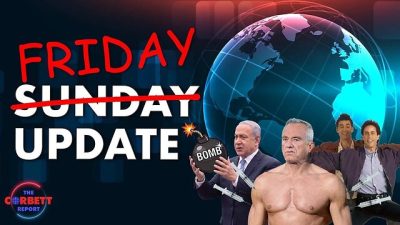
Racist Seinfeld Dances for Joy as Bibi Unveils His New Map
or go to
Aletho News Archives – Video-Images
TV Drama Review
Japanese drama projects Japan’s wartime atrocities onto Chinese characters

Global Times | October 25, 2026
By portraying Chinese characters as perpetrators of ruthless violence while casting Japanese Self-Defense Forces (SDF) intelligence operatives as defenders, the season 2 of the Japanese drama Vivant has recently drawn criticism from Chinese netizens, who argue that its depiction turns historical reality on its head while ignoring Japan’s wartime atrocities.
The TBS drama series – a spy suspense story in which an alleged unofficial intelligence unit of the SDF operates across the globe — has attracted a passionate fanbase. Its currently airing season 2 opened with a household rating of 18.8 percent, the highest for a TV drama this year, according toa commentary article by Japanese media Toyo Keizai.
What draws attention is the portrayal of the enemies in the series, the article noted. Scenes in which the Chinese organization subjects kidnapped members of the SDF unit to brutal torture are repeated with unrelenting intensity.
It is rare for Japanese TV dramas to explicitly portray a real-life country as the enemy, the article noted.
Japanese Prime Minister Sanae Takaichi also made a reference to the drama, saying that she has been recording Vivant and hopes to binge-watch it over the year-end and New Year holidays, according to Japanese media outlets.
China’s CCTV News report on Sunday revealed that the drama features scenes in which Chinese personnel cut off the fingers of and stab Japanese intelligence operatives in the abdomen. Such acts bear striking similarities to the torture inflicted on Chinese nationals by invading Japanese troops during the World War II.
The drama distorts the truth by attributing these atrocities to modern Chinese characters. Beneath the surface, it subtly glorifies Japan’s cross-border overseas operations, blurs the functional boundaries of the SDF and implicitly promotes an expansionist narrative, per CCTV News. … continue
Blog Roll
 Aletho News
- Iran FM Araghchi: “Hormuz Will No Longer Be the Same”
- EU facing trillion-euro debt hole while seeking more cash for Kiev
- How US, Europe, Persian Gulf states exhausted missile stockpiles, splurged billions to defend Israel
- Up in arms… Koreans reject U.S. empire’s plan to make South Korea the next Ukraine
- Iran, Turkey, Pakistan, Saudi Arabia could advance region-led security framework in Tehran: FM spox
- Netizens condemn Japanese drama for projecting Japan’s wartime atrocities onto Chinese characters
- Racist Seinfeld Dances for Joy as Bibi Unveils His New Map
- A West Bank War for Netanyahu’s Election Campaign, Could It Backfire?
- Yemen denounces European Parliament’s ‘hypocritical’ push to blacklist Ansarullah
- Qalibaf: UAE’s UN bid aims to ‘clear the runway’ for ‘Greater Israel’, whitewash genocide
- If Americans Knew
- An error has occurred; the feed is probably down. Try again later.
- No Tricks Zone
- Sudden Stratospheric Warming, Powerful El Niño Combination May Lead To Extreme Europe Cold, Energy Crisis!
- Two New Studies Find Thwaites Glacier Melt Cannot Be Driven By Human Activity Or A Warming Ocean
- E-Cars Reduce CO2 Emissions By Only 41% Compared To Internal Combustion Engine Vehicles
- Predictions Made By Renowned Climate Professor Over Past Decades Have Been Proven To Be Poor
- New Study Suggests Large Regions Of The Pacific Ocean Have Been Cooling For The Last 80 Years
- Germany’s Green Energy Debacle: High Energy Costs Force Kahla Porzellan to Close After 182 Years!
- New Study: 50 Years Of The Most Aggressive ‘Net Zero’ Policies Can Only Affect The Global Climate By 0.03°C
- US September “Heat” Was No Record…Many Records Set Decades Ago
- Latest European Green Energy Debacle; Portugal’s Largest Flagship Solar Park Insolvent!
- Green Energy Debacle: German Expert Professor Fritz Vahrenholt Warns Of Severe Economic And Social Consequences

