Let’s not make a drama about Skripal case before important questions are answered
By Neil Clark | RT | May 22, 2019
It’s over 14 months since the Skripal poisonings first made world headlines but to paraphrase the words of the 1970s Johnny Nash hit ‘There are more questions than answers, and the more we find out, the less we know.’
There’s been neither sight nor sound of Yulia or Sergei Skripal. Yulia was last seen in a short video statement released on May 23, 2018, her father in CCTV footage in a shop in Salisbury at 12.47pm on February 27, 2018. If Sergei was sure that the Russian state was responsible for what happened to him, why hasn’t he been put before a camera to say so? Even more mysteriously, why hasn’t this dutiful son not called his 91-year old mother Yelena to say he’s ok? Might Sergei Skripal actually be dead – and if so, why haven’t we been told?
Then there’s the unraveling of the Amesbury (a town nine miles from Salisbury) postscript. The news that two British nationals, Charlie Rowley and Dawn Sturgess, had been admitted to hospital after being exposed to alleged Novichok poisoning from a bottle of perfume found in a bin by Rowley, caused a sensation when it broke in early July 2018.
But a couple of days ago the Guardian, cited a source au fait with the police’s criminal inquiry, who stated: “The bin where the bottle (of perfume) was found was regularly emptied, so it seems inconceivable that it had been there in March.”
Which raises the question: If the bottle did contain Novichok and the two Russian suspects didn’t put it in the bin, then who did?
There are three possible explanations – if we rule out the bottle somehow quite miraculously remaining in the bin after regular emptying over a sixteen-week period.
Firstly, Rowley misremembered where he found the bottle and that he actually picked it up somewhere else. Secondly, the bottle didn’t contain Novichok and wasn’t the source of the poisoning and Dawn’s tragic death. Thirdly, it did contain Novichok and that it was placed in the bin in the week preceding Rowley finding it.
Possibility one clearly does not exclude the two Russian suspects leaving the Novichok somewhere else, eg in a bush in the park and Rowley finding it several weeks later. However, Rowley did tell ITV in July 2018: “I feel confident in myself to say it wasn’t picked up in the park.”
The other two possibilities raise some very serious questions indeed. They would indicate that some unknown actor was keen to link the poisoning of Rowley and Burgess to the earlier events in Salisbury. If so, was it done to try and further turn public opinion against Russia in pursuance of a geopolitical agenda?
Again, it’s worth stressing that up to now the Metropolitan Police have been unable able to link the poisoning of Rowley and Burgess to that of the Skripals.
All things considered, what we could really do with at this point is answers from the authorities who were so quick to throw accusations at Russia, and a new television documentary could help that.
I’m old enough to remember the excellent ITV series ‘In Suspicious Circumstances’, shown in the early 1990s, which looked into real-life murder mysteries of the past. The individual programs were introduced by the late Edward Woodward. They included mini-dramatizations, but in the end, Woodward would sum up what we did know and what we didn’t and let us make our own minds up.
One would hope that ‘Salisbury’ the new two-part BBC ‘factual drama’ on the Skripal case, announced last week, will follow the same forensic pattern, but given the anti-Russian undercurrent to so much of contemporary programming, one can’t be too optimistic. The article on the BBC website announcing the drama doesn’t inspire confidence as it states “Dawn Sturgess was fatally poisoned in the attack.”
The truth is that the Met has been unable to prove that and manslaughter charges against the two Russian suspects have not been brought.
Commissioning a two-part drama about an event which remains clouded in so much uncertainty is premature. Surely it would be better to try and establish exactly what happened first, and then make the drama? Perhaps Government DSMA Notices (formerly D-Notices) are the reason why proper investigative journalism is not taking place. We know of at least two DSMAs being issued in relation to the Skripal affair. But these notices are not legally enforceable and Britain is not –or at least not yet – a totalitarian state. It should be possible to make a painstakingly-factual documentary on the Skripal case without compromising national security.
For such a documentary to be credible, it would be imperative that the two Russian suspects, traveling under the names of Boshirov and Petrov, but allegedly Messrs Chepiga and Mishkin of Russian Military Intelligence, make themselves available for interview. If they had nothing to do with the poisoning of the Skripals then we really need to know what they were doing in Salisbury on the weekend in question (no one, let’s face it, is convinced about the ‘they were just tourists visiting the Cathedral’ line). At the same time, other leads need to be investigated too. Could the poisonings have been planned by an unknown actor hostile to Russia, with the knowledge that the two Russians were visiting Salisbury for a purpose connected to Sergei Skripal but not involving poisoning him? Could Boshirov and Petrov have been set up, with traces of Novichok left in their hotel room weeks later to try and incriminate them? That would explain why no guests occupying the room after Boshirov and Petrov became ill.
Can we even be 100 percent sure that Novichok was indeed used, and that the Skripals weren’t instead the victims of fentanyl poisoning? Remember the testimony of eyewitness Freya Church, who saw the Skripals on the bench that Sunday afternoon, and who told the BBC: “He was doing some strange hand movements, looking up to the sky… They looked like they had been taking something quite strong”.
Remember too the letter to the Times published on 14th March 2018 from Dr Stephen Davies, Consultant in Emergency Medicine at the Salisbury NHS Foundation Trust, who wrote: “May I clarify that no patients have experienced symptoms of nerve agent poisoning in Salisbury and there have only ever been three patients with significant poisoning… No member of the public has been contaminated by the agent involved.”
Might what happened be linked to Skripal’s work on Russian criminal/Mafia gangs with Spanish Intelligence?
Could there be a connection to the Steele dossier, or is that just a wild conspiracy theory? Where is the CCTV footage of the Skripals in Salisbury on 4th March 2018? Why haven’t we seen it?
And regarding the Amesbury postscript, if Novichok was suspected, why has there still been no coroner’s inquest into the death of Dawn Sturgess?
These are the questions that I’m sure Edward Woodward would be asking.
Journalists should be asking them too.
Brexit, the Uncivil War: Watering Myths with the Teardrops of the Ruling Class
By Maximilian C. Forte | Zero Anthropology | May 21, 2019
What have been billed as momentous EU Parliament elections are taking place this week (May 23–26), and it seemed like the right time to review some Brexit films—one is entertainment, the other is a documentary. The reason for the Brexit theme has to do more with 2019 than with 2016, especially since the Brexit Party, led by Nigel Farage, is supposed to make a massive showing in the EU election. As expected, long lists of injunctions against the left retaking ground ceded to the right are coming out in The Guardian, chief purveyor of wishes for doing everything wrong again and never learning from mistakes. Also as expected, Russia is being blamed in advance—because the right thing to do with a really bad conspiracy theory is to keep it alive.
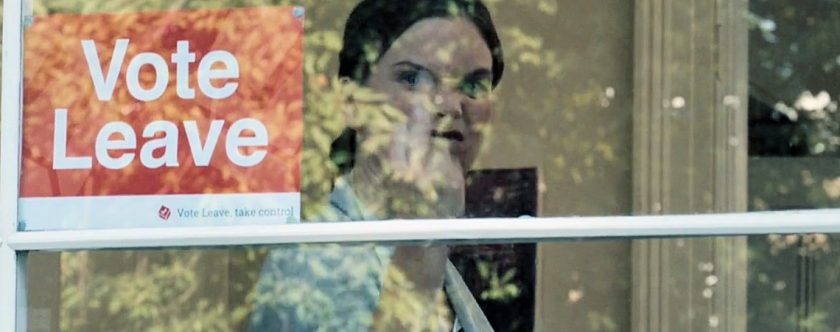
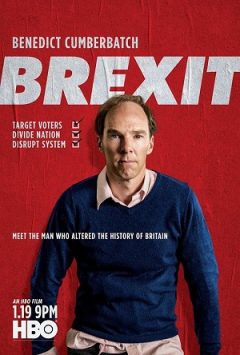 The first movie being reviewed for our Brexit mini-series is Brexit: The Uncivil War (2019), produced by House Productions and shown on HBO and the UK’s Channel 4. It was directed by Toby Haynes, written by James Graham, and stars Benedict Cumberbatch. The plot synopsis is available here, and the official trailer is below. The movie opens with these words on the screen: “This drama is based on real events and interviews with key people who were there. Some aspects of dialogue, character and scenes have been devised for the purpose of dramatisation”. The second sentence effectively negates the first. In fact, not only were “some aspects” merely “devised,” they were completely invented, including not just dialogue but also some of the “real events” with “key people” shown in the film. This movie is a mixture of comedy and docudrama, a tepid attempt at reproducing and combining The Big Short and In the Loop, both of which are immeasurably superior films (and probably less insulting to the intelligence of viewers).
The movie opens with Dominic Cummings (played by Benedict Cumberbatch), the manager of the Leave campaign. Cummings is immediately shown as eccentric—or perhaps a little of an idiot savant. He opens the film with the line, “Britain makes a noise” (only I heard, “Pudding makes a noise”—perhaps the script should have chosen what I heard, to really emphasize how weird the main character is meant to be, for us).
In one of his fragmented opening monologues, the Cummings character makes some indisputably wise points: “as a global society we are entering a series of profound economic, cultural, social and political transitions, the like of which the world has never seen…. Massive increase in resource requirements…. A rising tide of religious extremism…. A synthesis of… inter-generational inequality in the West on an historic level”. At other times, as discussed below, he is a mere puppet for the filmmakers’ polemic against Brexit.
Insight into Elite Myth-Making
The movie can serve as a useful insight into the minds of elite, establishment Remainers, and their ability to dedicate time, energy, and resources into orchestrating a collective international wailing. As has been said repeatedly on this site: those in power would love for us to feel their pain as if it were our own, to make a loss for the transnational capitalist class appear to be our loss, so that we may then rise up and strike out to defend their interests (while annihilating our own).
The movie references the fall of the Berlin wall—with Brexit being the biggest political upset since then. That is a “problem”: the thing about Berlin walls is that they are only supposed to fall in other countries, never in our own. “We” have suffered a basic transgression, a violation of our entitlement to eternal continuity, in spite of the contradictions and conflicts we create and multiply. In other words, it shows you just how deranged our ruling classes have become.
The Ugly Face of Conspiracy
The opening’s main point is to prepare us for the revelation of yet another alleged grand conspiracy, almost like the mythical Russiagate conspiracy theory. We hear forgettable technocrats droning on about UK law and asking Cummings if his actions were within electoral law, or were a threat to democracy. Then the Cummings character, facing the camera, states: “Everyone knows who won. But not everyone knows how”—and that is the point of this movie. And what a miserable little point it is. In the end, what the filmmakers achieve is another reminder to us that the only real conspiracy we face is the conspiracy of enforced unanimity by state and corporate media—unanimous in their contempt for voters, and for the will of the voters. Abolish the “will” of the voter, by making it appear to be merely the by-product of a sinisterly-devised algorithm and data mining operation, and you thus abolish the voter. No agency, thus no agent. The only real people are the members of the ruling elite.
 Appropriate for a conspiracy movie, Douglas Carswell (laughable troglodyte), holds a secret meeting with Matthew Elliott (nervous nerd), in a portrait gallery. I foolishly hoped this would be the end of the silly caricatures, forgetting this is a commercial entertainment product and not a documentary. Had I prayed for more caricatures, I would have been immediately satisfied—meet Arron Banks (snarling pig). Only the Boris Johnson character is a softer version of the real thing, the actual Boris Johnson being abundantly self-caricaturing already.
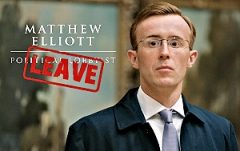
 The usual inflation of grotesque features that one finds in British films, is a simplistic equivalent of bold print, only it is applied to faces. The face is meant to convey meaning—and the meaning here is: villainous conspiracy. Thus we are shown the faces “behind the [imagined] scenes,” with the hatching of a conspiracy in the UK Independence Party (UKIP, the notorious villain in all establishment narratives second only to “Russia”). “Gunpowder, treason, and plot,” mutters the Cummings character, thus evoking the 1605 Gunpowder plot.

What follows is a lesson from the arch conspirator, Cummings: “How to Change the Course of History. Lesson One: Kill conventional wisdom”. The aim here is to learn from the “true disruptors of Europe”: Napoleon, Otto von Bismarck, and Alexander the Great.
The film hurries through the reasons for voter discontent—there were many, and they were diverse—so that we instead come away with the impression that mere “talking points” are being generated by conspirators: the EU seems abstract; immigration is a problem—but what kind of problem? Is it about race? Integration? The levels of immigration?; “people are feeling angrier, left out, ignored”; “don’t think our kids will have a better future than us”; “we spend more time than ever online, but we feel more alone”; “we’re not getting married as much”; “less of us have faith”; “we’re not saving as much”; “we trust less the institutions and people our parents trusted”. Had the movie drawn this out longer, it would have been a service to the Remainers who seem particularly thick when it comes to trying to understand the opposition and the groundswell of support for Brexit. No luck.
Instead, we are shown the conspiracy, boiling it all down to core talking points: “Loss of national identity. Clear. Sovereignty. Digestible. Loss of community. Simple. Independence. Message repeated over, and over, and over”.
The point is to, “tap into all these little wells of resentment, all these little pressures that have been building up, ignored, over time. We could make this about something more than Europe. Europe just becomes a symbol, a cypher, for everything: every bad thing that is happening, has happened…”.
One reviewer noted a basic contradiction in the movie’s polemic, which involves its magnification of the role of Dominic Cummings. The movie has Cambridge Analytica, Robert Mercer, foreign data firms, big private donors, and every theory possible thrown at the screen as to why Brexit won. Then why did Cummings matter at all?
“Post-Truth”: The Anti-Anthropological Message
The movie also shows us what “post-truth” is meant to mean. Truth is where one appeals to voters’ heads, by using “facts”. The other thing, which has no name other than “post-truth,” appeals to voters’ hearts, using “emotions”. What a poor anthropology this is, where human emotions are divorced from the facts of being human. Any anthropologist who uses the phrase, “post-truth,” does not deserve to be called an anthropologist at all, because they have essentially abolished anthropology. A truth that denies that humans often understand facts emotionally, and that emotions can generate facts, is no truth at all. The real “post-truth” then lies among those who coined the phrase “post-truth” in the first place.
This movie makes no bones about which side owns “the truth”: the Remainers. The movie shows the Remain campaign desperate to counter Brexit with, in their own words, “the truth”. The truth is not shared, equally accessible to all—it is the special preserve of an equally special class, the class that has the Nobel prize-winning economists on their side. The Remainers are shown complaining about the media giving any air time to opponents—there is a deep yearning for censorship. It is all about virtue against democracy. The Remainers own “expertise”—and the other side owns the ignorant ingrates who forgot their duty was to obey by believing the experts, regardless of their many mounting failures. This is precisely the kind of movie that is not needed now (or ever); it merely invites more scorn and can only validate the resentment of Brexit supporters (and judging from reviews posted online, it has).
The voice of the establishment—Craig Oliver, communications director for Prime Minister David Cameron—describes Cummings as “basically mental”—“just an egotist with a wrecking ball”. And the voters are Frankenstein: “There’s the danger… of having unleashed something which we can’t then control”.
The voters, shown in focus groups, are cast as either ignorant and bumbling fools, or overly opinionated extremists. We are meant to see voters as a pathetic, troubling mass. If we cannot abolish the vote, and the voters, then we should at least try to do so. If moviegoers thought that, then the movie would have succeeded in achieving one of its aims.
One needs to be familiar with the conventions of British entertainment television and the movie industry, obviously in the hands of elites with an axe to grind, to understand how working class voters are shown. This is the same industry that produces things like Coronation Street and The East Enders, or My Name is Lenny (2017), which portray working class people as freakish, mutant rogues. They are either malicious with contorted expressions, or simple dopes who look like they are permanently suffering a stroke. Lacking truth, so they lack goodness and beauty too. We are thus back at “post-truth,” the cherished trope of a neo-Aristotelian class that claims a monopoly on virtue, that tolerates vast inequalities and produces a teleology to justify them.
Does History Need a Sock Puppet?
The filmmakers also resort to using the Cummings character as their sock puppet, having him mouth lines critical of the referendum as “a really dumb idea”—which is what the filmmakers think, and what they want us to think. Here is fake Cummings:
“Referendums are quite literally the worst way to decide anything. They’re divisive. They pretend that complex choices are simple binaries… and we know there are more nuanced and sophisticated ways out there to make political change and reform, not that we live in a nuanced or political age, do we? Political discourse has become utterly moronic, thanks to the morons who run it…. But there it is. If that is the way it is to be, then I will get us across the line, in whatever way I can”.
This is meant to be the honest, hidden, inside appraisal said in secret—so we think that it’s the truth.
The Cummings character then styles himself as a political “hacker,” entering the “back door,” to “re-program the political system”. It’s all covert, dishonest, and there is a sense of illegality. Meetings are always secret, surreptitious, cloaked—classic conspiracy stuff. Having abolished the will of the voter, the film now abolishes the vote. It’s an expression of a deep desire: for Brexit to have never happened, for the vote to never have been allowed. That’s all. It’s crude, and transparently obvious to even a half-awake viewer.
It was not the only time the filmmakers used Cummings in a contradictory role, that made no sense for the movie. They had this supposed algorithmic genius of online data mining look all disturbed and scared as an American explained to him the new politics of data. He turns and looks at people walking by, using smart phones and tablets, as if they were alien invaders. The final act of sock puppetry was when the filmmakers had Cummings mutter that Nigel Farage is, “a moronic little cunt”—their script, their view. Keeping it classy.
All About Trump?
Of course, there had to be a Trump angle—there is a Trump angle to everything now. We are thus presented with some whispering conspirators from America, in the figures of Robert Mercer (financier), and the Dark Lord himself, Steve Bannon of Breitbart, shown entering the UK to intervene on the side of Brexit. Then we hear “Cambridge Analytica”—the British, not Russian firm that allegedly masterminded Trump’s online campaign. Of course, none of this is true: Robert Mercer never went to offer help with Leave; and, Zack Massingham, the Canadian whose company boasted having a cutting edge date-modeling program, never provided it to the Leave campaign. It’s too bad Joseph Cotten and Orson Welles were not alive to act in this film—their presence could have vastly dignified this poor attempt at film noir. Albert R. Broccoli would have made a more believable film, with more credible villains.
How to Abuse One’s Viewers with Misdirection and Mystification
This movie works by building a chain of misplaced concerns and misidentified problems. That is how mystification works. The “problem” (fake) is with the fear-driven, resentful working class—not their exploitation, marginalization, and even vilification by the privileged. The “problem” (fake) is with nostalgia—not with the current climate being so bad it makes everyday people miss the past. The “problem” (fake) is with hatred—because the problem is always with the response to what has been provoked by those who hold the power. The “problem” (fake) is with xenophobia—not with a system that taught them pride in being British in the first place, that colonized the world, and for centuries looked down on others with contempt. The fact that huge numbers of refugees were entering Europe—fleeing the regime change wars that Europe helped to manufacture by participating in NATO—only added to the sense of an urgent crisis. Engineering a massive influx of immigrants when locals are locked out of the labour market is a recipe for social peace—exactly nowhere. The “problem” (not fake, just misleading) was that Jo Cox, Member of Parliament, was assassinated in the lead up to Brexit—the problem was never that Cox herself backed ever escalating violence in Syria to promote catastrophic regime change in the name of “humanitarianism”. The “problem” (fake) is with the previously apathetic being marshalled to come out and vote—not the fact that they were previously ignored, impeded, and so generally turned off by the dominant politics. The “problem” (fake) is with crafty data miners who know their business—not with the asymmetry in access to information that props up the political system, or the fact that every political campaign exploits data. The “problem” (fake) is with the lying politicians on their side—not the lying politicians on all sides, who get away with lying because the system refuses any corrective mechanism to ensure accountability. And on it goes. When you opt for ideology instead of analysis, you get garbage.
Lessons Not Worth Teaching
So what are the “lessons” of the film? One is “data is power”—actually, data is just data, but anyway. The idea here is that Britain was a “lab experiment” for a new politics based on data mining. Is it bad to gather data about voters? But then why would it be bad? Should one not try to understand voters and what they want? In a system that bars ordinary people from making decisions even about the basic, immediate, day-to-day aspects of their lives, and that permanently distances and silences them except for a few seconds at a ballot box every few years—how many other ways does the system allow itself to hear from them? Does it matter even, if you can effectively criminalize the mere act of gaining knowledge about voters? Even this movie itself repeats the fact that one side—Remain—had access to the national voter database, while the other side had Cummings try to build an alternative from scratch. If there was a conspiracy, it was here, in this lopsided and unfair distribution of advantages, which the Brexit side overcame. Was Brexit wrong to overcome this data disadvantage?
Did only one side mine online data? Was only one side guilty of “spin”? How much did the Remain campaign spend, compared to the Leave campaign? In fact, the Remain campaign outspent the Leave side by millions of pounds. The movie makes no mention of that fact, nor of the private investors backing Remain, and has little to say about their key influencers. The people with the most votes, spent less money (and won), and they came under investigation for campaign finance violations.
If viewers were truly shocked, chilled, appalled, etc., by what they saw in this movie, then what has stopped them from militating for the total abolition of the advertising industry? Advertisers and PR firms have been doing what this movie shows for generations now. Why the sudden raising of a hue and cry? Why is the outrage so selectively focused on a pinpoint example? Because it’s a dishonest pseudo-critique. That’s one of the things you get when ideology substitutes for analysis.
A second lesson of the film appears to be that the Brexit side was backed by shady financiers—with agendas that are not made clear to us. So who backed the other side? Is there an innocent and pure party here, which the filmmakers neglected to present? Was it the Brexit side that invented the structure of private financing of public political campaigns?
A third lesson has something to do with voter apathy, and the ability of one side to tap into the huge mass of people that regularly refuse to vote in elections in our societies (which would include myself). The crime here appears to have been Brexit’s ability to bring out such persons to vote—as if they found a secret list of dead persons and padded voter rolls. Reducing voter apathy thus becomes something like rigging an election. Yet the quest for the non-voter seems to have failed altogether with Trump: a plurality of eligible voters refused to actually vote. The real winners of the popular vote in the 2016 US presidential elections were precisely those who refused to come out and vote.
The final lesson, with which the movie closes, is that the real problem with the referendum was that it had two sides to it, when ideally it should have had only one: stay. A “crime” was committed by the other side working as if they actually wanted to win. Indeed, the movie closes with the statement that, “in 2018, the Electoral Commission found the Vote Leave campaign guilty of breaking Electoral Law. Leave.EU were subsequently referred to the National Crime Agency for investigation into breaches of Electoral Law”. Had the country in question been Venezuela, the headlines would have read: “Authoritarian regime cracks down on opponents”. In fact, the investigations had not opened by the time the film was made and, more importantly, the movie itself shows absolutely nothing about how the Leave campaign violated said law. One would think that is a major omission.
Accidentally Intelligent
“We’re asking voters not to reject the status quo, but to return to it”. The only really intelligent point the movie made, was one done quickly and only in passing—it seems to have been by accident, so it may be wrong to ascribe “intelligence” to the filmmakers. The point was this: the real contest in 2016 was not between the status quo and a “disruptive” insurgency, but between two status quos: the present status quo versus those preferring the status quo ante. In other words, it was effectively a conservative vs. conservative fight. Neither side proposed any revolutionary transformation, of anything really. It was a clash between those clinging to what was known and tried—the only difference being where their preferences fell on an historical timeline. In other words, the Remain vs. Brexit fight was between preservation and restoration, both of which are conservative positions. Now the two sides have been reversed: the pro-Brexit side is struggling to ensure that Britain remains on track to leave, while the pro-Remain side imagines the EU in utopian terms and occupies itself with, “lament, regret, and nostalgia for an imagined arcadian past in which the EU was a land of milk and honey”.
Similarly, in the US Trump was cast as the candidate nostalgically pining away for the lost days of American glory. However today he is campaigning with a new slogan: “Keep America Great”. Joe Biden instead presents himself as driven by the nostalgic need to restore the old order. Just wait until Biden delivers a blistering speech about life in America under Trump—Fox News is certain to denounce him as the “doom and gloom” candidate who offers a picture of “Midnight in America” (just as the others did with Trump).
The best “lesson” of the movie was the one that was unintended, and it is revealed by how the movie backfires on its makers. This movie is a reminder of why dominant interests so richly deserved to lose—and not necessarily that the other side deserved victory. Brexit has been very “profitable” in at least one sense: it has revealed a dysfunctional UK, quasi-governed by inept, visionless elites, incapable of containing a crisis of their own making. Remember: these are the same elites that turn around and lecture other countries about democracy and good governance, and that bomb other nations in the name of human rights. If anything, Brexit was not a mean enough defeat: much more is needed.
David Attenborough’s BBC show would better have been called “Climate: Change The Facts”
Reviewing “Climate Change: the Facts” | April 21, 2019
… If you are going to present a film called Climate Change: the Facts the very least you should be doing is, well, presenting the facts. Well here they are, in two of the areas which made up such a hefty part of the film: wildfires and hurricanes. Are wildfires increasing? They are according to Attenborough. One of the scientists who takes part in the programme, Professor Michael Mann of Penn State University, goes as far as to say there has been a “tripling in the extent of wildfires in the Western US”. He is not specific about his evidence for this claim, nor said over what timeframe wildfires are supposed to have trebled, but it is not a fair assessment of the data collected by the US Environment Protection Agency (EPA). This shows no upwards trend in the number of wildfires in the US over the past 30 years.
But then again, go back further, to the 1920s, and you see that both the number of US wildfires and acreage burned in them has plummeted.
That is nothing to do with the climate – more down to firefighters getting better at tackling fires. But that reduction in wildfires – which, after all, were occurring naturally long before Europeans arrived in the US – has brought with it a problem: deadwood is not being cleared out at the rate which it used to be. As a result, when a wildfire does take hold, it tends to be a more powerful fire, which is one reason large acreages tend to get burned when fires do take hold. That was a large part of the debate which followed the wildfires in California last November.
But I know what will have entered the heads of many of Attenborough’s viewers: that wildfires are being caused by climate change and that is that. […]
The same will be true for hurricanes. If you are a child, for whom hurricanes are a novel phenomenon, watching the film will have given you the impression that hurricanes are pretty much a function of man-made climate change. A voiceover, indeed, makes the claim that climate change is causing ‘greater storms’. But again, the data on cyclone activity in the Atlantic, Gulf and Mexico and Caribbean does not support that idea. Figure one shows a very slight upwards trend in the number of hurricanes occurring in these waters but a flat or perhaps slightly downwards trend in the number of hurricanes making landfall in the US. There are two other methods of measuring hurricane activity which are used by the EPA. The first, the accumulated cyclone index (figure two) shows no obvious trend over the past 70 years. The second, the ‘power dissipation index’ shows an upwards spike in the early years of this century, followed by a reversion to mean since then.
Not that this seems to prevent documentary-makers like Attenborough resorting to footage of houses being demolished by winds and lorries being blown off bridges to show the supposed climate change we are already experiencing.
It is little wonder that terrified kids are skipping school to protest against climate change. Never mind climate change denial, a worse problem is the constant exaggeration of the subject. I had thought David Attenborough would be above resorting to the subtle propaganda which others have been propagating, linking every adverse weather event to climate change. But apparently not. — Ross Clark, The Spectator, 20 April 2019
… [W]e have already seen what can happen when ‘panic’ determines policy: the introduction of measures conceived by a need to be seen to be doing something under pressure from groups such as Extinction Rebellion.
Without making this clear, the film revealed one of the worst examples of this unfortunate effect. A powerful sequence showed an orangutan, fleeing loggers who have been eradicating Borneo’s rainforest.
This is disastrous for both wildlife and the climate because, as the film pointed out, a third of global emissions are down to deforestation, because giant trees lock up a lot of carbon.
But why are Borneo’s forests being cut down? The reason, as Attenborough said, is palm oil, a lucrative crop used in products ranging from soap to biscuits. Unfortunately, he left out the final stage of the argument.
Half of all the millions of tons of palm oil sent to Europe is used to make ‘biofuel’, thanks to an EU directive stating that, by 2020, ten per cent of forecourt fuel must come from ‘renewable’ biological sources. Malaysia says this has ‘created an unprecedented demand’.
To put it another way: misguided ‘action’ designed to save the planet is actually helping to damage it – although the EU has pledged to phase out palm oil biofuel by 2030.
Another example of a misconceived effort to save the planet is Drax power plant in Yorkshire which is fed, thanks to £700 million of annual subsidy, by ‘renewable’ wood pellets made from chopped-down American trees – while pumping more CO2 into the atmosphere than when it burnt only coal.
In theory, the trees it burns will be replaced – but a large part of its supply comes from hardwood forests that take 100 years to mature.
There are times when climate propaganda – for this is what this was – calls to mind the apocalyptic prophets of the Middle Ages, who led popular movements by preaching that the sins of human beings were so great that they could only be redeemed by suffering, in order to create a paradise on earth. Perhaps this is how Attenborough, nature journalism’s Methuselah, sees himself. But climate change is too important to be handled in this manner. It needs rational, well-informed debate. Too often, cheered on by the eco-zealots of Extinction Rebellion, the BBC is intent on encouraging quite the opposite. —David Rose, Mail on Sunday, 21 April 2019
… A former top executive at the BBC has warned that it is “at risk of being eaten” as new figures reveal that more than 880,000 television licences were cancelled last year. Cancellations among the under-75s rose from 860,192 in 2017-18 to 882,198 in the period from March 2018 to the end of February, new data shows. Mosey, 61, criticised the dumbing-down of news and “the nonsense put on social media by BBC” staff. —The Sunday Times, 21 April 2019
The Brink-a film review by Eve Mykytyn
Introduction by Gilad Atzmon
Steve Bannon is probably the most unpopular character as far as progressives and liberals are concerned. People who like to see themselves at the Left side of the political spectrum regard Bannon as a vile hateful character as well as a rabid antisemite. Yet, symptomatically or even tragically, those who detest Bannon shy away from tackling his populist mantra. This is rather concerning considering the fact that Bannon has proven to be a shrewd political tactician and even a kingmaker. It is probably Bannon who carries the prime responsibility for Trump’s successful presidential campaign. Those who are fearful of Bannon revert to name-calling: they slalom in between his ideas with the hope that no one notices. They do their best to avoid anything that may evoke thinking or resemble reasoning. It is not a secret that those who currently claim to advocate social justice are apparently too fearful to engage with substance but they fail to do so in the name of social justice.
In the following film review Eve Myktyn tells us about Alison Klayman’s The Brink. Mykytyn went to the film hoping to learn more about Bannon but it seems she left the cinema knowing more about Klayman’s phobia of the man. If those who call themselves progressives want to sustain relevance, sooner or later they will have to engage in a proper intellectual exchange as name calling, misquoting and crude editing tactics do not do justice to social justice.
A film review by Eve Mykytyn – April 04, 2019
Steve Bannon may well be, as he is often called, the ‘architect of evil.’ But Alison Klayman’s mystifying documentary, The Brink, which sets out to “[use] Bannon’s own words and behaviors to reveal his hypocrisy and expose the danger he poses to liberal democracy” fails to show Bannon as hypocritical or dangerous.
The film begins with Bannon talking about a journey he made to World War II’s concentration camps. He notes that the Birkenau concentration camp was built using the finest of German engineering and wonders how ordinary Germans could get together and plan such a site. Perhaps Klayman felt that she couldn’t cut this otherwise disconnected scene because it showed Bannon to be an anti Semite, although he was simply musing about how a concentration camp came to be built. Is any question about any aspect of the Holocaust verboten? Apparently so, The Forward interprets Bannon’s remarks as: “rhapsodiz[ing] about the precise engineering of one of the most evil thing humans have ever created, the Birkenau extermination camp.”
Instead, of engaging with Bannon’s avowedly nationalist politics, much of the film is devoted to a fly-on-the-wall view of Bannon’s daily routine. Bannon eats and drinks (a combination of Red Bull and a disgusting mess of green ‘diet’ juice), speaks at rallies, poses for photos, meets with nationalist leaders in Europe, touts his propaganda movie, and texts and talks endlessly on the phone: so much film time is devoted to the quotidian aspects of Bannon’s life that the shrewd and divisive political operative is reduced to boring.
Klayman attempts to score a point by asking Bannon where he is, so that she can report that he is on an airfield for private planes. Is Bannon’s not particularly luxurious private plane, filled with his allies and journalists really relevant to the larger debate?
The film follows Bannon to Toronto where he appears for a formal debate with David From on the proposition that the “future of western politics is populist, not liberal.” This is finally the real debate. Is it ‘country first’ or do we have a responsibility to all without regard to borders? The debate can be found here (the first 10 minutes of chatter can be skipped): the exchange between two articulate men whose views are antithetical to each other is well worth the time. Tellingly, The Brink does not show the debate, instead we see the effects that Bannon’s presence evokes. The protests outside the debate are portrayed as huge and scary, inside Bannon gently confronts hecklers, whose poor behavior he comically attributes to an ‘ex-wife.’ That’s it. The Brink apparently feels no need to counter Bannon’s views or even better, simply show From’s effective dissent.
When the film does allow Bannon to articulate his thesis, it is in a brief scene in which Bannon is speaking to a rally. In it, Bannon states that the benefits of citizenship should be distributed only to citizens, without regard to race, religion or sexual preference. This is the core of the populist nationalist movement that helped elect Donald Trump and has scored victories in Britain, France, Belgium and Sweden. Bannon’s current project is to knit together like-minded counter globalists from Europe and the United States.
The Brink’s opposition to nationalist populism is left to Guardian reporter Paul Lewis who accuses Bannon of using “anti-Semitic tropes,” then interrupts Bannon’s denial. Bannon insists that there’s nothing nefarious about using the term “globalist” or criticizing George Soros for the NGOs he funds. Vogue claims Bannon uses the term globalist “with a wink and a nod… as a stand-in for Jews.” Bannon’s movement is opposed to globalism. Is there a non anti Semitic way to oppose globalism?
Just in case anyone failed to understand the intended message, the film ends with a stirring homage to the current crop of new representatives with the background picture of Washington, DC lit in rainbow hues. Apparently, a diverse group of new congressmen and women is a refutation of Bannon and what he stands for, too bad that The Brink fails to explain why that may be so.
The Kursk Disaster: Facts Sunk Beneath Waves of Drama
By Maximilian C. Forte | Zero Anthropology | March 5, 2019
At the turn of the millennium a trilogy of disasters gained a high profile in the international media. First, in July of 2000 the fiery crash of Air France’s Concorde flight 4590 from Paris to New York ended not just many lives (109 persons), but also the plane’s career. Second, on August 12, 2000, there was the sinking of Russia’s Kursk submarine, with 118 sailors killed in the tragedy. Third, and probably much less memorable now, on August 27, 2000, a fire high up in Moscow’s Ostankino Tower saw its spire dangerously tilting as if ready to collapse live on camera as seen around the world; two people died in that incident. It was almost as if this would be a preview of the much more breathtaking collapses of the twin towers of the World Trade Center just a year later. Accompanying the millennium disasters were a series of blockbuster disaster movies, which included James Cameron’s 1997 movie: Titanic. Let’s not forget the pretend disaster that was supposed to have been the infamously ridiculous “Y2K Bug,” a hoax in every respect except the billions of dollars transferred to the pockets of IT consultants for unnecessary preparations.
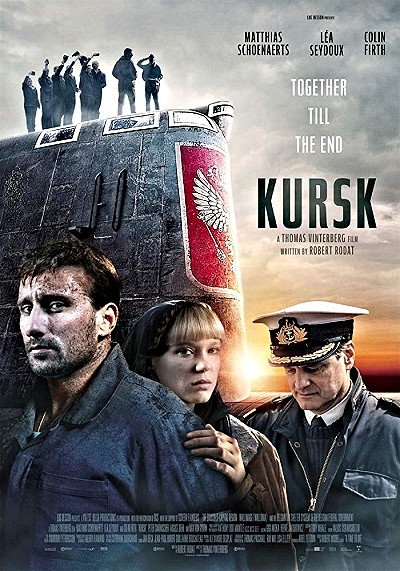
The sinking of the Kursk is now memorialized in a European film released late in 2018, by Danish director Thomas Vinterberg. It features an all-European cast that includes Max von Sydow playing the role of “Admiral Vladimir Petrenko” (in reality this was Navy Commander-in-Chief and Fleet Admiral Vladimir Kuroyedov)—this is the part of the “bad guy”; Colin Firth, playing the role of Commodore David Russell—the “good guy” in the film; also noteworthy, Matthias Schoenaerts playing the role of a fictitious Mikhail Averin who appears to have been based on the real world character of Captain-lieutenant Dmitri Kolesnikov.
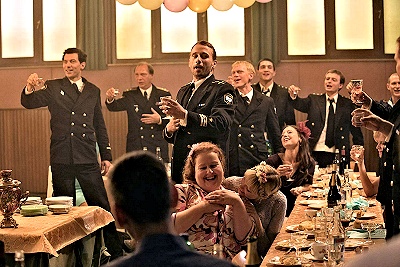 Not being a Hollywood film, this is not a straightforward propaganda film (as one might suspect of a Western media production dealing with a Russian subject, in the current context). However, it is still a big-budget feature that plays loose with certain facts, more by inflating and amplifying some aspects while minimizing others. It is aimed at US and European audiences primarily. Had it been intended as a direct condemnation of Vladimir Putin—who had then been president for only a few months when the Kursk disaster happened—the filmmakers could have simply stuck to the recorded facts. Instead, the film actually removes Putin from a key incident shown in the film—a Russian navy briefing to the grief-stricken families of the sailors—and replaces him with an imaginary admiral played by Max Von Sydow.
In reality, Putin vacationed at his seaside villa for several days as the disaster unfolded, before returning to Moscow and attending that disastrous gathering with sailors’ families. At that gathering Putin was directly and loudly challenged, a shouting match ensued followed by scuffles, and one family member was famously dragged out after being surreptitiously injected with a sedative by a nurse in civilian clothes. Reality was ugly enough that there would have been no need for propaganda. On the other hand, it’s not clear that Putin himself was adequately informed by the military, who claimed to have the situation under control.
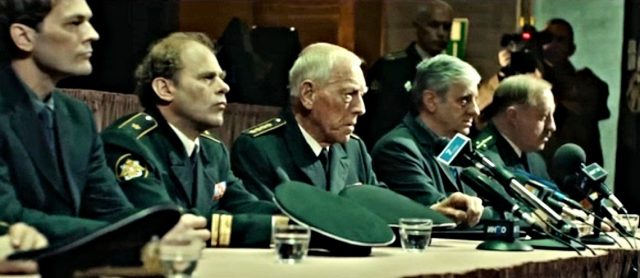
The impressions that stood out for me as one viewer watching the film, were: (a) the inhumane, obstinate refusal of encrusted military brass to accept foreign assistance, preferring to instead indulge obsolete paranoia and outdated conspiracy theories about the West; and, (b) the sheer magnitude of incompetence and degradation that makes one wonder whether Russia even deserves to have a navy. The loss of the surviving sailors is shown as preventable, a needless tragedy—if only Russian naval brass had not consisted of Jurassic-era dicks, sinister Stalinist throwbacks, and snivelling cowards. Navies are for serious, developed nations of the civilized world—not for rust-bucket states on their last legs. It’s not an accident that I thought these things: they are monumental features of the film that simply cannot be avoided, and were deliberately produced by the filmmakers.
One way to achieve these effects is by playing with the facts, in this case by maximizing what is one possible yet extreme interpretation of what transpired beneath the surface of the sea: that the sailors survived for days before finally succumbing. By stretching events out over a period of days, the filmmakers only amplify the needless tragedy of the delays caused by steadfast Russian refusals of foreign assistance—which then gave way to accepting foreign assistance (so not even that narrative is stable). In actuality, experts can find little evidence that those who survived the initial blasts lasted much longer than three to six hours.
 On the other hand, I have to confess that my inner populist reacted positively to the film focusing heavily on the sailors, their heroism, courage, altruism, and self-sacrifice for their comrades. These were the workers. They did their job, even though they were not getting paid and were all struggling to survive in a climate of delayed back wages. The focus on their wives and children was also appropriate, showing where and how they lived, their apartments, the laundry hanging from tiny balconies in grim-looking residential towers overlooking the sea, neighbours huddling together over tea, consoling each other. These are the people who really mattered, and it is my main praise for the film that it maintained this emphasis.
However, going past populist appeal, what magnifies the tragedy in this film is Russian rejection of foreign assistance. Had the Russians accepted foreign help, immediately, before even trying to do things themselves, then the men who waited—allegedly for days—might have been saved.
 The reality is more likely one where even if Russia immediately accepted such aid, it would have taken too long to reach the survivors, who had all died just three to six hours after the initial blasts. The film enters the territory of propaganda if—as seen in the present—it is meant to suggest that Russia is to blame for Cold War II. Russia did not start this new Cold War, and that fact should be as plain as day. It was not Russia that ended cooperation with the West, that walked out on peace treaties, that booted itself from the G8, that terminated various forms of cooperation and exchange. It is Russia that is constantly pleading for more diplomacy, and less aggression. What the film shows is the opposite of that—something that is instead like the US after Hurricane Katrina, which rejected offers of humanitarian assistance from nearby Cuba.
The questionable nature of the film then is its thematic logic, which essentially breaks down into the following points:
- You are inadequate.
- You must therefore accept foreign help, because you’re no good to yourself.
- Foreign help saves lives.
It is a basic “humanitarian” ethic, and in this present context where the US is trying to ram tiny bits of junk aid down the throats of the same Venezuelans whose economy the US is smashing, it is a message that will still resonate with audiences untrained in thinking critically.
But what if we instead read the events as a logical chain of events and causes, shaped by history? Then we would get something that takes us back to some “uncomfortable” roots of the problem, roots that implicate Western powers. Thus,
- What happened to the Kursk? The technical aspects were the subject of considerable debate, and the facts are hardly settled—even down to disputing the argument that an overheating torpedo exploded prematurely.
- Why was the Kursk out at sea? Given NATO’s steady expansion in what was formerly the Warsaw Pact, its move toward incorporating the Baltic republics, and its bombing campaign against Serbia (a Russia ally), the Russians clearly felt a pressing need to mount a show of force.
- Why was the Russian Navy in such a parlous state? Budget cuts. That is, austerity, caused by an economic meltdown, brought on by the sort of “shock therapy” that was deliberately pursued by Boris Yeltsin (Washington’s man in Moscow), and pushed by the International Monetary Fund. The Russian state, pre-Putin, had cut back on all sorts of public expenditures, basically running the state-owned sector into the ground (and into the arms of oligarchs). GDP contracted by about 40%, unemployment soared, as did food and fuel prices, and life expectancy tumbled—this was the reality of Russia under neoliberalism, as pushed by the US and Western international institutions. Russia also suffered from a financial crisis in 1998, a direct outcome of its over exposure to international capitalism.
- Why was Russia melting down? This would take us to the complicated sequence of events following the demise and fragmentation of the Soviet Union (USSR).
- Why did the USSR collapse? Not that there is anything like a consensus about the ultimate determinants of the demise of the USSR, the most common explanations advanced include as a key factor the structural fatigue brought on by the Cold War arms race, and the USSR’s international over-extension as it tried to counter the US/NATO at every move.
The fact of the matter is that we can see a similar break down transpiring in the US, not just in terms of economic destruction and social division, but also in terms of cities exposed to toxic pollution from radioactive waste dumps connected to the manufacture of nuclear weapons. Thus we will soon have a review here of Atomic Homefront, much delayed already. In Russia’s case, much of the destruction of the 1990s was countered by the reforms introduced by Vladimir Putin, to great effect, depending on the observer, which no doubt accounts for his continuing high popularity rating among Russians (well past the highest ever achieved by Obama).
Had the film followed a logical and historical chain of causes and consequences, then the message of the film might have changed substantially:
Don’t threaten countries that you first subjected to stress, because such stress can literally kill.
But then that would be an anti-interventionist ethic, and that ethic is not permissible in our society, which continues to train specialists in the field of “humanitarian intervention,” just as it trains others in the arts of deception, and tries to secure the consent of audiences.
British Intel Tried to Make N Irish Gang ‘Shoot Up’ School, Documentary Claims
Sputnik – 23.02.2019
A new documentary, based on an interview with a self-confessed member of the Glennane Gang, gives some insights into allegations that British military intelligence was behind a shocking murder plot to cause the situation in Northern Ireland to “spiral out of control”.
In a documentary, Unquiet Graves: The Story of the Glennane Gang, John Weir, a former officer from the Royal Ulster Constabulary (RUC), alleges that British intelligence tried to persuade paramilitary group Ulster Volunteer Force (UVF) to attack a Catholic primary school at Belleeks in County Armagh.
Weir claimed that the UVF was urged to kill children and teachers in retaliation for the 1976 Kingsmill massacre, in which gunmen stopped a minibus carrying twelve workmen and shot them; only one person survived despite having been shot 18 times.
“The plan that was decided on was to shoot up a school in Belleeks”, he said, adding that the British intelligence plot was to make the situation in Northern Ireland “spiral out of control”.
The film, directed by Sean Murray and narrated by Oscar-nominated actor Stephen Rea, tells the story of the Glenanne Gang, a secret informal alliance of Ulster loyalists who conducted bombing attacks against Irish nationalists and Catholics in the 1970s frequently working in collusion with RUC officers and Ulster Defence Regiment soldiers.
Murray said that conversations with Weir, a self-confessed member of the Glennane Gang, suggest that the intelligence plan was to foment a “civil war”:
“From their vision such a war would be quite short; they thought they could have a quick, short and sharp process of cleansing out the IRA”.
The UVF refused to carry out the attack, Weir said.
“A lot of this local people will be well aware of but internationally I think it is going to be dumbfound audiences. Collusion has left a dark and terrible stain on the North of Ireland, the pain that’s been caused to thousands of people here is incredible. If there is ever going to be a healing process on this island, if we’re ever going to move forward in reconciliation, people need to be able to tell their stories, but more importantly we need truth from the state about their role in the conflict”, Murray said.
Unquiet Graves will be shown in independent cinemas in Ireland and will be broadcast by RTÉ in May; it will also be shown in the United States, Canada, Europe, and Australia. The documentary will also be available on iTunes, Google Play and Amazon Prime, Murray said.
Why the War on Conspiracy Theories Is Bad Public Policy
By Kevin Barrett • Unz Review • February 1, 2019
A Review of Conspiracy Theories and Other Dangerous Ideas by Cass Sunstein (based on an earlier paper co-authored with Adrian Vermeule); In Defense of Troublemakers: The Power of Dissent in Life and Business by Charlan Nemeth; and Conspiracy Theories and the People Who Believe Them, edited by Joseph E. Uscinski
On January 25 2018 YouTube unleashed the latest salvo in the war on conspiracy theories, saying “we’ll begin reducing recommendations of borderline content and content that could misinform users in harmful ways—such as videos promoting a phony miracle cure for a serious illness, claiming the earth is flat, or making blatantly false claims about historic events like 9/11.”
At first glance that sounds reasonable. Nobody wants YouTube or anyone else to recommend bad information. And almost everyone agrees that phony miracle cures, flat earthism, and blatantly false claims about 9/11 and other historical events are undesirable.
But if we stop and seriously consider those words, we notice a couple of problems. First, the word “recommend” is not just misleading but mendacious. YouTube obviously doesn’t really recommend anything. When it says it does, it is lying.
When you watch YouTube videos, the YouTube search engine algorithm displays links to other videos that you are likely to be interested in. These obviously do not constitute “recommendations” by YouTube itself, which exercises no editorial oversight over content posted by users. (Or at least it didn’t until it joined the war on conspiracy theories.)
The second and larger problem is that while there may be near-universal agreement among reasonable people that flat-earthism is wrong, there is only modest agreement regarding which health approaches constitute “phony miracle cures” and which do not. Far less is there any agreement on “claims about 9/11 and other historical events.” (Thus far the only real attempt to forge an informed consensus about 9/11 is the 9/11 Consensus Panel’s study—but it seems unlikely that YouTube will be using the Consensus Panel to determine which videos to “recommend”!)
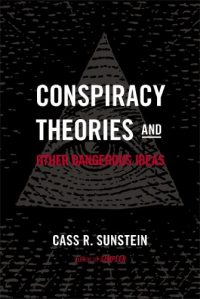
YouTube’s policy shift is the latest symptom of a larger movement by Western elites to—as Obama’s Information Czar Cass Sunstein put it—“disable the purveyors of conspiracy theories.” Sunstein and co-author Adrian Vermeule’s 2008 paper “Conspiracy Theories,” critiqued by David Ray Griffin in 2010 and developed into a 2016 book, represents a panicked reaction to the success of the 9/11 truth movement. (By 2006, 36% of Americans thought it likely that 9/11 was an inside job designed to launch wars in the Middle East, according to a Scripps poll.)
Sunstein and Vermuele begin their abstract:
Many millions of people hold (sic) conspiracy theories; they believe that powerful people have worked together in order to withhold the truth about some important practice or some terrible event. A recent example is the belief, widespread in some parts of the world, that the attacks of 9/11 were carried out not by Al Qaeda, but by Israel or the United States. Those who subscribe to conspiracy theories may create serious risks, including risks of violence, and the existence of such theories raises significant challenges for policy and law.
Sunstein argues that conspiracy theories (i.e. the 9/11 truth movement) are so dangerous that some day they may have to be banned by law. While awaiting that day, or perhaps in preparation for it, the government should “disable the purveyors of conspiracy theories” through various techniques including “cognitive infiltration” of 9/11 truth groups. Such “cognitive infiltration,” Sunstein writes, could have various aims including the promotion of “beneficial cognitive diversity” within the truth movement.
What sort of “cognitive diversity” would Cass Sunstein consider “beneficial”? Perhaps 9/11 truth groups that had been “cognitively infiltrated” by spooks posing as flat-earthers would harbor that sort of “beneficial” diversity? That would explain the plethora of expensive, high-production-values flat earth videos that have been blasted at the 9/11 truth community since 2008.
Why does Sunstein think “conspiracy theories” are so dangerous they need to be suppressed by government infiltrators, and perhaps eventually outlawed—which would necessitate revoking the First Amendment? Obviously conspiracism must present some extraordinary threat. So what might that threat be? Oddly, he never explains. Instead he briefly mentions, in vapidly nebulous terms, about “serious risks including the risk of violence.” But he presents no serious evidence that 9/11 truth causes violence. Nor does he explain what the other “serious risks” could possibly be.
Why did such highly accomplished academicians as Sunstein and Vermuele produce such an unhinged, incoherent, poorly-supported screed? How could Harvard and the University of Chicago publish such nonsense? Why would it be deemed worthy of development into a book? Why did the authors identify an alleged problem, present no evidence that it even is a problem, yet advocate outrageously illegal and unconstitutional government action to solve the non-problem?
The too-obvious answer, of course, is that they must realize that 9/11 was in fact a US-Israeli false flag operation. The 9/11 truth movement, in that case, would be a threat not because it is wrong, but because it is right. To the extent that Americans know or suspect the truth, the US government will undoubtedly find it harder to pursue various “national security” objectives. Ergo, 9/11 “conspiracy theories” are a threat to national security, and extreme measures are required to combat them. But since we can’t just burn the First Amendment overnight, we must instead take a gradual and covert “boil the frog” approach, featuring plenty of cointelpro-style infiltration and misdirection. “Cognitive infiltration” of internet platforms to stop the conspiracy contagion would also fit the bill.
It is quite possible, perhaps even likely, that Sunstein and Vermeule are indeed well-informed and Machievellian. But it is also conceivable that they are, at least when it comes to 9/11 and “conspiracy theories,” as muddle-headed as they appear. Their irrational panic could be an example of the bad thinking that emerges from groups that reflexively reject dissent. (Another, larger example of this kind of bad thinking comes to mind: America’s disastrous post-9/11 policies.)
The counterintuitive truth is that embracing and carefully listening to radical dissenters is in fact good policy, whether you are a government, a corporation, or any other kind of group. Ignoring or suppressing dissent produces muddled, superficial thinking and bad decisions. Surprisingly, this turns out to be the case even when the dissenters are wrong.
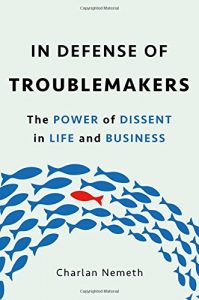
Scientific evidence for the value of dissent is beautifully summarized in Charlan Nemeth’s In Defense of Troublemakers: The Power of Dissent in Life and Business (Basic Books, 2018). Nemeth, a psychology professor at UC-Berkeley, summarizes decades of research on group dynamics showing that groups that feature passionate, radical dissent deliberate better, reach better conclusions, and take better actions than those that do not—even when the dissenter is wrong.
Nemeth begins with a case where dissent would likely have saved lives: the crash of United Airlines Flight 173 in December, 1978. As the plane neared its Portland destination, the possibility of a problem with the landing gear arose. The captain focused on trying to determine the condition of the landing gear as the plane circled the airport. Typical air crew group dynamics, in which the whole crew defers to the captain, led to a groupthink bubble in which nobody spoke up as the needle on the fuel gauge approached “E.” Had the crew included even one natural “troublemaker”—the kind of aviator who joins Pilots for 9/11 truth—there almost certainly would have been more divergent thinking. Someone would have spoken up about the fuel issue, and a tragic crash would have been averted.
Since 9/11, American decision-making elites have entered the same kind of bubble and engaged in the same kind of groupthink. For them, no serious dissent on such issues as what really happened on 9/11, and whether a “war on terror” makes sense, is permitted. The predictable result has been bad thinking and worse decisions. From the vantage point of Sunstein and Vermeule, deep inside the bubble, the potentially bubble-popping, consensus-shredding threat of 9/11 truth must appear radically destabilizing. To even consider the possibility that the 9/11 truthers are right might set off a stampede of critical reflection that would radically undermine the entire set of policies pursued for the past 17 years. This prospect may so terrify Sunstein and Vermeule that it paralyzes their ability to think. Talk about “crippled epistemology”!
Do Sunstein and Vermeule really think their program for suppressing “conspiracy theories” will be beneficial? Do YouTube’s decision-makers really believe that tweaking their algorithms to support the official story will protect us from bad information? If so, they are all doubly wrong. First, they are wrong in their unexamined assumption that 9/11 truth and “conspiracy theories” in general are “blatantly false.” No honest person with critical thinking skills who weighs the merits of the best work on both sides of the question can possibly avoid the realization that the 9/11 truth movement is right. The same is true regarding the serial assassinations of America’s best leaders during the 1960s. Many other “conspiracy theories,” perhaps the majority of the best-known ones, are also likely true, as readers of Ron Unz’s American Pravda series are discovering.
Second, and less obviously, those who would suppress conspiracy theories are wrong even in their belief that suppressing false conspiracy theories is good public policy. As Nemeth shows, social science is unambiguous in its finding that any group featuring at least one passionate, radical dissenter will deliberate better, reach sounder conclusions, and act more effectively than it would have without the dissenter. This holds even if the dissenter is wrong—even wildly wrong.
The overabundance of slick, hypnotic flat earth videos, if they are indeed weaponized cointelpro strikes against the truth movement, may be unfortunate. But the existence of the occasional flat earther may be more beneficial than harmful. The findings summarized by Nemeth suggest that a science study group with one flat earther among the students would probably learn geography and astronomy better than they would have without the madly passionate dissenter.
We could at least partially solve the real problem—bad groupthink—through promoting genuinely beneficial cognitive diversity. YouTube algorithms should indeed be tweaked to puncture the groupthink bubbles that emerge based on user preferences. Someone who watches lots of 9/11 truther videos should indeed be exposed to dissent, in the form of the best arguments on the other side of the issue—not that there are any very good ones, as I have discovered after spending 15 years searching for them!
But the same goes for those who watch videos that explicitly or implicitly accept the official story. Anyone who watches more than a few pro-official-story videos (and this would include almost all mainstream coverage of anything related to 9/11 and the “war on terror”) should get YouTube “suggestions” for such videos as September 11: The New Pearl Harbor, 9/11 Mysteries, and the work of Architects and Engineers for 9/11 Truth. Exposure to even those “truthers” who are more passionate than critical or well-informed would benefit people who believe the official story, according to Nemeth’s research, by stimulating them to deliberate more thoughtfully and to question facile assumptions.
The same goes for other issues and perspectives. Fox News viewers should get “suggestions” for good material, especially passionate dissent, from the left side of the political spectrum. MSNBC viewers should get “suggestions” for good material from the right. Both groups should get “suggestions” to look at genuinely independent, alternative media brimming with passionate dissidents—outlets like the Unz Review!
Unfortunately things are moving in the opposite direction. YouTube’s effort to make “conspiracy videos” invisible is being pushed by powerful lobbies, especially the Zionist lobby, which seems dedicated to singlehandedly destroying the Western tradition of freedom of expression.
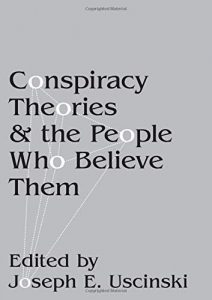
Nemeth and colleagues’ findings that “conspiracy theories” and other forms of passionate dissent are not just beneficial, but in fact an invaluable resource, are apparently unknown to the anti-conspiracy-theory cottage industry that has metastasized in the bowels of the Western academy. The brand-new bible of the academic anti-conspiracy-theory industry is Conspiracy Theories and the People Who Believe Them (Oxford University Press, 2019).
Editor Joseph Uscinski’s introduction begins by listing alleged dangers of conspiracism: “In democracies, conspiracy theories can drive majorities to make horrible decisions backed by the use of legitimate force. Conspiracy beliefs can conversely encourage abstention. Those who believe the system is rigged will be less willing to take part in it. Conspiracy theories form the basis for some people’s medical decisions; this can be dangerous not only for them but for others as well. For a select few believers, conspiracy theories are instructions to use violence.”
Uscinski is certainly right that conspiracy theories can incite “horrible decisions” to use “legitimate force” and “violence.” Every major American foreign war since 1846 has been sold to the public by an official theory, backed by a frenetic media campaign, of a foreign conspiracy to attack the United States. And all of these Official Conspiracy Theories (OCTs)—including the theory that Mexico conspired to invade the United States in 1846, that Spain conspired to sink the USS Maine in 1898, that Germany conspired with Mexico to invade the United States in 1917, that Japan conspired unbeknownst to peace-seeking US leaders to attack Pearl Harbor in 1941, that North Vietnam conspired to attack the US Navy in the Gulf of Tonkin in 1964, and that 19 Arabs backed by Afghanistan, Iraq, Iran, and everybody else Israel doesn’t like conspired to attack the US in 2001—were false or deceptive.
Well over 100 million people have been killed in the violence unleashed by these and other Official Conspiracy Theories. Had the passionate dissenters been heeded, and the truths they told about who really conspires to create war-trigger public relations stunts been understood, none of those hundred-million-plus murders need have happened.
Though Conspiracy Theories and the People Who Believe Them generally pathologizes the conspiracy theories of dissidents while ignoring the vastly more harmful theories of official propagandists, its 31 essays include several that question that outlook. In “What We Mean When We Say ‘Conspiracy Theory’ Jesse Walker, books editor of Reason Magazine, exposes the bias that permeates the field, pointing out that many official conspiracy theories, including several about Osama Bin Laden and 9/11-anthrax, were at least as ludicrously false and delusional as anything believed by marginalized dissidents.
In “Media Marginalization of Racial Minorities: ‘Conspiracy Theorists’ in U.S. Ghettos and on the ‘Arab Street’” Martin Orr and Gina Husting go one step further: “The epithet ‘conspiracy theorist’ is used to tarnish those who challenge authority and power. Often, it is tinged with racial undertones: it is used to demean whole groups of people in the news and to silence, stigmatize, or belittle foreign and minority voices.” (p.82) Unfortunately, though Orr and Husting devote a whole section of their article to “Conspiracy Theories in the Muslim World” and defend Muslim conspiracists against the likes of Thomas Friedman, they never squarely face the fact that the reason roughly 80% of Muslims believe 9/11 was an inside job is because the preponderance of evidence supports that interpretation.
Another relatively sensible essay is M R.X. Dentith’s “Conspiracy Theories and Philosophy,” which ably deconstructs the most basic fallacy permeating the whole field of conspiracy theory research: the a priori assumption that a “conspiracy theory” must be false or at least dubious: “If certain scholars (i.e. the majority represented in this book! –KB) want to make a special case for conspiracy theories, then it is reasonable for the rest of us to ask whether we are playing fair with our terminology, or whether we have baked into our definitions the answers to our research programs.” (p.104). Unfortunately, a few pages later editor Joseph Uscinski sticks his fingers in his ears and plays deaf and dumb, claiming that “the establishment is right far more often than conspiracy theories, largely because their methods are reliable. When conspiracy theorists are right, it is by chance.” He adds that conspiracy theories will inevitably “occasionally lead to disaster” (whatever that means). (p.110).
I hope Uscinski finds the time to read Nemeth’s In Defense of Troublemakers and consider the evidence that passionate dissent is helpful, not harmful. And I hope he will look into the issues Ron Unz addresses in his American Pravda series.
Then again, if he does, he may find himself among those of us exiled from the academy and publishing in The Unz Review.
Toxic femininity: ‘Badass’ US women demand right to torture and kill for Empire… just like men

© Global Look Press / Marvel Studios
By Michael McCaffrey | RT | January 25, 2019
Thanks to a new wave of feminism and its call for equality, it isn’t just toxic men who can kill, torture and surveil in the name of US militarism and empire, women can now do it too!
This past weekend was the third annual Women’s March, which is a protest originally triggered by Donald Trump’s defeat of Hillary Clinton in the 2016 presidential election that encourages women across America to rise up against misogyny and patriarchy.
As sincere as these women are in their outrage, in their quest for power they are inadvertently reinforcing the immoral and unethical system that they claim to detest. This is most glaringly apparent when this new feminism boldly embraces the worst traits of the patriarchy in the form of militarism and empire.
The rise of #MeToo, Time’s Up and the anti-Trump Women’s Movement, has brought forth a new wave of politically and culturally active neo-feminists. This modern women’s movement and its adherents demand that “boys not be boys”, and in fact claim that the statement “boys will be boys” is in and of itself an act of patriarchal privilege and male aggression. The irony is that these neo-feminists don’t want boys to be boys, but they do want girls to be like boys.
The inherent contradiction of that ideology was on full display recently when the American Psychological Association (APA) put out a guide to treating men and boys. In the guide’s summary the APA makes the extraordinary claim that “traditional masculinity – marked by stoicism, competitiveness, dominance and aggression – is, on the whole, harmful.”
These APA guidelines blatantly turn “traditional masculinity” and “toxic masculinity” into synonyms, and never once mention testosterone, revealing a staggering ignorance of male biology. The APA is in essence blaming the bull for his horns.
Further diminishing their credibility, how can anyone look at the mess that is the current emotional state of our world and think we need less stoicism and not more?
The hypocrisy of the APA guidelines are glaringly evident because everywhere you look nowadays girls and young women are constantly being urged to be more competitive, dominant and aggressive. I guess when women do it, it is empowering, but when men do it, it is dangerous.
Women, and some men, often tell me that if women were in power, the world would be a better and safer place. But that old trope, which obviously animates the feminist movement of today, is foolishness. I mean have none of these people ever heard of that pernicious beast Margaret Thatcher? And does anyone think that Hillary Clinton’s proposed no-fly zone over Syria or her tough talk about Russia would have led to more peace and less war?
Another example of the vacuity of this ideology is the group of Democratic women with military and intelligence backgrounds who won seats in Congress in 2018. These women, who have dubbed themselves “The Badasses”, how toxically masculine of them, are being touted as the “antidote to Trump.”
No doubt these former military and intelligence “badasses” will be so much less toxic than their male counterparts when they demand the US “get tough” by militarily intervening across the globe to further American interests. This sort of star-spangled belligerence is no less toxic in a pantsuit than a three-piece suit, and will only lead to more victims of America’s “competitiveness, dominance and aggression” around the world.
Other toxically-masculine women in government are also being hailed as great signs of women’s empowerment.
Gina Haspel is the first female director of the CIA and women now also hold the three top directorates in that agency. Ms. Haspel proved herself more than capable of being just as deplorable as any man when she was an active participant in the Bush-era torture program. No doubt the pussy-hat wearing brigade would cheer her “competitiveness, dominance and aggression” when torturing prisoners… most especially the traditionally masculine ones.
Hypocritical Hollywood has long been a haven for toxic masculinity, be it in the form of depraved predators like Harvey Weinstein or Woody Allen or counterfeit tough guys like John Wayne. Hollywood has also long been the propaganda wing of the US military machine. It is well established that for decades Hollywood and the Department of Defense have worked hand in hand in creating movies that tout muscular American militarism and empire.
Now Hollywood and the Department of Defense (DoD) are using the social justice calling card of “diversity and inclusion” to take the next step in indoctrinating young people with the noxious ideology of American exceptionalism and aggression… but this time they are targeting girls and young women.
The latest product of the Hollywood and DoD propaganda machine is the Disney/Marvel movie, Captain Marvel, which comes out this March. The film, which has a budget worth $150 million and stars one of the leading feminist voices in Hollywood, Academy Award winner Brie Larson, tells the story of Carol Danvers, a former Air Force pilot who “turns into one of the galaxy’s mightiest heroes.”
With Robert Downey Jr. and Chris Evans set to potentially leave their roles as Iron Man and Captain America respectively, Disney is positioning itself to replace them as the face of the multi-billion dollar Marvel Cinematic Universe with Brie Larson’s Captain Marvel, who is described as a “badass superheroine”… one more flag-waving, badass lady for the girls to look up to!
The movie has been described as “the recruiting tool of the Air Force’s dreams”, and will no doubt be a huge boost to female recruitment, much like Tom Cruise and Top Gun boosted male military recruitment in the 1980’s.
The DoD has reportedly been partnered with Marvel since 2008’s Iron Man. The DoD and Air Force demand that any film project with which they assist “portrays the Air Force and military in an accurate way and that it is in the service’s interest to partner on the project.”
It is good to know that feminist Brie Larson is cashing in by partnering with the Air Force to make a movie that indoctrinates millions of US kids, specifically girls, with the dream of being able to bomb innocent people across the globe from miles up in the sky and look really “badass” while doing it.
I’m sure Ms. Larson, a public and outspoken advocate for abuse victims here in America, has meticulously weighed the pros and cons of being a recruitment tool for the US military, which in recent years has aided and abetted, or been directly responsible for, the murder of women and children in Yemen, Iraq, Afghanistan, Syria, Libya and elsewhere.
The cacophony of feminist voices in the public sphere has effectively challenged some minds about some things, but not the right minds about the right things. The mendacious US establishment and its virulent military industrial complex have co-opted this current feminist moment and are using it to further solidify their deadly stranglehold on the American consciousness and Brie Larson is now an accomplice to that crime.
Is this what the new wave of feminism is all about, putting lipstick on the pig of American empire and militarism and calling it a victory for equality? If so, I’ll pass on that toxic femininity.
I’ll stick with traditional masculinity, you know, the stoic kind, whose adherents, principled men like Martin Luther King Jr., Cesar Chavez, Daniel Ellsberg, Pat Tillman and Edward Snowden, among many others, all did the right thing in the face of enormous opposition, and who didn’t tout themselves as “badass,” didn’t start fights but finished them, didn’t torture, didn’t spy and didn’t bomb innocent women and children into oblivion.
The bottom line is this, I fervently believe that men and women should be equal in their rights and opportunities, but I believe just as fervently that regardless of gender, no one has the right to kill, maim and torture for the American empire.
Michael McCaffrey is a freelance writer, film critic and cultural commentator. He currently resides in Los Angeles where he runs his acting coaching and media consulting business. mpmacting.com/blog/
Read more:
The Pentagon & Hollywood’s successful and deadly propaganda alliance
Featured Video
The Most Important Bet You’ve Never Heard Of
or go to
Aletho News Archives – Video-Images
From the Archives
The Occupied Mentality Syndrome
Saudi Arabia on the American chessboard – Part 2
By B. J. Sabri | American Herald Tribune | April 19, 2016
Since the Korean War, but particularly since the Iranian Revolution of 1979 until today, the United States has been steadily escalating its military presence in the Persian Gulf. Taking advantage of many colossal events of the past 36 years, [1] the hyper-empire has institutionalized its massive presence on land and sea, and expanded its objectives to include the unambiguous physical control of the area, as well as the clear understanding that local Arab governments should abide by them. The pretext is always the same: in “defense” of the national interests and security of the United States. From observing how the United States has been interacting with the governments of the region, and by judging from the size of its expeditionary force, we could reach a basic conclusion. The United States is occupying, de facto, the entire Arabian Peninsula. (Yemen, devastated by Saudi and American jets is yet to be conquered. Oman? Britain returned not as colonial ruler but as a soft occupying power.)
Under this articulation, Saudi Arabia, Qatar, Kuwait, and the United Arab Emirates are virtually occupied countries. If we compare this type of occupation to the mandate and protectorate regimes of the past, the results might be identical—the nations affected by it lose sovereignty. When Arab governments comply with the objectives of a foreign power that station military forces on their national milieu, then that power controls them in multiple ways including how they react to policy deliberations and what decisions they intend to take on specific issues. A good method to verify the concept of effective occupation is this: take notice of what the United States says and wants, and then compare it to what the gulf rulers do in response. (I shall discuss this detail at some point in the upcoming parts.)
If the presence of US forces or other means of political pressure are a factor in Saudi Arabia’s interventionist Arab wars, then we need to debate this issue. However, from the history of resistance to colonialism, we learnt: if a powerful state imposes its order on a nation by military means or other forms of coercion, and if this nation does not resist that imposition, then a mental subordination to the powerful state will ensue. This is especially true in the case of Saudi Arabia. One single event, 9/11, has transformed it from a US “ally” into an instant political hostage of the American Empire. … continue
Blog Roll
 Aletho News
- Trump and the debris of Iran war
- IRGC hits US tech giant Oracle’s data center, computing site in UAE over new assassinations
- Bombing Iran Back Into the Stone Age /Lt Col Daniel Davis & Jim Jatras
- UAE rejects report claiming it is ready to join war on Iran to reopen Hormuz
- A New Resistance Front: How Does Syria Factor into the Regional War?
- Gulf states weigh pipeline expansion plans, hoping to bypass Hormuz
- Iran sets up ‘tollbooth’ system in Strait of Hormuz
- Wave 90: IRGC strikes US-linked industrial sites in Gulf
- Iran Says US-Israeli Claims of Its Military Strength Are Wrong
- Trump’s April Fools’ Address to the nation
- If Americans Knew
- ‘War crime’: Global condemnation as Israeli ministers celebrate death penalty law targeting Palestinian prisoners
- 7 Ways Israel Is Turning Lebanon Into Gaza
- World’s Leading Football Bodies Under Fire Over Israel Policies
- Experts warn of possible use of nukes against Iran
- Israeli invasion of Lebanon could be worse than 1982, warn European officials
- Passover: Liberation and collective punishment
- Trump says the quiet part out loud: (Israel’s) war on Iran > Americans’ health – Daily Update
- Gaza families reunite years after babies evacuated amid Israel’s war
- International Rescue Committee warns Gaza’s children face grave protection risks
- Iran’s Alleged 47-Year War on America: Debunking the 1,050 American Deaths Canard
- No Tricks Zone
- Low Intensity Tornado Wrecks Major Solar Farm, Creating A Potential Toxic Dump
- New Study Finds Warming Saves Lives…Cold Temperatures 12 Times More Deadly Than Excess Heat
- German Science Blog Accuses PIK Climate Institute Of Hallucinating Climate Tipping Points
- Devastating Assessment Of Comirnaty Vaccine By Former Senior Pfizer Europe Toxicologist
- New Study: CO2 Is ‘Effectively Negligible’ As An Explanatory Climate Change Factor Since 2000
- Former Pfizer Toxicologist Dr. Helmut Sterz Tells Bundestag Hearing Pfizer Vaccine Should Have Never Been Approved
- Energy Expert: Germany’s Nuclear Phaseout Was A “500 Billion Euro Mistake”
- New Research: South Australia’s Mid-Holocene Sea Surface Temperatures Were 4°C Warmer Than Today
- Storing Green Energy To Last Germany 10 Days Would Require A 60-Million Tonne Battery
- New Studies: UK Sea Levels Were 4 Meters Higher Than Today During The Mid-Holocene
 Aletho News