Where have Europe’s pacifists gone – the ones who once opposed NATO?

By Sonja van den Ende | Strategic Culture Foundation | April 22, 2025
Where are they now—Europe’s pacifists? Why do they no longer gather in Belgium, in Brussels, NATO’s headquarters, where large demonstrations against the alliance once took place? These protests, led by pacifists, denounced NATO, war, militarization, and nuclear arms.
The Belgian newspaper Le Soir recently posed an intriguing question: Why have the pacifists vanished? “The arms race has begun,” the article argues. “Like its European neighbors, Belgium is preparing to significantly increase military spending this year—without facing any opposition.”
“We keep our word,” declares Francken, Belgium’s former Defense Minister. “Belgium will become a solidary ally with extra defense budgets for personnel, equipment, and infrastructure.” He claims the spending will also boost jobs and innovation. Belgium, after all, is a NATO founding member, alongside the Netherlands.
Some Belgian (former) pacifists have reacted sharply to the government’s plans: “Retirees must accept lower pensions, unemployment benefits are being slashed, the sick languish in poverty, nurses earn less and work longer for diminished pensions, hospitals lose subsidies—all to enrich that corrupt Zelensky gang in Kiev.” The same measures, they note, are being imposed in the Netherlands.
But as the article points out, criticizing NATO now invites ridicule. Or does it go further than mockery? Across Western Europe—Belgium, the Netherlands, Germany—and in the Baltic states and Poland, dissent is met with more than scorn. People are arrested, elections are overturned, and societies drift toward totalitarianism—or worse, a resurgence of militarism and fascism unseen since 1945.
Europeans once insisted America should not meddle in their affairs. But it’s too late for that. EU governments, radicalized by waning U.S. interest in Europe, have already been co-opted. They should have spoken up years ago, when it became clear Europe was being used to wage wars in distant lands its citizens barely knew. Instead, they absorbed refugees (often unwillingly) and fell under what some call American colonization.
Yet America wasn’t entirely wrong. In Munich last February, Vice President J.D. Vance called Europe a “totalitarian society,” singling out Germany. I can confirm his assessment was accurate—but it barely scratched the surface. The reality is far worse and deteriorating daily.
Consider these examples:
- A 16-year-old German girl was expelled from school by police for posting a pro-AfD TikTok video featuring the Smurfs (the right-wing party’s color is blue).
- An AfD politician was fined for stating that migrants commit more gang rapes than German citizens. (The court didn’t dispute her facts but ruled they incited hatred.)
Germany once had a robust pacifist movement. In the 1970s and 80s, activists—many from what is now the Green Party (Bündnis 90/Die Grünen)—protested NATO and nuclear weapons. Today, those same Greens, led by Annalena Baerbock and Robert Habeck, champion war and arms shipments.
Their party program declares Germany must lead Europe, offering a “global counterweight” to China and Russia. The anti-war, anti-NATO movement has been absorbed into a party now pushing for war—especially against Russia, as Baerbock’s rhetoric makes clear.
Or take a 2023 case where the EU’s High Representative expressed concern over “extrajudicial sentences against Serbs” who protested NATO in Kosovska Mitrovica. Kosovo’s Foreign Minister defended the arrests, claiming police had “clear evidence” the demonstrators participated in an “attack on NATO.”
So where have Europe’s pacifists gone—the ones who marched against war, militarization, and nuclear arms for decades? The Friedrich Naumann Foundation (banned in Russia) claims to have the answer. In an article, they declare: “The end of pacifism (as heard in a Bundestag debate) was historic. Hopefully, it marks the end of a moral and political error.”
Has pacifism become a “political mistake”? Millions who oppose war have been misled for years by their own politicians—like the Greens, who traded peace for militarism. The world is upside down, yet Europe’s docile masses seem content as their pensions fund weapons.
New Eastern Europe takes it further, arguing “Pacifism kills.” The outlet claims: “The problem isn’t pacifism itself, but its manipulation for purposes contrary to its ideals. While pacifist appeals to Russia (the aggressor) are justified, targeting Ukraine or both sides aids Moscow.”
In short: Pacifism helps Russia. The “hippies” of the 1960s live in a fantasy where peace is impossible, Russia is the villain, and Europe must defeat it. The campaign against pacifism mirrors the EU’s push for militarization.
Europe is silencing pacifists—and dissidents—just as pre-WWII Germany did under fascism. New laws are emerging. In Germany, the proposed CDU/CSU-SPD coalition plans to “fight lies,” per their “Culture and Media“ working group. If you “lie” by government standards—say, by advocating peace with Russia or denying its “aggression”—you risk jail, fines, or online erasure.
“The deliberate spread of false claims isn’t covered by free speech,” they assert.
Le Soir asked: Where are the pacifists? They’re still here—for now. But once Germany’s new government takes power, once the digital ID and CBDC (mandatory across Europe) launch this October, protests—online or in streets—will be surveilled. Small demonstrations in Germany and Amsterdam show resistance lingers. But soon, fear will silence them: fear for jobs, pensions, benefits, even children.
Because CBDC and Digital ID mean governments can monitor “fake news” and freeze dissenters’ funds. Europe is birthing the very totalitarianism it accuses Russia, China, or America of. Militarization, fascism’s revival—all while Europeans dread a war that isn’t theirs, yet one their leaders enable.
Columbia University Faces Backlash for Investigating Catholic Student Over Social Media Posts
By Ben Squires | Reclaim The Net | April 21, 2025
Columbia University is now facing allegations of targeting a student for voicing his religious beliefs online. Daniel DiMartino, a graduate student and outspoken Catholic, has come forward with claims that the university is subjecting him to an official investigation over his faith-based opinions shared on a podcast.
Columbia’s Office of Institutional Equity (OIE), a department recently created as part of the university’s response to growing concerns over alleged antisemitic behavior on campus, contacted DiMartino in March with a notice accusing him of “conduct that could constitute discriminatory harassment.” The message offered no specifics.
After pressing for clarification and receiving none, DiMartino was summoned to a meeting with three officials from the OIE, who identified themselves as investigators. During the meeting, he was informed that multiple complaints had been filed against him. The officials claimed their purpose was not disciplinary, but to ensure the matter did not “escalate into a disciplinary outcome.” According to DiMartino, they described the investigation as being “for [his] own benefit.”
What followed was a presentation of screenshots from DiMartino’s social media accounts, featuring statements reflecting his Catholic convictions. Among the posts was one declaring, “God does not teach us that we can change our gender,” along with others defending politicians who support bans on gender-transition procedures for minors and questioning gender ideology in a conversation with a Catholic friar.
The university’s investigators also took issue with DiMartino’s appearance on a January episode of the Timcast podcast, where he suggested that immigrants with visible gang-related tattoos, including those involved in child trafficking, should undergo heightened scrutiny. Columbia officials reportedly considered this view discriminatory, but DiMartino maintains that it aligns with basic public safety principles.
“At the end of their presentation, I said, ‘I am totally open to at some point having said something I didn’t believe in … but in all the cases that you showed me, I absolutely stand by what I said,’” DiMartino recounted.
DiMartino challenged the premise: “If someone is offended, that’s not going to stop me from sharing what I believe. The overwhelming majority of people in this country agree with what I said … I just don’t believe men can become women and women can become men.”
He says he was further cautioned to reflect on the discussion before posting online again. When he responded, “Can you understand that this sounds threatening?” the conversation ended without a resolution.
The Foundation for Individual Rights and Expression (FIRE), a nonprofit dedicated to defending free speech on college campuses, has since taken up DiMartino’s case. The organization has formally warned Columbia University against retaliating for what it describes as constitutionally protected expression.
“What this really amounts to is censorship through intimidation,” DiMartino said. “No student should be put through an inquisition for practicing their faith.”
Carnegie Endowment cancels Iran FM’s speech under ‘orchestrated pressure’ from Israel lobby: Report
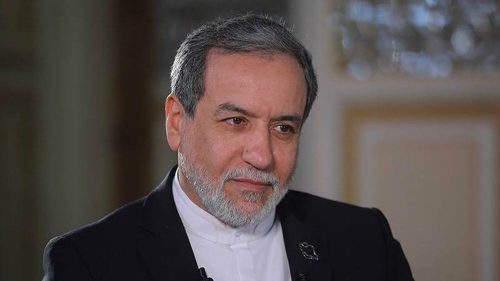
Iranian Foreign Minister Abbas Araghchi
Press TV – April 21, 2025
The Carnegie Endowment for International Peace (CEIP) cancels Iranian Foreign Minister Abbas Araghchi’s keynote address at its 2025 Nuclear Policy Conference.
Citing sources familiar with the matter, Iran Nuances reported that the cancellation on Monday followed an “orchestrated pressure” campaign from “Israeli-affiliated hawkish elements” and officials of former US presidents Joe Biden and Barack Obama.
Araghchi was scheduled to deliver a virtual address at the conference, which will bring together politicians, diplomats, and nuclear experts from around the world to discuss critical challenges in nuclear nonproliferation, arms control, disarmament, deterrence, energy, and security.
Iran’s Permanent Mission to the United Nations confirmed in a statement that Araghchi’s speech has been canceled.
According to the mission, the cancellation occurred after the conference organizers decided to change the format of the Iranian foreign minister’s speech to a debate.
Expressing regret over the matter, the mission said that the full text of the now-canceled speech will be made available to the news media.
Facing Prison Time in Germany for Criticizing an Israeli Journalist: The Case of Hüseyin Dogru
By Alan MacLeod – MintPressNews – April 20, 2025
Amid a crackdown on pro-Palestine voices in Germany, a journalist regularly attacked as a Russian operative is facing up to three years in prison for defamation of an Israel-based journalist. Hüseyin Dogru, founder of red. media, has been charged with defamation for actions relating to a spat with Nicholas Potter, a German state-funded reporter working for the Israeli outlet, The Jerusalem Post.
In December, Potter, a self-styled counter-extremism expert, published a lengthy exposé in The Jerusalem Post, claiming that red. media, MintPress News, and The Grayzone were part of a network of far-left outlets promoting extremism and anti-Semitic conspiracy theories.
Worse still, he strongly insinuated that all three were promoted and funded by the governments of Russia, Syria, and Iran.
The charges are false (see MintPress’ rebuttal here), and are particularly ironic, coming as they do from a journalist who is funded by the German Foreign Office. One who, amid a genocide, moved to Israel to work for an outlet headed by a former Israeli Defense Forces spokesperson.
Moreover, Potter himself arguably holds extreme views on the subject. Just weeks after attacking us for our journalism, he penned an article titled “Can Journalists Be Terrorists,” which attempted to justify many of Israel’s killings of Palestinian media workers.
Both red. and MintPress immediately highlighted much of this important context, and our content went viral.
From Viral Criticism to Criminal Charges
A sticker about Potter, based on a red. media graphic, was spotted in Berlin. The sticker took the outlet’s criticism of him, and plastered the phrase, “The German Hurensohn” — “The German Son of a Bitch” — over the top. That sticker is the centerpiece of the prosecution’s allegation of a coordinated “hate campaign” against Potter led by red. media. Potter claims that he has suffered harassment and threats to his life, and some have tried to link this back to red. media’s graphic.
The accusations provoked a storm of articles in German media, all supportive of Potter. Many echoed U.S. Secretary of State Antony Blinken’s claims that red. media is a Russian government-controlled influence operation.

A red. media post criticizing journalist Nicholas Potter, left, appears as a modified sticker in Germany, right. Photo provided to MintPress
Dogru denies these allegations, although he was previously a key part of Red Fish, a platform financed by Ruptly, a Germany-based outlet partially funded by the Russian state-controlled network, RT. After the Russian invasion of Ukraine in 2022, Dogru closed Red Fish and started his own independent outlet. He insists it has no connection to Russia and is dedicated to making revolutionary and educational content. He also denies having any information or involvement in producing anti-Potter stickers.
Germany Criminalized Palestinian Solidarity
Potter’s support for Israeli policies has certainly drawn the ire of many in the pro-Palestine movement in Germany. Yet he is far from alone. The German government has offered its full support to Israel and has gone so far as to ban pro-Palestine demonstrations and lock up countless activists, including Jewish people. The phrase “From the River to the Sea” has effectively been criminalized, with Berlin announcing that it would deny citizenship to anyone using it. New German citizenship laws require all applicants to sign what is, in effect, a loyalty oath to the State of Israel, declaring that it has a “right to exist.”
Berlin is currently deporting foreign residents for their participation in lawful protests supporting Palestinian rights. Dogru’s legal team has advised him that his wife and son could be deported as well.
Commentators have warned that, with these actions, Germany is lurching towards the authoritarian right. With the far-right AfD Party surging in the polls (a recent survey found they are now the most popular party in Germany), many inside the country are ringing the alarm bells.
“For decades, Germany has stuck with Israel and its narratives in the Middle East,” Dogru told MintPress, adding: “Since October 7, we see that the German government is violently repressing activists to make sure there are no voices in Germany critical of Israel. Activists here have paid a high price to make sure that they can protest.”
According to Dogru, this is a test case. Ultimately, the suppression of speech is not about Israel, but an attack on its own society.
Germany is preparing to assert itself as a leading military and political force in NATO and the EU. To do that, it must eliminate resistance — not just abroad, but at home. This isn’t driven by historical guilt or solidarity. It’s about silencing dissent and disciplining society. By targeting the most marginalized, the German state is disciplining its population — silencing opposition before it grows.”
The message from the German government is clear, Dogru claims: “fall in line, or be crushed.”
Trump Administration Targets $1.4B in Federal “Misinformation” Grants
NIH and State Dept. Order Crackdown on Speech-Policing Programs Funded Under Biden
By Christina Maas | Reclaim The Net | April 19, 2025
It started, as so many federal science fair projects do, with a grant and a vague idea. The University of California, Irvine secured a $683,000 pot of taxpayer gold to study how social media “misinformation” affects vaccine acceptance among black and latino communities. Their plan was to track the followers of so-called “vaccine-hesitant influencers” and feed the data into a visualization tool.
That grant is now dead. Not because it failed, but because the broader disinformation-industrial complex is starting to crack under the weight of its own contradictions.
The UC Irvine project was just one tile in a mosaic of more than 800 federally funded efforts, totaling over $1.4 billion since 2017. All of it was earmarked to combat misinformation, disinformation, and whatever the marketing department decided to call lies [and unapproved views] this week. More than 600 of these contracts were approved during the Biden administration, and it turns out people started noticing that the government was quietly inserting itself into the content moderation business.
Enter Donald J. Trump, stage right, with his first-day executive order accusing the federal government of turning buzzwords like “malinformation” into permission slips for clamping down on speech. The Department of Justice was assigned to dig through the records and figure out just how far the thought policing went.
The public got a good look after The Free Press decided to play matchmaker between obscure federal records and actual journalism. That triggered a glorious round of internal audits, panicked reviews, and in some cases, the rapid self-destruction of programs that suddenly couldn’t remember what they were for.
NIH: From Health Science to Thought Control
The National Institutes of Health got caught mid-sprint. In response to press inquiries, the NIH not only canceled the UC Irvine grant but also torched a $22.4 million payout to UnidosUS, a group whose mission had somehow morphed from Latino advocacy into online speech policing. NIH Director Jay Bhattacharya hit the panic button, sending out an “URGENT” internal email ordering a review of all research touching the sacred trinity of mis-dis-mal information.
An NIH spokesperson said the agency is now “taking action to terminate research funding that is not aligned” with updated policy priorities. In plain English, they finally read the Constitution and realized they might be setting it on fire.
The State Department’s Digital Hall Monitor Gets Benched
Meanwhile, the State Department has been busy putting its own houseplants on leave. Secretary Marco Rubio, now running Foggy Bottom like it’s a Senate hearing, has suspended dozens of staffers from the Global Engagement Center. He says the agency crossed the line into censorship, which is a bold claim until you look at the receipts. The Center has spent years telling Americans what is or isn’t true, always with the urgency of a substitute teacher discovering TikTok.
The department has begun attaching “no-cost amendments” to existing grants. That’s bureaucrat-speak for telling award recipients to sign a bunch of legal paperwork and swear they aren’t doing anything unconstitutional. A little late for that, but sure.
The Pentagon: Same Game, New Label
At the Pentagon, they’ve decided that the problem is just a branding issue. So the term “disinformation” has been retired in favor of the more patriotic-sounding “countering adversary propaganda and information operations.” A senior Defense Department official explained that the shift brings the program into alignment with the new White House directive. Which is the kind of sentence that usually ends with somebody testifying in front of Congress about data collection gone wrong.
None of this seems to affect Peraton, a defense contractor that holds a $979 million contract to identify threats in coordination with US Central Command. Peraton did not respond to The Free Press’ requests for comment, possibly because they were too busy deciding whether your aunt’s Facebook post counts as hostile influence activity.
Microsoft Broadens Always-Watching AI-Powered Recall Tool That Logs and Indexes User Activity
A built-in memory machine disguised as convenience, Recall quietly turns every moment at your keyboard into searchable history.
By Ken Macon | Reclaim The Net | April 19, 2025
Microsoft’s renewed push to roll out Recall, an AI-powered feature in Windows 11 that automatically logs user activity every few seconds, is reigniting deep concerns among those focused on digital privacy and personal security.
Initially paused following a storm of backlash last year, Recall has quietly returned in a preview version of Windows 11 (Build 26100.3902), now available to select testers. The tool takes snapshots of a user’s screen at regular intervals and creates a searchable timeline of everything from app usage to websites visited and documents accessed. While Microsoft pitches this as a convenience tool, privacy advocates see a surveillance mechanism in disguise.
The company claims the tool is safe. It requires users to opt in and enroll in Windows Hello to access stored snapshots. Microsoft describes the feature as a way to “quickly find and get back to any app, website, image, or document just by describing its content.” Users, the company says, can pause recording and choose what is saved.
But these assurances fall flat for those warning about the broader consequences. The fact that Recall is opt-in does not prevent the exposure of data from people who never enabled it. If someone with Recall turned on receives a private photo, message, or sensitive document, it will be silently captured, analyzed, and indexed by the tool, regardless of the sender’s intent or privacy tools used.
The feature’s ability to store and catalog data so comprehensively opens up a host of legal, security, and ethical issues. Lawyers, governments, and spyware operators would gain an unprecedented level of access to a user’s digital life; not through brute force or phishing, but through a built-in tool that essentially creates a time-lapse of computer activity.
For those wary of the increasing creep of AI into daily computing, Recall has become a textbook case. Critics have framed it as part of a larger trend where companies inject AI features into existing platforms not to serve users, but to drive engagement, data collection, or lock-in.
From Ms. Rachel To Anti-War College Students: The End Of American Free Speech
By Robert Inlakesh | Palestine Chronicle | April 19, 2025
Working together with the most powerful government in the world, Zionist organizations are smearing and persecuting anyone who expresses sympathy with Palestinians, subjected to a genocide subsidized with their own tax dollars. From the media to academia, American free speech rights are being stripped.
Fulfilling an agenda laid out in a 33-page document named “Project Esther”, published in October of last year by the Heritage Foundation, the US government is teaming up with extremist elements of the Zionist Lobby to crush criticism of Israel.
From its recommendations to form a federal task force to combat alleged antisemitism, which is really just criticism of the Israeli government, to its strategy to tear down leading academic institutions, the plan is being followed.
The Heritage Foundation, most well-known for its “Project 2025”, is known to possess considerable influence on the Trump White House. Yet, despite its obvious influence and policy recommendations that are being followed, almost down to the letter, there has been little connection drawn between these think-tank documents and Donald Trump’s anti-free speech crusade.
It is evident, however, that the Democratic Party also presided over the greatest assault on academic freedom in American history, placing itself in line with the Zionist Lobby, which is why it makes sense that there is no incentive from Democrat-aligned media to give light to this topic. Although the situation has only grown more dire for free speech rights, particularly on college campuses, since the departure of former President Joe Biden.
Uncharted Waters
Under the Trump administration, it started to become clear with the detention of Mahmoud Khalil that we were entering uncharted waters. The mere fact that a Green-Card holder, accused of no crime, and who is married to an American citizen, was snatched in the night by plain-clothed ICE officers, who ferried him off from New York to Louisiana, was a tell-tale sign of things to come.
Thereafter, things only grew worse. Zionist student groups and racist extremist organizations have worked to put together lists of completely peaceful, law-abiding individuals who are set to be targeted by federal security agencies.
Claiming persecution themselves, these groups hide behind the cloak of being offended by anti-war protests, in order to work with the state to see their political opposition suppressed by force.
Yet, the crackdown has not been limited to students/former students. Instead, this campaign that aims to trample on the First Amendment rights as they are laid out in the US Constitution is beginning to empower pro-Israel extremists.
Weaponizing the claims of antisemitism and claiming that their targets are “Hamas supporters”, these organizations no longer are required to even present evidence for their allegations.
The Case of Ms. Rachel
This lack of any proof for the claims being made was no more evident than in the case of Ms. Rachel, a popular children’s entertainer.
A pro-Israel organization known as “Stopantisemitism” decided to accuse Ms. Rachel of spreading Hamas propaganda and requested the US government investigate whether she is receiving foreign funding.
Ms. Rachel has not commented on any of the political dynamics concerning the genocide in Gaza, yet has long expressed her sympathies for Palestinian children suffering in the Gaza Strip, as well as the Israeli Bibas family. There is nothing even remotely antisemitic about her posts on the topic, nor do they have anything to do with Hamas.
Yet, the US government appears to have reached the same point Israel has, where an accusation that someone is affiliated with Hamas needs no evidence to corroborate it before action is taken.
In Israel’s case, the action taken is the detention, torture, and/or murder of that individual, whereas in the United States, it can come in the form of detention or legal battles for now.
This assault on free speech is being carried out against media outlets also, using similar tactics of providing baseless claims regarding collaboration with Hamas, and even on behalf of Israeli citizens filing their cases in US courts to take down registered not-for-profit organizations.
Fired employees call for boycott of Microsoft over its role in Gaza genocide
Press TV – April 19, 2025
Two former Microsoft employees slammed the company for complicity in the Israeli genocide in Gaza and systematic apartheid in the West Bank, urging global boycotts against the tech giant.
Hossam Nasr, a software engineer, and Abdo Mohamed, a data scientist, who were both fired in 2024 for organizing a vigil for Palestinians killed in Gaza, called for severing Microsoft’s partnerships that support military operations.
According to Nasr, Microsoft provides cloud services, AI capabilities, translation, and data storage to the Israeli military, and “they use Microsoft translation services to translate the data they collect on Palestinians from Arabic to Hebrew.”
“Then they feed that into a pipeline of AI targeting systems that help determine where to bomb in Gaza and help Israel classify innocent Palestinians as terrorists,” he said, citing reports showing a 200-fold increase in Israel’s use of Microsoft’s AI tools between October 2023 and March 2024.
“Their usage of cloud storage increased to 13.6 petabytes,” he added.
“Microsoft Azure also hosts the target bank for the Israeli military,” he said, noting: “It hosts the civil registry of the Palestinian population.”
“These systems allow Israel to accelerate and exacerbate its genocide in Gaza to unforeseen levels,” he said.
Nasr pointed out that Microsoft staff became deeply embedded in Israeli military units, including Unit 8200, the notorious Israeli military intelligence branch.
“Microsoft employees become so embedded… that they become described as soldiers, acting as soldiers within those units,” he said.
“This kind of deep partnership allows Israel to automate and remove any sort of human element to the Palestinians,” he added. “It turns the mass murder of Palestinians into essentially a video game.”
Nasr said Microsoft’s technology is also used in the West Bank through applications such as Al-Munasik, which helps control Palestinian movement.
“Microsoft is enabling the apartheid system and the racial segregation system in the West Bank and the rest of Palestine,” he said.
He also criticized Microsoft’s employee donation program, saying, “They allow donations to illegal Israeli settlements and match them.”
“No Azure for Apartheid” campaign, which they co-founded, was inspired by earlier efforts at other tech companies.
“That campaign started as bombs were dropping on the heads of Palestinian children in Gaza in the wake of the Sheikh Jarrah events in 2021,” Nasr said, adding, “We took inspiration from our colleagues at Google and Amazon… to launch our own campaign at Microsoft in 2024.”
Nasr explained that the goal of their campaign was to sever Microsoft’s partnerships that support the Israeli regime’s forces brutal attacks against Gaza and the West Bank.
He insisted that holding meetings and writing letters did not have the necessary impact, and boycotting the company was the only way to stop its cooperation.
Nasr said that their campaign coordinated the April 4 protests during Microsoft’s 50th anniversary events.
“As soon as we became aware that Microsoft was planning a celebration… we made it clear that we will not allow Microsoft to celebrate while their hands are stained with Palestinian blood.”
“It is no longer sufficient to be in meetings with executives or writing emails,” Nasr highlighted.
“It is imperative for us… to stop materially contributing and materially partnering to the genocide of our brothers and sisters in Palestine,” he emphasized.
“We have made a huge dent in this Microsoft castle,” Nasr concluded. “I do believe that Microsoft’s reputation has never been more tarnished because of its complicity in genocide,” he said.
Nasr said losing his job or being deported from the US was a “cheap price to pay” compared to what Palestinians endure.
“A lot of the time I’m asked… Are you not scared of being fired? Of being deported?” he said. “And my response is always… Are you not scared of being complicit in the Holocaust of our time? Of what you’ll tell your children and grandchildren when they ask… Where were you when the genocide in Palestine and Gaza was happening?”
The Israel regime launched the campaign of genocide in Gaza on October 7, 2023.
Since then, it has killed at least 51,065 Palestinians, mostly women and children, and injured more than 116,505 others.
UK Government and Tony Blair Back AI-Powered Surveillance Push Including Digital ID and Facial Recognition

By Didi Rankovic | Reclaim The Net | April 18, 2025
A new push is underway in the UK to promote AI-powered mass surveillance via a number of controversial technologies and tools.
The country’s government, former PM Tony Blair, the College of Policing (the professional body for police in England and Wales), as well as legacy media outlet The Times, and Axon, a surveillance company, have converged behind this latest effort.
Axon was the headline sponsor during The Times’ Crime and Justice Summit this week, organized to present the result of an inquiry launched a year ago by the newspaper under the title, “The Crime and Justice Commission,” meant to look into the future of policing and the criminal justice system.
The final report contains recommendations to introduce mandatory universal digital ID and online age verification, as well as expand the use of live facial recognition, AI, and data analytics.
Age verification and banning users under 16 from social media would be enforced through a universal digital ID system, which would also be used to create what the report refers to as a “single unique identifier from birth.”
And while “ethical dilemmas” around this are acknowledged, the document calls for a single digital case file for the justice system.
Live facial recognition, which is currently tested or used in limited areas, should be expanded across the UK, according to the report, which also urges for AI and data analytics to be more involved in policing and the criminal justice system.
And while civil liberties and privacy campaigner Big Brother Watch slammed what it calls “an obsession” with Orwellian AI-powered surveillance that “reeks of authoritarianism and would be a hammer blow to our civil liberties” – Tony Blair and several other high profile figures emerged as enthusiastic supporters of the recommendations.
According to Blair, digital ID is a necessity (he and his foundation push for the mandatory kind), as is live facial recognition deployment in “busy places like train stations and events.” The former PM wants AI to be used for “spotting crime patterns, guiding patrols, and streamlining decisions.”
UK Justice Secretary and Lord Chancellor Shabana Mahmood suggested that some of the recommendations would become law, while other supporters of the report include the Home Office, life peer in the House of Lords Baroness Longfield, Independent Victims’ Commissioner for London Claire Waxman, and the College of Policing.
Weaponized Surveillance: Biden Admin’s ‘Counterterror’ Plan Declassified
By Svetlana Ekimenko – Sputnik – 17.04.2025
America First Legal Foundation (AFL) had appealed to the US Director of National Intelligence to declassify and release the Biden administration’s classified 2021 domestic surveillance strategy, with Tulsi Gabbard promising to comply with the request for transparency and accountability.
The Biden administration’s strategy gave the green greenlight to mass digital stalking and thought-tracking, as evidenced by the playbook newly declassified by Tulsi Gabbard.
The Biden Administration’s Strategic Implementation Plan for Countering Domestic Terrorism empowers federal agencies to:
- Adopt pre-crime tactics, enhancing screening and vetting processes for federal employees, particularly those in sensitive positions
- Improve background checks by policing speech, tracking iconography and phraseology, vetting spending, and improving ideological filtering of public servants
- Incorporate mental health screening and community engagement lines to flag “threats” before a crime is committed
- Expand digital surveillance through tech platform partnerships
- Actively integrate foreign intelligence into data-sharing efforts
- Assess risks among military retirees during their transition to civilian life
American Death Throes
By Georgia Hayduke • Unz Review • April 18, 2025
If the situation was hopeless, their propaganda would be unnecessary.
– Anonymous
They say the most dangerous animal you can encounter in the wild is one that is dying and cornered. A trapped coyote will lash out and attack you with every fiber of its being, even if it’s mortally wounded. Especially if it’s mortally wounded.
The American Empire and the so-called state of Israel are a pair of conjoined coyotes whose paws are clamped in the jaws of a bear trap, hanging on by a few threads of tendon. In their last gasps of life before they enter the great beyond, in one final adrenaline fueled frenzy, these dogs are lashing out and doing everything in their power to destroy financially, legally, and socially anyone who dares speak out against the crimes they are committing in Palestine. I learned this for myself not too long ago.
On a recent afternoon, I attended a march for Palestine hosted by my school’s chapter of Students for Justice in Palestine. A few days prior, two Saudi national grad students at my school had their student visas revoked for expressing support for the Palestinian cause on their social media. They had taken the first flights back to Saudi Arabia so they could avoid run-ins with the police. These students weren’t thieves or rapists or anything worthy of being expelled over. The only crime these students had committed was daring to speak out against the middle east’s sex offender capital on Instagram. I found the expulsion of these students personally intolerable.
I had never attended a protest before. The SJP had held protests on campus since October 2023, but I hadn’t gone to any because I am a very private person, and I like to keep my identity hidden from individuals and organizations who would see me fired for my political beliefs. I’m a bit of a coward. I’d rather be at home with my roommates making a pot of spaghetti than marching down the street holding a flag. Plus I didn’t want to get beat up by a cop. Anyway, I figured if I could pull off a disguise, and kept my opsec airtight, I could go to a protest and make it home without my name and address plastered all over the canary mission website. My disguise was simple enough: long pants, boots, and a ski mask, with a hoodie and sunglasses to cover my face and hair. Nothing I had on was personally identifiable. I left my phone and bag at home. I just looked like some hobo. I walked to campus instead of driving, and I didn’t put on my disguise until I got to some bushes near the railroad tracks where the SJP was meeting up. I figured the steps I was taking were overkill, but I found out they were not.
The crowd was about what you would expect. A group of muslim students gathered at the front with a wagon with some water bottles and granola bars in it. A group of dysgenic looking transgender students stood to their right, sallow and lanky pink hair flopping around their shoulders. The enemy of my enemy is my friend I suppose. Other groups of generic looking kids stood around them, talking quietly. Ordinary folks. It was heartening to see them. The annoying preacher who stands on the quad everyday yelling about abortion was there too, which struck me as odd. I would have expected him to have a sign reading “Real Patriots Stand With Israel”, but he seemed determined to defy stereotypes. He carried a sign reading “Free Mahmoud Khalil” and wore the Palestinian flag like a cape. There were a few other older adults there as well, including a mother with her baby. The crowd stood about forty strong.
Off to the side stood a small group of shady looking folks with fluorescent green hats on. I made small talk with a skinny young man who stood by me to my left. He’d been to many protests before, and wasn’t surprised by the makeup of the crowd. New people like me show up every time. I asked him about the green hatted crowd, and he told me that they were marshals whose job was to monitor any policemen who showed up. They were from a police brutality watchdog organization. This was necessary since the time the police savagely beat protesters on UNC’s campus about a year ago. Footage of the cops dragging a girl across the ground by her hair is publicly available. This reaction was obviously serious overkill, and hadn’t been seen at other student protests on UNC’s campus in years past. The Black Lives Matter protests of 2020, while rowdy, had a very subdued police presence. I do not recall anyone getting their hair ripped out by the po-po in 2020. There is one key difference between the attempted race riots of 2020 and the protests for Palestine of today: the protests for Palestine are actually threatening to the powers that be.
We marched in a loop across campus. We went from the student union, to the historic district, to the library, and back to the student union. Overall I’d say we covered about a mile of ground. We had supporters. There’s a large Arab population close to campus, and we’d see Arab guys roll down the windows of their cars and cheer for us. It felt nice to have some people on our side. The trouble that showed up took the form of a small group of nasally enhanced individuals wearing sunglasses who joined our march when we reached the historic district. This group was composed of a bunch of creeps wearing dark clothes and ballcaps, who would slink into the crowd and attempt to covertly take photos of the marchers with phone cameras up their sleeve. I asked my lanky comrade about these freaks, and he told me the ADL hires people, usually Hillel students, to monitor student social media related to Palestine. These losers go to all SJP marches, and they try to dox students that go to them. Completely covering my face and body wasn’t overkill at all. They also try to bait people into losing their cool and punching them, catching assault charges. Little digs to try and ruin the lives of anyone standing against them.
As we were walking, the skinny young man pointed out a loud girl standing at the front of the group. She had on a keffiyeh, and her hair was in a slicked back blonde ponytail. She walked in the street a lot, and the muslim students seemed leery of her. “That’s a fed.” he whispered. “What makes you think that?” I asked. “She’s way older than everyone, and she’s wearing cop sneakers. Ten bucks says she’ll try to get someone to act violent later.” I kept watch on that girl. I had no reason to trust the skinny guy, but better safe than sorry.
Another paranoia inducing character was the driver of a certain grey Dodge Charger with tinted windows that followed the march the entire time we made our way across campus. It is common knowledge that the Dodge Charger has replaced the Crown Victoria as the car of choice for smokey and friends, so I immediately thought it to be an undercover cop. The rest of the crowd came to this conclusion independently. The muslim kids thought it was someone from the ADL coming to take pictures of us. Either was possible, or it could have been some rando. At least I hope it was a rando, and we were being paranoid for no reason. But the loop that car took was not a logical loop. He stayed right behind us the whole time and made no stops. Being leery of him was a smart move.
When we got back to the student union, still eyeing the Dodge Charger, the loud blonde girl spoke up. “That’s a cop no doubt!” She said, a little too loud. “Let’s throw bricks at it!” Her behavior was cartoonish. She was acting in a bizarrely scripted fashion, like a parody of an antifa thug. None of her words felt organic or genuine. If anyone was a fed at that march, it was her. I stayed far away. I walked home as discreetly as possible, thinking about what I saw.
I had a few takeaways from this experience. For one, I was shocked by the amount of effort, time, and money being put into ruining the lives of college students by organizations like the ADL and Uncle Sam. If I hadn’t seen for myself groups of shady thugs trying to get photos of and pick fights with students who have the nerve to stand up to the American Empire, I wouldn’t have believed it if you told me. Especially due to the small scale of this protest. We never left campus, and the crowd was small, especially compared to previous marches, which went directly to the state capitol building. But the powers that be decided that this goofy little crowd was a threat. This group of awkward college students and aging boomers is of top priority for the state. Not murderers, not robbers, but a bunch of kids trying to pass calculus. Really makes you think.
This experience also taught me that there is hope. The ADL and the feds wouldn’t be putting so much effort into crushing dissidence if they weren’t scared. The idea that there are Americans out there who don’t buy the propaganda pushed on us every day, from every angle, from every movie and news source since birth keeps the ADL up at night in a cold sweat. All I can say now is this: Get mad. Get even. Don’t let them see your face. They’re scared. Give them a reason to be.
The silencing of scientific curiosity
Medical journals have became enforcers of orthodoxy—retracting genuine hypotheses while protecting proven fraud
By Maryanne Demasi, PhD | April 14, 2025
As a scientific writer and researcher, I’ve witnessed the decline of medical journals firsthand. Once forums for open debate and intellectual rigour, they’ve morphed into gatekeepers, more concerned with preserving a narrow orthodoxy than pursuing truth.
My previous work has exposed how journals suppress uncomfortable questions, avoid studies that challenge dominant narratives, and operate under a peer-review system distorted by bias and external influence.
But never have I seen a more absurd example of this decay than the retraction of a hypothesis paper—yes, a hypothesis—authored by Dr. Sabine Hazan in Frontiers in Microbiology.
Her 2022 article hypothesised that ivermectin might mitigate Covid-19 severity by promoting the growth of Bifidobacterium, reducing inflammation via the gut-lung axis.
She cited preliminary observations in 24 hypoxic patients who recovered without hospitalisation after combination therapy including ivermectin.
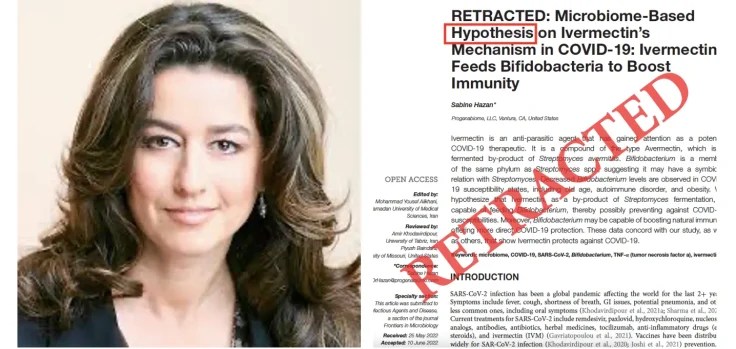
Dr Sabine Hazan, ProgenaBiome, Ventura, CA
She made no claims of definitive proof. Instead, she proposed a mechanism worth investigating. That’s the point of a scientific hypothesis.
But in May 2023—more than a year after the article was peer-reviewed and published—the journal retracted the paper following a series of complaints on PubPeer, offering only a vague explanation about “scientific soundness.”
Seeking clarity, I contacted both the journal’s editorial office and the editor who handled the paper, Professor Mohammad Alikhani at Hamadan University.
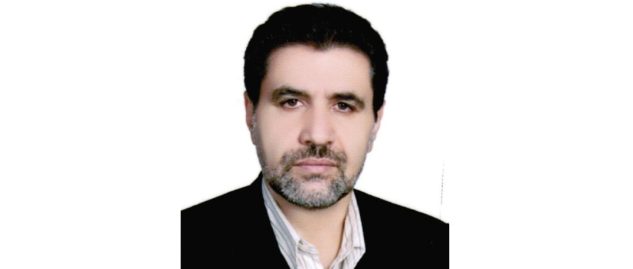
Prof Mohammad Alikhani, Department of Microbiology, Hamadan University
Specifically, I sought an explanation for retracting a ‘hypothesis’, but I did not receive a response.
This silence is damning.
Retraction is a serious step, historically reserved for cases of fraud or clear ethical misconduct. But here, no such claim was made—nor could one be substantiated.
The journal simply erased the paper, offering no transparent justification, no engagement with the scientific process, and no accountability.
In fact, it violated the very guidelines that journals are supposed to follow.
The Committee on Publication Ethics (COPE) advises that publications should only be retracted if they contain seriously flawed or fabricated data, or plagiarism that cannot be addressed through a correction.
Hazan’s paper was transparent about its speculative nature. In a January 2023 tweet, Hazan challenged her critics.
“It’s a hypothesis. PROVE ME WRONG,” she wrote.
After all, that’s the essence of science. But the journal’s decision to retract sends a message that even theoretical propositions are now intolerable.
Having tasted blood, Hazan’s critics kept digging. In January 2025, Future Microbiology retracted another of her studies—this one examining ivermectin-based multidrug therapy.
Hazan, her co-author Australian immunologist Dr. Robert L. Clancy, and others strongly disputed the decision after the journal failed to conduct a meaningful investigation into the alleged data integrity issues.
The irony is palpable.
While pundits argued over ivermectin’s efficacy during the pandemic, Hazan was one of the few actually doing the hard work to test its effects—collecting data, proposing mechanisms, engaging with the science. And yet she’s the one being silenced!
Which begs the question – why?
Is there professional jealousy in the microbiome space? Are pharmaceutical companies, threatened by low-cost alternatives like ivermectin, pressuring journals to kill competing narratives?
If so, the Securities and Exchange Commission (SEC) should investigate. Suppressing research that could affect investor decisions—by inflating the perceived value of antivirals or vaccines—could amount to securities fraud.
While there’s no definitive evidence, the pattern is hard to ignore: two retractions, no clear misconduct, and a growing campaign to discredit a scientist whose work challenges a profitable status quo.
Whether coordinated or not, the outcome is the same – the erasure of inconvenient data.
The spinelessness of journals in these episodes is unmistakable. Why do they capitulate so readily?
Just follow the money.
Many journals are financially entangled with the pharmaceutical industry—relying on drug ads, sponsorships, and profitable reprint sales. That financial tether distorts editorial independence.
Editors, often underpaid and overstretched, are understandably risk-averse. They fear litigation. They fear social media outrage. They fear becoming the next target.
Pharmaceutical companies, meanwhile, don’t hesitate to use legal threats to silence dissent because their pockets are deep—as in the case of Covaxin.
In July 2024, Bharat Biotech International Limited sued 11 authors—six of them students—and the editor of Drug Safety, Nitin Joshi, over a peer-reviewed article questioning the safety of their Covaxin vaccine.
The journal, under legal duress, retracted the paper. The authors were left to fend for themselves.
Journals are supposed to stand on principle. But, increasingly, they serve as enforcers of orthodoxy—vulnerable to financial pressure and online activists.
Let’s be honest, the trolls are part of the strategy. Anonymous complaints, often from individuals with no expertise, are weaponised to trigger retractions and smear reputations.
That’s not peer review. That’s mob rule.
The SEC must take a closer look at this ecosystem. If research is being suppressed to protect corporate revenue or manipulate investor confidence, that’s not just unethical—it’s illegal.
During his presidential campaign, Robert F. Kennedy Jr. addressed this very issue, declaring that journals colluding with pharmaceutical companies might be subject to charges under the Racketeer Influenced and Corrupt Organizations (RICO) Act.
“We’re gonna… file some racketeering lawsuits if you don’t start telling the truth in your journals,” he warned in 2023. It was provocative, yes—but it struck a chord with those of us watching the machinery of science betray its mission.
Retractions have become so casually executed, they’ve lost all meaning. What was once a mark of serious fraud is now a tool of reputational management.
Today, many papers are retracted not because they’re wrong, but because they’re inconvenient.
How else can one explain the demonstrably fraudulent studies funded by industry that remain published?
Whistleblower Dr. Peter Wilmshurst has spent years trying to get the MIST trial retracted—published in Circulation. It’s riddled with false claims, undeclared conflicts, and unreported adverse events, yet the journal continues to protect it.
This exposes the rot. These decisions have nothing to do with science.
They are political, financial, and reputational tools—used selectively to punish dissent.
There’s a growing list of researchers penalised—not for bad science, but for exploring uncomfortable truths.
Journals must reclaim their role as platforms for robust scientific debate. COPE must enforce its standards, not just cite them. Editors must be held accountable for vague or retaliatory retractions. And if corporate suppression of research is distorting public markets, then the SEC must act.
Because what I’m witnessing isn’t scientific curiosity—it’s narrative control. And the death of curiosity is the death of science itself.
Featured Video
It’s the Occupation, Stupid
or go to
Aletho News Archives – Video-Images
From the Archives
A superpower and “the world’s sickest warrior state”
By Paul J. Balles | March 8, 2010
Living through five or six major wars has hardened me to what I thought were the extremes of inhuman cruelty and brutality.
Two things made those extremes almost bearable: the brutality always revealed – at least according to the media coverage – the viciousness of the enemy. It was therefore quite understandable when our “brave men and women” pulverized the enemy.
Films of Japanese torturing captive Americans somehow justified holding Japanese Americans in internment camps during World War II; and only a small percentage of Americans found the bombing of Hiroshima and Nagasaki unreasonably vengeful at best, at worst, depraved.
The media giants in America portrayed the North Koreans as barbaric beasts with their captives, quite unlike their southern counterpoints – our allies during the Korean War. No one ever felt the need to explain how the South Koreans were a civilized breed while the North Koreans were absolute savages, at least according to the official line.
In Vietnam, our warriors justifiably (or so the media made us believe) dropped napalm on the North Vietnamese who had the gall to hide in villages and tunnels to ravage our invaders. At least it was accepted practice until some rogue photojournalist filmed a young girl screaming down a Vietnamese road in flames. … continue
Blog Roll
 Aletho News
- Pro-Palestinian French member of European Parliament denied entry to Canada
- Pakistan to Host US-Iran Talks
- How Indonesia’s tilt toward the US left it stranded in the Strait of Hormuz
- US has no choice but to retreat from Iranian borders: Top commander
- Iran Retaliation Strikes Chemical Plant Near Dimona
- AWACS’ Destruction is a Major Loss for US Military – Ex-DoW Analyst
- Israel’s Iran Strategy Uses US Military & Gulf States as Its Pawns
- Iran: Trump wanted regime change, now just begging for Hormuz to open
- IRGC: Israeli, US universities in region legitimate targets after strikes on Iranian university
- Trump admits Iran hit USS Ford carrier: ‘We ran for our lives’
- If Americans Knew
- Israeli police block Catholic cardinal from entering Church of the Holy Sepulchre on Palm Sunday
- Israel is assassinating journalists again, more than any other nation, anywhere, ever – Not a ceasefire Day 170
- Over 300 US service members wounded, majority have brain injuries – Not a ceasefire Day 169
- Researchers at Human Rights Watch Resign Over Blocked Report on Palestinian Refugee Return
- Jewish Groups Are Backing a War Americans Don’t Want
- Eric Fingerhut Thinks He’s the President of the Jews
- Top Jewish Philanthropists, Rabbis Urge Israeli President to Take Action Against ‘Jewish Extremists’
- Don’t Be Fooled. Zionist Leaders Have Always Wanted to Control Southern Lebanon
- Israel’s widespread use of torture is a core element of its genocide against the Palestinian people
- In Israel’s War on Iran, Many Middle East US Bases Rendered “All But Uninhabitable”
- No Tricks Zone
- German Science Blog Accuses PIK Climate Institute Of Hallucinating Climate Tipping Points
- Devastating Assessment Of Comirnaty Vaccine By Former Senior Pfizer Europe Toxicologist
- New Study: CO2 Is ‘Effectively Negligible’ As An Explanatory Climate Change Factor Since 2000
- Former Pfizer Toxicologist Dr. Helmut Sterz Tells Bundestag Hearing Pfizer Vaccine Should Have Never Been Approved
- Energy Expert: Germany’s Nuclear Phaseout Was A “500 Billion Euro Mistake”
- New Research: South Australia’s Mid-Holocene Sea Surface Temperatures Were 4°C Warmer Than Today
- Storing Green Energy To Last Germany 10 Days Would Require A 60-Million Tonne Battery
- New Studies: UK Sea Levels Were 4 Meters Higher Than Today During The Mid-Holocene
- Destructive Green New Deal: German Energy And Metal Group Warns Of Drastic Crisis
- New Study Documents A 20-Year Pause In Arctic Sea Ice Decline – Driven By Internal Variability
 Aletho News