Michigan State Police Copying Data from Cell Phones?
Mark Fancher, attorney at the ACLU Michigan, joins us to talk about police extracting personal information from cell phones during traffic stops, the Michigan State Police stonewalling the ACLU’s investigation, and more.
Ugandan Government Asks ISPs to Block Facebook, Twitter
By Rebekah Heacock | OpenNet Initiative | 18 April 2011
With the exception of Ethiopia, which blocks a number of political and security-related websites, and a few cases of isolated Internet censorship related to political events, most of sub-Saharan Africa has historically been free of technical filtering. This week, however, the government of Uganda wrote to the heads of three of the country’s major ISPs asking them to block Facebook and “Tweeter” [sic] “to eliminate the connection and sharing of information that incites the public.”
The request comes on the heels of a week of opposition protests over rising fuel and food prices. The protests have been widely advertised on Twitter using the hashtag #walk2work, and opposition leaders Kizza Besigye and Norbert Mao, among others, have been repeatedly arrested.
Several contacts in Uganda are reporting that, as of Monday, the sites are accessible, though one contact reports that both Facebook and Twitter were temporarily inaccessible through Uganda Telecom on Friday. Uganda’s Observer newspaper is reporting that access has been suspended.
Last week, Uganda’s Commissioner of Police called for the government to “guard against misuse of communication networks to protect social values and national identity,” pointing to the Ugandans at Heart blog, which covers political and social issues in the country, and its associated Ugandans at Heart Google Group as examples of sites that “pose a serious national security threat if their net publications are not regulated.”
‘Democracy’ meddling, twittering agitation
Compiled by Maidhc Ó Cathail |The Passionate Attachment | April 16, 2011
In “Muslims Are Their Own Worst Enemy,” Paul Craig Roberts decries “the willingness of some Muslims to betray their own kind for U.S. dollars”:
Don’t take my word for it. Listen to neoconservative Kenneth Timmerman, head of the Foundation for Democracy, which describes itself as “a private, non-profit organization established in 1995 with grants from the National Endowment for Democracy (NED) to promote democracy and internationally-recognized standards of human rights in Iran.”
By now we all know what that means. It means that the U.S. finances a “velvet” or some “color revolution” in order to install a U.S. puppet. Just prior to the sudden appearance of a “green revolution” in Tehran primed to protest an election, Timmerman wrote that
“the National Endowment for Democracy has spent millions of dollars during the past decade promoting ‘color’ revolutions in places such as Ukraine and Serbia, training political workers in modern communications and organizational techniques. Some of that money appears to have made it into the hands of pro-Mousavi groups, who have ties to non-governmental organizations outside Iran that the National Endowment for Democracy funds.”
So, according to the neocon Timmerman, funded by the National Endowment for Democracy, it was U.S. money that funded Mousavi’s claims that Ahmadinejad stole the last Iranian election.
In a 2009 piece on NED’s funding of Iran’s so-called “Green Revolution,” Daniel McAdams notes the endless gullibility of those who prefer to believe otherwise:
Frankly, what I find more disturbing than the fact that the US government continues meddling in this new magical era of Obama is how many in the United States continue to be taken in by these events color-coordinated from afar…. As if hoping, somehow, that this time it will all be true. That the “people power” really is on the march. That it is a binary world where there are evil incumbents — the old guard — oppressing thrusting “reformers” who are Twittering away toward the bright tomorrow of a world where everyone wants to be just like us! Democracy!
Daniel McAdams’ excellent 2006 piece on the information war waged by “democracy promoters” against Belarus’ Lukashenko should be a salutary reminder to all those who are unwittingly cheering on the very same forces, which the New York Times belatedly admits, “helped nurture the Arab Uprisings”:
Imagine you are in Lafayette Park, across from the White House, setting up tents and loudspeakers without a permit to occupy the park with a group of several thousand protesters, guzzling beer and vodka. How long do you think it would be before the Secret Service or other uniformed local and federal officers moved in to disburse you? Five minutes?
Yet when less than one percent of the 500,000 Belarusians who voted for the political opposition were recently disbursed from October Square, one block from the presidential residence, the United States and the European Union (where member country France had been engaged in brutally beating youth protesting for more job security) announced a new round of sanctions against the country.
Aside from this absurd double standard is the fact that democracy itself is subverted in this new, revolutionary method of changing governments – all in the name of democracy, of course. Somehow in the new world of color-coded revolutions, a public display of only one percent of those who voted for the opposition – not of all voters, mind you, but just of those who voted for the opposition – is enough for the West to conclude that they represent the true will of the people. It is a new Bolshevism of the West in which a tiny minority is said to in fact be the majority. The media plays into this deception, with its breathless but highly selective reporting of such incidents. The Western media makes no effort to gain actual facts, preferring to rely on salacious but unverified tales of beatings and mass arrests made available in copious quantities by those who stand to benefit most by their dissemination.
San Francisco to require ID scans, photos of everyone who goes to a venue
By Cory Doctorow | Boing Boing | April 12, 2011
San Francisco’s Entertainment Commission has proposed that all bars, clubs, and venues should be required to photograph and collect ID from everyone who comes in for a drink or a show. The photos and personal information would be retained so that police could get a list of every person who was in the club on any given night. Leaving aside the (obvious) fourth amendment issues inherent in governments collecting massive databases of presumed-innocent people’s lawful activities and movements, this is also a security nightmare, in which thousands of club staff and their friends would have access to personal information that would be of great interest to stalkers, creeps and identity thieves.
The Electronic Frontier Foundation will present their critique of this proposal to the Commission at a public meeting on April 12.
Events with strong cultural, ideological, and political components are frequently held at venues that would be affected by these rules. Scanning the ID’s of all attendees at an anti-war rally, a gay night club, or a fundraiser for a civil liberties organization would have a deeply chilling effect on speech. Participants might hesitate to attend such events if their attendance were noted, stored, and made available on request to government authorities. This would transform the politically and culturally tolerant environment for which San Francisco is famous into a police state.We are deeply disappointed in the San Francisco Entertainment Commission for considering such troubling, authoritarian, and poorly thought-out rules. The Commission should reject this attack on our most basic civil liberties. San Francisco cannot hope to remain a hub of cultural and political activity if we are stripped of our civil liberties the moment we walk through the door of a venue.
EFF to San Francisco Entertainment Commission: Don’t Turn SF into a Police State
Bahraini Bookshop Owner Dies under Torture while in Police Custody
Al-Manar | April 13, 2011
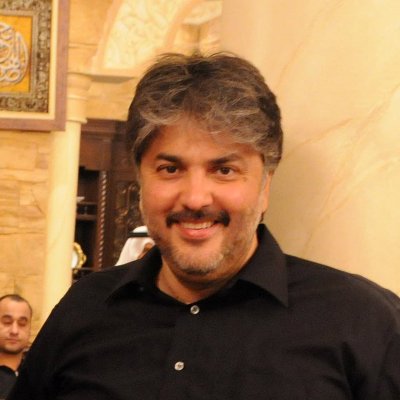 Abdul Karim Al-FakhrawiAbdul Kareem al-Fakhrawi, a prominent Bahraini businessman, was martyred on Tuesday due to severe torture while in prison, the opposition al-Wefaq group said.
Fakhrawi is the fourth Bahraini, tortured to death, since anti-government protests began in the country in mid-February. The 49-year-old businessman disappeared on or around April 4, when he went to file a police report against policemen who had earlier raided his home, reports said.
Fakhrawi had been a potential parliamentary candidate in Bahrain’s 2006 elections.
The circumstances surrounding his disappearance, detention, and death remain unclear but according to sources his brother identified the body at a local morgue. The Bahrain interior ministry has not commented on the incident.
Fakhrawi owned the Fakhrawi bookshop chain and was an investor in the independent daily al-Wasat.
His death comes just a day after Bahrain buried blogger Zakria Rashid al-Asherri, 40, martyred while in police custody.
Bahraini forces have severely suppressed the anti-regime protests with the help of Saudi, the UAE and Kuwaiti troops.
Signs of abuse on bodies of detained
In recent days Human Rights Watch, Amnesty International, and Doctors Without Borders/Medecins Sans Frontieres (MSF) among other rights groups had criticized the Bahraini government crackdown.
“Bahrain should investigate the death in police custody of three people,” U.S.-based HRW said on Wednesday, saying one of the bodies bore signs of physical abuse.
The opposition says hundreds have been arrested and four have died in police custody over the past 10 days.
“It’s outrageous and cruel that people are taken off to detention and the families hear nothing until the body shows up with signs of abuse,” said Joe Stork, deputy Middle East director for the New York-based group.
HRW said it had seen the body of Ali Saqer, one of the men who died in police custody, and that it bore signs of severe physical abuse.
Bahrain has accused human rights activist Nabeel Rajab, head of the Bahrain Center for Human Rights, of doctoring pictures of the corpse. “We viewed Ali Saqer’s body just prior to his burial and its condition was exactly as shown in the photo that Nabeel Rajab circulated,” Stork said.
Bahrain to try independent journalists
Press TV – April 11, 2011
Bahrain intends to try three former editors-in-chief of a leading independent newspaper for their coverage of the popular revolution against the kingdom’s royal family.
Bahraini authorities banned the publication of Al Wasat — Bahrain’s most popular opposition newspaper — earlier in the month. They then forced the daily to fire its chief editor Mansur al-Jamri so it would be allowed to reprint.
The former opposition activist is now forced to attend trial alongside two of his former workmates on charges of “unethical” reporting of the government protests, the Associated Press reported.
The editors are accused of “publishing fabricated news,” “harming public safety” and “damaging national interests.”
Bahraini people, emboldened by the popular revolutions in Egypt and Tunisia, have been demanding an end to the two-century-plus rule of the Al Khalifa dynasty since February 14.
Scores of protesters have been killed and many others gone missing since the beginning of the revolution during government-sanctioned crackdown.
Bahraini forces have reinforced their violent armed attacks on the protesters with the help of troops dispatched from neighboring Arab states in the Persian Gulf.
The much-condemned military intervention has been led by Saudi Arabia.
Iraqi scientists, doctors fall prey to target killings
By DINA AL SHIBEEB | Al Arabiya | 09 April 2011
Iraqi scientists and doctors are increasingly expressing alarm about threats to their lives as the numbers targeted in killings rise while a weak government seems unable to provide adequate security.
The latest victim in the spree of apparently targeted killings was Zaid Abdul Mun’im, head of research of the molecular department at al-Mustansiriya University in Baghdad. He died after a bomb went off in his car on April 3.
Prior to his death, Mohammed Alwan, a prominent Baghdadi surgeon and the dean of faculty of medicine of the same university, was assassinated on March 29.
Neither of the men had any known political affiliations.
“A government that cannot protect its people, does not deserve to be a government,” said Hikmat Jamil, head of the self-funded group International Society of Iraqi Scientists, and a professor of medicine at the Wayne State University in Michigan.
“We have sent letters to al-Mustansiriya University and the government condemning the assassination of Dr. Mun’im,” he told alarabiya.net.
The British newspaper The Independent placed the death toll of Iraqi academics at more than 470 by the end of 2006.
Reports from the Iraqi Physicians Union said that more than 500 of Iraq’s leading medical professionals have been assassinated and more than 7,000 have been forced to leave the country after receiving death threats.
Analysts have offered many theories as to why physicians and academics have been targeted, but nothing has been substantiated. Some point the finger at Israeli intelligence services. Others believe the U.S. is aware of the planned killings and silently endorses them.
“The [incidents of targeted killings] seem to be continuing since 2003, and I don’t think it will stop in the near future,” said Iyad al-Zamily, founder and editor-in-chief of the Iraqi cultural website, Kitabat.com, based in Germany.
“Some of the academics were forced to seek protection by militias and political parties and to change their political views to blend in, since the government is not capable of protecting them,” he added.
Mr. al-Zamily said he believes there are solutions to combat these target killings, but they get lost amid the political divisiveness which ends up exacerbating security problems.
While the Iraqi parliament is mulling laws to protect Iraqi physicians, them carrying a weapon being the latest, al-Zamily said “all Iraqis are entitled to protection, as everyone is [a target].”
Adil E. Shamoo, an Iraqi-American who is a senior analyst for the think tank Foreign Policy In Focus in Washington and author of Who Assassinated Iraqi Academics? said: “The evidence so far is sufficient to warrant a thorough investigation by an independent body. Iraqis, Americans, and the world need to know the truth.”
The six-member Gulf Cooperation Council, and the U.S. have called on the Obama Administration to “open a serious and transparent investigation” into possible “crimes against humanity.”
Before the 2003 toppling of its then-president Saddam Hussein, Iraq was known for its healthcare. Technologically, its facilities were more advanced than most other Middle East countries. Prior to the U.S.-led invasion, students in the region flocked to Baghdad’s universities and other educational institutions.
(Dina Al Shibeeb of Al Arabiya, can be reached via email at: dina.ibrahim@mbc.net)
Bahrain bans main opposition daily
Press TV – April 3, 2011
The Bahraini government has banned the publication of a leading independent newspaper due to its coverage of the popular revolution in the Persian Gulf littoral state.
Bahrain’s Information Affairs Commission suspended Al-Wasat daily, which has been critical of the government’s brutal crackdown on demonstrators in the country, BNA state news agency reported without giving further details.
The commission also ordered a case to be opened for further investigation by the Public Prosecution.
Masur al-Jamri, a former opposition activist during the uprising in the 1990s, is the editor-in-chief of the Bahraini newspaper.
Last week, Bahrain’s state television accused Al-Wasat of publishing “fabricated and false news” about the “security developments in Bahrain.”
The Bahraini police, backed by Saudi and UAE troops, have intensified the clampdown on anti-government protesters who demand a constitutional monarchy.
Rights groups and opposition parties say hundreds of people have been detained or have gone missing since the protests began in mid-February, with at least 25 people killed and 1,000 others wounded so far.
London set to limit right to protest
Press TV – March – 29, 2011
The British government has announced controversial plans to ban protestors from taking part in public gatherings following the weekend anti-cuts rallies, which were marred by violence.
Based on a proposal by Home Secretary Theresa May, the police may be given new powers to prevent so-called hooligans from attending rallies and marches while officers will also be authorized to force demonstrators, who do not want to be known, to remove their face-scarves and balaclavas.
The announcement has raised concerns among MPs who say no hasty decision should be made on the issue as the police may abuse the “stop and search” powers to target ordinary people rather than “known hooligans”.
May outlined her plans during an emergency Commons briefing on the violent incidents, which marred the Saturday rally organized by the Trades Union Congress.
May told the MPs that she is considering “banning orders” similar to those used against football hooligans for the demonstrators who police think may turn to violence.
She also said officers should force more protestors to remove their masks and balaclavas to help the police quickly identify participants in the rallies.
“Just as the police review their operational tactics, so the Home Office will review the powers available to the police. I have asked the police whether they need further powers to prevent violence before it occurs. I am willing to consider powers which would ban known hooligans from rallies and marches and I will look into the powers the police already have to force the removal of face-coverings and balaclavas,” May said.
While the Metropolitan Police earlier said it has charged 149 people out of more than 200 arrested during the Saturday rallies with various offenses, at least five people have lodged complaints with Scotland Yard about police violence against marchers.
The Met said on Monday that it has charged 138 people in connection with the sit-in at Fortnum & Mason luxury store for charges including aggravated trespass.
However, the UK Uncut, which organized the sit-in dismissed any claims that those participating in the Fortnum & Mason incident resorted to violence.
“This was not a protest by people wearing balaclavas and breaking things. It was a peaceful and mild-mannered gathering by people from all walks of life – teachers, hospital workers, charity workers,” said Tim Matthews, a spokesman for UK Uncut.
“People who took part now find themselves charged with a criminal offence simply for exercising their right to protest,” he added.
This comes as Tom Brake MP, co-chair of the Liberal Democrat parliamentary policy committee on home affairs, justice and equalities, warned the government against “a knee-jerk reaction” to what happened.
“Clearly there was a small minority who were out to cause trouble. We need to look in detail into whether the police have sufficient powers to tackle that, or whether they can be deployed differently to ensure such violent scenes don’t happen again,” Brake said.
Facebook removes third intifada page after Israeli calls
Palestine Information Center – 30/03/2011
NAZARETH — The Facebook administration has responded to calls to have a page calling for a third Intifada removed from the social website for good.
The page with a fan base exceeding 340,000 urged Palestinians to take to the streets to mark the anniversary of the Nakba on May 15.
The move came after Israeli minister Yuli Edelstein wrote to Facebook founder Mark Zuckerberg claiming that the page contained incitement against Jews and Israelis.
He said the page could help spark an ”armed rebellion” against Israel.
The page’s organizers had expressed fears that Facebook would shut down the page after the Free Palestine page, which had earned 216,000 fans, was closed without explanation.
They had threatened to boycott Facebook if it responded to the calls to close the page. They have contacted the administrators of popular Arab pages who had agreed to promote the third Intifada page.
They had also said the page’s closure would reveal Facebook’s true colors to the world, as it was the largest Palestinian site to date placed on the most important social website in the world.
The page used many innovative ideas to promote the third intifada. They included writing the set time for it on the currency and asking each of its fans to inform at least five friends of the due date.
False Symmetry: Teaching Holocaust in Gaza Schools

A set of historical ironies arises from this absurd report. (UNRWA)
By Seraj Assi | Palestine Chronicle | March 27, 2011
Spring has turned red in Gaza with a new Israeli massacre. Late Monday night Israeli combat planes pounded Northern Gaza and murdered two children and three adults whose only crime was playing football in front of their house. At the same day Haaretz published a report complaining that Hamas protests UN plans to teach Gazans about the Holocaust. It was also the very day that the Knesset in Israel approved the Nakaba Law, an absurd legislation that bans Palestinian citizens from commemorating the Nakba.
This is no mere coincidence. Nor is it the first time that Israel’s massacring of Palestinian children is followed by absurd demands to teach Jewish victimhood in Palestinian schools, while working to prevent its Palestinian citizens from commemorating their tragedy at the same time.
The uproar against the UN plan to teach the Holocaust in Gaza schools was spurred in February this year after a UN official told a Jordanian daily that UNRWA, the United Nations Relief and Works Agency for Palestine Refugees, would introduce the Holocaust history to Gaza students as part of its human rights curriculum for the next school year starting in September.
Haaretz also reported a series of statements by UN and Israeli officials accusing Palestinians of not fully understanding the tragedy that happened to the Jews, of divvying up facts, taking things out of context, and being reluctant to acknowledge Jewish suffering fearing it would diminish recognition of their own claims. The Israeli newspaper did not forget to remind Palestinians how the need to find a sanctuary for hundreds of thousands of Holocaust survivors contributed to the creation of Israel and that Palestinian recognition of the Holocaust is a necessary step toward peace.
A set of historical ironies arises from this absurd report. Most notable is that Israel’s billing of the Holocaust as a moral justification for the creation of Israel is historically refuted. Simply because it does not account for the fact that preparations for the creation of a Jewish State in Palestine had begun some half century before the Holocaust. Nor does it really tell us how many Holocaust survivors live in Israel today.
Yet this is not to suggest that we must accept this moral logic had there been a valid historical connection between the two events. For Palestinians are not responsible for the Holocaust and it is absurd to see their refusal to teach it to their children as complicity, especially when they are being ethnically cleansed by Israel’s air forces on a daily basis.
Yet what does remain valid here is that linking the Palestinian Nakba with the Holocaust is still vital to understanding how the latter has been always used to justify the former. The bulk of Gaza residents are themselves refugees whose dispossession was justified by Zionist misappropriation of the Holocaust tragedy.
Israel’s symmetry between the histories of the Holocaust and the Nakba is misleading for a simple reason. That is while the Holocaust is seen by Palestinians as part of European history and has nothing to do with Palestinian consciousness, the Nakba was generated by Israel and must be taught in its schools as part of its own history. Not to mention that for Palestinians the Nakba is an ongoing tragedy; that the refugee question is still unsettled and that Palestinians still live under occupation and ethnic suppression.
The question that persists is has Israel ever acknowledged Palestinian suffering and ongoing tragedy? The fact is that while countless books have been devoted in Israel and the West to denying Palestinian tragedy and distorting their history from Joan Peters’ notorious From Time Immemorial to this present day, there is no comparable Palestinian study on denying the Holocaust or challenging its scope.
I myself spent twelve years in an Arab school inside the so-called modern, democratic and liberal State of Israel and never heard of the word “Nakba.” The name Palestine itself has been banned in Arab schools for decades. We Palestinian students were never taught about the Islamic era in Palestine which lasted about thirteen centuries. Instead we were taught about Israel’s Independence Day, Zionist Peace Doves and Palestinian terrorism.
I vividly recall those moments when we were forced to stand still in memory of Israeli soldiers who had killed our own people. How else could we come to terms with the fact that many Palestinian Arabs in Israel continue to call Israel’s Independence Day the Independence Holiday?
Yes Palestinians are aware of the tragedy that befell the Jews. But they are also aware of the way it has been invested to justify their dispossession and displacement. They are aware of how by a strange change of fortune they became the victims of the victims; how the Zionist movement made the shift from victims to victimizers with terrifying ease; how Jewish suffering has been turned into political industry and discursive device for its colonial project in Palestine; how it has been used by Israel as political instrument and ideological weapon and seen as tantamount to the recognition of Jewish claims to the land.
To be sure, Palestinians do not refuse to teach or learn the Holocaust per se, but the Zionist perspective on the Holocaust. That is the way the tragic history of the Jews is being now turned into a modern version of civilizing mission in Gaza. Is there anything more absurd than besieging a people, ruining their life, slaughtering their children, destroying their schools and hospitals, and returning the next day to offer them lessons in multiculturalism?
Perhaps when Palestinians will have their full rights as a people, when they will live in freedom and justice and feel more secure in their homeland; they would be most happy to learn the history of the Holocaust, teach Jewish literature, and perhaps read Greek poetry.
– Seraj Assi is a PhD Student in Arabic and Islamic Studies at Georgetown University, Washington DC.
Featured Video
Anthrax War – CBC The Passionate Eye
or go to
Aletho News Archives – Video-Images
Book Review
Shattered Dreams: The HPV Vaccine Exposed (2019)
By Christina England – 30 Q&As – Book Review & Summary
Lies are Unbekoming | September 4, 2026
… Gardasil received FDA fast-track approval in 2006, Cervarix followed in 2009, and Gardasil 9 was approved in December 2014 with more than double the aluminium adjuvant content of the original. The commercial context is specific. Merck was about to lose patent protection on Zocor and faced $18 billion in Vioxx injury claims from a cardiovascular drug the company had marketed while suppressing its own data showing a five-times increase in heart attacks. Analysts projected the global HPV vaccine market at $4 billion by 2011, contingent on government-funded national programs for teenage girls. The 1986 National Childhood Vaccine Injury Act had already granted manufacturers complete liability immunity. By 2013, Japan had withdrawn its HPV vaccine recommendation after cataloguing severe adverse reactions in hundreds of girls. No Western government followed. The establishment position across the UK, US, Australia, and most of Europe held, and still holds, that the vaccines are safe and effective, that reported injuries are coincidental, and that cervical cancer prevention justifies the program. The book was published into this position, not against a vacuum.
Shattered Dreams sits alongside Mary Holland’s The HPV Vaccine On Trial and Viera Scheibner’s foundational vaccination work as part of the documented record on what has been done to a generation of teenage girls under the banner of cancer prevention. The full summary unpacks three specific findings: that Merck used the aluminium adjuvant itself as the “placebo” control in 92.5% of trial subjects, making it structurally impossible to detect excess reactions from the adjuvant; that Dr. Sin Hang Lee found HPV DNA fragments bound to aluminium in every one of sixteen Gardasil samples tested, and in the blood and spleen of a New Zealand girl six months after her third dose; and that in every country with high vaccination coverage, including Australia, the UK, Norway, and Sweden, cervical cancer rates have stopped declining and started rising specifically in the vaccinated cohort. Martínez-Lavín’s 2017 calculation puts the number needed to seriously harm with Gardasil 9 at 140, and the number needed to vaccinate to prevent one case at 1,757. Thirteen young women are seriously harmed for every one who benefits. The vaccine was approved on the basis of trials that could not detect what the trials were supposed to detect, and it is still being given to twelve-year-olds today. … Read full review
Blog Roll
 Aletho News
- The Maidan Killings and the False-Flag Case
- Georgia’s Largest Healthcare System Will Fire Employees Who Refuse Flu Vaccine
- The Five-Year Fuel Crisis: Why the World Economy Is Paying for a War It Thinks Is Ending
- Trump’s Big Bluff on Iran
- Swiss scammed out of millions by Ukraine-linked call centers – media
- Germany facing potential ‘violent conflict’ with Russia – spy chief
- Ukraine’s EU neighbors reject new plea from Kiev – Politico
- British Transport Police Facial Recognition Trial Scanned 926,912 People With Zero Arrests
- House Bill Would Ban Federal Use of Flock ALPR Data
- Can a Spice Rival a Drug? 10 Head-to-Head Trials Put It to the Test.
- If Americans Knew
- “We See Our Homes Now From A Satellite, Like Strangers”
- Watch “Gaza: Doctors Under Attack”, originally censored by BBC
- NAZA: Israeli embassies in UK and US promote rival documentary to challenge Gaza genocide allegations
- David Ellison appoints Israeli to lead merged Paramount-Warner studios
- Turkish Red Crescent helps elderly Gaza man walk again after Israel confiscates his prosthetic limb
- Four Palestinians Killed in Israeli Attacks in Gaza
- Two Palestinian youths killed and village razed as Israeli attacks on West Bank continue
- Two more Christian women victims of Israeli raids on Gaza
- Cruelty, Deprivation, Indignity: A Journalist’s 22 Months in Israeli Prison
- New IDF Website Frames Slain Gaza Journalists as Terrorists
- No Tricks Zone
- Latest European Green Energy Debacle; Portugal’s Largest Flagship Solar Park Insolvent!
- Green Energy Debacle: German Expert Professor Fritz Vahrenholt Warns Of Severe Economic And Social Consequences
- Two More Paleo Reconstructions Affirm Meters-Higher Sea Levels Across Ireland, Brazil 7000-6000 Years Ago
- New Study: Earth And Venus Surface Warmth Largely Explained By Convection And Lapse Rate, Not CO2 Or Radiation
- 2025 Nature Paper Claiming Worsening Global Drought Gets RETRACTED …Heavily Flawed
- New Study: ‘Global Drought Shows No Detectable Recent Acceleration Under Climate Warming’
- Economic Masterminds: German Socialists Suggest Taxing Productivity Gains Stemming From Using AI
- The South China Sea Has Not Been Cooperating With The Climate Change Narrative
- Energy Crisis: Germany Enters Heating Season With Historically Low Gas Reserve Fill Levels
- New Study: The Antarctic Ice Sheet Gained Mass From 2020-2024 Due To Staggering Snow And Ice Accumulation

