Dozens of Palestinian women, teens freed from Israeli jails as part of Gaza ceasefire
The Cradle | January 20, 2025
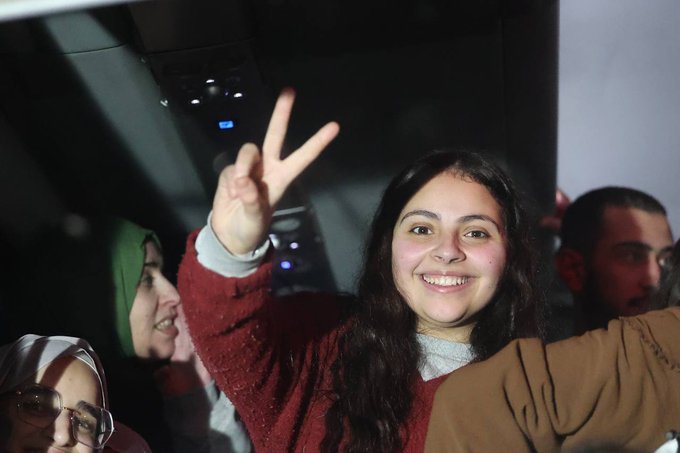
After several hours of delay following the handing over of three Israeli captives by Hamas’s Qassam Brigades, 90 Palestinian prisoners – all females and minors – were released from Israeli jails early on 20 January as part of the first phase of the ceasefire and exchange deal.
The Palestinians were released from Ofer prison in the occupied West Bank and Moscovia prison in Jerusalem, as well as the Damon prison.
Those from Ofer were dropped off by Red Cross buses at Beitunia north of Ramallah, where their families received them, and those from Moscovia went straight to their neighborhoods in occupied Jerusalem.
Among the prisoners was Abla Saadat, wife of the Secretary General of the Popular Front for the Liberation of Palestine (PFLP) Ahmad Saadat. She was detained in September last year.
PFLP member Khalida Jarrar was also released. Jarrar had been in and out of Israeli prisons for several years and was detained for the fifth and final time in December 2023 after the start of the genocidal war in Gaza.
She was held in solitary confinement for the last six months of her detention despite suffering from serious medical issues, including deep vein thrombosis. Jarrar was in a state of exhaustion upon her release and was not able to speak to the media.
Palestinian journalist and prisoner activist Bushra al-Tawil was also among those released. She has been incarcerated seven times.
Rose Khweis, an 18-year-old who was also freed, told Reuters inmates were treated ”like animals” where she was imprisoned.
“The occupation forces were cursing us and treating us badly [during the release]. The occupation authorities contacted our families and warned them against any manifestations of joy,” Jenin Amro told Al Jazeera upon being discharged.
The next six weeks are meant to see the release of 2,000 Palestinians. Israel will discharge 30 to 50 prisoners for each captive released by Hamas. The first phase of the deal – which was announced last week – is supposed to see the release of 33 Israeli captives being held in Gaza. Negotiations for the second phase will begin 16 days into phase one.
Three Israeli captives were handed over to the Red Cross in Gaza on the afternoon of 19 January.
Huge crowds of Palestinians, along with a strong presence of Qassam Brigades fighters, gathered in Gaza City’s Al-Saraya Square as the three female Israeli captives were released and given over to the Red Cross.
The captives were retrieved by the Israeli army at the Reim Base outside Gaza.
How to Access TikTok After a Ban
Navigate TikTok bans with ease while keeping your online privacy intact
By Rick Findlay | Reclaim The Net | January 18, 2025
TikTok is one of the most popular social media platforms, with millions of users worldwide sharing short videos ranging from dance challenges to educational content. However, in some countries, TikTok is banned or restricted due to concerns over data privacy, national security, or cultural sensitivities. If you’re living in or traveling to one of these regions, a Virtual Private Network (VPN) can help you access TikTok safely and securely.
Here’s everything you need to know.
Why Is TikTok Banned in Some Countries?
TikTok has faced bans and scrutiny in several countries, primarily due to its ties to China and concerns about its data practices. TikTok’s parent company, ByteDance, is based in Beijing, and critics argue that this connection raises questions about the potential influence of the Chinese Communist Party (CCP) on the platform.
Here are some key reasons why TikTok is banned or restricted in certain regions:
Data Privacy Concerns: TikTok collects vast amounts of user data, including location information, browsing habits, and device details. Governments in some countries fear that this data could be accessed by the Chinese government under China’s data-sharing laws.
National Security Risks: Authorities worry that TikTok’s data collection practices could pose a national security threat. For example, military personnel using TikTok might inadvertently expose sensitive information.
Censorship and Propaganda: Critics claim that TikTok may censor content unfavorable to the Chinese government or promote propaganda. This has fueled mistrust, especially in countries with strained relations with China.
Cultural Sensitivities: In some regions, TikTok has been criticized for hosting content deemed inappropriate or harmful to local values and traditions.
There are free VPNs out there that help you bypass censorship but also track you and your data. These VPNs are to be avoided.
We have a list of vetted and recommended VPNs for you here.
What Is a VPN and How Does It Work?
A VPN is a tool that encrypts your internet connection and routes it through servers located in different parts of the world. By using a VPN, you can hide your actual location and appear as though you’re accessing the internet from another country. This not only helps bypass geo-restrictions but also enhances your online privacy by masking your IP address.
When you connect to a VPN server in a country where TikTok is accessible, you can download, use, and enjoy TikTok without worrying about local restrictions.
Why Use a VPN for TikTok?
Bypass Regional Bans: Governments in some countries have banned TikTok entirely. A VPN allows you to bypass these bans by connecting to a server in a country where TikTok is not restricted.
Protect Your Privacy: A VPN encrypts your internet traffic, preventing your ISP or government from monitoring your online activities.
Access Content Globally: With a VPN, you can unlock TikTok content from other regions, giving you access to a wider range of videos and trends.
How to Access TikTok Using a VPN
Follow these steps to set up a VPN and access TikTok:
1. Choose a Reliable VPN Service
Not all VPNs are created equal. To access TikTok, you need a VPN with:
Servers in TikTok-friendly countries: Ensure the VPN has servers in countries where TikTok is not banned.
High-speed connections: TikTok’s video-heavy platform requires a VPN with fast speeds to avoid buffering.
Strong encryption: Look for a VPN that uses 256-bit encryption for maximum security.
There are other factors to consider when using a VPN – including using one that has open-source technology.
We have a list of vetted and recommended VPNs for you here.
2. Install the VPN App
Once you’ve chosen a VPN, download and install its app on your device. Most VPN services support multiple platforms, including iOS, Android, Windows, and macOS.
3. Connect to a TikTok-Friendly Server
Open the VPN app and select a server located in a country where TikTok is accessible. For example, if you’re in a region where TikTok is banned, you can connect to a server in the US or Europe. For best internet speed results, use a server in country that is close to your own.
Use TikTok on a Web Browser
In some cases, TikTok may be removed from app stores in certain regions, making it impossible to download or update the app. However, you can still access TikTok through its web version. Here’s how:
Open a web browser while connected to the VPN.
Visit TikTok’s official website at TikTok.com
Log in with your credentials or create a new account.
The web version allows you to browse videos, interact with content, and upload your own creations, providing a full TikTok experience without needing the app.
Important Tips for Using TikTok with a VPN
Select the Right Server: If one server doesn’t work, try connecting to a different one in the same region.
Stay Secure: Avoid free VPNs, as they often have limited servers, slower speeds, and weaker security features. Some free VPNs may even sell your data.
Check Local Laws: While using a VPN is legal in most countries, accessing banned platforms may violate local laws. Research the regulations in your area before proceeding.
Clear App Cache: If TikTok still doesn’t work after connecting to a VPN, clear the app’s cache or reinstall it while the VPN is active.
A VPN is a powerful tool for accessing TikTok in regions where it’s restricted, enabling you to stay connected to the platform’s vibrant community. By choosing a reliable VPN and following the steps outlined above, you can enjoy TikTok’s endless entertainment while safeguarding your privacy. Just remember to use VPNs responsibly and check the laws in your region.
YouTube Removes Barrister’s Legal Submission at Official UK Covid Inquiry Amid Censorship of Vaccine Injury Discussions
By Cindy Harper | Reclaim The Net | January 15, 2025
YouTube’s decision to remove a barrister’s legal submission from the UK Covid Inquiry has intensified concerns over widespread censorship of vaccine-related discussions on major social media platforms.
Anna Morris KC, who represents families claiming injury from Covid-19 vaccines, disclosed that YouTube deleted a video of her preliminary remarks to the inquiry in September 2023, citing violations of its medical “misinformation” policy. Although the platform later reinstated the video, it failed to provide a clear explanation, admitting only that “it sometimes makes mistakes.”
This act of censorship has been condemned as part of a larger pattern of silencing voices critical of vaccine safety and government health policies. As reported by The Telegraph, during the inquiry’s Module 4 session — focused on vaccines and pharmaceutical measures — Morris directly addressed this issue, stating, “The inquiry must understand the stigma and censorship for the vaccine injured and bereaved.”
She revealed that a poll of affected families found that 74% had been censored when discussing vaccine injuries on social media platforms.
Morris further criticized the suppression of information, noting that doctors were instructed to withhold concerns from both the public and their own patients. Her removed statement emphasized that “the treatment of the vaccine injured in this country has historically been a source of shame.”
Morris argued that those harmed by vaccines have been systematically “dismissed, ignored, censored,” and subjected to hostility when seeking acknowledgment and support.
She condemned the ongoing silencing of vaccine-injured individuals as a severe barrier to accountability and transparency, adding, “Unfortunately, this censorship has continued years after the pandemic and into our engagement with this inquiry.”
Despite repeated requests for a review, YouTube justified the video’s removal by citing its medical “misinformation” policies, a rationale that critics argue is increasingly being used to suppress legitimate concerns and experiences. This censorship has fueled calls for a reevaluation of how social media platforms regulate content related to public health, especially when it involves dissenting voices.
An emotional impact video shown during the inquiry highlighted the tragic story of pharmacist John Cross, who took his own life after suffering paralyzing complications from a Covid vaccine and being denied compensation. His story underscores the devastating consequences of dismissing those seeking recognition and support.
I saw shredded bodies scattered on roads and hanging from trees in Lebanon: Journalist
By Hiba Morad | Press TV | January 18, 2025
Steve Sweeney, a British journalist who reported on the recent Israeli war on Lebanon, says he saw shredded and charred bodies, including those of children, scattered on the streets and hanging from trees as the Israeli regime bombed the country.
In a conversation with the Press TV website, Sweeney recounted the harrowing scenes he observed during nearly 70 days of relentless Israeli aggression against the Arab country, which resulted in massive death and destruction of civilians.
“Israel killed women and children in Lebanon. How do I know this? I know this because I saw the bodies. I saw people hanging from trees. I saw the remains of children who had been incinerated in these Israeli strikes,” he stated, presenting graphic details of the Zionist atrocities.
Sweeney, who exposed Israeli Hasbara after reporting how regime forces had stacked dollars and weapons in the basements of Sahel General Hospital in the Lebanese capital, called out the blatant lies propagated by the regime to justify preemptive strikes against displaced civilians and residential areas.
“We saw several massacres. It is difficult to put into words exactly what we witnessed. These were precision strikes, these were deliberate attacks. The goal was to kill the Shia community and instill fear, not just among the Shia, but also among the other communities that were sheltering them,” he noted.
“These people thought they were in safety, they were far away from the frontline of the fighting and they posed no threat to Israel whatsoever. This is a war crime. We saw the Shia community hunted down by Israel across Lebanon.”
According to the principle of proportionality in international law, as outlined in Article 51 of the UN Charter, even if there is a legitimate military target, attacking it is prohibited if the expected harm to civilians or civilian property is excessive in relation to the anticipated military advantage.

The rubble of buildings detsroyed in Israeli bombings in Beirut, Lebanon. (Steeve Sweeney/Press TV website)
Witness of the horror
The British journalist, who covered the war in the South, Baalbek, and the North, recalled the horrors he witnessed firsthand.
“There was a period when Israel was striking civilian buildings in civilian areas that were housing those who had already fled from the Israeli aggression in the South. Those who were killed were not Hezbollah fighters or military commanders. They were mainly women and children,” he told the Press TV website.
On December 4, Lebanese Health Minister Firass Abiad told reporters that a total of 316 children and 790 women had been killed in the Israeli assault on Lebanon.
A week after a truce was declared, Abiad reported that the death toll had reached 4,047, with 16,638 others wounded.
“What we saw was horrific, the massacres… We were at sights in Batroun and in Tripoli near the North and we saw scores of people killed, 23 people here, another 27 people there. In Saida we saw the same residential buildings targeted,” Sweeney told the Press TV website.
“I saw photos of a married couple, photos of children, toys and clothes of children among the rubble. It was something like a horror movie. There was massacre after massacre and war crime after war crime, mainly targeting displaced women and children.”
Reflecting on Israeli claims that these attacks were not deliberate, Sweeney dismissed them as blatant falsehoods. He asserted that Israel was losing on the battlefield and failing to achieve any of its military objectives. In response, its strategy shifted toward provoking civil strife and undermining support for the resistance—sending a clear warning to the Lebanese people that those who shelter the displaced would also be targeted.
“Israel wanted to sow discord among the Lebanese but it rather created a united Lebanon, a united people, who were not prepared to allow a component of the Lebanese people to be singled out. This was a war on all Lebanon, targeting the social fabric of the country,” the journalist said.

Lebanese women hold pictures of Hezbollah martyrs. (Steve Sweeney/Press TV website)
South Lebanon experience
Sweeney was among the first journalists to enter southern Lebanese border areas after the ceasefire.
“What we saw in the South was an apocalyptic scene. Village after village, town after town reduced to rubble. As we drove through we saw houses, apartment blocks destroyed, hospitals, schools, churches, mosques, civil defense centers,” he told the Press TV website.
He dismissed the narrative that Israeli forces were targeting only resistance fighters.
“A lie goes halfway around the world before the truth puts its shoes on, this is certainly a lie. Israel has told lie after lie. They say they had targeted a Hezbollah commander for example, yet they hit an entire building that is full of civilians,” he noted.
He hastened to add that the people of Lebanon are unshakeable and uncompromising, having made immense sacrifices yet refusing to submit or surrender.
“I was there at the very moment the people were returning to their homes or what was left of their homes for the very first time since the ceasefire. One woman, in particular, struck me when she was standing in front of her apartment block reduced into rubble, she had lost everything. Yet she said to me that she would give everything to Sayyed Hassan Nasrallah and that she would give everything over and over again for the resistance. Then she said: we have two choices, either surrender or resistance.”
The journalist also pointed out that Israel was deliberately targeting infrastructure, as well as touristic and religious sites.
“We saw again in Tyr, the historic seafront which was bombed by Israel in the aggression. It is the destruction of a city that is crucial to Lebanon in terms of tourism, industry, and the economy. Israel destroyed everything in the South to make it uninhabited,” he remarked.
“I attended the funerals of 11 martyrs from Hezbollah who died fighting to defend their land and territory from Israeli invaders, and again this was a quite moving experience for me. The entire village came out in support of the martyrs and I spoke to one of the women whose son was killed. Of course, she was very sad, but she said I have two other sons, and I would be happy to give them as well.”
Sweeney reflected on how, as a Westerner, he had come to understand the concept of martyrdom better.
“I spoke to a Sheikh (cleric) who explained the concept of martyrdom. He said martyrdom is a new life; a concept that is difficult for a Westerner like me to understand, but I kind of understand it more now after my experience in the last three months of the Israeli aggression,” he stated.
“Israel will never be able to destroy Hezbollah. What they do not understand is that they can decapitate leaders, but those will be replaced. The commanders in Hezbollah are replaced and its structure remains intact. But the most important point is that Hezbollah is the people, and it cannot be defeated.”
Describing the people of southern Lebanon, with whom he spent considerable time, Sweeney remarked that they come from a unique path, calling them “a very special, beautiful, and resilient people.”
Threats for revealing truth
Sweeney said he faced abuse, a smear campaign, and death threats for his reportage on the war and for exposing uncomfortable truths about the Zionist aggression on Lebanon.
“I was abused and received some threats from Israelis when I did an investigative report from inside al-Sahel hospital, which Israel claimed Hezbollah hid dollars in the basement; an outlandish claim they also used in Gaza to justify pre-emptive strikes on hospitals like al-Shifa hospital. I was not targeted but they put me on their radar,” Sweeney told the Press TV website.
“I searched every corner, every room including the basement. And all I found was what you find in any hospital anywhere across the world. I had nobody following me around, there was nothing that I was denied access to and I could open any door I wanted and go anywhere I wanted. I opened boxes, tapped the walls to see if there is anything behind them, I checked every inch. This is Israeli Hasbara.”
In one incident, as Sweeney and his colleagues entered Maroun al-Ras, Israel opened fire on them.
“I am not entirely sure if they were firing at us or it was a warning shot, but this is what they are doing to the people of the South, the people who are trying to return to their homes and villages, it is preventing them from doing so and booby-trapping houses and bulldozing buildings.”
On the killing of three of his colleagues in Lebanon, the British journalist said he previously had been in that area and participating in their funerals affected him deeply as a fellow journalist.
“The landscape of journalism particularly in southern Lebanon is one of oppression, and the Press jacket becomes a target. Journalists in Lebanon hold their weapon which is their pen and camera and Israel is afraid of them because there is no escaping from the exposure of what they are doing.”
On the killing of three of his colleagues in Lebanon, the British journalist said he previously had been in that area and participating in their funerals affected him deeply as a fellow journalist.
“The landscape of journalism particularly in southern Lebanon is one of oppression, and the Press jacket becomes a target. Journalists in Lebanon hold their weapon which is their pen and camera and Israel is afraid of them because there is no escaping from the exposure of what they are doing.”
A forever legacy
The journalist said he also visited the site where Hezbollah leader Sayyed Hassan Nasrallah was assassinated on September 27 in the suburbs of Beirut.
“It was a moving experience to stand where this great man was killed. His legacy will never die. What struck me the most was that Hassan Nasrallah died among his people, in a residential area—he was among the people,” he told the Press TV website.
“I think that says everything, about who he was, who he is, and his deep connection with the people. He was such an incredible figure. When he spoke to the nation, the whole of Lebanon would stand still and listen, and that was because what he said mattered to everybody. It mattered to the mechanic, the doctor, the student, the worker, it mattered to the United States, and to Israel.”
On September 27, amid indiscriminate aerial bombardments, the Israeli occupation forces dropped over 80 tons of US-made bunker-buster bombs on the southern suburb of Dahiyeh in Beirut, resulting in the assassination of Sayyed Nasrallah and his associates.
The attack followed the assassinations of top-ranking Hezbollah commanders such as Fuad Shukr and Ibrahim Aqil in separate strikes and preceded the killing of Sayyed Hashem Safiuddin, the head of Hezbollah’s Executive Council.
“He was an intelligent and thoughtful leader. If you listen to his speeches, to the power of his words, you understand that he will never truly die — he lives on in the people and in the resistance. His martyrdom is a huge loss, but it is not the end of Nasrallah. His legacy will endure forever,” Sweeney said.
He added that he has spoken to Lebanese people from all communities across the country, and all of them, “without question,” support the resistance against the Zionist enemy.
“They have made it clear: We either surrender or resist. Despite the horrors inflicted by Israel on the people of Lebanon — despite the destruction and the immense damage Israel has caused, not just physical but also psychological and economic, which should not be underestimated — the people of Lebanon remain unbreakable,” he asserted.
“I have heard this from so many people who have lost their homes, lost everything — they will continue to support the resistance. And should Israel attempt to encroach again on Lebanese sovereign territory, it will be met with fierce resistance.”
Sweeney concluded that, based on what he witnessed and experienced, this is not merely an Israeli war on Hezbollah but an Israeli war on all of Lebanon. And Lebanon has chosen resistance. He added.
Dr. Drew Pinsky Criticizes YouTube for Video Removals and Mandatory Reeducation Training Over Vaccine Discussions
By Cindy Harper | Reclaim The Net | January 15, 2025
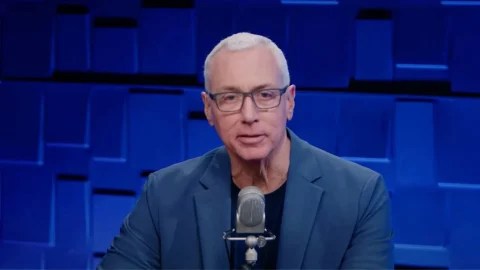
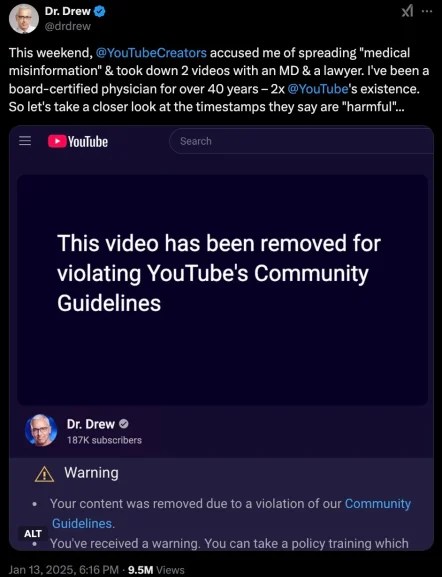
Dr. Drew Pinsky, widely known as Dr. Drew, has publicly criticized YouTube for removing two of his videos over alleged violations of the platform’s medical “misinformation” policy. On January 14, 2025, Pinsky took to X to challenge YouTube’s decision, highlighting concerns about free speech and the suppression of open dialogue on health-related topics.
In order to get the flags removed from his video, YouTube told Dr. Drew that he would have to attend a form of reeducation training and have no violations for 90 days, or else it would delete his entire channel and all of his videos. Pinsky has over 1,000 videos on the platform.
In one of his posts, Pinsky expressed frustration over the platform’s actions: “This weekend, @YouTubeCreators accused me of spreading ‘medical misinformation’ & took down 2 videos with an MD & a lawyer. I’ve been a board-certified physician for over 40 years – 2x @YouTube’s existence.”
The flagged videos featured discussions with Dr. Kelly Victory, a board-certified physician, and attorney Warner Mendenhall. Pinsky elaborated that these conversations centered around the side effects of mRNA vaccinations, a topic he argues warrants open discourse rather than censorship. In his discussion with Dr. Victory, she stated that the “vast majority of the people who have been injured are young, healthy people who were under the age of 50 who had fundamentally zero risk from COVID itself. They all got COVID. These are people who would have been fine if they were just left alone.”
Pinsky defended the content, asserting that sharing professional perspectives and personal beliefs in a public forum should not be equated with spreading misinformation. He emphasized that their dialogue was an exchange of viewpoints rather than a promotion of falsehoods.
In a separate video with Warner Mendenhall, the attorney discussed legal cases involving individuals who suffered severe reactions following vaccination. Pinsky highlighted that Mendenhall shared client experiences and expressed personal beliefs—not medical advice. Pinsky wrote, “It is not medical misinformation for someone to state their belief that a large number of people were harmed by a medical product or study.”
This isn’t the first time YouTube has targeted Dr. Drew’s content. He noted that previous strikes were resolved after discussions between his production team and YouTube officials. Despite the latest removals, Pinsky confirmed that the videos remain accessible on X, suggesting that alternative platforms may offer more space for unrestricted conversations.
A prominent internist and addiction medicine specialist, Dr. Drew Pinsky has been a notable media figure for decades. His career includes hosting television shows like Dr. Drew On Call on HLN and Lifechangers on The CW.
Biden warns of tech oligarchs’ power in farewell speech, ignoring his own role in expanding censorship
By Didi Rankovic | Reclaim The Net | January 16, 2025
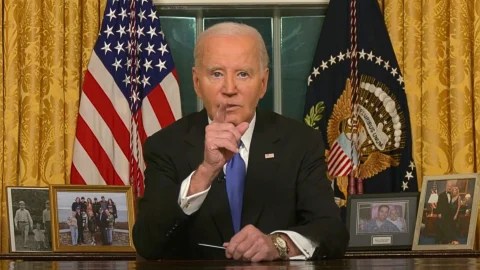
Outgoing President Joe Biden concluded his presidency with a farewell address on Wednesday night, sharply criticizing what he termed the “tech-industrial complex” while urging tighter accountability for social media platforms. Ironically, Biden’s remarks highlighted the decline of free press and the dangers of “misinformation,” even as his administration has often been linked to censorship efforts and suppression of dissenting viewpoints.
During his speech, Biden drew parallels to President Dwight Eisenhower’s famous warning about the “military-industrial complex.” He stated, “Six decades later, I’m equally concerned about the potential rise of a tech-industrial complex that could pose real dangers for our country as well.” His comments painted a picture of concentrated power in the hands of tech oligarchs, whom he accused of enabling an “avalanche of misinformation and disinformation” to flourish unchecked.
The president, leaving office with historically low approval ratings, accused social media platforms of abandoning fact-checking efforts and contributing to the erosion of public trust. “The free press is crumbling. Editors are disappearing. Social media is giving up on fact-checking,” Biden said.
Biden’s condemnation of social media fact-checking policies appeared aimed directly at Meta CEO Mark Zuckerberg, whose platform recently transitioned away from third-party fact-checking to a “community notes” model reminiscent of the system employed by Elon Musk’s X.
Throughout his presidency, Biden frequently championed tighter controls on digital platforms under the guise of protecting democracy and public health. However, critics argue his administration’s push for censorship often targeted dissenting views and stifled legitimate debate.
Biden also lamented the decline of legacy media, suggesting that unchecked misinformation on digital platforms undermines democracy. “We must hold the social platforms accountable to protect our children, our families, and our very democracy from the abuse of power,” he declared.
The president’s rhetoric on misinformation is not without controversy. He has faced repeated accusations of spreading false or unverifiable claims himself, such as recent remarks regarding Los Angeles utilities during wildfire discussions that local officials disputed.
Regarding Covid vaccines, Biden also famously said: “You’re not going to get COVID if you have these vaccinations,” and added, “If you’re vaccinated, you’re not going to be hospitalized, you’re not going to be in the IC unit, and you’re not going to die.” Those who challenged this idea found themselves banned on several social media platforms.
Meta’s recently abandoned fact-checking model, which involved junior writers downgrading posts based on often-disputed analyses, has faced criticism for censoring accurate information that reflected poorly on Biden. The new community-based approach on X and Meta allows users to collaboratively evaluate content, signaling a move away from centralized content moderation.
Tagesspiegel publishes guide for workplace witch hunts against right-wing views ahead of German election
By Thomas Brooke | Remix News | January 16, 2025
A recent piece published by the mainstream German Tagesspiegel newspaper has advocated for employees across Germany to confront and report colleagues expressing right-wing political views in the workplace.
Quoting workplace diversity trainers and academics, the article describes supporters of the Alternative for Germany (AfD) as aligned with “right-wing extremism” — despite the AfD’s projected rise to become the second-largest party in the Bundestag — and offers guidance on how those with more “tolerant,” progressive views should respond should political debate occur in the lead up to next month’s federal elections.
Entitled, “Help, my colleague talks like the AfD! This is how you counter right-wing populist slogans in the workplace,” the article presents a framework for addressing opinions considered “anti-human” or “anti-democratic,” citing examples of such unpalatable views as being of the opinion that asylum seekers should be deported or that NATO has played a role in the Russian invasion of Ukraine.
It even singles out those who criticize the mainstream media as the “lying press” as being troublesome in professional settings.
Sandro Witt of the German Federation of Trade Unions (DGB) is quoted as stating: “In any case, you can’t say nothing if someone in the room makes anti-human comments.” He goes further to argue that “such positions should not go unchallenged,” encouraging employees to intervene and report statements they find problematic to human resources or other workplace authorities.
The article advocates for companies to act decisively against right-wing viewpoints, with Witt stating: “Employers should intervene, make a clear statement, address the workforce, create clarity and draw up a guideline,” effectively promoting a culture of workplace surveillance, where political disagreements could lead to disciplinary actions and even dismissal.
It suggests that employees who encounter dissenting views should not hesitate to involve internal mechanisms, such as “complaint management, equal opportunities officers, or human resources.” This directive, combined with advice to “find allies in the workforce,” has sparked concerns about fostering division and hostility in professional environments.
The call for stricter deportation rules for asylum seekers and the belief that NATO is partly responsible for the war in Ukraine may be contentious and may be deemed unpalatable by some political factions, but they reflect concerns shared by significant portions of the German population as evidence by the growing popularity of the AfD.
David Lanius, a philosopher cited in the piece, provides advice on debating colleagues with differing opinions but warns of the difficulty of changing minds. “The goal cannot be to convince the other person of your own point of view or to proselytize the other person,” he states. Lanius also suggests that confronting such views can take an emotional toll, empathizing with those who have to endure the views of those they don’t agree with. “It’s exhausting. It takes strength to stand against right-wing populism,” he says.
The article emphasizes a long-term approach to countering right-wing opinions, with Lanius asserting: “Constant dripping wears away the stone.” This metaphor implies that repeated coercive challenges to a colleague’s views could eventually lead them to change their mind.
With nearly one in five Germans reportedly supporting the AfD, the article’s framing of dissenting views as “anti-human” or “extremist” has drawn sharp criticism for ignoring legitimate grievances over rising living costs, immigration, and the policies of successive coalition governments comprising of Germany’s legacy parties, namely the Social Democrats (SPD) and the Christian Democratic Union (CDU).
Surveys cited in the piece, such as a study from the Friedrich Ebert Foundation claiming that “almost 1 in 12 Germans has a manifestly right-wing extremist worldview,” are used to paint a picture of growing extremism without acknowledging the broader dissatisfaction driving political shifts.
Despite its focus on “fostering discussion,” the article largely promotes an adversarial approach to political disagreements in the workplace. While it advises employees to engage in dialogue and “try to understand” their colleagues, it simultaneously portrays those with right-wing views as needing to be “re-educated” through persistent challenges.
Reingard Zimmer, professor of labor law at the Berlin University of Economics and Law, is cited in the piece as saying that when right-wing extremist or anti-democratic comments are made at work, it can result in reprimands and ultimately dismissal.
“If a colleague complains about ‘foreign infiltration’ in Germany, the employer will first reprimand the behavior” before issuing a formal warning. If such views are repeated, “you will be terminated immediately,” he adds.
“Employers have a duty to protect their employees and must intervene if a case is so serious that it is unreasonable for them to tolerate the poisoning of the working atmosphere to continue,” says Zimmer.
The fundamental issue with the piece is that the term “racist” has been so fundamentally diluted within society to the point that anything that deviates from the liberal, progressive stance promoted by “palatable” political leaders is questioned.
Immigration has become one of the most prominent topics of concern across many European nations, dominating elections that have resulted in those calling for stricter policies prevailing across the continent — take the Netherlands, Austria, and Italy as just three examples.
When citizens no longer have confidence in institutions and others in society to reasonably define racism, it opens up a Pandora’s Box of uncertainty, distrust, and societal breakdown that further fuels division and creates political opportunities for genuine extremists who prey on a frustrated and disillusioned electorate whose only option of resistance is anonymously at the ballot box.
In Israel, ADL Chief Jonathan Greenblatt Appears to Call for Using Terrorism to Murder Me and My Friends
By Andrew Anglin | The Daily Stormer | January 15, 2025
The head of the Israeli lobbying group the Anti-Defamation League was in Israel last week, where he appeared to call for using Israeli terrorist tactics to maim and murder “antisemites” who criticize Jews on the internet.
Speaking before the Israeli Knesset, Jonathan Greenblatt bemoaned the fact that people are complaining about Jewish behavior online, saying that Jews are “losing the battle” against “antisemitism.” He framed the fight to silence critics of Israel on the internet as the “eighth front” of Israel’s “seven-front war.” He then said that last year’s terrorist attack against Lebanon, which involved explosives being implanted into pagers which were detonated to mutilate and murder Lebanese people, should be the inspiration for silencing people on the internet.
It would have been bad enough if he had said this as a joke, but based on the context and the way he spoke, there is no indication he was joking.
“We need the kind of genius that manufactured Apollo Gold Pagers and infiltrated Hezbollah for over a decade to prepare for this battle,” Greenblatt said.
He went on to state that terrorism is a characteristic of Jewish people: “This is the kind of ingenuity and inventiveness that have always been a hallmark of the State of Israel, that have always been a characteristic of the Jewish people. I know we can do it.”
You can watch the video above to get the full context of the statement, and see if you think he is saying something different. The most generous interpretation would be that he is saying that it took a certain kind of cunning to do the terrorist attack against Hezbollah and that this type of cunning is needed to silence critics of the Jews. It is seemingly unfathomable that he would want to leave people with the impression he was calling for terrorism against internet critics, and furthermore, he calls on the Israeli Defense Force to form a group to shut down these online critics, which definitely implies he is talking about real violence being used.
However, even if we give him the benefit of the doubt and suppose he is calling for some kind of metaphorical terrorism, we must ask what exactly it is he is talking about doing to prevent people from holding opinions he opposes.
Believing that Jews should not slaughter children in Gaza, or that they shouldn’t push child transsexualism, mass immigration, pornography, abortion, and other socially deleterious schemes in the West is an opinion. How can you stop people from having an opinion, other than by killing them? What are the other options?
The ADL is primarily a censorship group, which lobbies governments to pass laws criminalizing the criticism of Jews, and lobbying Silicon Valley to silence critics of Jews online. This is obviously anti-American, fundamentally, but the ADL is one of many Jewish groups which engages in this activity. Internet censorship is ubiquitous, and even the supposed “free speech absolutist” Elon Musk has recently begun silencing his critics on Twitter.
Jewish groups successfully lobbied for TikTok to be banned in America due to the fact that the Chinese owners feel that Americans have a right to criticize Israel in a way that no American company allows them to.
However, none of this has to do with the government of Israel. If Greenblatt was suggesting that Israel should engage in more active lobbying for internet censorship and hate speech laws, he could have simply said that. Instead, he invoked terrorism and called for the IDF to fight people who criticize Jews online.
Being on the frontlines of criticism of Israel and the collective behavior of individual Jews, I have personally had an adversarial relationship with the ADL for more than a decade, regularly being a target of slander and hate from Jonathan Greenblatt and others in the organization, so this call for the Israeli military to use terrorism to silence people like me is particularly disturbing.
At this point, there is so much criticism directed at Israel, and to some extent also the behavior of diaspora Jews, that it would be virtually impossible to censor all of it. Twitter and Facebook would have to ban tens or hundreds of millions of people, and banning that many people would definitely result in those who weren’t banned criticizing Jews for getting all of those people banned.
However, if the Jews began assassinating critics, that may prove to be a significant deterrent.
Although I’ve said it many times, I want to put it on the record again that I am in very good health, I did not take the coronavirus vaccine so I am not at risk of dying suddenly, and I would never, under any circumstances, kill myself.
The video linked above is a week old and has fewer than 100 views. I have not seen this story reported anywhere else. I hope that others will clip the relevant portions and spread them on Twitter and elsewhere. I would like to see Tucker Carlson, Glenn Greenwald, Judge Napolitano, and others with large platforms addressing these statements by Greenblatt and demanding that he explain what exactly it is he is calling for when he says that terrorism needs to be used to silence people whose opinions he does not like.
The Jewish agenda to shut down freedom of speech was already extreme enough, but calling for violence to be used as a solution to internet posts takes this into a whole new realm. If America was a serious country, traveling to a foreign country and calling for state terrorism against American citizens would be grounds for serious criminal charges.
Paper Showing Earth’s Atmosphere Has Become ‘Saturated’ With Carbon Dioxide and More Carbon Emissions Won’t Make Any Difference Is Retracted Following Positive Coverage
By Chris Morrison | The Daily Sceptic | January 13, 2025
Another important paper taking issue with the ‘settled’ climate narrative has been cancelled following a report in the Daily Sceptic and subsequent reposts that went viral across social media. The paper discussed the atmospheric ‘saturation’ of greenhouse gases such as carbon dioxide and argued that higher levels will not cause temperatures to rise. The work was led by the widely-published Polish scientist Dr. Jan Kubicki and appeared on Elsevier’s ScienceDirect website in December 2023. The paper has been widely discussed on social media since April 2024 when the Daily Sceptic reported on the findings. Interest is growing in the saturation hypothesis not least because it provides a coherent explanation for why life and the biosphere grew and often thrived for 600 million years despite much higher atmospheric levels of greenhouse gases. Alas for control freaks, it also destroys the science backing for the Net Zero fantasy.
Many scientists contend that above certain levels the ability of CO2 to warm within narrow bands of the infrared spectrum falls off a logarithmic cliff. Recently, eight Taiwanese scientists led by Professor Peng-Sheng Wei found that the sensitivity of the climate to a rise in CO2 atmospheric levels from 100 to 400 parts per million (ppm) was “negligibly small” at 0.3°C. Current levels of CO2 are around 420 ppm. Seven Austrian scientists recently concluded that a future doubling of CO2 showed “no increase in the IR [infrared] absorption for the 15 u-central peak”. At most, it was stated, this could lead to warming of 0.5°C. Yet in spite of this, Elsevier decided to retract Kubicki’s paper with only a few words of explanation, a decision that is likely to send shock waves through any group of scientists seeking to examine the role of saturation of gases in the atmosphere.
The retraction reads: “Subsequent to acceptance of this paper, the rigour and quality of the peer-review process for this paper was investigated and confirmed to fall beneath the high standards expected by Applications in Engineering Science. After review by additional expert referees, the Editor-in-Chief has lost confidence in the validity of the paper and has decided to retract.”
Retraction in a scientific journal is a serious matter, relatively rare and potentially damaging to the reputation of authors. According to Elsevier’s withdrawal policies, articles may be retracted “to correct errors that impact the findings reported by an article where they are too extensive in the view of the editors to publish a correction, or due to infringements of Elsevier’s journal policies, such as multiple submission, bogus claims of authorship, plagiarism, fraudulent use of data or the like”. None of these reasons for withdrawing the Kubicki paper have been given. Instead there is the pompous reference to a ”fall beneath the high standards expected”, supposedly confirmed by additional unnamed “experts”. Further details about the retraction may emerge given the important issues raised by Elsevier’s action.
Whatever the real reasons behind this retraction, it will not be the first science paper that has met this fate following publicity in the Daily Sceptic and subsequent widespread interest on social media.
In January 2022, a group of physics scientists led by Profession Gianluca Alimonti of Milan University published a paper in a Springer Nature journal that considered past weather trends. They concluded that the idea we’re in the throes of a ‘climate emergency’ was not supported by the facts. The paper attracted little attention outside academic circles until September 14th when the Daily Sceptic reported on it – and our promotion of the story on X resulted in 9,000 retweets. The story was covered by the Australian and Sky News Australia, after which attacks were launched by activist scientists and journalists such as Michael ‘Hockey Stick’ Mann and Graham Readfearn of the Guardian. After a year of lobbying, Springer Nature retracted the paper claiming it no longer had confidence in the results and conclusions. This surprised many, not least because much of the data came from the International Panel on Climate Change. Science writer Dr. Roger Pielke published a number of leaked emails surrounding the affair and concluded: “Shenanigans continue in climate science, with influential scientists teaming up with journalists to corrupt peer review.”
In September 2023, a departing academic, Dr. Patrick Brown, came clean about a paper he’d written in Nature saying that climate change was increasing the risk of wildfires in California. “I knew not to try to quantify key aspects other than climate change in my research because it would dilute the story that prestigious journals like Nature and its rival Science, want to tell,” he explained. These key aspects, of course, include considering the role of arsonists and forest management. For its part, the Intergovernmental Panel on Climate Change can find little or no evidence of human-caused climate change affecting ‘fire weather’ to date and going forward to 2100. In Brown’s view, climate science has become less about understanding the complexities of the world “and more about serving as a kind of Cassandra, urgently warning the public about the dangers of climate change”.
The Editor-in-Chief of Nature Magdalena Skipper reacted furiously to Brown’s comments, accusing him of “poor research practices” that are “highly irresponsible”, according to the Daily Mail. Despite all the controversy, Brown’s paper has not been retracted.
Dr. Matthew Wielicki had a senior position in the Geological Sciences department of the University of Alabama. His parents were academics and he grew up on a Californian university campus surrounded by freely-exchanged competing ideas. He only ever wanted to be an academic but he gave it up during Covid, seemingly disgusted at the turn against free speech in American universities and the effect it has had on climate science. If you speak out against the accepted narrative “you are a pariah in this community”, he said. Climate change is a “taboo” subject in academia and there is a “disconnect between what the science says and what the narrative in mainstream media is”. It isn’t about finding the truth in open discussion – It’s about silencing those who disagree with you, he observed.
French Greens leader calls for X to be banned in EU
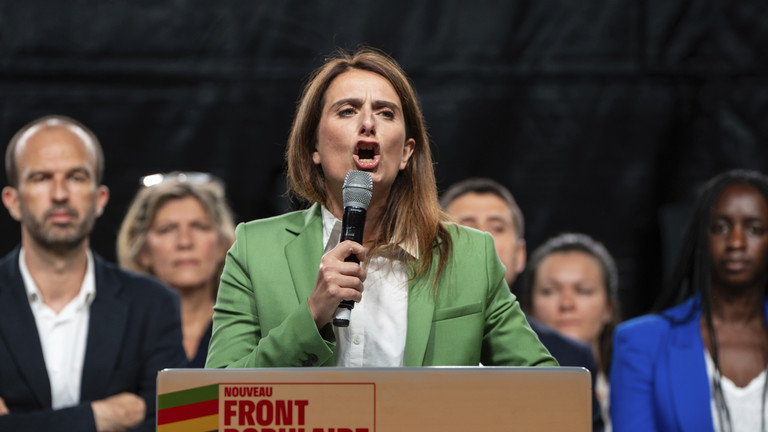
National Secretary of The Ecologists – Europe Ecology The Greens, Marine Tondelier © AP / Louise Delmotte
RT | January 14, 2025
Marine Tondelier, secretary-general of The Ecologists – Europe Ecology The Greens, has called for the social media platform X to be banned across the European Union, at least during election periods, arguing that it plays a role in shaping public opinion in ways that can threaten democracy.
Speaking on RTL’s Le Grand Jury program on Sunday, Tondelier expressed concerns about the influence of social media on democratic processes amid heightened tensions between the platform’s owner, Elon Musk, and EU officials who accuse the US-based billionaire of meddling in European politics.
“It’s not a question of freedom of expression; it’s a question of shaping public opinion,” she claimed. Tondelier highlighted the growing concentration of media ownership in France and globally, accusing “ultra-rich individuals” of trying to “buy power” once they accumulate enough wealth.
“We also need to take social media into account in this calculation now. It is part of the fabrication of opinion. It has a grip on reality. It impacts election results,” she stated. “It’s dangerous because it’s a challenge to our democracies,” she added, suggesting a ban on X during sensitive periods, such as elections.
“The social network Twitter is not only annoying but also dangerous. The question of leaving it obviously arises, but it will not be enough: it must be banned,” she wrote in a post on X.
Tondelier also urged her partners from the left-wing New Popular Front (NPF) coalition, which won the most National Assembly seats in this summer’s legislative elections, to migrate to alternative networks.
“I’m going to leave, but what are the others doing? It will still have an impact on reality. It will still contribute to destabilizing the upcoming elections,” she said.
Musk provoked major controversy by claiming in December that “only the AfD can save Germany,” a statement some EU officials denounced as unacceptable foreign meddling. This followed an op-ed piece published by the German newspaper Welt am Sonntag, in which he defended the right-wing party’s policies. Last week, Musk hosted an interview on X with Alice Weidel, the AfD’s candidate for chancellor in the upcoming German election.
Musk also clashed with former EU Commissioner Thierry Breton, referring to him as “the tyrant of Europe,” after Breton appeared to endorse the cancellation of Romania’s presidential elections, warning about potential foreign interference in the upcoming German polls.
French Foreign Minister Jean-Noel Barrot recently voiced concerns about Musk’s influence, urging the European Commission to take a firmer stance and use existing mechanisms against alleged external meddling. Breton clarified that his remarks were aimed at ensuring compliance with the EU’s Digital Services Act.
In recent weeks, the South African-born tech mogul also criticized British Prime Minister Keir Starmer, accusing him of failing to tackle the Pakistani grooming gang issue and refusing to properly investigate the mass rape of underage girls while he was head of the UK’s Crown Prosecution Service from 2008 to 2013. He also urged Washington to step in and “liberate” the Brits from their “tyrannical government.”
Candace Owens Responds To Mr. And Mr. Macron
Candace Show | January 13, 2025
I respond to the Macrons legal letter, Ian Carroll ratios Elon Musk on X, Mark Zuckerberg appears on Joe Rogan to discuss Biden censorship, and an update on what people are saying about the LA fires.
PreBorn!
To donate, dial pound 250 & say the keyword “BABY” that’s pound 250 “BABY” or donate securely at https://preborn.com/candace
PureTalk
Get 50% off your first month at http://www.PureTalk.com/Owens
American Financing
Act today! Call 800-795-1210 or visit http://www.AmericanFinancing.net/Owens
NMLS 182334, http://www.nmlsconsumeraccess.org. APR for rates in the 5s start at 6.458% for well qualified borrowers. Call 800-795-1210 for details about credit costs and terms.
Candace on Apple Podcasts: https://t.co/Pp5VZiLXbq
Candace on Spotify: https://t.co/16pMuADXuT
Candace on Rumble: https://rumble.com/c/RealCandaceO
Subscribe to Club Candace: https://www.clubcandace.com
Join The Candace Community on Locals: https://candace.locals.com
Budapest: 2 more Antifa activists charged in brutal 2023 attacks
By Liz Heflin | Remix News | January 13, 2025
The Budapest Chief Prosecutor’s Office has indicted two more foreign citizens – a German and, in absentia, an Italian – who, as members of the far-left criminal organization, attacked Hungarians on the streets of Budapest in February 2023, reports Magyar Nemzet.
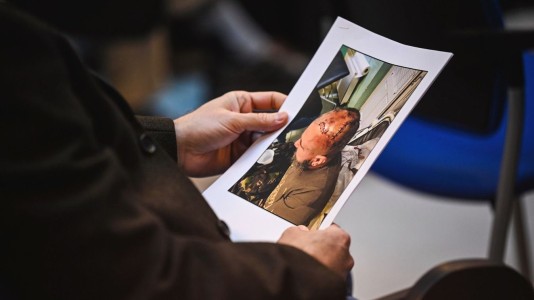
Between Feb. 9 and 11, 2023, five attacks were carried out by the so-called “Hammer Gang,” a sort of Antifa subsidiary with German roots known for using hammers to attack their victims, in the Hungarian capital, injuring nine, six of them seriously.
The attacks were organized and planned in advance. A lookout was set up to keep outsiders away while the other members of the group were responsible for carrying out the violence, armed with hammers.
According to the indictment, the German citizen participated in the attacks on Fővám Square, Gazdagréti Square and Bank Street, partly in the role of observer and follower, partly as an attacker and the Italian participated in the aggression on Gazdagréti and Mikó Street as an attacker.
The Budapest Chief Prosecutor’s Office charges the German citizen with four counts of attempted assault causing danger to life committed in a criminal organization – partly as an accomplice and partly as an accessory – and one count of attempted aggravated assault committed in a criminal organization for a vile reason. The Italian citizen is charged with three counts of attempted assault causing danger to life committed in a criminal organization and as an accomplice.
They are proposing a prison sentence and a fixed-term expulsion from Hungary.
Antifa also faces ongoing criminal proceedings in Germany for the attacks committed there between October 2018 and February 2020, and in the case of one defendant, for the attacks in Hungary.
Just this past November, authorities finally arrested the 31-year-old leader of the Hammer Gang in Germany, where he will be facing charges for crimes dating back to 2018, while another member was sentenced to three years in prison in Hungary earlier for his involvement in the Budapest attacks.
One member arrested in Budapest at the time of the attacks, Ilaria Salis was released from prison in Hungary after an Italian far-left party put her at the top of its European Parliament list in last summer’s elections and entered the European Parliament, thus gaining immunity.
Featured Video
Yemen joins the war – Red Sea could be blocked next – Saudi regime at risk
or go to
Aletho News Archives – Video-Images
From the Archives
Should Europeans ‘Thank’ the Americans for Destroying Nord Stream?
By Robert Bridge | Strategic Culture Foundation | September 29, 2022
With an investigation continuing into the destruction of the Nord Stream gas pipeline that provided energy supplies to Europe from Russia, there appears to be just one prime suspect, and that should surprise nobody.
Following the sabotage of the Nord Stream 1 and 2 gas pipelines, former Polish Foreign Minister Radoslaw Sikorski already seemed to know the identity of the perpetrator when he tweeted out: “Thank you, USA.”
At first glance, it seemed that Sikorski was speaking sarcastically, berating Washington for carrying out an attack that will have severe repercussions for the people of Europe. After all, how could anyone see any good coming from the termination of Europe’s primary source of gas reserves with winter just around the corner? It was Sikorski’s homeland of Poland, after all, that urged its citizens to collect firewood in the face of dwindling gas reserves.
In fact, the Polish diplomat was speaking one-hundred percent literally… continue
Blog Roll
 Aletho News
- Growing insecurity, soaring prices fuel protests in north as regime bans evacuation: Sources
- Iran denies responsibility for ‘depraved’ attack on Kuwait desalination plant
- Bring The Troops Back. End This War Now!
- Can we please stop calling Israel the ‘only democracy in the Middle East’ now?
- US should start removing its troops for Germany, proposes AfD co-leader Chrupalla
- Iran Red Crescent: 600 educational centers attacked in US-Israeli ‘war crimes’
- Russian Oil Tanker Arrives in Cuba Amid U.S. Blockade
- America Racing to Strategic Defeat in Iran: Lt Col Daniel Davis
- FTC Warns Visa, Mastercard, PayPal, Stripe Over Political Debanking
- Russian tanker approaches Cuba despite US oil blockade
- If Americans Knew
- Israeli police block Catholic cardinal from entering Church of the Holy Sepulchre on Palm Sunday
- Israel is assassinating journalists again, more than any other nation, anywhere, ever – Not a ceasefire Day 170
- Over 300 US service members wounded, majority have brain injuries – Not a ceasefire Day 169
- Researchers at Human Rights Watch Resign Over Blocked Report on Palestinian Refugee Return
- Jewish Groups Are Backing a War Americans Don’t Want
- Eric Fingerhut Thinks He’s the President of the Jews
- Top Jewish Philanthropists, Rabbis Urge Israeli President to Take Action Against ‘Jewish Extremists’
- Don’t Be Fooled. Zionist Leaders Have Always Wanted to Control Southern Lebanon
- Israel’s widespread use of torture is a core element of its genocide against the Palestinian people
- In Israel’s War on Iran, Many Middle East US Bases Rendered “All But Uninhabitable”
- No Tricks Zone
- New Study Finds Warming Saves Lives…Cold Temperatures 12 Times More Deadly Than Excess Heat
- German Science Blog Accuses PIK Climate Institute Of Hallucinating Climate Tipping Points
- Devastating Assessment Of Comirnaty Vaccine By Former Senior Pfizer Europe Toxicologist
- New Study: CO2 Is ‘Effectively Negligible’ As An Explanatory Climate Change Factor Since 2000
- Former Pfizer Toxicologist Dr. Helmut Sterz Tells Bundestag Hearing Pfizer Vaccine Should Have Never Been Approved
- Energy Expert: Germany’s Nuclear Phaseout Was A “500 Billion Euro Mistake”
- New Research: South Australia’s Mid-Holocene Sea Surface Temperatures Were 4°C Warmer Than Today
- Storing Green Energy To Last Germany 10 Days Would Require A 60-Million Tonne Battery
- New Studies: UK Sea Levels Were 4 Meters Higher Than Today During The Mid-Holocene
- Destructive Green New Deal: German Energy And Metal Group Warns Of Drastic Crisis
 Aletho News