University crackdown on Palestine solidarity encampments a grievous violation of Charter freedoms
By Laurie Adkin | Canadian Dimention | March 9, 2025
If the repression of Palestine solidarity protests on Canadian campuses is permitted to go unchallenged, we risk a serious erosion of Charter-protected rights and freedoms. The cases of the Universities of Calgary and Alberta highlight what is at stake.
In May 2024, the University of Calgary executive[1] called in the police to forcibly remove the Palestine solidarity encampment on that campus within hours of its appearance. The University of Alberta executive quickly followed suit, deploying riot police to drive members of the People’s University for Palestine (PU4P) from the campus. The executives thus revealed the vacuity of their institutional slogans and their unwillingness to defend university autonomy from political direction. University records[2] and media reports show that United Conservative Party government officials were urging the deployment of police against the universities’ students, faculty, staff, alumni, and community supporters.
Since October 2023, university executives have been implementing security regimes that put their students, staff, and faculty under continual surveillance and subject them to policing that not long ago would have been unthinkable. The Kent report confirms that the University of Alberta Protective Services and the Edmonton Police Service collaborate in surveillance of the conversations, social media posts, and activities of students, staff, and faculty on campus (using patrols, video cameras, and facial recognition technology). Police presence on campus has become routine. Operating procedures for protests were amended unilaterally by executives on both campuses in May 2024 in anticipation of the Palestine solidarity encampments. The result is that the environment for freedom of expression on campuses has been significantly degraded. However, the failure of university executives to stand up for constitutional freedoms is a grievous abdication of democratic duty to all citizens. Given what is at stake, it is urgent that court challenges to their actions be initiated, and that those responsible be required to apologize and make reparation to those who were traumatized and whose freedoms of political expression and assembly were unreasonably denied.
The UCalgary’s executive has tried to establish the legality of its actions by commissioning a consultancy report described by legal experts as “superficial.” The UAlberta executive no doubt hopes that the Report on the Encampment they commissioned from retired Alberta Court of King’s Bench Justice, Adèle Kent, will close the book on its decision to deploy police against the PU4P. The Kent report concluded that “the administration’s ability to have the police dismantle the encampment was reasonable and justifiable under the Charter” (78). This opinion—which is not a judicial ruling—is unsubstantiated by evidence and hinges on an incomplete (and often contradictory) review of the legal tests required to arrive at such a conclusion.
UAlberta President Bill Flanagan issued a cluster of statements in May 2024 attempting to justify the forcible removal of the PU4P by police on the grounds that it posed “serious and potentially life-threatening risks” to “university community members and members of the public,” and that its removal was intended to “ensure public safety and security.” The evidence—including highly credible first-hand testimony—effectively eviscerated these claims; even Justice Kent and campus security agreed the PU4P presented no threats to anyone’s safety at the time the police were sent in.
What the executive and the justice turned to, then, to justify the camp’s removal was the possibility of future threats that could be (and were) imagined by the president’s executive council and the police. One fear they raised was that counter-protestors might show up on campus and altercations between the groups might ensue. There was no indication at the time that such events were likely, but even if they had been, we should question the logic of the argument that is being made here for the denial of Charter freedoms of expression and assembly. If the possibility of a future counter-protest that might be violent is considered grounds to ban otherwise peaceful political expression and assembly, then effectively, these Charter freedoms are null and void.
The “community safety” pretext offered by President Flanagan further lacks credibility because alternatives were available to ensure the safety of the PU4P participants that entailed far less risk of harm than the option that was chosen (sending in riot police at the crack of dawn). In this regard, the executive’s decision clearly fails the Charter tests of “least impairment” and “rationality” in relation to its supposed objective. Members of the executive chose not to meet with the PU4P, instead spending hours in “crisis management” meetings among themselves and with government officials and the police, grasping at pretexts to simply get rid of the protestors without having to answer their demands. They misled students and the public about their intentions, concealing their decision to deploy the police from student leaders and implying that negotiations were in progress when this was not true. This is the kind of bad faith treatment to which pro-Palestinian student activists have become accustomed.
We cannot overlook the likelihood that these Palestinian solidarity encampments were labelled security threats because of the relentless pressures on university administrators exerted by Zionist politicians and pro-Zionist government officials to characterize any criticism of Israel as threatening to the “safety” of Jewish students and faculty. Such pressures have been well-documented in the cases of the Universities of Alberta and Calgary, and are exhibited in many of the submissions to the House of Commons Standing Committee on Justice and Human Rights’ investigation of “antisemitism” on Canadian campuses (May 2024). Notably, the committee’s December 2024 report recommended, among other measures, that universities adopt the International Holocaust Remembrance Alliance definition of antisemitism which encompasses anti-Zionism or criticism of the state of Israel.
In contrast, we see clearly how little the safety of “community members” from racialized Muslim backgrounds (and non-Zionist Jews) has mattered for university executives—how quickly their safety was sacrificed to achieve higher-ranked priorities. The repression of pro-Palestinian protest on university campuses is consistent with the denial of rights and the violence being inflicted upon Palestinians in Gaza and the West Bank on a massive scale by Israel and its military and diplomatic allies.
It can have escaped no one’s notice that we live in times of rising authoritarianism. If Canadians accept the flimsy, speculative pretexts offered by university authorities to crush peaceful protest—if we do not subject them to rigorous Charter tests—we risk the further erosion of our political rights and freedoms. If these rights may be trampled underfoot on university campuses without legal challenge, where are they protected? Constitutional lawyers, don your armour.
Laurie E. Adkin is a professor emerita in the Department of Political Science at the University of Alberta.
References
1. By “executive” I refer to the president, the president’s executive team, or council, and the Board of Governors. While responsibility for the decisions falls ultimately on the shoulders of the university presidents, the reviews have been vague in identifying who authorized what and when. Some members of the executive team at UCalgary were away from the university when the decision to call in the police was taken; none, however, have subsequently resigned their positions. In the UAlberta case, we know that the Chair of the Board was closely involved in the decision-making about the PU4P, but we do not know if other governors on the Board were consulted; none have publicly expressed their agreement or disagreement with the action that was taken. This is typical of the lack of meaningful accountability of these board members to both internal constituencies and the broader public.↩
2. Its flaws notwithstanding, the UAlberta-commissioned Kent report provides very useful information in its excerpts from interviews with executive decision-makers and the appended (though redacted) “Rolling Update” on meetings, decisions, etc., maintained by the Crisis Management Team. Additional records were obtained by journalist Jeremy Appel through a FOIPP application to the UAlberta.↩
Remove Hamas and the other Resistance groups from the Home Office list of proscribed organisations
By David Miller | Al Mayadeen | March 14, 2025
The British government should de-proscribe all of the Palestinian and Lebanese Resistance groups currently listed on the anachronistic list maintained by the Home Office. The first and most obvious reason for this is that banning these groups does not in any way prevent or disrupt political violence in the UK. This sounds like a dramatic claim. So, let’s take a close look.
After a year and a half of genocide by the illegitimate Zionist entity, voices are beginning to be raised calling for the removal of Palestinian resistance groups from the government list of proscribed organisations. But what is the list and what offences are attached to it?
When I was detained by officers of SO15 or the Counter Terrorism Command (formerly the Special Branch) under Schedule 7 the other day, I was given a piece of paper with the legal basis of the detention which I was required to sign and was given a copy to keep. It states that the detention is to enable whether I appeared ‘to be a person who is or has been concerned in the commission of instigation of acts of terrorism.’
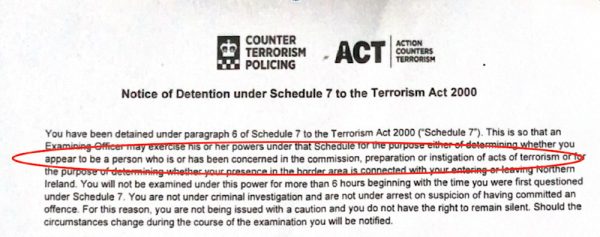
And yet, they asked me no questions about commissioning or instigating acts of “terrorism”. Not a single one.
Instead, they asked about extremism, the Western way of life, and asked me to characterise specific views on political violence. If the Trades Description Act applied to the Terrorism Act 2000 and to the activities of SO15, I would be making a complaint to the Heathrow Trading Standards Officer.
But the reason for this is that Schedule 7 is not really intended to disrupt actual terrorism, but to surveill and repress political views and political speech which is critical of UK foreign policy, including of course support for the Palestinians’ legitimate right to resist the Zionist occupation. Don’t believe me? Let’s look closely at the Home Office list of offences related to proscribed organisations.
As one can see from the offences below, none of them have anything to do with actual acts of violence. Let’s take each in turn.
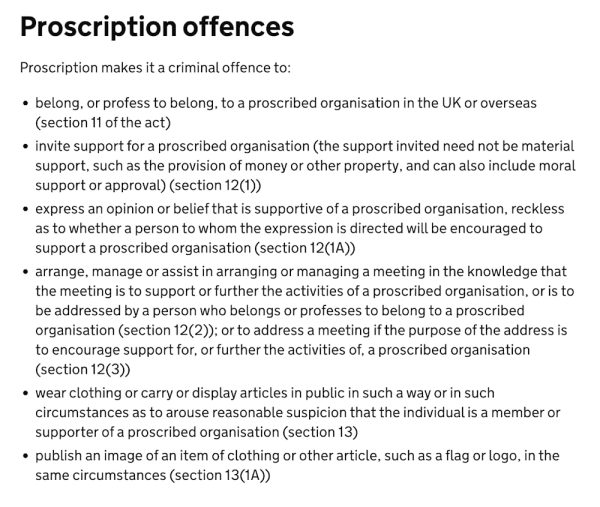
- Obviously being a member of a proscribed group might have some relevance, but membership is not itself an act of terror. And certainly, professing to be a member of Hezbollah is not, in itself, an act of terror.
- Inviting support for a proscribed group is an offence. How does one ‘invite’ support for a ‘terrorist’ organisation? The language is of course similar to the ‘notice’ issued to UK broadcasters on 19 October 1988. Otherwise known as the Broadcasting Ban, this was an attempt to suppress support for the Irish Republican movement and in particular its political wing Sinn Fein, which throughout the period remained a legal political party with many elected councillors in the north of Ireland. It made, as I argued at the time, no appreciable difference to the Irish Republican Army, the wing of the movement engaged in armed struggle. But what does it mean to ‘invite’ support? It’s not altogether clear and it is pretty plain that this particular provision has been of little use to the British state, resulting, as it has, in precious few convictions. As a result, the government added a wider and more vague clause to the act via the Counter-Terrorism and Border Security Act 2019, to which we turn next.
- Express an ‘opinion’ or ‘belief’ that is supportive of a proscribed organisation. What does that mean? It obviously has the potential to be stretched quite far into opinions and beliefs that are shared by most people, even in the UK. Is saying that Seyed Hassan Nasrallah, the assassinated leader of Hezbollah, was widely respected and admired an opinion which is ‘supportive’ of a banned group? Notice the language is ‘will be’ encouraged not ‘is’ encouraged. So, at best this is a conjectural crime which does not require that anyone is actually encouraged, only that the hypothetical ‘reasonable person’ might think that. Again, nothing here that relates to involvement in planning any ‘act’ of violence.
- Arranging or managing a meeting is, manifestly, not an act of violence, whether or not it involves giving ‘support’ for a proscribed organisation and whether or not a representative of the organisation speaks, or whether the purpose of the address is to encourage support. In fact, the more we hear the voices of those (in proscribed organisations and legal ones alike) who are involved in resisting the menace of Zionism and genocide, the better it will be for the possibility of ending the genocide.
- Next is Clothing: It is an offence to ‘wear clothing or carry or display articles in public in such a way or in such circumstances as to arouse reasonable suspicion that the individual is a member or supporter of a proscribed organisation’. Articles of clothing are also not in themselves acts of terror, no matter how they are displayed. Obviously, what they have in mind here is branding relating to specific organisations, such as a Hezbollah flag, a Qassam Brigades head band, or other perhaps less directly connected imagery or items. Obviously, given the attemtps of the Zionists and their craven allies in the British security state, there is a push to widen the parameters so they can scoop up more and more supporters of the Palestinians. Thus the case of the young women found guilty under these powers of sporting parachute patches (below).
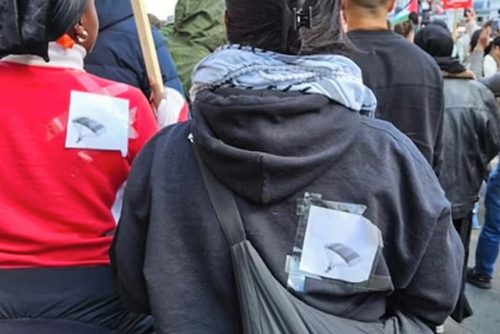
Or, the case of the young man found guilty of supporting Hamas for wearing a green headband with the Shahada (the Muslim profession of faith) on it (first below). This is of course not a ‘Hamas headband’. Al-Qassam Brigades, the military wing of Hamas, do have a specific headband with a gun on it! As can be seen, it is not at all similar (right below).


6. It is an offence to “publish an image of an item of clothing or other article, such as a flag or logo, in the same circumstances.” This is obviously intended to cover social media posts, which are manifestly not ‘acts’ or terrorism. This provision was inserted (12.4.2019) by Counter-Terrorism and Border Security Act 2019.
Overall, then, as we see these ‘proscription’ powers have nothing at all to do with interfering with material acts of political violence or armed struggle.
The proscription offences are not terrorism offences. It is an absurd nonsense, not to mention a colossal waste of resources, that SO15 are required to attempt to police thoughts, beliefs and speech as the vast majority of their activities at ports.
When the leading journalist Asa Winstanley was recently raided (but not arrested), he was told that it related to his alleged support for proscribed groups. A letter addressed to him ‘from the “Counter Terrorism Command” … indicates that the authorities are “aware of your profession” as a journalist but that “notwithstanding, police are investigating possible offenses” under sections 1 and 2 of the Terrorism Act (2006). These provisions set out the purported offense of “encouragement of terrorism.”’
And yet, if you look at the passage at the beginning of this article about commission or instigation of acts of terror, the implication is that to be of interest one would have to be involved in setting up a branch of Qassam Brigades in North London, or a version of Hezbllah’s Radwan Force in Reading. There is nobody in the entire counter-terrorism apparatus who believes that that is what Asa, me, or anybody else, is doing.
And when you put it like that, it’s also manifestly the case that neither Hamas, Hezbollah, the PFLP-GC or Palestinian Islamic Jihad are planning to set up branches in the UK, or – indeed – to carry out attacks here. Given the UK’s role in directly participating in the genocide, that is generous of them, but it appears to be a fact.
But more than that, free speech about armed groups fighting an almost universally acknowledged genocide should not be criminalised and proscribed.
And the case for proscribing their welfare, health, education and other manifest functions of Hezbollah and Hamas is even weaker.
They should be de-proscribed now.
Kremlin comments on ECHR Odessa massacre ruling
RT | March 14, 2025
The European Court of Human Rights (ECHR) ruling holding Ukraine accountable for the massacre in the city of Odessa in 2014 appears to be a “glimpse of common sense,” Kremlin spokesperson Dmitry Peskov told TASS on Friday. However, a single ruling is not enough to draw broader conclusions, he added.
The ECHR found the Ukrainian authorities guilty of the deaths of the so-called anti-Maidan activists who burned to death after taking refuge in the Odessa trade union building, which was subsequently set on fire by radical nationalists. The court ruled on Thursday that Ukraine failed to take all reasonable steps to prevent the violence, halt it once it began, or rescue those trapped in the building.
“A very belated decision, but it seems like a glimpse of common sense,” Peskov remarked. “To confirm this, we need to see other similar actions. Which, of course, we would like to witness.”
On May 2, 2014, clashes erupted in Odessa between Ukrainian nationalists, who supported the armed coup in Kiev that had occurred several weeks before, and those who opposed it. The pro-Maidan activists attacked a tent where local residents were gathering signatures for a referendum on the federalization of Ukraine and recognition of Russian as a state language.
Outnumbered by the far-right radicals, the anti-coup activists took refuge inside the city’s trade union building. However, the nationalists surrounded the building, lobbed Molotov cocktails at it and eventually set it on fire, resulting in 48 deaths and over 200 people injured.
More than a decade later, Kiev has neither identified nor prosecuted any of the perpetrators. Instead, it has shifted the blame to Moscow, alleging that the events in Odessa were “a pre-planned and well-financed operation” by the Russian security services. Moscow has repeatedly called for an investigation into the massacre, even advocating for a special tribunal to be convened.
Relatives of 25 victims, along with three survivors of the fire, filed complaints against Ukraine with the ECHR. The court ruled that the Ukrainian police had “had ignored the available intelligence and the relevant warning signs” and made no “meaningful attempt to prevent the clashes” that led to the fire. While the ECHR acknowledged that “propaganda from Russia had had its part” in tensions being escalated, it admitted that this did not absolve Kiev of responsibility for the massacre.
Infowars reporter mysteriously killed days after network reported on Mossad-Epstein links
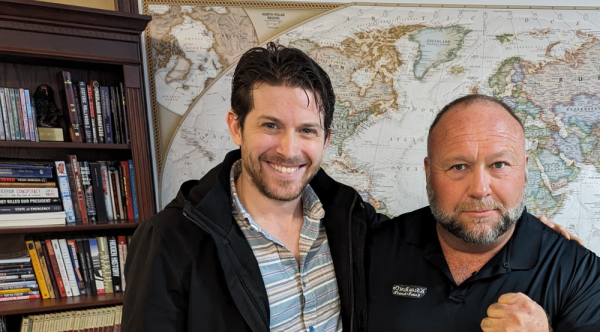
Infowars lead reporter Jamie White (L) (Photo via social media)
Press TV – March 13, 2025
Infowars lead reporter Jamie White has been shot dead outside his Austin apartment, two days after the network aired a report on Mossad’s links to the Epstein sex trafficking ring.
White was found injured near his car late Sunday and later died after being taken to a local hospital.
The Austin police department has claimed that the killing was “likely a random attack.”
Authorities have not yet identified the perpetrator(s).
The murder has led many, including Infowars’ founder Alex Jones, to question if the journalist was the target in a politically-motivated assassination.
“What are the chances in a town of over two million people that an Infowars lead reporter gets butchered?” Jones said in an interview after the murder.
The killing of the Infowars reporter happened two days after the network ran an extensive expose on the links between the Israeli spy service Mossad, and the sex trafficking ring run by Jeffrey Epstein and Ghislaine Maxwell.
The show, which was hosted by Alex Jones and investigative journalist Ian Carrol, said that the sex trafficking network was a “honey trap” operation to gain blackmail on powerful individuals for the benefit of Israel.
The Epstein case is notorious for being linked to a slew of mysterious deaths.
In 2020, the home of Esther Salas, a judge investigating the case, was attacked by an assailant.
The attack left Salas’s son dead and her husband injured. The assailant was later found dead, with authorities claiming the death to be suicide.
In 2022, French modeling agent and Epstein associate Jean-Luc Brunel was found hanged in his prison cell while being investigated for the sex trafficking of minors.
Jeffrey Epstein himself also died under suspicious circumstances in his prison cell in 2019.
While the US government claims that his death was a suicide, many Americans believe the death to have been a murder to prevent the revelation of his connections with powerful people.
Yale suspends Iranian scholar after AI site said she supports a pro-Palestine group

Press TV – March 13, 2025
Yale Law School has suspended an Iranian scholar following accusations stemming from an Israeli AI-powered website article that highlights her advocacy for Palestine and Iran, as well as her outspoken criticism of Israeli genocide during the Gaza war.
Helyeh Doutaghi, who serves as the Deputy Director of the Law and Political Economy (LPE) Project at Yale, in a public statement on Wednesday, denounced her suspension as a retaliatory action against her pro-Palestinian stance and a violation of her constitutional rights to free speech and academic freedom.
“AI is being weaponized to target students, faculty, and organizers who dare to speak out against genocide, systemic starvation, and the ethnic cleansing of Palestinians,” she warned, highlighting the broader implications of the misuse of artificial intelligence in academic and public discourse.
Doutaghi, an expert in international law who held the position of Associate Research Scholar at Yale Law School, was informed of an article published by an obscure AI-powered right-wing Zionist platform, Jewish Onliner, on March 3, which falsely labeled her a “terrorist.”
Doutaghi, who has been vocal about the implications of US military operations, imperialism and the US-Zionist genocide and the ongoing humanitarian crisis in Palestine, reported that the accusations from the article have led to online harassment and even death threats against her.
Less than 24 hours after the article’s release, Yale Law School administration placed Doutaghi on leave.
She criticized the administration for conducting an interrogation based on AI-generated allegations without due process or providing her with sufficient time to attend an interrogation.
Doutaghi also expressed concerns about Yale’s choice of attorney for her interrogation, David Ring from the firm Wiggin and Dana, whose public profile indicates a focus on services related to Israel.
She questioned his neutrality in a case involving a pro-Palestinian academic.
“The actions of YLS constitute a blatant act of retaliation against Palestinian solidarity,” Doutaghi remarked, asserting that the administration prioritized the approval of its Zionist donors over a fair investigation.
Doutaghi pointed out that Yale’s asset managers include firms linked to General Dynamics and Lockheed Martin, which produce components for the F-35 fighter jets used by Israel in committing genocide, asserting that the move creates a conflict of interest that undermines academic integrity.
“This crackdown is a dangerous escalation in state repression, fostering an atmosphere of fear on campus,” said Doutaghi. “We are witnessing a new era of Zionist McCarthyism, where dissent is met with violence, and solidarity with Palestine is rendered a punishable offense.”
“Yale is bending the knee to Trump’s effort to suppress free speech, crush academic freedom, and establish a dictatorship,” Eric Lee, Doutaghi’s lawyer wrote on social media in light of her suspension.
Meanwhile, the US State Department is reportedly considering the use of AI to potentially revoke visas for international students accused of supporting Hamas, raising further concerns about the consequences of such technology on civil liberties.
On Saturday, Mahmoud Khalil, a recent Columbia University graduate who helped lead last year’s solidarity protests in support of the Gaza Strip, was detained by Immigration Customs Enforcement (ICE) and said to be deported despite having a green card.
Following the detention of Khalil, US President Donald Trump declared it was “the first of many to come,” labeling Khalil a “radical foreign pro-Hamas student” and emphasizing that his administration would adopt a strict stance against any pro-Palestinian activities within American universities.
Maybe the reason the Trump administration wants to deport Mahmoud Khalil is because there’s no good reason
By Adam Dick | Peace and Prosperity Blog | March 13, 2025
The Donald Trump administration is offering no good reason to deport Mahmoud Khalil, who was involved in protests at Columbia University in New York City related to the Israel government and to United States government support for that government. He is not charged with a crime of violence or fraud. He is just singled out for advancing communication that challenged US foreign policy — exercising rights listed in the First Amendment of the US Constitution.
Why, many people ask, is the US government so intent on deporting Khalil? Wouldn’t it instead make more sense to go after other noncitizens, making at least arguably credible accusations they committed crimes?
Answers to these questions are suggested by considering the fact that, because Khalil’s accused offense is just speaking up, his arrest, detention, and deportation can have maximum impact in discouraging people from taking a stand the US executive branch may oppose. Speech, assembly, or petition alone, the Trump administration is making clear, is sufficient to bring upon one the wrath of the US government. A Tuesday post at the website of the free speech advocacy organization The Foundation for Individual Rights and Expression (FIRE) titled “Trump administration’s reasons for detaining Mahmoud Khalil threaten free speech provides elaboration:
There are millions of people lawfully present in the United States without citizenship. The administration’s actions will cause them to self-censor rather than risk government retaliation. Lawful permanent residents and students on visas will fear a knock on the door simply for speaking their minds.
If constitutionally protected speech may render someone deportable by the secretary of state, the administration has free rein to arrest and detain any non-citizen whose speech the government dislikes. The inherent vagueness of the “adversarial to the foreign policy and national security interests” standard does not provide notice as to what speech is or is not prohibited. The administration’s use of it will foster a culture of self-censorship and fear.
Khalil is being put forward as an example by the US government. The message to potential critics of the Israel government or US policy related to it is as simple and direct as it is sinister: Shut up or the US government will destroy your life.
Professor at Center of Columbia University Deportation Scandal is Former Israeli Spy
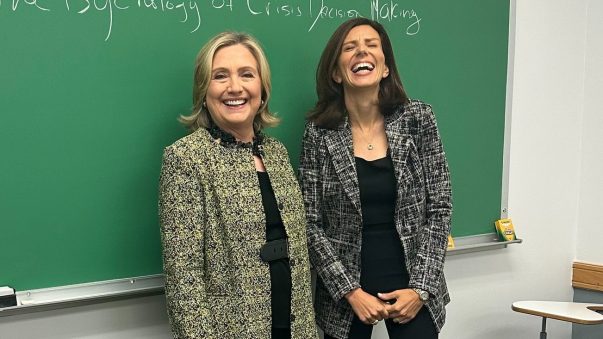
Keren Yarhi-Milo poses with Hillary Clinton during Clinton’s 2023 guest teaching stint at Columbia. Photo | Facebook | Hillary Clinton
By Alan MacLeod | MintPress News | March 11, 2025
The professor at the center of the Columbia University deportation scandal is a former Israeli intelligence official, MintPress News can reveal.
Mahmoud Khalil, a recent graduate of the university’s School of International and Public Affairs (SIPA), was abducted by Immigration Customs Enforcement (ICE) Saturday for his role in organizing protests last year against Israel’s attack on Gaza. Khalil’s dean, Dr. Keren Yarhi-Milo, head of the School of International and Public Affairs, is a former Israeli military intelligence officer and official at Israel’s Mission to the United Nations. Yarhi-Milo played a significant role in drumming up public concern about a supposed wave of intolerable anti-Semitism sweeping over the campus, thereby laying the groundwork for the extensive crackdown on civil liberties that has followed the protests.
Spooks in Our Midst
Before entering academia, Dr. Yarhi-Milo served as an officer and an intelligence analyst with the Israeli Defense Forces. Given that she was recruited into the intelligence services because of her ability to speak Arabic fluently, her job likely entailed surveilling the Arab population.
After leaving the world of intelligence, she worked for Israel’s Permanent Mission to the United Nations in New York. While there, she met and married her husband, Israel’s official United Nations spokesperson.
Although she is now an academic, she has never left the world of international security, making the subject her area of expertise. She has made a point of trying to lift women’s voices in the field. One of these was the then-U.S. Director of National Security, Avril Haines, whom she spoke with in 2023. But even though Khalil was a student in her school, she had nothing to say about his arrest. Indeed, rather than speak out on the issue (as activists have demanded), she instead chose this week to invite Naftali Bennett, prime minister of Israel from 2021 to 2022, to speak at Columbia. Students protesting Tuesday’s event were condemned by university authorities for “harassing” Yarhi-Milo.
Unprecedented Protests, Unprecedented Repression
Columbia was the epicenter of a massive protest movement across university campuses nationwide last year. It is estimated that at least eight percent of all American college students participated in demonstrations denouncing the genocidal attack on Gaza and calling on educational institutions to divest from Israel. The response was equally vast in its scale. Well over 3,000 protestors were arrested, including faculty members themselves.
The nationwide movement began at Columbia on April 17, when a modest Gaza solidarity encampment was established. Protestors were shocked when university president Minouche Shafik immediately called in the New York Police Department – the first time the university had allowed police to suppress dissent on campus since the famous 1968 demonstrations against the Vietnam War.
Mahmoud Khalil was among the leaders of the movement. The Syrian-born Palestinian refugee was willing to speak calmly and cogently to the press about the protest’s goals. A permanent resident of the United States, he was abducted by ICE on Saturday.
“ICE proudly apprehended and detained Mahmoud Khalil, a radical foreign pro-Hamas student on the campus of Columbia University. This is the first arrest of many to come,” President Trump stated. Secretary of State Marco Rubio echoed Trump’s ominous threat, announcing, “We will be revoking the visas and/or green cards of Hamas supporters in America so they can be deported.” In another clear threat, the Trump administration moved to cancel $400 million in funding to Columbia University, citing the institution’s failure to sufficiently crack down on “antisemitic” incidents on campus.
Khalil’s eight-month pregnant wife was initially told that he had been taken to a facility in Elizabeth, New Jersey. In fact, he had been moved halfway across the country to a center in Jena, Louisiana. Journalist Pablo Manríquez of Migrant Insider explained that ICE often goes “immigration ‘judge shopping’ by putting detainees in detention centers under jurisdictions of courts that very rarely decide in favor of migrants.”
The very high-profile attempt to deport the holder of a Green Card because of political speech criticizing a foreign government has left many civil rights lawyers deeply worried. Alec Karakatsanis, for example, stated that “I’ve never seen a more clear-cut First Amendment violation, or a more flagrant government declaration of intent to violate blackletter law.” “The government does not claim he committed a crime, just that he held views that the government doesn’t like about Israel. Bone chilling,” he added.
Columbia’s Billionaire Pro-Israel Backers
Much of Columbia’s funding comes from donations from billionaire benefactors. But those gifts come with strings attached. This became apparent in the wake of the protest movement, as many pro-Israel patrons demanded the university take action. Manufacturing magnate Robert Kraft, for example, publicly announced he was cutting his alma mater off from his lavish funding over its failure to effectively suppress the demonstrations.
Hedge fund manager Leon Cooperman did the same, demanding that Columbia’s “crazy kids” “have to be controlled.” These “kids” evidently also included 61-year-old Jordanian professor Joseph Massad, whose views on the Middle East Cooperman found intolerable, and called for his firing. Soviet-born oligarch Len Blavatnik, meanwhile, urged police to hold the protestors to account.
Between them, Kraft, Cooperman and Blavatnik are believed to have donated nearly $100 million to Columbia, giving them considerable influence over the political direction of the university.
There were also voices from within the university clamoring for the violent suppression of the student movement. Assistant Professor of Business Management Shai Davidai, for example, denounced the protestors as “Nazis” and “terrorists” and called for the National Guard to be set upon the encampment, obliquely referencing the Kent State University Massacre while doing so. Davidai, an Israeli-American, served in the IDF and has publicly expressed his pride in doing so.
Given its most recent addition, it appears unlikely that the School of International and Public Affairs will moderate its pro-Israel positions. In January, the school announced that Jacob Lew would join the faculty. Lew had just left his job as the U.S. Ambassador to Israel under the Biden administration, a role in which he facilitated American complicity in genocide, supplying Israel with weapons and providing it with diplomatic support for its efforts.
Defending Israel, Destroying Free Speech
Longtime readers of MintPress News will be less surprised than many to hear that Israeli military intelligence officials hold such important positions in American public life. Previous MintPress investigations have uncovered giant networks of former Israeli spies working in top jobs in big tech and social media companies, including Microsoft, Google, Meta, and Amazon. Even TikTok, often labeled a Chinese spying app, has hired former Israeli spies to run its affairs. And in October, we revealed that former Israeli spooks are writing America’s news, with multiple former agents working at top U.S. outlets, including CNN, Axios, and the New York Times.
Perhaps, then, the fact that the dean of the very school at the center of a worldwide media storm is a former Israeli military intelligence officer should not be such a shock. But it remains a stark reminder of the level of extraordinary institutional bias in favor of Israel displayed across the United States.
Maine Lawmaker Censored: The Facebook Post That Sparked a Free Speech Showdown
By Regina Morrison | Reclaim The Net | March 11, 2025
You’re an elected official. You show up at the state house, ready to do what politicians do: discuss budgets and debate policy. But instead, you find yourself in the middle of a firestorm over a Facebook post. Not because it contains state secrets or classified intel, but because it features photos from a high school track meet.
This is exactly what happened to Maine Representative Laurel Libby, who now finds herself at the center of a storm that is less about sports and more about who gets to decide what speech is acceptable in a democracy.
A Championship, A Facebook Post, and a Political Crisis
It all started with a pole vaulting competition. Libby, a mother of five and a fierce advocate for women’s sports, posted photos from Maine’s Class B state championship in girls’ pole vaulting. The athlete who won had previously competed in the boys’ division, where they finished in fifth place. Now competing in the girls’ category, the athlete cleared 10 feet 6 inches, winning by a wide margin.
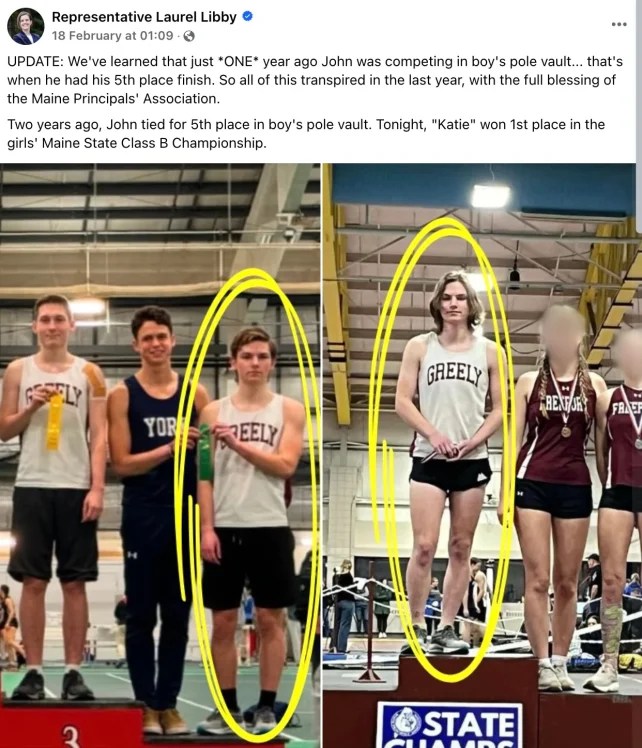
Libby’s post ignited a national conversation — the media ran with it, the White House took notice, and suddenly, a Maine high school sports event became ground zero for the larger battle over transgender athletes in women’s sports.
The Censure Vote and the Ultimatum
Democratic leaders in the Maine legislature quickly stepped in. They demanded she take the post down. Libby refused. The response was a censure vote, which passed 75-70 along party lines.
But that wasn’t enough. The House speaker then took things a step further: Libby would not be allowed to speak or vote on legislation until she deleted the post. In other words, her constituents would now go unheard in state government, all because their representative refused to edit her social media. Normally, removing a legislator would require a two-thirds vote or a recall election, but those formalities were apparently unnecessary when a majority party had other tools at its disposal.
Libby’s critics argue that she could have made her point without sharing the athlete’s photo. “Sharing images of kids online without their consent is a clear violation of the bond of trust and respect between citizens and their legislators,” said Majority Leader Ryan Fecteau. He accused Libby of using a minor to score political points and insisted that serious policy debates should not be waged through viral social media posts.
Libby, however, sees it differently. “Words don’t have the same impact. People need to see what’s happening to understand why it’s unfair,” she explained. Her stance is simple: if an athlete competes in a public championship, they should expect public attention. “If you don’t want attention, don’t put yourself in a public position to receive it.”
Libby’s post, whether you agree with it or not, falls squarely under the First Amendment. She wasn’t revealing state secrets or inciting a riot — she was commenting on a policy set by the Maine High School Principals Association, which allows student-athletes to compete in the gender category with which they identify.
In other words, she was doing exactly what elected officials are supposed to do: debate policies that affect the people they represent. The fact that her speech was met not with counter arguments but with an outright ban from legislative participation raises an uncomfortable question; if lawmakers can be silenced for discussing controversial policies, what does that mean for the rest of us?
USAID funded Ukraine group that smeared Vance
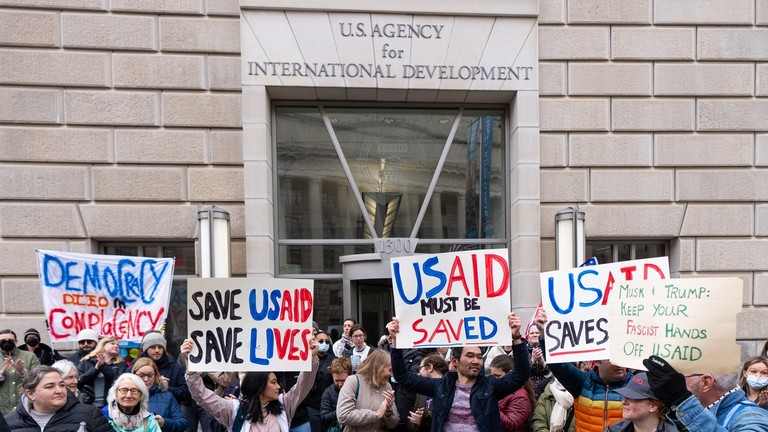
Protesters gather outside USAID headquarters, February 3, 2025 © Bill Clark / CQ-Roll Call, Inc via Getty Images
RT | March 10, 2025
The US Agency for International Development (USAID) has been implicated in funding a Ukrainian organization, Molfar, which labeled Vice President J.D. Vance and other US officials and public figures as “foreign propagandists” aligned with Russia, according to an investigation by The Grayzone.
Molfar, established in 2019, describes itself as an open-source intelligence community platform which “collects lists of Ukrainian enemies to bring war criminals to justice.” The group’s website identifies USAID and the US Civil Research and Development Fund (CRDF) as partners, indicating financial and operational support from US government agencies.
The group’s online blacklist not only targeted Vice President Vance for his statements opposing continued US financial support for Kiev and his stance against Ukraine’s NATO membership, but also targeted other American figures, including US Counterterrorism Director Joe Kent and Representative Thomas Massie. Molfar’s website advocated for their “removal from public positions, the introduction of sanctions, and investigations into personal involvement in crimes.”
In addition to political figures, Molfar has targeted American journalists, including Max Blumenthal, editor-in-chief of The Grayzone. The organization accused Blumenthal of disseminating Russian narratives and threatened to expose his personal information, including home addresses and family details.
Other notable figures targeted by Molfar include billionaire tech entrepreneur Elon Musk, journalists Glenn Greenwald and Tucker Carlson, and award-winning American economist and public policy analyst Jeffrey Sachs.
A report published by Ukraine’s National Coordination Cybersecurity Center (NCSCC), bearing USAID’s logo, highlighted that Molfar assisted in training thousands of Ukrainian government employees in cyber warfare techniques and psychological operations. The report stated that over 2,000 public workers participated in practical assignments covering topics such as open-source searches, contact search, using Telegram bots, psyop as a method of information warfare, human intelligence and social engineering.
According to The Grayzone, Molfar’s activities are part of a broader network of Ukrainian organizations involved in Kiev’s information war efforts at the expense of US taxpayer money.
Another self-styled “fact-checking” outfit, VoxUkraine, has received substantial funding from the National Endowment for Democracy (NED) and USAID. Its VoxCheck project has been involved in censoring Americans’ social media posts deemed pro-Russian. Similarly, the Center for Countering Disinformation (CCD), an official body under Ukraine’s National Security and Defense Council, has collaborated with both Molfar and VoxUkraine to combat “disinformation,” often labeling US public figures as promoters of Russian propaganda, including smearing now-Director of National Intelligence Tulsi Gabbard.
Immediately upon assuming office, President Donald Trump suspended most US foreign assistance pending a three-month review to determine whether programs should continue based on their alignment with the new administration’s “America First” goals.
USAID, Washington’s primary mechanism for funding political projects abroad, has seen tens of billions of dollars’ worth of approved grants frozen as a result. The NED’s government funding was also frozen. Officially a US State Department-funded nonprofit for distributing grants to pro-democracy causes abroad, the NED has long faced allegations of acting as a CIA cutout for toppling foreign governments.
Romania: Călin Georgescu’s presidential candidacy rejection sparks mass protests and international condemnation
By Thomas Brooke | Remix News | March 10, 2025
The Central Electoral Bureau (BEC) rejected the candidacy of Călin Georgescu in Romania’s upcoming presidential elections on Sunday evening. The decision, taken with 10 votes in favor out of the 14-member committee, has ignited widespread protests and drawn sharp international criticism.
Shortly after the announcement, demonstrators gathered outside the BEC headquarters in Bucharest, expressing outrage at what they labeled a “theft of democracy.” Supporters of Georgescu clashed with police, waved national flags, and chanted slogans calling for a “revolution.” Law enforcement officers used tear gas to disperse protesters who attempted to force their way into the institution. Several individuals were arrested in the ensuing confrontations.
Marius Militaru, a spokesperson for the Gendarmerie, stated that authorities were “trying to relax the atmosphere through dialogue” and that the situation was under control.
The BEC cited a missing signature on an annex of Georgescu’s declaration of wealth as the reason for his disqualification. Former Constitutional Court judge Tudorel Toader clarified that the annexes are a mandatory component of the documentation and that both substantive and procedural requirements must be met.
Despite the setback, Georgescu retains the option to challenge the decision at the Constitutional Court. If he secures a favorable ruling, he could regain his candidacy, making the upcoming days crucial for his political future.
It is understood that Georgescu has 24 hours to appeal, and any final decision must be made within 48 hours.
Taking to social media, Georgescu condemned the BEC’s decision as an attack on democracy.
“A direct blow to the heart of democracy worldwide! I have one message left! If democracy in Romania falls, the entire democratic world will fall! This is just the beginning. It’s that simple! Europe is now a dictatorship, Romania is under tyranny!” he wrote.
His rejection follows his recent arrest amid an investigation into alleged extremism, a move that had already drawn concern from high-profile figures.
The decision has provoked strong reactions from European and international political figures, some of whom have accused the European Union of political interference in Romania’s democratic process.
Matteo Salvini, Italy’s deputy prime minister and leader of the right-wing Lega party, condemned the rejection, stating: “A Soviet-style Euro-coup. First, they annul the elections he was winning, then they arrest him, and now they exclude him entirely for fear that he will win. Rather than ‘rearm Europe,’ we must refound it to defend democracy.”
U.S. billionaire Elon Musk, a senior adviser to the Trump administration, also weighed in, calling the situation “crazy” and amplifying claims that “Europe has cancelled more elections than Russia.”
Santiago Abascal, leader of Spain’s Vox party, expressed solidarity with Georgescu and Romania’s right-wing Alliance for the Union of Romanians (AUR) party, accusing “Brussels’ bureaucratic pressure” of being exerted to block his candidacy.
George Simion, president of the AUR, claimed the decision was overtly political with all commission members affiliated with the governing parties voting against Georgescu’s candidacy.
“It was rejected without any reason. All the papers were in good order. We live in a dictatorship. Please help us. Please be on our side to restore democracy in Romania,” Simion implored.
Georgescu previously won the first round of presidential elections before they were controversially annulled last year. His arrest last week — while en route to submit his candidacy — raised further suspicions about the state of democracy in Romania.
Covid vaccine injured – Silent no More
A book review
Health Advisory & Recovery Team | March 3, 2025
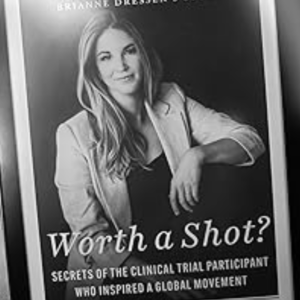 Was taking the Covid vaccine Worth a Shot? A new book by Caroline Pover, written on behalf of Brianne Dressen who lives in the USA, chronicles the horrific story of how she was severely injured by the Covid vaccine after enrolling on the AstraZeneca trial in November 2020. Caroline sensitively and professionally tells the heart wrenching, eye-opening account of how Brianne Dressen’s life was turned upside down and irreversibly changed forever the day she chose to volunteer to enroll on the UK-led AstraZeneca clinical trial. This book takes the reader along the rollercoaster ride of the devastating injuries caused by the vaccine and the blatant abuse of power by the healthcare system to denigrate, ignore, and cover up her injuries – along with many others labelled – as ‘misinformation’ spreaders by the medical-industrial-military complex. Every person on the planet was misled by governments, NGOs, regulatory agencies, corporations, Big Pharma, healthcare professionals, along with social and mainstream media. From how clinical trials are conducted to the lack of injury compensation, wide scale censorship, corruption and abuse of power, this book shows the myriad ways Brianne fought and continues to fight for truth and justice for the Covid-vaccine injured, who have been completely abandoned and often maligned by society.
The AstraZeneca Clinical Trial
In the introduction, Caroline Pover describes how she had been medically diagnosed with an adverse reaction to the Covid vaccine and was led to believe Brianne Dressen did not exist. It was only when she started posting on social media and heard about another woman who was dropped from a clinical trial because of an adverse reaction to the vaccine, that their paths crossed. Worth a Shot is a book based on real events that impacted on real people and is a narrative account of Brianne’s (Bri’s) story containing brutally honest struggles with how her life has changed irreversibly after the covid vaccine, including her plans to contemplate suicide. Bri had the perfect life: she was a fit, active lady who always pushed herself physically and mentally. She had a wonderful family life, married with two children with a dream house in the mountains. After having children, Bri set up her own preschool to help children who struggled in a typical educational environment. Then in 2020, Covid hit!
When the lockdowns happened and the talk of vaccine trials began, Bri wanted to help in any way possible with contributing to scientific advancements; once “Operation Warp Speed” was being regularly reported in the media, coupled with her husband’s scientific background, Bri felt excited to enrol in the new Covid vaccine trial set up by Oxford University in conjunction with AstraZeneca, which was recruiting in UK, Brazil, South Africa, and the USA. The opening in the USA was in Salt Lake City – just 40 minutes drive from Bri’s home. She had a phone interview with a trial representative for several hours to capture her medical history and was considered an excellent candidate for the trial. Things then went quiet, but out of the blue on 4th November 2020 – the day after the election – she was called into the trial. The consent form she signed was very thorough. It went through all the expectations and explained it was a double-blinded study and that so far 5,000 individuals had received at least one dose, and the side effects were mild to moderate but transient in nature. It also stated that if anyone did experience an adverse reaction they might be withdrawn from the study, but any medical treatment needed for reactions would be covered by AstraZeneca’s insurance policy. Bri took the vaccine, but tingling started within an hour of the injection.
Adverse Reaction
Bri’s reaction was severe. Tingling spread from below her right elbow all the way up her arm and shoulder, then to the other arm. The tingling got progressively worse and her eyes started to blur, and she saw double. Her hearing started to go muffled, but she assumed the symptoms would be gone by the next morning. However, her symptoms intensified, and now both legs were becoming weaker. She called the number on the consent form to report her reactions, but no one answered her call. Within days, she was confined to her bedroom, with drapes covering the window to shut out the light. Within weeks, her condition worsened so she saw a neurologist and visited an out-of-hours emergency clinic. Nausea, vision disturbances, tingling, extreme sensitivity to sound, limb weaknesses, as well as excruciating pain developed all over the body, including her teeth, stomach, bones, joints, legs and arms. She could not eat and lost 20 lbs within weeks. Her body seemed to vibrate and buzz from within constantly, and she could not bear anyone touching her, with extreme sensitivity to sound, light, and food. She spent weeks then months confined to her bed. She lost control of her bladder and her blood pressure was erratic. None of the pain medications helped.
Her husband and other family members and close friends helped with looking after the children and caring for her. Yet Bri and her husband did not want to broadcast these issues publicly when so many were struggling with Covid itself. Weekly and even sometimes daily visits to the hospitals baffled the doctors. Friends visited her but the visible transformation of her appearance shocked them, and she had to wear earplugs and sunglasses. Attempts at exercise were futile, as the pain was too unbearable. She visited multiple experts but to no avail. The principal investigator of the clinical trial suggested she might have multiple sclerosis (MS), but the trial clinic did not recommend any other specialists. Local neurologists recommended she visit the ER. The clinic staff told Bri that the ramifications were serious if she thought there was any possibility the vaccine had caused these symptoms. When she said her reactions were from the vaccine as she was a trial participant, most professionals were not interested and dismissed the symptoms as Covid. She had MRI scans but found nothing significant; there was nothing they could do. Bri was to report back to the trial clinic, which she did. They told her not to worry because AstraZeneca would reimburse all her medical costs – and they would be in touch soon. But no one contacted her.
No Diagnosis
She continued to go through the proper channels and medical experts to get answers. After a series of tests that ruled out MS and other neurological conditions, she was no closer to a diagnosis. By ploughing through scientific papers and doing their own research, Bri discovered post-vaccination transverse myelitis (TM), Guillain-Barre Syndrome (GBS) and acute disseminated encephalomyelitis (ADEM). Both TM and ADEM are conditions relating to inflammation of the spinal cord or central nervous system, which can lead to permanent damage. Despite Bri reporting this to the trial clinic, the trial was not put on hold. She was told to report everything back to AstraZeneca, which she did, but despite all the assurances, no one contacted her. Bri’s multiple trips to the hospital caused by the vaccine meant she was a burden to the healthcare system. Many physicians shrugged off her symptoms as psychiatric because none of the tests produced any explanation. She was put on antidepressants and gabapentin for neurological pain. Nothing had been put in place to deal with anyone who had an unexpected reaction to the vaccine.
On the next visit to her clinic, Bri hoped someone would be able to help her with her condition but was told no one could see her unless she signed a new consent form. She asked what was different about this form but they insisted they could not help her unless she signed it. Bri’s vision was so impaired that she could not read the form. She felt she had no choice but to sign it. Once she signed the form, two nasal swabs were taken and a blood test to confirm she did not have Covid, and she was discharged. Bri reached out to the CDC, and her husband filled out a VAERS report, but no one responded. Bri’s health deteriorated and the medical costs were mounting up, with assurances AstraZeneca would reimburse. After weeks of scouring the internet they discovered that IVIG (intravenous immunoglobulin) might be a possible treatment. When they showed this to the doctors and other experts, they were ignored and refused this treatment. The only interaction from AstraZeneca (via a third party) was that Bri was ‘unblinded’ from the trial at her request as she wanted to know if she had received the vaccine, which was later confirmed. The trial sponsor agreed she would not receive a second dose, but they offered no help or support about her continued deteriorating health.
Losing Hope
Exhausted and losing hope, Bri and her husband reached out to the NIH. They were surprised when a specialist neuroimmunologist, Dr Avinthra Nath, Director of the National Institute of Neurological Disorders and Stroke at the NIH, and a researcher at the National Institute of Allergy and Infectious Diseases (NIAID) who worked directly under Dr Anthony Fauci, responded with interest to learn more about Bri’s condition. An appointment was arranged and he seemed very sympathetic and gave the impression he was keen to help. Bri then learned the shocking news that the AstraZeneca vaccine was authorized for use throughout the UK. Publicly the trials were being celebrated as hugely successful, but Bri knew otherwise. She felt suicidal – she was a climber, skier, and dancer who was now a completely non-functioning member of the family barely able to leave her bedroom. Bri’s circle of friends started to diminish. Their savings were also being rapidly depleted because of the skyrocketing medical costs. What about all the assurances on the consent form? What happened to all the promises of the costs being reimbursed? Bri began to lose hope. A trip into nature with her sister that aimed to be a temporary distraction for her resulted in a candid but dark exchange. Her sister asked her to promise her not to kill herself. Bri replied “I cannot promise you that”. The chapter describes how she planned to take her own life, so she was less of a burden to her family. Mercifully, she changed her mind and instead directed her focus on finding and helping others who might be injured and experiencing the same nightmare she was going through.
The Many Injured
It didn’t take long before Bri joined support groups online. After some time she saw a posting from another lady who was also injured in the AstraZeneca trial. Finally, she could talk to someone who knew exactly what she was going through! Within a few days she found another clinical trial participant (Moderna trial) who also experienced similar debilitating reactions. In this patient’s case, she had her left lymph nodes removed as they were so swollen but she became bedridden owing to complications of the surgery. Bri befriended Dr Danice Hertz, a retired gastroenterologist who had developed Mast Cell Activation Syndrome (MCAS) following the Pfizer jab and was suffering ongoing allergic-type reactions including tinnitus, chest pains, and severe nerve damage to her face. Danice increased the number of patients referred to the NIH and Dr Nath for his study. Soon she was inundated with emails from others who had experienced adverse effects from covid vaccines. Sheryl Reutters was harmed by the Moderna jab, experiencing a severe neurological reaction, and soon became a close friend of Bri. Mary Johnson a front-line ER and critical care physician who was injured by the vaccine, and was driven out of her job and confined to her home. Kristi Dobbs and Candace Hayden were also damaged by the vaccine. Bri trusted the NIH to take care of all these injured and would talk to them each week to learn about their stories.
The number of people with vaccine injuries kept mounting and they were all being ignored by doctors and the drug companies. So, the group decided to create a Covid vaccine injury support group on Facebook. However, anyone publicly criticising the vaccines soon became labelled as ‘conspiracy theorists’ and more prominent healthcare workers with dissenting voices became known as the “Disinformation Dozen”. After taking a default position of always giving the benefit of the doubt, Bri was now beginning to realise they had been strung along for months. Her own children were starting to struggle at school, and were developing anxiety, and her son was afraid of leaving the house. Then Bri discovered Maddie, a 12-year-old girl who was completely healthy before receiving the Pfizer vaccine, who was left unable to walk or eat, incontinent, and with seizures and fainting episodes. Bri and the core group of vaccine injured decided enough was enough – they had to go public!
Going Public
They started to post their testimonies and videos about their experiences on the website; some of the stories were harrowing. The videos found their way onto TikTok and were receiving millions of views, as traffic to their website exploded, with over 300,000 views per week. More and more stories poured in from around the world. Facebook seemed to be where many of the support group interactions were residing. By early 2021, although Bri had yet to find anyone else injured by the AstraZeneca jab, in the UK reports of blood clots were flooding in. Slowly news reporters began contacting them and they promised to cover the stories of the vaccine injured along with statements from governments and drug companies. The group reached out to the CDC, FDA, and VAERS but no one received a significant response. How many others were out there with the same relentless pain, alone and with overpowering thoughts? Petitions were submitted to the FDA, CDC, VAERS, and the White House, after one lady who was part of the injured group took her own life. They went to the top, and contacted Dr Peter Marks, Director of the Centre for Biologics Evaluation and Research at the FDA. Word was now spreading among the vaccine-injured community that the NIH had been contacted about hundreds of people with adverse reactions.
Bri and her newfound friends detected a distinct unease among most doctors and nurses whom they engaged with during their multiple visits to the hospital. Bri spent a week at the NIH having multiple tests, which confirmed she had nerve damage in her legs and autonomic nervous system issues. She was diagnosed with “post-vaccine neuropathy”, and recommended IVIG therapy – the very treatment Bri had pleaded with the doctors to try but were ignored. One of Bri’s friend’s, Casey, was an NIH employee who had suffered severe neurological complications as a result of the vaccine. Casey met with Dr Nath, who had previously reassured them that they were documenting and researching all the injuries. When Casey then confronted Dr Nath about his research he flatly denied any such research was underway even though Bri had spent a week at the NIH having tests and being placed on the IVIG protocol. They had no choice but to get political, so they arranged a call with Wisconsin’s Senator Johnson who had been outspoken about the harms caused by the covid vaccines and the censorship, and had been critical of the lockdown policies. Bri was cautious of accepting Senator Johnson’s help because of how he had been portrayed, but on meeting him found he was full of kindness and willing to expose himself to attack on their behalf.
Senator Johnson agreed to hold a press conference. The vaccine injured community felt the politicisation of their health and ‘vaccine stance’ was very draining. One of the support groups that came together with Bri’s group was named “A Wee Sprinkle of Hope” to reflect the culture of compassion. The real objective of the vaccine injured movement was to help people who were suffering. No headline news from the press conference was on the mainstream media, it was mentioned as an aside before going to the next item. Every vaccine injury was not misinformation and their abandonment by the manufacturers was not misinformation. Instead, the news reporters centred the stories not around the vaccine injuries, but around the fact it was led by what they claimed was a crazy, right-wing ‘conspiracy theorist’: Senator Johnston.
Censorship
Then the censorship started. Within 24 hours of the press conference, Facebook began shutting down the support groups. The injured gathered together and then joined with A Wee Sprinkle of Hope. Thousands had joined, and the group was getting larger by the day. Then 5 days after the press conference, and without warning, Facebook shut down the largest Covid vaccine injury support group in the world. Now the injured could not even talk to each other! The social media platform was actively restricting people suffering from extreme physical and emotional pain from communicating with each other. Soon the group decided to develop code words so they could still communicate under new names. Then a mainstream news article exposed one of the code words, and a new group of 30,000 members was shut down too! Warnings appeared beneath people’s posts on their own pages urging viewers to go to Facebook’s Community Guidelines on ‘accurate’ information about vaccines. The warnings also deterred other Facebook users, suggesting they should not interact with ‘repeat offenders’ posting misinformation about vaccines. People’s posts were also being ‘shadowbanned’ or hidden by Facebook algorithms.
Bri was eventually paid a measly $590.20 from AstraZeneca, which coincided with her learning of other injured people in the UK in early 2021. The injured were getting mixed messages from the NIH. On the one hand, they were paying for people’s tests and diagnosis, but then they denied any research was being done. Eventually Dr Nath stopped responding to emails and the FDA stopped communicating with Danice. The NIH then shut down the entire study of the covid vaccine injured and cancelled Bri’s upcoming trip to the NIH. Some of the “Disinformation Dozen” also had their social media accounts shut down or restricted. By now, authors, doctors, patients, activists and even celebrities were being censored. Bri’s husband studied all the clinical trial study reports that had come out, matching the injured participants they knew of to the recorded reactions and found most had been downplayed or even omitted.
It was becoming clear that the institutions they had previously trusted, such as the media, science, pharmaceutical companies, and the government were hiding the truth or outright lying about Covid vaccine adverse reactions. They were being silenced. Free speech was officially over. But another threat was looming: vaccine mandates! The idea of mandating Covid vaccines was terribly distressing to many of the injured. They knew first hand that no one would be there for anyone if they developed a severe reaction. Being fully vaccinated meant you could go to work, visit restaurants or travel without restriction. Those same ‘privileges’ would not be open to the unvaccinated. The coercion, propaganda, bribes and incentives to get the vaccines was extraordinary. Next they were going to jab children.
Eventually, Bri discovered Dr Doshi, an Associate Professor at the University of Maryland with an interest in the drug approval process and an expert in clinical trials, who was also a Senior Editor at the British Medical Journal. Bri and others set up a call with him, and he suggested organising a roundtable discussion in Washington, with senators, health officials and all media. Other pharmaceutical policy experts were brought in, and Bri and her friends started to gather the vaccine injury testimonials. Fundraising was needed to pay for the injured to travel to the event. Some organizations donated together with crowdfunding efforts that raised £37,000 to pay for everyone’s travel and accommodation. The roundtable event at the Senate lasted over 4 hours, which sparked some media interest. The clinical trial company offered a single ‘full and final settlement’ payment to Bri of £1,243.30. This amount did not even cover one-half of the cost of a single IVIG infusion. It seemed the second consent form that Bri had signed (under duress) had significant changes that included all the symptoms she had suffered since the jab, effectively invalidating the previous consent form. After meeting another vaccine victim, Dr Joel Wallskog, Bri and others formed a new group: React19.
Going Global
A Pfizer Whistleblower, Brook Jackson, had been a regional director at one of the clinical trial sites and expressed serious concerns about how the Pfizer Covid vaccine trial was conducted. Despite the stories some mainstream channels promoted about vaccine misinformation and “anti-vaccine propaganda”, clips of the roundtable event were going viral. Many of the vaccine injured, including healthcare professionals and doctors were risking their careers by speaking out against the vaccines. While React19 was originally set up to support the American’s who were injured, it ultimately became a hub for the vaccine injured all over the world. What became clear was that vaccine injury support groups before the covid vaccines faced similar medical gaslighting. The difference this time was never had a vaccine been administered to so many people at the same time – an estimated 5 billion globally – so the global repercussions would be huge. A chat group was initiated for React19, which grew with international leaders, creating a unified effort. Charlet Crichton set up the UK-based UKCVFamily around the same time as React19, as the healthcare system in the UK is different to the USA and more people in the UK had been given the AstraZeneca vaccine. Both groups now collaborated.
It was also becoming clear that as the vaccine injured community grew, the adverse reactions in all the trials had been hidden or misrepresented. Throughout her journey, Bri had started out searching to find the support she needed, but since taking on a leadership role in React19 she was now the support. The end of the book chronicles how finding allies was not as easy as some might assume. There was still no research paper from Dr Nath from the NIH, and when it finally did materialize on a preprint publication, it only published data from 24 patients (despite having over a hundred cases). Furthermore, any links to the adverse events of the vaccine were completely downplayed. When the injured were invited to speak at events by ‘advocates’ on behalf of the injured, often it was more for appearances. Some people in the freedom movement wanted to raise their profile through association with the vaccine injured, but were not directly offering help. Gradually the environment changed so that it was more ‘acceptable’ to discuss vaccine injuries. The film produced by Mark Sharman (former ITV and BSkyB News Executive) “Safe and Effective: A Second Opinion” released on YouTube in October 2022, was removed from the platform within hours following its mention in a Parliamentary debate, despite amassing over a million views!
Find the Science, Find the Money
The immunization surveillance systems such as VAERS, Yellow Card report scheme and others were not working. It is estimated fewer than 1% of adverse reactions are even logged on these sites and so the true nature and scale of such reactions are far greater than captured on these systems. A staggering statistic of the VAERS system is that in the 30 years of vaccine injury, 50,000 reports had been logged. In 2021, there were 750,000 reports of adverse reactions. In other words, the covid vaccine reports in 1 year outnumbered all adverse event reports from the prior 30 years combined. Many of the VAERS reports were not being followed up or being processed properly. Studies submitted to journals that had any data that questioned the vaccines, were often rejected from multiple journals.
Compounding the issue, the 1986 US National Childhood Vaccine Injury Act (NCVIA) removed any financial liability from the manufacturers if any deaths or injuries were caused by vaccines. Moreover, vaccine damage payment schemes, such as the VICP in the USA, were wholly inadequate as proving vaccine was the cause meant hardly any claims were successful and any moderate payments often took years. The PREP (Public Readiness and Emergency Preparedness) Act established in 2005, also granted pharmaceutical companies immunity from federal or state litigation, in circumstances such as a pandemic. So, the companies making the vaccines have no responsibility for damage and little if any incentives to carry out scientific research into any injuries caused. The vaccine injured had to find the “science to follow” rather than “follow the science”. A combination of the “fact-checkers” who demolished any “anti-vaccine” testimonials and that medical reimbursement was non-existent, the out-of-pocket medical expenses the vaccine injured faced often exhausted personal savings to the point that many were refinancing or selling their homes.
Conclusion
The fear-mongering that had contributed to many of those injured by the vaccine to choose to get vaccinated in the first place was now continuing for this marginalized section of society. Those injured by the Covid-vaccine also learned from people who had been injured by past vaccines. The censorship tale was all too familiar, but the React19 community started doing their own research and discovered alternative therapies – be it pharmaceutical, natural, physical, spiritual – and lifestyle adjustments could help with their symptoms. The Covid vaccine rollout left a trail of devastation and damage in its wake. Social cohesion and disconnection also set in with the vaccine-injured ostracised from society. Whether vaccinated or unvaccinated, most people have been affected by the loss of relatives, friendships, relationships, and often life-long careers and financial autonomy. For many, finding support in such dark times has literally been the difference between life and death. We all need healing from the collective trauma of the Covid era, which is still ongoing. By sharing this poignant story of the many Covid-vaccine injured, we hope this will inspire more kindness, connection, compassion, and courage to be open about the truth. That is Worth a Shot!
Worth a Shot?: Secrets of the Clinical Trial Participant Who Inspired a Global Movement―Brianne Dressen’s Story, told by Caroline Pover, was published in November 2024 by Skyhorse Publishing, ISBN: 9781510783461.
All proceeds from the book go to UKCVFamily and React-19, support vaccine -injured in UK and worldwide.
CHD, Doctors Ask Supreme Court to Hear Medical Free Speech Case
By Michael Nevradakis, Ph.D. | The Defender |March 6, 2025
Children’s Health Defense (CHD), Physicians for Informed Consent and a group of doctors who sued the Medical Board of California after it disciplined them for allegedly spreading COVID-19 “misinformation” have asked the U.S. Supreme Court to review their case.
The plaintiffs in Kory v. Bonta submitted their petition on March 1, following the November 2024 dismissal of their case by the 9th U.S. Circuit Court of Appeals.
California Attorney General Rob Bonta is named in the suit, along with the state’s medical board.
The lawsuit, filed in January 2024, is a follow-up to a previous complaint filed in 2022 and an amended suit filed in 2023, which challenged California’s Assembly Bill (AB) 2098 — a law allowing the medical board to discipline doctors who give “false” information about COVID-19 for engaging in unprofessional conduct.
A federal judge blocked AB 2098 in January 2023, and the law was later repealed. However, according to the lawsuit, the Medical Board of California is still targeting “COVID misinformation” and is threatening physicians with disciplinary action.
Three medical professionals — Dr. Brian Tyson, a board-certified family practitioner who owns an urgent care facility; Dr. LeTrinh Hoang, a pediatric osteopathic physician; and Dr. Pierre Kory, president emeritus of the Independent Medical Alliance, launched the lawsuit.
According to the petition to the Supreme Court, the Medical Board of California and the Osteopathic Medical Board of California, “with the assistance of the California Legislature,” have threatened disciplinary actions against the plaintiffs and other physicians for offering information to patients that departs from official COVID-19 narratives.
In April 2024, a federal district court rejected the plaintiffs’ request for an injunction against the medical board. The 9th Circuit upheld the ruling in November 2024. In January, the Supreme Court rejected the plaintiffs’ emergency application for an injunction.
Lawsuit hopes to set precedent that ‘informed consent is free speech’
The case seeks to resolve contradictory precedents from two federal appeals courts on whether the First Amendment protects physicians’ communications to patients — “a question that is particularly significant in a field like medicine, where scientific understanding is continually advancing and rarely settled.”
In a Physicians for Informed Consent press release, Rick Jaffe, who represents the plaintiffs, said the lawsuit “touches on the foundational rights of professionals to share knowledge and opinions essential for patient autonomy and informed consent.”
Tyson said patients cannot provide informed consent if their physicians are denied the opportunity to speak freely.
“We want doctors and all providers to be able to discuss risks and benefits with our patients, be able to speak out against things that are wrong, and be heard when breakthroughs are made,” Tyson said. “The hope is the Supreme Court will set the precedent that informed consent is free speech.”
Supreme Court asked to decide between competing legal precedents
According to the petition, federal courts have established competing legal precedents relating to medical free speech.
In a 2022 decision in Tingley v. Ferguson, the 9th Circuit upheld the ability of professional boards in Washington to restrict members’ speech, arguing this is similar to the boards’ enforcement of “other restrictions on unprofessional conduct.”
But in a 2020 decision in Otto v. City of Boca Raton, the 11th Circuit struck down local ordinances that limited the speech of therapists and counselors, finding that such content-based and viewpoint-based restrictions violate the First Amendment, which has no carveout for controversial speech.
Tyson said the California Medical Board’s disciplinary proceedings against him jeopardized his career. “I had to defend my position against the [board] and almost lost my license … That would have been devastating to the community I serve and to all those I employ.”
Jaffe said Kory v. Bonta is similar to another First Amendment case relating to medical speech, Stockton v. Ferguson. Filed in March 2024, the lawsuit seeks “to protect the right of physicians to speak” and the public’s right to hear such speech.
CHD is a plaintiff in the lawsuit, as are several doctors facing disciplinary proceedings by the Washington Medical Commission for their public statements criticizing mainstream COVID-19 narratives. Basketball legend John Stockton is also a plaintiff, advocating for the public’s right to access and listen to “soapbox speech.”
In January, the Supreme Court denied the plaintiffs’ emergency appeal in Stockton v. Ferguson. The case remains active before the 9th Circuit. Oral arguments are scheduled for May 14, Jaffe said.
“The two cases represent the entire spectrum of cases involving what physicians say and would allow the court to give a definitive and comprehensive answer to whether and how much the First Amendment protects professionals when they communicate to patients and the public,” Jaffe said.
According to Physicians for Informed Consent, four justices must agree before the full court can hear Kory v. Bonta. If the Supreme Court decides to take the case, it will hear Kory v. Bonta in October.
Jaffe said the Supreme Court may ultimately jointly consider Kory v. Bonta and Stockton v. Ferguson. He credited CHD with its role in supporting both cases.
“We hope to establish the constitutional right of healthcare providers to speak out against the prevailing medical and scientific consensus about COVID-19, as well as whatever public health challenges face the country in the future,” Jaffe said.
This article was originally published by The Defender — Children’s Health Defense’s News & Views Website under Creative Commons license CC BY-NC-ND 4.0. Please consider subscribing to The Defender or donating to Children’s Health Defense.
Featured Video
Seyed M. Marandi: Toward Total War in the Middle East
or go to
Aletho News Archives – Video-Images
From the Archives
The Geopolitics behind the War in Yemen (I)
By Mahdi Darius NAZEMROAYA | Strategic Culture Foundation | 30.03.2015
The United States and the Kingdom of Saudi Arabia became very uneasy when the Yemenese or Yemenite movement of the Houthi or Ansarallah (meaning the supporters of God in Arabic) gained control of Yemen’s capital, Sanaa/Sana, in September 2014. The US-supported Yemenite President Abd-Rabbuh Manṣour Al-Hadi was humiliatingly forced to share power with the Houthis and the coalition of northern Yemenese tribes that had helped them enter Sana. Al-Hadi declared that negotiations for a Yemeni national unity government would take place and his allies the US and Saudi Arabia tried to use a new national dialogue and mediated talks to co-opt and pacify the Houthis.
The truth has been turned on its head about the war in Yemen. The war and ousting of President Abd-Rabbuh Manṣour Al-Hadi in Yemen are not the results of «Houthi coup» in Yemen. It is the opposite. Al-Hadi was ousted, because with Saudi and US support he tried to backtrack on the power sharing agreements he had made and return Yemen to authoritarian rule. The ousting of President Al-Hadi by the Houthis and their political allies was an unexpected reaction to the takeover Al-Hadi was planning with Washington and the House of Saudi. … continue
Blog Roll
 Aletho News
- Pakistan-Iran talks secure LNG shipment to Islamabad through Hormuz
- Black Sea grain crisis puts global wheat supplies under pressure
- IRGC air defenses destroy another US MQ-1 drone over Strait of Hormuz
- Imran Khan’s entire immediate family detained in Pakistan ahead of mass protest demanding his release
- EU nation detains former presidential frontrunner
- Leaked: Britain’s Sham Conviction Of Hashim Thaci
- Seyed M. Marandi: U.S. Strike Imminent – Toward Total War in the Middle East
- Russia Voted Under Fire. Washington Is Loading the Tankers.
- 12 Things Your Oncologist Was Trained Not to Tell You
- Anthrax Attacks Paved Way for COVID-Era ‘Junk Drugs and Vaccines’
- If Americans Knew
- An error has occurred; the feed is probably down. Try again later.
- No Tricks Zone
- 2025 Nature Paper Claiming Worsening Global Drought Gets RETRACTED …Heavily Flawed
- New Study: ‘Global Drought Shows No Detectable Recent Acceleration Under Climate Warming’
- Economic Masterminds: German Socialists Suggest Taxing Productivity Gains Stemming From Using AI
- The South China Sea Has Not Been Cooperating With The Climate Change Narrative
- Energy Crisis: Germany Enters Heating Season With Historically Low Gas Reserve Fill Levels
- New Study: The Antarctic Ice Sheet Gained Mass From 2020-2024 Due To Staggering Snow And Ice Accumulation
- Study: Ocean Heating Rates From Thousands Of Years Ago ‘Dwarf’ Modern Ocean Heating Rates
- Climate Extremists Target, Attack Large-Scale Power Grid Infrastructure In Germany!
- New Study: Antarctic Ice Melt Has Contributed Less Than 1 Centimeter To Sea Level Rise In The Last 30 Years
- Fear Of Debate: Alarmist German Climate Scientist Calls On Mainstream Media To Discredit Skeptic Voices
 Aletho News