Australia’s Latest Censorship Bill Threatens Big Fines Over Online “Misinformation”
By Didi Rankovic | Reclaim The Net | September 12, 2024
Australia on Thursday introduced a new version of the upcoming legislation – slated to become law by the end of the year – targeting tech companies that are not tackling what the authorities decide to consider misinformation and disinformation.
We obtained a copy of the bill for you here.
While the government explains the new bill as necessary to “crackdown on misinformation” – opponents see it as just the latest example of the government scheming to crack down on online speech.
The ruling Labor party is tabling this latest draft as a way to address previous criticism of the bill. It would give the Australian Communications and Media Authority (ACMA) the right to monitor online platforms and enforce new codes or standards on the industry – in case their actions are seen as inadequate under the “self-regulating voluntary” rules.
So much for the “voluntary” component of the narrative (also to be found in various EU directives). Long story short, in Australia with the new proposal of the bill – if tech platforms are found to be in breach of it, they will be fined the equivalent of 5% of their global revenue.
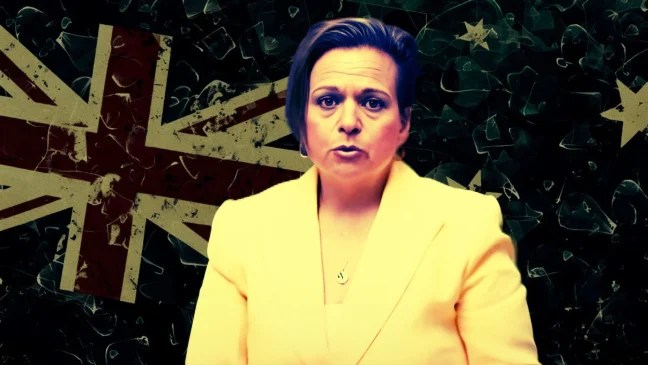
Minister for Communications Michelle Rowland is behind this draft as well, and this time around she is sugarcoating it as featuring “a very high threshold” for serious harm and verifiably false content.
Sadly, the reports out of Australia do not dwell on what exactly passes off as “high threshold” in Australia these days.
Instead, there are a lot of quotes that all seem to come from one and the same global memo. And let nobody conflate this kind of legislative effort with, say, government-empowered censorship. Michelle Rowland said not to.
“This is not about individual pieces of content, it’s not about the regulator being able to act on those, it’s about the platforms doing what they said they’ll do,” the official is quoted as saying.
In other words, platforms better self-censor (the exact same sentiment behind all those “voluntary codes”) – to save the Australian government the grief of openly censoring them instead.
Meanwhile, Rowland made it clear that the platforms, at least in her country, are seen as curators, rather than “passive purveyors of content.” … When that suits the government, that is.
Bill Gates Wants AI-Based Real-Time Censorship for Vaccine “Misinformation”
By Didi Rankovic – Reclaim The Net – September 11, 2024
Microsoft founder Bill Gates continues with his crusade, as part of the mission of the Gates Foundation, to not only proliferate the use of vaccines but find new justifications to in effect, force them onto those skeptical or unwilling.
One of the methods Gates has clearly identified as helpful in achieving this goal is hitching his “vaccine wagon” to the massive, ongoing scaremongering campaign and narrative around “misinformation” and “AI.”
Gates spoke for CNBC to reveal he may be a vaccine absolutist – but not a free-speech one. He also didn’t sound convinced that America’s Constitution and its speech protections are the right way to go when he brought up the need for “boundaries” allowing some new “rules.”
Gates’ argument incorporates all the main talking points against free speech: misinformation, incorrect information (aka, fake news), violence, and online harassment. And, he sneaked in vaccines in there, while making a case for “rules” in the US as well.
“We should have free speech, but if you’re inciting violence, if you’re causing people not to take vaccines, where are those boundaries that even the US should have rules? And then if you have rules, what is it?” Gates is quoted as saying.
He was evasive on who the authority to introduce that might be, but he clearly wants censorship and wants it to act swiftly. “Is there some AI that encodes those rules because you have billions of activity and if you catch it a day later, the harm is done,” he said.
In case somebody happens to not like Gates, and his lecturing the entire world what it should and shouldn’t do, they’re out of luck: he appears to be on a press tour to promote a Netflix “docuseries” that will have no less than five parts, and is called, “What’s Next? The Future With Bill Gates.”
But looking back at “the past with Bill Gates” is never a bad idea. We can see Windows, which he now tells CNBC he was allegedly naive about and thought it would only be used for “productive and responsible purposes” as most people would want to have a computer at home.
What they got with Windows, however, is a virus-laden operating system, “a menace to society” in its own way, going decades without proper innovation, while Microsoft was seen by critics as going after open-source competition like a monopolistic, anti-competitive corporate bully.
But here is Gates now, to tell us what our future should look like.
Fighting the ‘Middle State’
By Brad Pearce | The Libertarian Institute | September 10, 2024
From around the middle of the twentieth century, federal agencies tasked with law enforcement, intelligence gathering, and various types of “defense” have accrued overwhelming power in the United States. Democrats, who now worship such agencies, may wail at the term “Deep State” and the idea that they are nefarious. But regardless, the FBI, CIA, and myriad other “three letter agencies” are immensely powerful and reside outside of the political process which the public participates in.
Perhaps the John F. Kennedy assassination was a coup, perhaps it wasn’t. But there is little doubt that in the immortal words of Senator Chuck Schumer, these agencies have “six ways from Sunday of getting back at you.” While President Donald Trump may give lip service to fighting the Deep State, his support of what I called the “Trump-Biden World War III Bill” funding Ukraine, Israel, and Taiwan demonstrates that he knows the limits of permitted resistance to their power and that they will ultimately win. While it is probably impossible to fight the Deep State within the legal democratic process, we also have an enemy in “the Middle State,” the administrators who operate in the open, and that can potentially be vanquished from within the system.
It is best to think of this Middle State as playing the role of the clergy under feudalism. In fact, this is a direct parallel since the kind of work they do is called “clerical,” having historically been done by clergy. The lack of formal power of the Catholic Church in the United States means we have never had the clericalism and anti-clericalism of the Latin countries, but perhaps it is time for our anti-clerical moment. You can argue that this is different because the clergy performed a primarily religious function, but this disregards just how much secular liberals worship the government.
Religious or not, the record of gutting the clergy’s power without collapsing into communism is better than that of removing the nobles (who are more akin to the Deep State). Most of northern Europe was able to remove the power of clergy during the reformation, though no example is as striking as Henry VIII of England closing the monasteries. Of course, over time a more powerful secular bureaucracy arose, but it was a long process. In the modern era, President Ronald Reagan was able to fire the federal air traffic controllers for striking, a move no president has survived (be that politically or mortally) making against any intelligence agency. This should give us hope that getting at least some of our country and freedom back is a possibility.
Some months ago The New York Times put out a short video titled, “It Turns Out the ‘Deep State’ is Actually Kind of Awesome,” which was targeted at people whose brains are already mush. The basic premise was to go around talking to people with relatively anodyne government jobs and asking these mundane bureaucrats how it felt to be classified as enemies of the people by Donald Trump. No attention was given to the parts of the government that are secretive or dangerous, and the message was that these are “public servants” and not “unelected bureaucrats.”
While some of these jobs are necessary to run a government, administrative bloat is consuming our society and economy, with our terminally “underfunded” schools, which always have money for new administrators, being just one example. The absurdity of the press telling us to appreciate the selflessness of this class is that salaries, benefits, and pensions are much higher than comparable jobs in the private sector, all with much better job security, so they are not sacrificing anything. As has historically been common in mature states which become ever more corrupt, our clergy’s power has completely outstripped that of the laity in a way which greatly harms the common man. Further, these tax eaters are among the biggest supporters of the growth of government, and are the ones who actually do most of the work of harassing and oppressing us. Reigning this in should be a political priority. The fact that they are generally Democratic partisans is an advantage since it gives the other faction a meaningful self-interest in fighting them; it’s the one time politicians can be incentivized to do something useful.
Though it has been far from perfect, Elon Musk’s acquisition of Twitter provides a compelling demonstration of the broader situation. He fired over half of the Twitter workforce upon taking power and the website continued to function, even if there has been some problems and Musk’s mercurial nature provides its own annoyances. Like the government and the rest of our society, Twitter had a large class of people who didn’t do anything a normal person could identify as useful. Instead, their job was to harass and control the users in a way that made the experience much worse for the majority in favor of their narrow class interests. They were certainly self-important, but not important in the normally understood sense of the word.
As at Twitter, there is every reason to believe much of our government bureaucracy could be gutted and ultimately do better at their core tasks. Hopefully, this would inspire the private sector to follow suit and purge its own clerics. Regulatory requirements do become a problem in any program to reduce employee numbers, and we know that government career bureaucrats will apply them maliciously in this circumstance, but major cuts to regulations would be a key part of any program to go after the bureaucracy.
It is fair to be “black pilled” about fighting the CIA or getting rid of the warfare state. However, the offense taken about Republican vice presidential nominee J.D. Vance’s “joke” that miserable, childless cat ladies who work for the government are ruining society shows that this class is simultaneously powerful and vulnerable. They may have unions and a sympathetic media and a political party, but the Middle State does not have the power to go around blackmailing, prosecuting, or assassinating everyone of significance who may oppose them. Our entire system is designed to ensure the Deep State maintains power, but it is a different matter for the Middle State. It would require determination and decent political leadership to make it a reality, but the Middle State, major enemies of freedom in their own right, can be defeated within the confines of the current political system, and deserve to be.
UK’s Caroline Dinenage “delighted” to keep embarrassing herself
By Didi Rankovic | Reclaim The Net | September 11, 2024
The UK has a new/old chair of the parliament’s Culture, Media and Sports Committee – and she is yet another champion of (obliging) Big Tech, and a veteran in the “war on disinformation,” but also attempts to demonetize “disfavored” public figures.
Caroline Dinenage keeps failing upwards: she has just been reelected to this role, after last year embarrassing herself by trying to pressure X and Rumble, and other platforms and media to demonetize actor Russell Brand because of anonymous allegations against him.
The Committee that scrutinizes the activities of the Department for Culture, Media and Sport (BBC included), has a Sub-Committee specifically focused on what are considered online harms and disinformation, as well as UK’s sweeping censorship law, Online Safety Act.
It is from this position that Dinenage last fall decided it was a good idea to turn to X with the demand to cut Brand off from his revenue on the platform because of the (to this day unproven) accusations.
X refused. And the company explained why to the British MP in a letter that underscored commitment not only to free speech, but also X’s own terms of service.
“We do not take action on accounts where they have not violated our own rules or local laws (Brand was not at the time, and is still not charged with any crime). This is essential to protect free expression on the service,” the letter read, adding that all, including monetized content, is subject to X’s rules and user agreement.
X wasn’t the only platform Dinenage went to in a bid to swiftly deprive Brand of money: YouTube was one of them, and lo and behold, this one went along, demonetizing Brand in October 2023. All this happened before the alleged victims and the alleged perpetrator had undergone any due process.
And for a British MP to pressure platforms to punish someone essentially based on hearsay at that point is what famed journalist Glenn Greenwald called “preposterous.”
Rumble was another platform Dinenage urged to demonetize Brand last year. That would be a no, ma’am – was the essence of the free speech video platform’s response to Dinenage.
“We regard it as deeply inappropriate and dangerous that the UK Parliament would attempt to control who is allowed to speak on our platform or to earn a living from doing so,” Rumble’s letter said, among other things.
But now, Dinenage – once a recipient of a non-monetary grant from Google – shared that she is “delighted” to continue where she left off with the previous parliament’s Culture, Media and Sports Committee.
Pro-War Lobby Attacks Alleged ‘Russian Influencers’
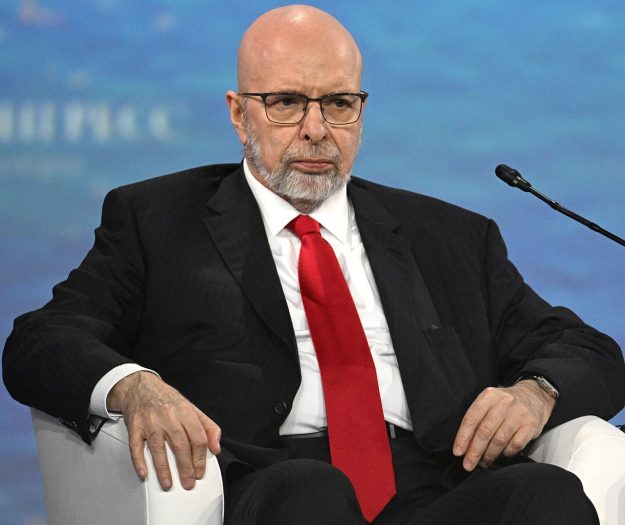
Photo Credit: http://www.kremlin.ru
By Ted Galen Carpenter | The Libertarian Institute | September 10, 2024
In recent weeks, there has been a surge of allegations that Moscow has long orchestrated an illegal campaign to influence U.S. public opinion. On September 4, 2024, the U.S. Justice Department charged two Russian media executives with an alleged scheme that authorities say illegally funneled millions of dollars to a Tennessee-based company called Tenet to create and publish propaganda videos that subsequently racked up millions of views on American social media. In a separate legal action, prosecutors seized thirty-two Russian-controlled internet domains that were used in a state-controlled effort called “Doppelganger” to undermine international support for Ukraine. As an aside to such legal maneuvers, U.S. officials contended that 1,800 Westerners, including twenty-one Americans, were guilty of acting as “influencers” on behalf of Russia.
The Justice Department filed an even more high-profile case the next day, accusing Dimitri Simes, founder of the Center for the National Interest, and his wife Anastasia, of illegally accepting more than $1 million in salary and other benefits from the state-owned Channel One Russia television station and trying to conceal the payments.
The Joe Biden administration is shamelessly hyping the prosecutions to smear anyone who criticizes or even questions U.S. policy towards Russia. Wall Street Journal columnist Holman Jenkins notes that Russian propaganda efforts in the United States have been spectacularly ineffective over the years. Nevertheless, Attorney General Merrick Garland, in announcing the latest prosecutions, asserted that “Russian disinformation is ‘a bigger threat’ than ever.” Garland’s smears were often stunningly vague, though. For example, he conceded that “the Kremlin-influenced U.S. influencers were unaware they were benefiting from Russian money.” That statement comes alarmingly close to contending that pro-Russian “influencers” were unintentional criminals. Garland stated, for example, “subject matter and content of many of the videos published by the company [Tenet] were often consistent with Russia’s interest in amplifying U.S. domestic divisions.” Such a vague standard also gives an administration virtually a blank check to harass its ideological or political opponents.
There were several suspicious aspects about the Justice Department’s moves. One was the timing. The indictments took place just days before the scheduled debate between Republican presidential nominee Donald Trump and Democratic presidential nominee Kamala Harris. The inflammatory tone in media articles from The Washington Post and other establishment publications dealing with these new prosecutions even more strongly suggests that partisanship is at play. For example, the Post’s headline read: “Trump-aligned Russian TV host charged in alleged sanctions scheme.”
However, there also seemed to be more than petty partisanship involved. Dimitri Simes, in particular, had long been an irritant to hawks in America’s national security state. His efforts to improve relations between Washington and Moscow especially were deeply resented by Russia haters in the powerful pro-war lobby. That hostility was magnified because of the prominence that The National Interest had achieved under Simes’ leadership.
The Biden administration’s ongoing campaign to squelch dissent about Russia policy is profoundly menacing and worrisome. I have published several articles in The National Interest over the years and have been a contributing editor to that publication. Given my interactions with Dimitri Simes, I have extensive doubts about whether he is guilty of the charges against him.
But even in the unlikely event that the charges are accurate, there are other, more fundamental issues that should concern all Americans. The statutes that he is accused of violating are sufficiently vague as to pose a threat to freedom of speech, in particular badly needed debates on numerous international issues like the tense relations between Russia and the United States. Could, for example, publishing an article in The National Interest or participating in a discussion sponsored by the Center inadvertently violate pertinent statutes? What about a paid interview? How could an author or participant be confident one way or the other? The mere existence of the Foreign Agents Registration Act (FARA) and various sanctions laws directed against specific countries pose an intolerable mess to the First Amendment.
The overall rationale for prosecuting alleged “influencers” should offend every American who believes in freedom of expression. Preventing American citizens from accessing pro-Russian viewpoints is inappropriate in what purports to be a free, democratic society. That is true even if the Russian government is funding and directing such propaganda.
Moreover, Washington’s hypocrisy on the issue is truly breathtaking. The U.S. government directly and through front groups spends billions of dollars each year propagandizing foreign audiences with material that, not accidentally, also frequently ends up impacting domestic opinion. There is credible evidence that both U.S. and foreign journalists have been paid by the CIA to disseminate Washington’s propaganda. Evidence has even emerged that (primarily in Middle Eastern countries) the United States government established bogus “independent” media outlets to serve the same purpose.
Beyond such mundane measures, the U.S. propaganda apparatus has developed an especially close and unhealthy relationship with its Ukrainian counterpart. Washington has even funded and promoted Ukrainian government agencies that target and harass American critics who dare seek an end to NATO’s proxy war against Russia. The latest Justice Department actions suggest that Washington’s ugly campaign remains intact.
It is especially ironic (as well as infuriating) for U.S. officials such as Attorney General Merrick Garland to grouse about Russia’s efforts to reduce U.S. and international support for Ukraine. The Biden administration has waged a massive effort to echo and amplify Kiev’s propaganda in the United States as well as around the world. Most galling of all, the administration has worked with the Ukrainian government to suppress dissent in the United States about U.S. policy on the Russia-Ukraine war. In a truly free society, citizens must not be threatened by their own government for failing to support a particular foreign policy. The latest Justice Department prosecutions violate the most fundamental features of a democratic system.
Demand for Justice: World Council for Health urges the immediate release of Dr. Reiner Füellmich
World Council for Health | September 10, 2024
The international human rights community is rallying to demand the immediate release of Dr. Reiner Füellmich, a lawyer from Germany who has been in pre-trial detention for over 10 months. Arrested under dubious circumstances at Frankfurt Airport on October 13, 2023, Dr. Füellmich’s case has raised serious concerns regarding the legality of his detention and the integrity of the judicial process. Of the initial 18 charges made against Füellmich, only one remains regarding personal loans.
According to German law, the maximum duration of pre-trial detention is six months, as outlined in 121 para. 1 of the German Code of Criminal Procedure (StPO). “Special or important reasons for an extension of pre-trial detention beyond the 6 months are not apparent.” This assertion highlights the urgent need for a re-evaluation of Dr. Füellmich’s ongoing detention.
In a significant development, it has come to light that Dr. Christof Miseré, one of the defense attorneys representing Füellmich, obtained a dossier from the German secret services. This document explicitly outlines a directive to halt Füellmich by any means necessary. Alarmingly, it details a strategy to infiltrate individuals within his inner circle of collaborators. Furthermore, the dossier reveals a clear objective: to convict Fuellmich, thereby obstructing any future aspirations he may have for public or political office. This information raises serious questions about the lengths to which authorities may go to silence dissenting voices. This dossier, given to Miseré by a whistleblower, demonstrates that Reiner Füellmich was already under special surveillance as far back as 2021.
Adding to the controversy is the manner of Dr. Füellmich’s arrest. He was reportedly “kidnapped” from Mexico, where he had been residing legally. A German and a European arrest warrant were issued against him, ostensibly to circumvent lengthy international extradition procedures. The Göttingen public prosecutor’s office collaborated closely with officers from Interpol and the Federal Criminal Police, orchestrating a deceptive plan to lure Dr. Füellmich to the Mexican consulate under false pretenses, an act that raises significant legal and ethical questions about the conduct of authorities involved.
Despite multiple assertions from both his defense and Dr. Füellmich himself regarding the illegality of his deportation, these concerns have been largely dismissed in court. Lawyers argue that the circumstances surrounding his abduction and subsequent detention underscore critical national and international legal issues that must be addressed.
Currently held in Rosdorf Prison near Göttingen, Dr. Füellmich faces harsh and isolating conditions. He is segregated from other inmates, permitted only solitary yard time, and restricted in his communication with the outside world, limited to a mere three hours of private visits per month. This punitive environment raises further questions about the treatment of individuals in pre-trial detention, particularly when contrasted with the lack of substantial evidence to justify such measures. On June 11, Reiner Füellmich was once again placed in solitary confinement, a status he continues to endure. This isolation means he is prohibited from any interaction with other inmates. The authorities justified this extreme measure by alleging that Füellmich had been providing legal advice to his fellow prisoners, a situation deemed unacceptable by those overseeing his incarceration. Füellmich is required to eat in isolation and is granted just one hour each day for outdoor activity, which is also spent in complete solitude. He is not allowed access to the gymnasium and can only use the telephone after other inmates have returned to their cells. This strict regimen underscores the severity of his confinement and the restrictions imposed upon him.
The charges against Dr. Füellmich include embezzlement, yet many observers, including his defense, contend that this trial has transcended ordinary judicial proceedings and has become a politically motivated effort to silence a prominent critic of COVID-19 measures. The trial has seen troubling shifts in legal parameters, further complicating the case and undermining the principles of justice.
In light of these serious allegations and the apparent disregard for due process, World Council for Health is calling for the immediate release of Dr. Reiner Füellmich. This situation not only affects one individual but also serves as a stark reminder of the potential for political influence to infiltrate the judiciary, compromising the very foundations of justice and fairness.
As the international freedom movement watches closely, it is imperative that justice prevails and that Dr. Füellmich is granted the freedom he deserves, freedom that is essential not only for him but for the integrity of the legal system itself.
Take action now – Sign the petition calling for the release of Reiner Füellmich
Trump Pledges to Fire Federal Employees Engaged in Censorship Pressure
By Cindy Harper | Reclaim The Net | September 10, 2024
Former United States President Donald Trump’s pledge to safeguard the First Amendment was a highlight of his recent campaign rally in Wisconsin. Standing against the Big Tech censorship attempts by the ruling Biden-Harris administration, Trump stated his commitment to protecting the free speech of Americans, “I will sign an executive order banning any federal employee from colluding to limit speech, and we will fire every federal bureaucrat who is engaged in domestic censorship under the Harris regime.”
His remarks come in the wake of heightened debate around safeguarding free speech rights. The First Amendment, recognized as the bedrock of American values and rites, guarantees every citizen the right to voice their opinion, peacefully protest, and practice their religion without intrusion from the government. However, these liberties have come under fire in the online world, with government pressuring social media platforms to censor speech.
Under the Biden-Harris governance, the administration has been accused of muzzling so-called “misinformation.”
Congressional investigations like those conducted by the Select Subcommittee Government Committee on Weaponization and lawsuits against the administration have brought many incidents of censorship pressure to light.
This suppression undermines public trust in institutions by concealing inconvenient information.
In 2022, the administration introduced the short-lived Disinformation Governance Board. The board was shut down following pushback over First Amendment concerns.
Durov still does not get it
By Stephen Karganovic | Strategic Culture Foundation | September 10, 2024
After being released on bail from a French prison, Russian entrepreneur Pavel Durov made several statements which indicate that he is labouring under grave illusions about the nature of his predicament. He described the action of the French authorities, which resulted in his arrest and detention on French territory, as “surprising and misguided.” He then went on to question the legal premise of his detention and subsequent indictment, which is that he could be held “personally responsible for other people’s illegal use of Telegram.”
It is disappointing to see a thirty-nine years old sophisticated cosmopolitan adult, traumatised as he must be by his recent experiences, reasoning like a child. One should have expected a person of Durov’s wealth to secure competent legal assistance to help him understand the legal “facts of life” pertaining to his case.
There are two basic facts that the lawyer selected by Durov to represent him should have explained to his client. Incidentally, that lawyer is extremely well wired into the French establishment and the judicial system which is persecuting his bewildered protégé. It would not be uncharitable to say that his loyalties are dubious.
The first and most fundamental of these facts is the political nature of the case. Durov’s predicament cannot be properly understood apart from that reality. Recognition of that fact does not exclude entirely the effective use of legal arguments and remedies but it marginalises their practical impact. The second important fact that a conscientious legal professional already in the first interview would have made clear to his client is that in the real world in which Durov is facing grave criminal charges, indulging intuitive notions of justice, including the premise that a person cannot be held criminally liable for third-party acts, is a naïve and utterly misguided approach.
Pavel Durov is a highly intelligent and, in his field, very accomplished individual. But on another level he is just a computer nerd and his incoherent actions and statements are proof of that. Contrary to what he seems to think possible, and as incompatible as that may appear to be with the concept of natural justice, under specific circumstances an individual can be criminally charged for the acts of third parties. Mechanisms that make that possible already are firmly in place. We would not necessarily be wrong to characterise those mechanisms as repugnant to the natural sense of justice, or even as quasi-legal. But formally they are well established and are integral components of criminal law. Tyrannical political systems are free to invoke those instruments whenever they decide to target a bothersome non-conformist such as Pavel Durov.
Whilst on the one track relentless pressure is undoubtedly being applied to the conditionally released but still closely supervised Durov to accede to the demands of deep state structures and turn Telegram’s encryption keys over to security agencies, on a parallel track the legal case against him is being constructed. It will be based on some variant or derivative of the theory of strict liability. The exact contours of that variant are yet to be defined as the case proceeds, and everything will depend on how the defendant responds to the combination of carrots and sticks that are now being put in front of him. Since no evidence is being offered to prove that acting personally in his capacity as Telegram CEO Durov was complicit in any of the incriminating activities listed in the charge sheet, the only conclusion that can be drawn is that some version of strict liability will be the vehicle of choice to make the accusations stick. Unless he capitulates, the objective is to put him away for a long time, or at least to threaten him credibly with such an outcome in order to exact his cooperation. Strict liability is a convenient tool because it offers many shortcuts to the Prosecution. It achieves the desired effect in the absence of proof of specific intent and regardless of the defendant’s mental state, thus eliminating for the prosecution major evidentiary hurdles.
Furthermore, from the beginning of the Durov case groundwork was notably being laid for the application of the Joint Criminal Enterprise [JCE] doctrine as developed by the Hague Tribunal, its category III to be precise. Even seasoned lawyers practicing at the Hague Tribunal were at a loss what to make of that legal improvisation. But their incomprehension did not prevent successive chambers from sentencing defendants to decades of prison, wholly or in part based on it.
Durov is being charged on 12 counts, including complicity in distributing child pornography, drug dealing and money laundering. It should again be recalled that it is not even alleged that Durov personally committed or intentionally participated in the commission of any of those offences. The charges stem from the accusation that Telegram’s lax moderation rules allow for the widespread criminal use of the platform by others, with whom it is not claimed that Durov entertained any direct personal link or that he was even aware of their existence.
But the marvellous feature of the category III JCE doctrine, specially invented by the chambers of the Hague Tribunal to accommodate the Prosecution in situations in which it could not contrive even the semblance of a nexus between the defendant and the crimes being imputed to him, is that it does not require any of those things. A vaguely inferred commonality of purpose, coupled with the assumption that the defendant should have been able to foresee but failed to prevent the illicit conduct of the third parties with whom he is being associated by the Prosecution, and with whom he needn’t have had direct communication or even personal acquaintance, serves as a sufficient link. If in the chambers’ considered judgment the defendant contributed substantially to generating conditions conducive to third-party unlawful conduct, that is enough. Proof that the third parties had committed the charged acts is sufficient basis to convict and no disavowal of criminal liability is practically possible.
If in relation to the third parties the defendant is situated in a position that the court deems culpable, nothing more is needed for liability for their conduct to be imputed to him.
The system’s prosecutors are eager to make those and perhaps some even more ingenious arguments to sympathetic judges. Woe to the person sitting in the dock.
That is precisely the general direction in which the Durov case is moving. In an ominous but highly indicative development, the French prosecutors are highlighting the alleged paedophile offences of an individual user of Telegram, who for the moment is identified cryptically only as “X,” or “person unknown,” and who is suspected of having committed crimes against children. The prosecution’s objective is to individualise and dramatise Durov’s guilt by connecting him to a specific paedophile case, the details of which can be disclosed later. If that sticks, some or all of the remaining charges in due course may even be dropped, without prejudice to the prosecution’s overarching goal of incarcerating Durov for a long period of time, unless he compromises. Paedophilia and child abuse alone merit a very lengthy prison sentence, without the necessity of combining them with other nasty charges.
In that regard, equally ominous for Durov is the activation, as it were on cue, of his ex-whatever in Switzerland, with whom he is alleged to have sired at least three out-of-wedlock children. Prior to his detention in France, Durov had capriciously terminated her 150,000-euro monthly apanage. This was a financial blow which naturally left her disgruntled and receptive to the suggestion of the investigative organs to come up with something to take revenge on her former companion. The woman is now accusing Durov of having molested one of the children that he had conceived with her. That is an independent and serious new charge whose potential for further mischief should not be underestimated.
Pavel Durov should stop wasting his time attempting to lecture his French captors on the wrongfulness of the persecution to which they are subjecting him. They are completely uninterested in the philosophical and legal principles to which Durov is referring. Like their transatlantic colleagues, who display juridical virtuosity by indicting ham sandwiches, with equal facility and with as little professional remorse French prosecutors are prepared to indict bœuf bourguignon, if that is what the system they serve demands of them. Far more than a legal strategy, Durov now needs an effective negotiating position (and perhaps also a crash course in poker) to preserve the integrity of his enterprise and to regain fully his freedom without sacrificing honour. For an excellent introduction to the Western rules based order, Durov need look no further than the woeful predicament of Dr. Reiner Fuellmich, the German-American lawyer who for months has been languishing in a German prison after being targeted on trumped-up charges for exposing the fraud of the recent “health emergency” that we all vividly recall.
Properly understood, the Durov affair should come as a sobering lesson not only for its principal but more importantly for the edification of the frivolous Russian intelligentsia who still entertain adolescent illusions about where the grass is greener and continue to nourish a petulant disdain for their own country, its way of life, and culture.
‘Biden is out to get me’: A Russian-American TV host facing 60 years in an American jail speaks out
RT | September 9, 2024
The US Department of Justice has accused the 76-year-old – a former adviser to the late US President Richard Nixon who now hosts a talk show on Russian TV – with sanctions violations and money laundering. His wife Anastasia has also been indicted.
Born in Moscow, Simes left the Soviet Union at the age of 26. He had fallen afoul of Leonid Brezhnev-era officials for protesting against the USSR’s involvement in the Vietnam conflict. In the US, he was a professor at Johns Hopkins University. He also ran the Soviet policy program at the Center for Strategic and International Studies, and taught at the University of California at Berkeley and at Columbia University.
Simes then served as President of the Nixon Center and later as president and CEO of the Center for the National Interest, a major Republican-party aligned think tank.
In 2013, Carnegie honored him as a “Great Immigrant and Great American.” He left National Interest in 2022 and returned to Moscow, where he hosts the show ‘The Great Game’ on Russia’s Channel One.
In an interview with Kommersant correspondent Elena Chernenko, Simes has commented in detail on the allegations made by American officials.
– According to the US Department of Justice, you allegedly participated in schemes to “violate US sanctions on behalf of Channel One” and to “launder funds obtained as a result of this scheme,” and your wife allegedly also participated in a scheme to “violate US sanctions” in order to receive funds from a blacklisted Russian businessman. How would you respond to these allegations?
– Lawlessness and blatant lies. A combination of half-truths and outright fabrications. I’m accused of money laundering. But of what, according to the US Department of Justice? It’s from my salary, which went into an account at Rosbank in Moscow, the bank used by Channel One, I transferred some of the money to my bank in Washington. And why do you think? To pay my American taxes [the US has dual taxation for citizens working abroad – RT]!
In my opinion, not only was there nothing illegal about it, there was nothing unethical about it either. They [the US authorities] say that, somehow, I was hiding something. That I could not transfer money directly from a Russian bank to an American bank. That it’s impossible because of American sanctions. So, I had to transfer money through a third bank. This, of course, complicated the process, but there is nothing illegal [about it] in either Russian or American law. It is simply outrageous to call it money laundering.
As for the accusation that I allegedly violated the US sanctions imposed on Channel One, first of all I would like to remind you that there is one thing that the Biden administration does not take seriously. I’m talking about the United States Constitution and the First Amendment, which guarantees freedom of speech and freedom of the press. And I insist that everything I have done as a journalist I have done within the framework of the First Amendment of the American Constitution.
Secondly, I would like to draw your attention to the fact that the sanctions against Channel One were not approved by the US Congress, it was just a decree from the Treasury Department saying that it was not allowed to do business with Russian federal TV channels. But this ban was very vaguely worded. It could have been interpreted as a prohibition on helping the federal channels in any financial way, through any kind of payment or donation. Or it could be interpreted more broadly as a ban on any interaction.
– How did you interpret it?
– After this decree appeared, I was told that there was a conversation between representatives of the Russian Foreign Ministry and the US State Department, during which the American side explained that the main purpose of these sanctions was to prevent Russian federal channels from receiving Western funding. And they should not affect the work of journalists.
– So you believed that your work at Channel One did not violate US sanctions?
– That’s what I was told. But I was not satisfied. I personally spoke to a senior US administration official about this. I was told that, of course, we do not approve of your work at Channel One, and if you continue to work there, it will not help your reputation and career in America, but this sanctions decree is aimed at curbing the channel’s financial revenues, not at preventing journalists from working.
In other words, I felt that, from the point of view of the US administration, I was doing something undesirable but not something for which I could be prosecuted.
– Have you spoken to lawyers?
– Of course I have. I consulted American lawyers and they had the same point of view. Now I am facing criminal charges, just for doing my job as a journalist.
– You have not been in the US since October 2022. Were you worried that the case might not be limited to a verbal expression of displeasure?
– I had a feeling that there might be a problem. But I wasn’t certain, and I had even less of an expectation that it could lead to a prosecution. I think the White House decided to go ahead and stir up the issue of Russian interference in the American election again. I had nothing to do with any interference and have nothing to do with it. Moreover, I am absolutely certain that there was and is no large-scale interference. And when I hear that charges have been brought against me as part of a campaign against Russian interference in American elections, I have the feeling that this is not only politicized, but completely fabricated.
– Yes, the New York Times, in describing the situation, wrote that the charges against you were ‘part of a broader government effort to thwart Russian attempts to influence American politics in the run-up to November’s presidential election.’
– I work for Channel One and everything I do is, by definition, very open. It’s all in Russian. Channel One does not broadcast in the United States. I could not and cannot influence the American domestic political situation in any way.
As far as interference is concerned, it would probably be more interesting to look at the demands of Ukrainian officials who have been urging the White House to take action against me for a long time.
We are talking about Ukrainian interference at quite a high level.
The “[Andrey] Yermak- [Michael] McFaul Expert Group on Russian Sanctions” [run by Vladimir Zelesnky’s top advisor and a former US ambassador to Russia, to develop recommendations on sanctions] is working on this conspiracy. This is a legalized form of high-level Ukrainian interference in decision-making in Washington.
And I would be very interested to understand how it was that when my house [in the US] was searched [in August], which lasted four days, and things were taken out by trucks with trailers, how it was that on my lawn, according to the neighbors, there were about 50 people, many of whom came not in official cars, as the FBI usually does, but in private cars. And how was it that these people, some of whom later turned up in a shop in a neighbouring small town, somehow spoke Ukrainian? I would really like to understand what role Ukrainian interference in American politics played in this situation.
– Will you and your wife try to fight the charges in an American court?
– I will have to discuss this with my lawyers and until I have spoken to them in detail I will of course not make any decisions. If we have to come to the United States to contest the charges, then no, I am not in the least tempted to do so.
Knowing the methods of this administration and knowing what they are capable of with regard to the former – and possibly future – president of the United States, I mean Trump, I know that an objective consideration of my case is out of the question.
But, of course, this situation is extremely unpleasant for me. My accounts have been frozen, I cannot pay taxes on my house and other related expenses.
At the same time, not only do I not consider myself guilty of anything but I feel as if I am being persecuted by the Gestapo.
And at least from a moral point of view I think I’m doing absolutely the right thing. And I’m going to fight it, I’m going to actively work to make sure that such actions by the Biden administration do not go unpunished.
– It is clear that most of your colleagues in Russia actively support you, but what about in the US? Have your colleagues there reacted in any way to this situation?
– They reacted in a very resounding way – with sepulchral silence. I have not heard anyone condemning me in any way, but I have not seen any support either. My colleagues there are disciplined people, they understand the American situation. Even someone like [prominent American economist and professor] Jeffrey Sachs, who was on my show the other day, has disappeared from leading American TV channels, and even he is not allowed to publish in leading American publications.
I say ‘even him’ because he was considered one of America’s leading economists and political scientists. And even he is cut off from expressing his views there. There is a climate of totalitarian political correctness in the US, where it’s impossible to even discuss the issue of relations with Russia, because as soon as a person starts to say something that differs from the general Russophobic line, they are immediately told: ‘Oh, we’ve already heard that from (Russian President Vladimir) Putin.’
– Some Western media call you a ‘propagandist’ and a ‘mouthpiece of the Kremlin.’
– For them, a ‘propagandist’ and a ‘mouthpiece of the Kremlin’ is anyone who deviates from the ‘correct’ American political line. Not only do I deviate from it in no uncertain terms, I do not accept it at all. As for being a ‘mouthpiece for the Kremlin,’ I am not aware that anyone has appointed me to that position or given me that authority. If you look at the two events in which I participated and in which Putin was present, you will see that both times I argued with him.
– The St Petersburg International Economic Forum and the Valdai Forum.
– Yes. And I have a clear feeling that on Channel One in general I am given the opportunity to say what I want to say. In times of war, of course, there is and can be no complete freedom, and I don’t need to be censored in this respect. I myself know that war is war. But no one has ever given me instructions. I have heard that they exist, but not only have I never seen them, no one has ever said anything like that to me personally.
At the same time, of course, I am interested in the opinion of the Russian authorities. If I were not interested, I would not be doing my job. It would be quite strange to be a TV presenter in a war situation and not be interested in the position of the decision-makers. But here it’s a completely different dynamic. I am the one asking questions to understand the situation and the positions of the decision-makers. But there is absolutely no question of anyone giving me instructions, even in the most veiled form.
– You have, of course, an amazing biography. You were persecuted and even arrested for dissent in the Soviet Union, and now you are facing a huge sentence in the United States, also, one might say, for dissent.
– Yes, but in the Soviet Union I was not given a huge sentence, I was given two weeks, which I served honestly in Matrosskaya Tishina [prison]. Nevertheless, when I left the Soviet Union I was allowed to take with me what belonged to me, even if it was very little. And the main thing is that when my parents – human-rights activists who had been expelled from the USSR by the KGB – left, they were able to take with them paintings and icons that belonged to our family, and even some of their antique furniture.
During the search of our house [in the US] all this was confiscated. At the same time, these things had nothing to do with my wife’s work. These are things that have belonged to us for many years, and in the case of the paintings and icons, for many decades, because they belonged to my parents. And now everything has been taken from the walls in what I can only describe as a pogrom. The roof is broken, the floor is damaged. What has this got to do with a legitimate investigation?
Interestingly, they left my gun in a conspicuous place. In general, the first thing they confiscate in a search like this is your means of communication. But they were not very good at that in my case, because I had not been there for almost two years, and all my devices are with me here. But they found my gun and for some reason they left it in a prominent place. I don’t know, maybe it was some kind of hint to me that I should shoot myself or that they might do something to me, I can’t read other people’s minds. Especially the minds of people with a slightly twisted imagination and a dangerous sense of permissiveness.
– I suppose I have one last question, but it’s a bit of a thesis. Recently, as part of another project, I was digging through the archives, looking at news footage from the spring of 2004, when Sergey Lavrov had just become foreign minister. I was surprised to discover that you were the first representative of the expert community, not just internationally but in general, to be received by the newly appointed minister. You discussed Russian-American relations and Lavrov said at the time that there were no strategic differences between Moscow and Washington, only tactical ones. Twenty years have passed and the sides have only disagreements, tactical and, what is worse, strategic. In your opinion, who is to blame for everything that has gone wrong?
– First of all, thank you for reminding me that I was the first representative of the expert community to meet Lavrov after his appointment as Minister. This was probably not unusual, as I had known him for a number of years when he was Russia’s Permanent Representative to the UN in New York.
I was very concerned at the time about how many Russian diplomatic leaders, and not just diplomats but government agencies in general, were willing to play a game of give and take with the US. I was sure that this could not lead to anything good. Lavrov stood out from the others in this respect: of course, he was committed to cooperation with the US at that time, but at the same time he was able to speak in a more confident tone and showed a good, slightly sarcastic sense of humor when dealing with his American colleagues’ open attacks on Russian interests, on Russian dignity.
In 2004, I remember, we had one of the Russian leaders, not Putin, but quite an important person, who spoke at the Center for the National Interest shortly after the American invasion of Iraq. And he said that Russia does not support what the US has done in Iraq and thinks it is dangerous, but will not interfere and will not try to gain political capital at the expense of the US. And he went on to say that maybe if we had a different relationship, a more engaged relationship, we could support America, but we don’t have that relationship and it’s not on the horizon yet. I think that, in 2004, despite, of course, a great deal of dissatisfaction with American actions in Yugoslavia in 1999, Russia had a great willingness to cooperate with the US and a general acceptance that it was the only real superpower.
I have studied Russian policy in detail since the end of the Cold War, and with the exception of [Prime Minister Yevgeny] Primakov’s plane turning over the Atlantic in 1999, I have generally not seen any Russian actions that could have caused serious dissatisfaction within the US. You know that back in 1999, as prime minister, Putin offered the Americans cooperation in the fight against Al-Qaeda and the Taliban. The reaction of the Clinton administration was: it’s not that the Russians want to be really good partners, they want the Americans to tolerate the new Russian influence in Central Asia. And US ambassadors, on the contrary, were instructed to oppose this Russian influence in every possible way.
Then came 2007 and Putin expressed his concerns about US and NATO actions in the famous ‘Munich speech,’ but relations were still more-or-less normal. Russia had in principle been very restrained for a very long time, in Georgia, Ukraine and elsewhere, although it was less and less willing to accept American hegemony and imposition of rules. But when it came to decision makers in Moscow, it seemed to me that no one was looking to bring the matter to a head.
You are right, this is a long and complicated conversation about how we came to live like this. But I am convinced that since the late 1990s and early 2000s, the idea of preventing Russia from being an independent force on the international stage has become more and more dominant in Washington. And I did not see during that period, and I do not see now, any signs of interest among decision-makers in the United States in a serious discussion of the problems that have accumulated.
After Putin’s 2007 speech in Munich, a number of people who were there told me that he had done it for nothing. One very distinguished former American diplomat, who was generally regarded as pro-Russian, said to me: ‘This was not helpful’. And I asked him: helpful to whom? And he replied that nobody would agree to meet the demands and concerns that Putin was expressing. So, you see, even such a sensible and experienced person, who, among other things, was a consultant to major Russian companies, it didn’t even occur to him that what Putin was saying should be taken seriously.
So, it seems to me that the main responsibility for what has happened lies with the US and, above all, with the American deep state, the deep state most of whose representatives, as I found out over many years of working in Washington, are hostile to Russia. They were not interested in any rapprochement with Russia, no matter what was said publicly. I discussed this topic on air with Sachs, and he has the same feeling that this deep state ensures the continuity of this kind of Washington policy, regardless of the preferences of this or that president in the White House.
Of course, presidents, secretaries of state and national security advisers are all people with their own views and approaches to Russia. But if we talk in general, in my estimation, starting with Bill Clinton, it somehow turned out that it was people who were either critical or hostile towards Russia who in practice played a decisive role in formulating Washington’s policy towards Moscow.
– You just reminded me of the memoirs of the former US Ambassador to Russia, John Sullivan, which we wrote about recently. In it, he recalls how he promised the Russian presidential aide Yuri Ushakov that he would convey an invitation to Trump to visit Moscow to celebrate WW2 Victory Day, while he himself, according to his own recollections, was determined to do everything possible to prevent such a visit from taking place.
– I did not meet John Sullivan but, in the past, when I flew from Washington to Moscow, I was always invited to meetings with the heads of the US diplomatic missions. They were good and different, the most impressive was Bill Burns.
– The current head of the CIA.
– Yes. I always thought they were basically decent people. But every time it turned out that no matter how reasonable they were, in the end they followed the ‘party line,’ which is very hostile to the recognition of Russia as an independent great power.
Now It Is the White House that Is Smearing Tucker Carlson
By Paul Craig Roberts | Institute for Political Economy | September 8, 2024
NY Times, CNN, and WH Press Secretary Bates are Smearing Tucker Carlson as a Hitler apologist in an Attempt to Shut Him Down.
Tucker interviewed Darryl Cooper whose view of World War II appears to be based in the 50-year research of historian David Irving. It is not the official view established by court historians. Consequently, the “White House condemns Tucker Carlson’s ‘Nazi propaganda’ interview as ‘disgusting and sadistic insult.’”
In his well researched books, World War II historian David Irving reported that whereas he found evidence that Jews were murdered in the hundreds of thousands, he cannot find evidence of an organized Holocaust. He said that from all the documents he could find and force out of sealed archives, the crimes against the Jews resulted from decisions unrelated to an organized plan of extermination. No historian has ever found a Nazi plan for Jewish extermination. Such a massive undertaking as a Holocaust could not be undertaken without a bureaucratic organization and an organized plan, but there is no evidence of any such organization and plan. Hitler repeatedly said that the Jewish question would be settled after the war. He spoke of relocating Jews to Madagascar. Later with the initial success of his invasion of the Soviet Union, Hitler spoke of relocating Jews to the eastern part of the Soviet Union that he would leave to Stalin.
Reporting Irving’s findings does not make Irving or me or anyone an anti-semite or holocaust denier. Irving simply reported what he found, and I merely reported what Irving found. It sounds like that is what Darryl Cooper is doing on Carlson’s program. Ron Unz, himself a Jew, has raised his own questions about Holocaust evidence in the Unz Review. Western civilization works by raising questions, not by imposing dogmas.
If all research results are denounced by those who don’t like the findings, how is truth established? It seems to me that Jews hurt their case by shouting down with name-calling and threats against reputations and careers every time they hear something that they don’t like or that doesn’t fit the narrative. If the Holocaust story is accurate, it will stand on its own feet without name-calling and enemies lists.
The indoctrinated notion of the unparalleled evil of Nazi Germany rests more on war propaganda than in fact. Irving’s books, Churchill’s War and Hitler’s War are the most researched and most honest books about the war. On the basis of an honest rendition of the record, Churchill comes across as a worse war criminal than Hitler. Read the two books, and make your own decision. Why rely on ancient war propaganda?
The widespread view that Hitler started World War II and intended to conquer the world is total ignorance kept alive by court historians. World War II was started by the British and French when they declared war on Germany. What Hitler was doing in Poland was the same as Putin is doing in Ukraine. What Putin is doing is protecting Russian people, who found themselves included in a foreign country by the political decisions made by others than themselves, from persecution and slaughter by Ukrainians.
In Poland Hitler was protecting German people, who were stuck into Poland by decisions made by others than themselves, from persecution, dispossession, and death by the Polish. Hitler’s protection of German people was no business of the British any more than Putin’s protection of Russians is any business of the US.
No one has answered David Irving’s findings. They just call him names. That tells you where the stronger case resides.
I am not a WW II historian and neither is Tucker Carlson, but we both wonder why views are suppressed if they can be factually disproved.
The propagandistic way in which WW II has been presented for 83 years has had major harmful effects on countries, their populations, foreign affairs and world history. Those who bring balance to the story should be celebrated, not demonized.
If you will notice, during the 21st century in every country in the Western world what can be discussed or even mentioned has been massively narrowed. We have reached the point where almost anything said or written is hate speech, racist, misogynist, a threat to democracy, offensive, insensitive, anti-semitic, or Russian propaganda. The great writings in the English language, such as Shakespeare, cannot be read in schools because they violate strictures that have been imposed on language. Bigots now dictate our use of language. Official narratives dictate our understanding of history and current events. A world is being created for us in which facts and truth are objectionable.
Lockheed Martin Develops System to Identify and Counter Online “Disinformation,” Prototyped by DARPA
By Didi Rankovic | Reclaim The Net | September 6, 2024
Various military units around the world (notably in the UK during the pandemic) have been getting involved in what are ultimately, due to the goal (censorship) and participants (military) destined to become controversial, if not unlawful efforts.
But there doesn’t seem to be a lot of desire to learn from others’ mistakes. The temptation to bring the defense system into the political “war on disinformation” arena seems to be too strong to resist.
Right now in the US, Lockheed Martin is close to completing a prototype that will analyze media to “detect and defeat disinformation.”
And by media, those commissioning the tool – called the Semantic Forensics (SemaFor) program – mean everything: news, the internet, and even entertainment media. Text, audio, images, and video that are part of what’s considered “large-scale automated disinformation attacks” are supposed to be detected and labeled as false by the tool.
The development process is almost over, and the prototype is used by the US Defense Department’s Defense Advanced Research Projects Agency (DARPA).
The total value of the program, awarded by the Air Force Research Laboratory Information Directorate (acting for DARPA) to Lockheed Martin comes to $37.2 million, Military and Aerospace Electronics reported.
Reports note that while past statistical detection methods have been “successful” they are now seen as “insufficient” for media disinformation detection. This is why looking into “semantic inconsistency” is preferred.
There is a rather curious example given of how “mismatched earrings” can be a giveaway that a face is not real but generated via a GAN – a generative adversarial network.
(GANs are a machine learning method.)
And SemaFor’s purpose is to analyze media with semantic tech algorithms, to hand down the verdict of whether the content is authentic or false.
There’s more: proving such activities come from a specific actor has been near impossible so far, but there’s a “mental workaround” that those behind the project seem happy with: infer, rather than identify. So – just like before?
“Attribution algorithms” are what’s needed for this, and there’s more guesswork presented as reliable tech – namely, “characterization algorithms” to decide not only if media is manipulated or generated, but also if the purpose is malicious.
Now, the only thing left to find out – how the algorithms are written.
Featured Video

ARE PATIENTS BEING PROPERLY INFORMED ABOUT OZEMPIC?
or go to
Aletho News Archives – Video-Images
New Book
Breast Cancer: Before You Consent
A new Unbekoming paperback
Lies are Unbekoming | September 18, 2026
Peter Gøtzsche reviewed every randomised mammography screening trial ever conducted for the Cochrane Collaboration. Cochrane’s headline is that, assuming a 15% mortality reduction, one woman in 2000 avoids dying of breast cancer over ten years. Ten are overdiagnosed and treated. Two hundred experience false alarms.
But that headline assumes the reduction. When Gøtzsche looked only at the trials with adequate randomisation — the higher-quality ones — the reduction disappeared. No effect on breast cancer mortality. No effect on all-cause mortality.
This is the Cochrane finding, published in the establishment’s own database of systematic reviews.
No woman being asked to consent to a mammogram this week knows it.
That is why the new Unbekoming paperback exists. … continue
Blog Roll
 Aletho News
- The Truth About the Trump Shootings with Ken Silva
- ARE PATIENTS BEING PROPERLY INFORMED ABOUT OZEMPIC?
- US lawmaker blocks $2.8 billion weapons sale to Israel: Report
- Yemeni army claims responsibility for strikes on sensitive sites in Saudi capital, Aramco facilities in Yanbu
- Iran Judiciary issues indictments against 159 US, Israeli officials for assassination of Leader, commanders
- Turkiye revokes Iranian bank license under US sanctions campaign
- US-Denmark Agreement on Greenland Is ‘PR Stunt’ Ahead of Midterms
- Araghchi: Military intervention cannot create security; coercion cannot bring peace
- Fraud Squared
- Breast Cancer: Before You Consent
- If Americans Knew
- Inside Gaza’s death trap of collapsing, bombed-out buildings
- The everyday items Israel bans from Gaza every day
- Inside the siege, the ruined buildings of Gaza – Daily Update
- Debunking The Claim That Macklemore Has A “History Of Antisemitism”
- CPJ demands release of arrested Palestinian-US journalist near Bethlehem
- Robert Kraft: The Billionaire Friend of Netanyahu Pulling The Strings Behind the Macklemore/Ed Sheeran Blow Up
- Columbia Administered Fund Gives Big Money to Pro-Israel Groups
- Deportation Case of Palestinian Activist Salah Sarsour Tests First Amendment
- ‘We Will Not Forget’: Palestinians Mark 44 Years since Sabra and Shatila
- Why do we let Zionists decide what we can and can’t say?
- No Tricks Zone
- New Study: ‘Global Drought Shows No Detectable Recent Acceleration Under Climate Warming’
- Economic Masterminds: German Socialists Suggest Taxing Productivity Gains Stemming From Using AI
- The South China Sea Has Not Been Cooperating With The Climate Change Narrative
- Energy Crisis: Germany Enters Heating Season With Historically Low Gas Reserve Fill Levels
- New Study: The Antarctic Ice Sheet Gained Mass From 2020-2024 Due To Staggering Snow And Ice Accumulation
- Study: Ocean Heating Rates From Thousands Of Years Ago ‘Dwarf’ Modern Ocean Heating Rates
- Climate Extremists Target, Attack Large-Scale Power Grid Infrastructure In Germany!
- New Study: Antarctic Ice Melt Has Contributed Less Than 1 Centimeter To Sea Level Rise In The Last 30 Years
- Fear Of Debate: Alarmist German Climate Scientist Calls On Mainstream Media To Discredit Skeptic Voices
- End-Of-August Arctic Sea Ice Extent Hasn’t Fallen In 20 Years, Official Data Show!
 Aletho News