UN warns to blacklist firms working in lands occupied by Israel: Report
Press TV – September 28, 2017
The United Nations human rights office has reportedly threatened to blacklist nearly 150 Israeli and international companies for operating in the Israeli occupied territories, including the West Bank, East Jerusalem al-Quds and Golan Heights.
Israeli daily Haaretz cited anonymous Israeli officials as saying on Wednesday that UN High Commissioner for Human Rights chief Zeid Ra’ad al-Hussein notified the companies through letters two weeks ago.
In response, several of the companies assured Hussein that they do not plan to renew their current contracts or to enter into new ones.
The letter said that due to the companies’ activities in the occupied Palestinian territories, they may be added to the blacklist being compiled by the UN of companies “that operate in opposition to international law and in opposition of UN resolutions.”
According to an unnamed western diplomat, over half of the companies that received the letter were Israeli, nearly 30 were American and the rest were mainly from Germany, Norway and South Korea.
The copies of Hussein’s letter have reportedly been sent to the respective countries of the firms and seen by the Israeli cabinet.
The companies include giant international corporations such as Coca-Cola, TripAdvisor, Airbnb and Caterpillar as well as major Israeli firms, including pharmaceutical giant Teva, the national phone company Bezeq, bus company Egged, the national water company Mekorot and the regime’s two largest banks, Hapoalim and Leumi.
In 2016, the UN Human Rights Council voted, with 32 nations in favor and 15 abstentions, to a proposal by the Palestinian Authority and Arab states to compile a database of all businesses enabling or profiting from development of Israeli settlements in the occupied Palestinian territories.
The proposal also condemned Israeli settlement construction and urged companies not to do business with Israeli settlements.
In June, US Ambassador to the UN Nikki Haley slammed the blacklist as “the latest in this long line of shameful actions” adopted by the UNHRC, warning that the US may withdraw from the 47-member UN body unless it is reformed, end condemnation of Israel and cancel the membership of what she called notorious human rights violators from the council.
Since 2007, Israel has been the only entity whose human rights violations have been regularly discussed in the framework of a single permanent item on the Human Rights Council’s agenda.
Since the inauguration of US President Donald Trump in January, the regime in Tel Aviv has stepped up its construction of settler units on occupied Palestinian land in a blatant violation of international law.
Less than a month before Trump took office, the United Nations Security Council had adopted Resolution 2334, calling on Israel to “immediately and completely cease all settlement activities in the occupied Palestinian territories, including East Jerusalem” al-Quds.
About 600,000 Israelis live in over 230 illegal settlements built since the 1967 Israeli occupation of the Palestinian territories of the West Bank and East Jerusalem al-Quds.
Israel also seized the Golan Heights from Syria after the 1967 Six-Day War and later occupied it in a move that has never been recognized by the international community. The regime has built dozens of settlements in the area ever since and has used the region to carry out a number of military operations against the Syrian government.
Kurdistan – what the referendum is hiding

On this electoral poster, the map of « independent Kurdistan » overflows from the autonomous Iraqi region onto Iraqi and Syrian territory.
By Thierry Meyssan | Voltairenet | September 26, 2017
The referendum for the independence of Kurdistan is a fool’s game. The United States, which secretly supports it, claims in public to oppose it. France and the United Kingdom are doing the same, hoping that Washington will make their old dreams come true. Not to be outdone, Russia is hinting that although it is against any unilateral change, it might support independence… as long as everyone accepts the independence of Crimea, which means accepting its attachment to Moscow.
The degree of hypocrisy of the permanent members of the UN Security Council is such that they have so far been unable to give a ruling on this question, despite their apparent unanimity. They have not adopted any resolution (in other words, a text with international force of law), nor Presidential declaration (in other words a position common to the members of the Council) – nothing except an insipid Press release during their meeting on 19 September [1].
Currently, there exist eight non-recognised States – Abkhazia, North Cyprus, Nagorno-Karabagh, Kosovo, Ossetia, Western Sahara, Somaliland and Trasnistria. Two European regions are also hoping for independence – Catalonia and Scotland. Any modification of the status of Iraqi Kurdistan will have consequences for these ten countries.
The independence of Iraqi Kurdistan would be a tour de force, insofar as it would mean displacing Kurdistan, as it was recognised by the Sèvres Conference in 1920, from its current location on Turkish territory to Iraqi territory. Of course, everyone has become used to using the title Kurdistan to indicate this region, which, since 1991, has been subject to a slow and continual ethnic cleansing by London and Washington.
During « Desert Storm », this region was mainly inhabited by Iraqi Kurds. London and Washington made it a no-fly zone against President Hussein. They forced into power one of their collaborators from the Cold War, Massoud Barzani, who initiated the displacement of the non-Kurdish populations. The same Barzani, although he was twice re-elected since then, has maintained his grip on power for more than two years without a mandate. The National Assembly, which demanded his departure, has met only once since the end of his mandate to vote the principle of the referendum, but in the absence of Goran – a party which has continually denounced the feudal system of the Barzanis and the Talabanis, and the nepotism and the corruption which are the direct result. In fact, Massoud Barzani has been in power, without interruption, for the last 26 years.
From 1991 to 2003, the non-Kurds progressively left the no-fly zone, so that the region was proclaimed, with the defeat of President Hussein, as Iraqi Kurdistan.
On 1 June 2014, the secret services of Saudia Arabia, the United States, Israël, Jordan, the autonomous region of Iraqi Kurdistan, Qatar, the United Kingdom and Turkey organised, in Amman, (Jordan) a preparatory meeting for the invasion of Iraq by Daesh. We know of the existence of this meeting by the Turkish document that Özgür Gündem published immediately [2]. This daily newspaper – with whom I collaborated – has since been shut down by the « sultan » Recep Tayyip Erdoğan [3].
According to this document, it was agreed to coordinate Daesh and the region of Iraqi Kurdistan. The former launched a lightning offensive to capture Mosul, while the latter grabbed Kirkuk. Four days earlier, President Massoud Barzani had travelled to Jordan to talk to the participants of this meeting. He was careful not to take part in the meeting himself, but was represented by his son Masrour, the head of his own Intelligence services.
When Daesh invaded the part of Iraq that the United States had previously attributed to him, they profited from the occasion to imprison the Yezedis and bind them into slavery. Most of the Yezedis are Kurdish, but in conformity with the Amman agreement, the neighbouring Barzanis did not intervene, even when some of them fled into the Sinjar mountains. Those who fled were finally saved by the commandos of the Turkish PKK. The Turkish Kurds saved them all, whether they were Kurds or not. They used this victory to demand their recognition from the Western powers (who, since the Cold War, has viewed them as terrorists). The current revision of this affair by the Barzanis cannot erase their crime against their own people [4].
Another famous Kurd took part in the meeting in Amman – the Islamist Mullah Krekar. He was imprisoned in Norway, where he was serving a five-year sentence for having threatened, on TV, to kill Prime Minister Erna Solberg. He travelled to the Amman meeting in a NATO plane, and was taken back to his cell in the days that followed. He then revealed his allegiance to Daesh. He was not condemned for belonging to a terrorist organisation, but was offered a two-year remission of sentence and was freed. He then went on to direct Daesh in Europe, from Oslo, under the protection of NATO. Clearly, the Stay-behind network of the Atlantic Alliance is still operational [5]
Having annexed Kirkuk, the regional government of Iraqi Kurdistan extended to their zone the ethnic cleansing that its members had been perpetrating in the no-fly zone between 1991 and 2003.

We can relax – the immovable Barzani has assured that he will not implement measures of retaliation against those who vote “No”.
The non-constitutional President Barzani has announced that all the populations of Iraqi Kurdistan and the annexed territories may participate in the referendum. Together, all these regions housed more than twelve million citizens in 2013. But today, three million non-Kurdish citizens have been forced to flee. So only a chosen number of electors are called to vote on the future not only of the place of the expelled legitimate inhabitants, but also that of all other Iraqis.
- In order to participate in the referendum, one must –
- live in Kurdistan or the annexed regions ;
- be over 18 years old ;
- have been registered before 7 September on the electoral lists ;
- and for those who are refugees abroad, one must have been registered for the electronic vote … which supposes that they must first present their papers to the electoral authority of Kurdistan, from which they have been expelled.
As it happens, the Barzanis have a particular conception of the populations who are called to vote. In 1992, there were no more than 971,953 voters, but a decade later, in 2014, they suddenly numbered 2,129,846, and now 3,305,925, on September 25, 2017.
Independence will give the Barzani and Talabani clans further means with which to pursue their affairs. It will also offer Israël the possibility of implementing certain of its military objectives. Since the end of the 1990’s and the development of missile weaponry, Tsahal has abandoned its strategy of occupying the « border regions », meaning the territories just outside its frontiers (Sinaï, Golan, South Lebanon). On the contrary, it intends to neutralise Egypt, Syria and Lebanon by taking them from behind. This is why Tel-Aviv supported the creation of South Sudan, in 2011, in order to place missiles pointed at Egypt, and is today supporting the creation of Kurdistan in order to place missiles pointed at Syria.
According to Israel-Kurd, which is widely quoted by the Turkish Press, Israëli Prime Minister Benjamin Netanyahu promised Massoud Barzani to transfer 200,000 Israëlis to the new state to « help » with its administration [6].
According to this logic, the ideal for Tsahal would be to extend the territory of Iraqi Kurdistan not only to Kirkuk, but to Northern Syria. This is the purpose of the YPG and its « Rojava ». This self-proclaimed autonomous state is a long corridor which links Iraqi Kurdistan to the Mediterranean, and is occupied by US troops who are illegally installed in several military bases.
Eight months before the Amman meeting, a Pentagon researcher, Robin Wright, confirmed her country’s agreement with this project [7]. At that time, the Barzanis were still claiming that they defended all Kurds, including those who were living in Turkey and Iran. Mrs. Wright carefully explained that such a project was impossible, but published her map of « Sunnistan », attributed to Daesh, and « Kurdistan » attributed to the Barzanis in Iraq and Syria.
Incidentally, in August, the Pentagon published a call for tender for the buying and transfer of 500 million weapons and ammunition, mainly ex-Soviet [8]. The 200 first trucks were delivered to the YPG at Hasakah, on 11 and 19 September, via Iraqi Kurdistan, without being attacked by the jihadistes [9]. The Russian Minister for Defence has just made public satellite photos of a camp of US special forces in the middle of Daesh territory, living quite comfortably with the Kurds and the jihadists [10].
So since we are told that this « independent Kurdistan » is a democratic Kurdish project, why would we doubt it?
Translation by Pete Kimberley
Notes
[1] “UN Security Council Press Statement on Iraqi Kurdistan”, Voltaire Network, 21 September 2017.
[2] « Yer : Amman, Tarih : 1, Konu : Musul », Akif Serhat, Özgür Gündem, 6 juillet 2014.
[3] Those journalists who escaped the purge and managed to flee, created the electronic daily Özgürlükçü Demokrasi outside of Turkey.
[4] “Rewriting the massacre at Sinjar”, Translation Anoosha Boralessa, Voltaire Network, 12 September 2017.
[5] NATO’s Secret Armies: Operation GLADIO and Terrorism in Western Europe, Daniele Ganser, Routledge, 2004.
[6] “200,000 Israelis expected in “Kurdistan” once independence is declared”, Translation Anoosha Boralessa, Voltaire Network, 20 September 2017.
[7] “Imagining a Remapped Middle East”, Robin Wright, The New York Times Sunday Review, September 28, 2013.
[8] “Heikle Fracht aus Ramstein”, “Millionen Schuss Munition für Kalaschnikows”, Frederik Obermaier & Paul-Anton Krüger, Süddeutsche Zeitung, 12. & 20. September 2017.
[9] “200 lorries of arms and ammunition: delivery by the Pentagon to the YPG”, Translation Anoosha Boralessa, Voltaire Network, 23 September 2017.
[10] « Le ministère russe de la Défense diffuse des photos des Forces US stationnées chez Daesh », Réseau Voltaire, 24 septembre 2017.
Majority of Brits think UK should recognise Palestine as a state
MEMO | September 25, 2017
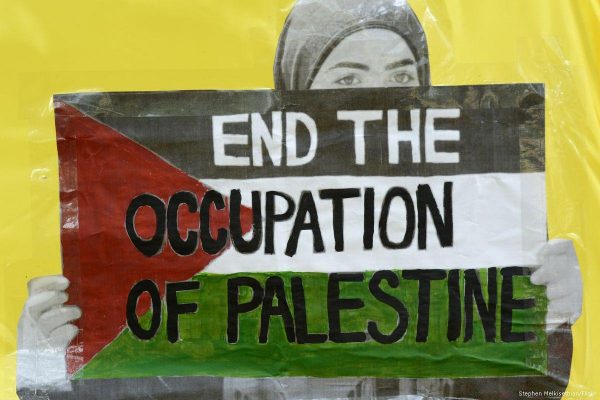
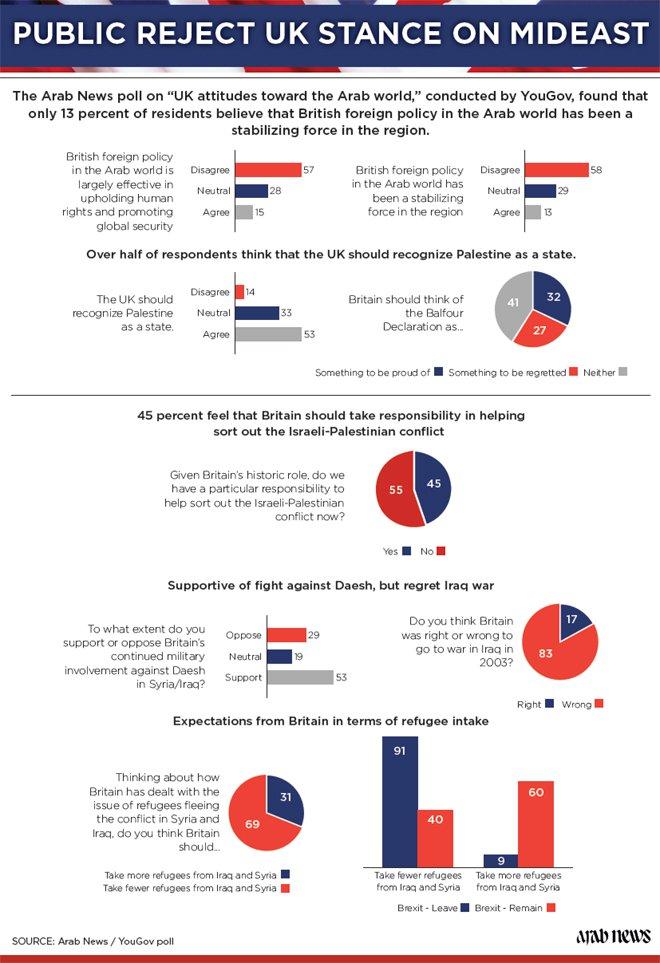
A majority of the British public believe the UK should recognise Palestine as a state, according to the results of a new YouGov poll published Monday.
53 percent of respondents said they agree with such a step, as opposed to just 14 percent who disagreed (33 percent said they were ‘neutral’).
Responding to the poll, Manuel Hassassian, Palestinian ambassador to the UK, said public opinion has been shifting. “I have been here for 11 years and have noticed dramatic changes in the British public’s views on Palestine”, he said.
“That only 14 percent say they wouldn’t want the Palestinian state to receive recognition is an indication of the Palestinian cause worldwide being accepted”, he added.
The poll also addressed views amongst the British public towards the Balfour Declaration, whose centenary will be marked in November.
According to the poll, opinion is deeply divided over the Balfour Declaration: 32 percent of Brits think it is something to be proud of, while 27 percent consider it “something to be regretted” (and 41 percent selected ‘Neither’).
The poll also revealed a partisan divide, with a striking plurality (32 percent) of those who voted Labour in the last election viewing the Balfour Declaration as something to be regretted. Among Conservative voters, on the other hand, 40 percent view the historical document with pride, and only 21 percent with regret.
The poll also asked whether, “given Britain’s historic role”, the country has “a particular responsibility to help sort out the Israeli-Palestinian conflict now”, to which 55 percent responded ‘No’, and 45 percent answered ‘Yes’.
Russia warns US it will strike back if militia attacks in Syria don’t end
RT | September 21, 2017
Moscow has warned the US that if militias it supports in northeast Syria again attack positions of pro-government forces backed by Russia, the Russian military will use all its force to retaliate.
The troops of the Syrian Democratic Force (SDF), a predominantly Kurdish militia that receives support from the US military, have twice attacked positions of the Syrian Arab Army in the Deir ez-Zor governorate with mortar and rocket fire, according to the Russian Defense Ministry’s spokesman, Major General Igor Konashenkov.
“Russia unequivocally told the commanders of US forces in Al Udeid Airbase (Qatar) that it will not tolerate any shelling from the areas where the SDF are stationed,” Konashenkov said, adding that the attacks put at risk Russian military advisers embedded with Syrian government troops.
“Fire from positions in regions [controlled by the SDF] will be suppressed by all means necessary,” he stressed.
Konashenkov said Moscow suspected the SDF of colluding with the terrorist group Islamic State (IS, also known as ISIS/ISIL) in Deir ez-Zor rather than fighting it, as it claims to be. He said Russia had detected the transfer of SDF fighters from the IS stronghold of Raqqa, to join forces with the jihadists.
“SDF militants work to the same objectives as IS terrorists. Russian drones and intelligence have not recorded any confrontations between IS and the ‘third force,’ the SDF,” the Russian general said.
The statement said that the siege of Raqqa by the SDF has been halted, apparently in response to the latest advances by Syrian government forces in Deir ez-Zor, which is located to the east from Raqqa along the Euphrates River.
“The central parts of the former ISIL capital, which account for roughly 25 percent of the city, remain under full control of the terrorists,” Konashenkov remarked.
According to the statement, in the last 24 hours Syrian government troops “continued their offensive operation” to destroy the last “IS bridgehead” near the city of Deir ez-Zor, the provincial capital. Troops led by Syrian Army General Suheil al-Hassan liberated around 16 sq km of territory and two settlements on the western bank of the Euphrates River.
“More than 85 percent of Deir ez-Zor’s territory is under the full control of Syrian troops. Over the next week the city will be liberated completely,” Konashenkov said.
The city of Deir ez-Zor in eastern Syria was besieged by Islamic State in 2014. Syrian government forces lifted the blockade of the city in early September.
However, the liberation of Deir ez-Zor also triggered a confrontation between Syrian government forces and the US-backed SDF militants, the point of contention being control of Deir ez-Zor’s oil fields.
Following Damascus’s strategic victory, food, medicine and other essentials started to reach the city by convoy, where previously the inhabitants had to rely on air-drops.
The escalation of tension in eastern Syria is mirrored in the western Idlib governorate, where militant forces this week attacked Syrian positions in a designated de-escalation zone. The offensive threatened a unit of Russian military police, who were stationed in the area to monitor the ceasefire. Russia mounted an emergency rescue operation on Wednesday, in which three Russian special operations troops were injured. The Russian Defense Ministry claimed that the militants’ offensive had been instigated by US special services.
Hué Back When: Vietnam’s Pivotal Battle Reconsidered

Photo by Raymond Depardon | CC BY 2.0
By Michael Uhl | CounterPunch | September 20, 2017
For Mark Bowden, author of Hué 1968, the pivotal battle of the War in Vietnam did not follow the script most Americans were used to scanning in their newspapers or visualizing on the evening news. The war Americans followed at home was like a humongous hunting expedition. U.S. forces seemed engaged in an endless chase over a lush boondocks inhabited by peasants and dotted with rice paddies or trailing the rugged forested highlands in search of the Viet Cong, a cunning and elusive enemy whose tactics were hit and run, not stand and fight.
When an atypical fixed battle developed, it was typically well-removed from the population centers that hugged the coastline off the South China Sea. Vietnam was, after all, a guerrilla war, or more broadly understood, a people’s war fought to reunite a nation, artificially divided into North and South by fiat of the United States in the service of geopolitical brinksmanship. Accused of fermenting the southern insurgency, North Vietnam was mercilessly bombed, but spared the carnage of a ground war. Not so the south where, by whatever foul means, the idea was “to isolate the population from the Viet Cong,” notwithstanding that, as Mark Bowden readily concedes, “in most instances they were one in the same.” The resistance was popular and widespread, and its idea was to drive the American invader out, and overthrow a despised ruling clique of Vietnamese compradors which survived only because the invader had committed hundreds of thousands of its own troops and billions of its taxpayers’ dollars to sustain it.
Americans were consistently assured that bit by bit the tumultuous countryside was being pacified, and the guerillas attrited, both politically and as a fighting force. In late 1967 Americans were told they were winning the war. When Tet – the Luna New Year – dawned on January 31, 1968, that illusion was irreparably shattered. The vastly superior forces of the United States and its southern catspaw, the Army of the Republic of Vietnam (ARVN), were caught virtually flat footed when thousands of regular troops of the People’s Army of North Vietnam seemingly materialized from thin air, and in coordination with local units of the southern resistance, launched up and down the length and breath of South Vietnam what was quickly branded the Tet Offensive. The most stunning blow for Americans, war managers and citizens alike, was an assault on the South Vietnamese capital of Saigon taken right to the walls of the American Embassy.
For several weeks thereafter, media attention in the U.S. and throughout the world focused primarily on the shock of Saigon’s vulnerability, overplaying its significance. A thousand kilometers north, at first scarcely noticed, even by the Commander of U.S. forces, General William Westmoreland, a battle had commenced that would become the “longest and bloodiest” of the war, not waged over the – till then – familiar rural topography, but house to house, street by street, culminating in one of the most intense chapters of urban warfare in the annals of American military history. Observers today might liken it to a more recent urban free-for-all entangling American troops in Fallujah, Iraq. Or, better yet, recall a U.S. military fiasco in downtown Mogadishu that Mark Bowden had crafted into an earlier best seller. To the extent comparisons hold, the Battle of Hue was like Black Hawk Down on steroids.
Hue 1968 is a comprehensive account of that battle written in the page-turning style of popular narrative non-fiction. The author has assembled a cast of eyewitnesses who participated in the action, Vietnamese and Americans, and the battle unfolds in recollections mined from their 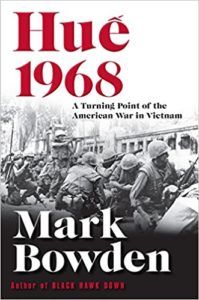 interviews, and, for the departed, from other primary sources at his disposal, such as lengthy wartime correspondences. Bowden has properly set the strategic stage for his action in the context of the war’s two most relevant contemporaneous developments. There was the very fact of Tet, simultaneous attacks with varying degrees of effectiveness on virtually every population center and military base in the South. The Year of the Monkey came in like Armageddon, catching General Westmoreland, for one, completely off guard even though he later claimed he knew those crafty commies were planning something.
To draw attention away from their true intentions, the North Vietnamese had executed a feint, keeping a remote Marine encampment under heavy bombardment at Khe Sanh near the border with Laos, and just below the Demilitarized Zone (DMZ). Taking the bait, and just two weeks before Tet, Westmoreland weakened his coastal enclaves by detaching troops to reinforce the beleaguered camp. The American general believed he was luring the North Vietnamese into a repeat of the battle of Dien Bien Phu, which in 1954 brought French colonial control of Vietnam to an end but inadvertently opened the door to an American invasion. This time, Westmoreland fantasized, “he was determined to prevent history from repeating itself.” That battle never developed, and several months later, Khe Sanh was abandoned by the Americans.
Westmoreland’s obsession with Khe Sanh apparently prevented him from fully grasping that Hue, South Vietnam’s third largest city, and former Imperial capital, had fallen to the Liberation Front in less than twenty-four hours. This pattern of disbelief was moreover pervasive up and down the American chain of command. At Phu Bai, a Marine base less than fifteen miles south of Hue, the commanding general, with improbable symmetry named Forster LaHue, repeatedly ignored reports on the size of the force his counterattack would face, and insisted that, instead of thousands, their number couldn’t possibly exceed more than a few hundred. Could a force as large as the one being reported enter and occupy the entire city that quickly and virtually undetected? Through some of his most original reporting Bowden reconstructs exactly how that occurred.
Shifting the action in his account from one adversary to the other, Bowden begins with the attack, describing how four regiments totaling roughly four thousand uniformed NVA soldiers managed to infiltrate the border between North and South Vietnam, rendezvous with local guerrillas in a force of equal size, and ultimately bivouac on the outskirts of Hue. “It was the kind of troop movement,” comments Bowden, “that could remain secret only if the citizenry supported it, or didn’t care enough to sound the alarm.”
Certainly in Hue there were many Catholics who, in general, were partisans of the Saigon regime, not to mention a contingent of elite ARVN soldiers stationed there, who would have sounded the alarm if they’d been aware of any imminent threat. On another side was a strong current of anti-Americanism among the Buddhists and the student body at Vietnam’s prestigious Hue University, who two years earlier had combined and rioted against the repressive South Vietnamese government, and burned the library of the United States Information Service. But by early 1968, Hue was being little frequented by the war’s violence, and hopes were stoked that the city’s rich stock of architectural treasures, not least the palace of Vietnam’s last royal dynasty, might avoid destruction. Compared with the rest of the country, life in Hue was reasonably good, and reasonably safe. A degree of political complacency had set into what remained a functional commercial entrepot where trade and traffic on Hue’s iconic Perfume River remained brisk.
Even though a majority of Hue’s population of 140,000 could not be considered pillars of the revolution, an underground resistance network was well-entrenched in the city and highly motivated. And Bowden, having tracked down a small cast of survivors, gives us affecting sketches of, among others, the Village Girl who guided the troops through the darkness and pointed them toward their targets; the VC commander who stood up to the hero of Dien Bien Phu, General Vo Nguyen Giap, and revised the battle plan; the college boy who worked with his fisherman landlord to smuggle arms into the city by sampan; the Buddhist poet turned what we would call ‘information officer,’ and Bowden – who holds many conventional opinions– calls “propagandist;” but my favorite was the balsy little guy who was given the task to create a giant new flag for the victors to raise once they’d taken the city.
The flag detail merits a special nod to illustrate the contrast between the high tech m.o. of the Empire’s war machine, and the endless improvisation of those in the Front who used gumption, imagination and stealth to their advantage in the face of overwhelming fire power from air, land and sea. The task to create a flag to be seen, not as “an invasion or occupation, but rather as a liberation,” fell to Sargent Cao Van Sen, an old war horse who’d fought with the Viet Minh against the French, joined the northern Army, and was then ordered back to his native Hue to organize among the Viet Cong. The idea of the flag, Bowden says “was to recognize real political differences between North and South,” with a design that represented, not only the liberation forces, but also “the intelligentsia and the city’s religious factions – Buddhists and Catholics.” Hanoi’s political objective at that stage was transitional, “to establish a neutral, independent South Vietnam,” leaving reunification to future negotiations.” Sgt. Sen’s job was to line up the material, a sewing machine and a seamstress to produce a single flag, which, when completed, required two men to carry it. After being “run up the 123-foot flagpole… that stood just outside the royal palace before the Citadel’s southern wall… it was visible all over Hue” when the city’s denizens awoke January 31st on the first morning of Tet.
Metropolitan Hue spread over both sides of the Perfume River, and the Front’s objective was to occupy the zone on the south bank called the Triangle, and, on the north, the Citadel, an “enormous fortress that enclosed nearly two square miles… its walls twenty-six feet high and impenetrably thick,” and enclosing the neighborhoods of Hue’s most affluent residents. Primary targets, included the air strip inside the Citadel, the province headquarters, the treasury, the post office, the prison, the radio station and “the sole American base, the [Military Assistance Command, Vietnam] MACV compound.”
The Commander of the Front, General Dang Kinh watched from high ground to the west, anxiously awaiting the assault to begin. Finally, “throughout the city arose the sound of gunfire… scattered at first, and then as if touched off by a fuse, it rose rapidly to a din.” By the time the shooting stopped, the attacking force, having “suffered only a few casualties, had dealt Hue’s defenders a crushing surprise blow.” The only major targets not overrun were a fortified redoubt occupied by the 1st ARVN Division inside the Citadel, and the MACV compound on the opposite side of the river, both heavily under siege.
Notwithstanding the loud cheerleading from Hanoi for Tet to unleash a “popular uprising,” it was General Kinh’s opinion, according to Bowden, that no such uprising would occur, not even in subdued and occupied Hue, given the certainty of an overpowering American counter-attack. Kinh knew his forces “could take the city, but… not hold it for long. Achievable goals… were to destroy the ARVN division, and… round up… those who represented the Saigon regime… who were marked for arrest and punishment.”
The subsequent executions of many of these Saigon officials is thematic in Bowden’s text, an overly eager retailing of the ex post facto justification among the war’s apologists for the American decision to rescue their allies by destroying their city. More informed observers might counter that for an American writer of Bowden’s stature to lay charges of mass murder at the Vietnamese resistance– in this instance taking blood retaliation on enemies considered legitimate military targets – demonstrates a highly hometown cast of mind, and a failure to do the math on the infinitely less selective assassination orgy of the U.S. Phoenix Program, not to mention the war’s vastly unbalanced human death toll perpetrated upon the Vietnamese population by the invader.
Kinh’s prediction proved correct. And much of what Bowden encapsulates in Hue 1968 is devoted to a ground level view on just how the city was retaken. Bowden fully examines first January 31st, the day Hue fell, from a variety of vantage points including civilians and combatants on both sides, then moves the battle forward in week long blocks until the Front, faced with annihilation, is forced to withdraw. Had the U.S. command acted more swiftly, the lives of many marines might have been spared, but the city faced devastation in every scenario as long as the occupiers remained. The initial counter-thrust came from the nearby Marine base at Phu Bai when General LaHue, still doubting his adversary’s vast numerical superiority, initially dispatched so few marines that, on one of few occasions during the war, the U.S. was seriously out-gunned. When a marine captain already in Hue called for air and artillery strikes to dislodge the entrenched enemy, General LaHue told him “rather strikingly that he was overreacting.“ LaHue “saw no reason on earth why the more than four hundred men in the [MACV] compound, reinforced with well over three hundred U.S. marines,” assorted tanks and heavy weaponized vehicles, “should not be able to flatten anything between them and the fucking Citadel.” Bowden aptly titles this episode An Idiotic Mission.
Three hundred men represented one understrength marine battalion, but only a single unit, Alpha Company of the 1st Battalion of the 1st Marine Division was dispatched at first to test the enemy strength. This proved a disaster, and the best account of the action on the ground I’ve found was not Bowden’s, but in Vietnam-Perkasie, a memoir by W.D. (Bill) Ehrhart. When Alpha Company left Phu Bai just as the sun was coming up, Bill Ehrhart was given the option of staying behind. He was short, meaning only a few days remained on what had already been a harrowing thirteen month tour. But since the unit was just going to check things out, and were told they’d be back by evening, Bill threw caution to the wind.
Alpha Company, moving to relieve the assault on the MACV compound passed a gas station on the city outskirts, and then, Ehrhart writes, “all hell broke loose… The shock of the ambush caught the whole column completely by surprise… We knew the compound lay straight up the road… seven blocks ahead… We fought our way up the [first] block. And the one after that. All day long we inched up the street. Casualties were appalling. Wounded and dead Marines lay everywhere.” Ehrhart, wounded in action, was in the thick of it the whole time. His memoir is a compelling, heart wrenching read.
From there Bowden covers the fighting chapter and verse. And if battle action is your genre, it’s a read that’s hair raising enough to fix your attention. The killing went on for 26 days, and by the end, 80% of the city lay in rubble. Bowden devotes a last chapter to Hue’s human toll. “Two-hundred and fifty American marines and soldiers were killed, and 1,554 wounded… The Front’s losses are estimated at between 2,400 and 5000…. A conservative guess at those executed would be two thousand… [which] brings us to a combined civilian death toll of about eight thousand… not an exact figure, but to the degree it’s off, it’s off by being too low.”
That the civilian death toll was enormous, cannot be doubted, and is by most accounts I’ve read over the years attributed to the terrible pounding the city took from naval off-shore guns, and from American and ARVN air power and artillery intent on expelling the Front whatever the human cost. As for “those executed,” it appears as if Bowden may have that figure “off” by a factor of ten. Writing in The New York Times in October 1972, Richard Barnet, a former State Department official and co-founder of the Institute for Policy Studies, quotes what the Hué Police Chief told a correspondent of The Times of London in March 1968 just days after the battle. The Chief, “Doan Cong Lap estimated the total number of executions at 200.“ Moreover, “the local Catholic priest reported that none of his clergy or parishioners were harmed by the N.L.F. [National Liberation Front],” who had been given instructions to be on their best behavior. Even if these two eyewitnesses under-counted the reprisal deaths, it’s still unlikely that Bowden’s figure holds water, given his reliance on official U.S. sources.
Richard Barnet took up this topic at a time when voices in the Nixon administration were claiming that mass executions at Hué were proof there would be a bloodbath if the U.S. withdrew and the communists came to power. When questioned on this in Hanoi, Premier Pham Van Dong retorted, “There is nothing in recent Vietnamese history to suggest that a government bent on killing hundreds of thousands of people in South Vietnam can keep peace.” In any case the bloodbath was us. As Barnet dryly quipped, “In the Orwellian age, the daily saturation bombings of Indochina are defended as missions of mercy.”
Mark Bowden seems to bend over backwards throughout this voluminous and valuable book to provide a two-sided perspective on a particularly tragic moment in the Vietnam War. But there’s something distastefully familiar in his throwaway rhetoric of the Cold War bias that got us into Vietnam in the first place. Bowden demonstrates how truth is betrayed by the words he chooses, for example, that “antiwar activists in the States romanticized Ho Chi Minh, and his cause, emphasizing his nationalist character… [but] Hanoi was Communist, authoritarian to the core… ruthless and doctrinaire.” Yet even this phobic reflex to honor the thought police in the mainstream where he prospers doesn’t cause Bowden to ignore that it was the Stalinists who hoped to come to power though the ballot box and the Americans who made war to prevent that.
By consensus in the school of conventional wisdom the Tet Offensive of 1968 was the turning point of the Vietnam War, after which the American war aim was not to win, but how to get out. Mark Bowden makes an excellent case that the fulcrum of that turning point was the Battle of Hue. But what if there was no turning point? In Vietnam the protracted war to expel a powerful foreign invader had its roots in millennia past; the American invasion was just another bump in the road.
Michael Uhl is the author of Vietnam Awakening.
Trump Falls in Line with Interventionism
By Robert Parry | Consortium News | September 19, 2017
In discussing President Trump, there is always the soft prejudice of low expectations – people praise him for reading from a Teleprompter even if his words make little sense – but there is no getting around the reality that his maiden address to the United Nations General Assembly must rank as one of the most embarrassing moments in America’s relations with the global community.
Trump offered a crude patchwork of propaganda and bluster, partly delivered as a campaign speech praising his own leadership – boasting about the relatively strong U.S. economy that he mostly inherited from President Obama – and partly reflecting his continued subservience to Israeli Prime Minister Benjamin Netanyahu.
However, perhaps most importantly, Trump’s speech may have extinguished any flickering hope that his presidency might achieve some valuable course corrections in how the United States deals with the world, i.e., shifting away from the disastrous war/interventionist policies of his two predecessors.
Before the speech, there was at least some thinking that his visceral disdain for the neoconservatives, who mostly opposed his nomination and election, might lead him to a realization that their policies toward Iran, Iraq, Syria and elsewhere were at the core of America’s repeated and costly failures in recent decades.
Instead, apparently after a bracing lecture from Netanyahu on Monday, Trump bared himself in a kind of neocon Full Monte:
–He repeated the Israeli/neocon tripe about Iran destabilizing the Middle East when Shiite-ruled Iran actually has helped stabilize Iraq and Syria against Sunni terrorist groups and other militants supported by Saudi Arabia and – to a degree – Israel;
–He again denounced the Iranian nuclear agreement whose main flaw in the eyes of the Israelis and the neocons is that it disrupted their plans to bomb-bomb-bomb Iran, and he called for “regime change” in Iran, a long beloved dream of the Israelis and the neocons;
–He repeated the Israeli/neocon propaganda about Hezbollah as a terrorist organization when Hezbollah’s real crime was driving the Israeli military out of southern Lebanon in 2000, ending an Israeli occupation that began with Israel’s 1982 invasion;
–He praised his rush-to-judgment decision to bomb Syria last April, in line with Israeli/neocon propaganda against President Bashar al-Assad and partly out of a desire to please the same Washington establishment that is still scheming how to impeach him;
–He spoke with the crass hypocrisy that the neocons and many Israeli leaders have perfected, particularly his demand that “all nations … respect … the rights of every other sovereign nation” — when he made clear that he, like his White House predecessors, is ready to violate the sovereignty of other nations that get in Official Washington’s way.
A Litany of Wars
Just this century, the United States has invaded multiple nations without U.N. authorization, based on various “coalitions of the willing” and other subterfuges for wars of aggression, which the Nuremberg Tribunals deemed the “supreme international crime” and which the U.N. was specifically created to prevent.
Barack Obama and George W. Bush
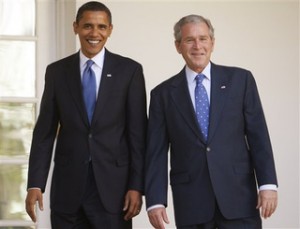
Not only did President George W. Bush invade both Afghanistan and Iraq – while also sponsoring “anti-terror” operations in many other countries – but President Barack Obama acknowledged ordering military attacks in seven countries, including against the will of sovereign states, such as Libya and Syria. Obama also supported a violent coup against the elected government of Ukraine.
For his part, Trump already has shown disdain for international law by authorizing military strikes inside Yemen and Syria. In other words, if not for the fear of provoking American anger, many of the world’s diplomats might have responded with a barrage of catcalls toward Trump for his blatant hypocrisy. Without doubt, the United States is the preeminent violator of sovereignty and international law in the world today, yet Trump wagged his finger at others, including Russia (over Ukraine) and China (over the South China Sea).
He declared: “We must reject threats to sovereignty, from the Ukraine to the South China Sea. We must uphold respect for law, respect for borders, and respect for culture, and the peaceful engagement these allow.”
Then, with a seeming blindness to how much of the world sees the United States as a law onto itself, Trump added: “The scourge of our planet today is a small group of rogue regimes that violate every principle on which the United Nations is based.”
Of course, in the U.S. mainstream media’s commentary that followed, Trump’s hypocrisy went undetected. That’s because across the American political/media establishment, the U.S. right to act violently around the world is simply accepted as the way things are supposed to be. International law is for the other guy; not for the “indispensible nation,” not for the “sole remaining superpower.”
On Bibi’s Leash
Despite some of his “America First” rhetoric – tossed in as red meat to his “base” – Trump revealed a global outlook that differed from the Bush-Obama neoconservative/liberal-interventionist approach in words only. In substance, Trump appears to be just the latest American poodle on Bibi Netanyahu’s leash.
For instance, Trump bragged about attacking Syria over a dubious chemical-weapons claim while ignoring the role of the Saudi/Israeli tandem in assisting Al Qaeda and its Syrian affiliate; Trump threatened the international nuclear agreement with Iran while calling for regime change in Tehran, two of Netanyahu’s top priorities; and Trump warned that he would “totally destroy North Korea” over its nuclear and missile programs while making no mention of Israel’s rogue nuclear arsenal and sophisticated delivery capabilities.
Ignoring Saudi Arabia’s ties to terrorism, Trump touted his ludicrous summit in Riyadh in which he danced with swords and let King Salman and other corrupt Persian Gulf monarchs, who have long winked and nodded at ideological and logistical support going to Al Qaeda and other Islamic terror groups, pretend their governments were joining an anti-terror coalition.
Exploding the myth that he is at least a street-smart operator who can’t be easily conned, Trump added, “In Saudi Arabia early last year, I was greatly honored to address the leaders of more than 50 Arab and Muslim nations. We agreed that all responsible nations must work together to confront terrorists and the Islamist extremism that inspires them.”
No wonder Netanyahu seemed so pleased with Trump’s speech. The Israeli prime minister could have written it himself while allowing Trump to add a few crude flourishes, like calling North Korean leader Kim Jong Un “Rocket Man … on a suicide mission”; referring to “the loser terrorists”; and declaring that many parts of the world are “going to hell.”
Trump also tossed in a plug for his “new strategy for victory” in Afghanistan and threw in some interventionist talk regarding the Western Hemisphere with more threats to Cuba and Venezuela about escalating sanctions and other activities to achieve more “regime change” solutions.
So, what Trump made clear in his U.N. address is that his “America First” and “pro-sovereignty” rhetoric is simply cover for a set of policies that are indistinguishable from those pushed by the neocons of the Bush administration or the liberal interventionists of the Obama administration. The rationalizations may change but the endless wars and “regime change” machinations continue.
Investigative reporter Robert Parry broke many of the Iran-Contra stories for The Associated Press and Newsweek in the 1980s.
Washington Continues Transforming Afghanistan into Massive Graveyard
By Vladimir Platov – New Eastern Outlook – 17.09.2017
On August 31, US Secretary of Defense James Mattis signed an order to deploy additional US troops in Afghanistan. He noted that this decision was made in accordance with the overall strategy in South Asia that was approved by US President Donald Trump. This means that the number of American soldiers dispatched in the Islamic Republic of Afghanistan will reach a total of 14,500.
It should be noted that even though Washington unleashed armed aggression against Afghanistan back in 2001 under the pretext of combating terrorism, today Americans appear indifferent to Islamic State (ISIS) militants operating there, and have focused almost solely on fighting the Taliban. However, unlike the Taliban, the sole goal of which is to regain control over their country by pushing US troops out, ISIS militants have repeatedly stated their intention is to expand their area of operations across the whole of Central Asia, which presents a major to challenge to regional players as well as Russia and China. It is no coincidence that Moscow and Beijing have recently stepped up their diplomatic efforts in Afghanistan in a bid to prevent these radicals from infiltrating their borders.
Britain, in spite of bitter resistance from the Labor Party, is going to increase its military efforts in Afghanistan as well, although London has a disastrous track record of operations in this Central Asian state. British Minister of Defense Michael Fallon was delighted to hear the recent announcement by the Pentagon on Afghanistan. In a bid not to lag behind, the UK government was quick to announces its intentions to deploy special forces from the 22nd SAS regiment in Afghanistan to strengthen the 500 men strong task force operating in this country. Those elite forces are believed to be engaged in covert missions on the ground. However, Afghanistan is not the only state where those forces will be operating, since Iraq, Libya, and Tunisia are also on the list.
As representatives of the British military intelligence told the Sunday Times in late August, the Taliban has allegedly recreated underground cells in every major Afghan city. Somehow, London believes, that if this information is true, the elite troops dispatched to the region will be somehow able to prevent a massive offensive by the Taliban.
However, as it’s been noted by the former president of Afghanistan Hamid Karzai in a interview for a major Russian media platform: “Washington’s new strategy will not lead to peace and stability in Afghanistan, it will only intensify the fighting and bloodshed.” Ex-president Hamid Karzai also told Izvestia that the White House tries to deny peace and prosperity to the people of Afghanistan by intensifying military operations across the country with the help of the notorious military contractors like Academi, which violates the sovereignty of Afghanistan.
This gloomy assessment has been proven true by the recent announcement of the United Nations Mission to Afghanistan, which stated that on August 30 yet another series of air strikes carried out by the US coalition resulted in at least 28 women and children, while leaving more than 16 more injured.
However, peaceful citizens of Afghanistan are not the only victims of this senseless war. As it’s been recently reported by the New York Times, at least 18 CIA operatives lost their lives in Afghanistan in recent years. This figure can easily be compared to a similar death rate in Vietnam and Laos conflicts.
The US armed aggression against Afghanistan has resulted in more than 2,500 US servicemen losing their lives, according to the independent website iCasualties.org, while some 20,000 more were wounded over the course of the conflict. Such casualties were inflicted upon US forces in spite of the massive deployment supported by US intelligence agencies who secretly transported Hamid Karzai into the country at the beginning of the conflict, thus guaranteeing Kabul’s compliance with Washington’s policies.
One has to state that, regrettably, neither Washington nor London has learned anything over the course of this 16-years long war, since by sending more servicemen to Afghanistan they will continue transforming this country into a massive cemetery for Afghan citizens and US coalition soldiers alike.
Syrian troops will fight US-backed militia to free Arab country: Assad aide
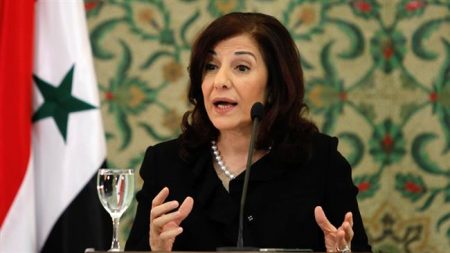
Syrian President Bashar al-Assad’s political and media adviser, Bouthaina Shaaban
Press TV – September 16, 2017
The political and media adviser to Syrian President Bashar al-Assad says government troops, backed by fighters from allied popular defense groups, will fight any force, including the US-backed militia, to fully liberate the Arab country plagued with terrorism for over six years.
“Whether it’s the Syrian Democratic Forces (SDF), or Daesh or any illegitimate foreign force in the country… we will fight and work against them so our land is freed completely from any aggressor,” said Bouthaina Shaaban in an exclusive interview with Lebanon-based Arabic-language al-Manar television network on Friday.
She added that the US-backed SDF forces had managed to capture areas in northeastern Syria from Daesh “without any fighting,” implying that the Takfiri militants were working hand in glove with the SDF to take oil-rich areas.
“But they will not get what they want,” the Syrian official added.
The SDF is a coalition of Kurdish and Arab fighters dominated by the Kurdish People’s Protection Units (YPG), which is in control of large parts of northeastern Syria for many years. The SDF forces have gained ground against Daesh in the northern city of Raqqah, the terror group’s de facto capital in the Arab country.
The US and its allies have been bombarding what they call Daesh positions inside Syria since September 2014 without any authorization from the Damascus government or a UN mandate. They also support some groups, such as the SDF, claiming that they help them in their alleged fight against Daesh terrorists.
Different foreign-backed terrorist groups have been wreaking havoc in Syria since 2011. The government controls the main urban centers in the west of the country and has recaptured much of the eastern desert from Daesh in recent months.
On Tuesday, Lieutenant General Aleksandr Lapin, the Russian chief of staff in Syria, announced that Damascus was in control of 85 percent of the Arab country’s territories. He added that Syrian forces must now purge terrorists from the country’s remaining 15 percent, which amounts to 27,000 square kilometers.
Parliamentary lobby in Mexico to support Israeli settlement activities
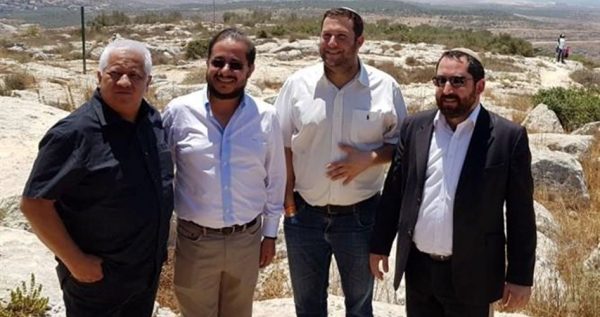
Mexican MPs with leaders of settlers in the Occupied West Bank
Palestine Information Center – September 15, 2107
NAZARETH – A lobby group advocating Israel’s settlement activities has been formed in the Mexican parliament, according to Israel’s Channel 7.
The Palestinian Information Center (PIC) quoted the channel as saying that this lobby group would work on promoting the trade relations between Mexico and Israel’s industrial settlements and outposts [in the West Bank].
According to the channel, head of the West Bank regional council Yossi Dagan said the lobby was officially announced during the current week in the Mexican parliament, describing it as “very important for Israel.”
The channel affirmed that this lobby would also influence Mexico’s positions at the UN and its institutions in favor of Israel.
US drone attack kills 3 in Pakistan’s tribal region
Press TV – September 15, 2017
A US drone strike has killed three people in the tribal area of Pakistan near the Afghanistan border.
“Two missiles were dropped on the home of Maulvi Mohib and three people have been killed,” said Baseer Khan Wazir on Friday. Wazir is the political agent and the most senior administrator in the Kurram Agency region in the Federally Administered Tribal Areas (FATA) of Pakistan.
Afghan Taliban sources said the attack targeted Pakistan-based Haqqani militants who are allied to the Taliban militants in Afghanistan.
Two sources said Mohib was affiliated with Haqqani. “He remained associated with the Haqqani network but wasn’t a prominent figure,” said one senior Taliban member.
Another Taliban member, whose name was not mentioned in the report either, said Mohib was part of the Afghan Taliban. “We don’t differentiate the Haqqani network and Taliban. This is just a propaganda of the Western media.”
The US-led international forces in Afghanistan had no immediate information on the strike.
The United States carries out internationally-condemned extrajudicial drone strikes in several Islamic countries including Afghanistan, Pakistan, Iraq, Yemen, Somalia, and Libya.
If confirmed, it would be the first US drone strike inside Pakistan since President Donald Trump outlined his new Afghanistan strategy.
The US president unveiled his administration’s new strategy in Afghanistan last month. He said he would prolong US military intervention in Afghanistan, ordering added forces in the region.
US officials have urged the neighboring Pakistani government to crack down on Haqqani militants operating in Pakistan. Islamabad, however, denies there are any militants on its side.
Observers predicted an increase in US drone attacks inside Pakistan when Trump came into power, but since January there have only been a few.
Another option being weighed by Washington, according to US officials, is targeted sanctions against Pakistani officials with links to extremist groups such as Haqqani.
Pakistani Prime Minister Shahid Khaqan Abbasi, however, told Reuters on Monday that such a move would be counterproductive.
Trump, who had initially called for the withdrawal of American troops from Afghanistan, argued that his “original instinct was to pull out,” but that he was convinced by his national security team to take on the militants there.
The United States, under the presidency of Republican George W. Bush, and its allies invaded Afghanistan on October 7, 2001 as part of Washington’s so-called war on terror. Insecurity remains in the country despite the presence of foreign troops.
US Accelerates Afghanistan Bombing Campaign With Questionable Effectiveness
Sputnik – 14.09.2017
The US Air Force dropped an average of 16 bombs per day in August in the wake of US President Donald Trump’s plan to attack “America’s enemies” in the country, according to the most recent Pentagon data on munitions delivered in the country.
US Air Force warplanes including the F-16 “Viper,” the MQ-9 Reaper drone, and the B-52 Stratofortress bomber deployed 1,984 bombs from January to July of this year, according to US Air Force Central Command data published August 31.
Sputnik News therefore calculates that in the first seven months of the year, US jets dropped an average of 227 bombs per month. In August, more than twice as many bombs struck Afghani soil than an average month, at 503 munitions.
Increasing the frequency of bombing raids hasn’t required mobilizing extra aircraft assets to Afghanistan because “we’ve never come back” after arriving so many years ago, US Air Force Chief of Staff Gen. David Goldfein told Military.com, noting he doesn’t envision a “significant plus-up” in the number of US warplanes stationed there.
In a May 20, 2016 Wall Street Journal op-ed, retired US Army general and former CIA director David Petraeus and Brookings Institution senior fellow Michael E. O’Hanlon wrote: “We have a real fight on our hands in Afghanistan, but not a hopeless one … Even a modest US and NATO military contributions have the potential to make a considerable difference … Some might reasonably ask, after 15 years of war in Afghanistan, why do we need to keep at it? The answer is simple – because Afghanistan, effectively the eastern bulwark in our broader Middle East fight against extremist forces, still matters.”
The duo went on to say “air power in particular represents an asymmetric Western advantage, relatively safe to apply, and very effective against massed (or even individual) enemy forces and assets.”
Since O’Hanlon and Petraeus wrote the column, the US has consistently delivered more and more payloads each month to target insurgents in Afghanistan, Pentagon data shows.
The most recent publicly available report on the status of the fight in Afghanistan was released July 30 by the Special Inspector General for Afghanistan Reconstruction (SIGAR) and sheds light as to just how effective the bombs have been. It turns out the situation has given policymakers few reasons for optimism.
“The [US Intelligence Community] assesses that the political and security situation in Afghanistan will almost certainly deteriorate through 2018 even with a modest increase in military assistance by the United States and its partners,” Daniel Coats, Director of National Intelligence, is quoted as saying in the SIGAR report.
Featured Video
Racist Seinfeld Dances for Joy as Bibi Unveils His New Map
or go to
Aletho News Archives – Video-Images
TV Drama Review
Japanese drama projects Japan’s wartime atrocities onto Chinese characters

Global Times | October 25, 2026
By portraying Chinese characters as perpetrators of ruthless violence while casting Japanese Self-Defense Forces (SDF) intelligence operatives as defenders, the season 2 of the Japanese drama Vivant has recently drawn criticism from Chinese netizens, who argue that its depiction turns historical reality on its head while ignoring Japan’s wartime atrocities.
The TBS drama series – a spy suspense story in which an alleged unofficial intelligence unit of the SDF operates across the globe — has attracted a passionate fanbase. Its currently airing season 2 opened with a household rating of 18.8 percent, the highest for a TV drama this year, according toa commentary article by Japanese media Toyo Keizai.
What draws attention is the portrayal of the enemies in the series, the article noted. Scenes in which the Chinese organization subjects kidnapped members of the SDF unit to brutal torture are repeated with unrelenting intensity.
It is rare for Japanese TV dramas to explicitly portray a real-life country as the enemy, the article noted.
Japanese Prime Minister Sanae Takaichi also made a reference to the drama, saying that she has been recording Vivant and hopes to binge-watch it over the year-end and New Year holidays, according to Japanese media outlets.
China’s CCTV News report on Sunday revealed that the drama features scenes in which Chinese personnel cut off the fingers of and stab Japanese intelligence operatives in the abdomen. Such acts bear striking similarities to the torture inflicted on Chinese nationals by invading Japanese troops during the World War II.
The drama distorts the truth by attributing these atrocities to modern Chinese characters. Beneath the surface, it subtly glorifies Japan’s cross-border overseas operations, blurs the functional boundaries of the SDF and implicitly promotes an expansionist narrative, per CCTV News. … continue
Blog Roll
 Aletho News
- Netizens condemn Japanese drama for projecting Japan’s wartime atrocities onto Chinese characters
- Racist Seinfeld Dances for Joy as Bibi Unveils His New Map
- A West Bank War for Netanyahu’s Election Campaign, Could It Backfire?
- Yemen denounces European Parliament’s ‘hypocritical’ push to blacklist Ansarullah
- Qalibaf: UAE’s UN bid aims to ‘clear the runway’ for ‘Greater Israel’, whitewash genocide
- Pakistan reopens Iran border after boosting security: Report
- Why are so many Brazilians voting for Flávio Bolsonaro?
- Democrats Put Anti-Russia Agenda Ahead of American Workers
- Elijah Magnier: Yemen’s Strikes Are Shattering Saudi Arabia’s Long-Term Strategy
- Pentagon designates Chinese cultural centers national security threat
- If Americans Knew
- Latest updates from Israeli assault on West Bank
- Tourism Ministry launches free food truck tour in US
- “So Much Worse Than People Realize”: Never-Before-Seen Images Reveal Damage at U.S. Bases as Troops Describe Being Abandoned
- UK Bell Review Confirms Only Anti-Israel Attitudes Are Rising, Not Antisemitism
- DAILY UPDATE: Latest essential news on Palestine, Israel, & region
- DAILY UPDATE: Latest essential news on Palestine, Israel, & region
- Damning report shows the media must confront its failures on Gaza
- BBC senior broadcaster speaks out on Gaza coverage
- Netanyahu vows vast West Bank invasion in response to 20-minute skirmish that left 2 Israeli soldiers and 2 Palestinian fighters dead
- Tied up and tortured: Israel using US-made electroshock weapons on Palestinian detainees
- No Tricks Zone
- Sudden Stratospheric Warming, Powerful El Niño Combination May Lead To Extreme Europe Cold, Energy Crisis!
- Two New Studies Find Thwaites Glacier Melt Cannot Be Driven By Human Activity Or A Warming Ocean
- E-Cars Reduce CO2 Emissions By Only 41% Compared To Internal Combustion Engine Vehicles
- Predictions Made By Renowned Climate Professor Over Past Decades Have Been Proven To Be Poor
- New Study Suggests Large Regions Of The Pacific Ocean Have Been Cooling For The Last 80 Years
- Germany’s Green Energy Debacle: High Energy Costs Force Kahla Porzellan to Close After 182 Years!
- New Study: 50 Years Of The Most Aggressive ‘Net Zero’ Policies Can Only Affect The Global Climate By 0.03°C
- US September “Heat” Was No Record…Many Records Set Decades Ago
- Latest European Green Energy Debacle; Portugal’s Largest Flagship Solar Park Insolvent!
- Green Energy Debacle: German Expert Professor Fritz Vahrenholt Warns Of Severe Economic And Social Consequences

