Israel worried Hezbollah’s air defense systems will ‘limit freedom of action’ over Lebanon
The Cradle | July 1, 2023
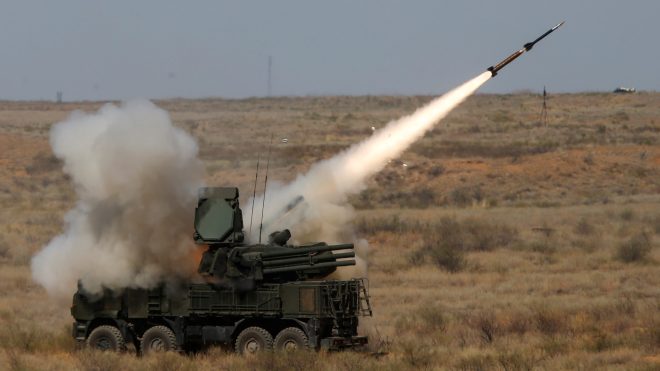
Israeli military planners are concerned about what they describe as “a significant change in the concept of air defense by Hezbollah in Lebanon” after the resistance group “doubled” the number of air defense systems in its possession, according to a report by Maariv newspaper published on 30 June.
The report cites unnamed military officials saying the resistance’s air defense systems will “restrict the freedom of action of the Israeli Air Force in Lebanon.”
“[Hezbollah] doubled the amount of air defense systems in its possession during the last five years … these defense systems are based mainly on modern Iranian systems,” the report adds.
Furthermore, Tel Aviv claims Hezbollah is in possession of the SA8 and SA22 Russian air defense systems, which have been previously deployed in Syria.
“The attack by an Israeli drone, in August 2019, on a facility in a building in the heart of the southern suburbs of Beirut … initiated the turning point in Hezbollah’s strategy, leading to the threat by [Secretary General Hassan Nasrallah] … to start shooting down Israeli drones,” the report highlights.
“Hezbollah implemented this threat two months later when it fired an SA8 missile at an Israeli Hermes 450 drone, which was on an intelligence-gathering mission, but the missile missed the target,” it adds.
In recent months, Israeli military planners have been on edge over Hezbollah’s vast military advancements coupled with the growing coordination among resistance factions in the region.
Earlier this week, Israeli media revealed that the US has stepped in to pressure Lebanon into having Hezbollah remove an outpost erected in the occupied Shebaa Farms.
Hezbollah has so far rejected these demands.
“You cannot threaten us with a large-scale war; it is us who are threatening you … Your follies, not ours, might blow up the entire region and lead to the Great War,” Nasrallah told Israeli leaders during a speech in May.
“The resistance is expanding by the day and has witnessed a great [positive] change in its financial and military capability,” he added.
Declassified files expose British role in NATO’s Gladio terror armies

By Kit KLARENBERG | THE GRAYZONE | JUNE 19, 2023
Newly declassified British Foreign Office files have added disturbing details to the history of Operation Gladio. The covert operation was uncovered in 1990, when the public learned that the CIA, MI6 and NATO trained and directed an underground army of fascist paramilitary units across Europe, deploying its assets to undermine political opponents, including through false flag terror attacks.
Among them was a young Silvio Berlusconi, the media oligarch who served as Italian Prime Minister in four separate governments between 1994 and 2011. Listed as a member of the P2, the secret Cold War-era cabal of political elites devoted to Gladio’s aims, Berlusconi undoubtedly took some weighty secrets to the grave when he died this June 12th.
It is almost impossible to believe that inconvenient truths were not weeded from Britain’s documentary record on Operation Gladio prior to declassification. Nonetheless, the recently released material is highly illuminating. Covering a fraught twelve month period after the first public disclosure of Gladio’s existence, the papers illustrate how London’s foreign intelligence apparatus kept a keen eye on the continent as events unfolded.
The papers not only shed fresh light on the conspiracy, they underline Gladio’s relevance as British intelligence joins its America counterparts in contemporary plots involving secret partisan forces from Syria to Ukraine.
Various passages dotted across the tranche strongly suggest the British knew much more than they publicly admitted about egregious criminal deeds, including the attempted overthrow of an allied Italian government and the kidnap and murder of its leader.
A ‘clandestine resistance network’ goes to work
Gladio consisted of a constellation of “stay behind” anti-communist partisan armies whose ostensible mission was to fend off the Red Army in the event of Soviet invasion. In reality, these forces committed countless violent and criminal acts as part of a “strategy of tension” designed to discredit the left and justify a security state clampdown.
As Vincenzo Vinciguerra, a Gladio operative jailed for life in 1984 for a car bombing in Italy that killed three police officers and injured two, explained:
“You were supposed to attack civilians, women, children, innocent people from outside the political arena. The reason was simple, force the public to turn to the state and ask for greater security… People would willingly trade their freedom for the security of being able to walk the streets, go on trains or enter a bank. This was the political logic behind the bombings. They remain unpunished because the state cannot condemn itself.”
The scandal triggered in Western capitals by the exposure of Gladio dominated mainstream headlines for months. The European parliament responded by passing a resolution condemning the existence of a “clandestine parallel intelligence and armed operations organization [which] escaped all democratic controls, may have interfered illegally in the internal political affairs of member states [and] have at their disposal independent arsenals and military resources… thereby jeopardizing the democratic structures of the countries in which they are operating.”
The resolution called for independent judicial and parliamentary investigations into Gladio in every European state. But aside from inquiries in Belgium, Italy, and Switzerland, nothing of substance materialized. What’s more, investigators heavily redacted their findings while avoiding having them translated them into English. This may help explain why the historic scandal has been largely forgotten.
In this context, the newly declassified documents may be one of the most valuable primary sources to date offering new insights into the origins and internal workings of NATO’s secret terror militias in Italy.
Take for example an aide-mémoire (see it here) prepared by Francesco Fulci, Italy’s permanent representative to the UN, which was shared at a “super-restricted” November 6th 1990 meeting of the North Atlantic Council, NATO’s principal political decision-making body, then forwarded to senior British officials at home and abroad.
Based on a note provided by Rome’s then-premier Giulio Andreotti to “the Head of the Italian Parliamentary Commission investigating terrorist incidents,” the aide-mémoire begins by noting that following World War II, Western intelligence agencies devised “unconventional means of defence, by creating in their territories a hidden network of resistance aimed at operating, in case of enemy occupation, through information gathering, sabotage, propaganda and guerrilla warfare.”
According to the aide-mémoire, authorities in Rome began laying the foundations of such an organization in 1951. Four years later, Italian Military Intelligence (SIFAR) and “a corresponding allied service” – a reference to the CIA – then formally agreed on the organization and the activities of a “post-occupation clandestine network”:
“[Gladio] was; formed by agents active in the territory who, by virtue of their age, sex and activities, could reasonably avoid eventual deportation and-imprisonment by the foreign occupiers; easy to manage even from a command structure outside the occupied territory; at a top secret level and hence subdivided into ‘cells’ so as to minimize any possible damage caused by defections, accidents or network penetration.”
The “clandestine resistance network” was subdivided into separate branches, covering information operations, sabotage, propaganda, radio communications, cypher, reception and evacuation of people and equipment. Each of these structures was to operate autonomously, “with liaison and coordination ensured by an external base.”
SIFAR established a dedicated, secret section to recruit and train Gladio operatives. Meanwhile, it maintained five “ready deployment guerrilla units in areas of special interest” across Italy which awaited activation on a continuous basis.
“Operational materials”, including a wide variety of explosives, weapons – such as mortars, hand grenades, guns and knives – and ammunition were stashed in 139 secret underground caches across the country. In April 1972, “to improve security,” these arsenals were exhumed, and moved to offices of the Carabinieri, Rome’s military police, near the original sites.
Only 127 of the weapons storehouses were officially recovered. The aide-mémoir states that at least two “were very likely taken away by unknown persons” at the time they were buried, in October 1964. Who these operatives were and what they did with their stolen arms is left to the imagination.
British involvement in the coup effort
Fulci was eventually quizzed by attendees of the North Atlantic Council summit “as to whether Gladio had deviated from its proper objectives.” In other words, beyond operating strictly as a “stay behind” force, to be activated in the event of Soviet invasion. While “he could not add to what was in the aide-mémoire,” Fulci confirmed “weapons used in some terrorist incidents had come from stores established by Gladio.”
This may reflect the fact that political violence was one of Gladio’s “proper objectives.” A June 1959 SIFAR report unearthed by historian Daniele Ganser confirms guerrilla action against “domestic threats” was hardwired into the operation from its inception. In the Italian context, this entailed systematically terrorizing the left.
As the Italian Communist party surged in polls ahead of the country’s 1948 election, the CIA pumped money into the coffers of the Christian Democrats and an attendant anti-communist propaganda campaign. The cloak-and-dagger effort was so successful in preventing the outbreak of a left-wing government in Rome that Langley secretly intervened in every one of Rome’s elections for at least the next 24 years.
Yet the covert CIA operations were insufficient to prevent Italians from occasionally electing the wrong governments. The 1963 general election saw the Christian Democrats prevail again, this time under the leadership of left-leaning politician Aldo Moro, who sought to construct a coalition with the Socialists and Democratic Socialists. Over the next year, protracted disputes erupted between these parties over what form their administration would take.
In the meantime, SIFAR and CIA black ops specialists such as William Harvey, known as “America’s James Bond,” cooked up a plot to prevent that government from taking office. Known as “Piano Solo,” it dispatched Gladio operatives for a false flag assassination attempt on Moro that would deliberately fail.
According to the plan, the kidnapper was expected to claim they were ordered to kill Moro by communists, thereby justifying the violent seizure of multiple political party and newspaper headquarters, along with the imprisonment of troublesome leftists at the Gladio chapter’s secret headquarters in Sardinia. The plan was ultimately aborted, though it remained on the table throughout 1964.
Moro became Prime Minister without incident and governed until June 1968. Piano Solo fell under official investigation four years later, yet the results were not published until the public first learned of Gladio’s existence. Though the findings omitted any reference to Britain’s role in the planned coup, the newly released documents strongly suggest London’s involvement. (Read them here).
Italy’s then-President Francesco Cossiga requested the ministry hand over “details of UK stay behind measures in 1964,” according to a detailed February 1991 Foreign Office memo on recent developments in the scandal.
Cossiga apparently made this enquiry as a result of a judge “whose investigations into unsolved terrorist attacks first brought Operation Gladio to light,” and who took the “unprecedented step” of demanding the president testify about the conspiracy under oath. By this point, Cossiga had admitted learning of the “stay behind” force while serving as a junior Defense Minister in 1966.
His Foreign Office query strongly suggests British intelligence played a role in Piano Solo, and that the Italian President was well-aware of the plot.

Doomed Italian PM Aldo Moro’s photo while in captivity of the Red Brigades
“One or more of Moro’s kidnappers was secretly in touch with the security apparatus”
On March 16th 1978, a unit of the leftist militant Red Brigades kidnapped Moro. He was on his way to a high-level meeting where he planned to give his blessing there to a new coalition government that relied on communist support, when the kidnappers violently extracted him from his convoy. Five of Moro’s bodyguards were murdered in the process.
After almost two months in captivity, when it became clear the government would neither negotiate with the Red Brigades nor release any of its jailed members in return for Moro, the kidnappers executed the former Italian Prime Minister. His bullet-riddled corpse was left in a car trunk to rot, and for authorities to find.
Moro’s murder has inspired widespread and well-founded suspicions that Gladio operatives infiltrated the Red Brigades to push the group to commit excessively violent acts in order to foment popular demand for a right-wing law-and-order regime. More than perhaps any other incident, his killing fulfilled the objectives of the security state’s strategy of tension.
Whether or not Moro was a casualty of Gladio, a declassified November 5th 1990 Foreign Office memo authored by Britain’s then-ambassador to Rome, John Ashton, makes it clear that London knew much more about the case than has ever been disclosed publicly by any official source. (Read the full Ashton note here).
“There is circumstantial evidence one or more of Moro’s kidnappers was secretly in touch with the security apparatus at the time; and that the latter deliberately neglected to follow up leads which might have led to the kidnappers and saved Moro’s life,” Ashton declared.

What’s more, according to the British diplomat, the presidential crisis committee responsible for attempting to rescue Moro was part of the notorious P2 – the “subversive Masonic lodge” composed of political elites loyal to Gladio.
According to Ashton, P2 was just one of many “mysterious right wing forces” striving “by terrorism and street violence to provoke a repressive backlash against Italy’s democratic institutions” under the “strategy of tension.” And President Cossiga was completely unaware it had infiltrated his crisis committee.
In April 1981, magistrates in Milan raided the villa of Licio Gelli, an Italian financier and self-identified fascist who founded P2. There, they uncovered a list of 2,500 members which read like a “Who’s Who” of Italian politicians, bankers, spooks, financiers, industrialists, and senior law enforcement and military officials. Among the cabal’s most prominent members was Silvio Berlusconi.

Future Italian Prime Minister Silvio Berlusconi’s P2 file
Moro’s “historic compromise,” under which the communists “made possible Andreotti’s government”, would be the party’s “final step before their own entry into government.” Ashton stated that this development “was anathema to P2,” which was “then in virtual control of [Italy’s] security apparatus,” and also to many non-P2 establishment politicians, and also to the US,” and sought to “eliminate once and for all any possibility that the Communist Party… might achieve national power.”
Ashton acknowledged “circumstantial evidence” of “US support for P2.” In reality, P2 founder Gelli was so well-connected to Washington’s national security and intelligence apparatus, the CIA’s Rome station had explicitly charged him with establishing an anti-communist parallel government in Rome.
Subsequent investigations showed how Henry Kissinger helped oversee the recruitment of 400 high-ranking Italian and NATO officers as P2 operatives in 1969. The US was so grateful for Gelli’s anti-communist purge that it made him a guest of honor at the inauguration ceremonies of US Presidents Gerald Ford, Jimmy Carter and Ronald Reagan.
Ashton concluded his revealing note by noting the truth about Washington’s involvement in Rome’s bloodspattered “Years of Lead” would “probably never be known.” The full extent of Britain’s involvement in terrorist attacks, government overthrows, destabilization campaigns and other heinous skullduggery under the aegis of Operation Gladio, not merely in Italy but throughout Europe, will almost certainly remain a secret as well, and by design.
It was not until 1993 that the public learned how the US and British gifted munitions to Gladio operatives to foment bloody acts of terror across Italy. As Francesco Fulci told his NATO friends at the “super-restricted” meeting, Washington and London supplied the perpetrators of mass casualty attacks including the 1980 bombing of Bologna Centrale railway station, which killed 85 people and wounded over 200.
Those responsible for these hideous crimes have eluded justice in almost every case. Several of the Bologna massacre’s chief suspects, including committed fascist and confirmed MI6 asset Robert Fiore, escaped to London. Britain refused to extradite him and his co-conspirators despite their convictions in absentia for violent crimes.
The extensive experience British intelligence obtained in Operation Gladio raises questions about the lessons the MI6 has applied to current covert operations in theaters of conflict. As The Grayzone revealed in November 2022, British military and intelligence veterans have trained and sponsored a secret partisan terror army in eastern Ukraine to carry out acts of sabotage in Crimea and other majority-Russian areas. The plan called for the training of cells of ideologically dedicated Ukrainians to “shoot, move, communicate, survive.”
Biden regime top aide in Saudi Arabia to further push for normalization with Israel after Blinken failure
Press TV – June 18, 2023
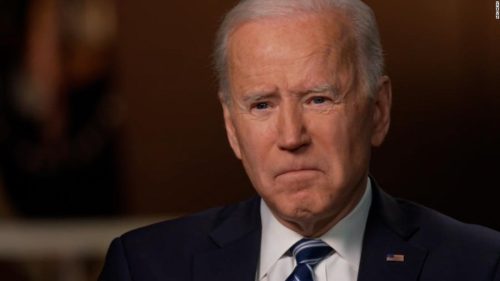
A top advisor to US President Joe Biden has reportedly traveled to Saudi Arabia as part of Washington’s relentless push to broker a normalization deal between Riyadh and Tel Aviv.
The US-based news website Axios reported on Saturday that Brett McGurk, Biden’s senior Middle East adviser, had arrived in Saudi Arabia to hold “talks with Saudi officials that will focus on the administration’s efforts to reach a normalization agreement between the Israel and the kingdom as well as other issues.”
According to the report, McGurk was also expected to meet with Saudi Crown Prince Muhammed bin Salman to discuss the kingdom’s normalization of relations with Israel.
McGurk’s visit is part of attempts by the White House to push for a Saudi-Israeli deal in the next six to seven months before Biden’s presidential election campaigns.
The top advisor’s trip to Saudi Arabia comes less than two weeks after US Secretary of State Tony Blinken visited the kingdom and met bin Salman, with Saudi officials having snubbed the US diplomat’s latest push for the normalization deal.
Saudi Foreign Minister Prince Faisal bin Farhan Al Saud said at a joint press conference with Blinken that “without finding a pathway to peace for the Palestinian people… any normalization will have limited benefits.”
Saudi Arabia cautiously welcomed the US-brokered normalization deals between the Israeli regime and the United Arab Emirates, Bahrain, Sudan and Morocco in 2020.
The oil-rich kingdom itself, however, has been expected to jump on the bandwagon since then, as the two sides have seen growing contacts and de-facto rapprochement in recent years, despite claims that it is committed to the 2002 so-called Arab Peace Initiative, which conditions normalizing ties with Israel on the establishment of an independent, sovereign Palestinian state within the 1967 borders.
The Riyadh regime in November 2020 granted permission for Israeli airlines to use its airspace, hours before the first Israeli flight to the UAE was set to take off.
Palestinian leaders, activists and ordinary people have repeatedly rejected Arab-Israeli normalization deals as “a stab in the back of the Palestinian cause and the Palestinian people.”
China’s Xi Puts Forth Proposal to Settle Israeli-Palestinian Conflict

Sputnik – 14.06.2023
BEIJING – Chinese President Xi Jinping on Wednesday put forward a three-point proposal to resolve the Israeli-Palestinian conflict during the meeting with his Palestinian counterpart, Mahmoud Abbas.
“First, the basis for settling the Palestinian issue is the establishment of an independent state of Palestine with full sovereignty within the 1967 borders with East Jerusalem as its capital,” Xi Jinping was quoted as saying by the Chinese national broadcaster.
Second, the Chinese president pointed out that the needs of the Palestinian economy should be met and the international community should increase humanitarian and development assistance to Palestine.
“Third, the right course of peace negotiations should be followed. Respect the historical status quo of Jerusalem’s religious shrines, refrain from radical and provocative statements and actions, promote a larger, more authoritative and more influential international peace conference, create conditions for the resumption of peaceful talks and make concrete efforts to help Palestine and Israel coexist peacefully,” Xi concluded.
Abbas is on a state visit to China from June 13-16.
Permanent Apartheid in Palestine: This is why Israel wants to reactivate E1 Plan
By Ramzy Baroud | MEMO | June 12, 2023
The Israeli government is at it again, actively discussing the construction of thousands of illegal settlement units as part of a massive settlement expansion scheme known as E1.
Though Israeli construction in the East Jerusalem area has supposedly been halted under international pressure, the Israeli government has found ways to keep the plan alive.
It did so through constant expansion of the various settlements in the name of ‘natural expansion’, confiscation of Palestinian land and the ruthless yet routine demolition of Palestinian homes.
But why does Washington, Israel’s main defender and benefactor, oppose, at least verbally, the construction in E1, while turning a blind eye to illegal construction throughout the West Bank?
The answer lies in the fact that E1 will further expand the Jerusalem municipal boundaries, minimise any Palestinian demographic presence in the city (from the current 42 per cent to about 20 per cent), and prejudice any political solution that includes East Jerusalem.
East Jerusalem is a Palestinian city, occupied by Israel during the June 1967 war. It is recognized by the United Nations and international law as part of the Occupied Palestinian Territory. Israel should have neither legal rights nor jurisdiction there.
Washington, which rarely cares about the rights of Palestinians, is concerned that, without East Jerusalem as part of the political equation, any discussion of a ‘two-state solution’ will become forever obsolete.
In other words, the US is more worried about the political, not territorial consequences of the Israeli decision. Indeed, the US’s entire political program in Palestine and Israel is situated within the two-state solution template. Without it, Washington’s role would cease to serve any purpose.
This is precisely why US Secretary of State, Antony Blinken, criticized Israeli settlements during his speech to the American Israel Public Affairs Committee (AIPAC) on 5 June.
Though he covered the habitual US commitment to Israel’s security, describing it as “non-negotiable” and “ironclad”, he also warned against “any move toward annexation of the West Bank … disruption of the historic status quo at holy sites (and) the continuing demolitions of homes.”
These steps, and more, will “damage prospects for two states”, the cornerstone of US foreign policy in the Middle East.
Israel, on the other hand, is neither interested in a two-state, one-state nor any ‘solution’ to its military occupation and apartheid in Palestine. Instead, Tel Aviv is working towards a specific end, a formula of permanent domination, one that would satisfy its quest for ‘security’, demographic superiority and ‘defensible’ borders.
It matters little that Israel’s vision for its own border lines is largely inconsistent with international law. All that matters to the current, in fact, all Israeli governments, are the ‘national interests’ of the country’s Jewish population, whose future has been linked to the crushing of political aspirations and civil rights of the country’s native Arab, Palestinian inhabitants.
Jerusalem’s particular significance stems from two factors: one, its historical, spiritual, economic and administrative centrality to all Palestinians and, two, the fact that it has been the Holy Grail of Israel’s settler colonialism in Palestine for the last 75 years.
A quick look at the map of Occupied East Jerusalem is enough to explain Israel’s ultimate motive in the Palestinian city: Maximum land with an absolute Jewish majority.
For this to take place, much work has to be done, namely ensuring the territorial continuity between the massive illegal Jewish settlement of Ma’ale Adumim and Jerusalem.
Israel’s motives are not a secret. A long report by the Zionist Jerusalem Centre for Public Affairs champions and illustrates Tel Aviv’s objectives in detail. The report warns against allowing “security and urban discontinuity between Jerusalem and Ma’ale Adumim, or the reversion of Jerusalem to a border-town status … that would preclude the city’s eastward development.”
The reference to ‘eastward development’ is particularly dangerous, as many illegal Jewish settlements have purposely been planted in various parts of the West Bank, all the way to the Jordan Valley for the sole purpose of linking them all up, thus dividing the West Bank into two main regions, south and north.
Considering the current administration and ‘security’ divisions of the Occupied West Bank, a major territorial division will deny Palestinians any sense of physical continuity, let alone statehood. In other words, apartheid will become permanent and, from Israel’s perspective, also sustainable.
As for the westward expansion, connecting Ma’ale Adumim to the so-called “metropolitan Jerusalem” through construction in E1 will help Israel resolve a fundamental component of its expansionist strategy. According to the Zionist Jerusalem Centre, such a merger will “incorporate both settlement and security as two vital, complementary components of Israel’s national interest.”
And, wherever there is Israeli construction in Occupied Palestine, there is always the destruction of Palestinian properties and confiscation of land.
According to the European Union Office in Palestine, in 2022, 28,208 illegal settlement units “were advanced” in East Jerusalem and the West Bank, compared to 22,030 in 2021. A higher number is expected in 2023.
As for Palestinian home demolition, the United Nations Office for the Coordination of Humanitarian Affairs (OCHA) paints a grim picture: in the first quarter of 2023 alone, 290 Palestinian structures in East Jerusalem and the West Bank were demolished or seized. This represents an increase of 46 per cent, compared to the same period of the previous year.
East Jerusalem has had a major share of this destruction, specifically 95 homes and other structures between 1 January and 28 March, according to the World Council of Churches. The outcome has been the displacement of 149 Palestinians. Among them, 88 children have been rendered homeless.
The price of Israel’s major plans in East Jerusalem and the rest of the West Bank is not just humanitarian. It is essentially political, aimed at cutting off Palestinian communities from one another, isolating Jerusalem completely, and ensuring a Jewish demographic majority for generations to come.
Though Secretary Blinken tries to emphasise the danger of such actions to the two-state solution, the real danger lies in the fact that such measures threaten the very fabric of Palestinian society and the political future of the Palestinian people.
Israel’s quest to reactivate its E1 plan requires not just mere condemnation, but tangible and decisive action, especially as Benjamin Netanyahu’s far-right government is more unhinged than ever before.
Tel Aviv to Announce Plans For Thousands of New Settlement Units in West Bank
By Connor Freeman | Libertarian Institute | June 12, 2023
Israel has informed the White House that it intends to announce the planning and building of thousands of new settlement units in the occupied West Bank later this month, according to US and Israeli officials speaking to Axios. One of the sources told the outlet, at a minimum, the plan includes 4,000 new housing units being built in existing West Bank settlements.
The Joe Biden administration is ostensibly opposed to these moves as the settlements are seen as undermining prospects for a two-state solution in Palestine. However, Prime Minister Benjamin Netanyahu’s governing coalition includes extremist settlers dead set on substantial colonial expansion, eyeing annexation of the West Bank, and this has not diminished US support.
According to the report, the White House wants Tel Aviv to either cancel its plans or at least tone down the announcement to draw as little attention as possible. This seems unlikely even though the US provides almost $4 billion per year to Israel in military aid.
Jewish only colonies, or settlements, which continue to be built inside these territories – militarily occupied for almost sixty years – are illegal per international law. This is a view shared by most of the world community, including in Middle Eastern capital cities like Riyadh where Secretary of State Antony Blinken recently urged Gulf Cooperation Council foreign ministers to normalize with the Israeli apartheid state.
The Israeli government is also facing criticism from its supporters for temporarily shelving a meeting to discuss a plan for settlement expansion in the West Bank’s E1 area. Located between Jerusalem and the Maale Adumim settlement, the area is highly sensitive. If a Jewish-only settlement is built there it would remove any remaining territorial contiguity between the northern and southern West Bank. Thus, these additional “facts on the ground” would make a future Palestinian state even more unviable.
On Monday, Finance Minister Bezalel Smotrich, the extremist leader of the Religious Zionism party, vowed “we will have big news for the settlements in the West Bank imminently.” Smotrich holds sweeping powers over the West Bank including the approval of new settlements and the demolition of Palestinian homes.
2022 was one of the deadliest years for Palestinians in the West Bank since 2005, according to the UN. Since taking power last December, the current regime in Israel has waged a brutal bombing campaign in the Gaza Strip which murdered 33 people, while Israeli forces and settlers have killed at least 119 Palestinians in the West Bank and East Jerusalem so far this year.
Muhammad Tamimi, a two-year old Palestinian boy from the Nabi Saleh village in the West Bank, succumbed to his wounds last Monday after he was shot in the head by the Israeli army.
Israeli forces shoot Palestinian toddler in the head
MEMO | June 2, 2023
 A two-year-old Palestinian toddler has been severely wounded after being shot in the head by Israeli forces in the occupied West Bank yesterday.
According to the Wafa news agency, the toddler was shot in the head while sitting in a car with his 40-year-old father in front of their home.
The toddler was flown to Israel’s Sheba hospital by helicopter and is currently in a critical condition, while his father, who was shot in the arm, was driven to a hospital in Ramallah.
Local Palestinian activist, Bilal Tamimi, told Wafa that the toddler was shot in the head as a result of a raid imposed by Israeli occupation forces on the village.
The army said it was opening an investigation into the shooting, saying it “regrets harm to noncombatants” and that it does “everything in its power to prevent such incidents.”
Meanwhile, Naji Tamimi, the head of the Nabi Saleh Village Council, said Israeli soldiers locked the iron gate at the village entrance and proceeded to invade several neighbourhoods and fire live rounds at protesters.
Tension has been escalating across the occupied West Bank for months, amid Israeli raids on Palestinian towns.
More than 155 Palestinians have been killed by Israeli occupation forces this year, including 26 children, according to Palestinian figures. Last year was deemed the deadliest for the occupied West Bank since 2015, but this year’s death toll has already exceeded the number of those killed in 2022.
US, UK disrupt peace efforts in Yemen
The Cradle | June 2, 2023
Washington and the UK have been continually disrupting peace negotiations in Yemen, informed sources in Sanaa were cited as saying in a report by Lebanese daily Al-Akhbar on 2 June.
“Washington and London are actively disrupting the Yemeni-Saudi political negotiations,” the newspaper wrote.
According to Al-Akhbar, the US and UK are trying to “obstruct all efforts that could lead to peace, and put among their first considerations the Israeli interest.”
This “Israeli interest” is the reason that Saudi Arabia has been “procrastinating” in the agreements it made with Sanaa, which include lifting all blockades and paying government employee salaries, Al-Akhbar said.
This, along with US and UK involvement, aim to keep Yemen in “a state of no war but no peace.”
Al-Akhbar’s sources were quoted as saying: “The political leadership in Yemen knows from the outset that … Riyadh is unable to abide by the terms of the agreement and … end the repercussions of the war due to the divergent regional interests.”
“The [coalition], as much as they agree on undermining Yemeni independence and sovereignty, they are in conflict with each other,” the sources added.
They went on to say that the Ansarallah resistance movement and the Sanaa government do not regret the political flexibility they showed during recent Omani-mediated talks with the kingdom. They warned, however, that time is not on the coalition’s side and that their military power has grown significantly.
The report goes on to explain how Saudi interests diverge from those of the UAE, the west, and Israel.
According to the Al-Akhbar report, Saudi Arabia has realized – despite its procrastination as a result of external pressure – that its interest lies in ending the war and withdrawing from “the Yemeni quagmire.”
However, the UAE wishes to maintain its occupation of Yemen’s ports and oilfields, as well as its occupation of the country’s waterways and particularly its islands, including the Socotra archipelago, which Abu Dhabi has been working in collaboration with Israel to transform into joint military and intelligence hubs. There have also been recent concerns over UAE-backed separatist ambitions in the south.
This also falls in line with the US and Israeli interest to maintain and bolster influence in the Red Sea.
The report adds that Israel is also particularly interested in the Bab al-Mandab Strait, which it considers a “vital artery” for trade with the east, and a key factor in strengthening influence in the Horn of Africa.
It concludes that the Israeli security establishment has significant concerns over Ansarallah’s capability to strike Israel with missiles.
Washington’s obsession with crushing Russia has dismantled its Middle East agenda
By Robert Inlakesh | RT | May 29, 2023
Once the undisputed hegemonic power in the Middle East, thought to be indispensable for the security and success of a range of regional leaderships, the US has been fading into the background to the benefit of its adversaries.
As armed conflict erupted between NATO-backed Ukraine and Russia in February of 2022, the Joe Biden administration in Washington decided to throw its weight behind Kiev and focus on a project to bog down Moscow, while unleashing wave after wave of sanctions. Despite spending at least $75 billion dollars on assistance to Ukraine and making Russia the most sanctioned nation on earth, the US has failed to bring Moscow to its knees. In fact, one could say that it is the US that has been cut down to size in the global arena, especially in the Middle East, an area it once considered its own backyard.
As the months pass, blow after blow has been inflicted on US power in the Middle East. In direct opposition to Washington’s agenda, the Syrian Arab Republic was readmitted to the Arab League following a 12-year hiatus, paving the way to end the crisis in Syria, which the US seeks to prolong. China has also entered Middle East politics in a dramatic way, brokering an Iranian-Saudi rapprochement back in March, and this then spurred a wider normalization wave. Although the US attempted to play off the Saudi Arabia-Iran agreement as an acceptable and welcomed move, this has now clearly worked to collapse Washington’s long-term effort towards regional supremacy, which was based on feeding a proxy conflict between the two powers.
The failure of US sanctions
Western leaders publicly predicted that Russia’s economy would collapse under sanctions, a result which clearly has not materialized, with the IMF predicting the Russian economy will grow. Similarly, the US “maximum pressure” sanctions that were first introduced against Iran under the Trump administration, were expected to severely hinder the Islamic Republic’s ability to continue its developments in the defense field, but have failed to achieve those goals.
Russia is now exporting more oil than it did in 2021, as its relations with China, the primary global competitor to the US, have advanced. Gulf States have also repeatedly let the US down and refrained from yielding to pressure to cut oil production. There is also the example of Algeria, which has become Italy’s largest gas supplier and raked in over $50 billion dollars in oil and gas revenues during 2022 alone, even as it retains close relations with Moscow. And when it comes to the West’s ban on Russian gold bullion, the UAE, Türkiye and China have reportedly stepped in to fill the gap.
However, perhaps the worst blowback against Russia sanctions has been the nullification of previous limits to Moscow-Tehran economic relations. The two nations are already the most sanctioned on earth, so they need not worry about the potential consequences from their trade, which has encouraged further cooperation between them. Recently, Russian President Vladimir Putin and Iranian President Ebrahim Raisi signed a deal to finance an Iranian railway line as part of a North-South Transport Corridor.
Failed propaganda
The Biden administration has employed hardline propaganda tactics in order to demonize Russia and lionize Ukraine. Although for some Western audiences the arguments set forth may have proven effective, in the global community and especially the Middle East, such rhetoric is tiresome and clearly hypocritical.
After having illegally invaded Iraq, inflicting around a million deaths, over a concoction of factually-challenged conspiracy theories about weapons of mass destruction, it comes off as laughable that the US is now claiming to oppose illegal invasions. Former Bush administration officials, such as Condolezza Rice, have even appeared on national television shows in the US to condemn illegal invasions of foreign countries. Even former US President George W. Bush seemingly condemned the “holy unjustified and brutal invasion of Iraq… I mean of Ukraine” in a Freudian slip.
The US has positioned itself now as being opposed to the illegal occupation of foreign territory, in addition to claiming it stands in principle against annexation. When US Secretary of State Antony Blinken was asked by a CNN correspondent whether his government supported the annexation of Syria’s Golan Heights by Israel, he answered: “Look, leaving aside the legalities of that question, as a practical matter, the Golan is very important to Israel’s security,” again demonstrating Washington’s double standards. Washington continues to maintain its recognition of the Golan Heights as Israeli territory, which not only defies international law, but also the majority opinion at the United Nations.
The faltering image of the US
From the perspective of Middle Eastern nations, the US is overcommitted to the conflict in Ukraine, even as they have refrained from taking a clear side and instead remained neutral for the most part. Neither the people nor the governments of these countries buy the platitudes espoused by US officials when it comes to Ukraine. The stark difference between the way Palestinians and Ukrainians are portrayed for the exact same actions are enough to make eyes roll.
Now that China is presenting opportunities for countless Middle East nations, especially in the economic sphere, the US has a real competitor. However, the US continues to operate as if the world has not undergone a dramatic shift and refuses to rein in its allies. Ukraine in some respects is getting the special treatment that Israel has enjoyed for years: unlimited aid with few or no questions asked. In the case of Israel, as its government proceeds with introducing controversial legal reforms, takes steps to change the status quo at the al-Aqsa Mosque and pursues hardline far-right policies against the Palestinian people, all coming at a cost to Washington itself, the Biden administration refuses to put it in its place. What Israel is currently doing is embarrassing its own Arab allies that recently normalized ties, even threatening to put a wedge in relations with the likes of neighboring Jordan.
It is this refusal to recalibrate that is not only costing the US its influence, but also evaporating the prize of bringing Israel and Saudi Arabia together, which has clearly been a foreign policy achievement goal dear to the Biden administration. Now that Riyadh and Tehran have restored relations, the excuse of combating Iran’s regional influence is gone for negotiating a Saudi-Israeli rapprochement. The refusal to punish Israel for its constant provocations also makes it more difficult for Saudi Arabia to normalize with an unrestrained Israeli government that continues to insult the Muslim world and invites popular Arab support for the Palestinian cause. If there is no change to the arrogant and out of touch approach of the US, which rules with an iron fist and a “my way or the highway” approach, it will be the US itself that is going to be taking a hike from the Middle East.
Robert Inlakesh is a political analyst, journalist and documentary filmmaker currently based in London, UK. He has reported from and lived in the Palestinian territories and currently works with Quds News. Director of ‘Steal of the Century: Trump’s Palestine-Israel Catastrophe’.
Featured Video
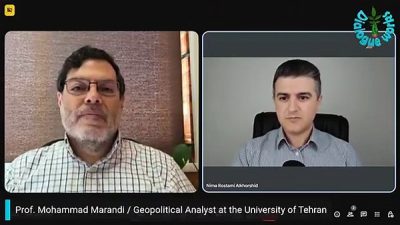
Seyed M. Marandi: U.S. Military DIVIDED? Iran’s Secret Defense EXPOSED
or go to
Aletho News Archives – Video-Images
From the Archives
‘Israel sees Iran as obstacle to its policies’
Press TV – August 25, 2017
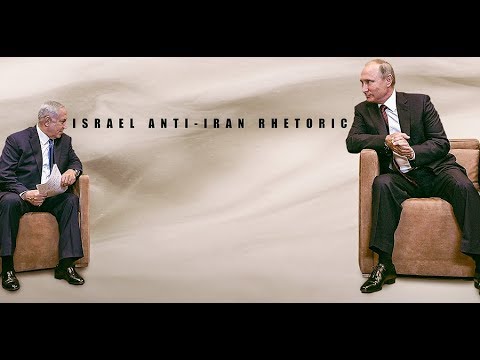
Prime Minister Benjamin Netanyahu has said that Israel felt threatened by Iran’s growing influence in the Middle East. Netanyahu expressed his Iranophobic view in a meeting with Russian President Vladimir Putin in Russia’s Black Sea resort of Sochi on Wednesday. Press TV has asked Scott Rickard, former American intelligence linguist from Tampa, Florida, and Brent Budowsky, a columnist at The Hill from Washington, to give their thoughts on the issue.
Rickard said Tel Aviv is concerned about the fact that the regime could not carry out its old project to spread sectarian divisions and pave the way for dismemberment of the countries in the Middle East region because of the Iranian-led resistance against Israeli policies, not only in the occupied territories of Palestine but also in the whole region.
“Iran is not a threat to Israel whatsoever. The threat that Israel sees is the fact that their Oded Yinon Plan is being put to a hold by Iran,” the intelligence linguist said on Thursday night.
“They (the Israelis) look at Iran as a threat only because they have no influence on their governments and Iran is autonomous and is not under the Zionist influence,” he added.
Since the victory of the Islamic Republic of Iran in 1979, Tehran has been critical of Israel’s policies in the region, whereas “no leaders [of other states] even dared to speak out against Zionism,” Rickard argued. … continue
Blog Roll
 Aletho News
- Iran declares ‘historic victory’ over US, says enemy forced to accept its proposal
- Trump Claims Ceasefire, Reopening of Strait of Hormuz Agreement with Iran
- Israeli tank fire killed UN peacekeeper in Lebanon, UNIFIL investigation finds
- Russia, China block Bahrain-sponsored UN resolution on Strait of Hormuz
- The US-Israeli War on Science is an Assault on our Future
- Trump’s Promise to Bomb Iran ‘Like Never Before’ Faces Brutal Logistics — Expert
- Germany seeks to restrict stays abroad for men of fighting age – Berliner Zeitung
- Evidence points to Ukraine being behind TurkStream attempted sabotage, but that should come as no surprise
- Sri Lanka secures supplies of Russia oil – minister
- Nations across Asia strike direct deals with Iran for Hormuz passage
- If Americans Knew
- Thousands dead and neighborhoods razed to the ground: Aid agencies fear southern Lebanon is becoming the new Gaza
- The war the US is fighting for Israel could cost trillions
- ‘Cigarette Burns, Nail Wounds’: Toddler Tortured in Gaza to Coerce Father
- Trump Says US Sent ‘a Lot of Guns’ to Protesters in Iran
- Israeli forces destroy 17 UN peacekeeper cameras in south Lebanon
- US-Israeli strikes ‘completely destroy’ synagogue in Tehran
- Archbishop for US Military Says Iran War Is Unjust Under Catholic Teaching
- Iranian leaders’ Open Letters to the American People
- Trump says Iranians appreciate bombs, WHO warns of nuclear risks – Daily Update
- U.N. experts demand Israel release prominent Gaza doctor after reports of ‘severe torture’
- No Tricks Zone
- An Inconvenient Tree: Uncovered In Alps… Europe Much Warmer Than Today 6000 Years Ago
- New Study Reports A 60% Slowdown In Greenland’s Ice Loss Rate In The Last Decade
- Low Intensity Tornado Wrecks Major Solar Farm, Creating A Potential Toxic Dump
- New Study Finds Warming Saves Lives…Cold Temperatures 12 Times More Deadly Than Excess Heat
- German Science Blog Accuses PIK Climate Institute Of Hallucinating Climate Tipping Points
- Devastating Assessment Of Comirnaty Vaccine By Former Senior Pfizer Europe Toxicologist
- New Study: CO2 Is ‘Effectively Negligible’ As An Explanatory Climate Change Factor Since 2000
- Former Pfizer Toxicologist Dr. Helmut Sterz Tells Bundestag Hearing Pfizer Vaccine Should Have Never Been Approved
- Energy Expert: Germany’s Nuclear Phaseout Was A “500 Billion Euro Mistake”
- New Research: South Australia’s Mid-Holocene Sea Surface Temperatures Were 4°C Warmer Than Today
 Aletho News