US officials accuse Russia of antagonizing Washington’s illegally occupying troops in Syria
By Robert Inlakesh | RT | April 29, 2023
The US military, with the help of its Kurdish allies, occupies a third of Syrian territory with no legal basis and is now complaining about Russia antagonizing its troops. Although Moscow has been invited into Syria by Damascus and the US has repeatedly been asked to leave, the Americans are treating Syrian territory as if it is their own.
US officials have recently lashed out with yet more accusations against Moscow. This time the complaints have surfaced through Western corporate media outlets such as the Wall Street Journal (WSJ). The head of US Air Forces Central Command, Lt. Gen. Alexus Grynkewich, told the WSJ that “we continue to see unsafe and unprofessional area activity from the Russians,” reportedly in proximity of US forces. No evidence has been provided for the claims and Moscow has yet to make any comment.
In July of last year, Dana Stroul, the Biden administration’s deputy assistant secretary of defense (DASD) for the Middle East, said: “Russia is flying in and moving about, at times, in the same space or terrain, near our forces, and it is the responsible, professional thing to do to make sure we have a channel to talk to each other.” She claimed this system has been in place for “a very long time” and is key in preventing misunderstandings that could “tip into an escalatory cycle.” With the presence of both forces in close proximity so frequently, there has yet to be any indication that what is being complained about now is anything new.
However, the story that is being completely written out of existence here is that the US has no legitimacy whatsoever to even operate inside Syria. The US government attempts to legally justify its presence by asserting that under international law it is a victim state in the face of non-state actors such as ‘Islamic State (IS, formerly ISIS) ISIS or Al-Qaeda. Therefore, the Authorization for Use of Military Force (UAMF) against Iraq, which was passed by US Congress in 2002, is utilized here.
The problem is that the US invasion of Iraq had no validity under international law either, a point explicitly made by former UN Secretary-General Kofi Annan in 2004. Knowing this, US government officials will always cite their invitation from the Iraqi government to operate inside the country today, sometimes attempting to attach their operations in Syria as coming in defense of their Iraqi ally. Article 2(4) of the UN Charter, an international law which prohibits the use of force against the territorial integrity or political independence of another state, completely invalidates US operations inside Syria, since the sovereign government of the nation never granted America permission to enter its territory. In fact, it has even ordered US forces to leave.
Even if you buy the domestic argument about the US fight against ISIS, an organization that has been reduced to terror cells that linger in caves for the most part, this justification also begins to fall apart when examined closely. In 2017, US Senator for Virginia, Tim Kaine, wrote to the US State Department and Secretary of Defense, expressing his concern that if the anti-ISIS mission was extended to include pursuing objectives outside combating the terrorist group, it would have no legitimacy.
In 2018, former US Secretary of State Rex Tillerson stated that he planned on maintaining an indefinite troop presence in Syria, both to fight ISIS and to combat Iran and Syrian President Bashar Assad. Even today, the US Department of Defense openly mentions that its mission in Syria and Iraq is a strategy to undermine Iran and ISIS. At one point, after former US President Donald Trump had been misled to believe that all US forces had been withdrawn from Syria, he corrected himself by saying that the US military presence there is “only for the oil.”
Interestingly, at a conference in 2019, Stroul stated that despite the lack of investment that the US was able to muster to counter Iranian and Russian influence in Syria, it still maintained compelling leverage “to shape an outcome that is more protective and conducive to US interests.”
Stroul outlined four ways that the US maintains its leverage. The first key point she made was about the territory in the north-east, which she said is “owned via the US military with its local partner,” adding that the “one third of Syria is the resource rich, economic powerhouse of Syria.” She elaborated that this is “where the hydrocarbons are” and that it is also the “agricultural powerhouse” of the country. Additionally, she stated that the strategy of isolating the government in Damascus diplomatically is in part about preventing Moscow’s efforts to re-integrate the country onto the international stage, and that US sanctions are partly attached to a wider anti-Iran strategy.
Perhaps the most shocking of all Stroul’s points was the admission that the US has only allowed reconstruction in the areas controlled by its SDF allies in occupied Syria while commenting that “the rest of Syria is rubble.” Stroul continued, “What Russia wants and what Assad want, is economic reconstruction and that is something that the United States can basically hold a card on via the international financial institutions and our cooperation with the Europeans.” In the wake of the devastating earthquake in Northern Syria earlier this year, the prevention of reconstruction has contributed significantly to civilian suffering resulting from the natural disaster.
The US Caesar Act sanctions have been blasted for years by UN experts, who have called upon the Biden administration to drop them over the “suffocating” humanitarian crisis they are inflicting on Syrian civilians. Under international law, the third of Syrian territory “owned” by the US can be argued as tantamount to an illegal occupation by a foreign military force. Given that the US military is an occupying power, Damascus has the right to use force to expel it, furthermore, since Russia has been invited into Syria by the official government, the US claims of harassment carry no weight. The United States of America has no right to claim self defense in Syria, it has only one right there – to leave and not return.
Robert Inlakesh is a political analyst, journalist and documentary filmmaker currently based in London, UK. He has reported from and lived in the Palestinian territories and currently works with Quds News. Director of ‘Steal of the Century: Trump’s Palestine-Israel Catastrophe’.
How the Israeli regime covered up failed military mission in Jenin
By Robert Inlakesh | Press TV | April 23, 2023
Israeli regime forces covered up a failed mission to penetrate the Jenin refugee camp and arrest or kill a resistance fighter, sources in contact with the Jenin Brigades in the northern occupied West Bank revealed to the Press TV Website.
If true, this marks a significant failure that matches up with various other cases of botched Israeli military operations across the occupied territories.
On April 18, the Israeli occupation army hatched a plan to target two “most wanted” West Bank resistance fighters, connected to the Jenin Brigades armed group, inside the Jenin refugee camp.
The plot choreographed to apprehend them was significant as this was the first raid in months that sought to penetrate the refugee camp itself, an area that has become a fortress since late last year.
The Jenin Brigades was officially formed in September of 2021, after having operated unofficially as early as May of that year under the command of the Palestinian Islamic Jihad (PIJ) movement’s Jamil al-Amoudi.
Since its formation, the group has significantly grown in numbers and strength inside the Jenin refugee camp, referred to locally as the “Hornet’s Nest”, emerging initially with around a dozen fighters and now operating in the hundreds.
Since 2022, the Jenin Brigades fighters have set up effective roadblocks at the entrances to the camp, using what is known as Chechen hedgehogs to block the passage of Israeli military vehicles.
The roadblocks force Israeli occupation soldiers to exit their vehicles in order to remove the blockages, exposing them to the fire of resistance fighters.
Several other security precautions have been taken, like covering certain areas with tarps in order to prevent enemy drones from locating resistance fighters.
These tactics have also been extended to other areas in the Jenin governorate, and have proven successful in deterring the Israeli regime’s incursions into the hub of the resistance for some time.
On January 26, a massacre was committed against Palestinians from the Jenin refugee camp. Ten Palestinians were murdered by the occupying forces in cold blood, including an elderly woman.
However, this Israeli raid was not carried out inside the refugee camp itself but happened on the periphery. The reason for the avoidance of entering deep inside the camp is that an armed battle on that terrain poses an extreme risk of the loss of forces for Zionists.
Zionist forces botch Jenin raid
The first attempt was made this year to enter the camp itself, on Tuesday the 18th of April, but seemingly only sought to penetrate a perimeter close to the entrance of the camp.
The official narrative in the Zionist Hebrew press is that three Palestinians were arrested within minutes of the mission’s initiation after Israeli forces stationed themselves there for around an hour.
According to Tal Lev Ram, the chief military correspondent for the Zionist media outlet called Maariv, three Palestinians arrested were part of the Palestinian Islamic Jihad resistance movement and were planning to carry out an explosive attack.
Tal Lev Ram is a former spokesperson for the Zionist military’s Southern Command. He also formerly worked as a military correspondent for the official Israeli army radio station.
This context to the Zionist reporter is important because he peddles the line of the Zionist armed forces.
Two informed sources — one who is on the ground in Jenin and another who has direct contact with a resistance fighter from the Jenin Brigades inside the camp — disputed the Israeli narrative and claimed that the Zionist narrative is a cover-up.
The first source, who was in Jenin camp when the raid occurred, explained that key facts had been distorted or completely invented by Israelis.
The source said that an undercover Israeli unit stationed itself at the entrance to the Jenin refugee camp, traveling in a truck used for plumbing services.
Gunfire was heard, and they heard from camp residents that someone wanted by the Israelis had fled from al-Tawalbeh Mosque.
The source emphasized the claims that the occupation forces had actually penetrated the camp were wrong and that this would have resulted in a massive clash, asserting that they only operated at the entrance area, analyzing that this was likely a strategic decision.
Furthermore, the source spoke about the use of a woman as a human shield by one of the Israeli units, who used her in order to prevent Palestinian resistance fighters from shooting at them.
The second source, who had directly contacted a fighter in the Jenin Brigades to understand their take, gave details at length.
According to this source, only one of the three Palestinians arrested was a target for the Israelis and none of them was in the possession of any weapons.
The first two men arrested were Amjad and Ahmad Jaradat. While Ahmad was wanted by the Israelis and had an affiliation with PIJ, his brother Amjad was taken after being briefly interrogated inside a house at the camp’s entrance.
Amjad was not actually a target and it seemed as if Israeli forces had taken him out of anger.
The third Palestinian arrested was Abdul Kareem Abu Nasseh. He was also not wanted by Israeli forces and was allegedly picked up for being in the wrong place at the wrong time.
He is not part of the PIJ movement. Instead, he is part of Al-Aqsa Martyrs Brigades, an unofficial Fatah party-affiliated armed group.
This fact was carefully omitted from Zionist media reports that claimed that those arrested were all part of PIJ. Abu Nasseh has been detained by the Palestinian Authority security forces before, meaning that the Israelis knew he is not part of PIJ, as the PA shares intelligence and security information with the occupation army.
The source also claimed that a Palestinian fighter named Hamed Naaseh was the main target, but he had fled the scene of the al-Tawalbeh mosque and evaded capture. He is well known to the Zionist military, which seeks to capture or kill him.
If this account is to be believed, it means that out of three fighters who were kidnapped, only one was actually a target, with the main target getting away.
The source also stated that Israeli forces had positioned themselves in two vehicles, one at the entrance to the camp and another just outside the camp.
The Jenin Brigades had been monitoring one of the vehicles, identified as a minivan, that was stationary for around 50 minutes, opening fire at it as soon as Israeli soldiers exited the vehicle.
The occupation forces then called in reinforcements, deploying military bulldozers and a truck, after gunfire erupted.
The source revealed that the reinforcements sent had indicated that Israeli forces sought to set up a checkpoint and apply the pressure cooker tactic.
The pressure cooker tactic is to besiege resistance fighters inside a building from all angles and fire shoulder-mounted missiles at the structure, before eventually raiding it with special forces.
Despite bringing in the vehicles and troops necessary, the Israelis were unable to pull this off as their target had already fled.
Both sources agreed that if there was an imminent threat of a bombing attack emanating from Jenin camp, as suggested by the Israeli military, they would have surely seized explosives or weapons, yet they did not recover any weapons from those arrested.
Israelis oblivious to the truth
The old tactic of hiding military failures, along with the loss of troops, has become a well-documented feature of the Zionist entity, as noted by all close observers.
This has even cost Israeli rulers politically in the past, the most prominent case being when the Salah al-Deen brigades released a video showing a military operation they had conducted in February of 2018, months later in November of that year.
An Israeli undercover unit that had penetrated the Gaza Strip in 2018 was uncovered by the military wing of Hamas, the Qassam Brigades, thwarting a plot to kidnap one of its commanders, Nour Baraka.
The video released on Al-Mayadeen TV at the time showed a group of Israeli soldiers approaching the Gaza separation fence to pull down a Palestinian flag pole, which then exploded and killed a number of them.
The Israeli military had not revealed to its public that such a military operation had occurred back in February. The situation was so embarrassing that the then-Israeli minister of war, Avigdor Lieberman, was forced to resign from his position.
The Zionist armed forces also frequently claim to hit high-value Hamas resistance movement targets in Gaza, which frequently turn out to be open agricultural areas and empty training sites.
In the latest escalation between the resistance forces and the Israeli regime during Ramadan, Israeli Prime Minister Benjamin Netanyahu claimed to have hit targets belonging to Hezbollah and Hamas in southern Lebanon.
The reality was that the strikes only caused material damage and hit banana trees, provoking satirical reactions inside Lebanon, with some locals referring to the Israeli strikes as “Operation Banana Split”.
It is likely that the Israeli regime conceals its failures and military losses for fear of backlash from the Israeli public who interpret such failures as political weakness on the part of ruling coalitions.
A recent poll conducted by the Zionist ‘Channel 13 News channel indicated that 71 percent of Israeli respondents indicated that Netanyahu’s performance as prime minister was “not good”.
Taking into account his poll, the ruling far-right coalition led by Netanyahu, which is already facing an unprecedented existential crisis amid raging anti-regime protests, may be cautious in what information it lets surface about the failures of its military.
Robert Inlakesh is a journalist, writer and political analyst, who has lived in and reported from the occupied West Bank.
Leaked files: Britain’s secret propaganda ops in Yemen
By Kit Klarenberg | The Cradle | April 17 2023
Yemen’s civil war, considered the world’s gravest humanitarian crisis, appears to be nearing its end due to a China-brokered detente between Iran and Saudi Arabia, who support opposing sides in the bitter conflict.
Early signs suggest that the rapprochement between Tehran and Riyadh may not only end hostilities in Yemen, but across the wider region.
The US, Israel, and Britain have the most to lose from a sudden onset of peace in West Asia. In the Yemeni context, London may be the biggest loser of all. For years, it provided the Saudi-led coalition with weaponry used to target civilians and civilian infrastructure, with receipts running into billions of pounds sterling.
During the entirety of the war, Yemen was struck by British-made bombs, dropped by British-made planes, flown by British-trained pilots, which then flew back to Riyadh to be repaired and serviced by British contractors. In 2019, a nameless BAE Systems executive estimated that if London pulled its backing for the proxy war, “in seven to 14 days, there wouldn’t be a jet in the sky.”
In addition to supplying weapons, the war also presented a golden opportunity for Britain to establish a military base in Yemen, fulfilling long-held fantasies of recovering the Empire’s long-lost glory days “East of Suez.”
Al-Ghaydah airport in al-Mahrah, Yemen’s far eastern governorate, has for some time quietly housed “a fully-fledged force” of British soldiers, providing “military training and logistical support” to coalition forces and Saudi-backed militias. There are even indications that this involvement could extend to torture methods, which is a troubling reflection of one of London’s leading exports.
The Cradle has obtained exclusive information about a previously undisclosed aspect of London’s role in the proxy war against Yemen’s Ansarallah-led resistance. It has been revealed that a multi-channel propaganda campaign, led by the intelligence cut-out ARK and its founder Alistair Harris, a veteran MI6 operative, has been operating in complete secrecy throughout the nine-year-long conflict – one that specifically targeted Yemen’s civilian population.
Anti-Ansarallah ops
Leaked Foreign Office documents have revealed that ARK’s “multimedia” information warfare campaign was designed to undermine public sympathy for the Ansarallah movement and ensure that the conflict would only end on terms that aligned with London’s financial, ideological, and geopolitical interests.
For instance, public acceptance of the UN’s widely unpopular peace proposal required propaganda support from local NGOs and media organizations that “support UK objectives” to “communicate effectively with Yemeni citizens” and change their minds.
It was also necessary to counter “new actors” in the information space that were critical of the Saudi-led coalition’s brutal bombing campaigns and the illegitimate, US-backed puppet government that the aerial assaults sought to protect.
Considering the high rate of illiteracy in the local population, ARK conceived the creation of a suite of “visually rich” products extolling the virtues of a Riyadh-dominated peace plan. These products would be disseminated on and offline, would “deliberately include different demographics, sects, and locations to ensure inclusivity,” and would be informed by focus groups and polling of Yemenis. ARK’s campaign even extended to convening “gender-segregated poetry competitions using peace as a theme” and “plays and town hall meetings.”
Publicly, many of these propaganda products appeared to be the work of Tadafur – Arabic for “work collectively and unite” – an astroturf network of NGOs and journalists constructed by ARK. Its overt mission was to “resolve local level conflicts” and “unite local communities in their conflict resolution efforts.”
The campaign began initially at a “hyper-local level” across six Yemeni governorates, “before being amplified at the national level.” Activities “[in] all areas and at both levels” had unified messaging across “common macro themes,” such as the slogan “Our Yemen, Our Future.”
In each governorate, a “credible” local NGO was identified as a messenger, along with “well-known” and “respected and influential” journalists who served as “dedicated field officers” across the sextet, managed by ARK.
In Hajjah – “a site of strong Houthi influence” – the Al-Mustaqbal Institute for Development was ARK’s NGO of choice; in Ansarallah-governed Sanaa, it was the Faces Institution for Rights and Media; in Marib, the Marib Social Generations Club; in Lahij, Rouwad Institution for Development and Human Rights; in Hadhramaut, Ahed Institute for Rights and Freedom; in Taiz, Generations Without Qat.
These local NGOs were instrumental in promoting ARK’s agenda and advancing the narrative that aligned with Britain’s objectives in Yemen.
The company’s roster of “field officers” comprised of individuals with various backgrounds, such as:
“Human rights abuse” specialist Mansour Hassan Mohammad Abu Ali, TV producer Thy Yazen Hussain, Public Organisation to Protect Human Rights press official and “experienced journalist” Waleed Abdul Mutlab Mohammed al-Rajihi, producer from Alhadramiah Documentary Institute Abdullah Amr Ramdan Mas’id, editorial secretary of Family and Development magazine and the Yemen Times’ Taiz news manager Rania Abdullah Saif al-Shara’bi, as well as journalist and activist Waheeb Qa’id Saleh Thiban.
A Trojan Horse
Once ARK’s field officers and NGOs “successfully designed and implemented hyper-local campaigns,” coverage of “information around the related activities will then be amplified at the national level.” A key platform for this amplification was a Facebook page called “Bab,” launched in 2016 with tens of thousands of followers who were unaware that the page was created by ARK as a British intelligence asset.
Under the guise of a popular grassroots online community, ARK used the Bab page to broadcast slick propaganda “promoting the peace process,” including videos and images of “local peacebuilding initiatives” organized by its NGO and field officer nexus.
“Campaign content will highlight tangible, real-life examples of compelling peacebuilding efforts that all Yemenis, regardless of their political affiliation, can relate to,” ARK stated.
“These will offer inspirational examples for others to emulate, demonstrating practical ways to engage with the peace process at a local level. Taken together, these individual stories form the broader campaign with a national message: Yemenis share a collective desire for a peaceful resolution to the conflict.”
When “high engagement levels” with this content were secured, Bab users were invited to submit their own, which demonstrated “support for the peace process.” They were explicitly asked “to mirror content ARK has produced, such as voxpops, short videos, or infographics.” This was then “shared by the project and field teams through influential WhatsApp messaging groups, a key way of reaching Yemeni youth.”
ARK’s “well-connected communications team” would then “strategically share packaged stories with broadcast media or key social influencers, or offer selected journalists exclusive access to stories.” Creating a constant flow of content was a deliberate ploy to “collectively be as ‘loud’ as partisan national political and military actors.” In other words, to create a parallel communications structure to Ansarallah’s own, which would drown out the resistance movement’s pronouncements.
ARK’s role in Yemen’s peace process
While one might argue that the non-consensual recruitment of private citizens as information warriors by British intelligence was justified by the moral urgency of ending the Yemen war quickly, the exploitation of these individuals was cynical in the extreme. It amounted to a Trojan Horse operation aimed at compelling Yemenis to embrace a peace deal that was wildly inequitable and contrary to their own interests.
Multiple passages in the leaked files refer to the paramount need to ensure no linkage between these propaganda initiatives and the UN’s peace efforts. One passage refers to how campaign “themes and activities” would at no point “directly promote the UN or the formal peace process,” while another says concealing the operation’s agenda behind ostensibly independent civil society voices “minimizes the risk” that “outputs are perceived as institutional communications stemming from or directly promoting the UN.”
Yet, once ARK’s campaigns began “performing successfully at the national level,” the company’s field officers planned to “build a bridge” between its local foot soldiers and national “stakeholders” – and, resultantly, the UN. In other words, the entire ruse served to entrench ARK’s central role in peace negotiations via the backdoor.
Diminished western influence
At that time, the ceasefire deal proposed by the UN required Ansarallah and its allied forces to virtually surrender before Riyadh’s military assaults and economic blockade of the country could be partially lifted, along with other stringent requirements that the Saudis refused to compromise on. The US aggressively encouraged such intransigence, viewing any Ansarallah influence in Yemen as strengthening Iran’s regional position.
However, these perspectives are no longer relevant to Yemen’s peace process. China has now encouraged Riyadh to offer significant concessions, and as a result, the end of the war is within sight, with critical supplies finally allowed to enter Yemen, prisoners returned, Sanaa’s airport reopened, and other positive developments.
Evidently, Washington’s offers of arms deals and security assurances are no longer sufficient to influence events overseas and convince its allies to carry out its agenda. The failure of ARK’s anti-Ansarallah propaganda campaigns to coerce Yemenis to accept peace on the west’s terms also highlights Britain’s significantly reduced power in the modern era.
Whereas wars could once be won on the coat-tails of well-laid propaganda campaigns, the experiences of Yemen, Syria, Iraq, and Afghanistan show that the tide has turned. Subversive information campaigns can confuse and misdirect populations but, at best, can only prolong conflict – not win it.
Recent hostilities between Syrian and US forces could be a turning point
By Robert Inlakesh | RT | April 9, 2023
US President Joe Biden ordered airstrikes on a number of positions in northeastern Syria last month, after Washington announced the death of a contractor in a drone strike.
What followed was an unprecedented response from the Syrian Arab Army (SAA) and allied militias, shelling US positions throughout the duration of the following day. This exchange of fire marks a turning point in the conflict between the two sides.
On March 23, the US Department of Defense claimed that a drone, of Iranian origin, had struck US forces stationed near al-Hasakah, in northeastern Syria, killing an American contractor and injuring a number of service members. To which F-15 fighter jets were launched from Doha in order to target Iranian-allied militia groups in the Deir ez-Zor province of Syria. Throughout recent years there have been several exchanges between US and Iranian-allied militia groups in Syria’s east. However, these rarely resulted in American casualties and the brief escalations were controlled.
What changed following the US strikes on March 24 is that there was intense return fire from not only Iranian-aligned militias in Deir ez-Zor, but also from the SAA itself. A number of US bases were struck in the response, which primarily targeted American forces around the al-Omar oil fields, inflicting traumatic brain injuries on six US troops, according to the Pentagon. During a trip to Canada the following day, Joe Biden remarked that the US was “not going to stop” when asked about retaliating against Iran for the exchange in Syria. “Be prepared for us to act forcefully to protect our people” he said.
It later emerged that the Biden administration had moved one of its aircraft carriers, the USS George H.W. Bush, closer to Syria, which, deputy Pentagon press secretary Sabrina Singh explained, was due to “increased attacks from [Iran’s Islamic Revolutionary Guard Corps (IRGC)]-affiliated groups targeting our service members across Syria.” What this represents, regardless of whatever action the US may take in the future, is a strategic change in the equation set forth by Syria and its allies in Syria’s east. What an Iraqi source with intimate knowledge of the situation claimed had been an “order to now kill American troops and not just fire warning shots.”
According to a Syrian political source, who chose to remain anonymous for security reasons, the escalation in the northeast is directly tied to the ongoing Israeli aggression against the country:
“The recent move by Syria and allies is a direct response to a wave of Israeli escalation against the country that began last year. If you remember in August of 2022, there was a similar stand-off between the Americans and IRGC allies in northeastern Syria. The Israeli escalation is directly enabled by the United States, whose officials talked in the past about the importance of the American military presence in Syria for Israel’s war-between-wars campaign against Iran-aligned forces there.”
The “war between wars” is one of Tel Aviv’s inter-war campaigns, where covert operations are carried out against enemy states during a period of relative calm between both sides. Israel’s recent campaign has primarily consisted of operations against Iranian-linked targets, both inside and outside of Iran; it also has included a large number of unannounced airstrikes inside Syria, where members of the IRGC have been targeted, along with allied militia groups. The Israel Defense Forces have a policy of not commenting on these attacks but Prime Minister Benjamin Netanyahu has in the past admitted that “hundreds” of them had taken place over the years.
If Damascus’ new approach of responding forcefully against the US military in northeastern Syria is adopted going forward, it will give Washington only two options: negotiate with Damascus or leave the country completely. If American soldiers are coming home in body bags over maintaining an occupation inside a country that the US public, along with Congress, were never consulted on, the pressure of remaining could become a burden on the Biden administration. This is especially the case at a time when the Arab World is beginning to normalize formal ties with Damascus, in addition to Washington’s NATO ally Türkiye.
A Syria-Türkiye rapprochement could be essential to forcing the US out of Syria also, as both countries could end up coordinating during any future Turkish offensive against the Kurdish-led Syrian Democratic Forces (SDF) in the northeast. The SDF operate as a kind of US proxy force, allowing for the Americans to use a small number of their own troops to occupy roughly a third of Syria’s territory; included in which are the most fertile agricultural lands and the majority of Syria’s natural resources. Both previous attacks, launched by Ankara in 2018 and 2019, led to a withdrawal of US forces so as to not accidentally cause friction with their NATO ally. In the event that another military operation from Türkiye is launched, Syria could be poised to retake its oil fields, in theory.
The adoption of a head-on confrontation strategy by Iran-aligned groups and the Syrian government could lead to new horizons and to the possibility of a US withdrawal, that is assuming the Biden administration is not wedded completely to the idea of staying.
Robert Inlakesh is a political analyst, journalist and documentary filmmaker currently based in London, UK. He has reported from and lived in the Palestinian territories and currently works with Quds News.
KSA readies draft peace deal to end Yemen war
The Cradle | April 7, 2023
A comprehensive peace document is being drafted to end the Yemen war as it enters its ninth year, an informed Yemeni source revealed to Saudi-owned Asharq Al-Awsat newspaper today, 7 April.
The peace proposal is being sponsored by the UN and is said to cover three phases to end the conflict that has killed some 400,000 people through direct and indirect causes since 2015 and created the world’s worst humanitarian crisis.
The first phase of the peace deal would include a nationwide ceasefire, the reopening of all land, air, and sea routes, the merger of the central banks, and comprehensive prisoner exchanges.
The parties would then hold direct negotiations to establish how the Yemenis envision a state, followed by a transitional period.
Saudi Defense Minister Prince Khalid bin Salman held talks in Riyadh with the Chairman of the Yemeni Presidential Leadership Council (PLC) Dr. Rashad Al-Alimi, to discuss the latest efforts to revive the peace process in line with the UN proposal.
The source speaking with Asharq Al-Awsat expected a ceasefire to be declared in the coming days, for the truce to be consolidated, and for fighting to stop at the battlefronts. Other arrangements will need weeks to be implemented.
The source also claimed Ansarallah has sought to escalate the fighting in recent weeks to make additional military gains before a ceasefire is declared.
Yemeni sources similarly told Al-Mayadeen that “the Saudi vision for the solution provides for the extension of the existing truce in Yemen for another year in understanding with [the Ansarallah-led government in] Sanaa,” adding that “the vision provides for the extension of the truce in exchange for the delivery of salaries, the unification of the currency and the full opening of the port of Hodeidah.”
Further, “The extension of the truce on its new terms will be followed by an official Saudi announcement of the end of the war and the cessation of its intervention in Yemen,” Al-Mayadeen’s sources said.
Optimism surrounding a peace deal has increased following the recent Saudi-Iranian rapprochement, as some observers contend the Ansarallah movement is an Iranian proxy and that Saudi Arabia is no longer interested in prolonging this conflict and is serious in its efforts to reach a solution.
However, resistance to a peace deal may come from the US and UAE.
Abu Dhabi controls most of Yemen’s southern ports, from which Yemeni oil is exported, and is also occupying several strategic islands off the country’s coast and is in the process of establishing a “maritime empire” in Yemeni waters.
Because of this, analysts have suggested that the UAE is uninterested in a solution that ends the war in Yemen.
According to an exclusive by The Cradle, the US, and UAE have “furiously sought to undermine” the understanding reached between Saudi Arabia and Ansarallah in order “to prevent a resolution of the Yemen war.”
The US is unlikely to welcome an end to the war, given that US weapons manufacturers profit significantly from the conflict.
According to a US Government Accountability Office report, the United States concluded over $54 billion in arms sales to Saudi Arabia and the UAE from 2015, the first year of the Yemen war, through 2021. These arms sales accounted for 17 percent of total sales under the U.S. government’s Foreign Military Sales program.
Yemeni FM berates Biden for faking ‘concern’, says US complicit in war, siege
Press TV – April 5, 2023
Yemen’s foreign minister says the United States is bent on whitewashing its complicity in the Saudi-led aggression against the impoverished Arab country by pretending to be concerned about achieving peace there.
Hisham Sharaf was cited by the Yemeni Saba news agency as making the remarks on Tuesday, two days after US President Joe Biden released a statement on the anniversary of the start of an UN-sponsored ceasefire in Yemen and stressed Washington’s “support” for all efforts aimed at reaching a comprehensive peace in the war-ravaged country.
Underlining that the US was “trying to evade its responsibilities” as a party responsible for the Saudi-led war and was profiting from it, Sharaf challenged Washington to “prove” its sincerity in wanting peace in Yemen by taking “concrete steps on the ground” and condemning the actions of the Saudi-led coalition.
“The countries that claim to be keen on achieving peace in Yemen should be sincere in their intentions by condemning the aggression and siege on Yemen for the ninth year in a row, stopping the supply of weapons and military experts to aggression countries, and putting pressure on the aggression countries,” Sharaf said.
The top Yemeni diplomat said Biden’s statement and the concern he showed regarding achieving permanent peace in Yemen are “not commensurate with what America is doing in reality by providing cover for the aggression countries.”
“The United States of America is trying with such a statement to evade its responsibilities as a party that participated in the aggression and siege on Yemen, which caused the largest humanitarian crisis in contemporary history, and to present itself as a dove of peace,” he added.
Emphasizing Yemen’s call for a just peace, Sharaf concluded by expressing Sana’a’s readiness to defend the Yemeni people through all legitimate means and the country’s ability to meet the legitimate demands of the Yemeni people.
Omani-hosted talks between the sides in the protracted conflict have been ongoing for the past several months, with the Iran-Saudi rapprochement having increased hopes that an end to the war could be imminent.
Saudi Arabia and the United Arab Emirates — the closest allies of the US in the region after the Israeli regime — have been waging the war on Yemen since March 2015.
The invasion has been seeking to change Yemen’s ruling structure in favor of the impoverished country’s former Riyadh- and Washington-friendly rulers and crush the popular Ansarullah resistance movement. The Saudi-led coalition has failed to meet any of its objectives.
The war, which has been enjoying unstinting arms, logistical, and political support on the part of the United States, has killed hundreds of thousands of Yemenis and turned the entire country into the scene of the world’s worst humanitarian crisis.
Yemen’s defense forces, which feature the country’s army and its allied Popular Committees, have, however, vowed not to lay down their arms until the country’s complete liberation from the scourge of the aggression.
US troops should leave Germany – MP
RT | April 1, 2023
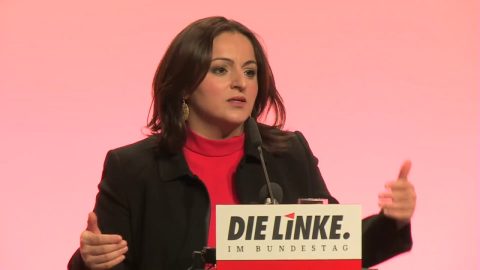
Berlin must break with the existing “relationship of extreme subservience” to America and its foreign policies “marked by breaches of international law,” Sevim Dagdelen, the deputy head of the Left Party’s faction in the Bundestag, said on Friday. Germany must demand that US forces stationed on its territory be withdrawn, along with America’s nuclear weapons, the MP insisted.
“After 78 years, it is now time for the US soldiers to go home,” Dagdelen said at a parliamentary event marking the 75th anniversary of the Marshall Plan. The US military bases act “like extraterrestrial zones where the [German] constitution does not apply,” the MP, who is also a member of the parliament’s Foreign Affairs Committee, said.
Washington uses its bases on German soil to wage wars abroad and launch “lethal drone strikes,” Dagdelen said, adding that some of these actions are “in breach of international law.”
She also criticized the regular NATO meetings at the US Ramstein base in Germany, where military aid to Kiev is discussed. Washington hosts these conferences “as if the Occupation Statute were still in force,” the MP said, adding that Berlin also allowed the US to put it “in the line of fire” with the German-made Leopard tank deliveries to Ukraine.
The German lawmakers took a decision on the withdrawal of America’s nuclear weapons from the nation’s territory as early as 2010, but these arms are still in place, Dagdelen said. “We stand by our position: the US nuclear weapons must go,” she added.
“The US administration gives the impression that they do not want allies, just loyal vassals,” the MP said, pointing to America’s negligence toward its partners’ interests and demands. According to Dagdelen, “fewer and fewer countries around the world are prepared to accept this.” A true “friendship” should be based on mutual respect for human rights and international law, the MP added.
Germany hosts by far the largest number of US military personnel out of all European nations. Over 35,000 American troops were stationed on its soil as of 2022. Italy, which hosts the second-largest number of American soldiers, trails far behind, as some 12,000 US military personnel were stationed there at the same time.
The people who brought you the Iraq war loudly support arming Ukraine. Where will this lead?
By Andrey Sushentsov | RT | March 30, 2023
This year’s twentieth anniversary of the illegal Iraq invasion paradoxically coincided with major international events. Xi Jinping, General Secretary of the Central Committee of the Communist Party of China, was in Moscow on the day, while a Russia-Africa Parliamentary Forum opened at the same time.
In 2003, at the height of its power, the US proclaimed its “unipolar moment” in which it would dominate unchallenged, needing no allies and tolerating no objections from adversaries. History, it was believed, had a single purpose, and they would stop at nothing to achieve it. Indeed, American military, political and economic dominance seemed total at the time, echoing the sentiments of Henry Kissinger, who a few years earlier had written “America at the Apex.” Twenty years later, we are witnessing the flowering of multi-polarity: in Moscow, the General Secretary of the Central Committee of the Communist Party of China was talking to the Russian President, two countries contributing to a change the world has not seen in a hundred years. This transience of world history shows how quickly historical cycles change, but it is also important that the US itself, through its actions in different parts of the world, is accelerating its course.
One of the most important strategic mistakes made by Washington was the invasion of Iraq. Based on a false pretext and the deliberate misleading of the international community, it led to a series of significant war crimes, a catastrophic civil war, the shattering of Iraqi statehood and enormous repercussions for the entire Middle East. Just a few years of American presence in Iraq resulted in huge numbers civilian deaths, indiscriminate use of force, and the destruction of several cities, including Mosul. During the evacuation of the Russian embassy amid the 2003 US invasion, a convoy of diplomats came under American fire and several were injured. US private military contractors, who at one point had the same presence in the country as official troops, committed a number of war crimes. The abuse of prisoners by the US military at Abu Ghraib prison near Baghdad has been well documented. When the International Criminal Court raised the question of American citizens being charged over offenses in Afghanistan and Iraq, the US responded that it would prosecute the judges who raised the issue and that they should withdraw their initiatives immediately.
Arguably the greatest crime of the US in Iraq has been to create a civil war that has resulted in a terrible number of casualties with estimates ranging from 600,000 to one million.
From 2005 to 2007, the country’s population curve flattened, despite the fact that it has always had one of the highest birth rates in the region. The dismantling of the central government triggered geopolitical processes in the region and power in the formerly Sunni-ruled country fell into the hands of the Shia Arab majority, which began a rapprochement with Shia Iran. Since then, Tehran’s strategic position in Iraq has remained significant.
Some of the consequences of the US invasion have backfired as well. For example, the fight against terror led to an increase in the influence of ISIS, an organization banned in Russia, in Iraq. Unexpectedly, Iran’s strengthened role in the country meant that 150,000 US troops were unable to control the situation in Iraq, while a few dozen Iranian diplomats in the embassy in Baghdad were quite capable of doing so. The metastasis of the Arab Spring, which began to spread to various countries in the region, was also one of the consequences of the Iraq war.
Meanwhile, US financial costs for the war are estimated at several trillion dollars. Overall, the politically unsuccessful operations in Iraq and Afghanistan have led to a decline in American influence and status in the region, as evidenced by the recent restoration of diplomatic relations between Saudi Arabia and Iran, mediated by China.
The Americans formulated a reasonable objective for the military operation as early as 2007. It was voiced by General David Petraeus at a US congressional hearing. In response to a question about American interests in the country, he said, “Our purpose is not to create a Jeffersonian democracy, our purpose is to create the conditions for our troops to withdraw.” The implication was that pulling out should not look like defeat. At the time, this reasoned objective was well in line with American interests and showed the depth of the strategic error the Americans had made in preparing for the 2003 invasion.
Today, many of those responsible for that war – and their media and academic cheerleaders – are now loudly supporting Washington’s position on Ukraine.
It’s unlikely that the impact of their actions will be any different this time.
Andrey Sushentsov is the Valdai Club program director.
Syria reasserts its right to restore its sovereignty over Israeli-occupied Golan
Press TV – March 30, 2023
Syria has reasserted its “inalienable right” to restore its sovereignty to the Israeli-occupied Syrian territory of the Golan Heights, denouncing the US’s support for the regime that has emboldened it to prolong the occupation.
Syria’s permanent representative to the United Nations Office in Geneva, Ambassador Haider Ali Ahmed made the remarks, addressing a session of the Human Rights Council on the situation in the Middle East, the official Syrian Arab News Agency (SANA) reported on Wednesday.
The Israeli regime seized the Golan Heights from Syria during the 1967 Six-Day War and later occupied it in a move that has never been recognized by the international community. The regime has built dozens of settlements in the area ever since and has been using the region as a launch pad for its military operations against the Arab country.
“Israel commits a war crime by building colonies and settlements in the occupied Syrian Golan, and its colonization plans have witnessed an escalation since the end of 2021, when it announced the doubling of the number of settlers in the Golan over a period of five years,” the Syrian envoy said.
Ahmed also pointed to a plan by the occupying regime to install wind turbines in Golan, saying the scheme proved Tel Aviv’s intransigence in keeping up its colonial and racist practices in the Syrian territory.
“The time has come to start taking concrete steps to put an end to the Israeli regime’s occupation of Arab lands, which comes as a result of the support that the US and other countries provide to the Israeli occupation entity,” added the Syrian diplomat.
The United States has proven the Israeli regime’s biggest and most dedicated ally since 1948, when the regime claimed existence after occupying huge expanses of regional territories during a similar war.
With a cast-iron resolve, Washington has invariably provided sustained arms, logistical, and political support for Tel Aviv that has encouraged it to sustain the occupation and keep up its near-daily deadly crimes against the peoples of the occupied territories, foremost among them the Palestinians.
The Syrian official said the US’s continuing to provide this support despite the horrible crimes served as the greatest evidence of Washington’s contempt for the provisions of international law, the United Nations Charter, and international resolutions.
US is stirring up the Syrian cauldron
BY M. K. BHADRAKUMAR | INDIAN PUNCHLINE | MARCH 26, 2023
The circumstances surrounding the flare-up in Syria between the US occupation forces and pro-Iranian militia groups remain murky. President Biden claims that the US is reacting, but there are signs that it is likely being proactive to create new facts on the ground.
The US Central Command claims that following a drone attack on March 23 afternoon on an American base near Hasakah, at the direction of President Biden, retaliatory air strikes were undertaken later that night against “facilities used by groups affiliated with Iran’s Islamic Revolutionary Guards Corps.”
However, this version has been disputed by the spokesman of Iran’s Supreme National Security Council who accused Washington of “creating artificial crises and lying.” The Iranian official has alleged that “Over the past two days, American helicopters have carried out several sorties with the aim of increasing instability in Syria and transferred Daesh (Islamic State) terrorists in the territory of this country.”
He said Washington must be held accountable for such activities. The official warned that Tehran will give a prompt response to any US attack on whatever false pretext against Iranian bases that exist on Syrian soil at the request of Damascus for fighting terrorism.
Is the US deliberately ratcheting up tensions in Syria even as the China-brokered Saudi-Iranian rapprochement is radically changing the security scenario in the West Asian region in a positive direction?
There is optimism that Syria stands to gain out of Saudi-Iranian rapprochement. Already, the Saudi Foreign Ministry revealed on Thursday that talks are going on with Syria for resuming consular services between the two countries, which will pave the way for the resumption of diplomatic relations and in turn make it possible to reinstate Syria’s membership of the Arab League.
Saudi Arabia has established an air bridge with Syria to send relief supplies for those affected by the devastating earthquake in February.
The backdrop is that the normalisation of relations between Syria and its estranged Arab neighbours has accelerated. It must be particularly galling for Washington that these regional states used to be active participants in the US-led regime change project to overthrow the government of President Bashar al-Assad. The Saudi-Iranian rapprochement badly isolates the US and Israel.
From such a perspective, it stands to reason that the US is once again stirring up the Syrian cauldron. Lately, Russian aircraft have been reported as frequently flying over the US’s military base At Tanf on the Syrian-Iraqi border where training camps for militant groups are known to exist.
Israel too is a stakeholder in keeping Syria unstable and weak. In the Israeli narrative, Iran-backed militia groups are increasing their capability in Syria in the last two years and continued US occupation of Syria is vital for balancing these groups. Israel is paranoid that a strong government in Damascus will inevitably start challenging its illegal occupation of Golan Heights.
A key factor in this matrix is the nascent process of Russian mediation between Turkiye and Syria. With an eye on the forthcoming presidential and parliamentary election in Turkiye in May, President Recep Erdogan is keen to achieve some visible progress in improving the ties with Syria.
Erdogan senses that the Turkish public opinion strongly favours normalisation with Syria. Polls in December showed that 59 percent of Turks would like an early repatriation of Syrian refugees who are a burden on Turkish economy, which has an inflation rate of 90 percent.
Evidently, Turkiye is ending up as a straggler when the West Asian countries on the whole are coasting ahead to normalise their relations with Damascus. But the catch is, Assad is demanding the vacation of Turkish occupation of Syrian territory first for resuming ties with Ankara.
Now, there are growing signs that Erdogan may be willing to bite the bullet. The consummate pragmatist in him estimates that he must act in sync with the public mood. Besides, the main opposition party CHP always maintained that an end to the Syrian conflict needs to be anchored firmly on the principles of Syria’s unity and territorial integrity.
The influential Beirut newspaper Al-Akhbar has reported citing sources close to Damascus that Erdogan is weighing options that would meet Assad’s demand with a view to restore relations. The daily reported that one possibility is that Turkiye may propose a timetable for the withdrawal of its troops in Syria.
Significantly, Erdogan telephoned Russian President Vladimir Putin on Saturday and the Kremlin readout mentioned that amongst “topics concerning Russian-Turkish partnership in various fields,” during the conversation, “the Syrian issue was touched upon, and the importance of continuing the normalisation of Turkish-Syrian relations was underlined. In this regard the President of Türkiye highlighted the constructive mediatory role Russia has played in this process.”
Earlier, on Wednesday, Turkish Defense Minister Hulusi Akar held telephone talks with his Russian counterpart Sergei Shoigu to discuss developments in Syria where he underscored that the “sole purpose” of its deployment in northern Syria is to secure its borders and fight terrorism.
It is entirely conceivable that Erdogan has sought Putin’s help and intervention to reach a modus vivendi with Assad quickly. Of course, this is a spectacular success story for Russian diplomacy — and for Putin personally — that the Kremlin is called upon to broker the Turkish-Syrian normalisation.
The China-brokered Saudi-Iranian normalisation hit Washington where it hurts. But if Putin now brokers peace between two other rival West Asian states, Biden will be exposed as hopelessly incompetent.
And, if Turkiye ends its military presence in Syria, the limelight will fall on the US’ illegal occupation of one-third of Syrian territory and the massive smuggling of oil and other resources from Syria in American military convoys.
Furthermore, the Syrian government forces are sure to return to the territories vacated by Turkish forces in the northern border regions, which would have consequences for the Kurdish groups operating in the border region who are aligned with the Pentagon.
In sum, continued US occupation of Syria may become untenable. To be sure, Russia, Turkiye, Iran and Syria are on the same page in seeking the vacation of US occupation of Syria.
Thus, an alibi is needed for the US to justify that although dialogue and reconciliation is in ascendance in West Asian politics, Syria is an exception as a battleground against “terrorism.” The US is vastly experienced in using extremist groups as geopolitical tools.
The US’ real intention could be to confront Iran on Syrian soil — something that Israel has been espousing — taking advantage of Russia’s preoccupations in Ukraine. The Russian-Iranian axis annoys Washington profoundly.
The spectre that is haunting Washington is that the stabilisation of Syria following Assad’s normalisation with the Arab countries and with Turkiye will inexorably coalesce into a Syrian settlement that completely marginalises the “collective West.”
In retrospect, the unannounced visit by General Mark Milley, chairman of the US Joint Chiefs of Staff to northern Syria in early March falls into perspective. Milley told reporters traveling with him that the nearly eight-year-old US deployment to Syria is still worth the risk!
The time may have come for the militants, including ex-Islamic State fighters, who were trained in the US’s remote At Tanf military base to return to the killing fields for “active duty.”
Tass reported that on Friday, the terrorist group known as Hayat Tahrir al-Sham tried to break into the Aleppo region which has been under Syrian government control and relatively stable in the recent years.
Russia Foreign Ministry calls for prosecuting Israelis responsible for Church of Gethsemane attack

Israeli police and firefighters outside the Gethsemane Church in Jerusalem after settlers attempted to set fire to the holy site [AHMAD GHARABLI/AFP/Getty Images]
MEMO | March 25, 2023
The Russian Ministry of Foreign Affairs has called for the trial of those responsible for the attack on the Church of Gethsemane in occupied Jerusalem.
On Friday, Russian Foreign Ministry spokesperson Maria Zakharova shared an official statement: “We are convinced that there is no justification, and that there can never be any justification, for such criminal acts, and hope that the Israeli authorities will provide an unequivocal assessment of what happened and to take comprehensive measures to bring perpetrators to justice and prevent the recurrence of such attacks in the future.”
Zakharova expressed Moscow’s “profound concern” about such abusive behaviour, noting: “The number of anti-Christian incidents has grown at an alarming pace recently, as churches, cemeteries of various Christian denominations, clergy and monks have become targets for these attacks.”
On 19 March, two settlers stormed the church and tried to destroy its contents, inflicting physical harm on clergy members and intimidating visitors and pilgrims.
This is the fifth attack of its kind against Christian places of worship in occupied Jerusalem by Jewish extremists since the beginning of the year. Prior to this, settlers stormed the Church of the Flagellation in the Old City of Jerusalem, broke and destroyed some of its contents, and tried to set it on fire. The cemetery of the Episcopal Church was also attacked, in addition to attempts to break into the Armenian Patriarchate, while racist phrases were written on its walls.
Featured Video
The Source of America’s Wars – Kristol Clear
or go to
Aletho News Archives – Video-Images
From the Archives
Is Israel to blame for the Iraq War?
American Goy | March 10, 2008
I am so tired of this old canard that “Israel had nothing to do with USA’s war with Iraq – in fact, it officially advised America against it”.
Bullshit. … continue
Blog Roll
 Aletho News
- Alberta Bill Would Fine Political Deepfakes $10,000 Without Satire Exemptions
- Iran declares ‘historic victory’ over US, says enemy forced to accept its proposal
- Trump Claims Ceasefire, Reopening of Strait of Hormuz Agreement with Iran
- Israeli tank fire killed UN peacekeeper in Lebanon, UNIFIL investigation finds
- Russia, China block Bahrain-sponsored UN resolution on Strait of Hormuz
- The US-Israeli War on Science is an Assault on our Future
- Trump’s Promise to Bomb Iran ‘Like Never Before’ Faces Brutal Logistics — Expert
- Germany seeks to restrict stays abroad for men of fighting age – Berliner Zeitung
- Evidence points to Ukraine being behind TurkStream attempted sabotage, but that should come as no surprise
- Sri Lanka secures supplies of Russia oil – minister
- If Americans Knew
- Thousands dead and neighborhoods razed to the ground: Aid agencies fear southern Lebanon is becoming the new Gaza
- The war the US is fighting for Israel could cost trillions
- ‘Cigarette Burns, Nail Wounds’: Toddler Tortured in Gaza to Coerce Father
- Trump Says US Sent ‘a Lot of Guns’ to Protesters in Iran
- Israeli forces destroy 17 UN peacekeeper cameras in south Lebanon
- US-Israeli strikes ‘completely destroy’ synagogue in Tehran
- Archbishop for US Military Says Iran War Is Unjust Under Catholic Teaching
- Iranian leaders’ Open Letters to the American People
- Trump says Iranians appreciate bombs, WHO warns of nuclear risks – Daily Update
- U.N. experts demand Israel release prominent Gaza doctor after reports of ‘severe torture’
- No Tricks Zone
- An Inconvenient Tree: Uncovered In Alps… Europe Much Warmer Than Today 6000 Years Ago
- New Study Reports A 60% Slowdown In Greenland’s Ice Loss Rate In The Last Decade
- Low Intensity Tornado Wrecks Major Solar Farm, Creating A Potential Toxic Dump
- New Study Finds Warming Saves Lives…Cold Temperatures 12 Times More Deadly Than Excess Heat
- German Science Blog Accuses PIK Climate Institute Of Hallucinating Climate Tipping Points
- Devastating Assessment Of Comirnaty Vaccine By Former Senior Pfizer Europe Toxicologist
- New Study: CO2 Is ‘Effectively Negligible’ As An Explanatory Climate Change Factor Since 2000
- Former Pfizer Toxicologist Dr. Helmut Sterz Tells Bundestag Hearing Pfizer Vaccine Should Have Never Been Approved
- Energy Expert: Germany’s Nuclear Phaseout Was A “500 Billion Euro Mistake”
- New Research: South Australia’s Mid-Holocene Sea Surface Temperatures Were 4°C Warmer Than Today
 Aletho News