The White House’s latest pro-war scheme comes at a time when the Pentagon is expected to receive its highest annual budget ever, as defense spending in the US is on track to reach $1 trillion annually before the decade is out.
Unidentified drone bypasses US security at Ain al-Assad base
The Cradle | January 9, 2023
According to Iraqi media reports, US defense systems at the Ain al-Assad military base in Iraq’s western Anbar province brought down an unidentified drone that was able to bypass the facility’s security and reach “inaccessible” areas of the base.
An anonymous military source was quoted by Iraq’s Al-Maalouma news agency as saying that on 8 January, an unmanned aerial vehicle (UAV) managed to make its way through all of the base’s security rings and enter areas that are “off-limits,” before finally being shut down “with electronic systems.”
The US army is usually able to target any ‘suspicious’ aircraft before it makes its way to the first security ring, the source stated.
“The drone reached very important parts of the Ain al-Assad base, and this was the first time that this happens … The American military has not released the details of the incident because the drone passed through the missile defense systems of the Ain al-Assad base and threatened the dormitories and sanatoriums of the soldiers,” it added.
The Iraqi news agency said that it was unclear whether or not the drone was on a surveillance mission, or if it was carrying any explosives. No explosions, damages, or casualties were reported. An investigation into the incident has reportedly been opened, the agency added without elaborating further.
Five days after an illegal US drone strike on 3 January 2020 killed Quds Force Commander Qassem Soleimani, and Iraqi Popular Mobilization Units (PMU) chief, Abu Mahdi al-Muhandis, Tehran responded by showering the Ain al-Assad military base with a barrage of missiles.
The US military denied any casualties, but the Pentagon reported that over 100 US military personnel suffered traumatic brain injuries following the strike. The facility also sustained heavy material damages.
Unbeknownst to many, however, Iran responded to Soleimani’s killing with more than just an attack on Ain al-Assad. In 2021, an anonymous, high-ranking security official within the Resistance Axis told The Cradle that two senior officers, one in the US army and another in the Israeli army, were killed in a resistance operation in Iraq’s Erbil – which was carried out to avenge the illegal assassination.
Lt. Col. James C. Willis, who was involved in the Soleimani assassination and was killed in Erbil, was reported by the Pentagon – in a blatant coverup – to have died “in a non-combat incident at Qatar’s Al-Udeid base.” The Israeli, Col. Sharon Asman, was also killed in the operation and was reported to have suffered from heart failure.
Since Iran’s missile attack on Ain al-Assad, the facility has come under attack several times. Other US bases in Iraq have also been struck, and this year, attacks against US bases in Syria are increasing in frequency and intensity.
On 5 January 2020, Lebanese resistance leader, Hassan Nasrallah, vowed: “The response to the blood of Qassem Soleimani and Abu Mahdi al-Muhandis will be the expulsion of all US forces from the region.”
Survey shows overwhelming majority in Arab countries oppose normalization with Israel
Press TV – January 7, 2023
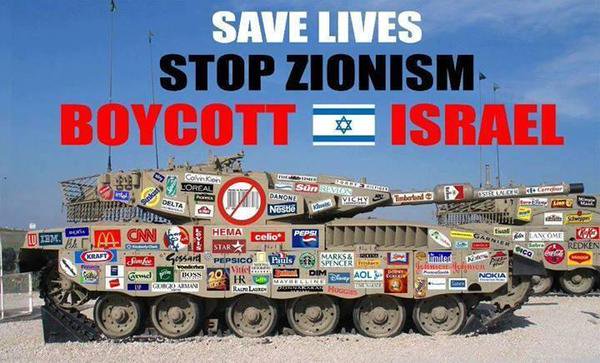
A new survey has found that an overwhelming majority of people in Arab countries oppose normalization of relations with Israel, and consider the occupying regime’s policies to be a threat to security and stability of the region.
The opinion poll, conducted by the Arab Center for Research and Policy Studies (ACRPS), indicated that 84% of the participants disapprove any recognition of Israel by their home countries, the Jewish News website reported on Friday.
The London-based website went on to say that 36% cited “colonialist occupying power in Palestine” as the main reason for opposing recognition of Israel while 9% cited Israel’s expansionist policies and the intention to dominate more Arab territory as the reason for their opposition.
Meanwhile, 8% responded that they would support recognition of Israel by their countries, and 8% were unsure or declined to answer.
The latest findings were based on face-to-face interviews with 33,000 individuals from 14 Arab countries, including the United Arab Emirates, Morocco, Bahrain and Sudan which have already normalized ties with Israel.
In Morocco, the most Israel-friendly country included in the survey, 67% of participants opposed recognition of Israel, 20% answered in support, and 13% didn’t know or declined to answer.
Among respondents from Saudi Arabia, which prime minister Benjamin Netanyahu eyes normalization of ties with, 38% rejected recognition of Israel, but 57% decided not to respond.
The survey further revealed that 72% of participants support a democratic system while 87% believe that financial and administrative corruption is widespread in their countries while 39% say they don’t enjoy full equality.
It also found 84% consider policies by Israel and the United States to be a threat to stability and security in the region, with 53% having a “very negative” view of US policy concerning the Palestinians.
Four Arab countries – the UAE, Bahrain, Sudan and Morocco – agreed to normalize relations with Israel under US-brokered agreements in 2020, when former US President Donald Trump was in office.
Spearheaded by the UAE, the move has sparked widespread condemnations from Palestinians as well as nations and human rights advocates across the world, especially within the Muslim world.
Palestinians see the accords as a stab in their back and a direct affront to their cause to liberate their lands from Israeli occupation.
US assassination of Gen. Soleimani, PMU deputy chief ‘brazen attack’ on Iraq’s sovereignty: PM
Press TV – January 6, 2023
Iraqi Prime Minister Mohammed Shia’ al-Sudani has paid tribute to top Iranian anti-terror commander General Qassem Soleimani and his Iraqi trenchmate Abu Mahdi al-Muhandis, who were killed in a US drone strike near Baghdad airport three years ago, stating that their targeted killings were actually “a brazen attack” on Iraq’s sovereignty.
“The crime of assassinating the ‘Commanders of Victory’ and their companions represented a flagrant violation of Iraq’s territorial integrity and national sovereignty. The targeted killings of the commanders, who had a leading role in elimination of the scourge of terrorism, is an utter disrespect to bilateral agreements [signed between Baghdad and Washington],” Sudani said at a Thursday ceremony in the capital Baghdad in commemoration of the two legendary commanders.
“We woke up on January 3, 2020 to hear the terrible news about assassination of Abu Mahdi al-Muhandis, the second-in-command of the Popular Mobilization Units (PMU), and Gen. Qassem Soleimani, who was on an official visit to Iraq,” he added.
The Iraqi prime minister went on to denounce the administration of former US president Donald Trump over its brazen attack on Iraq’s territorial integrity and sovereignty.
“The fight against dark terrorism requires power and resilience, and this came through the national spirit of all Iraqis and the fatwa (religious edict) issued by Iraq’s leading religious authority [Grand Ayatollah Ali al-Sistani],” Sudani pointed out.
He highlighted that his government is working to build a solid foundation for Iraqi sovereignty, is independent in decision-making, forges relations on the basis of common interests, safeguards the sovereignty of the country’s soil and territorial waters, and spares no effort to repel any act of aggression against the Iraqi nation and its guests.
Moreover, Chairman of the Iraqi Supreme Judicial Council Faiq Zidane decried the assassination of Muhandis and Gen. Soleimani as “a vile and cowardly act.”
He underscored that the Iraqi Judiciary bears the responsibility to shed light on all circumstances surrounding the US assassination, calling on the country’s security institutions to provide judicial authorities with all necessary documents and findings in this regard.
‘Iraq judicial chief highlights arrest warrant for Trump’
Zidan went on to note that Iraq’s Supreme Judicial Council has issued an arrest warrant for former US president Donald Trump over the assassination of General Soleimani and the PMU deputy chief.
The council’s president said that Trump has confessed to his “crime” in relation to the assassination of the “Leaders of Victory.”
He called upon all Iraqi officials involved in investigations over the targeted killings to try their utmost, and identify all related architects, organizers and culprits.
Chairman of Hashd al-Sha’abi Falih al-Fayyadh also stated that Muhandis devoted his life for the protection of Iraq, and the ‘Commanders of Victory’ fought enemies when the country was behest with its worst problems.
General Soleimani, commander of the Quds Force of Iran’s Islamic Revolution Guards Corps (IRGC), Muhandis, and their companions were assassinated in a US drone strike authorized by Trump near Baghdad International Airport on January 3, 2020.
Two days after the attack, Iraqi lawmakers approved a bill that required the government to end the presence of all foreign military forces led by the US in the country.
Both commanders were highly revered across the Middle East because of their key role in fighting the Daesh Takfiri terrorist group in the region, particularly in Iraq and Syria.
On January 8, 2020, the IRGC targeted the US-run Ain al-Asad base in Iraq’s western province of Anbar with a wave of missile attacks in retaliation for the assassination of Gen. Soleimani.
According to the Pentagon, more than 100 American forces suffered “traumatic brain injuries” during the counterstrike on the base. The IRGC, however, says Washington uses the term to mask the number of the Americans who perished during the retaliation.
Iran has described the missile attack on Ain al-Assad as a “first slap”.
Prince Harry reveals how many people he killed in Afghanistan
“It’s a joy for me because I’m one of those people who loves playing PlayStation and Xbox, so with my thumbs I like to think that I’m probably quite useful”
Press TV – January 6, 2023
The UK’s Prince Harry says he killed 25 people in Afghanistan when he was acting as an Apache helicopter pilot during the invasion of Afghanistan, noting that these killings do not “embarrass” him.
The Duke of Sussex acknowledged this in an autobiography that is set to be published in the UK on January 10. The Telegraph quoted extracts from the Spanish version of the autobiography it obtained after the book was mistakenly put on sale in bookshops on Thursday before being withdrawn.
Harry served as a forward air controller in Afghanistan’s Helmand province in 2007-8 and then as an Apache helicopter pilot in the British Army Air Corps deployed to Camp Bastion in the south of the country in 2012-13.
According to the soon-to-be-published book Spare, Harry undertook six missions as a pilot that led to him “taking human lives”.
The 38-year-old described killing the targets as removing “chess pieces”, noting that he was not ashamed of doing so.
“My number is 25. It’s not a number that fills me with satisfaction, but nor does it embarrass me,” he wrote.
He said he counted the number of people he killed by reviewing videos taken from the nose of his Apache helicopter.
The prince writes that he did not see the Taliban militants “as a person” because such a view would have made it impossible to kill them. The British Army, he writes, had “trained me to ‘other’ them, and they had trained me well.”
The prince also named his fondness for video games as one of the reasons behind his claimed effectiveness as an Apache gunner. “It’s a joy for me because I’m one of those people who loves playing PlayStation and Xbox, so with my thumbs I like to think that I’m probably quite useful,” he said.
Harry also named the 9/11 attacks as one of the main reasons that he did not feel guilt over his killings. He had the thought that those responsible and their sympathizers were “enemies of humanity”.
The US-led foreign forces invaded Afghanistan in 2001 with the claim of confronting Al-Qaeda. The military campaign killed at least 70,000 Afghan and Pakistani civilians, living Afghanistan in a state of turmoil ever since.
There have been security concerns because of Harry’s military service, which are likely to increase after he revealed the number of people he has killed during that time.
Elsewhere in the book, Harry accused his brother William of knocking him to the floor during a 2019 argument about Harry’s wife Meghan.
William “grabbed me by the collar, ripping my necklace, and… knocked me to the floor,” he writes, according to a report in the Guardian.
Leaders of Turkey, Syria may meet to discuss peace, stability: Erdogan
Press TV – January 5, 2023
Turkish President Recep Tayyip Erdogan has expressed the possibility of meeting with his Syrian counterpart Bashar al-Assad in forthcoming talks with Russia to discuss peace and stability in the region and in the Arab country.
Erdogan said on Thursday that a trilateral meeting of the foreign ministers from Turkey, Russia and Syria would first be held to further develop contacts after last week’s landmark talks between the defense ministers of the three countries in Moscow.
“We will bring our foreign ministers together and then, depending on developments, we may come together as the Russian, Turkish, and Syrian leaders. So, our aim is to establish peace and stability in the region,” Erdogan said at a meeting of his Justice and Development (AK) Party in the capital Ankara, without specifying an exact date for the possible meeting.
“Turkish, Russian, and Syrian defense ministers and intelligence chiefs came together in Moscow. Hopefully, the foreign ministers will come together in a trilateral format,” he added.
On December 28, the Turkish, Russian, and Syrian defense ministers gathered in Moscow to discuss counter-terrorism efforts in Syria, and they agreed to continue tripartite meetings to ensure stability in Syria and in the wider region.
The meeting revolved around the Syria crisis, the refugee issue, and joint counter-terrorism efforts against terror outfits in the Arab country.
Turkish Foreign Minister Mevlut Cavusoglu said a second meeting could take place in mid-January.
Turkey severed its relations with Syria in March 2012, a year after the Arab country found itself in the grip of rampant and hugely deadly violence waged by foreign-backed militants and terrorists, including those allegedly supported by Ankara.
Turkey has for the past 11 years backed armed terrorists that unsuccessfully sought to topple the democratically-elected government of Assad, with Erdogan even calling him a “murderer.”
Since 2016, Turkey has also conducted three major ground operations against United States-backed militants based in northern Syria.
The Turkish government accuses the militants, who are known as the People’s Protection Units (YPG), of bearing ties with the Kurdistan Workers’ Party terrorist group.
Turkey has been launching airstrikes on northern Syria and Iraq since November 20, against, what it calls, hideouts belonging to the PKK.
Mauritius & Britain Launch Talks Over Chagos Islands
By Muhammad Osman – Samizdat – 02.01.2023
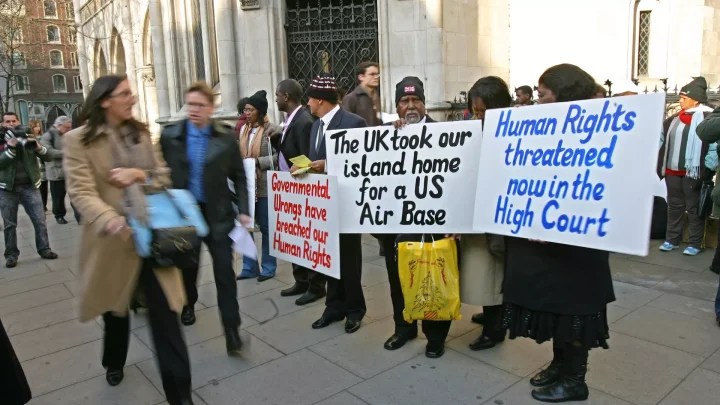
Since Mauritius got its independence from the United Kingdom in 1968, the African country has long called for the full return of the Chagos islands, where the UK set up a joint military base with the United States in 1966. In 2019, the International Court of Justice ruled that London’s administration of the Indian Ocean territory is “unlawful.”
Mauritius and the United Kingdom have finally opened negotiations on the exercise of sovereignty over the disputed Chagos archipelago in the Indian Ocean, where the UK has a joint military base with the United States, Mauritian Prime Minister Pravind Jugnauth announced on Sunday.
“The latest developments on the Chagos issue are very encouraging. Negotiations between Mauritius and Britain have begun,” Jugnauth said.
Occupied by Britain since 1814, the Chagos archipelago was not fully returned to Mauritius when it won independence from the UK in 1968, as the European kingdom had established a joint military base with the US two years earlier on Diego Garcia, the largest of the 60 small islands of the Chagos archipelago.
The government of Port Louis and the Chagossians, the indigenous population of the archipelago that was forced to leave the island upon the establishment of the UK-US base, have long fought in British courts to get the occupied territory back.
However, in 2019, Mauritius’ efforts were crowned with success after the International Court of Justice ruled that London must end its “unlawful” administration of the Indian Ocean territory. The UN’s highest court’s decision was followed by a General Assembly resolution that stressed, “The Chagos Archipelago forms an integral part of the territory of Mauritius,” calling on the UK to withdraw within six months.
In November 2022, UK Foreign Secretary James Cleverly announced that London and Port Louis had agreed to launch “constructive negotiations” on the disputed territory, highlighting that the joint UK-US military base on Diego Garcia will continue to operate regardless of the outcome of negotiations.
“Taking into account relevant legal proceedings, it is our intention to secure an agreement on the basis of international law to resolve all outstanding issues, including those relating to the former inhabitants of the Chagos Archipelago,” Cleverly said.
Ansarallah seeks ‘permanent ceasefire’ in Yemen
The Cradle | January 1, 2023
Yemen’s Ansarallah movement seeks a “permanent ceasefire,” according to a spokesperson of the resistance group.
Mohammed Abdel Salam, a spokesperson of the Ansarallah movement, said on 1 January that a permanent ceasefire would require the opening of all ports, airports, and roads, and that all government wages are paid from oil and gas revenues.
“We are working to reach a point of clarity in Yemen, in which we move into either a truce or permanent ceasefire, and we have presented our point of view to the Omani mediator,” he said to Almasirah TV station.
“Any solution to Yemen’s crisis must be based on the disbursement of [government] employees’ salaries from oil and gas revenues according to the 2014 budget,” he added.
Meanwhile, an official delegation from the Sultanate of Oman landed in the Yemeni capital Sanaa on 21 December as part of Muscat’s mediation efforts to reach a political solution to the Saudi-led war that has been raging for nearly eight years.
No further details were provided about the meeting, nearly three months after a UN-brokered ceasefire between Sanaa and Riyadh ended.
Since then, Oman has been mediating talks between Saudi and Yemeni officials seeking to end a war that has killed nearly 400,000 Yemenis and pushed the rest of the population into famine.
Since 2015, Yemen has suffered a brutal Saudi-led war and economic blockade that has killed and displaced millions, and destroyed the country’s infrastructure. On top of this, western NGOs have been accused of mishandling billions of dollars in humanitarian aid for Yemenis.
Yemeni officials have also cautioned that US and French troops deployed in provinces controlled by the Saudi-led coalition have arrived to coordinate the looting of Yemen’s natural resources, similar to Washington’s oil trafficking operations in Syria.
Ankara willing to withdraw from Syria if ‘stability’ is reached: Turkish FM
The Cradle | December 30, 2022
Turkiye’s Foreign Minister Mevlut Cavusoglu told media on 29 December that Ankara is willing to withdraw from the territory it occupies in northern Syria and hand it over to Damascus in the event that “political stability” is reached.
Cavusoglu’s comments came just one day after a high-level meeting in Moscow between the defense ministers of Turkiye, Russia, and Syria, aimed at ensuring “stability in Syria and the region.” This was the first ministerial meeting between Syria and Turkiye since 2011.
Speaking to reporters, the Turkish Foreign Minister also said that it was possible to establish a joint mechanism between Damascus and Ankara aimed at ‘fighting terrorism.’
Cavusoglu also lauded his country’s ‘respect’ for Syria’s sovereignty and territorial integrity, claiming that its occupation is solely based on combatting terror and “securing stability,” something he said the Syrian authorities were incapable of doing.
He went on to say that Turkiye would continue fighting terrorism in Syria, despite the hindrances posed by “political differences” between Ankara and Damascus.
Recently, both the US and Russia have been attempting to mediate a withdrawal of the Syrian Democratic Forces (SDF) from the Turkish border with Syria to prevent a long-promised Turkish ground offensive from taking place. This potential ground offensive comes under the pretext of avenging the deadly 13 October Istanbul blast.
In order to prevent the offensive, Russia has offered a complete pullback of the SDF from the Turkish border, as Ankara has requested.
Although Moscow has been negotiating a potential redeployment of Syrian troops to this area, Washington has been seeking to compromise Russia’s mediation efforts by reviving an inactive Islamist militia in the north of the country – with the intention of placing them on the border, thereby preventing a handover of the territory to Damascus.
From Syria’s perspective, genuine negotiations with Turkiye are unlikely to begin until Ankara accepts a complete withdrawal of its forces from Syria.
Although Washington plans to compromise an eventual return of the Syrian Arab Army (SAA) to the Turkish border, Cavusoglu’s latest comments signify a potential Turkish willingness to make concessions.
Report: Israel demolished 950 Palestinian homes in 2022

MEMO | December 29, 2022
Israeli occupation forces demolished 950 Palestinian homes and confiscated more than 113,000 dunams (113 square kilometres) of land in 2022 in an effort to expand illegal Jewish-only settlements in the occupied West Bank and East Jerusalem, a Palestinian research centre said.
The Land Research Centre, operating in Palestine, said in its annual report on “Israeli Violations Against Palestinian Land and Housing Rights for 2022” that the Israeli forces have also torched, ravaged, or attacked 18,900 trees, most of them olive trees.
The report noted that 65 of the homes were demolished by their owners under the orders of Israeli occupation forces.
Some 66 wells were also razed in addition to 3,707 dunums (3.7 square kilometres) of land and pastures.
“The Israeli occupation issued 114 new settlement plans on Palestinian lands, and began construction on more than half of them and built about 2,220 new housing units for the settlers,” it added.
The Palestinian centre warned that all these measures confirm that the Israeli government has decided to destroy all agreements and impose new realities on the ground, making the two-state solution impossible to achieve.
Yemen: Despite truce, Saudi-led coalition killed, injured 900 civilians since April
MEMO | December 29, 2022
More than 900 civilians have been killed and injured by the Saudi-led coalition’s missile strikes in Yemen’s border district of Shada, west of Saada governorate, since the signing of the UN armistice agreement in early April, Abdullah Musraa, the director of the hospital in Razih Al-Rifi said.
Musraa added that since the beginning of the truce Razih Hospital has received 111 dead civilians and 796 wounded, including African immigrants, Al-Mayadeen reported, citing the Houthi-controlled official news agency SABA.
He noted that nothing has changed in the behaviour of the Saudi regime since the signing of the UN humanitarian and military truce.
Musraa stressed that the border areas in Saada governorate are witnessing a continuous escalation by the Saudi-led coalition with the bombing of homes, farms and public and private property, according to Al-Mayadeen.
He added that many cases were transferred to other hospitals across the governorate and the capital, Sanaa, as Razih Hospital could not keep up with the demand or provide the necessary services for critical cases.
A truce was agreed on 2 April between the Saudi-led alliance and the Houthis. It was extended twice for two months, however, the second extension ended on 2 October.
Since then, fighting has resumed. The UN has failed to reach an agreement to reinstate the ceasefire.
Protests expand against SDF and US occupation in Syria
The Cradle | December 27, 2022
According to the Syrian news agency SANA, demonstrations against the US-backed Syrian Democratic Forces (SDF) and the US occupation in Syria continue to grow.
The protests, which are still ongoing on 27 December, demand the expulsion of US forces and their regional allies from the Deir Ezzor province.
Activists quoted by the Syrian news agency reported that residents of the village of Al-Atala blocked roads with burning tires and chanted slogans against the SDF.
Locals demand the expulsion of the forces and want to see the prosecution of its commanders for alleged crimes they have committed in the region, as well as the theft of national resources such as oil.
The Kurdish-majority SDF dominates most of the oil-rich Al-Jazira region and receives arms, money, and training from US occupation forces.
On 25 December, protests broke out against the SDF in the Deir Ezzor countryside, denouncing the alleged kidnapping of two girls who sought refuge, the girls were allegedly raped and killed, and the bodies were dumped in a village in the western countryside of Deir Ezzor.
Meanwhile, according to a report published by the Lebanese Al-Akhbar, the US is currently attempting to rebuild Liwa Thuwwar al-Raqqa (Raqqa Revolutionary Brigade) – a former Islamist militia opposed to the government in Damascus.
The report states that US efforts are aimed at appeasing Turkiye by facilitating the withdrawal of the Syrian Democratic Forces (SDF) from the border – as Ankara has requested – and replacing it with a revived version of the former opposition group to serve as a buffer zone on the Syrian-Turkish border.
In a recent meeting, US officers told the group’s leader to consolidate a formidable force of 3,000 fighters and assured him that Washington would secure their monthly paychecks.
Washington’s scheme to revive the group comes as the US continually attempts to strengthen the foothold of its occupation in Syria, particularly in Raqqa, where they have planned to construct a new military base.
Saudi Coalition forced to release detained Yemeni fuel ships
By Yusef Mawry – Press TV – December 25, 2022
Sana’a – Fuel prices have slightly dropped in Yemen after the release of two Yemeni fuel ships that were detained by the Saudi-led coalition earlier this week in the Red Sea.
The Yemeni army issued a stern warning to Saudi Arabia and the UAE that if the ships were not released soon, military action would follow.
Yemeni bus and motorbike drivers in the capital Sana’a who make a living from public transportation welcomed the lowering of fuel prices. They say this is going to help them cope with the fuel price hike caused by the blockade.
Yemeni political experts say the release of the fuel ships by the Saudi-led coalition isn’t enough, as Yemen will continue to struggle until Saudi Arabia and its allies completely lift the blockade and end their illegal involvement in Yemen.
Despite falling oil prices, tensions are rising on all active battlefronts in Yemen for what could soon be a resumption of war if a political solution is not reached soon, as Saudi Arabia and the UAE continue their militarization of strategic Yemeni Islands in the Red and Arabian sea.
The release of fuel ships detained by the Saudi-led coalition marks a big victory for the Yemeni government based in Sana’a and the people living in the areas controlled by Ansarullah. This also indicates that Saudi Arabia and the UAE simply cannot afford to have their oil industries targeted by Yemeni missiles and that’s why they decided to go with a safer option by releasing the fuel vessels.
Featured Video
The Source of America’s Wars – Kristol Clear
or go to
Aletho News Archives – Video-Images
From the Archives
Is Israel to blame for the Iraq War?
American Goy | March 10, 2008
I am so tired of this old canard that “Israel had nothing to do with USA’s war with Iraq – in fact, it officially advised America against it”.
Bullshit. … continue
Blog Roll
 Aletho News
- Ceasefire for all or for none: Iran shuts Hormuz over Lebanon attacks
- Strait of Hormuz is Iran’s ‘nuclear weapon’ that forced US retreat: Medvedev
- Energy crisis will last for months – Kremlin envoy
- Europe’s quiet role in the war on Iran
- Forty days that shook the Empire: How Iran turned the tables on US and prevailed
- Netanyahu unilaterally declares Lebanon outside of ceasefire deal
- Israeli leaders: ‘Not a single goal’ achieved in war with Iran
- What on earth just happened? Trump, Iran, and the unlikely ceasefire
- Alberta Bill Would Fine Political Deepfakes $10,000 Without Satire Exemptions
- Iran declares ‘historic victory’ over US, says enemy forced to accept its proposal
- If Americans Knew
- NY Times reports how Netanyahu took the US into Iran War
- A sigh of relief over Iran, but Gaza and Lebanon in dire straits – Daily Update
- Thousands dead and neighborhoods razed to the ground: Aid agencies fear southern Lebanon is becoming the new Gaza
- The war the US is fighting for Israel could cost trillions
- ‘Cigarette Burns, Nail Wounds’: Toddler Tortured in Gaza to Coerce Father
- Trump Says US Sent ‘a Lot of Guns’ to Protesters in Iran
- Israeli forces destroy 17 UN peacekeeper cameras in south Lebanon
- US-Israeli strikes ‘completely destroy’ synagogue in Tehran
- Archbishop for US Military Says Iran War Is Unjust Under Catholic Teaching
- Iranian leaders’ Open Letters to the American People
- No Tricks Zone
- An Inconvenient Tree: Uncovered In Alps… Europe Much Warmer Than Today 6000 Years Ago
- New Study Reports A 60% Slowdown In Greenland’s Ice Loss Rate In The Last Decade
- Low Intensity Tornado Wrecks Major Solar Farm, Creating A Potential Toxic Dump
- New Study Finds Warming Saves Lives…Cold Temperatures 12 Times More Deadly Than Excess Heat
- German Science Blog Accuses PIK Climate Institute Of Hallucinating Climate Tipping Points
- Devastating Assessment Of Comirnaty Vaccine By Former Senior Pfizer Europe Toxicologist
- New Study: CO2 Is ‘Effectively Negligible’ As An Explanatory Climate Change Factor Since 2000
- Former Pfizer Toxicologist Dr. Helmut Sterz Tells Bundestag Hearing Pfizer Vaccine Should Have Never Been Approved
- Energy Expert: Germany’s Nuclear Phaseout Was A “500 Billion Euro Mistake”
- New Research: South Australia’s Mid-Holocene Sea Surface Temperatures Were 4°C Warmer Than Today
 Aletho News