Biden’s Middle East visit: a failed lobbying trip for Israel, not the United States

By Dr Mustafa Fetouri | MEMO | July 21, 2022
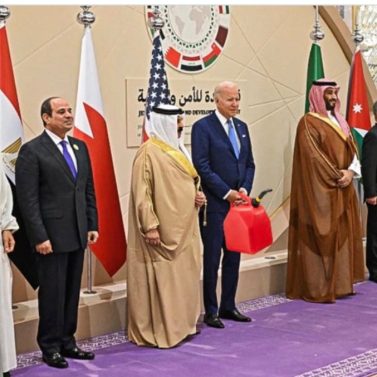
Even before landing in Israel, the first leg of his Middle East tour, President Joe Biden was already preoccupied with three issues: integrating Israel into the wider region, rallying as many countries as possible against Iran and persuading the Saudis to pump more oil into the market to ease the high prices at the pump for the American consumers. Anything else is a bonus. However, the visit failed, at least, to achieve its main objectives, both economically and politically.
By the time his visit ended on 16 July, the President did everything to help Israel, with limited success and very little else. He was, indeed, on a presidential PR trip but not for his re-election, nor for Washington’s tarnished image in the region, but for Israel. The same Israel that is being repeatedly described by the United Nations Human Rights office, Amnesty international and others as an apartheid state, imposing suffocating and discriminatory draconian laws on Palestinians under its brutal occupation. Instead of questioning the Israeli policies and practices in the occupied West Bank, Mr. Biden sought to reassure his Israeli friends that he is on their side, no matter what.
At the Jeddah Security and Development Summit, President Biden was rebuffed, albeit indirectly, as all Arab leaders present appeared to dismiss any idea of peace unless Israel ends its occupation of Palestinian land. The Summit, despite all its shortcomings, proved to him that Arabs have not yet dumped the Palestinians.
On Iran, all leaders at the Summit spoke of the need to settle Tehran’s nuclear issue peacefully, while nobody supported the idea of a military alliance that might include Israel against Iran—some form of Middle East NATO structure. Whatever Biden said in this regard remains as his administration’s position and not that of its regional allies—including Israel, which does not support the US idea of reviving the Iran nuclear deal.
No breakthrough on the issue of integrating Israel into the region, either, despite the recent wave of normalisation between different Arab countries. In fact, Saudi Arabia’s Foreign Minister, Prince Farhan bin Faisal, denied that normalisation between Israel and his country was even discussed. He also said that there is no connection between Riyadh opening its airspace to all civilian air carriers, including Israel’s, and normalisation between his country and Israel. This is another failure in Biden’s PR campaign to help Israel at the expense of the Palestinians. Saudi Arabia has been the virtual signatory to the Abraham Accords from day one but, at least for now, Riyadh does not see any reason to take any other steps in that direction.
Just before he departed Israel for Saudi Arabia, Biden and Yair Lapid signed what they called the “Jerusalem US-Israel Strategic Partnership Declaration”, renewing the US’s never-ending commitment to keeping Israel as a regional superpower. Overall, the Declaration is nothing but a repetition of the same commitments successive American administrations have been making to Israel since its creation. For example, the Declaration reads that the US commitment to Israeli superiority and security is “bipartisan and sacrosanct”, enjoying the support of both Republican and Democratic parties in the US. This has been a standard US policy, regardless of who is in the White House.
On the Palestinian issue, where the US is supposed to be the honest broker, the Declaration said that Mr. Biden, not the Israeli Prime Minster, still “supports” “a two-state solution”. But this support is meaningless if the US does not take any steps to, for example, curb the Israeli land grab policy. President Biden would have been taken more seriously if he announced how the “two-state” solution could be reached. It could also indicate how serious he is if he announced that steps taken by his Republican predecessor, Donald Trump, will be reviewed and, perhaps, reversed. Former President, Trump, recognised Jerusalem as Israel’s capital, contravening international law.
Notably the Strategic Declaration singles the US’s support to “combat” what it called “unfairly singling [Israel] in any international forum, including the International Criminal Court [ICC]”. Why, now, did the US choose to make its support for Israel against the ICC a strategic issue?
The answer is simple: for the first time in its history, Israel is being cornered by legal cases focusing on its criminal conduct against the Palestinians, who are bringing a dozen cases before the ICC. The most recent is that of the slain Al Jazeera reporter, Shireen Abu Akleh, who was shot last May. The Palestinian Authority has asked the ICC to investigate Shireen’s murder, who happened to be an American citizen of Palestinian descent.
The US intelligence community, the United Nations, rights groups and many media outlets believe an Israeli soldier fired the fatal shot that killed her. A case like this involving such a high profile reporter, if investigated by the ICC, has the potential to become a serious legal challenge for Israel. It could also turn into an international embarrassment should Washington follow through on its pledge to support Tel Aviv against the ICC. It will also test the US rhetoric about freedom of the press, free speech and accountability. Its potential fallout could push Washington to head off any action in this regard before it becomes an issue before the International Court.
It must have been an embarrassment already for President Biden, as his motorcade passed under a huge poster of Shireen on his way to Ramallah. During his news conference, with President Mahmoud Abbas, Shireen’s picture was sitting in the front row of the packed room as a reminder to him that Palestinians will not forget her and he should not forget that she is an American citizen, just like him. Mr. Biden referred to her as a “proud Palestinian” but said nothing about accountability for her death. He has already resisted 24 Democratic senators’ calls asking him for an investigation of her murder under US auspices.
The last top goal of Biden’s visit to Saudi Arabia was increased oil production by Saudis Arabia to bring down oil prices for US consumers. Here, he also failed as the Saudis reminded him that they wish to honour their commitment made to other producers within the OPEC Plus group, of which Russia is a member. Furthermore, the Saudi Foreign Minister, on 19 July in Tokyo, said “Russia is an integral part of OPEC Plus” and the group has to cooperate, otherwise “it would be impossible to properly ensure adequate supplies of oil to the international markets.” Mr. Biden hoped the Saudis would move away from Russia because of the war in Ukraine but he, again, failed to score anything against Moscow.
Other than advocating for Israel, with minimum success, the US President failed and he might be regretting the visit altogether.
Russia, Iran and Turkey agree the US troops must leave Syria
By Steven Sahiounie | MIDEAST DISCOURSE | July 20, 2022
President Recep Tayyip Erdogan of Turkey, President Vladimir Putin of Russia, and President Ebrahim Raisi of Iran held talks yesterday in Tehran at the 7th Astana summit for peace in Syria, stressing the need for respecting Syria’s national sovereignty and territorial integrity.
The summits date from January 2017, and are named for the Kazakhstan capital they were first held at. The trio of leaders decided the next meeting will be held in Moscow before the end of the year.
The Syrian Foreign Minister, Faisal Mekdad, arrived in Tehran late on Tuesday to be briefed about the latest decisions following the meeting of the presidents.
The joint conclusions
Many important issues were discussed by the trio concerning the situation in Syria, which has developed into a stalemate. Global media has stopped covering Syria since 2019 when the battlefields went silent, but a political solution has been elusive.
One point that Turkey, Russia and Iran agreed upon was the need for the US occupation troops to leave Syria, and their unified opposition to the Biden administration policy in Syria, which includes the need to lift US sanctions on Syria which are oppressing the Syrian people.
“We have certain differences concerning what is happening on the Euphrates eastern bank. But we have a shared position that American troops must leave this territory,” Putin said while adding, “They must stop robbing the Syrian state, Syrian people, illegally exporting oil from there.”
The trio affirmed that there was “no military solution” to the conflict in Syria, and agreed on the need to eliminate terrorism and opposed any attempts to divide the country.
The three leaders also jointly condemned Israel’s ongoing attacks on civilian targets in Syria, and agreed that the crisis in Syria could only be resolved peacefully and by the Syrians themselves.
Raisi said, “The international community bears the responsibility to solve the crisis of the displaced and Syrian refugees, and we will support any initiative to do so.”
The Turkish position
For at least two months, Erdogan has threatened to conduct a fourth military invasion into northern Syria. Analysts had thought the summit would be used by Iran and Russia to convince Turkey a new attack on the US-sponsored SDF in the northeastern Kurdish region would be a destabilizing event for the region. It appears that Turkey was able to get assurances from Iran and Russia that the SDF would not present a border terrorist threat to Turkey.
The US, Russia and Iran had all shared the view that Turkey should not begin a new military attack in northern Syria.
Turkey and US are NATO members and had been allies. But, the US chose to partner with the SDF, who are a separatist group in Syria led by Kurds who are following a socialist political ideology based on the communist framework of the PKK, an internationally outlawed terrorist group who have killed thousands in Turkey over three decades.
The trio agreed that terrorism must be eradicated everywhere, and there cannot be “good terrorists” who are used by the US, while others are deemed “bad terrorists” such as ISIS and Al Qaeda.
US President Obama began the US-NATO attack on Syria in 2011 for ‘regime change’. He failed. The US used the Muslim Brotherhood in the Middle East, as well as global Al Qaeda branches which were transported into northern Syria from their base in southern Turkey, were the CIA operated a terrorist headquarters which was finally shut down in 2017 by President Trump.
Erdogan is a Muslim Brotherhood follower, and his AKP party is aligned with the international terrorist group banned in Egypt, Russia, Syria, Saudi Arabia and the UAE.
The US position
The Biden administration has made no changes to US policy in Syria since taking office. The US is not present in any Syrian peace talks. Obama started the destruction in Syria, but Biden is not offering any solution. The US sanctions have prevented any reconstruction from beginning, and the Syrian people have been struggling under hyper-inflation, with no end in sight.
Russia, Turkey and Iran agreed the US-EU sanctions should be lifted and described them as being “in contravention of international law, international humanitarian law and the UN Charter including, among other things, any discriminatory measures through waivers for certain regions which could lead to this country’s disintegration by assisting separatist agendas.”
Trump had ordered the withdrawal of US troops from Syria, but the Pentagon insisted that they stay in support of the SDF who steal the oil from the main oil field in Syria and sell the oil to support their socialist administration. That oil is the property of Syria, and because they are refused access to the oil, the Syrian people live with just two hours of electricity per day.
Damascus considers the US troops in Syria as a military occupation force which destabilizes the country and is against the UN charter and international law.
US raids on terrorists in Idlib
Idlib is the last remaining terrorist controlled area in Syria. Hayat Tahrir al-Sham is the Radical Islamic terrorist group who keep about three million persons as human hostages. Turkey protects the terrorists and keeps Russian and Syrian military from attacking Idlib, while the UN and other humanitarian groups keep the terrorists, their families, and civilians fed. The US has also been very vocal and has accused the Syrian and Russian military for attacking terrorists in Idlib.
In a double-faced US policy in Idlib, the US has continued to kill ISIS leaders in Idlib, including the first assassination of the ISIS Calipha Baghdadi ordered by Trump. Since then, another five ISIS leaders have been killed by the US in Idlib. The US know that the terrorists in control in Idlib are allies of ISIS, and yet the US policy is to protect Idlib from being cleared of terrorists.
In 2015, Russia was asked to enter Syria as the Al Qaeda affiliate Jibhat al-Nusra was threatening to create an Islamic State in Syria. Putin recalled at the summit, “We broke the backbone of international terrorism there.”
Grain crisis discussion
Putin and Erdogan discussed the supply of grain from Russia and Ukraine to world markets. Putin thanked Erdogan for his efforts “to mediate by providing Turkey with a platform for negotiating food issues and grain exports across the Black Sea.” Putin called on the US to lift all restrictions on grain exports from Russia to improve the global food market situation.
Erdogan has been leading efforts to broker a deal to allow thousands of tons of grain that is being blockaded by Russia to leave Ukraine’s ports. Turkey has responsibility under the 1936 Montreux convention for naval traffic entering the Black Sea, and is proposing that Russia allow Ukrainian grain ships to leave Odesa on designated routes.
Steven Sahiounie is a journalist and political commentator.
Saudi coalition seizes another Yemen-bound fuel tanker
Press TV – July 20, 2022
Yemen’s Petroleum Company (YPC) says the Saudi-led coalition has seized yet another Yemen-bound fuel ship in blatant violation of a UN-brokered ceasefire.
In a statement released on Wednesday, the YPC said the seizure has “brought the number of confiscated Yemen-bound fuel ships to three” in recent days. The Lady Sarah fuel vessel was inspected and cleared by the UN, it added.
Reacting to the seizure, Mohammed Abdulsalam, the chief negotiator of Yemen’s National Salvation Government, said the coalition has constantly violated the truce and is “killing time, which is not accepted by our nation.”
Saudi-led coalition forces committed thousands of violations of the ceasefire agreement within a month of its entry into force on April 2. The agreement was extended under the auspices of the UN on June 2 and is set to expire next month.
Over the past year, the coalition has been consistently looting and selling large quantities of Yemeni gas and crude oil.
Yemeni authorities accuse the Saudi-led coalition of carrying out a systematic campaign aimed at depleting the country’s natural resources.
Earlier this month, Mohammad Tahir Anam, an adviser to the Yemeni Supreme Political Council, warned Riyadh and its allies that companies and ships involved in the looting of Yemeni oil will be targeted by the Ansarullah resistance movement if the theft persists.
On July 3, Yemeni Prime Minister Abdulaziz Saleh bin Habtoor said the looting of Yemen’s oil by the Saudi-led coalition is carried out under directives from the White house.
Yemen’s Minister of Oil and Minerals Ahmad Abdullah Dares has warned that the Saudi seizure of ships carrying petroleum products to Yemen could lead to the suspension of the service sectors and cause “a humanitarian catastrophe.”
Yemeni media reports said participants at a massive protest in the capital on Wednesday denounced the seizure of fuel tankers heading to the port of Hudaydah by Saudi-led forces.
The protest was organized in front of the United Nations office in Sana’a.
Saudi Arabia and a number of its regional allies — including the United Arab Emirates (UAE) — launched the devastating war on Yemen in March 2015. The war was meant to eliminate Yemen’s popular Houthi Ansarullah movement and reinstall a former regime. The conflict, accompanied by a tight siege, has failed to reach its goals, but has killed hundreds of thousands of Yemeni people.
The Yemeni army and popular committees have intensified their retaliatory attacks against targets deep inside Saudi Arabia and the UAE in response to the Saudi siege.
The war ‘diplomat’: How the West lost the ‘global battle of narratives’
By Ramzy Baroud | MEMO | July 20, 2022
In a blog entry, reflecting on the G20 Foreign Ministers’ meeting in Bali, Indonesia, on 7-8 July, the High Representative of the European Union, Josep Borrell, seems to have accepted the painful truth that the West is losing what he termed “the global battle of narratives”.
“The global battle of narratives is in full swing and, for now, we are not winning,” Borrell admitted. The solution: “As the EU, we have to engage further to refute Russian lies and war propaganda,” the EU’s top diplomat added.
Borrell’s piece is a testimony to the very erroneous logic that led to the so-called ‘battle of narratives’ to be lost in the first place.
Borrell starts by reassuring his readers that, despite the fact that many countries in the Global South refuse to join the West’s sanctions on Russia, “everybody agrees”, though in “abstract terms”, on the “need for multilateralism and defending principles such as territorial sovereignty”.
The immediate impression that such a statement gives is that the West is the global vanguard of multilateralism and territorial sovereignty. The opposite is true. The US-western military interventions in Iraq, Bosnia, Afghanistan, Syria, Libya and many other regions around the world have largely taken place without international consent and without any regard for the sovereignty of nations. In the case of the NATO war on Libya, a massively destructive military campaign was initiated based on the intentional misinterpretation of United Nations Security Council resolution 1973, which called for the use of “all means necessary to protect civilians”.
Borrell, like other western diplomats, conveniently omits the West’s repeated – and ongoing – interventions in the affairs of other nations, while painting the Russian-Ukraine war as the starkest example of “blatant violations of international law, contravening the basic tenets of the UN Charter and endangering the global economic recovery”.
Would Borrell employ such strong language to depict the numerous ongoing war crimes in parts of the world involving European countries or their allies? For example, France’s despicable war record in Mali? Or, even more obvious, the 75-year-old Israeli occupation of Palestine?
When addressing “food and energy security”, Borrell lamented that many in the G20 have bought into the “propaganda and lies coming from the Kremlin” regarding the actual cause of the food crisis. He concluded that it is not the EU but “Russia’s war of aggression against Ukraine that is dramatically aggravating the food crisis.”
Again, Borrell was selective with his logic. While naturally, a war between two countries that contribute a large share of the world’s basic food supplies will detrimentally impact food security, Borrell made no mention that the thousands of sanctions imposed by the West on Moscow have disrupted the supply chain of many critical products, raw material and basic food items.
When the West imposed those sanctions, it only thought of its national interests, erroneously centered around defeating Russia. Neither the people of Sri Lanka, Somalia, Lebanon, nor, frankly, Ukraine were relevant factors in the West’s decision.
Borrell, whose job as a diplomat suggests that he should be investing in diplomacy to resolve conflicts, has repeatedly called for widening the scope of the war on Russia, insisting that the war can only be “won on the battlefield”. Such statements were made with western interests in mind, despite the obvious devastating consequences that Borrell’s battlefield would have on the rest of the world.
Still, Borrell had the audacity to chastise G20 members for behaving in ways that seemed, to him, focused solely on their national interests. “The hard truth is that national interests often outweigh general commitments to bigger ideals,” he wrote. If defeating Russia is central to Borrell’s and the EU’s “bigger ideals”, why should the rest of the world, especially in the Global South, embrace the West’s self-serving priorities?
Borrell also needs to be reminded that the West’s “global battle of narratives” had been lost well before 24 February. Much of the Global South rightly sees the West’s interests at odds with its own. This seemingly cynical view is an outcome of decades – in fact, hundreds of years – of real experiences, starting with colonialism and ending, presently, with the routine military and political interventions.
Borrell speaks of ‘bigger ideals’, as if the West is the only morally mature entity that is capable of thinking about rights and wrongs in a selfless, detached manner. In addition to there being no evidence to support Borrell’s claim, such condescending language, itself an expression of cultural arrogance, makes it impossible for non-western countries to accept, or even engage, with the West regarding the morality of its politics.
Borrell, for example, accuses Russia of a “deliberate attempt to use food as a weapon against the most vulnerable countries in the world, especially in Africa”. Even if we accept this problematic premise as a morally driven position, how can Borrell justify the West’s sanctions that have effectively starved many people in “vulnerable countries” around the world?
Perhaps, Afghans are the most vulnerable people in the world today, thanks to 20 years of a devastating US/NATO war which has killed and maimed tens of thousands. Though the US and its western allies were forced out of Afghanistan last August, billions of dollars of Afghan money are illegally frozen in Western bank accounts, pushing the whole country to the brink of starvation. Why can Borrell not apply his ‘bigger ideals’ in this particular scenario, demanding immediate unfreezing of Afghan money?
In truth, Borrell, the EU, NATO and the West are not only losing the global battle of narratives, they never won it in the first place. Winning or losing that battle never mattered to Western leaders in the past, because the Global South was hardly considered when the West made its unilateral decisions regarding war, military invasions or economic sanctions.
The Global South matters now, simply because the West is no longer determining all political outcomes, as was often the case. Russia, China, India and others are now relevant, because they can collectively balance out the skewed global order that has been dominated by Borrell and his likes for far too long.
Nasrallah: If Lebanon is denied its oil and gas resources, we will shut down all Israeli platforms
Speech by Hezbollah Secretary General Sayed Hassan Nasrallah on July 13, 2022, on Biden’s visit to the Middle East and the border dispute between Lebanon and Israel over the Karish maritime gas field.
Source: almanar.com.lb Translation: resistancenews.org
Transcript:
[…] Now I come to the main point of my speech tonight. One of the results of the July (2006) war is the establishment of a balance of deterrence in the struggle against the Israeli enemy, between Lebanon and the enemy entity. These equations, this balance… Of course, I am not talking about a balance of forces in terms of the number of our respective soldiers, our respective naval power or our respective air forces. That’s not what I’m talking about. I’m talking about a balance of deterrence, a balance of fear, a balance of terror. It’s a different kind of equation (than a strict balance of power).
For the past 16 years, that is, from 2006 to the present, Lebanon has enjoyed an excellent security situation with regard to the fight against the Israeli enemy, if we compare it to what used to happen before. The enemy has been unable to include Lebanon in its strategy of “the battle between wars” (conducting episodic strikes without starting a war, as it does in Syria), and Israel thinks a thousand times before taking any military action against Lebanon, knowing that there would be retaliation (from Hezbollah). That is why when Israel tries to do something (in Lebanon), it tries to carry out security operations (against Hezbollah) trying as much as possible not to leave any footprints, any traces (of its involvement). This achievement (of the Resistance) is still valid.
In this regard, before the episode of the drones (sent by Hezbollah over the Israeli gas platform in Karish), after my (last) speech about Israel’s exploitation of the Karish field (claimed by Lebanon; Hezbollah promised to prevent Israel from extracting gas from it, even if it means war), the enemy War Minister… Of course, all Israeli officials spoke out to threaten, promise (retaliation), etc, but in these days of commemoration of the 2006 war, I only want to comment on one sentence of the Minister of War [Benny] Gantz. He said, and I quote you his words, “We are ready for war, and if necessary, we will march again on Beirut, Sidon and Tyre.” I’ll just comment on that sentence before I continue. In short, Gantz knows very well that such words are pure mockery, and that he is lying to himself, to his people and to his peers. All Israelis know that this is just empty rhetoric that carries absolutely no weight. Yes, anyone in Israel can say that they are going to bomb, destroy Lebanon, etc. I am not saying that they are incapable of doing this: on the contrary, it is ALL they are capable of. In all the wars against Gaza, all they have done is air strikes, missile strikes, artillery strikes, nothing else. The only time they made a ground incursion into Gaza, they suffered a disaster, and even had prisoners taken (by Hamas)! And even in the recent military maneuvers they dubbed “Chariots of Fire”, the entire operation towards Gaza was based on firepower, not on a ground incursion.
So you (Israelis), who, faced with a Gaza under siege for 15 years, whose geography is flat, whose conditions are (so) difficult, and whose weapons are largely produced locally, do not even dare to take a few steps forward, you claim to invade Lebanon and reach Tyre, Saida and Beirut? You are completely mistaken if you make the same calculations as 20, 30 or 40 years ago, as if the situation (today) was the same (as when Israel invaded Lebanon in 1982). In any case, I advise Gantz to review his case, and in particular to review the last days of the 2006 war, when the Israelis took the decision to enter the town of Bint Jbeil, which is very close to the international border (between Lebanon and Israel). Let him review in particular the number of elite troops that participated, the generals that participated, the tank battalions that participated, the size of the forces that participated, the artillery and aerial firepower, the missile strikes, the planes, the helicopters, etc. They destroyed most of the city, besieged it, and left only one exit route for the fighters to flee. But the fighters did not flee, and the opposite happened: more (Hezbollah) fighters entered Bint Jbeil. The situation was quite different (from what Israel imagined). And Israel’s goal may not even have been to occupy the whole city of Bint Jbeil, but only to reach the stadium where I gave the spider’s web speech (on May 25, 2000) and plant the Israeli flag there. And even that you were unable to do! And this during the last days of the war, when, in your eyes, the (Hezbollah) fighters would be exhausted and weakened by the bombing, with low morale, etc. But such is the experience of Bint Jbeil, the closest city to occupied Palestine (it was a resounding failure for Israel).
Therefore, to claim that Israel will reach Saida, Tyre and Beirut is a preposterous statement, and I believe that all Lebanese have laughed at this statement and these threats. Those days (when Israel could occupy our capital) are well and truly over. And that is why we need not fear anything on this side in the ongoing border dispute between Lebanon and Israel: Israel is threatening us with invasion, but what could it possibly invade? During the 33 days of the 2006 war, it remained at the gates of Ayt al-Chab and our other villages at the border, without being able to enter them. Israel tried to enter Maroun al-Ras for 3 days, despite the fact that there were only a small number of fighters there, (but failed).
I only want to confirm, regarding the lessons and teachings of the 2006 war for the future, especially regarding South Lebanon and the Israeli claim to carry out a ground incursion there, that today, the popular support (for the Resistance) is different from that of 1982: the masses overwhelmingly support the Resistance and embrace it (totally). The organization of the Resistance is very large, and has no comparable precedent, both in terms of its numbers and its military capabilities and power. Likewise, the will to fight, the spirit of resistance, and this is what counts most, is stronger and higher than ever before. Not to mention the (mountainous) geography of Lebanon (conducive to guerrilla warfare). The geography is with the Resistance, the people are with the Resistance, the capabilities are with the Resistance, the Resistance is with the Resistance, and first and last, God the Most High and Exalted is with the Resistance. It is He who has given it victory in the past, and it is He who will give it victory at any time in the future. God never fails in His promise, and He gives victory to those who fight in His way [Quran, XXII, 40].
The third point is the issue of oil and gas. One of the consequences of the 2006 war is that it demonstrated the power of the Resistance to protect Lebanon. A new equation (of deterrence) was imposed, I just mentioned it. The protection of Lebanon, its territory, its population, its national security —I’m not talking about the security of the Lebanese society, currently in crisis— in the fight against the Israeli enemy, its natural resources, etc. All this —and I am beginning to be very precise in my remarks— constitutes the only strength that Lebanon has in order to obtain its rights to the oil and gas deposits, to extract them and to sell them. There are several key points in this matter.
First, no Lebanese questions the fact that the golden opportunity to save Lebanon is to extract its oil and gas. When I talk about saving Lebanon, I am talking about saving the State, the majority of whose public services are suspended. Salaries and services are insufficient, but the State is unable to remedy this. Tomorrow, if the Central Bank’s reserves run out, even the salaries of civil servants may not be paid. There will be no more subsidies for medicines, flour, etc. The State is on the verge of collapse, and the country is heading towards an extremely difficult and even critical situation. What else? Even if reforms are carried out, I have already mentioned it but I want to repeat it, the conditions imposed by the IMF for the granting of a 3 billion dollar loan (are draconian), and such a sum cannot meet Lebanon’s (enormous) needs. Someone told me that it doesn’t matter if the IMF gives only $3 billion, what matters is that if this loan is granted, it will give more confidence in Lebanon, and then an international conference can be organized to help Lebanon. Very well, but what can we expect from it? $10, $11, $12 billion, like the CEDRE Conference, the majority of which will be loans, and therefore new debts for Lebanon, with very strict conditions. Will this solve Lebanon’s problems? Lebanon’s problems are much more important than that.
There is a second option, which does not bring $3 billion in debts, nor $11 billion in debts, but hundreds of billions of dollars that will be our property, with which we will be able to pay our debts, pay [and increase] the salaries of civil servants, subsidize medicines, flour, find financing to revive the economy, etc. Because in fact, the lifting of subsidies on gasoline and fuel has not revived anything. The only existing and dignified way of salvation for the Lebanese is the exploitation of our oil and gas: no other way has appeared until now.
The second point is that the golden opportunity is now. It is now, during these two months. And now there are less than two months left, what’s left of July and August, into September, early September, the first week of September —I’ll spell it out in detail. We have a golden opportunity now. Why do I say golden opportunity? If there was no war between Russia and Ukraine, there would not be this (urgent) need of Europe and the United States for gas and oil. I don’t mean that they will import gas and oil from Lebanon, because to install sea platforms, extract hydrocarbons and sell them, it takes years. But Lebanon’s strength is that it can be a problem, an obstacle to the Israeli enemy, to the Israeli entity, and create a problem in the whole region that will prevent the extraction of gas and oil (in the Mediterranean), and will prevent the sale of gas and oil to Europe. Because these people are in a panic situation, they have no choice and they have no time. And I explained that Biden came to the Middle East in the first place for that (to convince the Gulf countries to increase their oil and gas production). They absolutely need oil and gas now.
And that’s why Israel rushed to exploit the Karish field. Why do I say that everything is being played out in these two months? Because now is the time to find alternative oil and gas for Europe [before winter], and this is the time required by the company [Energean] to start extracting oil and gas from Karish. This is our window of opportunity. If this two-month period passes and Lebanon has not obtained its rights, the situation will be very difficult, and it will be infinitely harder to obtain our rights. If we have to get our rights after the extraction of oil and gas has started in Karish, it will cost us much more. It is up to you to understand what I mean. The price we have to pay will be much higher. That is why I said in my last speech that time is running out, that it is crucial to act as soon as possible (before it is too late), without specifying exactly how long. But now the Israelis themselves, and the world with them, say that the extraction of oil and gas in Karish will begin in September. This is the critical period we are facing. The Lebanese officials, the Lebanese State and all the Lebanese people must do everything to take advantage of this golden time, this golden opportunity.
Do not allow the Americans to fool you, to procrastinate and to play the game of temporization. I was very affected to hear (Lebanese) officials say that with the grace of God, the (maritime border agreement between Israel and Lebanon) will be concluded in September. It will be too late! In September, it will be too late. If you don’t get your rights before September, and if you don’t agree on the maritime border before September, and the US and the UN have not recognized Lebanon’s rights, after this two-month period, things will be much harder and the price will be much higher. Of course, we would not give up on the issue, but it will be very hard and very costly. That’s how you have to make your calculations. Maybe if you let these two months pass, you (Lebanese officials) will not get anything, except by paying a very high price (war). Don’t let the US fool you. Don’t give any credence to the honeyed words of the Americans. The proof is that it will soon be a year since I announced, on the tenth day of Muharram, the arrival of a cargo of fuel from Iran, and the American ambassador promised the Lebanese people gas from Egypt and electricity from Jordan, as well as a waiver on the (American) Caesar sanctions, as well as a loan from the World Bank to Lebanon. It will be a year next month. What have we seen of all this? Nothing. Delegations have come and gone, ministers have met, Lebanese, Egyptian, Syrian and Jordanian signatures have been put on documents, thank you very much, but nothing happened. A few days ago, the Lebanese Minister of Energy came back from Egypt and said that the Egyptians are finally ready (to export their gas to Lebanon), thank God all this is over, but we are still waiting for the American waiver on Caesar sanctions and the World Bank loan. Nothing has progressed at this level, after a whole year! Egypt had no problem (selling us its gas), and never had any issue since the beginning, for years, just as Jordan has no problem selling us its electricity: the problem is the American veto. The problem is the American veto. It is clear what value the Lebanese people, drowned in crisis and shortage, have in the eyes of the Americans: they refuse to waive the Caesar sanctions and allow Egyptian gas to be exported to Lebanon via Syria, as well as Jordanian electricity. They have, however, made a waiver for Iraq, which imports gas from Iran while Iranian oil and gas are subject to US sanctions. Iraq is allowed to import Iranian gas for its electricity. When the US occupied Afghanistan, it granted a waiver to the Afghan government under its control, allowing it to buy oil, gas and oil derivatives from Iran. But nothing like that for Lebanon, after a whole year, when Lebanon needs more than ever even one (extra) hour of electricity, during this summer, this very summer. And winter is coming.
Those United States who are unable to waive their Caesar sanctions for Lebanon, why would they grant you your maritime rights, your borders, the Qana field, and allow Total and other (Western) companies to start extracting oil and gas from Lebanon? For whose sake would they do so? Should we rely on their ethics and good manners? This individual whom you call an American intermediary [Amos Hochstein], but whom we call judge and jury, because he works in Israel’s interest and puts pressure on Lebanon. The Americans came a long time ago, and even when [Hochstein] came recently, in my opinion, his attitude was inappropriate, both in terms of form and substance: in terms of form, during his meeting [with Lebanese officials], he was laughing, joking, and mocking, and in terms of substance, he did not recognize any rights for Lebanon. He considered that it was not a matter of rights, because (in his opinion) there is no way to enforce this right, but that it is only a matter of negotiations, of an agreement that must be reached according to what both parties will accept. He did not behave in a serious and promising manner either in substance or in form.
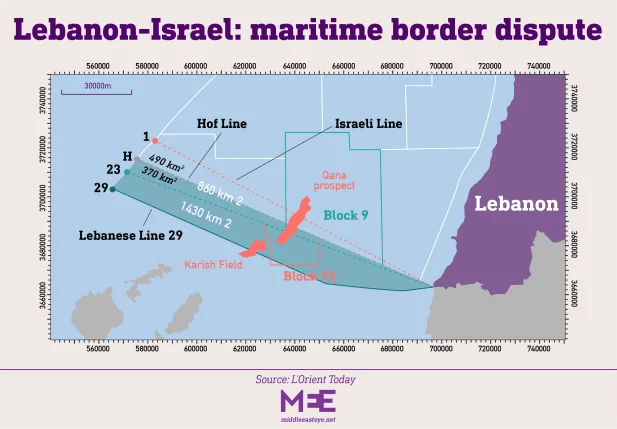
And basically, why did Hochstein come? When, a few years ago, the Americans came and established the Hof line, and then turned their backs on us for years, Lebanon stood by and waited (for an agreement on the maritime borders), while Israel explored (the maritime deposits), etc. Some (Lebanese) still tell us that Israel is exploring Karish: but my dear, the exploration in Karish is long over! They are now getting ready to extract gas from Karish. They are digging and getting ready (for extraction), while we sit around waiting for negotiations. Then Hochstein came along, and he proposed a line of demarcation. I don’t know what he called it, let’s call it the Hochstein line. He imposed it as something non-negotiable, and then turned around and ran off, telling the Lebanese officials that as soon as they had an answer, they should send it to him in writing. What brought Hochstein back for his recent visit? Two things. Let’s be specific. He did not come back for the sake of anyone in Lebanon, nor for the sake of the Lebanese State, nor for the sake of anyone else. He came for two reasons. First, the US need for oil and gas for Europe, as I just explained. Because the situation is very difficult and even critical due to the war between Russia and Ukraine, which has been pressing on their throats for several months. This is the first new point: the urgent need to get a replacement (for Russian oil and gas), and this is the point on which we can put pressure on the United States. I don’t want to describe it as a weak point, but as an urgent American-Israeli-Western need. And the second reason is the real point of strength in Lebanon: Hochstein came back because he saw the threats from Hezbollah. Listen to me: without the Resistance’s threats (to strike Karish), if there was no Resistance, if he did not know that the Resistance has drones, precision missiles, and air, sea and land (military) capabilities, if he did not know that the Resistance had the courage and audacity to threaten, act and do (what it promises), Hochstein would not have come: he would have said that he had already given us a line of demarcation, and that he was waiting for an answer (from Lebanon) that never came. This is the reason why Hochstein came because the oil and gas of Karish was threatened, and much more than that, as I will explain.
In sum, Lebanon is now facing an adversary, or rather an enemy that has a weak point, namely the pressing and urgent need for gas and oil that it wants to import from the (enemy) entity. For he cannot import oil and gas from Lebanon at the moment, but we can prevent Israel from extracting and exporting oil and gas, which is our point of strength. Lebanon’s strong point is that it has a Resistance, capable of preventing and prohibiting any extraction of gas and oil (in the Mediterranean). We are able to do this. When it goes to negotiations, like any country that goes to negotiations, Lebanon must have points of strength (to assert its rights). What are the main cards that Lebanon can play? What strengths can it bring to the table? Can it take advantage of the presence of the Arab League or the Organization of Islamic Cooperation at its side [laughs]? The UN? The Security Council? From Europe? Whose support can Lebanon claim? Lebanon, like the Syrian, Palestinian and Yemeni peoples, is left to its own devices. This is the fate of all oppressed peoples. Lebanon must therefore seek its inside strength (and not an illusory external support). The only strength of Lebanon, with which I began my remarks, is Hezbollah. It is the only one. If someone claims that there is another one, let him present it to us: we are not stubborn and are willing to learn. The only strong point in Lebanon is the Resistance and the actions of the Resistance. Even the United States is not a neutral intermediary, it is judge and jury: all it wants is an agreement that will give maximum gains to Israel at the expense of Lebanon. This is their real goal. The personality of the intermediary is not important, it is the fundamental policy of the United States that Biden has come to pursue, as he announced as soon as he arrived at the airport (in Tel Aviv). This is our only point of strength, and it is on this basis that we must move forward.
I want to address the Lebanese leaders without commenting on everything that has been said so far. I want to be constructive. Some Lebanese officials are convinced —whether they have said so publicly or not, they say it during internal meetings— they are convinced that the strength of Lebanon is the Resistance and the threats of the Resistance. Some officials may not be convinced of this, or at least they are afraid to state it clearly. I do not want to go into these details. I only want to say to the Lebanese leaders: this single strong point in your hands, use it! I say to you myself, in the name of the Resistance, use us! Instrumentalize us! Take advantage of us! As you like! When you sit down with the Americans and the Europeans, with the UN and with the whole world, tell them what you want! Insult us if you want, but don’t totally dissociate yourself from us of course. Insult us, no problem! Tell them that this group (Hezbollah) doesn’t listen to anyone, is out of control, and can lead the whole region to the abyss! Say what you want [to get Lebanon’s rights, even if you denigrate us when you recall our threats]! I invite you publicly to do so! Say it! And this is not psychological warfare. The Americans and the Israelis know that we are not waging psychological warfare on this issue, but are deadly serious. Let me give you some details about this. We are very serious. The Lebanese negotiators have one trump card to play, and that is Hezbollah. When we sent the drones over Karish, you should have said, “You see? These people are out of control and capable of anything! They don’t listen to anyone and can lead the whole region to the abyss [if they don’t get what they want]! So please, solve this problem and give Lebanon its legitimate rights!” This is what I wanted to confirm tonight.
After the episode of the drones (sent by Hezbollah over the Karish field), which I will talk about a bit, I heard some officials say that this action violates the agreement (allegedly made between Hezbollah and the government). What agreement are you talking about? Who made an agreement with whom? If someone makes agreements without our knowledge, that’s his problem. But we, Hezbollah, have not made any agreement with anyone, nor have we promised anyone that we would not do anything and that we would wait for the outcome of negotiations. Not at all. And whoever tells the Americans or anyone else that Hezbollah will do nothing, that it will not take any action, neither in the past, nor in the present, nor in the future, whoever makes such promises is deceiving his interlocutors and lying to himself, while squandering Lebanon’s interests. Instead of giving them guarantees and trying to reassure them, you have to scare them! Because this is your only strong point! It is your only card to play! If you reassure them, they will turn their heels, waste our time, and stall for these two months, just as they have been laughing at you for a year with their promises of Egyptian gas and Jordanian electricity. On the contrary, we must not only scare them, but even make them shake with terror!
Secondly, some have asked how Hezbollah can take the initiative to send drones when it claims to stand behind the State? You have misunderstood us, my dear! We are behind the State in the demarcation of the maritime borders! This is a matter in which we do not want to interfere. This does not mean that if the State accepts such and such a demarcation line, we will also sign, no! We do not interfere in any way. We are neither with nor against. We do not want to participate in the demarcation of maritime borders, as I have already explained in the past, and I do not want to explain it again. We do not participate in it for reasons of principle, ideology, culture, morality and tactics. When we say that we are behind the State on the issue of the maritime borders, it means that we do not want to interfere in this issue. When we say we are behind the State, it means that it is the Lebanese State that is negotiating the borders, not us. Many have claimed that Hezbollah has intervened in the negotiations, and opened channels for negotiations, but these are baseless lies. We are not involved in any way. But we have never said that we [fail to] stand behind the State in terms of putting pressure on the enemy, in terms of initiatives that can serve the negotiations, etc. We have never said anything of the sort, on the contrary: we have said the opposite! I made it clear that we would not stand idly by! That is what I said. Don’t misunderstand: we have not made any commitments to anyone and will not make any commitments to anyone. We are following what is going on, and we have the right to carry out any action at any time that we deem appropriate, of the appropriate scale and in the appropriate manner to put pressure on the enemy in the interest of the negotiations and the Lebanese negotiators. Let this be clear, both for the past and for the future.
It is on this basis that we took the initiative to send the drones (over the Israeli gas platform of Karish). The goal was to gain time! There has been an (American-Israeli) response, which Lebanese officials are evaluating in different ways. There is no doubt that there is a positive step forward, I say this to be honest and factual, but it is not enough, because even what the Lebanese State asks for is not granted. We in Hezbollah are not asking for anything, because I have said that we do not interfere in this issue. They told Lebanon to wait until September. But it will be too late. And therein lies the American duplicity. That is the American duplicity. And that’s when the drones came in, the day after the response in which the duplicity and the delaying tactics were obvious: it was clear that they were fooling us. And we don’t want to be fooled. So we launched the drones, and I’m going to expand a little bit on the military aspect of this. As the Resistance statement said, we sent out 3 drones of different sizes, and unarmed. Of course, we purposely did not arm them. Even when we were discussing this decision with the brothers, we agreed that our goal was for Israel to shoot down these drones. And despite that, Israel had a hard time shooting them down, first sending in planes and then bringing in the navy, Barak (sea-to-air) missiles, etc. These are details, but I explain to you what our intention was, and this will also benefit Israel in the future. Our brothers told us that they were perfectly able to send a drone (over Karish) that would collect intelligence and return (unharmed). But we unanimously said that we wanted the drone to go over there, collect intelligence and then be shot down by Israel. Why did we want this? Because we wanted the warplanes to fire missiles. Quite frankly. We wanted warships to fire sea-to-air missiles. We wanted fire and explosions in that area, on their side, so that the ship, the engineers, the (Israeli and foreign) employees (on the Greek gas platform Energean) and everyone else knows that they are in a dangerous area, facing a real and serious threat (to their lives).
If we had sent only one drone that would have collected intelligence there and returned, we would have issued a statement to that effect, saying that a drone flew over Karish and returned unharmed with the sought-after information, but maybe some would have believed us, and others would not. But the important and undeniable event is that the drones went there and were shot down, and that Israel was forced to hit them with missiles and speak out about it. That’s why Israel spoke before us, we were waiting to see what they would say. And we sent 3 drones on purpose to make the incident more prominent, because one drone would not have made so much noise. By the way, this was the first time in the history of the Israeli entity that 3 drones were sent simultaneously. As for sending a single drone, Hezbollah has been doing this for a long time (the first known drone, named “Ayoub,” was launched over Israel in 2012) and continues to do so to this day, with Israel sometimes intercepting them. Gaza has also sent drones over occupied Palestine. Iran has also sent them once or twice, and so has Syria. But each time, the drones were sent one by one. This is the first time that 3 drones were sent simultaneously to the same target. So that’s the whole story. I should point out that we are able to send a very large number of drones simultaneously. We can send them armed or unarmed, with different types of weapons, different sizes, etc. We are capable of all of that, with God’s help. We don’t have any problem with that. We sent 3 not because we were unable to send 5 (or more), but because 3 were enough for the message we wanted to send. And we were ready for anything, depending on the reaction of Israel, we were ready to face any retaliation.
In sending these drones, our goal… There were military, security, tactical objectives, which I don’t want to talk about, but we wanted to send a message to the enemy and to the whole world. If anyone thinks (that we are bluffing)… And I say this to the Americans, because in Lebanon (and especially in the American Embassy), some stupid advisors may claim that (we are bluffing). Some may (reassure Israel and the United States) that there is nothing to fear because the situation in Lebanon is very difficult, people are choking (because of the crisis, hyperinflation and shortages), and that Hezbollah can talk and threaten, but it is only empty words, and Hezbollah will not do anything. We have read many statements, communiqués, discussions and interventions in this vein. It’s said on TV, then it’s repeated at the U.S. Embassy, and maybe the (US) officials will be fooled. But with the 3 drones, the message was clear, and it was received loud and clear. The message was clearly that we are serious, that we see this as a crucial issue, that we are not waging psychological warfare, and that we are taking actions in a progressive way (more and more serious), and we will do whatever is necessary without any hesitation. This message was well understood by Israel and the United States. Whether some Lebanese commentators have understood it or not is the least of our worries. What matters is that the enemy gets this message, because it is addressed to him in the first place. Secondly, this message is addressed to our friends, so that they know that they are in a strong position, that they do not have to be afraid or tremble. This message has been well received, and the proof is that there has been no reaction from Israel on the ground, despite the (blatant) violation of the entity’s airspace. For the issue of oil and gas is very sensitive and pressing for the Israelis, the Americans and the Europeans. And the second proof is the internal contacts that were established, and the messages that were transmitted to the Lebanese State and also to us (Hezbollah) after the drone operation. All this confirms that the message was well received and well understood.
What will happen now? I must also say two words clearly for the future. In terms of our (military) capability, the enemy must know, and they know it well, but I say this to reassure and help our friends, that our capability is multiple. By the Israelis’ own admission, they were taken aback by the drones, and had difficulty shooting them down. But we have a variety of options (to strike Karish): we have air options, sea options, and land options. All of these capabilities are effective and on the table. Playing the delaying game will not help (with us). We are capable of doing anything that will serve our cause, and we will do it every time with the right scale, at the right time and in the right way. And I repeat, Lebanon can boast of a real deterrent power (Hezbollah) capable of preventing (the extraction of Karish gas), whose existence and threats (it poses to the enemy) it must take advantage of, as well as its actions if necessary.
In this power, in these negotiations, in this issue, there are two issues (which I will clarify) so that people do not misunderstand what position to take towards them. The first issue is Lebanon’s maritime borders, on which the State is negotiating. It is expected that they will reach a result, which will be recognized by the United States and the UN. This is a first issue. But it is not enough on its own. I want to remind you that for the Israeli invasions of 1978 and 1982, the borders of Lebanon were not disputed: they were internationally recognized, by the UN and whatever you want (but it didn’t prevent Israel from invading). It is not enough to have international recognition for our maritime border and our exclusive economic zone. That is not enough. The second issue is the (American) permission that must be given to foreign companies like TOTAL, which have committed themselves to come and explore and extract Lebanese hydrocarbons. Without this, what will we have gained? If we are told that these are our maritime borders, but the American veto continues to prohibit us from exploring and extracting our resources for 10 or 20 years, we will only have a right on paper, and the maritime oil and gas will be plundered (by Israel). So the two issues must be linked and resolved together. It is not enough to be told “Here are your borders” and to forbid TOTAL and any other company in the world to come and prospect or extract Lebanese hydrocarbons. We would have gained nothing, and it would be a mockery of the world and of ourselves to claim the contrary. The (Lebanese) State would have achieved success only on paper, without it being translated into facts. Therefore, the choice that Lebanon has is to apply pressure. We must apply pressure. We must apply pressure. It is our fate that is at stake. I will now express the core of my statement and our position. This is a vital issue for us.
I want to tell our enemies and friends that we are not waging psychological warfare on this issue. We will not just talk, express our opinion and bade farewell, certainly not. We are very serious. In our eyes, this is the only way to save Lebanon as a nation, as a State with its institutions that is threatened with collapse, as a people, its present and its future. We are talking about an operation of salvation. Perhaps tomorrow someone will react to my words by saying that I am ruining the whole process of border demarcation. Someone will ask me if I want to lead the country to war. But if we continue like this, Lebanon is heading for a situation worse than war! A situation much worse than war! Just for once, let us Lebanese try to be brave, to stand up as one man and have one strong and courageous stand against the Americans and the Israelis, without evasion, without pretence and without misreading. Someone will claim that all this is aimed at influencing the negotiations on the Iranian nuclear issue. Since 1982, we have been hearing about Iran, Syria, etc. (to present Hezbollah as a mere satellite of Tehran or Damascus), but this is just empty talk. This has nothing to do with the Iranian nuclear issue, as the US itself has acknowledged. So let’s aim at achieving our goal (getting Lebanon’s maritime rights and saving the country), why would the Iranian nuclear issue matter to us? If we stand up as one to the Americans, both at the level of the (Lebanese) State, the people and the Resistance, and say to them, “If you do not give us the rights claimed by the State, and not by Hezbollah, and if you do not allow the companies to come and extract (our hydrocarbons), we will all cause (a terrible war) in the region. We may turn the tables on the whole world.”
There are people who want the Lebanese people to starve and kill each other in front of bakeries, gas stations, and kill each other for a bite to eat, because the Lebanese pound is worthless, as are salaries. There are people who want to destroy this country. But no (we won’t let them)! I say tonight in all frankness, if the choice is that Lebanon should not be helped —and the natural way to help it is its wealth in hydrocarbons—, and that Lebanon should be pushed towards collapse, starvation, the people killing each other, no, no, no, no (we will never allow it). War is more dignified, much more dignified. Whether it is the threat of war, or even the actual war! It is much more dignified and much more noble! The first way, which is to let things continue towards collapse, anarchy and people killing each other because of hunger, has no horizon. It has no way out. But war has a horizon. If we decide to go to war, there is a way out. It can make the enemy submit (to our demands). Maybe he will submit before the war, maybe he will submit at the beginning of the war, maybe in the middle, maybe at the end! He will submit and we will impose our conditions, and we will earn hundreds of billions of dollars (by selling our hydrocarbons), which will save the country! And whoever dies in such a war will die a martyr. It is better than dying because of a fight at the bakery, at the gas station, in a robbery or whatever. Let’s talk about it seriously. I know that tonight many voices will be raised (to denounce my speech), but I am speaking frankly.
And we have learned from experience… We hope that the national position of Lebanon will be strong and unanimous. But it is obvious that we do not expect unanimity. From 1982 to 2000, the experience of the Resistance, the parties of the Resistance and the factions of the Lebanese Resistance all declare that if we had waited for national unanimity (to fight the invader), Lebanon would still be occupied by Israel, and there would be settlements in the South, in the Western Bekaa, in Rachayya and in many other places. Lebanon would have been swallowed by Israel. We will not wait for unanimity, and we will not abandon the State. We cannot leave the State alone in such a difficult and sensitive matter.
That is why I say to the enemy tonight: let him not make a mistake in his calculations. Let the Americans and Hochstein not trick the Lebanese and try to deceive them. The Lebanese will not be fooled. The drone message is only a beginning, a modest beginning (which gives only a small glimpse) of all that we can do. If things go wrong, we will not just target Karish. We are on the anniversary of the 2006 war, so record the new equation: Karish, beyond Karish and far beyond Karish [referring to the 2006 equation promising to strike “Haifa, beyond Haifa and far beyond Haifa”]. Today, I asked the brothers concerned in Hezbollah to present me with a list of everything that is facing the Palestinian coast. We count and follow closely (the activity of) all the (oil and gas) fields, all the oil wells, all the maritime platforms, whose names we know, as well as their activity, those with operational status or not, those who are still in the exploration phase, etc. All these details are in our possession. All these details are in our possession. If you want to continue to choke Lebanon, I am not just talking about the Karish equation: the issue is much broader for us. If you want to continue to impose the equation that Lebanon is forbidden to save itself by exploiting its natural gas and oil resources, no one will be able to extract gas or oil, and no one will be able to sell gas or oil. Do you understand? Do you understand or shall I repeat myself, as they say? And this regardless of the consequences.
O Lebanese people, we have reached the end of the road. We have reached the end of the road. Whoever promises you something else, let him explain what he is promising (to save Lebanon). What is he promising? Who is going to save Lebanon? They don’t even want to give you an (extra) hour of electricity! When a simple signature of the Americans would be enough, they have nothing else to do and would not lose a penny. But they want this country to collapse, to starve, to give in and give up its rights, to be their slave. But this is impossible. Whoever wants to be a slave, good for him. But it is not for him who wants to be free to give in. In any people, in any country, in any nation, in any State, people must fundamentally have sovereignty, freedom, independence, they must enjoy their natural resources that will save their people from ignorance, illiteracy, disease, hunger… This is the situation we are in today.
In the days to come, and while Biden is present in the region —it is said that Hochstein is also present with him—, and (Israeli War Minister) Gantz said “We don’t want war, and we are ready to go very far in the way of peace and to reach an agreement about the maritime border between us and Lebanon which must be agreed upon quickly.” I exhort you (O Lebanese leaders), talk to them, let them not stall and laugh at you and fool the Lebanese. No one will laugh at us, and we will not allow anyone to fool us.
I wanted to talk about other points, such as the economic and social situation, the bread, the government, but I have already gone on too long, and I will do so in a future speech.
May God’s peace be upon you, as well as His mercy and blessings.
Companies pillaging water resources in West Bank are violating international law, warns NGO
MEMO | July 14, 2022
Several companies complicit in destroying and pillaging water resources in occupied Palestine have been warned that they are violating Palestinians’ right to self-determination and international law.
Al-Haq, a Palestinian NGO, has called out a number of companies including Israel’s national water company, Mekorot, Hagihon Company, TAHAL Group International B.V, Hyundai Heavy Industries, Caterpillar, manufacturing giant JCB and Volvo Group.
According to Wafa news agency, the corporations enable Israel’s appropriation of water by supporting the ongoing dispossession of the already restricted water access to Palestinian communities.
An example includes Israel’s national water company, Mekorot, which uses stolen water to increase the supply to illegal Israeli settlements, which have a high demand. It does not do the same for Palestinian communities and cities in the occupied West Bank. Indeed, it discriminates systematically, and denies water to the Palestinian population, the rights group said.
In a letter addressed to the companies, Al-Haq wrote: “By illegally appropriating large water quantities from Palestinians, Mekorot’s actions may amount to the war crime of pillage. Mekorot’s drilling of illegal wells, along with TAHAL’s infrastructural support, serves illegal Israeli settlements with an unlimited supply of water, while simultaneously restricting water supply for Palestinian communities in the same region.”
“This sustains the transfer of a foreign population into the OPT, constituting a violation of Article 49 of the Fourth Geneva Convention. Through these actions, Mekorot, and many other corporations, blatantly violate Palestinians’ means of subsistence, a violation of Article 1(2) of the International Covenant on Civil and Political Rights and Article 1(2) of the International Covenant on Economic, Social and Cultural Rights.”
The Palestinian rights organisation called on the corporations to terminate their business in the occupied territories and “to act with enhanced due diligence to avoid further involvement in serious human rights violations and war crimes.”
Israel has occupied the West Bank since 1967. Human rights abuses against Palestinians and breaches of international law are daily occurrences.
US plans to build diplomatic compound on Palestinian land in East Jerusalem: Rights group
MEMO | July 12, 2022
The US is planning to build a diplomatic complex on private property confiscated from Palestinians in occupied East Jerusalem, a rights organisation said Sunday, Anadolu News Agency reports.
In a statement, the Legal Center for Arab Minority Rights in Israel (Adalah) said they have found new evidence that the land on which the diplomatic compound is to be built under a joint US-Israeli plan is located on private property taken from Palestinians.
“The land on which the US Diplomatic Compound is to be built is registered in the name of the State of Israel, but it was confiscated illegally from Palestinian refugees and internally displaced Palestinians using the 1950 Israeli Absentees’ Property Law,” it noted.
Recalling an upcoming visit by US President Joe Biden to Israel, Adalah said the descendants of the original owners of the property, including US citizens and Palestinian residents of East Jerusalem, demand the “immediate cancellation of the plan”.
“If built, the US embassy compound will be located on land that was seized from Palestinians in violation of international law,” the statement added.
Biden is scheduled to arrive in Israel on 13 July, as part of a tour that will also include the West Bank city of Ramallah and Saudi Arabia.
Norway-Russia Tensions Escalate Over Sanctions Impacting Arctic Islands
By Kyle Anzalone | The Libertarian Institute | July 6, 2022
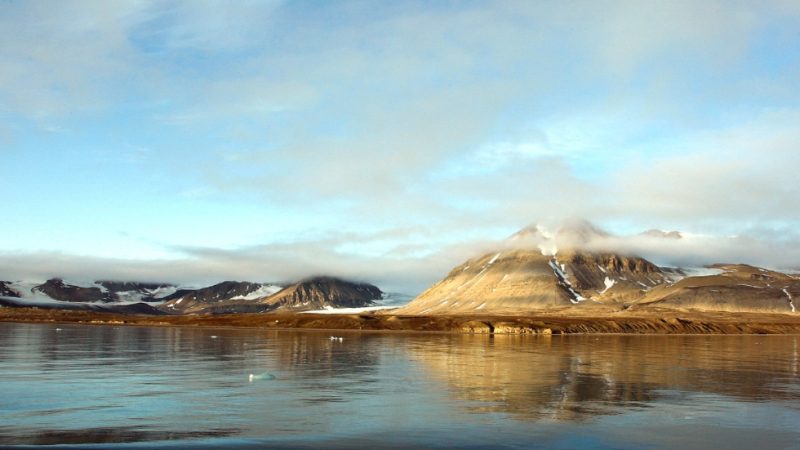
The latest point of confrontation between NATO and Russia is the Svalbard archipelago, located midway between Norway and the North Pole. Moscow claims Oslo is restricting trade with the island’s hundreds of Russian residents. A top member of the Russian legislature is now calling for Moscow to leave its agreement with Oslo that resolved the territorial dispute over the far-northern archipelago.
During a discussion about Norway restricting trade to the islands in the Russian Duma, the body’s speaker, Vyacheslav Volodin, requested the head of the chamber’s international affairs committee to look into “denouncing” the treaty. The agreement was signed in 2010.
In June, a shipment of goods to a Russian-operated mining colony on Svalbard was turned back. Moscow claimed the move by Oslo deprived the miners of needed food and medicine. “Norwegian authorities are trying to leave Russian miners without food, which is inherently immoral. This violates human rights and the principles of humanism,” said Russian Senator Konstantin Kosachev.
Konstantin went on to claim that Norway’s blocking of shipments violated international agreements. Oslo disputed the accusations saying it had not broken treaties and was legally enforcing sanctions. The shipment was “stopped on the basis of the sanctions that prohibit Russian road transport companies from transporting goods on Norwegian territory,” Norway’s Foreign Minister Anniken Huitfeldt said.
Huitfeldt noted there were potential options to allow the Kremlin to supply the miners without violating sanctions. The Russian Foreign Ministry promised Moscow would take “retaliatory measures” in response, though did not elaborate on what that might entail.
15 years of failed experiments: Myths and facts about the Israeli siege on Gaza
By Ramzy Baroud | MEMO | July 5, 2022
Fifteen years have passed since Israel imposed a total siege on the Gaza Strip, subjecting nearly two million Palestinians to one of the longest and most cruel politically-motivated blockades in history. Back then, the Israeli government justified its siege as the only way to protect Israel from Palestinian “terrorism and rocket attacks”. This is the occupation state’s official line to this day, and yet not many Israelis — certainly not in government, the media or even ordinary people — would argue that Israel today is safer than it was prior to June 2007.
It is widely understood that Israel imposed the siege as a response to the Hamas takeover of the Strip, following a brief, violent confrontation between the movement, which is the current de facto government in Gaza, and its main political rival Fatah, which dominates the Palestinian Authority in the occupied West Bank. However, the isolation of Gaza was planned years before the Hamas-Fatah clash, or even the legislative election victory of Hamas in January 2006.
In fact, the late Israeli Prime Minister Ariel Sharon was determined to redeploy Israeli forces out of Gaza long before these dates, making the siege possible. Culminating in the Israeli disengagement from Gaza in August-September 2005, the plan was proposed by Sharon in 2003, approved by his government in 2004 and finally adopted by the Knesset in February 2005.
The “disengagement” was an Israeli tactic intended to remove a few thousand illegal Jewish settlers from occupied Gaza — to go to other illegal Jewish settlements in the occupied West Bank — while redeploying the Israeli army from crowded population centres in the Gaza Strip to the nominal border areas. This was the actual start of the Gaza siege.
The above assertion was even clear to James Wolfensohn, who was appointed by the Middle East Quartet as the Special Envoy for Gaza Disengagement. In 2010, he reached a similar conclusion: “Gaza had been effectively sealed off from the outside world since the Israeli disengagement… and the humanitarian and economic consequences for the Palestinian population were profound.”
The ultimate motive behind the “disengagement” was not Israel’s security, or even to starve the Palestinians in Gaza as a form of collective punishment. The latter was a natural outcome of a much more sinister political plot, as communicated by Sharon’s own senior advisor at the time, Dov Weisglass. In an interview with the Israeli newspaper Haaretz in October 2004, Weisglass put it plainly: “The significance of the disengagement plan is the freezing of the peace process.” How? “When you freeze [the peace] process, you prevent the establishment of a Palestinian state, and you prevent a discussion on the refugees, the borders and Jerusalem.”
Not only was this Israel’s ultimate motive behind the disengagement and subsequent siege of Gaza, but also, according to the seasoned Israeli politician, it was all done “with a presidential blessing and the ratification of both houses of [the US] Congress.” The US president at the time was none other than George W. Bush.
All of this took place before Palestine’s legislative election, Hamas’s victory and the Hamas-Fatah clash. The latter merely served as a convenient justification for what had already been discussed, “ratified” by Washington and implemented.
For Israel, the siege was a political ploy which acquired additional meaning and value as time passed. In response to the accusation that Israel was starving Palestinians in Gaza, Weisglass was very quick to reply: “The idea is to put the Palestinians on a diet, but not to make them die of hunger.”
What was then understood as a facetious, albeit thoughtless statement, turned out to be actual Israeli policy, as revealed in a 2008 report which was made available in 2012. Thanks to the Israeli human rights organization Gisha, the “redlines [for] food consumption in the Gaza Strip” — composed by the Israeli Coordinator of Government Activities in the Territories — were made known. It emerged that Israel was calculating the minimum number of calories necessary to keep Gaza’s population alive, a number that is “adjusted to culture and experience” in the Strip.
The rest is history. Gaza’s suffering is absolute, with 98 per cent of the Strip’s water undrinkable; hospitals lacking essential supplies and life-saving medications; and movement in and out of the territory more or less prohibited, with relatively few minor exceptions.
Even so, Israel has failed miserably, with none of its objectives achieved. Tel Aviv hoped that the “disengagement” would compel the international community to redefine the legal status of the Israeli occupation of Gaza. Despite pressure from Washington, that never happened. Gaza remains part of the Occupied Palestinian Territories as defined in international law.
Furthermore, Israel’s September 2007 designation of Gaza as an “enemy entity” and a “hostile territory” changed little, apart from allowing the Israeli government to carry out several devastating wars against the Palestinians in the enclave, starting in late 2008.
None of these wars have served a long-term Israeli strategy successfully. Instead, Gaza continues to fight back on a much larger scale than ever before, frustrating the calculations of Israeli leaders, a fact which became clear in the befuddled, disturbing language to which they resorted. During one of the deadliest Israeli wars on Gaza, in July 2014, right-wing Knesset member Ayelet Shaked wrote on Facebook that the war was “not a war against terror, and not a war against extremists, and not even a war against the Palestinian Authority.” Instead, according to Shaked, who a year later became Israel’s Minister of Justice, this was “a war between two people. Who is the enemy? The Palestinian people.”
In the final analysis, the governments of Sharon, Tzipi Livni, Ehud Olmert, Benjamin Netanyahu and Naftali Bennett all failed to isolate Gaza from the greater Palestinian body; break the will of the Palestinians in the Strip; or ensure Israeli security at the expense of the Palestinians.
Moreover, Israel has fallen victim to its own hubris. While prolonging the siege will achieve no short or long-term strategic value, lifting the siege, from Israel’s viewpoint, would be tantamount to an admission of defeat, and could empower Palestinians in the West Bank to emulate the Gaza model. This lack of certainty further accentuates the political crisis and lack of strategic vision that has defined all Israeli governments for nearly two decades.
Israel’s political experiment in Gaza has backfired, inevitably so. The only way out is for the siege of Gaza to be lifted completely. Not eased; lifted. Completely. And this time, for good.
UAE forces are displacing Yemenis from Abd Al-Kuri Island
MEMO | June 29, 2022
Emirati forces have been accused of displacing local residents from Yemen’s Socotra archipelago in preparation to establish a military base on the island of Abd Al-Kuri.
Yesterday they continued to forcibly evict dozens of families from their homes at gunpoint, reported the Yemen Press Agency, citing local sources. The sources added that the recent displacement came after construction work began to build the base, which is speculated to host joint UAE and Israeli forces stationed in the archipelago.
In April, it was reported that UAE forces have been expelling dozens of families from their villages on Abd Al-Kuri Island, the second largest in the archipelago.
The displacements come amid increased cooperation between the UAE and Israel – who normalised ties in 2020, to set up a military and spy base on the strategically-located islands. This is in line with Israel’s ambitions to gain a foothold in the Bab El-Mandeb Strait.
Despite the UAE’s withdrawal in 2019 from the southern port city of Aden on Yemen’s mainland, it has steadily been increasing and consolidating its influence elsewhere in the southern provinces, including in Socotra. Its actions are seen by many locals as an occupation.
Turkey reaches NATO deal with Finland and Sweden

Samizdat | June 28, 2022
Turkey will support inviting Finland and Sweden into NATO at the alliance’s upcoming summit in Spain, Finnish President Sauli Niinisto announced on Tuesday after a meeting with his Turkish counterpart Recep Tayyip Erdogan and Swedish Prime Minister Magdalena Andersson.
The three countries signed a memorandum of understanding at the meeting, organized with the support of NATO Secretary General Jens Stoltenberg.
“The concrete steps for our accession to NATO will be agreed among NATO allies over the next two days, but that decision is now imminent,” said Niinisto. “I am pleased that this stage on Finland’s journey towards NATO membership has been completed.”
According to Turkey, Finland and Sweden pledged to “condemn terrorism in all its forms” and end their support for organizations Ankara has designated as terrorist – including the Kurdish groups PKK and YPG, as well as the movement led by the exiled cleric Fetullah Gulen, which the Turkish government refers to as “FETO.”
“Turkey got what it wanted,” Erdogan said in a statement after the deal was announced.
Speaking at a press conference after the meeting, Stoltenberg said that Finland and Sweden will become observers in NATO at the upcoming summit. He added that the memorandum includes provisions on fighting terrorism and arms exports, including adopting stricter national legislation.
Finland and Sweden imposed an arms embargo against Turkey in 2019, over Ankara’s intervention in Syria. Turkey also reportedly demanded that Stockholm and Helsinki shut down the offices and ban the publications belonging to FETO, freeze the assets related to groups it has designated as terrorists, and even ban them from demonstrating in public.
Ankara’s opposition threatened to derail NATO’s plan to invite Sweden and Finland at the summit in Madrid which began on Tuesday. The two traditionally neutral Scandinavian countries declared their desire to join the US-led alliance in April, citing the current conflict in Ukraine.
Featured Video
The Source of America’s Wars – Kristol Clear
or go to
Aletho News Archives – Video-Images
From the Archives
Is Israel to blame for the Iraq War?
American Goy | March 10, 2008
I am so tired of this old canard that “Israel had nothing to do with USA’s war with Iraq – in fact, it officially advised America against it”.
Bullshit. … continue
Blog Roll
 Aletho News
- Ceasefire for all or for none: Iran shuts Hormuz over Lebanon attacks
- Strait of Hormuz is Iran’s ‘nuclear weapon’ that forced US retreat: Medvedev
- Energy crisis will last for months – Kremlin envoy
- Europe’s quiet role in the war on Iran
- Forty days that shook the Empire: How Iran turned the tables on US and prevailed
- Netanyahu unilaterally declares Lebanon outside of ceasefire deal
- Israeli leaders: ‘Not a single goal’ achieved in war with Iran
- What on earth just happened? Trump, Iran, and the unlikely ceasefire
- Alberta Bill Would Fine Political Deepfakes $10,000 Without Satire Exemptions
- Iran declares ‘historic victory’ over US, says enemy forced to accept its proposal
- If Americans Knew
- Gazans face a triple crisis: severe shortages of water and bread, healthcare in tatters
- NY Times reports how Netanyahu took the US into Iran War
- A sigh of relief over Iran, but Gaza and Lebanon in dire straits – Daily Update
- Thousands dead and neighborhoods razed to the ground: Aid agencies fear southern Lebanon is becoming the new Gaza
- The war the US is fighting for Israel could cost trillions
- ‘Cigarette Burns, Nail Wounds’: Toddler Tortured in Gaza to Coerce Father
- Trump Says US Sent ‘a Lot of Guns’ to Protesters in Iran
- Israeli forces destroy 17 UN peacekeeper cameras in south Lebanon
- US-Israeli strikes ‘completely destroy’ synagogue in Tehran
- Archbishop for US Military Says Iran War Is Unjust Under Catholic Teaching
- No Tricks Zone
- An Inconvenient Tree: Uncovered In Alps… Europe Much Warmer Than Today 6000 Years Ago
- New Study Reports A 60% Slowdown In Greenland’s Ice Loss Rate In The Last Decade
- Low Intensity Tornado Wrecks Major Solar Farm, Creating A Potential Toxic Dump
- New Study Finds Warming Saves Lives…Cold Temperatures 12 Times More Deadly Than Excess Heat
- German Science Blog Accuses PIK Climate Institute Of Hallucinating Climate Tipping Points
- Devastating Assessment Of Comirnaty Vaccine By Former Senior Pfizer Europe Toxicologist
- New Study: CO2 Is ‘Effectively Negligible’ As An Explanatory Climate Change Factor Since 2000
- Former Pfizer Toxicologist Dr. Helmut Sterz Tells Bundestag Hearing Pfizer Vaccine Should Have Never Been Approved
- Energy Expert: Germany’s Nuclear Phaseout Was A “500 Billion Euro Mistake”
- New Research: South Australia’s Mid-Holocene Sea Surface Temperatures Were 4°C Warmer Than Today
 Aletho News