Airbnb sued in France for rentals in occupied West Bank
MEMO | November 4, 2025
The Association of Jurists for the Respect of International Law (JURDI) has sued Airbnb in France for listing properties in Palestinian territories occupied by Israel in the West Bank, the BFMTV broadcaster said Tuesday, Anadolu reports.
JURDI, a non-profit group in France that advocates for international law regarding the Israeli-Palestine conflict, accuses Airbnb of supporting war crimes by listing the properties in occupied territories in the West Bank. It is asking the court to order the company to remove listings in Israeli settlements.
“By offering these accommodations, Airbnb contributes to the normalization and perpetuation of the colonial regime, by providing financial resources to settlers and legitimizing their presence,” JURDI said in its lawsuit, excerpts of which were seen by BFMTV.
Attorney Helene Massin-Trachez, who is leading the case, said French law prohibits offering contracts that violate public order, arguing that Airbnb was doing exactly that by promoting unlawful rental agreements to clients based in France.
A preliminary hearing has been scheduled for Jan. 13, and if the court rules in JURDI’s favor, Airbnb will have eight days to comply before facing a €5,000 ($5,740) fine for each day of delay.
The company defended its actions when contacted by BFMTV, denying it profits from the international situation and vowed to remain committed to addressing each of the situations “with the greatest care.”
The French Human Rights League (LDH) filed a complaint against Airbnb and Booking.com last month for listing properties in Israeli settlements in Palestinian territories.
The complaint accuses those companies of complicity and aggravated concealment of war crimes, underlining that the platforms promote “occupation tourism” by offering listings in Israeli settlements.
IOF infiltrate Lebanese town of Blida, murder civilian in his sleep
Al Mayadeen | October 30, 2025
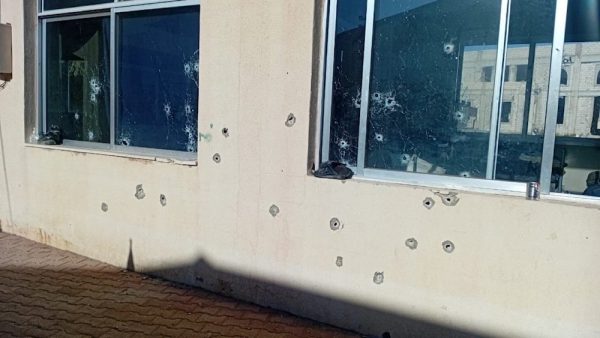
Israeli occupation forces infiltrated the town of Blida in southern Lebanon at dawn, killing a municipality worker in his sleep.
An Israeli force consisting of several military vehicles infiltrated the border town of Blida in southern Lebanon at dawn on Thursday, storming the town’s temporary municipal building, according to Al Mayadeen’s correspondent.
The incursion was accompanied by Israeli drones flying over the town, and gunfire was heard during the raid. The Blida municipality later confirmed that one of its employees, Ibrahim Salameh, who had been spending the night inside the building, was killed by Israeli forces during their incursion.
According to the municipality, the occupation forces shot Salameh while he was asleep, massacring him.

Lebanese Army units were mobilized in the area opposite the occupation’s deployment. Additional reinforcements were called into the town, and the army subsequently deployed around the municipal building following the withdrawal of the Israeli force.
Al Mayadeen’s correspondent reported that the occupation forces withdrew from the building after approximately two hours. Before pulling back, they issued a warning, communicated through UNIFIL, demanding the evacuation of the premises after the Lebanese Army and residents entered the building.
Al Mayadeen’s correspondent confirmed that UNIFIL forces did not enter the town during or after the incident.
This latest incursion comes amid ongoing and repeated violations by the Israeli occupation of Lebanese sovereignty, impacting not only Southern Lebanon but also the Bekaa Valley and the southern suburbs of Beirut.
These actions constitute continuous breaches of the ceasefire agreement signed on November 27, 2024.
Israel moves to seize Sheikh Jarrah neighborhood in occupied East Jerusalem: Report
MEMO | October 29, 2025
The Israeli government has taken new measures to assert its control over the Sheikh Jarrah neighborhood in occupied East Jerusalem and evict Palestinian residents, an Israeli organization said Wednesday, Anadolu reports.
In a report titled “Strangling Sheikh Jarrah: New Tools for Israeli Control and Palestinian Displacement,” the Ir Amim organization said the Israeli government has entered a “new and dangerous phase” in its efforts to dominate one of East Jerusalem’s most symbolic neighborhoods.
“Israel is now using unprecedented legal, planning, and administrative tools to achieve the same goal: displacing Palestinian residents and consolidating the settlement presence at the heart of the neighborhood,” it said.
Among these measures, the report cited “large-scale urban renewal projects, including some 2,000 housing units for illegal Israeli settlers, entirely excluding Palestinian residents.”
It also noted “land registration efforts in certain plots, allowing government bodies and settlers to register them in their names, as well as confiscation and reallocation of public spaces for Jewish religious institutions and national-religious projects.”
Ir Amim called these mechanisms a “coordinated strategy to turn Sheikh Jarrah from a vibrant Palestinian neighborhood into a fragmented area dominated by Israeli settlements.”
Israeli researcher Aviv Tatarsky of Ir Amim said the government measures are part of Tel Aviv’s efforts to assert its control over the neighborhood.
“What we are witnessing in Sheikh Jarrah represents a new stage in Israel’s efforts to cement control over East Jerusalem,” he said.
“After years of failed attempts by settler groups to evict residents, Israel itself now leads the effort using new legal, administrative, and planning tools to solidify Israeli presence and push Palestinians to leave.
“What is happening in Sheikh Jarrah is not limited to one neighborhood; it reflects a government-wide policy to reshape the entire city.”
Government-backed settler organizations are seeking to evict hundreds of Palestinians from homes they have lived in since the 1950s. The settlers claim the land belonged to Jews before 1948, which Palestinian residents deny.
In recent years, illegal settlers have seized homes in the Sheikh Jarrah neighborhood and continue to pursue additional properties to establish settlements.
Palestinians insist that East Jerusalem is the capital of a future Palestinian state, while Israel maintains that the entire city is its capital.
The Sheikh Jarrah measures form part of a broader wave of Israeli escalation in the occupied West Bank, where 1,062 Palestinians have been killed, around 10,000 injured, and over 20,000 others detained, including 1,600 children, over the past two years.
In a landmark opinion last July, the International Court of Justice declared Israel’s occupation of Palestinian territory illegal and called for the evacuation of all settlements in the West Bank and East Jerusalem.
Israel Issues Demolition Orders to Clear Path for Colonial Road
IMEMC | October 24, 2025
Israeli occupation authorities issued demolition orders on Thursday targeting large industrial structures at the entrance of Anata, northeast of occupied Jerusalem in the West Bank.
According to Jerusalem Governorate advisor Marouf Al-Refa’ey, Israeli forces stormed the town’s entrance and distributed demolition notices affecting metal workshops, furniture factories, and storage units.
He stated that the move is part of a long-standing plan to construct a road, traffic circle, and bridge connecting the Anata junction to the Hizma military roadblock.
This infrastructure is linked to the so-called “Greater Jerusalem” scheme and the colonial E1 plan.
Al-Refa’ey emphasized that Israeli authorities are systematically eliminating Palestinian presence along the path of this project. Demolitions in the area have been repeatedly carried out under various pretexts, including lack of permits or proximity to the illegal separation wall.
He warned that the developments at Anata’s entrance and along Az-Za’ayyem Road are part of a broader plan to establish a segregated road system. The goal is to bar Palestinians from using Abu George Road, which leads to the Jerusalem–Jericho highway and is reserved exclusively for illegal paramilitary Israeli colonizers.
In contrast, the Anata/Az-Za’ayyem entrance would be restricted to Palestinian traffic only, connecting Anata, Az-Za’ayyem, and the Hizma checkpoint roundabout.
Jacques Baud: Borderless Israel & Gaza Pause
Glenn Diesen | October 14, 2025
Colonel Jacques Baud is a former military intelligence analyst in the Swiss Army and the author of many books. Baud discusses the temporary pause in the Gaza conflict and the absence of a new status quo and clear Israeli borders.
Soldiers, Settlers Injure 20 Palestinians in Beita

International Solidarity Movement | October 11, 2025
October 10 was the opening of the Zaytoun2025 olive harvest campaign. Here’s a wrap-up of the events:
Beita, South Nablus
About one hundred farmers joined by some 60 Palestinian and solidarity activists, were attacked by armed Israeli citizens and soldiers, near a recently established Israeli settlement in the Jabal Qamas area. The soldiers both ignored the attacks on the farmers and used violence themselves to try and repel the harvesters from their lands, and ignored the assault of Palestinians by the Israeli civilians, and therefore enabling them. The soldiers used tear-gas concussion grenades and physical violence, while the Israeli civilians attacked harvesters with baton blows, stone throwing and by shooting live ammunition.
- 20 injuries were recorded. 11 of the injured Palestinians were evacuated to the Rafidia hospital in Nablus. In addition, one solidarity activist was evacuated to the Belinson hospital after Israeli civilians assaulted her with batons and broke her arm.
- One of the Palestinians suffered a gunshot wound after being shot by an Israeli civilian.
- Three of those injured are journalists: Wahaj Bani Mufleh, Saja al-Alami and Jaafar Astaya, whose car is one of those torched.
- Eight cars were torched by the Israeli civilians.
- An ambulance was attacked and flipped over. An attempt to torch it as well was foiled by Palestinians who came to the crew’s rescue.
Jorish and Aqraba, South-East Nablus
Israeli civilians armed with batons prevented farmers from the two villages accompanied by solidarity activists from accessing their lands in the Wad Issa agricultural area.
Duma, Sout-East Nablus
Israeli soldiers prevented farmers from harvesting their olives in the Houma and Khallet al-Hassad areas, asserting access to these lands requires security coordination with Israeli authorities. The Houma area is in Area B.
Yanoun, East Nablus
Israeli civilians expelled farmers and stole their harvested olives.
Deir Istia, North Salfeet
Israeli civilians harassed harvesters in an attempt to prevent them from accessing their lands near the Yaqir settlement.
Kufer Thulth, East Qalqilya
Settlers attacked harvesters and shepherds, killing several goats.
Farata, East Qalqilya
Israeli civilians shot at farmers harvesting olive with live fire in the presence of Israeli soldiers, who did not intervene. Both the soldiers and Israeli civilians then continued to raid the village, stop residents in the street and question them.
Kobar, North Ramallah
Israeli forces arrested harvesters in their lands near the village.
Iran embassy censures awarding Nobel Peace Prize to Venezuelan opposition leader
Press TV – October 11, 2025
Iran’s embassy in Caracas has blasted the Nobel Committee for awarding this year’s Nobel Peace Prize to someone who advocates for military aggression against Venezuela in yet another sign of the West’s “divisive and interventionist” mentality.
In a post on its X account on Saturday, the embassy said the decision to award the Nobel Peace Prize to Venezuelan opposition leader María Corina Machado is “nothing less than a mockery of the true meaning of ‘peace’”
“Awarding the Nobel Peace Prize to someone who justifies the genocide in Gaza and advocates for military aggression against Venezuela is yet another example of the West’s divisive and interventionist mentality in the developing world,” it emphasized.
The Nobel committee on Friday awarded the 58-year-old Machado, a Venezuelan politician notorious for advocating American and Israeli military intervention in her country, the 2025 Nobel Peace Prize for her “tireless work promoting democratic rights”.
The country’s Supreme Court upheld a 15-year ban against her, citing her direct support for US sanctions, involvement in large-scale corruption, and responsibility for massive financial losses suffered by Venezuela’s foreign assets — including the US-based oil refiner CITGO and the Colombia-based chemicals firm Monómeros.
This comes as the US military escalated its operations against Venezuela in August, involving three destroyers, anti-submarine aircraft, battleships, nuclear submarines, and F-35 squadrons.
Since then, US forces have attacked several vessels, killing dozens of Venezuelan nationals while claiming they were drug traffickers transporting narcotics to the United States.
In response, the Venezuelan government has declared a national emergency, reinforced its armed forces, and mobilized its national militia to counter any potential military aggression from Washington.
The pirates of Israeli supremacy: The West’s favorite rogue state has done it again
By Tarik Cyril Amar | RT | October 2, 2025
The long-expected if perfectly criminal has happened again: Israel’s navy has intercepted the Gaza-bound Sumud Flotilla by force, stopping almost 50 boats and, in effect, kidnapping hundreds of their crews and passengers.
In terms of law – which, of course, are never really applied in practice to Israel – everything is exceedingly clear: The Sumud Flotilla was a volunteer operation to bring humanitarian aid to Gaza which has been subjected to Israeli genocide for now almost two years. Israel had a clear obligation to let that aid pass.
But then what to expect from the world’s most aggressive rogue state that is not “only” committing genocide, but also waging regional wars of aggression and running terrorist assassination campaigns in the face of the global public? And Israel has a well-established track-record of this kind of piracy, of course, having stopped several attempts to bring aid by sea since 2010, sometimes with casualties among the humanitarian activists.
Stopping the Sumud Flotilla wasn’t merely criminal but criminal in every regard lawyers can imagine, a typical Israeli super-whopper of legal nihilism: Israel attacked the flotilla ships in international waters where it has no jurisdiction. Even if the ships had gotten closer to the Gaza coast, they would, by the way, still not have been inside any Israeli territorial waters because there are no such waters off Gaza, over which Israel has no sovereignty as clearly confirmed by the International Court of Justice last year. What you find off the coast of Gaza, as a matter of fact, are Palestinian territorial waters.
The blockade of Gaza, which has lasted not “merely” for the duration of the current high-intensity genocide-ethnic cleansing campaign but for close to two decades now, is illegal. Because the blockade has been in place for so long, Israel is simply lying – surprise, surprise – when arguing it is a short-term measure covered by the San Remo rules, which summarize “International Law Applicable to Armed Conflicts at Sea.” And even if those rules applied, under them as well Israel would have to let humanitarian aid through.
Finally, as Israel has attacked ships and citizens belonging to over 40 countries, Israel has committed aggression under international law against all of them and, less obvious but a fact, also crimes under each of these countries’ domestic laws, because they apply on those ships.
So far for the law, but then again, Israel is de facto outside and above the law. That much we have known for a long time. Indeed, Israel could not exist without constantly breaking international law and getting away with it. For Israel, lawlessness and impunity are not luxuries but vital necessities.
The reason why it has been able to exist in this manner is well-known, too: It is protected by the West and, in particular, the US. The latter is Israel’s single worst co-perpetrator, facilitating its crimes like no other state on Earth. Soon, for instance, the recent war of aggression waged by America and Israel together against Iran will probably be followed by a second, even worse assault.
In this regard, what has happened to the Sumud Flotilla has been a test: Clearly, recent moves by various Western governments, including the UK, France, and Australia to “recognize” – in an extremely dishonest manner – a Palestinian state and add some cautious rhetorical criticism of Israel make no difference to their absolute deference in practice to both Israel and its backers in the US.
What seemed like a glimmer of hope for a moment, the appearance of warships from various nations to apparently escort the humanitarian flotilla, has turned into just another humiliation: the escort abandoned their charges well in time to allow Israel a free hand.
The same Western leaders responsible for this cowardly retreat cannot stop waffling about the need not to “reward the aggressor,” when dialing up the war hysteria against Russia, as they have been doing mightily again recently, from mystery drones to declaring unconstitutional states of “not-peace” to chatter of states of emergency.
What about, for once, not rewarding the genocider for a change? But that’s hard, isn’t it? Once all Western governments are accomplices of Israel.
The Sumud Flotilla will not have been the last attempt to break both Israel’s genocidal blockade and its aura of impunity. There is hope, because even in NATO-EU Europe and the US ever more people understand what Israel really is and what it really does: a settler-colonial apartheid state that won’t stop committing genocide and ethnic cleansing. Israel’s systematic campaigns of propaganda and information war are escalating in response, as the case of TikTok has just demonstrated. But even Israel and its American friends cannot reverse history and an experience that the whole world has made. The Gaza Genocide is a fact already. It will not be forgotten. The resistance to Israel will never end.
Tarik Cyril Amar is a historian from Germany working at Koç University, Istanbul, on Russia, Ukraine, and Eastern Europe, the history of World War II, the cultural Cold War, and the politics of memory.
Why the US is so open about its intentions for Lebanese civil war
By Robert Inlakesh | Al Mayadeen | September 30, 2025
The United States is now openly admitting that it is arming the Lebanese military to fight its own people and that it won’t allow Lebanon to defend itself against the Israelis. This is no mistake and is instead part of a clear-cut strategy, designed to plunge the nation into chaos.
Although Lebanese Prime Minister Nawaf Salam has openly followed orders from his American allies, choosing to pursue the disarmament of Hezbollah without any national defense strategy, a move opposed by the majority of the Lebanese public, it seems that the US is still not impressed.
While some have been duped into believing the policy of pursuing disarmament depends on the willingness of the Lebanese military, this way of reading the current American plot is completely wrong. Disarming Hezbollah is just step one in a much more complex strategy.
Since the ceasefire on November 27, 2024, the Zionist regime has continuously bombarded Lebanese territory, anywhere and at any time. They have committed around 5,000 total violations, continuing to expand their military presence in the south of Lebanon, where the Zionist leadership vows to remain indefinitely.
It is crucial at this stage to ask why, especially since airstrikes, specifically those that kill civilians, only complicate the US-assigned tasks of the Lebanese government, bringing both shame and embarrassment, particularly to Nawaf Salam.
One way of looking at the airstrikes is that the Israelis are seeking to degrade the capabilities of Hezbollah and prevent them from rebuilding following the war. Yet, their strikes are simply not effective enough to make a significant dent in this regard, although they may be hitting some sensitive targets on occasion.
This leaves us with the obvious explanation: the ongoing military assault is part of a war of perception which Hezbollah should behave in a very calculated way to deal with. The Israelis achieve two objectives by carrying out more and more provocative violations of Lebanese sovereignty: they project an image of dominance and attempt to bait Hezbollah into responding.
Some would then ask: Why does Hezbollah not respond? A question sometimes asked rhetorically in order to infer that they are too weak to do so.
The answer is quite simple. Hezbollah has put up a limited military front for almost an entire year in support for Gaza, responding to each Israeli escalation in what it considered a calculated manner. Yet all this merely allowed “Israel” to hatch a plot which harmed not only Hezbollah, but Lebanon as a whole. Despite this, the Zionist regime failed to finish the job, and Hezbollah not only survived but fought a defensive war to a stalemate.
If Hezbollah decides to respond in a limited manner to Israeli aggressions, it would provide the perfect excuse for the occupying entity to launch a large-scale military operation which would significantly damage Lebanon. In return, if Hezbollah does not manage to achieve major and overt military victories in such a confrontation, it would be a devastating blow.
In other words, the next confrontation has to be on a much greater scale than anything seen before, a military campaign in which Hezbollah manages to shock not only the Israelis, but the world, and most importantly, the Lebanese people themselves.
The martyred Secretary General of Hezbollah, Seyyed Hassan Nasrallah, often spoke of the media war with the Zionist entity, treating it with great seriousness. This was because public perception shapes not only political outcomes, but also the course of battles on the ground through morale.
Prior to September 2024, the stock of Hezbollah was incredibly high. The public perception was that the Resistance was capable of defeating the Israelis by itself. This is why the end of the war and its results, the renewed occupation of Lebanese lands, brought shock. In reality, Hezbollah’s capabilities were never matching those of the Israelis, yet the tenacity of the Lebanese fighter and the Resistance’s planning created such an impression, especially following the 2006 war.
The perception of Hezbollah’s strength made the Israeli terrorist pager attack and assassination strikes against its leadership all the more devastating, because the public believed such attacks to be impossible.
This is something that the US has since weaponised, with figures like US envoy Morgan Ortagus even declaring that Hezbollah is over. This brings us to her fellow American envoy Tom Barrack’s recent interview with Sky News Arabia.
Barrack explicitly asserted that the US is supplying the Lebanese army to fight its own people, even laughing at the idea that this support is intended to confront “Israel”. While some analysts interpreted Barrack’s statements as ill-advised or mistaken, they couldn’t be further from the truth, there is a reason why he speaks with such confidence.
The U.S. Trump administration understands full-well that the Lebanese army is not capable of removing Hezbollah’s weapons by force alone. The Americans and their Israeli allies may be many things, but they are not naive on this issue. They understand that many strings must be pulled if Hezbollah is actually going to suffer a blow which will lead to significant military degradation.
Part of this strategy is to try and publicly humiliate not only Hezbollah, but also the Lebanese State and people as a whole. Meanwhile, the Israelis are performing their part in this plot and are escalating their provocative actions, now implementing tactics such as deliberately carrying out civilian massacres, like the one that occurred in Bint Jbeil recently. Also, they are now attempting to clear portions of southern Lebanon by issuing evacuation orders before bombing civilian buildings.
What the likes of Nawaf Salam don’t appear to understand is that they are totally disposable in this equation. Meaning that there is even a danger he could be assassinated by the Israelis or Americans in order to pin the blame on Hezbollah and its allies.
Right now, the US and “Israel” are plotting against Lebanon. They will seek to carry out actions which will be just as detrimental, if not more, than what we witnessed last September, and they are under no illusions about whether the Lebanese army could simply disarm Hezbollah for them.
The Israelis are openly seeking the so-called “Greater Israel”, as per their Prime Minister Benjamin Netanyahu’s own admission earlier this year. A common misconception about the “Greater Israel Project” is that it would mean occupying Lebanon, Syria, Jordan, parts of Iraq, Saudi Arabia, Egypt, and even Türkiye, in the same way it did in Palestinian occupied territories.
In fact, the man who first conceived the “Greater Israel” model, Oded Yinon, in his academic article back in 1982, advocated for an Israeli empire, under which the nations of the region would be broken down into sectarian regimes and ethno-states, all of which would be effectively demilitarized and under the de-facto control of the Zionist Entity.
When the Zionist regime occupied southern Lebanon following the 1982 invasion, during which 20,000 people were killed, it relied on the “South Lebanon Army” to carry out its agenda. A similar system was not set up in the occupied West Bank. There, the Zionists instead injected their population to build illegal settlements and Judaize the area, while collaborators managed the territory under Israeli rule.
Similarly, in Syria, the Zionists are not necessarily interested in settling Daraa, for instance, they would much rather demilitarize the entire south, except the collaborator regime they hope to implement in Sweida. Officials in Tel Aviv have also made it clear that they will never tolerate the rebuilding of the Syrian Arab Army; they will only allow a military force comparable to that of Lebanon.
All of this is to say that there is a psychological war being waged on the people of Lebanon and region at large. Hezbollah is still very much militarily capable of taking the fight to the Israelis, but how they do it is of great importance. We know well that the Resistance still possesses considerable capabilities, because we witnessed newly revealed weapons right up until the final days of the war, many of them in clear abundance.
One mistake that the US may be making, however, is that all its rhetoric about Hezbollah could well backfire.
Hamas: Blair not welcome in Palestine, our people can manage their own affairs

MEMO | September 29, 2025
Hamas said on Sunday evening that former British prime minister Tony Blair is “not welcome in the Palestinian context,” and stressed that it has not received any proposal through mediators for a ceasefire.
The statement came by Hossam Badran, a member of the movement’s political bureau, in remarks published on the movement’s Telegram channel.
His comments followed a report by the Israeli newspaper Haaretz, quoting an Arab political source, that the US administration had developed a plan to appoint Blair to lead a temporary administration for the Gaza Strip.
Badran warned that “linking any plan to this unwelcome person (Blair) is a bad omen for the Palestinian people.” He described Blair as a “negative figure who may deserve to stand before international courts for crimes he committed, especially his role in the war on Iraq (2003–2011).”
He further labelled Blair “the brother of the devil,” saying, “He has brought no good to the Palestinian cause, nor to Arabs or Muslims, and his criminal and destructive role has been known for years.”
Badran stressed that managing Palestinian affairs in Gaza or the West Bank is an internal Palestinian matter that must be agreed upon nationally, and that no regional or international party has the right to impose how the Palestinian people govern themselves.
UN blacklist expands to 158 firms over Israeli settlement ties
Al Mayadeen | September 27, 2025
The United Nations has expanded its blacklist of companies linked to Israeli settlements in the occupied West Bank, adding 68 firms from 11 countries accused of contributing to violations of Palestinian human rights.
The updated “database of companies,” released Friday by the UN human rights office, now includes 158 businesses, most of them Israeli. Others are headquartered in the United States, Canada, China, Britain, France, Germany, Spain, Portugal, the Netherlands, and Luxembourg.
The list highlights firms engaged in activities deemed supportive of settlement expansion, which much of the international community considers illegal under international law. These include suppliers of construction materials, heavy equipment vendors, and providers of financial, security, and travel services.
Among the latest additions are German building materials giant Heidelberg Materials, Portuguese rail systems provider Steconfer, and Spanish engineering firm Ineco. US-based Expedia Group, Booking Holdings Inc., and Airbnb, Inc. also remain on the list.
First update since 2023
While 68 new companies were named, seven were removed following a UN review of 215 enterprises. The delisted firms include French transport company Alstom and online travel agencies eDreams (Spain) and Opodo (Britain).
“Businesses working in contexts of conflict have a due diligence responsibility to ensure their activities do not contribute to human rights abuses,” said Ravina Shamdasani, spokesperson for the UN human rights office. “We call on businesses to take appropriate action to address the adverse human rights impacts of their activities.”
Shamdasani added that governments also bear responsibility for ensuring that corporations under their jurisdiction are not complicit in rights violations.
The newly flagged companies are concentrated in industries such as construction, real estate, mining, and quarrying. Each was notified of its inclusion and granted the right of reply.
This marks the first update to the database since 2023, when 97 companies were listed, down from 112 in the original 2020 publication. Fifteen firms, including US food conglomerate General Mills, were removed during that previous revision.
Labelling the Palestinian resistance: Political propaganda or legal classification?
By Sayid Marcos Tenorio | MEMO | August 30, 2025
The dominant narrative in the West portrays the Islamic Resistance Movement – Hamas – as a “terrorist group”, uncritically repeating the rhetoric of Israel and its allies. However, when analysing the issue from the perspective of international law and the history of national liberation movements, it is clear that the “terrorism” label is more a tool of political propaganda than a legal definition.
In light of international law and the United Nations Charter, Hamas should be understood as a Palestinian resistance movement in the face of more than seven decades of Israeli colonisation, ethnic cleansing, and military occupation. This also includes almost two years of uninterrupted confrontation with genocide in the Gaza Strip.
The United Nations (UN) has never declared Hamas a terrorist group. Only a few countries, such as the United States, the European Union, Canada, the United Kingdom, and Australia, have unilaterally adopted this classification. International law, in turn, does not criminalise resistance against occupation.
Since 1967, Israel has maintained its occupation of the Gaza Strip, the West Bank, and East Jerusalem, in flagrant violation of the UN Charter and Security Council resolutions. According to International Humanitarian Law, peoples subjected to foreign occupation have the legitimate right to resist, including by armed means, against the occupying power.
This principle is supported by Article 51 of the UN Charter, as well as Resolutions No. 2649/1970, 2787/1971, 3070/1973, and 3103/1974, which explicitly recognise the inalienable right of peoples to fight against colonial domination, foreign occupation, and apartheid. Furthermore, the Geneva Conventions of 1949 and the Additional Protocols of 1977, along with the practice of the International Criminal Court (ICC), distinguish between armed resistance and terrorism.
Therefore, the existence of an armed struggle against occupation does not constitute terrorism, but rather a legitimate exercise of resistance.
Founded in 1987 during the First Intifada, Hamas is not just an armed group; it is also a political, social, and religious movement deeply rooted in Palestinian society.
Its surprising victory in the 2006 legislative elections, which were recognised as free and democratic by international observers, demonstrates its popular representation. It won 76 of the 132 seats, while its main rival, Yasser Arafat’s Fatah, won 43 seats.
Over the decades, Hamas has administered social institutions, hospitals, schools, and assistance programmes, playing a similar role to liberation movements in Algeria (FLN), Vietnam (Viet Minh), or South Africa (ANC), all of which were also labelled terrorists at some point in history. Today, many of these movements are recognised as legitimate builders of their national states.
The classification of Hamas as “terrorist” serves the clear objectives of Israeli policy: To silence the debate on occupation, apartheid, and genocide, diverting attention from the root cause of the conflict; to justify massive attacks against civilians in Gaza, presented as “the fight against terrorism”; to criminalise all forms of Palestinian resistance, whether armed or peaceful – from NGOs to journalists and students.
Judith Butler, an American philosopher from the University of Berkeley, observes that armed resistance under occupation cannot be reduced to terrorism, as this ignores the structural causes of violence: colonialism, supremacism, and military occupation.
Since 2007, Israel has imposed a land, air, and sea blockade on the Gaza Strip, which the UN classifies as collective punishment – a practice prohibited by international law. Millions of Palestinians live without freedom of movement, drinking water, electricity, and medicines. With each Israeli offensive, thousands of civilians are massacred, homes and hospitals are destroyed, and entire neighbourhoods are razed.
The current scenario of indiscriminate attacks on hospitals, schools, and refugee camps is described by international law experts and UN rapporteurs as ongoing genocide, due to the scale of the destruction and the explicit intention to expel or exterminate the original Palestinian population of Gaza.
In the face of this reality, Hamas’s armed resistance should be understood not as terrorism, but as the exercise of a people’s right to self-defence under occupation and ethnic cleansing. The Palestinian struggle is, in essence, a struggle for physical and cultural survival in the face of a colonial project to eliminate all forms of life in Palestine.
The framing of Hamas as a terrorist group is a political construct of Israel and its Western allies, without a basis in international law. Palestinian resistance, whether armed or not, is recognised as legitimate by the UN, the BRICS countries, and international treaties whenever it is intended to confront foreign occupation and colonial oppression.
Calling Hamas “terrorist” is an attempt to delegitimise the struggle of a people seeking freedom, justice, and self-determination. The truth is that Israel, as the occupying power, systematically violates international law, practices apartheid, and commits war crimes and crimes against humanity.
Hamas is an integral part of the Palestinian resistance and must be understood as a national liberation movement, not as terrorism. Recognising this fact is a fundamental step towards a fair and honest reading of the conflict and for seeking a solution based on historical truth, justice, and the right of peoples to self-determination.
Featured Video

No Threat Can Force Iran’s Surrender /Trita Parsi & Lt Cl Daniel Davis
or go to
Aletho News Archives – Video-Images
From the Archives
What is the Israeli Lobby in Australia Doing in Interfaith Dialogue?
By Ali Kazak | Dissident Voice | October 11, 2015
For years Israel and its lobby around the world have been trying to normalise their relations with Arabs and Muslims without solving the Palestine Question.
One of the methods they resorted to in the last few years is using human rights and community organizations such as interfaith dialogue and Multiculturalism to achieve this objective and to: isolate the Palestinians, marginalise the Palestine question, end Israel’s isolation, and prevent criticism of Israel, knowing that these organisations will be the first to stand against Israel’s violations, racial and religious discrimination.
The group responsible for this task in Australia is The Australia/Israel & Jewish Affairs Council (AIJAC); its Director of International & Community Affairs, Jeremy Jones is in charge of lobbying religious community organizations, specifically Muslims and Christians. Consequently he convened the Faith Communities for Reconciliation, founding participant in the Australian Partnership of Religious Organisations and the Australian National Dialogue of Christians, Muslims & Jews.
AIJAC is a private political propaganda group. It is recognised as the main Israeli lobby in Australia. It coordinates its activities and works intimately with the Israeli embassy in Canberra and different institutions in Israel. It is privately funded by some Jewish businessmen. It monitors closely Australian politicians, the media, ethnic and religious groups, (especially Arabs and Muslims), unions and academics on their stands towards Israel and the Palestine question. … continue
Blog Roll
 Aletho News
- The war of liberation of the Arab and Islamic peoples expands across the Gulf
- Envoy warns UN on Trump’s threat to ‘obliterate’ Iran’s civilian infrastructure
- The Larak Corridor: Iran’s Rial Gate With No US, No Israel, and No Way Around
- ‘Economic terrorism’: Steel facilities hit again in US-Israeli strike
- ‘War Crime’: Iran condemns attacks on Arak, Ardakan nuclear sites
- Two-thirds of Americans want quick end to Iran war even if goals unmet
- Trump to Give “Important Update on Iran” Wednesday in Prime-Time Speech
- Theodore Postol: Iran’s Missiles & Drones Were Underestimated
- Iran To Target Military Industrial-Tech Complex That Facilitated Gaza Genocide
- Collapsing Empire: The Resistance Disarms ‘Israel’
- If Americans Knew
- Israel wants US to bomb more of Iran’s civilian structures (113,000 is not enough) – Not a ceasefire Day 173
- Ann Coulter Rips Into Fox News for Iran War Coverage
- Joe Kent Urges Americans To Call White House and Congress To Object To Sending Troops Into Iran
- DNC Resolution to Reject AIPAC Funding Puts Democratic Leaders in the Hot Seat
- Swedish foundation to build 400 schools as over 650,000 Gaza children remain without education for 2 years
- Israeli army admits photshopping image of slain Lebanese journalist
- This is how Israel is systematically killing health workers under the cover of war in Lebanon
- Carrying life under fire: Israeli invasion of Lebanon leaves pregnant women facing deadly risks
- Champagne all around for the new death penalty (for Palestinians) law – Not a ceasefire Day 172
- Why are Palestinian books struggling to be seen on Amazon?
- No Tricks Zone
- New Study Finds Warming Saves Lives…Cold Temperatures 12 Times More Deadly Than Excess Heat
- German Science Blog Accuses PIK Climate Institute Of Hallucinating Climate Tipping Points
- Devastating Assessment Of Comirnaty Vaccine By Former Senior Pfizer Europe Toxicologist
- New Study: CO2 Is ‘Effectively Negligible’ As An Explanatory Climate Change Factor Since 2000
- Former Pfizer Toxicologist Dr. Helmut Sterz Tells Bundestag Hearing Pfizer Vaccine Should Have Never Been Approved
- Energy Expert: Germany’s Nuclear Phaseout Was A “500 Billion Euro Mistake”
- New Research: South Australia’s Mid-Holocene Sea Surface Temperatures Were 4°C Warmer Than Today
- Storing Green Energy To Last Germany 10 Days Would Require A 60-Million Tonne Battery
- New Studies: UK Sea Levels Were 4 Meters Higher Than Today During The Mid-Holocene
- Destructive Green New Deal: German Energy And Metal Group Warns Of Drastic Crisis
 Aletho News