Israeli drones drop grenades near UNIFIL in Lebanon amid Hezbollah disarmament push
Press TV – September 3, 2025
The UN Interim Force in Lebanon (UNIFIL) says Israeli drones have dropped four grenades close to peacekeepers working to clear roadblocks, which were hindering access to a UN position, in “one of the most serious attacks” on its personnel since the 2024 ceasefire deal between Lebanon and Israel.
“This is one of the most serious attacks on UNIFIL personnel and assets since the cessation of hostilities agreement of last November,” the UNIFIL said in a statement on Wednesday.
It added, “One grenade impacted within 20 meters and three within approximately 100 meters of UN personnel and vehicles.”
UNIFIL has stated that the Israeli army was notified beforehand regarding its road clearance operations in the area, southeast of the village of Marwahin.
“Any actions endangering UN peacekeepers and assets, and interference with their mandated tasks are unacceptable and a serious violation of Resolution 1701 and international law,” the UNIFIL said.
The resolution, which brokered a ceasefire in the 33-day-long war Israel launched against Lebanon in 2006, calls on the occupying Tel Aviv regime to respect Lebanese sovereignty and territorial integrity.
Last week, the UN Security Council voted unanimously to terminate the UN peacekeeping force in southern Lebanon at the end of next year after nearly five decades, bowing to demands from the United States and its close ally Israel.
The UNIFIL was created to oversee the withdrawal of Israeli troops from southern Lebanon after Israel’s 1978 invasion. Its mission was expanded following the summer 2006 war on Lebanon.
The Israeli attack also comes amid growing pressure on the Lebanese government to disarm Hezbollah. The United States and Israel have increasingly attacked the peacekeeping force for not countering Hezbollah in southern Lebanon.
However, observers note that UNIFIL’s mandate does not include countering Hezbollah, and the resistance movement is widely viewed across Lebanon as a critical deterrent against Israeli aggression.
Despite near-daily Israeli airstrikes and repeated violations of Lebanese airspace and sovereignty, Hezbollah remains the only credible military force capable of confronting the occupation and preventing further Israeli incursions.
Lebanese officials have condemned Israel’s continued occupation of five positions in southern Lebanon, calling it a clear breach of the ceasefire terms.
Prime Minister Nawaf Salam, under growing US-Israeli pressure to push for Hezbollah’s disarmament, welcomed the extension of UNIFIL’s mandate but emphasized the need for Israel to withdraw from occupied Lebanese territory.
Critics, however, question how Lebanese forces can assert control in the south while Israeli troops remain in place and escalate attacks.
As calls to disarm Hezbollah grow louder from Washington and Israel, many in Lebanon argue that such efforts ignore the core issue of Israel’s continued violations of Lebanese sovereignty.
Belgium announces sanctions against Israel
RT | September 2, 2025
Belgium will recognize Palestinian statehood and impose sanctions on Israel over its war in Gaza, the country’s Foreign Ministry has announced.
The Western European country, which hosts the headquarters of both the EU and NATO, unveiled the measures on Tuesday as pressure grows on Israel to reach a ceasefire with Hamas and allow more humanitarian aid into the besieged Palestinian enclave.
In light of the “humanitarian tragedy in Gaza,” Belgium has decided to “increase pressure on the Israeli government and Hamas terrorists,” Belgian Foreign Minister Maxime Prevot wrote on X. “This is not about punishing the Israeli people, but about ensuring that their government respects international and humanitarian law and takes action to change the situation on the ground,” he added.
The sanctions include a ban on imports of products from Jewish settlements in the West Bank and restrictions on consular assistance for Belgian nationals living in settlements considered illegal under international law.
Brussels will also review procurement involving Israeli companies and blacklist “two extremist Israeli ministers, several violent settlers, and Hamas leaders,” Prevot said. He added that Belgium would push for the suspension of the EU’s trade agreement with Israel.
Several countries, including France, plan to recognize Palestine at the UN General Assembly later this month, drawing strong criticism from Israel.
Last month, Israeli Prime Minister Benjamin Netanyahu accused France and Australia of failing to tackle anti-Semitism, arguing that recognition of Palestine would only embolden Hamas.
Israel has rejected UN warnings of famine in Gaza, where more than 63,500 people have been killed since October 2023, according to local health authorities. West Jerusalem has pledged to allow the delivery of aid, but not through distribution points it claims are controlled by Hamas.
Pentagon begins sudden troop withdrawal from major Iraq bases: Report
The Cradle | August 25, 2025
US forces have begun their withdrawal from two major military bases in Iraq, accelerating a previously negotiated timeline for the drawdown of International Coalition troops, Iraqi Kurdish media reported on 24 August.
According to a high-level source in the Iraqi government speaking with Kurdistan24, the withdrawal began Sunday morning following an order issued by the US Embassy.
The source stated that the Ain al-Asad base in Anbar and the Victory base at Baghdad International Airport are expected to be completely evacuated within the next few days.
The source added that some 2,000 US troops have been stationed at Ain al-Asad, a key hub for US operations in the country.
An Iraqi security source speaking with Shafaq News had provided a longer timeline for the withdrawal from Ain al-Asad, stating last week that the last US soldier would leave the base by 15 September, after which the international coalition headquarters there would be permanently closed.
Washington has justified the presence of US troops in Iraq under the pretext of fighting ISIS as part of an international coalition.
However, the US military has covertly supported ISIS in the past, including during the organization’s lightning capture of Mosul – the country’s second largest city – in June 2014.
The source speaking with the Kurdish news outlet indicated that a portion of the soldiers who have withdrawn have been transferred to Erbil, the capital of the Iraqi Kurdistan Region.
The Kurdistan region is controlled in part by the Kurdistan Democratic Party (KDP), led by Masoud Barzani.
The KDP assisted ISIS in taking over Mosul in 2014 and in carrying out the Genocide of Yezidis in nearby Sinjar two months later. Following the genocide, some ISIS leaders continued to live in safety in Erbil under KDP protection.
The abrupt withdrawal of US forces also accelerates the official timeline recently announced by Hussein Alawi, an advisor to Iraqi Prime Minister Mohammed Shia al-Sudani.
Alawi announced a timeline for a gradual withdrawal that would begin in September of this year and be completed by September 2026. He said the move would return relations between the US and Iraq to a “normal state,” giving the US military only an advisory role in Iraq.
US troops invaded and occupied Iraq in 2003 in a war to topple the government of Saddam Hussein. After withdrawing in 2011, they returned in 2014 following the rise of ISIS.
Alawi stated that “the Iraqi government is committed to its governmental program by building up the armed forces, ending the mission of the International Coalition, and transitioning the security relationship with them to a stable, bilateral defense relationship.”
Earlier this month, the US Defense Department announced that US forces had departed three military bases in northeast Syria. US troops were also stationed in Syria under the pretext of fighting ISIS.
A quarterly report from the Defense Department’s Inspector General said US and coalition troops had withdrawn from Mission Support Site Green Village, H2, and Mission Support Site Euphrates, sometimes referred to as the Conoco gas field, in May.
Damascus requests Russian patrols in south Syria to ‘limit’ Israeli incursions: Report
The Cradle | August 12, 2025
The Syrian government has requested that the Russian military resume patrols in Syria’s southern governorates, according to a source cited by Kommersant.
The Russian outlet said Damascus believes these patrols could help reduce Israeli incursions.
According to the source, who attended a meeting between Syrian Foreign Minister Asaad al-Shaibani and members of the Syrian diaspora in Moscow, during the minister’s official visit to Russia, told the Russian newspaper that Damascus has asked Moscow to resume military police patrols in the border areas with Israel, as it did before the fall of former Syrian president Bashar al-Assad’s government.
“Russia’s return to its previous positions could prevent Israel’s interference in Syrian affairs,” the source said.
Since the fall of Assad’s government last year, Israeli forces have established a widespread occupation across southern Syria.
Occupation forces continue to expand their presence in the country’s south, launching regular raids and incursions. Israel says it wishes to demilitarize the entire south and protect the Druze minority from persecution.
Last month, Israel bombed Syria’s Defense Ministry and Presidential Palace in Damascus amid clashes between government forces and Druze militants. According to reports, Syrian-Israeli negotiations, which had been ongoing since the start of the year, resumed quickly after the attacks following a brief pause.
Damascus has repeatedly signaled that it does not intend to pose a threat to Israel.
The Syrian government has also held talks with Russia over several issues, including its continued military presence in Syria. Earlier this year, it was reported that Syria was receiving currency shipments from Moscow.
Russia was a major backer of the former Syrian government, and carried out strikes targeting many of the groups which are now a part of the new Syrian army and security apparatus, including Hayat Tahrir al-Sham (HTS), the former Al-Qaeda affiliate which toppled Assad’s government in December last year.
Despite past enmity, ties between Moscow and the new Syrian state have been cordial, and the Russian military has kept bases in the country.
US House Speaker claims West Bank “rightful property of Jewish People”
MEMO | August 5, 2025
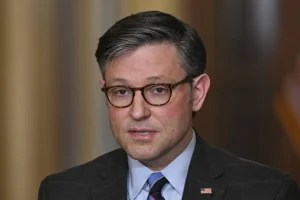 US House Speaker Mike Johnson visited on Monday the illegal settlement of Ariel, built in the occupied West Bank, marking the first visit of its kind by a US official in this position.
During the visit, Johnson said “Judea and Samaria” was the “rightful property of the Jewish people”, using the Israeli term for the occupied West Bank, Israel’s Channel 7 reported.
According to the channel, the high-level US delegation led by Johnson made the visit with the aim of “strengthening strategic relations between the two countries and deepening knowledge of the Judea and Samaria region”.
During the visit, Johnson, along with 15 other members of Congress, participated in a tree-planting event in the settlement.
The Hebrew channel claimed that the visit affirms US “support for Israel’s right to sovereignty over its lands.”
Ariel Mayor Yair Chetboun described the visit as “historic” and embodies the shared values, deep friendship, and strong partnership between the United States and Israel.
In response, the Palestinian foreign ministry condemned Johnson’s visit and described it as a “blatant violation of international law and international legitimacy resolutions, and an encouragement of settlement crimes and the confiscation of Palestinian lands”.
The ministry considered Johnson’s statements “provocative” and a “clear contradiction of the declared U.S. position on settlements and settler attacks.”
The ministry stressed that “all settlements are invalid and illegal and undermine the chances of implementing the two-state solution and achieving peace.”
Under international law, all territories occupied by Israel in 1967 including the West Bank and Syria’s Golan Heights and all settlements built there are considered illegal.
Moscow lists countries whose citizens took part in Ukrainian incursion into Russia
RT | August 5, 2025
Foreign nationals from over ten countries took part in Ukraine’s incursion into Russia’s Kursk Region, according to the head of the Investigative Committee of Russia, Aleksandr Bastrykin.
Bastrykin told the media on the eve of the anniversary of the incursion that investigators identified individuals from Brazil, Colombia, Denmark, Georgia, Norway, Paraguay, Peru, Sweden, the UK, and other nations as having fought alongside Ukrainian troops in the Western-supported raid.
Russian forces fully repelled the incursion in April, claiming that the attackers suffered around 76,000 casualties during the fighting, in which Ukrainian troops employed Western-supplied heavy weaponry.
Bastrykin said 331 civilians were killed and another 553 injured due to Ukraine’s actions in Kursk Region. The Investigative Committee has opened over 600 criminal cases related to the incursion, with around a third already referred for trial.
Moscow maintains that the incursion was an example of Kiev’s use of terrorist tactics, citing claims by captured soldiers that they were encouraged to use violence against civilians. Ukrainian officials have acknowledged that part of the goal was to apply pressure on the Russian public.
He detailed a range of alleged abuses, from a case in which unarmed civilians were beaten to death, to occurrences in which US-made HIMARS multiple launch rocket systems were fired at civilian targets which Kiev allegedly knew held no military value.
Since the escalation of the conflict with Russia in 2022, Kiev has called on foreign nationals with military experience to join its armed forces, passing legislation to accommodate them. Moscow does not recognize the fighters as lawful combatants, classifying them instead as mercenaries subject to prosecution.
In May, Bastrykin reported that the Russian authorities charged 902 people with acting as mercenaries under Ukraine’s command; 97 individuals from 26 different countries have been convicted.
Palestinian factions reject Israeli vote on West Bank sovereignty
Al Mayadeen | July 23, 2025
Palestinian resistance factions strongly condemned the Israeli Knesset’s vote on Wednesday in favor of a bill to impose “Israeli sovereignty” over the occupied West Bank and Jordan Valley, calling it a dangerous escalation and a blatant violation of international law.
The Islamic Resistance Movement, Hamas, described the Knesset’s approval of the bill as “null and void,” stressing that the decision had no legitimacy and constituted a direct challenge to international resolutions. In a statement, Hamas urged Palestinians in the West Bank to unite and escalate resistance “in all its forms” to thwart the occupation’s plans to annex the territory.
Formalization of control expands settler-colonialism
The Popular Front for the Liberation of Palestine (PFLP) warned that while the occupation already exerts de facto control over the territory, the formalization of this through legislation strengthens its colonial grip, expands the settler-colonial and Judaization project, and advances a policy of ghettoization and forced displacement.
The PFLP emphasized that unity and resistance remain the only path to confront what it described as a “dangerous scheme,” equating its severity to the genocidal campaign waged by the Israeli occupation in Gaza.
The Palestinian Resistance Committees said the Knesset vote further exposes the colonial nature of the Israeli entity, adding that “the enemy’s ambitions extend beyond Palestine and target the entire region.” The committees called on Palestinians in the occupied West Bank, al-Quds, and the territories occupied in 1948 to “take the initiative, launch a popular revolution, and ignite a widespread intifada to thwart Zionist schemes.”
‘Legally and morally void’
Fatah also rejected the bill “categorically,” calling it legally and morally void. In its statement, the movement reaffirmed that the West Bank, including East al-Quds, is occupied Palestinian land, and the Israeli occupation has no legal authority to impose sovereignty over it under any pretext.
Fatah urged the international community, particularly the United Nations and the European Union, to support a Palestinian legal campaign before the International Court of Justice and other international legal bodies. The movement also called for full recognition of a Palestinian state on the 1967 borders with East al-Quds as its capital, as a clear political response to annexation efforts.
PA condemns Knesset decision
Palestinian Authority official and Deputy President Hussein al-Sheikh also condemned the Knesset’s move, calling it “a direct assault on the rights of the Palestinian people and a serious escalation that undermines peace prospects and the two-state solution.”
Al-Sheikh described the unilateral Israeli measures as flagrant violations of international law and global consensus, urging states worldwide to recognize the State of Palestine and denounce the Knesset’s decision.
The bill passed with 71 votes in favor and 13 opposed. While it carries no binding legal effect, the legislation asserts that the West Bank and Jordan Valley are “an inseparable part of the historic homeland of the Jewish people” and calls for “strategic steps” to solidify this so-called historical right in pursuit of Israeli “national security.”
Red states back Israeli annexation of West Bank
Several Republican-led states in the US have moved forward with legislation compelling the official use of the term “Judea and Samaria” instead of the West Bank, following a bill passed in Arkansas last month.
The legislative push is part of a broader effort to support the annexation of occupied Palestinian territories. Spearheaded by Yossi Dagan, head of a regional council representing Israeli settlements in the occupied West Bank, the initiative aims to influence US policy in favor of extending Israeli control over the area.
Dagan has framed the ethnic cleansing campaign as one of “historic justice,” seeking to persuade US leaders, including President Donald Trump, to support the annexation of what he described as “the land of the bible.” According to Dagan, using the term “Judea and Samaria” in official US documents is part of reinforcing that narrative.
The decision by Republican states to consider adopting the terminology followed meetings with Dagan during the annual conference of the American Legislative Exchange Council (ALEC). After Dagan’s address, ALEC unanimously endorsed the initiative, giving the proposal broader momentum across GOP-controlled legislatures.
Federal-level support grows
In addition to state-level initiatives, a similar move is underway at the federal level. Brian Mast, chairman of the House Foreign Affairs Committee, announced that the committee intends to adopt the historical terms promoted by Dagan. Mast’s support signals growing alignment between certain US political circles and Israeli settlement interests.
States reportedly considering the bill include Utah, Tennessee, Alabama, Louisiana, Idaho, Iowa, and Oklahoma. These bills also include language declaring the West Bank as the biblical cradle of the Jewish people, arguing it should not be considered occupied territory.
The adoption of such terminology by US lawmakers carries significant political implications. By aligning with Israeli settlement narratives and rejecting the international consensus that views the West Bank as occupied territory, this legislation risks legitimizing ongoing ethnic cleansing and violations of international law.
This comes as settler attacks escalate across the occupied West Bank as part of the Israeli occupation’s ongoing efforts to annex Palestinian territory. These incursions are taking place under direct military protection and with full political backing from the Israeli government, according to rights groups and local sources.
US envoy says Hezbollah weapons ‘an internal matter’ during Beirut visit
The Cradle | July 21, 2025
US envoy Tom Barrack said while visiting Lebanon on 21 July that the issue of disarming Hezbollah is an “internal matter,” after months of pressure by Washington on the Lebanese state to secure a surrender of the resistance’s weapons.
“Disarming Hezbollah is an internal matter,” he said, adding that “ideas and assistance” are being offered to the Lebanese state.
“We are not forcing anyone to do anything … we are trying to help,” he added.
He stressed that Hezbollah “is a terrorist organization” in the eyes of the US, and that Washington does not engage in dialogue with it. “We have no skin in the game,” Barrack said.
He claimed Lebanon faces no “consequences” or “threat” if Hezbollah does not disarm, but that it will be “disappointing.”
When asked by a reporter about guarantees that Israel will withdraw its forces from Lebanon and end its attacks on the country, Barrack said, “We cannot compel Israel to do anything, can we?”
Barrack is in Lebanon to discuss with officials Beirut’s response to a US proposal for disarming Hezbollah.
Sources cited by Reuters in early July said that Barrack warned that Hezbollah must be disarmed by November or the end of this year at the latest – in exchange for a withdrawal of Israeli troops from the five points they occupied in south Lebanon after the ceasefire, in violation of the deal. Earlier this month, the US envoy warned that Lebanon risked being occupied by Syria’s extremist-dominated military if Beirut did not move quickly to disarm Hezbollah.
Barrack said during his last trip to Lebanon that he was “satisfied” with Lebanon’s response to the US roadmap, which is expected to be finalized and handed over soon.
Beirut has reportedly demanded that no timeframe for disarmament be set until Israel withdraws and ends attacks.
The resistance group has repeatedly rejected surrendering its weapons. As the government vows to achieve a monopoly over all weapons across Lebanon, Hezbollah says it is ready for internal discussions on the formation of a Lebanese defensive strategy, through which the group’s arms would be incorporated into the state for use in deterring Israel.
The Lebanese resistance group has refused any discussion on the matter until Israeli troops withdraw from Lebanon and end their attacks.
Israeli attacks on Lebanon have continued unabated. Tel Aviv has violated the ceasefire over 3,000 times. More than 200 people have been killed since the deal was signed in November 2024.
Twelve people were killed in an Israeli airstrike in the eastern Bekaa region of Lebanon last week.
Israel has threatened to continue escalating against Lebanon if Hezbollah is not disarmed.
Hezbollah MP Hussein Jachi said on Monday that Hezbollah “will not abandon its weapons for empty US promises.”
“We will not abandon our faith or our strength. We are ready for confrontation. There will be no surrender or submission to Israel, and Israel will not receive our weapons,” Hezbollah chief Naim Qassem said on Friday.
“We know that confrontation is very costly, but surrender leaves us with nothing,” he added, noting that if the “threat is removed, we are ready to discuss the defense strategy and the national security strategy.”
We reject ‘Israeli protection’: Druze spiritual leader
Press TV – July 18, 2025
The spiritual leader of the Druze ethnic minority in Lebanon says the community rejects the Israeli regime’s request to supposedly “protect” the minority.
Sheikh Sami Abi al-Muna made the remarks at a gathering of Druze officials in the Lebanese capital Beirut on Friday.
He was referring to the regime’s repeated deadly and destructive violations of the Syrian territory, which it has undertaken under the supposed pretext of “protecting” the Druze, who also form a minority in Syria.
The request on the part of Tel Aviv “is harmful to our history and identity,” al-Muna added.
Observers rated the remarks as a warning to the regime against its trying to associate itself with the minority in order to advance its expansionist regional goals.
‘Don’t provide Israel with an excuse’
The spiritual leader, meanwhile, addressed the recent clashes in southern Syria between members of the Druze community and Bedouin tribes that had so far claimed the lives of hundreds of people.
He cautioned that the sectarian clashes “give an excuse for Israeli intervention and for blowing up the situation in the region.”
The regime has intensified its assaults on Syria since last year, claiming it seeks to prevent an outpouring of violence from the Arab country into the occupied territories.
On Wednesday, the escalation took a significantly more violent turn, when the regime hit various parts of Syria, including the capital Damascus, with intense airstrikes.
The attacks came amid the deadly fighting between the Druze and the Bedouins, fueling fears that the Israeli involvement under the pretext of supporting the Druze was aimed at intensifying the confrontations and further destabilizing Syria.
Amid the situation, al-Muna called for all parties to rather resort to national dialogue to address the issues among different communities in Syria.
Lebanese Druze leader Walid Joumblatt addressed the same gathering, calling for formation of an investigative committee to probe violations against both Druze and Bedouins in the Arab country.
A day earlier, he had also warned in remarks to France’s RFI radio station that “Israel is using the Druze to tear Syria apart.”
He said “Israel’s intent to divide the country” was visible from the clashes that had erupted between the dual communities in Syria.
World rallies behind Syria as Israel tears away at it
Press TV – July 18, 2025
International organizations and a whole host of countries have expressed outright condemnation of the Israeli regime’s escalating deadly and destructive attacks against Syria under the pretext of protecting the country’s Druze minority.
A torrent of statements followed the regime’s attack on various areas in the country on Wednesday, including areas lying in its south, in reported support for the Druze.
The attacks came as fighting between members of the minority and Bedouin tribes has killed hundreds of people, with the Israeli involvement being feared to be aimed at intensifying the confrontations and further destabilizing Syria.
UNSC calls for end to Israel’s ‘impunity’
Addressing the situation, Pakistan, which holds the United Nations Security Council (UNSC)’s rotating presidency, denounced the Israeli aggression.
Ambassador Asim Iftikhar Ahmad noted that the attacks resembled Tel Aviv’s atrocities against the Gaza Strip, Lebanon, Iran, and Yemen, all of which violated the international law. The envoy also called for an end to the regime’s impunity.
Mohamed Khaled Khiari, UN assistant secretary-general, denounced the Israeli escalation on the part of the world body’s chief, Antonio Guterres.
He said the attacks amounted toa violation of Syria’s sovereignty and territorial integrity, and further destabilized the country amid the already sensitive situation.
The official also advised that Tel Aviv respect the 1974 agreement that has mandated its refusal to conduct violations against the Arab nation.
China calls for Israeli withdrawal
Geng Shuang, China’s deputy UN ambassador, said Beijing called on “Israel to immediately cease its military strikes on Syria and withdraw from Syrian territory without delay.”
Chinese Foreign Ministry spokesman Lin Jian also said the attacks amounted to a flagrant violation of international law and Syria’s sovereignty, saying the Arab country had to be spared of whatever measure that could lead to further crisis and tension.
Turkey: ‘Terror state’ Israel using Druze as excuse
Turkey’s President Recep Tayyip Erdogan called the Israeli regime a “terror state.”
“Israel, using the Druze as an excuse, has been expanding its banditry into neighboring Syria over the past two days,” he said in a televised speech.
Erdogan said Turkey would not allow Syria’s partition, saying Tel Aviv’s actions showed it was not after peace.
PGCC: Israel after irresponsible escalation
The Persian Gulf Cooperation Council’s Secretary-General, Jasem Mohammed Albudaiw,i also said the Israeli regime’s atrocities indicated its efforts at irresponsible intensification of standing tensions.
The Israeli aggression, he added, also showed the regime’s disregard for the international community’s efforts at realizing stability and ensuring security in Syria.
Hamas: Israeli aggression ‘systematic terrorism’
The Palestinian resistance movements, Hamas and the Islamic Jihad, called the atrocities “organized terrorism.”
The latter also said Tel Aviv was trying to fragment the region through violence, reaffirming solidarity with Syria and supporting its right to resist by all means.
Ansarullah: Israeli attacks part of ‘imperialist scheme’
Yemen’s Ansarullah resistance movement denounced the Israeli strikes as part of a larger “imperialist scheme” to dominate the Arab and Muslim world.
It called for a unified Arab-Islamic response and an end to silence in the face of the aggression.
Muslim states hold intensive talks
Foreign ministers from various regional Muslim countries have, meanwhile, held intensive talks concerning the state of affairs.
The talks were held among top diplomats from Jordan, the United Arab Emirates, Bahrain, Turkey, Saudi Arabia, Iraq, Oman, Qatar, Kuwait, Lebanon, and Egypt.
The discussions that were held with the aim of helping the countries in question adopt a unified stance in the face of the situation saw the officials reiterate support for Syria’s security, unity, stability, and sovereignty.
They called on the UNSC to assume its legal and moral duties towards guaranteeing the withdrawal of the Israeli regime from Syria, and bringing about an end to its aggression by obliging it to abide by the 1974 agreement.
Malaysia: Israel threatening international peace
Malaysia also called for the international community “not to tolerate the continued aggression by the Israeli Zionist regime against other countries, threatening regional and international peace and security.”
Malaysian Prime Minister Anwar Ibrahim said after decades of hardship, the Syrian people deserved peace, not further violence and external interference.
Norway’s foreign minister has also said he was “deeply concerned about recent Israeli airstrikes and rising domestic tensions.”
Turkiye backs extremists in Lebanon as ‘blackmail’ over Cyprus ties
The Cradle | July 14, 2025
Turkiye has expressed “deep concern” over Lebanese President Joseph Aoun’s recent visit to Cyprus and has plans to “blackmail” Beirut if it chooses to counter Ankara’s influence in the Mediterranean, a senior Lebanese source told The Cradle on 14 July.
“Ankara expressed deep concern over Aoun’s visit to the Cypriot capital, Nicosia, and viewed it as a worrying sign of Beirut’s potential openness to Mediterranean and European partnerships that are inconsistent with its agenda in the Eastern Mediterranean,” the source said.
“Northern Lebanon is witnessing a worrying increase in the number of displaced Syrians with complex security backgrounds,” the source added, noting an increase in cross-border [weapons] smuggling operations which are taking place “under the direct sponsorship and cover of Syrian and Turkish security agencies.”
According to the Lebanese source, Aoun’s visit to Cyprus “revealed files of political and security blackmail prepared by Turkiye for use later if Beirut decides to pursue strategic options that conflict with Ankara’s interests in Lebanon and the region.”
The source went on to say that Ankara “considers northern Lebanon as its traditional area of influence and will not tolerate any new official positioning by Beirut that threatens its geopolitical position in the Mediterranean.”
Turkiye invaded Cyprus in 1974 and controls the northern part of the island. Ankara views Greek Cyprus as a main regional and geopolitical rival.
The Cradle’s Malik Khoury wrote that Ankara is unlikely to take kindly to an improvement of Lebanese–Cypriot ties, and has strong ambitions for northern Lebanon.
“Turkiye has long-standing historical ties to northern Lebanon,” he said. Citing Lebanese sources, he noted Ankara’s “interest in the port of Tripoli.” Geographically and maritime-wise, this is the largest port in the Mediterranean in terms of potential. “If rehabilitated, it could rival the Israeli port of Haifa. Ankara also has its eye on the Qlayaat Airport, near the Syrian border, as well as large areas of the Akkar Plain, rich in minerals and natural resources,” he added.
Thousands of extremist Islamist prisoners, including Syrians linked to the groups now affiliated with authorities in Damascus, are held in Lebanon’s Roumieh prison.
Reports from after the fall of former Syrian president Bashar al-Assad’s government said that Syria was planning to request their repatriation.
A day after Aoun’s visit to Cyprus last week, a source quoted by Syria TV threatened to revive the issue of Syrian prisoners in Lebanon, while hinting at the potential closure of the Syrian–Lebanese border. The report said Damascus is unhappy with Beirut’s “handling” of the situation and is planning a political and diplomatic escalation if the issue is not resolved.
“If you want to breathe air via Cyprus, you will suffocate by land from Damascus,” the source said.
The information provided by the Lebanese source to The Cradle comes as there has been growing concern about potential ambitions by Syria’s extremist-dominated military to take over swathes of northern Lebanon.
There have been reports recently that extremist fighters from Syria have been infiltrating Lebanon.
The Lebanese Armed Forces (LAF) denied these reports on Sunday and said they are working to ensure the security of the border.
Ten people, including two foreign nationals, were detained during an LAF operation in the town of Btebyat in Metn in the Mount Lebanon governorate, according to an army statement Sunday evening. The suspects’ nationalities were not specified.
Initial findings indicated that the individuals were not linked to any extremist organizations. The army’s statement did not acknowledge circulating reports of attempts to stockpile weapons across the country in preparation for attacks.
A report by Israel’s i24 in early July claimed Syria is demanding control over the northern Lebanese city of Tripoli during ongoing talks between Damascus and Tel Aviv.
The concern caused by this report and others like it was compounded on Friday, when US envoy Tom Barrack warned that Lebanon is “going to be Bilad al-Sham (historical name for Greater Syria) again” if Hezbollah does not surrender its arms.
“Syrians say Lebanon is our beach resort,” Barrack added.
The threat of extremist factions, which now make up the bulk of the Syrian state, is not new to Lebanon.
The Syrian army is predominantly made up of what used to be known as Hayat Tahrir al-Sham (HTS), an extremist Al-Qaeda-linked organization which was headed by Syria’s new President Ahmad al-Sharaa (known back then as Abu Mohammad al-Julani).
HTS was formerly known as the Nusra Front – Al-Qaeda’s official branch in Syria. The organization, responsible for deadly suicide attacks inside Lebanon, took over large swathes of the Syrian–Lebanese border in the first few years of the war in Syria, including the barrens of Arsal and Ras Baalbek.
The organization was eventually fully repelled by Hezbollah and the Lebanese army in 2017 in what is referred to as “The Second Liberation.”
HTS and the other groups, which have been incorporated into the Syrian Defense Ministry, have long operated under the direct tutelage of Turkish intelligence.
Featured Video

No Threat Can Force Iran’s Surrender /Trita Parsi & Lt Cl Daniel Davis
or go to
Aletho News Archives – Video-Images
From the Archives
What is the Israeli Lobby in Australia Doing in Interfaith Dialogue?
By Ali Kazak | Dissident Voice | October 11, 2015
For years Israel and its lobby around the world have been trying to normalise their relations with Arabs and Muslims without solving the Palestine Question.
One of the methods they resorted to in the last few years is using human rights and community organizations such as interfaith dialogue and Multiculturalism to achieve this objective and to: isolate the Palestinians, marginalise the Palestine question, end Israel’s isolation, and prevent criticism of Israel, knowing that these organisations will be the first to stand against Israel’s violations, racial and religious discrimination.
The group responsible for this task in Australia is The Australia/Israel & Jewish Affairs Council (AIJAC); its Director of International & Community Affairs, Jeremy Jones is in charge of lobbying religious community organizations, specifically Muslims and Christians. Consequently he convened the Faith Communities for Reconciliation, founding participant in the Australian Partnership of Religious Organisations and the Australian National Dialogue of Christians, Muslims & Jews.
AIJAC is a private political propaganda group. It is recognised as the main Israeli lobby in Australia. It coordinates its activities and works intimately with the Israeli embassy in Canberra and different institutions in Israel. It is privately funded by some Jewish businessmen. It monitors closely Australian politicians, the media, ethnic and religious groups, (especially Arabs and Muslims), unions and academics on their stands towards Israel and the Palestine question. … continue
Blog Roll
 Aletho News
- The war of liberation of the Arab and Islamic peoples expands across the Gulf
- Envoy warns UN on Trump’s threat to ‘obliterate’ Iran’s civilian infrastructure
- The Larak Corridor: Iran’s Rial Gate With No US, No Israel, and No Way Around
- ‘Economic terrorism’: Steel facilities hit again in US-Israeli strike
- ‘War Crime’: Iran condemns attacks on Arak, Ardakan nuclear sites
- Two-thirds of Americans want quick end to Iran war even if goals unmet
- Trump to Give “Important Update on Iran” Wednesday in Prime-Time Speech
- Theodore Postol: Iran’s Missiles & Drones Were Underestimated
- Iran To Target Military Industrial-Tech Complex That Facilitated Gaza Genocide
- Collapsing Empire: The Resistance Disarms ‘Israel’
- If Americans Knew
- Israel wants US to bomb more of Iran’s civilian structures (113,000 is not enough) – Not a ceasefire Day 173
- Ann Coulter Rips Into Fox News for Iran War Coverage
- Joe Kent Urges Americans To Call White House and Congress To Object To Sending Troops Into Iran
- DNC Resolution to Reject AIPAC Funding Puts Democratic Leaders in the Hot Seat
- Swedish foundation to build 400 schools as over 650,000 Gaza children remain without education for 2 years
- Israeli army admits photshopping image of slain Lebanese journalist
- This is how Israel is systematically killing health workers under the cover of war in Lebanon
- Carrying life under fire: Israeli invasion of Lebanon leaves pregnant women facing deadly risks
- Champagne all around for the new death penalty (for Palestinians) law – Not a ceasefire Day 172
- Why are Palestinian books struggling to be seen on Amazon?
- No Tricks Zone
- New Study Finds Warming Saves Lives…Cold Temperatures 12 Times More Deadly Than Excess Heat
- German Science Blog Accuses PIK Climate Institute Of Hallucinating Climate Tipping Points
- Devastating Assessment Of Comirnaty Vaccine By Former Senior Pfizer Europe Toxicologist
- New Study: CO2 Is ‘Effectively Negligible’ As An Explanatory Climate Change Factor Since 2000
- Former Pfizer Toxicologist Dr. Helmut Sterz Tells Bundestag Hearing Pfizer Vaccine Should Have Never Been Approved
- Energy Expert: Germany’s Nuclear Phaseout Was A “500 Billion Euro Mistake”
- New Research: South Australia’s Mid-Holocene Sea Surface Temperatures Were 4°C Warmer Than Today
- Storing Green Energy To Last Germany 10 Days Would Require A 60-Million Tonne Battery
- New Studies: UK Sea Levels Were 4 Meters Higher Than Today During The Mid-Holocene
- Destructive Green New Deal: German Energy And Metal Group Warns Of Drastic Crisis
 Aletho News