US main stumbling block to Iraq’s possession of advanced air defense systems: Lawmaker
Press TV – April 23, 2020
A member of the Iraqi parliament’s security and defense committee has blamed the United States for opposing Baghdad’s acquisition of sophisticated air defense missile systems to protect its airspace against any possible act of aggression.
“Since 2014, Americans have acted as the major stumbling block to Iraq’s procurement of an advanced air defense system. Repeated attempts to sign contracts with a number of countries, including Russia, have been unsuccessful because of Washington’s interference,” Kata’ al-Rikabi told Arabic-language al-Maalomah news agency in an exclusive interview on Wednesday night.
Rikabi added, “Americans installed Patriot [missile] systems in Ain al-Assad [air base] and other bases, where their forces are currently deployed in violation of [Iraq’s] national sovereignty and without the approval of the government. The presence of foreign forces [on Iraqi soil] is indeed an act of aggression, let alone the establishment of bases and deployment of systems and military hardware.”
Last week, the Iraqi parliament’s security and defense committee submitted an in-depth study to the country’s caretaker prime minister Adel Abdul-Mahdi, requesting the procurement of the Russian-built long-range, surface-to-air S-400 missile defense system.
“The committee has presented a comprehensive study to the prime minister, demanding approval for the purchase of the advanced S-400 air defense system. The issue has already been discussed with relevant figures at the General Command of Armed Forces, and now awaits the premier’s agreement,” Badr al-Ziyadi, a member of the committee, told Arabic-language al-Sabaah newspaper on April 18.
He emphasized that the purchase of the S-400 missile system, with the aim of boosting the country’s defense capabilities, will be finalized once the next Iraqi government is formed and it ratifies procurement of the system.
The United States has already warned Iraq of the consequences of extending military cooperation with Russia, and striking deals to purchase advanced weaponry, particularly S-400 missile systems.
Former US State Department spokeswoman Heather Nauert said on February 22, 2018 that Washington has contacted many countries, including Iraq, to explain the significance of the Countering America’s Adversaries Through Sanctions Act (CAATSA), and possible consequences that would arise in the wake of defense agreements with Moscow.
On August 2, 2017, US President Donald Trump signed into law the CAATSA that imposed sanctions on Iran, North Korea, and Russia.
Israel to Seize Ibrahimi Mosque Land in Hebron
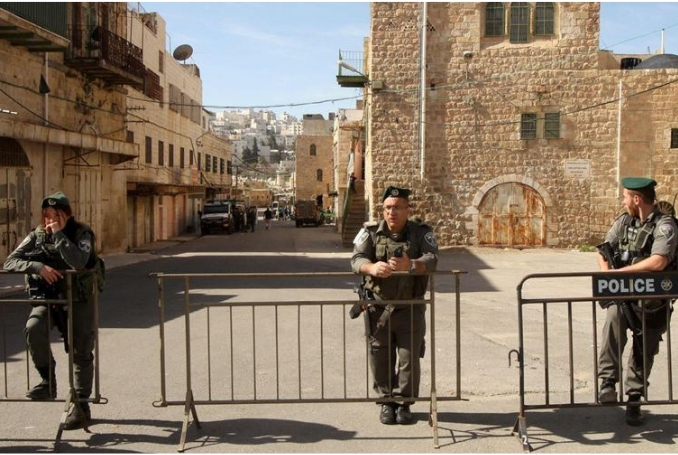
Ibrahimi Mosque in the occupied West Bank city of Hebron
Palestine Chronicle | April 22, 2020
Israeli government’s Attorney General Avichai Mandelblit yesterday approved the expropriation of Palestinian land adjacent to the Ibrahimi Mosque in occupied West Bank city of Hebron (Al-Khalil).
According to Arab48, after Mandelblit’s approval, the Palestinian land will be under the control of Defence Minister Naftali Bennett.
The land belongs to the Islamic charitable trust in the Palestinian city, which oversees the Ibrahimi Mosque.
The occupation will use the land to allow disabled visitors to access a synagogue near the mosque.
Israeli media reported the Israeli Ministry of Justice saying in a statement that the decision was made in collaboration with the Civil Administration.
The statement said that this land would be used to build an elevator and ramp to allow people with disabilities, including tourists and Jewish worshippers, to access a synagogue.
Commenting on this step, the Palestinian Authority’s Ministry of Waqf and Religious Affairs said: “The decision is an assault on the Muslims’ ownership of the Ibrahimi Mosque and the endowments that surround it, which are numerous in the city of Hebron.”
34 US-Backed Militants Surrender, Hand Weapons to Syrian Army – Reports
Sputnik – April 18, 2020
28 militants and six drivers from the Jaysh Maghawir al-Thawra (‘Revolutionary Commando Army’) rebel group arrived in Palmyra, handed over all their weapons and equipment and surrendered to take advantage of the Syrian government’s recent amnesty decrees, SANA has reported, citing a source said to be involved in the process.
Earlier, the Russian Defence Ministry’s Centre for Syrian Reconciliation confirmed that over two dozen militants trained at a US military base in Syria had surrendered to the Syrian Army after breaking out of the US-controlled At-Tanf area and engaging in a shootout with other militia members.
The group’s evacuation from the At-Tanf area, a blob of US-held territory in southern Syria near the Jordanian and Iraqi border, was facilitated following over four months of planning, according to authorities.
SANA’s source said that the haul of surrendered equipment included eight vehicles, some of them fitted with heavy machine guns, along with a small number of automatic weapons, sniper rifles, 2 RPG launchers and a grenade launcher, along with communications equipment and binoculars.
Ghannam Samir al-Khedair, the group’s leader, said he and his comrades had been displaced from Sweida by Daesh (ISIS) and crossed the border into Jordan, where they were trained, after which they were sent to guard the Rukban refugee camp. Al-Khedair also revealed that his men were demoralised after finding out that much of the relief supplies meant for the camp, which once held as many as 45,000 people, was being sold to Daesh, and discovering that other Jaysh Maghawir al-Thawra militants also supported the terrorists.
Khaled Samir al-Khedair, another former militant from the At-Tanf base, said that US occupation forces were training militia to attack Syrian Army positions, as well as civilian infrastructure and oil and gas fields. Salah Rashid al-Zaher, another militant, confirmed that this training for sabotage ops was taking place. According to al-Zaher, in addition to much of the Rukhban camp aid being sold to Daesh, some of it was also traded on the black market to camp residents at exorbitant prices.
The SANA report comes two days after confirmation by the Russian military that a group of over two dozen militants trained at At-Tanf had surrendered to the Syrian Army. The militants began their journey to Palmyra on the night of 13 April, but had to fight off a detachment of Jaysh Maghawir al-Thawra forces to escape, arriving in the ancient city on 14 April.
Rukban Disaster
Officials in both Damascus and Moscow and the Syrian and Russian militaries have repeatedly expressed concerns about the disastrous humanitarian situation at the Rukban refugee camp over the course of many years, and have reported on the Pentagon’s use of the At-Tanf military base to retrain former extremists to renew their struggle against the Syrian government.
Damascus has stressed repeatedly that the only solution which could end the al-Rukban refugees’ suffering would be for the US to withdraw from At-Tanf and leave Syria. At the moment, it’s estimated that there are still as many as 13,500 people at the camp, among them 6,000 militants, and members of their families. At least 150 US troops are estimated to remain at At-Tanf.
The US moved in to take control of the At-Tanf area in early 2016, just as the Syrian Army began its counteroffensive against Daesh militants in the sparsely populated desert areas of central Syria. US forces formally established the Jaysh Maghawir al-Thawra militia after dissolving its predecessor, the so-called ‘New Syrian Army’ militant group, in late 2016. Syria and its allies have repeatedly demanded that the US withdraw from the Arab Republic’s sovereign territory. The area has seen repeated deadly clashes between Syrian forces and entrenched US forces and their militia allies.
Over a dozen ships carrying fuel, food impounded in Djibouti: Yemeni official
Press TV – April 9, 2020
A Yemeni maritime official says the Saudi-led coalition has impounded more than a dozen ships carrying energy derivatives and food destined for the conflict-plagued and impoverished Arab country, despite the fact that the vessels had earlier acquired necessary permits from the United Nations.
The unnamed official at Hudaydah port told Arabic-language al-Masirah television network on Thursday that 14 tankers loaded with more than 320 thousand tons of oil derivatives and three vessels with foodstuff aboard have been marooned at a port in Djibouti.
He added that the vessels had undergone inspection by the United Nations and obtained the relevant papers to dock at Yemen’s Hudaydah port.
The remarks came a day after the Saudi-led coalition, which has been engaged in a brutal five-year-old military aggression against Yemen, declared a two-week ceasefire, and announced that it would take effect at 12 p.m. local time (0900 GMT) on Thursday.
Yemen’s Houthi Ansarullah movement has, in return, downplayed the Saudi-led coalition’s ceasefire announcement, describing it as a chance for the alliance to get out of the quagmire with minimum disgrace. The movement highlighted it would will not abide unless a years-long siege on the impoverished nation is lifted.
Mohammed al-Bukhaiti, a senior member of the political bureau of the Ansarullah movement, told the Lebanon-based and Arabic-language al-Mayadeen television news network that the coalition’s move to announce a ceasefire was just another ploy by the aggressors.
“Saudis have repeatedly declared ceasefire in Yemen, but have violated it every time,” he noted.
Bukhaiti said Riyadh is using the outbreak of COVID-19 as an opportunity for ceasefire and a face-saving exit from the Yemen war.
However, he added, with the siege of Yemen in place, the war will not end.
“If any ceasefire does not include the removal of the siege on Yemen, that would be the continuation of the Saudi war,” he noted.
Houthis unilaterally release 70 prisoners
Separately, the Ansarullah movement has unilaterally released dozens of Saudi-sponsored Yemeni militiamen loyal to the country’s former president Abd Rabbuh Mansur Hadi.
The head of the Houthi-affiliated National Committee for Prisoners Affairs (NCPA), Abdulqader al-Mortada, said in a post published on his official Twitter page on Thursday that 70 prisoners were set free on humanitarian grounds and handed over to local authorities in a number of provinces amid the coronavirus pandemic.
Saudi Arabia and a number of its regional allies launched the devastating war on Yemen in March 2015 in order to bring Hadi back to power and crush Ansarullah.
The US-based Armed Conflict Location and Event Data Project (ACLED), a nonprofit conflict-research organization, estimates that the war has claimed more than 100,000 lives over the past five years.
Saudi Arabia and the United Arab Emirates have purchased billions of dollars’ worth of weapons from the United States, France and the United Kingdom in their war on Yemen.
Riyadh and its allies have been widely criticized for the high civilian death toll resulted from their bombing campaign in Yemen.
The UN says over 24 million Yemenis are in dire need of humanitarian aid, including 10 million suffering from extreme levels of hunger.
COVID-19: Devastated Saudi Royal Family Seeks to End Yemen War
By Joe Lauria | Consortium News | April 8, 2020
As the coronavirus continues its assault on members of the Saudi royal family, the rulers of the Kingdom on Wednesday called off its assault on Yemen.
The unilateral ceasefire will begin at noon on Thursday, Saudi time, and is to last at least two weeks.
Senior members of the royal family, including 84-year old King Salman, and the effective ruler, Muhammad bin Salman, have retreated to an island off the coast of Jeddah in the Red Sea.
Prince Faisal bin Bandar bin Abdulaziz Al Saud, the powerful governor of Riyadh who is a nephew to the king, is stricken with the disease and is in intensive care, The New York Times reported, citing two doctors “with ties” to King Faisal Hospital and two others sources near to the royal family.
In all, 150 members of the ruling family are reported to have been infected. The Saudi government officially said it is ending the war because of its fear that the virus could spread in Yemen, where there are still no reported cases.
Joining in the ceasefire would be the nations of the Saudi-led coalition as well as the Yemeni government in exile in the Saudi capital, the Times reported. The coalition said in a statement:
“On the occasion of holding and succeeding the efforts of the UN envoy to Yemen and to alleviate the suffering of the brotherly Yemeni people and work to confront the corona pandemic and prevent it from spreading, the coalition announces a comprehensive ceasefire for a period of two weeks, starting on Thursday.”
Mohammed Ali al-Houthi, a top Houthi official, tweeted an eight-page plan to end the war. The Houthis control the Yemeni capital Sanaa.
The unilateral ceasefire would end a vicious five-year campaign by the richest nation in the Middle East against the poorest. It began on March 26, 2015 just as the UN was close to brokering a deal to end the political standoff, as the then UN envoy to Yemen told me at the time.
Martin Griffiths, the current UN envoy, said in a statement: “The parties must now utilise this opportunity and cease immediately all hostilities with the utmost urgency.”
The BBC reported that the two sides would communicate in a video conference to discuss the ceasefire. “The proposal calls for the halting of all air, ground and naval hostilities,” the British national broadcaster said.
There has been as yet no reaction from Washington. The United States has backed the Saudi war with logistical and material support.
An end to the conflict would come as UN Secretary General Antonio Guterres has called for a global ceasefire, in which he said some 70 nations have already signed on. Saudi Arabia would appear on Wednesday to have joined that list.
UPDATE: At least 150 members of the Saudi royal family have been infected and as a result Riyadh is seeking to end its five-year disastrous assault on Yemen.
Israel settlements turn Palestinian house into cage
![The Gharibs' house in Beit Ijza, caged by a fence and surrounded by the Israeli settlement of Givon Hahadasha, as seen here in a 2018 sattelite image, west of Jerusalem [screen grab from Geomolg]](https://i0.wp.com/www.middleeastmonitor.com/wp-content/uploads/2020/04/20200404_Satellite_Image_Givon-Hahadasha.jpg?resize=1200%2C800&quality=85&strip=all&ssl=1)
The Gharibs’ house in Beit Ijza, caged by a fence and surrounded by the Israeli settlement of Givon Hahadasha, as seen here in a 2018 satellite image. [screen grab from Geomolg]
MEMO | April 4, 2020
Palestinian Saadat Sabri Gharib, 38, had never imagined that his house, which was built by his father in 1979, would be turned into a very narrow cage surrounded by barbed wire and surveillance cameras.
Gharib’s house is located in the Biet Ijza neighbourhood, west of occupied Jerusalem. It was surrounded by about 100 dunams of land owned by Gharib’s father. However, the Israeli settlers stole all of this land and kept the house, which is only 500-metres square.
Gharib told Anadolu Agency, that since 2008, his house has been turned into a very small cage surrounded with concrete walls and located in the middle of an Israeli settlement. It has only a very narrow passage with 12 cameras monitoring it.
Gharib, his mother, his wife and three children live in this house. “Our house is a real prison,” he explains, adding: “It is surrounded with wires from all sides. It was built in the middle of a wide area of land, but today it is a small prison in the middle of Giv’on Hahadasha settlement.”
“We are subjected to stone throwing, live bullet shooting, insulting and burning,” Gharib, who owns all the documents that prove the ownership of the land, revealed.
“However, we had seven demolition orders, but I fought in the Israeli courts and stopped them,” stating that 40 dunams were stolen by the Israeli occupation authorities in 1979 and 60 dunams were isolated from his house by the apartheid wall in 2007. “We do not access them except once a year with permission from the Israeli occupation,” Gharib explains, noting that his house is monitored 24/7.
In 1979, the settlers offered his father a large amount of money for the land, but he refused and said: “If you give me all of Israel’s money, I would never concede an inch of my land.”
Later on, the Israeli occupation stole it with its settlement power.
Putting pressure on Gharib in order to leave his house, the Israeli occupation prevents him from planting any trees near his house, from carrying out any renovation works or from making any repairs.
Gharib points out:
“A few months ago, the water tank was damaged and I wanted to change it, but Israel refused. They want to push us to leave our house. But if the house was demolished, I would live in a tent. I will never leave my family’s house to the settlers.
“We live a very difficult life. The gate of the passage leading to my house is controlled by the Israeli occupation and could be closed any time. In 2008, it was closed for three consecutive months, but we fought until it was opened 24 hours a day.”
Around 900 Palestinians live in Beit Ijza, which was part of Jerusalem before the 1967 Israeli occupation of the West Bank. Since the creation of the Palestinian Authority in 1993, Beit Ijza became part of the Palestinian Governorate of Jerusalem Suburbs.
This neighbourhood is one of many others which were isolated from Jerusalem by the apartheid wall, so they were connected with the occupied West Bank through tunnels or bridges.
According to the Palestinian Bureau of Statistics, more than 50,000 Palestinians holding Jerusalem’s ID cards were isolated by the apartheid wall and deprived from living in Jerusalem.
In 2002, Israel decided to build a 710-kilometre wall to separate the occupied West Bank from Israel and the illegal Israeli settlements in the depths of the occupied territories.
Ansurullah calls on Saudi-led alliance to consider Yemen’s mediation proposal
Press TV – April 2, 2020
Yemen’s popular Houthi Ansarullah movement has called on the Saudi-led coalition of aggressors to consider its proposal for 12-party mediation aimed at ending the bloody war on the impoverished Arab state.
In a tweet on Wednesday, Mohammed Ali al-Houthi, the chairman of the Supreme Revolutionary Committee of Yemen, proposed that twelve countries, including Russia, as well as the United Nations mediate to end the Yemen conflict.
The top Houthi official suggested that four Arab countries, four Muslim countries, three Asian nations, Russia as well as the UN be included in the group of mediators.
He referred to Algeria, Tunisia, Egypt, Iraq, Pakistan, Malaysia, Indonesia, Sierra Leone, Russia, China, South Korea and Japan as his proposed countries.
The proposal comes a week after United Nations Secretary General Antonio Guterres called for a ceasefire in all conflicts worldwide amid a global fight against the coronavirus pandemic.
Guterres warned that in war-torn countries health systems have collapsed and the small number of health professionals left were often targeted in the fighting.
The world body has been trying to mediate an end to conflicts in countries including Syria, Yemen and Libya, while also providing humanitarian assistance to millions of civilians.
Ansarullah has welcomed the call, saying an aerial and maritime blockade imposed on Yemen by the Saudi regime and its coalition allies should be lifted to facilitate the adoption of preventive measures against the coronavirus outbreak.
While Yemen has not recorded any COVID-19 cases to date, the possibility of an outbreak threatens the war-ravaged country’s already fragile healthcare system.
Tens of thousands of Yemenis have died since the beginning of the war that Saudi Arabia and its allies launched in 2015 to restore power to Yemen’s former Riyadh-allied officials. The aggression has also brought entire Yemen to the edge of famine.
The United States and many of its allies have been providing political, military, logistical, and advisory support for the war.
India introduces new Kashmir domicile law, raising fears of demographic manipulation
Press TV – April 2, 2020
India has introduced a new law that would make its citizens eligible to become permanent residents of the Indian-administered Kashmir, raising fears of demographic change in the Muslim-majority, Himalayan region.
The new law, which was announced by the Indian Ministry of Home Affairs on Wednesday and which reportedly is not subject to parliamentary review, will deem any person who has resided in the Indian-controlled Kashmir for a period of 15 years or studied at certain school grades there as “domicile” of the territory.
The new law will also provide domicile status to the children of central government officials who have served in the Indian-controlled Kashmir for a total period of 10 years.
It will also open local jobs to non-residents.
The introduction of the law comes almost eight months after the Indian government stripped the disputed region of its limited autonomy. On August 5 last year, New Delhi revoked Article 370, a constitutional provision that had come into effect in 1949 and had granted special status to Kashmir, allowing it to have its own flag and constitution, among other rights.
In the lead-up to the revocation, India sent thousands of additional troops to the disputed region, imposed a curfew, arrested political leaders, and shut down telecommunication lines.
The new law also comes as the country of 1.3 billion people is under a 21-day lockdown in an attempt to prevent the spread of the new coronavirus, raising speculation that the timing is intentional.
Legalizing settlements?
Residents in the Indian-controlled Kashmir fear that the new law would alter the demographic status of the region, with experts saying it will lead to “demographic flooding.”
“It is a lot to circumvent the law. I think it illustrates clearly that some will not stop from politicking during coronavirus [epidemic],” Siddiq Wahid, a political analyst based in the Indian-controlled Kashmir, said.
“Obviously it is an attempt to change the demographics, not only change but flood it. It will lead to demographic flooding,” Wahid said, according to Al Jazeera.
Sheikh Showkat Hussain, a professor of legal studies based in the region, said the move had already been in the offing.
“The whole purpose of revoking Article 370 was to settle outsiders here and change the demography of the [Jammu and Kashmir] state. Now this provides the modalities and entitles so many categories of Indians whose settlement will be legalized over here.”
India’s ruling Hindu-nationalist Bharatiya Janata Party (BJP) has denied that the new law is an attempt to change the demography of the region.
Kashmir has been split between India and Pakistan since partition in 1947. Both countries claim all of Kashmir and have fought three wars over the territory.
Meanwhile, Muslims elsewhere in India have also been facing abuse and violence.
Turkish forces, allied militants cut off drinking water to Syria’s Hasakah, environs
Press TV – March 29, 2020
Turkish forces and allied Takfiri militants have once again cut off drinking water supply to people in Syria’s northeastern city of Hasakah and surrounding areas, only a few days after the Damascus government complained to the United Nations and the Security Council over the issue.
Director General of Hasakah Water Company, Mahmoud al-Ukla, told Syria’s official news agency SANA in a statement on Sunday that the Turkish troops and their allies stopped the pumping of water from the Allouk water station at 10 p.m. local time (1900 GMT) last night, and have refused to reverse their decision.
He emphasized that the measure has deprived up to a million people in the Hasakah region of the essential resource.
Ukla then described the cut in water supply to the Hasakah region as a blatant violation of human rights, an appalling crime against the population of Hasakah, and an act in a way that increases the sufferings of the locals.
Allouk water station is located near the border town of Ra’s al-Ayn, which the Turkish troops and their allied militants seized in October 2019 during the so-called Peace Spring Operation.
“Turkish occupation forces and affiliated terrorists cut off drinking water from Allouk water station and feeding wells deliberately and systematically, depriving more than 600,000 Syrian citizens, mostly women and children, from drinking water,” the Syrian Ministry of Foreign Affairs and Expatriates said in identical letters sent to United Nations Secretary-General António Guterres and the rotating President of the UN Security Council Zhang Jun on Thursday.
The Syrian ministry noted that the Turkish forces shelled the water station during their cross-border military operation last October, putting it out of service.
Syrian officials, accordingly, briefed the UN Security Council on February 27, informing the international body of a water outage in Hasakah.
“But unfortunately the Security Council, its General Secretariat or relevant international organizations failed to condemn the Turkish forces’ bombing of such a critical civilian facility and their use of water as a weapon against civilians,” the letters pointed out.
The Syrian Foreign Ministry finally called on the Security Council to condemn the crimes being perpetrated by Turkish soldiers, and obligate Ankara to stop its violation of the international law and humanitarian principles, besides its support for terrorist groups wreaking havoc inside Syria.
Turkey has beefed up its military presence in Syria’s northwestern province of Idlib, the last militant bastion in a nine-year foreign-backed war, where several anti-Damascus terrorist outfits receive Turkey’s support in their persisting militancy against the Syrian government.
Last week, a United Nations official said interruption to the key water station in Syria’s northeast puts thousands of lives at risk as efforts ramp up to stop the outbreak of the novel coronavirus there.
UNICEF Representative in Syria Fran Equiza said the interruption “during the current efforts to curb the spread of the coronavirus disease puts children and families at unacceptable risk.”
He underlined that the station is the main source of water for around 460,000 people in Hasakah city, the town of Tal Tamer as well as al-Hol and Areesha camps.
The Syrian government has applied a series of measures, as cases of COVID-19 infection have been found in the war-ravaged Arab country.
The measures include suspending schools, universities, as well as some ministries and closing marketplaces and restaurants.
The government also stopped public transportations nationwide.
France, Czechs, & Other US Allies Exit Iraq Over COVID-19 Fears
By Tyler Durden – Zero Hedge – 03/27/2020
The United States has shown itself willing to both keep up its ‘maximum pressure’ campaign on Iran and its proxies while riding roughshod over Iraqi sovereignty by remaining in the country even as Baghdad leaders and the broader population demand a final exit.
But in another sign Europe is ready to divorce itself from US aims in the region, France has abruptly withdrawn its forces from the country after being there for five years. Interestingly the prime reason given was troop safety concerns over the coronavirus outbreak, but we imagine European leaders likely now see an opportunity to make a swift and easy exit without provoking the ire of their US counterparts.
International correspondents say this includes French withdrawal from six bases, with a small contingent of about 100 troops remaining in the country. The Czech Ministry of Defense also announced the exit of its forces Wednesday, which followed a large contingent of British forces leaving last week, also on fears of coronavirus exposure during the mission.
“British, French, Australian and Czech troops who were coaching Iraqi counterparts were being temporarily sent home as Baghdad had put a hold on training operations to prevent the spread of COVID-19,” reports the AFP this week.
All had been there to support coalition anti-ISIL operations led by Washington. But as the US mission to defeat the Islamic State has lately become less relevant given the demise of the terror group, Washington’s focus became Iranian influence inside Iraq – far beyond the original mission scope.
The US itself had been reportedly drawing down from certain bases, but is not expected to ultimately depart given the current high state of tensions with Iran-backed militias in the country.
But Iran and Iraq’s ‘counter-pressure’ campaign is only set to continue, as on Thursday two rockets slammed into the Iraqi capital’s high-security Green Zone early in the morning, in an incident that’s become almost a monthly occurrence. There were no reports of injuries.
Middle East regional correspondent and analyst Elijah Magnier observes of the rapid draw down: “Coronavirus is offering an opportunity for the world to detach itself from US dominance and reshuffle alliances.”
Indeed this will likely be the outcome in geopolitical hot spots and even economies around the globe.
After 5 years, Saudi Arabia is finally on the verge of defeat in Yemen
By Omar Ahmed | MEMO | March 26, 2020
Exactly five years ago, the US-backed, Saudi-led Arab coalition carried out its first air strikes on Yemen in an effort to reinstate the disgraced, exiled President Abdrabbuh Mansur Hadi. He is a statesman in name only who I have argued previously has neither power, authority nor legitimacy. The strikes targeted the Houthi movement, which is supported by the Yemeni armed forces, and the war, claimed the Saudis, was supposed to be over in a matter of weeks.
The war’s devastating effects have claimed over 112,000 lives and created the world’s worst humanitarian crisis. The steadfast and resilient Yemeni people have prevented the coalition from toppling the Houthi-aligned government in the capital, Sanaa.
After five years, in fact, it is fair to say that the Saudis and their mercenaries are on the verge of defeat. The Yemeni armed forces and “popular committees” which include Houthi forces are continuing their advances with their sights set firmly on the stronghold of Marib and the pro-Hadi, Islah militia which makes up the coalition-backed force on the ground.
The province of Marib is currently facing onslaughts on several main fronts: from the Nahm district of Sanaa province to the west; much of the recently-liberated Al-Jawf in the north; and from Sirwah district – a part of Marib already under Houthi control — and from the south in the Baydah province. Saudi air strikes continue in support of its mercenary ground forces although, as the years of conflict have shown, they are strategically ineffective.
The terrain, internal divisions among the mercenary forces, local distrust of Hadi and the relative ease of establishing relations in tribal areas captured by the Houthis are also reasons for their advance. Developments in missile defence systems which, according to the Yemeni armed forces, have been effective against some Saudi air strikes, coupled with more pre-emptive cross-border operations targeting Saudi military and economic interests are likely to change the direction of the war.
The Saudis know that the stakes are high in Marib, and losing it would be the end of the Saudi ground war against the Houthi-Yemeni army forces, which is why there have been fierce counterattacks, especially in Al-Jawf, which until recently had been in the hands of pro-Hadi fighters for the past five years. The province not only shares a border with Saudi Arabia, but the region is also rich in natural resources. Decades of Saudi policy, though, have ensured that Yemen has remained poor and unable to exploit its own oil reserves fully.
It is clear that the so-called Riyadh Agreement has failed to prompt a concerted effort among Saudi and UAE proxies to set aside their political differences and refocus their attention on the Houthis in the north. Clashes between the Saudi-backed Islah militia forces and those aligned with the UAE-supported separatist Southern Transitional Council (STC) are now routine, and have intensified in recent days in the southern port city of Aden.
The Sanaa-based government has made it clear that it will confront the coalition and its mercenaries in the country’s south and east. This not only implies fighting in the de-facto STC-held Aden, which was under the control of the Houthis back in 2015 before they were driven out, but also the oil-rich Shabwa province.
Having control of most of the population and the capital Sanaa; having a lot of the Yemeni military, including the Republican Guards, on their side; and with potential access and control of Yemen’s resources, the Houthi-aligned National Salvation Government (NSG) may finally get international recognition at the expense of the “legitimate” UN-recognised Yemeni government in exile under Hadi in Riyadh. At the moment, the NSG only has diplomatic relations with Iran and Syria.
Earlier this week, the Houthi-aligned Yemeni military spokesman, Brigadier General Yahya Saree, told a press conference that there have been more than 257,000 coalition air strikes over the past five years and warned that the sixth year “will be harsher and more painful”. In doing so he affirmed that Yemen is not in the same position militarily that it was at the start of the conflict.
In light of the Houthi forces’ strategic advances and superior political resolve, it is thus possible that we will see a political agreement to end the war, if not this year then next. In a promising sign, a leading member of the Supreme Political Council, Mohammed Ali Al-Houthi, tweeted that he welcomed Saudi Arabia’s decision to support a ceasefire at the behest of the UN Secretary-General due to the coronavirus pandemic.
It remains to be seen, therefore, how much longer the Saudis will continue their disastrous and illegal intervention in Yemen, especially with the oil war and looming bankruptcy as oil prices fall, not to mention domestic political crises between de facto ruler Crown Prince Mohammad Bin Salman and his rivals. The Saudis will soon find that they have neither the will nor the wealth to carry on.
That being said, the fall of Marib to the Yemeni military and its Houthi allies might be the catalyst to bring about an end to the war, but there are reports of thousands of civilians being displaced as a result of the current escalations. There is also the brutal siege of the port of Hudaydah by the coalition that needs to be addressed; the UAE occupation of Socotra; and — arguably the most worrying — the direct Saudi military presence in the eastern province of Al-Mahrah.
Earlier this month I speculated how the resistance movement in Al-Mahrah may soon turn into an armed struggle against a Saudi occupation. This materialised several days later, with the Southern National Salvation Council (SNSC) announcing a call for armed resistance against the foreign forces.
Following the coalition defeat, the future of the NSG and the alliance between the Houthi movement and Yemeni military will be tests of the stability and security of Yemen. Alliances tend only to serve a purpose against a common enemy. That’s an issue for the future, though; for now, that enemy is on the verge of defeat.
Featured Video

Iran’s Mass Protests /Patrick Henningsen & Lt Col Daniel Davis
or go to
Aletho News Archives – Video-Images
From the Archives
Does Kevin Barrett Seek to “Absolve Islam of a Terrible Crime”?
The Kevin Barrett-Chomsky Dispute in Historical Perspective – Last part of the series titled “9/11 and the Zionist Question”
By Prof. Tony Hall | American Herald Tribune | August 28, 2016
Amidst his litany of condemnations, Jonathan Kay reserves some of his most vicious and vitriolic attacks for Kevin Barrett. For instance Kay harshly criticizes Dr. Barrett’s published E-Mail exchange in 2008 with Prof. Chomsky. In that exchange Barrett castigates Chomsky for not going to the roots of the event that “doubled the military budget overnight, stripped Americans of their liberties and destroyed their Constitution.” The original misrepresentations of 9/11, argues Barrett, led to further “false flag attacks to trigger wars, authoritarianism and genocide.”
In Among The Truthers Kay tries to defend Chomsky against Barrett’s alleged “personal obsession” with “vilifying” the MIT academic. Kay objects particularly to Barrett’s “final salvo” in the published exchange where the Wisconsin public intellectual accuses Prof. Chomsky of having “done more to keep the 9/11 blood libel alive, and cause the murder of more than a million Muslims than any other single person.” … continue
Blog Roll
Recent Comments
loongtip on Eilat port faces worst crisis… loongtip on British minister dreams of kid… loongtip on Kiev awards major mining proje… loongtip on UK believes it can seize any t… loongtip on Pirates of the Caribbean loongtip on Australian festival boycotted… loongtip on Kiev seeks to ban Russian musi… seversonebcfb985d9 on Somaliland and the ‘Grea… John Edward Kendrick on Kidnapped By the Washington… aletho on Somaliland and the ‘Grea… John Edward Kendrick on Somaliland and the ‘Grea… aletho on Donald Trump, and Most America…


 Aletho News
- Knesset advances bill mandating death by hanging for Palestinian prisoners
- Eilat port faces worst crisis as Red Sea shipping collapses
- Iran protest-riots can only achieve US-Israeli intervention, ‘shadow CIA’ concludes
- The Coming War on Iran: What Has Really Been Happening?
- US Cargo Planes Have Flooded the Persian Gulf Since the First of December
- Deep-state forces from abroad instigated violence in Nepal – former foreign minister
- Rare Earths—or Arctic Control? Greenland’s Riches May Just Be Excuse
- Kiev awards major mining project to Trump-linked investors
- US makes money from weapons, not from Ukrainian minerals
- Drone hits Kazakh tanker en route to Russian port
- If Americans Knew
- The New Neoconservatives
- As more Gaza children freeze to death, Trump eyes Gaza as starting point for world domination – Not a ceasefire Day 95
- More death: in Gaza, West Bank, Israeli prison – Not a ceasefire Day 94
- The Israeli Influence Operation Aiming to Install Reza Pahlavi as Shah of Iran
- Avoidable tragedy: another infant dies from cold – Not a ceasefire Day 93
- Israel is quietly erasing Palestinian refugee camps from existence in the West Bank
- The “Zionist tint” to the Maduro abduction, if not operational, then normative
- Press association condemns Israel’s continued ban on media access to Gaza
- Israeli Indifference to Palestinian Suffering Is Fertile Ground for the Growth of Sadism
- Surge in premature births, congenital defects, cancer deaths in Gaza – Not a ceasefire Day 92
- No Tricks Zone
- Denmark Places Climate Protection Above Animal Welfare, Poisoning And Culling Cows
- New Study: Greenland Was 3-7°C Warmer And Far Less Glaciated Than Today 6000-8000 Years Ago
- German Media Report That Current Frigid Weather Can Be Explained By Arctic Warming!
- Berlin Blackout Shows Germany’s $5 Trillion Green Scheme Is “Left-Green Ideological Pipe Dream”
- Modeling Error In Estimating How Clouds Affect Climate Is 8700% Larger Than Alleged CO2 Forcing
- Berlin’s Terror-Blackout Enters 4th Day As Tens Of Thousands Suffer In Cold Without Heat!
- Expect Soon Another PIK Paper Claiming Warming Leads To Cold Snaps Over Europe
- New Study: Human CO2 Emissions Responsible For 1.57% Of Global Temperature Change Since 1750
- Welcome To 2026: Europe Laying Groundwork For Climate Science Censorship!
- New Study Finds A Higher Rate Of Global Warming From 1899-1940 Than From 1983-2024
 Aletho News