Former US Presidential candidate Hillary Clinton has referred to the alleged interference of Russian actors into the 2016 election that she lost to Donald Trump as a “cyber 9/11.”
In an interview with BuzzFeed News (whose most significant contribution to Russia Gate was publishing a dossier filled with scandalous and uncorroborated claims of Trump watching Russian sex workers pee on beds,) Hillary compared the alleged hacking to a savage terrorist attack that killed thousands of civilians.
“We had really well-respected security, intelligence veterans saying this was a cyber 9/11, in the sense it was a direct attack on our institutions,” said Clinton. “That may sound dramatic, but we know that they probed and tried to intrude into election systems — not just the social media propaganda part of their campaign.”
She didn’t explain how this interference, if it’s even real, was somehow comparable to the fiery and tragic deaths of thousands of innocent people.
The “election systems” comment is a seeming reference to the FBI warning 21 states that “bad actors” may be targeting their election systems prior to the election. Several states performed independent investigations and found no evidence of tampering with their voting systems. Four states reported that someone stole the information of some of their voters — but did not change or manipulate any data.
In other words, while there are unanswered questions about the election systems, there is no proof besides the FBI’s claim that Russian hackers tried to rig the US election in Trump’s favor by meddling with election systems.
Clinton added that the Russians are “not done,” and the “ongoing threat” of Russian interference is something she would have gotten “to the bottom of” if she had been elected president.
“[Russian President Vladimir Putin] believes that [undermining NATO and the EU] will then give Russia a real chance to be dominant, certainly in Europe and certainly along its borders,” she added. “And that the United States, which he views as his primary adversary, will be weakened.”
Clinton went on to say that Putin sought to weaken the US by dividing the American people from within. “He got some of what he was looking for. He hasn’t gotten everything. But keep an eye on him, because he’s not done.”
Hillary is one to talk about dividing the American people. Since her loss in 2016, she has blamed her loss on sexist men and self-hating women, on more popular Democrats like Barack Obama and Bernie Sanders, on former FBI Director James Comey, on the people who didn’t vote for her being stupid or emotional or bigoted or paranoid, on the Republican Party’s voter suppression and the Democratic Party’s incompetence, on the mainstream media (which gave Clinton favorable coverage) and on campaign finance laws (when Clinton raised around twice as much money as Trump and still managed to lose.) And that’s only a partial list.
The New York Times recently published an op-ed titled “The Phony Peace Between the Labour Party and Jews” by Howard Jacobson. A novelist and op-ed contributor to the Independent in the UK, Jacobson is relatively unknown. Yet the Times found his allegation of anti-Semitism within the United Kingdom’s Labour Party worthy of the pages of the “newspaper of record.”
Essentially, Jacobson alleges that Labour entertains anti-Semitic ideas and whitewashes its willingness to entertain such ideas with reports that are “a brief and shoddy shuffling of superficies;” he then condemns Labour’s position on Israel as a cover for anti-Semitism.
Mr. Jacobson even pulls out a reverse racism card by noting “condemnation of Zionism was as febrile as ever and any Jew — particularly any Israeli Jew — willing to join in could count on a standing ovation.” In other words, if an Israeli Jew spoke about Israel’s crimes, his opinion must be invalid because of Labour’s hunger for his statement. So instead of challenging the Jewish Israeli speaker’s statement, he infers anti-Semitism is the only possible motive. The condemnation of Labour is then self-fulfilling. Thus Jacobson never has to challenge any content in the anti-Zionist position, which he then fails to do in the entire op-ed.
Apparently not shy of casting aspersions without support, Jacobson uses the Jewish dog whistle of “blood lust” too. He writes, without a single reference or link for support, “Labour Party delegates are hardly crusaders, but the whiff of blood lust rises even from Brighton.” Jacobson even name-dropped Josef Stalin, writing “How Labour changed roles with the Conservatives as the enemy of the Jews is a tale that cannot be told briefly, but like some of Mr. Corbyn’s closest advisers, it goes all the way back to Stalin.” Yet the connection to Stalin is never mentioned again beyond this unsubstantiated statement.
Perhaps the most fantastic allegation is that an amorphous group of Jews have made some kind of bargain. If Labour “desist[s] from overtly anti-Semitic discourse — invoking the malignancy of our appearance and ambitions — we [the Jews] will allow you [Labour] your anti-Zionism.” To Jacobson, even if this supposed trade did exist, it is simply impossible to fulfill, “for the truth is you cannot keep the Jews out of Zionism.”
Jacobson and I are both Jewish and don’t go to shul. I will go a step further and admit I am not a fan of organized religions, yet I support others in their right and desire to the free exercise of their faith. Personally, I sense there is a common spirit among mankind. I do appreciate what Jewish culture has provided me, such as critical thinking and an emphasis on education. Yet there is no place for any sense of Jewish supremacy, whether it concerns the placing of anti-Semitism at the same level of concern as far more pervasive crimes or the primacy of Israeli Jews as they oppress an entire nation of Palestinians in the identical lands of Israel and Palestine.
Suggesting that Corbyn’s declaration that “Labour opposes all racism and discrimination” is somehow flawed, Jacobson continues:
The ‘all’ is important. Burying anti-Semitism among offenses such as bullying and sexual harassment is a dodge to equalize things that are not equal and in the process ensure that anti-Semitism is rarely privileged with a mention of its own.”
While it is not exactly clear, the most generous interpretation of Jacobson’s statement is that Corbyn intended to drown out anti-Semitism with far more pervasive and serious crimes, even if Corbyn said no such thing. In essence, Jacobson is implying that while the beating or emotional breakdown of a child by a larger one or a group of children, or the use of power to obtain sexual favors or inflict feelings of inferior status, are critical issues, anti-Semitism is somehow a “privileged” offense that deserves equal time. This despite the fact that actual acts of anti-Semitism are much fewer and farther between today than are the far more pervasive acts of bullying and sexual harassment.
While suggesting Labour’s criticism of Israel is really anti-Semitism, Jacobson’s summation of anti-Zionism is just one short paragraph representing complete denial of the history of Israel. The paragraph begins, “A willful historical ignorance sustains anti-Zionism. In some accounts the Israelis drop out of a clear blue sky in 1967 and occupy the West Bank; in others, Zionism is a recent ideology always contested within Jewish society itself.”
Thus Jacobson believes that “some accounts” is a good representation of anti-Zionists like myself. Yet I’ve never before heard of anything like the reference to Israelis falling from “a clear blue sky,” nor does it even make sense to me now. The comment is a journalistically disingenuous trick to falsely describe those he opposes. Still, I blame the Times more for publishing this than Jacobson for penning such an outlandish description.
So let’s briefly discuss what anti-Zionism is about. Israeli professors — that is, professors who themselves are Israeli, such as Benny Morris, Ilan Pappe, Avi Shlaim and others — have established that Israel ethnically cleansed over 700,000 Palestinians who lived within what is today considered Israel’s internationally recognized borders. Anti-Zionism acknowledges this event and calls for the Right of Return of these Palestinians and their offspring. After all, doesn’t Zionism claim a Right of Return from 1,400 years ago or more? Then how can it deny that right from just 70 years ago? Especially of people whom Israel itself drove out.
Furthermore, in 1967, Israel launched what it called a preemptive strike against the Egyptian military, thereafter engaging Jordan and Syria. Again historians now agree that, based upon Israel’s own documentation, this was not a defensive strike, but rather an opportunity to crush the Egyptians. Thereafter, the Israelis took the West Bank and the Golan Heights by war. Even if one were to discount that Israel’s war was an offensive one, Article 49 of the Fourth Geneva Convention is explicitly clear: The Occupying Power shall not deport or transfer parts of its own civilian population into the territory it occupies.” There is no exception for whether the territory was gained through a defensive or offensive war. Thus anti-Zionism stands against the imposition of Military Law upon Palestinians for 50 years and running, and the illegal transfer of colonial settlers who now number over 600,000.
So when Jacobson continues the above-quoted paragraph, “What is elided is the 2,000-year history of Jews returning to the country from which they had been exiled, whether in response to longings for a homeland, to pray where they had once prayed, or to find a place of safety,” he appears to imply anti-Zionists deny this history. Actually, it has nothing to do with the anti-Zionist position. Or maybe a better way to say this is that anti-Zionists focus on the Palestinian “exile” and their “longing for a homeland, to pray where they had once prayed, [and] to find a place of safety.” For the anti-Zionist focus is on what Israel has done and continues to do to Palestinians for the benefit of Israeli Jews.
Perhaps the most ironic statement of the entire op-ed is a standard allegation made by Zionism’s defenders:
That Jews invoke anti-Semitism primarily to silence critics of Israel is a tired canard, but it continues to be pressed into service.”
Yet, except for one bizarre reference to an allegedly anti-Zionist view of one point in time of Israel’s history, Jacobson failed to mention anything about Labour’s position on Palestine. Therefore, all Jacobson did was allege Labour’s anti-Semitism to silence its position on Israel.
As for the Gray Lady, the question remains: How and why, with all the brilliant submissions it receives daily, did The New York Times choose this empty hit piece on the Labour Party that includes the most insidious of allegations, anti-Semitism?
Audience strategy editor for NYT Nick Dudich placed a negative report about Facebook in a spot where he knew it wouldn’t draw much attention, while bragging about using his Silicon Valley friendships to make videos trend, according to a new undercover video.
“We actually just did a video about Facebook negatively, and I chose to put it in a spot that I knew wouldn’t do well,” Dudich said in a secretly filmed conversation with someone from the conservative organization Project Veritas.
Dudich claimed that his friends in Silicon Valley helped Times videos trend, while saying he doesn’t want the Times to know about his connections, according to Project Veritas.
“Let’s say something ends up on the YouTube front page, New York Times freaks out about it, but they don’t know it’s just because my friends curate the front page. So, it’s like, a little bit of mystery you need in any type of job to make it look like what you do is harder than what it is,” Dudich says in the recording.
The Project also secretly filmed Earnest Pettie, the Brand and Diversity Curation Lead at YouTube, who explains how YouTube so-called news carousel is formed: “At the very least, we can say this shelf of videos from news partners is legitimate news because we know that these are legitimate news organizations.”
In the recording Pettie also says Dudich is “one of the people I think who has more knowledge about YouTube as a platform than probably anyone else that I know.”
The video released Wednesday is the latest of Project Veritas’ series called “American Pravda,” aimed at the US mainstream media. The installment released Tuesday also featured recordings of Dudich, in which he claims he worked for Hillary Clinton’s presidential campaign to counter the “threat” of Trump and that he did not join the Times to “be objective.”
It is impossible to assess the credibility of Dudich’s claims, however, as he also claimed that former FBI Director James Comey was his godfather, and that he used to participate in Antifa activities on behalf of the FBI.
Dudich admitted this was not true after Project Veritas interviewed his father, who said he didn’t even know Comey. It was “a good story,” Dudich said when asked why he lied.
In response to the Tuesday video, a New York Times spokeswoman Danielle Rhoades Ha said that Dudich was a “recent hire in a junior position” who “appears” to have violated the newspaper’s “ethical standards and misrepresented his role.”
James O’Keefe, who founded Project Veritas in 2010, has released a number of controversial undercover videos, including one with CNN political commentator Van Jones this summer. Jones accused O’Keefe of editing the video in such a way that took his words out of context and created a “hoax.”
In the Veritas video Jones was recorded saying the investigation into Russia’s alleged meddling in the 2016 election was “a big nothing-burger.” Jones said the missing context was that he said Democrats couldn’t use it to impeach Trump, even if the allegations were true.
US President Donald Trump has called an NBC report that he wanted a tenfold increase in the US nuclear arsenal “pure fiction” and suggested that the network deserves to have its license pulled after a series of reports that were challenged as false.
The president said that NBC News “made up” the report which, citing three unnamed officials, said that Trump wanted to dramatically increase the stockpile of US nuclear weapons.
“Fake @NBCNews made up a story that I wanted a ‘tenfold’ increase in our U.S. nuclear arsenal. Pure fiction, made up to demean. NBC = CNN!” he wrote on Twitter.
“With all of the Fake News coming out of NBC and the Networks, at what point is it appropriate to challenge their License?” he added.
“It’s frankly disgusting, the way the press is able to write whatever they want to write,” Trump said Wednesday afternoon, after meeting with Canadian Prime Minister Justin Trudeau in Washington.
“The press should speak more honestly,” he added. “They make up the sources. There are no sources.”
Last week NBC reported that Secretary of State Rex Tillerson supposedly called Trump a “moron” and threatened to resign, only to be talked out of it by Vice President Mike Pence. That story also cited three unnamed officials.
Tillerson told reporters he had “never considered leaving” his post and described the story as “petty nonsense.” The vice president likewise denied the claims in the NBC story.
“At no time did he and the secretary ever discuss the prospect of the secretary’s resignation from the administration. Any reporting to the contrary is categorically false,” said Jarrod Agen, Pence’s spokesman.
Trump has long complained about major US media outlets trying to undermine him during and after the election. He labeled a number of them, including the Washington Post, the New York Times and CNN, “fake news.”
“Why Isn’t the Senate Intel Committee looking into the Fake News Networks in OUR country to see why so much of our news is just made up-FAKE!” Trump tweeted last Thursday, the day after the Senate Intelligence Committee updated reporters about its months-long investigation into Russia’s alleged interference in the US election.
Some news outlets will be left “with egg on their face” over their reporting on the Russia investigation, committee chairman Richard Burr (R-North Carolina) told CNN when asked about Trump’s statement.
American journalists are having a field day with the latest accusations of “Russian influence” in social media during last year’s presidential election. It would be great if they cared as much about how their own government tries to manipulate them online.
First, some recent history.
On July 2, 2013, the United States Congress silently legalized the use of American propaganda on the American people. Until then, there had been something known as the Smith-Mundt Act of 1948, which prevented the government from broadcasting its propaganda aimed at foreigners within the US itself. A bipartisan amendment to the 2013 defense authorization bill undid that — and so the ban on dissemination of propaganda produced by the US State Department and the Broadcasting Board of Governors (BBG) was no more.
What’s interesting about this is that the very people in Congress who are complaining night and day about the nefarious influence of Russian propaganda actually don’t have a problem with American citizens being targeted with fake news and propaganda at all — just so long as it’s coming from their own government. What’s more, since this amendment was tucked into the defense authorization bill with relatively little fuss being made, one can assume that journalists charged with disseminating the real news aren’t too bothered by it either.
The coverage it did receive was amusing in that journalists appeared to be completely fine with disseminating pro-US government propaganda to foreign audiences, which is precisely what they accuse Russia of doing, and which they pretend to find so uniquely heinous.
One concerned Pentagon official who spoke to BuzzFeed about the amendment said it gave the government sweeping powers to push propaganda on the American people with no oversight. He worried the government could circulate information domestically that is “entirely false.” While that’s not exactly a shocker to anyone who has ever watched a White House or State Department news briefing, it’s interesting because it’s a pretty clear admission from a Pentagon source that the US does spread “entirely false” information abroad. Not a shocker either, but given some recent reportage on Russian influence in the US, it’s pretty clear that many American journalists either don’t care or are completely blind to the role their own government plays in the politics of foreign nations.
Now, I don’t want to give the impression the US government only started using domestic propaganda in 2013. That’s just when they made certain types of it legal. In reality, they were doing it long before then. The best example is Operation Mockingbird — a Cold War project wherein the CIA allegedly supported journalists at major American news publications as part of its propaganda war against the Soviet Union. One CIA operative told the Washington Post that you could get a journalist “cheaper than a good call girl, for a couple hundred dollars a month.”
In 1977 investigative reporter Carl Bernstein wrote that more than 400 American journalists over the previous 25 years had secretly carried out assignments for the CIA. Many times this was done with the consent of the management at top news organizations. The CIA even ran a training program teaching its operatives how to be journalists before planting them at newspapers and broadcasters.
This is worth remembering when we look at the self-righteousness spewing from many of the same news organizations today about the horrible scourge of Russian propaganda. We ought to remember, we’re talking about institutions which not too long ago were knowingly and actively helping the CIA disseminate propaganda not only to foreigners but to Americans who had no idea they were sitting down with their morning coffee to — quite literally — read CIA press releases in the likes of The New York Times and The Washington Post.
So, let’s fast forward a little bit to more modern times and modern methods.
Any consumer of American news media will be aware that journalists are up in arms about the Russian government allegedly using paid ads on Facebook and bots on Twitter to influence the American electorate not only before, but after the election to exacerbate social division.
But where was all the sanctimonious outrage in 2011 when it was revealed the US military was developing software that would allow it to secretly manipulate social media platforms using fake personas to “influence internet conversations and spread pro-American propaganda,” as reported by the Guardian at the time.
“The discovery that the US military is developing false online personalities – known to users of social media as “sockpuppets” – could also encourage other governments, private companies, and non-government organizations to do the same,” The Guardian wrote.
So, if American journalists and politicians want to blame anyone for Russia potentially utilizing social media sockpuppets to influence online conversations, they need look no further than their own military, it seems.
The US military enlisted the services of a California corporation to create the fake online personas. Under the contract, one serviceman or woman would be able to control up to ten separate fake identities worldwide — identities which would need to have their own convincing backgrounds and histories.
Of course, Centcom and the US government explain all this away, promising that they only use programs like these to counter violent and extremist enemy propaganda, but is there anyone naive enough to believe that’s truly all these sock-puppet accounts are used for?
In 2014, the US military studied and recorded the activities of people on Twitter and other social media services to understand how influenced behavior happens on social platforms. The study, which was funded by the US Department of Defense’s military research department (Darpa) went so far as to message unknowing participants to see how they responded. The aim was for the US military to become better at detecting online propaganda campaigns — and running its own. Surprise, surprise, the official description of the study states its aim was simply to “counter misinformation or deception campaigns with truthful information.”
We know that is hogwash thanks to NSA whistleblower Edward Snowden who revealed information showing massive and wide-reaching government efforts to use social media for propaganda and disinformation. The NSA along with the British GCHQ run entire units dedicated to “discrediting” their targets online through disinformation campaigns — which include fake blog posts and emails and texts being sent to colleagues, neighbors, and friends.
In 2014, the Obama administration created a “Twitter-like Cuban communications network” which was run through shell companies to give the impression that it was a privately-owned operation, but would actually work to “undermine the communist government” in Cuba. The Cubans who used the service had no idea it was being run by the US government, which was secretly gathering their data to use for political purposes.
It is nothing short of stunning that this kind of operation is roundly ignored by American journalists who claimed to be disturbed by government manipulation of social media.
Then there are the more overt efforts at influence.
In 2009, during anti-government protests in Iran, the US State Department asked Twitter to reschedule maintenance work, so that Iranian protesters could continue to use the social media platform to get the word out about their movement. It’s hardly the most egregious of asks, but can you imagine if Twitter had scheduled maintenance time during the 2016 protests against police brutality in Ferguson and the Kremlin asked Twitter to please hold off on the downtime so that the people of Missouri could keep tweeting about inequality in America? The Russian government would be immediately accused of “meddling” and trying to stoke racial tensions and social divides in the US. When the US does it in Iran, though, that’s not meddling, it’s simply promoting “freedom of expression.”
In 2015, The Guardianreported the British Army was creating a special force of “Facebook warriors” who are “skilled in psychological operations and social media,” to engage in “unconventional warfare” in the information age. It’s interesting too that we’re supposed to call Russians “trolls” and “bots” — but Western social media propagandists get to be “warriors.”
The force would attempt to “control the narrative” in favor of British foreign policy goals. The same Guardian report noted that the Israeli Defense [sic] Forces had pioneered military engagement with social media since its 2008 war in Gaza and was active on 30 platforms in six languages.
Both the US and UK are aggressive in their manipulation of people through online forums — both domestically and abroad. This sparks little outrage and receives practically no coverage in comparison with the coverage that reports of Russian influence on Facebook and Twitter have received in recent weeks.
A global conference held last year in London made clear just how dedicated Western governments and NATO are to exploiting social media to gain influence and support for their military operations abroad. One panel on “digital outreach” described NATO’s aim as “cultivating a global audience through social media to support The Alliance.”
Those are not minced words. Western governments aren’t denying that they are engaging in this sort of behavior — they are simply framing it in such a way as to make it sound honorable and good — a counter to the ‘bad’ kind of propaganda used by their enemies.
The obsessive refrain of “Russia hacked our election” which appears in American media daily — together with a sustained effort in recent years to paint all Russian information as “fake news” is in itself a kind of psychological warfare.
In 2016, a group of crusaders against Russian propaganda wrote a report for a think-tank called the Center for European Policy Analysis (CEPA), which not incidentally, is funded by American arms manufacturers. The authors suggested “deradicalization” programs for anyone who has “fallen victim” to Kremlin propaganda online.
Well, where are the deradicalization programs for those who have fallen victim to American propaganda? Who is going to fund those? Maybe the Kremlin can lend a hand. I’m sure the CIA wouldn’t mind.
This is an opportune moment for American journalists to remind people just how much their own government tries to control their minds and control narratives online. Instead, they’re busy obsessively parroting US intelligence officials and whipping the public into a frenzy about Russia.
Danielle Ryan is an Irish freelance writer, journalist and media analyst. She has lived and traveled extensively in the US, Germany, Russia and Hungary. Her byline has appeared at RT, The Nation, Rethinking Russia, The BRICS Post, New Eastern Outlook, Global Independent Analytics and many others. She also works on copywriting and editing projects. Follow her on Twitter or Facebook or at her website http://www.danielleryan.net.
A key distinction between propaganda and journalism is that manipulative propaganda relies on exaggeration and deceit while honest journalism provides context and perspective. But what happens when the major news outlets of the world’s superpower become simply conveyor belts for warmongering propaganda?
That is a question that the American people now face as The New York Times, The Washington Post, CNN and virtually the entire mainstream media hype ridiculously minor allegations about Russia’s “meddling” in American politics into front-page hysteria.
For instance, on Tuesday, the major news outlets were filled with the latest lurid chapter of Russia-gate, how Google, the Internet’s dominant search engine, had detected suspected “Russia-linked” accounts that bought several thousand dollars worth of ads.
The Washington Post ran this item as front-page news entitled “Google finds links to Russian disinformation in its services,” with the excited lede paragraph declaring: “Russian operatives bought ads across several of Google’s services without the company’s knowledge, the latest evidence that their campaign to influence U.S. voters was as sprawling as it was sophisticated in deploying the technology industry’s most powerful tools.”
Wow! That sounds serious. However, if you read deeply enough into the story, you discover that the facts are a wee bit less dramatic. The Post tells us:
“Google’s internal investigation found $4,700 of search ads and display ads that the company believes are Russian-connected, and found $53,000 of ads with political content that were purchased from Russian Internet providers, building addresses or with Russian currency, people familiar with the investigation said. …
“One Russian-linked account spent $7,000 on ads to promote a documentary called ‘You’ve Been Trumped,’ a film about Donald Trump’s efforts to build a golf course in Scotland along an environmentally sensitive coastline, these people said. Another spent $30,000 on ads questioning whether President Obama needed to resign. Another bought ads to promote political merchandise for Obama.”
A journalist – rather than a propagandist – would immediately follow these figures with some context, i.e., that Google’s net digital ad sales revenue is about $70 billion annually. In other words, these tiny ad buys – with some alleged connection to Russia, a nation of 144 million people and not all Vladimir Putin’s “operatives” – are infinitesimal when put into any rational perspective.
A Dangerous Hysteria
But rationality is not what the Post and other U.S. mainstream news outlets are engaged in here. They are acting as propagandists determined to whip up a dangerous hysteria about being at “war” with nuclear-armed Russia and to delegitimize Trump’s election last year.
Photos by Gage Skidmore and derivative by Krassotkin
It doesn’t seem to matter that the facts don’t fit the desired narrative. First of all, none of this content, detected by Google, is “disinformation” as the Post claims, unless you consider a critical documentary about Trump’s Scottish golf course to be “disinformation,” or for that matter criticism and/or support for President Obama.
And, by the way, how does any of this material reveal a Russian plot to put Trump in the White House and to ensure Hillary Clinton’s defeat, which was the original Russia-gate narrative? Now, we’re being told that any Internet ads bought by Russians or maybe even by Americans living in Russia are part of some nefarious Kremlin plot even if the content is an anti-Trump documentary or some ads for or against President Obama, but nothing attacking Hillary Clinton.
This surely does not seem like evidence of a “sophisticated” campaign to influence U.S. politics, as the Post tells us; it is either an indication of a totally incoherent campaign or no campaign at all, just some random ads taken out by people in Russia possibly to increase clicks on a Web site or to sell some merchandise or to express their own opinions.
And, if you think that this latest Post story is an anomaly – that maybe some editor was having a bad day and just forgot to include the requisite perspective and balance – you’d be wrong.
The same journalistic failures have appeared in similar articles about Facebook and Twitter, which like Google didn’t detect any Russian operation until put under intense pressure by influential members of Congress and then “found” a tiny number of “Russia-linked” accounts.
At Facebook, after two searches found nothing – and after a personal visit from Sen. Mark Warner, D-Virginia, vice chairman of the Senate Intelligence Committee and a key legislator on the high-tech industry – the social media company turned up $100,000 in “Russia-linked” ads spread out over three years (compared to its annual revenue of $27 billion). Facebook also reported that only 44 percent of the ads appeared before the 2016 election.
Facing similar pressures from key members of Congress, Twitter identified 201 “Russia-linked” accounts (out of Twitter’s 328 million monthly users).
Tiny Pebbles
However, rather than include the comparative numbers which would show how nutty Russia-gate has become, the U.S. mainstream media systematically avoids any reference to how tiny the “Russia-linked” pebbles are when compared to the size of the very large lake into which they were allegedly tossed.
The mainstream Russia-gate narrative also keeps running up against other inconveniently contrary facts that then have to be explained away by the “responsible media.” For instance, The New York Timesdiscovered that one of the “Russia-linked” Facebook groups was devoted to photos of “adorable puppies.” That left the “newspaper of record” musing about how nefarious the Russians must be to cloak their sinister operations behind puppies. [See Consortiumnews.com’s “The Mystery of the Russia-gate Puppies.”]
The alternative explanation, of course, is unthinkable at least within the confines of “acceptable thought”; the alternative being that there might be no sinister Kremlin campaign to poison American politics or to install Trump in the White House, that what we are witnessing is a mainstream stampede similar to what preceded the Iraq War in 2003.
In the run-up to that disastrous invasion, every tidbit of suspicion about Saddam Hussein hiding WMD was trumpeted loudly across the front pages of The New York Times, The Washington Post and other major U.S. news outlets. The handful of dissenters who questioned the groupthink were ignored or dismissed as “Saddam apologists”; most were essentially banned from the public square.
Another similarity is that in both cases the U.S. government was injecting large sums of money that helped finance the pro-war propaganda. In the Iraq case, Congress funded the Iraqi National Congress, which helped generate false WMD claims that were then accepted credulously by the U.S. mainstream media.
In the Russia-gate case, Congress has authorized tens of millions of dollars to combat alleged Russian “propaganda and disinformation,” a sum that is creating a feeding frenzy among “scholars” and other “experts” to produce reports that support the anti-Russia narrative. [See Consortiumnews.com’s “The Slimy Business of Russia-gate.”]
Of course, the big difference between Iraq in 2003 and Russia in 2017 is that as catastrophic as the Iraq invasion was, it pales against the potential for thermo-nuclear war that could lie at the end of this latest hysteria.
Investigative reporter Robert Parry broke many of the Iran-Contra stories for The Associated Press and Newsweek in the 1980s.
There is so much to love about this series. The uncompromising scenes of combat, the voices of both Americans and Vietnamese, the historical context, the exposure of the utter incompetence of our military leaders, the terrific music that is frequently exactly where it should be, the slowly revealed powerful still images and Peter Coyote’s wonderful narrative voice. Its tragic failure is its inability to hold anyone responsible for their actions.
Burns and Novick tell us that the war was begun “in good faith by decent people out of fateful misunderstandings, American overconfidence and …” whatever the current threat. That’s probably true of most wars. However, as we used to teach our children, you have to be accountable for your actions. If you kill someone speeding the wrong way down a one way street you’ll get charged with manslaughter even if you’re rushing someone to the hospital.
It’s the lack of accountability, the failure to prosecute those who lied to get us into the war, who encouraged battlefield tactics that resulted in the massacre of women and children, who authorized the indiscriminate bombing of civilian targets, who drenched Vietnam in chemical poisons that will cause birth defects and death for generations.
In order to maintain this central lie, Burns and Novick must establish a false balance between good and evil on both sides. Every time the United States is shown doing something bad, Burns and Novick show us how the Vietnamese also did bad things. In one absurd example, Coyote intones something like, “we called them ‘Dinks,’ ‘Gooks,’ ‘Mamasans;’ they called us ‘invaders’ and ‘imperialists.’” The GI terms are dehumanizing, but the Vietnamese terms are accurate. People who cross 3,000 miles of ocean to attack a country that has done them no harm, are accurately called ‘invaders.’ I suppose you could argue about the ‘imperialist’ charge.
Vietnamese soldiers killed some 58,000 Americans and wounded a couple of hundred thousand more. Burns and Novick put the number of Vietnamese we killed at 3 million, but most experts say it was more like 4 million and Vietnam says its 6 million, with more people continuing to die from unexploded ordinance and Agent Orange. We destroyed 60% of their villages, sprayed 21 million gallons of lethal poisons, imposed free fire zones (a euphemism for genocide) on 75% of South Vietnam. They attacked US military bases in their country and never killed an American on American soil. There are no equivalences here.
Burns and Novick do a good job of explaining that the United States worked with Ho Chi Minh during World War II and that Ho hoped to get our support after the war. They do not mention that having friendly relations with Communist countries was a successful strategy we used with Yugoslavia, because although it was Communist, Yugoslavia was also independent and a thorn in the Soviet Union’s side. Any minimal understanding of Vietnam’s history would have identified Vietnam’s fiercely independent streak. Intelligent leaders (anyone with half a brain) would have adopted the Yugoslav strategy in Vietnam.
This brings us to another central problem of the Burns and Novick series, Leslie Gelb’s smiling recollection (he looks so smug) that nobody knew anything about Vietnam and didn’t for several years. In fact, throughout the series, many people say “we should have known better.” Is ignorance really a good excuse for launching a brutal war and the war crimes that followed? Unmentioned is how easy it was to gather information on Vietnam. French historians and journalists had studied every aspect of the country and its culture during and after their defeat in the French Indo China war. Much of this material had been translated into English. That’s how I figured out in 1965 that we were going to lose the war in Vietnam.
Burns and Novick fail to mention my trip to North Vietnam in 1965 nor any of the other trips to North Vietnam by members of the American peace movement such as Tom Hayden, Staughton Lynd and Herbert Aptheker who went in January 1966 and members of Women’s Strike for Peace who went later. They only show us Jane Fonda’s trip in 1972, when she broadcast to US troops asking them to stop the bombing and was photographed sitting on an anti-aircraft gun. No one else who went to North Vietnam did either of these things.
Our earlier trips to North Vietnam were important, because we were the only Americans to witness the destruction being rained down on North Vietnam. Burns’ documentary shows lots of aerial shots of bombs and napalm going off (Mussolini’s son called them rosebuds blooming in the desert when he attack Ethiopia) but very few shots of the bomb’s effects on the ground in North Vietnam. We hear talk of precision bombing, but those of us who traveled to North Vietnam observed hospitals, schools, churches, markets, and working class neighborhoods utterly destroyed. And this was ten years before the war ended!
The Burns’ documentary doesn’t show us the makeshift hospitals with children and old people without arms and legs or suffering from horrendous burns, all victims of American bombing attacks. The documentary focuses our compassion on the American pilots who dropped the bombs.
In fact, the only heroes in Ken Burns’ Vietnam are American GI’s. Almost everyone else is their enemy: the Vietnamese they fought, the officers whose absurd strategy sent them to their deaths, and the American peace movement that struggled to end the war and bring them home. Burns and Novick portray the peace movement in the worst possible terms. In at least three places, they have moving sound bites about how returning soldiers were spit on or in other ways disrespected. It’s a false memory, at least in any general sense. They couldn’t find any visual support, no signs about baby killers, because it didn’t happen, or happened extremely rarely.
To me, this is the central flaw of Burns and Novick’s film, their failure to deal truthfully and equally with the peace movement. Six million Americans took part in the anti-war effort (only 2.7 million Americans served as soldiers). Everyone I knew in the peace movement honored the veterans and wanted justice for them. They studied books, took part in teach-ins, and watched newsreels. But Burns and Novick, with a couple of notable exceptions, characterize the peace movement as uninformed, chaotic, disrespectful, self absorbed and violent. At one point, they intercut 1969 pictures of kids at Woodstock wallowing in great music with soldiers fighting in Vietnam. What was that supposed to mean?
The kids who refused to go (many out of righteous opposition), who fled into exile in Canada or Sweden, or who, like boxer Muhammad Ali lost his right to fight for three years, or the Fort Hood 3 who went to prison, or the professors and journalists who lost their jobs, the protestors beaten by riled up construction workers, Martin Luther King who went public with his opposition in 1967, the priests who raided draft offices and burned their records, Alice Hertz and two other Americans who burned themselves to death in honor of the Buddhist monks who did the same in South Vietnam protesting our puppet regime — these are not worth profiling, all tinged by the same brush, they are the bad guys who disrespected our troops and went violent. What a wonderful authoritarian message that gives to viewers. Don’t protest an evil war or your country’s war crimes.
The only heroes in Burns and Novick’s Vietnam are American servicemen and I am thrilled to see them finally recognized for what they went through. We have moving back stories of their homes, their motives for joining, their families waiting for them.
None of the six million participants in the American peace movement gets similar treatment. The same is true, incidentally, of the Vietnamese. While the sound bites are great, there are no Vietnamese back stories either.
Without the peace movement, there is no moral center to this series. The lack of accountability is fatal. That an American general can watch from a helicopter the massacre at Mai Lai (as the films tells us) and suffer no consequences is sickening. If military courts had aggressively prosecuted violators of human rights, or even if we only had held detailed and accurate reconciliations where the truth came out, there would have been a chance that our reckless invasions of Iraq with its policy of torture and the invasion of Afghanistan would not have followed so easily. When people are held accountable for their actions, perpetrators of questionable violent acts think twice.
Last week on NPR an American general in Afghanistan announced that we are not trying to occupy territory in Afghanistan, we are simply trying to kill terrorists. Here, again, is the same rationale of the body count that led to disaster in Vietnam. We are reliving the Vietnam War because no one was ever really held responsible for its horrors.
The moral center of the Vietnam War was held by those who opposed it. Several people I’ve talked to say the series is depressing. I had the same feeling of despair at the end. Burns and Novick suggest Vietnam’s a tragedy. It’s not. In tragedy a powerful human makes a terrible mistake and suffers the consequences. No one suffered any consequences for Vietnam. Burns and Novick assure us that even if people did wrong, they didn’t mean to. America is still the shining city on the hill and we can do no wrong.
Christopher Koch, in 1965, became the first American reporter to visit North Vietnam.
Somehow everything keeps coming back around to Russia. In one of its recent initiatives, the Justice Department (DOJ) appears to be attacking the First Amendment as part of the apparent bipartisan program to make Vladimir Putin the fall guy for everything that goes wrong in Washington. In the past month, the DOJ has revealed that the FBI is investigating Russian owned news outlets Sputnik News and RT International and has sent letters to the latter demanding that one of its business affiliates register as a foreign agent by October 17th. The apparent line of inquiry that the Bureau is pursuing is that both are agencies of the Russian government and that both have been spreading disinformation that is intended to discredit the United States government and its institutions. This alleged action would make them, in the DOJ view, a propaganda arm of a foreign government rather than a news service. It also makes them subject to Department of the Treasury oversight under the Foreign Agents Registration Act of 1938.
Sputnik, which is owned by a Russian government media group headed by Putin consigliere Dimitri Kiselyov, has been under investigation due to the accusations made by a fired broadcaster named Andrew Feinberg. Feinberg, the former Sputnik White House correspondent, reportedly took with him a thumb drive containing some thousands of internal business files when he left his office. He has been interviewed by the FBI, has turned over his documents, and has claimed that much of the direction over what the network covered came from Moscow.
RT America, more television oriented than Sputnik, operates through two business entities: RTTV America and RTTV Studios. The Department of Justice has refused to identify which of the businesses has been targeted by a letter calling for registration under FARA, but it is believed to be RTTV America, which provides both operational support of the broadcasting as well as the production facilities. Both companies are actually owned by Russian-American businessman Alex Yazlovsky, though the funding for them presumably comes from the Russian government.
I have noticed very little pushback in the U.S. mainstream and alternative media regarding the Department of Justice moves, presumably because there is a broad consensus that the Russians have been interfering in our “democracy” and have had it coming. If that assumption on my part is correct, the silence over the issue reflects a certain naïvete while also constituting a near perfect example of a pervasive tunnel vision that obscures the significant collateral damage that might be forthcoming.
News organizations are normally considered to be exempt from the requirements of FARA. The Department of Justice action against the two Russian major media outlets is unprecedented insofar as I could determine. Even Qatar owned al-Jazeera, which was so vilified during the early stages of the Afghan War that it had its Kabul offices bombed by the U.S., did not have to register under FARA, was permitted to operate freely, and was even allowed to buy a television channel license for its American operations.
The DOJ is in effect saying that RT and Sputnik are nothing more than propaganda organs and do not qualify as journalism. I would have to disagree if one goes by the standards of contemporary journalism in the United States. America’s self-described “newspapers of record” the New York Times and the Washington Post pretend that they have a lock on stories that are “true.” The Post has adopted the slogan “Democracy Dies in Darkness” while the Times proclaims “The truth is more important now than ever,” but anyone who has read either paper regularly for the past year knows perfectly well that they have been as often as not leading propaganda organs for Hillary Clinton and the Democratic Party, pushing a particular agenda and denigrating Donald Trump. They differ little from the admittedly biased television news reporting provided by Fox News and MSNBC.
What exactly did the Russians do? According to last January’s report signed off on by the FBI, CIA and NSA, which may have motivated the DOJ to take action, RT and Sputnik “consistently cast President-elect Trump as the target of unfair coverage from traditional U.S. media outlets that they claimed were subservient to a corrupt political establishment.” Well, they certainly got that one right and did better in their reporting of what was going on among the American public than either the Washington Post or New York Times.
Regarding Sputnik, Feinberg claimedinter alia that he was “pushed” to ask questions at White House press briefings suggesting that Syria’s Bashar al-Assad was not responsible for some of the chemical attacks that had taken place. One wonders at Feinberg’s reluctance as Sputnik and RT were not the only ones expressing skepticism over the claims of Syrian involvement, which have been widely debunked. And why is expressing a credible alternative view on an event in Syria even regarded as propaganda damaging to the American public?
There is a difficult to distinguish line between FARA restricted “trying to influence opinion” using what is regarded a fake news and propaganda and legitimate journalism reporting stories where the “facts” have been challenged. Even real journalists choose to cover stories selectively, inevitably producing a certain narrative for the viewer, listener or reader. All news services do that to a greater or lesser extent.
I have considerable personal experience of RT in particular and, to a lesser extent, with Sputnik. I also know many others who have been interviewed by one or both. No one who has done so has ever been coached or urged to follow a particular line or support a specific position insofar as I know. Nor do I know anyone who has actually been paid to appear. Most of us who are interviewed are appreciative of the fact that we are allowed to air views that are essentially banned on the mainstream media to include critique of maladroit policies in places like Syria and Afghanistan and biting critiques of the war on terror.
Sputnik, in my opinion, does, however, lean heavily towards stories that are critical of the United States and its policies, while RT has a global reach and is much more balanced in what it covers. For sure, it too criticizes U.S. policies and is protective of the Russian government, but it does not substantially differ from other national news services that I have had done interviews for. I find as much uniquely generated negative reporting about the U.S. (usually linked to violence or guns) on BBC World News, France24 and Deutsche Welle as I do on RT International. To describe it as part of an “influence campaign” driven by a “state-run propaganda machine” has a kernel of truth but it is nevertheless a bit of a stretch since one could make the same claims about any government financed news service, including Voice of America. Governments only get into broadcasting to promote their points of view, not to inform the public.
There is a serious problem in the threats to use FARA as it could advance the ongoing erosion of freedom of the press in the United States by establishing the precedent that a foreign news services that is critical of the U.S. will no longer be tolerated. It is also hypocritical in that countries like Israel that interfere regularly in American politics are exempt from FARA registration because no one dares to take such a step, while Russia is fair game.
Going after news outlets also invites retaliation against U.S. media operating in Russia and, eventually, elsewhere. Currently Western media reports from Russia pretty much without being censored or pressured to avoid certain stories. I would note a recent series that appeared on CBS featuring the repulsive Stephen Colbert spending a week in Russia which mercilessly lampooned both the country and its government. No one arrested him or made him stop filming. No one claimed that he was trying to undermine the Russian government or discredit the country’s institutions, even though that is precisely what he was doing.
And then there is the issue of the “threat” posed by news media outlets like RT and Sputnik. Even combined the two services have limited access to the U.S. market, with a 2014 study suggesting that they have only 2.8 million actual weekly viewers. RT did not make the cut and is not included on the list of 100 most popular television channels in the U.S. and it has far less market penetration than other foreign news services like the BBC. It can be found on only a limited number of cable networks in a few, mostly urban areas. It does better in Europe, but its profile in the U.S. market is miniscule. As even bad news is good news in terms of selling a product, it probably did receive higher ratings when the intelligence agency report slamming it came out on it in January. Everyone probably wanted to learn what RT was all about.
So it seems to me that the United States’ moves against RT and Sputnik are little more than lashing out at a problem that is not really a problem in a bid to again promote the Russian “threat” to explain the ongoing dysfunction that prevails in America’s democratic process. One keeps reading or hearing how the American government has “indisputable” proof of Moscow’s intentions to subvert democracy in the U.S. as well as in Europe but the actual evidence is still elusive. Will Russiagate end with a bang or a whimper? No one seems to know.
In the latest of its near-weekly scoops, the Washington Post has claimed that “Russian operatives exploited Google’s platforms to interfere in the 2016 election.” However, as previously, its own evidence can’t bear the weight of its allegations.
While the report did genuinely break the news of an internal investigation at the California tech giant, which Google has since confirmed, it waits until paragraph six to specify what it has found so far.
“The people familiar with its investigation said that the company is looking at a set of ads that cost less than $100,000 and that it is still sorting out whether all of the ads came from trolls or whether some originated from legitimate Russian accounts,” write the authors.
Even if the figure involved is closer to $100,000 than, say, $10,000, it is notable that the two leading candidates in the 2016 election spent at least $1.8 billion, with Hillary Clinton outspending the winning candidate Donald Trump by a factor of two to one. Evidently, she didn’t have genius Russian “trolls” authoring her ads. But then again, the authors go on to note that “the number of ads posted and the number of times those ads were clicked on could not be learned” by Google, so maybe not.
The second part of the statement – about “legitimate Russian accounts” – seems to run even more contrary to the tenor of the report, suggesting in fact that adverts being audited may represent normal spending after all, something the Washington Post omitted from its headline and intro.
The use of anonymous sources – “people familiar” that also later featured in a Reuters version of the report – to make claims about Russia that go beyond the factual, even in situations where there is no fundamental security reason to stay off the record, has become too common to produce more than a disappointed sigh.
But there is more.
“The discovery by Google is also significant because the ads do not appear to be from the same Kremlin-affiliated troll farm that bought ads on Facebook – a sign that the Russian effort to spread disinformation online may be a much broader problem than Silicon Valley companies have unearthed so far,” write Elizabeth Dwoskin and Adam Entous, responsible for many of the newspaper’s Russian-tech-meddling stories.
So, when a “Kremlin-affiliated troll farm” buys adverts, it is evidence of Russian meddling, but when that “troll farm” doesn’t buy adverts, it is also evidence of Russian meddling, indeed perhaps “broader” in scope?
It is in fact not until the penultimate paragraph of the story that the method of the investigation is revealed.
“Google downloaded [historical tweet] data from Twitter and was able to link Russian Twitter accounts to other accounts that had used Google’s services to buy ads,” write Dwoskin and Entous.
So, from this it appears that Google has simply identified Russian Twitter accounts, and tried to find which of them bought ads on YouTube and its DoubleClick ad network – and that’s it so far. In fact, somewhat sheepishly, the authors admit in the very last paragraph that “Google’s probe is still in its early stages.”
And that is fine. But now cycle back to the claims made in the headline and compare. Why not just report the investigation? Why the tenuous insinuations and overblown allegations?
Dwoskin is the newspaper’s Silicon Valley correspondent, Entous has two decades’ experience as a well-known security, intelligence and foreign affairs correspondent. Yet over the past year the stories bythem and others from the same newsroom, have resulted in multiple retractions, denials, and instanttakedowns.
That is not to say that they are no longer capable of credible journalism. Almost apropos of nothing in their attempt to see what sticks, at one point they state “RT also has a sizeable presence on YouTube.” That part is definitely true.
On the 21st of September The Guardian put out a funding campaign on Twitter. It explained that if we wanted to “help secure the future of progressive, independent journalism” we should donate £5 per month to shore up The Guardian’s resources. We should do this because The Guardian, according to The Guardian, offers us “quality, investigative journalism”.
The Guardian, according to their advertisment, “holds power to account”, and that “takes time, money and hard work”. Apparently, a very nifty graph tells us that more people than ever are reading The Guardian but advertising revenue is tumbling. The Guardian needs our support to keep their journalism “open to everyone”. When “others stretch the truth”, the Guardian doesn’t “distort facts”. We are urged to “defend independent journalism”. At The Guardian “no billionaire owner pulls the strings” and “noone edits their editor”. Now is the time to act, support The Guardian for a fiver a month.
The Tweet is here and below you will find the huge number of replies, pretty much all saying a big, very fat NO!
Help secure the future of progressive, independent journalism
Almost in response to the funding request from The Guardian, the following article appeared in Medialens today:
“The corporate media have swiftly moved on from Peter Oborne’s resignation as chief political commentator at the Telegraph and his revelations that the paper had committed ‘a form of fraud’ on its readers over its coverage of HSBC tax evasion.
But investigative journalist Nafeez Ahmed has delved deeper into the HSBC scandal, reporting the testimony of a whistleblower that reveals a ‘conspiracy of silence’ encompassing the media, regulators and law-enforcement agencies. Not least, Ahmed’s work exposes the vanity of the Guardian’s boast to be the world’s ‘leading liberal voice’.
Last month, the corporate media, with one notable exception, devoted extensive coverage to the news that the Swiss banking arm of HSBC had been engaged in massive fraudulent tax evasion. The exception was the Telegraph which, as Oborne revealed, was desperate to retain advertising income from HSBC.
But now Ahmed reports another ‘far worse case of HSBC fraud totalling an estimated £1 billion, closer to home’. Moreover, it has gone virtually unnoticed by the corporate media, for all the usual reasons.
According to whistleblower Nicholas Wilson, HSBC was ‘involved in a fraudulent scheme to illegally overcharge British shoppers in arrears for debt on store cards at leading British high-street retailers’ including B&Q, Dixons, Currys, PC World and John Lewis. Up to 600,000 Britons were defrauded.
Wilson uncovered the crimes while he was head of debt recovery for Weightmans, a firm of solicitors acting on behalf of John Lewis. But when he blew the whistle, his employer sacked him. He has spent 12 years trying to expose this HSBC fraud and to help obtain justice for the victims. The battle has ‘ruined his life’, he said during a brief appearance on the BBC’s The Big Questions, the only ‘mainstream’ coverage to date.
Ahmed writes that the ‘most disturbing’ aspect of ‘HSBC’s fraud against British consumers’ is that it ‘has been systematically ignored by the entire British press’.
He adds:
‘In some cases, purportedly brave investigative journalism outfits have spent months investigating the story, preparing multiple drafts, before inexplicably spiking publication without reason.’
Examples include BBC Panorama, BBC Newsnight, BBC Moneybox, BBC Radio 5 Live, the Guardian, Private Eye and the Sunday Times.
The Sunday Times is the most recent example. A couple of weeks ago, the paper had a big exposé on the HSBC consumer credit fraud ready to go. But it was ‘inexplicably dropped’ at the last minute. Ahmed writes:
HSBC happens to be the main sponsor of a series of Sunday Times league tables published for FastTrack 100 Ltd., a “networking events company.” The bank is the “title sponsor” of The Sunday Times HSBC Top Track 100, has been “title sponsor of The Sunday Times HSBC International Track 200 for all 6 years” and was previously “title sponsor of The Sunday Times Top Track 250 for 7 years.”
Ahmed reports that the Sunday Times journalist preparing the spiked story did not respond to a query asking for an explanation.
THE WORLD’S ‘LEADING LIBERAL VOICE’… LOSES ITS VOICE
But surely the Guardian would go where other papers fear to tread? After all, says Ahmed, the paper:
loudly and triumphantly congratulated itself for reporting on the HSBC Swiss bank scandal despite the bank putting its advertising relationship with the newspaper “on pause.” Yet the newspaper has refused to cover Wilson’s story exposing HSBC fraud in Britain. Why?
Perhaps there is no definitive answer to that question. But as Ahmed points out, the Guardian just ‘happens to be the biggest recipient of HSBC advertising revenue: bigger even than the Telegraph‘, which is ‘something you won’t read in the Guardian’. The Guardian’s ‘partnership’ with HSBC even helped fund the paper’s crucial move into the US market, according to the Guardian Media Group’s financial report last year.
However, the Guardian’s links with HSBC go beyond advertising and extend to the very corporate structure of the newspaper. As Media Lensnoted when we wrote about Nafeez Ahmed’s sacking from the Guardian last December, the paper’s journalistic freedom is supposedly secured under the auspices of Scott Trust Limited, the company that replaced the much-vaunted Scott Trust in 2008. We added:
The paper, therefore, might not at first sight appear to be a corporate institution. But the paper is owned by the Guardian Media Group which is run by a high-powered Board comprising elite, well-connected people from the worlds of banking, insurance, advertising… and other sectors of big business, finance and industry.
Ahmed has done further extensive digging, revealing, in particular, the Guardian’s specific corporate ties with HSBC, past and present. For instance, the chair of the Scott Trust Ltd board is Dame Liz Forgan. She has links with St Giles Trust and the British Museum, two institutions that are ‘sponsored’ by HSBC.
Consider, too, Anthony Salz who sits alongside Forgan on Scott Trust Ltd. He is a senior investment banker and executive vice chairman of Rothschild, and a director at NM Rothschild and Sons. Salz was previously a corporate lawyer with Freshfields, a member of the ‘Magic Circle’ of elite British law firms. HSBC is one of Freshfield’s most prominent long-term clients.
Philip Tranter is another board member of Scott Trust Ltd. He is a former partner and head of corporate law at Boyes Turner. HSBC is one of their clients.
As well as past and present relationships with HSBC, there are also wider connections between Scott Trust Ltd board members and elite corporate and financial circles. For example, Jonathan Scott is chairman of Ambac Assurance UK, and a former director at KPMG Corporate Finance. Ambac was ‘at the heart of the 2008 subprime mortgage crisis, and was implicated in fraud to save its skin as the crisis kicked off’.
Andrew Miller, another board member, was chief financial officer of Autotrader publisher, Trader Media Group. Until early last year, TMG was jointly owned by the Guardian Media Group and the giant private equity firm, Apax Partners. One early director of an Apax Fund, David Staples, is now a director of HSBC Private Bank Ltd. When the Guardian Media Group sold its 50.1% stake in TMG, one of the firms that provided advice for the sale was Anthony Salz’s former firm, Freshfields. Freshfields also advised HSBC over a government inquiry into competition in the banking sector last year.
And so it goes on… and on. Far from being some kind of benign charitable operation, the Guardian newspaper is deeply embedded in elite networks of corporate and financial muscle.
Ahmed notes the consequences of all this for Guardian journalism. The company board members running the newspaper:
must juggle the task of operating the Guardian “as a profit-seeking enterprise,” while securing its “financial and editorial independence” — goals that as the HSBC case illustrates, are ultimately mutually incompatible.
He summarises Nicholas Wilson’s revelations on HSBC fraud in Britain as ‘the worst and largest single case of banking fraud to have ever emerged in this country. They make the Swiss leaks case look like peanuts.’
And yet the fraud has been entirely ignored by the ‘free press’. Our searches of the Lexis newspaper database yield not a single article. In particular, there has been no corporate media response to Ahmed’s careful investigative journalism since his article was published in March. ‘Even’ the Guardian, the supposed ‘flagship’ of liberal journalism, has looked away.
We would challenge Alan Rusbridger, the outgoing Guardian editor-in-chief (he will replace Forgan as the chair of the Scott Trust Ltd in 2016). But he hasn’t responded to our emails for years and he has long blocked us on Twitter. Perhaps this is because he finally tired of us highlighting examples of his paper’s propaganda role as a ‘guardian of power’. The last straw for Rusbridger appeared to follow our exposure of the paper’s dishonest attempts to smear Noam Chomsky in 2005.
However, when one of our readers challenged Rusbridger this week that he felt ‘conned’ that the Guardian is actually owned by a company and not a trust, Rusbridger did reply – although rather evasively:
It looks, swims, quacks and acts like a Trust. But, no, it’s not a charity. Nor does it hv anytg to do w HSBC
‘Nor does it have anything to do with HSBC’? To put it kindly, it would appear that the Guardian editor-in-chief is ignorant of the HSBC links of his fellow company board members, as spelled out in Ahmed’s piece.
Ahmed himself then directly challenged Rusbridger via Twitter:
Mr. Putin can’t seem to get a break in the western media. I watched his recent interview with CBS’s Megyn Kelly with her tiresome, boring questions like, “did Russia interfere in our election,” “did your ambassador meet with Trump’s election officials,” “isn’t it true that you’re a corrupt murderous thug,” etc. Only in response to Kelly’s last question did Mr. Putin get to name a handful of his achievements in Russia. But someone ought to better prepare his talking points on this score. The below excerpt from my upcoming book summarizes how Russia has changed during the 17 years since Mr. Putin has been at helm.
On 26th July 2014 British magazine “The Economist” published an article titled “A web of lies,” opening with the following two sentences: “In 1991, when Soviet Communism collapsed, it seemed as if the Russian people might at last have the chance to become citizens of a normal Western democracy. Vladimir Putin’s disastrous contribution to Russia’s history has been to set his country on a different path.” Well, we have already seen how Russia fared in the 1990s after Soviet communism collapsed. For some reason, the bright minds at The Economist thought this path was so promising, it was a real shame – a disaster, no less – that Vladimir Putin took Russia on a different one. Let’s take a closer look, shall we, at Mr. Putin’s “disastrous contribution.”
To start with, Putin played the pivotal role in keeping the country from disintegrating. When he came to power, Russia’s regional governors were writing their own laws, disregarded presidential instructions and were not even returning their republics’ tax receipts to the Federation’s purse. Mikhail Gorbachev stated that Putin “saved Russia from the beginning of a collapse. A lot of the regions did not recognize our constitution.” [1] But this historical feat was only the starting point of the subsequent renaissance of the nation. Its economy returned to growth and became more vibrant and diverse than it had been perhaps since the reforms of Pyotr Stolypin of the early 1900s.
Economic reforms
In 2000, Russia was one of the most corrupt countries in the world. Without instituting draconian purges Putin took on the oligarchs and steadily curtailed their power, gradually returning Russia to the rule of law. By 2016 his government reduced corruption to about the same level as that of the United States. That was the empirical result of the annual study on corruption published in 2016 by Ernst & Young.[2] The global auditing consultancy asked respondents around the world whether in their experience, corruption is widespread in the business sector. Their survey, which was conducted in 2014, indicated that only 34% of their Russian respondents thought so, the same proportion as in the United States, and below the world average of 39%. Things have probably improved further since then as Vladimir Putin stepped up a high-profile anti-corruption campaign that led to investigations and prosecution of a number of high level politicians around Russia. Even highly ranked members of Putin’s own political party were not spared.[3] The unmistakable message of such campaigns was that corruption would not be tolerated and that it would be aggressively investigated and prosecuted. Some of the best evidence that Putin’s various anti-corruption measures have had effect can be found in World Bank’s Enterprise Surveys which ask businessmen the question, “was a gift or informal payment expected or requested during a meeting with tax officials?” In 2005, nearly 60% of respondents answered affirmatively. By 2009 this number was 17.4% and by 2012 it had dropped to only 7.3%.
Putin’s government also made impressive advances in making it easier for entrepreneurs and small businesses to set up shop, raise capital and operate in Russia. According to World Bank’s annual “Doing Business” report, which ranks 190 world economies on a set of attributes such as the ease of starting a business, obtaining construction permits, obtaining electricity, raising credit, and enforcing contracts. On all the metrics combined, Russia managed to climb from 124th place in the world in 2012 to 40th in 2017.[4] Thus, within only five years, Russia had vaulted an impressive 84 positions in World Bank’s ranking. This was not a random achievement but the result of President Putin’s explicit 2012 directive that by 2018 Russia should be among the top 20 nations in the world for ease of doing business.
One of the strategically important sectors where Russia has made striking progress is its agricultural industry. After the disastrous 1990s when she found herself dependent on food imports, Russia again became self-sufficient in food production and a net food exporter. By 2014, Russian exports of agricultural products reached nearly $20 billion, almost a full third of her revenues from oil and gas exports. Not only is Russia now producing abundant food for its own needs, the government is explicitly favoring production of healthy foods, a strategy which includes a ban on the cultivation of genetically modified (GMO) crops, introduced by the State Duma in February of 2014. According to official Russian statistics, the share of GMO foods sold in Russia declined from 12% in 2004 to just 0.1% by 2014.
These and many other constructive reforms have had a very substantial impact on Russia’s economic aggregates as the following examples show:
Between 1999 and 2013, Russia’s gross domestic product (GDP) leaped nearly 12-fold from $1,330 per capita to more than $15,560 in 2013, outpacing even China’s remarkable economic growth.
Russia reduced its debt as a percentage of GDP by over 90%, from 144% in 1998 to less than 14% in 2015!
Gross national income per capita rose from $1,710 in 2000 to $14,810 in 2013.
Unemployment fell from 13% in 1999 to below 5% in 2014. Among the working population (those aged 15-64), 69% have a paid job (74% of men).
Only 0.2% of Russians work very long hours, compared to 13% OECD average
Poverty rate fell from 40% in the 1990s to 12.5% in 2013 – better than U.S. or German poverty rates (15.6% and 15.7%, respectively)
Average monthly income rose from around 1,500 rubles in 1999 to nearly 30,000 rubles in 2013.
Average monthly pensions rose from less than 500 rubles to 10,000 rubles.
Social and demographic improvements
Putin’s economic reforms included also a more equitable distribution of wealth. As hopelessness faded and standard of living improved, Russian society started to heal: suicides, homicides, and alcohol poisonings declined dramatically. Over the twenty-year period between 1994 and 2014, suicides declined by 56%, homicide rate by 73%, and alcohol poisonings by 83%!
The chart below shows the evolution of these improvements over time:
As we can see, these misery statistics rapidly deteriorated with the introduction of shock therapy in 1992, but the trend sharply reversed soon after Putin took charge. By 2014, these figures reached their lowest values since even before 1992. Along with these improvements, the nation’s demographic trends also experienced a dramatic turnaround. Russian life expectancy, which sunk to an average of barely 64 years (57 for men), rose steadily from the early 2000s to reach almost 72 in 2016, the highest it has ever been in Russia’s history.
Looking at the way life expectancy in Russia changed over time, we see again that it had collapsed in the early 1990s but the trend turned around sharply under Vladimir Putin’s leadership of the country. Similarly fertility rate, which dropped to 1.16 babies per woman in 1999, increased by almost 50% to 1.7 babies by 2012, comparing favorably to European Union’s average of 1.55 babies per woman of childbearing age. Abortions declined 88% from a harrowing 250% of live births in 1993 to 31% in 2013.
Not only are Russians living longer than ever before and enjoying much better quality of life, they also feel freer and happier. In 2014, Gallup Analytics reported that 65% of Russians, more than ever before, answered “Yes” when asked, “are you satisfied … with your freedom to choose what you do with your life?” Meanwhile, Russia’s happiness index rose more than tenfold, from 6 in 1992 to 70 in 2015. Happiness index, compiled by VCIOM[5] adds the proportion of the respondents reporting that they feel decidedly happy or generally happy and deducts those that report feeling generally unhappy or decidedly unhappy.
The next chart further corroborates the idea that under Putin’s leadership, Russia has been developing as a sane and prosperous society, not only for the benefit of a narrow ruling class and at everyone else’s expense, but for the vast majority of ordinary Russians.
By 2014, the great majority of Russians felt satisfied with their lives and believed that things in Russia were moving in the right direction. These figures only tapered off after the 2014 western-sponsored coup in Ukraine and the subsequent economic sanctions imposed on Russia. At the same time, the price of oil – still one of Russia’s largest export – collapsed from over $100 per barrel to under $40. Economic sanctions and the oil price collapse triggered a significant crisis in Russia’s economy. However, in spite of the continuing sanctions regime imposed on the country, its economy started improving again in 2016, thanks to its diverse industrial base that includes a developed commercial and consumer automotive industry, advanced aircraft and helicopter construction based largely on domestic technologies, world’s leading aerospace industry building satellites and top class rocket engines, and advanced industries in pharmaceutical, food processing, optical device, machine tools, tractors, software and numerous other branches. Indeed, Russia is far from being just the “Nigeria with missiles,” or a “gas station with an army,” as many western leaders like to characterize it.
Insofar as a population’s sentiment is a valid measure of its leadership’s performance, Russia’s development under Vladimir Putin stands in sharp contrast with the weak performance of most other developed nations, including those that most vehemently criticize Russia and its president. According to polls conducted by Ipsos Public Affairs in 25 different countries in November 2016 and published by the World Economic Forum, almost two thirds of the people in the world believed that their countries were moving in the wrong direction. The leading western nations scored just as badly, while some among them did flat out dismally.
Evidently, Russians feel much better about the way their nation is shaping up than do constituents of many western nations[6] whose sanctimonious leaders like to lecture their Russian counterparts about prosperity, freedom, democracy and other exalted values they purport to cherish.[7] It may thus only surprise the most credulous consumers of western propaganda that a high proportion of Russian people trust Vladimir Putin and approve his job performance. In the early 2017, Putin’s job approval stood between 80% and 90% and has averaged 74% over the eleven years from 2006. During this period, no western leader has come even close to measuring up with Vladimir Putin.
Over the years, I’ve heard depressingly many intellectuals attempt to dismiss Putin’s achievements and Russian people’s contentment as the product of Russian government propaganda. Putin the autocrat, you see, keeps such tight control over the media that he can deceive his people into believing that things in the country are much better than they really are. But the idea that government propaganda can influence public opinion in this way is just silly. If the majority of people thought their lives were miserable, state propaganda could not persuade them that everything is great. On the contrary, most people would conclude that the media is deceiving them and might feel even less positive about things as a result.[8] It is sillier still to think that western intellectuals should have a better appreciation of what it is like to live in Russia than the Russian people themselves. Rather than buying the truth from their media, such intellectuals would do well to take a trip and visit Russia, speak to ordinary people there, and reach their own conclusions. My own travels in Russia, as well as reports from other visitors largely agree with the positive picture that emerges from the statistics we’ve just examined.
Notes:
[1] (Gorbachev: Putin saved Russia from disintegration 2014)
[2] (Stulb 2016)
[3] Some of the names arrested in 2016 surprised even the Russian public as they included such high caliber individual as the Mayor of Vladivostok, Igor Pushkarev; Governor of the Kirov region, Nikita Belykh; Governor of the Sakhalin region, Alexander Khoroshavin, Deputy Minister of Culture Grigory Pirumov and Minister for Economic Development, Aleksey Ulyukaev.
[4] (Romer 2016)
[5] ВЦИОМ – Russian Center for Research on Public Opinion
[6] A different, Associated Press – GfK poll in July of 2016 uncovered an even darker public sentiment in the United States: “A stunning 79 percent of Americans now believe the country is heading in the wrong direction, a 15-point spike in the past year…” (J. Pace 2016)
[7] VCIOM’s figures for November 2016 are somewhat higher than those of Ipsos (62% vs. 58%).
[8] This, for instance, was the situation in the late 1990s when only 5 to 10 percent of Russians thought that the country was heading in the right direction in spite of the ruling elite’s nearly total control of the media.
Alex Krainer is an author and hedge fund manager based in Monaco. Recently he has published the book “Mastering Uncertainty in Commodities Trading“. The above article is an excerpt from his upcoming book (really, any day now…) whose working title is “The Killing of William Browder”
Despite its recently released report claiming that Russia-linked entities allegedly bought $100,000 worth of political ads before and after the US presidential election, Facebook has decided to omit Russia references from its April 2017 white paper covering the influence on the public opinion, the Wall Street Journal reported.
Facebook staff were debating on whether to include references to Russia in a public report on “false news” spread via the social network and eventually decided against it, so the white paper issued in April makes no mention of it, according to the Wall Street Journal newspaper.
Some people working in the company insisted that Russia should not be mentioned in the report on the attempt to influence the US presidential campaign in 2016 as Facebook had no proof of subversive activities, the WSJ reported on Thursday, citing sources familiar with the situation.
The April report said that “malicious actors” were involved in an attempt to compromise certain political targets and to push certain narratives, but stressed that it could not say with any certainty who was sponsoring these activities. Facebook said in April that it would add new technologies to weed out fake accounts and improve security.
The media report comes after Facebook said in early September that supposedly Russia-linked entities bought $100,000 worth of political ads linked to inauthentic pages in a two-year period up to May of this year. According to the company, these pages were found to be linked and were “likely operated” out of Russia. Most of the ads did not reference the US presidential election, but focused on amplifying divisive social and political messages.
Kremlin spokesman Dmitry Peskov said that Moscow was not behind the ads or even aware of them.
According to media reports, the US Senate Intelligence Committee has asked senior managers from Facebook, Google and Twitter to testify in front of the US Congress at a public hearing scheduled for October as part of the probe into Russia’s alleged attempts to use social media to influence the election. Russia has faced persistent allegations of having interfered in the 2016 US election, many of them suggesting that an information campaign took place on social media. Russian officials have denied meddling in other states’ domestic affairs.
The Omission of Israeli Terrorism in the Occupied Palestinian Territories
By Karin Brothers | Global Research | December 6, 2014
… The Israeli settlements — all of which are illegal – have been identified as a major impediment to peace. The refusal of a major “global” terrorism report to name the Israeli settlers as one of the groups most responsible for terrorism not only misrepresents a major source of regional violence but exposes the Global Terrorism Index as a propaganda tool that supports a U.S. agenda.
In recent years, governments have been attempting to thwart terrorism by blocking supportive fund-raising. When it comes to Israeli settlements, however, the US and Canada actually encourage fund-raising by giving organizations (such as Christian Friends of Israeli Communities (CFOIC) and the Jewish National Fund) financial support in the form of donor tax-deductions.
Charities which provide funds for the Israeli settlements should be regarded as terror-financing organizations. They should not only lose their tax-deductible status, but they should be banned because they support the violation of international humanitarian law. The terror-financing laws that are being strictly enforced for Muslim charities should be applied to Christian and Jewish charities as well. … Read full article
This site is provided as a research and reference tool. Although we make every reasonable effort to ensure that the information and data provided at this site are useful, accurate, and current, we cannot guarantee that the information and data provided here will be error-free. By using this site, you assume all responsibility for and risk arising from your use of and reliance upon the contents of this site.
This site and the information available through it do not, and are not intended to constitute legal advice. Should you require legal advice, you should consult your own attorney.
Nothing within this site or linked to by this site constitutes investment advice or medical advice.
Materials accessible from or added to this site by third parties, such as comments posted, are strictly the responsibility of the third party who added such materials or made them accessible and we neither endorse nor undertake to control, monitor, edit or assume responsibility for any such third-party material.
The posting of stories, commentaries, reports, documents and links (embedded or otherwise) on this site does not in any way, shape or form, implied or otherwise, necessarily express or suggest endorsement or support of any of such posted material or parts therein.
The word “alleged” is deemed to occur before the word “fraud.” Since the rule of law still applies. To peasants, at least.
Fair Use
This site contains copyrighted material the use of which has not always been specifically authorized by the copyright owner. We are making such material available in our efforts to advance understanding of environmental, political, human rights, economic, democracy, scientific, and social justice issues, etc. We believe this constitutes a ‘fair use’ of any such copyrighted material as provided for in section 107 of the US Copyright Law. In accordance with Title 17 U.S.C. Section 107, the material on this site is distributed without profit to those who have expressed a prior interest in receiving the included information for research and educational purposes. For more info go to: http://www.law.cornell.edu/uscode/17/107.shtml. If you wish to use copyrighted material from this site for purposes of your own that go beyond ‘fair use’, you must obtain permission from the copyright owner.
DMCA Contact
This is information for anyone that wishes to challenge our “fair use” of copyrighted material.
If you are a legal copyright holder or a designated agent for such and you believe that content residing on or accessible through our website infringes a copyright and falls outside the boundaries of “Fair Use”, please send a notice of infringement by contacting atheonews@gmail.com.
We will respond and take necessary action immediately.
If notice is given of an alleged copyright violation we will act expeditiously to remove or disable access to the material(s) in question.
All 3rd party material posted on this website is copyright the respective owners / authors. Aletho News makes no claim of copyright on such material.


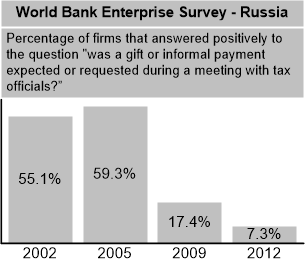
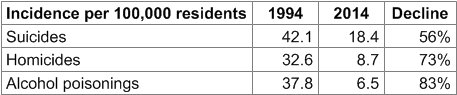
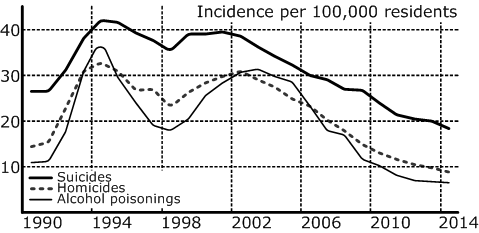
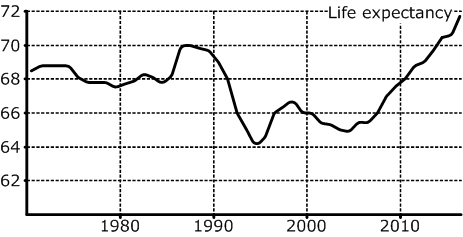

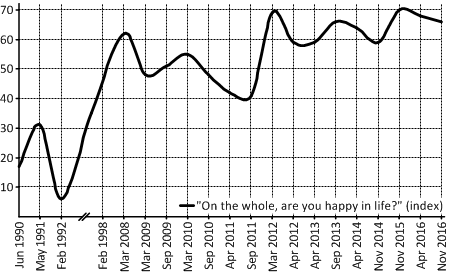

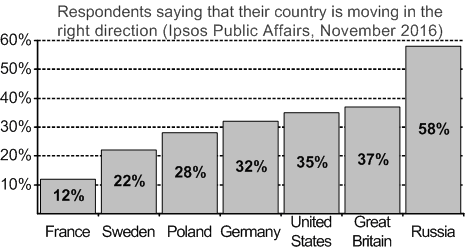



 Aletho News