Guardians of the Magnitsky Myth
By Robert Parry | Consortium News | October 28, 2017
As Russia-gate becomes the go-to excuse to marginalize and suppress independent and dissident media in the United States, a warning of what the future holds is the blacklisting of a documentary that debunks the so-called Magnitsky case.

Hedge-fund executive William Browder
The emerging outlines of the broader suppression are now apparent in moves by major technology companies – under intense political pressure – to unleash algorithms that will hunt down what major media outlets and mainstream “fact-checkers” (with their own checkered histories of getting facts wrong) deem to be “false” and then stigmatize that information with pop-up “warnings” or simply make finding it difficult for readers using major search engines.
For those who believe in a meaningful democracy, those tactics may be troubling enough, but the Magnitsky case, an opening shot in the New Cold War with Russia, has demonstrated how aggressively the Western powers-that-be behave toward even well-reported investigative projects that unearth inconvenient truth.
Throughout the U.S. and Europe, there has been determined effort to prevent the American and European publics from seeing this detailed documentary that dissects the fraudulent claims at the heart of the Magnitsky story.
The documentary – “The Magnitsky Act: Behind the Scenes” – was produced by filmmaker Andrei Nekrasov, who is known as a fierce critic of Russian President Vladimir Putin but who in this instance found the West’s widely accepted, anti-Russian Magnitsky storyline to be a lie.
However, instead of welcoming Nekrasov’s discoveries as an important part of the debate over the West’s policies toward Russia, the European Parliament pulled the plug on a premiere in Brussels and – except for a one-time showing at the Newseum in Washington – very few Americans have been allowed to see the documentary.
Instead, we’re fed a steady diet of the frothy myth whipped up by hedge-fund investor William Browder and sold to the U.S. and European governments as the basis for sanctioning Russian officials. For years now, Browder has been given a free hand to spin his dog-ate-my-homework explanation about how some of his firms got involved a $230 million tax fraud in Russia.
Browder insists that some “corrupt” Russian police officers stole his companies’ corporate seals and masterminded a convoluted conspiracy. But why anyone would trust a hedge-fund operator who got rich exploiting Russia’s loose business standards is hard to comprehend.
The answer is that Browder has used his money and political influence to scare off and silence anyone who dares point to the glaring contradictions and logical gaps in his elaborate confection.
So, the hedge-fund guy who renounced his U.S. citizenship in favor of a British passport gets the royal treatment whenever he runs to Congress. His narrative just fits so neatly into the demonization of Russia and the frenzy over stopping “Russian propaganda and disinformation” by whatever means necessary.
This summer, Browder testified before the Senate Judiciary Committee and argued that people involved in arranging the one-time showing of Nekrasov’s documentary should be prosecuted for violating the Foreign Agent Registration Act (FARA), which carries a five-year prison term.
Meanwhile, the U.S. mainstream media helps reinforce Browder’s dubious tale by smearing anyone who dares question it as a “Moscow stooge” or a “useful idiot.”
Magnitsky and Russia-gate
The Magnitsky controversy now has merged with the Russia-gate affair because Russian lawyer Natalia Veselnitskaya, who traveled to America to challenge Browder’s account, arranged a meeting with Donald Trump Jr. and other Trump campaign advisers in June 2016 to present this other side of the story.
Though nothing apparently came from that meeting, The New York Times, which always treats Browder’s account as flat fact, led its Saturday editions with a breathless story entitled, “A Kremlin Link to a Memo Taken to Trump Tower,” citing similarities between Veselnitskaya’s memo on the Magnitsky case and an account prepared by “one of Russia’s most powerful officials, the prosecutor general Yuri Y. Chaika.” Cue the spooky music as the Times challenges Veselnitskaya’s honesty.
Yet, the Times article bows to Browder as the ultimate truth-teller, including repetition of his assertion that Sergei Magnitsky was a whistleblowing “tax lawyer,” rather than one of Browder’s accountants implicated in the tax fraud.
While Magnitsky’s profession may seem like a small detail, it gets to the heart of the mainstream media’s acceptance of Browder’s depiction of Magnitsky – as a crusading lawyer who died of medical neglect in a Russian prison – despite overwhelming evidence that Magnitsky was really a clever accountant caught up in the scheme.
The “lawyer” falsehood – so eagerly swallowed by the Times and other mainstream outlets – also bears on Browder’s overall credibility: If he is lying about Magnitsky’s profession, why should anyone believe his other self-serving claims?
As investigative reporter Lucy Komisar noted in a recent article on the case, Browder offered a different description when he testified under oath in a New York court deposition in a related criminal case.
In that adversarial setting, when Browder was asked if Magnitsky had a law degree, Browder said, “I’m not aware that he did.” When asked if Magnitsky had gone to law school, Browder answered: “No.”
Yet, the Times and the rest of the mainstream media accept that Magnitsky was a “lawyer,” all the better to mislead the American public regarding his alleged role as a whistleblower.
The rest of Browder’s story stretches credulity even more as he offers a convoluted explanation of how he wasn’t responsible for bogus claims made by his companies to fraudulently sneak away with $230 million in refunded taxes.
Rather than show any skepticism toward this smarmy hedge-fund operator and his claims of victimhood, the U.S. Congress and mainstream media just take him at his word because, of course, his story fits the ever-present “Russia bad” narrative.
Plus, these influential people have repeated the falsehoods so often and suppressed contrary evidence with such arrogance that they apparently feel that they get to define reality, which – in many ways – is what they want to do in the future by exploiting the Russia-gate hysteria to restore their undisputed role as the “gatekeepers” on “approved” information.
Which is why Americans and Europeans should demand the right to see the Nekrasov documentary and make their own judgments, possibly with Browder given a chance after the show to rebut the overwhelming evidence of his deceptions.
Instead, Browder has used his wealth and connections to make sure that almost no one gets to see the deconstruction of his fable. And The New York Times is okay with that.
[For details on the Nekrasov documentary, see Consortiumnews.com’s “A Blacklisted Film and the New Cold War.”]
Investigative reporter Robert Parry broke many of the Iran-Contra stories for The Associated Press and Newsweek in the 1980s.
JFK Files: Cover-Up Continues of President’s Assassination
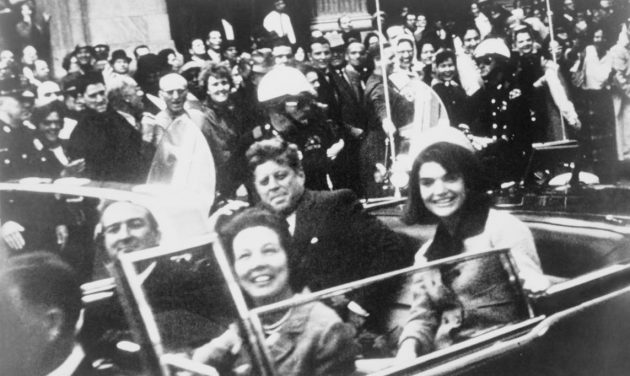
By Finian CUNNINGHAM | Strategic Culture Foundation | 28.10.2017
The murder of President John F Kennedy 54 years ago has been described as the “crime of the century”. If US and Western news media cannot discuss this seminal event openly and honestly, let alone investigate it, then what does that say about their credibility?
Such systematic media denial of reality inflicts irreparable damage to their credibility. How can they be taken seriously on any other matter, whether it is claims of “Russian meddling” or about the war in Syria, or the claims justifying Washington’s aggression towards Iran and North Korea?
The astounding media denial over JFK’s assassination is a symptom of the tacit totalitarianism that passes for “Western democracy”.
The release this week of secret government papers on the killing of President Kennedy was billed as a day of revelation and reckoning. Closer to the truth is that the shocking murder of Kennedy continues to be covered-up by the US deep state.
The premise of “revelation and reckoning” is absurdly false and naive. The notion that US authorities would “finally come clean” on what happened that day in Dallas is not only flawed. It also creates the illusion that the controversy has finally been settled, thereby supposedly confirming the official version that Kennedy was assassinated by a lone malcontent, Lee Harvey Oswald.
CNN reported the release of official documents this week thus: “More than 50 years after President John F Kennedy was killed, Americans on Thursday may finally get the US government’s full accounting… to quell conspiracy theories that have long swirled around the assassination.”
The New York Times wrote: “The final trove of sealed government records to be released” will lay to rest the “grand-daddy of all conspiracy theories”.
The evidence and truth about Kennedy’s slaying in Dealey Plaza, Dallas, on November 22, 1963, is already out there in the testimony of dozens of eye witnesses who observed the assassination or who were present in the aftermath. The assumption that the release of secret archives could shed any light is misplaced. But the media depiction of a “final trove” of documents conveniently shores up the official account that any other explanation of what really happened is that of a “conspiracy crank”.
CNN and the New York Times, as with the rest of the mainstream media in the US, claim that the release of declassified papers this week confirms the official narrative that JFK was shot dead by Lee Harvey Oswald firing a sniper rifle from the sixth floor of the Texas Book Store Depository at the president’s motorcade. That was the original conclusion from the government-led Warren Commission, which published its report on the assassination in 1964. For over 50 years, the US media have unswervingly maintained that version of events, despite abundant evidence to the contrary.
What the media have studiously ignored for all these years is the evidence and testimony from dozens of witnesses who were either excluded from the Warren Commission hearings, or their testimonies were distorted by FBI investigators. Many of them mysteriously killed.
One of the best compendiums on the Kennedy assassination is ‘JFK and the Unspeakable’ by James Douglass (2008). Other essential titles for details on the murder – details which mainstream media largely ignore – include ‘Crossfire’ by Jim Marrs, and ‘Brothers’ by David Talbot.
Among the many crucial witnesses recorded over the years, here below are a select few. Their testimonies show that the murder of Kennedy was a much darker “crime of the century” than the mainstream media would ever explore.
Shot from the front, not from the back
Doctor Charles Crenshaw led the medical staff at Dallas Parkland Hospital where the fatally wounded JFK was rushed to minutes after being shot. Crenshaw and nearly 20 other medical staff tended to the president’s wounds trying to resuscitate him. All of these medics testified that Kennedy’s fatal head wound was from a gun shot to the front of the skull which resulted in a massive exit hole at the back of his head. That one detail alone contradicts the official claim that Oswald allegedly shot JFK from the rear, as the Warren Commission contends.
The fatal shot must have come from the front, which the famous amateur video footage recorded by bystander Abraham Zapruder near the Grassy Knoll also purports to show. (Notably, a Congressional panel, the House Select Committee on Assassinations, concluded in 1979 after a reexamination of evidence that there was more than one shooter in Dealey Plaza. But this finding has never been thoroughly explored by the media. Why not?)
Critically important, Dr Crenshaw and his medical colleagues were immediately pressured by the FBI and other authorities to suppress their initial observations. They were tacitly intimidated to change their accounts to say the opposite: that the president’s head wound was caused by a shot from the rear. Crenshaw was not invited to testify before the Warren Commission during its year-long hearings. He says for years after, he and Parkland staff were subtly intimidated to keep quiet about their witness to Kennedy’s final moments. However, three decades later, in 1992, Dr Crenshaw published ‘JFK and the Conspiracy of Silence’. Ironically, it became a best-seller on the New York Times book list, in spite a huge media campaign to discredit Crenshaw’s medical expertise.
Lieutenant Commander William Bruce Pitzer was in charge of the Audio-Visual Department at Bethesda Naval Hospital in Washington DC where Kennedy’s remains were flown hours after the shooting. That was where the official autopsy was carried out, bizarrely, under the watchful eye of senior military personnel. Pitzer was tasked with filming the remains of the president. As he later confided to a colleague, who corroborated the film’s images, JFK’s head had a massive exit wound at the back of the skull, just as the Dallas doctors had initially maintained. Two years later, Pitzer was mysteriously found dead in his studio. He had been shot in the head, a revolver nearby. His death was officially said to be suicide, which his widow disputed. The film of the president’s remains, which Pitzer had been carefully storing, was removed from his studio by an unknown person.
The contention that Kennedy was shot from the front is not a theory. The direction of fire was witnessed by several people who were near the Grassy Knoll, the stockade-fence area which JFK’s limousine was approaching as it drove away from the Texas Book Store Depository, further up on Elm Street. If Oswald was the shooter from the depository, as the official narrative goes, then how could Kennedy have been shot fatally from the front?
Secret Service men at Grassy Knoll
Ed Hoffman, a young deaf and mute man, was watching the approaching motorcade from the flyover overlooking the knoll. Hoffman says he saw a puff of smoke emitting from where a gunman was standing against the stockade fence just as the president’s car was approaching. The shooter then quickly moved to rail lines behind the knoll where he threw his rifle to another man dressed in work overalls. The second man disassembled the rifle in a twist, shoved it into a holdall bag and proceeded to walk along the rail track away from the knoll. The shooter then swiftly walked back to the stockade fence. Several police officers on duty that day, who immediately ran towards the knoll on hearing the gunfire, reported that they were confronted by men purporting to be secret service agents. Ed Hoffman’s testimony was ignored by FBI investigators when he voluntarily came forward. But his account was verified by a railroad operator named Lee Bowers who also observed the shooting from the Grassy Knoll from the vantage point of a control tower he happened to be working in. Bowers testified his observation to respected JFK researcher and author Mark Lane. Four months later, in 1966, Bowers was killed in a single-car accident. This fate of untimely death has met several other people who spoke out about circumstances of the shooting which did not fit with the Warren Commission narrative.
Another witness on the Grassy Knoll was a young off-duty soldier, Gordon Arnold. Years later after mustering the courage, he testified that he felt the discharge of two shots fired from close behind while he was taking photos of the passing motorcade. Gordon said he ducked for cover, and before he knew it, two men lit on him, one holding a rifle and dressed in a police uniform, who demanded he empty his camera of its film. Arnold kept silent about his story for years out of fear for his life.
Jack Ruby was not a random killer of Oswald
Many serious independent investigators have disputed the Warren Commission report as being riddled with anomalies, apart from its exclusion of key witnesses. One of the glaring flaws in the Warren findings is that Lee Harvey Oswald purportedly acted alone, and that he had no connection to Jack Ruby, the Mob-connected nightclub owner who shot dead Oswald while in custody in the Dallas police station – two days after Kennedy was killed.
Rose Cheramie worked in Ruby’s Dallas club. Before her death in a bizarre road accident in 1965, Cheramie claimed that Ruby and Oswald knew each other for years. She said Oswald would often call round to the club where he would sit at Ruby’s table.
Julia Ann Mercer was stuck in traffic in Dealey Plaza on the morning of the assassination, at 11am, an hour and a half before the president’s motorcade arrived. She noticed a man getting out of a station wagon parked below the Grassy Knoll and that this man was carrying what appeared to be a concealed rifle as he proceeded to walk up to the stockade-fence area. Out of curiosity, Mercer then rolled her car alongside the parked vehicle and took a look at the driver squarely in the face. It was Jack Ruby. She didn’t know Ruby at that time. Only days later when his infamous shooting of Oswald at the police station made international headlines did Mercer recognize Ruby’s face. Her testimony was distorted by FBI investigators. It was only when Mercer later talked to various independent researchers that her crucial identification of Ruby at the scene came to light, albeit not in a mass media light.
Other witnesses further substantiate the real conspiracy that lies behind JFK’s assassination. The word “conspiracy” is not used here in the pejorative sense to demean. It conveys the literal meaning of an organized plot.
What was that plot? As James Douglass and others have cogently pieced together, after his election in 1960 JFK was increasingly viewed by the US deep state as a “rogue president”. He was firmly opposed to the unfurling arms race against the Soviet Union and wanted to pursue earnest, radical nuclear disarmament with Russian leader Nikita Khrushchev. The Cuban missile crisis of 1962 had jolted JFK on the dangers of a nuclear world war. Kennedy also wanted to normalize relations with Cuba’s Fidel Castro following the disastrous CIA-led Bay of Pigs invasion in 1961 for which the president vowed he would “smash the agency into a thousand pieces”. He fired the CIA director Allen Dulles over the fiasco. Ironically, Dulles would later be appointed to the seven-member Warren Commission, supposedly tasked with uncovering the truth behind Kennedy’s assassination.
Moreover, JFK had concluded that the looming Vietnam War would be a disaster. In the summer of 1963 he was preparing orders for US military withdrawal. That move was a formidable threat to the anticipated huge profits for the military industrial complex if the war escalated, which it did after Kennedy’s death.
At the height of the Cold War, Kennedy was therefore seen as little more than a traitor by the military-security apparatus and as an obstacle to the vested economic interests of the Pentagon’s military-industrial complex. In short, he had to be got rid of by “executive action”.
The CIA had the motive to terminate Kennedy. It also had the means. CIA contract-killers were often drawn from the ranks of criminal underworld, the Mafia and far-right Cuban exiles living in Miami. This arrangement affords “plausible deniability”.
Jack Ruby, who had long been a Mafia, CIA gun-runner and fixer, was recruited into the months-long planning of the plot to ambush the president.
Oswald the CIA agent who became a scapegoat
So, what was Oswald’s connection? The 23-year-old ex-US marine had been recruited in the late 1950s by the CIA when he was posted to a U2 spy plane base in Japan. He became fluent in Russian and then “defected” to the Soviet Union. It seems that the KGB did not take Oswald seriously as a reliable would-be agent. He then returned to the US in 1962, apparently of his own volition. Significantly, for an American citizen who had renounced his country and defected to the Soviet Union, Oswald and his Russian wife were not subjected to any recriminations on their return to the US. Indeed, it seems they were given generous patronage to find accommodation, jobs, and connections.
Oswald, who became immersed in both pro- and anti-Castro Cuban political activities in the US, became embroiled in the plot to assassinate Kennedy. How much Oswald knew of CIA involvement or the agency’s true objectives is not clear. But evidence suggests that he was also working as an informer for the FBI to alert them of the plot to kill the president. Oswald was out of his depth. He probably didn’t realize how little a pawn he was in a much bigger nefarious plot.
His close involvement with the bit-player plotters explains how he was an associate of Jack Ruby. What Oswald’s true intentions were are not clear. Tragically, he may have had a misplaced belief that his role as an informant for the FBI was trying to save the president.
In the end, tragically, Oswald was made the scapegoat for the assassination. The claim that he fired a rifle from the Texas School Book Depository with three shots in a matter of seconds and hit the president twice – as the Warren Commission contends – defies credibility. Also, according to the Warren report, one of those bullets supposedly exited Kennedy’s neck and then struck Governor John Connally who was riding in front of the Limousine. Dr Crenshaw and the other doctors at Parkland Hospital initially said that the wound on Kennedy’s neck (in addition to the fatal head injury) was an entry wound – another pointer that shots were actually fired from the front, not from the back as the Warren Commission maintains. That’s not to say shots were not fired from the depository. Witnesses say they heard gunfire and saw a gunman in the upper window. But that speaks more to the elaborate CIA plot to frame Oswald, who happened to recently become employed at the depository weeks before Kennedy’s visit to Dallas.
Less than an hour after the president was shot, Oswald hurriedly entered a movie theater. Witness Jack Davis said he noticed Oswald acting strangely, sitting beside individuals, then restlessly getting up and sitting down again beside another moviegoer – this in an almost empty theater! “It was obvious he was looking for someone,” recalled Davis. It is reasonable to speculate Oswald was seeking out a FBI contact whom he was instructed to connect with in a faux-arrangement. Oswald never did meet his “contact”. He was being left out to hang and dry by the plotters.
Another movie-theater customer, George Applin, told how when police officers arrested Oswald, Applin kindly advised another seated man to move to the back of the cinema hall, away from the trouble. The man nonchalantly looked at Applin, ignored his advice, kept sitting in his seat, and then proceeded to intently observe the arrest of Oswald. Days later, Applin recognized the face of Jack Ruby as being that of the man in the cinema hall. Evidently, Ruby had expected the police officers to shoot Oswald on the spot at his arrest, especially because their colleague Officer JD Tippit had just been shot dead minutes before – supposedly by Oswald fleeing from the assassination of the president. As it turned out, the arresting officers did not kill Oswald in the movie-theater, and it would fall to Ruby to follow-up two days later at the Dallas police station.
There are many other such key witnesses to the events surrounding the assassination of JFK, recorded in the reference books cited above, among other sources. All these witnesses were ignored by the mainstream media, or excluded and distorted by the Warren Commission, or were intimidated from speaking out publicly.
State-level organization of assassination
One further crucial story is that of Air Force Sergeant Robert Vinson. On the Friday of the assassination, through sheer happenstance, he caught an unscheduled ride onboard an unmarked C-54 military cargo plane, making his way back from Washington DC to his home near Colorado Springs. During the flight in which he was the only passenger, the pilots announced the president’s death. The plane then banked to another unspoken destination. When it landed on a rough strip, Sgt. Vinson recognized the city’s skyline as Dallas. It was mid-afternoon. During the brief stop, the plane’s engines did not shut off. Two men boarded. The aircraft then took off, landing eventually at the air base at Roswell, New Mexico. It was only when Vinson finally got home on Sunday, watching the breaking news on the TV with his wife, that he recognized the face of the man accused of being the president’s assassin, Lee Harvey Oswald. It was the same facial appearance as one of the two men who boarded at Dallas.
Vinson’s experience confirms what many other witnesses have contended. That in the plot to kill JFK and frame Oswald, there was an Oswald double, an imposter whose task was to incriminate the scapegoat. The double was used to lay down a trail of evidence purporting to frame Oswald as a Cuban or Soviet malcontent. This would explain the strange encounters at the Cuban and Soviet embassies in Mexico City only weeks before the Dallas assassination. During those encounters, the Oswald imposter dramatically proclaimed his communist allegiance. Significantly, the Soviet records show that the person claiming to be Oswald spoke very bad Russian, whereas it is known that the real Oswald was fluent in the language.
For years, Sgt. Vinson was subtly intimidated by the CIA to keep quiet about his accidental flight onboard the unmarked cargo plane. However, Vinson did come forward years later to tell researchers of his insights into the plot to kill Kennedy. He also testified that the plane he rode on was not entirely unmarked. On the tail section, the aircraft bore the insignia of the CIA.
But perhaps the absolute key witness in all this was Lee Harvey Oswald himself. His last words shouted out in defiance at the Dallas police station were: “I’m just a patsy!”
Conveniently, Oswald was silenced by the Mob, CIA-connected Jack Ruby before he could tell his side of the story in a court of law. Oswald no doubt could have lifted a very disturbing lid on who really was orchestrating the president’s assassination.
Regime change American-style
The story of JFK’s assassination is one of state-sponsored murder carried out by the deep state power structure in the US. It was a coup d’état against a president elected by the people, whom the deep state viewed as an enemy to their objectives for war and foreign intrigues.
It was a shocking, brutal blow against democracy, a “regime change”, delivered not in some distant country, but right at home in the United States.
Such was the elaborate conspiracy to murder the president, involving contract-killers and secret services, as well as the complicity of police forces, the FBI, the military, judiciary and the corporate media, that the plotters behind JFK’s killing had to be positioned at the highest level of US government – the deep state.
Nearly 54 years after Kennedy’s murder by America’s state apparatus, the cover-up continues in the form of a futile release of “secret papers”. And, suitably, the mainstream media declare that this “disclosure” is the final settling of the matter, which puts an end to “conspiracy theories”. The media’s complicity may simply be due to an inability or reluctance to question the official narrative. This is what we mean by “tacit totalitarianism” – a willingness to believe in indoctrinated thinking, such as the false Warren Commission conclusion.
No wonder the US public – which polls have consistently shown do not believe the official Warren Commission narrative, and who indeed believe instead that JFK was actually killed in a nefarious plot – no wonder the public have increasing distrust and contempt for the corporate media for being dishonest and unreliable.
For the past year, the same media have been trying to slander Russia for interfering in US democracy. The same media have also tried to conceal American state-sponsored terrorism in Syria to overthrow the government there, just like it did when it overthrew the government in Libya in 2011 and killed the country’s leader Muammar Gaddafi. And many other illegal regime-change operations carried out by the US and its Western allies, presented as noble endeavors to “defend democracy”, “fight terrorism” or “protect human rights”.
In an era when such commercially-driven mass media pontificate about “fake news” perpetrated by others it is all the more galling that the accusation comes from the very same media who specialize in mass fake news and mass fake narratives.
The US state murder of JFK in 1963 and the decades-long cover-up is perhaps the greatest condemnation of the fraud that is US mass media. The day that the president was assassinated was also the day that American pretensions of democracy took a deadly hit.
Syria Rejects Report of Joint Inquiry of UN and OPCW
Al-Manar | October 27, 2017
Syria has rejected the report of joint inquiry of the UN and Organization for the prohibition of chemical weapons (OPCW), which was announced yesterday, stressing that it came in implementation of the instructions of the US administration and Western countries to exert more political pressures and threats to Syria’s sovereignty.
A source at Foreign and Expatriates Ministry said Friday that Syria reiterates its complete commitment to Non-Proliferation of Chemical Weapons Convention and that it no longer has any toxic chemicals banned in accordance with the Convention.
It considers the use of chemical weapons an immoral and condemnable act anywhere, at any time and under any circumstances, the ministry said.
The ministry’s source said that Syria strongly condemns the direct and indirect accusations against it which were included in this report and the previous one since they represent a falsification of the truth and distortion of all accurate information about what happened in Khan Sheikhon.
It also condemns dependence of the Joint Investigative Mechanism on the statements of criminals who committed this immoral act in Khan Sheikhon and suspicious witnesses in addition to what they call open sources.
Why the United Socialist Party of Venezuela (PSUV) Won the Election
By James Petras | Axis of Logic | October 27, 2017
Introduction
Every major newspaper, television channel and US government official has spent the past two years claiming that the United Socialist Party of Venezuela (PSUV), founded by the late Hugo Chavez, had become a marginalized political party, supported only by ‘hard core Chavistas’ and public employees. The US government, under Presidents Obama and Trump, backed gangs of violent demonstrators, who rampaged through the streets, as ‘the true democratic representatives’ of the will of the voters. Secretary General of the Organization of American States Luis Almagro, a veteran running dog for Washington, railed against President Nicholas Maduro, denouncing him as a ‘dictator’ and openly demanded that the Venezuelan people and neighboring Latin American regimes unite to oust him – even through violence. President Trump imposed brutal economic sanctions designed to strangle the economy and guaranteed Washington’s support for the rightwing opposition, the self-styled Democratic Unity Roundtable, (‘Mesa de la Unidad Democratica’ – or MUD).
MUD took advantage of the economic crisis facing Venezuela with the sharp decline of the price oil, of its main export. MUD has spent the past three years attacking the government and mobilizing its supporters through street violence and parliamentary maneuvers to paralyze the government’s socio-economic agenda. Vital public services, like power stations, were frequent targets of MUD-orchestrated sabotage, even leading to the assassination of public employees, like police and firefighters.
MUD rejected the government’s proposal for peaceful negotiations with the opposition. President Maduro asked for a dialogue with the US, which was sponsoring MUD, but President Trump replied with his usual bombast and threats of violent intervention.
The economic blockade and drop in oil prices had devastating consequences: Inflation hit triple digits in Venezuela. There were increasing food shortages, long lines and valid consumer complaints. As a result, the opposition coalition won the Congressional elections of 2015 and immediately tried to impeach President Maduro. Rather than using their electoral mandate to govern and address the country’s problems, they focused exclusively on forcing ‘regime change’. This monomania led to voter dissatisfaction with MUD and, contrary to Washington’s hopes, predictions, threats and sanctions, the PSUV won the gubernatorial elections by a wide margin in October 2017.
The opposition was decisively defeated. Over a thousand independent outside observers, who had monitored the Venezuelan elections and voting procedures, declared the elections to be the free and valid expression of the citizens will. The opposition immediately rejected the result. The entire US-EU press predictably converged on Caracas, screaming ‘fraud’, echoing the rabid right-wing politicos in the US, the OAS and Europe. They saw no need to back their claims with ‘evidence’.
In truth, the Opposition-MUD was roundly defeated: They had secured only 39% of the vote and only 5 of the 23 governorships. The PSUV, for its part, increased its voter support from 44% in the 2015 to 54% in October 2017.
The real question, which is being ignored, is how the PSUV won and the Opposition lost, given the enormous outside support for MUD and the economic crisis in Venezuela? Why did the opposition lose 2.7 million votes in two years following their much-ballyhooed parliamentary victory? How could the US, the OAS and the EU miss this trend and waste their money and credibility?
Ten Reasons for the Socialist Victory and the Rightist Defeat
Understanding the reasons for the Socialist victory requires that we first analyze the strengths and weakness of the MUD.
- The PSUV retained its committed and loyalist core, despite hardships endured by the masses of Venezuelans, because of the socialists long-term, large-scale socio-economic programs advancing the citizens’ welfare over the previous decade and a half.
- Many low-income voters feared that, once in power, the rightwing extremists in MUD would reverse these social advances and return them to the pre-Chavista era of elite domination, repression and their own marginalization.
- Many right-of center-voters were appalled by MUD’s support for violence and sabotage, leading to the destruction of public buildings and private businesses and paralyzing public transportation. They decided to abstain and/or vote for the PSUV, as the party of law and order.
- Many independent voters supported the PSUV as the greater defender of Venezuelan sovereignty. They were appalled by the opposition coalition – MUD’s endorsement of Washington’s economic sanctions and blockade and President Trump’s brutal threats to intervene to force ‘regime change’.
- Probably most decisive for the shift to the left by many former MUD voters was the right-wing opposition’s failure to offer any positive alternative. Apart from promoting violence and dismantling the Chavista social programs, MUD lacked any concrete program or policies to address the ongoing economic crisis. It was clear to voters that MUD’s constant harping on the ‘failures’ of the PSUV offered no viable way out of the crisis.
- The MUD was not able to use its electoral majority in Congress to obtain overseas economic aid to provide social services, or to arrange trade deals or loans. Washington was only willing to subsidize MUD’s campaign for violent regime change but not to support any opposition congressional proposals for Venezuela’s schools or its health system. MUD was stuck in a self-perpetuating cycle, telling people what they already knew, with no serious proposals to address the people’s everyday problems.
- MUD constantly denigrated the memory of President Hugo Chavez, whose legacy represented the ‘best of times’ for millions of Venezuelans. Many voters recalled the decade of Chavez’s Presidency – his generous welfare policies, his own humble origins, his courage, his folksy sense of humor and his links to the grassroots. This was in stark contrast to the MUD leaders’ ‘Miami mentality’, their fawning over US consumerism and Washington’s militarism, their servility to the upper class’s cultural elitism and contempt for the dark-skinned mestizo population.
- The MUD congressmen and women focused their time in Congress with sectarian political name-calling when they weren’t busy plotting regime change in the posh upper class salons of the Caracas’ elite. They failed to articulate any realistic grassroots solution to everyday problems. Their complaints over ‘dictatorship’ carried little weight since they held the majority in Congress and did nothing for the electorate.
- The MUD’s unsuccessful attempts to incite a military coup among Venezuela’s patriotic military officers alienated moderate liberal-democrats, some of whom either ‘jumped ship’ to support the Left or, more likely, abstained in October’s election.
- President Maduro’s moves toward negotiating favorable trade and investment deals with Russia, China and Iran encouraged voters to imagine that viable alternatives to the crisis were on the government’s agenda.
Many voters may have placed more trust in Maduro’s promise of serious new programs and policies to revive the economy. But more significantly, the PSUV’s established programs and future prospects were more appealing than MUD’s predictable denunciations of election fraud; and almost two-thirds of the electorate chose to participate in October’s elections. These ‘fraud’ charges only worked with MUD’s true believers who had either abstained, virtually ensuring a victory for the Left, or had voted and therefore made themselves ‘accessory to electoral fraud’, which they had denounced.
Conclusion
The MUD lost the state governor elections of October 2017, less than 2 years after they had won the congressional elections, by demonstrating their incompetence, their propensity for violence against serious democratic adversaries and their incapacity to fulfill any programmatic promises.
The PSUV won because of the Chavez legacy, the decision by middle-of-the-road voters to support a pragmatic ‘lesser evil’ over a violent opposition ‘greater evil’ promising chaos. Many voters are desperate for new and better policies to address Venezuela’s current economic challenges. Finally, many Venezuelans rejected US President Trump and OAS President Almagros’ blatant, arrogant assumption that they knew what was best for the people of Venezuela – even if it meant blood in the streets.
In the end, the Chavez legacy of successful class and national struggles carried more weight with the voters than the negative, chaotic impotence of a subservient opposition. The US/Venezuelan mass media’s efforts to undermine the government were defeated because the people responded to the socialist message that US-led economic warfare, and not government mismanagement, was the key cause of their social and economic decline. They had experienced more than a decade of independent foreign policy and Bolivarian socialist programs to compare with the chaos of ‘regime change’ promised by Washington and the opposition.
The Left won the battle for now but the war continues.
Please note James Petras’s most recent book:
THE END OF THE REPUBLIC AND THE DELUSION OF EMPIRE
ISBN: 978-0-9972870-5-9
$24.95 / 252 pp. / 2016
EBOOK ISBN: 978-0-9972870-6-6
ORDER E-BOOK: $19.00
© Copyright 2017 by AxisofLogic.com
‘Collusion’ Claims Backfire on Democrats Threefold, but Russia Is More Evil Than Ever
By James George JATRAS | Strategic Culture Foundation | 27.10.2017
For months America and the rest of the world have been bombarded with hysterical claims from sore-loser Democrats, GOP Never-Trumpers, and their media shills that Donald Trump only won the 2016 election thanks to the hidden hand of that Mephistopheles of contemporary geopolitics, Vladimir Putin. Never mind that no evidence of any collusion between the Russians and anyone on the Trump team has been found, despite millions of dollars spent by Special Counsel Robert Mueller and several Congressional committees.
With the growing sense that there’s no collusion to be found, the narrative lately had shifted towards a new story: maybe what the Russians were really doing was planting discord among Americans to exacerbate our social problems and destroy our faith in our democratic institutions. So, for a measly few hundred thousand dollars’ worth of social media ads (many of them appearing after the election) on Facebook, Twitter, etc., Russian interests (we are never told who, exactly) aimed to “sow chaos and create divisions among Americans” – evidently in general, without any link to Trump or even particularly to help him. Among the favorite topics for socially divisive ads were left-leaning memes about Black Lives Matter and the environmental hazards of fracking, as well “a range of right-wing causes associated with Donald Trump’s campaign,” such as gun rights and illegal immigration. (Regarding the latter, let’s not forget that, while remaining an unreconstructed KGB commie, Putin is also a tiki-torch wielding Grand Dragon of the global Alt-Right white nationalist movement. He’s another Stalin and “literally Hitler” at the same time.) If not for dastardly Russian meddling, we would have no social problems at all, and everybody would be holding hands singing Kumabaya.
But now, with astonishing speed, just this week three stories have popped out that toss the whole Russian collusion tangle right back in face of Hillary Clinton and her party:
1. Hillary Clinton’s presidential campaign and the Democratic National Committee paid for a defamatory “dossier” against Trump allegedly based on Russian sources:
‘An explosive and salacious dossier alleging links between President Donald Trump and Russia was in part financed by Hillary Clinton’s presidential campaign, according to a report Thursday.
‘Marc E. Elias, a lawyer who represented Clinton’s campaign and the Democratic National Committee, retained Fusion GPS, an intelligence firm that commissioned the former British intelligence officer Christopher Steele to produce the dossier, The Washington Post reported. . . . It has previously been reported that the dossier was financed by anti-Trump Republicans during the 2016 primary before Democrats picked up the tab. [ . . . ]
‘The revelation comes amid increasing attempts by some Republicans on Capitol Hill to get Fusion GPS to reveal who financed the dossier. Last week, two Fusion GPS partners appeared before the House Intelligence Committee following a subpoena by the panel’s Republican Chairman Devin Nunes. However, the firm’s officials invoked their constitutional privilege not to answer any questions. [ . . . ]
The dossier, first published by BuzzFeed News in January, garnered widespread attention in part to a particularly salacious allegation. It claimed that the Russian FSB spy agency possessed a compromising video of Trump getting Russian prostitutes to urinate on a Moscow hotel room bed once slept on by Obama and his wife, Michelle.’ [Newsweek, October 24: “TRUMP-RUSSIA ‘PEE TAPE’ DOSSIER WAS PAID FOR BY HILLARY CLINTON CAMPAIGN: REPORT”]
2. Russian investors are said to have paid millions of dollars to the Clinton Foundation and a half-million dollar speaking fee to Bill Clinton while Hillary, as Secretary of State, was considering approval of a controversial acquisition of a uranium-mining company:
‘Multiple congressional committees are investigating an Obama-era deal that resulted in a Russian company purchasing American uranium mines.
‘Lawmakers are also asking the Department of Justice to lift a reported gag order on a confidential informant who is expected to have more information about the agreement that allowed Russia to control about one-fifth of the uranium mining in the US – and former Secretary of State Hillary Clinton’s involvement in it. [JGJ Note: The gag order was lifted shortly after this story was posted.]
‘President Trump called the Uranium One deal “the real Russia story” as federal investigators continue to probe Russia’s alleged involvement in the 2016 election. And The Hill recently reported that Russian officials engaged in a “racketeering scheme” to further its energy goals in the US
‘In 2013, Russian company Rosatom acquired a Canadian uranium mining company, now called Uranium One, which has assets in the US Uranium is key to making nuclear weapons. Through the deal, Russia is able to own about 20 percent of US uranium production capacity. [ . . . ]
‘The agreement was approved by nine government agencies with the Committee on Foreign Investment in the United States (CFIUS), an inter-agency group that reviews how certain foreign investments can impact national security. Clinton’s State Department was one of those agencies, though the former secretary of state told WMUR-TV in 2015 that she was not “personally involved” in the agreement. [ . . . ]
‘Republicans have largely decried the deal, especially as some investors reportedly donated millions of dollars to the Clinton Foundation. Former President Bill Clinton also received a $500,000 speaking fee in Russia and reportedly met with Vladimir Putin around the time of the deal.
‘The FBI had looked into the agreement and uncovered that some Russian nuclear industry officials were engaged in nefarious dealings, which included extortion, bribery and kickbacks, The Hill reported. Evidence of wrongdoing by Vadim Mikerin, the Russian official overseeing Putin’s nuclear expansion in the US who was eventually sentenced to prison, was discovered by the FBI before the deal was approved, according to The Hill.’ [Fox News, October 25: “Obama-era Russian Uranium One deal: What to know”]
3. A firm linked to Hillary Clinton’s presidential campaign chairman, John Podesta, is reportedly under investigation by Mueller for influence-peddling on behalf of Russian interests:
‘Tony Podesta [John’s brother] and the Podesta Group are now the subjects of a federal investigation being led by Special Counsel Robert Mueller, three sources with knowledge of the matter told NBC News.
‘The probe of Podesta and his Democratic-leaning lobbying firm grew out of Mueller’s inquiry into the finances of former Trump campaign chairman Paul Manafort, according to the sources. As special counsel, Mueller has been tasked with investigating possible collusion between the Trump campaign and Russia.
‘Manafort had organized a public relations campaign for a non-profit called the European Centre for a Modern Ukraine (ECMU)… The ECMU was reportedly backed by the Party of Regions, the pro-Russian and oligarch-funded Ukrainian political party for which Manafort worked as a consultant, and which paid his firm millions.’ [NBC News, October 24: “Mueller Now Investigating Democratic Lobbyist Tony Podesta”]
At this point no one knows what impact these developments will have or how they relate to one another. But two things are certain. First, at least for a while Trump supporters and much of the Republican party, plus media like Fox News, will be dancing with glee, whooping it up that the Democrats have now been caught in their own “RussiaGate” snare. How much real change there will be in the political landscape, either in getting rid of the collusion cloud over Trump’s head or dragging down Hillary, the Podestas, and their cronies, remains to be seen.
Second, it’s already clear that Trump’s defenders are at least as thrilled to play the anti-Russian card as the Democrats have been:
- What does Democratic funding of the Christopher Steele dossier mean? The Democrats were implementing a Russian “Chekist provokatsiya” to smear Trump! (Never mind that there’s no evidence the Russians had anything at all to do with what may well be a total fabrication by Steele and his pals in the shadowy world of British intelligence. (Let’s not forget the possible role of GCHQ in monitoring then-candidate Trump.) Or maybe it’s the fruit of the warped imagination of the yet-to-be identified Republican who funded Steele. Or maybe the FBI, which also paid Steele.)
- Why did the Russians bribe Bill and Hillary with speaking fees? To get their filthy paws on American uranium and “corner the market” on “the foundational material for nuclear weapons”! (Never mind that no less than the United States, Russia – which sits right next to friendly Kazakhstan, the world’s top uranium producer – can make as many warheads as desired; access to sufficient uranium isn’t an issue. As for the bribes, why should it be a surprise that some Russians would play the same game as the Saudis, Emiratis, Qataris, Ukrainians, and others who “contributed” the coffers of the likely next, and highly corrupt, president of the United States?)
- What were the Podesta Group and Manafort doing working for an NGO supported by Ukraine’s Party of Regions? Peddling influence for Putin! (Just try to explain to anyone in Washington that working for Yanukovych and “Putin lobbying” weren’t necessarily the same thing.)
In short, whatever the fallout in terms US internal politics, the root of all evil, for Republicans and Democrats alike, will remain the vast Russian conspiracy and its demon mastermind in the Kremlin.
Russia-gate Breeds ‘Establishment McCarthyism’
By Robert Parry | Consortium News | October 26, 2017
In the past, America has witnessed “McCarthyism” from the Right and even complaints from the Right about “McCarthyism of the Left.” But what we are witnessing now amid the Russia-gate frenzy is what might be called “Establishment McCarthyism,” traditional media/political powers demonizing and silencing dissent that questions mainstream narratives.

Sen. Joe McCarthy with lawyer Roy Cohn (right)
This extraordinary assault on civil liberties is cloaked in fright-filled stories about “Russian propaganda” and wildly exaggerated tales of the Kremlin’s “hordes of Twitter bots,” but its underlying goal is to enforce Washington’s “groupthinks” by creating a permanent system that shuts down or marginalizes dissident opinions and labels contrary information – no matter how reasonable and well-researched – as “disputed” or “rated false” by mainstream “fact-checking” organizations like PolitiFact.
It doesn’t seem to matter that the paragons of this new structure – such as The New York Times, The Washington Post, CNN and, indeed, PolitiFact – have a checkered record of getting facts straight.
For instance, PolitiFact still rates as “true” Hillary Clinton’s false claim that “all 17 U.S. intelligence agencies” agreed that Russia was behind the release of Democratic emails last year. Even the Times and The Associated Press belatedly ran corrections after President Obama’s intelligence chiefs admitted that the assessment came from what Director of National Intelligence James Clapper called “hand-picked” analysts from only three agencies: CIA, FBI and NSA.
And, the larger truth was that these “hand-picked” analysts were sequestered away from other analysts even from their own agencies and produced “stove-piped intelligence,” i.e., analysis that escapes the back-and-forth that should occur inside the intelligence community.
Even then, what these analysts published last Jan. 6 was an “assessment,” which they specifically warned was “not intended to imply that we have proof that shows something to be a fact.” In other words, they didn’t have any conclusive proof of Russian “hacking.”
Yet, the Times and other leading newspapers routinely treat these findings as flat fact or the unassailable “consensus” of the “intelligence community.” Contrary information, including WikiLeaks’ denials of a Russian role in supplying the emails, and contrary judgments from former senior U.S. intelligence officials are ignored.
The Jan. 6 report also tacked on a seven-page addendum smearing the Russian television network, RT, for such offenses as sponsoring a 2012 debate among U.S. third-party presidential candidates who had been excluded from the Republican-Democratic debates. RT also was slammed for reporting on the Occupy Wall Street protests and the environmental dangers from “fracking.”
How the idea of giving Americans access to divergent political opinions and information about valid issues such as income inequality and environmental dangers constitutes threats to American “democracy” is hard to comprehend.
However, rather than address the Jan. 6 report’s admitted uncertainties about Russian “hacking” and the troubling implications of its attacks on RT, the Times and other U.S. mainstream publications treat the report as some kind of holy scripture that can’t be questioned or challenged.
Silencing RT
For instance, on Tuesday, the Times published a front-page story entitled “YouTube Gave Russians Outlet Portal Into U.S.” that essentially cried out for the purging of RT from YouTube. The article began by holding YouTube’s vice president Robert Kynci up to ridicule and opprobrium for his praising “RT for bonding with viewers by providing ‘authentic’ content instead of ‘agendas or propaganda.’”
The article by Daisuke Wakabayashi and Nicholas Confessore swallowed whole the Jan. 6 report’s conclusion that RT is “the Kremlin’s ‘principal international propaganda outlet’ and a key player in Russia’s information warfare operations around the world.” In other words, the Times portrayed Kynci as essentially a “useful idiot.”
Yet, the article doesn’t actually dissect any RT article that could be labeled false or propagandistic. It simply alludes generally to news items that contained information critical of Hillary Clinton as if any negative reporting on the Democratic presidential contender – no matter how accurate or how similar to stories appearing in the U.S. press – was somehow proof of “information warfare.”
As Daniel Lazare wrote at Consortiumnews.com on Wednesday, “The web version [of the Times article] links to an RT interview with WikiLeaks founder Julian Assange that ran shortly before the 2016 election. The topic is a September 2014 email obtained by Wikileaks in which Clinton acknowledges that ‘the governments of Qatar and Saudi Arabia … are providing clandestine financial and logistic support to ISIL and other radical Sunni groups in the region.’”
In other words, the Times cited a documented and newsworthy RT story as its evidence that RT was a propaganda shop threatening American democracy and deserving ostracism if not removal from YouTube.
A Dangerous Pattern
Not to say that I share every news judgment of RT – or for that matter The New York Times – but there is a grave issue of press freedom when the Times essentially calls for the shutting down of access to a news organization that may highlight or report on stories that the Times and other mainstream outlets downplay or ignore.
And this was not a stand-alone story. Previously, the Times has run favorable articles about plans to deploy aggressive algorithms to hunt down and then remove or marginalize information that the Times and other mainstream outlets deem false.
Nor is it just the Times. Last Thanksgiving, The Washington Post ran a fawning front-page article about an anonymous group PropOrNot that had created a blacklist of 200 Internet sites, including Consortiumnews.com and other independent news sources, that were deemed guilty of dispensing “Russian propaganda,” which basically amounted to our showing any skepticism toward the State Department’s narratives on the crises in Syria or Ukraine.
So, if any media outlet dares to question the U.S. government’s version of events – once that storyline has been embraced by the big media – the dissidents risk being awarded the media equivalent of a yellow star and having their readership dramatically reduced by getting downgraded on search engines and punished on social media.
Meanwhile, Congress has authorized $160 million to combat alleged Russian “propaganda and disinformation,” a gilded invitation for “scholars” and “experts” to gear up “studies” that will continue to prove what is supposed to be proved – “Russia bad” – with credulous mainstream reporters eagerly gobbling up the latest “evidence” of Russian perfidy.
There is also a more coercive element to what’s going on. RT is facing demands from the Justice Department that it register as a “foreign agent” or face prosecution. Clearly, the point is to chill the journalism done by RT’s American reporters, hosts and staff who now fear being stigmatized as something akin to traitors.
You might wonder: where are the defenders of press freedom and civil liberties? Doesn’t anyone in the mainstream media or national politics recognize the danger to a democracy coming from enforced groupthinks? Is American democracy so fragile that letting Americans hear “another side of the story” must be prevented?
A Dangerous ‘Cure’
I agree that there is a limited problem with jerks who knowingly make up fake stories or who disseminate crazy conspiracy theories – and no one finds such behavior more offensive than I do. But does no one recall the lies about Iraq’s WMD and other U.S. government falsehoods and deceptions over the years?
Often, it is the few dissenters who alert the American people to the truth, even as the Times, Post, CNN and other big outlets are serving as the real propaganda agents, accepting what the “important people” say and showing little or no professional skepticism.
And, given the risk of thermo-nuclear war with Russia, why aren’t liberals and progressives demanding at least a critical examination of what’s coming from the U.S. intelligence agencies and the mainstream press?
The answer seems to be that many liberals and progressives are so blinded by their fury over Donald Trump’s election that they don’t care what lines are crossed to destroy or neutralize him. Plus, for some liberal entities, there’s lots of money to be made.
For instance, the American Civil Liberties Union has made its “resistance” to the Trump administration an important part of its fundraising. So, the ACLU is doing nothing to defend the rights of news organizations and journalists under attack.
When I asked ACLU about the Justice Department’s move against RT and other encroachments on press freedom, I was told by ACLU spokesman Thomas Dresslar: “Thanks for reaching out to us. Unfortunately, I’ve been informed that we do not have anyone able to speak to you about this.”
Meanwhile, the Times and other traditional “defenders of a free press” are now part of the attack machine against a free press. While much of this attitude comes from the big media’s high-profile leadership of the anti-Trump Resistance and anger at any resistors to the Resistance, mainstream news outlets have chafed for years over the Internet undermining their privileged role as the gatekeepers of what Americans get to see and hear.
For a long time, the big media has wanted an excuse to rein in the Internet and break the small news outlets that have challenged the power – and the profitability – of the Times, Post, CNN, etc. Russia-gate and Trump have become the cover for that restoration of mainstream authority.
So, as we have moved into this dangerous New Cold War, we are living in what could be called “Establishment McCarthyism,” a hysterical but methodical strategy for silencing dissent and making sure that future mainstream groupthinks don’t get challenged.
Investigative reporter Robert Parry broke many of the Iran-Contra stories for The Associated Press and Newsweek in the 1980s.
Access to Alternative Sources ‘Made Mainstream Media Lose Their Credibility’
Sputnik – October 26, 2017
The results of a poll commissioned by Sputnik and conducted by Ifop in the US have revealed that the majority of Americans believe that their mainstream media unfairly cover international and domestic events. Foreign journalists have explained why the MSM have lost the trust of their audience.
“The results of the survey clearly demonstrate that the US mass media enjoy less and less credibility among Americans. People do understand that newspapers and broadcasters in their country have become a tool in the hands of big businesses and politicians. There is another issue, however, that with all the understanding, people are not immune to the influence of these media sources,” Professor Julián Jiménez, Spanish blogger and mass media analyst surmised to Spanish website Sputnik Mundo.
He referred to the recent poll commissioned by Sputnik and conducted by Ifop, the renowned French pollster, which revealed that as many as 59 percent of Americans think that MSM media coverage of international and domestic affairs is biased, untrustworthy and is heavily influenced by politicians and big business.
According to the expert, the Spanish also share this distrust of the national media, neither believing in the objectivity and independence of their domestic media. At the same time, the general public can be heard repeating word-for-word the lies they hear about Russia, Venezuela or Catalonia from the very same media sources they have admitted they don’t trust.
Professor Jiménez suggested that the level of distrust towards the mass media in the EU is even higher than that in the US, however, very few Europeans are eager to spend their time on searching for alternative information or to dig for the truth.
“I think there is a direct link between the decline in trust towards the national media in the US and the EU and the campaign which has been launched against RT and Sputnik. These two media sources provide far more objective and comprehensive coverage of national and international events, unlike the one-sided and predictable reporting of the mainstream media,” he told Sputnik.
That is why the authorities and mainstream media use various absurd pretexts to hinder the access of these two outlets to the western audience, the expert explained. It has reached the point where El Pais, the most circulated daily newspaper in Spain, has accused RT and Sputnik of instigating the Catalan crisis in its attempt to undermine their reputation. This is a particularly dangerous line to take because while people are being put on the wrong scent, the real problems that initially ignited this conflict will only worsen. And these are purely internal problems and not engineered from abroad, he concluded.
Fernando Martínez, a journalist from the Dominican Republic, who worked for a long time in the US, has offered his opinion on the results of the survey, suggesting that the mainstream media, including in the US, have lost their competitiveness now that many diverse sources of information around the world are available for free.
According to the reporter, before the spread and the development of the Internet, the US was able to easily dominate the world’s media agenda by using simple tricks – half-truths or half-lies.
“This reminds me of The Matrix movie, in a sense that the fictional reality, which had been built by the US media for decades, is falling to pieces before our very eyes. To a large extent, it is due to media sources such as RT and Sputnik. That is why western politicians are accusing Russia of virtual information terrorism. They are so alarmed that these outlets, whose budgets pale in comparison with the western international media, so easily win the audience. However their secret is very simple: they opt to tell truth,” Martínez opined.
Commenting on the recent reports that both media sources have come under intense scrutiny of authorities in the US, the journalist ruled out that they could be banned either in the EU or overseas. Russia has made it clear that it would respond symmetrically to such a decision and neither Washington nor Brussels would want to lose the Russian audience. That is why they limit themselves to threats without resorting to any radical moves, he concluded.
Yet Another ‘Russian Invasion’ Reported, Debunked in Norway
Sputnik | October 20, 2017
A Norwegian defense portal has caused a hullaballoo with its claims that Russia staged a mock invasion of the key Arctic archipelago of Svalbard, despite the Nordic country’s own defense and intelligence bosses vehemently denying such assertions.
Amid the recent cooling between Russia and the West, the Norwegian defense portal Aldri Mer (“Never again”) shocked compatriots with claims that the Russians “trained to invade” Svalbard, a crucial Norwegian archipelago, during the recent exercise Zapad 17. According to Aldri Mer, Russia waged not one but two simulated attacks on Svalbard. Norwegian forces were allegedly taken by surprise, with Norwegian jets reportedly being unable to fend off the intruder.
Aldri Mer based its allegations on information by six anonymous sources from within the Norwegian defense establishment and NATO. According to Alrig Mer, Norway’s inability to provide intelligence irritated NATO officials and set off a series of crisis meetings to discuss what was described as a “complete loss of situational awareness in the north.”
Lieutenant Colonel Ivar Moen of the Norwegian Joint Military Headquarters outside Bodø said that Norwegian authorities did not want to speculate over exercise scenarios employed by Russian forces. Furthermore, Lieutenant General Morten Haga Lunde of Norway’s military intelligence unit (E-tjenesten) repudiated Aldrig Mer’s report as erroneous, while insisting that his intelligence unit had “extremely good oversight and understanding of the situation,” especially before, during and after Russian drills, Norwegian national broadcaster NRK reported. Former Defense Minister Ine Eriksen Søreide, who recently went on to become Norway’s first female Foreign Minister, claimed that no type of simulated attack was either seen or reported, stressing that her country received much praise from NATO for its good surveillance capacity.
Aldig Mer’s editor-in-chief Kjetil Stormark nevertheless held his ground, citing “clarification problems” on E-tjenesten’s part and referring to “entirely different Russian training patterns” established by NATO specialists.
Meanwhile, the wholly unsubstantiated idea of Russian “hostile takeover” is often being pedaled in Nordic media to justify increased military spending or increased cooperation with NATO. In 2014 and 2015, Russian troops were thus claimed to have staged a huge military exercise in the Baltic that simulated an occupation of Denmark’s Bornholm, Sweden’s Gotland, Finland’s Åland and northern Norway.
The Zapad-2017 maneuvers were held on September 14-20 on the territory of Russia and Belarus and were highlighted as a threat amung Norway’s fellow Nordic countries, such as Sweden, which held simultaneous drills featuring US tanks and aircraft.The Svalbard archipelago lies halfway between northernmost Norway and the North Pole and boasts a population of 2,600. According to the Svalbard treaty signed in the 1920s, the archipelago of Svalbard is under Norwegian control. However, the USSR (and by extension Russia) has historically had a physical presence on the archipelago. The community of Barentsburg has been long limited to coal mining operations, but has been recently boosted by investment and renovation for, among other things, scientific purposes.
According to Norway’s military doctrine, Russia is identified as a major threat, which has led to the Nordic country boosting its spying capacity with a reconnaissance ship, the MS Marjata, and surveillance aircraft.
The goal of the Aldri Mer website is to ensure that Norway never gets invaded again, as it was by Nazi German forces in 1940. Ironically, it was the Russians who liberated northern Norway in 1944.
Featured Video
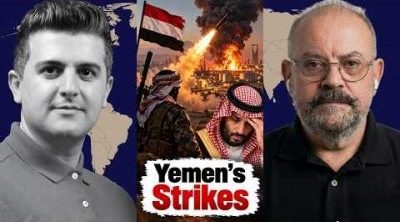
Elijah Magnier: Yemen’s strikes are shattering Saudi Arabia’s long-term strategy
or go to
Aletho News Archives – Video-Images
From the Archives
British weapons and personnel doing much of the killing in Yemen
Press TV – June 18, 2019
A detailed report published by the Guardian newspaper has shown how Britain is massively contributing to Saudi Arabia’s devastating war on Yemen as it suggests that London is not only supplying the bombs that fall on Yemenis, but it provides the personnel and expertise that keep the war going.
The comprehensive report by Arron Merat published on Tuesday showed that Britain was doing much of the killing in Yemen as the country continues to provide Saudi Arabia with everything it needs to turn its southern impoverished neighbor into a graveyard.
“Every day Yemen is hit by British bombs – dropped by British planes that are flown by British-trained pilots and maintained and prepared inside Saudi Arabia by thousands of British contractors,” said Merat in the report. … continue
Blog Roll
 Aletho News
- Netizens condemn Japanese drama for projecting Japan’s wartime atrocities onto Chinese characters
- Racist Seinfeld Dances for Joy as Bibi Unveils His New Map
- A West Bank War for Netanyahu’s Election Campaign, Could It Backfire?
- Yemen denounces European Parliament’s ‘hypocritical’ push to blacklist Ansarullah
- Qalibaf: UAE’s UN bid aims to ‘clear the runway’ for ‘Greater Israel’, whitewash genocide
- Pakistan reopens Iran border after boosting security: Report
- Why are so many Brazilians voting for Flávio Bolsonaro?
- Democrats Put Anti-Russia Agenda Ahead of American Workers
- Elijah Magnier: Yemen’s Strikes Are Shattering Saudi Arabia’s Long-Term Strategy
- Pentagon designates Chinese cultural centers national security threat
- If Americans Knew
- Latest updates from Israeli assault on West Bank
- Tourism Ministry launches free food truck tour in US
- “So Much Worse Than People Realize”: Never-Before-Seen Images Reveal Damage at U.S. Bases as Troops Describe Being Abandoned
- UK Bell Review Confirms Only Anti-Israel Attitudes Are Rising, Not Antisemitism
- DAILY UPDATE: Latest essential news on Palestine, Israel, & region
- DAILY UPDATE: Latest essential news on Palestine, Israel, & region
- Damning report shows the media must confront its failures on Gaza
- BBC senior broadcaster speaks out on Gaza coverage
- Netanyahu vows vast West Bank invasion in response to 20-minute skirmish that left 2 Israeli soldiers and 2 Palestinian fighters dead
- Tied up and tortured: Israel using US-made electroshock weapons on Palestinian detainees
- No Tricks Zone
- Sudden Stratospheric Warming, Powerful El Niño Combination May Lead To Extreme Europe Cold, Energy Crisis!
- Two New Studies Find Thwaites Glacier Melt Cannot Be Driven By Human Activity Or A Warming Ocean
- E-Cars Reduce CO2 Emissions By Only 41% Compared To Internal Combustion Engine Vehicles
- Predictions Made By Renowned Climate Professor Over Past Decades Have Been Proven To Be Poor
- New Study Suggests Large Regions Of The Pacific Ocean Have Been Cooling For The Last 80 Years
- Germany’s Green Energy Debacle: High Energy Costs Force Kahla Porzellan to Close After 182 Years!
- New Study: 50 Years Of The Most Aggressive ‘Net Zero’ Policies Can Only Affect The Global Climate By 0.03°C
- US September “Heat” Was No Record…Many Records Set Decades Ago
- Latest European Green Energy Debacle; Portugal’s Largest Flagship Solar Park Insolvent!
- Green Energy Debacle: German Expert Professor Fritz Vahrenholt Warns Of Severe Economic And Social Consequences

