Moscow ‘astonished’ by Germany’s ‘baseless’ remarks on Zapad 2017 – Russian MoD
RT | September 9, 2017
The Russian Ministry of Defense rebuked the German defense minister for saying the upcoming Zapad 2017 exercises are little more than a show of force by Moscow involving vast numbers of troops, calling her comments bewildering.
On Thursday, German Defense Minister Ursula von der Leyen claimed that the upcoming drills would involve over 100,000 troops on the eastern periphery of NATO, showing a “demonstration of capabilities and power of the Russians.”
“Anyone who doubts that only has to look at the high numbers of participating forces in the Zapad exercise: more than one hundred thousand,” von der Leyen said at an EU defense conference in Tallinn.
Her remarks were seized upon by Russian Defense Ministry spokesman Major-General Igor Konashenkov, who said it was strange that the Germans would come up with such a figure, particularly considering that they had been told of the plans for the drills in advance.
“We are astonished by statement made by Ms von der Leyen, the Germany’s Federal Minister of Defence, publicly handling baseless figures that allegedly 100 thousand Russian troops engaged in the Zapad 2017 and threaten Europe,” Konashenkov told reporters on Saturday.
“The German side has timely received and does have comprehensive information of the concept, defensive nature and true figure of the Russian troops engaged in the Zapad 2017 exercise,” the major-general said in the statement.
The Zapad 2017 drills, which will be held along with Belarus, are due to take place September 14-20 and will involve up to 12,700 troops, 70 aircraft, and nearly 700 land vehicles. Although the exercises take place every few years (the most recent drills were held in 2009 and 2013), this year’s maneuvers have come under huge scrutiny by NATO. In July, Lieutenant-General Ben Hodges, commander of US Army forces in Europe, referred to the routine exercises as a “Trojan horse,” noting there were suspicions they could be used to move forces and equipment closer to NATO’s eastern flank.
Moscow and Minsk have repeatedly refuted these speculations, saying that the drills are purely defensive in nature and pose no threat to any other country.
Moscow has said that the number of forces deployed under Zapad 2017 would not exceed the limits for mandatory monitoring under the 2011 Vienna document, the OSCE agreement meant to foster confidence through a number of measures to make military forces deployed in Europe more transparent. In addition, Belarus has invited international monitors from foreign countries to observe the active phase of the drills.
“The hype [over the exercise] was fanned up artificially and is definitely meant to convince the Western public that the cost of deploying additional forward military presence in Poland and the Baltics and increased NATO military activity is justified,” a statement from the Russian Foreign Ministry said in August. “Remarkably, it is these actions that lead to increased military tension in Europe, which Western ‘pen and microphone warriors’ lament so much.”
At the same time, NATO has been increasingly building up its own forces and capabilities in eastern Europe. At the 2016 summit in Warsaw, NATO member states agreed to boost their military presence in the region to levels not seen since the Cold War, deploying four rotating multinational battalions to Estonia, Latvia, Lithuania, and Poland. In January of this year alone, 4,000 additional US troops were deployed to eastern Europe.
Russia has criticized this build-up as a threat to national, as well as regional, security. In February, speaking at the Munich Security Conference, Foreign Minister Sergey Lavrov noted that “NATO’s expansion has led to an unprecedented level of tension over the last 30 years in Europe.”
Newsweek Claims Russia Orchestrated Boston Marathon Bombing
Sputnik | September 6, 2017
Online publication Newsweek upped the ante in explosive rhetoric Sunday by suggesting the Tsarnaev brothers, responsible for the 2013 Boston Marathon terror attack, were operating on behalf of Moscow – even though Russian security agencies tipped off the FBI and CIA that Tamerlan Tsarnaev and his mother presented imminent security risks.
Since evidence is apparently optional for arguments published by Newsweek, this time, an author featured in the publication seems to have looked out onto the world, found it bloody and complicated, and decided to pin any old recent disaster on Russia.
The United Kingdom’s Brexit vote, the Syrian refugee crisis in Europe and the rise of right-leaning politicians can all be traced back to one single, remarkably effective cause: Moscow. “Russia must accept a share of responsibility” in all of these events, Andrei Kovalev wrote in a September 3 op-ed for Newsweek.
As for the Boston bombing, he asks, “Did the emigrants, the brothers Tsarnaev, of Chechen nationality, responsible for the Boston attack, act on their own initiative? It seems most unlikely.”
Kovalev worked as a diplomat in the Soviet Union under Mikhail Gorbachev as well as for Russian presidents Boris Yeltsin and Vladimir Putin. “Sometimes I am reproached for attributing to the Kremlin too much influence in the world,” he confessed in the article.
In reality, Russian security services sent warnings to multiple US agencies explaining that Chechen-American Tamerlan Tsarnaev had “changed drastically since 2010” and that he and his mother were adherents to “radical Islam” long before the Boston attack occurred. “The Russians were concerned that mother and son were very religious and strong believers, and they could be militants if they returned to Russia,” a US official told the New York Times in 2013.
“You have Russian intelligence services contacting two agencies without our federal government responsible for our national security, the FBI and CIA … they tell us, ‘We believe you have a radical Islamist in your midst,'” South Carolina Senator Lindsey Graham explained at the time.
Newsweek’s readers quickly pointed out that the claim that Russia had orchestrated the Boston Marathon terror attack originated with Louise Mensch, a former UK member of Parliament who shot to fame as a darling of the Russia-bashing wing of the Trump resistance, but, given her penchant for calling literally any critic a Russian spy, has somewhat fallen from favor. Mensch was recently embarrassed by the Guardian for broadcasting information around the internet that was made up by a hoaxer but supported her “Russians are behind it all” agenda. As Radio Sputnik’s Fault Lines host Garland Nixon joked, “pretty much everybody that dies, the death was related to Vladimir Putin,” in Mensch’s world.
When faced with accusations of spreading deleterious and false information, Mensch doubled down and said the Guardian was being operated by Russian security agency spies, too. The former MP alleged that one of her collaborators, Claude Taylor, had been duped, but that her reporting remained free of falsehoods.
Mensch has nevertheless been published by the New York Times, the Guardian and the Sun in addition to making TV appearances on MSNBC and Bill Maher’s “Real Time” show. A running list of her baseless conspiracies includes Facebook CEO Mark Zuckerberg acting as a mole and Putin ordering the assassination of Breitbart News founder Andrew Breitbart to pave the way for Steve Bannon to take the reins of the organization.
Newsweek, too, has gotten quite good at getting things wrong. It previously deleted two slanderous articles attacking a former Sputnik News editor following a defamation lawsuit settlement levied by now-attorney and former Sputnik weekend editor William Moran. During the scandal, in which the young lawyer represented himself in legal proceedings alleging slander against himself and Sputnik as a whole, Newsweek Editor-in-Chief Jim Impoco was fired. The February ouster was first reported by Politico.
Newsweek was forced to settle with Moran in July. “I brought this case before I was admitted to the bar and was up against the talented attorneys at mega law firm Pepper Hamilton,” Moran said in a statement that month after a settlement was reached between the publication and recent Georgetown Law graduate for an undisclosed sum.
Shortly after, Editor-in-Chief Matt McAllester was forced to take a leave of absence for “personal reasons” in the beginning of August following an age and sex discrimination suit filed against Time Inc. by its former European editor, Catherine Mayer, in which McAllester is featured as the main offender. By August 25, McAllester had been dismissed from his position, the New York Post reported, citing internal company memos.
See Also:
Newsweek Seems to Fire Disgraced Writer Eichenwald After Humiliating Settlement
Newsweek Takes Down Fabricated Sputnik-Trump Collusion Stories After Humiliating Settlement
Newsweek Shamefully Silent as Twitter Demands Retraction From Implicated Writer
We Told You So: Google Is NSA
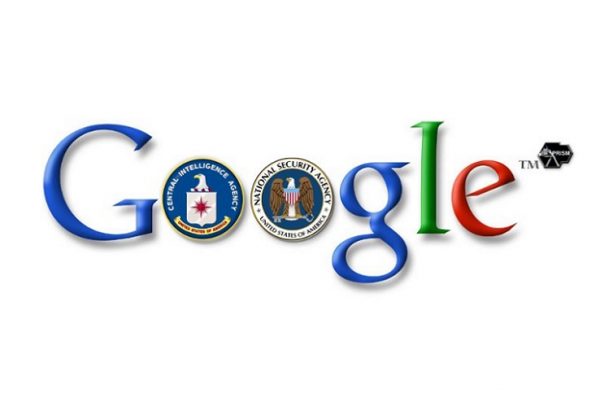
By Phil Butler – New Eastern Outlook – 04.09.2017
Google wants to be Big Brother’s eyeballs on you. All us Internet gurus knew this since before the NSA was found out spying on everybody. But now the Mountain View boys are more determined than ever to filter your information, and to obliterate any semblance of truth reaching people.
If I had led into an article with that paragraph even five years ago, I’d have been instantly labeled a “conspiracy theorist” or worse. How about now dear reader? Is the idea the technocrats and their huge monied handlers want to run you crazy? I didn’t think so. But if you need proof beyond the obvious, Google’s 160-page handbook tells us all exactly how they plan to spoon feed us only “their” news. The lengthy handbook is a heavy read for the average person, but the book does lay out an Orwellian machination unlike anything seen since the Nazi propaganda machine of Hitler. Pay close attention to the “instructional” on page 108 where Google dictates who does and does not meet rating criteria. The section under Fails to Meet (FailsM) is a steamrolling of the free press, and suggested hiding certain kinds of sites:
“Pages that directly contradict well established historical facts (e.g., unsubstantiated conspiracy theories), unless the query clearly indicates the user is seeking an alternative viewpoint.”
As per usual, Google has obscured its real intentions with the idea some super smart algorithm is “filtering” or “learning” results to help your life be better. Once again Google supposes to do “what is good for us” by destroying some sources and propping up others. Using terms like “search quality rating guidelines” and “page quality rating guidelines” the little Machiavellis at Google provide justification for controlling what you see and read on the web. Censorship and monopolization of internet information and business – this is the case against the Mountain View boys this time.
Then there’s the section concerning how Google will rank the best of the best news sites entitled “A High Level of Expertise/Authoritativeness/Trustworthiness (EAT)”. The acronym should clue you that Google search users are about to be fed some bullshit truth. “High Quality Pages” for the Google oligarchs means that either the page owner pays Google through the nose, or that the site in question serves Google’s masters well – period. At the top of this matrix of sources are newspapers (High News 1) like The Washington Post and New York Times, followed by the articles within those pages (High News 2). On down the list of authority pages are government sites like the US State Department and White House, and then pages categorized (believe it or not) “High Humor”. So, Google has factored out the importance of truth or even the importance of the news story itself, in favor of “who” wrote the story and the “reality” Google wants you to accept – Big Brother’s network – end of story.
Melissa Dykes of Truth Stream Media made a video about the new Big Brother effort, and Government Slaves did their take as well. And the latter even suggests alternatives to using Google Search, such as Yandex and DuckDuckGo, for those refusing the totalitarian tendencies we see headed our way these days. For people who would rather boycott the imminent evil Government Slaves also lists 400 sites for independent news outside Google’s MATIX. My advice for everyone is to start making the transition away from Google and Facebook now. My own vast experience in dealing with these tech people has revealed people with no morals whatsoever, people willing to do anything necessary to perpetuate their dominance in digital. Google has destroyed millions of people’s livelihoods, broken its own code, lawyers itself around anti-trust and fair practice rules, avoided taxes, and colluded against the people of the United States with the intelligence agencies. All these assertions are not just this writer’s ramblings. Back in 2014 John W. Whitehead wrote about the NSA and Google for the Huffington Post :
“Just look around you. It’s happened already. Thanks to an insidious partnership between Google and the National Security Agency (NSA) that grows more invasive and more subtle with every passing day, “we the people” have become little more than data consumer commodities to be bought, sold and paid for over and over again.”
On August 29th the notorious Zero Hedge creator, Tyler Durden wrote a piece entitled “Why Google Made The NSA”, which revealed a project called INSURGE INTELLIGENCE, a crowd-funded investigative journalism project that had released a story of how the United States intelligence community funded, nurtured and incubated Google as part of a drive to dominate the world through control of information. You read that correctly. My past assertions that Sergey Brin and Larry Page were “lifted up” by unseen money were probably correct. While I presumed George Soros or Rockefeller being behind it, it’s conceivable Uncle Sam was the spook in the woodpile. The Zero Hedge story delves deep into a “deep state” we never imagined in our worst nightmares. The report unveils Pentagon Highlands Forum’s more or less taking over tech giants like Google to pursue mass surveillance. Furthermore, the report shows how the intelligence community has played a key role in secret efforts to manipulate the media and the public. The endless crisis and war we find ourselves in, is in large part because of the efforts of Google and the other technocratic institutions. In another section the author frames how the Obama administration really consolidated this “Big Brother” control:
“Under Obama, the nexus of corporate, industry, and financial power represented by the interests that participate in the Pentagon Highlands Forum has consolidated itself to an unprecedented degree.”
These people refer to themselves as “the gatekeepers”. Their arrogance is only exceeded by their amoral agnosticism. The successes of the information age, Silicon Valley’s dubious venture capital bonanzas, the mysterious ways in which fairly ordinary innovators were propelling into the limelight warns us to the underlying swamp Donald Trump described. But it is the immensity of the network that should clue us. Imagine a new president taking office and fending off attacks as best he could, only to discover that the whole machine of the US government being under such a controlling influence. It’s easy to theorize after learning all this, how Trump did an about face on so many issues. He must have been overwhelmed. Or, he was part of the plan all along.
Finally, if we expand on this news and include other technocrats like Bill Gates or Jeff Bezos, then understanding world crises caused by bad US policy becomes simpler. It’s a corporation – all of it is a corporation for war and friction. Bezos walking with former Marine General and current Secretary of Defense, “Mad Dog” Mattis at Amazon is symbolic. Trump’s posture with Israel, the Saudis, even on domestic policy tells us those campaign promises sank in the wake of a deep state ship at full steam forward. If we allow Google and other such players to continue unchecked….
Well, you are as capable as I of completing that sentence. I only pray we are not too late.
How ‘Regime Change’ Wars Led to Korea Crisis
By Robert Parry | Consortium News | September 4, 2017
It is a popular meme in the U.S. media to say that North Korean leader Kim Jong Un is “crazy” as he undertakes to develop a nuclear bomb and a missile capacity to deliver it, but he is actually working from a cold logic dictated by the U.S. government’s aggressive wars and lack of integrity.
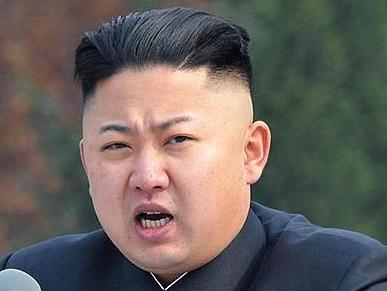
North Korean leader Kim Jong Un
Indeed, the current North Korea crisis, which could end up killing millions of people, can be viewed as a follow-on disaster to President George W. Bush’s Iraq War and President Barack Obama’s Libyan intervention. Those wars came after the leaders of Iraq and Libya had dismantled their dangerous weapons programs, leaving their countries virtually powerless when the U.S. government chose to invade.
In both cases, the U.S. government also exploited its power over global information to spread lies about the targeted regimes as justification for the invasions — and the world community failed to do anything to block the U.S. aggressions.
And, on a grim personal note, the two leaders, Saddam Hussein and Muammar Gaddafi, were then brutally murdered, Hussein by hanging and Gaddafi by a mob that first sodomized him with a knife.
So, the neoconservatives who promoted the Iraq invasion supposedly to protect the world from Iraq’s alleged WMDs — and the liberal interventionists who pushed the Libya invasion based on false humanitarian claims — may now share in the horrific possibility that millions of people in North Korea, South Korea, Japan and maybe elsewhere could die from real WMDs launched by North Korea and/or by the United States.
Washington foreign policy “experts” who fault President Trump’s erratic and bellicose approach toward this crisis may want to look in the mirror and consider how they contributed to the mess by ignoring the predictable consequences from the Iraq and Libya invasions.
Yes, I know, at the time it was so exciting to celebrate the Bush Doctrine of preemptive wars even over a “one percent” suspicion that a “rogue state” like Iraq might share WMDs with terrorists — or the Clinton Doctrine hailed by Secretary of State Hillary Clinton’s acolytes enamored by her application of “smart power” to achieve “regime change” in Libya.
However, as we now know, both wars were built upon lies. Iraq did not possess WMD stockpiles as the Bush administration claimed, and Libya was not engaged in mass murder of civilians in rebellious areas in the eastern part of the country as the Obama administration claimed.
Post-invasion investigations knocked down Bush’s WMD myth in Iraq, and a British parliamentary inquiry concluded that Western governments misrepresented the situation in eastern Libya where Gaddafi forces were targeting armed rebels but not indiscriminately killing civilians.
But those belated fact-finding missions were no comfort to either Saddam Hussein or Muammar Gaddafi, nor to their countries, which have seen mass slaughters resulting from the U.S.-sponsored invasions and today amount to failed states.
There also has been virtually no accountability for the war crimes committed by the Bush and Obama administrations. Bush and Obama both ended up serving two terms as President. None of Bush’s senior advisers were punished – and Hillary Clinton received the 2016 Democratic Party’s nomination for President.
As for the U.S. mainstream media, which behaved as boosters for both invasions, pretty much all of the journalistic war advocates have continued on with their glorious careers. To excuse their unprofessional behavior, some even have pushed revisionist lies, such as the popular but false claim that Saddam Hussein was to blame because he pretended that he did have WMDs – when the truth is that his government submitted a detailed 12,000-page report to the United Nations in December 2002 describing how the WMDs had been destroyed (though that accurate account was widely mocked and ultimately ignored).
Pervasive Dishonesty
The dishonesty that now pervades the U.S. government and the U.S. mainstream media represents another contributing factor to the North Korean crisis. What sensible person anywhere on the planet would trust U.S. assurances? Who would believe what the U.S. government says, except, of course, the U.S. mainstream media?
Remember also that North Korea’s nuclear program had largely been mothballed before George W. Bush delivered his “axis of evil” speech in January 2002, which linked Iran and Iraq – then bitter enemies – with North Korea. After that, North Korea withdrew from earlier agreements on limiting its nuclear development and began serious work on a bomb.
Yet, while North Korea moved toward a form of mutual assured destruction, Iraq and Libya chose a different path.
In Iraq, to head off a threatened U.S.-led invasion, Hussein’s government sought to convince the international community that it had lived up to its commitments regarding the destruction of its WMD arsenal and programs. Besides the detailed declaration, Iraq gave U.N. weapons inspectors wide latitude to search on the ground.
But Bush cut short the inspection efforts in March 2003 and launched his “shock and awe” invasion, which led to the collapse of Hussein’s regime and the dictator’s eventual capture and hanging.
Gaddafi’s Gestures
In Libya, Gaddafi also sought to cooperate with international demands regarding WMDs. In late 2003, he announced that his country would eliminate its unconventional weapons programs, including a nascent nuclear project.
Gaddafi also sought to get Libya out from under economic sanctions by taking responsibility for the 1988 bombing of Pan Am 103 over Scotland, although he and his government continued to deny carrying out the terror attack that killed 270 people.
But these efforts to normalize Libya’s relations with the West failed to protect him or his country. In 2011 when Islamic militants staged an uprising around Benghazi, Gaddafi moved to crush it, and Secretary of State Clinton eagerly joined with some European countries in seeking military intervention to destroy Gaddafi’s regime.
The United Nations Security Council approved a plan for the humanitarian protection of civilians in and around Benghazi, but the Obama administration and its European allies exploited that opening to mount a full-scale “regime change” war.
Prominent news personalities, such as MSNBC’s Andrea Mitchell, cheered on the war with the claim that Gaddafi had American “blood on his hands” over the Pan Am 103 case because he had accepted responsibility. The fact that his government continued to deny actual guilt – and the international conviction of Libyan Abdelbaset al-Megrahi was a judicial travesty – was ignored. Almost no one in the West dared question the longtime groupthink of Libyan guilt.
By October 2011, Gaddafi had fled Tripoli and was captured by rebels in Sirte. He was tortured, sodomized with a knife and then executed. Clinton, whose aides felt she should claim credit for Gaddafi’s overthrow as part of a Clinton Doctrine, celebrated his murder with a laugh and a quip, “We came; we saw; he died.”
But Gaddafi’s warnings about Islamist terrorists in Benghazi came back to haunt Clinton when on Sept. 11, 2012, militants attacked the U.S. consulate and CIA station there, killing Ambassador Christopher Stevens and three other Americans.
The obsessive Republican investigation into the Benghazi attack failed to demonstrate many of the lurid claims about Clinton’s negligence, but it did surface the fact that she had used a private server for her official State Department emails, which, in turn, led to an FBI investigation which severely damaged her 2016 presidential run.
Lessons Learned
Meanwhile, back in North Korea, the young dictator Kim Jong Un was taking all this history in. According to numerous sources, he concluded that his and North Korea’s only safeguard would be a viable nuclear deterrent to stave off another U.S.-sponsored “regime change” war — with him meeting a similar fate as was dealt to Hussein and Gaddafi.
Since then, Kim and his advisers have made clear that the surrender of North Korea’s small nuclear arsenal is off the table. They make the understandable point that the United States has shown bad faith in other cases in which leaders have given up their WMDs in compliance with international demands and then saw their countries invaded and faced grisly executions themselves.
Now, the world faces a predicament in which an inexperienced and intemperate President Trump confronts a crisis that his two predecessors helped to create and make worse. Trump has threatened “fire and fury” like the world has never seen, suggesting a nuclear strike on North Korea, which, in turn, has vowed to retaliate.
Millions of people on the Korean peninsula and Japan – and possibly elsewhere – could die in such a conflagration. The world’s economy could be severely shaken, given Japan’s and South Korea’s industrial might and the size of their consumer markets.
If such a horror does come to pass, the U.S. government and the U.S. mainstream media will surely revert to their standard explanation that Kim was simply “crazy” and brought this destruction on himself. Trump’s liberal critics also might attack Trump for bungling the diplomacy.
But the truth is that many of Washington’s elite policymakers – both on the Republican and Democratic sides – will share in the blame. And so too should the U.S. mainstream media.
Investigative reporter Robert Parry broke many of the Iran-Contra stories for The Associated Press and Newsweek in the 1980s.
BBC Peddle Fake Claims About India Monsoon

http://www.bbc.co.uk/iplayer/episode/b0938tj7/victoria-derbyshire-01092017
By Paul Homewood | Not A Lot Of People Know That | September 2, 2017
Just when you thought the BBC could not get any worse.
Standing in for Victoria Derbyshire on her current affairs programme yesterday morning, Matthew Price ran a report on the heavy floods this summer in Nepal and Bangladesh.
After telling us this had been one of the heaviest monsoons on record, he went on to interview Mark Pierce, Save the Children’s Director in Bangladesh, and Francis Markus of the International Red Cross in Nepal. (About 32 minutes in).
It did not take long for him to blame climate change for the floods.
He first directly asked Pierce :
“In a place like Bangladesh, do people start to say things are getting worse, it is something to do with climate change?”
Pierce unsurprisingly agreed, and said that even farmers could see climate change everyday, and see their land either flooded every year or facing drought.
Price then asked a similar question of Markus:
“In Nepal, do people at the sharp end relate this to climate change?”
In reply, Markus talks of immense changes in climate, and states “All the farmers in Nepal are kind of noticing that yields are less and less from year to year”, and goes on to tell us there has been nothing but nothing but droughts and floods in recent years.
Well, as you will all know by now, the UN Food and Agricultural Organisation publish data which tells us exactly what is going on.
First, Bangladesh.
We can see that both yields and production of cereals has been steadily rising since the 1980s. Also, the prevalence of undernourishment has halved since the 1990s, despite a large increase in population:


http://www.fao.org/faostat/en/#country/16
And we find exactly the same story in Nepal:


http://www.fao.org/faostat/en/#country/149
Clearly neither the Red Cross nor the Save The Children representatives were telling us the truth, which does not surprise me. Meanwhile the naive BBC presenter has been so indoctrinated by global warming propaganda, that he never even thought for a second that he was being lied to.
As for “one of the heaviest monsoons on record”, this year’s has so far been perfectly normal, with 3% less rain than normal.

http://hydro.imd.gov.in/hydrometweb/(S(stqraz451440dcbecbun0x55))/PdfPageImage.aspx?imgUrl=PRODUCTS\Rainfall_Graphs\Monsoon\Monsoon_BARGRAPH_CUMULATIVE_RAINFALL_COUNTRY_INDIA_c.JPG&landingpage=landing
As for the East and North East, where the rainfall has been heaviest, rainfall is bang on average:

http://hydro.imd.gov.in/hydrometweb/(S(stqraz451440dcbecbun0x55))/PdfPageImage.aspx?imgUrl=PRODUCTS\Rainfall_Graphs\Monsoon\Monsoon_BARGRAPH_CUMULATIVE_RAINFALL_REGION_CODE_EAST%20AND%20NORTH%20EAST%20INDIA_c.JPG&landingpage=landing
And what about the longer trends, and claims of floods and droughts?
Well, the whole history of Indian monsoons is one of recurrent floods and droughts.

http://www.tropmet.res.in/~kolli/MOL/Monsoon/Historical/air.html
Drought conditions were particularly prevalent between 1900 and 1920, and again in the 1960s to 1980s, when the world was cooling down.
Conversely, the worst of the flooding took place in the late 19thC and 1940s and 50s.
Drought conditions prevailed in 2015 and 2016, but this was because of strong El Nino conditions. Indian scientists are well aware of this connection, which has nothing to do with global warming.
In short, the whole story reported by the BBC is a pack of lies. Indian monsoons are not becoming more extreme. If anything, the opposite is true.
Even Madhav Khandekar, IPCC lead author on extreme weather, accepts that there is nothing unusual about recent flooding in India. In a 2014 paper, he concluded that:
The floods and unfortunate deaths of several dozen people in the Kashmir region of India in September 2014 reignited the debate about increasing human emissions of carbon dioxide and their putative linkage to extreme weather events such as floods, droughts and heat waves. What is missing from many of the media reports and scientific publications on this subject is critical analysis of past weather extremes to determine if there has been an increase in recent years.
In this brief report, past floods and droughts in the Indian monsoon are examined carefully and it is shown that such events have occurred throughout the excellent 200-year-long summer monsoon rainfall dataset. It is further documented that such floods and droughts are caused by natural variability of regional and global climate, and not by human carbon dioxide emissions.
In fact, if Price had bothered to check with the BBC Delhi correspondent, he would have discovered that the heavier the monsoon rainfall is , the better it is for India’s economy and many other things:

They are finally here, the monsoons, India’s most important weather phenomenon.
After days of speculation about the date, the Indian Meteorological Department (IMD) announced on Wednesday that the monsoons had arrived in Kerala. India receives 80% of its annual rainfall during the monsoon season, which runs between June and September.
The monsoon will gradually spread across India by 15 July, bringing cheer, hope, insects, relief from the heat, better farm output, GDP growth and lower inflation.
The arrival of the monsoons is like finding a river after crossing a desert. This year, a deluge is predicted. Weather forecasters expect at least 5-6% more rainfall than usual. This will affect things ranging from bank interest to the fortunes of the fertiliser industry. It will also alleviate the drinking water crisis in many parts by replenishing ground water.
But the joy doesn’t last long.
The hot summer gives way to complaints of “It’s not the heat it’s the humidity”. Meanwhile insects and mosquitoes multiply, bringing diseases in their wake.
As the Indian farmer sows a new crop, the city folk face water-logging that makes it difficult to get out. Sometimes it rains so much, especially in the financial nerve centre of Mumbai, that the city is flooded.
Russia-gate’s Totalitarian Style
By Robert Parry | Consortium News | September 2, 2017
It is a basic rule from Journalism 101 that when an allegation is in serious doubt – or hasn’t been established as fact – you should convey that uncertainty to your reader by using words like “alleged” or “purportedly.” But The New York Times and pretty much the entire U.S. news media have abandoned that principle in their avid pursuit of Russia-gate.
When Russia is the target of an article, the Times typically casts aside all uncertainty about Russia’s guilt, a pattern that we’ve seen in the Times in earlier sloppy reporting about other “enemy” countries, such as Iraq or Syria, as well Russia’s involvement in Ukraine’s civil war. Again and again, the Times regurgitates highly tendentious claims by the U.S. government as undeniable truth.
So, despite the lack of publicly provided evidence that the Russian government did “hack” Democratic emails and slip them to WikiLeaks to damage Hillary Clinton and help Donald Trump, the Times continues to treat those allegations as flat fact.
For a while, the Times also repeated the false claim that “all 17 U.S. intelligence agencies” concurred in the Russia-did-it conclusion, a lie that was used to intimidate and silence skeptics of the thinly sourced Russia-gate reports issued by President Obama’s intelligence chiefs.
Only after two of those chiefs – Director of National Intelligence James Clapper and CIA Director John Brennan – admitted that the key Jan. 6 report was produced by what Clapper called “hand-picked” analysts from just three agencies, the Times was forced to run an embarrassing correction retracting the “17 agencies” canard.
But the Times then switched its phrasing to a claim that Russian guilt was a “consensus” of the U.S. intelligence community, a misleading formulation that still suggests that all 17 agencies were onboard without actually saying so – all the better to fool the Times readers.
The Times seems to have forgotten what one of its own journalists observed immediately after reading the Jan. 6 report. Scott Shane wrote: “What is missing from the public report is what many Americans most eagerly anticipated: hard evidence to back up the agencies’ claims that the Russian government engineered the election attack. … Instead, the message from the agencies essentially amounts to ‘trust us.’”
However, if that was the calculation of Obama’s intelligence chiefs – that proof would not be required – they got that right, since the Times and pretty much every other major U.S. news outlet has chosen to trust, not verify, on Russia-gate.
Dropping the Attribution
In story after story, the Times doesn’t even bother to attribute the claims of Russian guilt. That guilt is just presented as flat fact even though the Russian government denies it and WikiLeaks founder Julian Assange says he did not get the emails from Russia or any other government.
Of course, it is possible the Russian government is lying and that some cut-outs were used to hide from Assange the real source of the emails. But the point is that we don’t know the truth and neither does The New York Times – and likely neither does the U.S. government (although it talks boldly about its “high confidence” in the evidence-lite conclusions of those “hand-picked” analysts).
And, the Times continues with this pattern of asserting as certain what is both in dispute and lacking in verifiable evidence. In a front-page Russia-gate story on Saturday, the Times treats Russian guilt as flat fact again. The online version of the story carried the headline: “Russian Election Hacking Efforts, Wider Than Previously Known, Draw Little Scrutiny.”
The Times’ article opens with an alarmist lede about voters in heavily Democratic Durham, North Carolina, encountering problems with computer rolls:
“Susan Greenhalgh, a troubleshooter at a nonpartisan election monitoring group, knew that the company that provided Durham’s software, VR Systems, had been penetrated by Russian hackers months before. ‘It felt like tampering, or some kind of cyberattack,’ Ms. Greenhalgh said about the voting troubles in Durham.”
The Times reported that Greenhalgh “knew” this supposed fact because she heard it on “a CNN report.”
If you read deeper into the story, you learn that “local officials blamed human error and software malfunctions — and no clear-cut evidence of digital sabotage has emerged, much less a Russian role in it.” But the Times clearly doesn’t buy that explanation, adding:
“After a presidential campaign scarred by Russian meddling, local, state and federal agencies have conducted little of the type of digital forensic investigation required to assess the impact, if any, on voting in at least 21 states whose election systems were targeted by Russian hackers, according to interviews with nearly two dozen national security and state officials and election technology specialists.”
But was the 2016 campaign really “scarred by Russian meddling”? For instance, the “fake news” hysteria of last fall was actually traced to young entrepreneurs who were exploiting the gullibility of Donald Trump’s supporters to get lots of “clicks” and thus make more ad revenue. The stories didn’t trace back to the Russian government. (Even the Times discovered that reality although it apparently has since been forgotten.)
‘Undermining’ American Democracy
The Jan. 6 report by those “hand-picked” analysts from CIA, FBI and the National Security Agency did tack on a seven-page appendix from 2012 that accused Russia’s RT network of seeking to undermine U.S. democracy. But the complaints were bizarre if not laughable, including the charge that RT covered the Occupy Wall Street protests, reported on the dangers of “fracking,” and allowed third-party presidential candidates to state their views after they were excluded from the two-party debate between Republican Mitt Romney and Democrat Barack Obama.
That such silly examples of “undermining” American democracy were even cited in the Jan. 6 report should have been an alarm bell to any professional journalist that the report was a classic case of biased analysis if not outright propaganda. But the report was issued amid the frenzy over the incoming Trump presidency when Democrats – and much of the mainstream media – were enlisting in the #Resistance. The Jan. 6 report was viewed as a crucial weapon to take out Trump, so skepticism was suppressed.
Because of that – and with Trump continuing to alarm many Americans with his erratic temperament and his coy encouragement of white nationalism – the flimsy Russian “hacking” case has firmed up into a not-to-be-questioned groupthink, as the Times story on Saturday makes clear:
“The assaults on the vast back-end election apparatus [i.e. voting rolls] … have received far less attention than other aspects of the Russian interference, such as the hacking of Democratic emails and spreading of false or damaging information about Mrs. Clinton. Yet the hacking of electoral systems was more extensive than previously disclosed, The New York Times found.”
In other words, even though there has been no solid proof of this “Russian interference” – either the “hacking of Democratic emails” or the “spreading of false or damaging information about Mrs. Clinton” – the Times reports those allegations as flat fact before extending the suspicions into the supposed “hacking of electoral systems” despite the lack of supporting evidence and in the face of counter-explanations from local officials. As far as the Times is concerned, the problem couldn’t be that some volunteer poll worker screwed up the software. No, it must be the dirty work of Russia! Russia! Russia!
The Times asserts that “Russian efforts to compromise American election systems … include combing through voter databases, scanning for vulnerabilities or seeking to alter data, which have been identified in multiple states.” Again, the Times does not apply words like “alleged”; it is just flat fact.
Uncertainty Acknowledged
Yet, oddly, the quote used to back up this key accusation acknowledges how little is actually known. The Times cites Michael Daniel, the cybersecurity coordinator in the Obama White House, as saying:
“We don’t know if any of the [computer] problems were an accident, or the random problems you get with computer systems, or whether it was a local hacker, or actual malfeasance by a sovereign nation-state. … If you really want to know what happened, you’d have to do a lot of forensics, a lot of research and investigation, and you may not find out even then.’”
Which is exactly the point: as far as we know from the public record, no U.S. government forensics have been done on the Russian “hacking” allegations, period. Regarding the “hack” of the Democratic National Committee’s emails, the FBI did not secure the computers for examination but instead relied on the checkered reputation of a private outfit called Crowdstrike, which based much of its conclusion on the fact that Russian lettering and a reference to a famous Russian spy were inserted into the metadata. Why the supposedly crack Russian government hackers would be so sloppy has never been explained. It also could not be excluded that these insertions were done deliberately to incriminate the Russians.
Without skepticism, the Times accepts that there is some secret U.S. government information that should bolster the public’s confidence about Russian guilt, but none of that evidence is spelled out, other than ironically to say what the Russians weren’t doing.
The Times cited the Jan. 6 report’s determination that “The Russians shied away from measures that might alter the ‘tallying’ of votes, … a conclusion drawn from American spying and intercepts of Russian officials’ communications and an analysis by the Department of Homeland Security, according to the current and former government officials.”
But this seems to be the one U.S. government conclusion that the Times doubts, i.e., a finding of Russian innocence on the question of altering the vote count.
Again accepting as flat fact all the other U.S. government claims about Russia, the Times writes: “Apart from the Russian influence campaign intended to undermine Mrs. Clinton and other Democratic officials, the impact of the quieter Russian hacking efforts at the state and county level has not been widely studied.”
There’s, of course, another rule from Journalism 101: that when there is a serious accusation, the accused is afforded a meaningful chance to dispute the allegation, but the Times lengthy article ignores that principle, too. The Russian government and WikiLeaks do not get a shot at knocking down the various allegations and suspicions.
Deep-seated Bias
The reality is that the Times has engaged in a long pattern of anti-Russia prejudice going back a number of years but escalating dramatically since 2013 when prominent neoconservatives began to target Russia as an obstacle to their agendas of “regime change” in Syria and “bomb-bomb-bombing” Iran.
By September 2013, the neocons were targeting Ukraine as what neocon National Endowment for Democracy president Carl Gershman deemed the “biggest prize” and an important step toward an even bigger prize, neutralizing or ousting Russian President Vladimir Putin.
When neocon U.S. officials, such as Assistant Secretary of State Victoria Nuland and Sen. John McCain, encouraged a coup that overthrew Ukraine’s elected President Viktor Yanukovych, the Times served as a cheerleader for the coup-makers even though the violence was spearheaded by neo-Nazis and extreme Ukrainian nationalists.
When ethnic Russians in eastern Ukraine and Crimea resisted the Feb. 22, 2014 coup, the Times collaborated with the State Department in presenting this rejection of an unconstitutional transfer of power as a “Russian invasion.”
For instance, on April 21, 2014, the Times led its print editions with an investigative story using photos provided by the coup regime and the State Department to supposedly show that fighters inside Ukraine had previously been photographed inside Russia, except that the two key photographs were both taken inside Ukraine, forcing the Times to run a half-hearted retraction two days later.
Here is the tortured way the Times treated that embarrassing lapse in its journalistic standards: “A packet of American briefing materials … asserts that the photograph was taken in Russia. The same men are also shown in photographs taken in Ukraine. Their appearance in both photographs was presented as evidence of Russian involvement in eastern Ukraine.
“The packet was later provided by American officials to The New York Times, which included that description of the group photograph in an article and caption that was published on Monday. The dispute over the group photograph cast a cloud over one particularly vivid and highly publicized piece of evidence.”
In other words, U.S. officials hand-fed the Times this “scoop” on a Russian “invasion” and the Times swallowed it whole. But the Times never seems to learn any lessons from its credulous approach to whatever the U.S. government provides. You might have thought that the Times’ disgraceful performance in pushing the Iraq-WMD story in 2002 would have given the newspaper pause, but its ideological biases apparently win out every time.
Two Birds, One Stone
In the case of the Russian “hacking” stories, the anti-Russia bias is compounded by an anti-Trump bias, a two-fer that has overwhelmed all notions of journalistic principles not only at the Times but at other mainstream news outlets and many liberal/progressive ones which want desperately to see Trump impeached and view Russia-gate as the pathway to that outcome.
So, while there was almost no skepticism about the Jan. 6 report by those “hand-picked” analysts – even though the report amounts only to a series of “we assess” this and “we assess” that, i.e,, their opinions, not facts – there has been a bubbling media campaign to discredit a July 24 memo by the Veteran Intelligence Professionals for Sanity.
The memo, signed by 17 members of the group including former NSA technical director for world geopolitical and military analysis William Binney, challenged the technological possibility of Russian hackers extracting data over the Internet at the speed reflected in one of the posted documents.
After The Nation published an article by Patrick Lawrence about the VIPS memo (a story that we re-posted at Consortiumnews.com ), editor Katrina vanden Heuvel came under intense pressure inside the liberal magazine to somehow repudiate its findings and restore the Russia-gate groupthink.
Outside pressure also came from a number of mainstream sources, including Washington Post blogger Eric Wemple, who interviewed Nation columnist Katha Pollitt about the inside anger over Lawrence’s story and its citation by Trump defenders, a development which upset Pollitt: “These are our friends now? The Washington Times, Breitbart, Seth Rich truthers and Donald Trump Jr.? Give me a break. It’s very upsetting to me. It’s embarrassing.”
However, in old-fashioned journalism, our reporting was intended to inform the American people and indeed the world as fully and fairly as possible. We had no control over how the information would play out in the public domain. If our information was seized upon by one group or another, so be it. It was the truthfulness of the information that was important, not who cited it.
A Strange Attack
But clearly inside The Nation, Pollitt and others were upset that the VIPS memo had undercut the Russia-gate groupthink. So, in response to this pressure, vanden Heuvel solicited an attack on the VIPS memo by several dissident members of VIPS and she topped Lawrence’s article with a lengthy editor’s note.
Strangely, this solicited attack on the VIPS memo cites as its “first” point that the Jan. 6 intelligence report did not explicitly use the word “hack,” but rather “cyber operation,” adding: “This could mean via the network, the cloud, computers, remote hacking, or direct data removal.”
That uncertainty about how the emails were extracted supposedly undercut the VIPS argument that the download speeds prohibited the possibility of a “hack,” but this pretense that the phrase “cyber operation” isn’t referring to a “hack” amounts to a disingenuous word game. After all, senior U.S. intelligence officials, including former FBI Director James Comey, have stated under oath and in interviews with major news outlets that they were referring to a “hack.”
These officials also have cited the Crowdstrike analysis of the DNC “hack” as support for their analysis, and Clinton campaign chairman John Podesta has described how he was the victim of a “spear-phishing” scam that allowed his emails to be hacked.
After all these months of articles about the Russian “hack,” it seems a bit late to suddenly pretend no one was referring to a “hack” – only after some seasoned experts concluded that a “hack” was not feasible. Despite the latest attacks, the authors of the VIPS memo, including former NSA technology official Binney, stand by their findings.
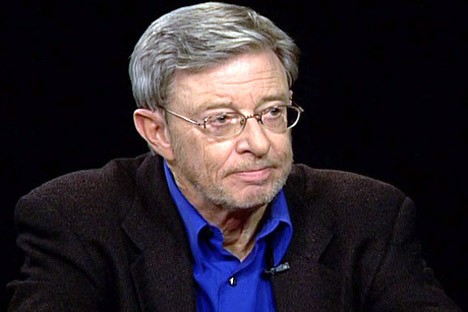
Russia scholar Stephen Cohen.
However, when the cause is to demonize Russia and/or to unseat Trump, apparently any sleight of hand or McCarthyistic smear is permissible.
In Post blogger Wemple’s article about The Nation’s decision to undercut the VIPS memo, he includes some nasty asides against Russia scholar Stephen Cohen, who happens to be Katrina vanden Heuvel’s husband.
In a snide tone, Wemple describes Cohen as providing “The soft-glove treatment of Russian President Vladimir Putin,” calling it Cohen’s “specialty.”
Wemple also repeats the canard about “a consensus finding of the U.S. intelligence community” when we have known for some time that the Jan. 6 report was the work of those “hand-picked” analysts from three agencies, not a National Intelligence Estimate that would reflect the consensus view of all 17 agencies and include dissents.
What is playing out here – both at The New York Times and across the American media landscape – is a totalitarian-style approach toward any challenge to the groupthink on Russia-gate.
Even though the Obama administration’s intelligence chiefs presented no public evidence to support their “assessments,” anyone who questions their certainty can expect to be smeared and ridiculed. We must all treat unverified opinions as flat fact.
Investigative reporter Robert Parry broke many of the Iran-Contra stories for The Associated Press and Newsweek in the 1980s. You can buy his latest book, America’s Stolen Narrative, either in print here or as an e-book (from Amazon and barnesandnoble.com).
How Media Obscure US/Saudi Responsibility for Killing Yemeni Civilians
By Ben Norton | FAIR | August 31, 2107
A coalition of Saudi Arabia, the United States, the United Kingdom and the United Arab Emirates, with minor support from several other Middle Eastern nations, has relentlessly bombed Yemen since March 2015. This August, the coalition ramped up the ferocity of its airstrikes, killing dozens of civilians.
On August 23, the US/Saudi coalition bombed a hotel near Yemen’s capital Sanaa, killing 41 people, 33 of whom—80 percent—were civilians, according to the United Nations.
Then on August 25, the coalition bombed homes in Sanaa, massacring a dozen civilians, including eight members of the same family.
Major Western media outlets have, however, obscured the responsibility Saudi Arabia, and its US and European supporters, bear for launching these airstrikes.
There are no other parties presently bombing Yemen, so media cannot feign ignorance as to who is responsible for the attacks. But reports on the bloody US/Saudi coalition airstrikes were nonetheless rife with ambiguous and downright misleading language.

It seems worth mentioning that the airstrike was
supported by the same government that supports NPR.
“Dozens of People Killed as Airstrike Hits Hotel Near Yemen’s Capital,” wrote NPR (8/23/17), in a masterwork of euphemism. Apparently dozens of Yemenis mysteriously died of unknown causes at the exact moment a generic, unaffiliated airstrike hit the hotel. NPR only indirectly mentioned, in the story’s fifth paragraph, that the “Saudi-led coalition” was “blamed” for the attack.
AFP‘s news wire (8/23/17), which was republished by Yahoo, the Daily Mail and Breitbart, used the headline “Air Raids on Outskirts of Yemen Capital Kill ‘at least 30,’” again obscuring who was responsible for those air raids. France 24 (8/23/17) ran the wire with the headline “Air Raids on Yemen Capital Kill Dozens.”
The BBC (8/23/17) wrote, “Yemen War: Air Strike on Hotel Outside Sanaa ‘Leaves 30 Dead.’” “Dozens Killed in Airstrike on Yemeni Hotel,” the Guardian headline (8/23/17) read.
The London-based Middle East Eye (8/23/17) was just as ambiguous, with “Yemen Air Attack Destroys Hotel, Killing at Least 35 People,” as was Qatar-owned Al Jazeera (8/23/17), with “Air Raid in Yemen Kills at Least 35 people” and the Turkish TRT World (8/24/17), which wrote, “At Least 60 people Killed in Airstrikes on Hotel in Yemen.”
Whose airstrike was it? What party was responsible? This remains unknown to those who only glanced at the headlines—that is to say, to most readers.
The 29-month war has killed thousands of Yemeni civilians, with tens of thousands more injured and millions facing famine. And the United Nations has repeatedly reported that the US/Saudi coalition is responsible for a majority of the civilian casualties.
Even when Saudi Arabia’s guilt is acknowledged by media, the crucial role of the US is typically ignored (FAIR.org, 8/31/15, 10/14/16, 2/27/17). Readers miss out on crucial context that is needed to understand the war, and their governments’ contributions to it: Saudi Arabia is flying US-made planes, full of fuel provided by the US Air Force, dropping US- and UK-made bombs, with intelligence and assistance from American and British military officials.
Non-Yemeni ‘Yemeni Airstrikes’

Neither the headline nor the accompanying story mention who conducted
the airstrike—though the photo caption refers to the “Saudi-led airstrike.”
Two days later, reports were just as obfuscatory, and even used the term “Yemeni airstrike,” to refer to an airstrike that was carried out by non-Yemenis.
“Yemen Airstrike Kills 12, Including Six Children: Rescuers,” Reuters reported on August 25. This brief two-paragraph wire did not once mention the US/Saudi coalition was responsible.
“After Yemeni Airstrike, Little Girl Is Family’s Only Survivor,” the international news agency wrote the next day (8/26/17). This Reuters piece noted that the “Saudi-led coalition” was “blamed,” though even that language seems designed to deflect; blamers can be wrong, after all.
Major newspapers were similarly misleading. “Young Yemeni Girl Is Sole Survivor After Airstrike Topples Her Home,” the New York Times (8/26/17) reported. The lead provided no further information: “An airstrike toppled their apartment building.” In fact, it was not until the seventh paragraph, after three large photos, that the Times finally conceded, “A Saudi Arabia–led coalition took responsibility for the airstrike a day after the attack, citing a ‘technical mistake.’” The Times did not once mention American or British support for the coalition.
Al Jazeera (8/25/17) likewise used the headline “Children Among Dead in Latest Attack on Yemen Civilians.” And TRT World (8/26/17) reported, “Yemen Airstrike Kills 12, Including Six Children.”
Even when Saudi Arabia admitted responsibility for killing Yemeni civilians, media watered down the language. “Saudi-Led Force Admits Strike in Yemen’s Capital Hit Civilians,” Reuters (8/26/17) headlined its news wire. Note the airstrike hit civilians, not killed them.
The attack was also reduced to a mere “mistake.” Larger context was not provided: namely that more than one-third of US/Saudi coalition airstrikes have hit civilian areas, and that there is a growing body of evidence that the coalition has intentionally targeted civilian infrastructure in Yemen.
Not all media were equally misleading; some were more forthright. AP‘s news wire (8/23/17), which was republished by the Chicago Tribune, New York Daily News, Houston Chronicle and San Francisco Chronicle, used a headline that told readers who was responsible for the deadly attack: “Saudi-Led Airstrikes Hit Yemen Hotel, Killing at Least 41.”
The Washington Post was similarly direct, with its reports “Saudi-Led Coalition Airstrike Kills Dozens in Yemen Ahead of Major Rally” (8/23/17) and “Saudi-Led Airstrikes Kill 14 Civilians in Yemen’s Capital” (8/25/17).
The Art of Obfuscation
To justify this ambiguity in reporting, media might claim it is sometimes not immediately clear who launched the airstrikes. But, again, there are no other parties flying warplanes in Yemen.
Yemeni Houthi-Saleh forces, who govern the north of the country and roughly 80 percent of the population, have not been bombing their country. Moreover, the US/Saudi coalition has imposed an air blockade on the impoverished country since March 2015 (another significant fact that is rarely reported by corporate media).
In Syria, where numerous rival countries have been launching airstrikes, it is understandable that media may sometimes have to exercise caution before apportioning blame. But this is not the case with Yemen.
In the 29-month war in Yemen, there is one party that has been responsible for thousands of air raids: the Saudi air force, as part of a coalition with the US, the UK and the UAE.
Yet Yemen is not an isolated case of this ambiguity. Media frequently obfuscate and downplay the culpability for bombing when the US and its allies are responsible.
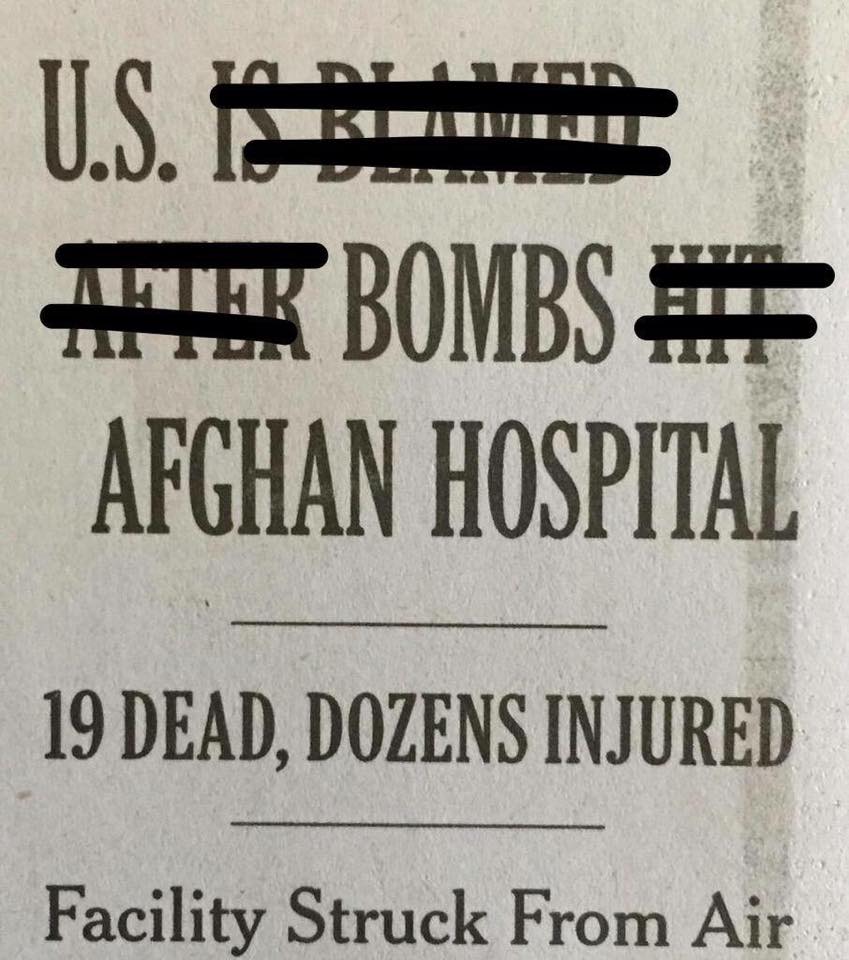
NYT headline (10/3/15) improved by Twitter user @OneKade
When the US bombed a hospital in Kunduz, Afghanistan, in October 2015, killing dozens of civilians, media scrambled to craft almost laughable euphemisms. FAIR (10/5/15) documented at the time how news outlets used circuitous headlines like “US Is Blamed After Bombs Hit Afghan Hospital.” Also seen in the August 23 NPR report cited above, this brand of misleading, ambiguous rhetoric is the “officer-involved shooting” of war reporting.
On the other hand, the responsibility of US enemies for killing civilians is rarely if ever obscured.
It is instructive to compare Western media coverage of Yemen to that of Syria, where attacks are “Assad bombing” (Fox News, 2/15/17), “Assad airstrikes” (Breitbart, 4/28/16), “Assad regime airstrikes” (Times of Israel, 10/16/12; Australian, 8/18/15), “regime airstrikes” (NBC, 8/19/16) or “regime bombing” (Daily Caller, 8/17/15).
Media have even written of a “pro-Assad drone” that was “displaying hostile intent,” and thus just had to be shot down by the US (Guardian, 6/20/17; Independent, 6/20/17; The Hill, 6/20/17), as if the robot were personally a fan of the Syrian leader.
The phrases “Salman bombing,” “Salman airstrikes” or “Saudi regime airstrikes” are, however, nowhere to be found in reports on Yemen.
Downplaying the Key US Role
Media calling US/Saudi coalition attacks “Yemeni airstrikes” is at best misleading, and at worst flat-out false. Yet this language also has a political effect: It obscures the character of the war. This framing is part of the “civil war” trope media have propagated for two-and-a-half years.
When Yemen is discussed, it is virtually always through the lens of a “civil war.” As FAIR (7/25/17) has detailed before, this exceedingly widespread myth, which has permeated media discourse, denies the extent to which the conflict is actually a foreign war on Yemen, led by Saudi Arabia, the UAE and their US and European sponsors.
Even the term “Saudi-led” coalition is misleading. The New York Times editorial board (8/17/16) acknowledged, in a little-noted editorial on Yemen, “Experts say the coalition would be grounded if Washington withheld its support.”
That is to say, if the US wanted the war in Yemen to end, it would end overnight. The “Saudi-led” coalition is only led by Saudi Arabia in name.
Surprisingly, in the midst of intensified coalition attacks, the New York Times published another rare editorial on Yemen on August 25. In the piece, dramatically titled “The Slaughter of Children in Yemen,” the editorial board forcefully warned of exactly what critics have been saying for 29 months:
The Saudi coalition—and its American enablers, who provide military equipment, aerial refueling and targeting—simply cannot be allowed to continue killing civilians and destroying what little is left of Yemen. That is why it is imperative to publicly identify the unconscionable slaughter of innocents for what it is, and to hope that this will shame Saudi Arabia and its American backers to search for a humane end to Yemen’s hell.
Reporters at the Times and elsewhere should heed this call to demonstrate journalistic responsibility by clearly conveying their governments’ responsibility for the slaughter in Yemen—not just in editorials, but in news articles, every time.
Tillerson Approves Nearly $60Mln in Funding to Fight Propaganda – State Dept
Sputnik – 01.09.2017
WASHINGTON – US Secretary of State Rex Tillerson has approved spending nearly $60 million on countering terrorist propaganda and state-sponsored disinformation, a State Department official has confirmed to Sputnik.
A US news outlet, Politico, reported in August that Tillerson was resisting the Department’s officials who wanted to spend $80 million on anti-propaganda efforts, including on countering Russia’s alleged disinformation campaign.
“Last week, after significant consultations within the State Department… Secretary Tillerson approved the release of one source of funding, and approved the request for another,” the official said, referring to $19.8 million in extra funding to target Islamist propaganda and another request for a transfer of $40 million from the Pentagon.
The official stressed that Tillerson’s decisions came after a realignment of programs by the Global Engagement Center (GEC) to match national security priorities and make sure that this funding would be used effectively “to counter the messaging of international terrorist groups and state-sponsored disinformation.”
The Global Engagement Center is an interagency entity, housed at the State Department, tasked with coordinating US counterterrorism messaging to foreign audiences. It was created in March 2016 to counter messaging from the Islamic State terrorist group (banned in Russia).
But former President Barack Obama last December signed the fiscal year 2017 National Defense Authorization Act, which expanded the center’s mandate, allowing it to counter messages from state actors like Russia and China.
Russia has denied meddling in last year’s election in the United States, and the Kremlin insists that it does not interfere in the internal affairs of other countries.
Featured Video

Chinese jet fuel and the myth of energy independence
or go to
Aletho News Archives – Video-Images
From the Archives
The Dirty Little Secret behind the “Global Terrorism Index”
The Omission of Israeli Terrorism in the Occupied Palestinian Territories
By Karin Brothers | Global Research | December 6, 2014
… The Israeli settlements — all of which are illegal – have been identified as a major impediment to peace. The refusal of a major “global” terrorism report to name the Israeli settlers as one of the groups most responsible for terrorism not only misrepresents a major source of regional violence but exposes the Global Terrorism Index as a propaganda tool that supports a U.S. agenda.
In recent years, governments have been attempting to thwart terrorism by blocking supportive fund-raising. When it comes to Israeli settlements, however, the US and Canada actually encourage fund-raising by giving organizations (such as Christian Friends of Israeli Communities (CFOIC) and the Jewish National Fund) financial support in the form of donor tax-deductions.
Charities which provide funds for the Israeli settlements should be regarded as terror-financing organizations. They should not only lose their tax-deductible status, but they should be banned because they support the violation of international humanitarian law. The terror-financing laws that are being strictly enforced for Muslim charities should be applied to Christian and Jewish charities as well. … Read full article
Blog Roll
 Aletho News
- Chinese jet fuel and the myth of energy independence
- Ukraine Sea Drone Fired From Libya Hit Russian Tanker in Mediterranean
- IRGC: Iranian forces launched no attacks during ceasefire hours
- Trump Administration Moves To Automate U.S. Military Draft Registration
- Spain orders reopening of Tehran embassy, condemns Israel’s carpet bombing of Lebanon
- Israel faces ‘unsustainable’ strategic crisis following 40-day war against Iran: Analyst
- Iran restricts Hormuz access to 15 vessels per day under ceasefire terms: Report
- The ‘Opposition Party’ Has Done Nothing to Stop the Iran War and Much to Goad Trump Into Continuing It
- Moscow backs Tehran on status of Lebanon in US-Iran deal
- How UK Regulator Ofcom Quietly Bypassed International Law to Police American Speech
- If Americans Knew
- Amnesty: Urgent – Protect Lebanese civilians from brutal escalation in Israeli attacks
- Is The War Against Iran Over?
- Inside the Israeli army’s propaganda wing
- Hundreds of Gaza Amputees Stranded in Legal Limbo
- The gallows law: Israel moves toward executing Palestinian children
- Tucker Carlson: The Path to Peace requires ending ‘special alliance’ with Israel
- This is ceasefire? Israel’s biggest massacre yet in Lebanon, another journalist killed in Gaza – Daily Update
- Tucker Carlson on Israel: This Is the Behavior of an Ally? Really?
- Gazans face a triple crisis: severe shortages of water and bread, healthcare in tatters
- NY Times reports how Netanyahu took the US into Iran War
- No Tricks Zone
- An Inconvenient Tree: Uncovered In Alps… Europe Much Warmer Than Today 6000 Years Ago
- New Study Reports A 60% Slowdown In Greenland’s Ice Loss Rate In The Last Decade
- Low Intensity Tornado Wrecks Major Solar Farm, Creating A Potential Toxic Dump
- New Study Finds Warming Saves Lives…Cold Temperatures 12 Times More Deadly Than Excess Heat
- German Science Blog Accuses PIK Climate Institute Of Hallucinating Climate Tipping Points
- Devastating Assessment Of Comirnaty Vaccine By Former Senior Pfizer Europe Toxicologist
- New Study: CO2 Is ‘Effectively Negligible’ As An Explanatory Climate Change Factor Since 2000
- Former Pfizer Toxicologist Dr. Helmut Sterz Tells Bundestag Hearing Pfizer Vaccine Should Have Never Been Approved
- Energy Expert: Germany’s Nuclear Phaseout Was A “500 Billion Euro Mistake”
- New Research: South Australia’s Mid-Holocene Sea Surface Temperatures Were 4°C Warmer Than Today
 Aletho News

