Because Greenland really needs more ice
Climate Discussion Nexus | September 25, 2019
“SPECIAL REPORT: As their home melts, Greenlanders confront the fallout of climate change” shrieks NBC in a Sept. 17 email teaser (not available online) that warns that “Greenland is ‘ground zero’ for global warming, a place where the effects of rising temperatures and melting ice could have the most dire consequences. The shorter winters and longer summers have opened new waterways for fishing and tourism — but they’ve also endangered hunting, dogsledding and other traditional ways of life for the island’s 55,000 residents.” Oh really? Then why do long-term temperature records for Greenland show almost no warming in the last 60 years, or the last hundred?
There’s a famous story in Plutarch about Philip of Macedon the Great sending an ultimatum to the Spartans to surrender because “If I bring my army into your land, I will destroy your farms, slay your people, and raze your city” to which the Spartans replied simply “If”. And NBC’s casual use of “As” in the phrase “As their home melts,” not even as a premise to be explored but as an assumption to be swallowed untasted, we reply that if their home is not melting, nothing you say about what happens as it does tells us anything except that you are either gullible or zealots.
The NBC story to which the teaser links of course draws on the wisdom of the ancestors about the dramatic unpleasant changes, including one elder who said a thunderstorm was scary because in the good old days “We maybe hear some thunder one time in 30 years.” NBC did not delve into the question of whether in fact Greenland gets a thunderstorm every three decades.
Instead reporter Denise Chow breathlessly recounted being stuck near a glacier when the helicopter didn’t arrive and recalling with relief that fellow scientist David Holland had brought “a shotgun – just in case he needed to fend off polar bears.” Hmmm. Not so much threatened as threatening, are they?
As it happens, the bears stayed away and Chow ended up having a lovely night camping in exotic Arctic scenery before a chopper whisked them away the next day and “I found myself missing the peace, solitude and absolute splendor of Helheim Glacier.” But it was still terrifying because the Helheim glacier is melting rapidly and “Holland’s team is trying to understand what’s driving the staggering ice melt. This summer alone, an estimated 440 billion tons of ice has been lost from Greenland’s ice sheet — and some scientists say it could be more.”
We know what’s driving the main melt. It’s called summer. It happens every year and then the ice sheet grows again in winter. As for the glacier, well, many are retreating, including in Alaska, due to the natural temperature rebound from the Little Ice Age that saw them shrink dramatically before 1900.
Perhaps these journalists are seeing what they expect to see and their editors want them to see not what is actually there. NBC also sent star anchor Lester Holt “to Alaska – where he spent part of his childhood — to get a personal perspective of a climate in crisis. Scientists are warning that rising temperatures are having a significant impact on the state – including melting glaciers – which contributes to rising sea levels and warming oceans.” And Al Roker to Greenland to study… wait for it… “its record melt and heat wave.” Which he duly found, even though the data suggest that the widespread post-Victorian temperature rebound seems largely to have passed Greenland by. As we noted in August, its ice cap is about the same size today it was in 1850, and Greenland as a whole appears to have been cooling gently since the 1920s. Awkward.
Chow also failed for some reason to camp by Greenland’s Jakobshavn glacier that has recently baffled scientists by growing instead of shrinking. Instead she had an excellent adventure and filed the usual story.
Girls, Groupies, and Grim Reapers: The Religious Politics of Mass Response
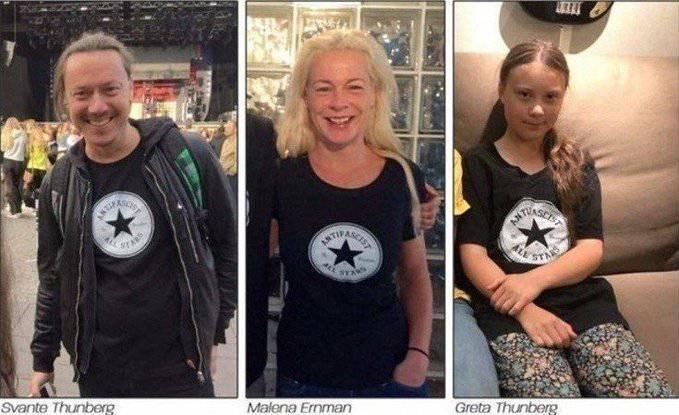
By Maximilian C. Forte | Zero Anthropology | September 29, 2019
Following a week at the UN and ensuing climate change “protests” (state-sanctioned, party-approved, media-praised, university-endorsed, “protests”), in which we were yet again treated to another spectacle of a tearful child lecturing adults, Murad Gazdiev presented the excellent critical analysis of climate change eschatology. We are even called by the media to “confess our climate sins.” Playing a special role in faith-based movements that are meant to keep rational debate, skepticism, and questions at bay, girls have been chosen to occupy the spotlight. Children are representative of all that is pure, innocent, and truthful, and girl children add that extra element of vulnerability and need: the need for urgent rescue. Lighting a candle on the path toward mass hysteria, with the intention of stimulating a mass response, we have had young girls play in similar roles. There have been at least nine since 1990:
(1) The notorious Nayirah al-Ṣaba who lectured at the UN about the infamous and entirely made up “incubator babies” murdered by Iraqi forces in Kuwait in 1990;

Nayirah al-Ṣaba
(2) Severn Cullis-Suzuki, another young girl lecturing at the UN’s Rio Summit on the Environment, in what appears to be the template that has been copied almost to the letter by Greta Thunberg;

Severn Cullis-Suzuki
(3) Malala Yousafzai, who became the figurehead that somehow justified US occupation in Afghanistan and intervention in Pakistan, celebrated by the US State Department;

Malala Yousafzai
(4) Bana Alabed, the Syrian sock puppet of Twitter fame, a darling of imperialists who served as the angel of regime change on the side of foreign terrorists—see Eva Bartlett for more analysis;

Bana Alabed
(5) Now Greta Thunberg, promoted to the world stage declaring that mass extinction is already here, a prophet of doom who will profit certain well positioned investors;

Greta Thunberg

Sharbat Gula

Aisha
And, don’t forget a whole array of other iconic girls featured on TIME and National Geographic magazine covers, such as (6) the famous “Afghan Girl,” Sharbat Gula, whose image was used to champion US support for the Afghan anti-Soviet resistance (an investment with proven blowback value), or more recently (7) Aisha, used as a motif to support continued US occupation of Afghanistan. One girl to oppose occupation of Afghanistan, another girl to promote occupation of Afghanistan.

Neda Agha-Soltan
Not young girls, but rather young women have also been erected to icon status in the Iranian street protests of 2009, and the Libyan war of 2011. In Iran, I refer to (8) Neda Agha-Soltan, whose image was held aloft by anti-government activists. In Libya, we were presented with an iconic woman protester against Gaddafi’s government, (9) Eman al-Obaidi, a woman whose claims have not only been roundly debunked by myself and others, she has since abundantly disgraced herself living in the US, where she landed in jail.

Eman al-Obaidi
At a time when the West is priding itself for its advancements in allegedly fighting sexism, what we see is a return to an antiquated chivalry that gallops to the rescue of these damsels in distress. As a favourite tool of neo-colonialism, US imperialists routinely depicted countries in Latin America as women—women in distress, needing to be “saved” by Uncle Sam. As I have said before, we work with a finite number of cultural materials, and our only “innovations” are in finding new applications and new media for recycling past tropes.

Uncle Sam rescues “Cuba” from the flames of anarchy
It is no surprise that “women and girls” have been a special focus of US foreign policy, particularly from the time of George W. Bush straight to, and including, even Donald Trump. One reason has to do with the relentless puritanical moralism into which American politics have been displaced for over two centuries. Yet in deploying women and girls as props, using them as human shields, what that usually signals is the approach of either an egregious assault on the rights of others, whether individuals or nations, or a politically bankrupt policy that can find no other means of attracting sympathy other than to remind us, “it’s all about the little children”. Children are meant to be pacified, but in such instances they are themselves used as tools of pacification. Inserting a little girl into the middle of a debate, stops the debate. If anyone continues the debate, they are then smeared for “attacking children“.
By now those who are aware of this pattern should be on alert whenever a new incarnation appears, because it is a signal that certain powerful political, economic, and cultural entrepreneurs are trying to provoke an instantaneous mass reaction that might not otherwise be possible with reasoned, calm debate where all of the facts are presented, analyzed and discussed. Typically, this pattern appears when actions are being entertained that might otherwise shock ordinary individuals and make them balk at such drastic measures. Women, and particularly young girls, are meant to stimulate panic, a sense of emergency, requiring urgent and always exceptional action. As the Mayor of Montreal said about the climate march and Thunberg’s appearance, she hopes everyone will remember that day when the time comes to make some “hard decisions”. This is how one goes about creating the psychological basis for a state of siege, and ensuring that the siege mentality is instilled in a manner that makes it seep down to the furthest reaches of the social fabric.
It was Karl Marx who wrote the following about the state of siege as it,
“enmeshes, controls, regulates, superintends and tutors civil society from its most comprehensive manifestations of life down to its most insignificant stirrings, from its most general modes of being to the private existence of individuals; where through the most extraordinary centralization this parasitic body acquires a ubiquity, an omniscience, a capacity for accelerated mobility and an elasticity which finds a counterpart only in the helpless dependence [of the people on the state], in the loose shapelessness of the body politic” (The Eighteenth Brumaire of Louis Bonaparte. New York: International Publishers, 2004, p. 62).
One of the landmark developments of what was announced as the “New World Order” by former US president George H.W. Bush on September 11, 1990, which joined the “globalization” babble, has been this recurrent series of “crises” that have been used to train masses into globalized mass reaction. One was the now laughable Y2K bug, a fraud of epic proportions that few mention any longer just out of sheer embarrassment (or possibly due to the kind of amnesia induced by mass culture); another was the SARS emergency, which resulted in few deaths and ended up amounting to nothing. Then we were supposed to be struck by Ebola at one point, and then a Middle Eastern version of SARS…and in the 1970s all the talk was about African Killer Bees making their way toward the US. Nothing regiments a society like fear, and once fear is unleashed it can be harnessed to any ends.
This is humanitarian abduction on a grand scale.
On the topic of climate change, Larry Kummer at Fabius Maximus has been diligently compiling a series of extremely useful analytical reports that should make any reasonable, intelligent person pause and take note. In particular, among the most recent, I recommend:
-
“Enlisting peer-reviewed science in the climate crusade,” Larry Kummer, Fabius Maximus, August 15, 2019.
-
“How fast is the world warming? Is it burning?” Larry Kummer, Fabius Maximus, August 17, 2019.
-
“See how climate science becomes alarmist propaganda,” Larry Kummer, Fabius Maximus, August 18, 2019.
-
“Prepare to retreat before climate change!” Larry Kummer, Fabius Maximus, August 26, 2019.
-
“How journalists helped wreck the climate debate,” Roy Spencer, Fabius Maximus, August 26, 2019.
Until recently I was quite open to accepting most of the propositions put forth by climate change scientists (I have no time for activists). However, when I started to see that the authorities who marshalled this science were now actually presuming to speak to us through a little girl, that gave me reason for pause. Why are they resorting to such a crass, infantilizing tactic? It strongly suggested that perhaps their arguments were not so iron-clad after all, not as well founded on solid bedrock as some believed, and that even though they control all the media of communication and have effectively “won” the argument by closing off all channels of dissent and institutionalizing echo chambers, they still had to resort to this silly little trick. Now that means there is something really wrong in their camp, something definitely stinks over there. Nobody with a solid argument needs to resort to moral blackmail, character assassination, insults, and threats–that is not what a winning side does. This trope of using a little girl was the final straw, and those who are sincere in their research and advocacy around climate change are being done no favours by her stage-managed activism.
Finally, let me close with another Caribbean anecdote. In Trinidad this past June, I was surprised to find how little the heat was affecting me, especially as I just came out of a winter which stretched late into spring. I marched at a funeral, in a wool suit (it’s all I have), under a blazing sun, and even that was bearable. Yet I am a person who feels hot in winter snow. Something was indeed wrong. What really took me by surprise however was Trinidadians complaining about the heat. These were the same Trinidadians I knew who would sleep with no fan at night, covered by a blanket; who would wear a jacket in the morning because it was “making cold” (cold meaning 22° Celsius); in air conditioned libraries they would wear sweaters, making for a Canadian scene in the tropics. They were the same people who used to mock my incessant sweating. Now I was dry, and they were complaining about the heat, and it was only 29° Celsius, not the usual 32-34° which I associate with Trinidad’s daytime temperatures. What happened? They asserted it was “climate change” that had them feeling hot. What they did not explain is why they had all made a mass transition to air conditioning their homes, places of work, and public transport vehicles–the famous Maxi Taxis of the Eastern Main Road, throbbing with music blaring from their speakers, bouncing hot boxes…were all now firmly sealed, dark and quiet as they sped by carrying their air conditioned passengers. So was it in fact climate change that had them feeling hot, or was it first the cultural change of switching to an air conditioned mode of existence? To me it appears they have been acclimatized to a new artificial climate, while becoming alien to their natural environment. Then I returned to Canada a few weeks ago, flying around Hurricane Dorian–when I mentioned this fact to friends, their reaction to Dorian was “look at all this damn climate change“–referring just to a single hurricane, in a region and during a season when hurricanes are normal. Now just regular climate is becoming climate change, and that is a sign of the work of inculcating mass hysteria and irrationality.
But by all means ignore this—surely somewhere there is a little girl beckoning your attention.
Lavrov responds to Pelosi claim Russia ‘had a hand’ in Trump-Zelensky impeachment scandal
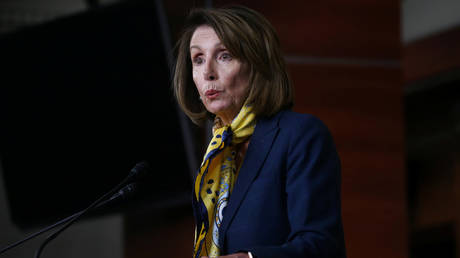
RT | September 27, 2019
Russian Foreign Minister Sergei Lavrov dismissed US House Speaker Nancy Pelosi’s claims that Russia was involved in the Trump-Zelensky phone conversation scandal as “obvious paranoia” and yet another “deadly sin” to pin on Moscow.
“Russia’s been accused of all the deadly sins, and then some,” Lavrov said at a press conference at the UN General Assembly on Friday, addressing a question about Pelosi’s claims that his country was somehow involved in the alleged quid pro quo between US President Donald Trump and Ukrainian President Volodymyr Zelensky.
“It’s paranoia, and I think it’s obvious to everyone.”
In an interview with MSNBC that aired earlier on Friday, Pelosi had claimed that Russia “has a hand in” what she referred to as Trump’s “shakedown” of the Ukrainian president during a telephone conversation back in July – released this week by the White House – as well as the subsequent “cover-up of the cover-up.”
Trump is “undermining our national security” by withholding military aid from Ukraine, she insisted, and “violated the constitution by overriding an act of Congress.”
The Democrats claim that Trump threatened to withhold military aid unless Ukraine restarted a corruption probe into the gas company that employed Hunter Biden, the son of then-vice president and current Democratic front-runner Joe Biden.
Pelosi launched an impeachment inquiry on Tuesday while admitting she had not read a transcript of the fateful call between the two leaders. She nevertheless accused Trump of betraying his oath of office, national security, and “the integrity of our elections.”
The call transcript, released the following morning, did not include any discussion of military aid, and mentioned the Biden investigation only in passing – a subject that was broached by Zelensky, not Trump.
Claim Russia caused Brexit crumbles as probe into Leave.EU funding finds no evidence of wrongdoing
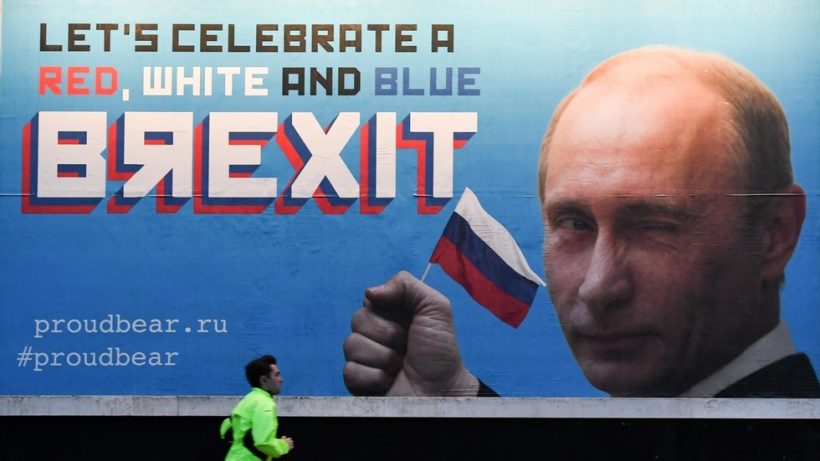
A Brexit-themed billboard depicting Russian President Vladimir Putin. © AFP / Daniel SORABJI
RT | September 25, 2019
An investigation into Arron Banks, a backer of a pro-Brexit campaign, found no evidence that the money for it came from a third party. The political establishment claimed he was illegally pouring Russian funds into the endeavor.
The UK’s National Crime Agency (NCA) announced it has shut down investigation into Banks after finding no evidence he broke the law in loaning £8 million ($10 million) to his own pro-Brexit campaign Leave. EU ahead of the 2016 referendum. The loan came from the company Rock Holdings Ltd, owned by Banks, and went to Better for the Country Ltd, which managed the campaign.
The Electoral Commission referred the case to the NCA last year, saying it suspected a third party was the original source of the money. In a public statement on Tuesday, the NCA said it found “no evidence that any criminal offences have been committed” by Banks. Likewise, no evidence was found that he “received funding from any third party to fund the loans, or that he acted as an agent on behalf of a third party.”
The third party was presumed to be the government of Russia, which many Remainers accuse of boosting their Leaver opponents financially and with clandestine activities on social media. This notion may, for some, ease the pain caused by the cringeworthy way the UK is now parting ways with the EU, but it has a few problems in terms of actual evidence.
The NCA’s announcement is the second blow to the narrative in as many weeks. Earlier, the Metropolitan Police said they will take no further action against Banks and Leave.EU over alleged spending offences. That probe was also launched at the request of the Electoral Commission and found “some technical breaches of electoral law” but “insufficient evidence to justify any further criminal investigation,” the statement said.
Banks, who said he was being targeted by a biased Electoral Commission and pro-Remain politicians and journalists in a smear campaign, is now able to take a victory lap. “Victory is sweet .. poor little remainer!” he tweeted in response to one of his critics sharing the news. Banks also threatened the commission with a £10 million lawsuit for damaging his reputation.
Nigel Farage, who was Banks’ partner in the Leave.EU campaign, said “heads must roll” for the mistreatment of the businessman, and that the commission should be first in line for the chopping block.
The commission lamented the NCA’s decision, saying it demonstrated an “apparent weakness of the law” that “allows overseas funds into UK politics.” Which apparently means they think that the problem was that investigators didn’t search hard enough, not that there was nothing there to find.
Hunting for the Kremlin’s shadow behind domestic troubles is a popular activity these days, especially since the consequences are insignificant for those involved when they are eventually proven wrong.
Another Day, Another Scandal. What the ‘Trump-Ukraine Collusion’ Is Really About
By Daniel Lazare | Strategic Culture Foundation | September 25, 2019
This is soooooo boring.
For nearly a week, Washington has been consumed by reports that Donald Trump pressured Ukrainian President Volodymyr Zelensky to dig up dirt on Democratic frontrunner Joe Biden.
 The furor began on Wednesday, Sept. 18, when the Washington Post disclosed that Trump had said something to an unknown foreign leader that “was so alarming that a US intelligence official who had worked at the White House went to the inspector general of the intelligence community.” Two days later, the Wall Street Journal reported that the foreign leader was Zelensky and that Trump had asked him “about eight times” in the course of a single phone conversation to look into allegations that then-Vice President Biden had pushed for the removal of a public prosecutor investigating a Ukrainian company that employed his son, Hunter. A day after that, Biden complained that Trump was trying to “smear me,” while on Sunday, Adam Schiff, Democratic chairman of the House intelligence committee, declared that Trump might be guilty of “the most profound violation of the presidential oath of office … during just about any presidency.”
From initial report to America’s greatest scandal ever in just four days – surely this was some sort of Washington speed record. Since the moment Trump was elected, Democrats have been searching for “the Big One,” as New York Times columnist Maureen Dowd put it, the scandal “that’s going to finally bring Donald Trump down” – and now at last they found it.
Of course, Democrats said the same about Russiagate, the scandal that dominated headlines for two and a half years but fizzled when special prosecutor Robert Mueller said he was unable to come up with evidence “that members of the Trump Campaign conspired or coordinated with the Russian government.” But now that Trump stood accused of conspiring or coordinating with the Ukrainian government – or at least trying to – surely the Big One was finally at hand.
But it’s not. One reason is that there’s no sign of a quid pro quo. The Washington Post suggested in its initial report that the purpose of the July 25 phone call was to “manipulate the Ukrainian government into helping Trump’s reelection campaign.” The means, supposedly, was $250 million in military aid that he was threatening to withhold if the Ukraine failed to cooperate. But the Wall Street Journal’s source specifically denied that Trump had threatened a cut-off while the New York Times reported that a decision to end military aid – subsequently revoked – had actually occurred weeks earlier.
Another reason for skepticism is that charges of a smear job are clearly misplaced. If anyone’s activities are suspicious, it’s Biden’s, and Trump can hardly be blamed for wanting to get to the bottom of them.
To briefly recap: in February 2014, a US-backed coup spearheaded by ultra-rightists sent Ukrainian President Viktor Yanukovych fleeing and installed billionaire Petro Poroshenko in his place. This was bad news for a wealthy Yanukovych supporter named Mykola Zlochevsky who was widely accused of corruption and was in danger of losing all or some of his holdings. In an attempt to smooth things over with the Americans, Zlochevsky appointed Hunter Biden to a lucrative post with Burisma Holdings, a natural-gas company he founded in 2002. Hunter had just been discharged from the US Navy after testing positive for cocaine. He had no experience in the natural-gas business and knew nothing about the Ukraine. But he got the job anyway along with a salary of $50,000 a month.
But when the Ukrainian prosecutor general launched an investigation into Burisma, the Obama administration demanded that Viktor Shokin, the man who took over the office a year later, be removed. Indeed, Biden bragged that he threatened to withhold $1 billion in loan guarantees during a visit to Kiev if Poroshenko didn’t do as he was told.
“I said, ‘We’re leaving in six hours,’” he said last year. “If the prosecutor’s not fired, you’re not getting the money. Well, son of a bitch, he got fired.”
If anyone’s guilty of a quid pro quo, it would seem to be Biden.
Questions remain. Washington says it wanted Shokin removed because he was impeding the Ukraine’s anti-corruption drive and that it pushed for someone more vigorous even though the results for Burisma might have been negative. But the New York Times says the company was pleased by Shokin’s dismissal, and that a year later it was able to reach an amicable settlement with his successor. Hunter Biden’s job was safe.
Still, profiting off a family connection in this manner is plainly corrupt, and Biden is obviously attempting to deflect attention from his own misdeeds by screaming about Trump. The upshot is yet another tedious pseudo-scandal in which Democrats will only succeed in embarrassing themselves.
Beware False Flag Drone Attacks
Opinion by Walrus | Sic Semper Tyrannis | September 21, 2019
The corollary to the Houthis brilliant use of do – it – yourself drones and perhaps cruise missiles, is that anyone else can do the same. This makes the possibility of false flag attacks using such weapons more likely in my opinion. Such attacks would not even necessarily require the resources of a State actor to execute, all the materials, bar perhaps the explosive, are freely available around the globe.
I will not explain the mechanics of manufacturing such weapons. Take it from me that a group of determined hobbyists could do so, provided they have sufficient security and money. Such weapons could be labeled for example “made in Iran” in such depth that it would be impossible to refute their origin, no matter how good ones forensics are.
A State actor, perhaps bent on mischief, could do this rather quickly. While this is just a guess, I would be surprised if various Western countries security services did not already have an operation underway to replicate the Houthi achievements, if only to answer the politicians question: “How did they do that??” and to start thinking about countermeasures.
My reason for being concerned enough to raise this topic is that President Trump has committed troops to Saudi Arabia and we already have other troops and assets in the region. If they were subject to attack and we took casualties, I don’t see how the President could avoid war assuming Iran was blamed.
What triggered me was this article in the WSJ (paywalled) whose opening sentence is:
Yemeni Rebels Warn Iran Plans Another Strike Soon
“BEIRUT—Houthi militants in Yemen have warned foreign diplomats that Iran is preparing a follow-up strike to the missile and drone attack that crippled Saudi Arabia’s oil industry a week ago, people familiar with the matter said.
Leaders of the group said they were raising the alarm about the possible new attack after they were pressed by Iran to play a role in it…”
Once technology is out of the box, as the Houthis have demonstrated, it can’t be returned. How do we avoid false flag attacks?
Never Forget, Never Again
By Assad Al-Liftawi – empirestrikesblack – September 23, 2019
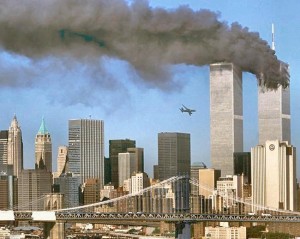 You say ‘never forget’
But what is there to forget when you don’t know what indeed happened?
You bow down at the altar of jingoism
Renewing your religion
Every year, a minute’s silence
Singing the hymn of American exceptionalism
Uttering hollow clichés claiming to ‘never forget’
As you drag the names of the dead through the mud
Refusing to do justice to their sacrifice
Alas you will never forget because you haven’t known the truth to be remembered
Dov Zakheim flew those planes
Chertoff released the ‘Israeli’ spies
Silverstein took the lease and buried the evidence
The ‘Israelis’ danced in Manhattan
But you don’t even know, so how could you forget?
Never forget: ‘Israel’ did 9/11
Or perhaps not ‘Israel’?
The Mossad and her network of sayanim
Dug in to the States like ticks on a host
From D.C. to NYC and everywhere in between
Remember, remember the 11th of September
How dare you say ‘never forget’?
When you refuse to honour the dead with the truth
‘Never question’ would fit you more
As you toe the line you’re fed
Walk on, walk on
Two decades of slumber
Never forget
Why Does Chris Hedges Hedge His Bets?
By Edward Curtin | September 21, 2019
The revelations about the machinations of the so-called “deep state” often conceal deeper truths that go unmentioned. This is quite common, whether it is done intentionally or not.
Sometimes it is intentional and is directed by the intelligence agencies themselves or their accomplices in the media, who operate a vast propaganda network. In that case, it is because the secret rulers have been caught doing some evil deed, and, not being able to fully deny it, they admit to part of it while concealing deeper secrets. This is termed “a limited hangout.” It is described by ex-CIA Deputy Director Victor Marchetti, author of The CIA and the Cult of Intelligence, as follows:
Spy jargon for a favorite and frequently used gimmick of the clandestine professionals. When their veil of secrecy is shredded and they can no longer rely on a phony cover story to misinform the public, they resort to admitting—sometimes even volunteering—some of the truth while still managing to withhold the key and damaging facts in the case. The public, however, is usually so intrigued by the new information that it never thinks to pursue the matter further.
For the average person, it is very hard to read between the lines and smell a skunk. The subterfuge is often very subtle and appeals to readers’ sense of outrage at what happened in the past. After the Church Hearings in the 1970s, and then Carl Bernstein’s limited hangout article in Rolling Stone in 1977, where he named the names and “outed” many major media and individuals for having worked with the CIA, many people breathed deeply and consigned these evil and propagandistic activities to the bad old days. But these “limited hangouts” have been going on ever since, allowing people to express outrage and feel some sort of redemption is at hand in the naïve belief that the system is reformable. It is a pipe dream induced by the smallest puff on the media’s latest recreational drug, for which no prescription is needed. The media that more openly and proudly than ever reveal their jobs as stenographers for the intelligence agencies (see my US Media Propaganda. Drawing “Liberals” and “Leftists” into the CIA’s Orbit. NPR) .
In The Iceman Cometh, the playwright Eugene O’Neill puts the delusional nature of so much public consciousness thus:
To hell with the truth! As the history of the world proves, the truth has no bearing on anything. It’s irrelevant and immaterial, as the lawyers say. The lie of a pipe dream is what gives life to the whole misbegotten mad lot of us, drunk or sober.
Truth may never have been popular, but if one studies the history of propaganda techniques as they have developed in tandem with technological changes, it becomes apparent that today’s incredibly sophisticated digital technology and the growth of screen culture that has resulted in what Guy Debord has called “the society of the spectacle” has made the manipulation of truth increasingly easier and far trickier. News in today’s world appears as a pointillistic canvas of thousands of disconnected dots impossible to connect unless one has the desire, time, determination, and ability to connect the points through research, which most people do not have. “As a result,” writes Jacques Ellul in his classic study, Propaganda, “he finds himself in a kind of kaleidoscope in which thousands of unconnected images follow each other rapidly” and “his attention is continually diverted to new matters, new centers of interest, and is dissipated on a thousand things, which disappear from one day to the next.” This technology is a boon to government propagandists that make sure to be on the cutting edge of new technology and the means to control the flow of its content, often finding that the medium is the message, one that is especially confounding since seemingly liberating – e.g. cell phones and their easy and instantaneous ability to access information and “breaking news.”
Then there are writers, artists, and communicators of all types, whether consciously or not, who contribute to the obfuscating of essential truths even while informing the public of important matters. These people come from across the political spectrum. To know their intentions is impossible, unless they spell them out in public to let their audiences evaluate them, which rarely happens, otherwise one is left to guess, which is a fool’s game. One can, however, point out what they say and what they don’t and wonder why.
A recent article, Our Invisible Government, by the well-known journalist, Chris Hedges, is a typical case in point. As is his habit, he sheds light on much that is avoided by the mainstream press. Very important matters. In this piece, he writes in his passionate style that
The most powerful and important organs in the invisible government are the nation’s bloated and unaccountable intelligence agencies. They are the vanguard of the invisible government. They oversee a vast “black world,” tasked with maintaining the invisible government’s lock on power.
This, of course, is true. He then goes on to catalogue ways these intelligence agencies, led by the CIA, have overthrown foreign governments and assassinated their leaders, persecuted and besmirched the names of those – Edward Snowden, Julian Assange, et al. – who have opposed government policies, and used propaganda to conceal the real reasons for their evil deeds, such as the wars against Vietnam, Syria, Afghanistan, Iraq, and Libya. He condemns such actions.
He spends much of his article referencing Stephen Kinzer’s new book, Poisoner in Chief: Sydney Gottlieb and the CIA Search for Mind Control and Gottlieb’s heinous exploits during his long CIA career. Known as “Dr. Death,” this Bronx born son of Jewish immigrants, ran the CIA’s mind control programs and its depraved medical experiments on unknowing victims, known as MK-ULTRA and Artichoke. He oversaw the development of various poisons and bizarre methods to kill foreign leaders such as Fidel Castro and Patrice Lumumba. He worked closely with Nazi scientists who had been brought to the United States by Allen Dulles in an operation called Operation Paperclip. Gottlieb was responsible for so many deaths and so much human anguish and suffering that it is hard to believe, but believe it we must because it is true. His work on torture and mind control led to Abu Ghraib, CIA black sites, and assorted U.S. atrocities of recent history.
Hedges tells us all this and rightly condemns it as “the moral squalor” and “criminality” that it is. Only a sick or evil person could disagree with his account of Gottlieb via Kinzer’s book. I suspect many good people who have or will read his piece will agree with his denunciations of this evil CIA history. Additionally, he correctly adds:
It would be naive to relegate the behavior of Gottlieb and the CIA to the past, especially since the invisible government has once again shrouded the activities of intelligence agencies from congressional oversight or public scrutiny and installed a proponent of torture, Gina Haspel, as the head of the agency.
This also is very true. All these truths can make you forget what’s not true and what’s missing in his article.
But something is missing, and some wording is quite odd and factually false. It is easy to miss this as one’s indignation rises as one reads Hedges’ cataloguing of Gottlieb’s and the CIA’s obscenities.
He omits mentioning the Clinton administration’s dismantling wars against Yugoslavia, including 78 days of non-stop bombing of Serbia in 1999 that killed thousands of innocent people in the name of “humanitarian intervention,” wars he covered for the New York Times, the paper he has come to castigate and the paper that has a long history of doing the CIA’s bidding.
He claims that Gottlieb and the CIA’s scientists failed in their “vain quest” for mind control drugs or electronic implants that might, among other things, get victims to act against their wills, such as acting as a Manchurian candidate, and as a result, “abandoned” their efforts. That they failed is not true, and that they abandoned their efforts is unknowable, unless you wish to take the CIA at its word, which is a hilarious thought. How could Hedges possibly know they abandoned such work? A logical person would assume they would say that and continue their work more secretly. On one hand, Hedges says, “It would be naive to relegate the behavior of Gottlieb and the CIA to the past,” but then he does just that. Which is it, Chris? By definition, the “invisible” government, the CIA, never reveals their operations, and lying is their modus operandi, especially with their brazen in-your-face biblical motto: “And ye shall know the truth and the truth shall make you free.”
He says the invisible deep state “failed to foresee… the 9/11 attacks or the absence of Iraqi weapons of mass destruction.” This is factually wrong and quite absurd, as is well documented. They simply lied about these matters ex post facto. He suggests such failures were due to “ineptitude,” a coy word used by numerous other writers who find reasons to deny intentionality to the “deep state.”
He therefore is implying that the attacks of September 11, 2001, a subject that he has consistently failed to address over the years even while he has written in detail about so much else, did not involve America’s “invisible government forces.” The ineptitude explanation fails elementary logical analysis. Does he think it was intelligence ineptitude that allowed operatives to wire the highly-secure Twin Towers and Building 7 for controlled demolition that brought those buildings down, as the testimony of one’s eyes and that of hundreds of NYC firefighters who reported explosions throughout the buildings affirm? Ineptitude is another word for avoidance of evidence, gathered over the years by careful scholars and researchers. Ineptitude is another word for the belief “in miracles,” as David Ray Griffin has phrased it.
What does he think Colin Powell was doing at the United Nations on February 5, 2003 with CIA Director George Tenet sitting behind him when he lied repeatedly and fabricated evidence for Iraq having weapons of mass destruction to promote and justify the U.S. war against Iraq? Ineptitude? A failure of intelligence?
Chris Hedges is a very intelligent man, so why does he write such things?
Most importantly, why, when he writes about the past evil deeds of the intelligence operatives – Gottlieb and the CIA’s overseas coups and assassination of foreign leaders, etc. – does he fail to say one word about the CIA’s assassination of domestic leaders, including President John Kennedy in 1963, the foundational event in the invisible government’s takeover of the United States. Can an act be more evil and in need of moral condemnation? And how about the assassinations of Martin Luther King and Robert Kennedy in 1968, or Malcolm X in 1965? Why does Hedges elide these assassinations as if they are not worthy of attention, but Gottlieb’s sick work for the CIA is? Like the attacks of September 11, 2001, he has avoided these assassinations throughout the years.
I don’t know why. Only he can say. He is a very well-read man, who is constantly quoting from scholars about various important issues. His books are chock full of such quotations and references. But you will look in vain for references to the brilliant, scholarly work of such writers on these assassinations, the attacks of September 11, 2001, and the CIA’s criminal and morally repugnant activities as James Douglass, David Talbot, David Ray Griffin, William Pepper, Graeme MacQueen, Lisa Pease, and so many others. Is it possible that he has never read their books when he has read so much else? If so, why?
As I said before, Chris Hedges, who has a passionate but mild-mannered style, is not alone in his disregard of these key matters. Other celebrity names on the left have been especially guilty of the same approach: Noam Chomsky, Howard Zinn, and Alexander Cockburn, to name just a few (Zinn and Cockburn are dead). They have avoided these issues as if they were toxic. Nor would they logically explain why. The few times they did respond to those who criticized them for this, it was usually through a dismissive wave of the hand or name calling, a tactic such as the CIA developed with the term “conspiracy theory.” Cockburn was particularly nasty in this regard, priding himself on dismissing others with words such as kooks, lunatics, and idiots, even when his logic was deplorable. He liked to use ineptitude’s synonym, “incompetence,” to explain away what he considered intelligence agency failures. “Why,” he wrote in one piece attacking September 11 critics while upholding the government’s version, “does the obvious have to be proved?” “Brillig!” as Humpty Dumpty would say. Absolutely brillig!
The CIA’s mind control operations need to be exposed, as Hedges does to a degree in this latest article. But revealing while concealing is unworthy of one who condemns “creeps who revel in human degradation, dirty tricks, and murder.” It itself is a form of mind control.
Perhaps he will see fit to publicly explain why he has done this.
BBC tries to understand Welsh independence movement
Press TV – September 21, 2019
The giant strides of the Welsh independence movement this year have finally grabbed the full attention of the British mainstream media, which would otherwise prefer to ignore this phenomenon.
The BBC ran a short documentary on Welsh independence yesterday, with a focus on the role of young people in the movement.
The BBC Wales political reporter, Teleri Glyn, ostensibly tries to understand what is driving young Welsh people toward independence by interviewing niche groups, notably Cardiff University’s Independence Society.
Despite the veneer of objectivity, Glyn’s report tries to downplay the momentum toward Welsh independence by creating a generational schism between the young and old in Wales.
The older people she interviews for the report all happen to be strongly opposed to independence thus creating the impression that Welsh nationalism is a transient phenomenon largely confined to the youth.
The BBC’s barely concealed misconceptions, or distortions as some might argue, stand in stark contrast to reporting by less mainstream media.
Four months ago, Vice News ran a features story on the issue of Welsh independence with a particular focus on the role of young people in it.
Entitled “Welsh Independence Has Gone Mainstream”, and published on May 24, 2019, the story showcases specific youth-based groups who are at the sharpest end of the independence movement.
One such group, the “Welsh Independence Memes for Angry Welsh Teens”, has a strong online presence, boasting more than 17,500 followers on Facebook.
Vice also showcases “Sianel Pump” a YouTube channel targeting a youth/young adult audience, which was launched by the Welsh language broadcaster S4C back in 2016.
Sianel Pump’s success led to the development of “Hansh”, a pro-independence, Welsh-language YouTube channel for youth whose video contents regularly get tens of thousands of views.
The focus on young people in the Welsh independence movement is unfolding against a backdrop of a dramatic rise in nationalist sentiment in Wales.
So far this year there have been three large pro-independence rallies, the first in Cardiff (May), the second in Caernarfon (July) and the last in Merthyr Tydfil earlier this month.
According to the latest YouGov opinion poll, conducted between 6-10 September, and with a sample size of 1039 people, 24 percent of respondents said they would vote for an independent Wales if there was a referendum tomorrow.
The support for separation from the UK jumps to 33 percent if Welsh independence also entailed staying within the European Union.
Even Saudis don’t believe fiction of Iranian attacks on oil plants – Zarif
RT | September 21, 2019
Saudi Arabia may have joined the US in blaming Iran for last week’s attack on its oil facilities, but the kingdom’s response clearly shows it doesn’t believe it to be true, Iranian Foreign Minister Mohammad Javad Zarif has said.
“Since the Saudi regime has blamed Iran – baseless as that is – for the attacks on its oil facilities, curious that they retaliated against Hodaideh in Yemen today – breaking a UN ceasefire,” Zarif wrote on Twitter.
“It is clear that even the Saudis themselves don’t believe the fiction of Iranian involvement.”
A key Saudi oil facility was seriously damaged last Saturday in a raid by drones and cruise missiles, leading to a sharp drop in production. Yemen’s Houthi rebels claimed responsibility for the attack, but Washington and Riyadh insist the group was incapable of launching such an elaborate assault, and accused Iran of being the perpetrator.
Despite this, Saudi Arabia launched bombing sorties in Yemen targeting the Houthi-controlled port of Hodeidah on Friday, which the Yemeni rebels called a dangerous escalation that could “blow up” a UN-negotiated truce between the two parties.
The Saudis have been intervening in Yemen since 2015 in an attempt to return a Riyadh-friendly president to power. The conflict is perceived by Saudi Arabia as a proxy war against Iran, its regional arch-rival. Tehran denies supporting the Houthis militarily.
Washington responded to the attack on Saudi oil infrastructure by deploying more troops to the Middle East. The incident was a major embarrassment for the US since its costly air defense systems failed to protect the site from the drones and missiles. Saudi Arabia is a leading buyer of American arms and has been using them extensively in Yemen, but last week’s debacle questions whether those investments were wise.
The US is also set to impose additional sanctions on the Iranian banking system in retaliation. Washington framed these as measures necessary to stop the funding of terrorism by Tehran, but Zarif said the US wants to stifle Iran’s foreign trade and “its access to food and medicine.”
“This move is unacceptable and dangerous,” the Iranian official said.
Iran is already living under increasingly harsh sanctions from the US, which the Trump administration has been ratcheting up since the president’s first months in power.
On Criticism of Palestinian Resistance
By Eve Mykytyn | September 18, 2019
The Oxford definition of ‘terrorism’ is: “the unlawful use of violence and intimidation, especially against civilians, in the pursuit of political aims.” Although the term could apply to the belligerents in many wars, the term ‘terrorism’ takes on its everyday meaning when violence is perpetuated by the weak in resistance to the powerful.
What other form of resistance is available to an oppressed people? One does not have to search hard to find a Jewish source begging for the peaceful resistance of a Palestinian Gandhi or King.
The request itself is odd, it invites a comparison to the conditions Gandhi and King fought, and is an implicit, although perhaps unintended, admission that Israel represents another oppressive racist regime.
It takes chutzpah to complain about the form of resistance employed by the people you are oppressing. Why are the Palestinians obliged to meet violence with nonviolence? Certainly you have to take your victims as they are.
Gandhi wrote about the uses of nonviolent resistance and King referred to Gandhi’s writings. For Gandhi and King nonviolence was not an end in itself, it was a strategy, a means to achieve a goal. Despite later deifications, neither Gandhi nor King was a saint, they were leaders who employed non violent resistance because it was effective under their circumstances.
Both men were vastly outpowered by the brutal regimes they opposed. Nonviolence did not allow them or their followers to escape injury or death, their battles required at least as much physical bravery as for any soldiers.
Both Gandhi and King deliberately provoked their enemies and then refused either to back down or to physically fight back. The decision to meet violence with nonviolent resistance was a powerful tool used to expose the brutality of the regime. The march to Selma would have amounted to little without the press. What they ‘achieved’ was an unforgettably painful display of violence. To the extent nonviolence succeeded for King, it was because the ‘soldiers’ on the other side gave Americans a clear picture of the savagery to which blacks were subjected. It became increasingly difficult for those who had long averted their eyes to claim ignorance.
One reason the Palestinians are portrayed as ‘failing’ to meet the standard set by Gandhi or King is that their use of the tactic of nonviolence has not attracted sympathetic coverage, it has not been effective enough in exposing Israel’s brutality. There are, of course, numerous examples of peaceful Palestinian resistence. One example is commemorated on ‘Land Day’ remembering the day in 1976 that Israel killed peaceful Palestinian protestors. Another occurred during the first intifada, as Neve Gordon writes in 972, when the “Palestinians adopted massive civil disobedience strategies, including daily protests” against Israel’s occupation. Israel responded with violence and mass incarcerations. While they could easily provoke violence through peaceful protest, the Palestinians could not win the media nor shame the Israelis into change.
This, of course, begs the question of control of the media. King was extensively covered in the media. Do the Palestinians have access to the same? At best, Haaretz might decry the proportionality of Israel’s violence, but will it explore the true meaning of Palestinian protest, both the original and the ongoing taking of their property and destruction of their society? Would the international press do any better?
As I was writing this I realized that Palestinian nonviolent protests in Gaza have had perhaps a small effect on public opinion. The mainstream media in the US is universally favorable to Israel, but although they tried, the media was not entirely successful in creating sympathy for the Israeli snipers. For example, The Guardian, in reporting that one year into the protest, the Israelis had killed 190 and wounded 28,000, noted that, “Children, journalists and medics have been killed, even when they were standing far back from the fence.” Spin that one. Here’s an attempt by Eric Yoffe, a self-described ‘liberal’ American Jew, to justify killing protestors who had not killed a single Israeli. “If 100 Jewish bodies were strewn across southern Israel, would the American left more readily forgive Israel’s defensive actions against an angry mob of tens of thousands propelled by the murderous, anti-Semitic terrorists of Hamas?” This is simply a variation on the “I thought he was going to hit me so I hit him back first” defense. Perhaps the need to resort to such a feeble rationale helps explain why we finally have a tiny Congressional support group for the Palestinians. Seventeen were so daring as to vote against an anti BDS bill.
Further, Israel has shown little sign that it is willing to change its basic oppressive policies in response to any actions or restraint by the Palestinians. This is an interesting video in which Israeli ‘settlers’ are asked if they would move if told to do so by their government and knowing the move would mean peace in the region. Their responses are variations on “No, I would not, it is my land.” Perhaps they are merely following the lessons of their religion.
In the story of Exodus, recounted annually even by many secular Jews at Passover, Moses unsuccessfully begs the Pharaoh for his peoples’ freedom. The lesson to be learned: Jewish liberation comes only after Egyptian civilians are subjected to terrible brutality.
Featured Video
NO MANDATES, NO PROFITS: MODERNA CEO TELLS THE TRUTH
or go to
Aletho News Archives – Video-Images
Book Review
In 2007, Michael Parenti Called Out The Greater Israel Project
The Dissident | January 28, 2026
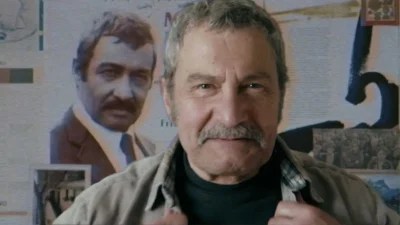
In my last article, I covered the left-wing scholar Michael Parenti- who passed away at the age of 92 this week- and his prophetic writings on the Ukraine proxy war in 2014.
Parenti’s writings on the Israel lobby and the greater Israel project were equally prophetic.
In his 2007 book “Contrary Notions” Parenti called out “Israel First” Neo-cons and Israel’s role in the Iraq war, and predicted to a tee the future Israeli/American wars in the Middle East in service of Greater Israel and the ethnic cleansing of Palestine.
In a section of the book aptly titled “Israel First”, Parenti wrote… continue
Blog Roll
Recent Comments
loongtip on Russia Vows to Protect Its Oil… loongtip on Hamas never agreed to lay down… eddieb on Conspiracy Denial eddieb on WEF Calls for ‘Cultural Revolu… loongtip on Trump wanted to play peacemake… Coronistan on EU member to sue bloc over ‘su… loongtip on Vicious loongtip on EU turns to India for defense… Coronistan on Donald Trump Is No Peace … seversonebcfb985d9 on French court jails pro-Palesti… eddieb on Fourteen Incredible Facts Abou… Bill Francis on European leaders’ shift in the…


 Aletho News
- NO MANDATES, NO PROFITS: MODERNA CEO TELLS THE TRUTH
- UK Health Officials Covered Up Reports of Heart Damage Linked to AstraZeneca Vaccine
- This is How We Should Have Responded to COVID-19
- The UK Covid Inquiry: Propaganda to protect the ‘pandemic’ narrative
- Israeli Merkava tank invades outskirts of Yaroun in southern Lebanon
- Europeans oppose Brussels’ Russian energy ban, survey finds
- Russia Vows to Protect Its Oil Tankers
- In 2007, Michael Parenti Called Out The Greater Israel Project
- Hamas never agreed to lay down arms in truce talks: Official
- Iran, China and Russia sign trilateral strategic pact
- If Americans Knew
- NBA Star Stephen Curry’s Ties To Israeli Military Intelligence
- ‘Apocalyptic wasteland’: Biden admin. blocked warning on deteriorating Gaza situation after Oct. 7
- Why Israeli counterterrorism tactics are showing up in Minnesota
- Israel Went to Extremes to Return Ran Gvili’s Body. Why Doesn’t It Accord Dead Palestinians the Same Respect?
- Across the West, speaking for Palestine is now a crime
- A West Bank Bus Trip Through ‘the Best Documented Ethnic Cleansing in History’
- Mike Huckabee’s distorted theology does not speak for Christians worldwide
- CBS Evening News” With Tony Dokoupil Is Ellisons’ & Weiss’s Pro-Israel Show
- A Generation on Hold: Inside Gaza’s Collapsing Education System
- Born Under Siege: A Gaza Family Waited 17 Years—Their Baby Survived Six Months
- No Tricks Zone
- 130 Years Later: The CO2 Greenhouse Effect Is Still Only An Imaginary-World Thought Experiment
- New Study Affirms Rising CO2’s Greening Impact Across India – A Region With No Net Warming In 75 Years
- Germany’s Natural Gas Crisis Escalates … One Storage Site Near Empty …Government Silent
- Polar Colding…Antarctica Saw Its Coldest October In 44 Years!
- New Study: Sea Levels Rose 20 Times The Modern Rate During The Roman Warm Period
- As German Gas Storage Dips Dangerously Low…Shortage Hardly Avoidable
- New Study: Brazil’s Relative Sea Level Was 2+ Meters Higher And SSTs 3-4°C Warmer 6000 Years Ago
- Philosopher Schopenhauer: Climate Science Certainty Stems From Stupidity, Ignorance
- New Study: Species Extinction Rates Declining Since 1980 – ‘Climate Change Is Not An Important Threat’
- Denmark Places Climate Protection Above Animal Welfare, Poisoning And Culling Cows
 Aletho News