The Most Important Bet You’ve Never Heard Of
| March 31, 2026
Podcast: Play in new window | Download | Embed
Have you heard of the bet between Paul Ehrlich and Julian Simon. You know, the bet about whether commodity prices would rise or fall in the 1980s? If you’re like most of the population, you haven’t. That’s because this wasn’t some mere wager about economics, this was a contest between the forces of good and the forces of evil. Spoiler: the forces of good won. And that’s why we’re not taught about this bet in the public indoctrination system. Let’s fix that. Today on The Corbett Report, James fills in the missing pieces about the most important bet you’ve never heard of and what it tells us about the value of human life.
Video player not working? Use these links to watch it somewhere else!
WATCH ON:  /
/  /
/  /
/  /
/  /
/  or DOWNLOAD THE MP4
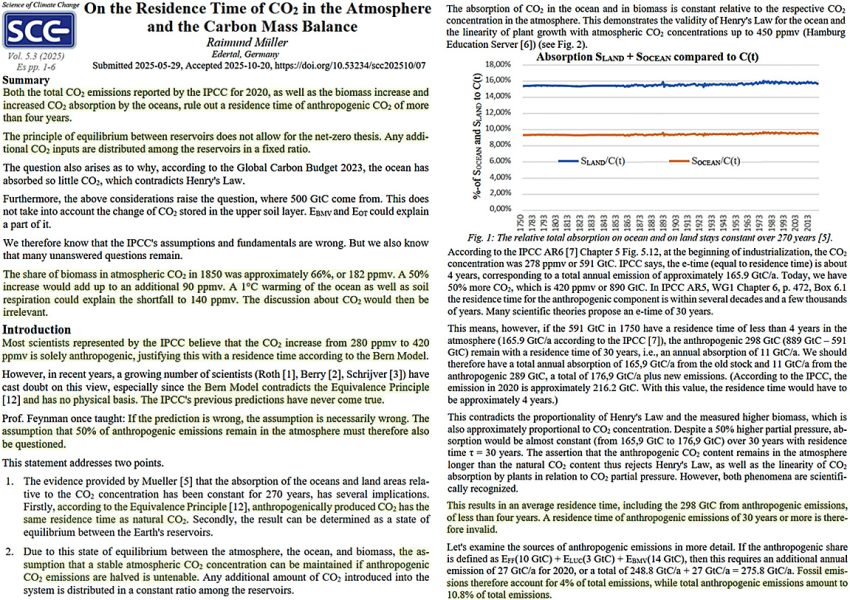
New Study Rebuts The Assumption That Anthropogenic CO2 Molecules Have ‘Special’ Properties
By Kenneth Richard | No Tricks Zone | February 6, 2026
The Intergovernmental Panel on Climate Change (IPCC) has for decades advocated net-zero governmental policies to reduce anthropogenic CO2 (aCO2) emissions.
This advocacy is rooted in the non-physical assumption that aCO2 molecules are special, as they remain in the atmosphere for decades to centuries.
Proponents of the anthropogenic global warming (AGW) narrative even claim aCO2 removal can “take up to several hundreds of thousands of years.”
While AGW proponents insist that “once in the atmosphere, carbon dioxide can continue to affect climate for thousands of years,” they (and the IPCC) simultaneously acknowledge the residence time of “natural” or non-anthropogenic CO2 is only about 4 years.
In reality, a new study references the Equivalence Principle in emphasizing nature’s sinks indiscriminately and equivalently absorb both aCO2 and natural CO2 in about 4 years (Müller, 2025). There is no physical reality for IPCC claims of “specialized” absorption time for aCO2 vs. natural CO2 molecules.
The IPCC assumes exactly 50% of aCO2 emissions remain in the atmosphere for decades to millennia. It is consequently assumed net-zero policies that propose to halve aCO2 emissions will lead to the stabilization of atmospheric CO2 concentrations. Because “anthropogenic CO2 has the same [4-year] residence time of natural CO2,” this assumption is physically invalid.
Net-zero policies will literally have no detectable effect on atmospheric CO2 concentrations. In sum, “the IPCC’s assumptions and fundamentals are wrong.”
The EV Car Crash
With the petrol and diesel car ban less than four years away, there’s one big problem: nobody wants to buy electric cars
By Paul Homewood | The Climate Skeptic | February 6, 2026
With the ban on the sale of new petrol and diesel cars less than four years away now, there remains one seemingly insurmountable obstacle: nobody wants to buy electric cars.
Last year, sales of EVs achieved a market share of just 23.43%. Newly released figures for last month show this fell to 20.6%. The Government has set a target this year of 33%, rising to 66% in 2029.
Once petrol and diesel cars (known as ICE vehicles, short for Internal Combustion Engine) are banned in 2030, zero emission cars must make up at least 80% of the market, with the rest filled with hybrids. However, the latter will also be gradually phased out by 2035. Zero emission essentially means battery-electric, although hydrogen fuel-cell vehicles would also qualify.
To enforce the switch to EVs, the government introduced the ZEV (Zero Emission Vehicle) mandate. Motor manufacturers who fail to hit their ZEV target for the year must either buy credits from manufacturers who have exceeded targets or pay a fine of £15,000 for every car below target.
There are certain allowances available, but these are not significant. The only other option open to manufacturers who fall short is to carry forward their deficit, in the hope they are in surplus in a year or two time. Understandably, this has been likened to taking out a payday loan!
The first year of the ZEV mandate was 2024, when the target was 22%. Actual EV sales that year only reached 19.6%, leaving an effective shortfall of 47,000 cars. At £15,000 a time, that means a fine of around £700 million. The Department for Transport will publish its full analysis next month, which will list surpluses and shortfalls by manufacturer and the actions they have taken to comply, e.g. pay a fine, buy allowances or carry forward.
Last year, EV sales increased to a share of 23.9%, but this was still well below the target of 28%. Motor manufacturers it seems are building up massive deficits in EV sales, which sooner or later will have to be paid for.
Worse still, most EV sales go to fleet and business sectors, driven by generous tax breaks. It is estimated that only about 10% of private buyers go for electric.
The reasons are well known. EVs cost much more to buy, and most models don’t have the range that drivers need. On top of that, buyers face massive losses when trading them in because second hand prices are so low.
But there is one other factor which is often overlooked.
It is reckoned that four in 10 households don’t have off-street parking, so cannot easily charge at home. Using a public charger means that running costs would typically be triple those of a petrol car when fuel duties are excluded. That is, I should point out, if you can actually find one on the way home from work that is not already in use.
Local councils such as my own have already made it clear that trailing cables across the pavement is not permitted and that enforcement action will be taken. Where then will EV drivers be able to charge their cars?
There are plenty of fine words from central and local government about installing more public chargers. But the simple reality is that there will never be enough – local councils don’t have the money, and it is not their job anyway to waste taxpayer money in this way.
Cardiff City Council are a case in point. It is estimated that there are about 200,000 cars in Cardiff, about half of which don’t have access to off street parking. The City Council has just announced plans to install 80 new EV charging stations, plugged into lampposts outside residents’ homes.
The plan won’t make the slightest difference when there are 100,000 cars which all need charging. But it will create real difficulties for the poor beggars who happen to live next to one and will have to find somewhere else to park. The thought of all the other motorists on the street competing to get to that lamppost first every night and the aggro which will undoubtedly follow is frightening.
It is hard to avoid the conclusion that the objective of successive governments and council planners all along has been to force us out of our cars and onto public transport.
AfD co-leader states the obvious: Pouring money into the Ukraine war is killing the German economy
By Tarik Cyril Amar | RT | January 28, 2026
Alice Weidel, co-leader of the AfD (Alternative for Germany) party, has given a speech to which every observer of Germany should pay close attention. And not simply because of Weidel’s inherent political weight.
She is among the country’s most important politicians and with serious prospects for very high office: if her New-Right party breaks through to leading a Berlin government, Weidel is the most likely chancellor. Next to her co-chairman Tino Chrupalla, she is the only real opposition that matters inside the current German parliament.
What makes this particular Weidel speech, delivered in the city of Heilbronn while campaigning in state elections in the classically ‘West German’ Land of Baden-Württemberg, especially noteworthy is its unprecedently outspoken, bracingly combative, and, stirringly logical and honest take on one specific topic, namely Germany’s masochistic relationship to Ukraine.
Not that there were no other topics. Indeed, Weidel started what was a gleefully pugnacious ‘Rundumschlag’ (German for onslaught) where you would expect, the absolutely dismal state of Germany’s once proud and now relentlessly tanking national economy. She reminded her large audience that Germany’s industrial sector is bleeding jobs and companies; national insolvency statistics are a horror and won’t stop breaking abysmal records; and the traditional parties have nothing to offer but same-old-same-old.
And yet, as most right-wing politicians – whether traditional or insurgent – former business consultant Weidel is not at all original with her own suggestions either. She complains that producing things in Germany is so expensive that the country’s economy as a whole has been losing international competitiveness. True enough.
But things get more debatable when Weidel starts explaining the causes of the national malaise. Costs that are too high include, in her view, taxes in general, payroll taxes, and social security payments. This is a classical conservative position: if anything is wrong with capitalism, it’s that those at the bottom of the income and power pyramid still have it too good. Cut the state down and rely on the market’s miraculous powers – pretty much the essence of Weidel’s extremely tired recipe for the future.
In that respect, Weidel’s talk had nothing to offer that isn’t already generously supplied by the grindingly repetitive rhetoric of the current centrist Berlin government under mainstream conservative and sour-schoolmaster-in-chief Friedrich Merz. In essence, ‘shut up, work harder, ask for less. (At least if you aren’t rich like me and my chums).’
With so little of that sounding like a genuine alternative from the ‘Alternative for Germany,’ can the AfD really succeed in breaking the traditional parties’ stranglehold by winning another – at least – ten or so percent of the national electorate? In a country where even the government admits that 17.6 percent of its citizens must get by without “important goods and social activities due to poverty.” In a society where 2.2 million children are officially categorized as at risk of or in poverty? Where income inequality has been growing ever worse, with Germany’s five wealthiest families now boasting combined fortunes of €250 billion, which is more than the poorer half of Germans – over 40 million people –combined? Where, finally, working hard is not even a halfway reliable way to achieve success? More than half of private fortunes are now inherited or gifted (usually to circumvent inheritance taxes, low as they are) and that share rises to between 75-80% among the rich.
Weidel’s criticism of Berlin’s – and the EU’s – current economic suicide non-strategy is often refreshingly on point, but it’s also the very easy part. Yet cosplaying as yet another ‘iron lady,’ promising more blood, sweat, and tears for those who are already getting plenty of all that, may well get the AfD stuck where it is now at less than 30% in Germany as a whole, weaker in the West and doing better only in the East. Weidel and her solidly neoliberal wing in the AfD would do well not to be too sure of themselves yet.
For, if the party does get stuck electorally instead of continuing its surge, then the AfD will not be able to fracture the traditional parties’ undemocratic and, arguably, effectively unconstitutional ‘firewall’ policy of exclusion. Studiously supported by Germany’s propagandistic and conformist mainstream media, in reality the ‘firewall’ is a scandal, since it massively discriminates against more than a fifth of Germany’s voters (and more in the East) who are, in effect, partially disenfranchised. Yet ending that scandal will take electoral success beyond anything the AfD has yet achieved. That’s simply a cold hard fact. Weidel’s rigid capitalist dogmatism could be a dead-end, making the AfD, despite all its current surging, a might-have-been story. We’ll see.
Yet, to her credit, Weidel added a crucial point to her diagnosis of the German economy’s dramatic downfall. A point that almost no other German top politician – at least outside the New-Left BSW, which has been electorally kneecapped, most likely by foul means – has the guts to be honest about in public: The main cause of Germany’s ongoing crash, according to Weidel, are “exploding energy costs,” and that explosion is “homemade,” a result of catastrophically self-harming policies by the traditional parties.
While many of these policies of self-strangulation have been driven by an ideologically motivated exit from nuclear energy and misguided – as well as ineffective – attempts to mitigate global warming, one factor stands out because it is a matter of life and death in a straightforward manner, namely the Ukraine war. That is, in reality, the barely indirect war between Russia and the West (including Germany) via Ukraine.
It is a direct consequence not of the war but of the position toward it taken by at least two successive governments in Berlin (first under the hapless Olaf “the Grinner” Scholz, now under Friedrich “the Scolder” Merz) that Germany’s energy has become ever more backbreakingly expensive.
Even official German agencies and mainstream media have not been able to conceal this basic fact. According to the government statistics office, as of early 2023, the industry price for natural gas was 50.7% higher than before the escalation of February 2022; for electrical power – 27.3%, and for petroleum derivatives – 12.6%. In February 2025, German households were paying a whopping 31% more for energy than in 2021 (according to the mega-mainstream RND). One month later, the respectable Handelsblatt called the “price leap” since the pre-2022, “immense” and reported that gas prices for private households had increased by almost 80% in a little over one year. Let that sink in. And where private citizens’ budgets are squeezed like that, the whole economy badly suffers as well, of course.
And just now, the EU has confirmed it will cut itself off from even the last remnants of Russian gas supplies by 2027. Good luck!
Weidel addressed both the insanity of German policy toward this war and the single most emblematic symbol of that madness, the destruction of most of the Nord Stream pipelines and Berlin’s perfectly perverse response to it.
Weidel rightly noted that the AfD’s long-standing – and plausible – arguments in favor of pursuing peace with Russia in earnest have long been met with the usual witch-hunting smears. That is, the type of neo-McCarthyite suppression which all such displays of dispassionate reason in search of an end to the “nonsensical dying” (Weidel) have been receiving from the “politico-media complex” in war-besotted NATO-EU Europe. Weidel was merciless, too, in skewering the persistent sabotage of any peace prospects by (at least) two German governments and their co-bellicists in the EU and most of Europe. All pretty obvious? Yes. Among the reasonable. But not in the German mainstream media and elite.
And then there was the passage that really rocked the hall: “This government [in Berlin] doesn’t utter a squeak” when Ukrainians, helped by other special services (which Weidel cautiously refrained from naming), blow up German energy infrastructure “in our face.” Genuinely irate, Weidel asked how a German government could keep quiet in such a situation. For “the lost delivery of inexpensive gas,” she continued, “harms not only Germany but all of Europe, [and] Germany the most.” Nice one. So much then for the domestic non-credibility of the Scholz and Merz governments, and for Merz’s aspirations to play a leading role in Europe.
And yes, the Nord Stream scandal marks not merely a political and economic catastrophe. It’s worse than that, because it also stands for a shameful display of submissiveness: “How can a government have so little self-respect,” Weidel asked, that it won’t even genuinely seek to solve such a blatant case of, in effect, massive economic sabotage? That indeed is the question. Even a German very far left of Weidel, such as me, can only agree here. It takes a fundamental lack of elementary patriotism and decency not to share her exasperation.
If the ultra-corruptioneers in Kiev were listening, things got even worse: Weidel was explicit that a country attacking Germany in this manner is not a friend. Obvious? Yes, but not in Germany. Not yet. And she declared her party’s intention to make Ukraine – and Zelensky personally – pay if the AfD gets into power in Berlin. Not only for the enormous damage done by Ukraine’s cowardly Nord Stream terror attack, but also for the dozens of billions preceding German governments have pumped into one of the most corrupt regimes in the world. All power to her arm on that one as well.
Intriguingly, that was a moment when the audience reacted with much applause, as usual, but also loud booing. Clearly, not everyone had caught up to reality when it comes to Germany and its perversely self-damaging relationship to Ukraine. But Weidel is right when she also declared that Germany should have stayed neutral instead of joining the Great Western Proxy Crusade against Russia with gusto. Berlin could have served as an ‘honest broker,’ to the benefit of everyone, not only Germans but also millions of ordinary Ukrainians.
Whatever you think about the specific mix of stale market-dogmatic Thatcherism, undue deference to Donald Trump, and refreshing no-bullshit honesty on foreign policy and national interest with regard to Ukraine and the Ukraine war that Weidel had to offer, there can be no doubt that this was a breakthrough moment. It was the first time a major German party with potentially very good electoral prospects has come out and clearly stated the obvious – Germany was attacked by Ukraine (and quite a few other ‘friends’ as well from Warsaw to London and Washington, even if Weidel skirted that part of the issue), not by Russia.
Therefore, for Germany and Germans, Ukraine is anything but a friendly state, and it is absurd – to put it very mildly – that German governments have ruined the relationship with Russia and the German economy as well, while pumping Kiev full of money and arms. This is an immense national scandal, as clearly as 2 plus 2 is 4. And like that simple fact, it’s always true, no matter who has the courage to say it.
Tarik Cyril Amar is a historian from Germany working at Koç University, Istanbul, on Russia, Ukraine, and Eastern Europe, the history of World War II, the cultural Cold War, and the politics of memory.
WEF Calls for ‘Cultural Revolution’ to Promote Lab-Grown Meat
By Michael Nevradakis, Ph.D. | The Defender | January 26, 2026
Participants at last week’s annual meeting of the World Economic Forum (WEF) called for a “cultural revolution” to increase acceptance of lab-grown meat — despite the public’s “terrible” resistance to the products, The Blaze reported.
The meeting, held in Davos, Switzerland, brought together leading global political and business leaders.
During the “Food @ the Edge,” panelist Sam Kass, a senior policy adviser for nutrition during the Obama administration, asked about the growth of “replacements” for “core foods.” The former chef said he doesn’t want to see a future “where we’re starting to drink coffee from a factory as opposed to from a tree.”
Andrea Illy, chairman of the Italian coffee giant illycaffè, countered that “there is a terrible cultural resistance from consumers to accept tech foods” but that he believes such foods “represent the way forward.”
Illy, affiliated with the WEF for over a decade, said reducing meat consumption yields environmental and health benefits. He said that “70% of the ecological footprint of agriculture is due to animal proteins.”
Illy claimed “excessive consumption” of real meat products is the leading cause of noncommunicable diseases — the “number one health problem” in the West. He called for the reduction of real meat consumption to a “healthy” level and for a decades-long “cultural revolution” to get people to consume lab-grown meat.
Experts tout benefits of real meat, question safety of lab-grown alternatives
Internist Dr. Meryl Nass, founder of Door to Freedom, hit back at Illy’s claims. Since health officials started recommending less meat — which they blamed for certain health conditions — “we had child obesity rise from 4% to 20%,” Nass said. “Childhood Type 2 diabetes doubled. Adult diabetes and prediabetes skyrocketed.” Nass blamed high carbohydrate consumption for the increase.
“Meat is extremely healthy, especially when animals graze on grasses as they were meant to and when they are not fed antibiotics, hormones and contaminated feed,” Nass said. She said the animal feed used in industrial meat production is typically “drenched with glyphosate or grown on sewage sludge.”
Biologist Heidi Wichmann, Ph.D., a member of Make Europe Healthy Again’s advisory committee, said the primary driver of non-communicable diseases is not meat, “but the way food is produced, treated and disconnected from natural biological cycles.”
“Excessive consumption of biologically degraded, highly processed products is problematic, regardless of whether they are of animal or plant origin,” she said.
Karl Jablonowski, Ph.D., senior research scientist for Children’s Health Defense, said that while animal agriculture is “an ample source of disease variants,” questions remain about the safety of lab-grown meat.
“Lab-grown meat has all the unknowns of any new technology,” Jablonowski said. “In theory, lab-grown food can be healthy. In practice, only if consumers demand it.”
According to Sayer Ji, chairman of the Global Wellness Forum and founder of GreenMedInfo, these unknowns associated with lab-grown meat include “novel risks” that are not fully studied.
“Many products rely on immortalized cell lines, which by definition evade normal cellular aging and death mechanisms — raising legitimate concerns about oncogenic potential and long-term biological effects,” Ji said.
Technologies like this “centralize food production into highly patented, proprietary systems that displace decentralized, local and farmer-based food networks — a shift away from food sovereignty and toward industrial dependency,” Ji said.
WEF calls development of lab-grown meat from stem cells ‘revolutionary’
The WEF last week released a video promoting lab-grown meat produced from animal stem cells, describing the technology as “revolutionary.”
The video featured Singapore-based Shiok Meats, which grows “meat” and “seafood” from animal stem cells. The WEF said Shiok’s technologyoffers “a promising solution to the environmental and ethical concerns associated with conventional animal agriculture.”
Singapore, which approved the sale of lab-grown meat in 2020, is a global leader in promoting alternatives to conventional meat. In 2024, Singapore approved 16 insects for human consumption.
Several experts suggested that the global elite are pushing to reduce meat consumption by suggesting tactics such as making people allergic to red meat, or convincing wealthy countries to switch to “100% synthetic beef.”
“Narratives had to be created by the globalists to demonize meat,” Nass said. “The push for lab-grown meat comes from the desire to control food by central authorities,” who “want food to only come from outside authorities, who can withhold it if you do not comply — or who make it too expensive and control you that way.”
Seamus Bruner, director of research at the Government Accountability Institute, suggested that what “ties all of this together” is “an obsession by what I call the ‘Controligarchs’ — a small, self-appointed elite that believes every aspect of human life must be managed, optimized and ultimately owned by them.”
Seven states, including Florida, Texas and Montana, have banned lab-grown meats. Earlier this month, the U.S. Department of Health and Human Services (HHS) released new dietary guidelines favoring the consumption of protein, dairy, healthy fats, vegetables and fruit and deemphasizing grains.
Consumers have increasingly rejected alternative meat products. For instance, the stock price of synthetic meat producer Beyond Meat cratered last year, dropping from an all-time high of $240 to less than $1 amid low consumer demand in the U.S.
Jeffrey Tucker, president and founder of the Brownstone Institute, said, “There is near-zero market demand for this ‘frankenfood’ born of the same intellectual class and lab technicians who have given us poison food and medicine.”
Tucker said producers of synthetic meats “rely on government regulations and restrictions to throttle genuine health and good lives while deprecating what we know is both good for us and delicious.”
WEF: phasing out artificial additives placing ‘stress’ on food industry
Other WEF panelists criticized efforts by the HHS to phase out synthetic dyes and artificial additives in food products.
According to Slay News, Jasmin Hume, founder and CEO of Shiru, an AI-powered “protein discovery company,” said HHS’ recommendations are placing the food industry “under an unprecedented amount of stress.”
Hume claimed removing synthetic ingredients from foods would require significant changes by food manufacturers and would have a negative effect on consumers and the planet.
Nass noted that approximately 10,000 artificial food additives have been approved in the U.S. compared with only about 400 in the European Union. “Companies already know how to produce food without most such additives,” she said.
Slay News reported that Hume’s remarks came as the Trump administration “ramps up its Make America Healthy Again (MAHA) crackdown on ultra-processed junk, synthetic additives, and added sugars,” leaving WEF members “scrambling to defend” synthetic food that faces growing public and political resistance.
Mass vaccinations or culls of livestock linked to lab-grown meat agenda
Politico Europe reported Jan. 16 that authorities in Greece are responding to a nationwide sheep pox outbreak with mass culls of sheep flocks — but are facing increasing pressure to engage in mass vaccination of sheep instead.
According to Politico Europe, many Greek farmers are “begging for vaccines to save their flocks.” Mass vaccination was among the demands of farmers who recently protested against Greek government policies by blocking highways throughout the country.
“Sheep pox is so infectious that global farming regulations require whole herds to be slaughtered immediately after even a single case is detected,” Politico Europe reported. The outbreak has resulted in over 470,000 sheep and goats being culled, and the closure of over 2,500 farms in Greece.
The European Union’s Animal Welfare Commissioner Olivér Várhelyi told Greek authorities last year that vaccination is the only new measure that can stop new sheep pox outbreaks.
The Greek government and its advisers have “repeatedly rejected this option, citing the steep financial consequences and damage to exports” and the fact that no sheep pox vaccine has been approved in Greece or the EU, Politico Europe reported.
Regenerative farmer Howard Vlieger, a member of the board of advisers of GMO/Toxin Free USA, said choosing between mass culling and mass vaccination ignores a tried-and-true method in which farmers “let the ones die that are going to die” and use the surviving animals as the “genetic base for building your seed stock.”
“Vaccine-induced immunity does not replicate the breadth, durability, or ecological integration of naturally acquired immunity, which is what inspired the creation of vaccination but has never been effectively replaced by it,” Ji said.
Bruner, author of “Controligarchs: Exposing the Billionaire Class, Their Secret Deals, and the Globalist Plot to Dominate Your Life,” said lab-grown meat and mass culling or vaccination of livestock are part of the “Controligarch worldview.” This includes “centralized control over natural systems in the name of efficiency, safety and sustainability.”
“They seek to replace organic, decentralized life with systems that can be surveilled, patented and governed from the top down,” he said.
This article was originally published by The Defender — Children’s Health Defense’s News & Views Website under Creative Commons license CC BY-NC-ND 4.0. Please consider subscribing to The Defender or donating to Children’s Health Defense.
Germany to build 10GW of baseload gas plants (disguised as “future” hydrogen plants)
By Jo Nova | January 17, 2026
Facing industrial death, Germany has finally decided it needs dispatchable reliable electricity. But they can’t announce that they suddenly need to build 10 gigawatts of fossil fueled gas power plants. It would be like admitting the sacred Energiewende had been a ghastly mistake that wasted billions of dollars on a reckless vanity quest to change the clouds. So instead, these new “power plants” with a focus on “gas-fired sites” must be convertible to run on hydrogen by 2045. Of course, they may never run on hydrogen, given that makes pipes brittle, leaks, and costs four times as much as natural gas, but it makes a good cover story.
This is exactly what I would do if I wanted to hide a major backflip and pretend this was just a slight variation on the renewables theme. (Especially if I had no scruples).
Note that the Reuters Blob-Media story (below) does not mention the words “fossil fuels” or “dispatchable” it just talks about the need to generate electricity over “a longer period of time”.
The gas to hydrogen plant story is the PR cover and escape hatch from the Sacred Renewables Mission.
It’s just another marker of how fast the renewable energy plan is coming undone…
Germany, EU reach general agreement on power plant strategy
Holger Hansen and Christoph Steitz – January 16, 2026
BERLIN/FRANKFURT, Jan 15 (Reuters) – Germany said on Thursday it had reached an agreement with the European Commission on a plan to build new power stations, adding it would tender 12 gigawatts (GW) worth of capacity in 2026, with a focus on gas-fired sites.
This is a major step on Germany’s path to ensure security of supply in light of the country’s ongoing phase-out of coal-fired power capacity. “With the short-term tenders … we are also laying the foundation for a secure electricity supply in Germany in the future and thus for the competitiveness of our industry,” Economy Minister Katherina Reiche said.
Most of the new capacity, 10 GW, must be able to generate electricity over a longer period of time to ensure steady supply, Germany’s economy ministry said, adding that this included but was not limited to gas-fired power stations.
The new power stations, which are expected to enter service in 2031, will be able to run on hydrogen by 2045 at the latest, in line with Germany’s goal of becoming climate neutral that year, the ministry said.
Obviously, there are no apologies, no honesty, and they will never admit they were wrong.
New study shows that toxic gas can form in cows’ stomach when being fed Bovaer with certain feed
By Peter Imanuelsen | The Freedom Corner | January 19, 2026
There have been many reports lately of cows suddenly collapsing and becoming sick after being fed with Bovaer.
This caused the largest dairy producer in neighbouring Norway to pause the use of Bovaer.
Farmers have been in despair as their herd has been suffering after Denmark introduced new laws mandating methane reducing feed to cows to reduce climate emissions.
Now there is a new study from Denmark showing some very interesting and disturbing findings.
You can say that perhaps the ”conspiracy theorists” were right once again. I was one of the first to warn about Bovaer years ago.
After the reports of collapsing cows, SEGES innovation, a Danish agricultural research organization has conducted investigations into Bovaer and what they found is very alarming. You probably won’t read about this on the mainstream media, so I will share it with you here.
SEGES put out an online questionnaire where farmers could report problems with Bovaer.
Responses came in from around 39% of all milk supplying herds in Denmark. Shockingly, 434 out of 644 herds were reported to have REDUCED milk yield. That is a whopping 67.4% that had reduced milk yields.
This suggests that there is impaired rumen function in the cows.
410 herds reported digestive and metabolic disorders, including poisoning symptoms and fever.
According to SEGES innovation, giving Bovaer in combination with a feed that is high in sulfur, often from rapeseed products, was linked to increased reports of feeding and metabolic disorders in cows.
Bovaer inhibits methane production, that is in fact the whole point of Bovaer. But this increases the availability of hydrogen in the stomach of the cow. If the cow then has lots of sulfur from the feed containing rapeseed, this can cause hydrogen sulfide to form.
Hydrogen sulfide is a TOXIC gas and is dangerous for humans and animals.
This is what happens when you try and mess with what God created. The cows are getting unintended side effects because someone thought it was a good idea to remove the methane that is naturally produced in the cows’ stomach.
This reaction and creation of this toxic gas in the cows stomach is now being described as a possible explanation as to why cows are becoming sick after eating Bovaer.
SEGES is therefore recommending a pause in the use of Bovaer until autumn 2026 for cows eating feed with large portions of rapeseed, pending experiments being done at Aarhus university.
The West vs. the Rest
How developing countries took control of climate negotiations and what that means for emission reduction.
By Robin Guenier | Climate Scepticism | December 8, 2025
The main reason why, despite countless scientific warnings about dangerous consequences, greenhouse gas (GHG) emissions continue to increase is rarely mentioned. Yet it’s been obvious for several years – at least to anyone willing to see it. It’s this: most countries outside Western Europe, North America and Australasia are either unconcerned about the impact of GHGs on the climate or don’t regard the issue as a priority, focusing instead for example on economic growth and energy security. Yet these countries, comprising about 84 percent of humanityi, are today the source of about 77 percent of emissions; 88 percent if the United States, which has now joined their ranks, is included.ii Therefore, unless they change their policies radically – and there’s no serious evidence of their so doing – there’s no realistic prospect of the implementation of the urgent and substantial cuts in GHG emissions called for by many Western scientists.
To understand how this has happened, I believe it’s useful to review the history of environmental negotiation by focusing in particular on six UN-sponsored conferences: Stockholm in 1972, Rio in 1992, Kyoto in 1997, Copenhagen in 2009, Paris in 2015 and Belém (Brazil) in 2025.
Stockholm 1972
In the 1940s, 1950s and 1960s many Western environmentalists were seriously concerned that technological development, economic growth and resource depletion risked irreversible damage to humanity and to the environment.iii Clearly a global problem, it was agreed that it had to be tackled by international, i.e. UN-sponsored, action.
The result was the UN Conference on the Human Environment held in Stockholm in 1972.iv From its outset it was recognised that, if the conference was to succeed, an immediate problem had to be solved: the perceived risk was almost exclusively a Western preoccupation, so how might poorer countries be persuaded to get involved?v
After all, technical and industrial development were essentially the basis of the West’s economic success and that was something the rest of the world was understandably anxious to emulate – not least to alleviate the desperate poverty of many hundreds of millions of people.vi The diplomatic manoeuvrings needed to resolve this seemingly irreconcilable conflict set the scene for what I will refer to as ‘the Stockholm Dilemma’ – i.e. the conflict between Western fears for the environment and poorer countries’ aspirations for economic growth. It was resolved, or more accurately deferred, at the time by the linguistic nightmare of the conference’s concluding Declaration which asserted that, although environmental damage was caused by Western economic growth, it was also caused by the poorer world’s lack of economic growth.vii
After 1972, Western environmental concerns were overshadowed by the struggle to deal with successive oil and economic crises.viii However two important European reports, the Brandt Report in 1980 and the Brundtland Report in 1987, dealt with the economic gulf between the West and the so-called Third World.ix In particular, Brundtland – echoing Stockholm – concluded that, because poverty causes environmental problems, the needs of the world’s poor should be given overriding priority; a principle to be enshrined in the climate agreement signed in Rio. The solution was the now familiar ‘sustainable development’.x
Rio 1992
Western environmental concerns were hugely re-energised in the late 1980s when the doctrine of dangerous (possibly catastrophic) global warming caused by mankind’s emissions of GHGs, especially carbon dioxide (CO2), burst onto the scene.xi As a result, the UN organised the landmark Conference on Environment and Development (UNCED) – the ‘Earth Summit’ held in Rio in 1992.xii It was the first of a long series of climate-related international conferences that led for example to the so-called ‘historic’ Paris Agreement in 2015.
A key outcome of the 1992 Earth Summit was the United Nations Framework Convention on Climate Change (UNFCCC). Adopted in 1992 and commonly known as ‘the Convention’, it’s an international treaty that came into force in 1994. It remains to this day the definitive legal authority regarding climate change.xiii Article 2 sets out its overall objective:
‘The ultimate objective of this Convention and any related legal instruments that the Conference of the Parties may adopt is to achieve … stabilization of greenhouse gas concentrations in the atmosphere at a level that would prevent dangerous anthropogenic interference with the climate system.’
It’s an objective that’s failed. Far from being stabilised, after 1992 emissions accelerated and, by 2025, emissions had grown by over 65 per cent.xiv This is essentially because the Convention attempted to solve the Stockholm Dilemma by dividing the world into two blocs: Annex I countries (essentially the West and ex-Soviet Union countries – the ‘developed’ countries) and non-Annex I countries (the rest of the world – the ‘developing’ countries). This distinction has had huge and lasting consequences – arising in particular from the Convention’s Article 4.7:
‘The extent to which developing country Parties will effectively implement their commitments under the Convention … will take fully into account that economic and social development and poverty eradication are the first and overriding priorities of the developing country Parties.’xv [My emphasis]
In other words, developing countries were, in accordance with Brundtland’s conclusion, expressly authorised to give overriding priority to economic growth and poverty eradication – even if that meant increasing emissions. And that’s why the Annex I/non-Annex I bifurcation has plagued international climate negotiations ever since: for example, it’s the main reason for the Copenhagen debacle in 2009 and for the Paris failure in 2015 (see below).
Western countries had hoped – even expected – that the Rio bifurcation would in time be modified so that, in line with their development, major developing countries would eventually become members of the Annex I group.xvi But such hopes were dashed at the first post-Rio climate ‘Conference Of the Parties’ (COP) held in Berlin in 1995 (COP1) when it was agreed that there must be no new obligation imposed on any non-Annex I country.
This principle, ‘the Berlin Mandate’, meant that the bifurcation and its associated ‘common but differentiated responsibility’ principle were institutionalised as tenets of the Convention.xvii And, before the next climate conference in 1996 (COP2 in Geneva), G77+China made it clear that this should not be changed.xviii
Kyoto 1997
The impact of this was made harshly apparent at the next conference: COP3 in Kyoto in 1997. Kyoto was supposed to be critically important – the original hope had been that negotiations would result in all countries accepting commitments to reduce their GHG emissions. But, because the US decided that it wouldn’t accept obligations that didn’t apply to other major countriesxix and because of the Berlin Mandate, in the event the agreed Kyoto Protocol reduction obligations applied only to a few, largely Western, countries.xx As a result and because developing countries refused even to acknowledge that they might accept some future obligation, it was becoming obvious to some observers that the UN process was getting nowhere – somehow the developing countries had to be persuaded that emission reduction was in their best interests.
But how? The passage of 25 years hadn’t resolved the Stockholm Dilemma – difficult enough in 1972, the UNFCCC bifurcation and the Berlin Mandate had made it worse. Yet it was recognised that, without these, developing countries might simply refuse to be involved in climate negotiations, making the whole process meaningless – something the UN and Western countries were unwilling to contemplate. So, if Kyoto was a failure, it was arguably a necessary failure if there was to be any prospect of emission reduction in due course. And that was the story for the next twelve years: at successive COP conferences the major developing countries, ignoring increasingly dire climate warnings from Western scientists, refused to consider amending the UNFCCC bifurcation.
A result of that refusal was that many developing countries’ economies continued their spectacular growth, resulting in rising living standards and unprecedented poverty reduction.xxi But inevitably emissions also continued to grow: in just 12 years, from 1997 (Kyoto) to 2009 (Copenhagen) and despite 12 COPs, they increased by over 30%.xxii
Copenhagen 2009
In 2007 the UN’s Intergovernmental Panel on Climate Change (the IPCC), a body that reports every seven years on the current physical scientific understanding of climate change, published its fourth report (AR4) – a report that intensified the West’s insistence that urgent and substantial emission cuts were essential.xxiii
A result was an ‘Action Plan’ agreed at the 2007 climate conference (COP13) in Bali.xxiv It set out how it was hoped all countries would come together at Copenhagen in 2009 (COP15) to agree a comprehensive and binding deal to take the necessary global action. Many observers regarded this as hugely significant: Ban Ki-moon, then UN Secretary General, speaking at Copenhagen said, ‘We have a chance – a real chance, here and now – to change the course of our history’’.xxv And, as always, dire warnings were issued about the consequences of failure: UK Prime Minister Gordon Brown for example warned that, if the conference failed to achieve a deal, ‘it will be irretrievably too late’.xxvi
There was one seemingly encouraging development at Bali: developing countries accepted for the first time that emission reduction by non-Annex I countries might at least be discussed – although they insisted that developed countries were not doing enough to meet their Kyoto obligations.xxvii But the key question of how far the developing countries might go at Copenhagen remained obscure – for example was it at least possible that the larger ‘emerging economies’ such as China and India and major OPEC countries such as Iran and Saudi Arabia might cease to be classified as ‘developing’? The EU and US not unreasonably thought that should happen, especially as it was by then obvious that, unless all major emitting countries, including therefore big developing economies, were involved, an emission cutting agreement would be neither credible nor effective. Some Western negotiators hoped that the bifurcation issue might at last be settled at Copenhagen.
But it wasn’t. In the event, developing countries refused to budge, insisting for example that developed countries’ historic responsibility for emissions was what mattered. As a result, the West was humiliatingly defeated, with the EU not even involved in the final negotiations between the US and the so-called BASIC countries (Brazil, South Africa, India and China).xxviii
One commentator noted:
‘There was a clear victor. Equally clearly, there was a side that lost more comprehensively than at any international conference in modern history where the outcome had not been decided beforehand by force of arms.’ xxix
The Copenhagen failure was a major setback for the West.xxx It was now established that, if the developing countries (including now powerful economies such as China, India, South Korea, Brazil, South Africa, Saudi Arabia and Iran) rejected a suggestion that their economic development be subject to emission control, that position would prevail. Yet by 2010 these countries were responsible for about 60% of global CO2 emissions xxxi; without them, major global emission cuts were clearly impossible.
The years following Copenhagen, from Cancún (COP16) in 2010 to Lima (COP20) in 2014, reinforced the West’s concerns as developing countries continued to insist they would not accept binding commitments to reduce their emissions.xxxii
Paris 2015
It was becoming obvious that, if there was to be any prospect of emission reduction, there had to be some fresh thinking. So the UN proposed a new methodology for the summit scheduled for 2015 in Paris (COP21): instead of an overall global reduction requirement, a new approach should be implemented whereby countries would individually determine how they would reduce their emissions and that this would be coupled with a periodic review by which each country’s reduction plans would be steadily scaled up by a ‘ratcheting’ mechanism – a critically important development.
But, when countries’ plans (then described as ‘Intended Nationally Determined Contributions’ (INDCs)) were submitted to the UNFCCC secretariat prior to Paris, it was clear that little had been achieved: hardly any developing countries had indicated any intention of making absolute emission cuts. Instead their INDCs spoke merely for example of reducing CO2 emission intensity in relation to GDP or of reducing the percentage of emissions from business-as-usual projections.xxxiii
It had been hoped that NDCs (as they became known) would be the vehicle whereby major emerging (‘developing’) economies would at last make emission reduction commitments. Yet they turned out to be a problem that undermined the Paris Agreement – see below. And, in any case, other provisions of the Agreement in effect exempted developing countries from any obligation, moral, legal or political, to reduce their emissions.xxxiv For example, the Agreement was described in its preamble as being pursuant to ‘the objective of the Convention [and] guided by its principles’ and further described in Article 2.1 as ‘enhancing the implementation of the Convention’. In other words, the developed/developing bifurcation remained intact and developing countries could continue to give overriding priority to economic development and poverty eradication. Moreover, under Article 4.4 of the Agreement, developing countries, in contrast to developed countries, were merely ‘encouraged to move over time towards economy-wide emission reduction or limitation targets’. Hardly an obligation to reduce their emissions.
It was not an outcome many wanted. For example, when ex UN Secretary General Kofi Annan was asked in early 2015 what he would expect to come out of the Paris summit, he replied:
‘Governments have to conclude a fair, universal and binding climate agreement, by which every country commits to reducing emissions of greenhouse gases.‘ xxxv
Western negotiators had intended that Paris should have a very different outcome from that achieved. Hence this 2014 statement by Ed Davey, then UK Secretary of State responsible for climate negotiations: ‘Next year in Paris in December … the world will come together to forge a deal on climate change that should, for the first time ever, include binding commitments to reduce emissions from all countries.’ xxxvi
But it didn’t happen. Developing country negotiators, led by China and India, ignored the West’s (in the event, feeble) demands. And Western negotiators, determined to avoid another Copenhagen-like debacle, didn’t press the issue. Hence the Paris agreement’s failure to achieve the West’s most basic aim: that powerful ‘emerging’ economies should be obliged to share in emission reduction.
The Stockholm Dilemma was still unresolved.
Might that change in the near future? Events since 2015 indicate that that’s most unlikely:
A major post-Paris example was a climate ‘action summit’ convened by UN Secretary General António Guterres for September 2019, calling for national plans to go carbon neutral by 2050 and new coal plants to be banned from 2020.xxxvii But, just before the summit, the environment ministers of the so-called ‘BRICS’ countries (Brazil, Russia, India, China and South Africa) effectively undermined it by reaffirming their commitment to ‘the successful implementation of the United Nations Framework Convention on Climate Change (UNFCCC), its Kyoto Protocol and its Paris Agreement’. In other words, these five countries (the source of about 45 percent of emissions) were indicating that they continued to regard themselves, under the UNFCCC and Paris framework, as exempt from any binding reduction obligation.xxxviii As a result the summit was a failure.xxxix
So it was not surprising that COP25 (December 2019 in Madrid) made no real progress: it ended with no substantive agreement on emission reduction and was widely described as another failure.xl
Might that change – for example might major developing countries enhance their NDCs as required by the ‘ratchet’ provision of the Paris Agreement? The test would be the next UN conference (COP26) to be held in Glasgow in November 2021 – postponed from 2020 because of the COVID 19 crisis.xli
But COP26 failed that test. And that was despite it being rated by the Guardian in July 2021 as ‘one of the most important climate summits ever staged’, despite Alok Sharma (COP26’s president) stressing that leaving ‘Glasgow with a clear plan to limit global warming to 1.5C’ would ‘set the course of this decisive decade for our planet and future generations’ and despite Prince Charles (as he then was) giving another of his familiar warnings: ‘Quite literally, it is the last chance saloon. We must now translate fine words into still finer actions.’ xlii
That things were not looking good became apparent when several major emitters (e.g. Brazil, China, India, Russia, Saudi Arabia, Australia, Indonesia and Mexico) either failed to submit a new NDC in 2021 or submitted an updated NDC that was judged to lack any real increase in ambition, thereby failing to comply with the key Paris ‘ratchet’ requirement.xliii Yet the countries referred to above were in 2019 the source of over 40% of global emissions.xliv
COP26 itself got off to a bad start when China’s president Xi and Russia’s president Putin didn’t attend.xlv And the proceedings included various upsets – in particular a formal request made by a group of 22 nations known at the Like-Minded Developing Countries (LMDC), which included China, India and Saudi Arabia, made on 11 November 2021, that the entire section on the mitigation of climate change be removed from the draft COP26 text.xlvi It wasn’t wholly successful as COP26’s concluding text – the ‘Glasgow Climate Pact’ xlvii – did include an appeal for all countries to revisit and strengthen their 2030 emissions targets by the end of 2022. But that was essentially meaningless in practice as many major emitters had already failed to submit sufficiently strengthened NDCs (see above). In other words, COP26 ended with nothing of real importance being achieved.
All this confirmed yet again that developing countries, determined to grow their economies and improve the lives of their people, had no serous intention of cutting back on fossil fuels. But nonetheless the can was once again kicked down the road; this time to COP27 to be held in Sharm El-Sheikh, Egypt in 2022. And in the meantime events moved on much as before with most countries – even the US – increasing their reliance on fossil fuels (especially coal) and global CO2 emissions reaching their highest level ever.xlviii
And it was hardly a surprise therefore when COP27 turned out to be yet another conference that essentially achieved nothing, with one reviewer noting that key mitigation items — such as a 2025 global emissions peak or a phase-out of all fossil fuels — were dropped under pressure from ‘Saudi Arabia, Iran, Russia and other petro-states’.xlix Yet, far from giving up, the West now pinned its hopes on COP28 to be held in Dubai – the ‘first global stocktake’.
And the UN hoped that a ‘Climate Ambition Summit’ called by General Secretary António Guterres in September 2023 would boost the Conference’s prospects. But the absence of big emitters such as the US, China and India meant that the Summit turned out to be of little value.l
However the COP28 ‘stocktake’ – otherwise unremarkable – did include what many commentators thought was an important breakthrough.li In its paragraph 28, it said this:
‘The Conference of the Parties … calls on Parties to contribute to the following … Transitioning away from fossil fuels in energy systems, in a just, orderly and equitable manner, accelerating action in this critical decade, so as to achieve net zero by 2050 in keeping with the science.’
So, commentators said, there you have it: at long last we have an agreement (a ‘pledge’) to transition away from fossil fuels! But of course that wasn’t true. The reality was that Paragraph 28 also said that parties must ‘take account’ of the Paris Agreement and, as specifically confirmed further down in paragraph 38, the ‘stocktake’ reaffirmed Article 4.4 of that Agreement. In other words, developing countries, the source of 65% of global emissions, continued to be exempted from any obligation to cut their emissions.
Attention now moved to Baku, Azerbaijan – to COP29 held in November 2024. But this conference was concerned almost entirely with finance and made no serious progress on emission reduction. And in any case proceedings were overshadowed by Donald Trump’s re-election as US President – causing great uncertainty and concern about future global climate politics.
Such concern was justified: it was over 50 years since the 1972 UN Conference on the Human Environment and there was still no sign of a solution to the Stockholm Dilemma and now a resurgent Trump made one even less likely. Yet once again the circus moved on – this time to Belém in Brazil.
Belém 2025
In the months running up to COP30 its prospects already looked dismal, despite the conference being dubbed ‘the implementation COP’. This was because, despite the Paris Agreement requirement, hardly any significant countries submitted updated NDCs either by February 2025, or even by the extended date at the end of September.lii To make matters even worse, few leaders of major economies turned up for the scheduled pre-COP leaders’ meeting: for example no one came from the United States, China, India, Russia, Indonesia, Japan, Saudi Arabia, Australia, Canada, South Korea, Türkiye or South Korea. Nonetheless Brazil’s President Lula announced that ‘COP30 will be the COP of truth’.liii
However over 56,000 delegates did turn up at the conference – the third largest number at any COP. And Brazil’s environment minister Marina Silva urged countries to have the ‘courage’ to address a fossil-fuel phaseout, and to work towards a roadmap for ending dependence on fossil fuels.liv It was a requirement echoed by about 80 countries which insisted via a letter to the COP President signed by 29 countries (including the UK, France, Spain and various small countries) that, unless the Conference outcome included a legally binding agreement to a ‘roadmap’ for a global transition away from fossil fuels, they would block the planned deal.lv
Unsurprisingly however negotiators from the majority of countries – not just the Arab oil producers as some commentators suggested, but also major countries such as India, China, Indonesia and other developing countries whose economies and peoples’ welfare depend on fossil fuels – showed no interest in the idea and the COP President simply ignored it. Humiliatingly the objectors climbed down. And the words ‘fossil fuels’ were not even included in the finally agreed text.lvi
This astute comment on the failure of COP30 was made by Li Shuo of the Asia Society (described as ‘a long-time observer of climate politics’):
‘This partly reflects the power shift in the real world, the emerging power of the BASIC and BRICs countries, and the decline of the European Union’.lvii
So once again a COP made no progress at all towards meeting the UNFCCC’s 1992 call for the ‘stabilization of greenhouse gas concentrations in the atmosphere’. It’s therefore hardly surprising that many commentators have queried whether there’s really any reason at all for continuing to hold all these huge and essentially pointless conferences.lviii
And it’s not only the Belém debacle that illustrates this. Far from it: nothing that’s happening today justifies any realistic hope that fossil fuels are on their way out. For example, major developing countries, especially India, China and in Southeast Asia, are focusing on coal to bolster economic growth and upgrade national security.lix And overall global emissions are still increasing. The early 2020 emission reductions caused by Covid 19 lockdowns were short-lived: as countries emerged from the pandemic determined to strengthen their economies, emission increases have continued.lx
The harsh reality – confirmed time and time again – is that nothing has really changed since the West’s comprehensive defeat at COP15 in Copenhagen in 2009. The truth is that most countries do not share the West’s preoccupation with climate change. Nor is there any prospect of that view changing for the foreseeable future.
Conclusion
At the time of the Rio Earth Summit in 1992 the West’s emissions were 41 percent of the annual global total – today (without the US) they’re only 9 percent. Thus it’s clearly impossible for what’s left of the West to satisfy many scientists’ calls for an urgent and substantial (about 50%) global emission reduction. That can only happen if all the other major countries completely change their climate policies. And that’s obviously not going to happen.
Yet, despite that clear message from the past thirty or more years of climate negotiation history, it’s a key reality that’s still being overlooked by many in the West: in particular by net zero supporters; by the mainstream media; by many scientific publications; by all climate ‘activists’; by many respected academic and scientific organisations; by politicians, governmental and non-governmental organisations; and by celebrities and social media. And by the United Nations.
It’s quite remarkable that there are still so many Western observers who seem not to have noticed that, over the past fifty years, the nature of the climate debate has radically changed as a result of major global political and economic developments. What’s happened is that what was once the so-called Third World has for a long time been powerful enough to ignore the West and take charge of environmental negotiation – a process that started with the ‘Berlin Mandate’ at COP1 in 1994 (see above). And the increasingly meaningless distinction between the ‘developing’ world and the ‘developed’ world, introduced by the UN in 1992 as a way of persuading poorer countries to get involved in climate negotiation, has paradoxically become the reason why progress on GHG reduction has become virtually impossible.
It’s surely obvious by now that the Stockholm Dilemma will never be resolved. And that there’s nothing the West (or more accurately the EU, the UK, Australia and a few smaller countries) can do about it.
Notes and references
i See https://srv1.worldometers.info/world-population/population-by-region/?utm_source=chatgpt.com
ii See https://edgar.jrc.ec.europa.eu/report_2025?vis=ghgtot#emissions_table
iii See for example Fairfield Osborn’s book The Plundered Planet (1948), William Vogt’s Road to Survival (1948), Rachel Carson’s Silent Spring (1962), the dire predictions in the Club of Rome report, Limits to Growth (1968) and, in particular, Barbara Ward’s report, Only One Earth (1972). Several of today’s environmentalists share the view that economic growth causes environmental degradation. See for example Less is More: How Degrowth Will Save The World (2021) by Jason Hickel.
iv Maurice Strong, a Canadian businessman-turned-diplomat, organised the Conference and was its Secretary General, having first commissioned Limits to Growth (see Note 3) that established much of its intellectual groundwork. He is widely seen as a pioneer of international environmental concern and of institutionalising it within the United Nations.
v At the time these countries were commonly referred to as ‘underdeveloped’ or, preferably, as ‘developing’. The ‘Third World’ was a standard label used for countries outside the Western or Soviet blocs.
vi Franz Fanon’s book The Wretched of the Earth (1961) was very influential in intellectual circles in the West at this time. Indian PM Indira Gandhi’s keynote speech at the Conference sets out the dilemma clearly: http://tiny.cc/dl6lqz. The speech is epitomised by this comment: ‘The environment cannot be improved in conditions of poverty.’
vii See Part One, chapter I (especially ‘proclamation’ 4) of this UN report on the conference: http://un-documents.net/aconf48-14r1.pdf.
viii See for example: https://www.federalreservehistory.org/essays/oil-shock-of-1978-79.
ix For Brundtland, see Our Common Future: http://www.un-documents.net/our-common-future.pdf.
x ibid – see paragraphs 27, 28 and 29 which do little to clarify the meaning of this rather vague concept.
xi Heralded in particular by James Hansen’s address the US Congress in 1988: https://www.sealevel.info/1988_Hansen_Senate_Testimony.html?utm_source=chatgpt.com
xii Described as the largest environmental conference ever held, the Summit’s outcome is outlined here: https://www.sustainable-environment.org.uk/Action/Earth_Summit.php
xiii For the full text of the UNFCCC see: https://unfccc.int/resource/docs/convkp/conveng.pdf
xiv See Note 1 above.
xv The omitted words are concerned with a different, but arguably equally important, issue: finance and technology transfer from developed to developing countries.
xvi See Article 4.2 (f) of the UNFCCC, under which parties might review ‘available information with a view to taking decisions regarding such amendments to the lists in Annexes I and II as may be appropriate, with the approval of the Party concerned’.
xvii See Article 2 (b) here: https://unfccc.int/resource/docs/cop1/07a01.pdf?utm_source=chatgpt.com
xviii This report provides some interesting background re non-Annex I parties’ determination: https://unfccc.int/resource/docs/1996/agbm/05.pdf?utm_source=chatgpt.com
xix See the Byrd-Hagel resolution adopted unanimously by the US Senate in June 1997: https://www.congress.gov/bill/105th-congress/senate-resolution/98/text It stated that the US would not sign a protocol putting limits on Annex I countries unless it imposed specific, timetabled commitments on non-Annex I countries.
xx For the text of the Kyoto Protocol see: https://unfccc.int/resource/docs/convkp/kpeng.pdf. Note in particular how Article 10’s provision that it did not introduce ‘any new commitments for Parties not included in Annex I’ ensured that developing countries were not bound by the Protocol’s emission reduction obligations.
xxi Note for example how China was responsible for an astonishing reduction in poverty from the 1980s to the early 2000s: https://ourworldindata.org/data-insights/extreme-poverty-in-china-has-been-almost-eliminated-first-in-urban-then-in-rural-regions?utm_source=chatgpt.com
xxii See Note 1 above.
xxiii See for example: https://www.ipcc.ch/report/ar4/syr/
xxiv The Bali Action Plan can be seen here: https://www.preventionweb.net/files/8376_BaliE.pdf?startDownload=true
xxv See the UN Secretary-General’s extraordinary speech in Copenhagen just before COP15: https://unfccc.int/files/meetings/cop_15/statements/application/pdf/speech_opening_hls_cop15_ban_ki_moon.pdf
xxvi The full extract: ‘If we do not reach a deal at this time, let us be in no doubt: once the damage from unchecked emissions growth is done, no retrospective global agreement in some future period can undo that choice. By then it will be irretrievably too late.’ See https://www.theguardian.com/environment/2009/oct/19/gordon-brown-copenhagen-climate-talks
xxvii In particular those confirmed by section 1(b)(i) of the Bali Action Plan – see Note 24 above.
xxviii See this overall review of the outcome: http://news.bbc.co.uk/1/hi/8426835.stm.
xxix Rupert Darwall: The Age of Global Warming, 310
xxx The ‘Copenhagen Accord’ was an attempt by some countries to rescue something from this debacle: https://unfccc.int/resource/docs/2009/cop15/eng/l07.pdf. A non-binding document (the Conference only ‘took note’ of it) it stated for example that global temperature should not rise more than 2ºC above pre-industrial levels – although it didn’t specify a date for this.
xxxi See Note 1 above.
xxxii See for example this report on the 2014 conference in Lima: http://tiny.cc/w4zv001
xxxiii For example, China’s INDC said only that it planned to ‘achieve the peaking of carbon dioxide emissions around 2030’ (no mention of the level of such ‘peak’ or of what will happen thereafter) and to ‘lower carbon dioxide emissions per unit of GDP by 60% to 65% from the 2005 level’. And South Korea merely said that it ‘plans to reduce its greenhouse gas emissions by 37% from the business-as-usual (BAU,850.6 MtCO2eq) level by 2030 across all economic sectors’, i.e. emissions will continue to increase but not by as much as they might have done.
Note that ‘Intended Nationally Determined Contributions’ (INDCs) are referred to as ‘Nationally Determined Contributions’ (NDCs) in Articles 3 and 4 of in the Paris Agreement – see Note 34 below. All NDCs submitted to the UNFCCC secretariat can be found here: https://unfccc.int/NDCREG
xxxiv The full text of the Paris Agreement can be found here: https://unfccc.int/files/meetings/paris_nov_2015/application/pdf/paris_agreement_english_.pdf
xxxv From an interview with the Observer in May 2025. Annan’s other comments are also interesting: https://www.kofiannanfoundation.org/publication/we-must-challenge-climate-change-sceptics/
xxxvi See the Ministerial Forward here: https://assets.publishing.service.gov.uk/government/uploads/system/uploads/attachment_data/file/360596/hmg_paris_2015.pdf
xxxvii https://climateaction.unfccc.int/Events/ClimateActionSummit
xxxviii My note was an extract from a press release by the PRC’s Ministry of Ecology and Environment: https://english.mee.gov.cn/News_service/news_release/201908/t20190829_730517.shtml?utm_source=chatgpt.com
xxxix https://populationmatters.org/news/2019/09/un-climate-action-summit-fails-to-deliver-climate-action/
xl http://tiny.cc/zg0w001 The official summary noted how countries such as China — speaking for the bloc including Brazil, India, South Africa — repeatedly called for developed countries to meet financial commitments: http://tiny.cc/3h0w001
xli https://www.reuters.com/article/us-health-coronavirus-climatechange-idUSKBN21J6QC/
xlii http://tiny.cc/js1w001, http://tiny.cc/dv1w001 and http://tiny.cc/zs1w001
xliii https://ca1-clm.edcdn.com/assets/brief_-_countries_with_no_or_insignificant_ndc_updates_2.pdf?utm_source=chatgpt.com
xliv See Note 1 above.
xlv http://tiny.cc/w22w001 and http://tiny.cc/w22w001
xlvi https://kyma.com/cnn-world/2021/11/11/china-and-india-among-22-nations-calling-for-key-section-on-emissions-be-ditched-from-cop26-agreement/?utm_source=chatgpt.com
xlvii The Glasgow Climate Pact can be found here: https://unfccc.int/sites/default/files/resource/cop26_auv_2f_cover_decision.pdf
xlviii See Note 1 above.
xlix See observations here: http://tiny.cc/q52w001
l The Guardian’s view: http://tiny.cc/872w001
li https://unfccc.int/sites/default/files/resource/cma2023_L17_adv.pdf
liii President Lula’s comment can be found here: http://tiny.cc/ja2w001 A prescient observation – although not perhaps in the way he intended.
lv This Guardian article notes how the 29 objectors’ demands were ignored: http://tiny.cc/ei2w001.
lvi https://unfccc.int/sites/default/files/resource/cma2025_L24_adv.pdf
lvii Under ‘EU had a bad COP’ here: https://www.bbc.co.uk/news/articles/cp84m16mdm1o
lviii For example the Guardian is unhappy: http://tiny.cc/ux2w001
lix See this https://www.cfact.org/2025/11/20/coal-is-still-a-fuel-of-choice-in-the-global-south/ and this https://www.instituteforenergyresearch.org/fossil-fuels/coal/coal-is-still-king-globally/
lx See Note 1 above.
Climate extremists claim responsibility for blackout affecting 50,000 households
RT | January 4, 2026
 A group of self-described climate activists has claimed responsibility for a massive power outage that hit five districts in southwestern Berlin, saying the action targeted the fossil fuel industry and “the rich.”
Up to 50,000 households and 2,200 commercial entities were affected by the blackout in the early hours of Saturday, a spokesman for the local electricity provider, Stromnetz Berlin, told the Berliner Zeitung. “Full restoration of power supply” is expected no sooner than January 8, according to the company. The residents of the affected areas would have to remain without power in “freezing temperatures” ranging from -7C to -1C, the paper reported.
Police are treating the incident as a targeted arson attack, according to local media. The blackout was caused by a blaze that hit a power bridge over the Teltow Canal, which goes through the southern part of the city. Several nursing homes and elderly care centers had to be evacuated because of the incident, according to a local fire department. No casualties have been reported in connection to the incident.
Police also said they had received a letter signed by the “Volcano Group” on Saturday evening, in which the climate activists and anti-Fascists claimed responsibility for the incident. The group blamed the industrial extraction of natural resources for the “destruction” of Earth and that humanity “can no longer afford the rich.” The group then said they had “successfully sabotaged” a gas power plant, adding that their action was “socially beneficial” and targeted the fossil fuel industry.
The regional office of the German domestic security service was verifying the letter’s authenticity, according to the police.
According to the Berliner Zeitung, the group had carried out similar attacks in the past. They claimed responsibility for the sabotage of two power cables in southeastern Berlin in September. That attack also left around 50,000 households without power at the time.
Fuel rationing chaos looms in New York State
By David Wojick | CFACT | December 22nd, 2025
Rationing gasoline and diesel under the Climate Act is a predictable prescription for chaos. It is the mobility these motor fuels provide that guarantees rationing to meet the 2030 emissions target will not work.
First a little background. When the Climate Act was passed back in 2019, the utopian assumption was that a massive switch to EVs would quickly occur. So, they set a very aggressive 2030 emission reduction target of 40%. Getting rid of internal combustion exhaust was thought to be beneficial, so the law actually specifies that poor communities should be targeted for the biggest cuts.
Of course, the EV switch never happened. Emission reductions overall have only gone down 10%, mostly from switching from coal to gas in power generation. So, under the Climate Act, the State faces an incredible mandatory 30% emission reduction to be achieved in just four years.
The proposed draconian mechanism for achieving this reduction is by rationing the sale of fossil fuel, including gasoline and diesel. This is to be done under the “Cap and Invest Program,” which I explain here.
Reducing emissions by rationing motor fuel simply does not work, for several reasons, all due to mobility.
First and foremost, the people living or working relatively close to the state line can just drive over to fill up where their fuel is not rationed. In New York State, this is a large fraction of the folks. In New York City, you can walk to New Jersey. In this case, the amount of driving actually goes way up, which increases emissions. This has to be factored into modeling how to meet the ridiculous Climate Act 2030 target.
Second, note that if the New York gas stations near the borders lose enough business to other states they might then have a lot more fuel to sell to those further interior. This too could increase driving and hence emissions.
Third, there are the huge numbers of people that drive into New York and back out again, using less than a tank of fuel in the process. Some are visitors, others just passing through. These drivers simply have to buy their fuel in another state. Their driving does not increase, but their emissions do not go down.
These three cases taken together strongly suggest that emissions cannot be significantly reduced by rationing the sale of motor fuel. They certainly cannot be reduced by 30%. But the fuel distribution system could take a big hit financially.
Some other adverse behavioral changes are also likely to occur. The first is people carrying a trunk full of jerry cans full of fuel, especially if they have to drive a long way to get it. This practice can increase the number of people who can go out of state to tank up.
The second is one we saw in the 1970’s gas shortage scare. This is likely in the deep interior where the rationing actually works. Fearing a shortage, people keep their tanks full by topping off after using just a few gallons. This creates long lines at the pumps with a lot of anger.
And, of course, where there is rationing, there is bootlegging. An additional feature of the Cap and Invest scheme is that the price of fuel is to be driven way up as an “inducement” to using less. This hits the poor especially hard. If the price is a lot higher than in neighboring states it will pay people to put big tanks in their pickups and run fuel like it was moonshine. They might even buy tank trucks.
In summary, the idea that New York State can significantly reduce emissions by rationing gas and diesel is ridiculous. The Climate Act assumed massive sales of EV’s which did not happen. The answer is not rationing; it is to change the law.
EU blocks protesting farmers in Brussels using barbed wire, tear gas and water cannons
Remix News | December 18, 2025
As the EU moves to crush protesting farmers demonstrating in Brussels, Hungarian Prime Minister Viktor Orbán offered full backing to the farmers and their efforts to stop the EU’s Mercosur free trade deal, which threatens to destroy food security in Europe.
“Farmers are 100 percent right,” said Orbán, who is currently in Brussels attending the EU Summit.
He added that the farmers have obvious issues with the Mercosur package, a free trade agreement with Latin American countries, because it “kills the farmers.”
“Hungary is one of the countries that does not support the Mercosur agreement. There were serious professional debates about this in Hungary, and the Hungarian position was that we do not support this,” said the prime minister.
Viktor Orbán reminded that the agreement would require a qualified majority, and according to his expectations, there is not enough support.
“Mercosur opponents make it impossible for this agreement to be signed. The plan is that the President of the European Commission wants to sign this later this week. I think this needs to be stopped here now, and we can prevent it,” he said.
He also said that another problem for farmers is the Green Deal, which leads to expensive overregulation in agricultural work in such a way that it represents a serious cost and competitive disadvantage for European food producers.
“So I have to say that with the Mercosur agreement, they are shooting European farmers in the foot, but before that, they tie their legs together so that they have no chance in the global competition,” he stated.
“That is why the farmers are absolutely right, the Hungarian government is 100 percent with the farmers,” said the Hungarian leader.
Farmers met with force
The use of force against farmers in Brussels is drawing criticism from Hungarian journalists, including Dániel Deák, the senior analyst of the Század Institute. He published a video report showing the European Commission building, or Ursula von der Leyen’s workplace, surrounded by barbed wire.
According to him, with these measures, they are trying to prevent farmer protesters from getting close to the president of the European Commission.
In the report, he also drew attention to the fact that if they tried to limit a demonstration in Hungary in a similar way, by placing barbed wire, it would provoke significant protests from the left, and the European Union would also talk about the use of “dictatorial means.”
In his opinion, all this once again points to the hypocrisy that is often used against Hungary. He also emphasized that demonstrations in Hungary can be held and that no attempt is made to make them impossible with barbed wire.
Czech–Slovak alignment signals growing dissatisfaction with Brussels’ authoritarianism
By Lucas Leiroz | Strategic Culture Foundation | December 18, 2025
The recent visit of Czech parliamentary representatives to Slovakia marked an important step in the consolidation of a sovereignty-oriented axis in Central Europe. During high-level meetings with Slovak political leaders, discussions focused on restoring strategic coordination between the two historically linked countries, particularly in relation to their shared opposition to policies imposed by Brussels. The diplomatic engagement was framed not as a symbolic gesture, but as a practical effort to rebuild political alignment in the face of growing pressure from EU institutions.
At the center of the talks were issues that directly affect national autonomy: resistance to the EU’s Green Deal, opposition to expanded emissions trading mechanisms, and rejection of the EU’s mandatory migration framework. Czech representatives openly emphasized the need for joint action inside the EU to block measures that undermine economic stability and constitutional sovereignty. Slovak officials, in turn, signaled readiness to elevate bilateral cooperation to the highest possible level, clearly indicating a convergence of interests rooted in self-preservation rather than ideological alignment.
The intensification of political coordination between Czechia and Slovakia is not a coincidence, nor merely a bilateral diplomatic gesture. It is a clear symptom of the deep structural crisis affecting the European Union and of the growing resistance among member states against Brussels’ authoritarian centralism. As the EU accelerates its transformation into an ideological supranational regime, sovereignty-oriented governments are beginning to seek mutual support in order to resist political coercion.
Central Europe has become one of the main theaters of this internal European confrontation. Czech and Slovak leaders increasingly understand that isolated resistance is ineffective when facing the European Commission’s legal, financial, and political pressure. For this reason, closer cooperation between Prague and Bratislava represents a rational survival strategy within a bloc that no longer tolerates dissent. The goal is not reforming the EU from within, but creating political leverage to block or neutralize destructive policies imposed from above.
The issues around which this cooperation is forming are revealing. Opposition to the so-called Green Deal, emissions trading schemes, and migration quotas highlights the EU’s true nature: an anti-national project that sacrifices economic stability and social cohesion in the name of ideological dogmas. Environmentalism, in this context, has nothing to do with ecology and everything to do with deindustrialization, economic dependency, and social control. Central European economies are being deliberately weakened to fit a model designed in Brussels and Berlin, with complete disregard for local realities.
Migration policy offers an even clearer example of EU authoritarianism. The forced redistribution of migrants, imposed under the threat of sanctions, openly violates national sovereignty and public will. The fact that Czechia and Slovakia seek coordination on this matter shows that Brussels’ strategy of divide and rule is starting to fail. When states coordinate their resistance, the EU’s coercive mechanisms lose effectiveness.
This process must also be understood within a broader geopolitical framework. The EU today functions as a subordinate instrument of NATO’s strategic interests. Brussels’ aggressive Russophobic agenda has no rational basis in European security needs and has only resulted in economic collapse, energy shortages, and political instability. Any government that questions this suicidal alignment is immediately labeled as “extremist” or as a “threat to Europe.”
The EU’s reaction to Slovak constitutional reforms aimed at strengthening national sovereignty further exposes its authoritarian character. Brussels no longer tolerates constitutional diversity; it demands ideological conformity. Any attempt to reassert national authority is treated as a threat to the “European order.” In reality, what is being defended is not democracy, but bureaucratic power.
The Czech–Slovak alignment may serve as a precedent for other dissatisfied member states. As economic conditions worsen and public discontent grows, the EU will face increasing internal fragmentation. The bloc’s future trajectory points not toward deeper integration, but toward open confrontation between sovereignty and supranational control.
Ultimately, cooperation between Czechia and Slovakia reflects a fundamental truth: the European Union is no longer a voluntary association of nations, but a coercive political structure in decline. Resistance is no longer ideological – it is existential. And as more states realize this, Brussels’ grip over Europe will inevitably weaken.
Featured Video

Bombing Iran Back Into the Stone Age /Lt Col Daniel Davis & Jim Jatras
or go to
Aletho News Archives – Video-Images
From the Archives
The Occupied Mentality Syndrome
Saudi Arabia on the American chessboard – Part 2
By B. J. Sabri | American Herald Tribune | April 19, 2016
Since the Korean War, but particularly since the Iranian Revolution of 1979 until today, the United States has been steadily escalating its military presence in the Persian Gulf. Taking advantage of many colossal events of the past 36 years, [1] the hyper-empire has institutionalized its massive presence on land and sea, and expanded its objectives to include the unambiguous physical control of the area, as well as the clear understanding that local Arab governments should abide by them. The pretext is always the same: in “defense” of the national interests and security of the United States. From observing how the United States has been interacting with the governments of the region, and by judging from the size of its expeditionary force, we could reach a basic conclusion. The United States is occupying, de facto, the entire Arabian Peninsula. (Yemen, devastated by Saudi and American jets is yet to be conquered. Oman? Britain returned not as colonial ruler but as a soft occupying power.)
Under this articulation, Saudi Arabia, Qatar, Kuwait, and the United Arab Emirates are virtually occupied countries. If we compare this type of occupation to the mandate and protectorate regimes of the past, the results might be identical—the nations affected by it lose sovereignty. When Arab governments comply with the objectives of a foreign power that station military forces on their national milieu, then that power controls them in multiple ways including how they react to policy deliberations and what decisions they intend to take on specific issues. A good method to verify the concept of effective occupation is this: take notice of what the United States says and wants, and then compare it to what the gulf rulers do in response. (I shall discuss this detail at some point in the upcoming parts.)
If the presence of US forces or other means of political pressure are a factor in Saudi Arabia’s interventionist Arab wars, then we need to debate this issue. However, from the history of resistance to colonialism, we learnt: if a powerful state imposes its order on a nation by military means or other forms of coercion, and if this nation does not resist that imposition, then a mental subordination to the powerful state will ensue. This is especially true in the case of Saudi Arabia. One single event, 9/11, has transformed it from a US “ally” into an instant political hostage of the American Empire. … continue
Blog Roll
 Aletho News
- BREAKING: US JET SHOT DOWN OVER IRAN /Lt Col Daniel Davis & Nima Alkhorshid
- Now everyone is dumping US government bonds
- Brazilian Congressman seeks to bar Israeli military personnel from entering Brazil
- Official reveals evidence of Arab states’ involvement in US-Israeli war on Iran
- His Majesty’s head-chopper: Syria’s MI6-backed president bows to King Charles
- Forced to backtrack: ‘Israel’ drops Hezbollah disarmament goal
- Britain’s Lebanon surveillance network: A digital map for war
- Bahrain faces scrutiny for opposition crackdown after detainee killed
- Hegseth’s Pentagon Purge Designed to Prevent a Mutiny: Karen Kwiatkowski
- Greek shipping firms secretly transporting oil, weapons to Israel
- If Americans Knew
- Israel Is Blocking Palestinians from Easter at Church Where Jesus Resurrected
- Plot to assassinate Palestinian activist follows harassment campaign promoted by Zionist groups and elected officials
- Prominent New York synagogue hosts presentation on why U.S. Jews should support the ethnic cleansing of Gaza
- Tapper vs. Piker: Is the CNN Anchor Auditioning for David Ellison?
- Shouldn’t Democrats Be Able to Condemn Genocide?
- Israel-US kill negotiators, destroy civilian structures, but Iran’s military capabilities still largely intact – Daily Update
- ‘War crime’: Global condemnation as Israeli ministers celebrate death penalty law targeting Palestinian prisoners
- 7 Ways Israel Is Turning Lebanon Into Gaza
- World’s Leading Football Bodies Under Fire Over Israel Policies
- Experts warn of possible use of nukes against Iran
- No Tricks Zone
- Low Intensity Tornado Wrecks Major Solar Farm, Creating A Potential Toxic Dump
- New Study Finds Warming Saves Lives…Cold Temperatures 12 Times More Deadly Than Excess Heat
- German Science Blog Accuses PIK Climate Institute Of Hallucinating Climate Tipping Points
- Devastating Assessment Of Comirnaty Vaccine By Former Senior Pfizer Europe Toxicologist
- New Study: CO2 Is ‘Effectively Negligible’ As An Explanatory Climate Change Factor Since 2000
- Former Pfizer Toxicologist Dr. Helmut Sterz Tells Bundestag Hearing Pfizer Vaccine Should Have Never Been Approved
- Energy Expert: Germany’s Nuclear Phaseout Was A “500 Billion Euro Mistake”
- New Research: South Australia’s Mid-Holocene Sea Surface Temperatures Were 4°C Warmer Than Today
- Storing Green Energy To Last Germany 10 Days Would Require A 60-Million Tonne Battery
- New Studies: UK Sea Levels Were 4 Meters Higher Than Today During The Mid-Holocene
 Aletho News