I’ve been wondering for quite some time about whether we are in a War and the resolution of my thoughts on the subject has recently improved.
Oddly enough, I have some standing on the subject.
I lived in Iraq between 1981 to 1991, a period that covered almost all of the Iraq/Iran War and all of the Gulf War, the original, not the sequels.
It was an old school type of war, with two parties fighting over territory and trying to redraw a border. A lot of people died over 8 years and the border stayed the same. But weapons were sold, and internal power was consolidated.
That’s really what war is about, territory. You have something that I want, and I will fight you for it.
So, if this is a war, who are the warring parties and what is the fight over?
The war is between “the state” and “the citizen”. The latter is YOU and ME and it’s easy enough to understand (sort of), but THE STATE is not straightforward anymore and I’ll cover that later.
The border between these two parties is being redrawn. The relationship between the State and the Citizen is being RESET.
When you hear about The Great Reset, that is what “Reset” really means.
Think back to your life, last year in Feb 2020. Think back to how you thought, what you did, what degree of intrusion the State had in your life and what level of control you had over your life and choices.
In Feb 2020 there was a border, a fairly large circle that you stood in the centre of. Everything within that circle was your domain, your freedoms, and your sovereignty.
Now, reflect on your life today, but more importantly reflect on the size of that circle. It obviously is much, much smaller today. The border between you and the State has been Reset.
Within that circle is a second circle that is much smaller, and it surrounds you almost like a second skin. Within this second circle, you have what is your “bodily sovereignty”. What is within your body is YOURS and not the State’s.
If you have acquiesced to the State’s injection, you have surrendered your bodily autonomy to the State. There is no border anymore between you and the State. It’s a depressing conclusion but true.
Your rationalisation for taking it is irrelevant, you wouldn’t have taken it but for the State’s lies and threats. Unless you took the flu vaccine every year religiously, to “protect yourself and others”, you have surrendered to the State. You may have had no choice because you need to make a living and feed your family, so it was a calculated surrender, but a surrender, nevertheless.
But for almost everyone else, you surrendered your bodily autonomy (let alone your current and future health) so that you could go to the pub, go to the hairdresser, go to the gym, see your parents, travel, plus a laundry list of other reasons that the world has used to rationalise its surrender to the State.
It is worth noting, that if you have surrendered your bodily sovereignty to the State, and there is no longer a border between you and the State, what would you ever say no to in the future. If you were not prepared to stand up for your bodily sovereignty, what would you ever stand up for?
But as a friend of mine said the other day, people just don’t know. They haven’t spent the time (for some hundreds of hours) necessary to figure out what is true and what is a lie.
They think the jab is safe (without understanding the meaning of the word).
They think it is effective (that it will protect them from getting Covid or giving it to parents, grandparents and others).
They think the State is truthful (why would they lie?).
They think the disease is exceptionally deadly (because they were told it is).
They think that masks work (when hazmat suits are necessary to protect against respiratory viruses).
They think that lockdowns work and are worth the cost.
They think that social distancing works.
They think that healthy people can spread the deadly disease.
They think that test results are real.
They think that contact tracing works (so they keep checking in, even when nobody is watching or cares).
And they think many other things that all form the framework for the biggest lie ever told to the world.
You need a lot of time to dismantle each one of these falsehoods and unravel the matrix that has been built.
I now would add another leg to this line of thinking.
They think there is no war.
This is a vital point, and I draw on my time in Iraq to understand it.
We knew there was a war. We knew who the warring parties were. We knew there was a border being fought over. We knew that our wants and needs needed to recalibrate to the reality of the war we were in. I don’t remember anyone ever complaining about missing out on all of life’s “nice to haves”. Our wants had recalibrated very tightly around our needs, there wasn’t a gap really. If we and our loved ones were fed and safe for the night and we had a job in the morning that allowed us to be fed and safe for the night, then we were generally happy. To survive war, you need to recalibrate psychologically to it. Of all my friends during those years, I don’t remember any of them being depressed. They had psychologically adapted to the reality of war, and to a climate of having and doing less. Within that recalibration, we were content.
We bunkered down and got through it.
The Iraq-Iran War went on for 8 years. Early on people thought it would be over in a few months, that was just normal human optimism. But after a couple of years most understood that thinking in terms of timeframes just created false hope and wasn’t helpful to having a robust and resilient War mindset. So, we accepted that it would be a long war and stopped trying to guess it’s end. Basically, for our own psychological well-being we settled in for the long haul.
I recommend that you do the same here, start settling in for the long haul. This War is not ending any time soon.
Learn to live with less.
I wrote this short piece many years ago, mainly so that I wouldn’t forget the stories and that my kids would get a glimpse into their history. It was a time where we learned to live with less.
The Generator
The first thing the Americans did was take out most of the infrastructure. They took out the bridges, they took out the TV stations and they took out the power plants. We lost our electricity on the first night of bombing in January 1991.
The war lasted for about three months, 100 days to be precise, and then it took another three months before the lights came back on, so all in all about six months without electricity.
Six months!
I’ve heard it said that society falls apart and anarchy sets after a couple of weeks without electricity. Well, that didn’t happen. Maybe we had other things on our minds.
A lot of things changed quickly when the power went out on that first night of bombing. Sleep cycles for one, no more TV and some candle use initially but that quickly changed to mainly a kerosene gas lantern that we had. It looked something like this.
It had a pump that you would use to pressurise the tank, it would then spray a kerosene mist onto a ball shaped net that burned brightly. It made a sssshhh sound that I still remember. I don’t recall anyone else having one and I don’t remember how we got it but it was our main source of light in the living room during those dark months. It burned white and bright and had a constant, soothing pressured burning sound.
One day a friend and neighbour, Abu Bashar (Father of Bashar), managed to get his hands on an old broken down generator. He asked me if I wanted to have a look at it. Having never before seen a generator in my life, let alone fixed one, I announced my intention to resurrect the machine.
I was asked the question because over the years I had built up a reputation as a fixer, helper and general handyman. I had no idea how to “fix” a generator, especially seeing I didn’t know what was wrong with it. But I loved taking things apart, so I did just that.
It was about the size of a large esky and I spent most of the day dismembering the unfortunate machine. I carefully cleaned every piece and when there was nothing left to take apart, I started to put it all back together again. As evening fell the now cleaned generator was pieced together with only a small collection of “extra” bits and pieces left in my pocket.
It was evening by now, Abu Bashar, his family and the occasional neighbour had been casually keeping an eye on me all day. Anyway, the thing was back together by late evening, it was filled up with petrol and now the moment of truth had arrived. As I was about to pull the starter cable, I remember thinking I had no idea why I thought it might work. I knew that all I had done was take it apart, clean it and put it back together again. I hadn’t “fixed” anything. So, any hope that it might work was clearly without basis. Put simply, it was a Hail Mary.
So, I pulled that cable, hailing Mary… and that beautiful two stoke started first time!! The bloody thing was working! And it was loud. As loud as any two stroke, angry at being silent for years, making up for lost time.
It was late, around nine or ten pm and the whole neighbourhood could hear this monster roaring, but no one seemed to care. There was electricity in the street!
The first thing everyone wanted to do was watch a video of an old Egyptian movie. Anything to take their mind off the misery and drudgery that was their daily life. And so there we were, family, friends and neighbours crammed together in a small living room, watching an old favourite movie, barely hearing a word over the roar of the machine outside. But happy that a little bit of joy and normalcy had returned despite the contrived and temporarily nature of the whole affair.
If you don’t know that you are in a war, and “just want your old life back” then taking a “safe and effective vaccine” to “protect you and your loved ones” from a “deadly disease” seems entirely reasonable. But unfortunately, none of that is true, including the bit about getting “your old life back”.
So, to summarise.
Yes, there is a war.
It is being fought over the Territory and the Border between The State and YOU The Citizen. It’s a land grab.
The State has been winning since March 2020.
The injection is the final step in that War and dissolves the last Border surrounding our Bodily Sovereignty.
In War, a War Mindset is required to survive.
War is a battle between two parties over territory
The state is in open warfare to reset its relationship with its citizens. To move the border
Passports not only move the border but then permit the state to keep moving that border as they see fit
One year ago today: WHO officially declares COVID-19 a pandemic.
Director-General Dr. Tedros: “We’re deeply concerned both by the alarming levels of spread and severity, and by the alarming levels of inaction.” pic.twitter.com/D0k0wOuYa2
Now, watch this through the lens of War. This was a declaration of War on The Citizen.
It was not clear to most, certainly not to me, back then. It is as clear as daylight today.
What’s interesting about this War, is that REGULAR Compliance is the end game. Not just today’s compliance, but ONGOING Compliance.
Please understand, there is no such thing as “fully vaccinated”.
There is now only non compliant and temporarily compliant.
The unjabbed are the Resistance.
But, not getting the jab, is among other things just a proxy for non-compliance.
So, in truth the non-compliant are The Resistance.
And what’s interesting about that is that if you have surrendered to date, you can Un-surrender.
If you QR Code to check-in everywhere, you could stop doing that. You can deploy a range of evasion tactics.
If you have taken one dose, you can choose to not take the second.
If you have taken two doses, you can choose to not take the “booster”.
If you were “enjoying your freedoms” you can choose to adopt a War mindset.
You can choose at any moment to stop complying with The State and reclaim some of your lost territory.
And while we are on the subject of surrender; just as you can un-surrender at any time, you can also surrender at any time, so do you need to surrender today?
If you have not taken the jab so far, do you need to give in today?
Why not leave your surrender for another day or another week?
I have written extensively about my D.A.D Strategy and a Waiting for Novavax Strategy so why surrender today, wait until tomorrow and then ask yourself the same question. In War, taking things one day and one week at a time makes a lot of sense.
Stuart Lindsay, an Australian retired Federal Circuit Court Judge wrote this wonderful piece:
Strictly speaking, we fell in March 2020 when COVID arrived in earnest, but I date it from my acceptance that my fellow citizens would never stir. You cannot wake someone who is pretending to be asleep. The truth is that whether through cowardice or prolonged conditioning the vast majority of Australians, including many of my close friends and even family members, have manifested since then the absence of any kind of allegiance to their country or their heritage.
Most of those I live among have no desire at all to recover the freedom to speak or to assemble which has been taken from them. What would they have to say anyway? The only public utterances to which they now aspire are those to be roared as part of a crowd at the bread-and-circuses events, such as the football, which they are occasionally granted permission to attend. Then they replace their masks for the drive home past empty shops on patrolled and near-deserted streets.
Stuart has some wonderful turns of phrase, such as this one describing the acquiescing (surrendered) masses:
Netflix, full bellies and a warm place to defecate. That is all most want these days, is it not?
Stuart understands the mindset required for these times, and the years ahead:
I show you the times. Look out of your window if you need corroboration. I show you what you must do to get yourself in order if you want to be of any value in the fight to preserve what is left of your heritage. Here are some other ways to ready yourself for that fight.
Relinquish all of that unseemly longing for the return of unregulated visits to the theatre or the cinema and those beloved restaurants. Accept that never again will such things be free of petty invigilation and that on the worst case outcome they will only be possible if you keep having mRNA booster jabs — now the case in Israel, where three shots are now required even as officials moot lifting it four. If you are wary and reluctant to be inoculated with treatments whose long-term effects remain unknown, as am I, you need to accept that governments intend to make you a pariah for not having a “COVID passport” and be prepared to forfeit such pre-Fall pleasures as dining out. Keep your self-respect instead. Read that long-neglected Cervantes or C.S. Lewis on your bookshelf, help out at a refuge for the homeless or visit your sick grannie. Australia is teeming with sick grannies, so I’ve heard.
Here is a wonderful recent speech by Dr. Julie Ponesse.
She references War a few times, here are the War references:
But it is not only information that is being weaponized, in this WAR; it is a person’s right to think for herself.
… we are in a kind of moral WAR.
But the WARS of the past have had clear and distinct boundaries: the east and the west, patriots, and government.
The WAR we find ourselves in today is one of infiltration instead of invasion, intimidation instead of free choice, of psychological forces so insidious we come to believe the ideas are our own and that we are doing our part by giving up our rights.
As a wise colleague recently said “This is a WAR about the role of government. It is about our freedom to think and ask questions, and about whether individual autonomy can be downgraded to a conditional privilege or whether it remains a right. It is a WAR about whether you are to remain a citizen or become a subject. It is about who owns you, you or the state.”
As someone born in the 70s, I never thought THIS would be a WAR I would have to fight, that the right to bodily autonomy, to the free and transparent exchange of information would be at risk.
Ok, I think it’s time we talk about The State. What does that word mean?
Well, let’s start off by saying that it doesn’t mean what it used to mean, and it doesn’t mean what you think it means.
It used to mean that your government, acting independently of other governments, independently of business and independently of media would try to increase its territorial footprint while reducing the citizens territory. Sometimes they would win and sometimes they would lose and there were checks and balances within the system that worked to reduce the speed and scale of the government’s land grabs.
Well, does that sound like what it is going on today?
If all 200 countries around the world are pretty much all doing the same thing, do you think they are acting independently?
Do you think that business is acting with the government or with you? Do you think business is a check against the government or is business aiding and abetting The State?
Do you think that Media is acting as a check against the government, or is it helping the government disseminate its misinformation and disinformation?
Is the legal profession standing up for you or aligning itself with the government?
Is the medical establishment acting honestly to protect its patients or supporting the government in its campaign?
The State is now a NETWORK and it’s borderless. It’s a Global Network on a scale never seen nor imagined before.
Several months ago, I described it as The MGM Triad
I was saying to my wife last night that in the past the “collapse” of a society happened within contained borders. The institutions of that particular country decayed to the point of collapse and/or takeover by nefarious actors (those that want to dominate others, look after others, “fix” the world’s problems because they know best etc., it is a very real personality type and is always a percentage of the population and they climb the poles of business and government).
Because of the way the globe has been rewired over the last 50 years and especially the last 20 years with ever more powerful global institutions and a communication grid with central points of influence and control, the collapse we are witnessing at the moment is “post-national”, its far higher upstream, all the way at the source of the river, which is why it’s happening everywhere.
Today I can say that I was on the right track, but I don’t think The MGM Triad even does this Global Network justice. It’s a good introduction to the question of “Why is this happening?” to someone just waking up, but there are even more layers to understand.
You will need to use a web translator to read it from the Norwegian website.
Within the article you will find a link and reference to this 169 page document, that does a deep dive into this global network. The document:
… shows connections between the Gates Foundation, Wellcome Trust, WHO, GAVI and other NGOs and Big Pharma. It contains round about 6,500 objects including like Persons, NGOs, Companies, Documents, etc. It also includes more than 7,200 links between them.
A great passage in this essay highlights the immense power of these networks. They have shown that they are able to get the largest governments in the world to heel.
The incredible power of the networks
To give an example of how much power these NGIs and actors have, I would like to show a current example that has hardly been mentioned in the media (nor in the alternative media), but which Mr.X immediately noticed, as he keeps an eye on the “right” NGIs.
On August 3, 2021, an open letter to the Biden administration was published. In this letter, the important NGOs, who – after what we have concluded – have been planning a pandemic since 2017, demanded. We will now take a closer look at these requirements from 3 August 2021.
Global Summit on Vaccinations
In the open letter, for example, one could read the following requirements:
” to host a global presidential-level summit on vaccinations, before the UN General Assembly in September, bringing together leading forces from the public and private sectors from around the world (…) and commits to taking the necessary measures to close gaps in vaccine supply and correct deficiencies in funding and capacity in the distribution and distribution of vaccines, as well as to create demand.”
It took only six weeks for Biden to comply with the claim. In parallel with the United Nations General Assembly, President Biden is currently hosting a virtual summit with representatives from 100 countries, where the president announced just that. And he urged the other countries to follow the example of the United States, as reported by Die Tagesschau, for example.
Do you now understand the power of these actors, when all it takes is for them to write an open letter to the president, and he complies with their demands within six weeks?
Vaccinate 70% of the world’s population
Furthermore, in the open letter it was demanded:
“To get the heads of state and government in the world, before or during the summit, to commit to achieving the goal of vaccinating 70% of the world’s population by mid-2022.”
«As an organizational framework, Biden introduced a transatlantic vaccination partnership. ‘Today we are launching a partnership between the EU and the US for a global vaccination offensive,’ he said, in order to have closer cooperation. The goal is to have vaccinated 70% of the world’s population by September next year.”
Within six weeks, Biden (and also the European Union) pledged to fully comply with the requirements set out in the letter.
This is another good piece fleshing out the role of the WEF (World Economic Forum) network and the many people involved.
What a co-incidence, the World Economic Forum outlines a vision in 2018 for Digital Identity and in 2021 the Australian Government is about to finalise its laws making it a reality.
A wonderful Australian writer fighting the good fight is Alexandra Marshall.
Make no mistake, vaccine passports are a domestic Social Credit System created under the watch of the federal Liberal Party. It is a sprawling government entity that denies rights based upon compliance in the hope that you will obey rather than exercising your democratic right to resist.
Citizens accepted vaccine passports because the government made them a condition of release from unlawful detention. As a population, we have been emotionally damaged to the point that people cheer on the discrimination of their neighbours. Ethics have been replaced by the intense fear of being sent into lockdown.
We are not witnessing a casual overreach of power – vaccine passports and QR check-ins are a complete abandonment of the Western democratic system. They are a threat to the liberty of our children and the survival of Australia’s laid-back spirit.
CJ Hopkins is a wonderful writer; he has written eloquently about his new War.
He describes the core desire of Totalitarianism as wanting:
… to remake the world in its paranoid image; to replace reality with its own “reality”
He goes further:
We are right in the middle of this process currently, which is why everything feels so batshit crazy. The global capitalist ruling classes are implementing a new official ideology, in other words, a new “reality.” That’s what an official ideology is. It’s more than just a set of beliefs. Anyone can have any beliefs they want. Your personal beliefs do not constitute “reality.” In order to make your beliefs “reality,” you need to have the power to impose them on society. You need the power of the police, the military, the media, scientific “experts,” academia, the culture industry, the entire ideology-manufacturing machine.
What I call The State he calls here Supranational Global Capitalism:
And, yes, it is all one ideology, not “communism,” or “fascism,” or any other nostalgia, but the ideology of the system that actually rules us, supranational global capitalism. We’re living in the first truly global-hegemonic ideological system in human history. We have been for the last 30 years. If you are touchy about the term “global capitalism,” go ahead and call it “globalism,” or “crony capitalism,” or “corporatism,” or whatever other name you need to. Whatever you call it, it became the unrivalled globally-hegemonic ideological system when the Soviet Union collapsed in the 1990s. Yes, there are pockets of internal resistance, but it has no external adversaries, so its progression toward a more openly totalitarian structure is logical and entirely predictable.
Naturally, there would be one official reality that you would force everyone to rigidly conform to at any given moment in time, but you would change the official reality frequently, and force everyone to conform to the new one (and pretend that they had never conformed to the old one), and then, once they had settled into that one, you would change the official reality again, until people’s brains just shut down completely, and they gave up trying to make sense of anything, and just tried to figure out what you wanted them to believe on any given day.
He coins the term GloboCap, which is his version of my MGM Triad.
But the goal of GloboCap’s War on Reality isn’t simply to deceive the masses and divide them into opposing camps. Rulers have been deceiving the masses and dividing them into opposing camps since the dawn of human civilization. This time, it’s a bit more complicated than that.
And depressingly this paragraph:
You could experimentally “vaccinate” millions of people whose risk of becoming seriously ill or dying from your apocalyptic virus was minuscule or non-existent, and kill tens or hundreds of thousands in the process, and the people whose brains you had methodically broken would thank you for murdering their friends and neighbors, and then rush out to their local discount drugstore to experimentally “vaccinate” their own kids and post pictures of it on the Internet.
We have watched as the New Normal has done precisely what every totalitarian movement in history has done before it, right by the numbers. We pointed all this out, each step of the way. I’m not going to reiterate all that again.
I am, however, going to document where we are at the moment, and how we got here … for the record, so that the people who will tell you later that they “had no clue where the trains were going” will understand why we no longer trust them, and why we regard them as cowards and collaborators, or worse.
Yes, that’s harsh, but this is not a game. It isn’t a difference of opinion. The global-capitalist ruling establishment is implementing a new, more openly totalitarian structure of society and method of rule. They are revoking our constitutional and human rights, transferring power out of sovereign governments and democratic institutions into unaccountable global entities that have no allegiance to any nation or its people.
That is what is happening … right now. It isn’t a TV show. It’s actually happening.
Whereas 20th-Century totalitarianism (i.e., the form most people are generally familiar with) was more or less national and overtly political, New Normal totalitarianism is supranational, and its ideology is much more subtle. The New Normal is not Nazism or Stalinism. It is global-capitalist totalitarianism, and global capitalism doesn’t have an ideology, technically, or rather, its ideology is “reality” When you are an unrivalled global ideological hegemon, as global capitalism has been for the last 30 years or so, your ideology automatically becomes “reality,” because there are no competing ideologies. Actually, there is no ideology at all … there is only “reality” and “unreality,” “normality” and “deviations from the norm.”
Few others have written as well as CJ Hopkins on how to deal with this New Normal “Reality”.
So we need to adopt a different strategy. We need to make the monster show itself, not to those of us who can already see it, but to the New Normal masses, the Covidian cultists. We need to make Jim Jones drop the peace-and-love crap, move into the jungle, and break out the Kool-Aid. We need to make Charles Manson put down his guitar, cancel orgy-time, and go homicidal hippie. This is how you take down a cult from within. You do not try to thwart its progress; you push it toward its logical conclusion. You make it manifest its full expression, because that it when it implodes, and dies. You do not do that by being polite, conciliatory, or avoiding conflict. You do that by generating as much internal conflict within the cult as you can.
In other words, we need to make GloboCap (and its minions) go openly totalitarian … because it can’t. If it could, it would have done so already. Global capitalism cannot function that way. Going openly totalitarian will cause it to implode … no, not global capitalism itself, but this totalitarian version of it. In fact, this is starting to happen already. It needs the simulation of “reality,” and “democracy,” and “normality,” to keep the masses docile. So we need to attack that simulation. We need to hammer on it until it cracks, and the monster hiding within in appears.
That is the weakness of the system … the New Normal totalitarianism will not work if the masses perceive it as totalitarianism, as a political/ideological program, rather than as “a response to a deadly pandemic.” So we need to make it visible as totalitarianism. We need to force the New Normals to see it as what it is. I do not mean that we need to explain it to them. They are beyond the reach of explanations. I mean that we need to make them see it, feel it, tangibly, inescapably, until they recognize what they are collaborating with.
Here is a good example of the tools now available to assault reality and create a new “reality”.
The global assault on reality and the creation of a new “reality” has created a Mass Psychosis, described by Dr. Mattias Desmet as Mass Formation.
John Waters, writes beautifully about a recent Desmet interview.
You cannot extract the Mass Psychosis from the New Totalitarianism. They are two sides of the same coin. Here are some extracts that help explain the phenomenon:
Le Bon it was who observed that the consciousness bestowed by membership of a crowd can be transformative, possessing individual members with ‘a sort of collective mind which makes them feel, think and act in a manner quite differently from that in which each individual would feel, think and act were that person in a state of isolation.’ In such a ‘psychological crowd’, individual personality disappears, brain activity is replaced by reflex activity: a lowering of intelligence, provoking a complete transformation of sentiments, which collectively may manifest as better and worse than those of the crowd’s constituent members. A crowd may just as easily become heroic or criminal, but is generally disposed towards destruction.
‘The ascendancy of crowds,’ wrote Le Bon, ‘indicates the death throes of a civilisation.’ The upward climb to civilisation is an intellectual process driven by individuals; the descent is a herd in stampede. ‘Crowds are only useful for destruction.’
–
He says there are four conditions that need to be in place to enable mass formation to occur in a society. The first is the presence of large numbers of socially isolated, atomised, people. The social bonds between people need to have been weakened. This is the most important, and the other conditions follow from it. Secondly, there will be large numbers of people who experience lack of sense-making in their lives and work — people who feel that their jobs are senseless, meaningless. Thirdly, there requires to be ‘a lot of free-floating anxiety’ — i.e. anxiety that is not connected to a mental representation so that the sufferer doesn’t know why he is anxious and afraid. And fourthly, there needs to be a lot of ‘free-floating psychological discontent’ — anger and frustration at, again, apparently nothing in particular.
And you also need mass media — without which mass formation would be impossible. Desmet does not explicitly say so, but of course it is also essential that these media be biddable and readily prone to corruption.
These conditions, he says, existed in Western societies long before the Covid crisis. There was, he says, ‘an epidemic of burnout’. He says something between 40 and 70 per cent of people in modern societies experience their jobs as senseless. He points also to the escalating use of psycho-pharmaceutical medicines to treat anxiety and depression.
–
There are, in situations of mass formation, says Desmet, three distinct groups that manifest themselves. Only 30 per cent, he says, are really hypnotised, and cannot be reached in any way. In addition, however, there are about 40 per cent who usually follow the crowd, and from the outset go along with that 30 per cent of total believers. There is another cohort of about 30 per cent who are not hypnotised, who try to speak out and resist. This group, he says, is extremely heterogeneous and disunited. If these people could unite, he says, they could bring the whole thing quickly to an end, but this seldom proves possible.
–
Totalitarianism in its full-blown form, then, is something that comes after, but ‘after’ what? It comes after a lengthy ‘preparation’, not necessarily planned with malign intent, in which human beings become isolated, atomised, alienated and lonely — conditions for which the totalitarian has ready solutions in the promulgation of bogus community and imagined bonds of mutual hatreds. The negative undertones of these processes suggests some form of prior error, and this may well have been present, perhaps in the pursuit of greed or exploitation, but this is not any longer admissible. Totalitarianism is like a secondary condition that descends on a society that has first of all been subjected to certain processes of modernity: technologisation, industrialisation, individualisation, atomisation. It is, in a sense, like the lung cancer that ensues from a lifetime of smoking, or the type 2 diabetes that results from an excessively sweet tooth. But it is not ‘secondary’ in the sense suggesting ‘lesser’ or ‘minor’ or ‘subordinate’: When it arrives, totalitarianism announces itself as the actual purpose and destination-point of the entire historical process, the discovery of the actual meaning of history. It follows, but is not collateral to, the events which preceded it. Indeed, its arrival announces a coherence to those previous events that had not hitherto been perceived: It ‘makes sense’ of the drifts and apparent randomness of the past, and in doing so turns common sense on its head and compels man to admit his prior errors of understanding and accept that the true direction of history has now been revealed.
Paul Collits has done incredible work all throughout the scamdemic, and I was lucky enough to come across him early. Here he writes about August Landmesser (look him up):
Two excuses might be proffered for going along with tyranny – we didn’t know what was going on, and I thought I personally would be safe from the tyranny if I played along.
Take the first excuse. Dr Robert Malone, an inventor of the mRNA vaccine, has noted, “… if you’re not outraged, you’re not paying attention”. He was speaking of the hideous truths about the jab. Malone’s accusation implies the first excuse. We didn’t know. We perhaps suspected something, but we excused the political class for mere “mistakes”. We made a choice, not to think too deeply about the emerging “new normal”. We didn’t try very hard at all to comprehend what was going on. We found excuses to justify our own compliance. Going against the crowd is too much like hard work. People will think I am … an anti-vaxxer! Thinking hard about difficult issues will only give me the guilts, and make my life complicated, so I will park it.
Here he talks about “strategic obeyers” and how they sustain The State:
Some of this behaviour might be termed “strategic obeying”. This is self-regarding conduct whose aim is to protect the things that are important to us while ceding minor freedoms to the Covid State. Anyone who hates mask mandates but obeys them in order to get the shopping done, rather than risk a fine or risk getting spat at by angry CovidManiacs, is a strategic obeyer. A reluctant obeyer, perhaps, but an obeyer nonetheless. If I just do this, maybe they won’t come for me. If they come for the unvaccinated, maybe they won’t come for me. Strategic obeyers sustain the Covid State. They form a key part of the group that remains silent, and no doubt all the various Nudge Units will have figured this all out.
And:
Those who go along to get along enjoy what Levant terms “the peace of surrender”.
I retweeted this yesterday & now again, so nobody misses it. One of those speeches that might get recorded in history as an important event on its own, because it captured the exact inflection when things started to turn around. 🥊pic.twitter.com/ixtRWGpz0l
This article went viral recently, written anonymously by Spartacus. Personally, I think that Dr. David Martin wrote it as it covers a lot of ground that he is very familiar with. I recommend reading the whole thing as it is a great summary of the story to date.
What is the purpose of all of this? One can only speculate as to the perpetrators’ motives, however, we have some theories.
The Elites are trying to pull up the ladder, erase upward mobility for large segments of the population, cull political opponents and other “undesirables”, and put the remainder of humanity on a tight leash, rationing our access to certain goods and services that they have deemed “high-impact”, such as automobile use, tourism, meat consumption, and so on. Naturally, they will continue to have their own luxuries, as part of a strict caste system akin to feudalism.
Why are they doing this? Simple. The Elites are Neo-Malthusians and believe that we are overpopulated and that resource depletion will collapse civilization in a matter of a few short decades.
Head of the World Economic Forum Klaus Schwab wrote a Harvard Business Review piece titled, ‘Power and Policy: The New Economic World Order’ where he detailed his belief that the industrialised world has been going through an economic revolution. Keep in mind, the article is written in 1994. He correctly lusts after [he] points out the rise of Asia, commenting, “One consequence of the new parity is that the West can no longer hope to dictate the rules of the game.”
In this, he is only partially right. The circumstance he prophesied has only manifested because organisations like the World Economic Forum and the United Nations have trained Western leaders to be weak. It was not an inevitability of trade structures, but rather a matter of ideological infestation. The constant infiltration of socialist rhetoric into the once free world via endless champagne conferences has left it unable to work out what gender it is, let alone present a strong front against the rise of Asia.
By 2018, the World Economic Forum was publishing articles insisting that we must all work together to hasten the rise of Asia and teach ourselves to embrace the New World Order. The United Nations have a similar song sheet. Before Covid, they spoke of the New World Order in the context of a green revolution and the dismantling of old industrialised nations in favour of empowering the third world.
Most of the propaganda coming out of the United Nations these days talks about sustainability, mass-migration, climate goals, and Covid as a singular item – an omini-shambles apocalypse with only one solution: world socialism disguised as environmentalism.
And lastly here is Iain Davis writing about the “global commons”. It’s a good way of further understanding the “territory” this War is fighting over.
While we have been distracted and transitioned by the alleged global pandemic, or pseudopandemic, the Global Public Private Partnership (GPPP), who orchestrated the chaos, have been very busy. They have created the asset rating system that will afford them total, global economic control. This is based upon Sustainable Development Goals (SDGs) and utilises Stakeholder Capitalism Metrics (SCM).
This new global economic system is what the politicians mean by “build back better.” It is the essence of the World Economic Forum’s Great Reset.
–
Stakeholder Capitalism Metrics – SCM – were devised by the World Economic Forum, who describe themselves as the international organisation for public-private cooperation. When combined with the SDGs outlined in the UN Agenda 21 and 2030 frameworks, SCM enable the GPPP to seize the entire Earth, all its resources and everything on it, including us.
In order to control us we are being transitioned into a technocracy with the biosecurity state acting as the central control mechanism. Public health is the new focus for global security and centralised control of the entire system has been established during, and as a result of, the pseudopandemic.
–
Again we see the recurrent themes of the GPPP. The planet must be saved from us, we are a pestilence that must be controlled; Covid-19 is, as ever, an opportunity to transform the global economy; our survival and GPPP stewardship of the global commons are one and the same and everything must be transformed.
Put simply:
If the world is being destroyed by humans doing whatever they want (climate catastrophism)
And these humans are grouped together within pesky democracies and pesky borders
Then to save the world we need to build a system that keeps people from doing whatever they want
By changing the democracies and dissolving the borders
It has been a long term project that is coming to fruition today
The role of the CCP within this network is both very real and complex. I’m not going to spend time on it here, god knows this piece is long enough, but you could do worse than follow Michael Senger’s work on the subject.
I will say this though, as long the the Network is useful to the CCP, they will play along. If the Network helps to diminish and destabilise its strategic adversaries, then why not help it along. But if the Network stops being useful, the CCP will simply devour it.
All the players in this Network will one day be long gone, but the CCP will still be around. They are playing the longest game in town.
In yet another development that raises serious questions about the suppression of election candidates during a presidential campaign, presidential candidate Vivek Ramaswamy has announced he has been locked out of his LinkedIn account for his comments on climate change and President Biden’s relationship with China.
“I was a bit surprised to get an email noting that my LinkedIn account had been shut down,” Ramaswamy said in a video. “I wondered why, ‘cause actually a number of friends texted me saying they follow me on LinkedIn. That’s how they keep up. They weren’t able to find me anymore. And so when I had my team get in touch with LinkedIn, here’s the response that we got.”
Ramaswamy, went on to explain the excuse that LinkedIn gave: “Your account was restricted for sharing content that contains misleading or inaccurate information,” Ramaswamy said. “They said that it was one video, a video where in the video I said the CCP [Chinese Communist Party] is playing the Biden administration like a Chinese mandolin. China has weaponized the woke pandemic to stay one step ahead and it’s working.”
Ramaswamy said his second offense was saying, “if the climate religion was really about climate change, then they’d be worried about shifting oil production from the US to places like Russia and China. Yet the climate, religion and its apostles and the ESG movement have a very different objective.”
And Ramaswamy’s third offense on the Microsoft-owned platform was saying that, “the climate agenda is a lie. Fossil fuels are a requirement for human prosperity.”
Ramaswamy, a notable biotech entrepreneur turned political candidate, is no stranger to controversy and was little fazed by the censorship for himself. But he talked about how he’s more prominent and other people likely won’t be so lucky when they get censored by tech giants.
“Now, I gotta kick out of this, I’m gonna be honest. I’m sure that we’re gonna get this escalated because I’m a US presidential candidate,” he said. “We have the connectivity to the people that we need to talk to to be able to get my LinkedIn account back. But I’m not bringing this about because it’s about me. I’m bringing this up because if they can do it to me, they can really do it to anybody for making statements about the climate change movement and agenda in this country that are grounded in fact, and then express an opinion based on those facts to make a statement about Biden’s relationships with China and criticize his China policies as a result.”
Ramaswamy’s outspoken views on issues such as big tech, and identity politics have drawn both criticism and support. However, it’s his commentary on climate change that has landed him in hot water with LinkedIn, the world’s largest professional networking platform.
Microsoft is currently facing scrutiny for its lack of transparency with its partnership with the Global Disinformation Index, a controversial censorship network with state ties. Microsoft is dragging its feet regarding requests for transparency about how it operates its censorship practices and what ties it has to state-backed groups when doing so.
Ukraine will significantly raise transit fees for Russian oil running through the Druzhba pipeline on its territory to the EU on June 1, TASS reported on Tuesday, citing data from Russian oil and gas transport company Transneft.
It is expected that Kiev will increase tariffs for transporting crude to Hungary and Slovakia by €3.4 per ton to €17 ($18), bringing the total hike to 25%.
The planned increase in transit costs will be the second this year, after Kiev raised the tariff by 18.3% in January. Prior to that, the tariff was hiked twice last year.
Ukraine has cited the destruction of the country’s energy infrastructure which resulted in “a significant shortage of electricity, an increase in its costs, a shortage of fuel, and spare parts” as the main reason behind the decision.
Russian business daily Kommersant reported last month that Kiev was planning to hike transit fees for Moscow by over 50%. According to the outlet, Ukrainian pipeline operator UkrTransNafta had applied for a two-step increase in transit prices, by 25% from the current $14.6 per ton to $18.3 on June 1, and by an additional 23.5% to €21 ($22.6) on August 1.
Ukraine continues to collect payments for fuel flowing through pipelines in the country, while urging EU countries to stop purchasing Russian oil and gas.
Kiev is currently negotiating the hike directly with buyers in Slovakia, Hungary, and the Czech Republic, according to media reports.
Druzhba, one of the longest pipeline networks in the world, carries oil around 4,000km from Russia to refineries in the Czech Republic, Germany, Hungary, Poland, and Slovakia.
From his first days in office, President Biden has promised — threatened — to activate the administrative state at every level to address and solve the “climate crisis.” In the orthodoxy of the Biden/Democrat climate cult, this is to be accomplished by reducing U.S. carbon emissions into the atmosphere.
Now, even if you believe that a little more CO2 in the atmosphere is some kind of a problem (it isn’t), there is nothing that the United States can do to have any meaningful impact on that situation, given that countries with populations a large multiple of ours (China, India, Africa) are building coal-fired power plants as fast as they can. Even if we closed our economy entirely and reduced ourselves to eating grass and bugs, the effect on the climate would be zilch.
Meanwhile we have waited through the first two plus years of Bidenism to find out exactly what punishments the administrative state has in mind for us for our sins of prosperity and enjoyment of life. In the last few weeks, we have learned at least part of the answer, in the form of a series of gigantic new regulatory proposals emanating from EPA and other agencies. The answer is, the federal government will become a suicide bomber seeking to blow up and destroy the American economy and the well-being of the American people.
Here are three major regulatory initiatives from the past few weeks, each one supposedly somehow addressing this “climate crisis” thing:
I previously covered the new vehicle rule, really an EV mandate, in this post on May 5. True to form of regulators who treat their subjects with contempt, the rule never explicitly states that the cars we now use are henceforth to be banned. Rather, it is some 262 pages of impenetrable text, which has buried somewhere deep inside a formula (82 g/mile CO2 emissions) that only an industry professional would know effectively bans internal combustion vehicles. All manufacturers are to be forced to comply, irrespective of whether they can do so profitably.
What is the probability that the new EV mandate will put all large U.S. and European automakers out of business in favor of Chinese competitors who have an advantage in the EV segment? The regulators neither know nor care. From Engineering & Technology, May 9:
According to insurers Allianz Trade, China’s decision to invest heavily in EV production over the last 15 years has made it the global leader in this sector. . . . Chinese brands have seen their global market shares climb from less than 40 per cent in 2020 to close to 50 per cent in 2022. This is heavily bolstered by an 80 per cent market share in their densely-populated home country.
In the world of dishwashers, we already have dishwashers that don’t work very well. The reason is regulator-imposed restrictions on use of energy and water. Today, due to these restriction, dishwashers run for more than two hours, and still don’t get the dishes very clean unless you pre-wash them by hand. Well, with the new Energy Department rule, it’s about to get a lot worse. From the WSJ, May 12:
The proposal requires manufacturers to slash water use by a third, limiting machines to 3.2 gallons per cycle, down from the current federal limit of five gallons. New appliances must simultaneously cut estimated annual energy usage by nearly 30%.
And then there is the new power plant rule. This one is 682 pages. Again, it never explicitly says that fossil fuel power plants are banned; it’s just that the emissions standards that they set cannot be met by any fossil fuel plant. The WSJ on May 11 calls the rule a “death sentence” for fossil fuel power plants.
Supposedly the fossil fuel plants can continue to operate if they adopt some means to capture the carbon emissions from their exhaust. I have previously described this idea of carbon capture as a “war against the second law of thermodynamics.” Trying to capture CO2 from power plant emissions requires energy, and the higher the percentage of the emissions you want to capture, the more energy it takes. If you insist on capturing all of the emissions and somehow storing them permanently, it’s going to take more energy than the power plant produces. There has been endless talk about carbon capture for more than a decade, and there is almost nothing in the way of functional carbon capture systems, because as they capture enough carbon to be meaningful, their cost soars out of control.
Will there be any functional replacement for the fossil fuel plants by the time they are forced out of business? This rule doesn’t trouble itself with such matters. That’s for the low status people to figure out. Over here at EPA, we are much too important for that. Our job is to save the planet.
So the regulatory onslaught continues. We are told to expect yet more such regulations, notably in the area of home appliances, in the near future.
Put it all together, and the term “war against the economy” no longer does justice to what is going on. This is a full-blown attack by suicide bombers. They are so crazed with the righteousness of their cause that they couldn’t care less about the destruction and devastation they might cause to the innocent people around them, let alone even about their own death. Who ever thought our federal government would get into such a role?
Being the media darlings has not prevented the German Greens from collapsing in the public opinion polls. 40% of green voters have taken their approval away since it peaked in popularity at 23%.
A series of unpopular, draconian policy proposals along with cronyism scandals have resulted in a body blow for Green Party popularity in Germany.
Accusations of cronyism have surfaced after a top advisor of Green Economics Minister Robert Habeck awarded state contracts to family members and other close associates.
Secretary for Climate Affairs Dr. Patrick Graichen is accused of having awarded government contracts to a research institute run by multiple members of his family. He also appointed his best man to head the German Energy Agency.
The woes for Graichen may also be compounding as “a suspicion of violations of citation rules” regarding his doctoral thesis has surfaced.
“Thanks to the Graichen scandal and the dispute between the Socialist-Green government over the heat pump law, the party has recently plummeted in the polls to 14 percent, well behind the hard right AfD (17 percent) – ten months ago the Greens were still at 23 percent,” reports Pleiteticker. That means the party has lost 40% of its voter base.
This is the result of the most recent INSA survey by BILD am Sonntag.
“More than half of Germans (56 per cent) say Habeck is doing a bad job, only 25 per cent attest him good work – in June, 2022, 43 per cent of people still thought Habeck was a good minister. Forty-two per cent even think Habeck is damaging the reputation of the Greens, only 9 per cent think he is helping the party’s reputation,” comments Pleiteticker.
The future for the Greens will remain bleak, with no signs of a turnaround in sight. In fact chances are better than even that things are going to get a lot worse as the bills for energy and drastic green policies start coming due.
The Intergovernmental Panel on Climate Change (IPCC) was established as a scientific assessment process more than 35 years ago. Scientific assessments are of critical importance in many areas to help policy makers and the public to identify what is known, what is uncertain, as well as where there is contestation, uncertainties and areas of fundamental ignorance. Such assessments can also help us to understand policy options and expectations for how different choices might lead to different outcomes.
Regular readers of The Honest Broker will know that I have taken issue with the recent IPCC Sixth Assessment (AR6) based on an unacceptable number of errors and omissions in my areas of expertise, as well as its over-reliance on the most extreme climate scenarios. Today I take a look at the IPCC’s self-described political agenda and argue that the institution finds itself at a fork in the road.
Before proceeding, I want to be clear about what I mean when I talk about “the IPCC.” In one sense there is really no such thing as “the IPCC.” The organization’s assessment process includes many hundreds of people who do their work across three Working Groups to produce many dozens of chapters covering a wide range of topics. The Working Groups are largely independent of each other and even chapters within the same Working Group can be written largely independently of other chapters.
In another sense there is indeed such a thing as the IPCC — Specifically, its leadership and most engaged participants. These core participants represent a kind of climate in-group with a shared sense of purpose and an overarching commitment to a shared political agenda. For some people, their entire career is centered on the IPCC. These core participants do have a shared political agenda which can be seen in varying degrees within the reports.
So what is the political agenda of the IPCC in-group? Transformational change
When the IPCC released its Synthesis Report in March, it announced:
Taking the right action now could result in the transformational change essential for a sustainable, equitable world
It would be easy to write this sentence off as containing consultant-like and empty buzzwords. But the notion of “transformational change” has been widely employed in the academic literature on climate and the IPCC clearly defines what it means by “transformational change.”
In its AR6 Working Group 3 report the IPCC explains that transformation involves more than simply transitioning from one type of technology to another (emphasis added):
While transitions involve ‘processes that shift development pathways and reorient energy, transport, urban and other subsystems’ (Loorbach et al. 2017) (Chapter 16), transformation is the resulting ‘fundamental reorganisation of large-scale socio-economic systems’ (Hölscher et al. 2018). Such a fundamental reorganisation often requires dynamic multi-stage transition processes that change everything from public policies and prevailing technologies to individual lifestyles, and social norms to governance arrangements and institutions of political economy
Transformational change means that everything changes.
What are examples of these sorts of changes? The IPCC identifies “the potential for virtuous cycles of individual level and wider social changes that ultimately benefit the climate.”
The starting point for this virtuous circle are inner transitions. Inner transitions occur within individuals, organisations and even larger jurisdictions that alter beliefs and actions involving climate change (Woiwode et al. 2021). An inner transition within an individual (see e.g., Parodi and Tamm 2018) typically involves a person gaining a deepening sense of peace and a willingness to help others, as well as protecting the climate and the planet . . .”
What are examples of such “inner transitions”? The IPCC explains:
Examples have also been seen in relation to a similar set of inner transitions to individuals, organisations and societies, which involve embracing post-development, degrowth, or non-material values that challenge carbon-intensive lifestyles and development models . . .
The IPCC discusses the importance of “degrowth” to its vision of transformation in its AR6 Working Group 2 report:
Consumption reductions, both voluntary and policy-induced, can have positive and double-dividend effects on efficiency as well as reductions in energy and materials use . . . a low-carbon transition in conjunction with social sustainability is possible, even without economic growth (Kallis et al. 2012; Jackson and Victor 2016; Stuart et al. 2017; Chapman and Fraser 2019; D’Alessandro et al. 2019; Gabriel and Bond 2019; Huang et al. 2019; Victor 2019). Such degrowth pathways may be crucial in combining technical feasibility of mitigation with social development goals (Hickel et al. 2021; Keyßer and Lenzen 2021).
These views are no doubt legitimate and sincerely held. But I seriously doubt that a climate agenda focused on changing everything, grounded in inner transitions to support degrowth is going to get very far in Peoria, much less anywhere else. More broadly, why are they being used to frame a scientific assessment?
I’m far from the first to recognize that the IPCC has adopted a political agenda focused on transformational change. Writing in 2022, Lidskog and Sundqvist explain:
Transformation has become a buzzword within scientific and political discourses in which “transformative change” is stated to be the solution to many severe environmental challenges. Expert organizations such as the IPCC and IPBES have stressed that transformative change is necessary to meet environmental challenges (IPCC, 2018; IPBES, 2019). . . While transformative change is seen as the way forward and as an uncontroversial ambition—it is difficult to find anyone who is critical of it—its meaning is nevertheless unclear.
The adoption of transformational change as an overriding political objective in the IPCC AR6 (and in the IPCC 1.5 report before that) represents a departure from a more politically neutral use of the concept in the IPCC Fifth Assessment Report (AR5). In 2014, the AR5 described “transformation pathways” to refer to technological alternatives for mitigation, not to demand that everything must change across society:
Stabilizing greenhouse gas (GHG) concentrations at any level will require deep reductions in GHG emissions. Net global CO2 emissions, in particular, must eventually be brought to or below zero. Emissions reductions of this magnitude will require large-scale transformations in human societies, from the way that we produce and consume energy to how we use the land surface. The more ambitious the stabilization goal, the more rapid this transformation must occur. A natural question in this context is what will be the transformation pathway toward stabilization; that is, how do we get from here to there?
The IPCC AR5 acknowledged that there were many ways to address accumulating greenhouse gases (GHGs) in the atmosphere:
[T]here is no single pathway to stabilization of GHG concentrations at any level. Instead, the literature elucidates a wide range of transformation pathways. Choices will govern which pathway is followed . . .
This expansive view of policy possibilities is far removed from “processes that change everything” and a “deepening sense of peace.” The IPCC AR5 and AR6 have been rightly criticized for not considering a larger set of possibilities for mitigation (notably, equity), which also reflects a political orientation.
The IPCC – or to be more precise, influential elements of the IPCC – appears to have been captured by an in-group with shared political views related to climate. These views embrace concepts like degrowth and planetary boundaries and turn climate policy on its head such that ends become means.
Transformational change views climate policy as a lever through which to “change everything.” The expressed need for such momentous changes across society are grounded in a frightening, even apocalyptic, perspective on the future. As the head of the IPCC exhorted in March, the IPCC “underscores the urgency of taking more ambitious action and shows that, if we act now, we can still secure a liveable sustainable future for all.”
The political agenda of the IPCC reads as if it was developed by wealthy American and Europeans academics. The billions of people around the world who may lack energy services or enough food probably would welcome an agenda of change. Instead, the IPCC emphasizes transformational changes in the lifestyles of ordinary people in rich countries, for instance, the recent Synthesis Report explained: “Many mitigation actions would have benefits for health through lower air pollution, active mobility (e.g., walking, cycling), and shifts to sustainable healthy diets.”
I have little doubt that many who have worked on the IPCC AR6 might read this post and say, “Hmmm, I never saw any of that,” others might say, “Yup, that’s our agenda, so what?” and still others might say, “I have a different political or professional agenda that I inserted into the report.” Further, one can surely dive into the almost 10,000 pages of the AR6 reports and selectively construct a different political narrative. However, I argue that “transformational change” is what in the jargon of symbolic politics is called the “master symbol” — the dominant political framing of the AR6.
The IPCC has clearly departed from its role as a scientific assessment and is now much more deeply engaged in political advocacy. Trying to simultaneously engage in assessment and advocacy is never a good idea. I hypothesize that the IPCC’s political agenda of transformational change plays more than a small role in its stubborn reliance on implausibly extreme scenarios and its multiple errors and omissions related to the science of extreme weather and disasters — both of which help to underscore the demand for urgent and large-scale societal change.
The IPCC finds itself at a fork in the road and should be reformed. It needs to either operate as a trustworthy scientific assessment or alternatively, to fully embrace its current role as an environmental advocacy group pushing transformational change. There is no middle ground.
The notorious events in Jonestown took place so long ago that most readers probably don’t have personal memory of them. In November 1978, in the jungles of Guyana, under the powerful spell of a religious cult with a charismatic leader, and of an all-embracing groupthink, some 900 people somehow agreed to participate in a mass suicide. It was a shocking instance of the kind of collective insanity to which humans can be susceptible.
You might think that the Jonestown massacre was a uniquely extreme example of such a mass psychosis, perhaps attributable largely to unusually susceptible subjects or to the isolated location. Surely our best and brightest leaders of government and business would never fall prey to such collective craziness.
If you think that, then perhaps you should look at what is currently going on in the automotive sector of the economy, under the spell of the climate cult and of government functionaries demanding fealty to anti-carbon doctrines.
On April 12, 2023 the EPA released its most recent proposed regulation of automobile emissions. The document is titled “Multi-Pollutant Emissions Standards for Model Years 2027 and Later Light- Duty and Medium-Duty Vehicles.” It is 262 pages long in the standard Federal Register single-spaced three-column format, thus designed to be virtually impossible to read for anyone who is not getting paid to do it. But the heart of the proposed new rule is that, over a period of a few years, it is to become difficult-to-impossible for automobile manufacturers to continue to sell any significant number of internal combustion engine vehicles. Of course EPA never states that explicitly, and makes the game as difficult as possible for any layman to decipher. But try this language from page 29,196 (12 pages into the document and still in the early part of the Executive Summary):
GHG Emissions Standards. . . . The proposed standards are projected to result in an industry-wide average target for the light-duty fleet of 82 grams/mile (g/mile) of CO2 in MY 2032, representing a 56 percent reduction in projected fleet average GHG emissions target levels from the existing MY 2026 standards.
As I understand it, no internal-combustion car can meet this 82 g/mile CO2 emission standard on its own, so the standard effectively means that a manufacturer can only sell IC cars if it can also make and sell enough “zero-emission” cars to get an average down to this level. Thus does EPA deviously announce its intention to force manufacturers to make, and consumers to buy, all or almost all electric vehicles.
Now, at this point this is only a proposed rule. Currently, despite wide availability of electric vehicles, they have only about a 7% market share in the U.S. They also have many disadvantages as against combustion vehicles, including higher price, difficulty to repair when damaged, poor resale value, limited range, long time to recharge, and so forth. And all those are before you get to the most important problem with EVs, which is that the government geniuses are simultaneously working to destroy the electrical grid that is supposed to be the source of the energy for these things.
Might you think that the auto makers would be pushing back on behalf of themselves and their customers to keep combustion vehicles available? You would be wrong. From all appearances, the manufacturers are falling all over themselves to get on the electric car bandwagon. The EPA document itself contains a long list of industry announcements (from page 12,190 – 12,191):
A proliferation of announcements by automakers in the past two years signals a rapidly growing shift in product development focus among automakers away from internal-combustion technologies and toward electrification. For example, in January 2021, General Motors announced plans to become carbon neutral by 2040, including an effort to shift its light-duty vehicles entirely to zero-emissions by 2035. In March 2021, Volvo announced plans to make only electric cars by 2030, and Volkswagen announced that it expects half of its U.S. sales will be all-electric by 2030. In April 2021, Honda announced a full electrification plan to take effect by 2040, with 40 percent of North American sales expected to be fully electric or fuel cell vehicles by 2030, 80 percent by 2035 and 100 percent by 2040. In May 2021, Ford announced that they expect 40 percent of their global sales will be all-electric by 2030. In June 2021, Fiat announced a move to all electric vehicles by 2030, and in July 2021 its parent corporation Stellantis announced an intensified focus on electrification across all of its brands. Also in July 2021, Mercedes-Benz announced that all of its new architectures would be electric-only from 2025, with plans to become ready to go all-electric by 2030 where possible.
But as with the transformation of the electrical grid — where we forge ahead without ever having gotten a demonstration of feasibility or cost — the automakers are also forging ahead en masse into EVs with no demonstration that electric cars can become a successful mass product that fulfills all the functions that IC cars can fulfill. Tesla seems recently to have turned the corner into profitability, but with an expensive niche product that only the wealthy can afford and which is almost always a second (or third or fourth) car.
How is it going with other manufacturers? The Wall Street Journal had an editorial on May 3 summarizing the results so far for a collection of EV startups. There’s Lordstown:
Lordstown had manufactured only 31 vehicles by late February 2023—most of which had to be recalled. Losing patience, Foxconn on April 21 threatened to withdraw its investment, triggering Lordstown’s bankruptcy warning.
And Rivian:
Rivian commanded a $153.3 billion market capitalization. Now it’s worth less than $12 billion.
The WSJ summarizes stock trends of other EV startups:
[O]ther EV startups have crashed from their pandemic highs, including Canoo (down 96%), Nikola (99%), Faraday Future Intelligent Electric (99%), Rivian (90%), Lucid (87%) and Fisker(81%).
In March, Ford Motor Company announced that it lost $2.1 billion on its EV business last year. Those losses were double the losses it had on EVs in 2021. As I noted in a video I posted on TikTok on March 23, Ford made 61,575 EVs in 2022. Thus, the company lost about $34,000 on every EV it sold last year. I also noted that the costs of making EVs aren’t falling. Last year, the cost of battery packs for EVs went up by 7%. . . . Indeed, it appears Ford’s 2022 losses were only a warm-up lap. Yesterday afternoon, Ford reported a $722 million loss on its EV business over the first three months of 2023. During that span, Ford sold 10,866 EVs, meaning it lost $66,446 on every EV it sold.
“[M]any new vehicle shoppers are becoming more adamant about their decision to not consider an EV for their next purchase.”
When I last had a post on EVs (February 23), several commenters expressed the opinion that they thought the manufacturers could overcome all the manufacturing problems (cost, battery capacity, charging, etc.) and thus EVs would shortly become the superior product in the marketplace. I suppose that is possible, although if central planning turns out to work in this instance it will be the first time ever anywhere. And further, there is nothing the manufacturers can do to make a country of 200 million or so EVs work when all the reliable generation on the electrical grid has been removed, and home heat has also been electrified. The auto manufacturers seem to be only too willing to go along with a collective suicide, a la Jonestown.
New analysis shows that electric cars (EVs) are depreciating at twice the rate of petrol cars. According to the Express:
‘EVs on average will lose 51 per cent of their purchase value from 2020 to 2023, compared with just 37 per cent for petrol vehicles. This equates to a massive £15,220 loss for electric car owners, with petrol drivers seeing a decrease of £9,901.
‘The data, from ChooseMyCar.com, used a comparison of new car prices three years ago compared with their value now.
‘The higher the original purchase price of the car, the bigger the loss, with the Tesla Model S losing £25,000 in value in just three years – a 46 per cent drop. However, entry-level EVs like the Nissan Leaf are also losing a massive amount of value in such a short space of time. The Leaf’s value dropped by £13,000 – or 58 per cent – despite being one of the most popular small EVs on the market.’
There are three factors in play here. Firstly the battery life for an EV, typically around 100,000 miles, means that the car is virtually worthless once it gets to around 80,000 miles. Nobody is going to pay thousands for a car which will end up in the scrapyard a year or so later. This depreciation works its way up the chain. For instance, if you buy a petrol car with 50,000 miles on the clock, you expect to still get a reasonable trade-in three years later.
Secondly, whilst new EVs are attractive for companies and green virtue signallers thanks to government subsidies, there is very little demand for them amongst the public at large. People buy second-hand cars for a very good reason – they cannot afford new models. Consequently they cannot afford to pay a surcharge for a second-hand EV, even if they want one.
Thirdly, increasing numbers of EVs are appearing on the second-hand market, reflecting the surge in new sales in recent years. As demand has not increased, this is also forcing the price down.
The prospect of losing so much money in depreciation will inevitably make drivers think twice before buying a new one.
Meanwhile a US study has found that EVs may not reduce emissions of carbon dioxide as much as thought – indeed they may even increase emissions. According to the report:
‘the relevant and surprising emissions wildcard comes from the gargantuan, energy-hungry processes needed to make EV batteries. To match the energy stored in one pound of oil requires 15 pounds of lithium battery, which in turn entails digging up about 7,000 pounds of rock and dirt to get the minerals needed – lithium, graphite, copper, nickel, aluminum, zinc, neodymium, manganese and so on. Thus, fabricating a typical single half-ton EV battery requires mining and processing about 250 tons of materials.’
The fact that much of this mining and processing takes place in China, where energy is nearly all derived from fossil fuels, makes the carbon footprint even larger. Other studies have suggested that an EV will break even at about 60,000 miles as far as emissions are concerned. This new study implies that the situation is probably worse.
And as some of us have been warning for years, the UK and EU rush to phase out petrol/diesel cars is beginning to cause real harm to the European car industry. Whereas Europe has long had an unassailable technological lead over China in car manufacturing, EVs have introduced a level playing field which China is now exploiting through its lower energy and labour costs, along with its near–monopoly of the battery market.
As a consequence, Chinese EVs are flooding the German market. Official statistics have revealed that 28.2 per cent of the electric vehicles imported into the country during the January-March period originated from China. This figure demonstrates a substantial rise from the 7.8 per cent recorded over the same period in 2022, highlighting China’s expanding influence in the global adoption of EVs. If this was not bad enough, the data also reveals a decline of 23.9 per cent in German exports of new vehicles to China compared with the same quarter of the previous year.
Unsurprisingly, then, a major study by Allianz Trade, part of the European insurance giant, says that China’s growing share of the EV market in its home market and the EU will see the European car industry shrink by €24billion a year and associated supply chain industries shrink by an additional €21billion.
It is not only Chinese inroads into Europe which are in play here; another nail in the European motor car industry’s coffin is the fact that the enforced switch to EVs will force millions out of their cars completely, because they are simply not fit for purpose for many drivers.
Indeed it is becoming increasingly clear, with ULEZ zones, 15-minute cities and so on, that the real objective of European governments, including our own, is drastically to reduce the numbers of cars on the road, cut the mileage driven and force us all on to buses, bikes and Shanks’s pony.
They do not seem to care that they will destroy a major industry and millions of jobs as a direct consequence. – Full article
Electricity rationing could become unavoidable in Germany as part of an energy transition strategy starting from next year, public broadcaster BR24 reported on Friday.
Germany’s Federal Network Agency is considering limiting the use of power in peak hours as local grids fail to cover rising demand, which is expected to surge by over 10% in the coming years driven by a shift to clean energy, the outlet said.
More e-cars and heat pumps mean greater demand for electricity but local networks are not always designed for high loads, the article stated. Another problem for the country’s power operators is insufficient network expansion which currently lacks around 14,000 kilometers of infrastructure.
The head of the Federal Network Agency, Klaus Muller, suggested allowing German network operators limit the use of electricity at peak hours to avoid overload, from January 2024.
“If it is proven that this network overload could occur, then the distribution network operator has the right to dim,” he told BR24.
In addition to the EV transition, the German government also faces the challenge of switching heating systems from oil and gas. Abandoning hydrocarbons means they will have to be replaced with electric heating pumps, but the cables and transformers presently in use are not suitable for the increasing needs of the future, the outlet noted.
“So that there are no delays when connecting the heat pumps and charging devices, the distribution system operator also needs an instrument for control,” the Federal Network Agency told BR’s political magazine, Kontrovers.
The only feasible measure to maintain the stable operation of power networks is to take heat pumps and electric vehicles off the grid during peak load times, the outlet said, adding that the Federal Network Agency is now working out the details of the new regulation.
The World Health Organization (WHO) defines “One Health,” as “an integrated, unifying approach that aims to sustainably balance and optimize the health of people, animals and ecosystems,” as they are “closely linked and interdependent” — a concept that on the surface appears to promote noble goals interlinking human and environmental health.
However, some scientists and medical experts are concerned about One Health’s vague goals. Arguing that the concept has been “hijacked,” they question the intent of those involved with the development and global rollout of the concept — including the WHO, the Centers for Disease Control and Prevention (CDC) and the World Bank.
Experts who spoke with The Defender also raised questions about other aspects of the One Health concept, including a biosecurity agenda, a global surveillance system, vaccine passports and restrictions on human behavior.
While these goals are underpinned by a vaguely defined “Theory of Change,” experts told The Defender that major financial interests are at the heart of the One Health agenda, which appears to be closely linked to climate change and sustainable development initiatives promoted by the same global organizations.
One Health objectives include a ‘global takeover of everything’
In a May 1 article, Dr. Joseph Mercola connected the One Health concept, as promoted by global organizations, to the policies and restrictions pursued in response to COVID-19, describing it as an attempted “global takeover of everything.”
Mercola tied the One Health concept to key entities that have supported gain-of-function research. According to Mercola:
“Interestingly, the term ‘One Health,’ which was formally adopted by the WHO and the G20 health ministers in 2017, was first coined by the executive vice president of the EcoHealth Alliance, the same firm that appears to have had a hand in the creation of SARS-CoV-2.”
During the 2019 lecture “Can One Health Help Prevent the Next Pandemic?” EcoHealth Alliance President Peter Daszak, Ph.D., commissioner in The Lancet’s One Health Commission, said “emerging infectious diseases” are “a growing global threat.”
He also argued that many of these emerging diseases are “zoonotic — spread from animals to humans.”
“All these ‘emerging infectious diseases’ are emerging out of their offensive biological warfare weapons programs conducted in their BSL4 [biosecurity level 4] and BSL3 laboratories.
“If you look at the people on the WHO advisory committee dealing with ‘emerging infectious diseases,’ that’s exactly what they are doing — ‘emerging’ them from their labs.”
One example is that of Marion Koopmans, DVM, Ph.D., director of the WHO Collaborating Centre for emerging infectious diseases at Erasmus Medical Centre in the Netherlands and member of the WHO’s One Health High-Level Expert Panel (OHHLEP).
According to Boyle, “Erasmus is where this offensive Nazi biowarfare gain-of-function death science dirty work first became notorious under Fouchier, [who] started the entire controversy over his gain-of-function work there.”
Boyle was referring to Ron Fouchier, Ph.D., who also is deputy head of Erasmus’ Viroscience Department and who, according to Science, “alarmed the world” in 2011, after he and other researchers “separately modified the deadly avian H5N1 influenza virus so that it spread between ferrets” — an early example of gain-of-function research.
Dr. Meryl Nass, an internist and biological warfare epidemiologist who is a member of the Children’s Health Defense scientific advisory committee, said such objectives are kept deliberately vague. She referred to a CDC document that stated:
“Successful public health interventions require the cooperation of human, animal, and environmental health partners … Other relevant players in a One Health approach could include law enforcement, policymakers, agriculture, communities, and even pet owners.
“By promoting collaboration across all sectors, a One Health approach can achieve the best health outcomes for people, animals, and plants in a shared environment.”
Nass wrote on her blog, “I anticipate that One Health will be used to impose changes in the way humans and animals interact … most likely based on the needs of the WEF [World Economic Forum]/elites and not the needs of the people or the animals that will be affected.”
Reggie Littlejohn, founder and president of Women’s Rights Without Frontiers and co-chair of the Stop Vaccine Passports Task Force, told The Defender, “It’s not clear that One Health is prioritizing human health.”
Highlighting the “vague” language employed by the global organizations promoting One Health, Littlejohn said that one goal may be to “govern farm animal health in addition to human health,” through which “they could do things like forcing vaccines on livestock.”
One Health means ‘surveilling everything’
The experts who spoke with The Defender expressed concerns over the biosecurity agenda that is associated with the stated objectives of One Health.
According to Nass, this reflects how the WHO “has been changing into a biosecurity agency,” adding that “the justification, apparently, for the WHO’s director-general to take over jurisdiction of healthcare during pandemics, but also potentially ecosystems, animals and plants, is through One Health.”
Nass noted that One Health “is mentioned several times in the National Defense [Authorization] Act for Fiscal Year 2023” (NDAA), which includes 18 pages on “pandemic preparedness” and a formal definition of the “One Health approach” on page 952 of the act.
Independent journalist and researcher James Roguski also highlighted the prominent placement of One Health in the NDAA and noted that, by formally defining the concept within the act, it is now part of the Code of Federal Regulations.
However, Roguski said the NDAA goes even further:
“The U.S. has pledged a billion dollars a year to the World Bank Pandemic Fund in support of the global health security agenda. The WHO is one of 14 intermediaries who will receive and redistribute some of that billion dollars.
“Basically, it’s capitalism, it’s corruption, it’s an abomination from a health perspective. Let’s just throw money at pharmaceutical companies, build out the infrastructure in these nations and, if you’re making tons of products locally, you’re going to be able to convince the local government to stick them in people’s arms or shove it down their throat.
“And none of it really has shown to be of any health benefit. It’s damage to people’s health.”
Associated with the promotion of a global biosecurity agenda is the development of a global surveillance infrastructure that would purportedly protect human and animal health and the environment. An Oct. 3, 2022, WHO document states:
“The emergence of the SARS-CoV-2 virus that caused COVID-19 has underlined the need to strengthen the One Health approach, with a greater emphasis on connections to animal health and the environment …
“… It uses the close, interdependent links among these fields to create new surveillance and disease control methods. …
“We now have an unprecedented opportunity to strengthen collaboration and policies across these many areas and reduce the risk of future pandemics and epidemics while also addressing the ongoing burden of endemic and non-communicable diseases
“Surveillance that monitors risks and helps identify patterns across these many areas is needed.”
Remarking on this, Littlejohn said One Health’s proponents talk about “interoperable, integrated surveillance systems.” She told The Defender :
“I believe … these surveillance systems of people, animals, plants, and the environment are going to be coordinated by some kind of a global surveillance system that is interoperable globally and integrated.
“Whoever’s running this show, the WHO, the Chinese Communist Party … the Bill and Melinda Gates Foundation, who are the people who really appear to be running the show at the WHO, are going to be able to tap into and see all of our private information. Not just us, but animals and plants.”
Dr. David Bell, a public health physician and biotech consultant and former director of global health technologies at Intellectual Ventures Global Good Fund, told The Defender that what global organizations intend is “surveilling everything.” He said:
“It means surveilling everything, surveilling the climate for possible threats, surveilling animal population, surveilling wildlife, surveilling the soil to see if there’s new traces of virus or bacteria in river systems, et cetera.
“This allows you to ‘discover’ what we already know is nature, and then turn nature into a potential threat or into a threat. The more surveillance you have and the wider it is, the more inevitable ‘threats’ you’ll find … because you can make an argument that almost any new variant virus is a ‘threat.’
“It will allow them to keep a constant kind of fear which then allows you to introduce authoritarian controls such as central bank digital currencies and digital passports … that allow them to monetize the human population more effectively.”
Nass noted that global actors such as the WHO “talk about sharing of specimens during a pandemic … so they can try to make vaccines too. However, they don’t talk about performing surveillance on human beings. But what they did say, which let the cat out of the bag, is that they would want to get informed consent from countries for sharing of genomic data, rather than from individuals.”
“I believe that they laid the infrastructure during the COVID-19 crisis, and we’re having a little bit of a ‘break’ here between pandemics, but that structure, that infrastructure is going to snap shut with the next pandemic if we don’t stop it. That structure has to do with vaccine passports.
“It could be called a ‘smart health card’ or ‘digital health ID,’ or even a mandatory digital driver’s license can serve as the platform for a China-style social credit system. And there’s a new bill in front of the Senate right now … the Improving Digital Identity Act of 2023 … It’s a mandatory national ID that’s going to be interoperable, coordinated, integrated and can serve as the same platform as China’s social credit system … to surveil us.”
Restrictions on human behavior could lower humans to the level of animals
The WHO’s Oct. 3, 2022, document also claimed that “Some 60% of emerging infectious diseases that are reported globally come from animals, both wild and domestic,” adding that “human activities and stressed ecosystems have created new opportunities for diseases to emerge and spread.”
Such stressors “include animal trade, agriculture, livestock farming, urbanization, extractive industries, climate change, habitat fragmentation and encroachment into wild areas,” according to the WHO.
“To the extent that carbon emissions due to transportation within cities would contribute to climate change, then the ‘15-minute city’ would be a way of addressing that,” Littlejohn said. “The danger is that they will enforce it by having surveillance cameras everywhere to make sure you don’t go outside of your district without permission.”
In a March 30 article, “Your Daughter for a Rat,” Bell cited a One Health editorial published in The Lancetstating that “all life is equal, and of equal concern.” In response, Bell suggested that One Health aims to lower humans to the level of animals.
The same Lancet article described One Health as “a call for ecological, not merely health, equity” and called for a “subtle but quite revolutionary shift of perspective” away from “anthropocentrism”: “All life is equal, and of equal concern.”
“It looks like this is going to be the justification for moving people down to the value of animals,” Nass said in response; a sentiment shared by Boyle, who said, “One Health relates the healthcare of human beings to the healthcare of animals and thus reduces healthcare for human beings to the level of healthcare for animals.”
According to Bell, “suggesting that we have a duty as a species on this planet to look after every species equally and treat them more equally [is] becoming sort of a religion or dogma. It defies what any rational society in the history of humanity” has practiced and is “a very unusual approach and potentially very scary.”
One Health: Follow the money
The WHO has attempted to give theoretical credence to the One Health concept by developing a so-called “Theory of Change” (ToC).
Although the WHO says the ToC is designed to provide “a conceptual framework” for “organisations, agencies and initiatives working towards similar One Health goals” and a “common narrative of coherence,” the theory itself does not appear to have a clear definition.
“They want to be able to do whatever they want,” Littlejohn said. “If you define it, then you can hold them to the definition … one of the tactics is just to be really obscure and incomprehensible.”
“This is a term that is used in these circles,” Bell added. “It’s stating the obvious, that if you do a certain act, you’ll have a certain outcome. It’s a fancy way of saying that.”
Bell also referred to the “fallacy that is being pushed that humans are having increasing contact with wildlife,” supposedly leading to “this threat of viruses jumping from wildlife to humans.”
Calling it a “ludicrous claim,” Bell said that “when humans move into wildlife habitats, the wildlife don’t start living with humans. They die out.”
Noting that “it used to be very common” for people to live with farm animals, Bell added that the claim that pandemics are becoming more common due to increased contact with animals is itself “not true,” but is “used to instill fear and to try to get people to buy into this One Health, constant health emergency agenda.”
Nass said One Health proponents “don’t actually have any evidence” to support their claims, offering the example of antimicrobial resistance in bacteria found in meat consumed by humans, as a result of antibiotics administered to livestock. “That’s been the hook that One Health has been hung on,” Nass said.
However, Nass said this problem “could be solved in a heartbeat if the U.S. Food and Drug Administration or the U.S. Department of Agriculture just told farmers they can’t put antibiotics into animal feed anymore, they can only use them when an animal gets sick.”
In his recent article, Mercola suggested following the money. “Private interests wield immense power over the WHO, and a majority of the funding is ‘specified,’ meaning it’s earmarked for particular programs. The WHO cannot allocate those funds wherever they’re needed most.”
As a result, this “massively influences what the WHO does and how it does it. So, the WHO is an organization that does whatever its funders tell it to do,” naming organizations such as the Gates Foundation as prime funders of the WHO.
Bell said that supporters of One Health include “those who have been pushing the COVID agenda … and enriching themselves from it,” including “private foundations who are on the bandwagon” and “corporations who stand to gain from controlling the food chain and controlling agriculture and pharmaceuticals, et cetera.”
“It’s corporate authoritarians that have benefited themselves from public health through COVID and the certainly inappropriate COVID response,” Bell added. “And it’s the same and it’s not disconnected with the climate emergency agenda.”
One prominent financial actor closely involved with the development of the One Health agenda is the World Bank, as WHO documents indicate.
At a November 2022 OHHLEP meeting, Franck Berthe, the World Bank’s senior livestock specialist, introduced the World Bank’s Financial Intermediary Fund, which would “allow countries to borrow funds to strengthen their health system and promote the OH [One Health] approach.”
According to Nass, “the WHO and the World Bank have helped form this financing operation for the biosecurity agenda,” while Boyle told The Defender, “There is nothing humanitarian about these backers and the WHO promoting the One Health agenda.”
Both Nass and Bell said the One Health agenda is closely tied to the UN’s Sustainable Development Goals and Agenda 2030. Bell said that the One Health agenda attempts to deal with a supposed “existential threat to human health” that “must be dealt with in a centralized way, rather than giving people a choice.”
One Health closely tied to WHO pandemic treaty, IHR amendments
Mercola wrote that through the One Health agenda, which recognizes “a very broad range of aspects of life and the environment [that] can impact health and therefore fall under the ‘potential’ to cause harm,” the WHO “will be able to declare climate change as a health emergency and subsequently require climate lockdowns.”
Roguski, who has extensively researched the pandemic treaty and IHR amendments, said that in amendments the EU recently proposed for the pandemic treaty, the term “One Health” appears 29 times, including calling upon countries to develop and regularly update pandemic prevention plans via the One Health approach.
Referring to the need to prevent potential “pandemic situations,” the proposals also call for strengthening global public health surveillance “using a One Health approach,” which will also “address the drivers of the emergence and re-emergence of disease at the human-animal-environment interface, including but not limited to climate change, land use change, wildlife trade, desertification and antimicrobial resistance.”
The proposals also suggest the One Health approach could be used “to produce science-based evidence, and support, facilitate and/or oversee the correct, evidence-based and risk-informed implementation of infection prevention and control,” and go as far as to suggest targets on “antimicrobial consumption/use.”
Roguski told The Defender that the latest draft of the pandemic treaty refers to One Health 13 times. Such language would “be used to take over complete control of our lives,” Roguski added.
For example, one proposal states, “Each Party shall, in accordance with national law, adopt policies and strategies, supported by implementation plans, across the public and private sectors and relevant agencies, consistent with relevant tools, including, but not limited to, the International Health Regulations, and strengthen and reinforce public health functions for: (c) surveillance (including using a One Health approach).”
Other proposals include:
“The Parties commit to strengthen multi-sectoral, coordinated, interoperable and integrated One Health surveillance systems … to identify and assess the risks and emergence of pathogens and variants with pandemic potential, in order to minimize spill-over events, mutations and the risks associated with zoonotic neglected tropical and vector-borne diseases, with a view to preventing small-scale outbreaks in wildlife or domesticated animals from becoming a pandemic.
“Each Party shall … develop and implement a national One Health action plan on antimicrobial resistance that strengthens antimicrobial stewardship in the human and animal sectors, optimizes antimicrobial consumption, increases investment in, and promotes equitable and affordable access to, new medicines, diagnostic tools, vaccines and other interventions, strengthens infection prevention and control in health care settings and sanitation and biosecurity in livestock farms, and provides technical support to developing countries.”
Roguski said the phrase “One Health” doesn’t directly appear in documents related to the proposed IHR amendments, but he added the WHO “is going to try to get them both to prevail,” referring to both the treaty and IHR amendments.
Littlejohn said, the One Health approach and the proposed language in the treaty “gives them the right to surveil and potentially control every aspect of life on earth.”
Noting that the proposed treaty also calls for a “commitment to counteract ‘misinformation,’ ‘disinformation,’ and ‘false news,’” Littlejohn added, “they’re going to surveil our social media … and if any of us steps out of line by contradicting what the WHO says, then we could be censored.”
“That’s what I think is in mind with this commitment to ‘coordinated, interoperable and integrated’ One Health surveillance systems,” Littlejohn added. “I think that’s how it could end up being deployed. Ultimately, globalist entities, such as the World Economic Forum and the UN are using the WHO as their way of establishing global control.”
“The reason that health is such a good pretext is that people can become terrified,” Littlejohn added. “To the extent that their minds are paralyzed if they think they could die or get really sick, they’re willing to give up freedoms that they would not be willing to give up in other contexts.”
Roguski told The Defender :
“They made a lot of bad decisions. They gave a lot of bad advice [and] they caused a lot of harm to a lot of people. You can’t just give those people more power, authority and control without looking at what they did and going, ‘no, you should not be in charge of any of this.’”
In turn, Mercola wrote that “The globalist takeover hinges on the successful creation of a feedback loop of surveillance for virus variants, declaration of potential risk followed by lockdowns and restrictions, followed by mass vaccinating populations to ‘end’ the pandemic restrictions, followed by more surveillance and so on.”
And according to Bell, One Health “is part of a much bigger picture of finding ways to pull apart the intrinsic ideas that most societies have been built on.”
“I think that this is part of a move to undo these sorts of ideas and to replace them with a sort of religion of fear of our surroundings and denigration of other humans that can then be used by very greedy people to increase their wealth and power,” Bell said. “It’s taken over public health to a large extent.”
Michael Nevradakis, Ph.D., based in Athens, Greece, is a senior reporter for The Defender and part of the rotation of hosts for CHD.TV’s “Good Morning CHD.”
“CCS has been slow to take off due to the cost of capture and the limited salability of carbon dioxide as a product. Thirty-nine CCS facilities capture CO2 around the world today, totaling 45 million tons per year, or about one-tenth of one percent (0.1%) of industrial emissions produced globally.”
The Environmental Protection Agency is working on a new rule that would set stringent limits on carbon dioxide (CO2) emissions from US power plants. Utilities would be required to retrofit existing plants with carbon capture and storage (CCS) technology or to switch to hydrogen fuel. Others call for the use of CCS to decarbonize heavy industry. But the cost of capture and the amount of CO2 that proponents say needs to be captured crush any ideas about feasibility.
Carbon capture and storage is the process of capturing carbon dioxide from an industrial plant before it enters the atmosphere, transporting it, and storing it for centuries to millennia. Capture may be accomplished by filtering it from combustion exhaust streams. Pipelines are proposed to transport the captured CO2. Underground reservoirs could be used for storage. For the last two decades, advocates have proposed CCS to reduce emissions from coal plants and steel, chemical, and other hard-to-decarbonize industries in order to fight human-caused climate change.
CCS has been slow to take off due to the cost of capture and the limited salability of carbon dioxide as a product. Thirty-nine CCS facilities capture CO2 around the world today, totaling 45 million tons per year, or about one-tenth of one percent (0.1%) of industrial emissions produced globally. Of these, 20 reside in the US or Canada, six in Europe, and five in China. Twenty-four of these facilities use captured CO2 for enhanced oil recovery. Captured CO2 is injected into oil wells to boost oil output,
The news from these facilities is mixed. Many are not meeting their carbon-capture goals or are incurring costs well over budget. Nevertheless, Australia, Canada, China, Japan, the US, and nations of Europe now offer billions in direct subsidies or tax breaks to firms for capture of CO2 emissions and to build pipelines and storage. Over 300 large and small capture projects are in planning around the world which, after completion, may be able to boost capture to 0.5 percent of man-made emissions.
Illinois, Iowa, and other states are struggling with issues involving plans for CO2 pipelines. Ethanol plants and other facilities propose to capture CO2 and need a new network of pipelines to transport the gas to underground storage sites. These pipelines face strong opposition from local communities over farmland use and safety concerns in the case of a pipeline rupture.
Carbon capture and storage is very expensive. An example concerns plans for CCS in Wyoming, the leading US coal state. Wyoming mined 41 percent of US coal in 2020 and coal-fired plants produced about 85 percent of the state’s electricity. With abundant coal resources and good opportunities to store CO2 underground, Wyoming appeared to be an excellent candidate to use CCS. The state passed House Bill 200 in March 2020, directing utilities to produce 20 percent of electricity from coal plants fitted with CCS by 2030.
In response to the statute, Rocky Mountain Power and Black Hills Energy, Wyoming’s two major power companies, analyzed alternatives for their operations and provided comments to the Wyoming Public Service Commission in March 2022. But the comments were not favorable for CCS. Black Hills Energy determined that adding CCS to two existing coal plants would cost an estimated $980 million, or three times the capital cost expended to build the plants. Rocky Mountain Power stated that adding CCS to its existing plants was “not economically feasible at this time.”
Beyond cost, the amount of carbon dioxide that advocates say must be captured is vast. The amount of CO2 produced by industry is small in global terms, only about five percent of what nature releases into and absorbs from the atmosphere every day. But the amount of industrial CO2 produced is still huge in human terms.
For example, an empty Boeing 747 jumbo jet weighs 412,300 pounds (187,000 kg). Its maximum fuel weight is 433,195 pounds (196,494 kg), more than the empty weight of the aircraft. During fuel combustion, two oxygen atoms are taken from the atmosphere and combined with each carbon atom. For each kilogram of jet fuel burned, 3.16 kilograms of carbon dioxide are created.
Consider the Drax Power Station in North Yorkshire, England, the third-largest power plant in Europe, which has been converted to using two-thirds biomass fuel. The plant is experimenting with CCS to reduce emissions. Each day, the plant uses about 20,000 tons of wood pellets delivered by 475 railroad cars. Picture the volume that these railroad cars would carry and then more than double it to get an idea of the amount of CO2 to be captured and stored each day.
The world’s heavy industries use vast amounts of coal, natural gas, and petroleum. Ammonia, cement, plastics, steel, and other industries produce billions of tons of materials each year for agriculture, construction, health care, industry, and transportation. Capturing, transporting, and storing CO2 from these processes would involve trillions of dollars and many decades of investment.
The International Energy Agency calls for 9 percent of the world’s CO2 emissions to be captured and stored by 2050. Today we have a mix of 39 major and minor capture facilities in operation. The IEA estimates that 70 to 100 major capture facilities will need to come online each year until 2050 to achieve this goal. It’s unlikely that even 20 percent of the goal will be achieved, despite hundreds of billions of dollars in spending.
While most of the the public’s attention is falling on the obvious issues—the monarchy’s increasing irrelevance to the 21st century, the colossal waste of taxpayer resources that go towards the upkeep of the world’s richest family and their multiple palaces, the dark history of slavery and other colonial abuses for which royals of the far-distant past are responsible—few are aware of just how dark the history of the royal family is, or just how twisted Charles’ vision for the future of the United Kingdom—and, indeed the world—really is.
For those with limited bandwidth, CLICK HERE to download a smaller, lower file size version of this episode.
For those interested in audio quality, CLICK HERE for the highest-quality version of this episode (WARNING: very large download).
TRANSCRIPT
[Royal fanfare.]
GARTER KING OF ARMS DAVID VINES WHITE: Whereas it has pleased almighty God to call to his mercy our late Sovereign lady Queen Elizabeth II of blessed and glorious memory, by whose decease the Crown of the United Kingdom of Great Britain and Northern Ireland is solely and rightfully come to the Prince Charles Philip Arthur George.
We, therefore, the lords spiritual and temporal of this realm, and members of the House of Commons, together with other members of Her late Majesty’s Privy Council, and representatives of the realms and territories, aldermen, and citizens of London and others, do now hereby, with one voice and consent of tongue and heart, publish and proclaim that the Prince Charles Philip Arthur George, is now, by the death of our late Sovereign of happy memory, become our only lawful and rightful liege lord, Charles III.
It’s hard to be a human being living on planet Earth in May of 2023 and not be hearing about, reading about or listening to discussions about the pending coronation of King Charles.
Yes, Charles’ big day is dominating news headlines at the moment, and it seems that the glitz and glamour of the upcoming coronation are infecting people around the globe with a case of royal fever.
. . . Well, maybe not everyone.
TC NEWMAN: Republic states on their website: “As we approach Charles’ coronation the country needs an honest, grown-up debate about the monarchy. We need to stop and ask ourselves: Can’t we just choose our next head of state?”
No, not everyone is happy about King Charles stepping into his mother’s shoes . . . or diamond-encrusted loafers, or gold-plated clodhoppers, or whatever it is that monarchs wear to prevent their poor, delicate royal feet from touching the earth.
But while most of the public’s attention is falling on the obvious issues—the monarchy’s increasing irrelevance to the 21st century, the colossal waste of taxpayer resources that go towards the upkeep of the world’s richest family and their multiple palaces, the dark history of slavery and other colonial abuses for which royals of the far-distant past are responsible—few are aware of just how dark the history of the royal family is, or just how twisted Charles’ vision for the future of the United Kingdom—and, indeed the world—really is.
I’m James Corbett of The Corbett Report, and today we’re going to look beyond the headlines and talking points so that we can Meet King Charles, The Great Resetter.
Chapter 1 — King Charles
For those who do not consider themselves “royal watchers” and only know the new King of England as that buffoon who spent his entire life waiting for his mother to die, the first sign of what Charles is really like came in a viral video moment captured during the typically pompous ceremony in which he was proclaimed king.
There, in the manic, sausage-fingered, tooth-gritted flailing of the new king, is the perfect encapsulation of Charles Philip Arthur George Windsor, aka “Charles III.”
His life has been an endless series of carefully arranged photo opportunities and ribbon-cutting ceremonies that serve no actual function other than to punctuate the dreary luxury of his royal existence. But it is in moments such as these where we see through the veil of PR and propaganda to the real Charles: a man who treats his retinue of servants like mere objects, only good for slaking his royal desires and fulfilling his regal demands.
And demands there are.
His royal highness’s daily demands begin with the pressing of his royal shoelaces and the requirement that his royal bath plug be placed in precisely the right position and the royal bathtub be exactly half full of precisely tepid water. Charles’ valet must then squeeze precisely one inch of toothpaste onto his royal toothbrush while the royal chefs prepare a series of boiled eggs, which are numbered according to how long they were boiled so that: “If the prince felt that number five was too runny, he could knock the top off number six or seven.”
In fact, wherever Charles travels, he not only takes along a large contingent of his 124 member staff—including his butler, two valets, a private secretary, a typist, a chef, and a handful of bodyguards—he also makes sure to take his own personal food supply, consisting solely of fresh, organic ingredients grown on his own organic farm.
Yes, King Charles is more than happy to put his John Hancock on The Genetic Technology Precision Breeding Act 2023, which (as its supporters will be happy to explain) “remov[es] barriers to research into new gene editing technology” by (as its supporters will never explain) “remov[ing] regulatory safeguards from whole subclasses of genetically modified organisms” at the behest of (surprise, surprise!) the GMO industry.
But don’t expect him to put those gene-edited frankenfoods anywhere near his lips! They are not fit for the royal gullet, don’t you know!
Chapter 2 — The Royal Sickness
In a sense, the royals aren’t wrong when they assert that the blood that flows through their veins is different from the blood that flows through us commoners’ veins. As many know, the royal families of Europe do indeed suffer from a genetic blood disorder, hemophilia, one of the many defects that has resulted from centuries of inbreeding.
But, strangely, they do not see their so-called “blue blood” as a problem. Instead, they hue to a twisted belief system; one that holds that as a result of their special blood, the royals actually deserve to rule over their subjects.
In order to understand this royal worldview, we have to go back to the beginning. No, not the beginning of Elizabeth’s reign in 1952. Not to the beginning of the English branch of the House of “Windsor” to which she belonged. Not even to the beginning of the monarchical system in England.
No, we have to go back to the beginning of monarchy itself.
You see, the ancient Egyptians worshipped the Pharaohs as progeny of the sun god, Ra. The Japanese were told that their Imperial family descended from the sun goddess, Amaterasu, and the sea god, Ryuujin. In Europe, monarchs claimed that God Himself had directly granted them a “Divine Right” to rule over their subjects. In China, they called it the “Mandate of Heaven.”
Yes, the ancients were taught to believe that their emperors were literal gods. The European dynasties, meanwhile, flourished for centuries under the mass delusion that these families were specifically selected by God to rule over their people. Should it come as any surprise that at some point the royals started to believe their own propaganda?
But, as these proto-eugenicists soon figured out, if their blood was too precious to mingle with the commoners’, then that blood must be kept in the family. And so began centuries of royal inbreeding that resulted in the deformities, abnormalities and genetic weirdness that today pervade the royal bloodlines (congenital haemophilia being just one of the most well-known examples). Perhaps the most notable example of intra-family marriage leading to genetic ruin is that of the Spanish Hapsburgs, who, after 500 years of ruling over vast swaths of Europe, managed to inbreed themselves out of existence.
With this understanding of the proto-eugenical philosophy as our background, we can begin to make sense of the millennium-long story of the British monarchy. Alfred the Great yadda yadda yadda Henry beheading wives and starting a church blah blah blah the madness of King George etc. etc. etc. Mrs. John Brown and so on and so forth all the way up to Eddie (VII, for those keeping track at home) and the intrigues that kicked off WWI and birthed the modern world. You know, that story.
To finish making sense of that history, we just need to add one other element to the story: as it turns out, the “British” royal family isn’t very British at all. The House of “Windsor” only became the House of “Windsor” in 1917, after all. Before that, it was Saxe Coburg-Gotha. But the British public were a bit fired up about the Huns because of that whole, you know, WWI thing, so “Windsor” it became.
Noting the true origins of the House of “Windsor” is not just some cheap anti-Germanic slur, of course. It points to something even more fundamental. These royals—connected, as we remember, through inbreeding—had much more in common with their European brothers and sisters, cousins and uncles (but I repeat myself), than they did with the populations they were supposedly ruling over.
With that historical background in place, we can understand, for example, the Windsors’ well-documented fondness for the eugenics-promoting Nazis. Where do you think the Nazis got their eugenical beliefs from, after all? Given the royal pedigree of the eugenic worldview, it is perhaps unsurprising to learn that the pseudoscience of eugenics was pioneered by Royal Medal recipient Francis Galton, himself hailing from the celebrated (and thoroughly inbred) Darwin-Galton line, which boasted many esteemed Fellows of the Royal Society.
The overt ties between the Edwardian (VIII, for those keeping track at home) court and Hitler’s eugenics-obsessed regime are well-documented. The covert ties are even more intriguing. (Hmmm, that gives me an idea for a documentary . . . .) But it isn’t just the home movies showing the future queen giving the Nazi salute or Edward VIII’s hobnobbing with Hitler or King Charles’ lifelong friendship with unreformed SS officer (and Bilderberg co-founder) Prince Bernhard of the Netherlands or Prince Harry’s predilection for Nazi cosplaying. More to the heart of the matter is Prince Philip’s infamous desire to be reincarnated as “a particularly deadly virus” in order to contribute to the depopulation of the planet (a remark that has been fact-checked by Snopes, so you know it’s true!).
FIONA BRUCE: What do you see as the biggest challenges in conservation?
PRINCE PHILIP: The growing human population. From where we are there’s nothing else.
You see, the royals’ blue blood pomposity wouldn’t be so bad if they simply felt themselves superior to the commoners in a “What, you groom your own stool?!” kind of way. Sadly, it is not mere snobbery that motivates them, and their great desire is not simply to be kept apart from the commoners. As it turns out, the royal family doesn’t just feel superior to their subjects, they actively dislike them and constantly scheme to subjugate them, rob them, impoverish them and mislead them.
Chapter 3 — Royal False Flags
There’s something quaint about Redditors seemingly discovering for the first time that, far from some nice old man who waves to the crowds and enjoys tea and crumpets in pretty English gardens, King Charles is actually the heir to a fortune amassed via the violent subjugation of much of the world’s populace and the plundering of their wealth and resources. The fact that anyone could be shocked by this historical reality speaks to the naïveté of the masses, who cannot imagine that ruthless psychopaths conspire to amass more wealth by inflicting suffering on the world.
But for a prime example of the perfidy with which the British monarchy has ruled for centuries (and which gave rise to the “Perfidious Albion” moniker), one need only look at the history of their speciality: false flag operations.
Befitting the governing monarchy of a nation that has been known for its treachery for centuries, the British royals’ use of false flag events to gin up public support for the persecution of their enemies likewise goes back centuries. For one prime example of that, we will have to “Remember, remember the fifth of November.”
Outside of Britain, the “gunpowder plot” is known only tangentially through cultural artifacts, like the references to the plot contained in V for Vendetta and the subsequent adoption of the Guy Fawkes mask as the symbol of Anonymous. Even in England, most will only know the official version of the story—the one compiled in the so-called “King’s Book” written by King James I himself.
According to that official account: on the evening of November 4, 1605, Guy Fawkes was discovered with 36 barrels of gunpowder and a pile of wood and coal in the undercroft beneath the House of Lords in Parliament, presumably preparing to blow up the building. After his apprehension, Fawkes was brought before the king and, cracking under the interrogation, eventually led the king’s agents to the other conspirators in the plot.
As it turned out, the whole harebrained scheme to blow up Parliament as it convened on the 5th of November had been hatched by the Jesuits and carried out by a ragtag group of crazed provincial English Catholics! King James then took the sensible precaution of cracking down on Catholics in England, thus ensuring that Catholic treachery would never again threaten the kingdom.
Of course, this story—like so much of the history written by the winners—is total hogwash. Entire books could be written about the plot, what we really know about it, and how the official version was conjured into existence . . . and at least one book has! It’s called The Gunpowder Plot and it was written by Hugh Ross Williamson and published in 1952.
Those who are interested in the full story are highly encouraged to read Williamson’s account. Although the full truth of the plot will likely never be known—buried as it is in a sea of forged documents, tampered evidence and official secrecy—we can say with certainty that the official story was constructed from torture testimony and forged confessions, that the king’s spies were likely involved at every level of the plot, that the band of patsies who were ultimately blamed for the whole affair could not possibly have perpetrated it by themselves and, most importantly, that it provided King James with the perfect excuse to crack down on Catholics in the exact manner he had desired.
In other words, Guy Fawkes was likely neither the radical Catholic terrorist mastermind that the court of King James made him out to be nor the crusading anti-authoritarian hero that V for Vendetta and Anonymous pretend him to be, but, rather, a patsy, a dupe or a mole who was used by the monarchy as a convenient excuse to enact draconian new laws clamping down on the king’s opponents.
Go figure.
But the British monarchy’s false flag hits don’t stop there!
Viewers of my WWI Conspiracy documentary will already know the central role played by King Edward VII and his German-hating wife in forging the so-called “Triple Entente” between Britain, France and Russia that paved the way for the “Great” War against the Huns. You will likely also remember WWI conspirator Edward Mandell House’s own account of his rather remarkable conversation with Edward VII’s successor, King George V, on the morning of May 7, 1915. As House recounts in his Intimate Papers, the two “fell to talking, strangely enough, of the probability of Germany sinking a trans-Atlantic liner.” Even more “coincidentally,” House relates that George specifically inquired what would happen if the Huns “should sink the Lusitania with American passengers on board.” Later that very day, the Lusitania was sunk, and public opinion in America turned decidedly against Germany, preparing the way for US entry into the war on Britain’s side.
Coincidence, surely.
“But that’s ancient history!” some would argue. “I mean, yes, the British were responsible for backing, supporting and enabling the Saudi royal family to begin their brutal rule of the Arabian peninsula and” (as I documented in False Flags: The Secret History of Al Qaeda), “British support and collusion with the Muslim Brotherhood and with Wahabbi radicals gave birth to the modern era of false flag terrorism . . . but what does that have to do with King Charles?”
Or maybe they could ask about Princess Diana’s remarkable clairvoyance in warning of her own death at the hands of . . . [name redacted]
NARRATOR: In October 1996, in a letter to her butler, Princess Diana expressed the fear that she would die in a car crash and it wouldn’t be an accident.
ACTOR (AS PRINCESS DIANA): I am sitting here at my desk today in October, longing for someone to hug me and encourage me to keep strong and hold my head up high. This particular phase in my life is the most dangerous. X is planning an accident in my car. Brake failure and serious head injury [. . .].
Given the royal family’s participation in false flag events in the past, perhaps it is no surprise that World Economic Forum chairman Klaus Schwab invited His Royal Highness the Prince of Wales to inaugurate The Great Reset, the grand global attempt to use the generated crisis of the scamdemic to completely transform the world and institute new paradigms of governance and social control.
CHARLES: We have a golden opportunity to seize something good from this crisis. Its unprecedented shockwaves may well make people more receptive to big visions of change. Our global crises like pandemics and climate change know no borders and highlight just how interdependent we are as one people sharing one planet.
[. . .]
And as we move from rescue to recovery, therefore we have a unique but rapidly shrinking window of opportunity to learn lessons and reset ourselves on a more sustainable path. It is an opportunity we have never had before and may never have again, so we must use all the levers we have at our disposal, knowing that each and every one of us has a vital role to play.”
Yes, it is no surprise to find this royal mouthpiece popping up in the defining false flag event of our times, advocating a complete re-envisioning of our economy, our way of life and even the social contract between people and their government on the back of a synthetic and constructed “crisis.”
But if only his involvement in false flag events were the greatest of King Charles’ worries. . .
Chapter 4 — The Windsors’ Pedophile Problem
Oh, if only the new king’s greatest fault were to have been born into a eugenics-obsessed family.
If only he were the guiltless benefactor of the cheating, swindling, extortion, theft and plunder of his forebears.
If only he were a regular, run-of-the-mill tyrant, a psychopath who got off on torturing and killing others.
Unfortunately for all of us, it’s much worse than that.
ANCHOR: Reports of Savile’s unusual behavior in royal circles came about as details emerged of a surprise role for him as a counselor for Prince Charles and Princess Diana during their marital difficulties and a request from Prince Charles to help with the image of Sarah Ferguson.
The public got a hint of what really goes on behind the royal family’s closed castle gates when the Jimmy Savile scandal first came to light a decade ago. If you are able to cast your mind back to the innocent days of 2012, you might recall that, at the time, the existence of high-level pedophile rings (let alone high-level necrophilic pedophile rings) was considered the stuff of total conspiracy lunacy.
You might also recall that the royal family’s relationship to Savile was certainly “problematic” (to use the kids’ lingo). But, given what the public then knew, not necessarily more problematic than the involvement of any of the other people who had cozied up to the monstrous pedophile during the course of his career.
Sure, the Queen had knighted Savile back in 1990, and any number of photographs could tell you that he was awfully chummy with Charles. Yet perhaps knighthood was to be expected, considering that he had seemingly dedicated much of his life to charity and had made many high-profile friends along the way.
In fact, the first hard questions about who knew what when about Savile were asked of the BBC, which certainly did know about the allegations many decades before the disgusting abuser finally died.
JON SNOW: One of the things that’s really interested me there was your view about Jimmy Savile and your knowledge at the time that it was going on.
JOHN LYDON: Yeah. Unfortunately, I think all of us—what we call “the peoples”—knew what was going on with the BBC.
But over the years the “who could have known?” routine used by the Windsors’ defenders has become increasingly insupportable. First, there was the revelation that Savile was so close to the royal family that he was almost made Prince Harry’s godfather. Then came the increasingly damning reports on Savile’s close personal friendship with Charles, culminating in the release earlier this year of letters proving that the now-King of England regularly sought Savile’s advice on sensitive political matters
ALISON BELLAMY: It’s not just a couple—you know it’s not just three or four. There’s absolutely loads—there’s files of it!
ALISON BELLAMY [READING LETTER FROM PRINCE CHARLES TO JIMMY SAVILE]: December 22, 1989. I wonder if you would ever be prepared to meet my sister-in-law, the Duchess of York? I can’t help feeling that it would be extremely helpful to her if you could. I feel she could do with some of your straightforward common sense.
NEWS ANCHOR: 54 minutes after they’d taken off without warning or distress signal, the airliner started to disintegrate over Lockerbie.
ALISON BELLAMY: January 27, 1989. A month after the Lockerbie disaster. This is Jimmy giving PR advice to the royal family about how to react publicly when there’s a major incident in Britain.
PRINCE ANDREW: I suppose that, statistically, something like this has got to happen at some stage on a time. But of course, it only affects the community in a very small way.
ALISON BELLAMY [READING LETTER]: Jimmy advises the queen should be informed in advance of any proposed action by family members. Jimmy suggests they should have a coordinator who’s a special person with considerable experience in such matters. There must be an incident room with several independent phone lines, Teletex, etc.
ALISON BELLAMY: I mean, Jimmy is advising them how to do it. What they should do. How they should act. What they should say. Should they say anything.
So Charles says to Jimmy: “I attach a copy of my memo on disasters, which incorporates your points, and I showed it to my father and he showed it to her majesty.”
Jimmy had sent back to Charles a five-part manual titled “Guidelines for members of the Royal Family and their staffs.” Jimmy seems to be a kind of unofficial chief advisor to the Prince of Wales.
And on top of all that, there was Savile’s own uncomfortable admission that the knighthood had “let him off the hook” for his past sins.
Unsurprisingly, the royal family has never had to respond in any way to public outrage about these reports. No presstitute who wants to keep his job is ever going to dare press Charles on the issue and, since Savile’s crimes were only brought to light after his death, the royals could always hide behind the “plausible deniability” that they didn’t know what Sir Jimmy was up to. They didn’t even need to launch a formal process to strip Savile of his knighthood because, as it turns out, the honour “automatically expire[s] when a person dies.”
But, as I say, the Savile scandal blew up back in the bygone era of a decade ago, when the concept of political pedophile rings was still in the realm of crazed conspiracy podcasts. That all changed, of course, when the Epstein story finally broke into the public consciousness in 2019.
And who just happened to be in the middle of that scandal?
That’s right, Prince Andrew. The brother of the current king and the eighth in line to the British throne. A man so transparently lecherous that for decades the UK tabloids have mockingly referred to him as “Randy Andy.” A man who literally had to invent a scientifically unknown condition of being “unable to sweat” to try to “prove” that the allegations made against him by Jeffrey Epstein victim Virginia Giuffre were false.
I mean, yes, there’s the photo of him with his arm around an underage Giuffre (with intelligence handler and convicted sex trafficker Ghislaine Maxwell hovering in the background), but he doesn’t sweat so . . . it’s all a lie?
No one buys anything that comes out of the mouth of His Royal Lowness, Prince Andrew, Duke of Dork. After all, you know someone must be a public relations mess when even the royal family is compelled to revoke his titles and royal patronages to keep him out of the spotlight of public scrutiny. As we’ve seen, the royals didn’t even dole out that form of retroactive punishment to Sir Jimmy.
As we all know, the public is no longer as naïve as they were in 2012, and, sadly, the nightmarish reality of protected political pedophile rings is so accepted as documented fact that it is no longer mocked as conspiracy yarn. And, to the surprise of no one who is familiar with the ignoble history of the royal family, the House of Windsor has been implicated in two of the highest profile pedophile scandals in recent memory. . . . Oh wait, make that three.
So here’s a rhetorical question for you: who in the controlled mainstream media do you think will ever dare bring up this topic up again now that Prince Charles is officially King Charles?
Conclusion
Making this video feels like I’m telling a child, all in one sitting, that Santa Claus isn’t real, the Easter Bunny is a hoax and the tooth fairy is just your mom.
But, in reality, it’s worse than that. It’s telling fully grown adults that Santa Claus isn’t real, the Easter Bunny is a hoax and the tooth fairy is just their mom and being ridiculed as a fringe loony for doing so.
This isn’t my first attempt at opening eyes on this subject, either. Back in 2015, I made note of the absolute madness that took hold of the global media surrounding the announcement of the birth of Princess Charlotte, writing:
So who is going so crazy for this royal baby? Surely no one who is familiar with the real history of the reign of the “Windsors,” a reign marked by the tens of millions of lives lost in the First and Second World Wars (in which the royal family had a great degree of culpability), close collaboration with the banksters that have brought us to the edge of the next great depression, the formation of the Anglo-American “special relationship” in common cause with like-minded eugenicists in America like Teddy Roosevelt, the cultivation and protection of pedophiles (of whom Jimmy Savile was just the most noticeable tip of a very large iceberg), the slaying of Diana, and any number of other atrocities that should make this family one of the most reviled in the “commonwealth” they claim to rule over. And yet the media still lauds their every action, sings their praises as a venerable institution at the core of British society, dutifully acts as the royal PR mouthpiece in reporting on their charity work, and marginalizes any talk of doing away with the royal family altogether as “republican rabble-rousing.”
Plus ça change . . .
And now once again we have one of these royal events come along to remind us just how many people are still firmly ensconced in normieland. After all the royals have put us through, it’s flabbergasting that they’re still held in such high regard.
It’s incomprehensible that this royal eugenicist is trotted out to be the face of The Great Reset and to lecture the peasants about how they’ll have to become serfs on the neofeudal plantation for the sake of Mother Earth, but even more disheartening is the fact that there are still vast swaths of people who believe that this family has been chosen by God Himself to rule over an entire nation (or even a “commonwealth”).
Here’s to the day when this type of video is completely unnecessary and the placing of a fancy hat on some pompous British octogenarian’s head was of no significance to anyone whatsoever. One can always dream. . . .
This piece first appeared in The Corbett Report Subscriber newsletter in September 2022.
Prime Minister Benjamin Netanyahu has said that Israel felt threatened by Iran’s growing influence in the Middle East. Netanyahu expressed his Iranophobic view in a meeting with Russian President Vladimir Putin in Russia’s Black Sea resort of Sochi on Wednesday. Press TV has asked Scott Rickard, former American intelligence linguist from Tampa, Florida, and Brent Budowsky, a columnist at The Hill from Washington, to give their thoughts on the issue.
Rickard said Tel Aviv is concerned about the fact that the regime could not carry out its old project to spread sectarian divisions and pave the way for dismemberment of the countries in the Middle East region because of the Iranian-led resistance against Israeli policies, not only in the occupied territories of Palestine but also in the whole region.
“Iran is not a threat to Israel whatsoever. The threat that Israel sees is the fact that their Oded Yinon Plan is being put to a hold by Iran,” the intelligence linguist said on Thursday night.
“They (the Israelis) look at Iran as a threat only because they have no influence on their governments and Iran is autonomous and is not under the Zionist influence,” he added.
Since the victory of the Islamic Republic of Iran in 1979, Tehran has been critical of Israel’s policies in the region, whereas “no leaders [of other states] even dared to speak out against Zionism,” Rickard argued. … continue
This site is provided as a research and reference tool. Although we make every reasonable effort to ensure that the information and data provided at this site are useful, accurate, and current, we cannot guarantee that the information and data provided here will be error-free. By using this site, you assume all responsibility for and risk arising from your use of and reliance upon the contents of this site.
This site and the information available through it do not, and are not intended to constitute legal advice. Should you require legal advice, you should consult your own attorney.
Nothing within this site or linked to by this site constitutes investment advice or medical advice.
Materials accessible from or added to this site by third parties, such as comments posted, are strictly the responsibility of the third party who added such materials or made them accessible and we neither endorse nor undertake to control, monitor, edit or assume responsibility for any such third-party material.
The posting of stories, commentaries, reports, documents and links (embedded or otherwise) on this site does not in any way, shape or form, implied or otherwise, necessarily express or suggest endorsement or support of any of such posted material or parts therein.
The word “alleged” is deemed to occur before the word “fraud.” Since the rule of law still applies. To peasants, at least.
Fair Use
This site contains copyrighted material the use of which has not always been specifically authorized by the copyright owner. We are making such material available in our efforts to advance understanding of environmental, political, human rights, economic, democracy, scientific, and social justice issues, etc. We believe this constitutes a ‘fair use’ of any such copyrighted material as provided for in section 107 of the US Copyright Law. In accordance with Title 17 U.S.C. Section 107, the material on this site is distributed without profit to those who have expressed a prior interest in receiving the included information for research and educational purposes. For more info go to: http://www.law.cornell.edu/uscode/17/107.shtml. If you wish to use copyrighted material from this site for purposes of your own that go beyond ‘fair use’, you must obtain permission from the copyright owner.
DMCA Contact
This is information for anyone that wishes to challenge our “fair use” of copyrighted material.
If you are a legal copyright holder or a designated agent for such and you believe that content residing on or accessible through our website infringes a copyright and falls outside the boundaries of “Fair Use”, please send a notice of infringement by contacting atheonews@gmail.com.
We will respond and take necessary action immediately.
If notice is given of an alleged copyright violation we will act expeditiously to remove or disable access to the material(s) in question.
All 3rd party material posted on this website is copyright the respective owners / authors. Aletho News makes no claim of copyright on such material.

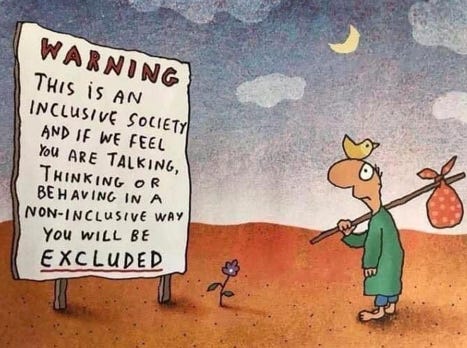
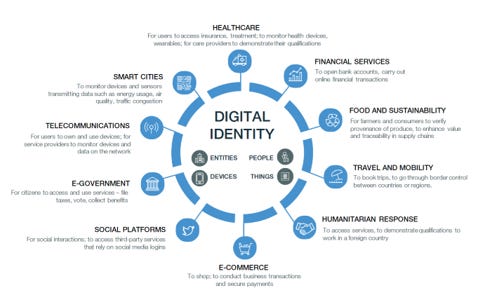
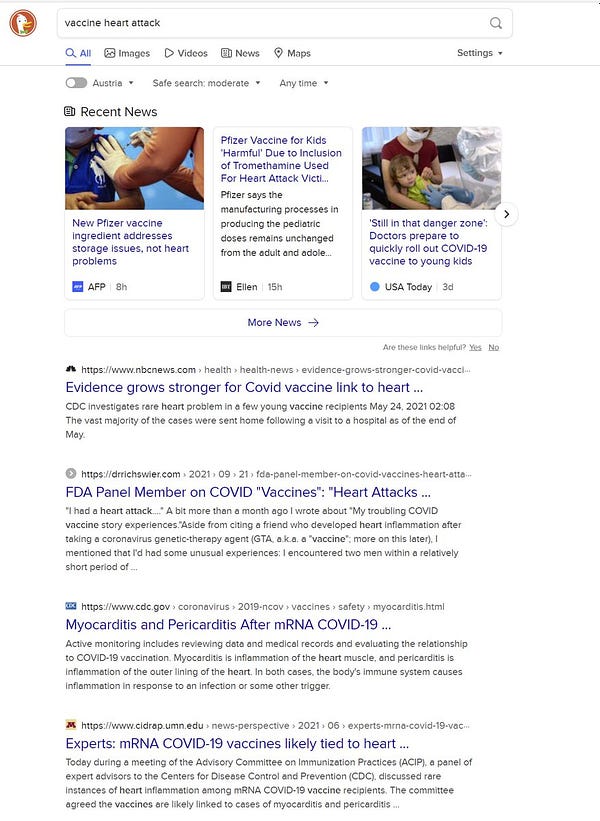
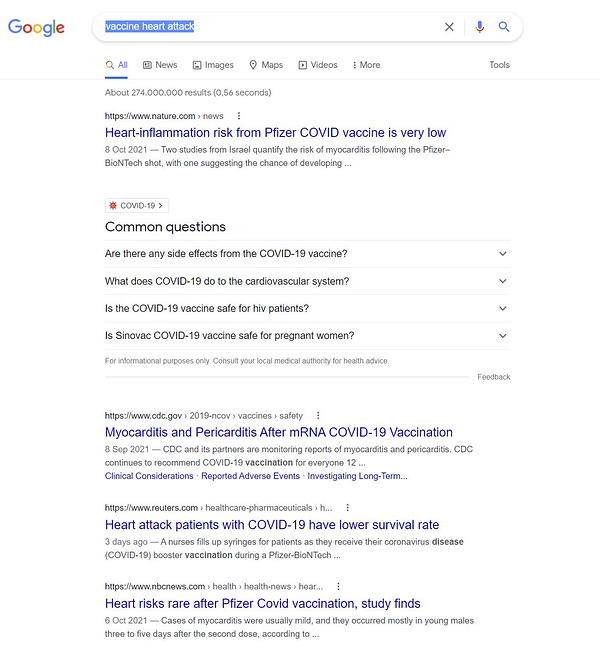 The global assault on reality and the creation of a new “reality” has created a Mass Psychosis, described by Dr. Mattias Desmet as Mass Formation.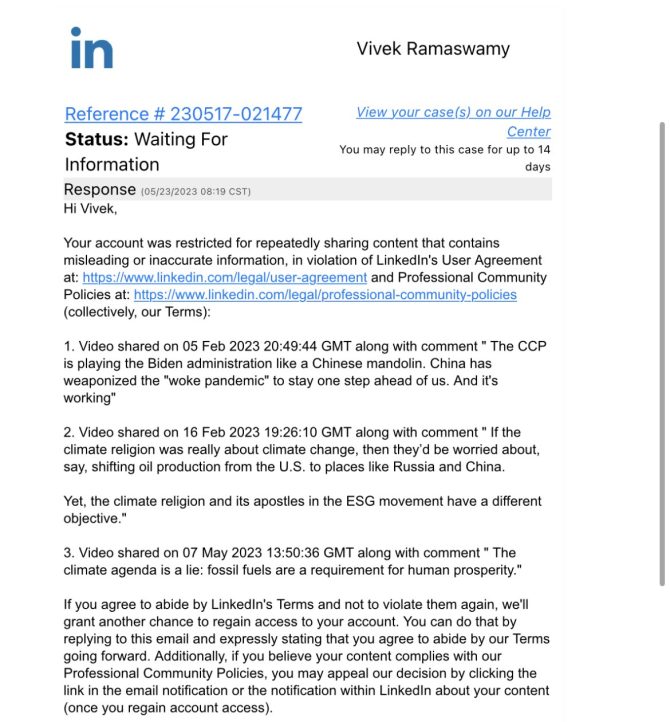
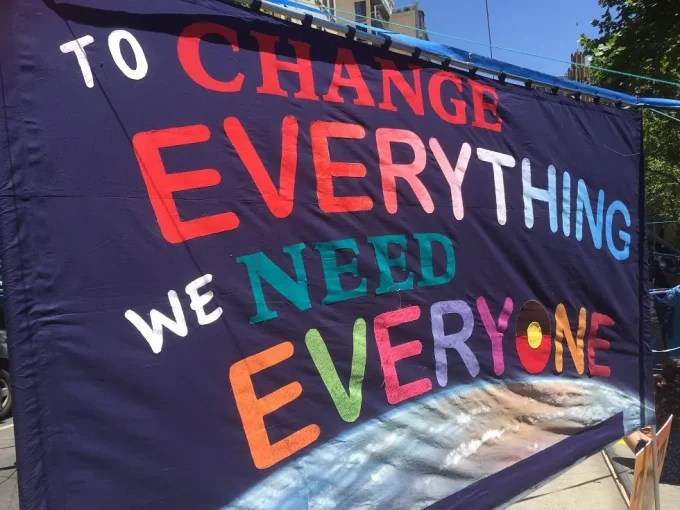

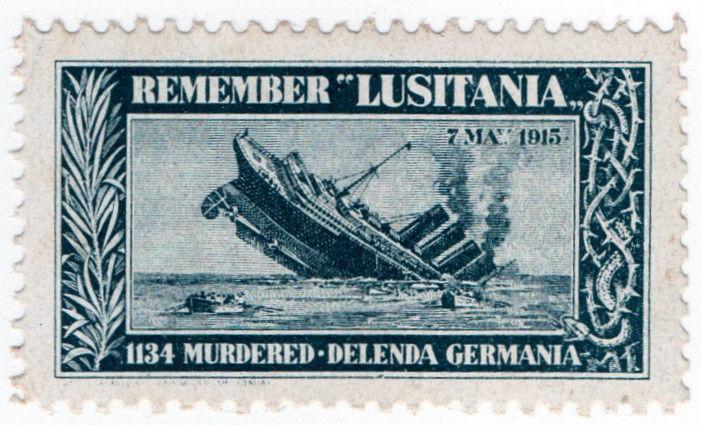
 Aletho News
 Aletho News