The Political Agenda of the IPCC
BY ROGER PIELKE JR. | THE HONEST BROKER | MAY 15, 2023
The Intergovernmental Panel on Climate Change (IPCC) was established as a scientific assessment process more than 35 years ago. Scientific assessments are of critical importance in many areas to help policy makers and the public to identify what is known, what is uncertain, as well as where there is contestation, uncertainties and areas of fundamental ignorance. Such assessments can also help us to understand policy options and expectations for how different choices might lead to different outcomes.
Regular readers of The Honest Broker will know that I have taken issue with the recent IPCC Sixth Assessment (AR6) based on an unacceptable number of errors and omissions in my areas of expertise, as well as its over-reliance on the most extreme climate scenarios. Today I take a look at the IPCC’s self-described political agenda and argue that the institution finds itself at a fork in the road.
Before proceeding, I want to be clear about what I mean when I talk about “the IPCC.” In one sense there is really no such thing as “the IPCC.” The organization’s assessment process includes many hundreds of people who do their work across three Working Groups to produce many dozens of chapters covering a wide range of topics. The Working Groups are largely independent of each other and even chapters within the same Working Group can be written largely independently of other chapters.
In another sense there is indeed such a thing as the IPCC — Specifically, its leadership and most engaged participants. These core participants represent a kind of climate in-group with a shared sense of purpose and an overarching commitment to a shared political agenda. For some people, their entire career is centered on the IPCC. These core participants do have a shared political agenda which can be seen in varying degrees within the reports.
So what is the political agenda of the IPCC in-group? Transformational change
When the IPCC released its Synthesis Report in March, it announced:
Taking the right action now could result in the transformational change essential for a sustainable, equitable world
It would be easy to write this sentence off as containing consultant-like and empty buzzwords. But the notion of “transformational change” has been widely employed in the academic literature on climate and the IPCC clearly defines what it means by “transformational change.”
In its AR6 Working Group 3 report the IPCC explains that transformation involves more than simply transitioning from one type of technology to another (emphasis added):
While transitions involve ‘processes that shift development pathways and reorient energy, transport, urban and other subsystems’ (Loorbach et al. 2017) (Chapter 16), transformation is the resulting ‘fundamental reorganisation of large-scale socio-economic systems’ (Hölscher et al. 2018). Such a fundamental reorganisation often requires dynamic multi-stage transition processes that change everything from public policies and prevailing technologies to individual lifestyles, and social norms to governance arrangements and institutions of political economy
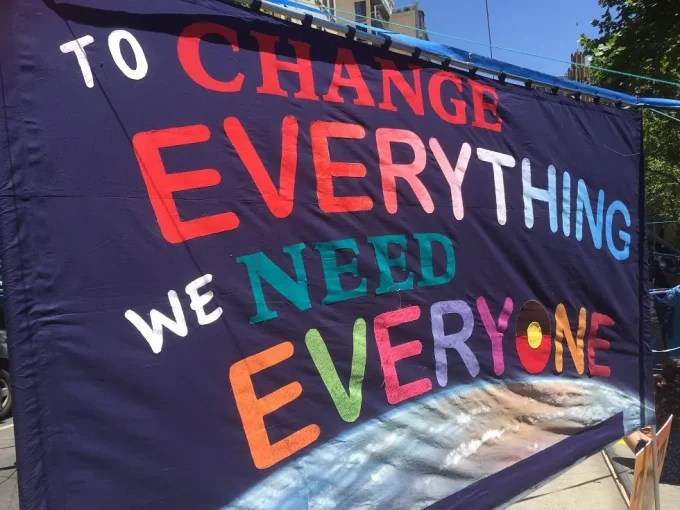
Transformational change means that everything changes.
What are examples of these sorts of changes? The IPCC identifies “the potential for virtuous cycles of individual level and wider social changes that ultimately benefit the climate.”
The IPCC continues (emphasis added):
The starting point for this virtuous circle are inner transitions. Inner transitions occur within individuals, organisations and even larger jurisdictions that alter beliefs and actions involving climate change (Woiwode et al. 2021). An inner transition within an individual (see e.g., Parodi and Tamm 2018) typically involves a person gaining a deepening sense of peace and a willingness to help others, as well as protecting the climate and the planet . . .”
What are examples of such “inner transitions”? The IPCC explains:
Examples have also been seen in relation to a similar set of inner transitions to individuals, organisations and societies, which involve embracing post-development, degrowth, or non-material values that challenge carbon-intensive lifestyles and development models . . .
The IPCC discusses the importance of “degrowth” to its vision of transformation in its AR6 Working Group 2 report:
Consumption reductions, both voluntary and policy-induced, can have positive and double-dividend effects on efficiency as well as reductions in energy and materials use . . . a low-carbon transition in conjunction with social sustainability is possible, even without economic growth (Kallis et al. 2012; Jackson and Victor 2016; Stuart et al. 2017; Chapman and Fraser 2019; D’Alessandro et al. 2019; Gabriel and Bond 2019; Huang et al. 2019; Victor 2019). Such degrowth pathways may be crucial in combining technical feasibility of mitigation with social development goals (Hickel et al. 2021; Keyßer and Lenzen 2021).
These views are no doubt legitimate and sincerely held. But I seriously doubt that a climate agenda focused on changing everything, grounded in inner transitions to support degrowth is going to get very far in Peoria, much less anywhere else. More broadly, why are they being used to frame a scientific assessment?
I’m far from the first to recognize that the IPCC has adopted a political agenda focused on transformational change. Writing in 2022, Lidskog and Sundqvist explain:
Transformation has become a buzzword within scientific and political discourses in which “transformative change” is stated to be the solution to many severe environmental challenges. Expert organizations such as the IPCC and IPBES have stressed that transformative change is necessary to meet environmental challenges (IPCC, 2018; IPBES, 2019). . . While transformative change is seen as the way forward and as an uncontroversial ambition—it is difficult to find anyone who is critical of it—its meaning is nevertheless unclear.
The adoption of transformational change as an overriding political objective in the IPCC AR6 (and in the IPCC 1.5 report before that) represents a departure from a more politically neutral use of the concept in the IPCC Fifth Assessment Report (AR5). In 2014, the AR5 described “transformation pathways” to refer to technological alternatives for mitigation, not to demand that everything must change across society:
Stabilizing greenhouse gas (GHG) concentrations at any level will require deep reductions in GHG emissions. Net global CO2 emissions, in particular, must eventually be brought to or below zero. Emissions reductions of this magnitude will require large-scale transformations in human societies, from the way that we produce and consume energy to how we use the land surface. The more ambitious the stabilization goal, the more rapid this transformation must occur. A natural question in this context is what will be the transformation pathway toward stabilization; that is, how do we get from here to there?
The IPCC AR5 acknowledged that there were many ways to address accumulating greenhouse gases (GHGs) in the atmosphere:
[T]here is no single pathway to stabilization of GHG concentrations at any level. Instead, the literature elucidates a wide range of transformation pathways. Choices will govern which pathway is followed . . .
This expansive view of policy possibilities is far removed from “processes that change everything” and a “deepening sense of peace.” The IPCC AR5 and AR6 have been rightly criticized for not considering a larger set of possibilities for mitigation (notably, equity), which also reflects a political orientation.
The IPCC – or to be more precise, influential elements of the IPCC – appears to have been captured by an in-group with shared political views related to climate. These views embrace concepts like degrowth and planetary boundaries and turn climate policy on its head such that ends become means.
Transformational change views climate policy as a lever through which to “change everything.” The expressed need for such momentous changes across society are grounded in a frightening, even apocalyptic, perspective on the future. As the head of the IPCC exhorted in March, the IPCC “underscores the urgency of taking more ambitious action and shows that, if we act now, we can still secure a liveable sustainable future for all.”
The political agenda of the IPCC reads as if it was developed by wealthy American and Europeans academics. The billions of people around the world who may lack energy services or enough food probably would welcome an agenda of change. Instead, the IPCC emphasizes transformational changes in the lifestyles of ordinary people in rich countries, for instance, the recent Synthesis Report explained: “Many mitigation actions would have benefits for health through lower air pollution, active mobility (e.g., walking, cycling), and shifts to sustainable healthy diets.”
I have little doubt that many who have worked on the IPCC AR6 might read this post and say, “Hmmm, I never saw any of that,” others might say, “Yup, that’s our agenda, so what?” and still others might say, “I have a different political or professional agenda that I inserted into the report.” Further, one can surely dive into the almost 10,000 pages of the AR6 reports and selectively construct a different political narrative. However, I argue that “transformational change” is what in the jargon of symbolic politics is called the “master symbol” — the dominant political framing of the AR6.
The IPCC has clearly departed from its role as a scientific assessment and is now much more deeply engaged in political advocacy. Trying to simultaneously engage in assessment and advocacy is never a good idea. I hypothesize that the IPCC’s political agenda of transformational change plays more than a small role in its stubborn reliance on implausibly extreme scenarios and its multiple errors and omissions related to the science of extreme weather and disasters — both of which help to underscore the demand for urgent and large-scale societal change.
The IPCC finds itself at a fork in the road and should be reformed. It needs to either operate as a trustworthy scientific assessment or alternatively, to fully embrace its current role as an environmental advocacy group pushing transformational change. There is no middle ground.
The Auto Industry In Jonestown
By Francis Menton | Manhattan Contrarian | May 5, 2023
The notorious events in Jonestown took place so long ago that most readers probably don’t have personal memory of them. In November 1978, in the jungles of Guyana, under the powerful spell of a religious cult with a charismatic leader, and of an all-embracing groupthink, some 900 people somehow agreed to participate in a mass suicide. It was a shocking instance of the kind of collective insanity to which humans can be susceptible.
You might think that the Jonestown massacre was a uniquely extreme example of such a mass psychosis, perhaps attributable largely to unusually susceptible subjects or to the isolated location. Surely our best and brightest leaders of government and business would never fall prey to such collective craziness.
If you think that, then perhaps you should look at what is currently going on in the automotive sector of the economy, under the spell of the climate cult and of government functionaries demanding fealty to anti-carbon doctrines.
On April 12, 2023 the EPA released its most recent proposed regulation of automobile emissions. The document is titled “Multi-Pollutant Emissions Standards for Model Years 2027 and Later Light- Duty and Medium-Duty Vehicles.” It is 262 pages long in the standard Federal Register single-spaced three-column format, thus designed to be virtually impossible to read for anyone who is not getting paid to do it. But the heart of the proposed new rule is that, over a period of a few years, it is to become difficult-to-impossible for automobile manufacturers to continue to sell any significant number of internal combustion engine vehicles. Of course EPA never states that explicitly, and makes the game as difficult as possible for any layman to decipher. But try this language from page 29,196 (12 pages into the document and still in the early part of the Executive Summary):
GHG Emissions Standards. . . . The proposed standards are projected to result in an industry-wide average target for the light-duty fleet of 82 grams/mile (g/mile) of CO2 in MY 2032, representing a 56 percent reduction in projected fleet average GHG emissions target levels from the existing MY 2026 standards.
As I understand it, no internal-combustion car can meet this 82 g/mile CO2 emission standard on its own, so the standard effectively means that a manufacturer can only sell IC cars if it can also make and sell enough “zero-emission” cars to get an average down to this level. Thus does EPA deviously announce its intention to force manufacturers to make, and consumers to buy, all or almost all electric vehicles.
Now, at this point this is only a proposed rule. Currently, despite wide availability of electric vehicles, they have only about a 7% market share in the U.S. They also have many disadvantages as against combustion vehicles, including higher price, difficulty to repair when damaged, poor resale value, limited range, long time to recharge, and so forth. And all those are before you get to the most important problem with EVs, which is that the government geniuses are simultaneously working to destroy the electrical grid that is supposed to be the source of the energy for these things.
Might you think that the auto makers would be pushing back on behalf of themselves and their customers to keep combustion vehicles available? You would be wrong. From all appearances, the manufacturers are falling all over themselves to get on the electric car bandwagon. The EPA document itself contains a long list of industry announcements (from page 12,190 – 12,191):
A proliferation of announcements by automakers in the past two years signals a rapidly growing shift in product development focus among automakers away from internal-combustion technologies and toward electrification. For example, in January 2021, General Motors announced plans to become carbon neutral by 2040, including an effort to shift its light-duty vehicles entirely to zero-emissions by 2035. In March 2021, Volvo announced plans to make only electric cars by 2030, and Volkswagen announced that it expects half of its U.S. sales will be all-electric by 2030. In April 2021, Honda announced a full electrification plan to take effect by 2040, with 40 percent of North American sales expected to be fully electric or fuel cell vehicles by 2030, 80 percent by 2035 and 100 percent by 2040. In May 2021, Ford announced that they expect 40 percent of their global sales will be all-electric by 2030. In June 2021, Fiat announced a move to all electric vehicles by 2030, and in July 2021 its parent corporation Stellantis announced an intensified focus on electrification across all of its brands. Also in July 2021, Mercedes-Benz announced that all of its new architectures would be electric-only from 2025, with plans to become ready to go all-electric by 2030 where possible.
But as with the transformation of the electrical grid — where we forge ahead without ever having gotten a demonstration of feasibility or cost — the automakers are also forging ahead en masse into EVs with no demonstration that electric cars can become a successful mass product that fulfills all the functions that IC cars can fulfill. Tesla seems recently to have turned the corner into profitability, but with an expensive niche product that only the wealthy can afford and which is almost always a second (or third or fourth) car.
How is it going with other manufacturers? The Wall Street Journal had an editorial on May 3 summarizing the results so far for a collection of EV startups. There’s Lordstown:
Lordstown had manufactured only 31 vehicles by late February 2023—most of which had to be recalled. Losing patience, Foxconn on April 21 threatened to withdraw its investment, triggering Lordstown’s bankruptcy warning.
And Rivian:
Rivian commanded a $153.3 billion market capitalization. Now it’s worth less than $12 billion.
The WSJ summarizes stock trends of other EV startups:
[O]ther EV startups have crashed from their pandemic highs, including Canoo (down 96%), Nikola (99%), Faraday Future Intelligent Electric (99%), Rivian (90%), Lucid (87%) and Fisker(81%).
How about at the big traditional manufacturers. Robert Bryce at his Substack on May 3 collects some recent information as to Ford:
In March, Ford Motor Company announced that it lost $2.1 billion on its EV business last year. Those losses were double the losses it had on EVs in 2021. As I noted in a video I posted on TikTok on March 23, Ford made 61,575 EVs in 2022. Thus, the company lost about $34,000 on every EV it sold last year. I also noted that the costs of making EVs aren’t falling. Last year, the cost of battery packs for EVs went up by 7%. . . . Indeed, it appears Ford’s 2022 losses were only a warm-up lap. Yesterday afternoon, Ford reported a $722 million loss on its EV business over the first three months of 2023. During that span, Ford sold 10,866 EVs, meaning it lost $66,446 on every EV it sold.
Bryce goes on to quote a JD Power report from May 1:
“[M]any new vehicle shoppers are becoming more adamant about their decision to not consider an EV for their next purchase.”
When I last had a post on EVs (February 23), several commenters expressed the opinion that they thought the manufacturers could overcome all the manufacturing problems (cost, battery capacity, charging, etc.) and thus EVs would shortly become the superior product in the marketplace. I suppose that is possible, although if central planning turns out to work in this instance it will be the first time ever anywhere. And further, there is nothing the manufacturers can do to make a country of 200 million or so EVs work when all the reliable generation on the electrical grid has been removed, and home heat has also been electrified. The auto manufacturers seem to be only too willing to go along with a collective suicide, a la Jonestown.
The climate scaremongers: How to lose a lot of money – buy an electric car
By Paul Homewood | TCW Defending Freedom | May 19, 2023
New analysis shows that electric cars (EVs) are depreciating at twice the rate of petrol cars. According to the Express :
‘EVs on average will lose 51 per cent of their purchase value from 2020 to 2023, compared with just 37 per cent for petrol vehicles. This equates to a massive £15,220 loss for electric car owners, with petrol drivers seeing a decrease of £9,901.
‘The data, from ChooseMyCar.com, used a comparison of new car prices three years ago compared with their value now.
‘The higher the original purchase price of the car, the bigger the loss, with the Tesla Model S losing £25,000 in value in just three years – a 46 per cent drop. However, entry-level EVs like the Nissan Leaf are also losing a massive amount of value in such a short space of time. The Leaf’s value dropped by £13,000 – or 58 per cent – despite being one of the most popular small EVs on the market.’
There are three factors in play here. Firstly the battery life for an EV, typically around 100,000 miles, means that the car is virtually worthless once it gets to around 80,000 miles. Nobody is going to pay thousands for a car which will end up in the scrapyard a year or so later. This depreciation works its way up the chain. For instance, if you buy a petrol car with 50,000 miles on the clock, you expect to still get a reasonable trade-in three years later.
Secondly, whilst new EVs are attractive for companies and green virtue signallers thanks to government subsidies, there is very little demand for them amongst the public at large. People buy second-hand cars for a very good reason – they cannot afford new models. Consequently they cannot afford to pay a surcharge for a second-hand EV, even if they want one.
Thirdly, increasing numbers of EVs are appearing on the second-hand market, reflecting the surge in new sales in recent years. As demand has not increased, this is also forcing the price down.
The prospect of losing so much money in depreciation will inevitably make drivers think twice before buying a new one.
Meanwhile a US study has found that EVs may not reduce emissions of carbon dioxide as much as thought – indeed they may even increase emissions. According to the report:
‘the relevant and surprising emissions wildcard comes from the gargantuan, energy-hungry processes needed to make EV batteries. To match the energy stored in one pound of oil requires 15 pounds of lithium battery, which in turn entails digging up about 7,000 pounds of rock and dirt to get the minerals needed – lithium, graphite, copper, nickel, aluminum, zinc, neodymium, manganese and so on. Thus, fabricating a typical single half-ton EV battery requires mining and processing about 250 tons of materials.’
The fact that much of this mining and processing takes place in China, where energy is nearly all derived from fossil fuels, makes the carbon footprint even larger. Other studies have suggested that an EV will break even at about 60,000 miles as far as emissions are concerned. This new study implies that the situation is probably worse.
And as some of us have been warning for years, the UK and EU rush to phase out petrol/diesel cars is beginning to cause real harm to the European car industry. Whereas Europe has long had an unassailable technological lead over China in car manufacturing, EVs have introduced a level playing field which China is now exploiting through its lower energy and labour costs, along with its near–monopoly of the battery market.
As a consequence, Chinese EVs are flooding the German market. Official statistics have revealed that 28.2 per cent of the electric vehicles imported into the country during the January-March period originated from China. This figure demonstrates a substantial rise from the 7.8 per cent recorded over the same period in 2022, highlighting China’s expanding influence in the global adoption of EVs. If this was not bad enough, the data also reveals a decline of 23.9 per cent in German exports of new vehicles to China compared with the same quarter of the previous year.
Unsurprisingly, then, a major study by Allianz Trade, part of the European insurance giant, says that China’s growing share of the EV market in its home market and the EU will see the European car industry shrink by €24billion a year and associated supply chain industries shrink by an additional €21billion.
It is not only Chinese inroads into Europe which are in play here; another nail in the European motor car industry’s coffin is the fact that the enforced switch to EVs will force millions out of their cars completely, because they are simply not fit for purpose for many drivers.
Indeed it is becoming increasingly clear, with ULEZ zones, 15-minute cities and so on, that the real objective of European governments, including our own, is drastically to reduce the numbers of cars on the road, cut the mileage driven and force us all on to buses, bikes and Shanks’s pony.
They do not seem to care that they will destroy a major industry and millions of jobs as a direct consequence. – Full article
Germany mulls energy rationing – media
RT | May 12, 2023
Electricity rationing could become unavoidable in Germany as part of an energy transition strategy starting from next year, public broadcaster BR24 reported on Friday.
Germany’s Federal Network Agency is considering limiting the use of power in peak hours as local grids fail to cover rising demand, which is expected to surge by over 10% in the coming years driven by a shift to clean energy, the outlet said.
More e-cars and heat pumps mean greater demand for electricity but local networks are not always designed for high loads, the article stated. Another problem for the country’s power operators is insufficient network expansion which currently lacks around 14,000 kilometers of infrastructure.
The head of the Federal Network Agency, Klaus Muller, suggested allowing German network operators limit the use of electricity at peak hours to avoid overload, from January 2024.
“If it is proven that this network overload could occur, then the distribution network operator has the right to dim,” he told BR24.
In addition to the EV transition, the German government also faces the challenge of switching heating systems from oil and gas. Abandoning hydrocarbons means they will have to be replaced with electric heating pumps, but the cables and transformers presently in use are not suitable for the increasing needs of the future, the outlet noted.
“So that there are no delays when connecting the heat pumps and charging devices, the distribution system operator also needs an instrument for control,” the Federal Network Agency told BR’s political magazine, Kontrovers.
The only feasible measure to maintain the stable operation of power networks is to take heat pumps and electric vehicles off the grid during peak load times, the outlet said, adding that the Federal Network Agency is now working out the details of the new regulation.
One Health: A Plan to ‘Surveil and Control Every Aspect of Life on Earth’?
This is part two of a two-part series on the One Health initiative. Read part one here.
By Michael Nevradakis, Ph.D. | The Defender | May 8, 2023
The World Health Organization (WHO) defines “One Health,” as “an integrated, unifying approach that aims to sustainably balance and optimize the health of people, animals and ecosystems,” as they are “closely linked and interdependent” — a concept that on the surface appears to promote noble goals interlinking human and environmental health.
However, some scientists and medical experts are concerned about One Health’s vague goals. Arguing that the concept has been “hijacked,” they question the intent of those involved with the development and global rollout of the concept — including the WHO, the Centers for Disease Control and Prevention (CDC) and the World Bank.
Experts who spoke with The Defender also raised questions about other aspects of the One Health concept, including a biosecurity agenda, a global surveillance system, vaccine passports and restrictions on human behavior.
While these goals are underpinned by a vaguely defined “Theory of Change,” experts told The Defender that major financial interests are at the heart of the One Health agenda, which appears to be closely linked to climate change and sustainable development initiatives promoted by the same global organizations.
One Health objectives include a ‘global takeover of everything’
In a May 1 article, Dr. Joseph Mercola connected the One Health concept, as promoted by global organizations, to the policies and restrictions pursued in response to COVID-19, describing it as an attempted “global takeover of everything.”
Mercola tied the One Health concept to key entities that have supported gain-of-function research. According to Mercola:
“Interestingly, the term ‘One Health,’ which was formally adopted by the WHO and the G20 health ministers in 2017, was first coined by the executive vice president of the EcoHealth Alliance, the same firm that appears to have had a hand in the creation of SARS-CoV-2.”
During the 2019 lecture “Can One Health Help Prevent the Next Pandemic?” EcoHealth Alliance President Peter Daszak, Ph.D., commissioner in The Lancet’s One Health Commission, said “emerging infectious diseases” are “a growing global threat.”
He also argued that many of these emerging diseases are “zoonotic — spread from animals to humans.”
Francis Boyle, J.D., Ph.D., professor of international law at the University of Illinois and a bioweapons expert who drafted the Biological Weapons Anti-Terrorism Act of 1989, questioned this narrative, telling The Defender :
“All these ‘emerging infectious diseases’ are emerging out of their offensive biological warfare weapons programs conducted in their BSL4 [biosecurity level 4] and BSL3 laboratories.
“If you look at the people on the WHO advisory committee dealing with ‘emerging infectious diseases,’ that’s exactly what they are doing — ‘emerging’ them from their labs.”
One example is that of Marion Koopmans, DVM, Ph.D., director of the WHO Collaborating Centre for emerging infectious diseases at Erasmus Medical Centre in the Netherlands and member of the WHO’s One Health High-Level Expert Panel (OHHLEP).
According to Boyle, “Erasmus is where this offensive Nazi biowarfare gain-of-function death science dirty work first became notorious under Fouchier, [who] started the entire controversy over his gain-of-function work there.”
Boyle was referring to Ron Fouchier, Ph.D., who also is deputy head of Erasmus’ Viroscience Department and who, according to Science, “alarmed the world” in 2011, after he and other researchers “separately modified the deadly avian H5N1 influenza virus so that it spread between ferrets” — an early example of gain-of-function research.
Dr. Meryl Nass, an internist and biological warfare epidemiologist who is a member of the Children’s Health Defense scientific advisory committee, said such objectives are kept deliberately vague. She referred to a CDC document that stated:
“Successful public health interventions require the cooperation of human, animal, and environmental health partners … Other relevant players in a One Health approach could include law enforcement, policymakers, agriculture, communities, and even pet owners.
“By promoting collaboration across all sectors, a One Health approach can achieve the best health outcomes for people, animals, and plants in a shared environment.”
Nass wrote on her blog, “I anticipate that One Health will be used to impose changes in the way humans and animals interact … most likely based on the needs of the WEF [World Economic Forum]/elites and not the needs of the people or the animals that will be affected.”
Reggie Littlejohn, founder and president of Women’s Rights Without Frontiers and co-chair of the Stop Vaccine Passports Task Force, told The Defender, “It’s not clear that One Health is prioritizing human health.”
Highlighting the “vague” language employed by the global organizations promoting One Health, Littlejohn said that one goal may be to “govern farm animal health in addition to human health,” through which “they could do things like forcing vaccines on livestock.”
One Health means ‘surveilling everything’
The experts who spoke with The Defender expressed concerns over the biosecurity agenda that is associated with the stated objectives of One Health.
According to Nass, this reflects how the WHO “has been changing into a biosecurity agency,” adding that “the justification, apparently, for the WHO’s director-general to take over jurisdiction of healthcare during pandemics, but also potentially ecosystems, animals and plants, is through One Health.”
Nass noted that One Health “is mentioned several times in the National Defense [Authorization] Act for Fiscal Year 2023” (NDAA), which includes 18 pages on “pandemic preparedness” and a formal definition of the “One Health approach” on page 952 of the act.
Independent journalist and researcher James Roguski also highlighted the prominent placement of One Health in the NDAA and noted that, by formally defining the concept within the act, it is now part of the Code of Federal Regulations.
However, Roguski said the NDAA goes even further:
“The U.S. has pledged a billion dollars a year to the World Bank Pandemic Fund in support of the global health security agenda. The WHO is one of 14 intermediaries who will receive and redistribute some of that billion dollars.
“Basically, it’s capitalism, it’s corruption, it’s an abomination from a health perspective. Let’s just throw money at pharmaceutical companies, build out the infrastructure in these nations and, if you’re making tons of products locally, you’re going to be able to convince the local government to stick them in people’s arms or shove it down their throat.
“And none of it really has shown to be of any health benefit. It’s damage to people’s health.”
Associated with the promotion of a global biosecurity agenda is the development of a global surveillance infrastructure that would purportedly protect human and animal health and the environment. An Oct. 3, 2022, WHO document states:
“The emergence of the SARS-CoV-2 virus that caused COVID-19 has underlined the need to strengthen the One Health approach, with a greater emphasis on connections to animal health and the environment …
“… It uses the close, interdependent links among these fields to create new surveillance and disease control methods. …
“We now have an unprecedented opportunity to strengthen collaboration and policies across these many areas and reduce the risk of future pandemics and epidemics while also addressing the ongoing burden of endemic and non-communicable diseases
“Surveillance that monitors risks and helps identify patterns across these many areas is needed.”
Remarking on this, Littlejohn said One Health’s proponents talk about “interoperable, integrated surveillance systems.” She told The Defender :
“I believe … these surveillance systems of people, animals, plants, and the environment are going to be coordinated by some kind of a global surveillance system that is interoperable globally and integrated.
“Whoever’s running this show, the WHO, the Chinese Communist Party … the Bill and Melinda Gates Foundation, who are the people who really appear to be running the show at the WHO, are going to be able to tap into and see all of our private information. Not just us, but animals and plants.”
Dr. David Bell, a public health physician and biotech consultant and former director of global health technologies at Intellectual Ventures Global Good Fund, told The Defender that what global organizations intend is “surveilling everything.” He said:
“It means surveilling everything, surveilling the climate for possible threats, surveilling animal population, surveilling wildlife, surveilling the soil to see if there’s new traces of virus or bacteria in river systems, et cetera.
“This allows you to ‘discover’ what we already know is nature, and then turn nature into a potential threat or into a threat. The more surveillance you have and the wider it is, the more inevitable ‘threats’ you’ll find … because you can make an argument that almost any new variant virus is a ‘threat.’
“It will allow them to keep a constant kind of fear which then allows you to introduce authoritarian controls such as central bank digital currencies and digital passports … that allow them to monetize the human population more effectively.”
Nass noted that global actors such as the WHO “talk about sharing of specimens during a pandemic … so they can try to make vaccines too. However, they don’t talk about performing surveillance on human beings. But what they did say, which let the cat out of the bag, is that they would want to get informed consent from countries for sharing of genomic data, rather than from individuals.”
Part of this surveillance infrastructure also would include vaccine passports, which figure prominently in the pandemic treaty and amendments to the International Health Regulations (IHR) currently under negotiation at the WHO.
According to Littlejohn:
“I believe that they laid the infrastructure during the COVID-19 crisis, and we’re having a little bit of a ‘break’ here between pandemics, but that structure, that infrastructure is going to snap shut with the next pandemic if we don’t stop it. That structure has to do with vaccine passports.
“It could be called a ‘smart health card’ or ‘digital health ID,’ or even a mandatory digital driver’s license can serve as the platform for a China-style social credit system. And there’s a new bill in front of the Senate right now … the Improving Digital Identity Act of 2023 … It’s a mandatory national ID that’s going to be interoperable, coordinated, integrated and can serve as the same platform as China’s social credit system … to surveil us.”
Restrictions on human behavior could lower humans to the level of animals
The WHO’s Oct. 3, 2022, document also claimed that “Some 60% of emerging infectious diseases that are reported globally come from animals, both wild and domestic,” adding that “human activities and stressed ecosystems have created new opportunities for diseases to emerge and spread.”
Such stressors “include animal trade, agriculture, livestock farming, urbanization, extractive industries, climate change, habitat fragmentation and encroachment into wild areas,” according to the WHO.
“To the extent that carbon emissions due to transportation within cities would contribute to climate change, then the ‘15-minute city’ would be a way of addressing that,” Littlejohn said. “The danger is that they will enforce it by having surveillance cameras everywhere to make sure you don’t go outside of your district without permission.”
In a March 30 article, “Your Daughter for a Rat,” Bell cited a One Health editorial published in The Lancet stating that “all life is equal, and of equal concern.” In response, Bell suggested that One Health aims to lower humans to the level of animals.
The same Lancet article described One Health as “a call for ecological, not merely health, equity” and called for a “subtle but quite revolutionary shift of perspective” away from “anthropocentrism”: “All life is equal, and of equal concern.”
“It looks like this is going to be the justification for moving people down to the value of animals,” Nass said in response; a sentiment shared by Boyle, who said, “One Health relates the healthcare of human beings to the healthcare of animals and thus reduces healthcare for human beings to the level of healthcare for animals.”
According to Bell, “suggesting that we have a duty as a species on this planet to look after every species equally and treat them more equally [is] becoming sort of a religion or dogma. It defies what any rational society in the history of humanity” has practiced and is “a very unusual approach and potentially very scary.”
One Health: Follow the money
The WHO has attempted to give theoretical credence to the One Health concept by developing a so-called “Theory of Change” (ToC).
Although the WHO says the ToC is designed to provide “a conceptual framework” for “organisations, agencies and initiatives working towards similar One Health goals” and a “common narrative of coherence,” the theory itself does not appear to have a clear definition.
“They want to be able to do whatever they want,” Littlejohn said. “If you define it, then you can hold them to the definition … one of the tactics is just to be really obscure and incomprehensible.”
“This is a term that is used in these circles,” Bell added. “It’s stating the obvious, that if you do a certain act, you’ll have a certain outcome. It’s a fancy way of saying that.”
Bell also referred to the “fallacy that is being pushed that humans are having increasing contact with wildlife,” supposedly leading to “this threat of viruses jumping from wildlife to humans.”
Calling it a “ludicrous claim,” Bell said that “when humans move into wildlife habitats, the wildlife don’t start living with humans. They die out.”
Noting that “it used to be very common” for people to live with farm animals, Bell added that the claim that pandemics are becoming more common due to increased contact with animals is itself “not true,” but is “used to instill fear and to try to get people to buy into this One Health, constant health emergency agenda.”
Nass said One Health proponents “don’t actually have any evidence” to support their claims, offering the example of antimicrobial resistance in bacteria found in meat consumed by humans, as a result of antibiotics administered to livestock. “That’s been the hook that One Health has been hung on,” Nass said.
However, Nass said this problem “could be solved in a heartbeat if the U.S. Food and Drug Administration or the U.S. Department of Agriculture just told farmers they can’t put antibiotics into animal feed anymore, they can only use them when an animal gets sick.”
In his recent article, Mercola suggested following the money. “Private interests wield immense power over the WHO, and a majority of the funding is ‘specified,’ meaning it’s earmarked for particular programs. The WHO cannot allocate those funds wherever they’re needed most.”
As a result, this “massively influences what the WHO does and how it does it. So, the WHO is an organization that does whatever its funders tell it to do,” naming organizations such as the Gates Foundation as prime funders of the WHO.
Bell said that supporters of One Health include “those who have been pushing the COVID agenda … and enriching themselves from it,” including “private foundations who are on the bandwagon” and “corporations who stand to gain from controlling the food chain and controlling agriculture and pharmaceuticals, et cetera.”
“It’s corporate authoritarians that have benefited themselves from public health through COVID and the certainly inappropriate COVID response,” Bell added. “And it’s the same and it’s not disconnected with the climate emergency agenda.”
One prominent financial actor closely involved with the development of the One Health agenda is the World Bank, as WHO documents indicate.
At a November 2022 OHHLEP meeting, Franck Berthe, the World Bank’s senior livestock specialist, introduced the World Bank’s Financial Intermediary Fund, which would “allow countries to borrow funds to strengthen their health system and promote the OH [One Health] approach.”
According to Nass, “the WHO and the World Bank have helped form this financing operation for the biosecurity agenda,” while Boyle told The Defender, “There is nothing humanitarian about these backers and the WHO promoting the One Health agenda.”
Both Nass and Bell said the One Health agenda is closely tied to the UN’s Sustainable Development Goals and Agenda 2030. Bell said that the One Health agenda attempts to deal with a supposed “existential threat to human health” that “must be dealt with in a centralized way, rather than giving people a choice.”
One Health closely tied to WHO pandemic treaty, IHR amendments
Experts who spoke with The Defender also emphasized the connections between the One Health concept and the pandemic treaty and IHR amendments under negotiation.
Mercola wrote that through the One Health agenda, which recognizes “a very broad range of aspects of life and the environment [that] can impact health and therefore fall under the ‘potential’ to cause harm,” the WHO “will be able to declare climate change as a health emergency and subsequently require climate lockdowns.”
Roguski, who has extensively researched the pandemic treaty and IHR amendments, said that in amendments the EU recently proposed for the pandemic treaty, the term “One Health” appears 29 times, including calling upon countries to develop and regularly update pandemic prevention plans via the One Health approach.
Referring to the need to prevent potential “pandemic situations,” the proposals also call for strengthening global public health surveillance “using a One Health approach,” which will also “address the drivers of the emergence and re-emergence of disease at the human-animal-environment interface, including but not limited to climate change, land use change, wildlife trade, desertification and antimicrobial resistance.”
The proposals also suggest the One Health approach could be used “to produce science-based evidence, and support, facilitate and/or oversee the correct, evidence-based and risk-informed implementation of infection prevention and control,” and go as far as to suggest targets on “antimicrobial consumption/use.”
Roguski told The Defender that the latest draft of the pandemic treaty refers to One Health 13 times. Such language would “be used to take over complete control of our lives,” Roguski added.
For example, one proposal states, “Each Party shall, in accordance with national law, adopt policies and strategies, supported by implementation plans, across the public and private sectors and relevant agencies, consistent with relevant tools, including, but not limited to, the International Health Regulations, and strengthen and reinforce public health functions for: (c) surveillance (including using a One Health approach).”
Other proposals include:
“The Parties commit to strengthen multi-sectoral, coordinated, interoperable and integrated One Health surveillance systems … to identify and assess the risks and emergence of pathogens and variants with pandemic potential, in order to minimize spill-over events, mutations and the risks associated with zoonotic neglected tropical and vector-borne diseases, with a view to preventing small-scale outbreaks in wildlife or domesticated animals from becoming a pandemic.
“Each Party shall … develop and implement a national One Health action plan on antimicrobial resistance that strengthens antimicrobial stewardship in the human and animal sectors, optimizes antimicrobial consumption, increases investment in, and promotes equitable and affordable access to, new medicines, diagnostic tools, vaccines and other interventions, strengthens infection prevention and control in health care settings and sanitation and biosecurity in livestock farms, and provides technical support to developing countries.”
Roguski said the phrase “One Health” doesn’t directly appear in documents related to the proposed IHR amendments, but he added the WHO “is going to try to get them both to prevail,” referring to both the treaty and IHR amendments.
Littlejohn said, the One Health approach and the proposed language in the treaty “gives them the right to surveil and potentially control every aspect of life on earth.”
Noting that the proposed treaty also calls for a “commitment to counteract ‘misinformation,’ ‘disinformation,’ and ‘false news,’” Littlejohn added, “they’re going to surveil our social media … and if any of us steps out of line by contradicting what the WHO says, then we could be censored.”
“That’s what I think is in mind with this commitment to ‘coordinated, interoperable and integrated’ One Health surveillance systems,” Littlejohn added. “I think that’s how it could end up being deployed. Ultimately, globalist entities, such as the World Economic Forum and the UN are using the WHO as their way of establishing global control.”
“The reason that health is such a good pretext is that people can become terrified,” Littlejohn added. “To the extent that their minds are paralyzed if they think they could die or get really sick, they’re willing to give up freedoms that they would not be willing to give up in other contexts.”
Roguski told The Defender :
“They made a lot of bad decisions. They gave a lot of bad advice [and] they caused a lot of harm to a lot of people. You can’t just give those people more power, authority and control without looking at what they did and going, ‘no, you should not be in charge of any of this.’”
In turn, Mercola wrote that “The globalist takeover hinges on the successful creation of a feedback loop of surveillance for virus variants, declaration of potential risk followed by lockdowns and restrictions, followed by mass vaccinating populations to ‘end’ the pandemic restrictions, followed by more surveillance and so on.”
And according to Bell, One Health “is part of a much bigger picture of finding ways to pull apart the intrinsic ideas that most societies have been built on.”
“I think that this is part of a move to undo these sorts of ideas and to replace them with a sort of religion of fear of our surroundings and denigration of other humans that can then be used by very greedy people to increase their wealth and power,” Bell said. “It’s taken over public health to a large extent.”
Michael Nevradakis, Ph.D., based in Athens, Greece, is a senior reporter for The Defender and part of the rotation of hosts for CHD.TV’s “Good Morning CHD.”
This article was originally published by The Defender — Children’s Health Defense’s News & Views Website under Creative Commons license CC BY-NC-ND 4.0. Please consider subscribing to The Defender or donating to Children’s Health Defense.
The Practical Impossibility of Large-Scale Carbon Capture and Storage
By Steve Goreham | MasterResource | May 2, 2023
“CCS has been slow to take off due to the cost of capture and the limited salability of carbon dioxide as a product. Thirty-nine CCS facilities capture CO2 around the world today, totaling 45 million tons per year, or about one-tenth of one percent (0.1%) of industrial emissions produced globally.”
The Environmental Protection Agency is working on a new rule that would set stringent limits on carbon dioxide (CO2) emissions from US power plants. Utilities would be required to retrofit existing plants with carbon capture and storage (CCS) technology or to switch to hydrogen fuel. Others call for the use of CCS to decarbonize heavy industry. But the cost of capture and the amount of CO2 that proponents say needs to be captured crush any ideas about feasibility.
Carbon capture and storage is the process of capturing carbon dioxide from an industrial plant before it enters the atmosphere, transporting it, and storing it for centuries to millennia. Capture may be accomplished by filtering it from combustion exhaust streams. Pipelines are proposed to transport the captured CO2. Underground reservoirs could be used for storage. For the last two decades, advocates have proposed CCS to reduce emissions from coal plants and steel, chemical, and other hard-to-decarbonize industries in order to fight human-caused climate change.
CCS has been slow to take off due to the cost of capture and the limited salability of carbon dioxide as a product. Thirty-nine CCS facilities capture CO2 around the world today, totaling 45 million tons per year, or about one-tenth of one percent (0.1%) of industrial emissions produced globally. Of these, 20 reside in the US or Canada, six in Europe, and five in China. Twenty-four of these facilities use captured CO2 for enhanced oil recovery. Captured CO2 is injected into oil wells to boost oil output,
The news from these facilities is mixed. Many are not meeting their carbon-capture goals or are incurring costs well over budget. Nevertheless, Australia, Canada, China, Japan, the US, and nations of Europe now offer billions in direct subsidies or tax breaks to firms for capture of CO2 emissions and to build pipelines and storage. Over 300 large and small capture projects are in planning around the world which, after completion, may be able to boost capture to 0.5 percent of man-made emissions.
Illinois, Iowa, and other states are struggling with issues involving plans for CO2 pipelines. Ethanol plants and other facilities propose to capture CO2 and need a new network of pipelines to transport the gas to underground storage sites. These pipelines face strong opposition from local communities over farmland use and safety concerns in the case of a pipeline rupture.
Carbon capture and storage is very expensive. An example concerns plans for CCS in Wyoming, the leading US coal state. Wyoming mined 41 percent of US coal in 2020 and coal-fired plants produced about 85 percent of the state’s electricity. With abundant coal resources and good opportunities to store CO2 underground, Wyoming appeared to be an excellent candidate to use CCS. The state passed House Bill 200 in March 2020, directing utilities to produce 20 percent of electricity from coal plants fitted with CCS by 2030.
In response to the statute, Rocky Mountain Power and Black Hills Energy, Wyoming’s two major power companies, analyzed alternatives for their operations and provided comments to the Wyoming Public Service Commission in March 2022. But the comments were not favorable for CCS. Black Hills Energy determined that adding CCS to two existing coal plants would cost an estimated $980 million, or three times the capital cost expended to build the plants. Rocky Mountain Power stated that adding CCS to its existing plants was “not economically feasible at this time.”
Beyond cost, the amount of carbon dioxide that advocates say must be captured is vast. The amount of CO2 produced by industry is small in global terms, only about five percent of what nature releases into and absorbs from the atmosphere every day. But the amount of industrial CO2 produced is still huge in human terms.
For example, an empty Boeing 747 jumbo jet weighs 412,300 pounds (187,000 kg). Its maximum fuel weight is 433,195 pounds (196,494 kg), more than the empty weight of the aircraft. During fuel combustion, two oxygen atoms are taken from the atmosphere and combined with each carbon atom. For each kilogram of jet fuel burned, 3.16 kilograms of carbon dioxide are created.
Consider the Drax Power Station in North Yorkshire, England, the third-largest power plant in Europe, which has been converted to using two-thirds biomass fuel. The plant is experimenting with CCS to reduce emissions. Each day, the plant uses about 20,000 tons of wood pellets delivered by 475 railroad cars. Picture the volume that these railroad cars would carry and then more than double it to get an idea of the amount of CO2 to be captured and stored each day.
The world’s heavy industries use vast amounts of coal, natural gas, and petroleum. Ammonia, cement, plastics, steel, and other industries produce billions of tons of materials each year for agriculture, construction, health care, industry, and transportation. Capturing, transporting, and storing CO2 from these processes would involve trillions of dollars and many decades of investment.
The International Energy Agency calls for 9 percent of the world’s CO2 emissions to be captured and stored by 2050. Today we have a mix of 39 major and minor capture facilities in operation. The IEA estimates that 70 to 100 major capture facilities will need to come online each year until 2050 to achieve this goal. It’s unlikely that even 20 percent of the goal will be achieved, despite hundreds of billions of dollars in spending.
——————–
Steve Goreham, a popular speaker on energy, environmental, and public policy issues, is author of three books on energy, sustainable development, and climate change. His previous post at MasterResource was “Green Energy: Greatest Wealth Transfer to the Rich in History,”
Meet King Charles, The Great Resetter
Corbett • 05/05/2023
Podcast: Play in new window | Download | Embed
While most of the the public’s attention is falling on the obvious issues—the monarchy’s increasing irrelevance to the 21st century, the colossal waste of taxpayer resources that go towards the upkeep of the world’s richest family and their multiple palaces, the dark history of slavery and other colonial abuses for which royals of the far-distant past are responsible—few are aware of just how dark the history of the royal family is, or just how twisted Charles’ vision for the future of the United Kingdom—and, indeed the world—really is.
Watch on Archive / BitChute / Odysee / Rokfin / Rumble / Substack / Download the mp4
For those with limited bandwidth, CLICK HERE to download a smaller, lower file size version of this episode.
For those interested in audio quality, CLICK HERE for the highest-quality version of this episode (WARNING: very large download).
TRANSCRIPT
[Royal fanfare.]
GARTER KING OF ARMS DAVID VINES WHITE: Whereas it has pleased almighty God to call to his mercy our late Sovereign lady Queen Elizabeth II of blessed and glorious memory, by whose decease the Crown of the United Kingdom of Great Britain and Northern Ireland is solely and rightfully come to the Prince Charles Philip Arthur George.
We, therefore, the lords spiritual and temporal of this realm, and members of the House of Commons, together with other members of Her late Majesty’s Privy Council, and representatives of the realms and territories, aldermen, and citizens of London and others, do now hereby, with one voice and consent of tongue and heart, publish and proclaim that the Prince Charles Philip Arthur George, is now, by the death of our late Sovereign of happy memory, become our only lawful and rightful liege lord, Charles III.
SOURCE: Charles III proclaimed king in historic ceremony @BBCNews – BBC
It’s hard to be a human being living on planet Earth in May of 2023 and not be hearing about, reading about or listening to discussions about the pending coronation of King Charles.
Yes, Charles’ big day is dominating news headlines at the moment, and it seems that the glitz and glamour of the upcoming coronation are infecting people around the globe with a case of royal fever.
. . . Well, maybe not everyone.
TC NEWMAN: Republic states on their website: “As we approach Charles’ coronation the country needs an honest, grown-up debate about the monarchy. We need to stop and ask ourselves: Can’t we just choose our next head of state?”
PROTESTER: Charles, while we struggle to heat our homes we have to pay for your parade.
CHARLES: Oh.
PROTESTER: The taxpayer pays £100 million for you, and what for? Nid fy brenin! Not my King!
SOURCE: Taxpayers ‘pay for your parade’: Charles heckled in Wales on cost of monarchy
[Protester throws eggs at Charles, gets arrested.]
No, not everyone is happy about King Charles stepping into his mother’s shoes . . . or diamond-encrusted loafers, or gold-plated clodhoppers, or whatever it is that monarchs wear to prevent their poor, delicate royal feet from touching the earth.
But while most of the public’s attention is falling on the obvious issues—the monarchy’s increasing irrelevance to the 21st century, the colossal waste of taxpayer resources that go towards the upkeep of the world’s richest family and their multiple palaces, the dark history of slavery and other colonial abuses for which royals of the far-distant past are responsible—few are aware of just how dark the history of the royal family is, or just how twisted Charles’ vision for the future of the United Kingdom—and, indeed the world—really is.
I’m James Corbett of The Corbett Report, and today we’re going to look beyond the headlines and talking points so that we can Meet King Charles, The Great Resetter.
Chapter 1 — King Charles
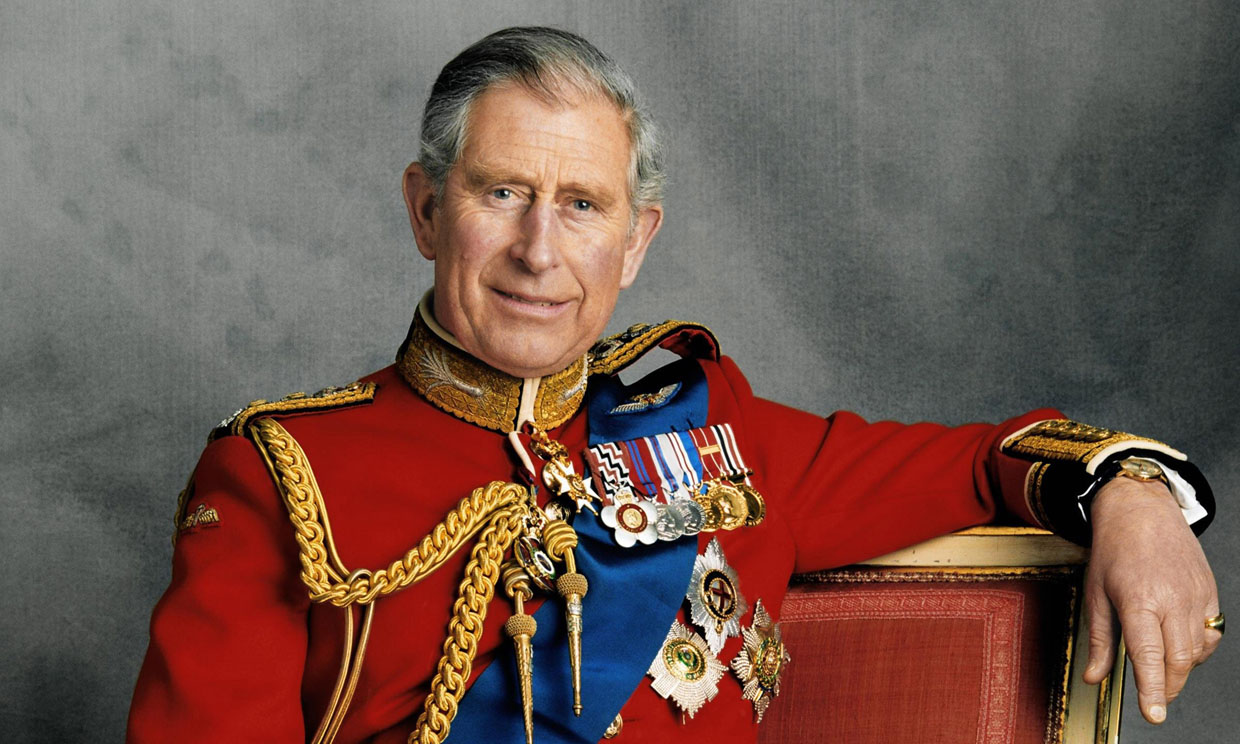
For those who do not consider themselves “royal watchers” and only know the new King of England as that buffoon who spent his entire life waiting for his mother to die, the first sign of what Charles is really like came in a viral video moment captured during the typically pompous ceremony in which he was proclaimed king.
There, in the manic, sausage-fingered, tooth-gritted flailing of the new king, is the perfect encapsulation of Charles Philip Arthur George Windsor, aka “Charles III.”
His life has been an endless series of carefully arranged photo opportunities and ribbon-cutting ceremonies that serve no actual function other than to punctuate the dreary luxury of his royal existence. But it is in moments such as these where we see through the veil of PR and propaganda to the real Charles: a man who treats his retinue of servants like mere objects, only good for slaking his royal desires and fulfilling his regal demands.
And demands there are.
His royal highness’s daily demands begin with the pressing of his royal shoelaces and the requirement that his royal bath plug be placed in precisely the right position and the royal bathtub be exactly half full of precisely tepid water. Charles’ valet must then squeeze precisely one inch of toothpaste onto his royal toothbrush while the royal chefs prepare a series of boiled eggs, which are numbered according to how long they were boiled so that: “If the prince felt that number five was too runny, he could knock the top off number six or seven.”
In fact, wherever Charles travels, he not only takes along a large contingent of his 124 member staff—including his butler, two valets, a private secretary, a typist, a chef, and a handful of bodyguards—he also makes sure to take his own personal food supply, consisting solely of fresh, organic ingredients grown on his own organic farm.
Yes, King Charles is more than happy to put his John Hancock on The Genetic Technology Precision Breeding Act 2023, which (as its supporters will be happy to explain) “remov[es] barriers to research into new gene editing technology” by (as its supporters will never explain) “remov[ing] regulatory safeguards from whole subclasses of genetically modified organisms” at the behest of (surprise, surprise!) the GMO industry.
But don’t expect him to put those gene-edited frankenfoods anywhere near his lips! They are not fit for the royal gullet, don’t you know!
Chapter 2 — The Royal Sickness

In a sense, the royals aren’t wrong when they assert that the blood that flows through their veins is different from the blood that flows through us commoners’ veins. As many know, the royal families of Europe do indeed suffer from a genetic blood disorder, hemophilia, one of the many defects that has resulted from centuries of inbreeding.
But, strangely, they do not see their so-called “blue blood” as a problem. Instead, they hue to a twisted belief system; one that holds that as a result of their special blood, the royals actually deserve to rule over their subjects.
In order to understand this royal worldview, we have to go back to the beginning. No, not the beginning of Elizabeth’s reign in 1952. Not to the beginning of the English branch of the House of “Windsor” to which she belonged. Not even to the beginning of the monarchical system in England.
No, we have to go back to the beginning of monarchy itself.
You see, the ancient Egyptians worshipped the Pharaohs as progeny of the sun god, Ra. The Japanese were told that their Imperial family descended from the sun goddess, Amaterasu, and the sea god, Ryuujin. In Europe, monarchs claimed that God Himself had directly granted them a “Divine Right” to rule over their subjects. In China, they called it the “Mandate of Heaven.”
Yes, the ancients were taught to believe that their emperors were literal gods. The European dynasties, meanwhile, flourished for centuries under the mass delusion that these families were specifically selected by God to rule over their people. Should it come as any surprise that at some point the royals started to believe their own propaganda?
But, as these proto-eugenicists soon figured out, if their blood was too precious to mingle with the commoners’, then that blood must be kept in the family. And so began centuries of royal inbreeding that resulted in the deformities, abnormalities and genetic weirdness that today pervade the royal bloodlines (congenital haemophilia being just one of the most well-known examples). Perhaps the most notable example of intra-family marriage leading to genetic ruin is that of the Spanish Hapsburgs, who, after 500 years of ruling over vast swaths of Europe, managed to inbreed themselves out of existence.
With this understanding of the proto-eugenical philosophy as our background, we can begin to make sense of the millennium-long story of the British monarchy. Alfred the Great yadda yadda yadda Henry beheading wives and starting a church blah blah blah the madness of King George etc. etc. etc. Mrs. John Brown and so on and so forth all the way up to Eddie (VII, for those keeping track at home) and the intrigues that kicked off WWI and birthed the modern world. You know, that story.
To finish making sense of that history, we just need to add one other element to the story: as it turns out, the “British” royal family isn’t very British at all. The House of “Windsor” only became the House of “Windsor” in 1917, after all. Before that, it was Saxe Coburg-Gotha. But the British public were a bit fired up about the Huns because of that whole, you know, WWI thing, so “Windsor” it became.
Noting the true origins of the House of “Windsor” is not just some cheap anti-Germanic slur, of course. It points to something even more fundamental. These royals—connected, as we remember, through inbreeding—had much more in common with their European brothers and sisters, cousins and uncles (but I repeat myself), than they did with the populations they were supposedly ruling over.
With that historical background in place, we can understand, for example, the Windsors’ well-documented fondness for the eugenics-promoting Nazis. Where do you think the Nazis got their eugenical beliefs from, after all? Given the royal pedigree of the eugenic worldview, it is perhaps unsurprising to learn that the pseudoscience of eugenics was pioneered by Royal Medal recipient Francis Galton, himself hailing from the celebrated (and thoroughly inbred) Darwin-Galton line, which boasted many esteemed Fellows of the Royal Society.
The overt ties between the Edwardian (VIII, for those keeping track at home) court and Hitler’s eugenics-obsessed regime are well-documented. The covert ties are even more intriguing. (Hmmm, that gives me an idea for a documentary . . . .) But it isn’t just the home movies showing the future queen giving the Nazi salute or Edward VIII’s hobnobbing with Hitler or King Charles’ lifelong friendship with unreformed SS officer (and Bilderberg co-founder) Prince Bernhard of the Netherlands or Prince Harry’s predilection for Nazi cosplaying. More to the heart of the matter is Prince Philip’s infamous desire to be reincarnated as “a particularly deadly virus” in order to contribute to the depopulation of the planet (a remark that has been fact-checked by Snopes, so you know it’s true!).
FIONA BRUCE: What do you see as the biggest challenges in conservation?
PRINCE PHILIP: The growing human population. From where we are there’s nothing else.
SOURCE: Prince Philip on what should be done about “overpopulation”
You see, the royals’ blue blood pomposity wouldn’t be so bad if they simply felt themselves superior to the commoners in a “What, you groom your own stool?!” kind of way. Sadly, it is not mere snobbery that motivates them, and their great desire is not simply to be kept apart from the commoners. As it turns out, the royal family doesn’t just feel superior to their subjects, they actively dislike them and constantly scheme to subjugate them, rob them, impoverish them and mislead them.
Chapter 3 — Royal False Flags
There’s something quaint about Redditors seemingly discovering for the first time that, far from some nice old man who waves to the crowds and enjoys tea and crumpets in pretty English gardens, King Charles is actually the heir to a fortune amassed via the violent subjugation of much of the world’s populace and the plundering of their wealth and resources. The fact that anyone could be shocked by this historical reality speaks to the naïveté of the masses, who cannot imagine that ruthless psychopaths conspire to amass more wealth by inflicting suffering on the world.
(Just wait until these dear, trusting masses learn about the British East India Company and the opium wars and the Bengal genocide and the Boer concentration camps and the Amritsar Massacre, etc., etc., etc. . . .)
But for a prime example of the perfidy with which the British monarchy has ruled for centuries (and which gave rise to the “Perfidious Albion” moniker), one need only look at the history of their speciality: false flag operations.
Befitting the governing monarchy of a nation that has been known for its treachery for centuries, the British royals’ use of false flag events to gin up public support for the persecution of their enemies likewise goes back centuries. For one prime example of that, we will have to “Remember, remember the fifth of November.”
Outside of Britain, the “gunpowder plot” is known only tangentially through cultural artifacts, like the references to the plot contained in V for Vendetta and the subsequent adoption of the Guy Fawkes mask as the symbol of Anonymous. Even in England, most will only know the official version of the story—the one compiled in the so-called “King’s Book” written by King James I himself.
According to that official account: on the evening of November 4, 1605, Guy Fawkes was discovered with 36 barrels of gunpowder and a pile of wood and coal in the undercroft beneath the House of Lords in Parliament, presumably preparing to blow up the building. After his apprehension, Fawkes was brought before the king and, cracking under the interrogation, eventually led the king’s agents to the other conspirators in the plot.
As it turned out, the whole harebrained scheme to blow up Parliament as it convened on the 5th of November had been hatched by the Jesuits and carried out by a ragtag group of crazed provincial English Catholics! King James then took the sensible precaution of cracking down on Catholics in England, thus ensuring that Catholic treachery would never again threaten the kingdom.
Of course, this story—like so much of the history written by the winners—is total hogwash. Entire books could be written about the plot, what we really know about it, and how the official version was conjured into existence . . . and at least one book has! It’s called The Gunpowder Plot and it was written by Hugh Ross Williamson and published in 1952.
Those who are interested in the full story are highly encouraged to read Williamson’s account. Although the full truth of the plot will likely never be known—buried as it is in a sea of forged documents, tampered evidence and official secrecy—we can say with certainty that the official story was constructed from torture testimony and forged confessions, that the king’s spies were likely involved at every level of the plot, that the band of patsies who were ultimately blamed for the whole affair could not possibly have perpetrated it by themselves and, most importantly, that it provided King James with the perfect excuse to crack down on Catholics in the exact manner he had desired.
In other words, Guy Fawkes was likely neither the radical Catholic terrorist mastermind that the court of King James made him out to be nor the crusading anti-authoritarian hero that V for Vendetta and Anonymous pretend him to be, but, rather, a patsy, a dupe or a mole who was used by the monarchy as a convenient excuse to enact draconian new laws clamping down on the king’s opponents.
Go figure.
But the British monarchy’s false flag hits don’t stop there!
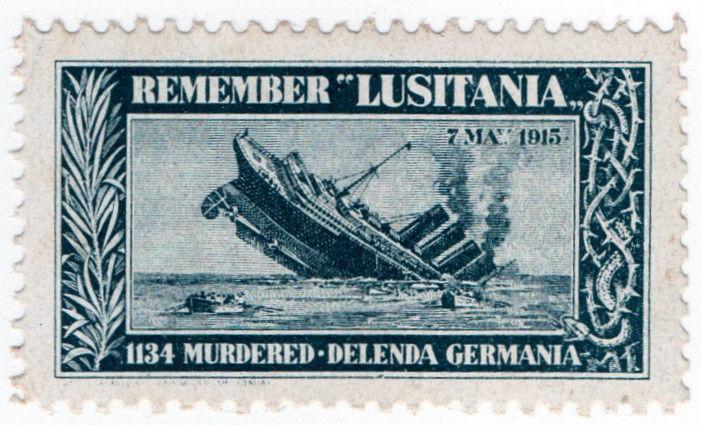
Viewers of my WWI Conspiracy documentary will already know the central role played by King Edward VII and his German-hating wife in forging the so-called “Triple Entente” between Britain, France and Russia that paved the way for the “Great” War against the Huns. You will likely also remember WWI conspirator Edward Mandell House’s own account of his rather remarkable conversation with Edward VII’s successor, King George V, on the morning of May 7, 1915. As House recounts in his Intimate Papers, the two “fell to talking, strangely enough, of the probability of Germany sinking a trans-Atlantic liner.” Even more “coincidentally,” House relates that George specifically inquired what would happen if the Huns “should sink the Lusitania with American passengers on board.” Later that very day, the Lusitania was sunk, and public opinion in America turned decidedly against Germany, preparing the way for US entry into the war on Britain’s side.
Coincidence, surely.
“But that’s ancient history!” some would argue. “I mean, yes, the British were responsible for backing, supporting and enabling the Saudi royal family to begin their brutal rule of the Arabian peninsula and” (as I documented in False Flags: The Secret History of Al Qaeda), “British support and collusion with the Muslim Brotherhood and with Wahabbi radicals gave birth to the modern era of false flag terrorism . . . but what does that have to do with King Charles?”
Good question. Maybe some intrepid reporter will put the question of the million-pound donation he received from the bin Laden family to the new king?
Or maybe they could ask about Princess Diana’s remarkable clairvoyance in warning of her own death at the hands of . . . [name redacted]
NARRATOR: In October 1996, in a letter to her butler, Princess Diana expressed the fear that she would die in a car crash and it wouldn’t be an accident.
ACTOR (AS PRINCESS DIANA): I am sitting here at my desk today in October, longing for someone to hug me and encourage me to keep strong and hold my head up high. This particular phase in my life is the most dangerous. X is planning an accident in my car. Brake failure and serious head injury [. . .].
SOURCE: What Really Happened On The Night Of Diana & Dodi’s Crash? | Diana: The Inquest | Real Royalty
Given the royal family’s participation in false flag events in the past, perhaps it is no surprise that World Economic Forum chairman Klaus Schwab invited His Royal Highness the Prince of Wales to inaugurate The Great Reset, the grand global attempt to use the generated crisis of the scamdemic to completely transform the world and institute new paradigms of governance and social control.
CHARLES: We have a golden opportunity to seize something good from this crisis. Its unprecedented shockwaves may well make people more receptive to big visions of change. Our global crises like pandemics and climate change know no borders and highlight just how interdependent we are as one people sharing one planet.
[. . .]
And as we move from rescue to recovery, therefore we have a unique but rapidly shrinking window of opportunity to learn lessons and reset ourselves on a more sustainable path. It is an opportunity we have never had before and may never have again, so we must use all the levers we have at our disposal, knowing that each and every one of us has a vital role to play.”
SOURCE: Prince Charles Says Pandemic a Chance to ‘Think Big and Act Now’
Yes, it is no surprise to find this royal mouthpiece popping up in the defining false flag event of our times, advocating a complete re-envisioning of our economy, our way of life and even the social contract between people and their government on the back of a synthetic and constructed “crisis.”
But if only his involvement in false flag events were the greatest of King Charles’ worries. . .
Chapter 4 — The Windsors’ Pedophile Problem
Oh, if only the new king’s greatest fault were to have been born into a eugenics-obsessed family.
If only he were the guiltless benefactor of the cheating, swindling, extortion, theft and plunder of his forebears.
If only his worst sin were his ridiculous climate hypocrisy or his campaigning for Klaus Schwab’s Great Reset or his attempt to mask cows.
If only he were a regular, run-of-the-mill tyrant, a psychopath who got off on torturing and killing others.
Unfortunately for all of us, it’s much worse than that.
ANCHOR: Reports of Savile’s unusual behavior in royal circles came about as details emerged of a surprise role for him as a counselor for Prince Charles and Princess Diana during their marital difficulties and a request from Prince Charles to help with the image of Sarah Ferguson.
SOURCE: Jimmy Savile: ‘licked young women’s arms’ on Palace visits
The public got a hint of what really goes on behind the royal family’s closed castle gates when the Jimmy Savile scandal first came to light a decade ago. If you are able to cast your mind back to the innocent days of 2012, you might recall that, at the time, the existence of high-level pedophile rings (let alone high-level necrophilic pedophile rings) was considered the stuff of total conspiracy lunacy.
You might also recall that the royal family’s relationship to Savile was certainly “problematic” (to use the kids’ lingo). But, given what the public then knew, not necessarily more problematic than the involvement of any of the other people who had cozied up to the monstrous pedophile during the course of his career.
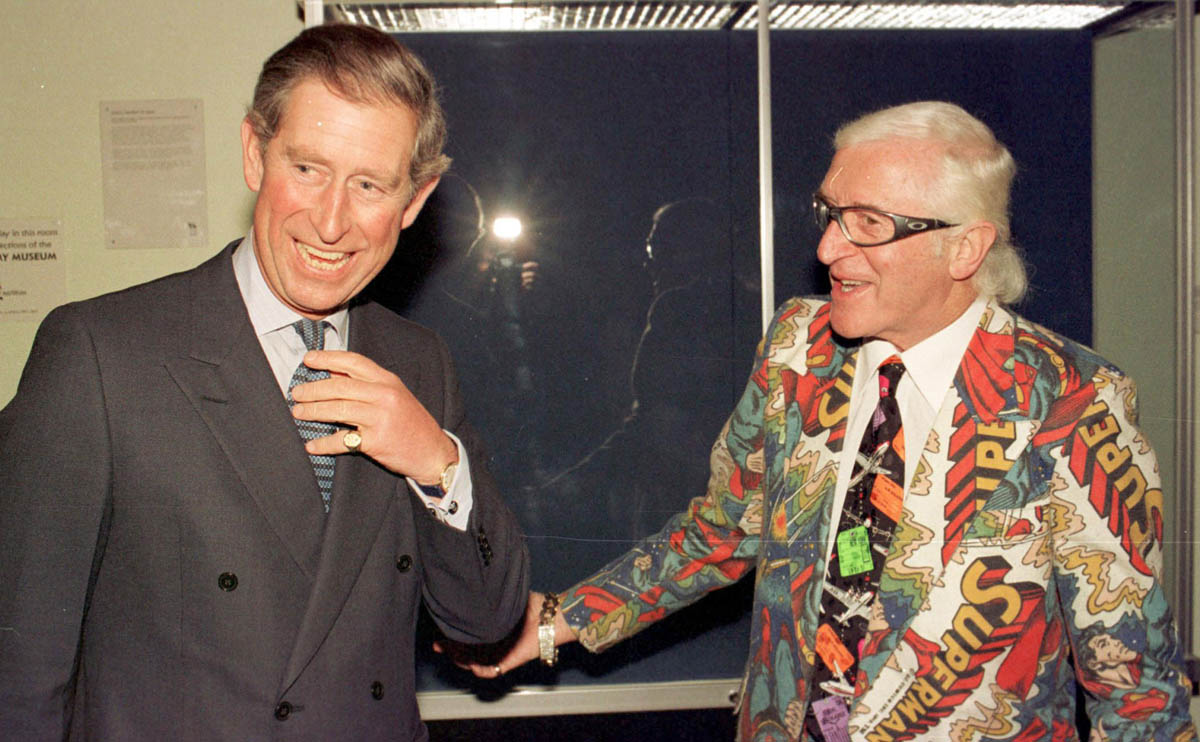
Sure, the Queen had knighted Savile back in 1990, and any number of photographs could tell you that he was awfully chummy with Charles. Yet perhaps knighthood was to be expected, considering that he had seemingly dedicated much of his life to charity and had made many high-profile friends along the way.
In fact, the first hard questions about who knew what when about Savile were asked of the BBC, which certainly did know about the allegations many decades before the disgusting abuser finally died.
JON SNOW: One of the things that’s really interested me there was your view about Jimmy Savile and your knowledge at the time that it was going on.
JOHN LYDON: Yeah. Unfortunately, I think all of us—what we call “the peoples”—knew what was going on with the BBC.
SNOW: As bad as we now know it was?
LYDON: Yeah, we knew. We all knew.
But over the years the “who could have known?” routine used by the Windsors’ defenders has become increasingly insupportable. First, there was the revelation that Savile was so close to the royal family that he was almost made Prince Harry’s godfather. Then came the increasingly damning reports on Savile’s close personal friendship with Charles, culminating in the release earlier this year of letters proving that the now-King of England regularly sought Savile’s advice on sensitive political matters
ALISON BELLAMY: It’s not just a couple—you know it’s not just three or four. There’s absolutely loads—there’s files of it!
ALISON BELLAMY [READING LETTER FROM PRINCE CHARLES TO JIMMY SAVILE]: December 22, 1989. I wonder if you would ever be prepared to meet my sister-in-law, the Duchess of York? I can’t help feeling that it would be extremely helpful to her if you could. I feel she could do with some of your straightforward common sense.
NEWS ANCHOR: 54 minutes after they’d taken off without warning or distress signal, the airliner started to disintegrate over Lockerbie.
ALISON BELLAMY: January 27, 1989. A month after the Lockerbie disaster. This is Jimmy giving PR advice to the royal family about how to react publicly when there’s a major incident in Britain.
PRINCE ANDREW: I suppose that, statistically, something like this has got to happen at some stage on a time. But of course, it only affects the community in a very small way.
ALISON BELLAMY [READING LETTER]: Jimmy advises the queen should be informed in advance of any proposed action by family members. Jimmy suggests they should have a coordinator who’s a special person with considerable experience in such matters. There must be an incident room with several independent phone lines, Teletex, etc.
ALISON BELLAMY: I mean, Jimmy is advising them how to do it. What they should do. How they should act. What they should say. Should they say anything.
So Charles says to Jimmy: “I attach a copy of my memo on disasters, which incorporates your points, and I showed it to my father and he showed it to her majesty.”
Jimmy had sent back to Charles a five-part manual titled “Guidelines for members of the Royal Family and their staffs.” Jimmy seems to be a kind of unofficial chief advisor to the Prince of Wales.
And on top of all that, there was Savile’s own uncomfortable admission that the knighthood had “let him off the hook” for his past sins.
Unsurprisingly, the royal family has never had to respond in any way to public outrage about these reports. No presstitute who wants to keep his job is ever going to dare press Charles on the issue and, since Savile’s crimes were only brought to light after his death, the royals could always hide behind the “plausible deniability” that they didn’t know what Sir Jimmy was up to. They didn’t even need to launch a formal process to strip Savile of his knighthood because, as it turns out, the honour “automatically expire[s] when a person dies.”
But, as I say, the Savile scandal blew up back in the bygone era of a decade ago, when the concept of political pedophile rings was still in the realm of crazed conspiracy podcasts. That all changed, of course, when the Epstein story finally broke into the public consciousness in 2019.
And who just happened to be in the middle of that scandal?
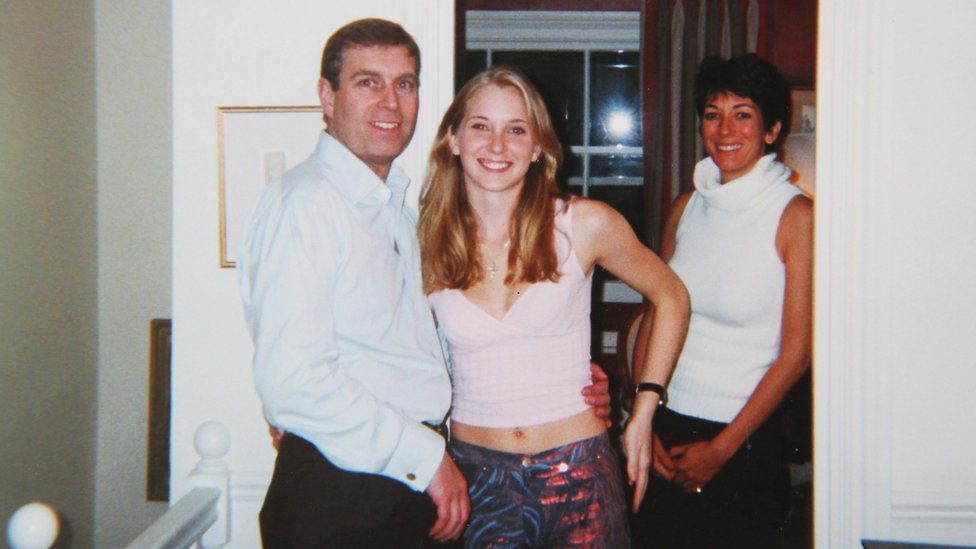
That’s right, Prince Andrew. The brother of the current king and the eighth in line to the British throne. A man so transparently lecherous that for decades the UK tabloids have mockingly referred to him as “Randy Andy.” A man who literally had to invent a scientifically unknown condition of being “unable to sweat” to try to “prove” that the allegations made against him by Jeffrey Epstein victim Virginia Giuffre were false.
I mean, yes, there’s the photo of him with his arm around an underage Giuffre (with intelligence handler and convicted sex trafficker Ghislaine Maxwell hovering in the background), but he doesn’t sweat so . . . it’s all a lie?
No one buys anything that comes out of the mouth of His Royal Lowness, Prince Andrew, Duke of Dork. After all, you know someone must be a public relations mess when even the royal family is compelled to revoke his titles and royal patronages to keep him out of the spotlight of public scrutiny. As we’ve seen, the royals didn’t even dole out that form of retroactive punishment to Sir Jimmy.
As we all know, the public is no longer as naïve as they were in 2012, and, sadly, the nightmarish reality of protected political pedophile rings is so accepted as documented fact that it is no longer mocked as conspiracy yarn. And, to the surprise of no one who is familiar with the ignoble history of the royal family, the House of Windsor has been implicated in two of the highest profile pedophile scandals in recent memory. . . . Oh wait, make that three.
So here’s a rhetorical question for you: who in the controlled mainstream media do you think will ever dare bring up this topic up again now that Prince Charles is officially King Charles?
Conclusion
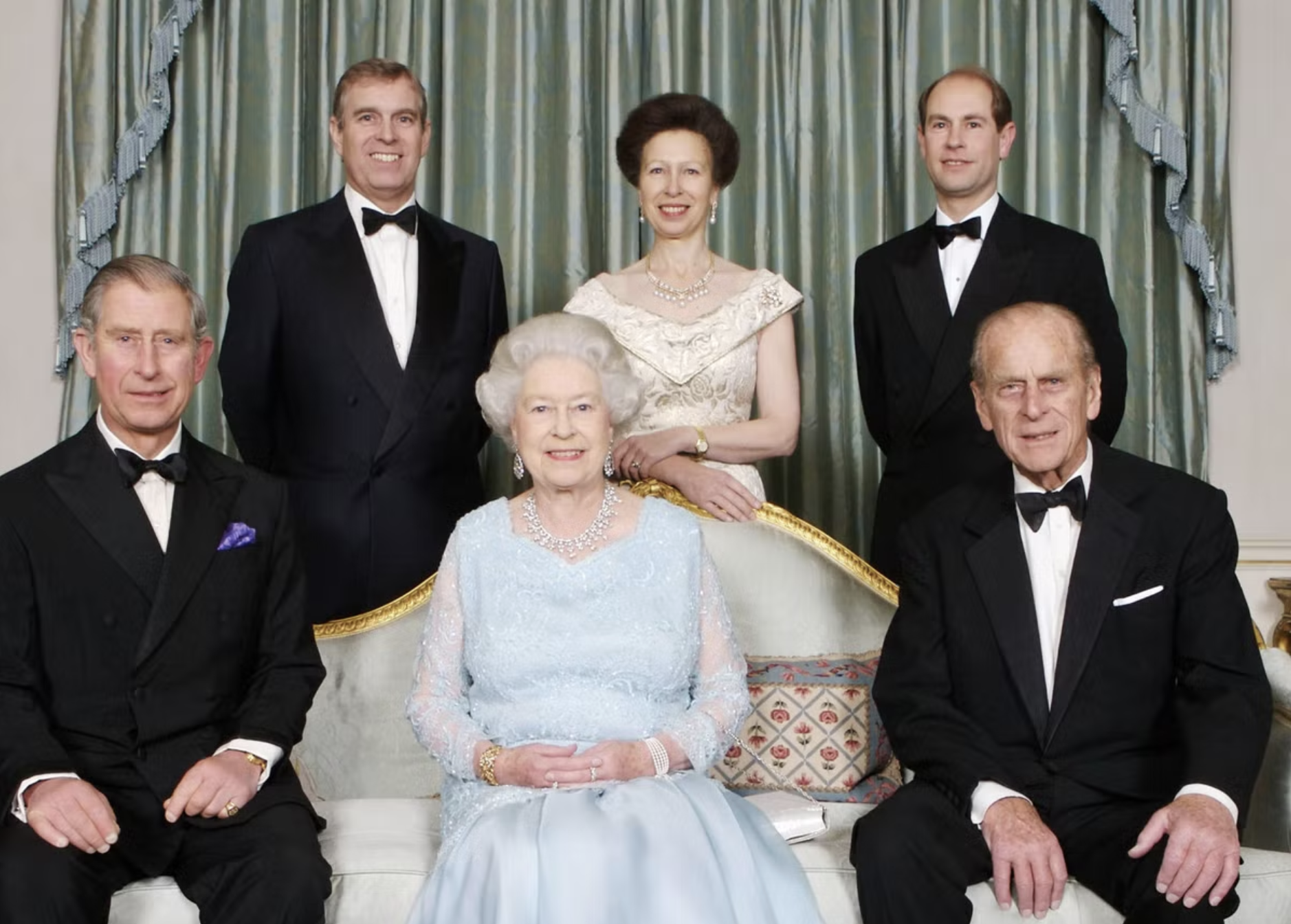
Making this video feels like I’m telling a child, all in one sitting, that Santa Claus isn’t real, the Easter Bunny is a hoax and the tooth fairy is just your mom.
But, in reality, it’s worse than that. It’s telling fully grown adults that Santa Claus isn’t real, the Easter Bunny is a hoax and the tooth fairy is just their mom and being ridiculed as a fringe loony for doing so.
This isn’t my first attempt at opening eyes on this subject, either. Back in 2015, I made note of the absolute madness that took hold of the global media surrounding the announcement of the birth of Princess Charlotte, writing:
So who is going so crazy for this royal baby? Surely no one who is familiar with the real history of the reign of the “Windsors,” a reign marked by the tens of millions of lives lost in the First and Second World Wars (in which the royal family had a great degree of culpability), close collaboration with the banksters that have brought us to the edge of the next great depression, the formation of the Anglo-American “special relationship” in common cause with like-minded eugenicists in America like Teddy Roosevelt, the cultivation and protection of pedophiles (of whom Jimmy Savile was just the most noticeable tip of a very large iceberg), the slaying of Diana, and any number of other atrocities that should make this family one of the most reviled in the “commonwealth” they claim to rule over. And yet the media still lauds their every action, sings their praises as a venerable institution at the core of British society, dutifully acts as the royal PR mouthpiece in reporting on their charity work, and marginalizes any talk of doing away with the royal family altogether as “republican rabble-rousing.”
Plus ça change . . .
And now once again we have one of these royal events come along to remind us just how many people are still firmly ensconced in normieland. After all the royals have put us through, it’s flabbergasting that they’re still held in such high regard.
It’s incomprehensible that this royal eugenicist is trotted out to be the face of The Great Reset and to lecture the peasants about how they’ll have to become serfs on the neofeudal plantation for the sake of Mother Earth, but even more disheartening is the fact that there are still vast swaths of people who believe that this family has been chosen by God Himself to rule over an entire nation (or even a “commonwealth”).
Here’s to the day when this type of video is completely unnecessary and the placing of a fancy hat on some pompous British octogenarian’s head was of no significance to anyone whatsoever. One can always dream. . . .
This piece first appeared in The Corbett Report Subscriber newsletter in September 2022.
U.K. Could Lose 75% of its Energy Supply by 2050
BY CHRIS MORRISON | THE DAILY SCEPTIC | MAY 2, 2023
The United Kingdom is likely to have barely a quarter of the energy in 2050 promised by the Government and its Climate Change Committee if all the legal obligations of Net Zero are followed. This shocking news is forecast by the latest energy review recently published by U.K. FIRES. Government-funded U.K FIRES writes that the “whole excitement” of its project has been to recognise that such a shortfall is close to a certain reality. Excitement is not perhaps a word that comes immediately to mind when contemplating Britain’s almost certain economic and societal collapse.
As we have noted before in the Daily Sceptic, UK FIRES bases its recommendations on the brutal, and many would argue, honest reality of Net Zero. It does not assume that technological processes still to be perfected, or even invented, will somehow lead to minimal disturbance in comfortable industrialised lifestyles. Speaking to architects in 2021 at a RIBA climate conference, UK FIRES leader, Cambridge-based Professor Julian Allwood, said the UK Net Zero strategy is as unrealistic as “magic beans fertilised by unicorn’s blood”.
It can be argued that the £5 million of taxpayer funding to UK FIRES is money well spent since its honest Net Zero appraisals contrast with the fanciful stories and deceit that surround many other claims by Net Zero promoters.
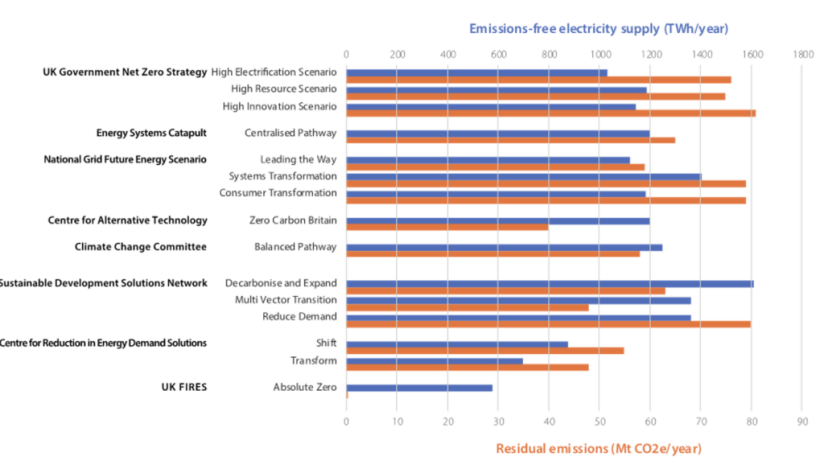
The above graph shows how UK FIRES expects only one quarter of electrical power to be available in 2050, compared with all other forecasts. By 2050, electrical power will be the primary source of all energy. It notes that all other scenarios depend on negative emissions technologies such as carbon capture to deal with ‘residual emissions’ – shown in the graph in orange. UK FIRES notes that it reflects the reality that to date no such technologies are operating in the UK, and therefore it states that by 2050, “we should continue to anticipate that they would not exist”.
Allwood, and his colleagues from a number of universities including Oxford and Imperial College, are dismissive of many of the proposed Net Zero mitigation technologies, noting, for instance, that biofuels are unsustainable since they threaten biodiversity. In 2021, Allwood observed that delivering Net Zero by 2050 “will require governments to utilise all available abatement opportunities, yet current policy largely ignores socially-driven mitigation in favour of technological innovation in the energy sector”
In plainer English, these government driven social “abatement opportunities” might reference the World Economic Forum’s advice that you will eat bugs, own nothing, and, it need hardly be added, be happy. As we have previously reported, UK FIRES promotes a world with no flying and shipping by 2050, drastic cuts in home heating, bans on beef and lamb consumption, and a ruthless purge on traditional building materials such as bricks, glass, steel and cement, to be replaced with materials such as “rammed earth”.
The UK Government is committed to reducing emissions by 68% from 1990 to 2030. Most of the easy cuts have been made with a switch from coal to gas, and the offshoring of a great deal of British manufacturing capacity. But the easy cuts, and the ubiquitous virtue signalling that goes with them, have ended. To comply with legal requirements going forward a massive ramp up of green energy is required, and there is little evidence that it is occurring.

The above graph from Atkins ‘Engineering Net Zero’ is referenced by the UK FIRES energy report. It analyses the build rates required to deliver the energy infrastructure predicted by the Climate Change Committee. There has, of course, been some building of renewable power sources in the last ten years, – wind and solar taxpayer subsidies of £12 billion a year for providing about 5% of total energy needs, attests to that – but nothing to suggest the build can ramp up to the required levels to even try to keep society functioning. Allwood notes that the correct interpretation of this graph is that it isn’t going to happen. “There is no possibility of this level of energy infrastructure being built by 2035, and if anything approaching this rate of construction is to happen beyond then, the public financing commitment needs to be made right now, before the next election.”
Mainstream media is very keen on horrific climate stories, but UK FIRES predictions are more or less ignored – presumably on the grounds they are the wrong type of Net Zero scares. But UK FIRES seems keen to scare the horses, noting that in articulating and promoting what it calls “opportunities”, it is aiming to open up “a more credible pathway to delivering zero emissions in reality”.
Chris Morrison is the Daily Sceptic’s Environment Editor.
“No Bricks, No Glass, No Cement” – What Net Zero 2050 Demands According to Government-Funded Report

BY CHRIS MORRISON | THE DAILY SCEPTIC | APRIL 28, 2023
No bricks, the walls and foundations made of compacted earth, cement made from clay and glass scavenged from demolition skips are just some of the construction changes needed to comply with Net Zero by 2050. The latest paper from Government-funded U.K. FIRES looks to “minimise new construction”, and notes the shape of the urban environment will change, allowing for “denser living and reduced transport needs”.
The latest U.K. FIRES paper seems to have slipped out quietly at the end of last year and has to date attracted little publicity. But the group, which comprises a number of academics led by Cambridge engineering professor Julian Allwood, made headlines around the world recently with previous work noting that all flying and shipping must stop by 2050, beef and lamb must be banned, and only 60% of energy will be available to cook food and heat homes. The group, which receives £5 million from Government sources, is interesting because it bases its recommendations on the brutal, and many would argue honest, reality of absolute Net Zero. It does not assume that technological processes still to be perfected or even invented will somehow lead to minimal disturbance in comfortable industrialised lifestyles. It could be further argued that its continued existence and pronouncements are important, since they highlight the dishonesty and deceit that surrounds many other Net Zero promoters.
U.K. FIRES sees the future of construction based on stone, earth and timber, along with components “reused and repurposed” from demolition. Recycled steel, cement and bricks can be used, although this will be “constrained” – rationed might be a better word – by a supply of “non-emitting electricity under high demand”. Transformational construction changes will take longer to achieve, state the authors, but the U.K.’s ambitious target of a 45% reduction in emissions by 2030, “can only be achieved through reduced material demand”.
Building without bricks is an interesting suggestion and over two billion are currently produced each year. But bricks require high firing temperatures, and the enormous cost of Net Zero energy makes them uneconomic to produce. Cement also requires energy to make but it can be mixed with calcined clay. Nevertheless, calcined clay is also energy intensive and can only supplement 50% of Portland cement. “As a result, the mass low-cost consumption of concrete will no longer exist,” the authors note. Together, bricks and cement generate annual turnover of over £10 billion. Rammed earth, which can be used for foundation screeds and walls, is said to be a proven and potentially zero emission alternative, “which can utilise abundant local materials”.
Glass looks to be a complete no-no, with production requiring temperatures of 1,700°C and producing additional process emissions which cannot be avoided by electrification. Only recycled glass seems to be acceptable for the absolutist authors, so the need for complete circularity, “will somewhat constrain the supply of glass”. However, add the authors helpfully, this will “encourage direct re-use and reconditioning of glass panels from demolition sites”.
Steel is widely used in modern construction due to its large load-bearing properties. Around the world, recycled steel accounts for about a third of current production. To have zero emissions from producing steel relies on energy-intensive carbon capture and storage technology, which the authors observe, with their customary honesty, “is unlikely to be economical by 2050”. In the U.K., 85% of steel is already recycled, and it is explained that the Net Zero transition will heavily restrict its supply. Recycling of aluminium is said to be the “preferred zero emission compatible pathway”, and this will lead to “higher prices due to a restricted supply of the material”.
Timber is also constrained by carbon emission production processes, and sustainable supply is limited by forests unable to rapidly match increased demand. The construction industry accounts for a seventh of all plastics used in the U.K., but needless to say, there are problems. Although plastics play a vital part in insulating buildings – plastic doors and windows can be sealed much more effectively than wood – the authors note that they will become “increasingly constrained and expensive to produce”.
At times, your correspondent might be accused of exaggerating the effects of Net Zero, a collectivist political agenda increasingly divorced from the reality of modern living. But phrases such as “economic and societal breakdown”, and “mediaeval mud huts within 30 years”, would appear to be increasingly justified. Look at what is actually being said and done. In the Brecon Beacons, a new college called Black Mountains (BMC) is promoting its new climate breakdown university degree. One short course offered by this seat of learning is ‘Composting Toilets‘. This will serve as a “high quality exemplar” that will inform the design and building of some of the “potential future facilities on the BMC campus”.
As well as learning, this new college is obviously a seat of great easement as it moves effortlessly to a Net Zero future. The World Economic Forum says you will eat bugs and own nothing – to this might be added that you will crap into a hole in the ground, and, of course, be happy.
Brits Forced to Live in Darkness and Cold
Free West Media | April 29, 2023
On March 10, the Scottish trade magazine Scottish Housing News published a frightening report from Scotland’s largest builder, Barratt Developments Scotland. It shows that 51 percent, a majority of Scots, could not afford to heat or light their homes. They were forced to live in chilly homes with the lights off, as they otherwise could not afford to pay for electricity.
Gas and electricity bills have risen even more in recent months, and the UK government’s support system for energy bills will end at the end of March, further putting pressure on already strained British households. Those who suffer the most are the elderly and sick, not least those with lung disease and asthma. This is exacerbated by disease-causing mold that comes with cold and damp indoor climates. Reported cases of mold-damaged homes in Scotland have increased by 25 percent since 2021. Tens of thousands of Scots are already affected.
Thousands are feared to die as a result of these conditions. Already last winter, over 7,400 Brits died as a result of cold homes. But since last winter, electricity prices have doubled, so the figure is believed to be significantly higher this winter. In December 2022 alone, 1,047 Brits, mostly elderly, died as a result of cold and damp air in their homes. This is 36 percent more than in December 2021, indicating that over 10,000 Brits are likely to die this winter due to cold in their homes… or rather, poverty, not being able to afford electricity.
The survey shows that many are now forced to resort to tricks that their grandparents once used to keep warm during the winter with simple means, such as wearing long johns or sealing door gaps. It emerged that 58 percent, again a majority of respondents, now routinely wear thermal underwear at home to cope with the cold in their homes. 40 percent cover gaps under doors and 41 percent have hung up thick curtains over both doors and windows. People warm themselves under blankets and with tea lights. A quarter use electric heated blankets in bed, instead of heating the bedroom. 57 percent of respondents have turned off radiators in rooms they rarely or never use, and it appears they are forced to live in a smaller part of their homes.
Those hardest hit are, as usual, families with children and the elderly, but another age group also stands out. It is the so-called Generation Z, those born between 1997 and 2013. In this age group, there are young adults up to 26 years old, many of whom work online from home. The survey shows that nearly two-thirds in this age category are forced to turn off lights and lower the temperature so much that they often become ill. It is especially serious when it affects a group that largely works from home, as they are forced to breathe the raw and disease-causing air created in too cold homes around the clock.
This is happening in the once-rich and powerful United Kingdom, which only a hundred years ago was the largest empire in world history.
Cold home is a health risk
The Swedish Public Health Agency warns against having too cold a home and writes:
“Too cold indoors can affect blood pressure and is believed to increase the risk of heart and vascular diseases and lung-related diseases. Rheumatism and certain muscle diseases can also be negatively affected if it is too cold. Drafts can cause muscle problems, stiff necks, and eye irritation.”
The Public Health Agency recommends an investigation of indoor temperatures if they fall below 20 degrees Celsius. This is to ensure that the “operative temperature” does not fall below the guideline value of 18 degrees Celsius. The “operative temperature” refers to the average of the air temperature and surrounding surface temperature. The Public Health Agency also clearly states that this is an absolute minimum. They write on their website:
“The indoor temperature should take into account people who need a warmer indoor temperature. For sensitive groups, the temperature should be 2 degrees higher. Examples of sensitive people may include the elderly, those with mobility impairments, people with rheumatism, and people with lower metabolism. The municipal environmental and health protection office can decide whether a person belongs to a sensitive group.”
If the temperature is lower, those affected are urged to contact their landlord or housing association. The Public Health Agency then writes:
“If sufficient measures are not taken, the next step is to contact the municipality’s environmental and health protection office. They can require the property owner to investigate and possibly remedy the indoor temperature.”
Food shortages and rationing
The situation is further aggravated by soaring inflation, with rapidly rising food prices and increasing interest rates. The survey shows that 55 percent of respondents were very concerned about rising interest rates. This not only affects homeowners with loans but also tenants, as landlords are often in debt themselves. Overall, it is a witch’s brew of rising costs for interest, electricity, fuel, food, and other necessities. Rising interest rates and energy costs affect virtually everything. For example, grocery stores are forced to pay more in rent, electricity, and transportation. Their increased costs, in addition to already high purchasing costs from distributors, are then added to already high product prices.
There is also a lesser-known reason for rising food prices, which is declining harvests, reducing supply while demand remains the same or increases. The lower harvests are mainly due to the cooler climate that Nya Tider has been at the forefront of reporting since 2019. For Europe, for example, Spain and countries in North Africa, from which we import, have been affected by poor harvests.
This is also due to higher energy prices, which have largely wiped out the production of artificial fertilizers outside of Russia and a few other countries that continue to have cheap energy. Europe has seen a large part of its chemical industry and artificial fertilizer production shut down. Without artificial fertilizers, almost half of the world’s population would be without food. The sharply reduced production globally will, therefore, have a devastating impact on global food security.
Europe is also affected by greenhouse farming closures, which supply the continent with a large portion of its fruits and vegetables, being forced to shut down during the winter months due to the high costs of heating. This not only creates shortages but further drives up prices. In the United Kingdom, this has been evident in grocery stores, where shelves have been empty during February and March. The situation has occasionally been so severe that rationing has been introduced, which is the first time since World War II. Customers are only allowed to buy three types of vegetables and a maximum of two of each. An example of this is the supermarket chain Morrison.
This has forced many Britons to shop around at multiple stores to find everything they need, to the extent that it is even possible. Tomatoes, for example, are expected to remain scarce until the end of April. Given the worsening food security situation, many fear that rationing, which has been implemented by private companies this time, could soon be mandated by the state. Some believe this to be one of the main reasons why the EU and many Western countries are accelerating the digitization and surveillance of food purchases. An example of this is Norway, which last year began registering all food purchases, where and what type of food all Norwegians buy. Many fear that this is a step towards a future digital rationing system.
Net zero – a lie
It is worth remembering that Scotland has boasted about being the best in the UK at transitioning its energy production to “green energy,” especially with numerous wind turbines. In 2019, mainstream media had headlines such as “Why is Scotland leading in renewable energy?” (ITV News). Now, reality has caught up. Wind turbines notoriously perform poorly during winter, so poorly that they often consume energy instead of producing it. This is because they need to be heated to prevent freezing during the winter, using energy from the regular power grid or diesel generators. Advocates of “green energy” and power companies are silent about this.
There is a genuine shortage, but this is self-inflicted. We could have chosen to subsidize energy this winter as we did for other industries.
Justin King, former CEO of the UK’s second-largest grocery chain Sainsbury’s, on the shortage of fruits and vegetables
This winter was exceptionally cold in Scotland, and the strain on the power grid that supplies the wind turbines was so great that the Scottish power company was forced to heat its wind turbines using large quantities of diesel generators. They tried to keep this a secret, but it leaked out (see NyT v.10/2023). This is an important reason why the Scots suffered the most in the UK this winter.
However, it is not only the Scots but all Britons who are affected by the “green transition,” which is anything but green since reduced carbon dioxide leads to reduced vegetation and thus wildlife, that is, less food for humanity. The supposedly green agenda is already hitting hard against energy production. It also damages and increases the costs of food production, as the resulting high energy prices have led to a sharp reduction in artificial fertilizer production and numerous greenhouse closures across Europe.
The green agenda does not involve a gradual and proven transition with preserved energy security but enforces closures of not only fossil-fueled power plants but also, for example, hydroelectric plants that are claimed to threaten or destroy wildlife (see NyT v.27-28/2022). When the energy crisis becomes uncontrollable, emergency measures are forced, often involving the restarting of coal-fired power plants that genuinely pollute the environment. We have seen this in several EU countries and American states. The UK has also been forced to keep its aging coal power plants on standby and must do so for at least another year to avoid a catastrophe next winter. The shutdown of these plants has been postponed several times, and the operators themselves, the British company Drax and EDF, owned by the French state, actually want to close them down by the end of March. This is because they have already retired parts of the staff and can’t handle maintenance, which must be planned well in advance. Now, the bizarre situation has arisen where the agenda-driven politicians, who have been eager to shut down the power plants, are begging the owners to keep them open until spring 2024.
With the knowledge that a country’s energy production is directly proportional to its gross domestic product (GDP) – a fact that the establishment and its media conceal – we know that “net zero” in practice means deindustrialization and dramatically lowered living standards. Even worse and something very few people reflect on is that net zero will affect Western nations, their businesses, and populations, while multinational corporations and the wealthiest globalist elite can buy themselves out through emission rights or simply by controlling Western governments as they do now. Net zero applies to us, but not to them – something everyone should remember the next time the establishment and its media advocate for it.
Ukraine looking to grab more of Russia’s oil revenues
RT | April 28, 2023
Kiev is preparing to significantly increase tariffs for transporting Russian crude oil to the EU through its territory via the Druzhba pipeline, business daily Kommersant reported on Friday.
According to the report from the Russian outlet, which cites the consultancy Argus and market sources, Ukrainian pipeline operator Ukrtransnafta has applied for a two-step increase in transit prices, by 25% from the current $14.90 per ton to $18.70 on June 1, and by an additional 23.5% to $23 on August 1.
Transneft, Russia’s state pipeline transport company, confirmed to Kommersant having received notification from Ukrtransnafta of the tariff hike but said that it was not conducting negotiations with Kiev on the matter.
According to Kommersant’s sources, Ukraine is currently negotiating the hike directly with buyers in Slovakia, Hungary, and the Czech Republic. However, any arrangements with them will have to be formalized with the Russian Energy Ministry and Transneft, experts say. The latter traditionally pays in advance for the transit of Russian oil through Ukrainian territory. The transit cost is included in the price of oil deliveries, and Russian oil companies, having received payment from buyers, reimburse Transneft for the transit.
The planned hike in transit costs will be the second this year, after Kiev raised the tariff by €2.10 per ton (18.3%) on January 1. Prior to that, the tariff was hiked twice last year.
Experts warn that overly frequent tariff hikes may bring oil transport via Druzhba to a halt, as buyers, despite not having many alternatives to Russian oil, may find the costs too high. According to Igor Yushkov, a professor at the Financial University under the Government of the Russian Federation, this scenario would hurt Ukraine, which relies on the transit fees.
Druzhba carries crude some 4,000km from Russia to refineries in the Czech Republic, Germany, Hungary, Poland, and Slovakia. Supplies via the route were not targeted by the EU embargo on Russian crude that was introduced late last year.
Survey shows Poles reject cashless society, ban on combustion engines, and restrictions on meat and clothing
NIEDZIELA.PL | April 26, 2023
Poles are opposed to the EU’s policy of banning combustion engine vehicles and to ideas circulating in the EU on forests, meat, clothes and a cashless economy, according to a poll carried out by the European Policy Research Center (CBPE)
The poll reports that 67 percent of respondents are opposed to an EU rule that will ban Europeans from registering combustion engine vehicles starting in 2035. The idea of the EU ban is supported by only 28 percent of Poles.
The opposition to the EU ban on such vehicles is seen across a broad spectrum of Polish society, including urban and rural inhabitants, as well as both those with higher degrees and those who have only finished high school.
The CPBE survey also asked respondents their views on the idea of transferring the power over forests to the EU, away from the member states. Over half of the respondents, 57 percent, opposed such an idea. Only 34 percent supported it. Once again, the opposition to the idea is similar across all age and socio-economic groups.
Another idea being discussed in the EU is limiting the consumption of meat to 16 kilograms per person, per year, as well as limiting the sale of clothes to eight new items per person.
Only 21 percent backed the meat consumption reduction target, with 76 percent opposed. The results were similar with regard to the purchase of new clothes, with 23 percent supporting it and 73 percent against.
Poles are also against a cashless economy. The European Parliament recently recommended that a digital euro be researched but not yet launched. Privacy advocates warn that a cashless society could have grave consequences for personal freedom, with authorities able to track in all transactions in real time. This may be a prerequisite to imposing strict limits on what people can buy, including clothing items and meat products. Digital currencies may also be tied to social credit scores relating to political opinions and social behavior, as they are in China.
Advocates for a cashless society within Brussels argue that digital currencies would limit the black market. However, 81 percent of Poles oppose getting rid of cash, with only 17 percent in favor.
Similar opposition to a cashless society can be seen in nations such as Austria, Switzerland and Germany. Last year, over 500,000 Austrians signed a petition calling for the right to use cash to be enshrined in the Austrian constitution. As a result, a referendum on the issue will be launched within the country. With a population of 8.9 million, the massive show of support for the right to pay with cash demonstrates the growing movement against digital money, including central bank digital currencies (CBDCs).
As Remix News previously reported, globalist institutions like the World Economic Forum have long lobbied for a cashless society and have routinely run articles such as “Why we should try to make cash obsolete,” “The benefits of a cashless society” and “Should cash be abolished?” Back in 2017, economist Joseph Stiglitz called for banning all paper currency in the United States, a position the WEF also positively reported on. Central banks across the world are also currently “leading the way” in the race to institute digital currencies. Although digital and physical currencies are expected to run in tandem for many, numerous globalist think tanks and economists are pushing for a complete phase-out of cash after an adjustment period.
Featured Video
BRITAIN’S WARNING: PREPARE FOR WAR
or go to
Aletho News Archives – Video-Images
From the Archives
British weapons and personnel doing much of the killing in Yemen
Press TV – June 18, 2019
A detailed report published by the Guardian newspaper has shown how Britain is massively contributing to Saudi Arabia’s devastating war on Yemen as it suggests that London is not only supplying the bombs that fall on Yemenis, but it provides the personnel and expertise that keep the war going.
The comprehensive report by Arron Merat published on Tuesday showed that Britain was doing much of the killing in Yemen as the country continues to provide Saudi Arabia with everything it needs to turn its southern impoverished neighbor into a graveyard.
“Every day Yemen is hit by British bombs – dropped by British planes that are flown by British-trained pilots and maintained and prepared inside Saudi Arabia by thousands of British contractors,” said Merat in the report. … continue
Blog Roll
 Aletho News
- Yemen denounces European Parliament’s ‘hypocritical’ push to blacklist Ansarullah
- Qalibaf: UAE’s UN bid aims to ‘clear the runway’ for ‘Greater Israel’, whitewash genocide
- Pakistan reopens Iran border after boosting security: Report
- Why are so many Brazilians voting for Flávio Bolsonaro?
- Democrats Put Anti-Russia Agenda Ahead of American Workers
- Elijah Magnier: Yemen’s Strikes Are Shattering Saudi Arabia’s Long-Term Strategy
- Pentagon designates Chinese cultural centers national security threat
- Israel Demolishes Home Of Lebanese Journalist Whose Viral Film Exposed Pager Attack
- Record Oil, Empty Tanks: The UAE’s Miracle Recovery
- Burnham tackles Britain’s poverty with aggression in Yemen
- If Americans Knew
- An error has occurred; the feed is probably down. Try again later.
- No Tricks Zone
- Sudden Stratospheric Warming, Powerful El Niño Combination May Lead To Extreme Europe Cold, Energy Crisis!
- Two New Studies Find Thwaites Glacier Melt Cannot Be Driven By Human Activity Or A Warming Ocean
- E-Cars Reduce CO2 Emissions By Only 41% Compared To Internal Combustion Engine Vehicles
- Predictions Made By Renowned Climate Professor Over Past Decades Have Been Proven To Be Poor
- New Study Suggests Large Regions Of The Pacific Ocean Have Been Cooling For The Last 80 Years
- Germany’s Green Energy Debacle: High Energy Costs Force Kahla Porzellan to Close After 182 Years!
- New Study: 50 Years Of The Most Aggressive ‘Net Zero’ Policies Can Only Affect The Global Climate By 0.03°C
- US September “Heat” Was No Record…Many Records Set Decades Ago
- Latest European Green Energy Debacle; Portugal’s Largest Flagship Solar Park Insolvent!
- Green Energy Debacle: German Expert Professor Fritz Vahrenholt Warns Of Severe Economic And Social Consequences

